Calculating Fractions and Decimals
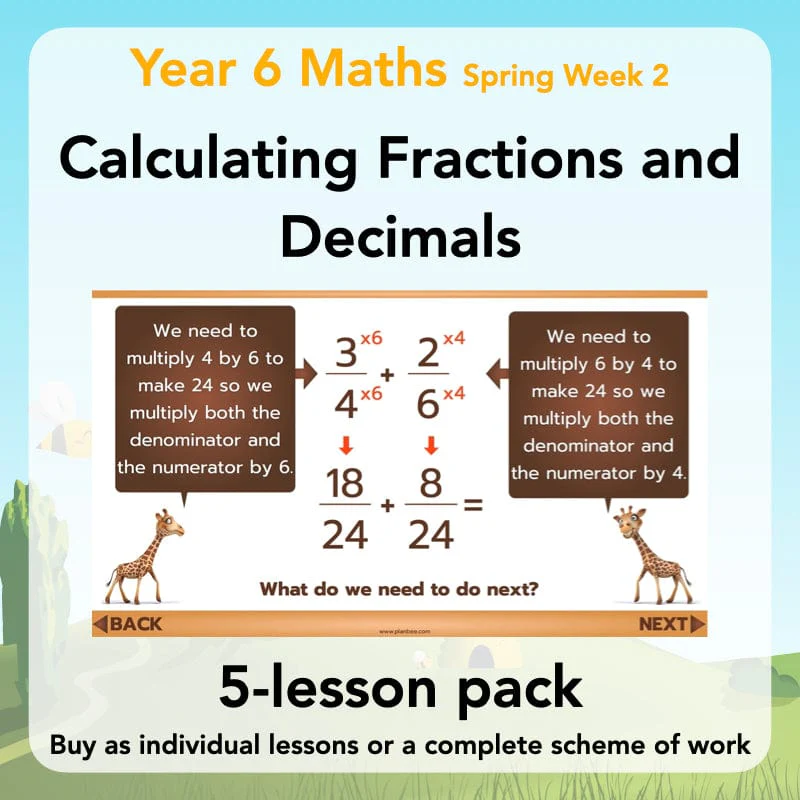
This Year 6 ‘Calculating Fractions and Decimals’ scheme of work provides five complete lessons which will help your class develop their understanding of the relationship between fractions and decimals, as well as teaching them how to add, subtract, multiply and divide fractions. The slides provide detailed examples of various processes for the children to follow, as well as giving them the opportunity to try out different methods for themselves. Their independent learning tasks then provide further opportunities for consolidation and investigation through fun, differentiated activities.
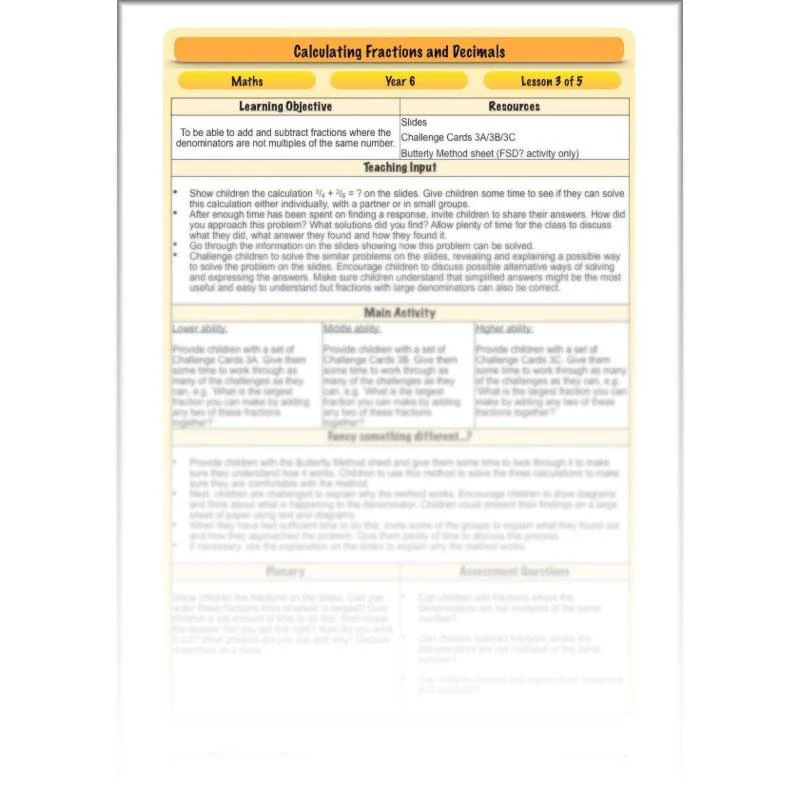
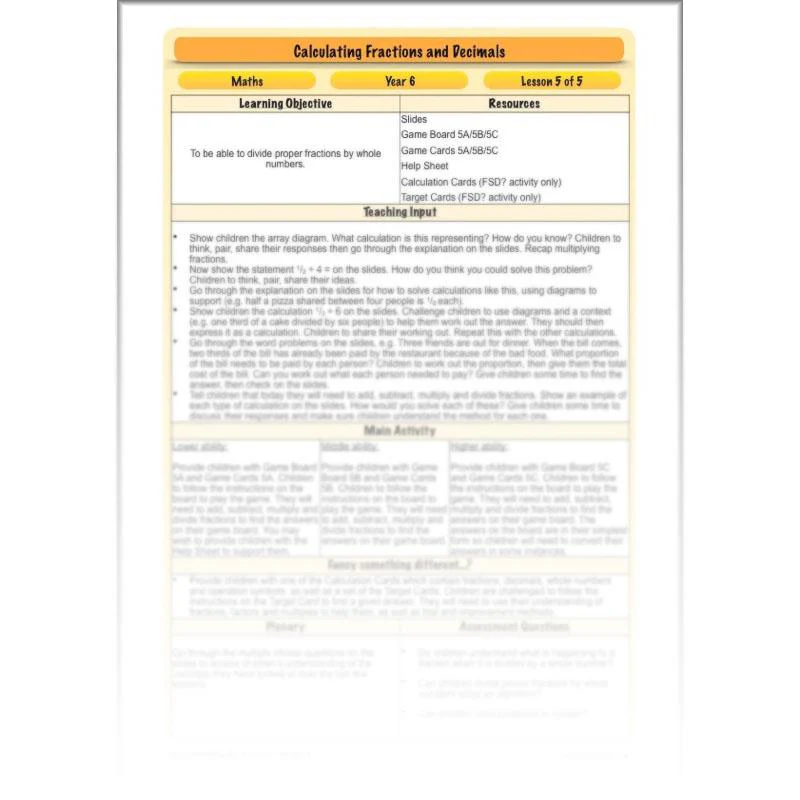
Each lesson includes a detailed plan, a slide show presentation for the teaching input and differentiated worksheets.
Simplifying Fractions
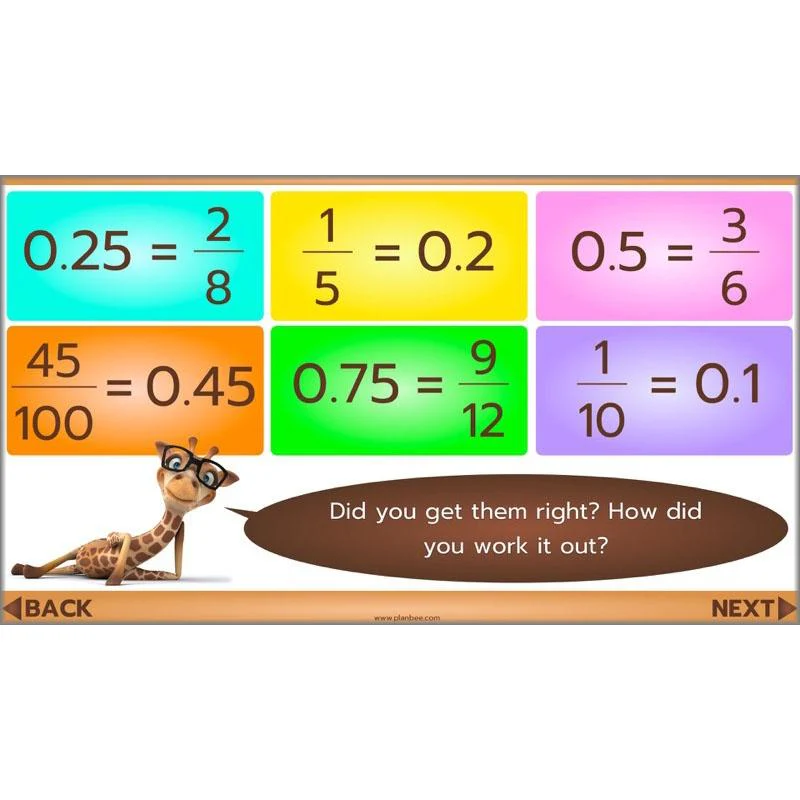
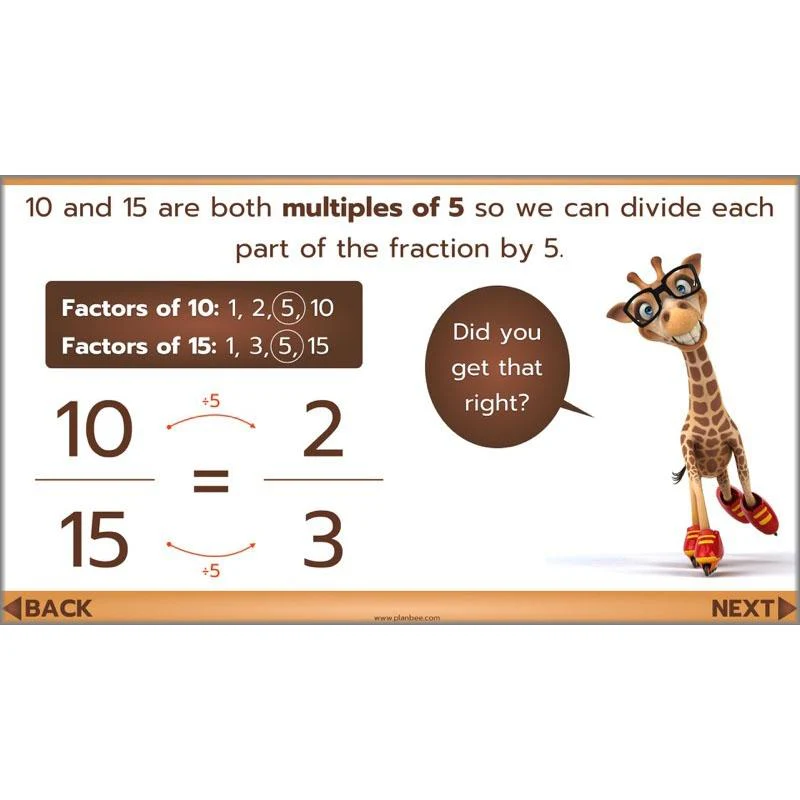
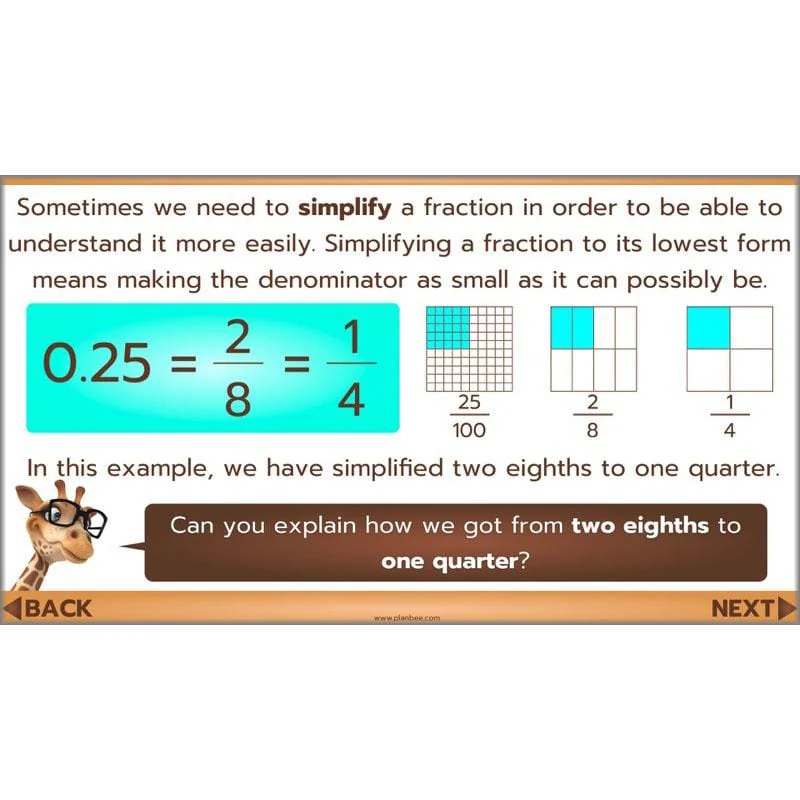
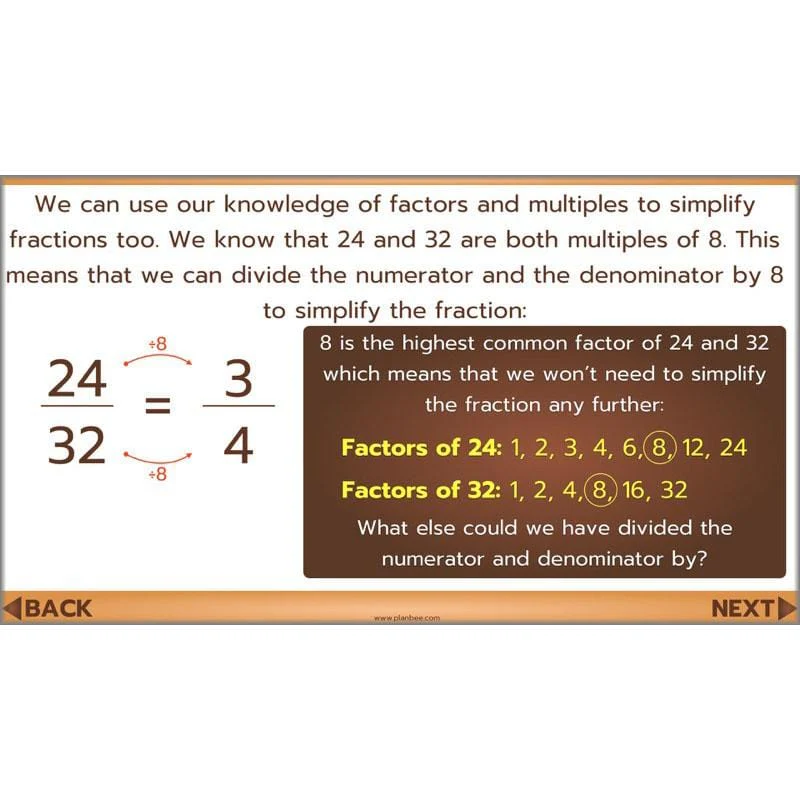
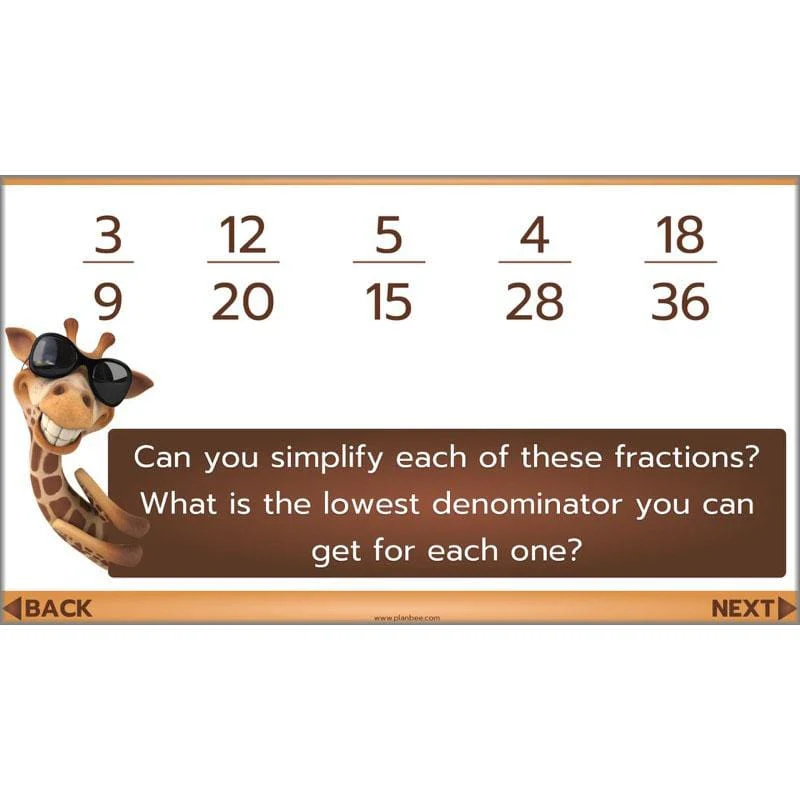
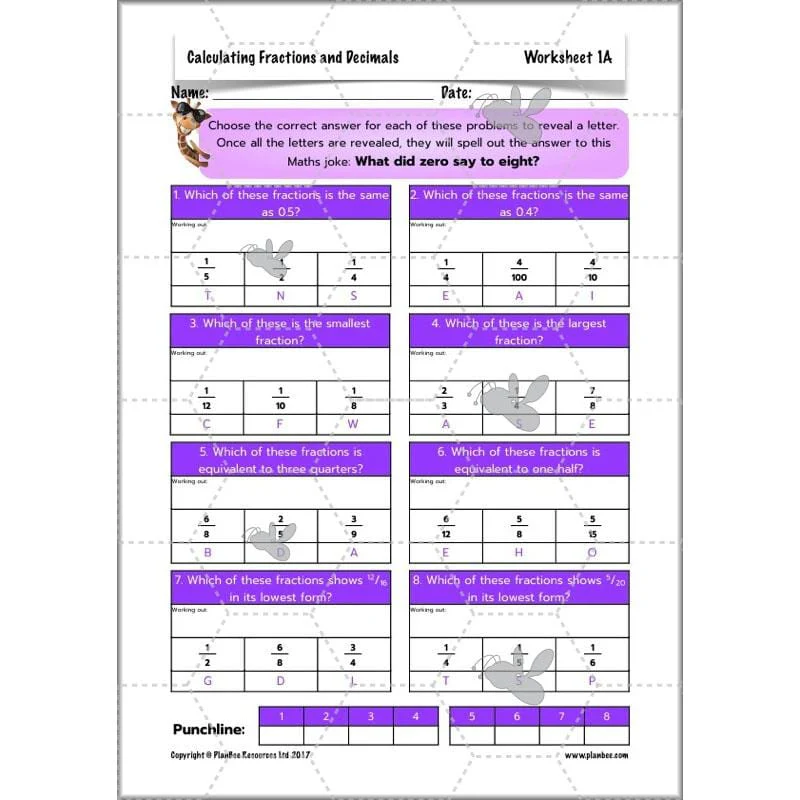
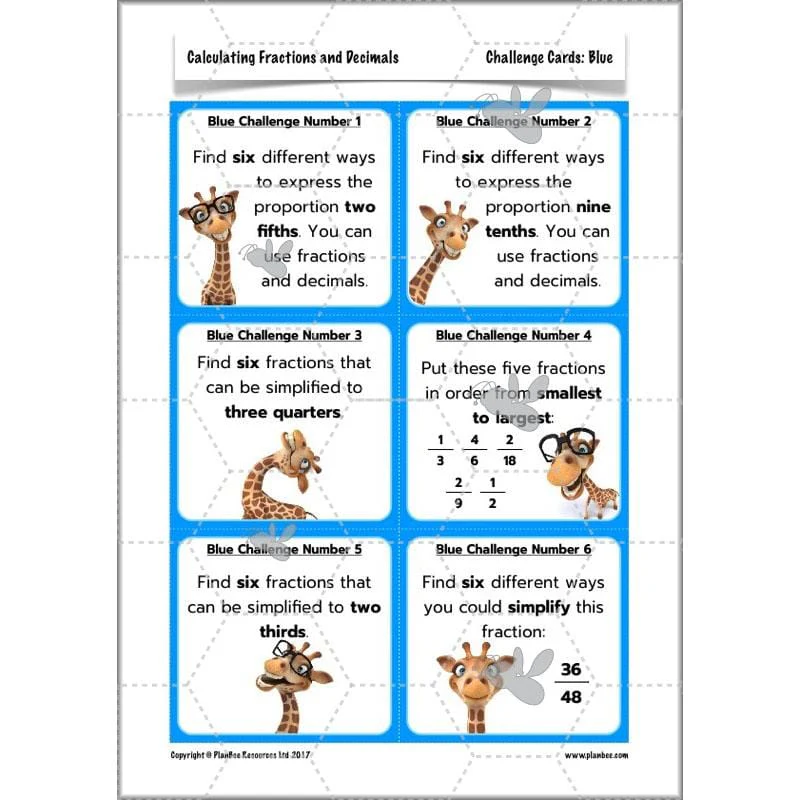
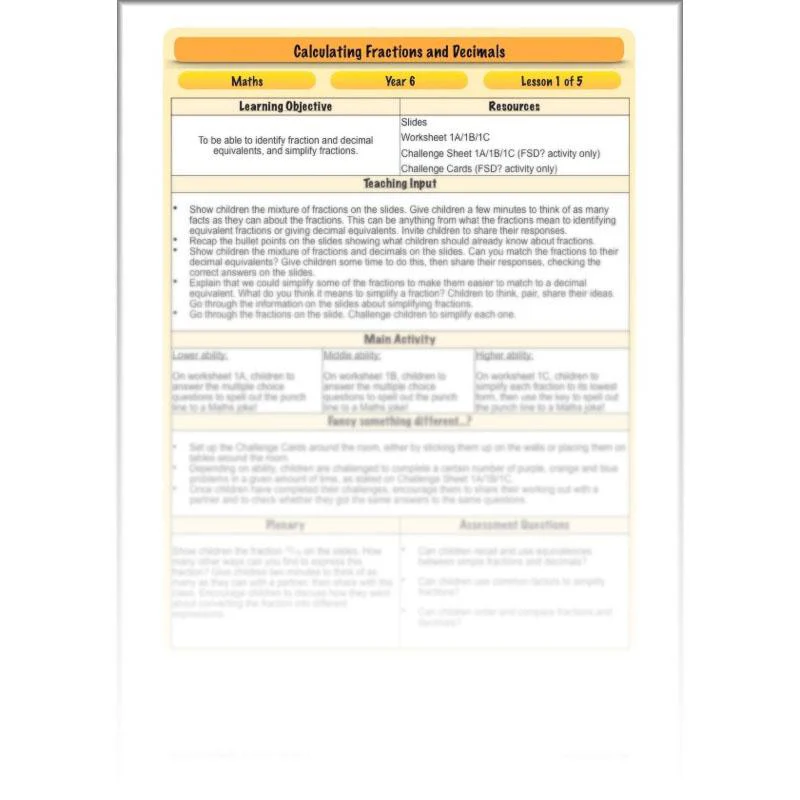
The first lesson in this series starts by recapping what your class already know about fractions and decimals, and the link between the two. They are challenged to find fraction and decimal equivalents, before looking at how fractions can be simplified to help us do this. They will be shown several methods for simplifying fractions using their understanding of factors and multiples. In their independent learning they can either answer questions to reveal the punchline to a Maths joke, or solve a variety of challenges relating to fractions and decimals.
What's included:
- Lesson plan
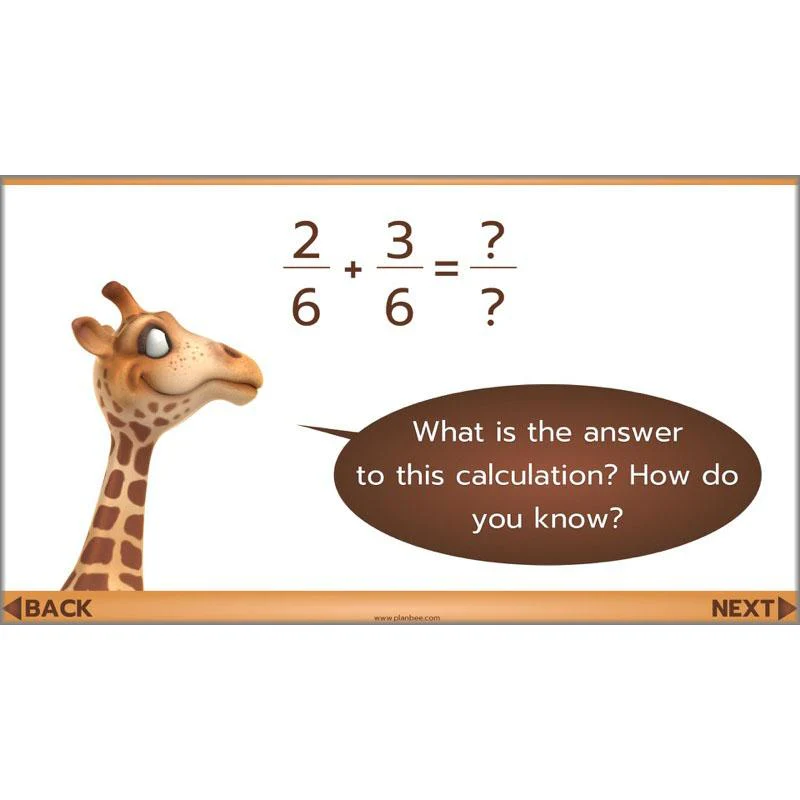
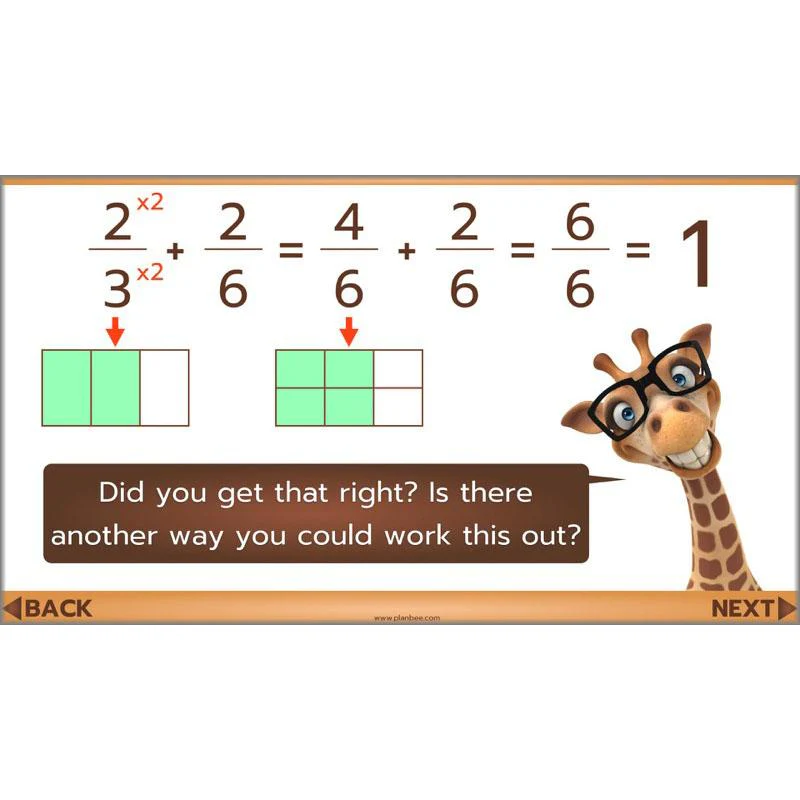
- Slides
- Activity ideas
- Differentiated worksheets
- Differentiated challenge sheets
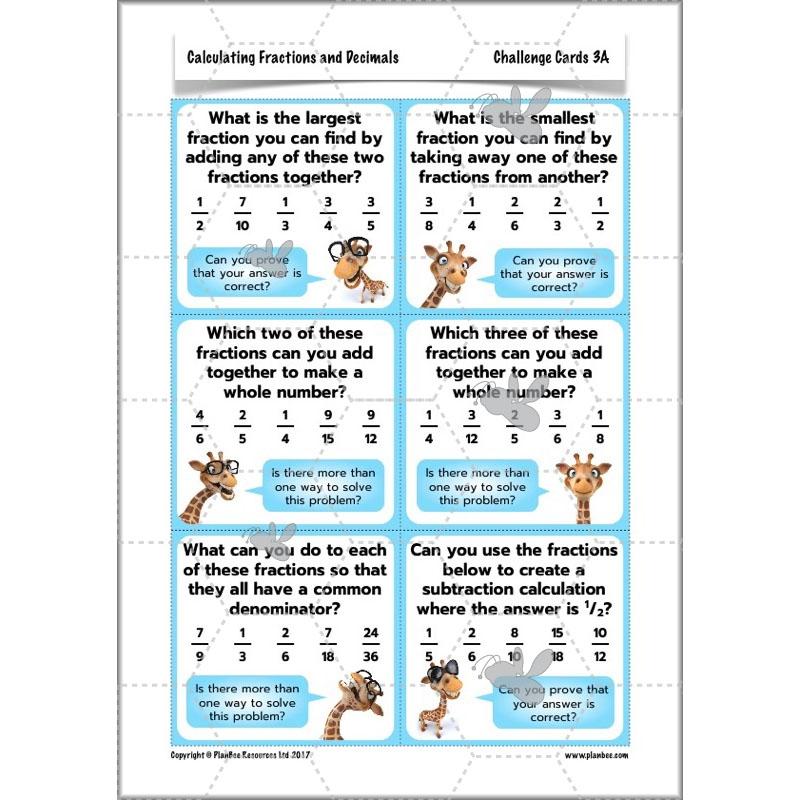
- Differentiated challenge cards
Adding Fractions Part 1
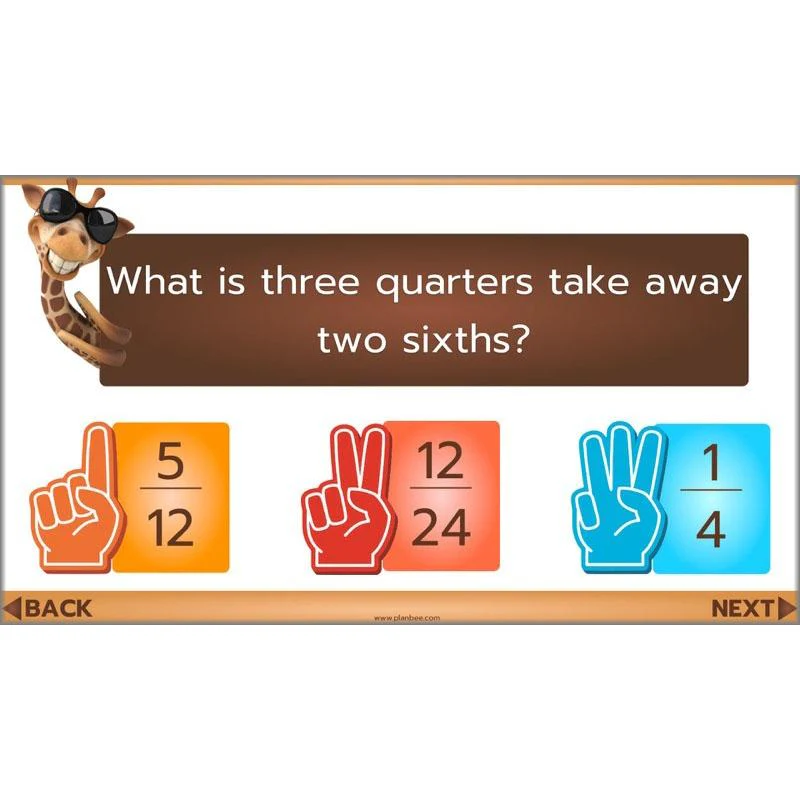
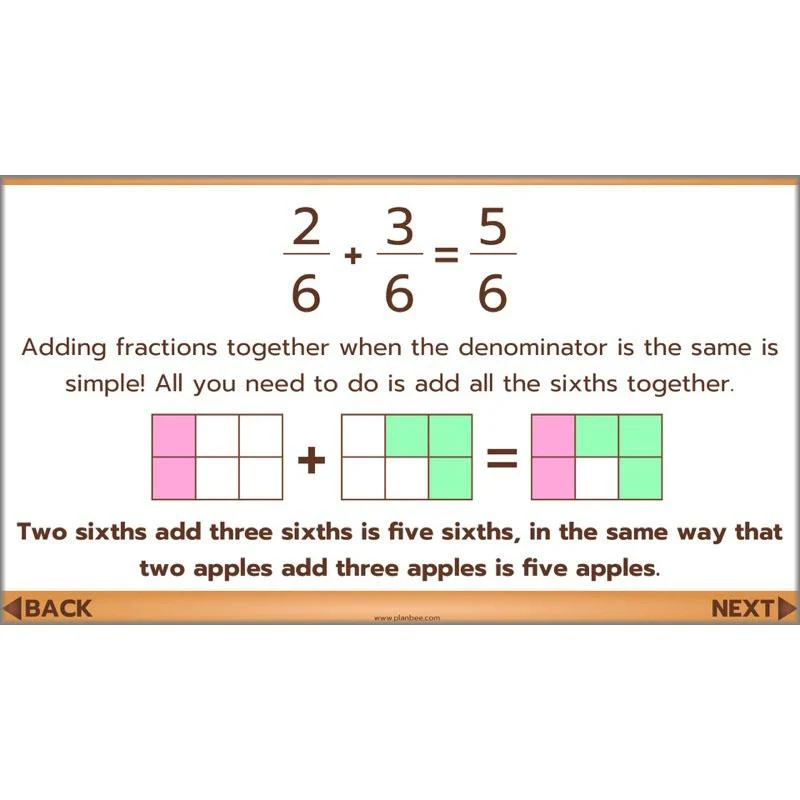
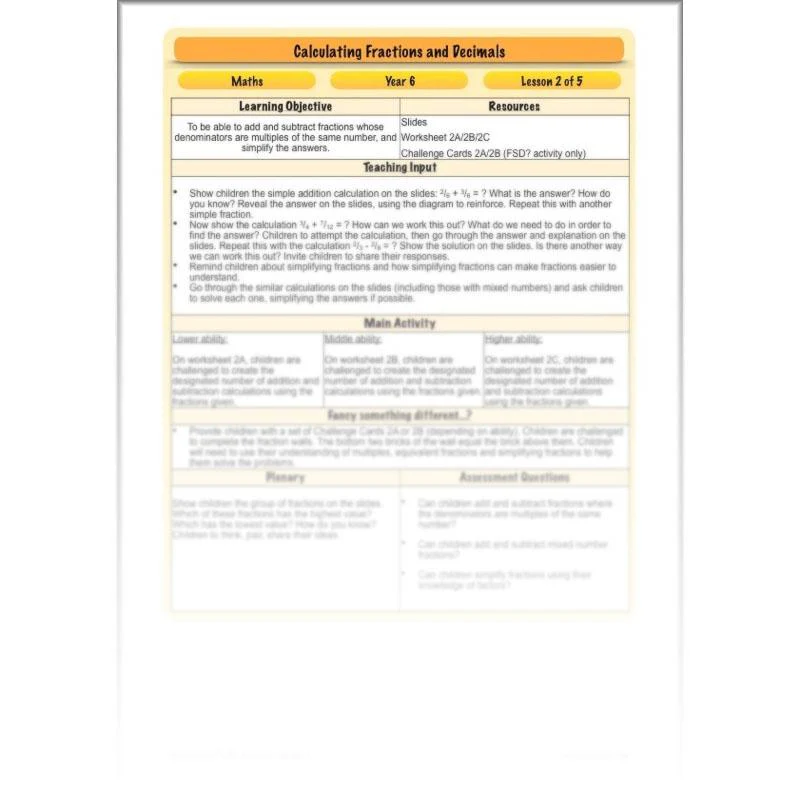
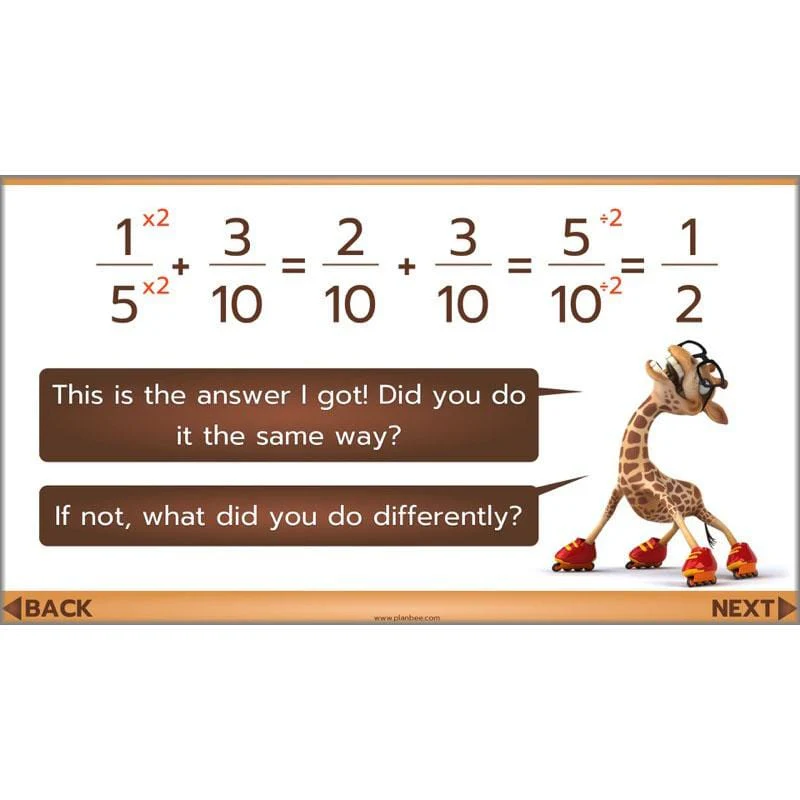
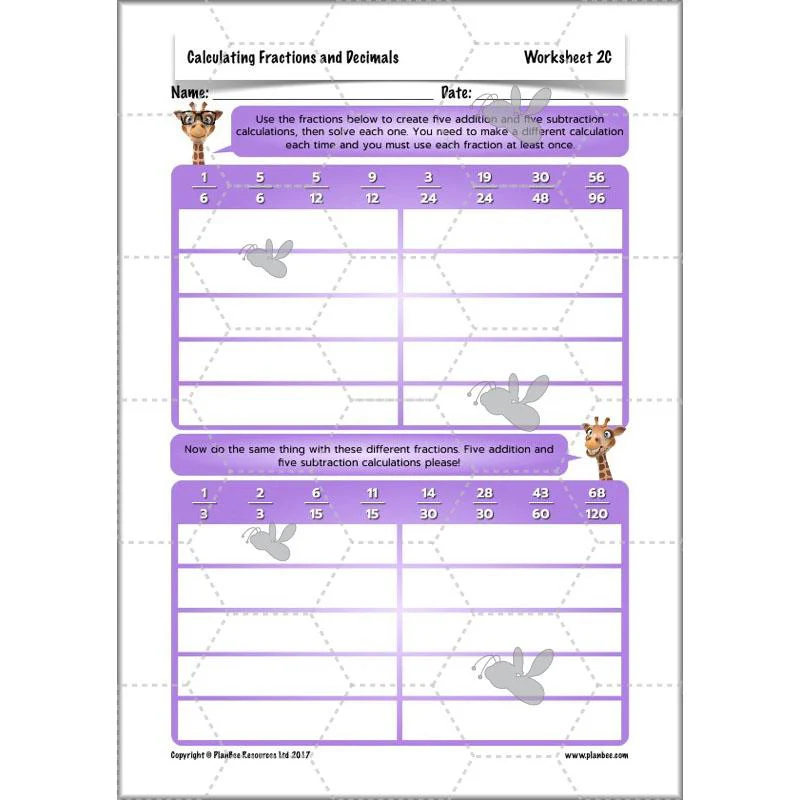
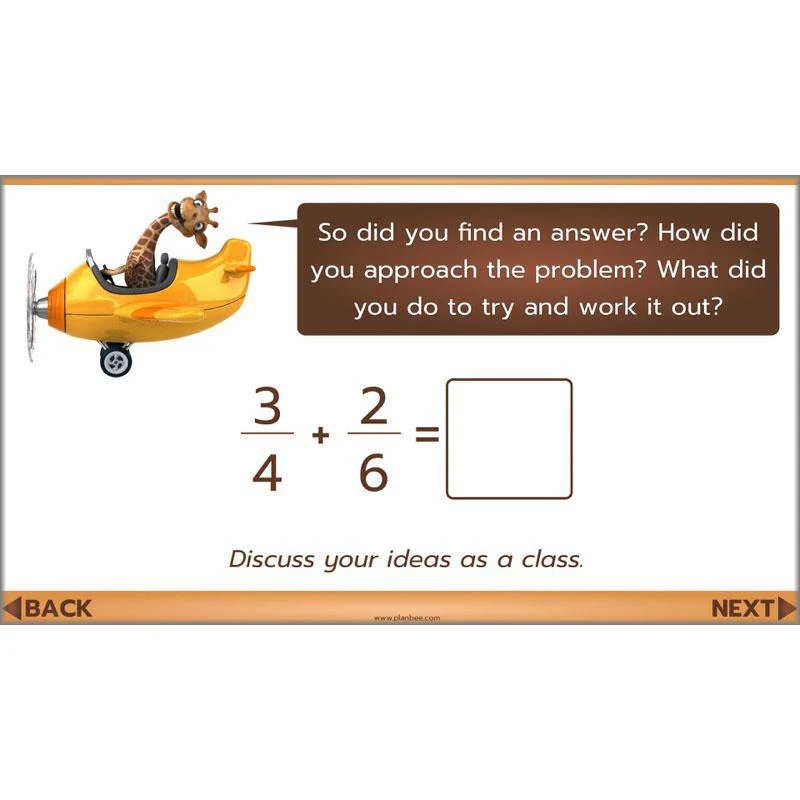
After reminding children how to add and subtract fractions with common denominators, this lesson will move on to explore how to add and subtract fractions where the denominators are multiples of the same number. They will be challenged to use their knowledge of factors and multiples to solve problems, as well as simplifying answers where appropriate.
What's included:
- Lesson plan
- Slides
- Activity ideas
- Differentiated worksheets
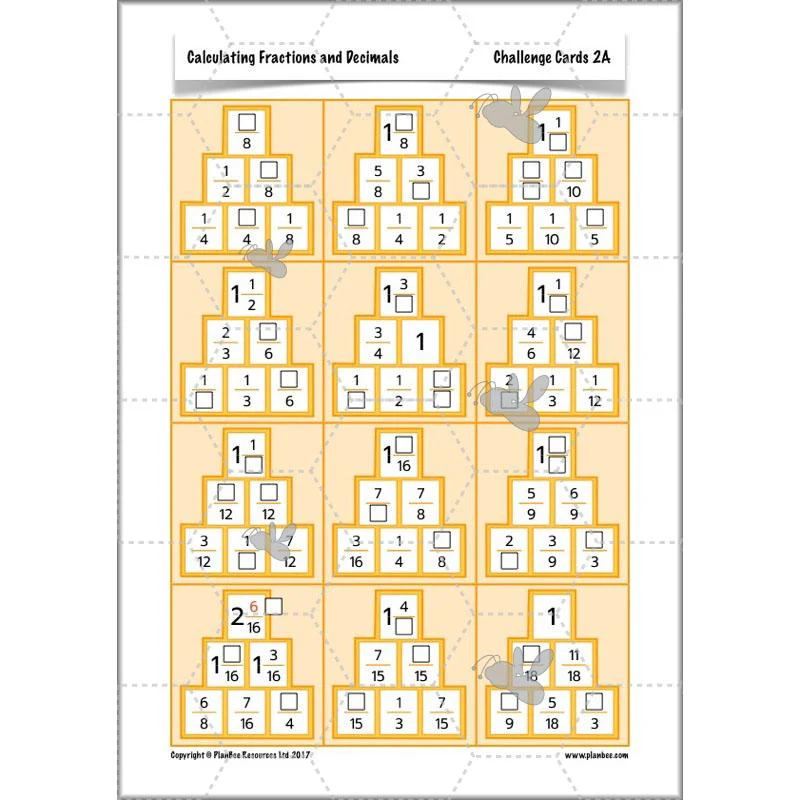
- Differentiated challenge cards
Adding Fractions Part 2
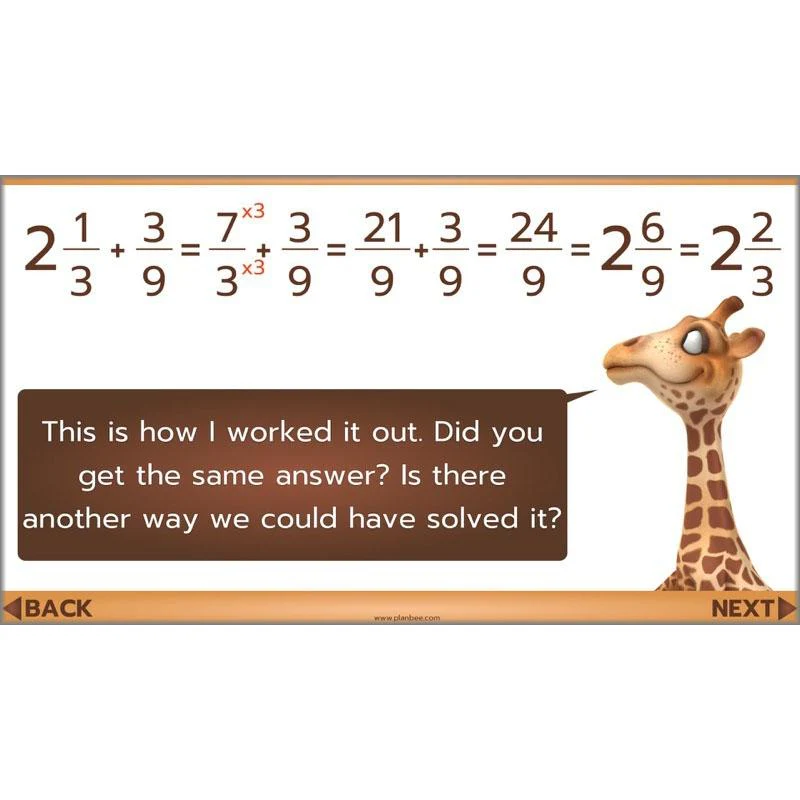
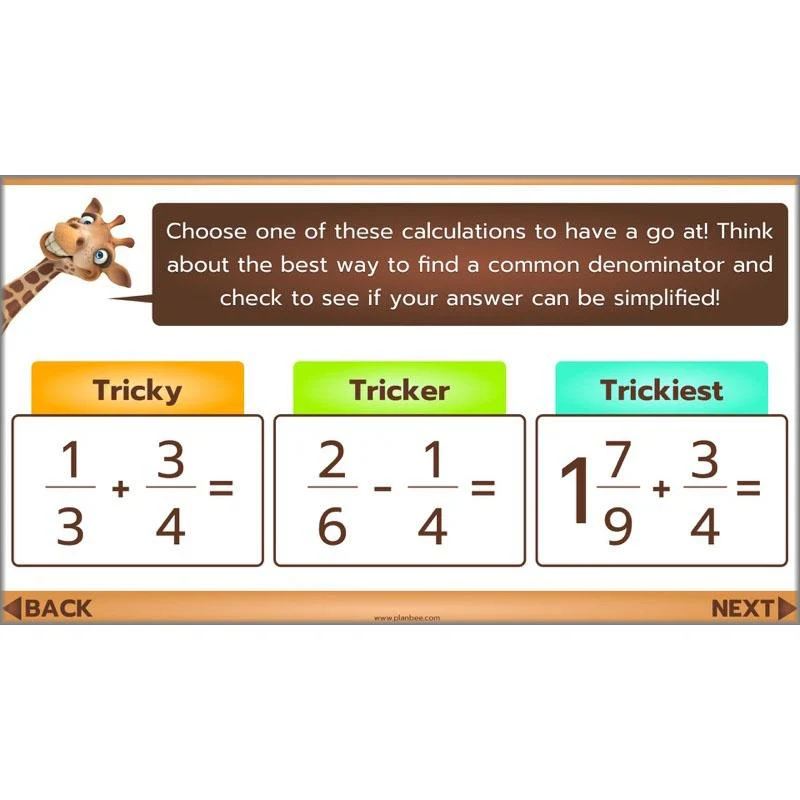
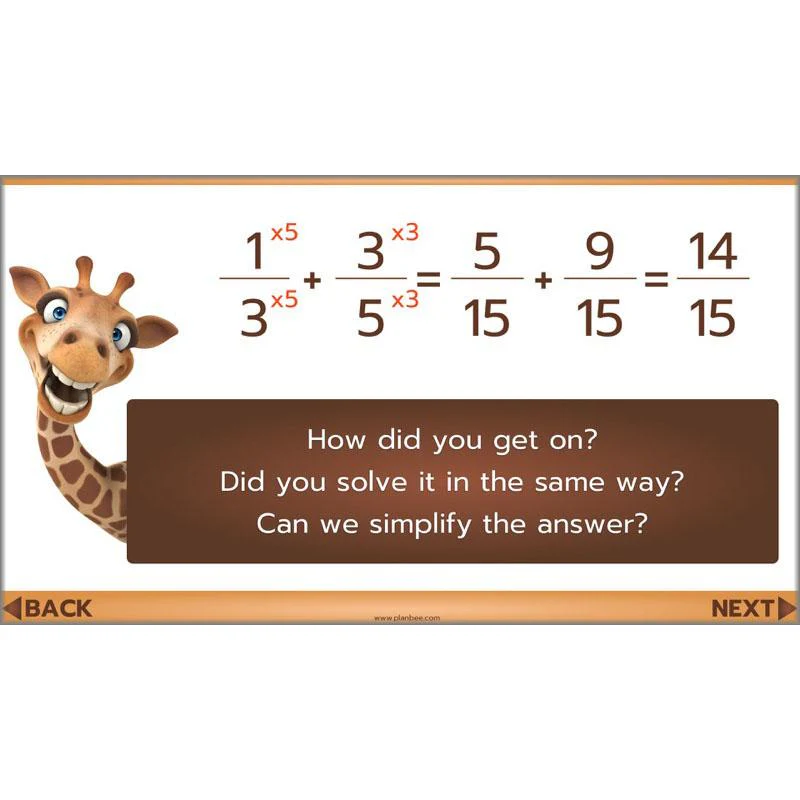
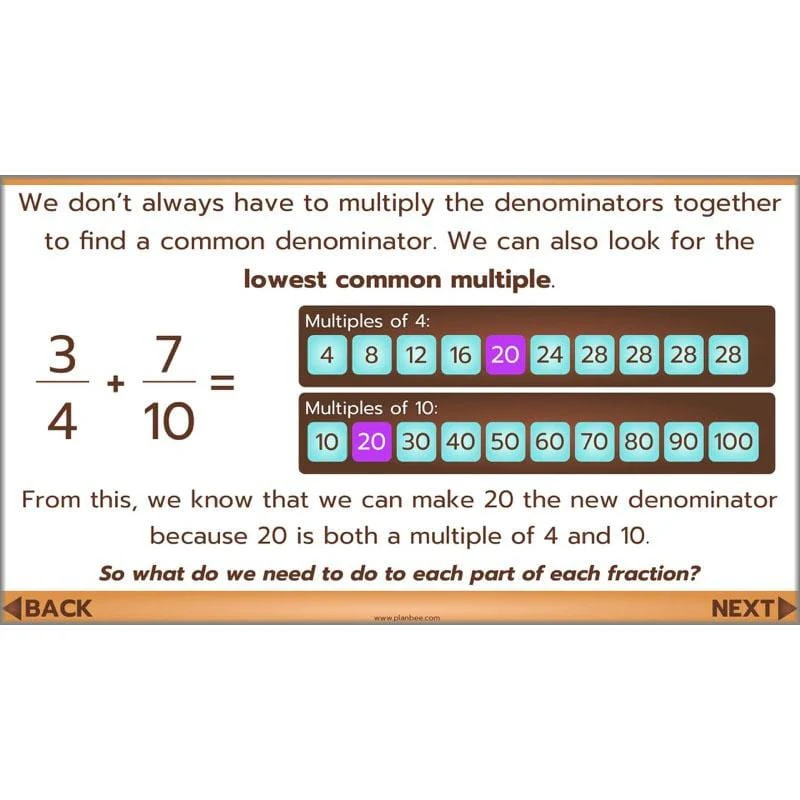
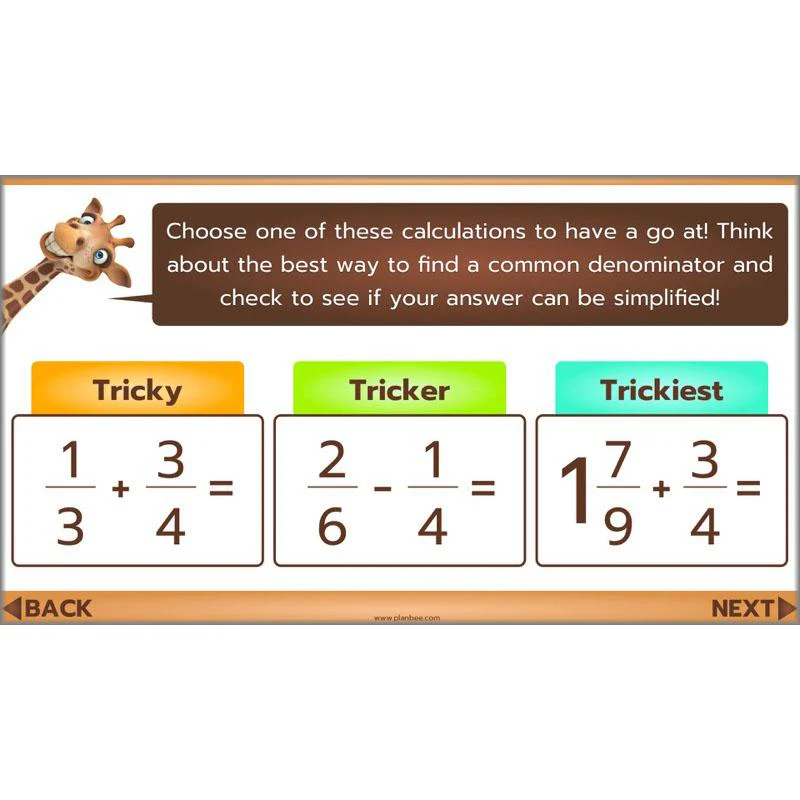
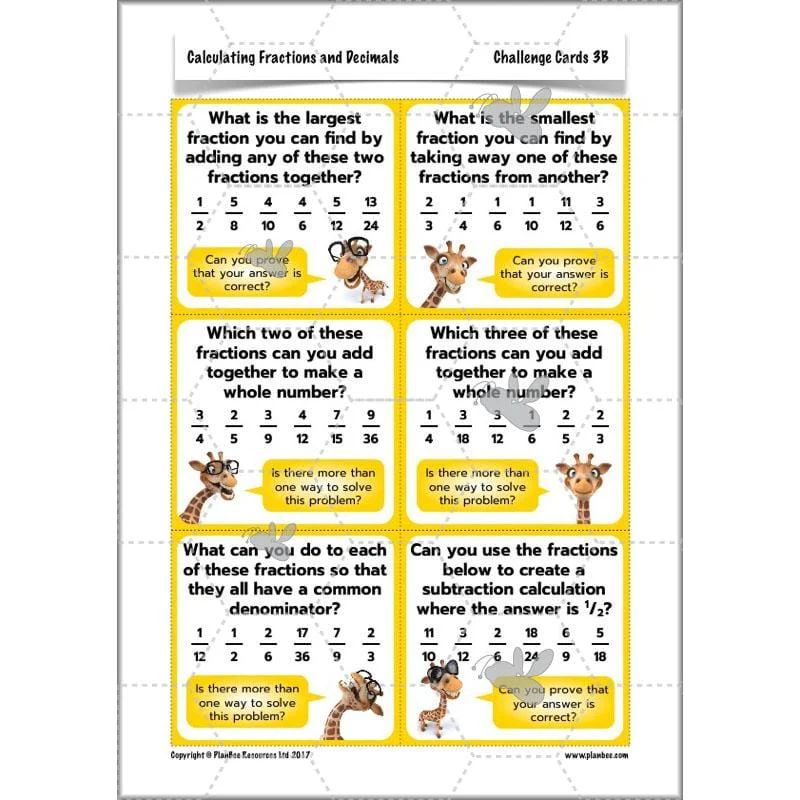
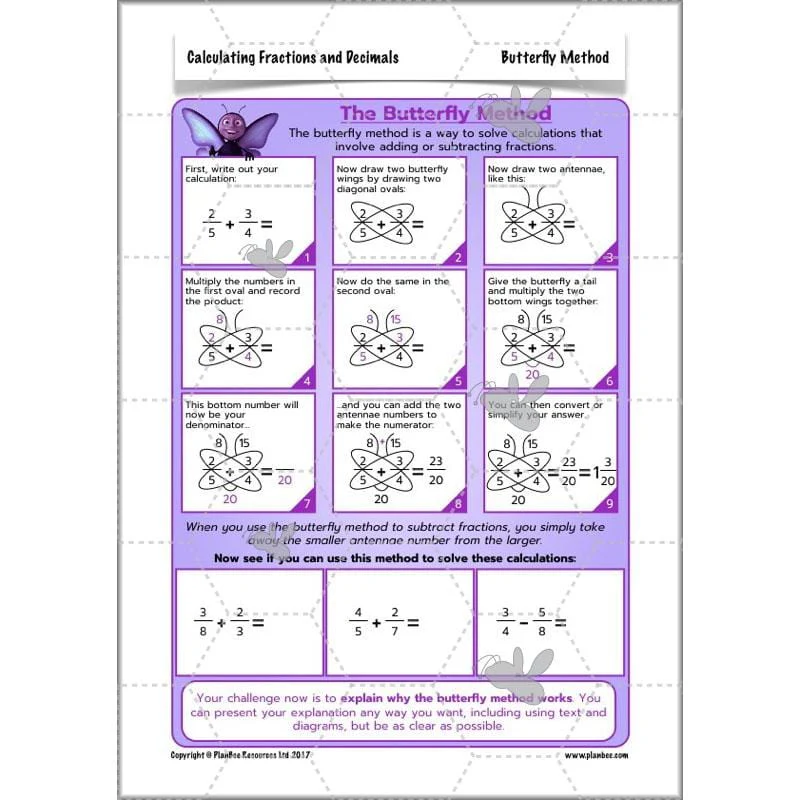
Building from their learning in the last lesson, your class will now look at how they can add and subtract fractions where the denominators are not multiples of the same number. They will be shown several ways to do this, including finding the lowest common multiple of the two denominators. Mixed number calculations are also included for an extra challenge!
What's included:
- Lesson plan
- Slides
- Activity ideas
- Differentiated challenge cards
- Butterfly method sheet
Multiplying Fractions
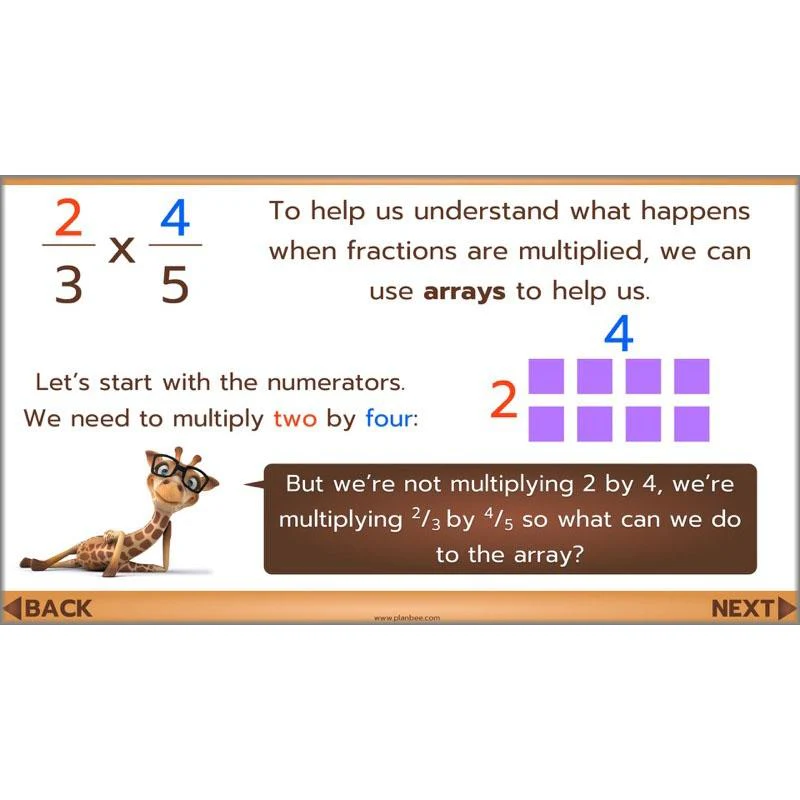
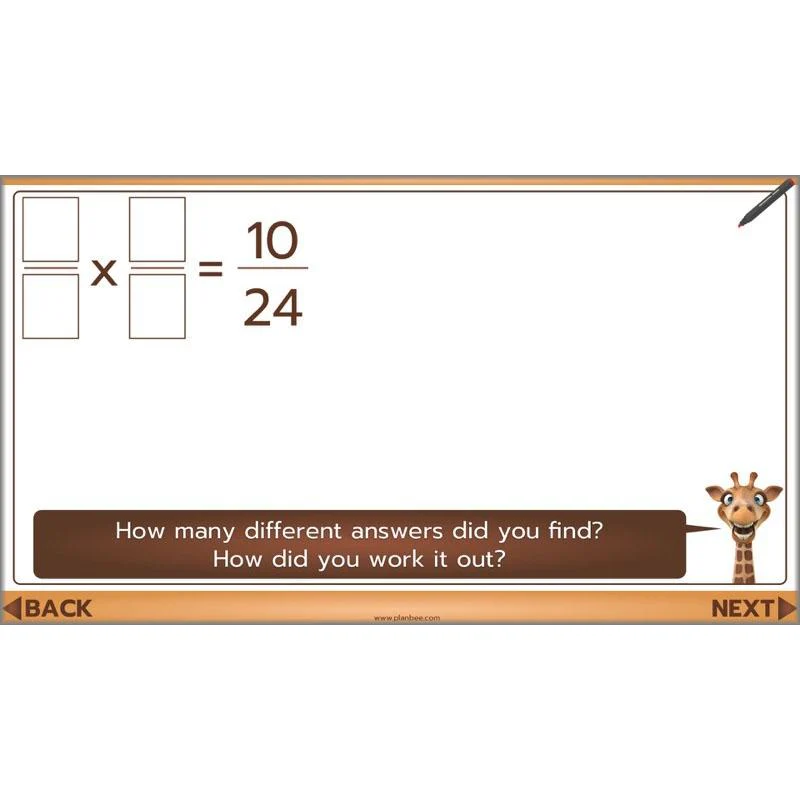
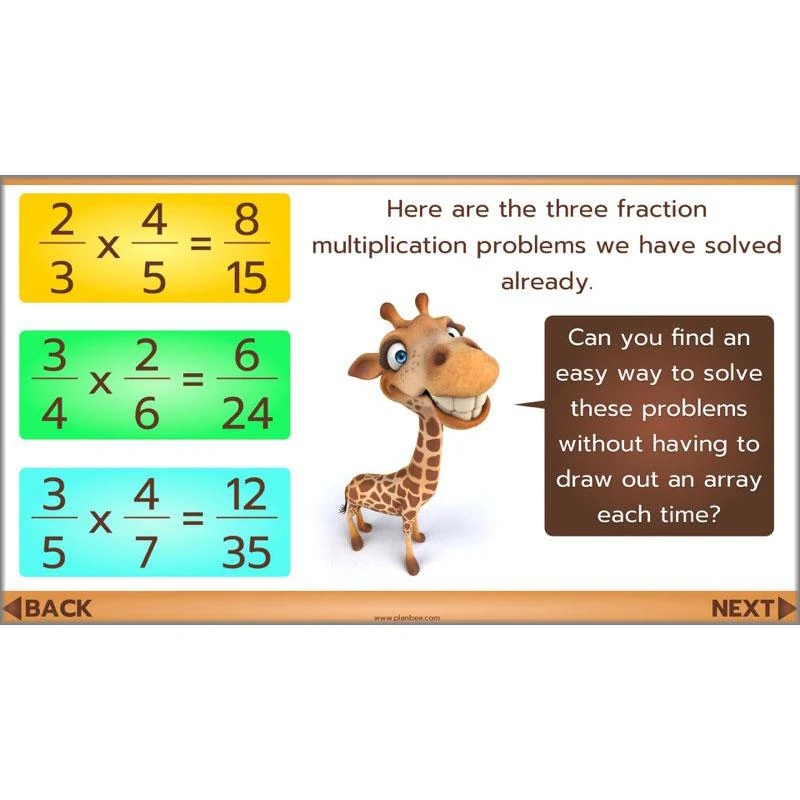
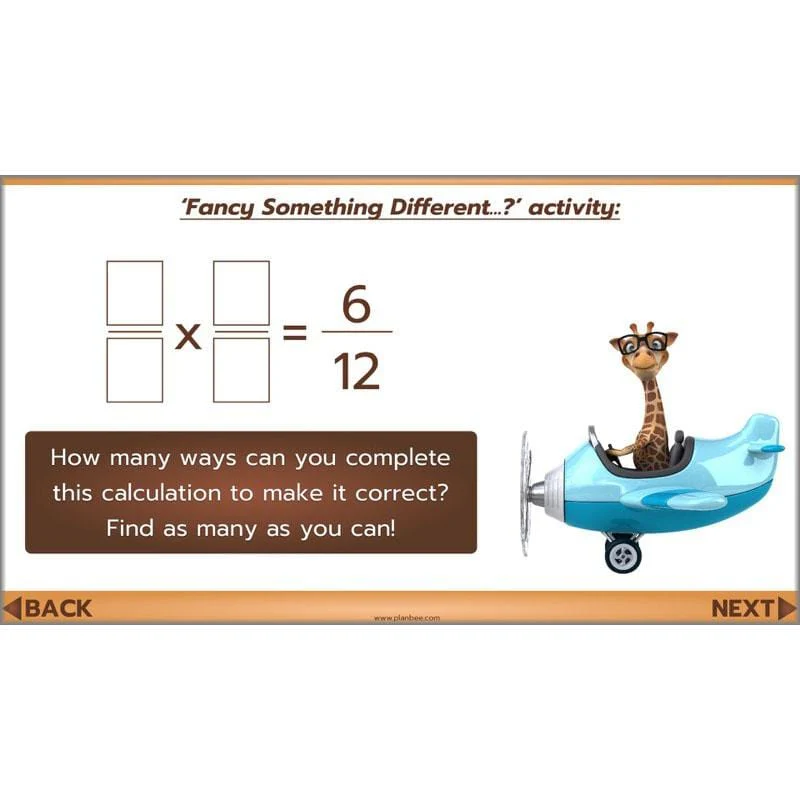
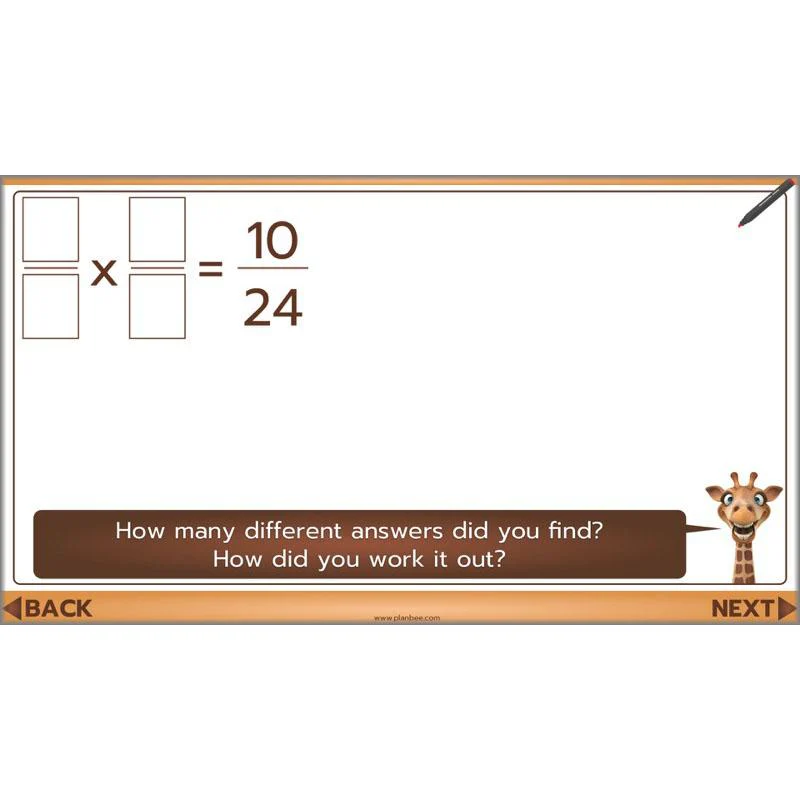
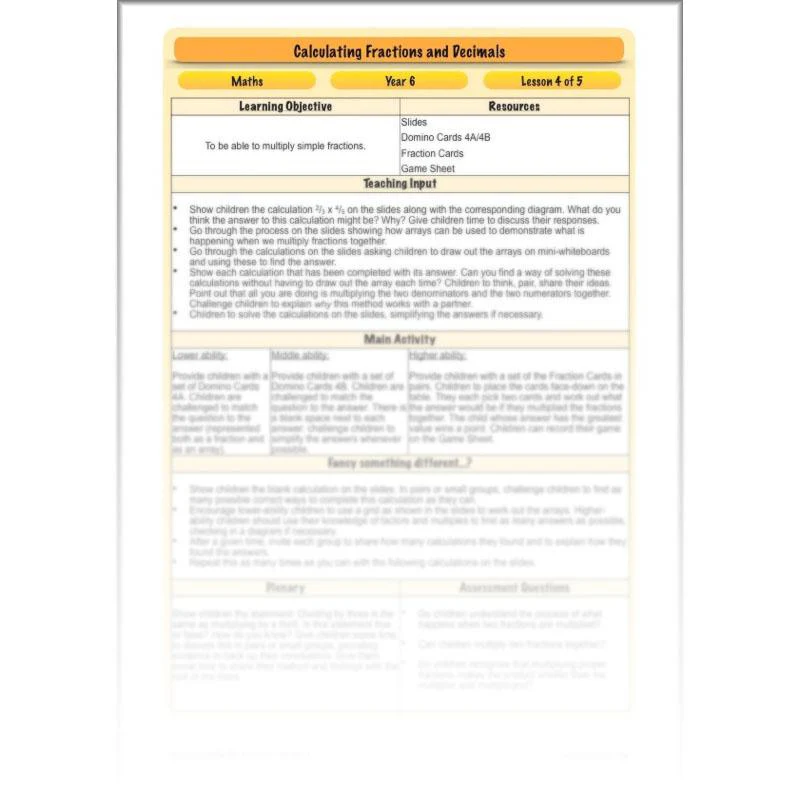
In this lesson, children will learn how to multiply simple fractions together. The slides demonstrate what happens during this process through array diagrams, and then challenge children to solve such problems without visual supports. As well as finding the answers, they will also be challenged to simplify answers where appropriate.
What's included:
- Lesson plan
- Slides
- Activity ideas
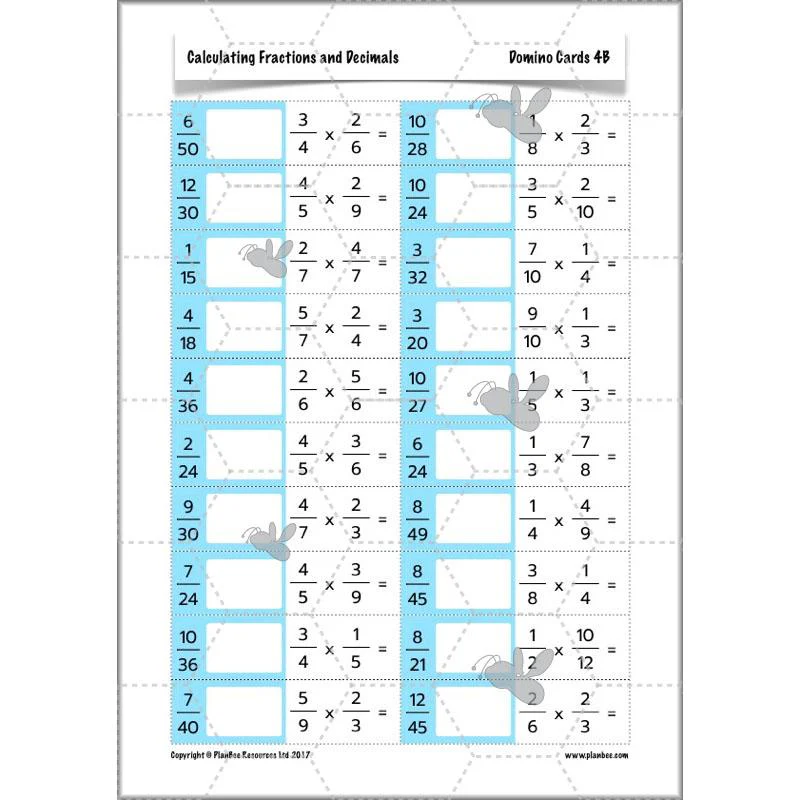
- Differentiated domino cards
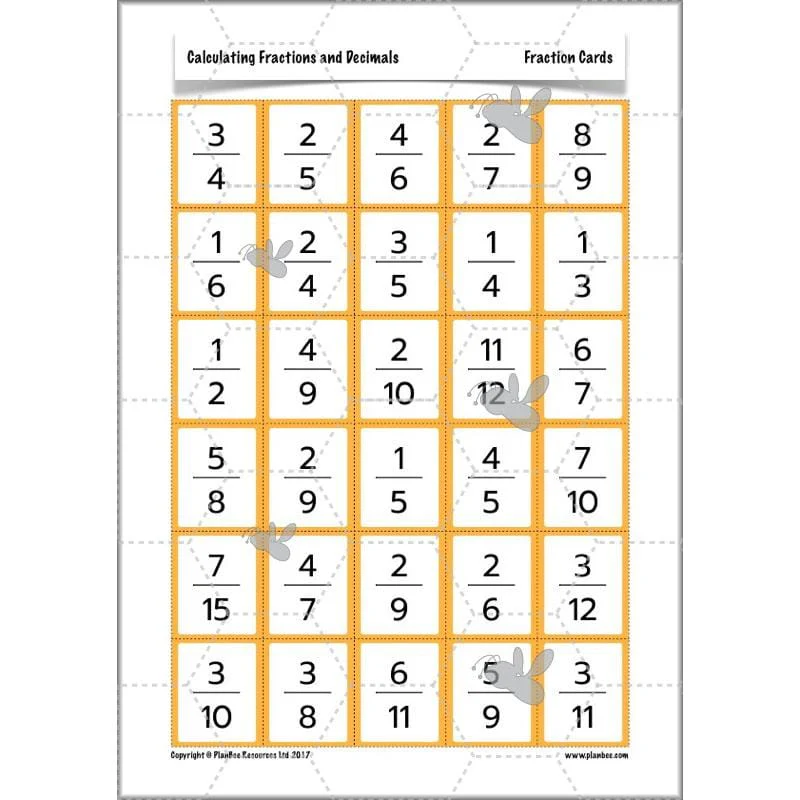
- Fraction cards
- Game sheet
Dividing Fractions
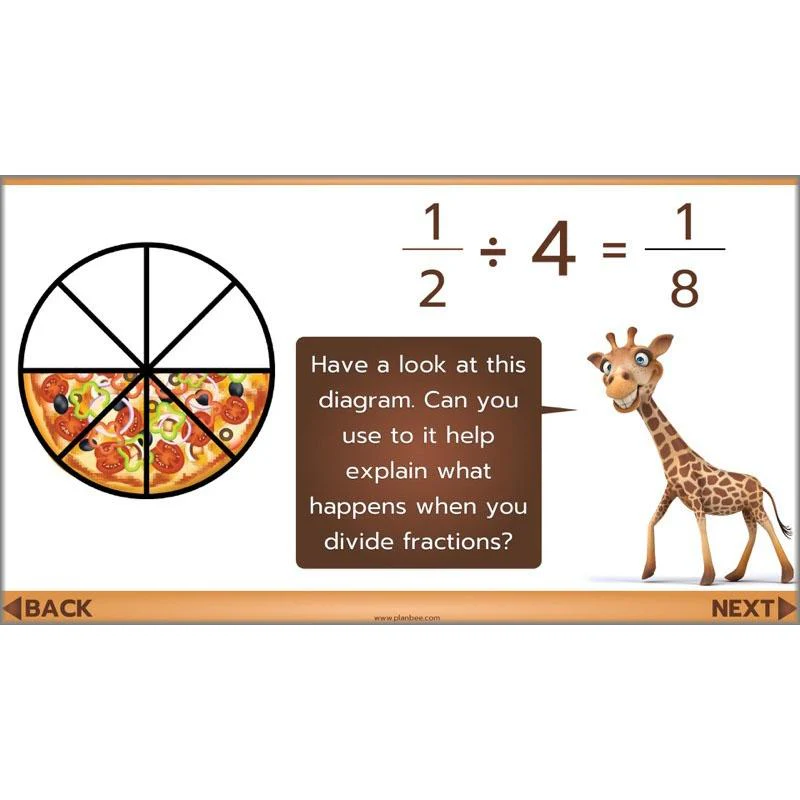
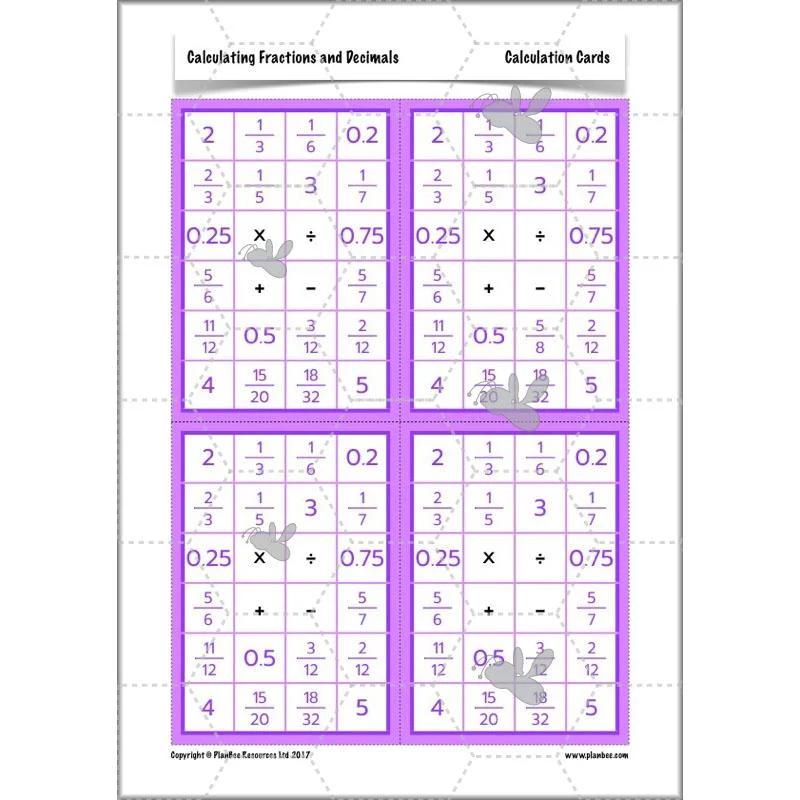
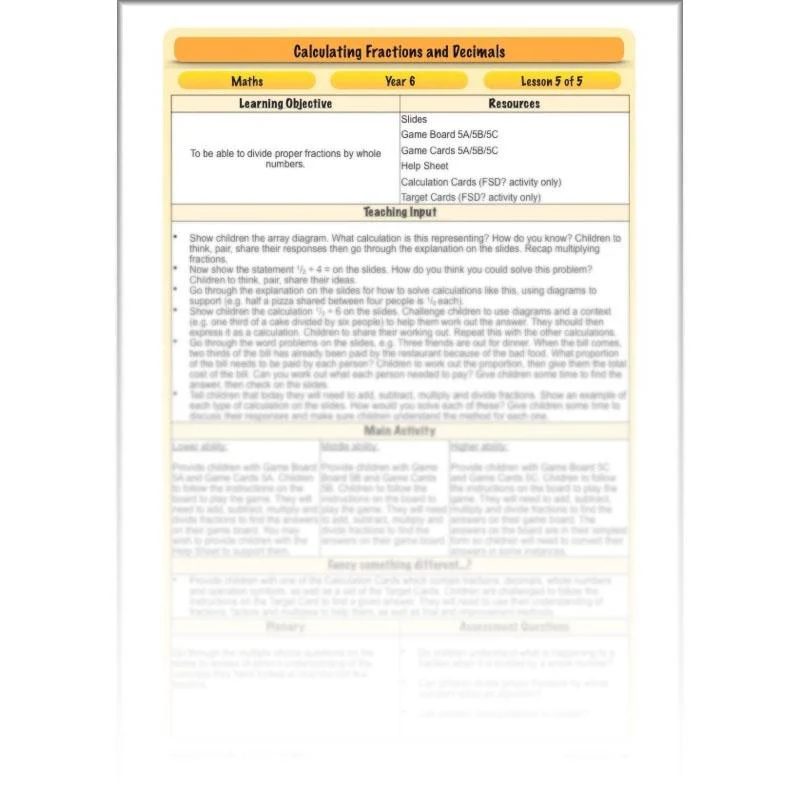
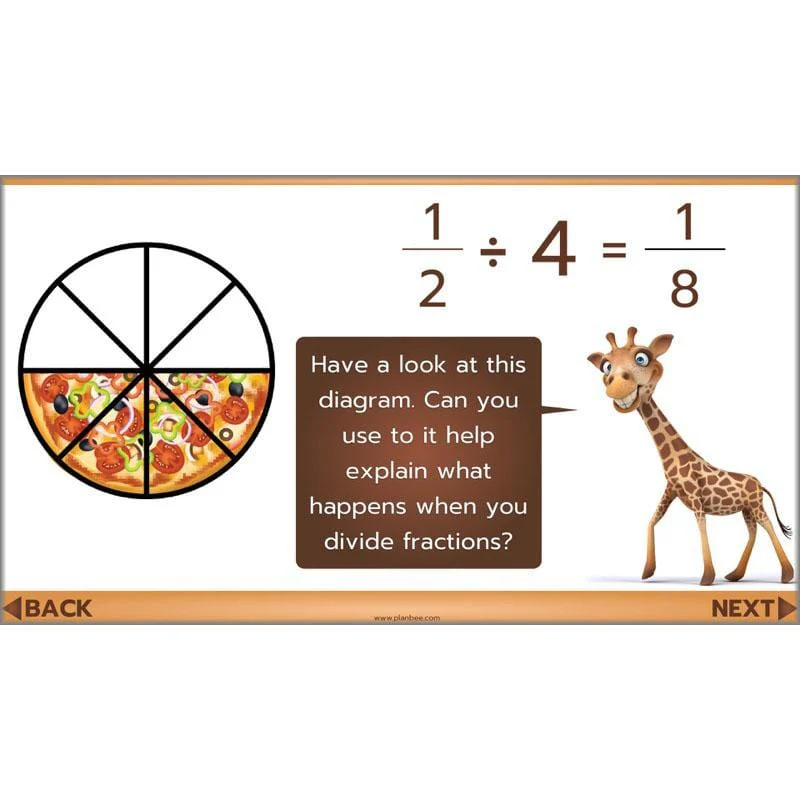
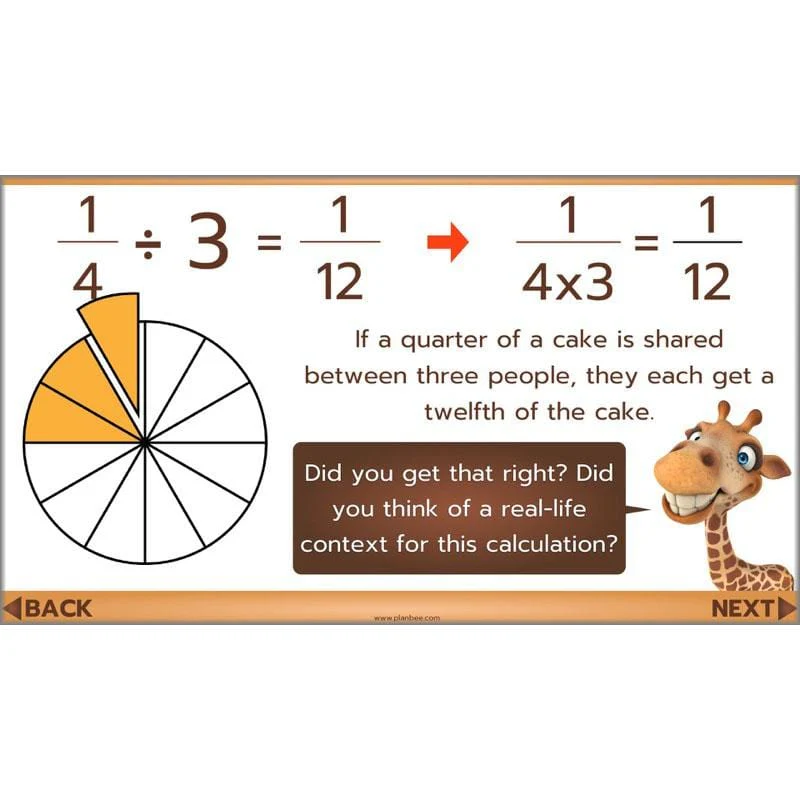
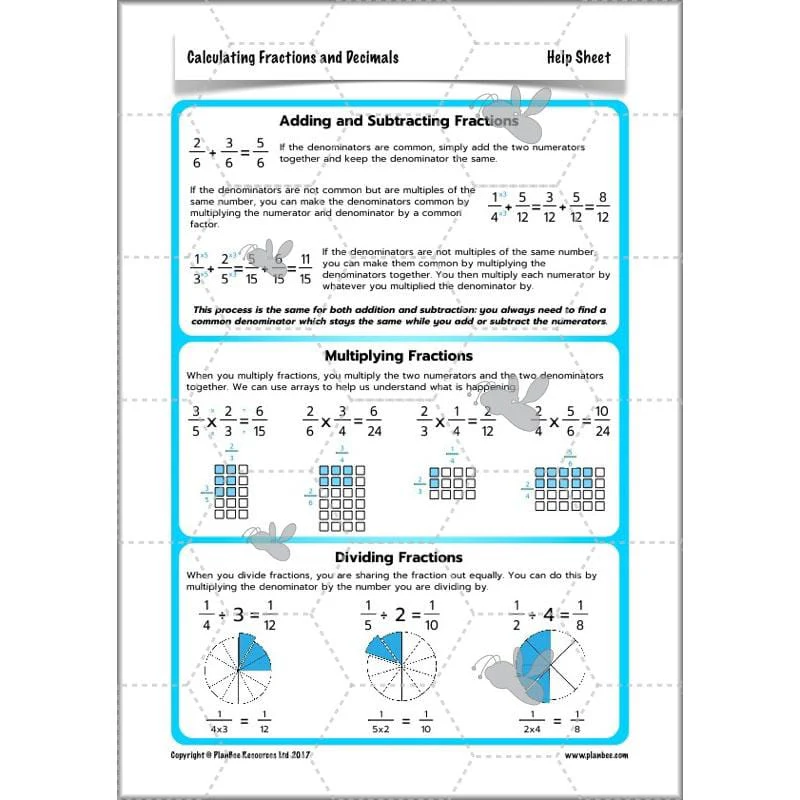
The final lesson in this series looks at the process of dividing simple fractions by a whole number. They will use diagrams to help them visualise problems before using an algorithm to solve fraction division problems. They are then challenged to solve a variety of challenges, drawing on the learning they have done throughout the week.
What's included:
- Lesson plan
- Slides
- Activity ideas
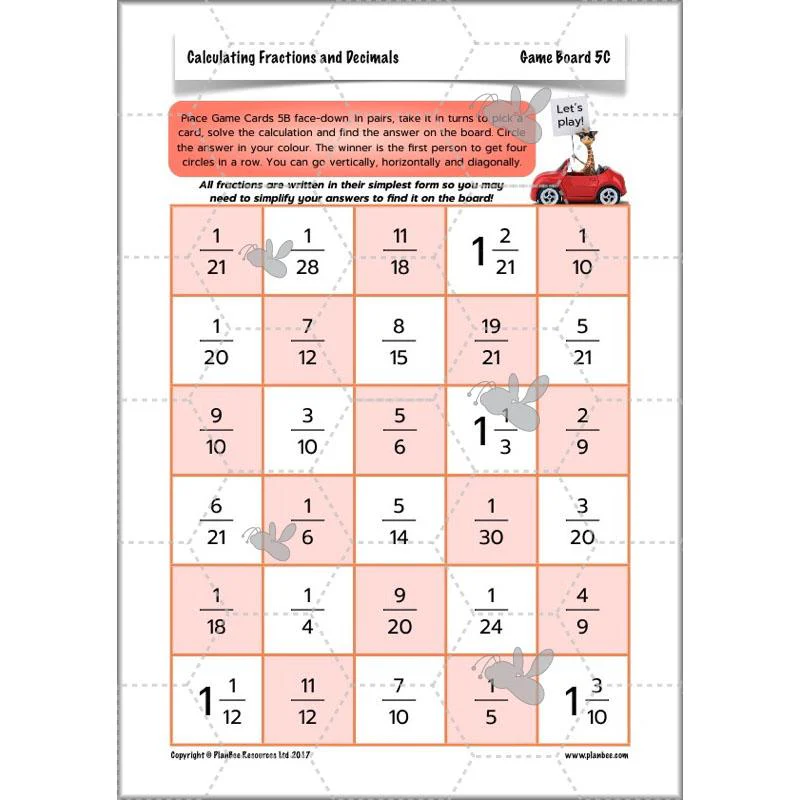
- Differentiated game boards
- Differentiated game cards
- Help sheet
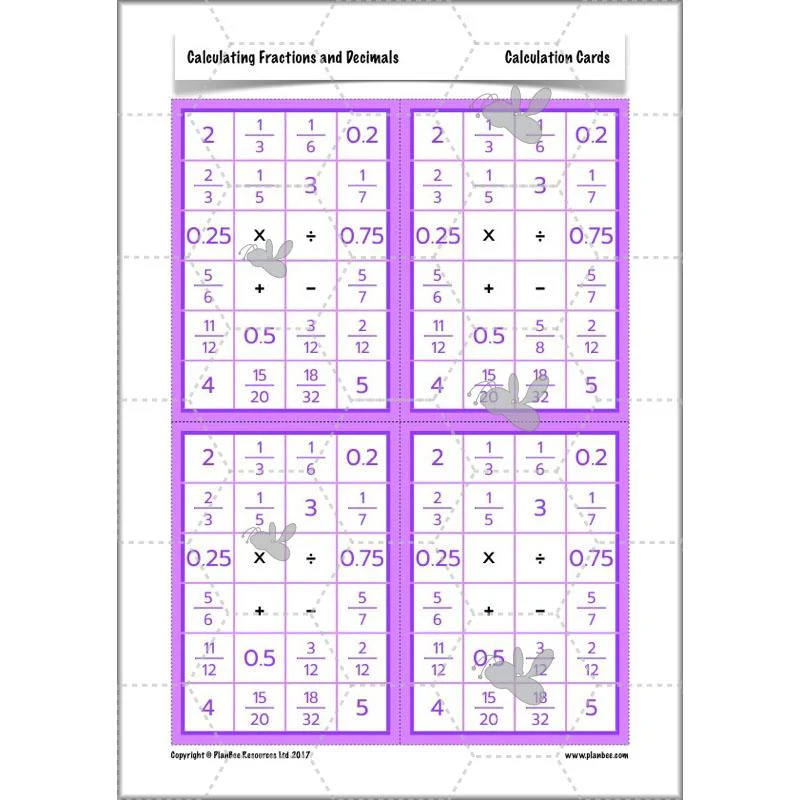
- Calculation cards
- Target cards
Original: $4.71
-65%$4.71
$1.65More Images












Calculating Fractions and Decimals
This Year 6 ‘Calculating Fractions and Decimals’ scheme of work provides five complete lessons which will help your class develop their understanding of the relationship between fractions and decimals, as well as teaching them how to add, subtract, multiply and divide fractions. The slides provide detailed examples of various processes for the children to follow, as well as giving them the opportunity to try out different methods for themselves. Their independent learning tasks then provide further opportunities for consolidation and investigation through fun, differentiated activities.
Each lesson includes a detailed plan, a slide show presentation for the teaching input and differentiated worksheets.
Simplifying Fractions
The first lesson in this series starts by recapping what your class already know about fractions and decimals, and the link between the two. They are challenged to find fraction and decimal equivalents, before looking at how fractions can be simplified to help us do this. They will be shown several methods for simplifying fractions using their understanding of factors and multiples. In their independent learning they can either answer questions to reveal the punchline to a Maths joke, or solve a variety of challenges relating to fractions and decimals.
What's included:
- Lesson plan
- Slides
- Activity ideas
- Differentiated worksheets
- Differentiated challenge sheets
- Differentiated challenge cards
Adding Fractions Part 1
After reminding children how to add and subtract fractions with common denominators, this lesson will move on to explore how to add and subtract fractions where the denominators are multiples of the same number. They will be challenged to use their knowledge of factors and multiples to solve problems, as well as simplifying answers where appropriate.
What's included:
- Lesson plan
- Slides
- Activity ideas
- Differentiated worksheets
- Differentiated challenge cards
Adding Fractions Part 2
Building from their learning in the last lesson, your class will now look at how they can add and subtract fractions where the denominators are not multiples of the same number. They will be shown several ways to do this, including finding the lowest common multiple of the two denominators. Mixed number calculations are also included for an extra challenge!
What's included:
- Lesson plan
- Slides
- Activity ideas
- Differentiated challenge cards
- Butterfly method sheet
Multiplying Fractions
In this lesson, children will learn how to multiply simple fractions together. The slides demonstrate what happens during this process through array diagrams, and then challenge children to solve such problems without visual supports. As well as finding the answers, they will also be challenged to simplify answers where appropriate.
What's included:
- Lesson plan
- Slides
- Activity ideas
- Differentiated domino cards
- Fraction cards
- Game sheet
Dividing Fractions
The final lesson in this series looks at the process of dividing simple fractions by a whole number. They will use diagrams to help them visualise problems before using an algorithm to solve fraction division problems. They are then challenged to solve a variety of challenges, drawing on the learning they have done throughout the week.
What's included:
- Lesson plan
- Slides
- Activity ideas
- Differentiated game boards
- Differentiated game cards
- Help sheet
- Calculation cards
- Target cards
Product Information
Product Information
Shipping & Returns
Shipping & Returns
Description
This Year 6 ‘Calculating Fractions and Decimals’ scheme of work provides five complete lessons which will help your class develop their understanding of the relationship between fractions and decimals, as well as teaching them how to add, subtract, multiply and divide fractions. The slides provide detailed examples of various processes for the children to follow, as well as giving them the opportunity to try out different methods for themselves. Their independent learning tasks then provide further opportunities for consolidation and investigation through fun, differentiated activities.
Each lesson includes a detailed plan, a slide show presentation for the teaching input and differentiated worksheets.
Simplifying Fractions
The first lesson in this series starts by recapping what your class already know about fractions and decimals, and the link between the two. They are challenged to find fraction and decimal equivalents, before looking at how fractions can be simplified to help us do this. They will be shown several methods for simplifying fractions using their understanding of factors and multiples. In their independent learning they can either answer questions to reveal the punchline to a Maths joke, or solve a variety of challenges relating to fractions and decimals.
What's included:
- Lesson plan
- Slides
- Activity ideas
- Differentiated worksheets
- Differentiated challenge sheets
- Differentiated challenge cards
Adding Fractions Part 1
After reminding children how to add and subtract fractions with common denominators, this lesson will move on to explore how to add and subtract fractions where the denominators are multiples of the same number. They will be challenged to use their knowledge of factors and multiples to solve problems, as well as simplifying answers where appropriate.
What's included:
- Lesson plan
- Slides
- Activity ideas
- Differentiated worksheets
- Differentiated challenge cards
Adding Fractions Part 2
Building from their learning in the last lesson, your class will now look at how they can add and subtract fractions where the denominators are not multiples of the same number. They will be shown several ways to do this, including finding the lowest common multiple of the two denominators. Mixed number calculations are also included for an extra challenge!
What's included:
- Lesson plan
- Slides
- Activity ideas
- Differentiated challenge cards
- Butterfly method sheet
Multiplying Fractions
In this lesson, children will learn how to multiply simple fractions together. The slides demonstrate what happens during this process through array diagrams, and then challenge children to solve such problems without visual supports. As well as finding the answers, they will also be challenged to simplify answers where appropriate.
What's included:
- Lesson plan
- Slides
- Activity ideas
- Differentiated domino cards
- Fraction cards
- Game sheet
Dividing Fractions
The final lesson in this series looks at the process of dividing simple fractions by a whole number. They will use diagrams to help them visualise problems before using an algorithm to solve fraction division problems. They are then challenged to solve a variety of challenges, drawing on the learning they have done throughout the week.
What's included:
- Lesson plan
- Slides
- Activity ideas
- Differentiated game boards
- Differentiated game cards
- Help sheet
- Calculation cards
- Target cards