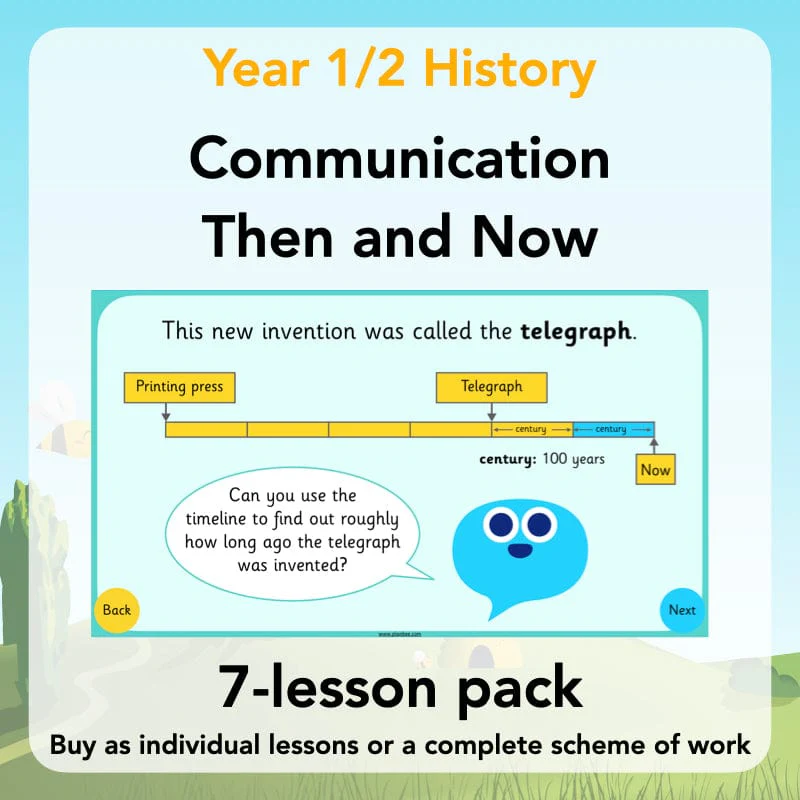
Communication Then and Now
Take a whistle-stop tour across the ages from hieroglyphics to the World Wide Web as your KS1 class explore the history of communication. They will find out how people got in touch with each other before telephones and emails, as well as finding out about the people behind some important improvements in communication, including William Caxton, Samuel Morse, Alexander Graham Bell and Tim Berners-Lee.
These fascinating lessons contain detailed lesson plans, engaging slides, differentiated activity ideas, worksheets, picture cards and much more, giving you everything you need to deliver exciting and informative History lessons to your KS1 class! Looking for other ready-to-teach KS1 History schemes? Take a look at our KS1 History Collection.
A Knowledge Organiser is available to support the learning in this scheme. It is included in the Complete Series download or can be purchased individually.
Early Writing
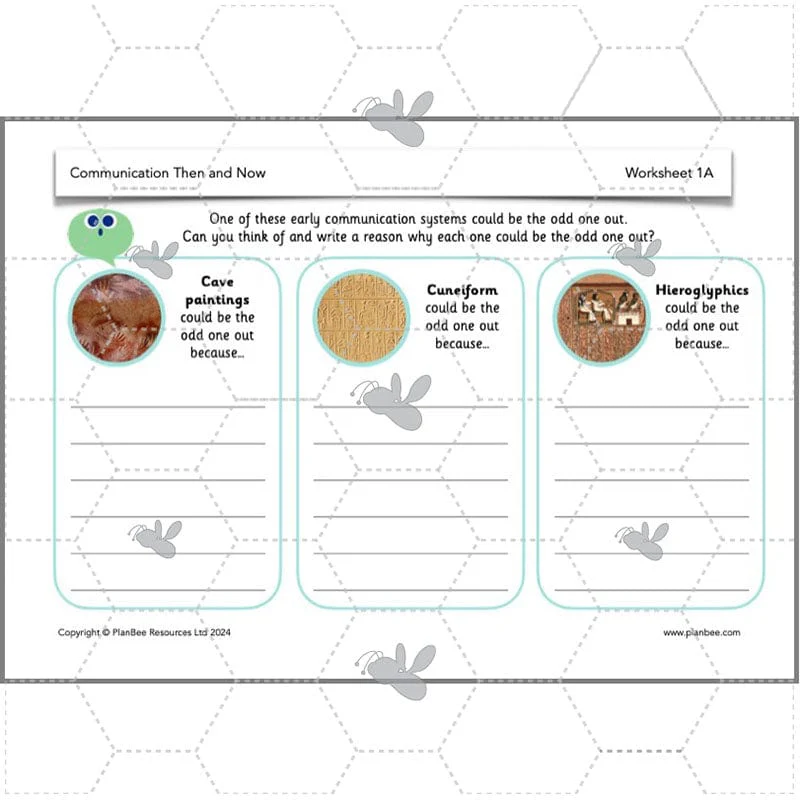
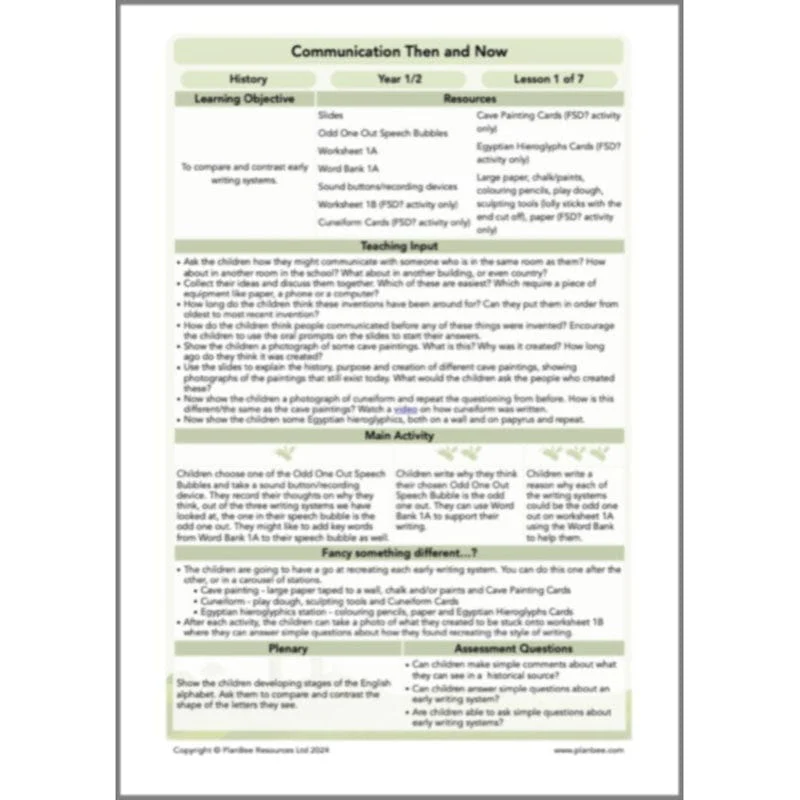
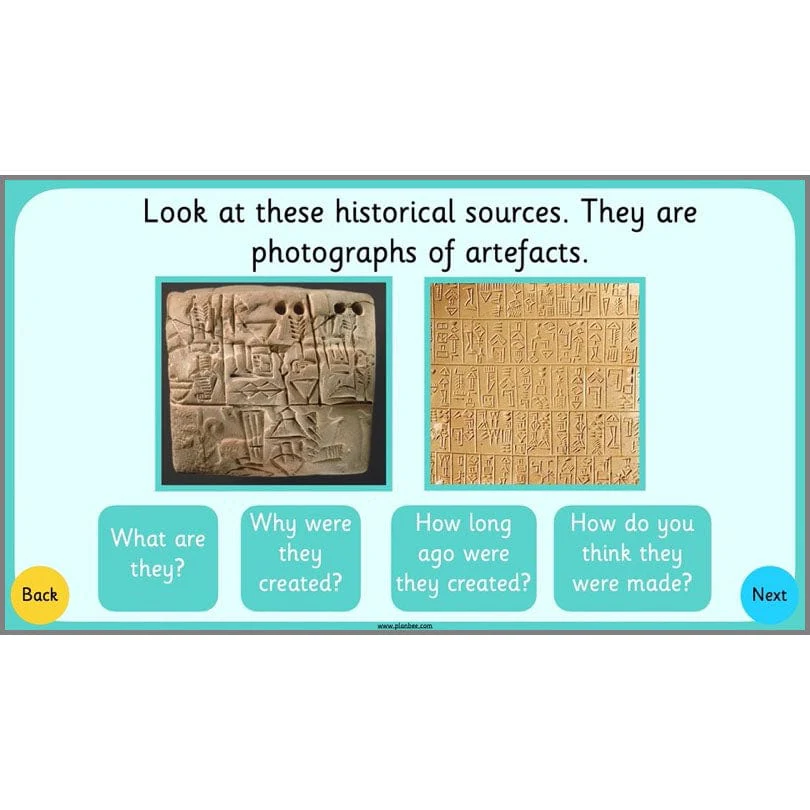
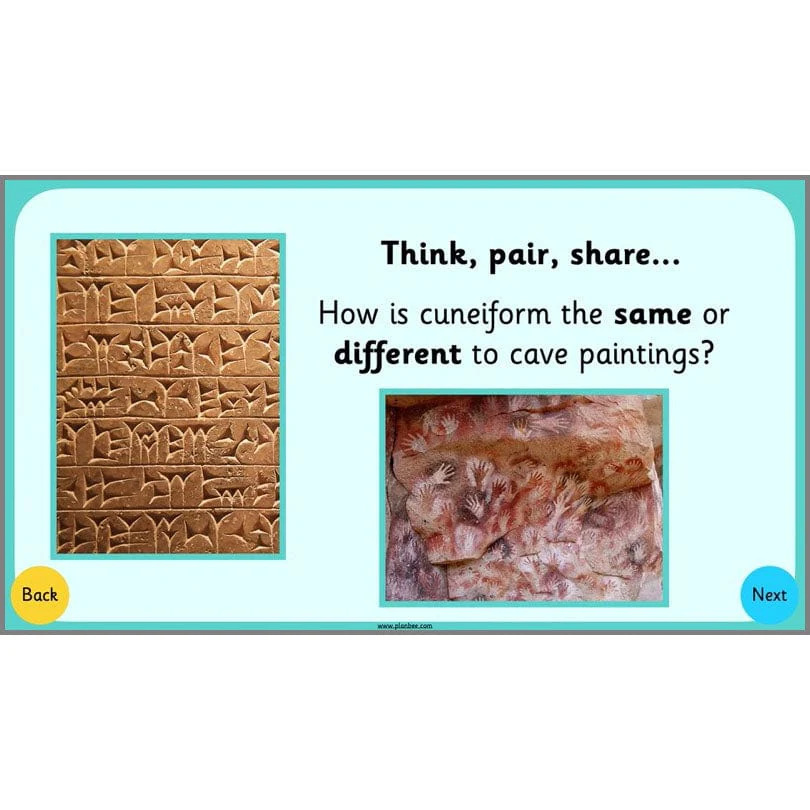
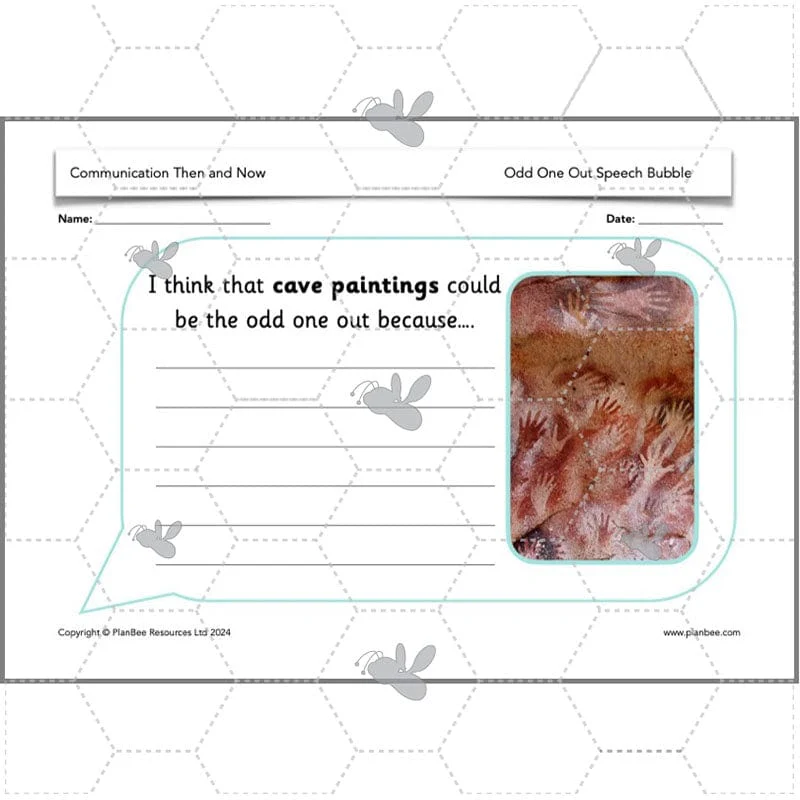
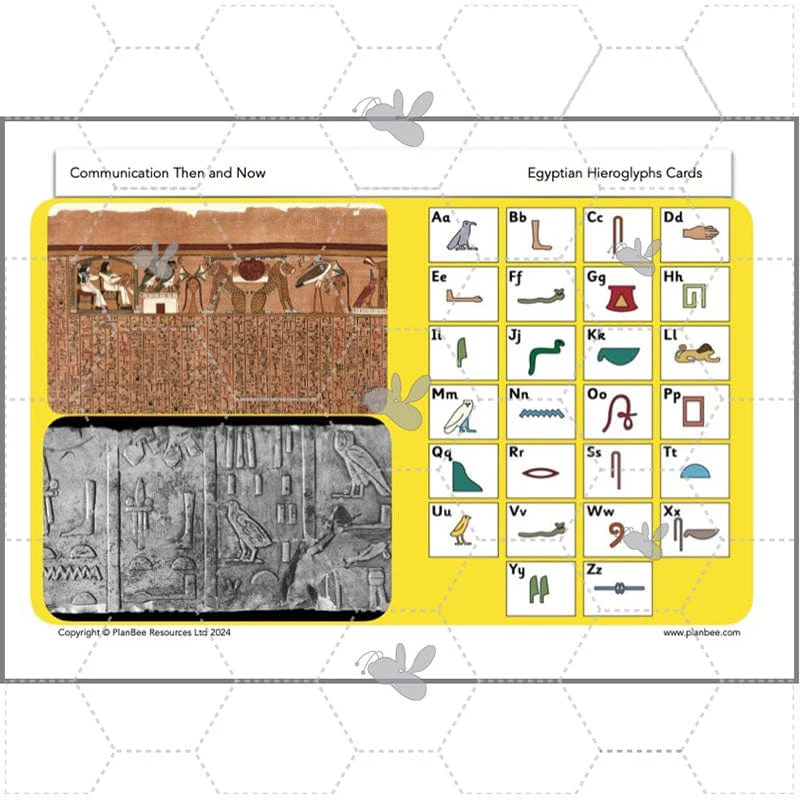
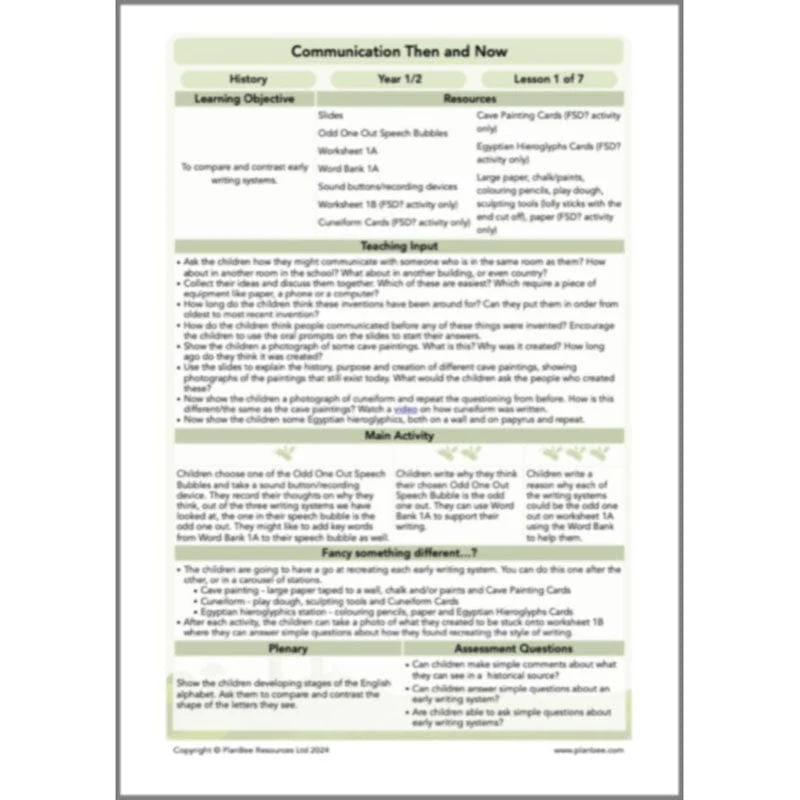
This first lesson takes your class back thousands of years to cave paintings. They are challenged to compare this earliest form of communicating with the first forms of writing in cuneiform and Egyptian hieroglyphs.
The lesson focuses on comparing and contrasting between the different forms of early writing and communication, thinking about the ease of creating each writing system and how it might have been shared with other members of society.
This lesson pack comes with everything you need to introduce and compare early writing systems, including a detailed lesson plan, PDF lesson slides and printed resources.
What's included:
- Lesson plan
- Slides
- Activity ideas
- Differentiated worksheets
- Word bank
- Cuneiform cards
- Cave painting cards
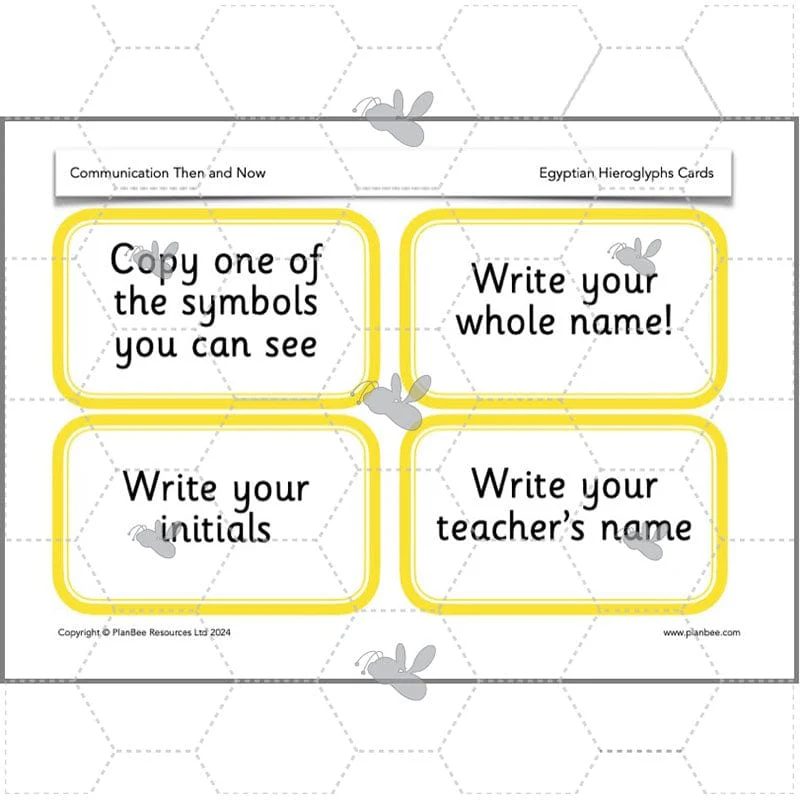
- Egyptian hieroglyph cards
View Lesson 1
The Printing Press
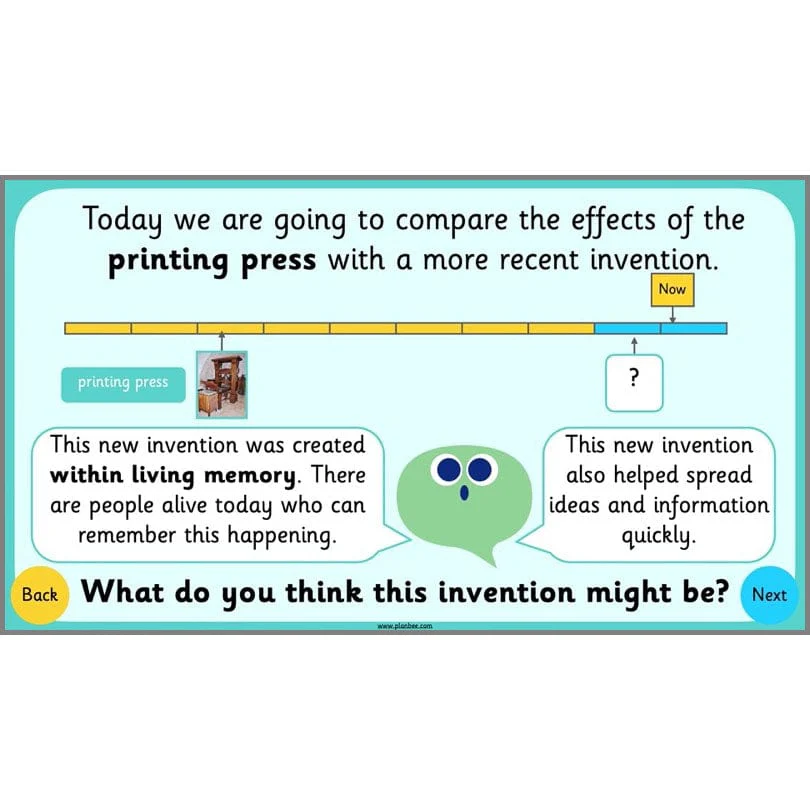
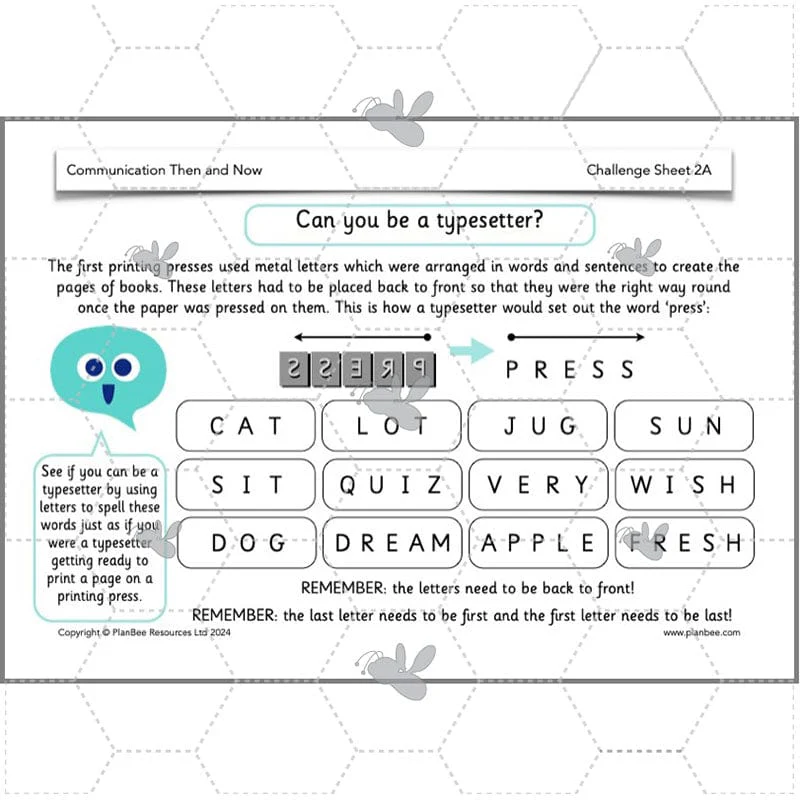
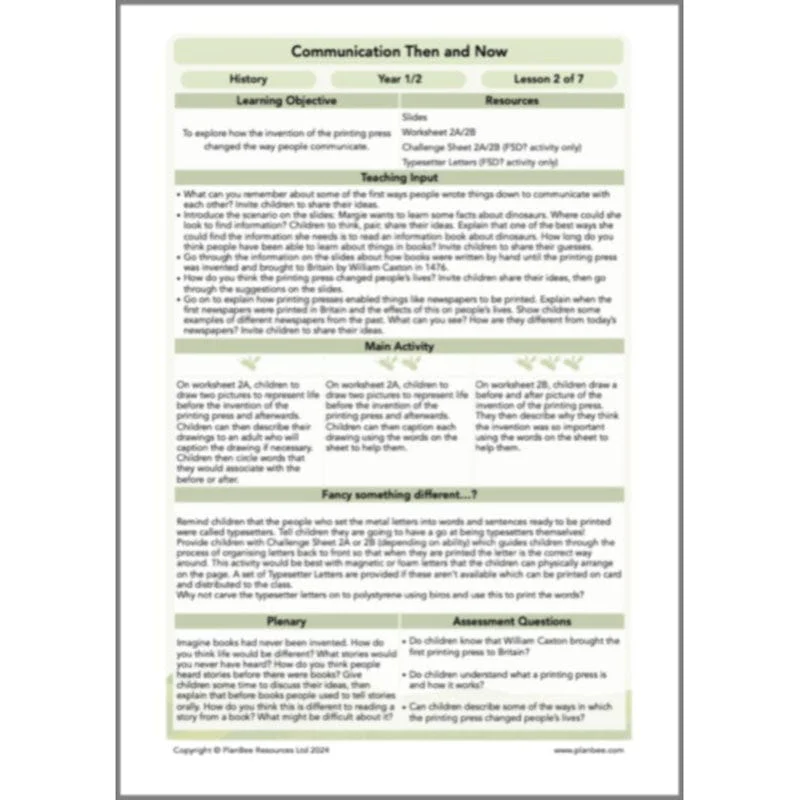
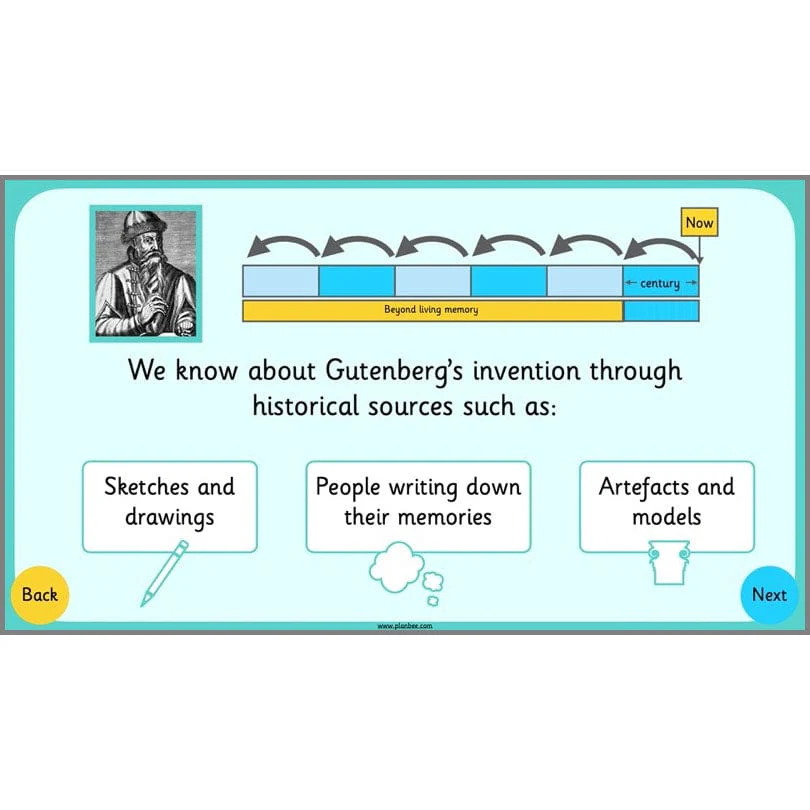
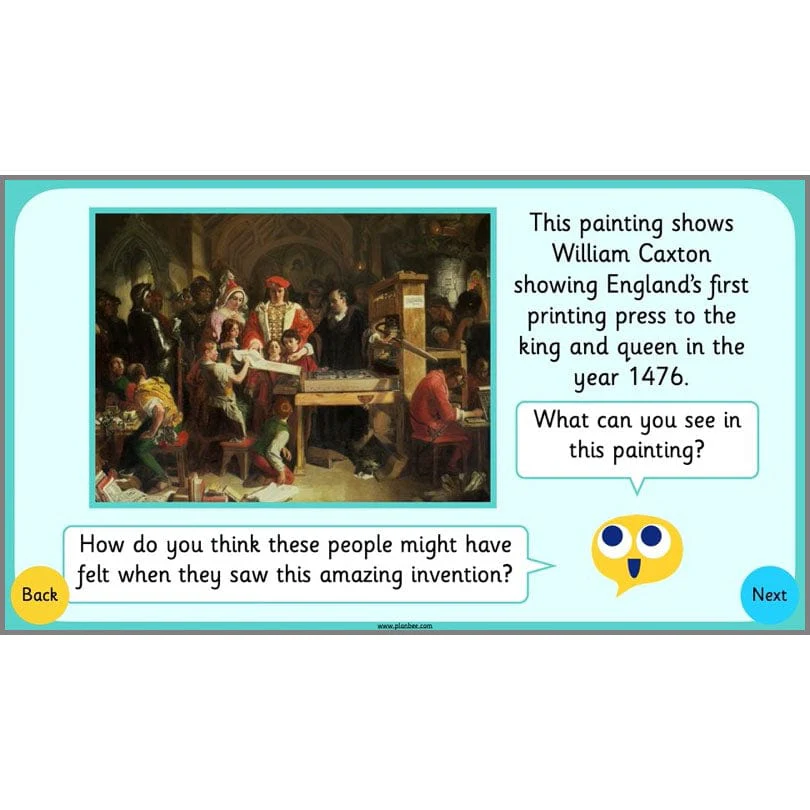
How can one invention change the daily lives of people in Britain? Ask and investigate this question with your class as they learn about William Claxton introducing the Gutenberg moveable-type printing press to Britain in the 15th century.
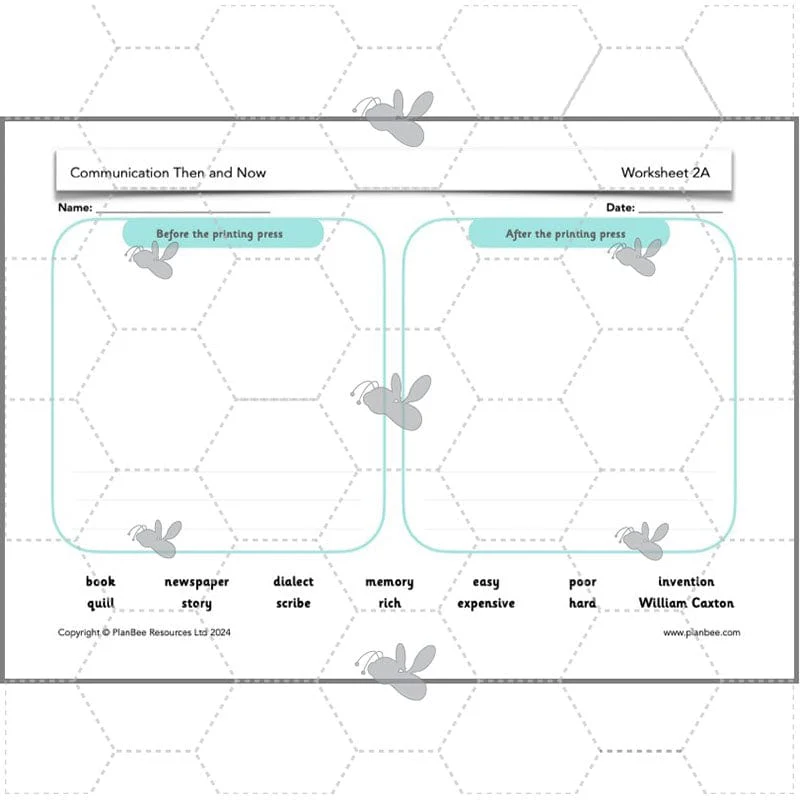
The children will reflect on what life might have been like before and after the printing press was invented including the printing of books, newspapers and pamphlets as well as how the printed word created a standard of written English across dialects.
Each activity idea has all the printable resources you'll need as well as a detailed lesson plan and PDF lesson slides.
What's included:
- Lesson plan
- Slides
- Activity ideas
- Differentiated worksheets
- Differentiated challenge sheets
- Typesetter letters
View Lesson 2
Letters vs Telegrams
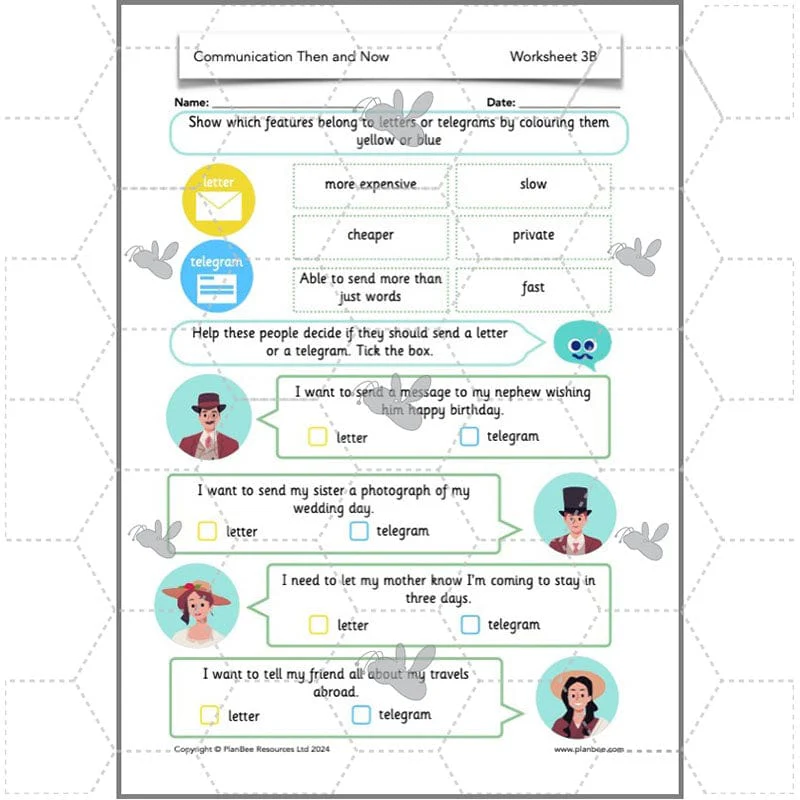
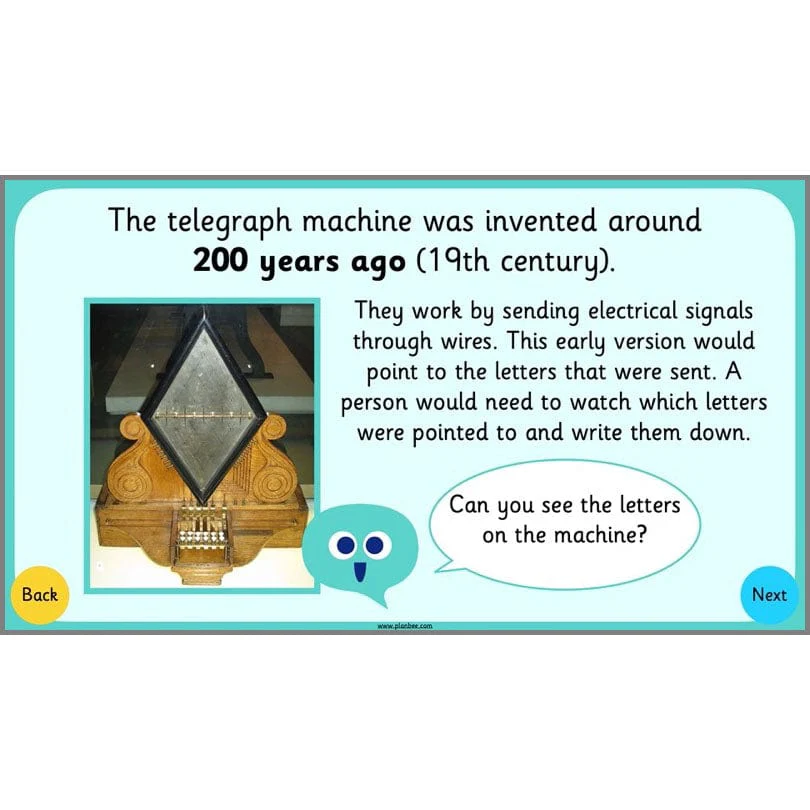
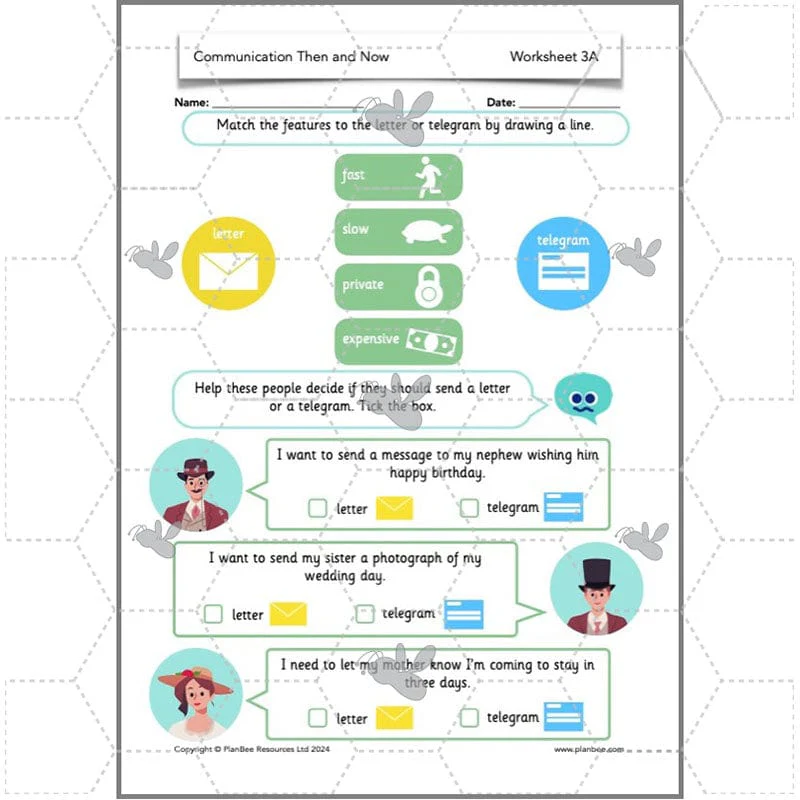
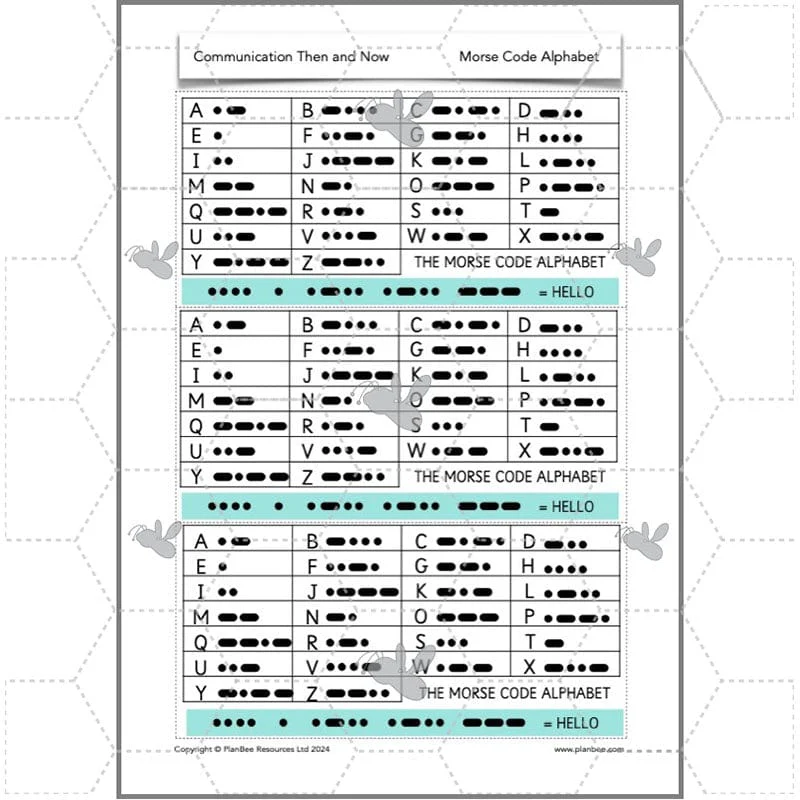
Find out about the invention of the telegram with your class. Discuss how Morse code was used to send signals along a wire so that messages could be sent instantly across long distances. Spark discussion around how this might have changed people's lives as, before this, a lot of communication relied on letters which took much longer to be delivered.
Challenge your class to find advantages and disadvantages using this fully resourced lesson for KS1 History.
What's included:
- Lesson plan
- Slides
- Activity ideas
- Differentiated worksheets
- Message cards
- Morse code alphabet
- Morse code words
View Lesson 3
The Telephone
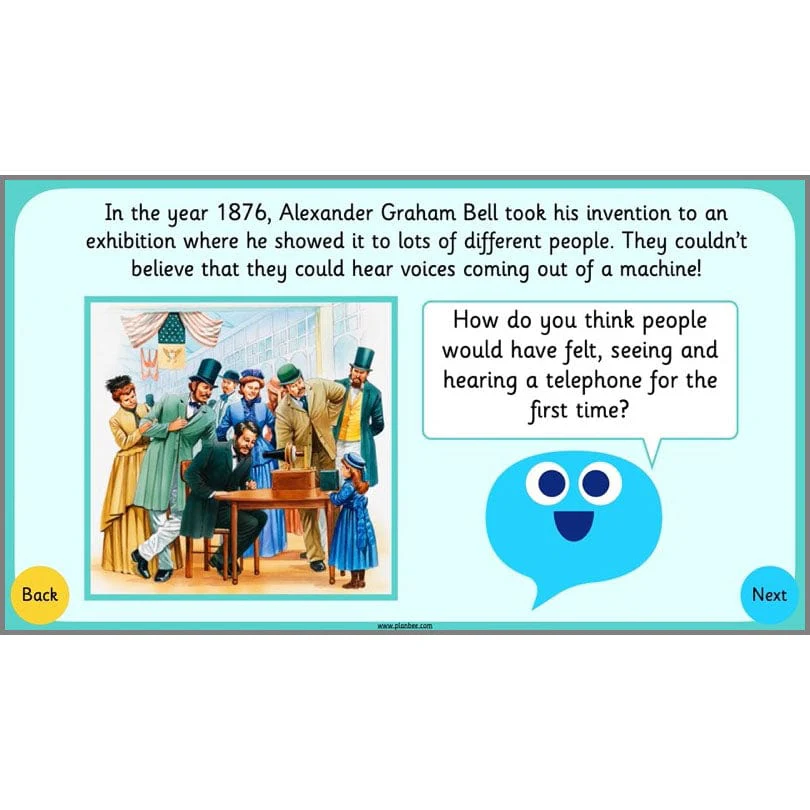
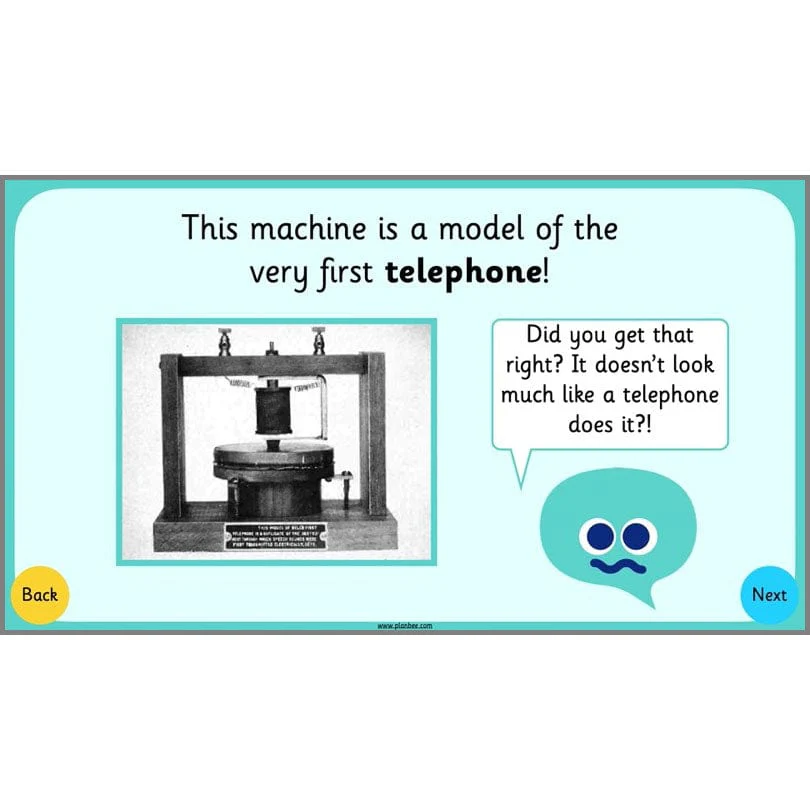
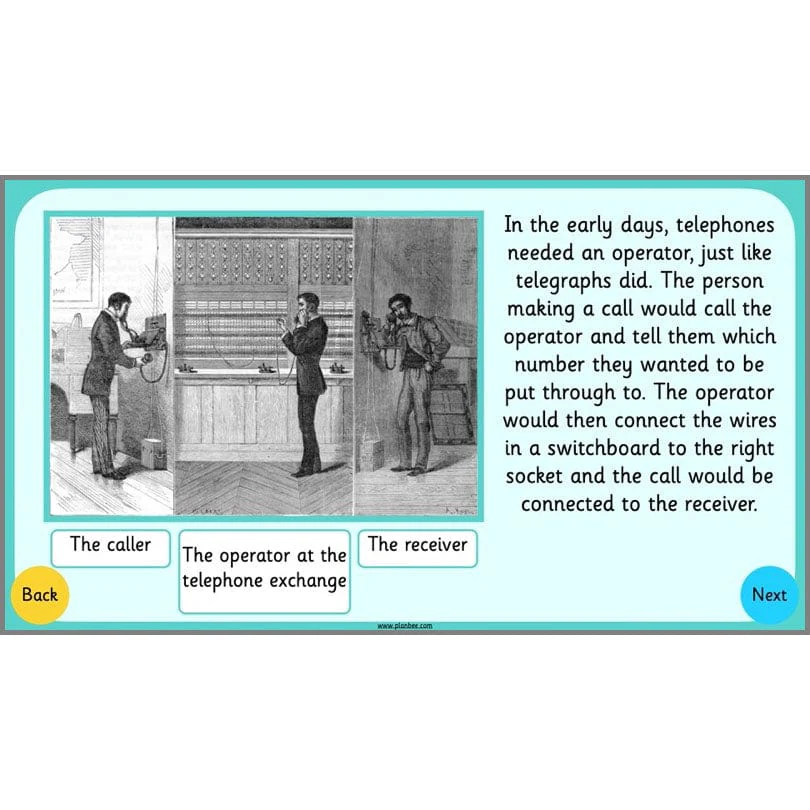
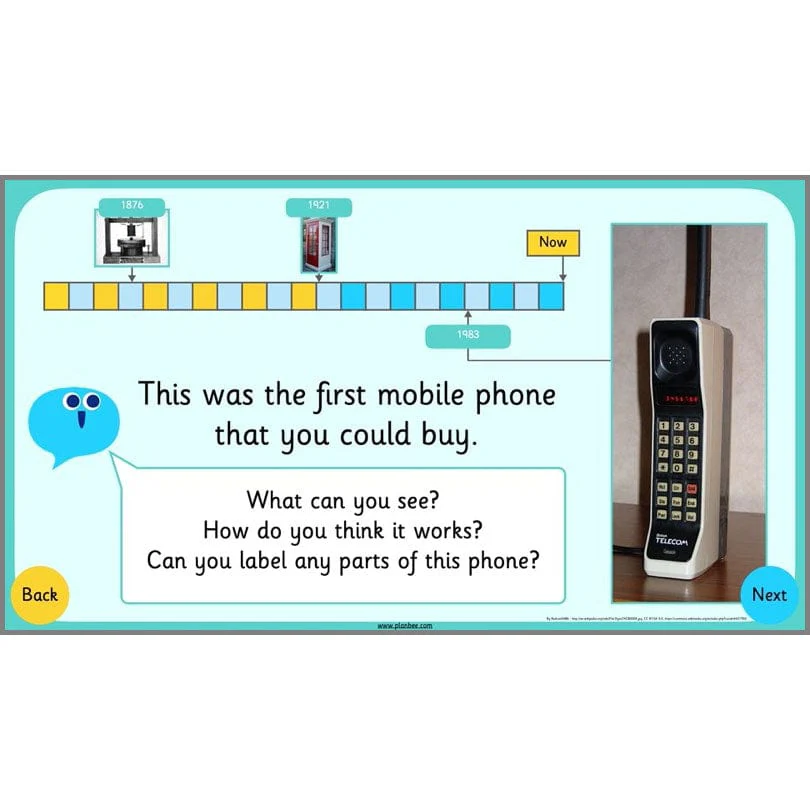
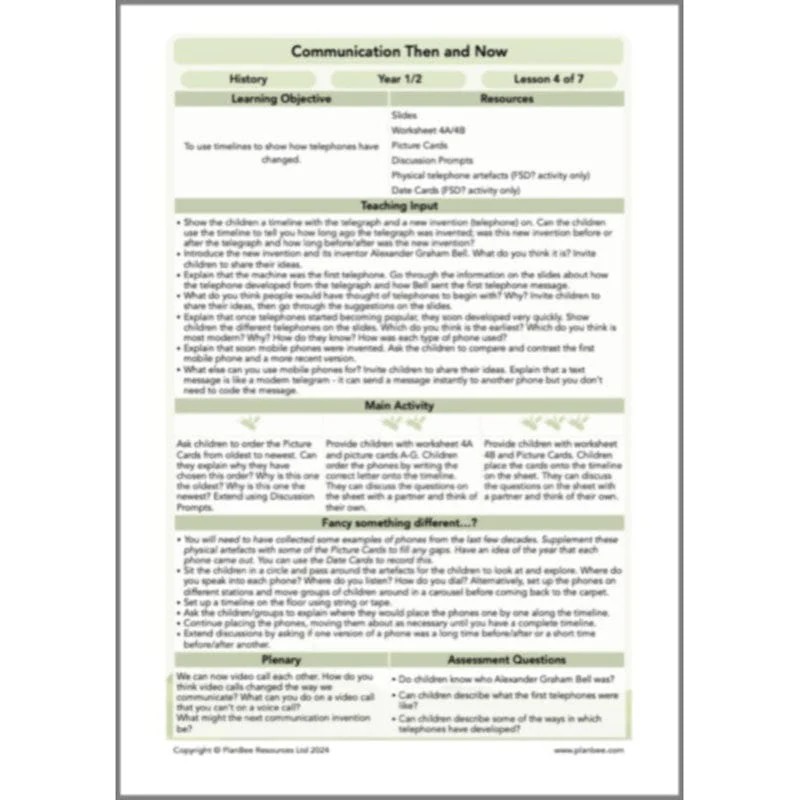
Ring, ring! It's time to develop your class's timeline skills as they discover the invention, development and changes of the telephone.
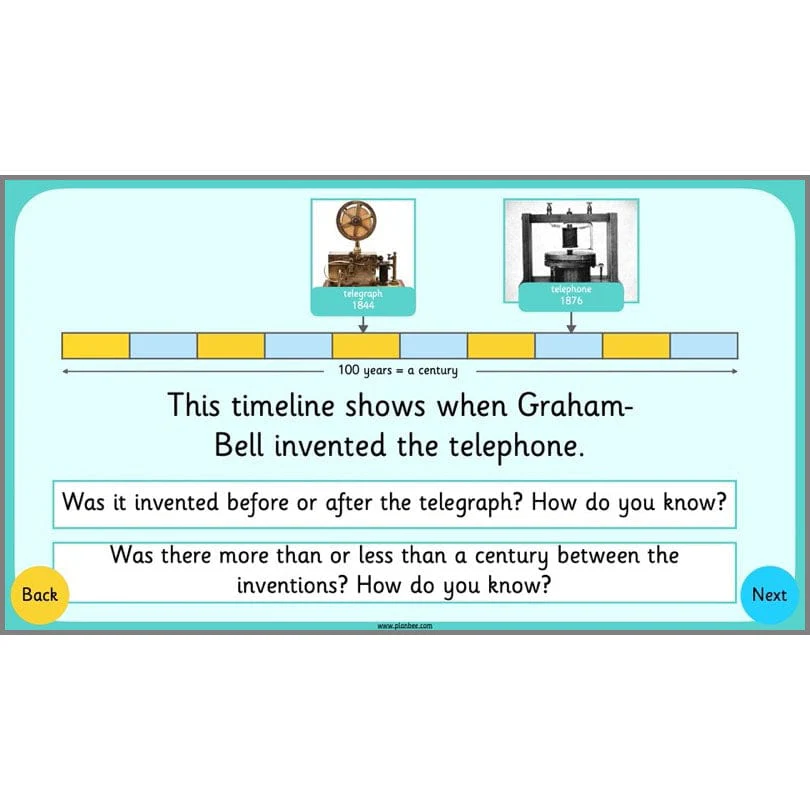
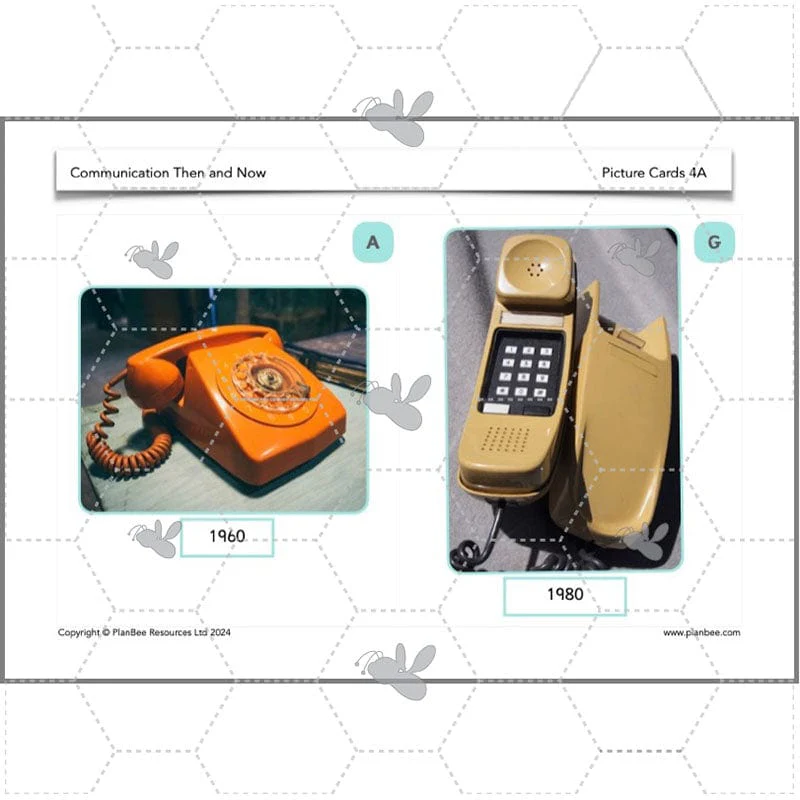
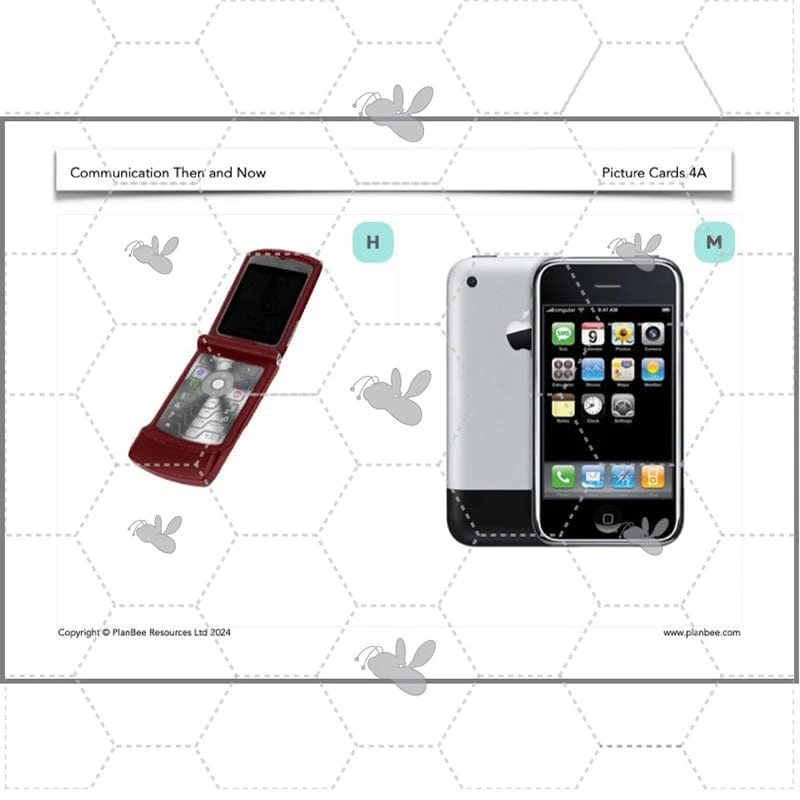
Your class will practise identifying if different versions of the telephone came before or after another using a timeline before placing a variety of telephones onto a timeline.
This fully-resourced lesson has all you need to help your class become telephone timeline experts.
What's included:
- Lesson plan
- Slides
- Activity ideas
- Differentiated worksheets
- Picture cards
- Discussion prompts
- Date cards
View Lesson 4
Caxton vs Berners-Lee
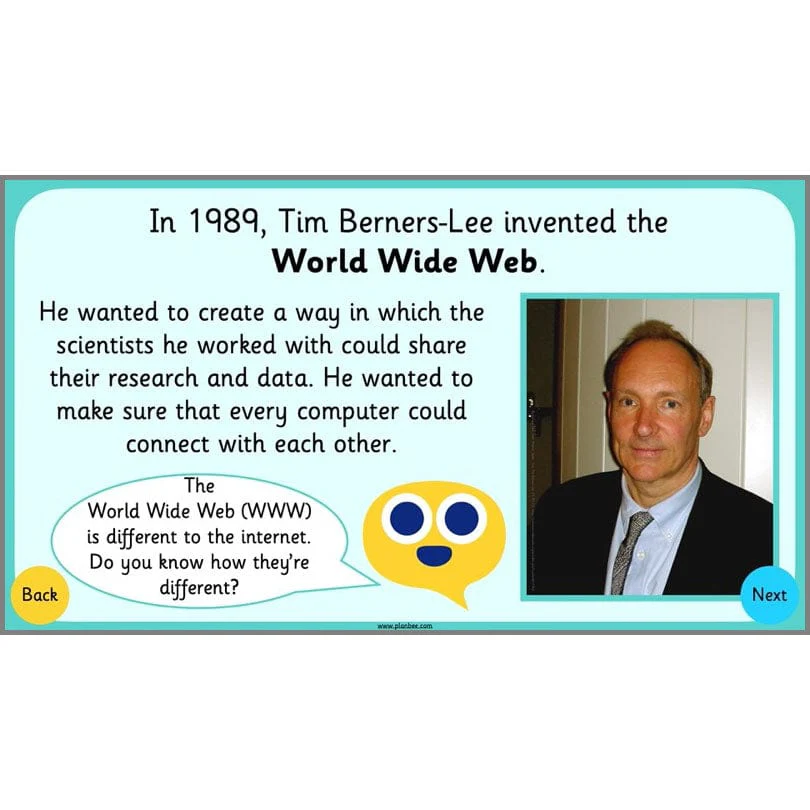
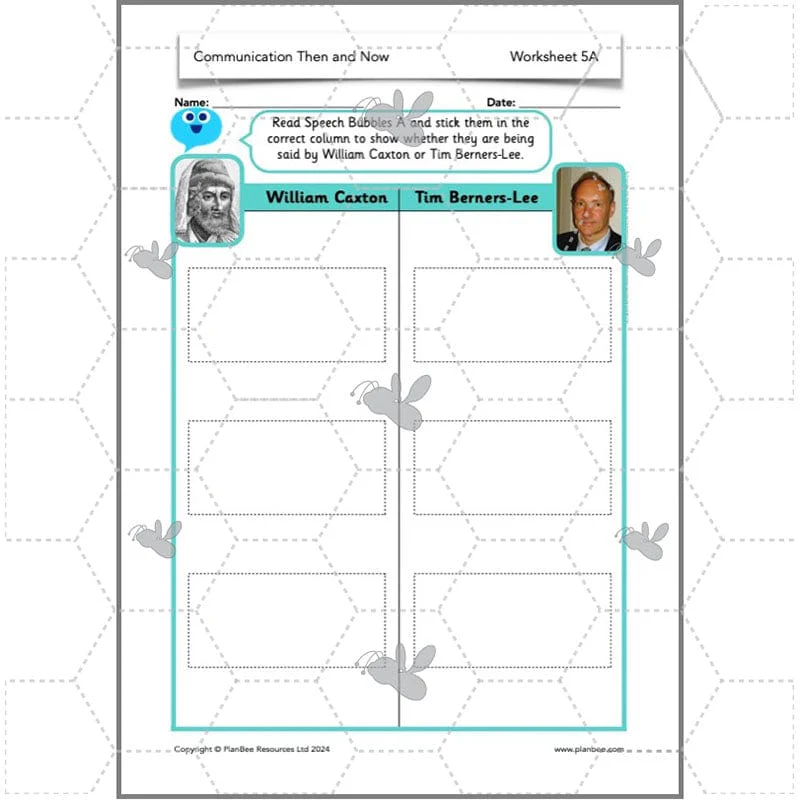
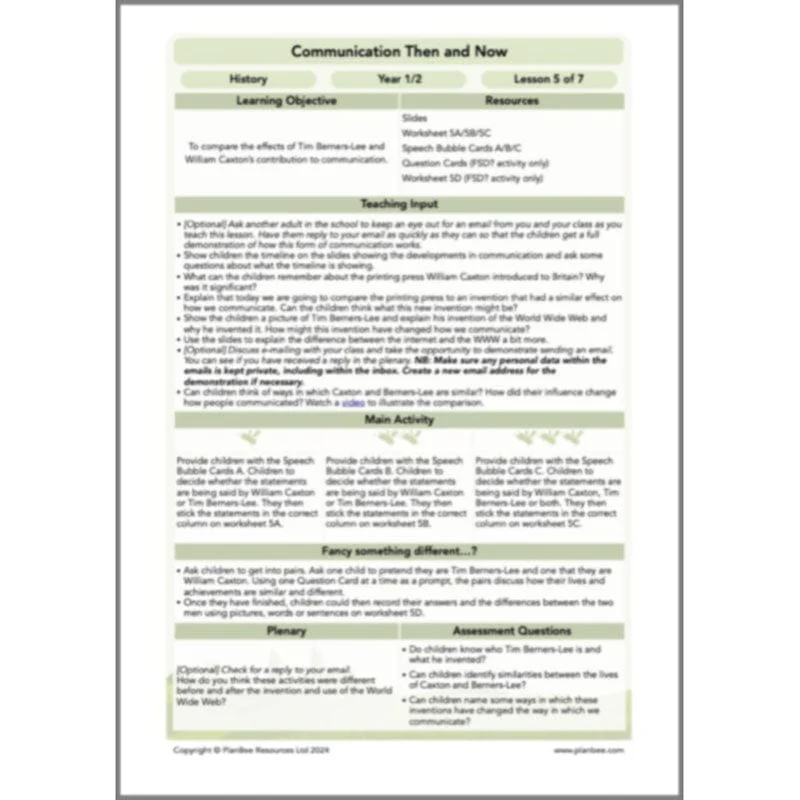
This lesson looks at two important figures in the history of communication and compares their lives and achievements. From Caxton in the fifteenth century to Berners-Lee in the twentieth century, your class will consider ways in which their lives were similar and different, and how the lives of people in these two time periods differed.
What's included:
- Lesson plan
- Slides
- Activity ideas
- Differentiated worksheets
- Speech bubble cards
- Question cards
View Lesson 5
British Sign Language
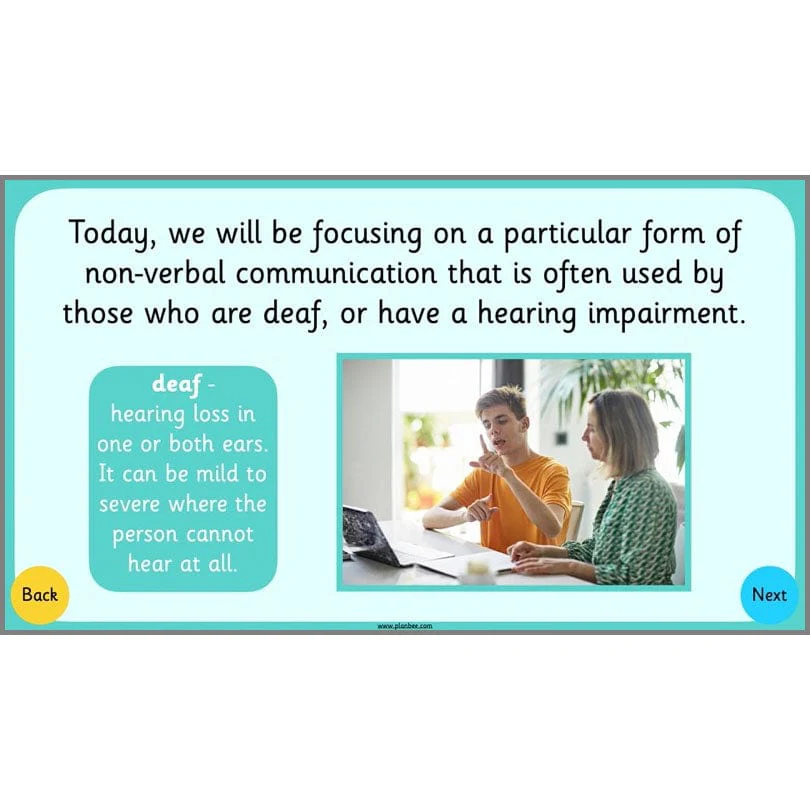
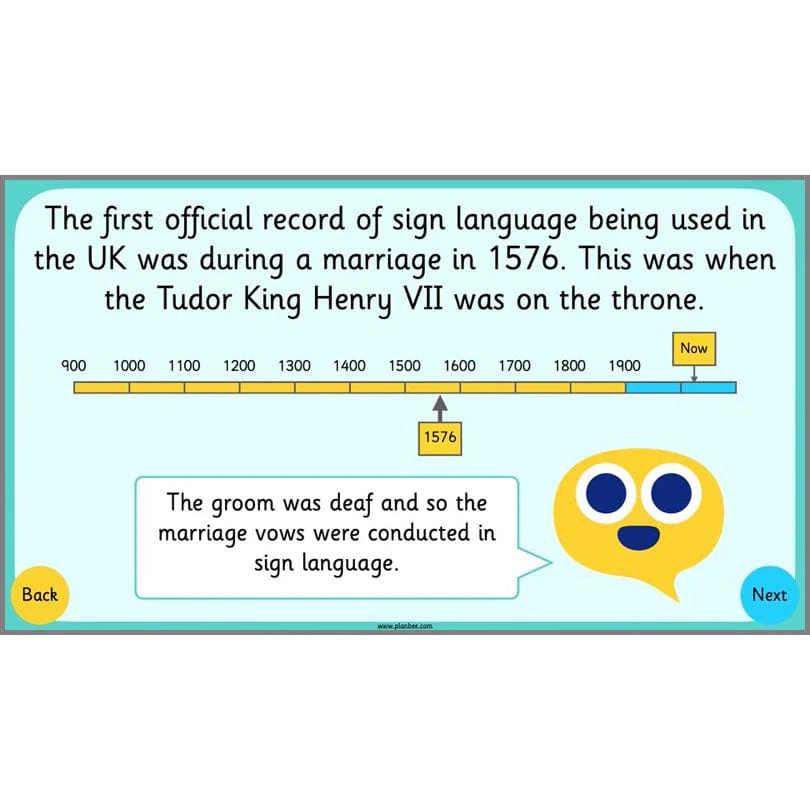
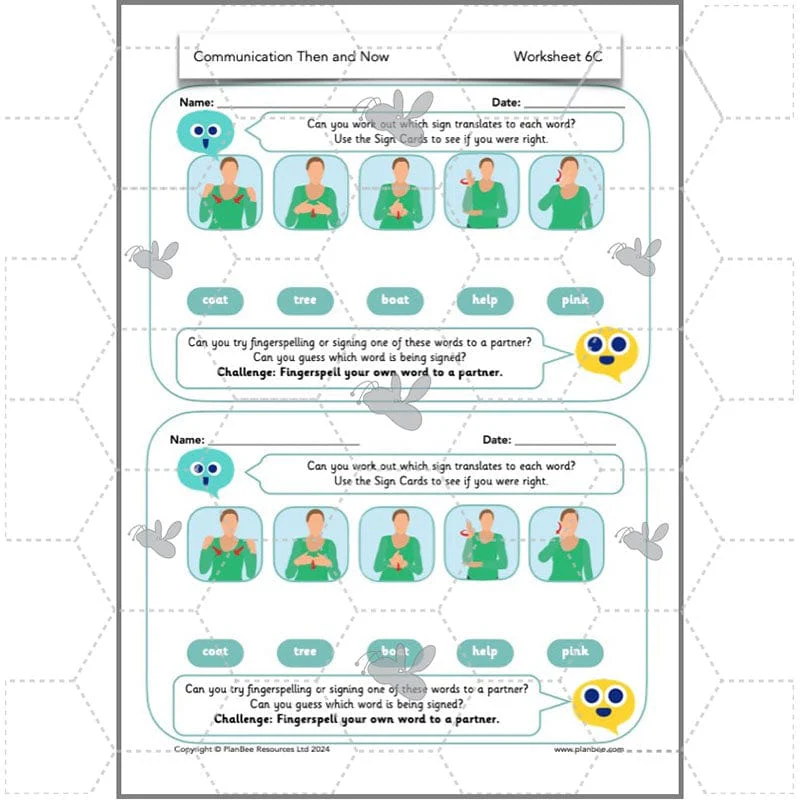
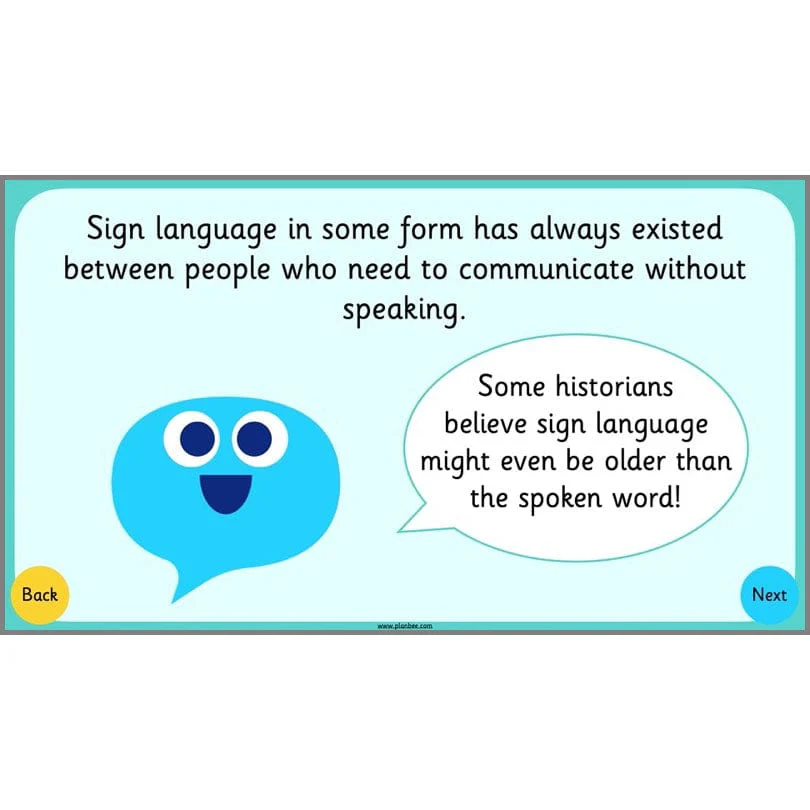
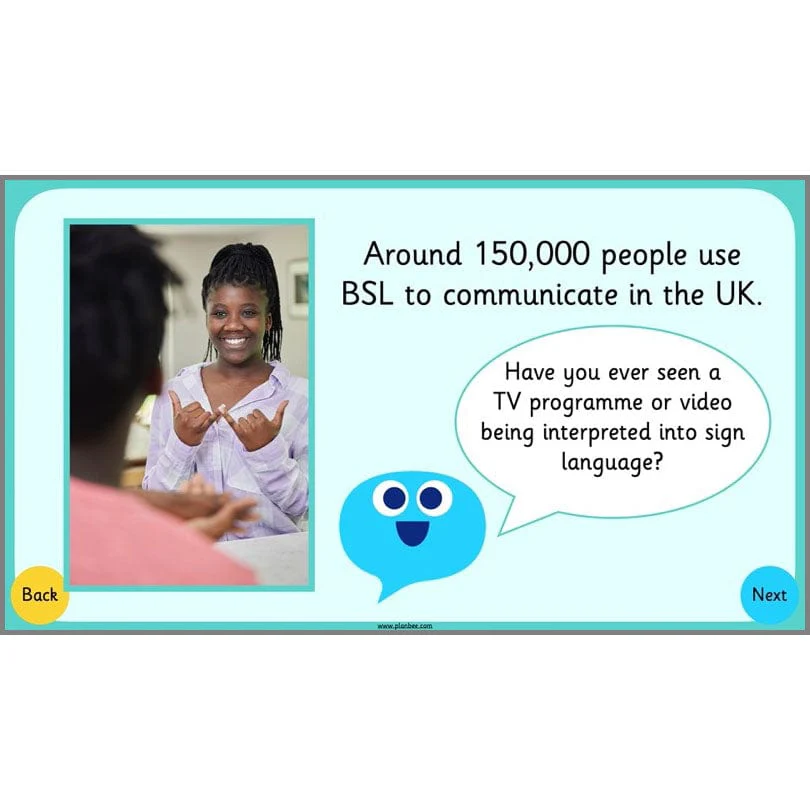
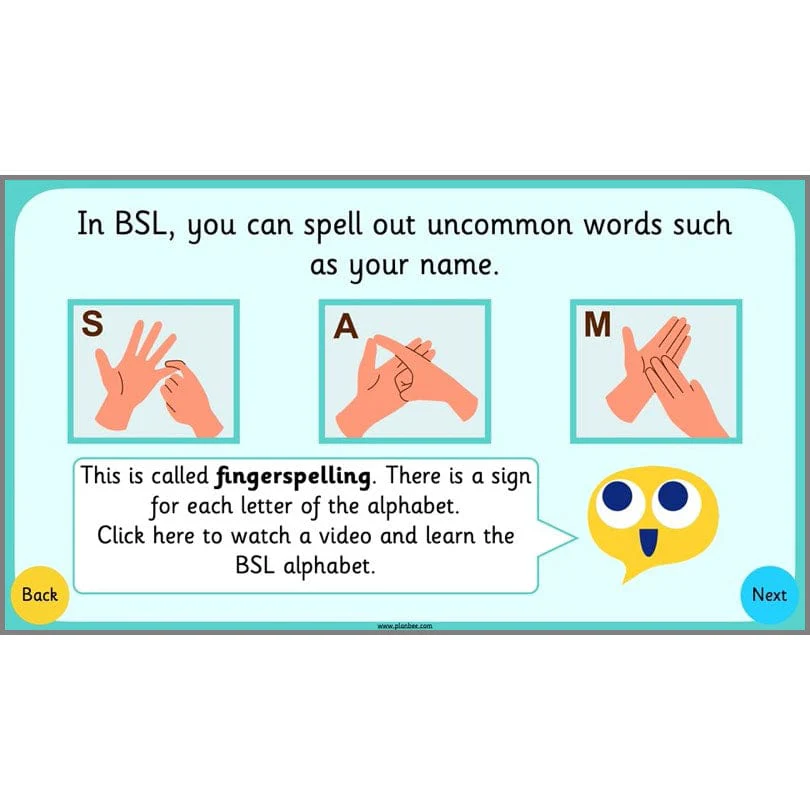
This lesson looks more discretely at an alternative method of communication: British Sign Language. Your class will be challenged to explore the history and development of BSL and how it eventually came to be recognised as a language by the British government in 2003.
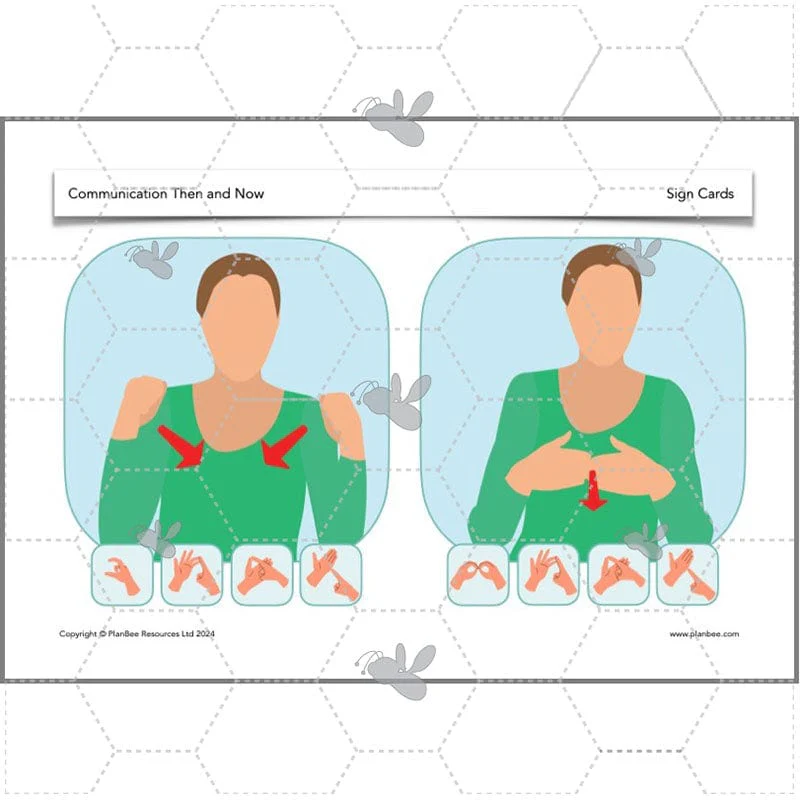
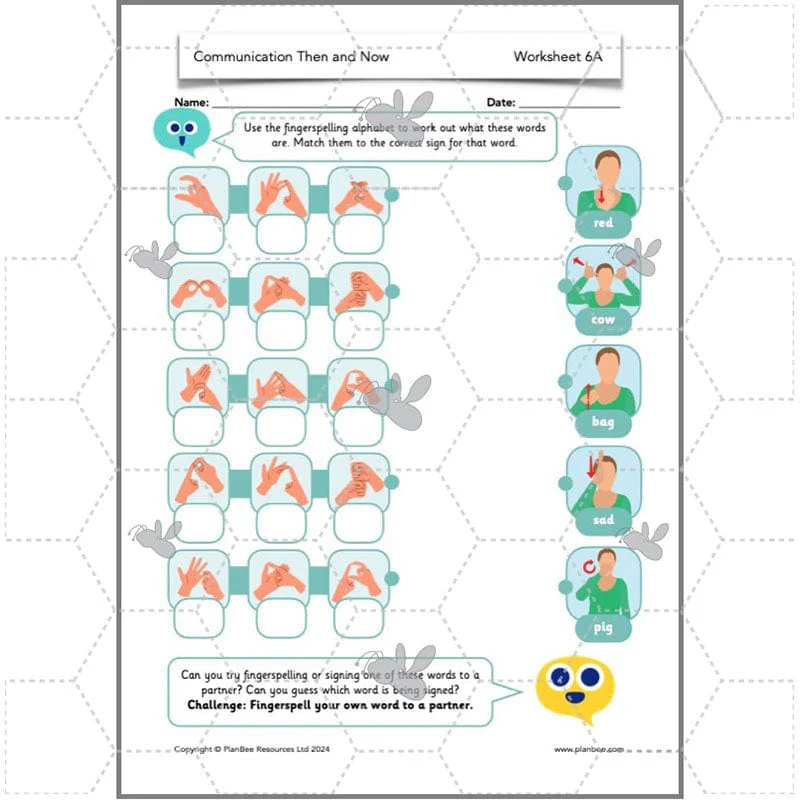
Give your class the opportunity to explore this non-verbal language as they learn a few simple signs alongside fingerspelling.
What's included:
- Lesson plan
- Slides
- Activity ideas
- Matching cards
- BSL Alphabet
- Differentiated worksheets
- Sign cards
- Fingerspelling cards
- Name cards
View Lesson 6
A Summary
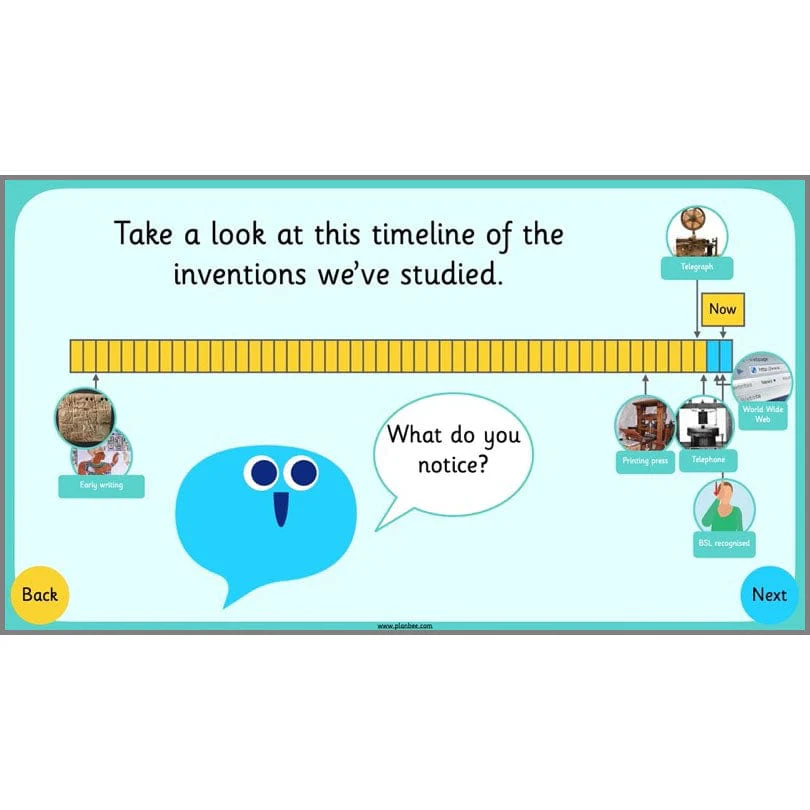
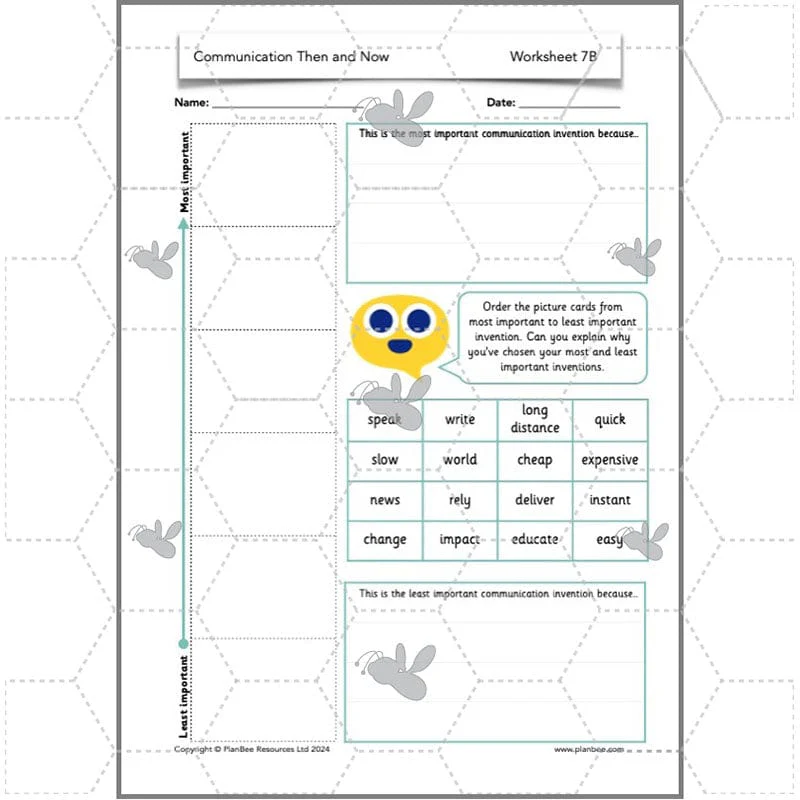
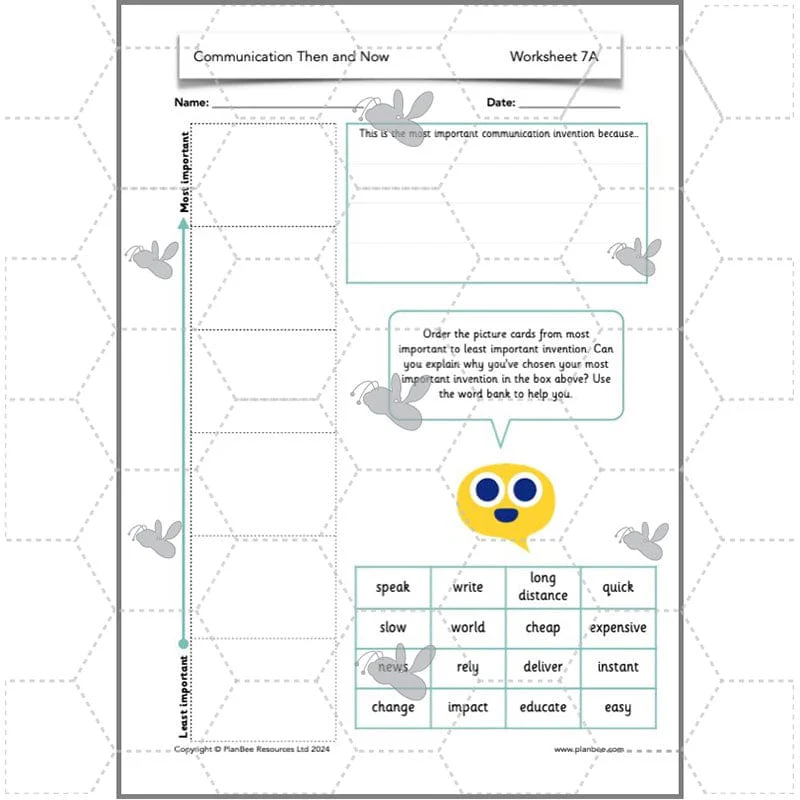
The final lesson in this series gives your class the chance to consolidate what they have learnt about the history of communication. They will look back at everything they have found out from cave paintings to the World Wide Web, and put key events in chronological order. They will also consider which inventions they think are most significant and why.
What's included:
- Lesson plan
- Slides
- Activity ideas
- Picture cards
- Differentiated worksheets
- End of Unit Quiz
View Lesson 7
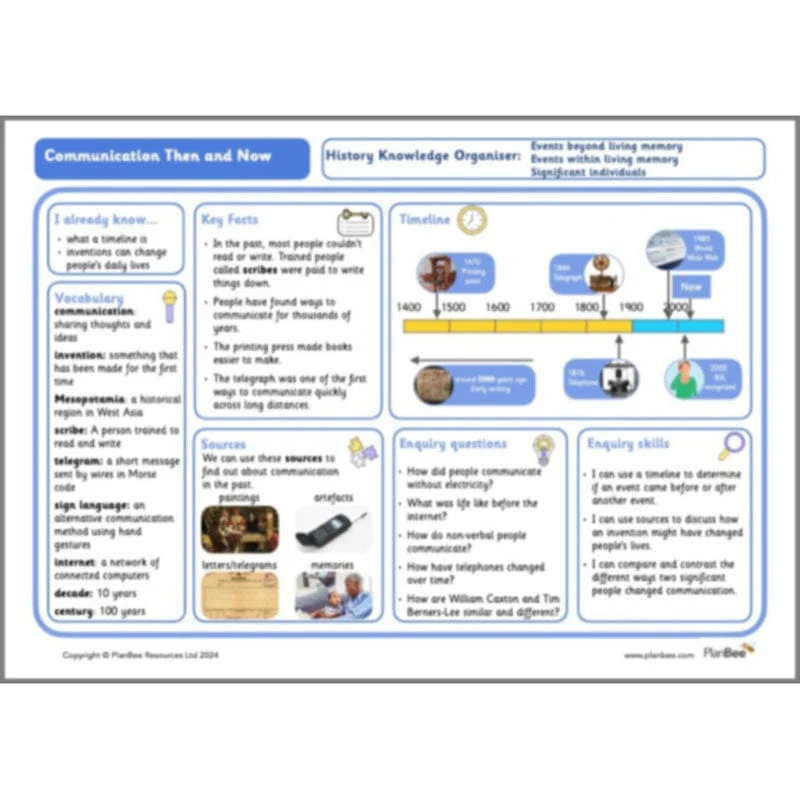
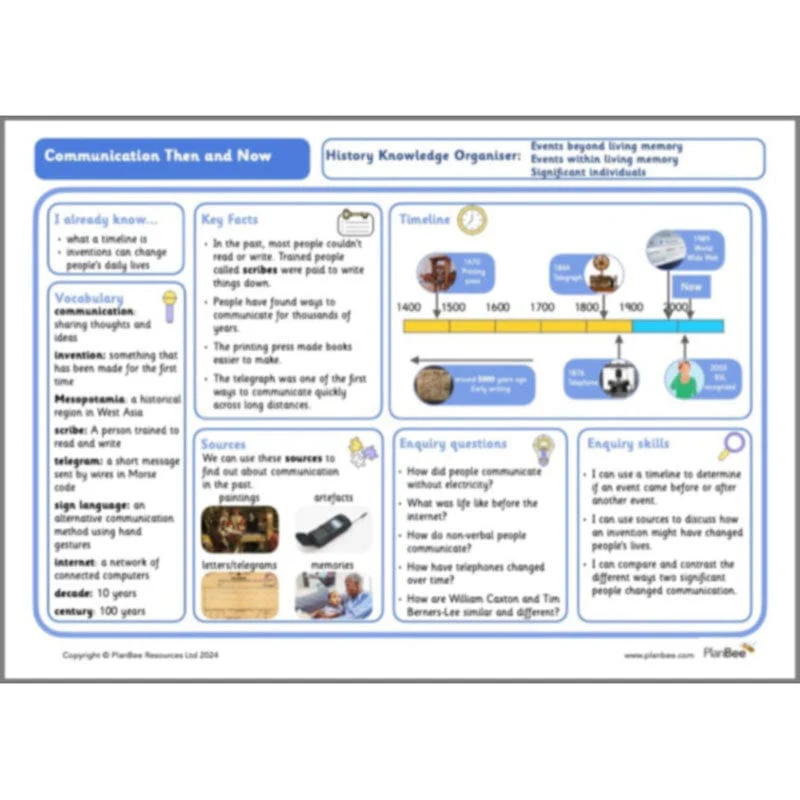
This Year 1/2 History Knowledge Organiser has been created to complement our History 'Significant Individuals' strand. It is designed to support your children’s understanding of key vocabulary linked to this scheme of work. Enquiry questions have been included to encourage your children to think like a historian within this topic.
View Knowledge Organiser
More Images




























Communication Then and Now
Take a whistle-stop tour across the ages from hieroglyphics to the World Wide Web as your KS1 class explore the history of communication. They will find out how people got in touch with each other before telephones and emails, as well as finding out about the people behind some important improvements in communication, including William Caxton, Samuel Morse, Alexander Graham Bell and Tim Berners-Lee.
These fascinating lessons contain detailed lesson plans, engaging slides, differentiated activity ideas, worksheets, picture cards and much more, giving you everything you need to deliver exciting and informative History lessons to your KS1 class! Looking for other ready-to-teach KS1 History schemes? Take a look at our KS1 History Collection.
A Knowledge Organiser is available to support the learning in this scheme. It is included in the Complete Series download or can be purchased individually.
Early Writing
This first lesson takes your class back thousands of years to cave paintings. They are challenged to compare this earliest form of communicating with the first forms of writing in cuneiform and Egyptian hieroglyphs.
The lesson focuses on comparing and contrasting between the different forms of early writing and communication, thinking about the ease of creating each writing system and how it might have been shared with other members of society.
This lesson pack comes with everything you need to introduce and compare early writing systems, including a detailed lesson plan, PDF lesson slides and printed resources.
What's included:
- Lesson plan
- Slides
- Activity ideas
- Differentiated worksheets
- Word bank
- Cuneiform cards
- Cave painting cards
- Egyptian hieroglyph cards
View Lesson 1
The Printing Press
How can one invention change the daily lives of people in Britain? Ask and investigate this question with your class as they learn about William Claxton introducing the Gutenberg moveable-type printing press to Britain in the 15th century.
The children will reflect on what life might have been like before and after the printing press was invented including the printing of books, newspapers and pamphlets as well as how the printed word created a standard of written English across dialects.
Each activity idea has all the printable resources you'll need as well as a detailed lesson plan and PDF lesson slides.
What's included:
- Lesson plan
- Slides
- Activity ideas
- Differentiated worksheets
- Differentiated challenge sheets
- Typesetter letters
View Lesson 2
Letters vs Telegrams
Find out about the invention of the telegram with your class. Discuss how Morse code was used to send signals along a wire so that messages could be sent instantly across long distances. Spark discussion around how this might have changed people's lives as, before this, a lot of communication relied on letters which took much longer to be delivered.
Challenge your class to find advantages and disadvantages using this fully resourced lesson for KS1 History.
What's included:
- Lesson plan
- Slides
- Activity ideas
- Differentiated worksheets
- Message cards
- Morse code alphabet
- Morse code words
View Lesson 3
The Telephone
Ring, ring! It's time to develop your class's timeline skills as they discover the invention, development and changes of the telephone.
Your class will practise identifying if different versions of the telephone came before or after another using a timeline before placing a variety of telephones onto a timeline.
This fully-resourced lesson has all you need to help your class become telephone timeline experts.
What's included:
- Lesson plan
- Slides
- Activity ideas
- Differentiated worksheets
- Picture cards
- Discussion prompts
- Date cards
View Lesson 4
Caxton vs Berners-Lee
This lesson looks at two important figures in the history of communication and compares their lives and achievements. From Caxton in the fifteenth century to Berners-Lee in the twentieth century, your class will consider ways in which their lives were similar and different, and how the lives of people in these two time periods differed.
What's included:
- Lesson plan
- Slides
- Activity ideas
- Differentiated worksheets
- Speech bubble cards
- Question cards
View Lesson 5
British Sign Language
This lesson looks more discretely at an alternative method of communication: British Sign Language. Your class will be challenged to explore the history and development of BSL and how it eventually came to be recognised as a language by the British government in 2003.
Give your class the opportunity to explore this non-verbal language as they learn a few simple signs alongside fingerspelling.
What's included:
- Lesson plan
- Slides
- Activity ideas
- Matching cards
- BSL Alphabet
- Differentiated worksheets
- Sign cards
- Fingerspelling cards
- Name cards
View Lesson 6
A Summary
The final lesson in this series gives your class the chance to consolidate what they have learnt about the history of communication. They will look back at everything they have found out from cave paintings to the World Wide Web, and put key events in chronological order. They will also consider which inventions they think are most significant and why.
What's included:
- Lesson plan
- Slides
- Activity ideas
- Picture cards
- Differentiated worksheets
- End of Unit Quiz
View Lesson 7
This Year 1/2 History Knowledge Organiser has been created to complement our History 'Significant Individuals' strand. It is designed to support your children’s understanding of key vocabulary linked to this scheme of work. Enquiry questions have been included to encourage your children to think like a historian within this topic.
View Knowledge Organiser
Product Information
Product Information
Shipping & Returns
Shipping & Returns
Description
Take a whistle-stop tour across the ages from hieroglyphics to the World Wide Web as your KS1 class explore the history of communication. They will find out how people got in touch with each other before telephones and emails, as well as finding out about the people behind some important improvements in communication, including William Caxton, Samuel Morse, Alexander Graham Bell and Tim Berners-Lee.
These fascinating lessons contain detailed lesson plans, engaging slides, differentiated activity ideas, worksheets, picture cards and much more, giving you everything you need to deliver exciting and informative History lessons to your KS1 class! Looking for other ready-to-teach KS1 History schemes? Take a look at our KS1 History Collection.
A Knowledge Organiser is available to support the learning in this scheme. It is included in the Complete Series download or can be purchased individually.
Early Writing
This first lesson takes your class back thousands of years to cave paintings. They are challenged to compare this earliest form of communicating with the first forms of writing in cuneiform and Egyptian hieroglyphs.
The lesson focuses on comparing and contrasting between the different forms of early writing and communication, thinking about the ease of creating each writing system and how it might have been shared with other members of society.
This lesson pack comes with everything you need to introduce and compare early writing systems, including a detailed lesson plan, PDF lesson slides and printed resources.
What's included:
- Lesson plan
- Slides
- Activity ideas
- Differentiated worksheets
- Word bank
- Cuneiform cards
- Cave painting cards
- Egyptian hieroglyph cards
View Lesson 1
The Printing Press
How can one invention change the daily lives of people in Britain? Ask and investigate this question with your class as they learn about William Claxton introducing the Gutenberg moveable-type printing press to Britain in the 15th century.
The children will reflect on what life might have been like before and after the printing press was invented including the printing of books, newspapers and pamphlets as well as how the printed word created a standard of written English across dialects.
Each activity idea has all the printable resources you'll need as well as a detailed lesson plan and PDF lesson slides.
What's included:
- Lesson plan
- Slides
- Activity ideas
- Differentiated worksheets
- Differentiated challenge sheets
- Typesetter letters
View Lesson 2
Letters vs Telegrams
Find out about the invention of the telegram with your class. Discuss how Morse code was used to send signals along a wire so that messages could be sent instantly across long distances. Spark discussion around how this might have changed people's lives as, before this, a lot of communication relied on letters which took much longer to be delivered.
Challenge your class to find advantages and disadvantages using this fully resourced lesson for KS1 History.
What's included:
- Lesson plan
- Slides
- Activity ideas
- Differentiated worksheets
- Message cards
- Morse code alphabet
- Morse code words
View Lesson 3
The Telephone
Ring, ring! It's time to develop your class's timeline skills as they discover the invention, development and changes of the telephone.
Your class will practise identifying if different versions of the telephone came before or after another using a timeline before placing a variety of telephones onto a timeline.
This fully-resourced lesson has all you need to help your class become telephone timeline experts.
What's included:
- Lesson plan
- Slides
- Activity ideas
- Differentiated worksheets
- Picture cards
- Discussion prompts
- Date cards
View Lesson 4
Caxton vs Berners-Lee
This lesson looks at two important figures in the history of communication and compares their lives and achievements. From Caxton in the fifteenth century to Berners-Lee in the twentieth century, your class will consider ways in which their lives were similar and different, and how the lives of people in these two time periods differed.
What's included:
- Lesson plan
- Slides
- Activity ideas
- Differentiated worksheets
- Speech bubble cards
- Question cards
View Lesson 5
British Sign Language
This lesson looks more discretely at an alternative method of communication: British Sign Language. Your class will be challenged to explore the history and development of BSL and how it eventually came to be recognised as a language by the British government in 2003.
Give your class the opportunity to explore this non-verbal language as they learn a few simple signs alongside fingerspelling.
What's included:
- Lesson plan
- Slides
- Activity ideas
- Matching cards
- BSL Alphabet
- Differentiated worksheets
- Sign cards
- Fingerspelling cards
- Name cards
View Lesson 6
A Summary
The final lesson in this series gives your class the chance to consolidate what they have learnt about the history of communication. They will look back at everything they have found out from cave paintings to the World Wide Web, and put key events in chronological order. They will also consider which inventions they think are most significant and why.
What's included:
- Lesson plan
- Slides
- Activity ideas
- Picture cards
- Differentiated worksheets
- End of Unit Quiz
View Lesson 7
This Year 1/2 History Knowledge Organiser has been created to complement our History 'Significant Individuals' strand. It is designed to support your children’s understanding of key vocabulary linked to this scheme of work. Enquiry questions have been included to encourage your children to think like a historian within this topic.
View Knowledge Organiser