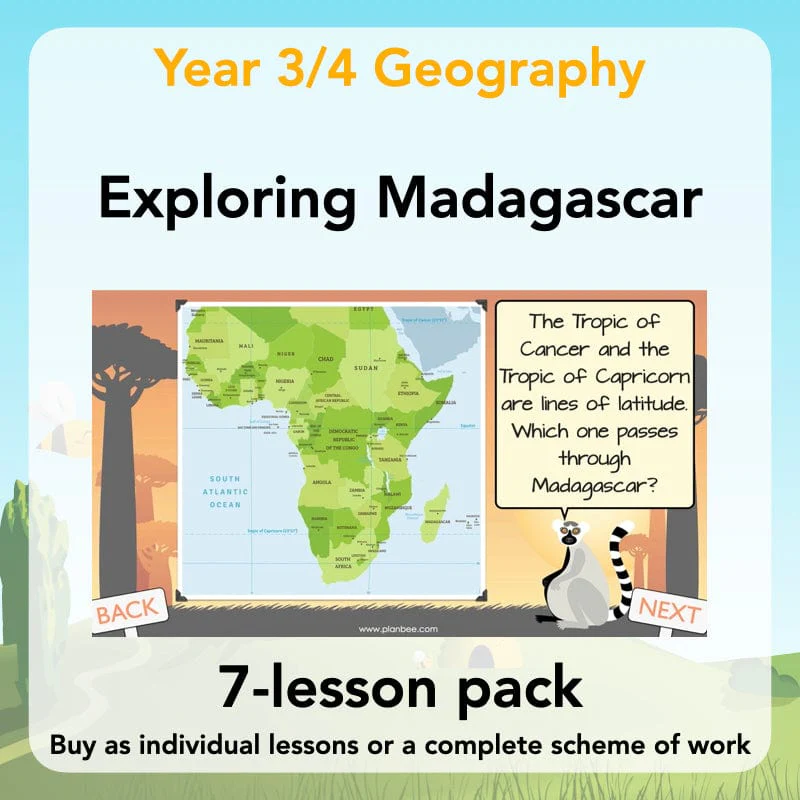
Exploring Madagascar
Madagascar! Amazing animals, varying landscapes, tropical climate and bustling cities. This 'Exploring Madagascar' scheme of work for KS2 children will make your class fascinated by Madagascar.
Give your class the opportunity to investigate Madagascar’s wildlife, location, climate and physical geography using the detailed maps and resources provided in this scheme of work. Your children will also explore Madagascar's trade and climate patterns. This scheme of work provides opportunities for your class to locate major cities in Madagascar and investigate the human and physical features found there. The children will compare and contrast Madagascar to the United Kingdom with the use of detailed image cards and clear maps and photos. This scheme of work has everything you need to teach the KS2 geography objectives and have your class engaged and interested in another country, on the other side of the world.
Which country will we be learning about?
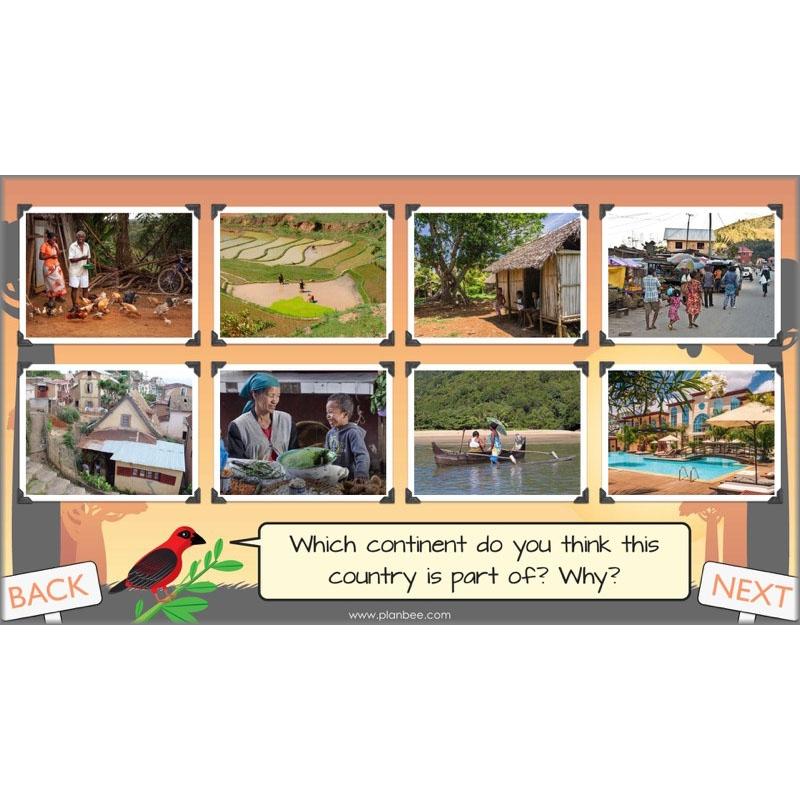
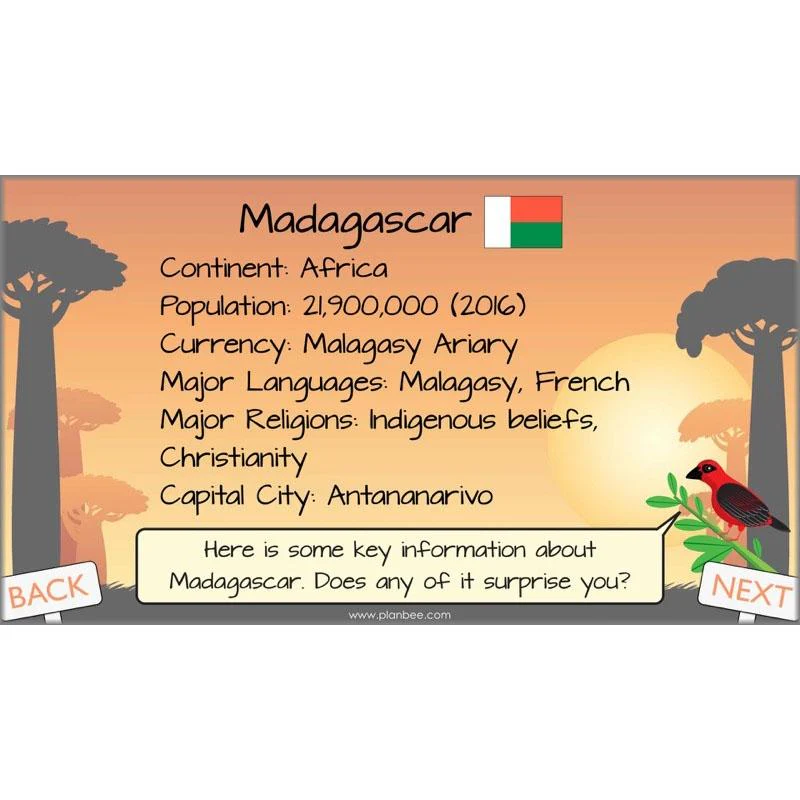
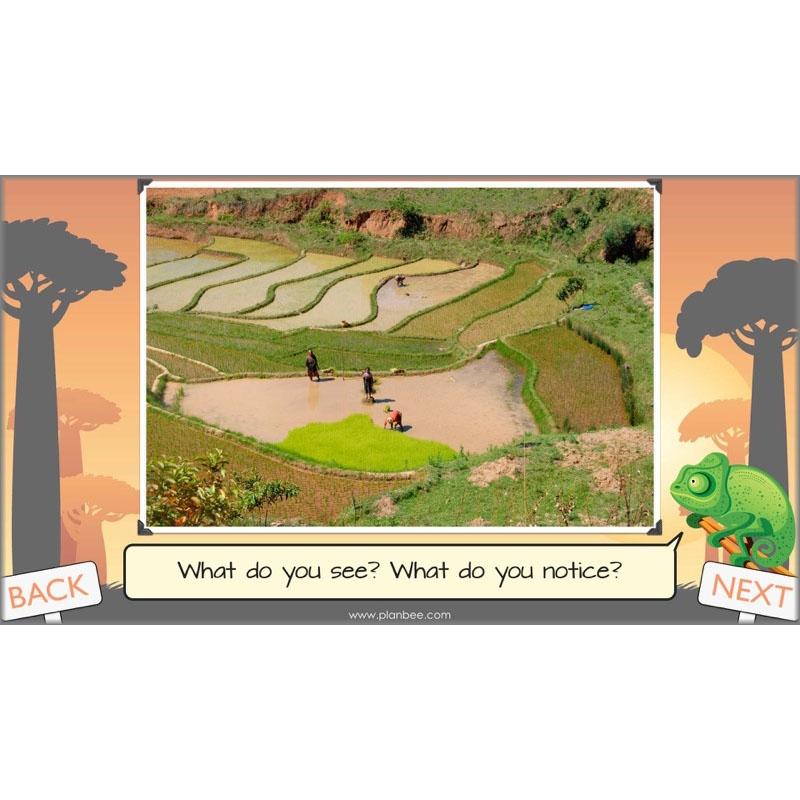
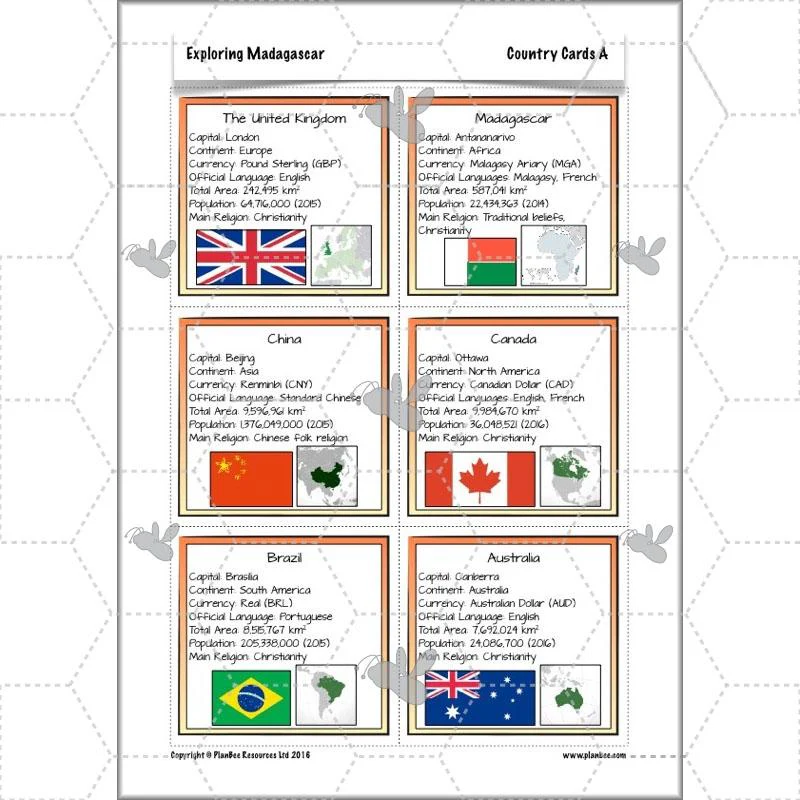
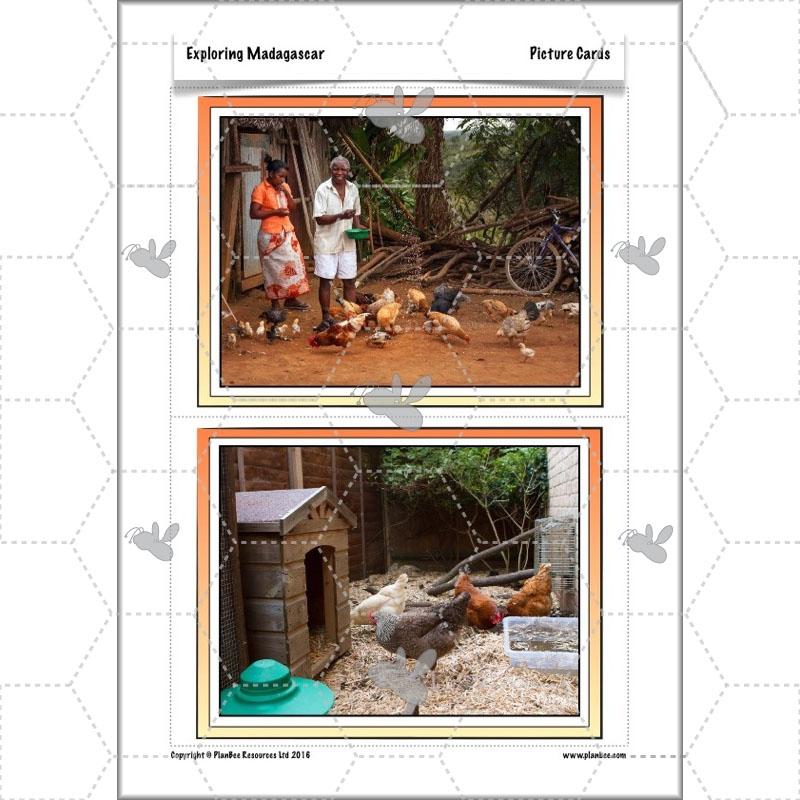
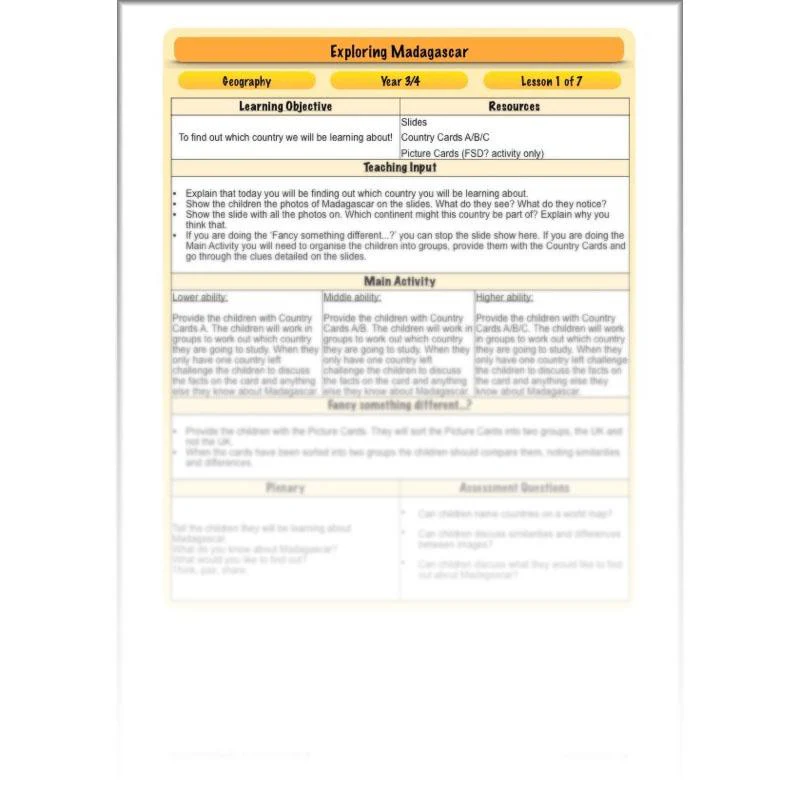
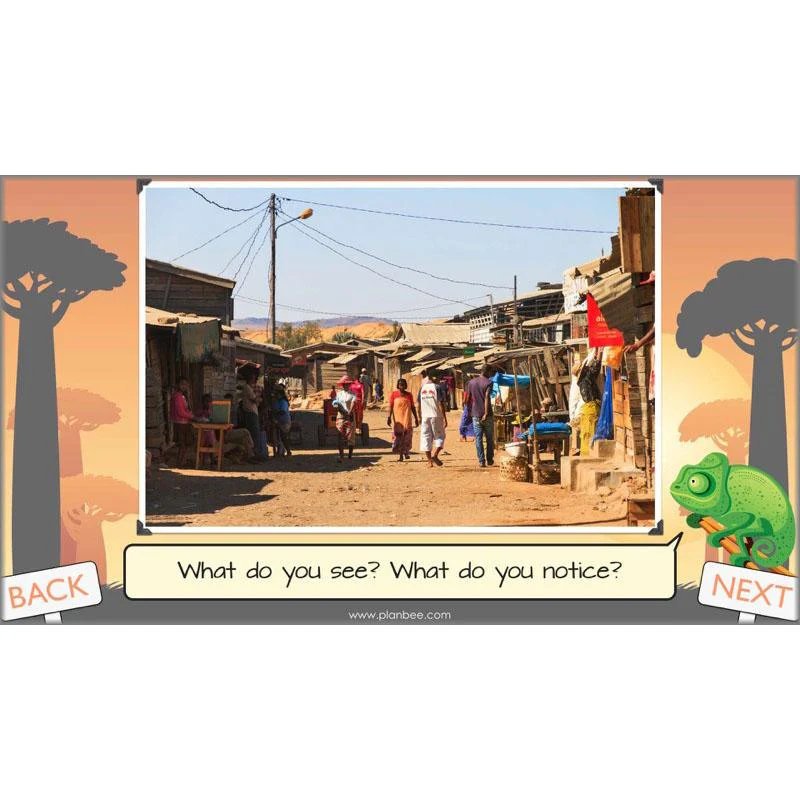
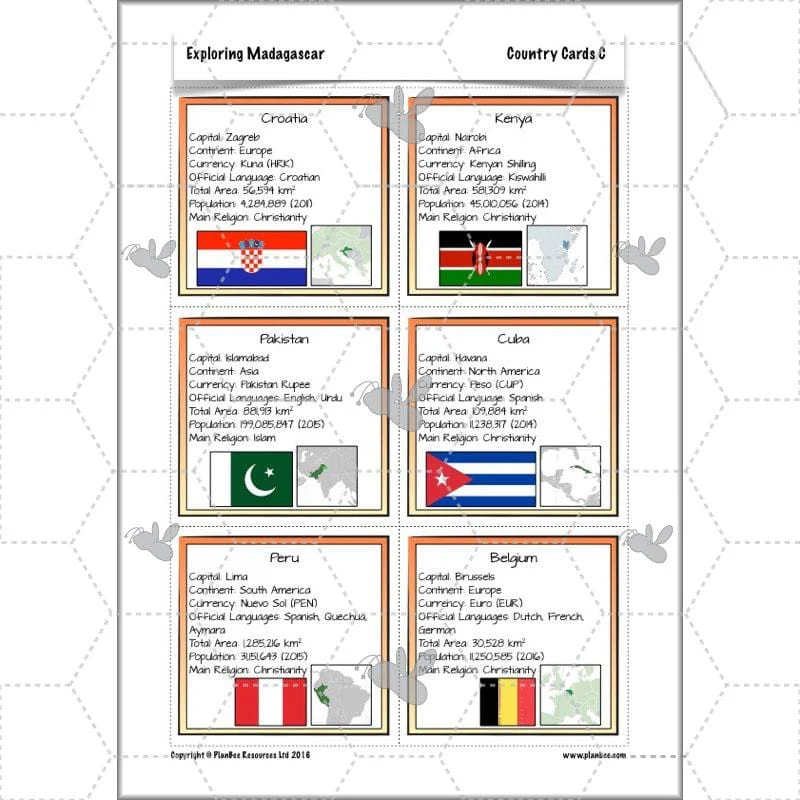
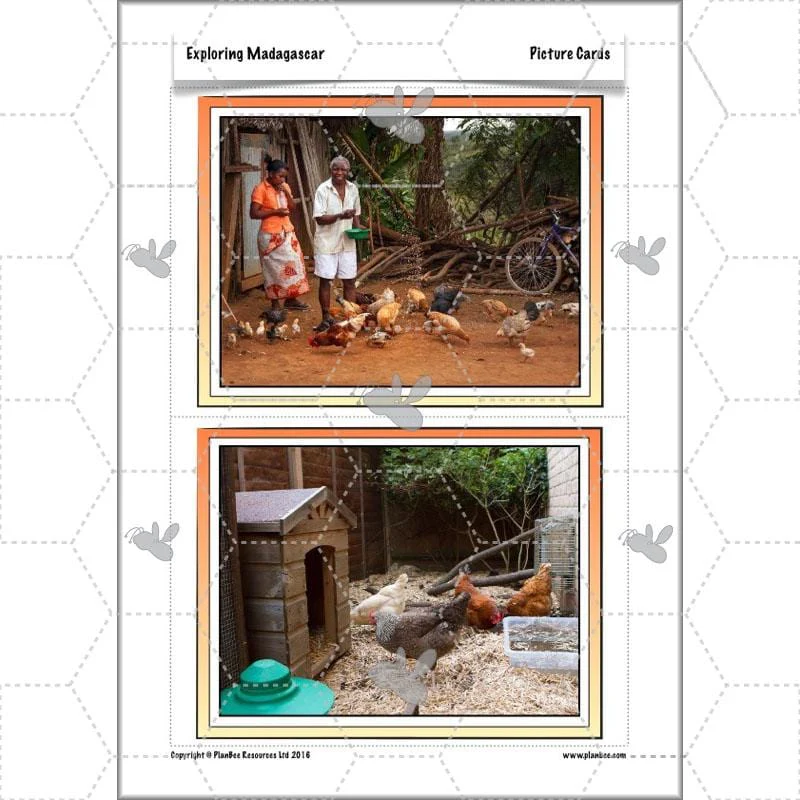
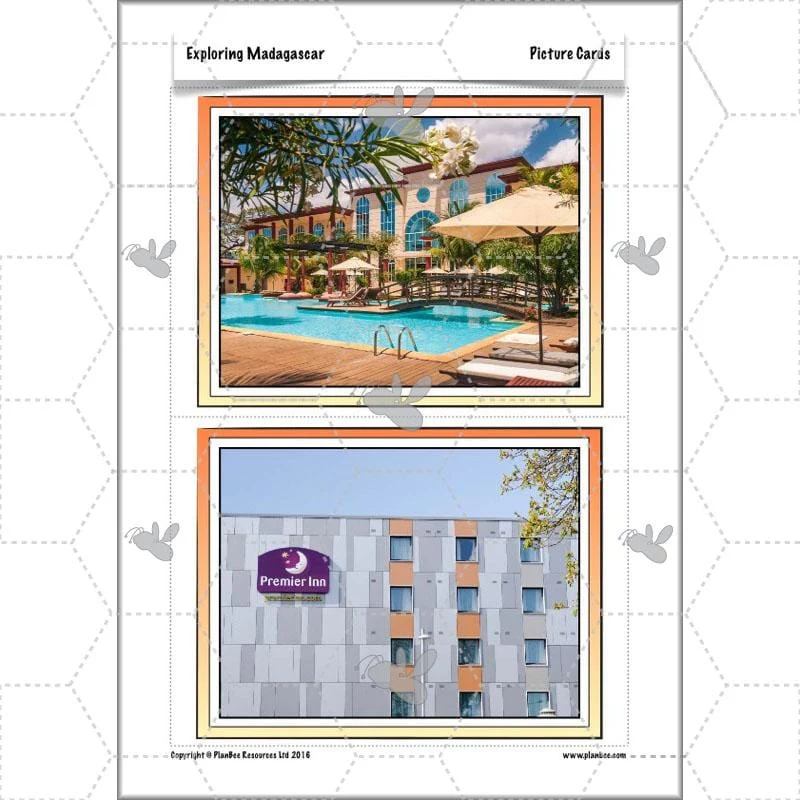
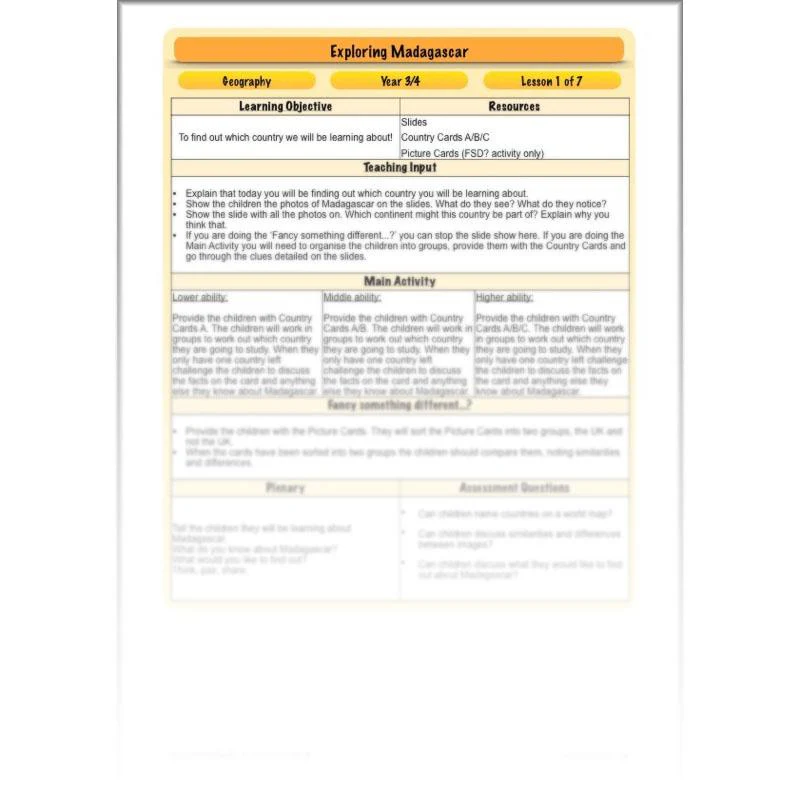
The first lesson in this scheme of work challenges your class to work out which country they will be learning about. Your children will be shown pictures of Madagascar and discuss what they can learn from them. They will then either be given picture cards of Madagascar and the UK to sort, compare and discuss, or clue cards to help them work out the country they will be learning about. This lesson provides an overview of Madagascar to prepare the children for the subsequent lessons.
What's included:
- Lesson plan
- Slides
- Activity ideas
- Differentiated worksheets
- Differentiated country cards
- Picture cards
View Lesson 1
Where is it?
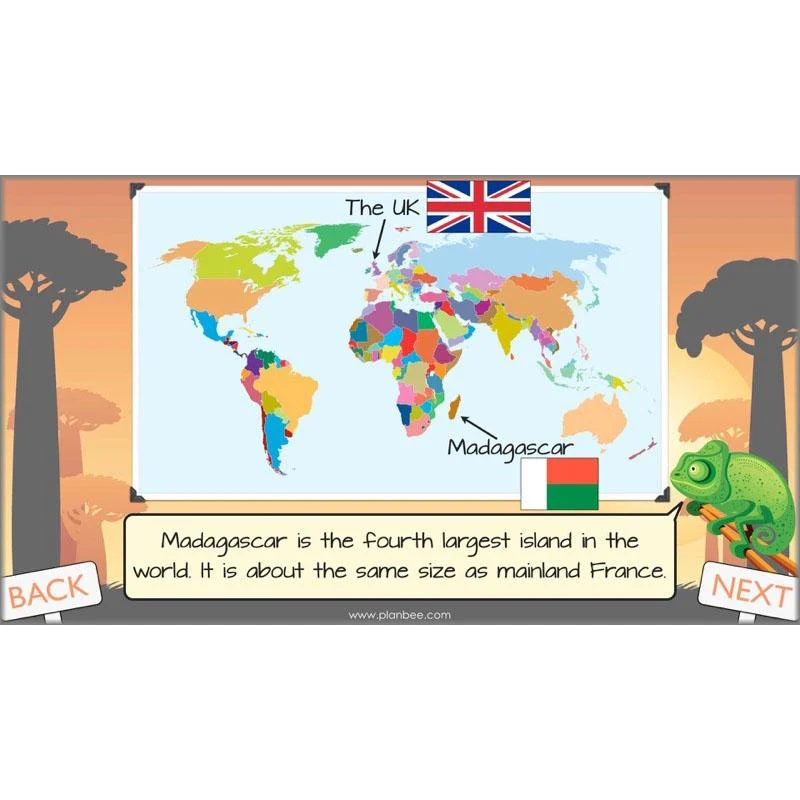
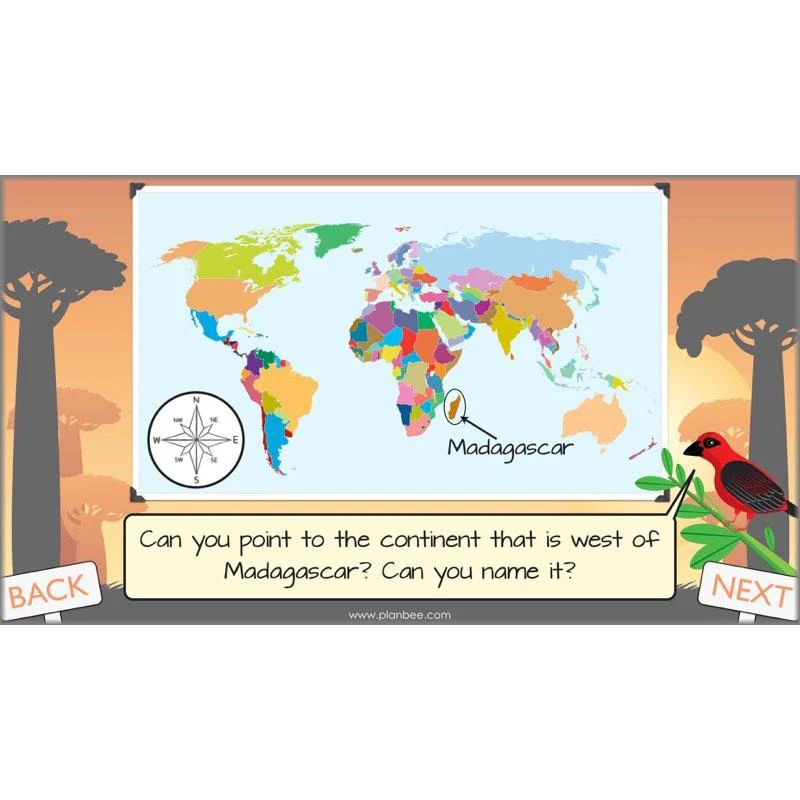
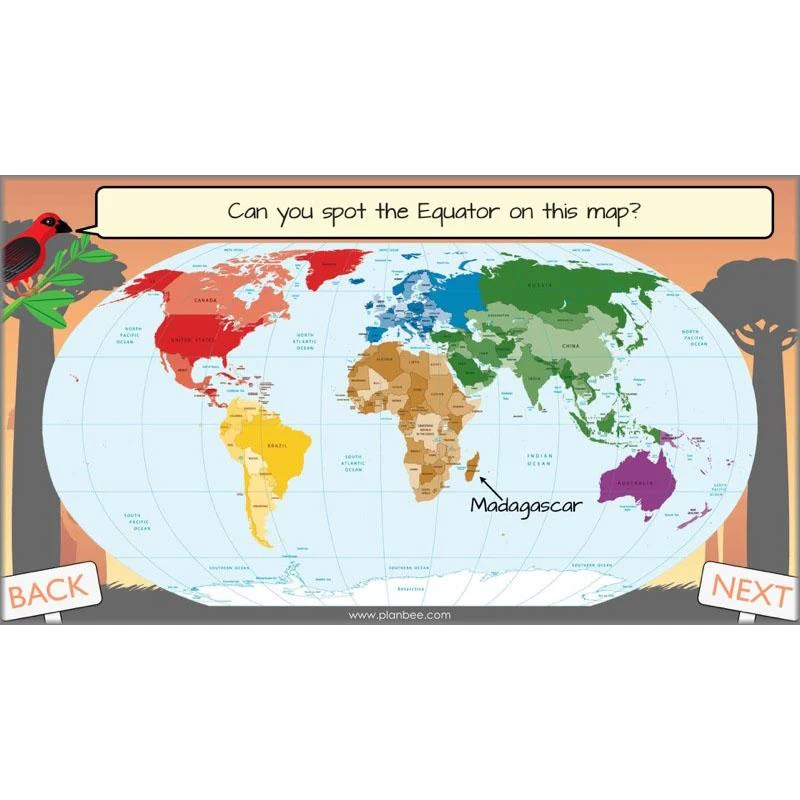
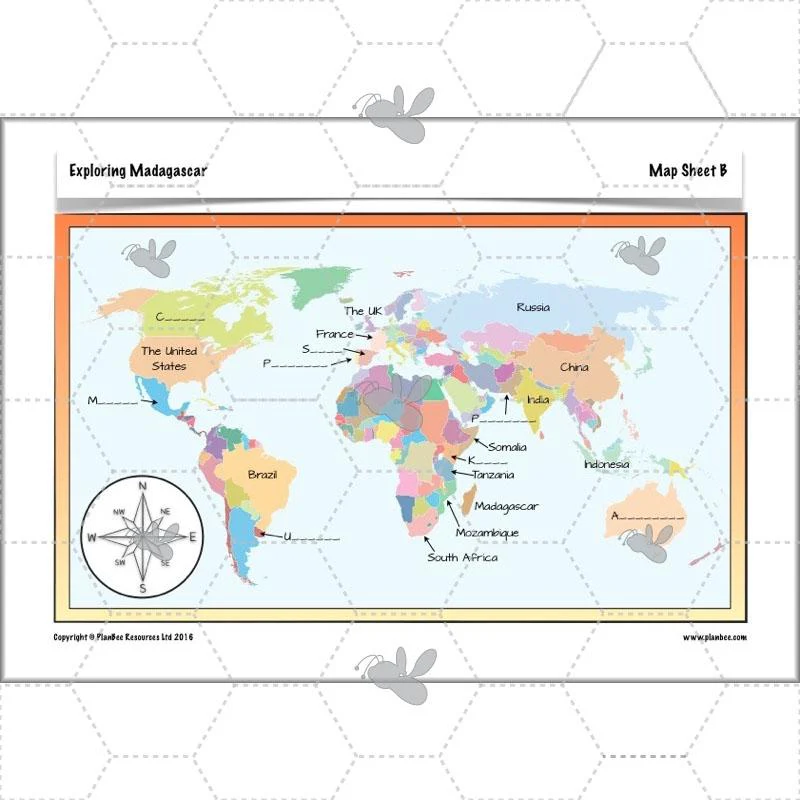
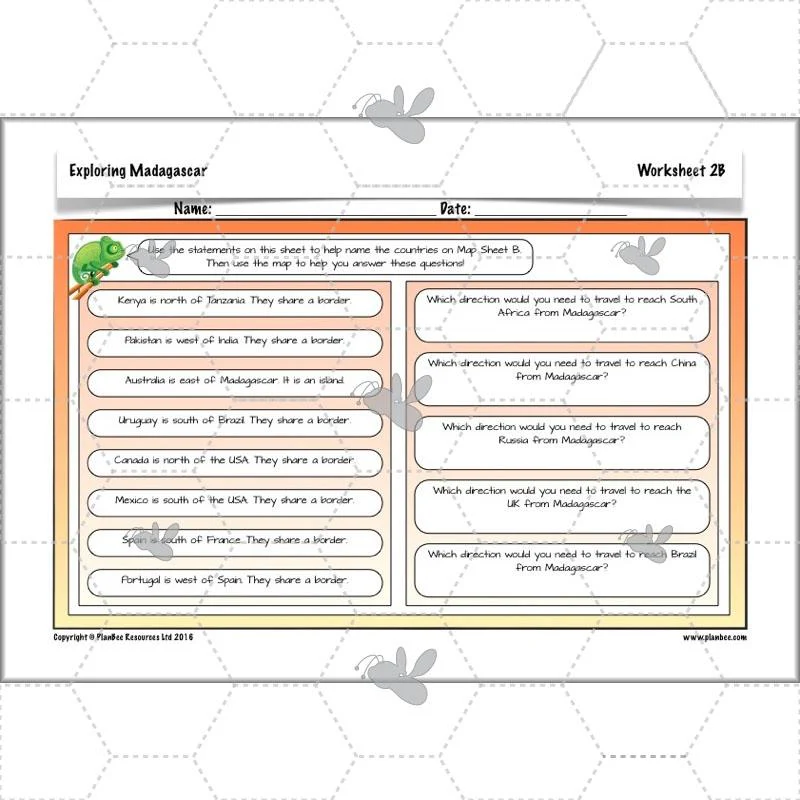
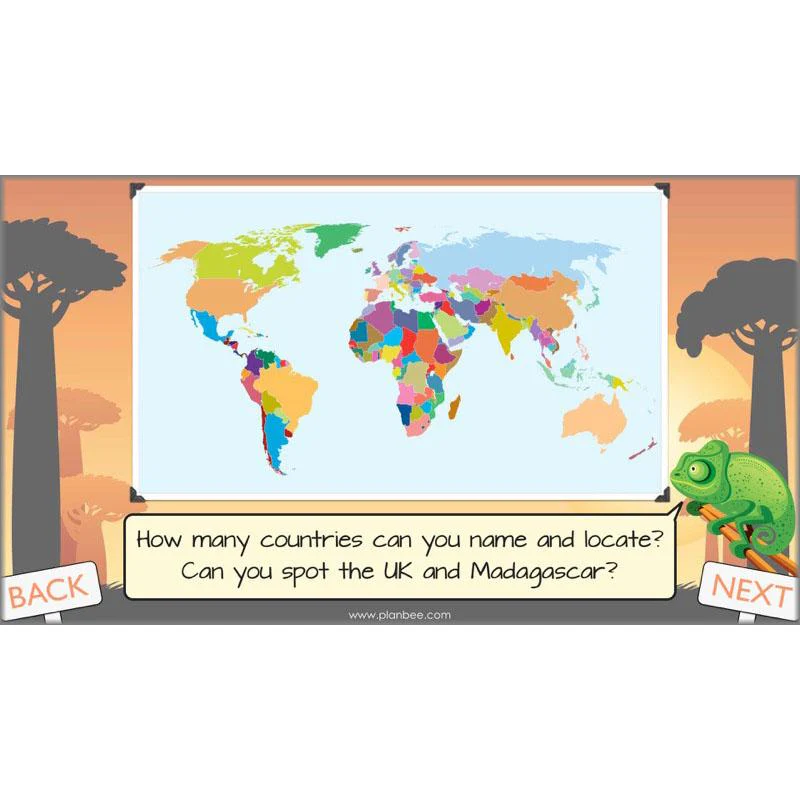
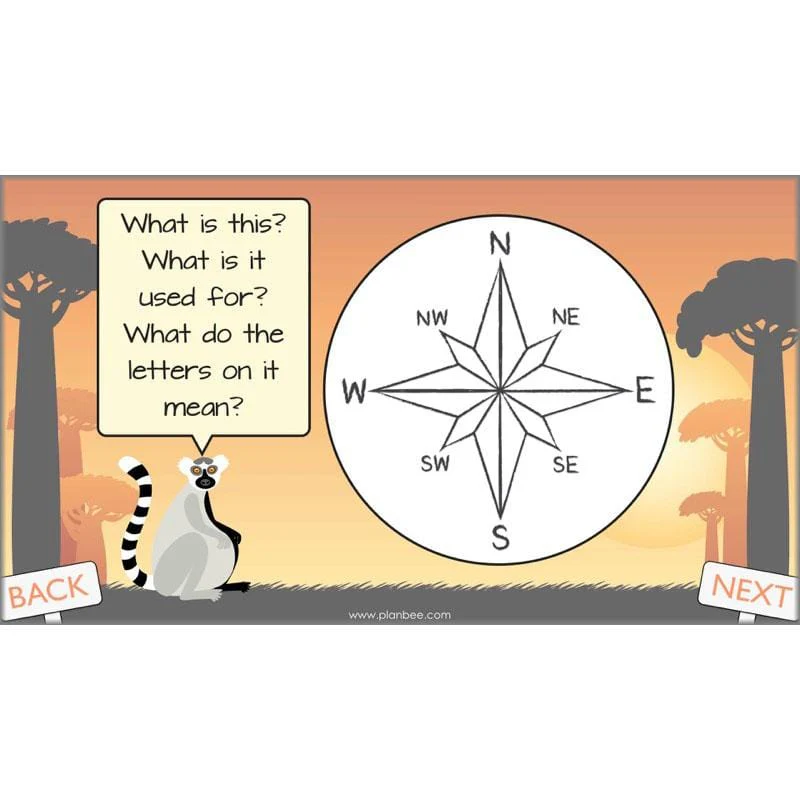
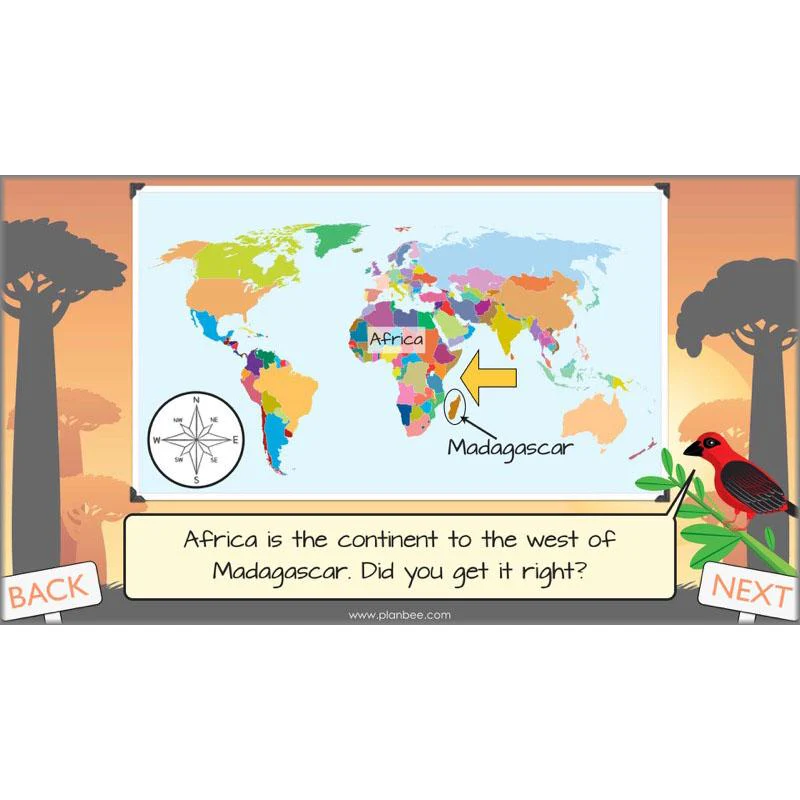
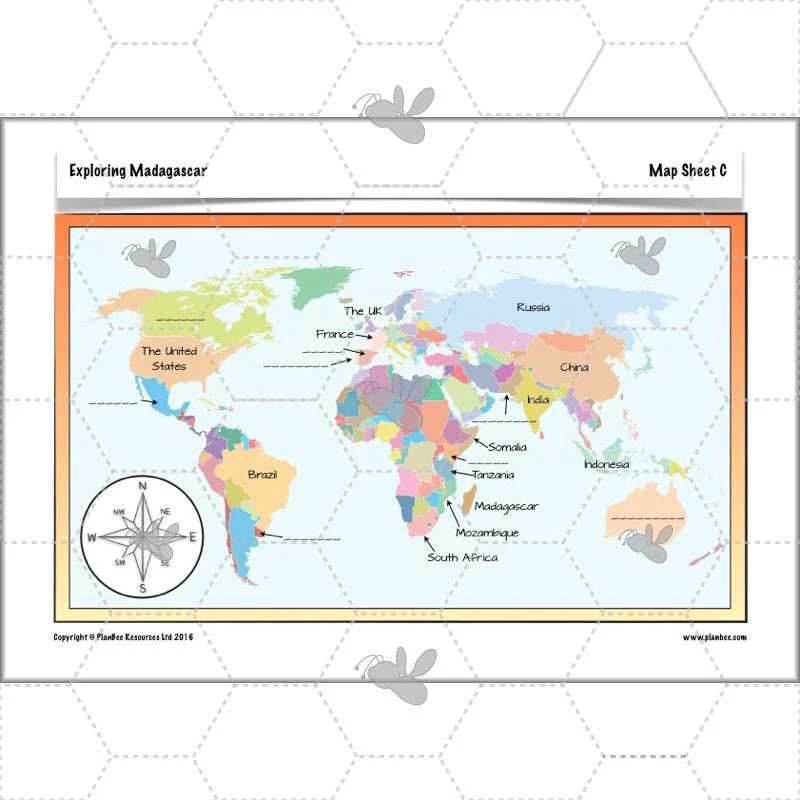
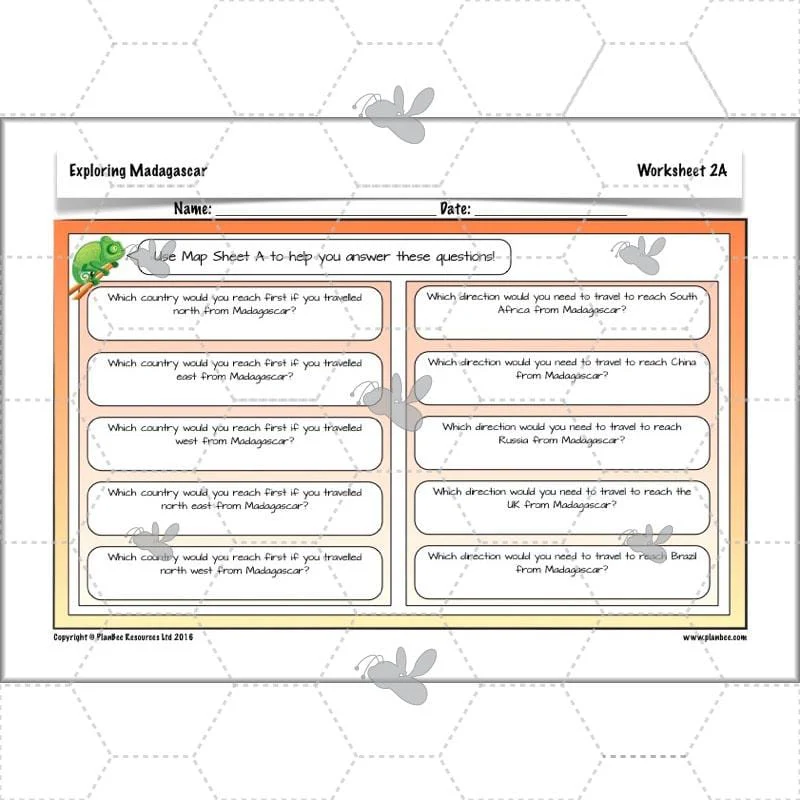
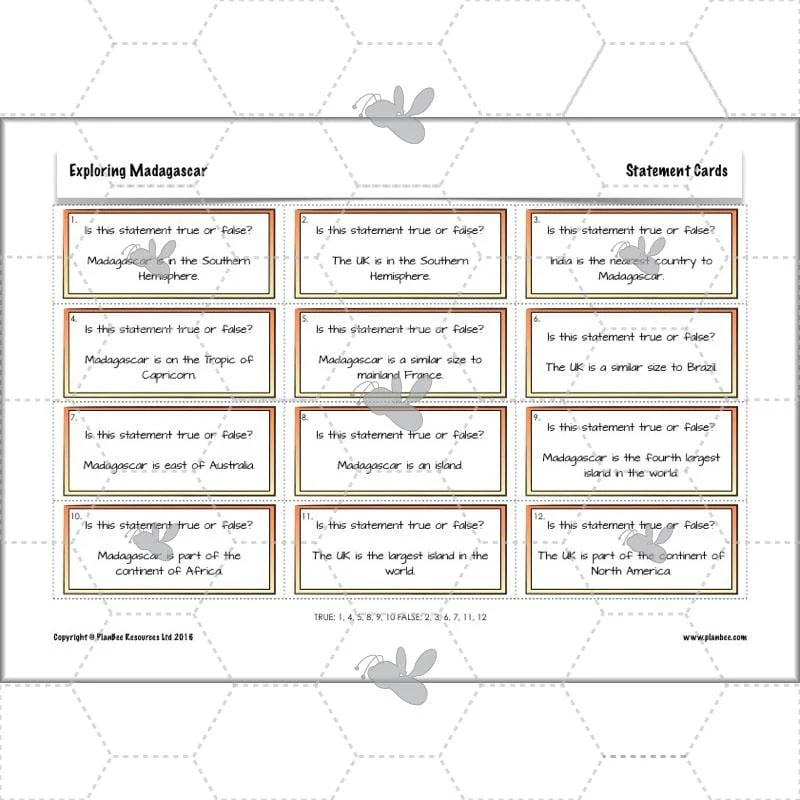
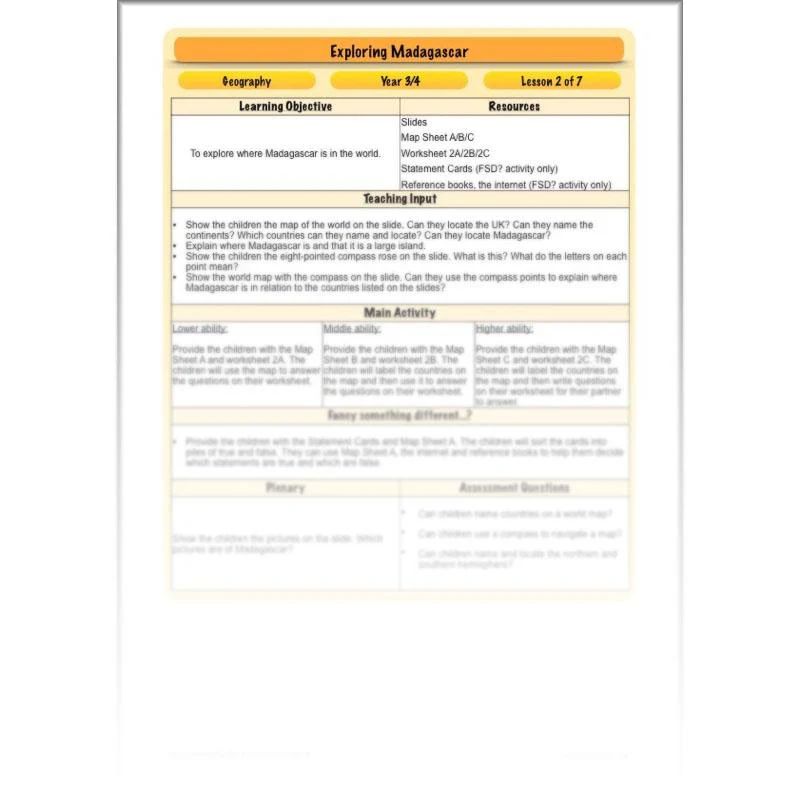
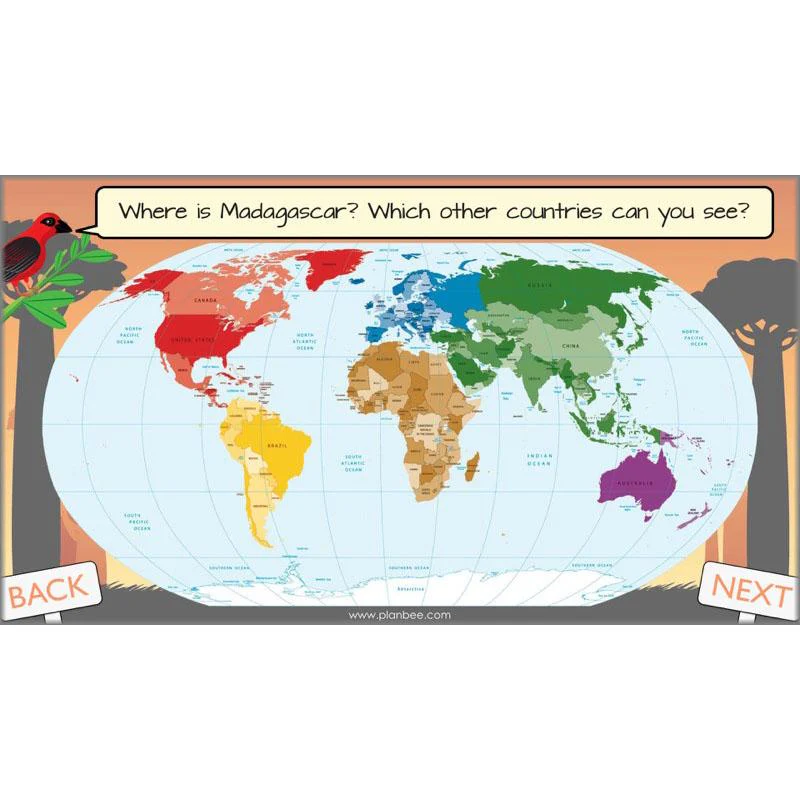
The second lesson in this scheme of work challenges your class to locate Madagascar on a map and look at the countries that surround it. Your class will use the eight points of a compass to navigate around a world map. They will then either use a world map to answer questions or they will use a variety of sources to sort statements into groups of true and false.
What's included:
- Lesson plan
- Slides
- Activity ideas
- Differentiated worksheets
- Differentiated map sheets
- Statement cards
View Lesson 2
Discovering Landscapes
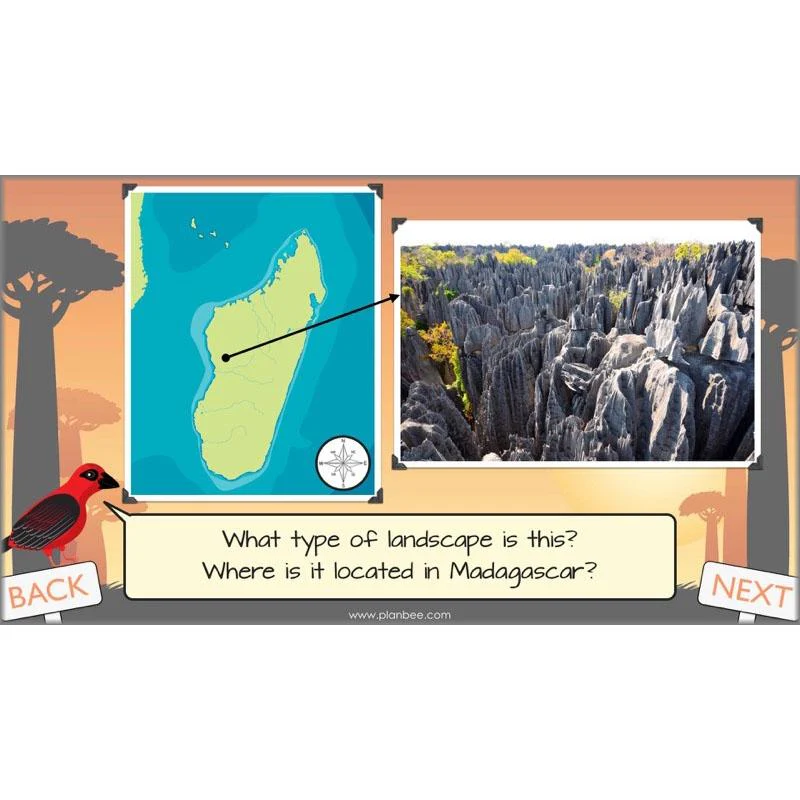
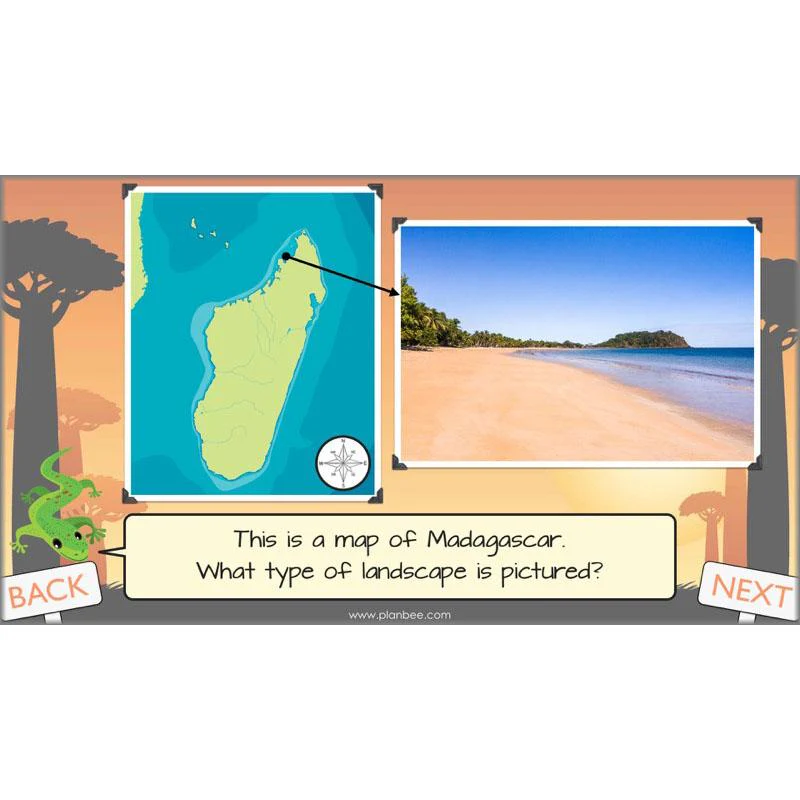
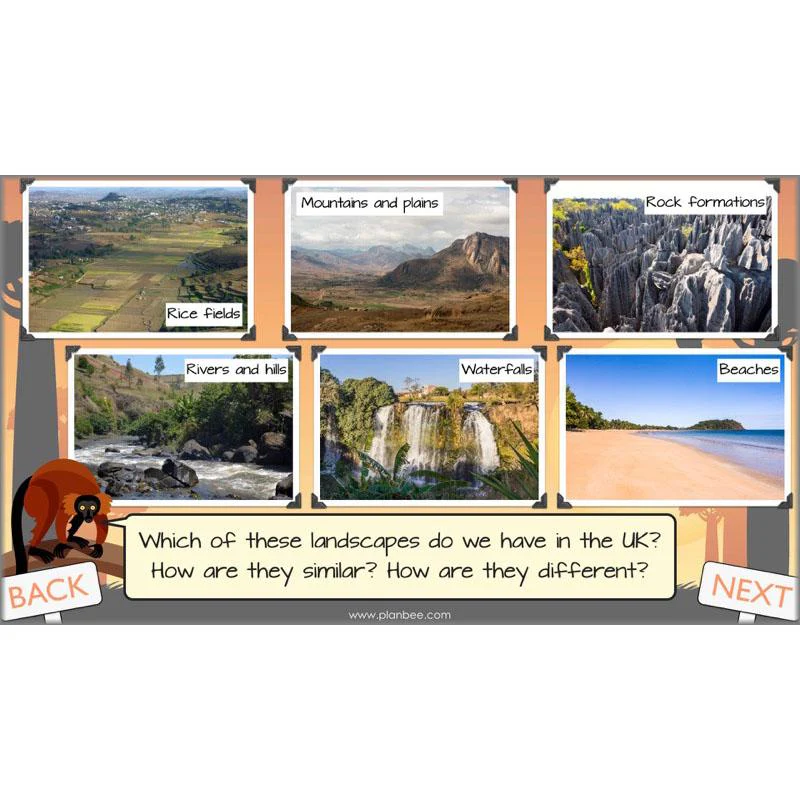
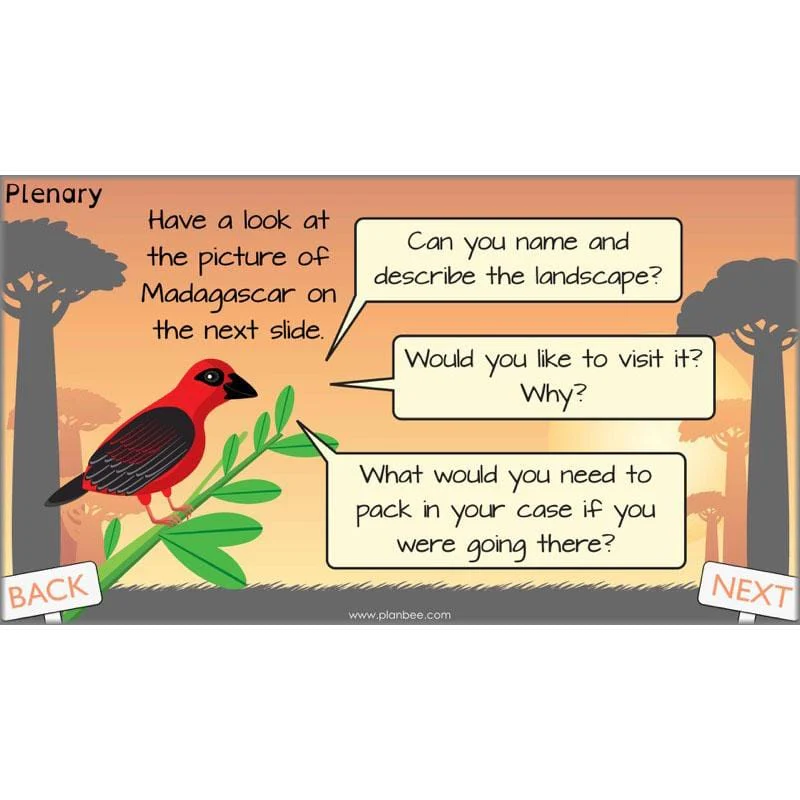
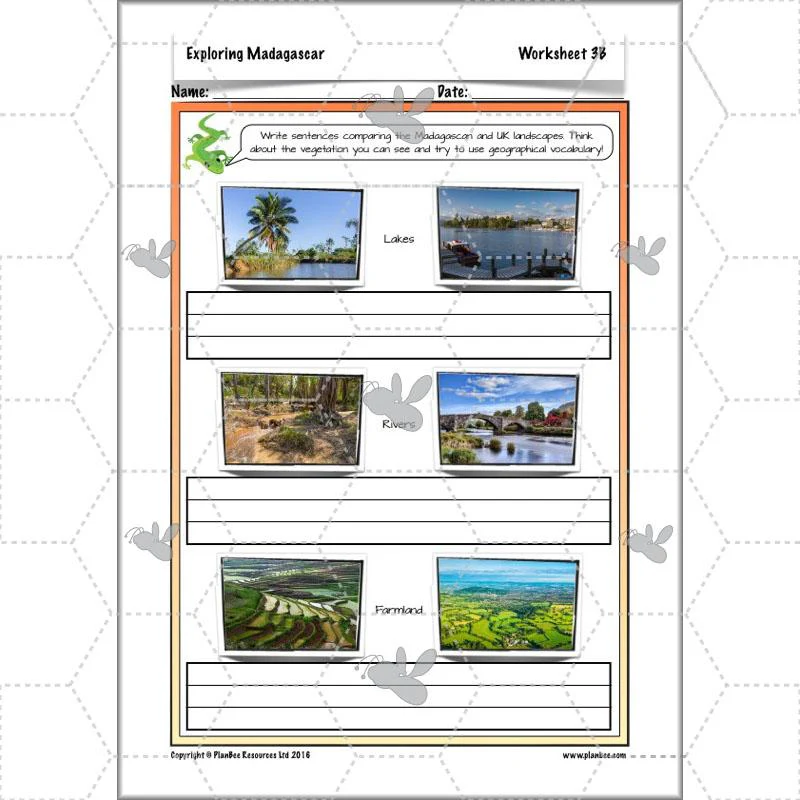
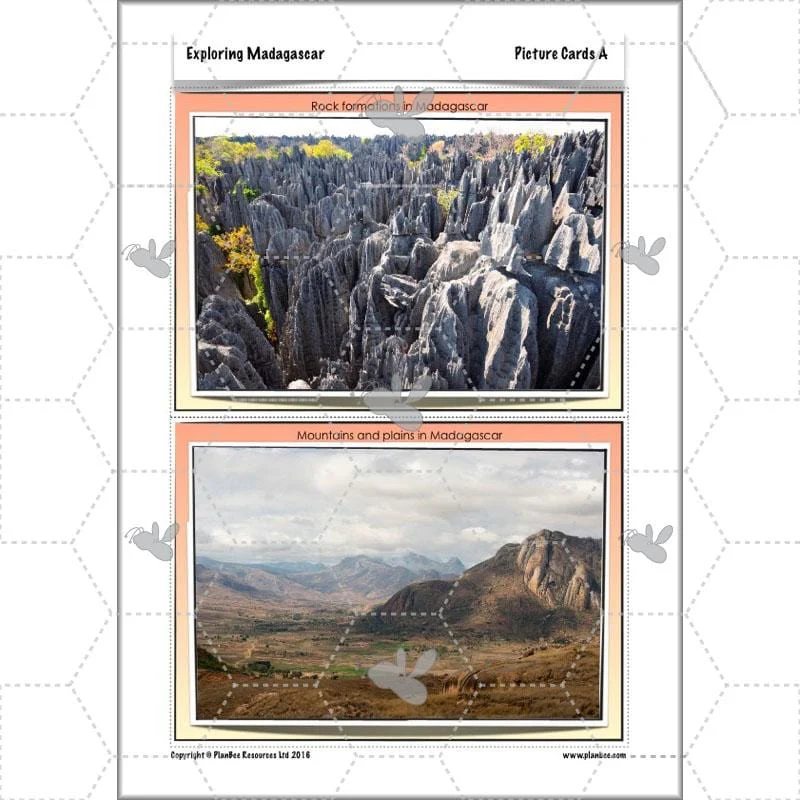
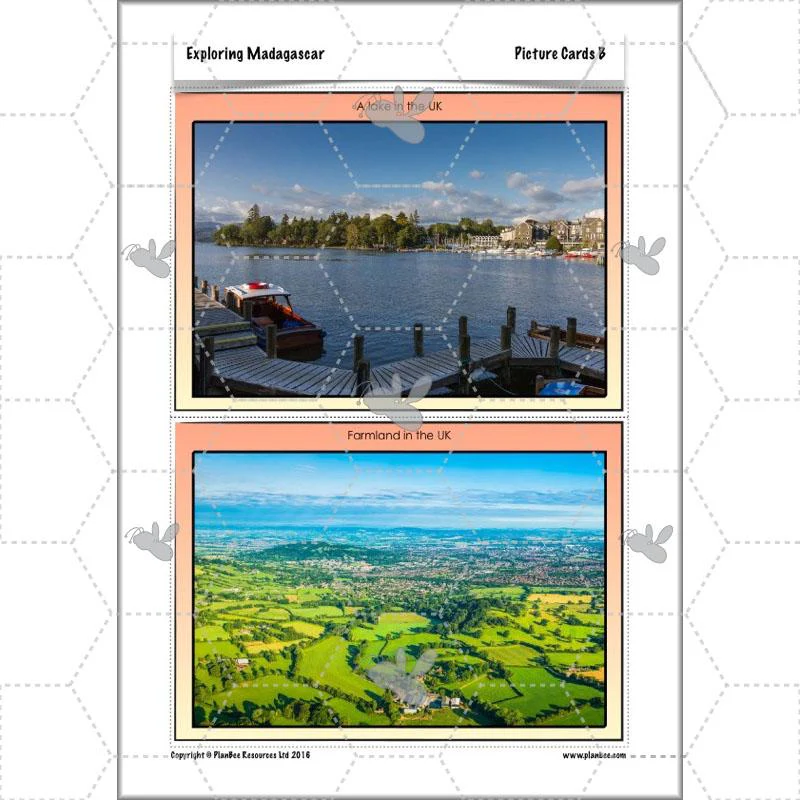
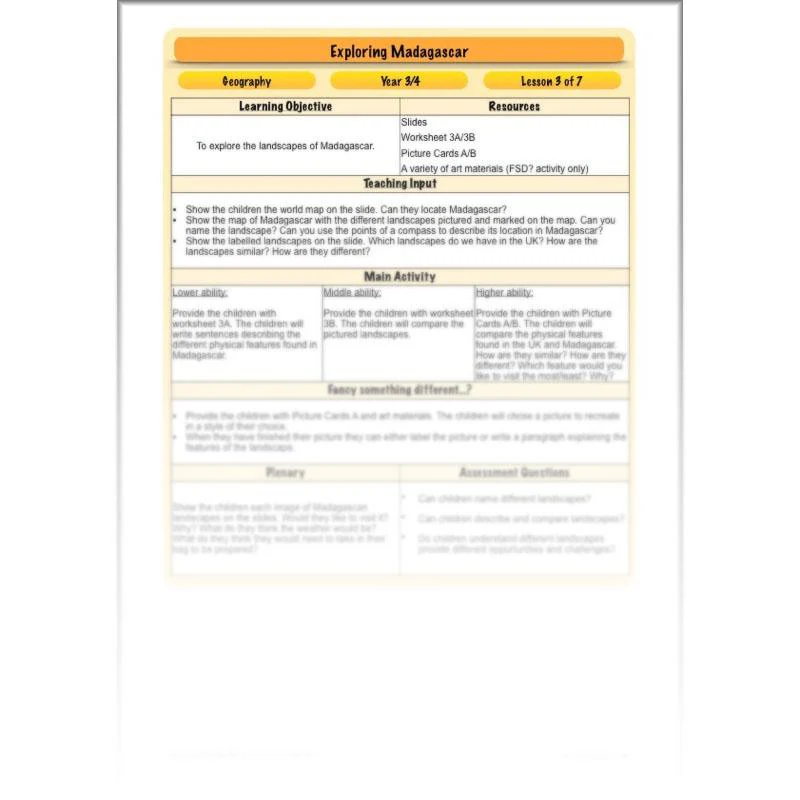
The third lesson in this scheme of work gives your class the opportunity to investigate some of the different landscapes found in Madagascar. Your children will learn about and locate lots of landscapes, including beaches, rivers and mountains. As they explore the landscapes in more detail, they will be challenged to compare Madagascan landscapes with UK landscapes.
What's included:
- Lesson plan
- Slides
- Activity ideas
- Differentiated worksheets
- Picture cards
View Lesson 3
Madagascar's Climate
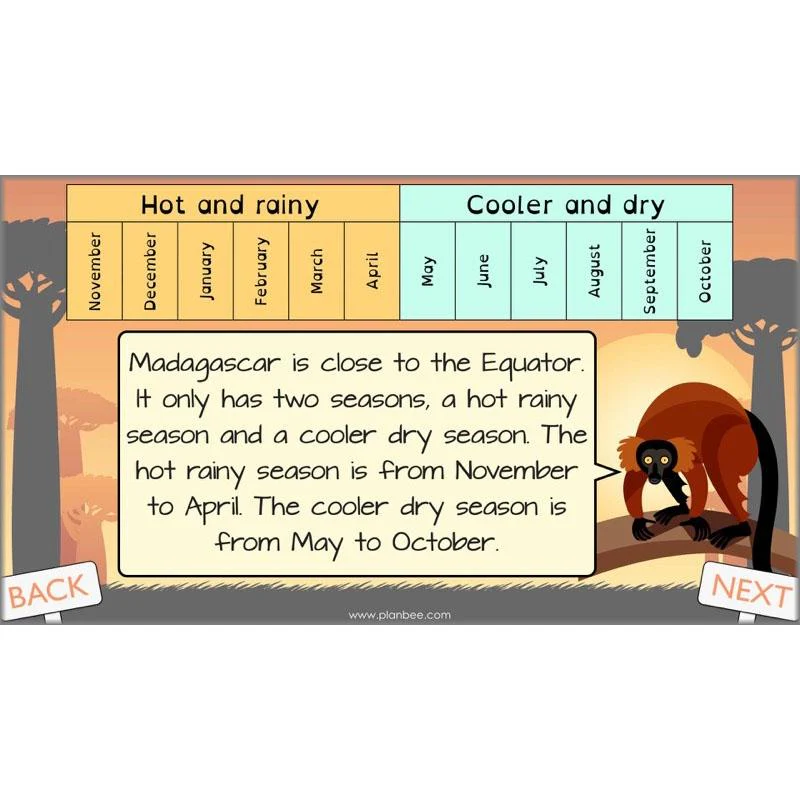
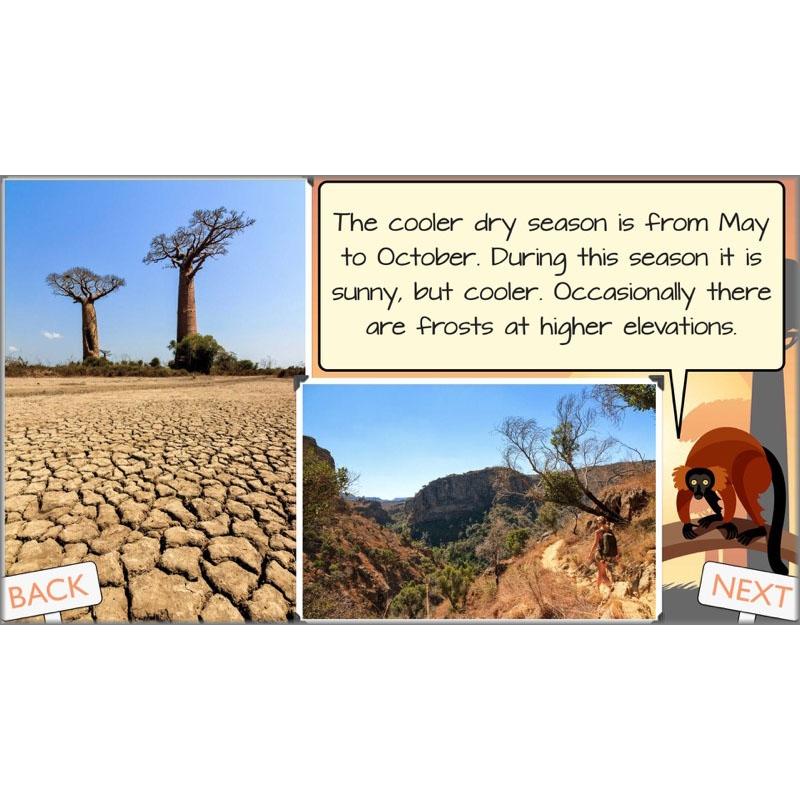
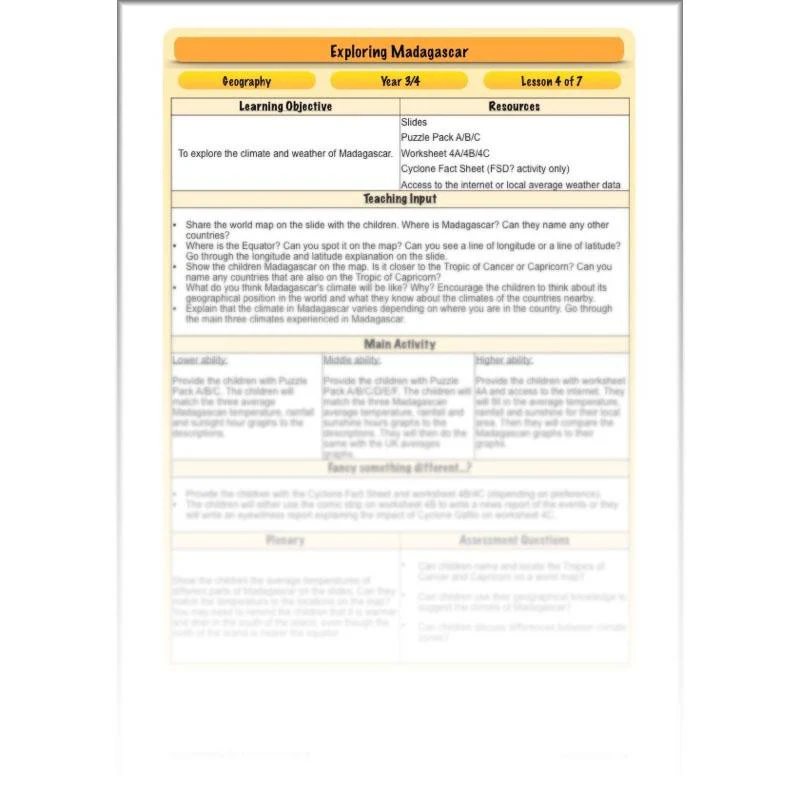
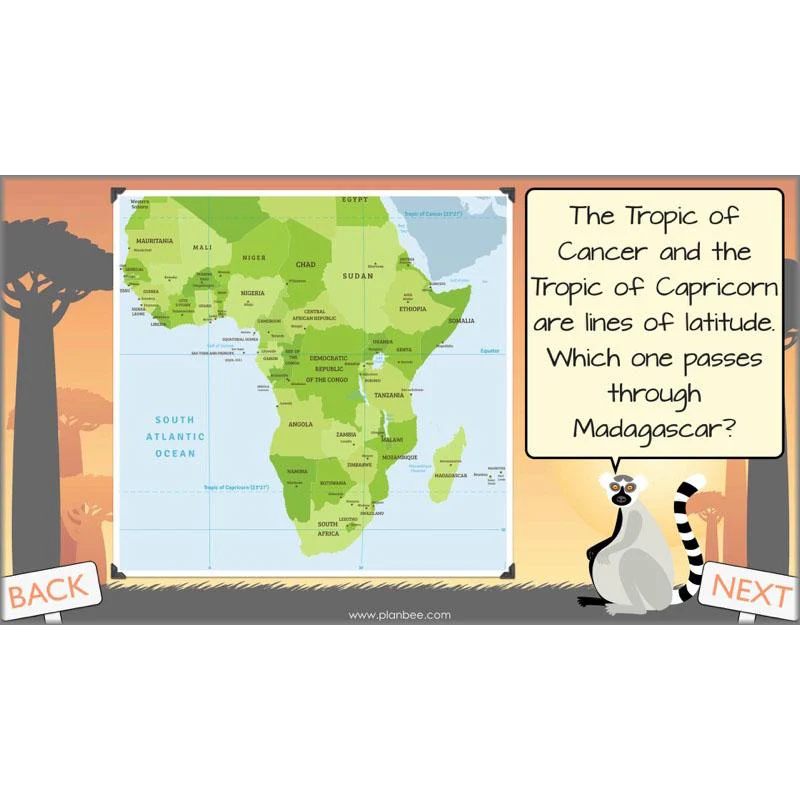
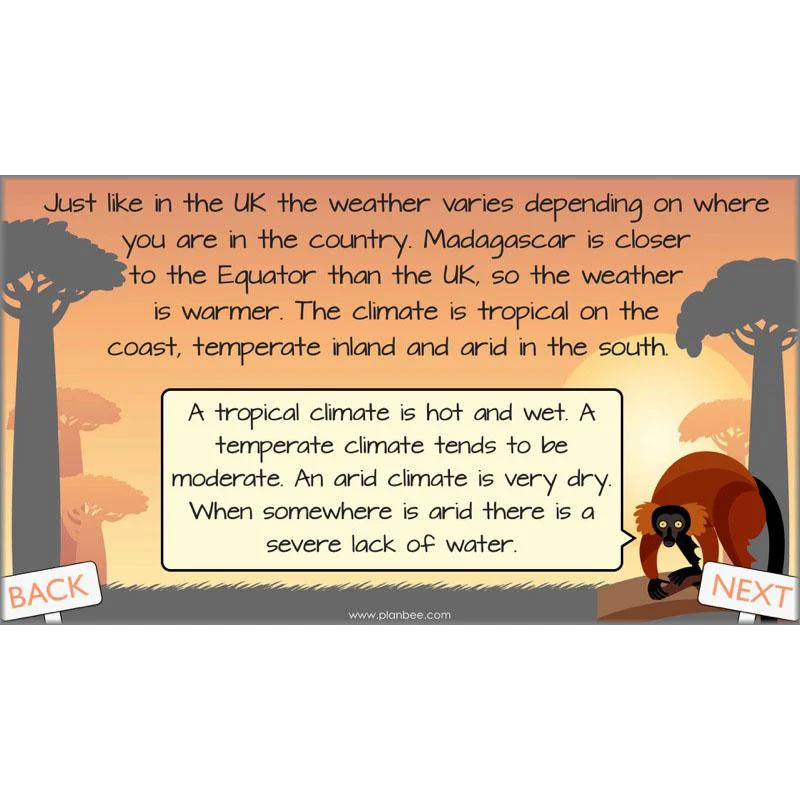
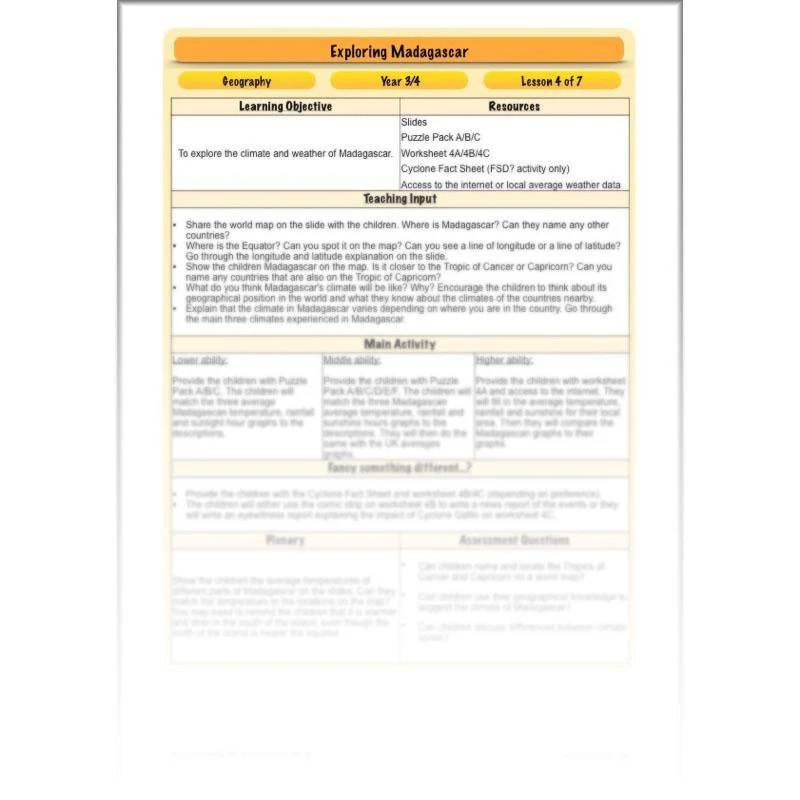
The fourth lesson in this scheme of work explores the climate in Madagascar. It begins by asking the children to look at a world map and think about where Madagascar is in relation to the equator and the Tropic of Capricorn. Your class will learn that Madagascar has two seasons and they will explore how the landscape affects the weather across the country.
What's included:
- Lesson plan
- Slides
- Activity ideas
- Differentiated worksheets
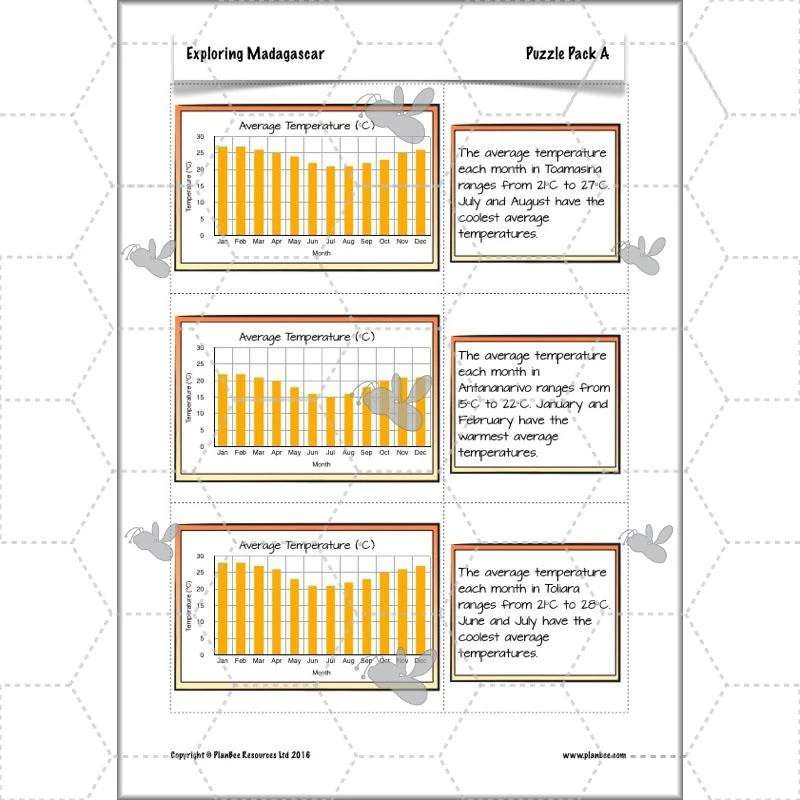
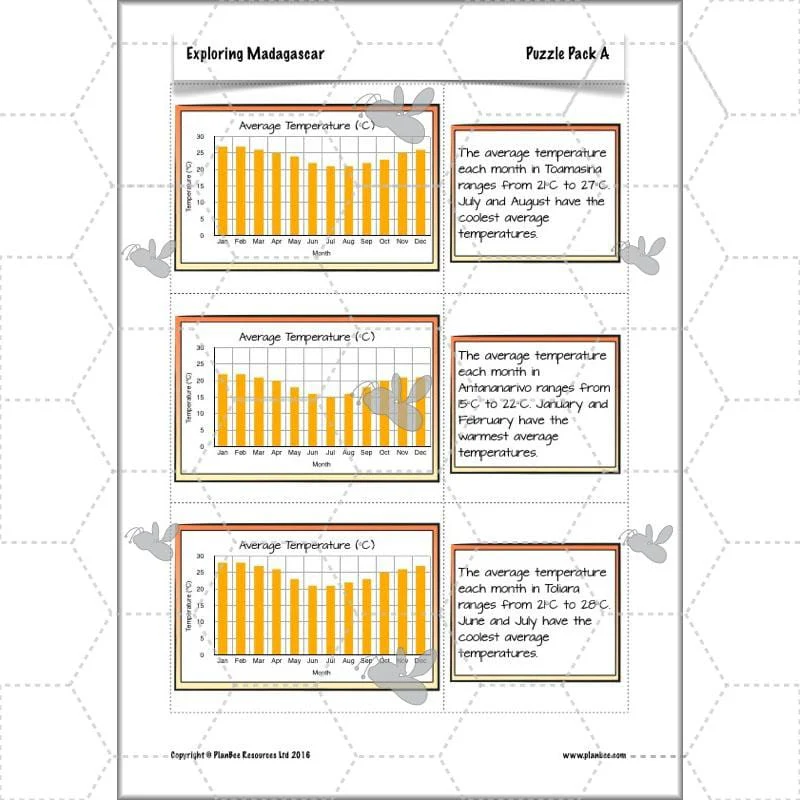
- Differentiated puzzle pack
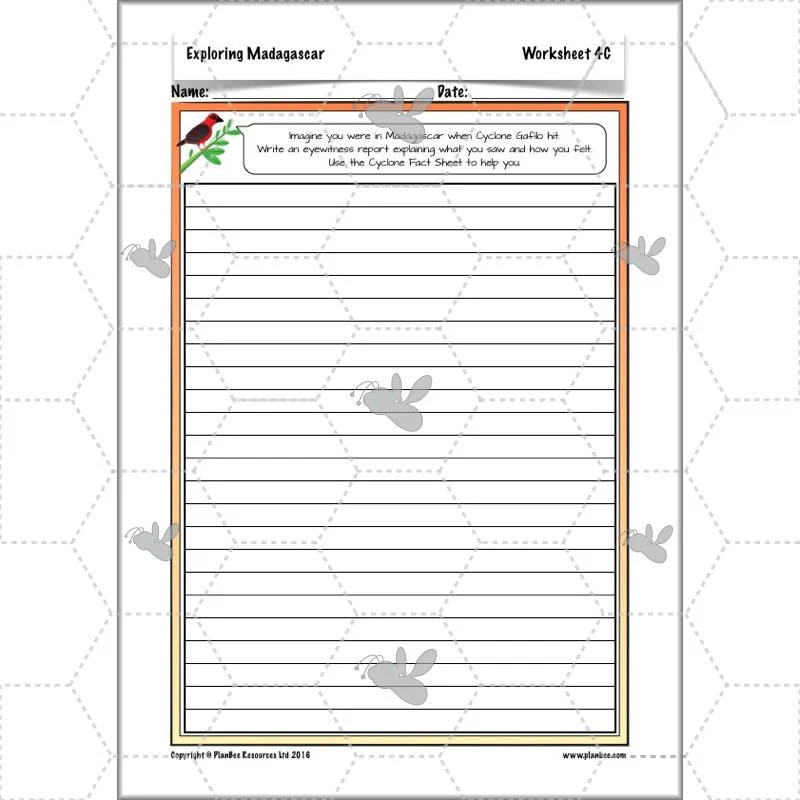
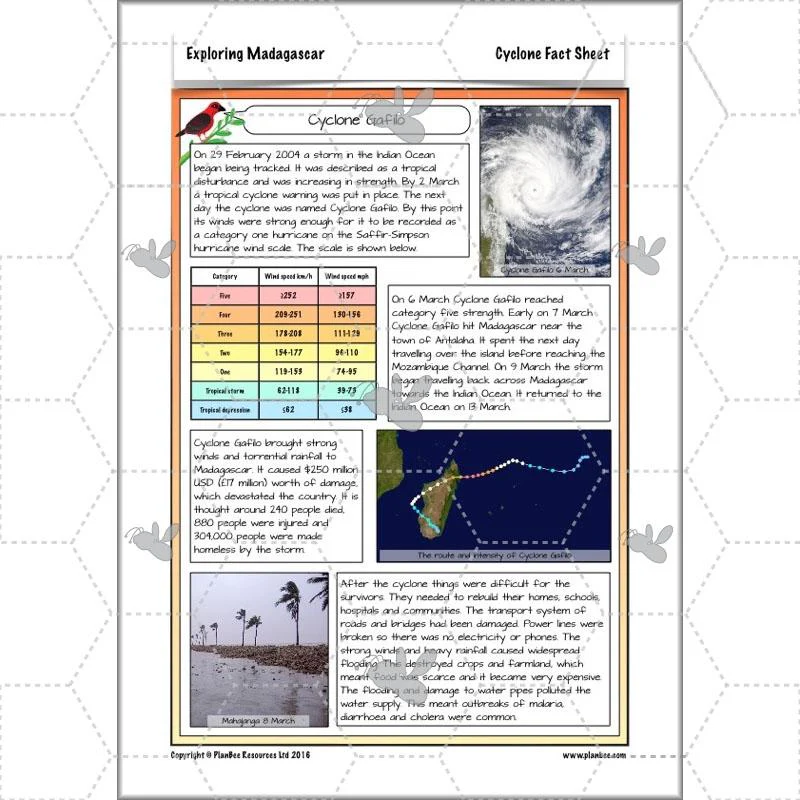
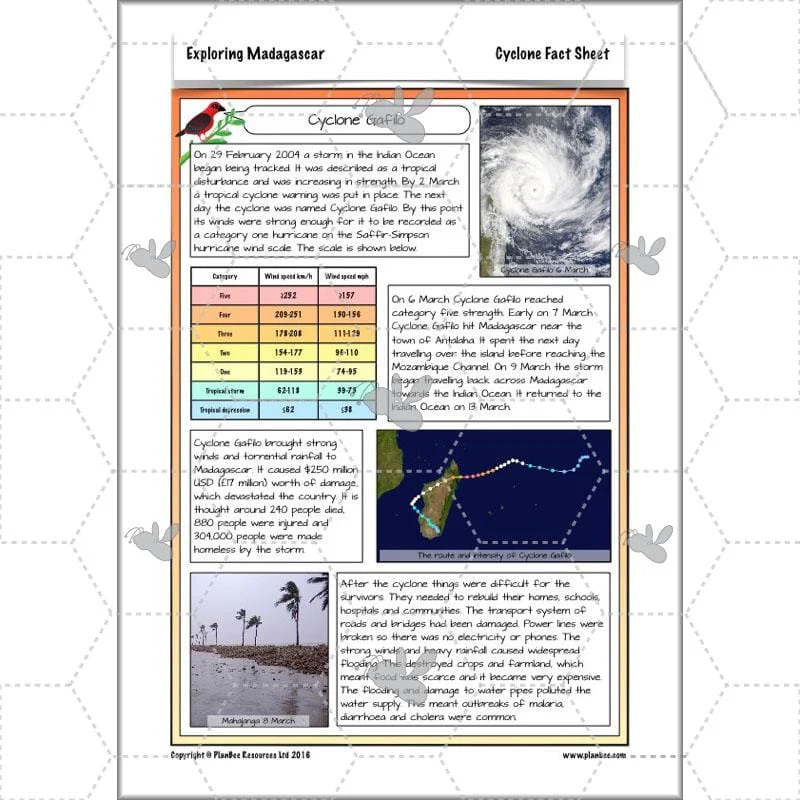
- Cyclone fact sheet
View Lesson 4
Animals
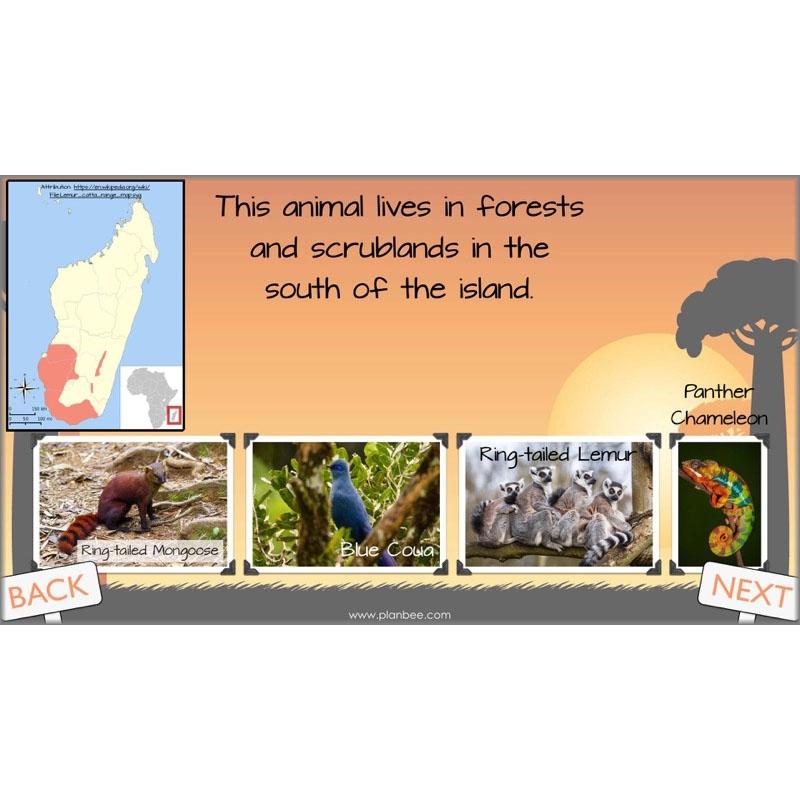
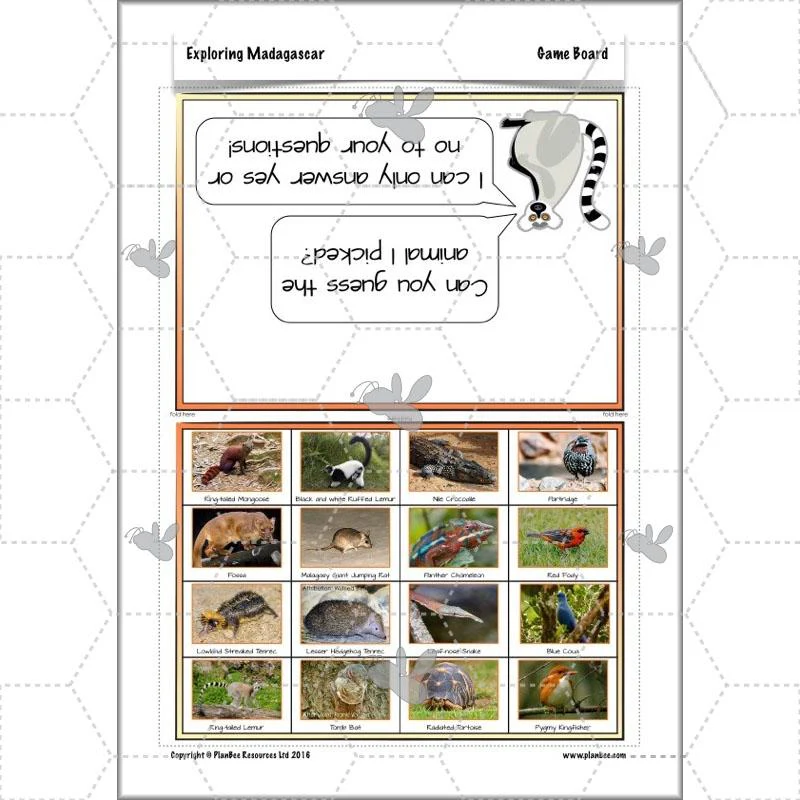
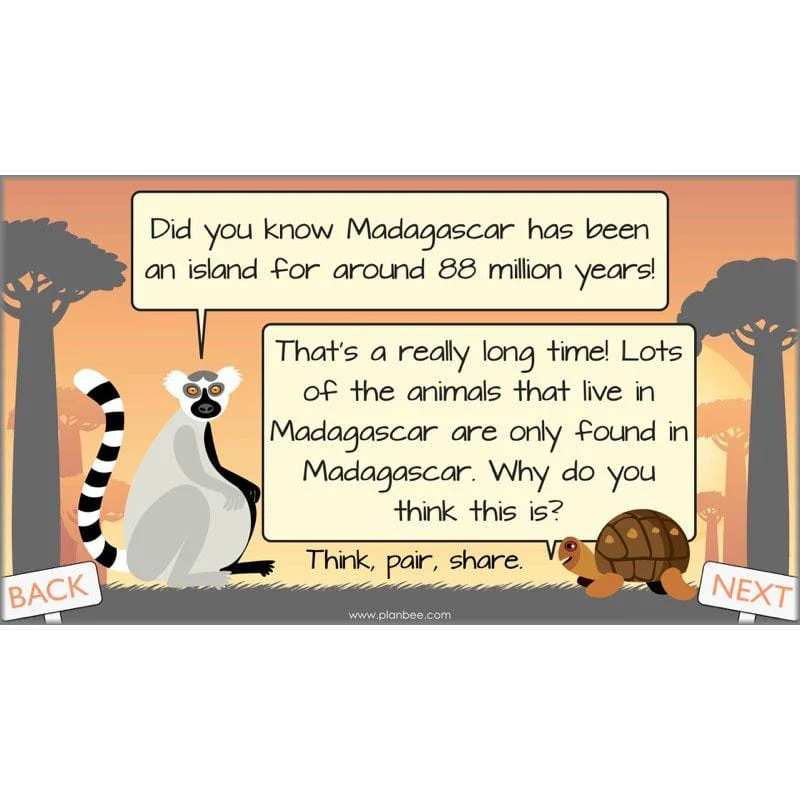
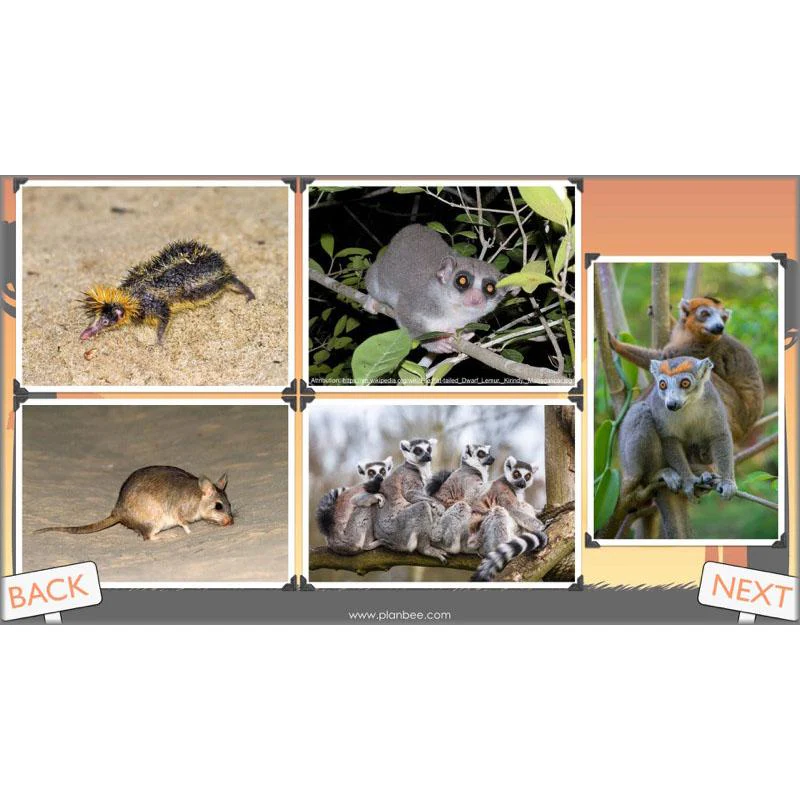
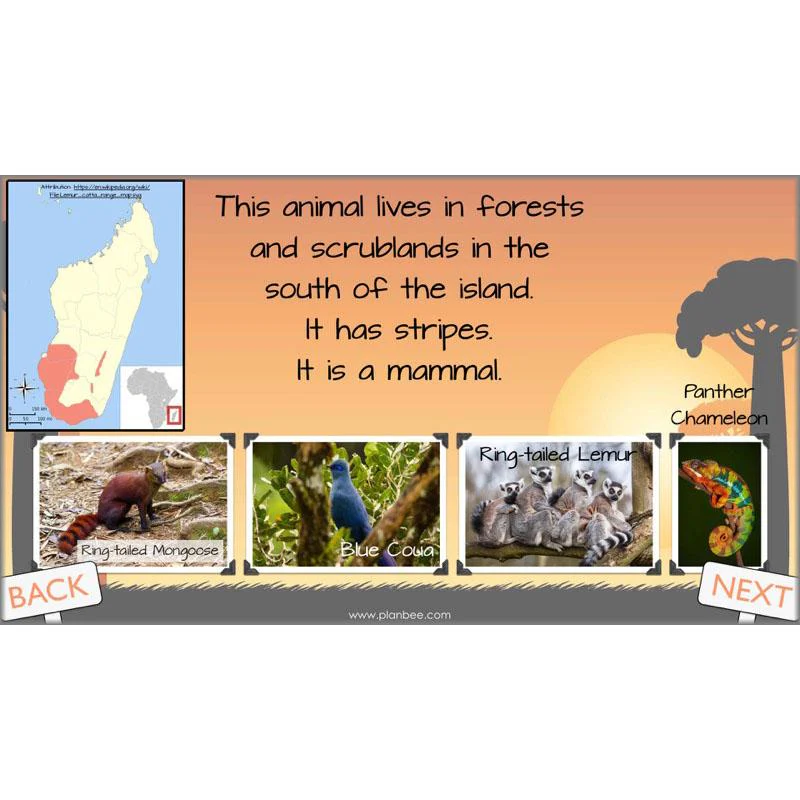
During the fifth lesson in this series your class will learn about some of the different animals found in Madagascar. They will discover that lots of Madagascan animals are only found in Madagascar. Then they will try to name some Madagascan animals before discovering which landscape their habitat is in. This lesson finishes by asking the children to look at and discuss three different extinct Madagascan animals.
What's included:
- Lesson plan
- Slides
- Activity ideas
- Worksheet
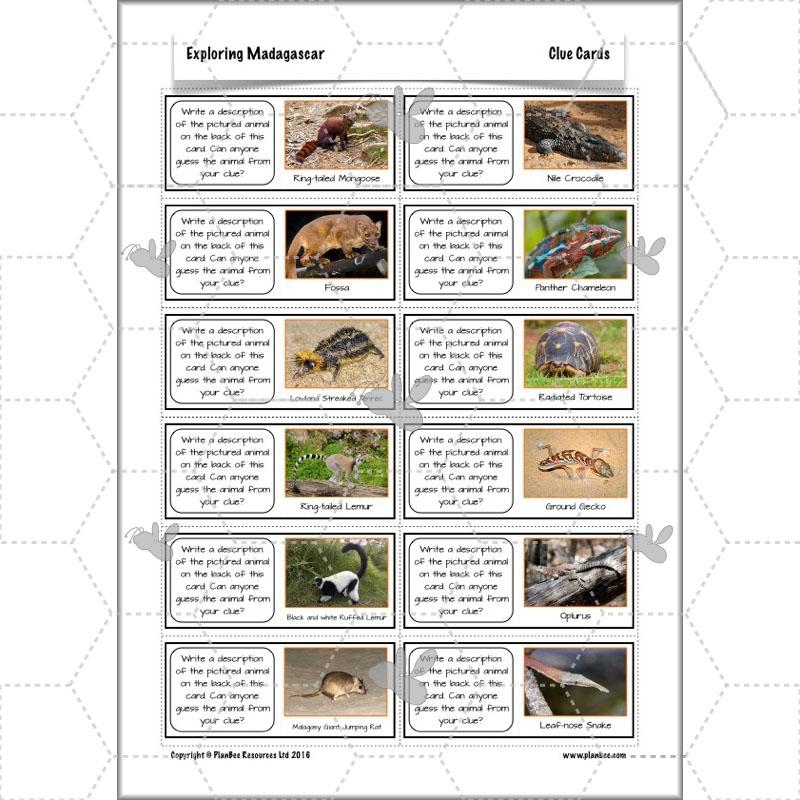
- Clue cards
- Animal options sheet
- Game board
- Differentiated picture cards
View Lesson 5
Cities and Towns
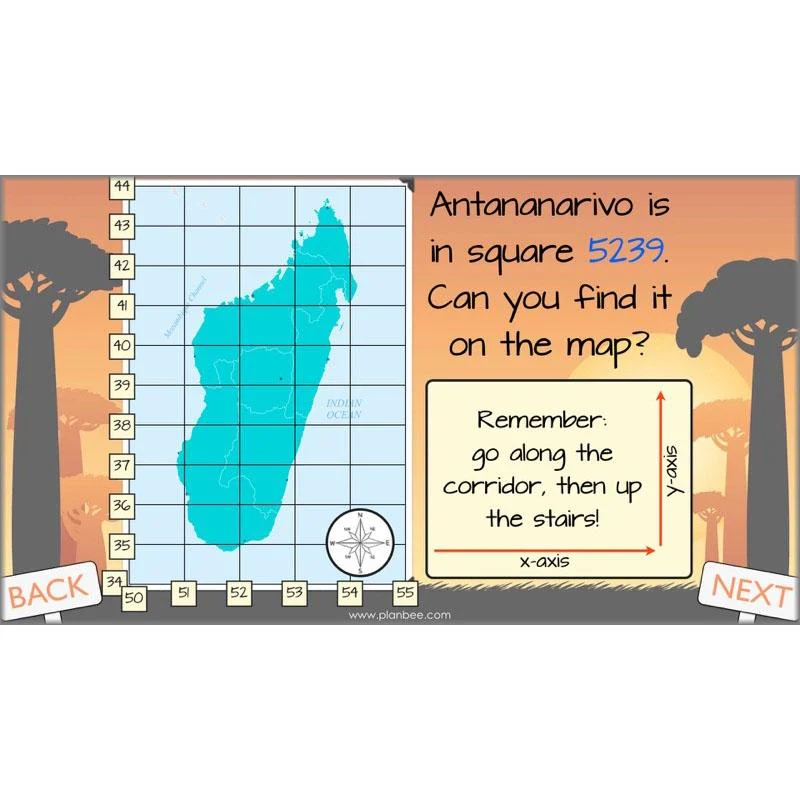
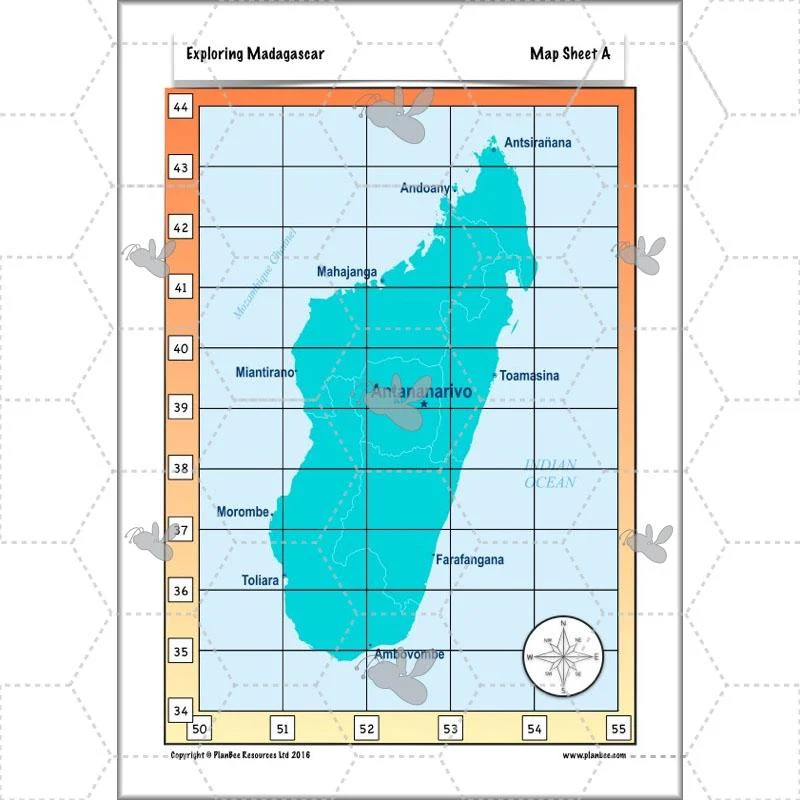
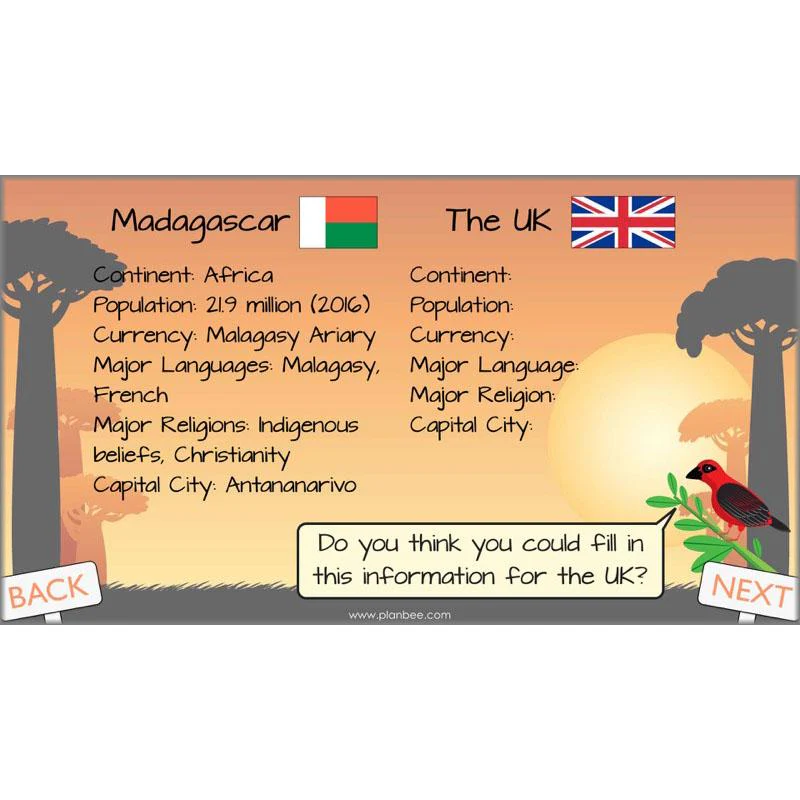
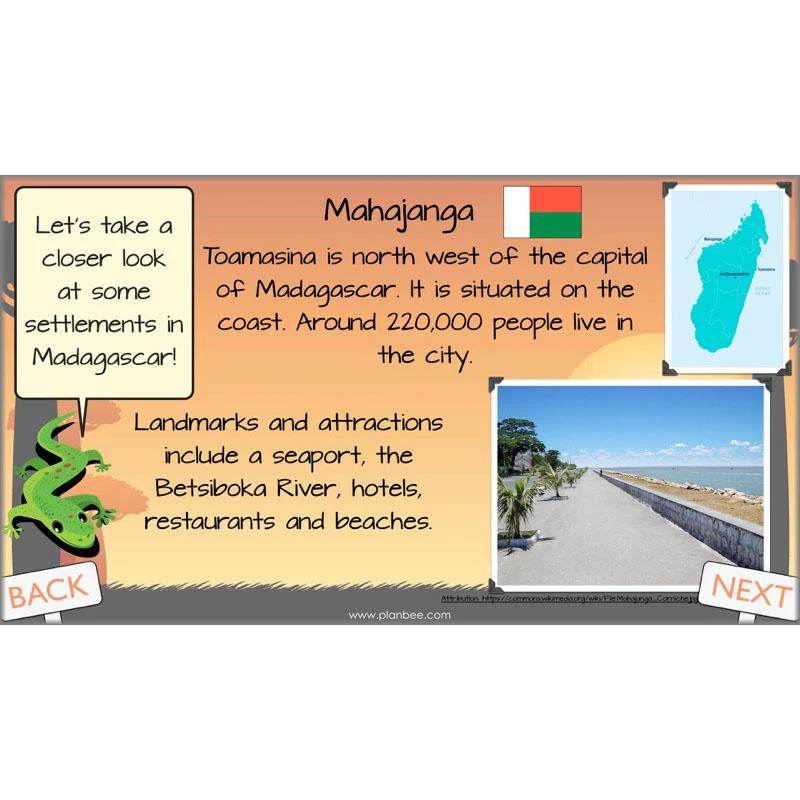
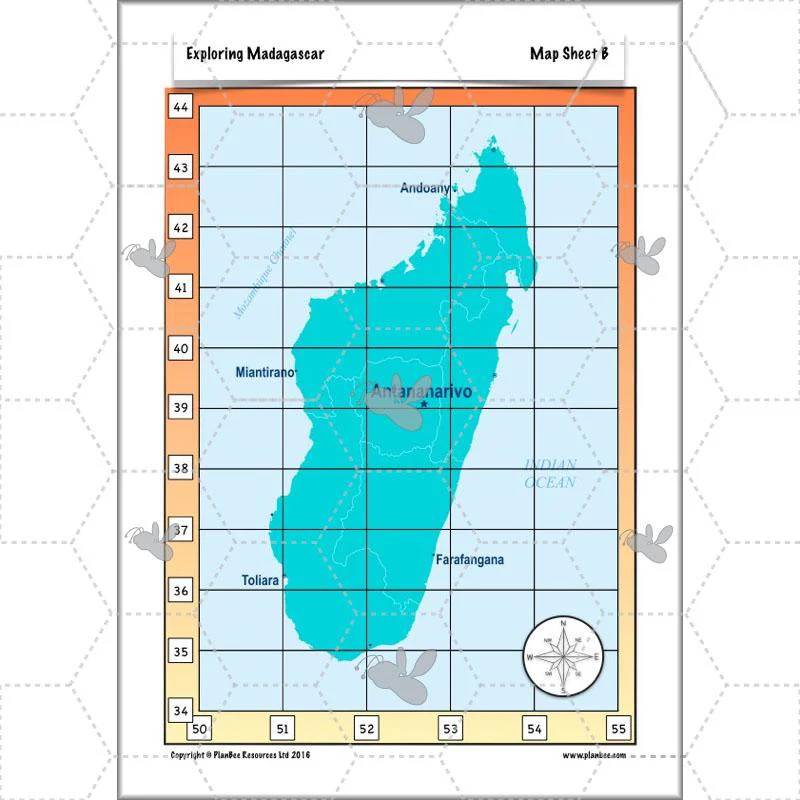
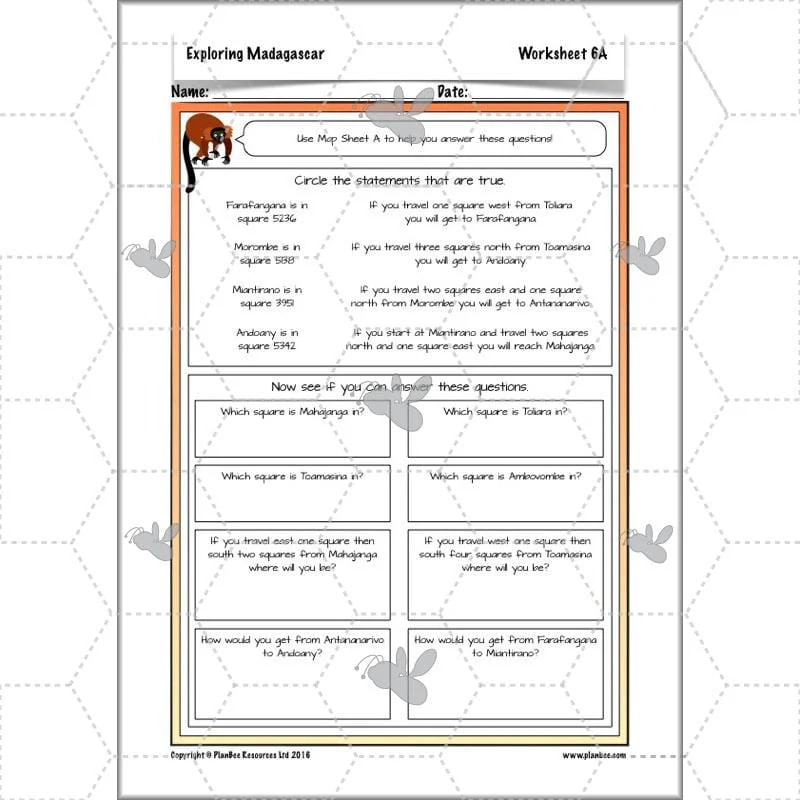
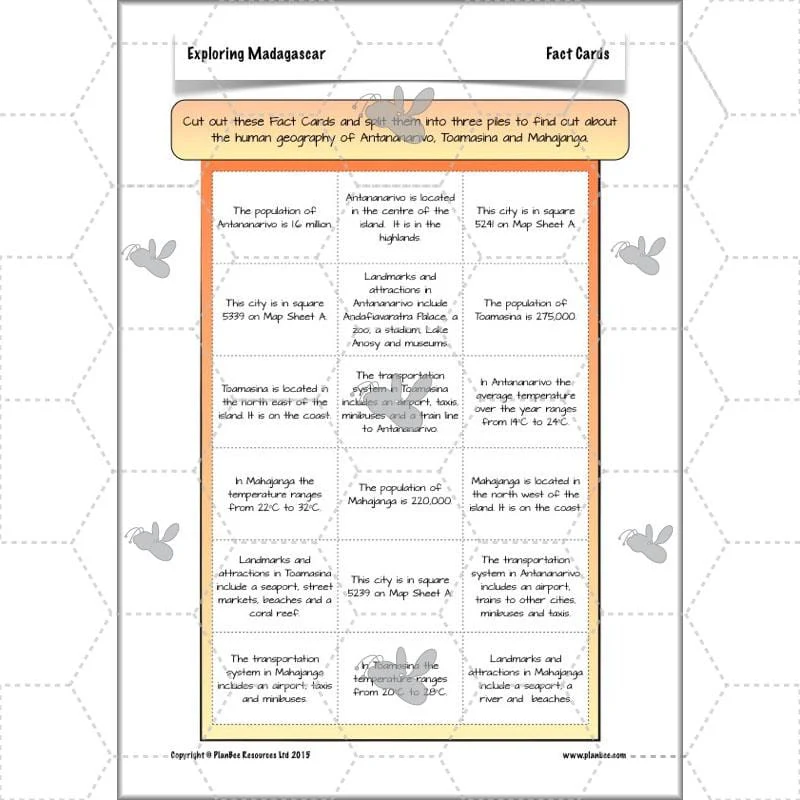
In the penultimate lesson of this series your class will think about the human geography of Madagascar and compare it to the UK. They will look at three different Madagascan cities and find them on a map using four-figure grid references. They will also use the eight points of a compass to navigate around the map from settlement to settlement.
What's included:
- Lesson plan
- Slides
- Activity ideas
- Differentiated worksheets
- Differentiated map sheets
- Fact cards
View Lesson 6
Trading resources
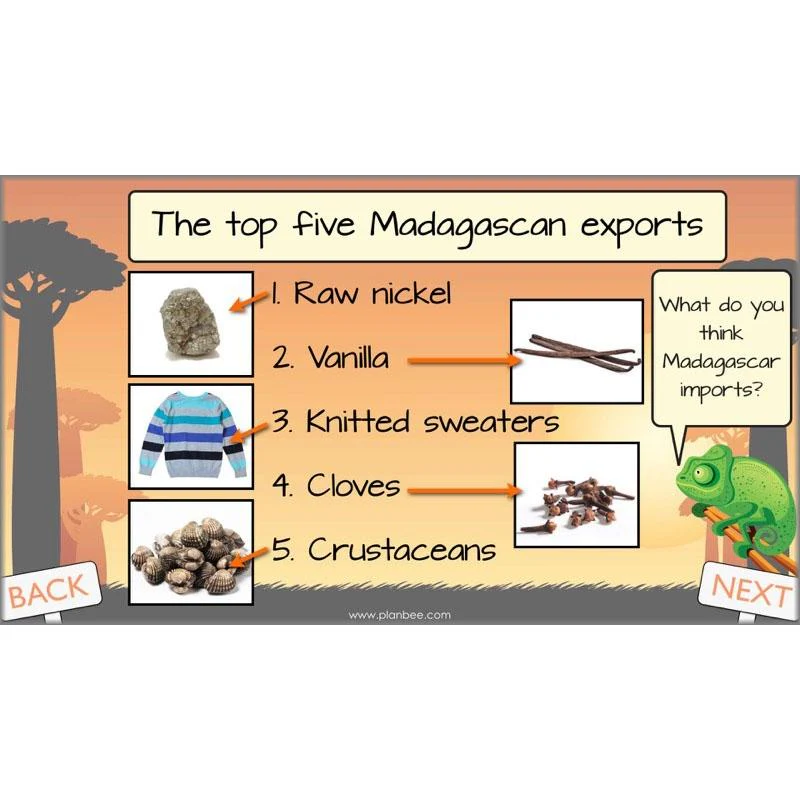
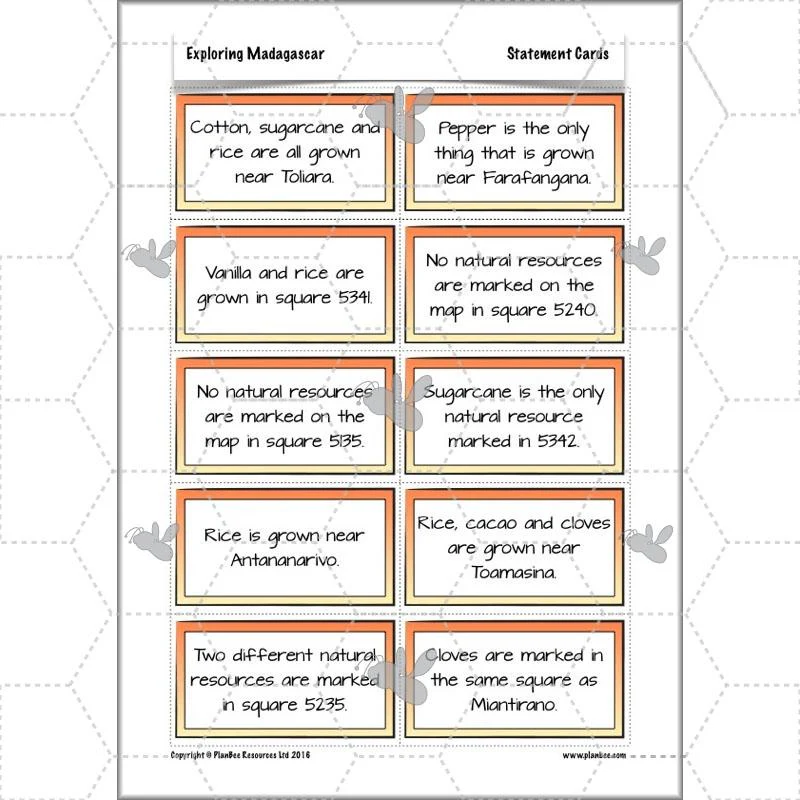
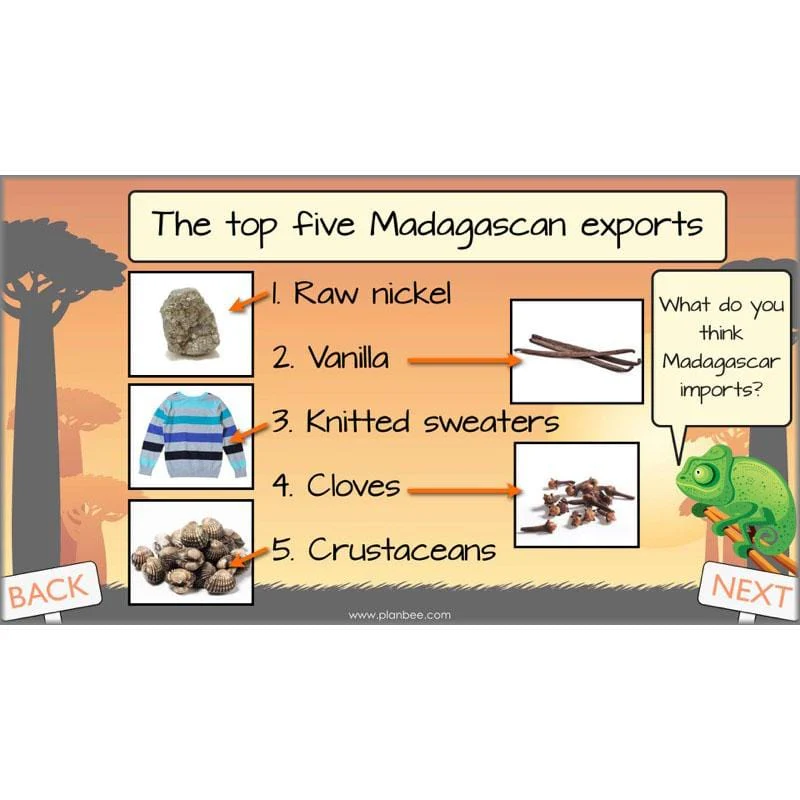
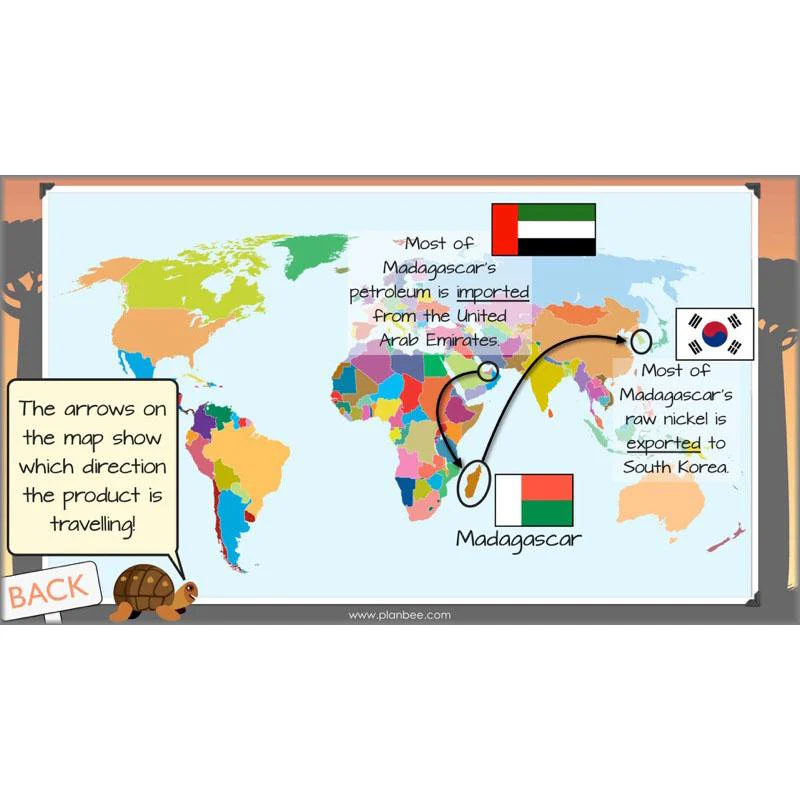
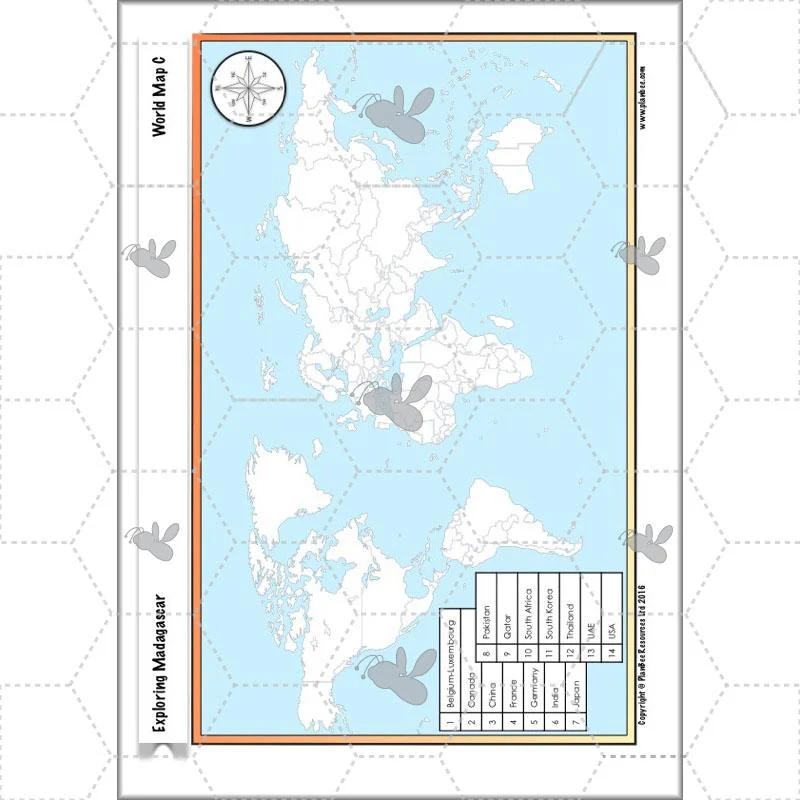
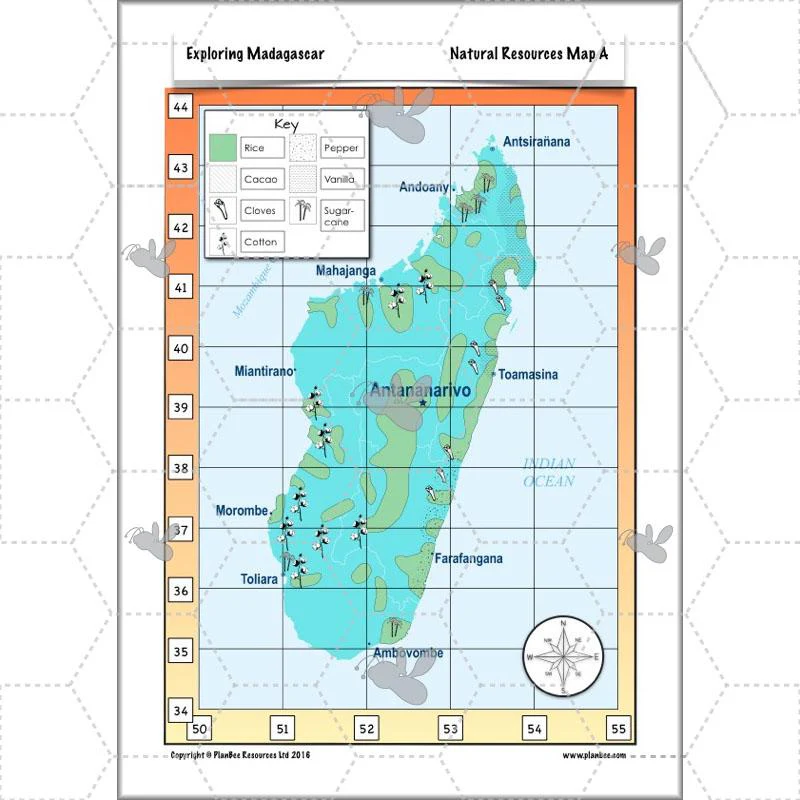
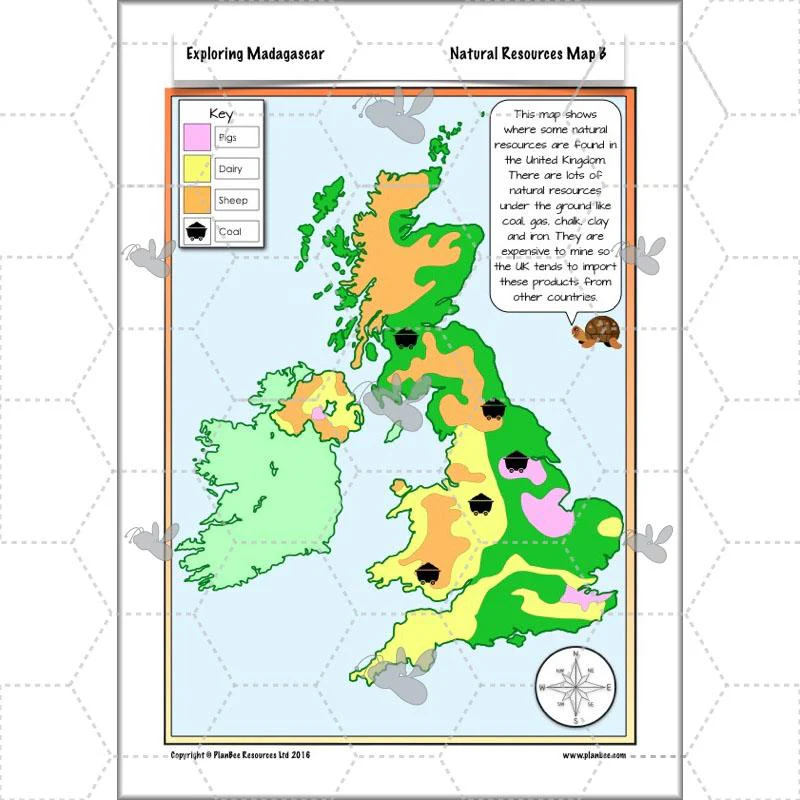
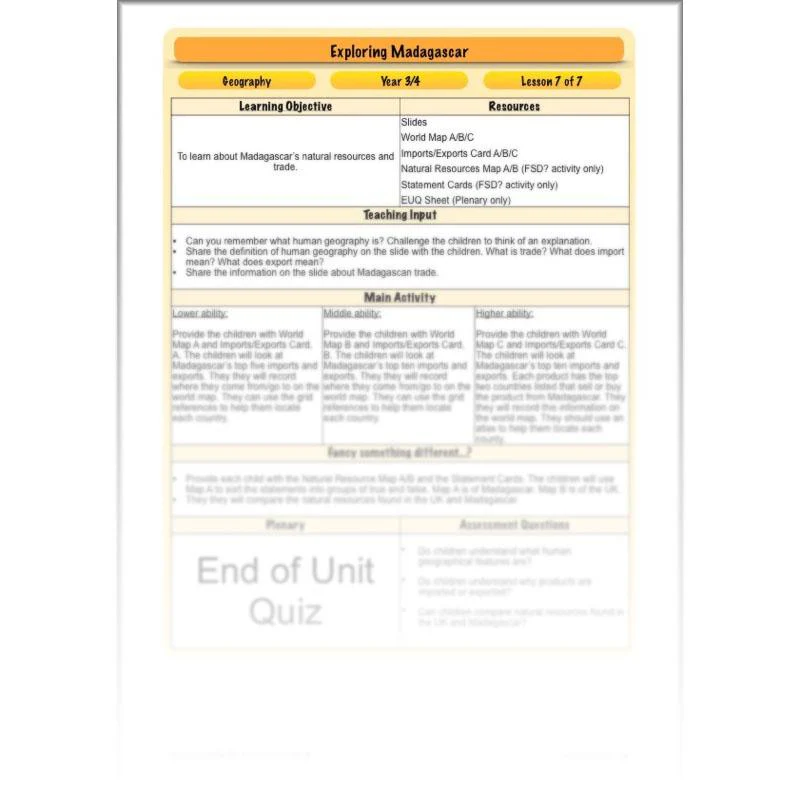
During the final lesson in this scheme of work, your class will learn about Madagascar’s imported and exported resources. They will locate the countries Madagascar export their resources to, as well as the locations of the countries their major imports come from. Alternatively they will compare Madagascar’s natural resources to the UK’s by looking at maps of the two countries. To end this series of lessons your class can take part in an end of unit quiz!
What's included:
- Lesson plan
- Slides
- Activity ideas
- Differentiated world maps
- Differentiated import/export sheets
- Natural resources maps
- Statement cards
- End of unit quiz
View Lesson 7
Original: $4.71
-65%$4.71
$1.65More Images
Exploring Madagascar
Madagascar! Amazing animals, varying landscapes, tropical climate and bustling cities. This 'Exploring Madagascar' scheme of work for KS2 children will make your class fascinated by Madagascar.
Give your class the opportunity to investigate Madagascar’s wildlife, location, climate and physical geography using the detailed maps and resources provided in this scheme of work. Your children will also explore Madagascar's trade and climate patterns. This scheme of work provides opportunities for your class to locate major cities in Madagascar and investigate the human and physical features found there. The children will compare and contrast Madagascar to the United Kingdom with the use of detailed image cards and clear maps and photos. This scheme of work has everything you need to teach the KS2 geography objectives and have your class engaged and interested in another country, on the other side of the world.
Which country will we be learning about?
The first lesson in this scheme of work challenges your class to work out which country they will be learning about. Your children will be shown pictures of Madagascar and discuss what they can learn from them. They will then either be given picture cards of Madagascar and the UK to sort, compare and discuss, or clue cards to help them work out the country they will be learning about. This lesson provides an overview of Madagascar to prepare the children for the subsequent lessons.
What's included:
- Lesson plan
- Slides
- Activity ideas
- Differentiated worksheets
- Differentiated country cards
- Picture cards
View Lesson 1
Where is it?
The second lesson in this scheme of work challenges your class to locate Madagascar on a map and look at the countries that surround it. Your class will use the eight points of a compass to navigate around a world map. They will then either use a world map to answer questions or they will use a variety of sources to sort statements into groups of true and false.
What's included:
- Lesson plan
- Slides
- Activity ideas
- Differentiated worksheets
- Differentiated map sheets
- Statement cards
View Lesson 2
Discovering Landscapes
The third lesson in this scheme of work gives your class the opportunity to investigate some of the different landscapes found in Madagascar. Your children will learn about and locate lots of landscapes, including beaches, rivers and mountains. As they explore the landscapes in more detail, they will be challenged to compare Madagascan landscapes with UK landscapes.
What's included:
- Lesson plan
- Slides
- Activity ideas
- Differentiated worksheets
- Picture cards
View Lesson 3
Madagascar's Climate
The fourth lesson in this scheme of work explores the climate in Madagascar. It begins by asking the children to look at a world map and think about where Madagascar is in relation to the equator and the Tropic of Capricorn. Your class will learn that Madagascar has two seasons and they will explore how the landscape affects the weather across the country.
What's included:
- Lesson plan
- Slides
- Activity ideas
- Differentiated worksheets
- Differentiated puzzle pack
- Cyclone fact sheet
View Lesson 4
Animals
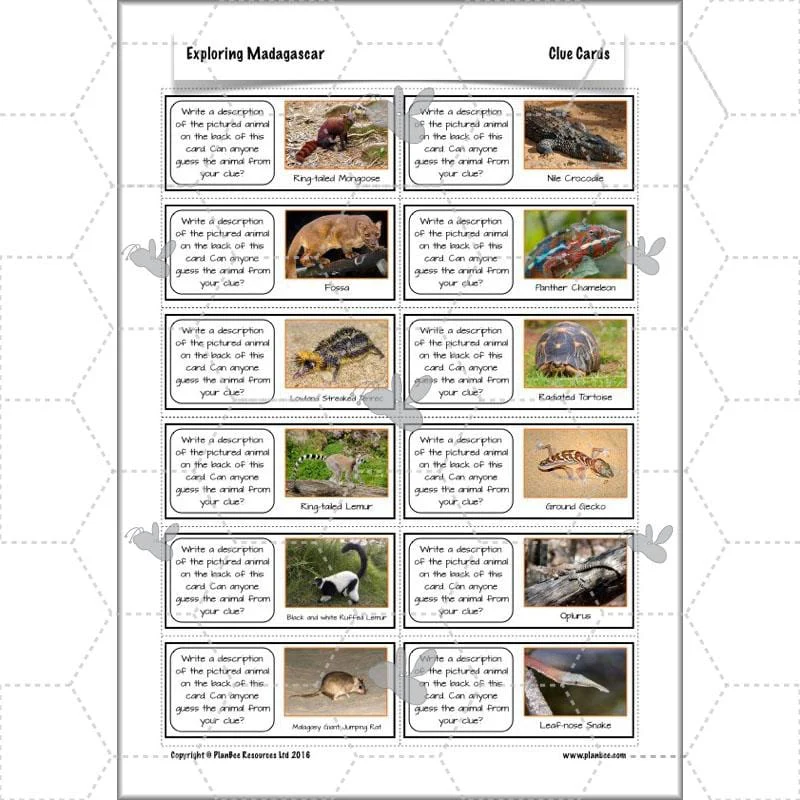
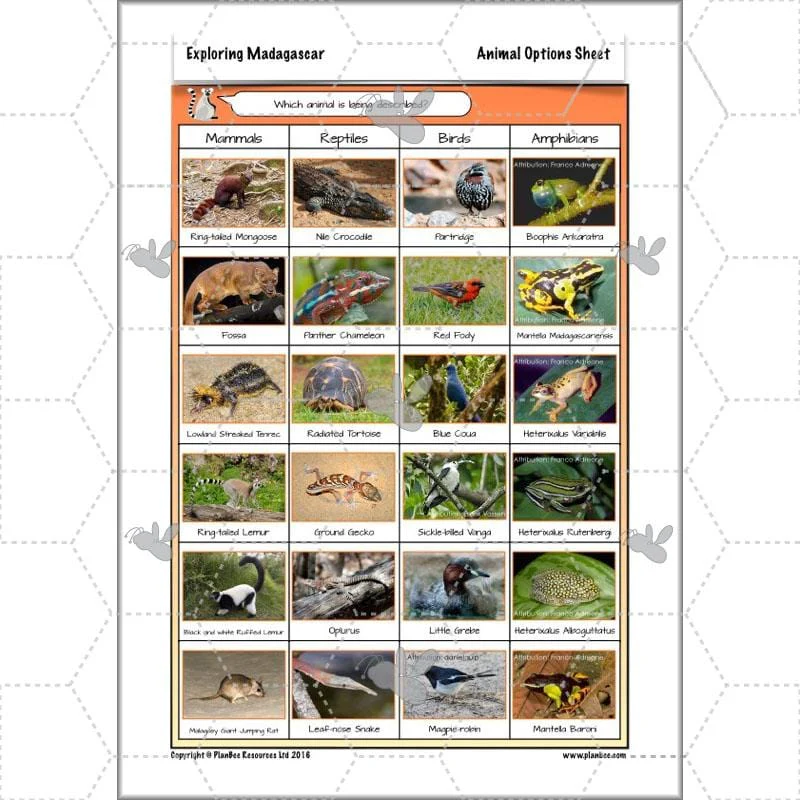
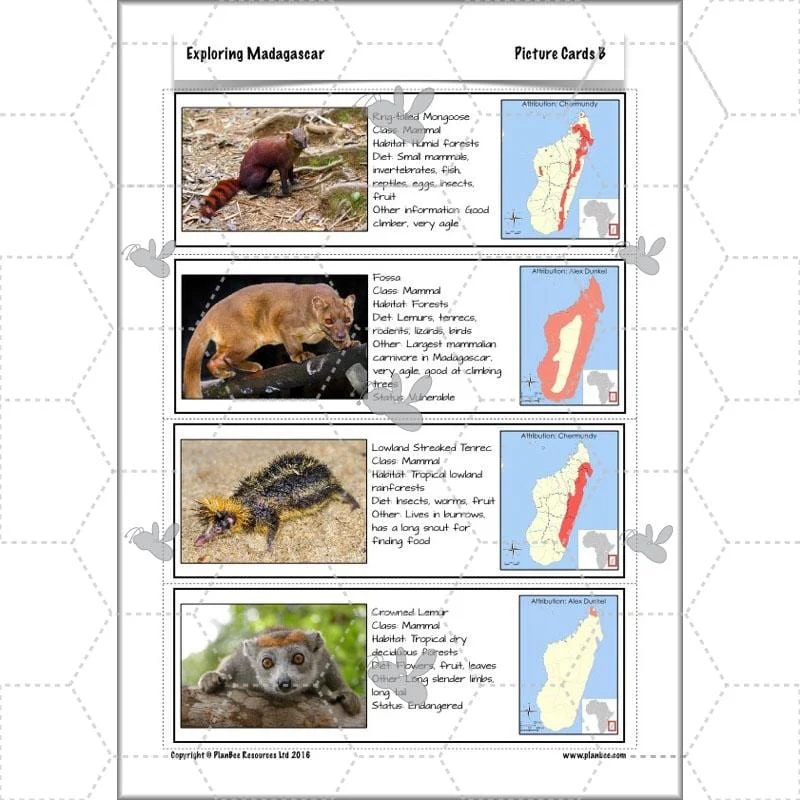
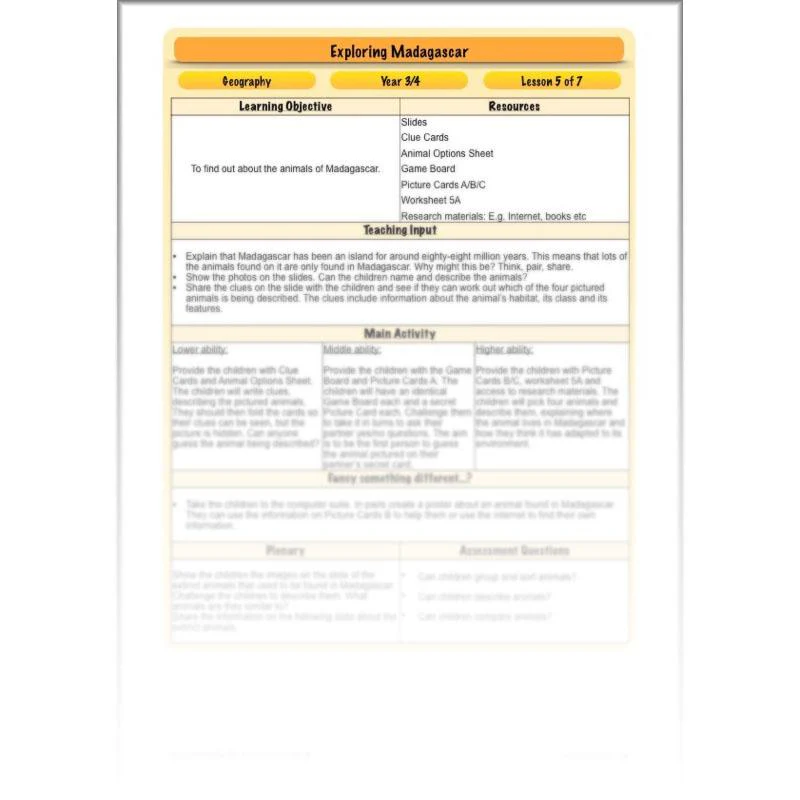
During the fifth lesson in this series your class will learn about some of the different animals found in Madagascar. They will discover that lots of Madagascan animals are only found in Madagascar. Then they will try to name some Madagascan animals before discovering which landscape their habitat is in. This lesson finishes by asking the children to look at and discuss three different extinct Madagascan animals.
What's included:
- Lesson plan
- Slides
- Activity ideas
- Worksheet
- Clue cards
- Animal options sheet
- Game board
- Differentiated picture cards
View Lesson 5
Cities and Towns
In the penultimate lesson of this series your class will think about the human geography of Madagascar and compare it to the UK. They will look at three different Madagascan cities and find them on a map using four-figure grid references. They will also use the eight points of a compass to navigate around the map from settlement to settlement.
What's included:
- Lesson plan
- Slides
- Activity ideas
- Differentiated worksheets
- Differentiated map sheets
- Fact cards
View Lesson 6
Trading resources
During the final lesson in this scheme of work, your class will learn about Madagascar’s imported and exported resources. They will locate the countries Madagascar export their resources to, as well as the locations of the countries their major imports come from. Alternatively they will compare Madagascar’s natural resources to the UK’s by looking at maps of the two countries. To end this series of lessons your class can take part in an end of unit quiz!
What's included:
- Lesson plan
- Slides
- Activity ideas
- Differentiated world maps
- Differentiated import/export sheets
- Natural resources maps
- Statement cards
- End of unit quiz
View Lesson 7
Product Information
Product Information
Shipping & Returns
Shipping & Returns
Description
Madagascar! Amazing animals, varying landscapes, tropical climate and bustling cities. This 'Exploring Madagascar' scheme of work for KS2 children will make your class fascinated by Madagascar.
Give your class the opportunity to investigate Madagascar’s wildlife, location, climate and physical geography using the detailed maps and resources provided in this scheme of work. Your children will also explore Madagascar's trade and climate patterns. This scheme of work provides opportunities for your class to locate major cities in Madagascar and investigate the human and physical features found there. The children will compare and contrast Madagascar to the United Kingdom with the use of detailed image cards and clear maps and photos. This scheme of work has everything you need to teach the KS2 geography objectives and have your class engaged and interested in another country, on the other side of the world.
Which country will we be learning about?
The first lesson in this scheme of work challenges your class to work out which country they will be learning about. Your children will be shown pictures of Madagascar and discuss what they can learn from them. They will then either be given picture cards of Madagascar and the UK to sort, compare and discuss, or clue cards to help them work out the country they will be learning about. This lesson provides an overview of Madagascar to prepare the children for the subsequent lessons.
What's included:
- Lesson plan
- Slides
- Activity ideas
- Differentiated worksheets
- Differentiated country cards
- Picture cards
View Lesson 1
Where is it?
The second lesson in this scheme of work challenges your class to locate Madagascar on a map and look at the countries that surround it. Your class will use the eight points of a compass to navigate around a world map. They will then either use a world map to answer questions or they will use a variety of sources to sort statements into groups of true and false.
What's included:
- Lesson plan
- Slides
- Activity ideas
- Differentiated worksheets
- Differentiated map sheets
- Statement cards
View Lesson 2
Discovering Landscapes
The third lesson in this scheme of work gives your class the opportunity to investigate some of the different landscapes found in Madagascar. Your children will learn about and locate lots of landscapes, including beaches, rivers and mountains. As they explore the landscapes in more detail, they will be challenged to compare Madagascan landscapes with UK landscapes.
What's included:
- Lesson plan
- Slides
- Activity ideas
- Differentiated worksheets
- Picture cards
View Lesson 3
Madagascar's Climate
The fourth lesson in this scheme of work explores the climate in Madagascar. It begins by asking the children to look at a world map and think about where Madagascar is in relation to the equator and the Tropic of Capricorn. Your class will learn that Madagascar has two seasons and they will explore how the landscape affects the weather across the country.
What's included:
- Lesson plan
- Slides
- Activity ideas
- Differentiated worksheets
- Differentiated puzzle pack
- Cyclone fact sheet
View Lesson 4
Animals
During the fifth lesson in this series your class will learn about some of the different animals found in Madagascar. They will discover that lots of Madagascan animals are only found in Madagascar. Then they will try to name some Madagascan animals before discovering which landscape their habitat is in. This lesson finishes by asking the children to look at and discuss three different extinct Madagascan animals.
What's included:
- Lesson plan
- Slides
- Activity ideas
- Worksheet
- Clue cards
- Animal options sheet
- Game board
- Differentiated picture cards
View Lesson 5
Cities and Towns
In the penultimate lesson of this series your class will think about the human geography of Madagascar and compare it to the UK. They will look at three different Madagascan cities and find them on a map using four-figure grid references. They will also use the eight points of a compass to navigate around the map from settlement to settlement.
What's included:
- Lesson plan
- Slides
- Activity ideas
- Differentiated worksheets
- Differentiated map sheets
- Fact cards
View Lesson 6
Trading resources
During the final lesson in this scheme of work, your class will learn about Madagascar’s imported and exported resources. They will locate the countries Madagascar export their resources to, as well as the locations of the countries their major imports come from. Alternatively they will compare Madagascar’s natural resources to the UK’s by looking at maps of the two countries. To end this series of lessons your class can take part in an end of unit quiz!
What's included:
- Lesson plan
- Slides
- Activity ideas
- Differentiated world maps
- Differentiated import/export sheets
- Natural resources maps
- Statement cards
- End of unit quiz
View Lesson 7