In Flanders Fields
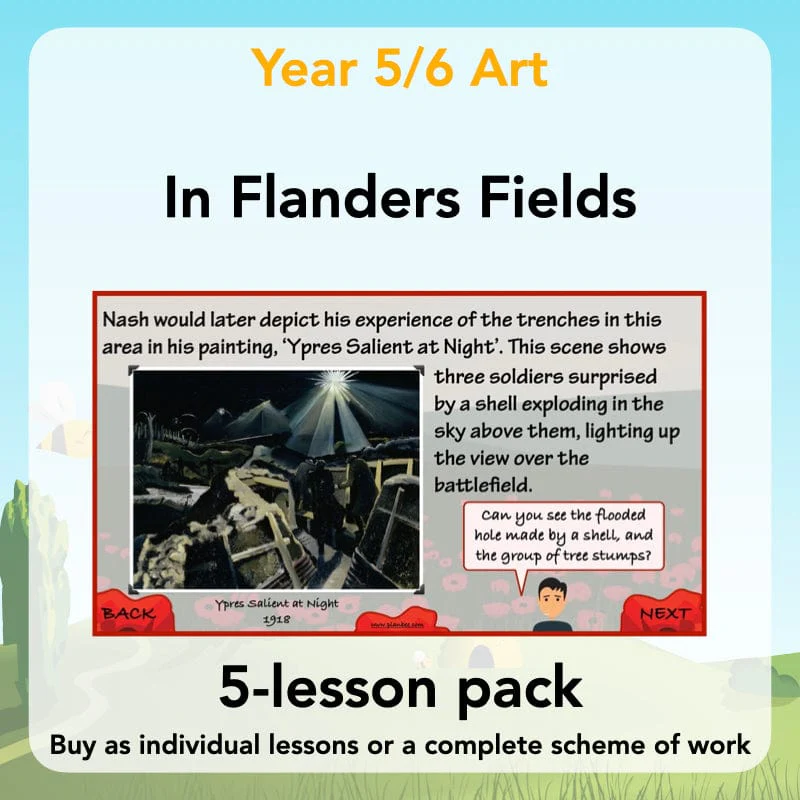
In this WWI Art KS2 scheme of work, your class will explore the work of the artists officially commissioned to record the war, with a focus on Paul Nash’s paintings. They will discover how art was used as a propaganda tool in the form of posters, and find out about the amazing dazzle camouflage which was invented and used during the war. Finally, children will create their own poppy-themed commemorative artworks based on the poem, ‘In Flanders Fields’.
With detailed lesson plans, slides and a range of printable resources, you will find everything you need to teach this Y5/6 ‘In Flanders Fields’ art scheme of work to your class.
Save up to 30% on this scheme of work by creating your own Mix and Match World War 1 Topic Bundle – perfect if you're looking for a cross-curricular approach to your teaching!
Lesson 1: Official WW1 Artists
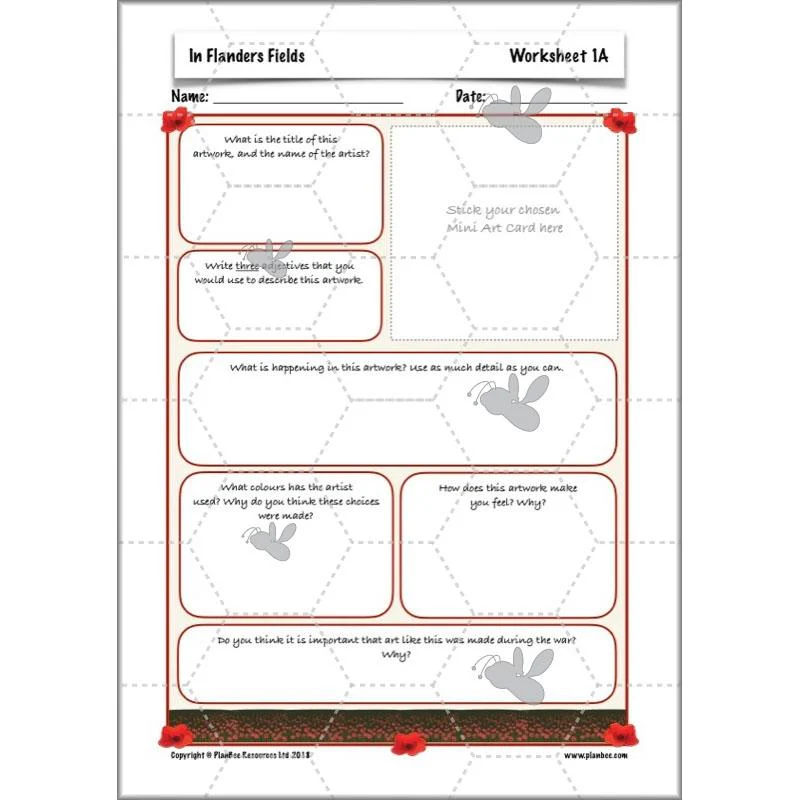
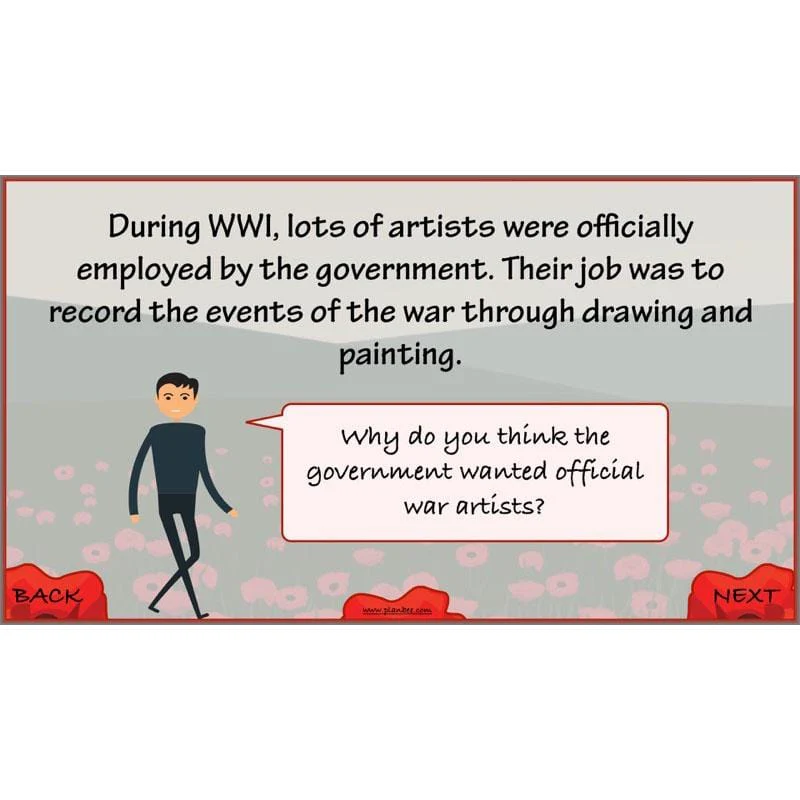
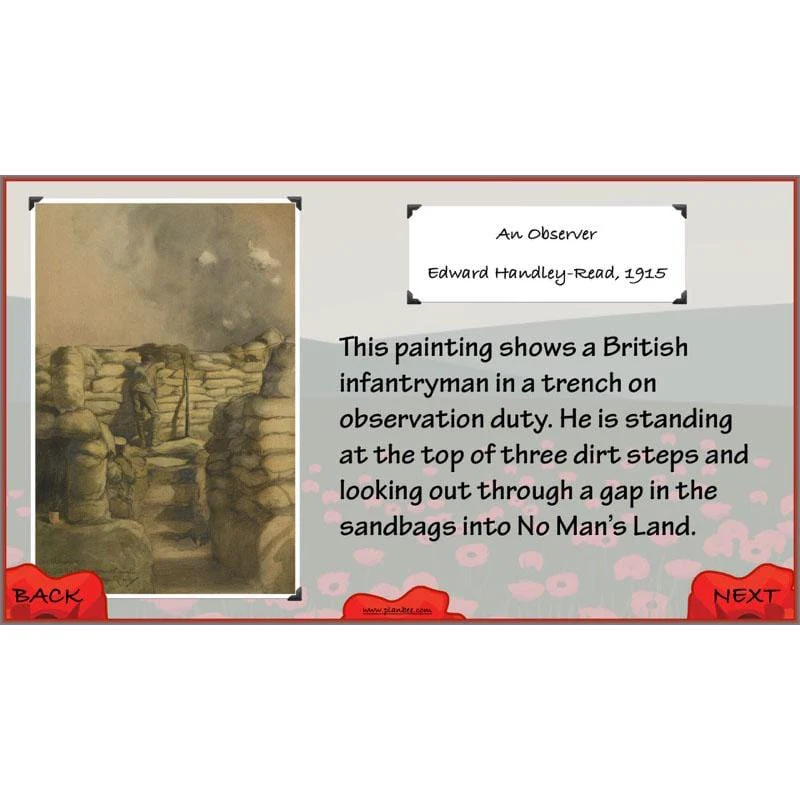
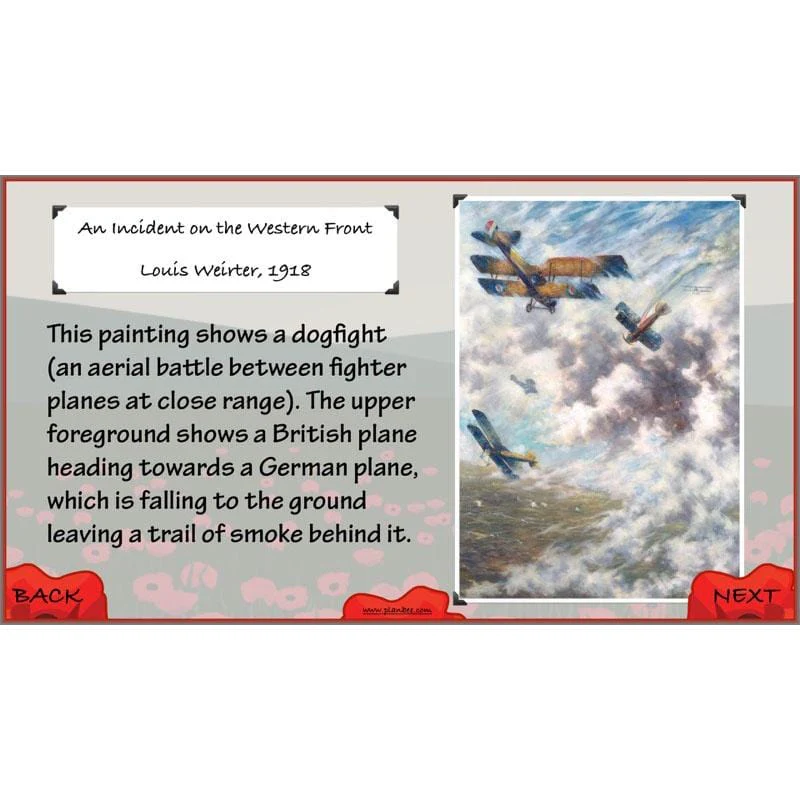
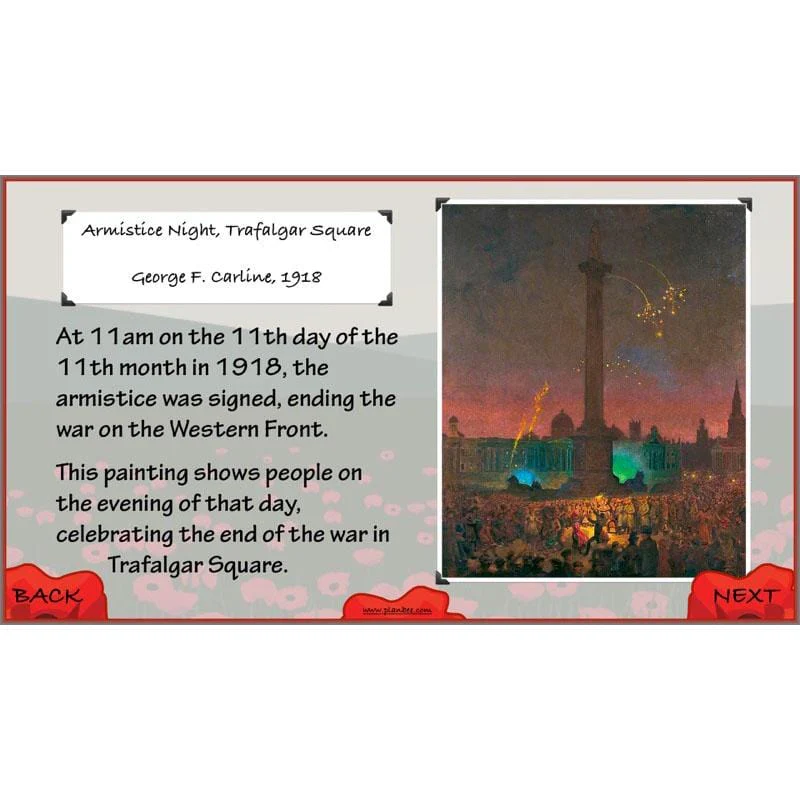
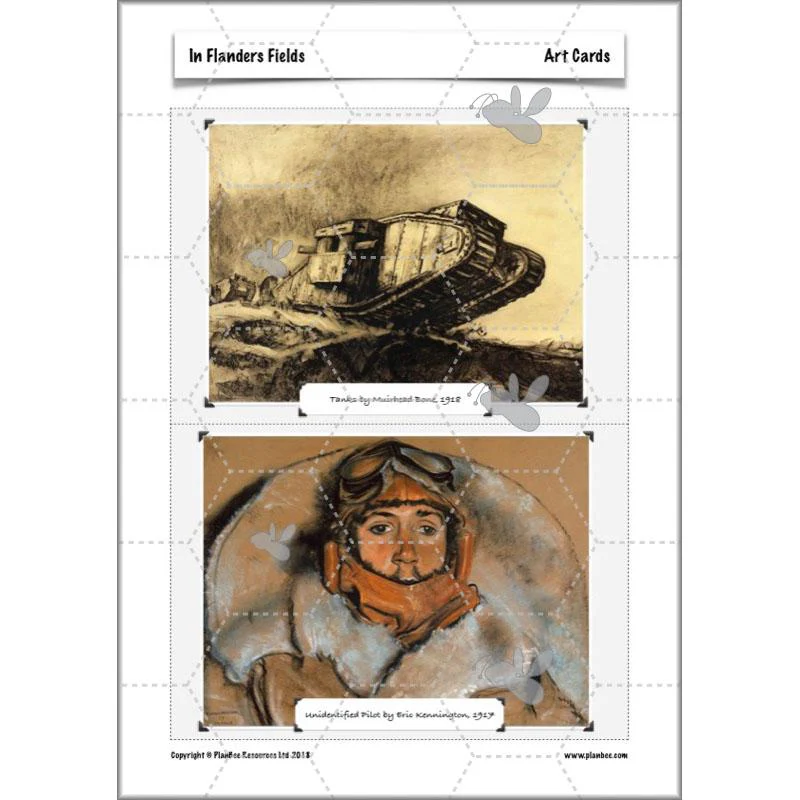
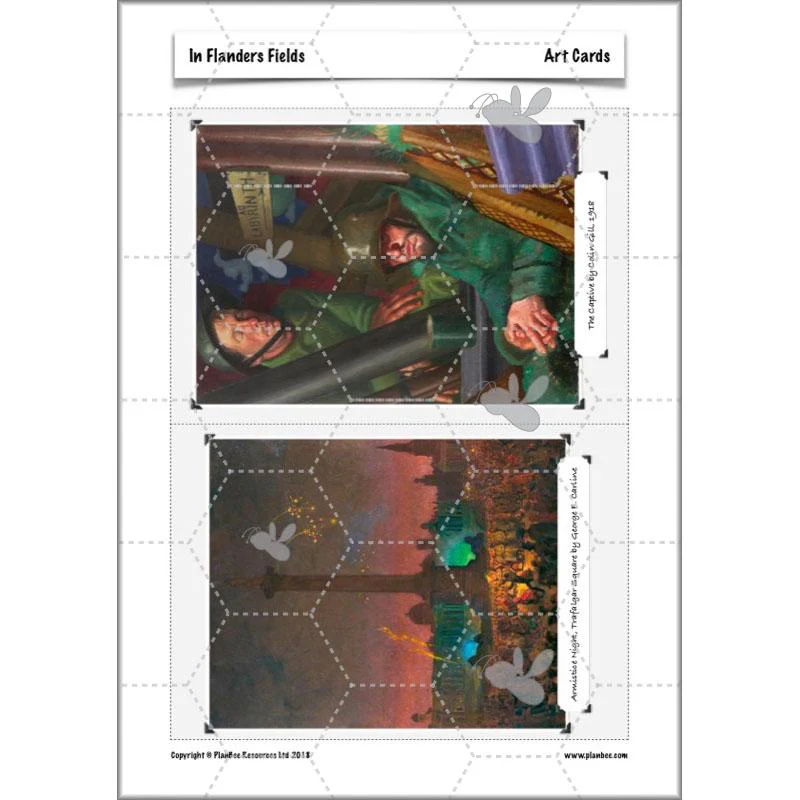
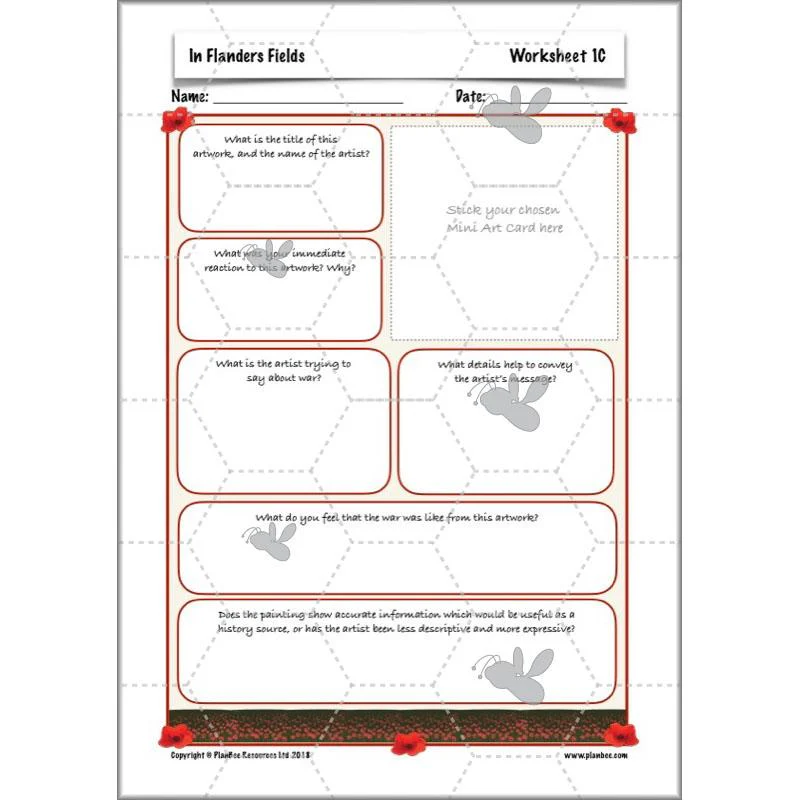
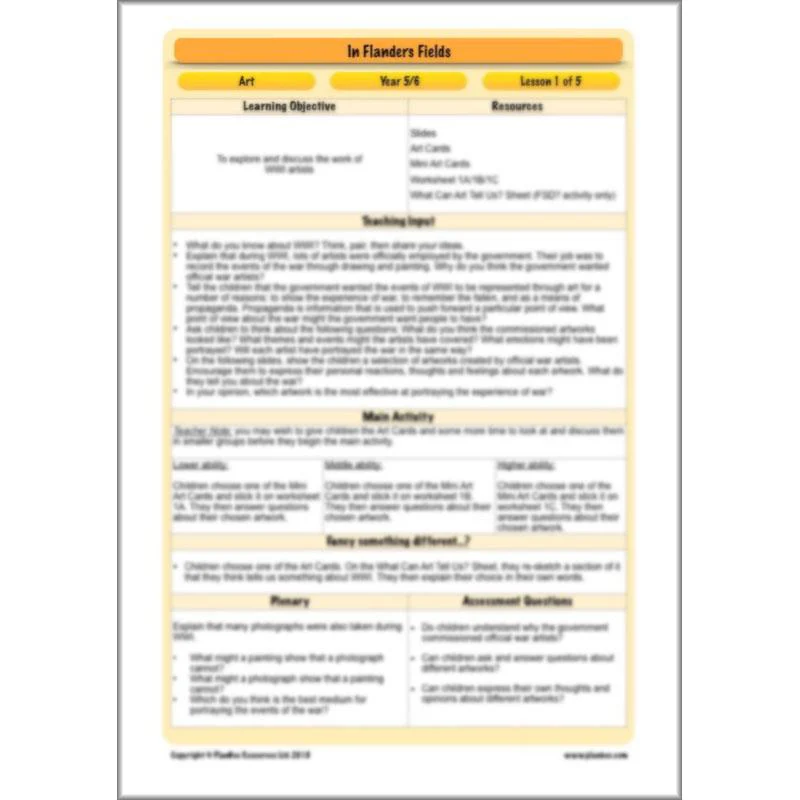
In this first lesson, children explore and discuss the artworks of some of the artists who were officially commissioned to record the war through drawing and painting. In their independent work, children then analyse a chosen artwork in further detail. They are encouraged to share and explain their thoughts, feelings and opinions of the artworks throughout the lesson.
This downloadable lesson includes a lesson plan, a slideshow presentation and printable teaching resources.
What's included:
- Lesson plan
- Slides
- Activity ideas
- Art Cards
- Mini Art Cards
- Differentiated worksheets
- What Can Art Tell Us? Sheet
Lesson 2: Paul Nash WW1 Paintings
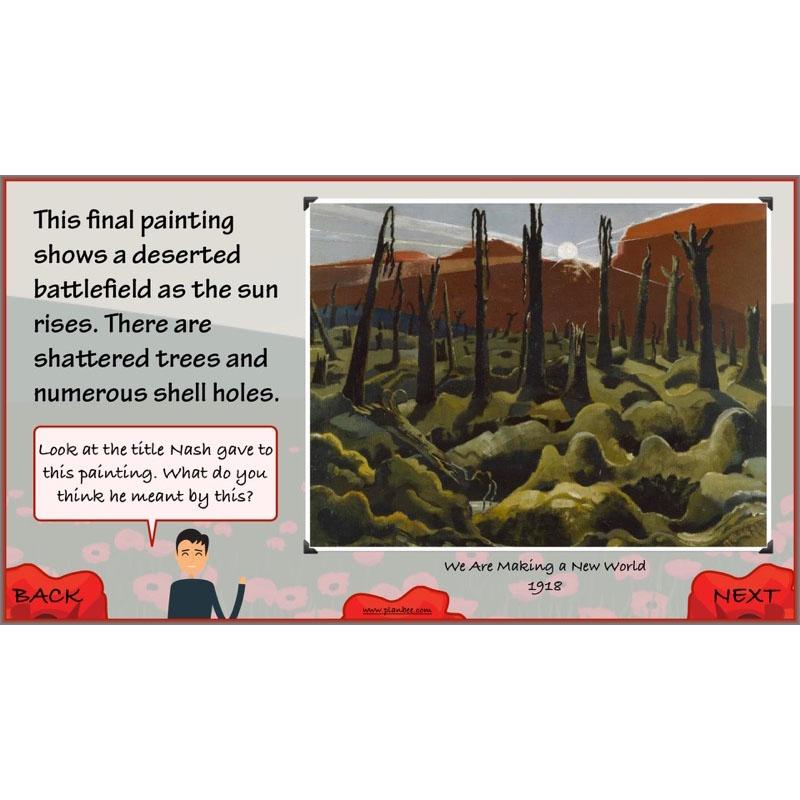
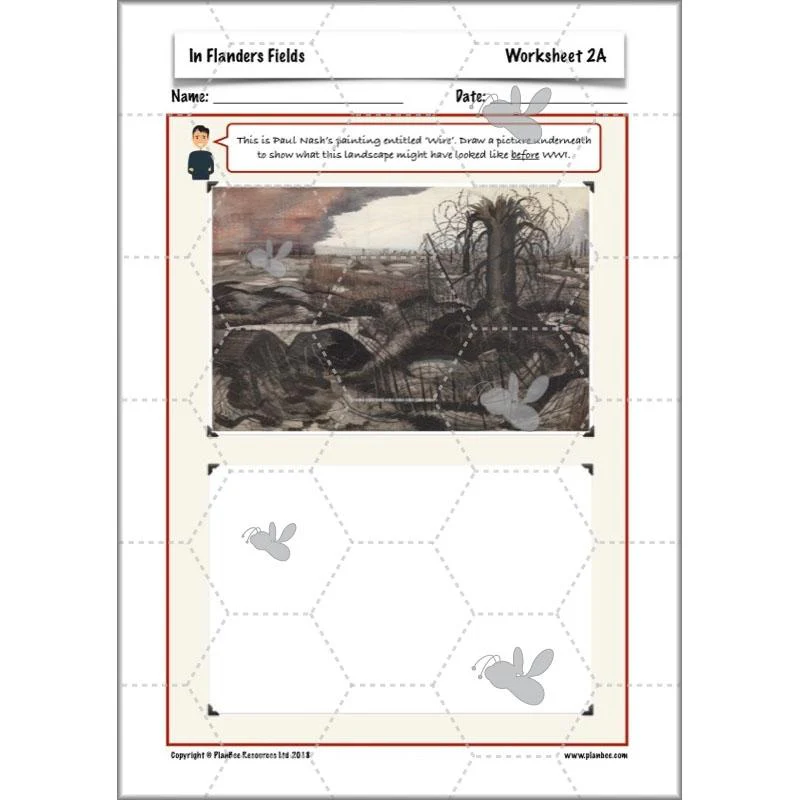
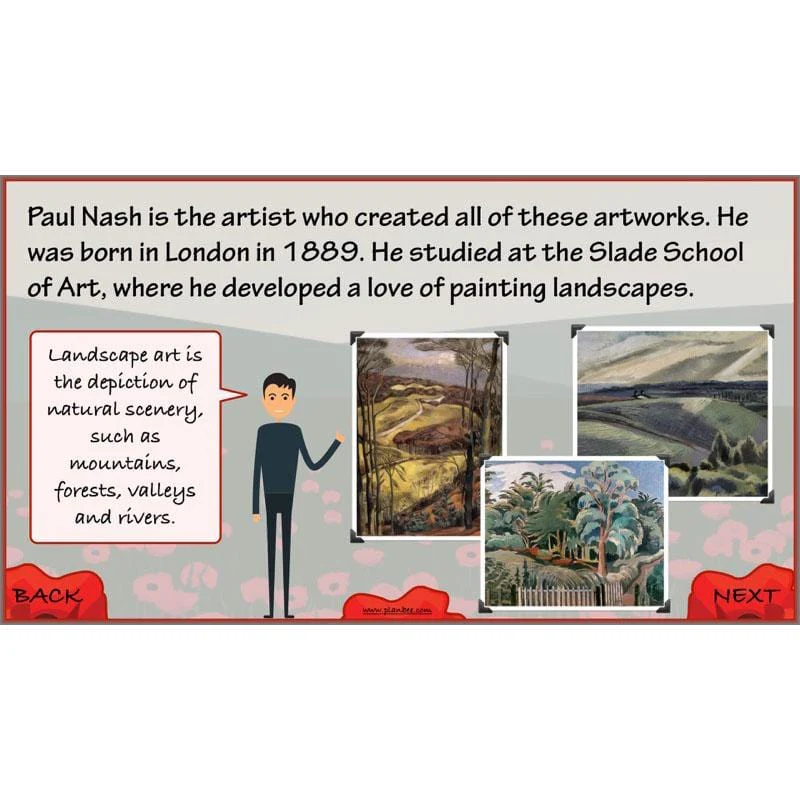
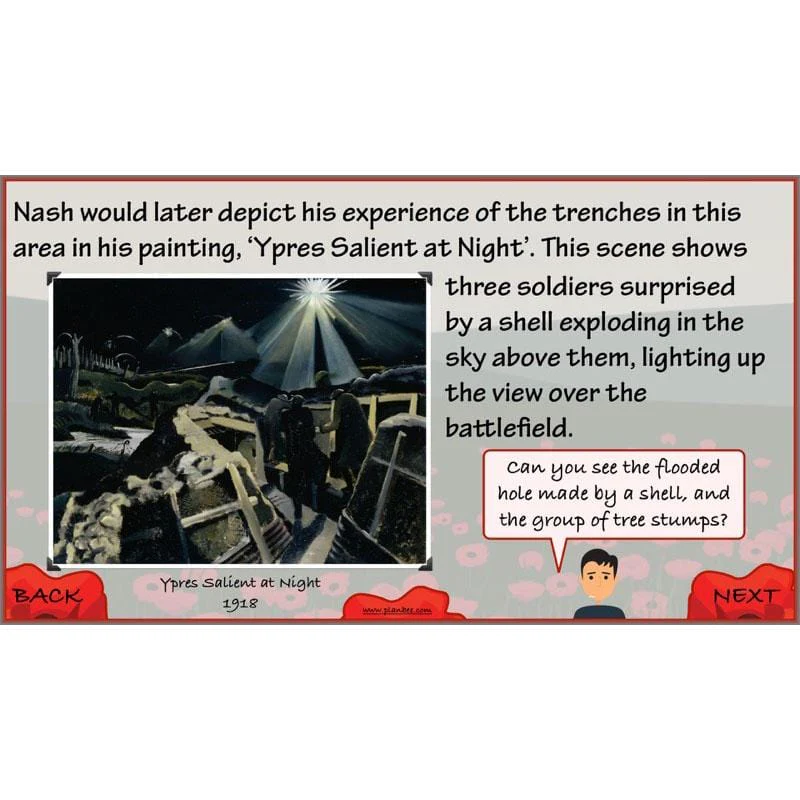
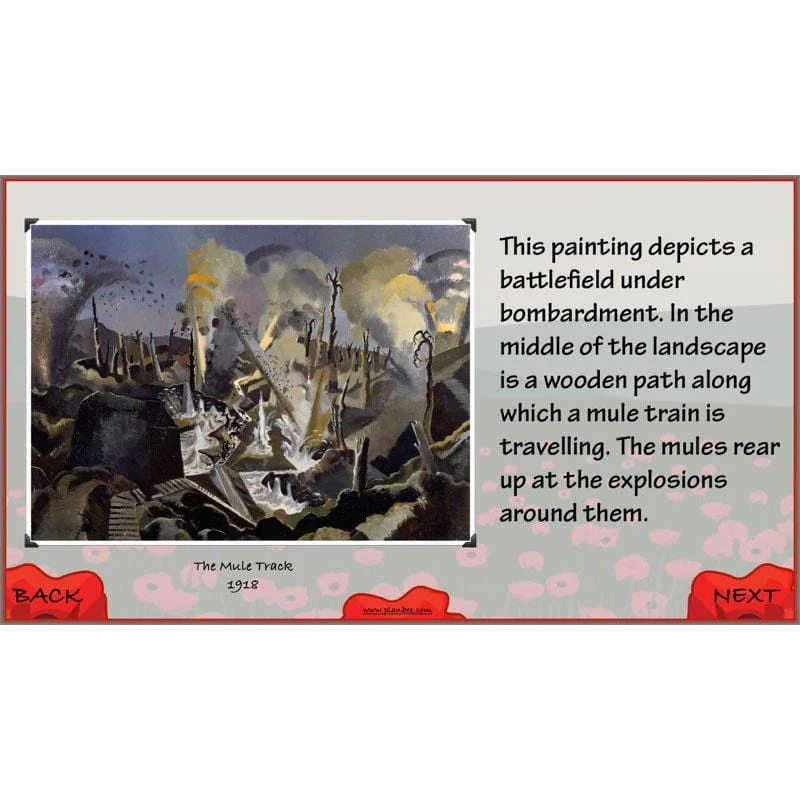
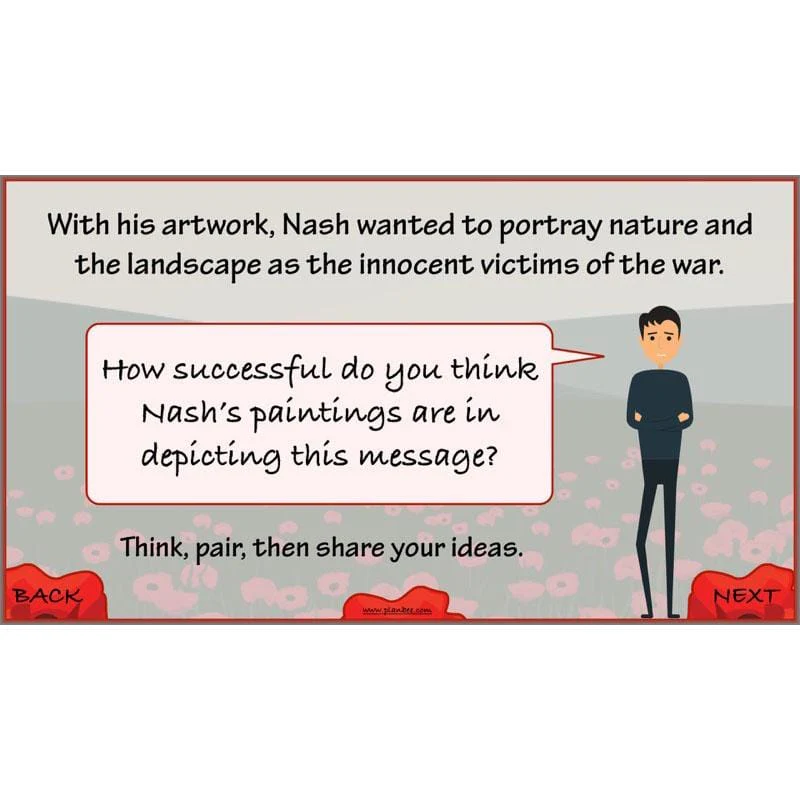
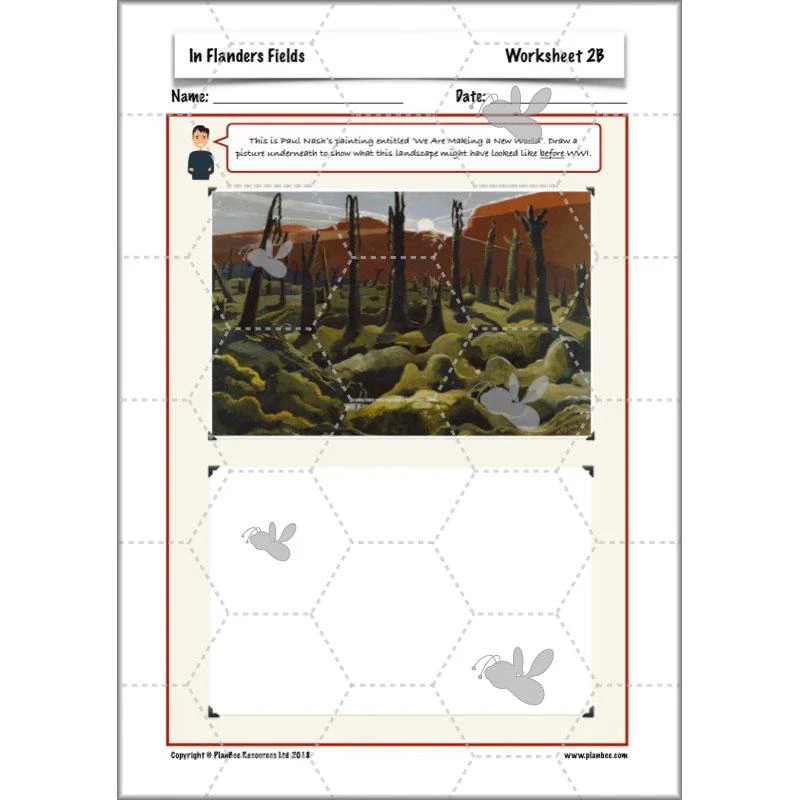
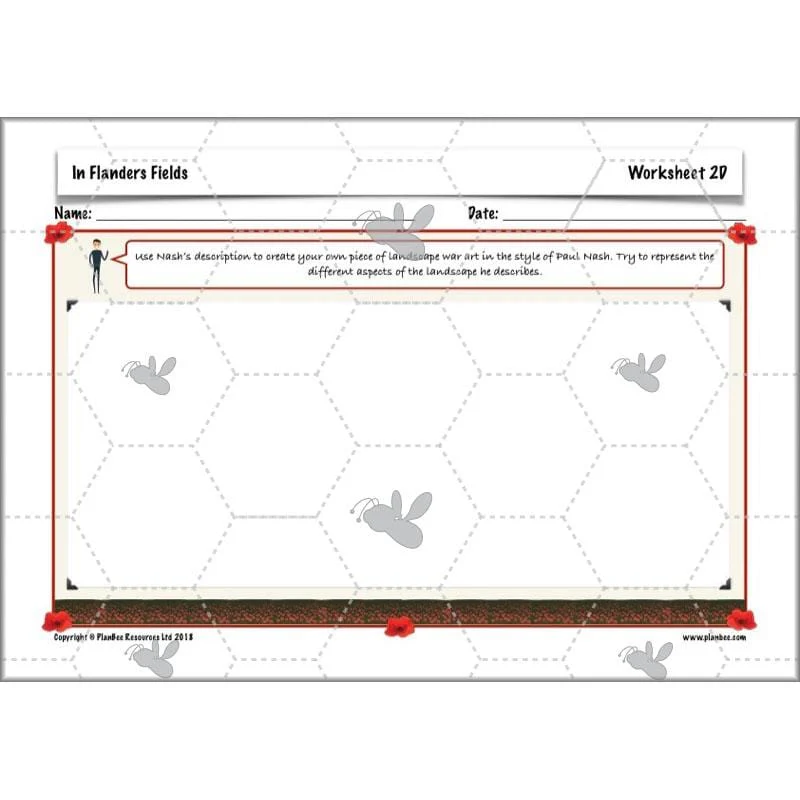
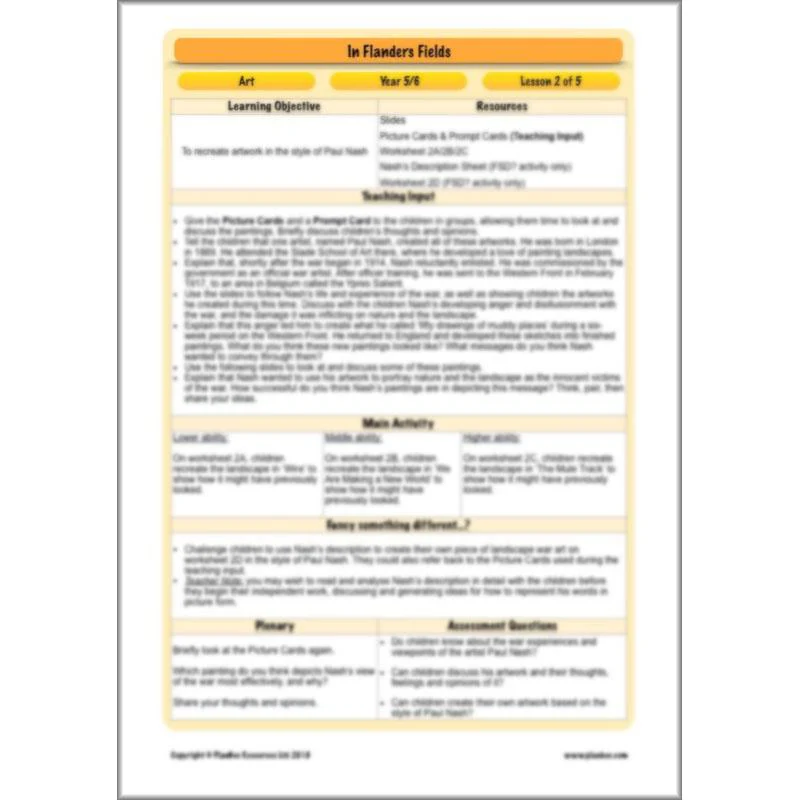
During this lesson your children explore in depth the work of official war artist, Paul Nash. They find out about Nash’s experiences of war, and how they influenced the artwork he created. They discuss their own opinions of his artwork, and the view of the war that he was trying to portray. In their independent work, children recreate one of Nash’s artworks to show what the landscape might have looked like prior to the war. In the alternative activity, children are challenged to use an excerpt from a letter written by Nash to create their own piece of landscape war art.
This downloadable lesson includes a lesson plan, slideshow presentation and printable teaching resources.
What's included:
- Lesson plan
- Slides
- Activity ideas
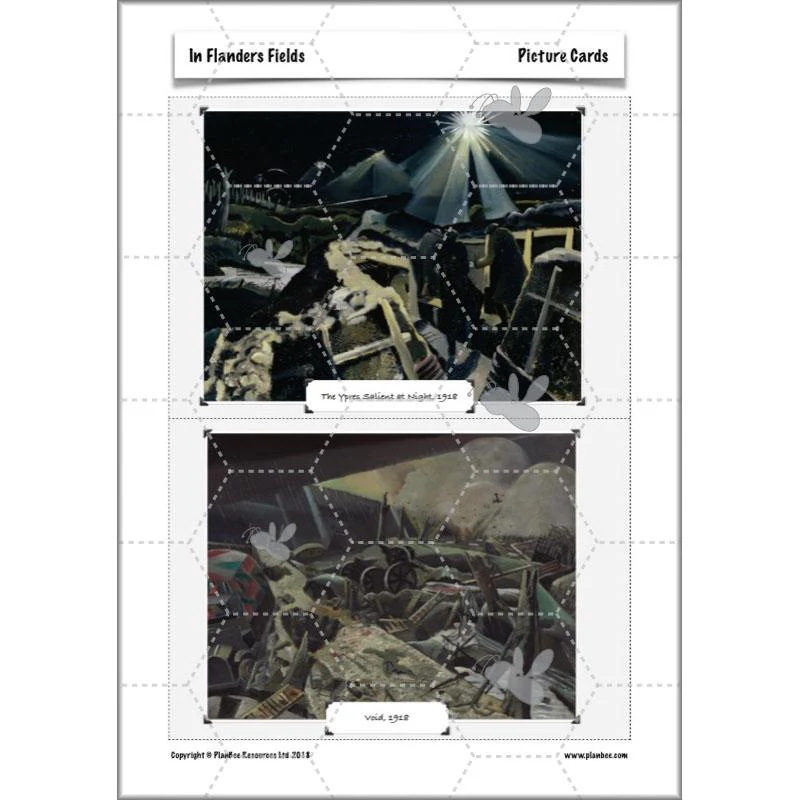
- Picture Cards and Prompt Cards
- Differentiated worksheets
- Nash’s Description Sheet
Lesson 3: WW1 Propaganda Posters
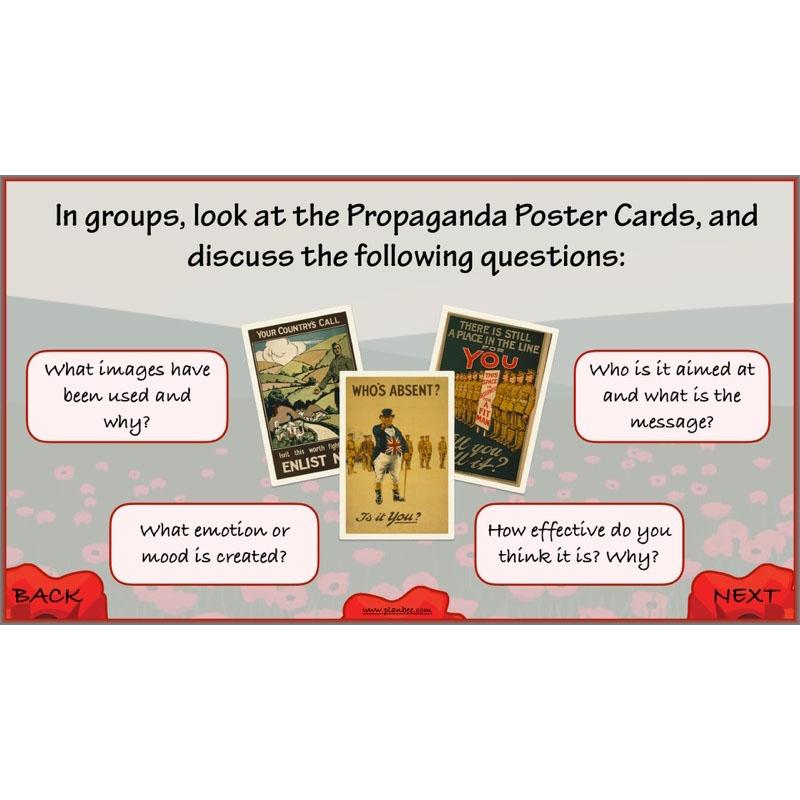
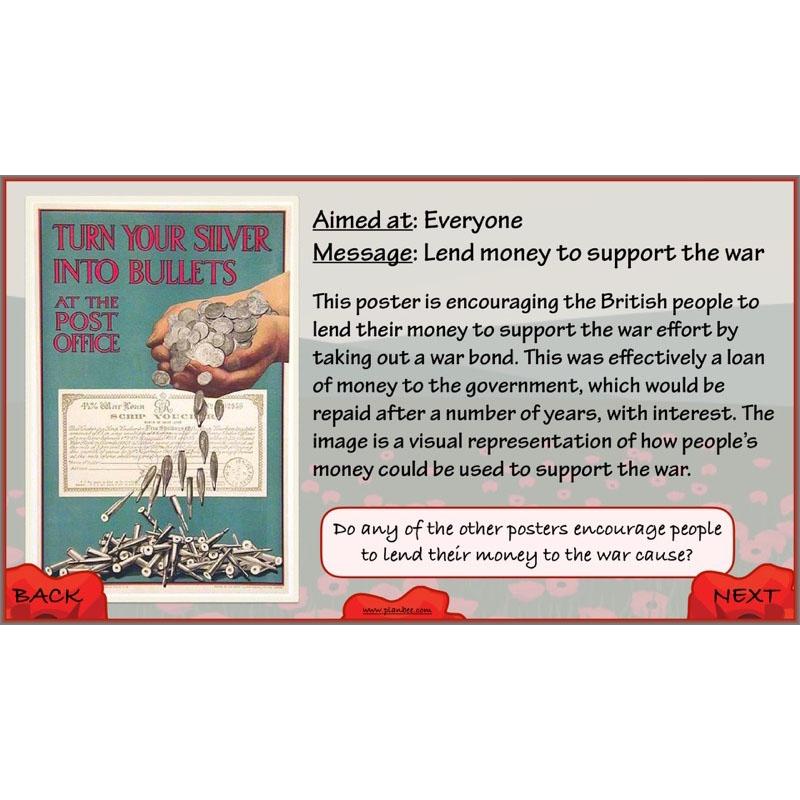
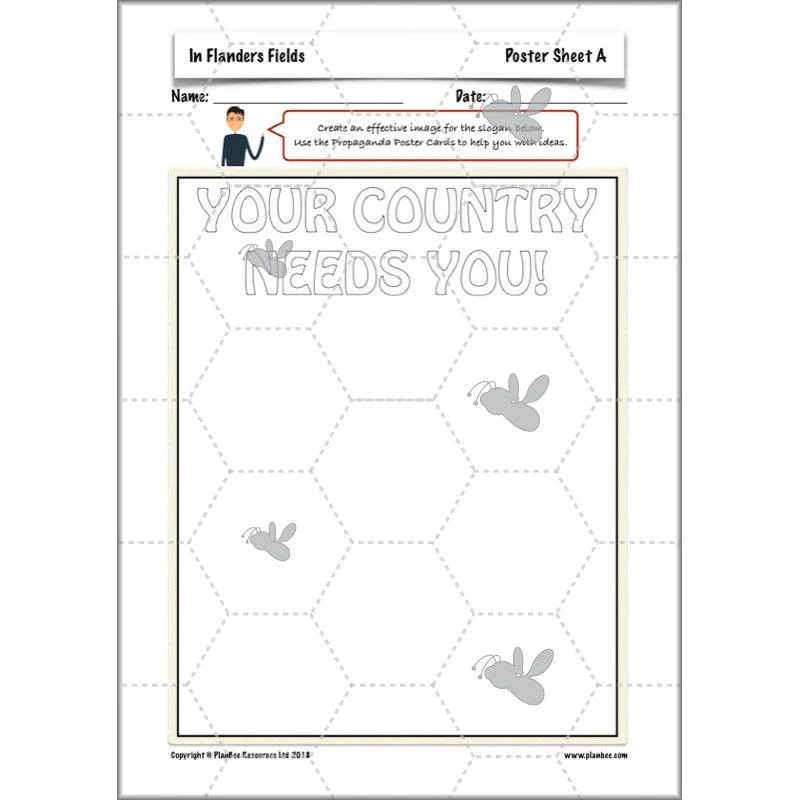
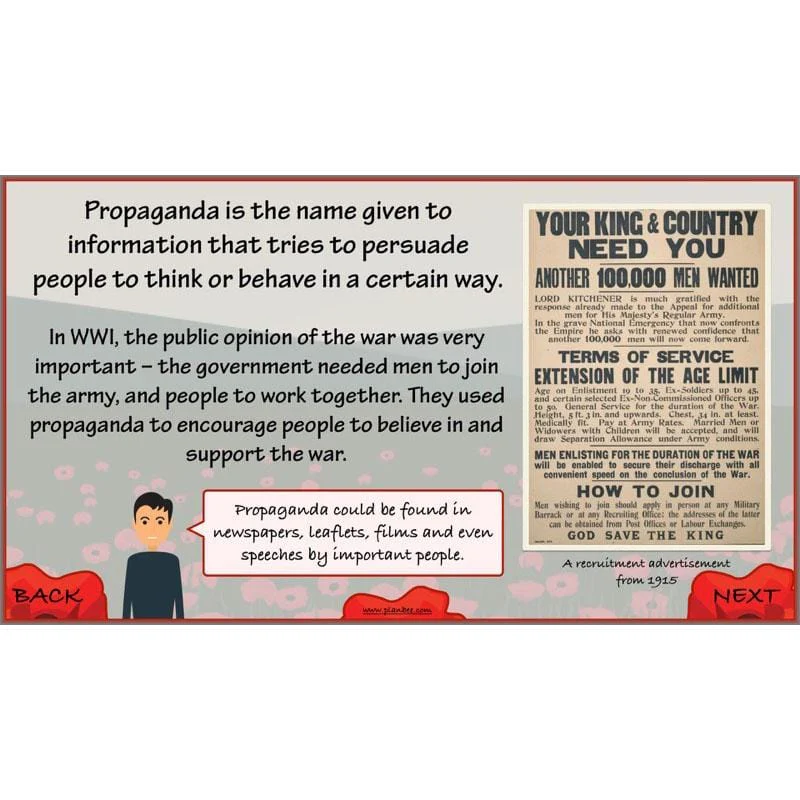
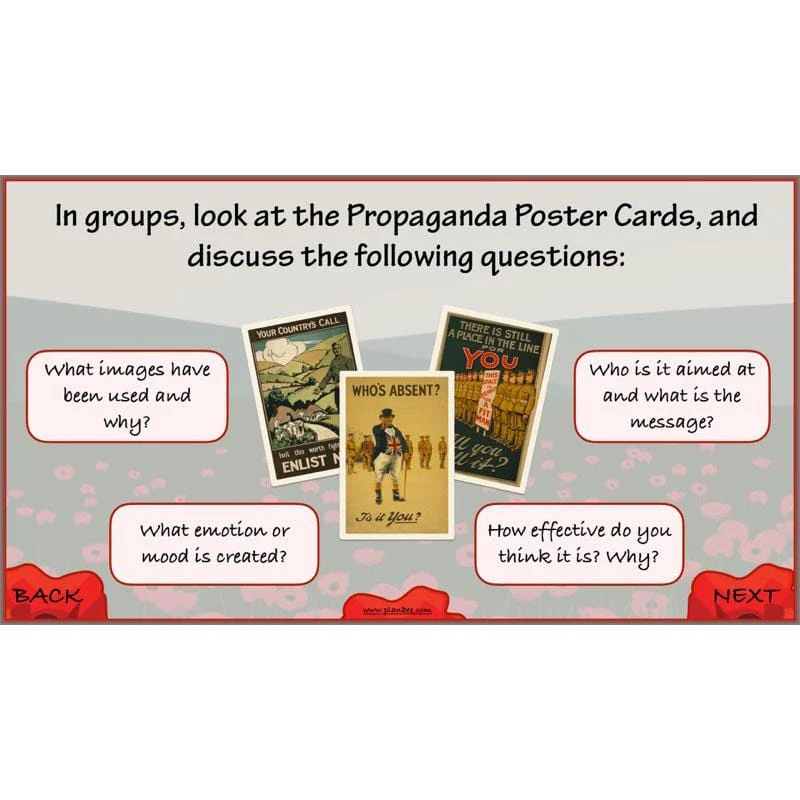
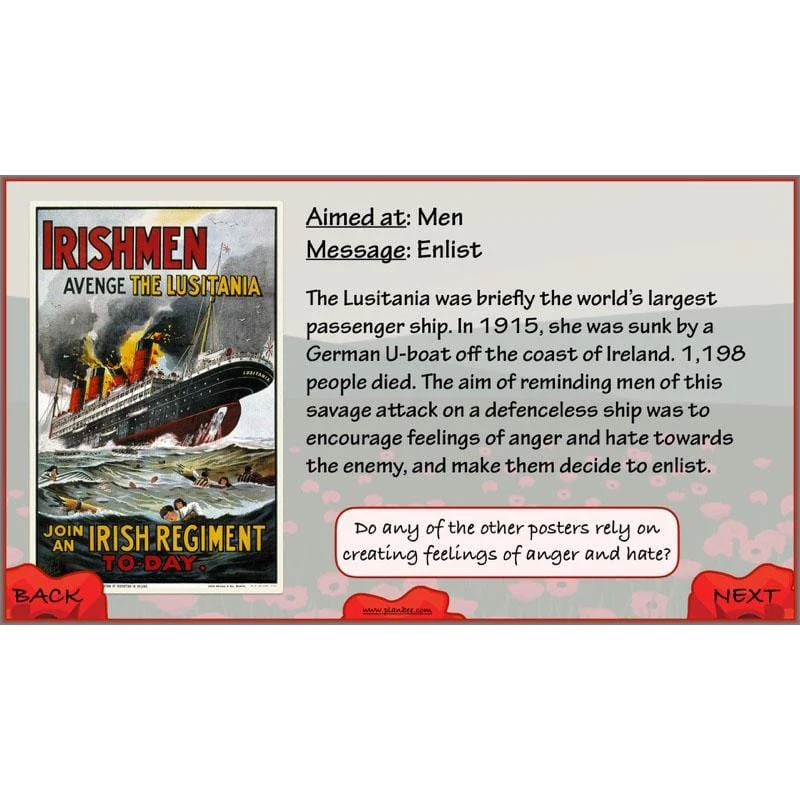
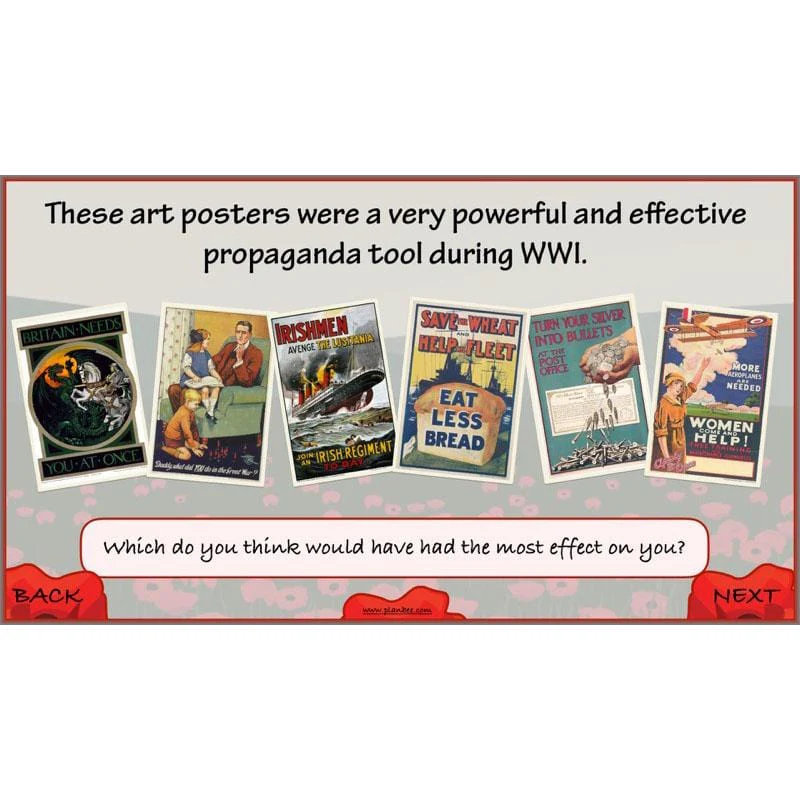
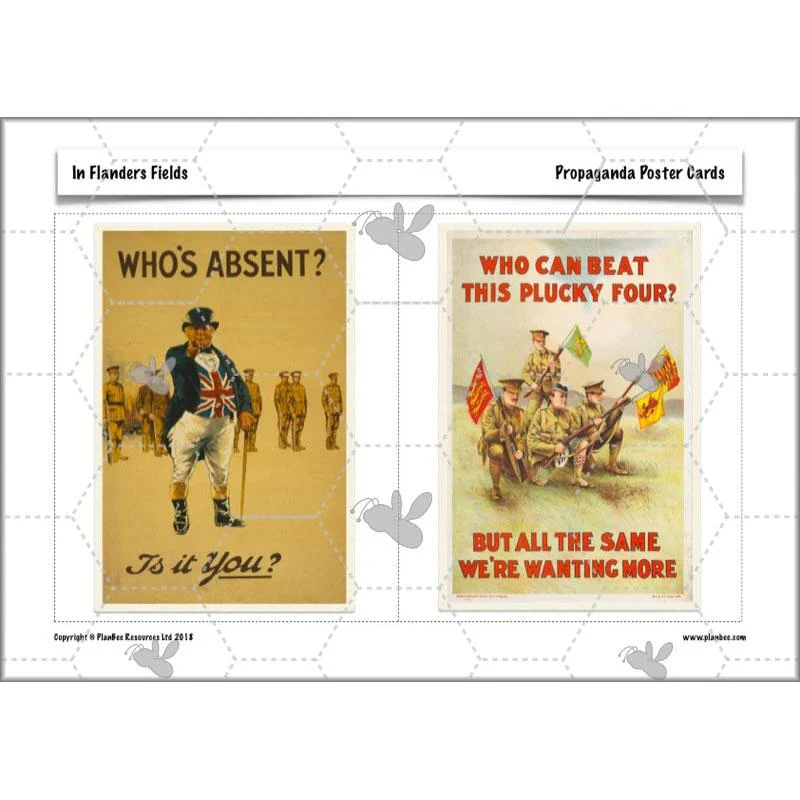
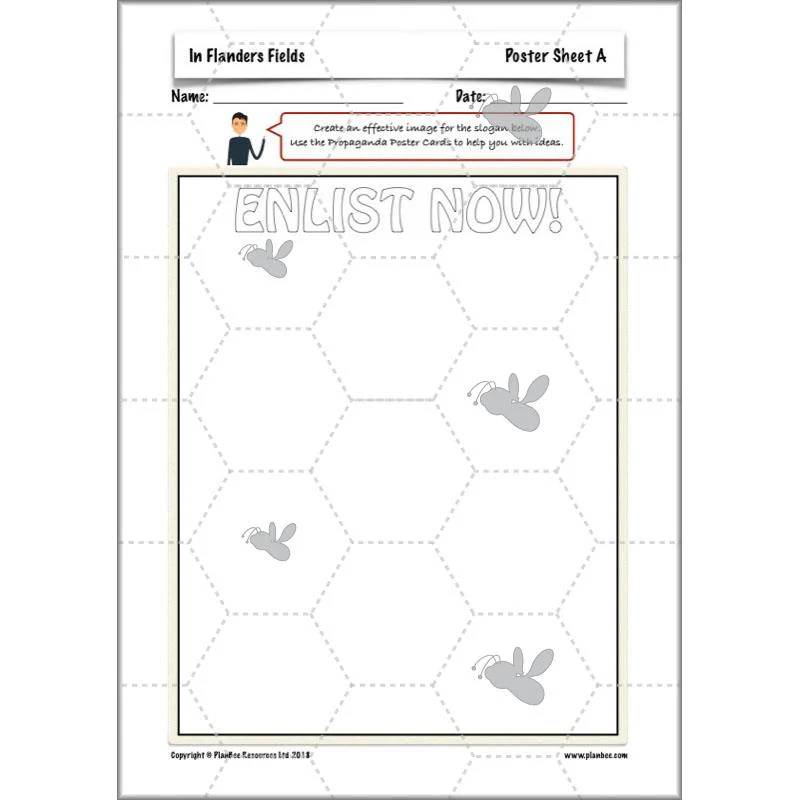
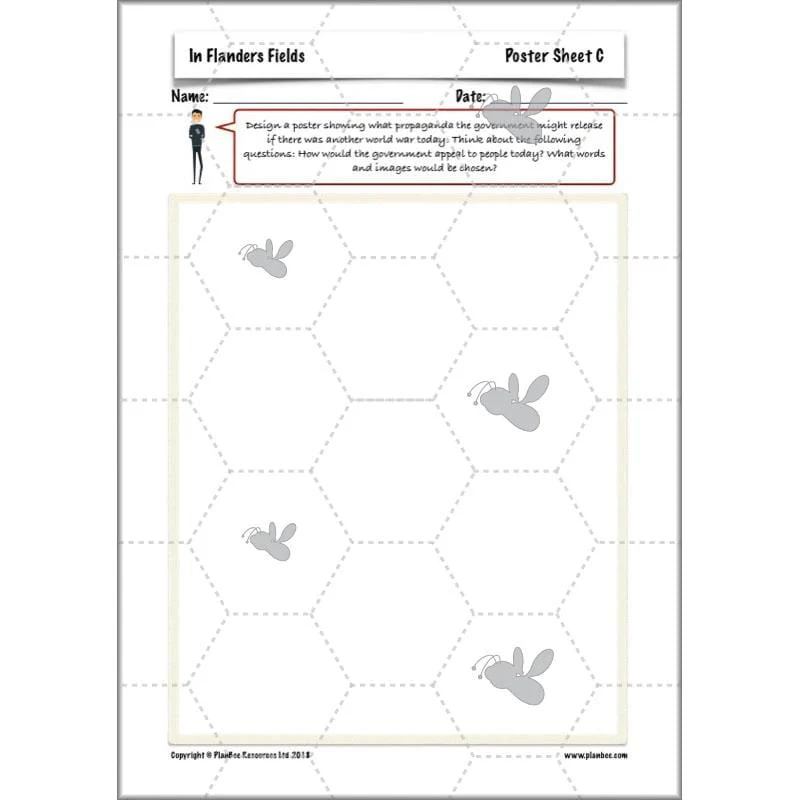
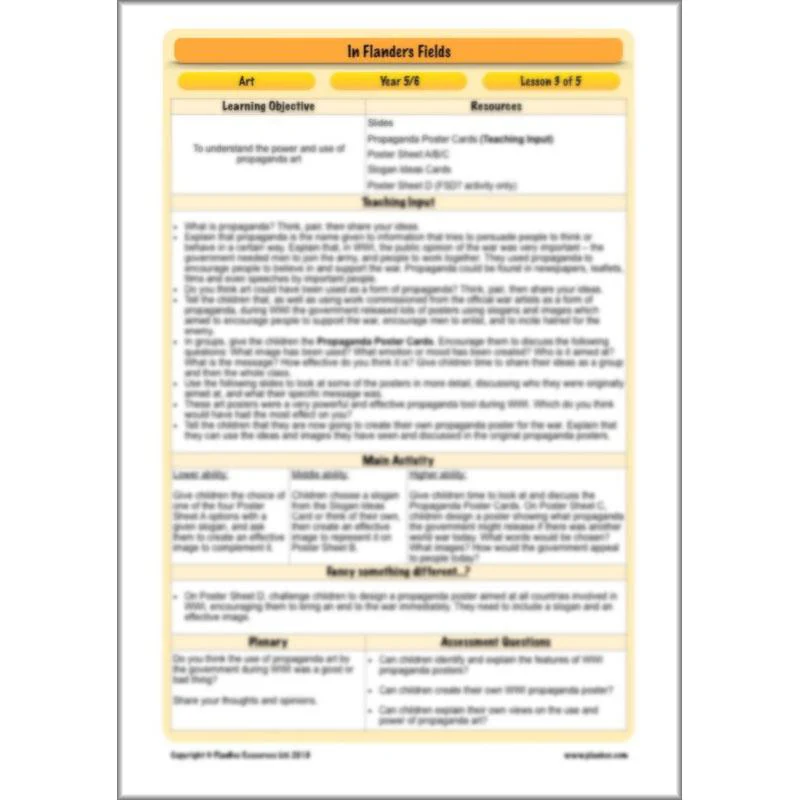
In this lesson, children find out how art, in the form of posters, was used as a tool for propaganda in WWI. They examine and discuss a range of posters created during the war, thinking about who they were aimed at, what image was used and why, and how effective they think it would have been. In their independent activities, children are challenged to design their own posters based on the original slogans and images used.
This downloadable lesson includes a lesson plan, slideshow presentation and printable teaching resources.
What's included:
- Lesson plan
- Slides
- Activity ideas
- Propaganda Posters
- Poster Sheets
- Slogan Ideas Cards
Lesson 4: WW1 Dazzle Camouflage Art
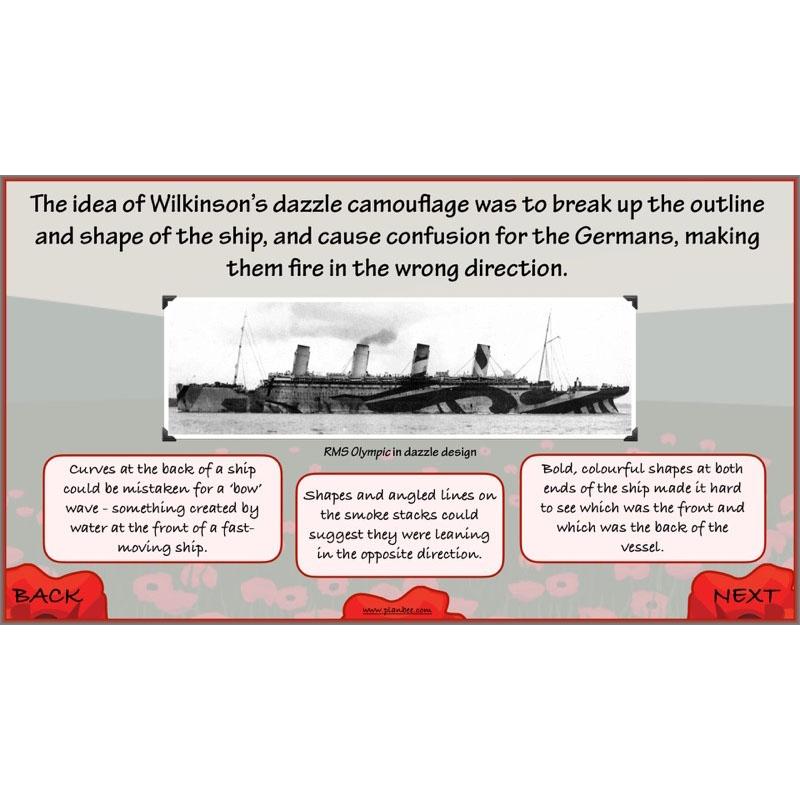
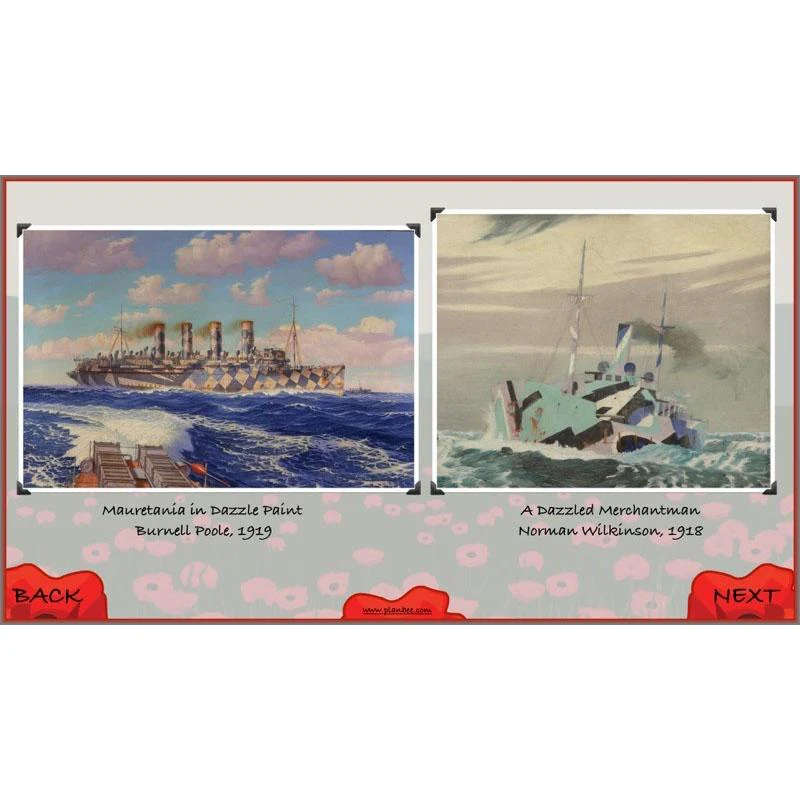
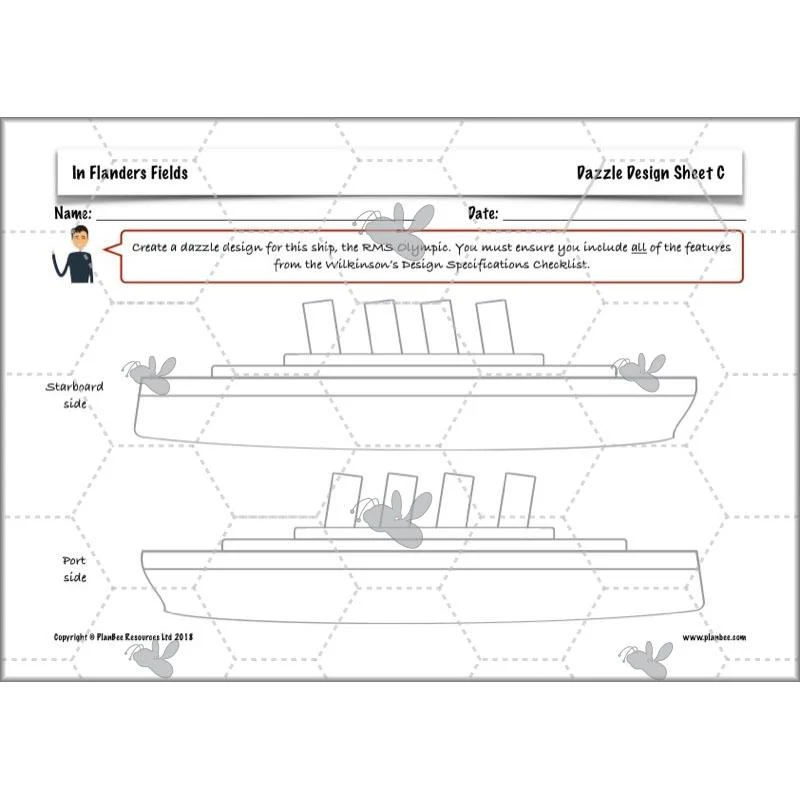
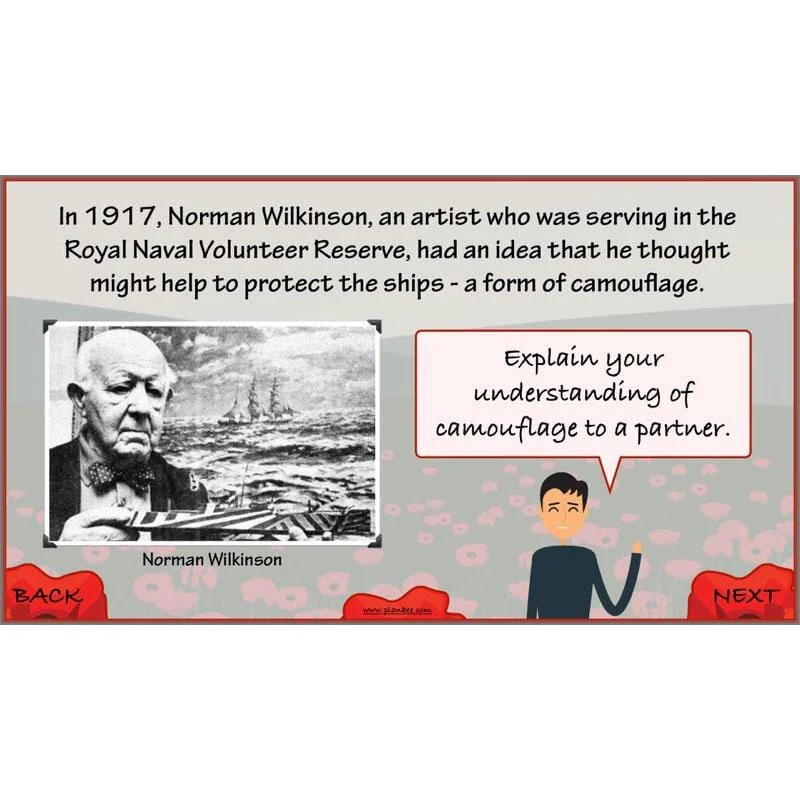
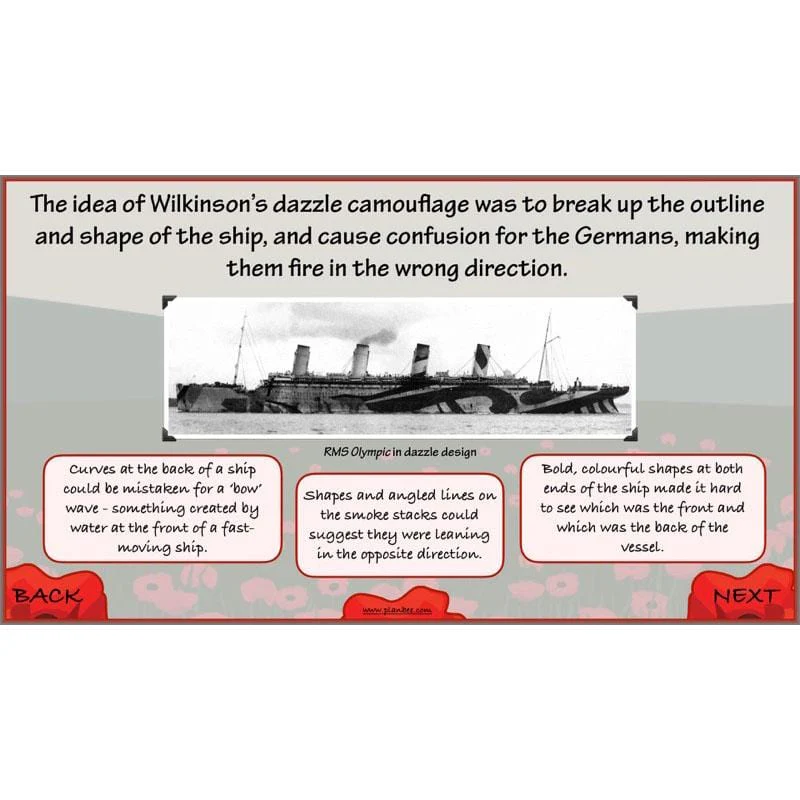
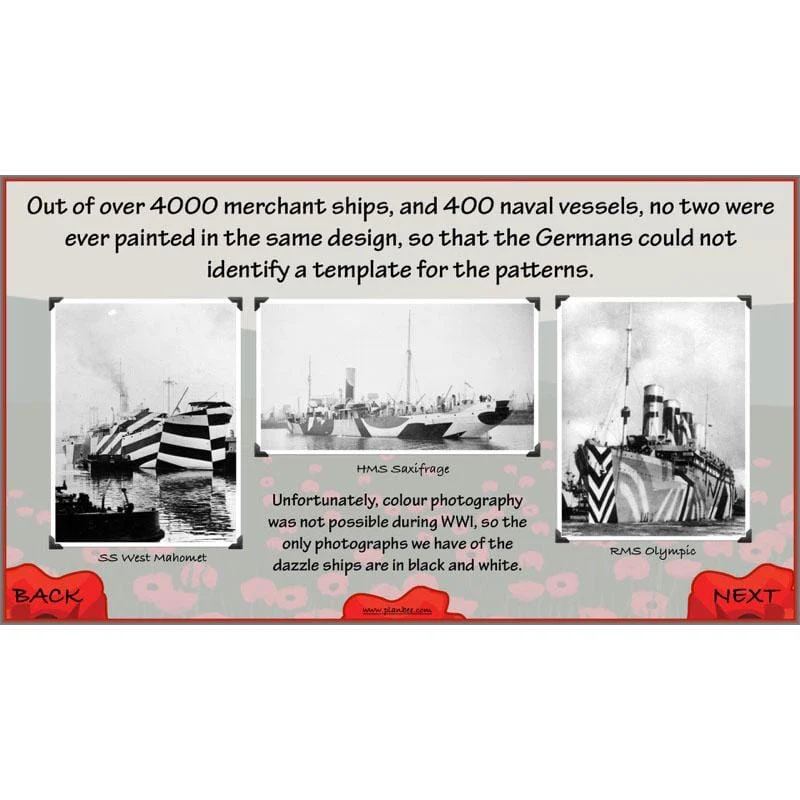
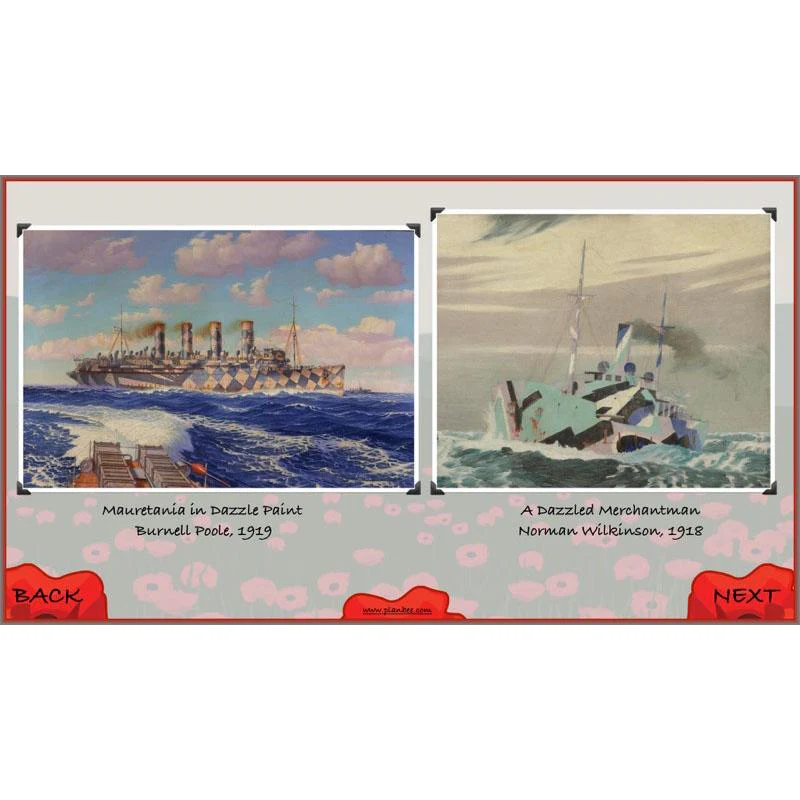
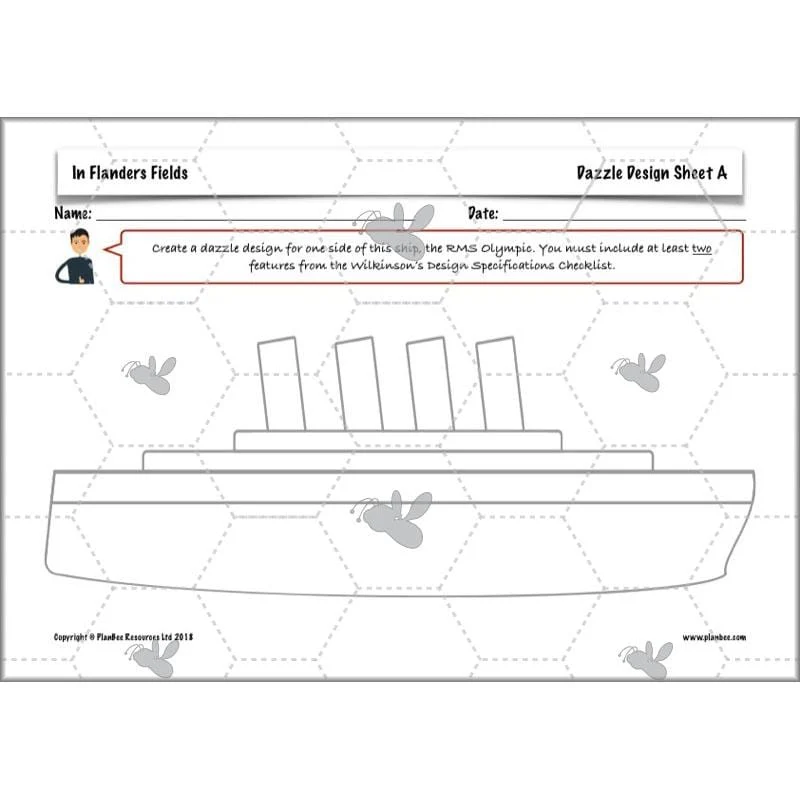
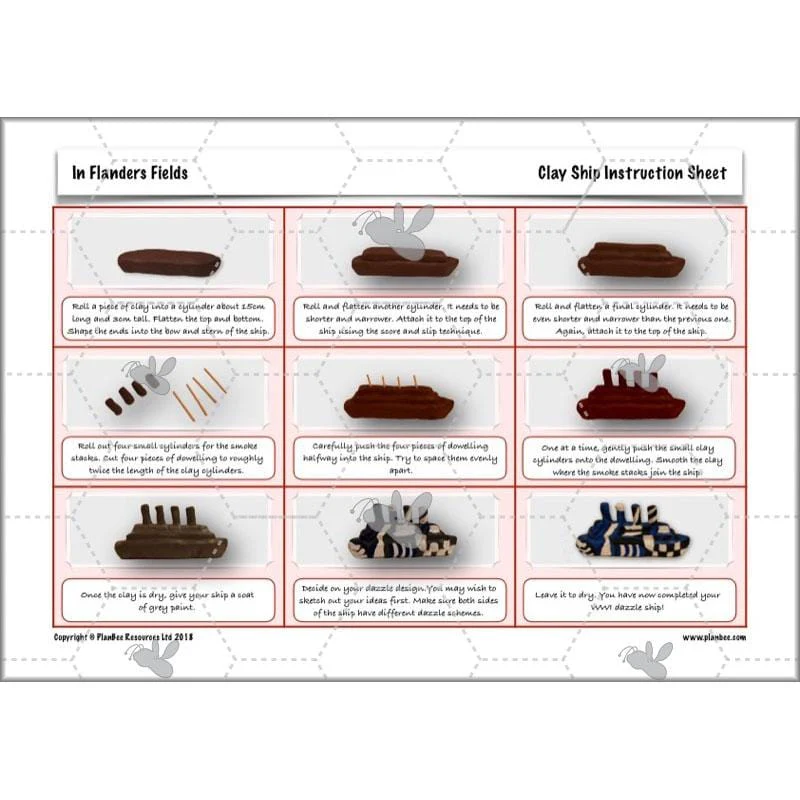
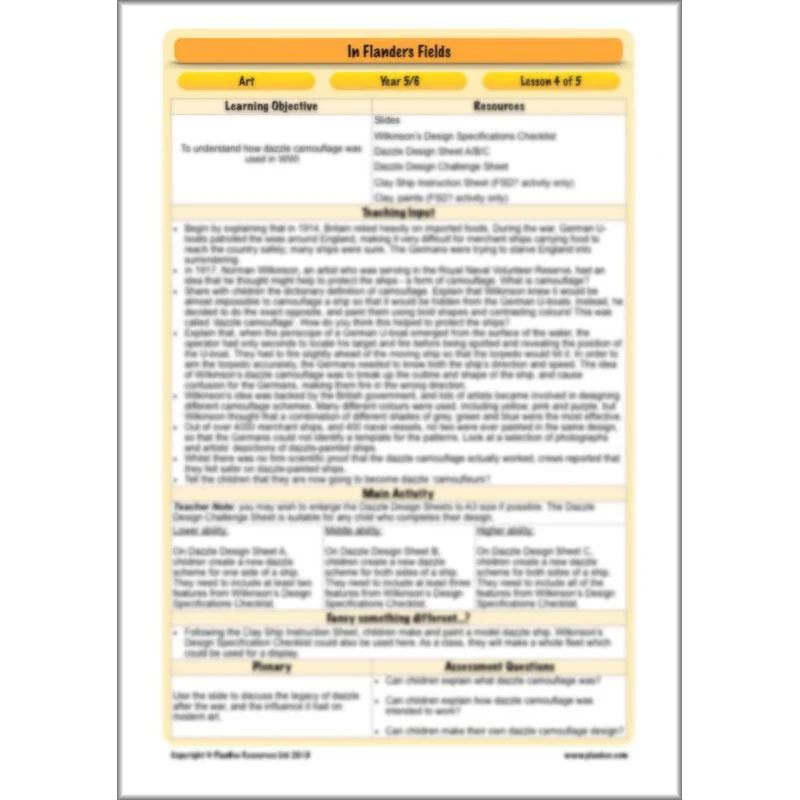
Children find out about dazzle camouflage, and how it was created and used during WWI with the aim of protecting ships from torpedo attacks. In their independent work, they be challenged to design a new dazzle scheme for a ship using a given checklist. Alternatively, children make and paint their own clay model of a dazzle-painted ship.
This downloadable lesson includes a lesson plan, slideshow presentation and printable teaching resources.
What's included:
- Lesson plan
- Slides
- Activity ideas
- Wilkinson’s Design Specification Sheet
- Dazzle Design Sheets
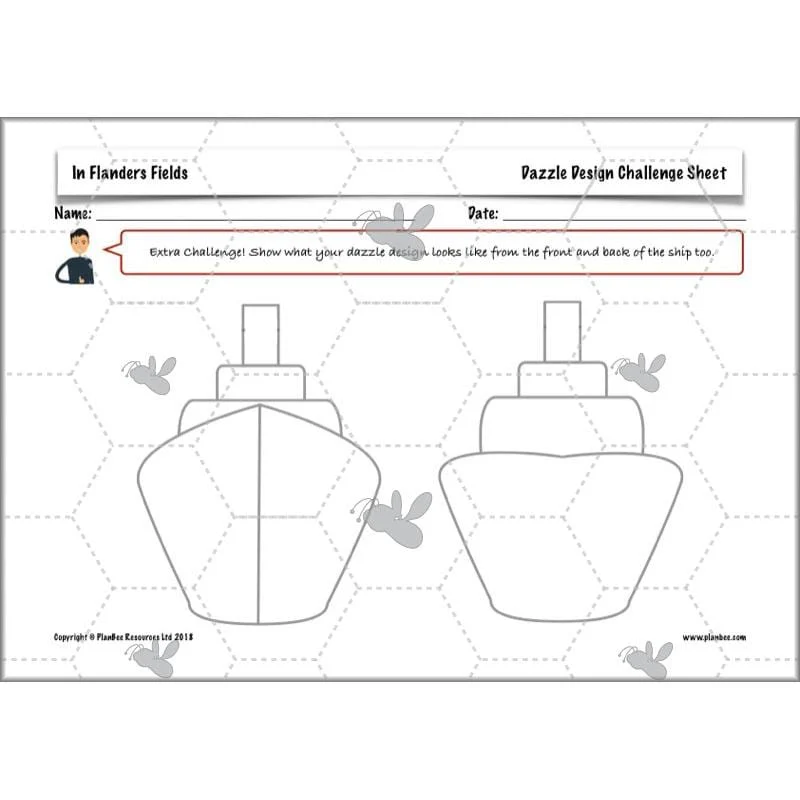
- Dazzle Design Challenge Sheet
- Clay Ship Instruction Sheet
Lesson 5: John McCraes Poem Poppy Art
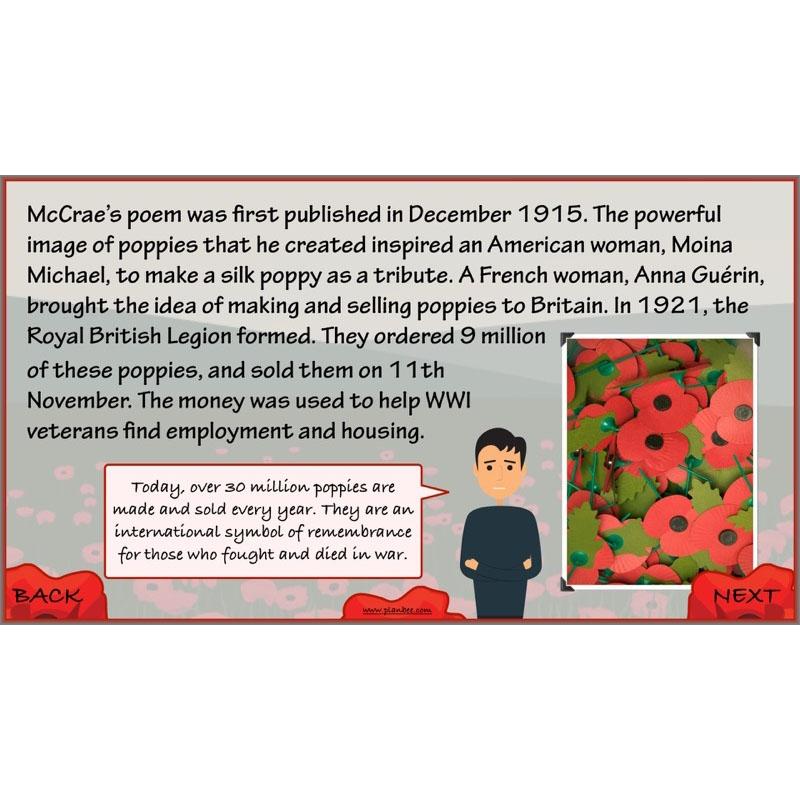
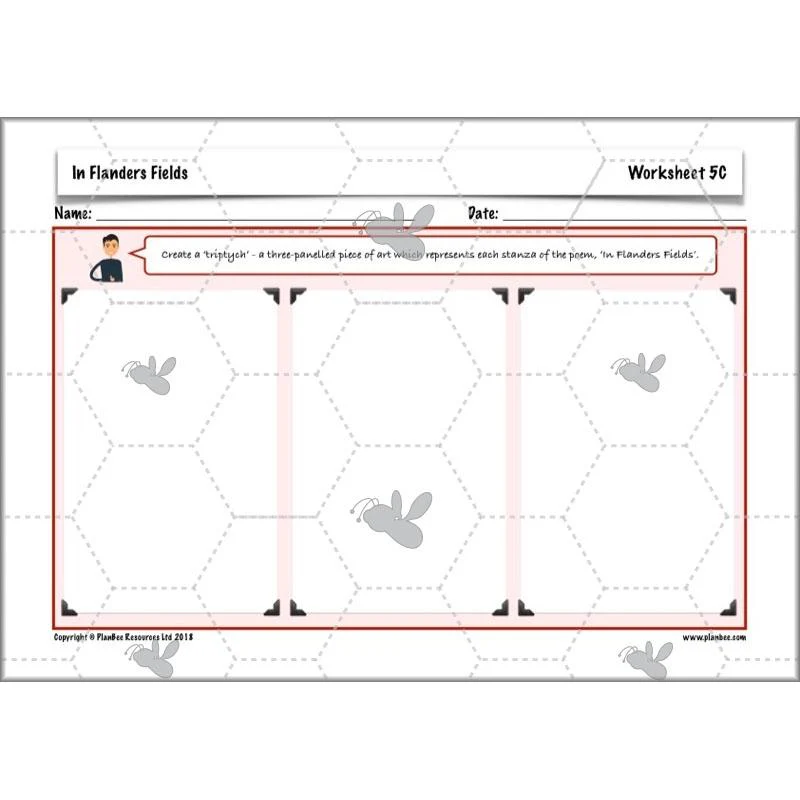
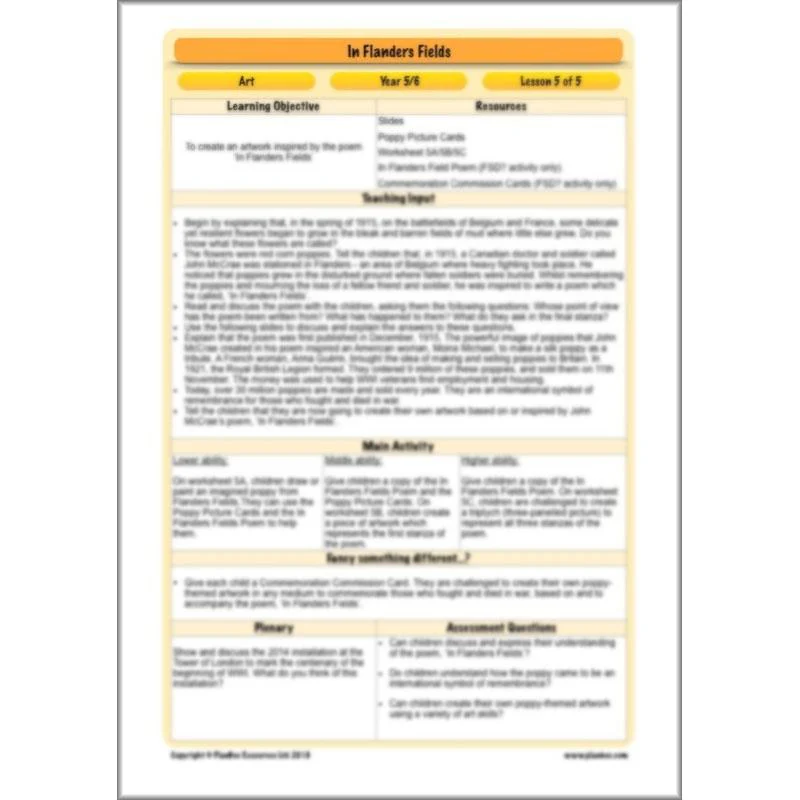
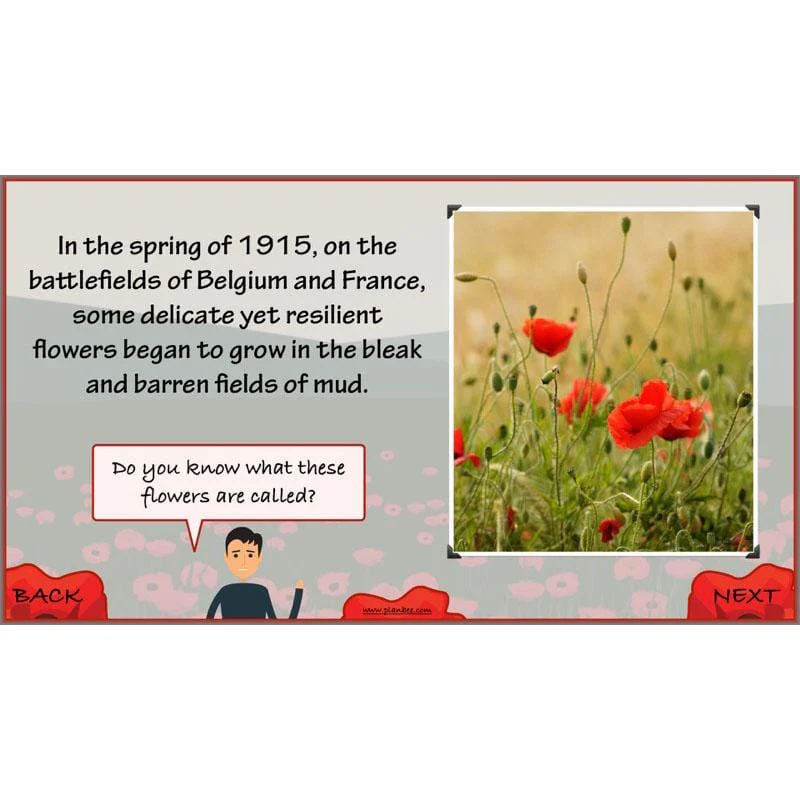
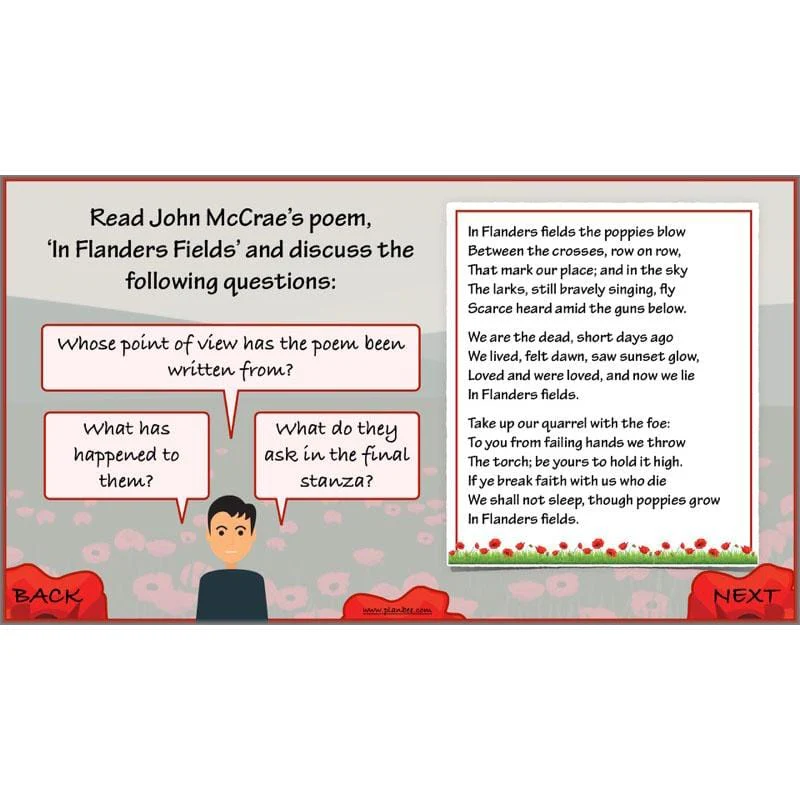
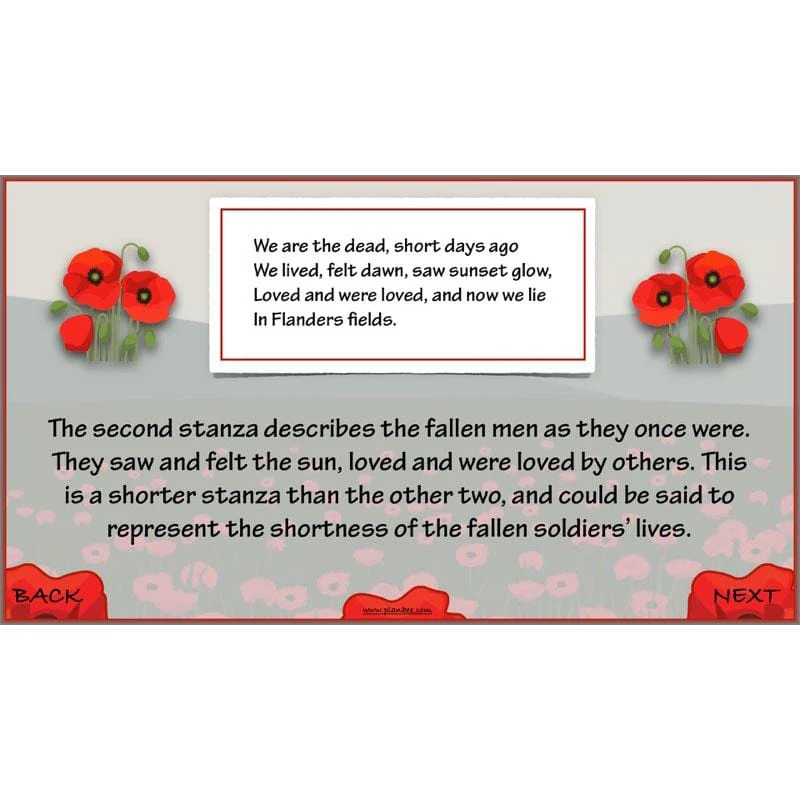
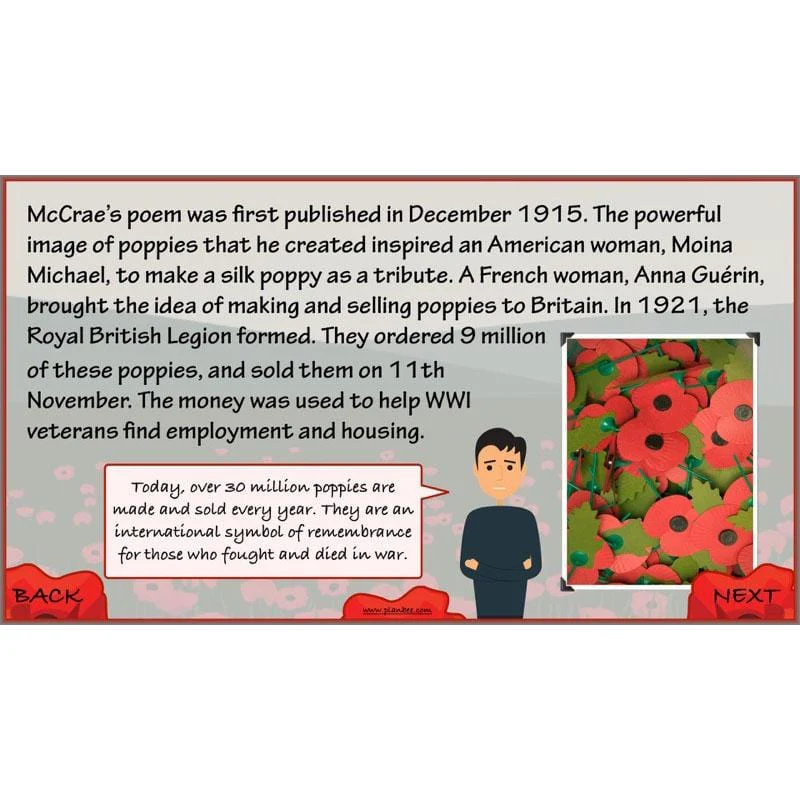
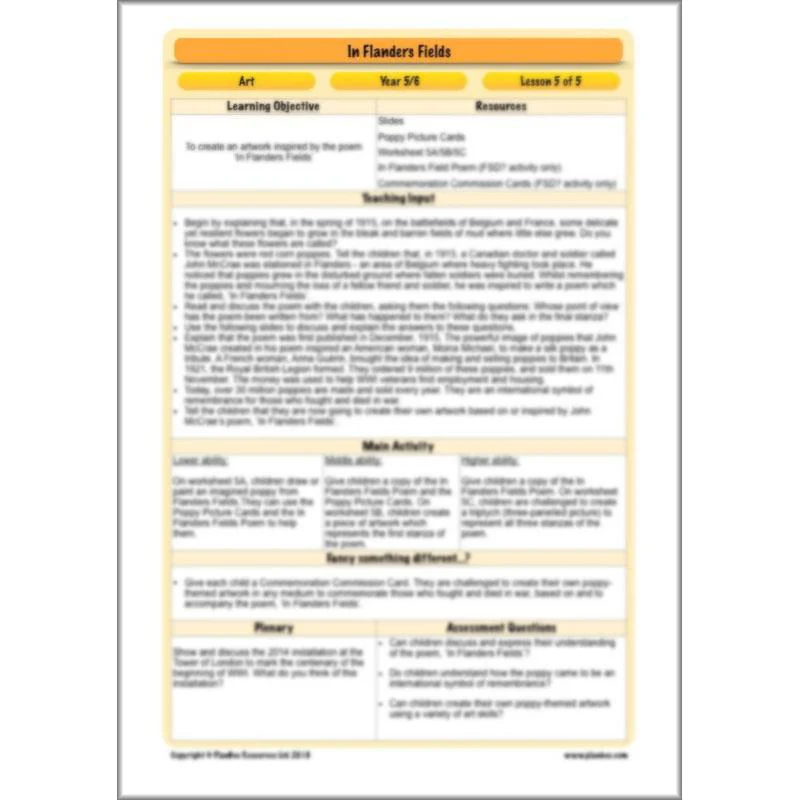
In this final lesson, children discover why the poppy has become an international symbol of remembrance for those who fought and died in war. They look at John McCrae’s poem, ‘In Flanders Fields’, and use this as a basis for their artwork in their independent activities.
This downloadable lesson includes a lesson plan, slideshow presentation and printable teaching resources.
What's included:
- Lesson plan
- Slides
- Activity ideas
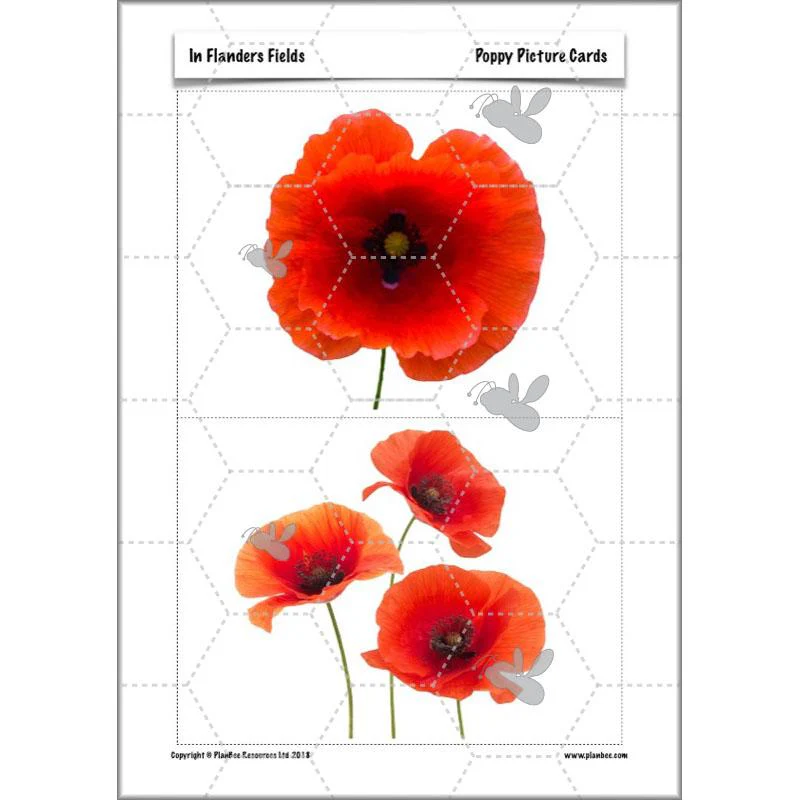
- Poppy Picture Cards
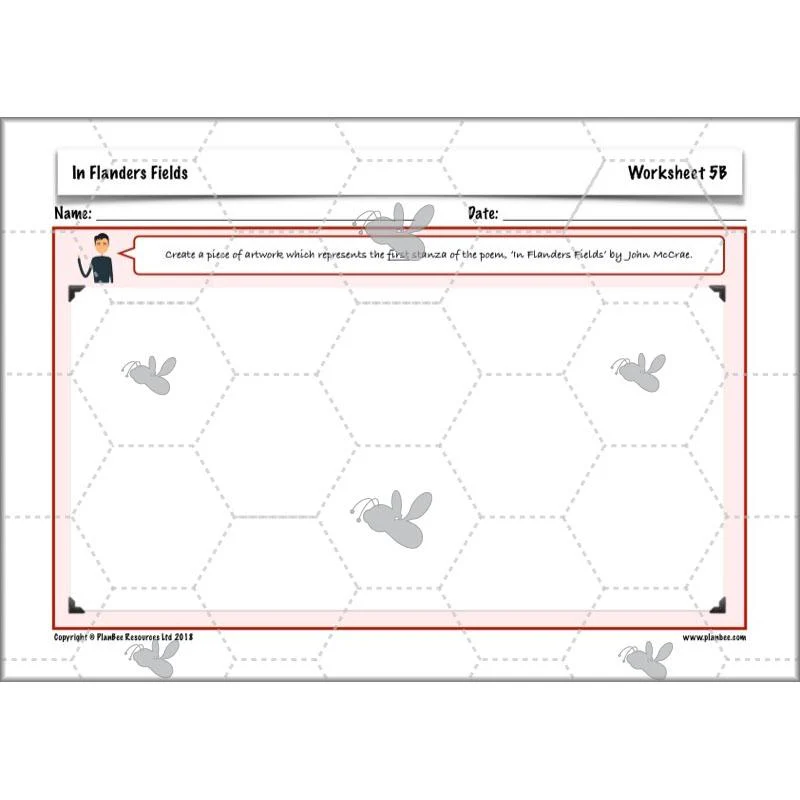
- Differentiated worksheets
- In Flanders Fields Poem
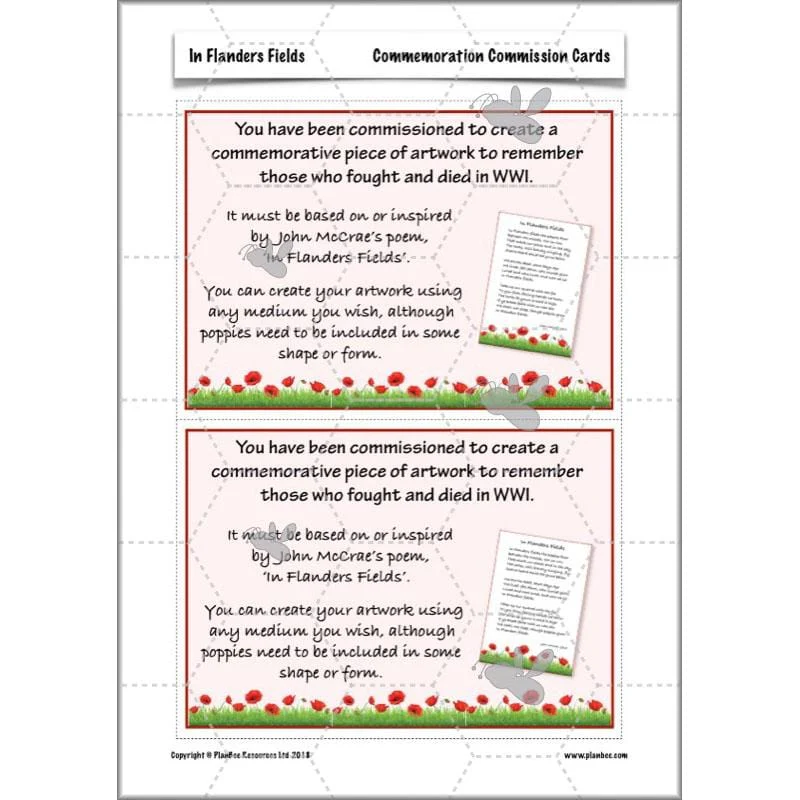
- Commemoration Commission Cards
Original: $4.71
-65%$4.71
$1.65More Images
In Flanders Fields
In this WWI Art KS2 scheme of work, your class will explore the work of the artists officially commissioned to record the war, with a focus on Paul Nash’s paintings. They will discover how art was used as a propaganda tool in the form of posters, and find out about the amazing dazzle camouflage which was invented and used during the war. Finally, children will create their own poppy-themed commemorative artworks based on the poem, ‘In Flanders Fields’.
With detailed lesson plans, slides and a range of printable resources, you will find everything you need to teach this Y5/6 ‘In Flanders Fields’ art scheme of work to your class.
Save up to 30% on this scheme of work by creating your own Mix and Match World War 1 Topic Bundle – perfect if you're looking for a cross-curricular approach to your teaching!
Lesson 1: Official WW1 Artists
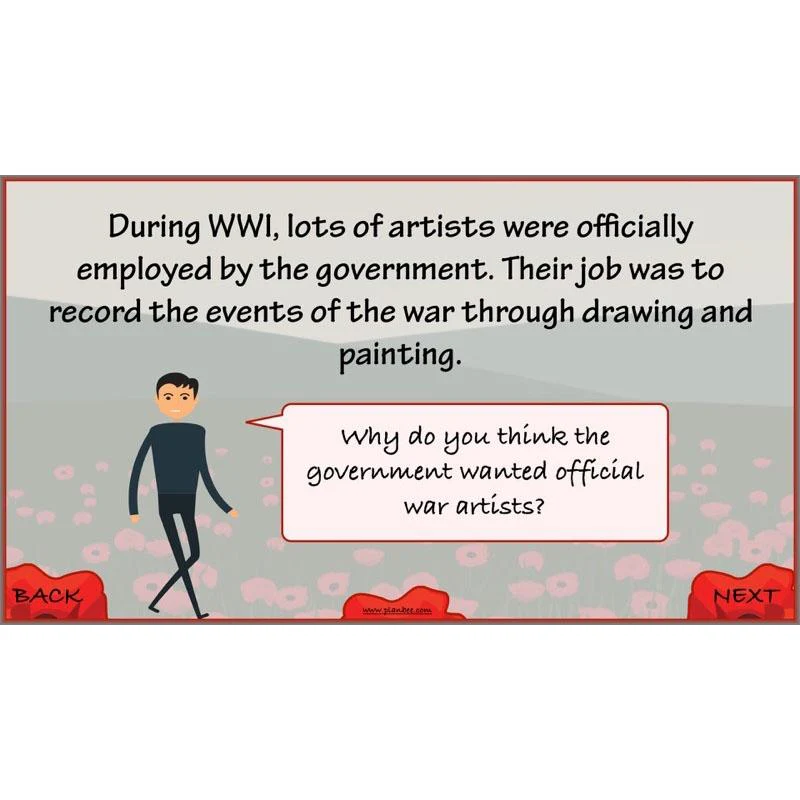
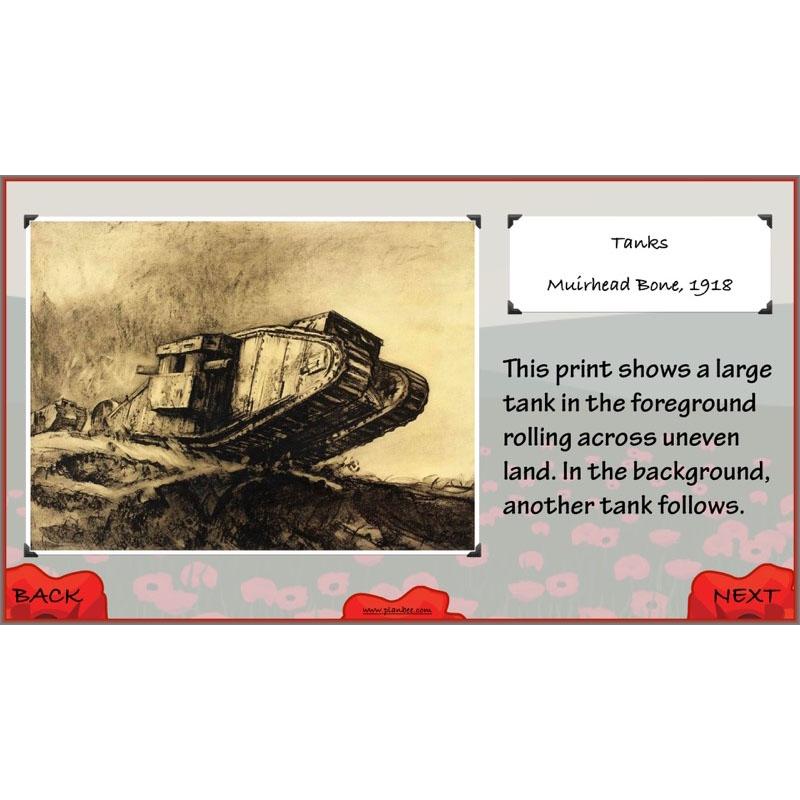
In this first lesson, children explore and discuss the artworks of some of the artists who were officially commissioned to record the war through drawing and painting. In their independent work, children then analyse a chosen artwork in further detail. They are encouraged to share and explain their thoughts, feelings and opinions of the artworks throughout the lesson.
This downloadable lesson includes a lesson plan, a slideshow presentation and printable teaching resources.
What's included:
- Lesson plan
- Slides
- Activity ideas
- Art Cards
- Mini Art Cards
- Differentiated worksheets
- What Can Art Tell Us? Sheet
Lesson 2: Paul Nash WW1 Paintings
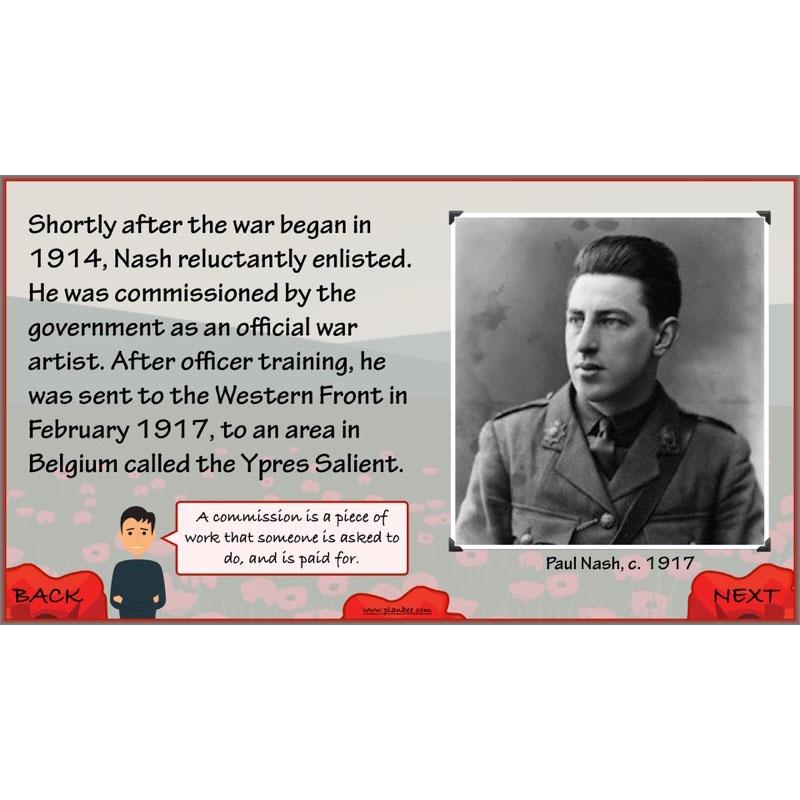
During this lesson your children explore in depth the work of official war artist, Paul Nash. They find out about Nash’s experiences of war, and how they influenced the artwork he created. They discuss their own opinions of his artwork, and the view of the war that he was trying to portray. In their independent work, children recreate one of Nash’s artworks to show what the landscape might have looked like prior to the war. In the alternative activity, children are challenged to use an excerpt from a letter written by Nash to create their own piece of landscape war art.
This downloadable lesson includes a lesson plan, slideshow presentation and printable teaching resources.
What's included:
- Lesson plan
- Slides
- Activity ideas
- Picture Cards and Prompt Cards
- Differentiated worksheets
- Nash’s Description Sheet
Lesson 3: WW1 Propaganda Posters
In this lesson, children find out how art, in the form of posters, was used as a tool for propaganda in WWI. They examine and discuss a range of posters created during the war, thinking about who they were aimed at, what image was used and why, and how effective they think it would have been. In their independent activities, children are challenged to design their own posters based on the original slogans and images used.
This downloadable lesson includes a lesson plan, slideshow presentation and printable teaching resources.
What's included:
- Lesson plan
- Slides
- Activity ideas
- Propaganda Posters
- Poster Sheets
- Slogan Ideas Cards
Lesson 4: WW1 Dazzle Camouflage Art
Children find out about dazzle camouflage, and how it was created and used during WWI with the aim of protecting ships from torpedo attacks. In their independent work, they be challenged to design a new dazzle scheme for a ship using a given checklist. Alternatively, children make and paint their own clay model of a dazzle-painted ship.
This downloadable lesson includes a lesson plan, slideshow presentation and printable teaching resources.
What's included:
- Lesson plan
- Slides
- Activity ideas
- Wilkinson’s Design Specification Sheet
- Dazzle Design Sheets
- Dazzle Design Challenge Sheet
- Clay Ship Instruction Sheet
Lesson 5: John McCraes Poem Poppy Art
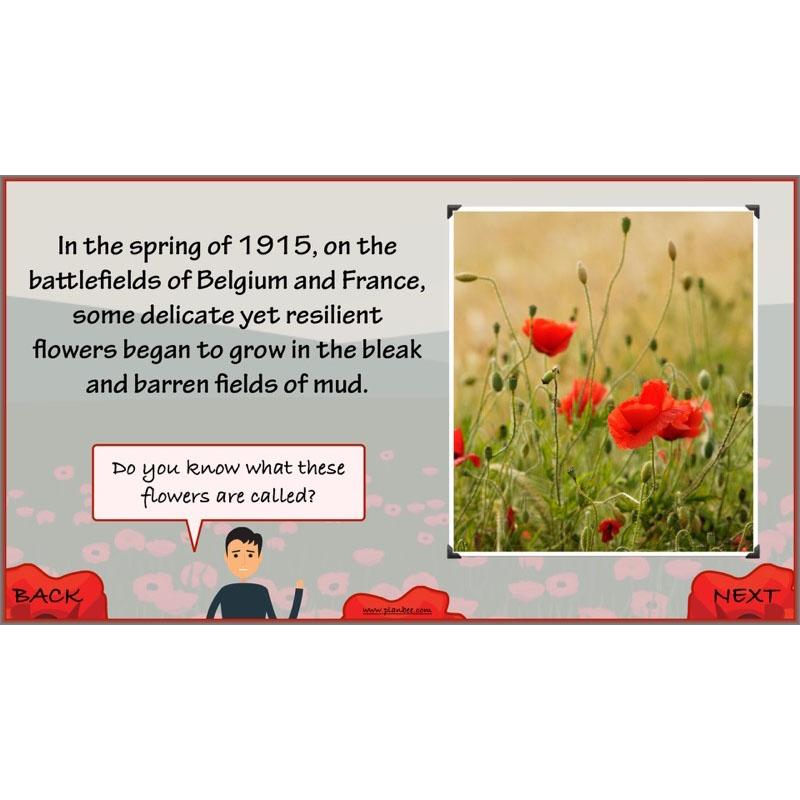
In this final lesson, children discover why the poppy has become an international symbol of remembrance for those who fought and died in war. They look at John McCrae’s poem, ‘In Flanders Fields’, and use this as a basis for their artwork in their independent activities.
This downloadable lesson includes a lesson plan, slideshow presentation and printable teaching resources.
What's included:
- Lesson plan
- Slides
- Activity ideas
- Poppy Picture Cards
- Differentiated worksheets
- In Flanders Fields Poem
- Commemoration Commission Cards
Product Information
Product Information
Shipping & Returns
Shipping & Returns
Description
In this WWI Art KS2 scheme of work, your class will explore the work of the artists officially commissioned to record the war, with a focus on Paul Nash’s paintings. They will discover how art was used as a propaganda tool in the form of posters, and find out about the amazing dazzle camouflage which was invented and used during the war. Finally, children will create their own poppy-themed commemorative artworks based on the poem, ‘In Flanders Fields’.
With detailed lesson plans, slides and a range of printable resources, you will find everything you need to teach this Y5/6 ‘In Flanders Fields’ art scheme of work to your class.
Save up to 30% on this scheme of work by creating your own Mix and Match World War 1 Topic Bundle – perfect if you're looking for a cross-curricular approach to your teaching!
Lesson 1: Official WW1 Artists
In this first lesson, children explore and discuss the artworks of some of the artists who were officially commissioned to record the war through drawing and painting. In their independent work, children then analyse a chosen artwork in further detail. They are encouraged to share and explain their thoughts, feelings and opinions of the artworks throughout the lesson.
This downloadable lesson includes a lesson plan, a slideshow presentation and printable teaching resources.
What's included:
- Lesson plan
- Slides
- Activity ideas
- Art Cards
- Mini Art Cards
- Differentiated worksheets
- What Can Art Tell Us? Sheet
Lesson 2: Paul Nash WW1 Paintings
During this lesson your children explore in depth the work of official war artist, Paul Nash. They find out about Nash’s experiences of war, and how they influenced the artwork he created. They discuss their own opinions of his artwork, and the view of the war that he was trying to portray. In their independent work, children recreate one of Nash’s artworks to show what the landscape might have looked like prior to the war. In the alternative activity, children are challenged to use an excerpt from a letter written by Nash to create their own piece of landscape war art.
This downloadable lesson includes a lesson plan, slideshow presentation and printable teaching resources.
What's included:
- Lesson plan
- Slides
- Activity ideas
- Picture Cards and Prompt Cards
- Differentiated worksheets
- Nash’s Description Sheet
Lesson 3: WW1 Propaganda Posters
In this lesson, children find out how art, in the form of posters, was used as a tool for propaganda in WWI. They examine and discuss a range of posters created during the war, thinking about who they were aimed at, what image was used and why, and how effective they think it would have been. In their independent activities, children are challenged to design their own posters based on the original slogans and images used.
This downloadable lesson includes a lesson plan, slideshow presentation and printable teaching resources.
What's included:
- Lesson plan
- Slides
- Activity ideas
- Propaganda Posters
- Poster Sheets
- Slogan Ideas Cards
Lesson 4: WW1 Dazzle Camouflage Art
Children find out about dazzle camouflage, and how it was created and used during WWI with the aim of protecting ships from torpedo attacks. In their independent work, they be challenged to design a new dazzle scheme for a ship using a given checklist. Alternatively, children make and paint their own clay model of a dazzle-painted ship.
This downloadable lesson includes a lesson plan, slideshow presentation and printable teaching resources.
What's included:
- Lesson plan
- Slides
- Activity ideas
- Wilkinson’s Design Specification Sheet
- Dazzle Design Sheets
- Dazzle Design Challenge Sheet
- Clay Ship Instruction Sheet
Lesson 5: John McCraes Poem Poppy Art
In this final lesson, children discover why the poppy has become an international symbol of remembrance for those who fought and died in war. They look at John McCrae’s poem, ‘In Flanders Fields’, and use this as a basis for their artwork in their independent activities.
This downloadable lesson includes a lesson plan, slideshow presentation and printable teaching resources.
What's included:
- Lesson plan
- Slides
- Activity ideas
- Poppy Picture Cards
- Differentiated worksheets
- In Flanders Fields Poem
- Commemoration Commission Cards