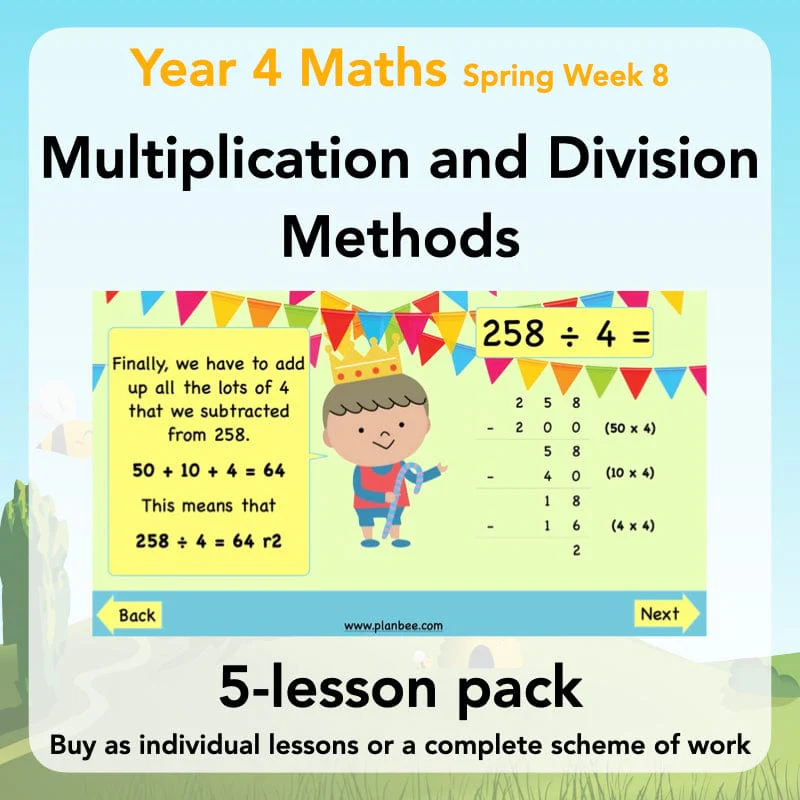
Multiplication and Division Methods
Calling all party planners! In this unit, children will recap on the grid method, repeated subtraction and the chunking method, as well as being introduced to the expanded method for multiplication.
They will apply their knowledge and understanding of these methods when solving a range of fun, party-themed problems.
This five-lesson scheme of work comes with a detailed lesson plan, differentiated activity ideas, lesson input slides as well as printable resources.
The Grid Method
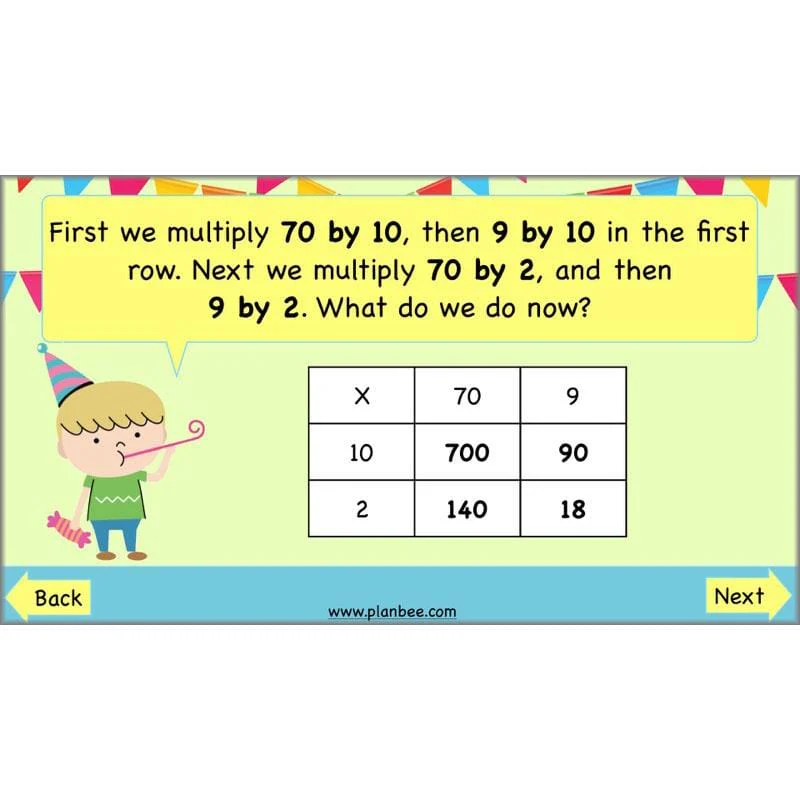
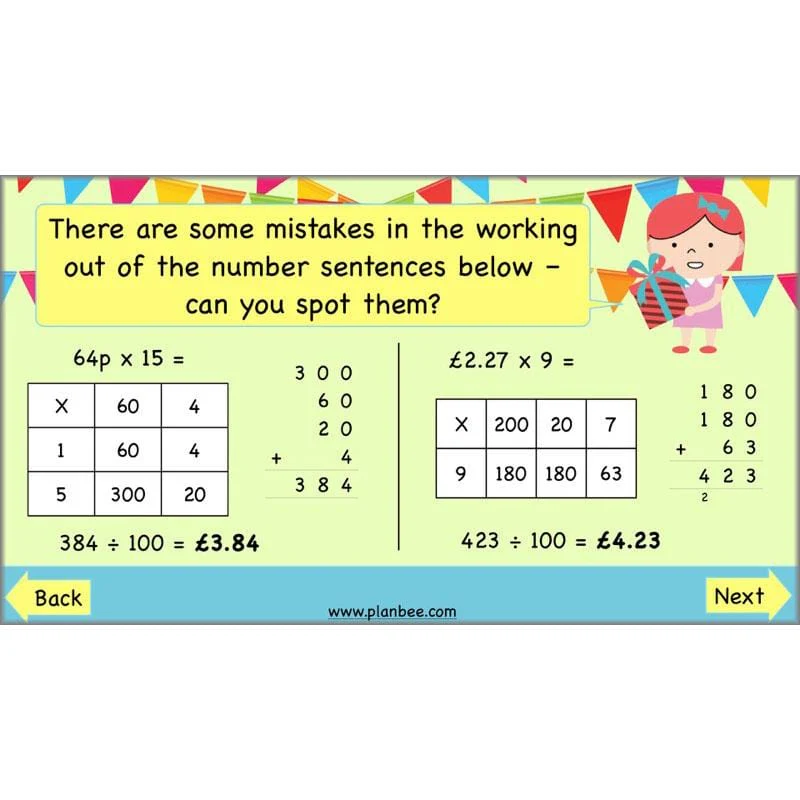
In this first lesson, children will recap on their knowledge of the grid method for multiplication, and apply it to real-life problems in the context of party planning and using money. Children are also challenged to spot mistakes in given grid methods, and use their understanding to correct them. In their independent activities, children will use this method to work out the costs of different party items, or in the alternative activity, find and correct errors in given calculations.
What's included:
- Lesson plan
- Slides
- Activity ideas
- Party Paradise Sheets
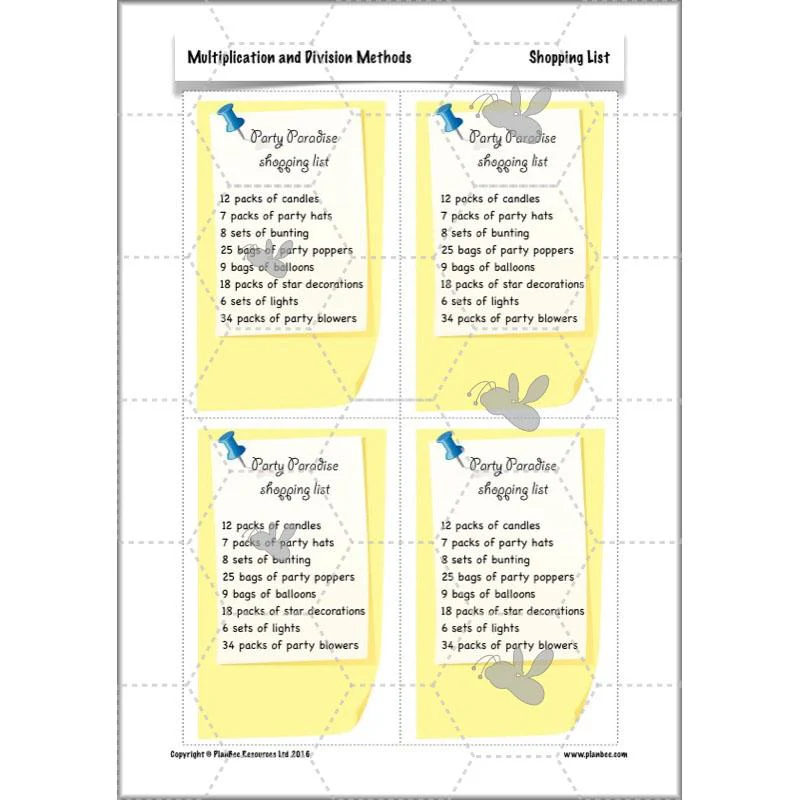
- Shopping List Sheet
- Buying Blunders Sheets
The Expanded Method
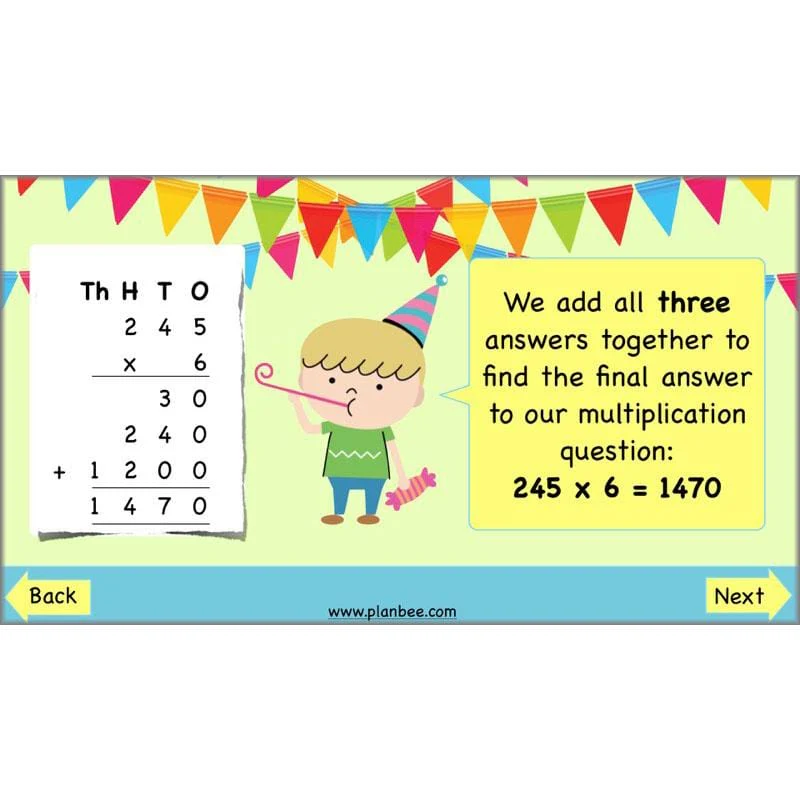
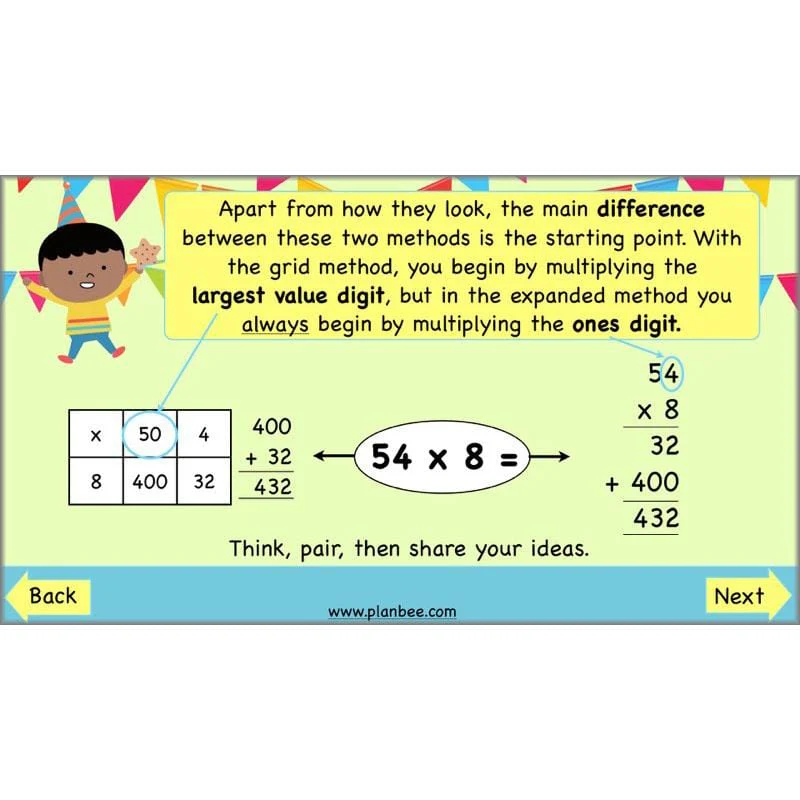
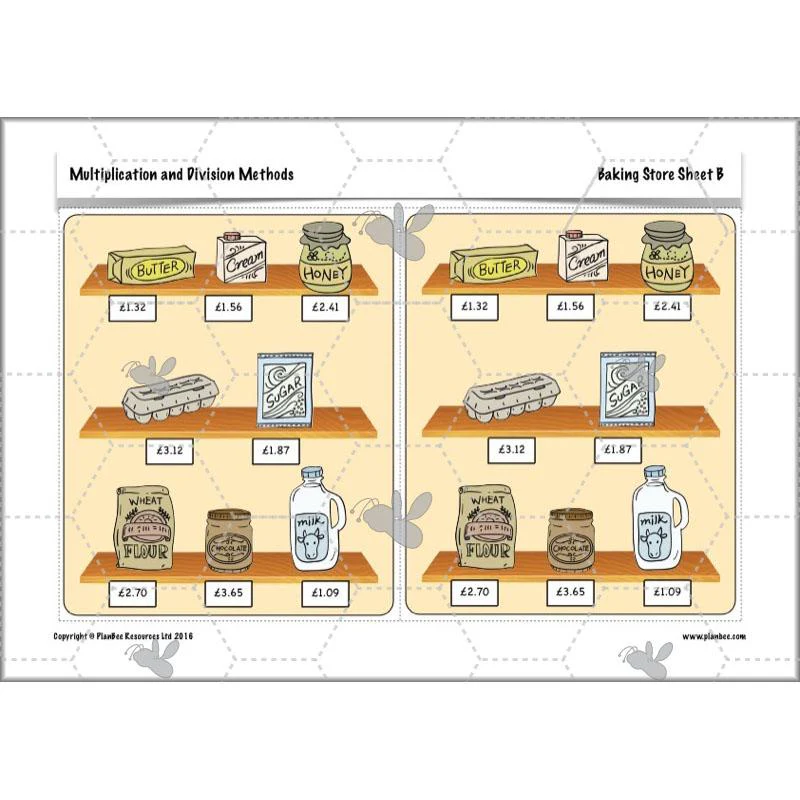
In this lesson, children will be introduced to the expanded method for multiplication. They will first multiply two-digit numbers by a one-digit number, then move onto multiplying three-digit numbers by a one-digit number, discussing the extra steps that are needed. Children will compare the grid method and the expanded method, discussing the similarities and differences and their own personal preference. In their independent activities, children will apply this method in order to work out the amounts of different ingredients needed for baking cakes.
What's included:
- Lesson plan
- Slides
- Activity ideas
- Differentiated worksheets
- Recipe Cards
- Baking Store Sheet
- What’s in my Basket? Sheet
Repeated Subtraction
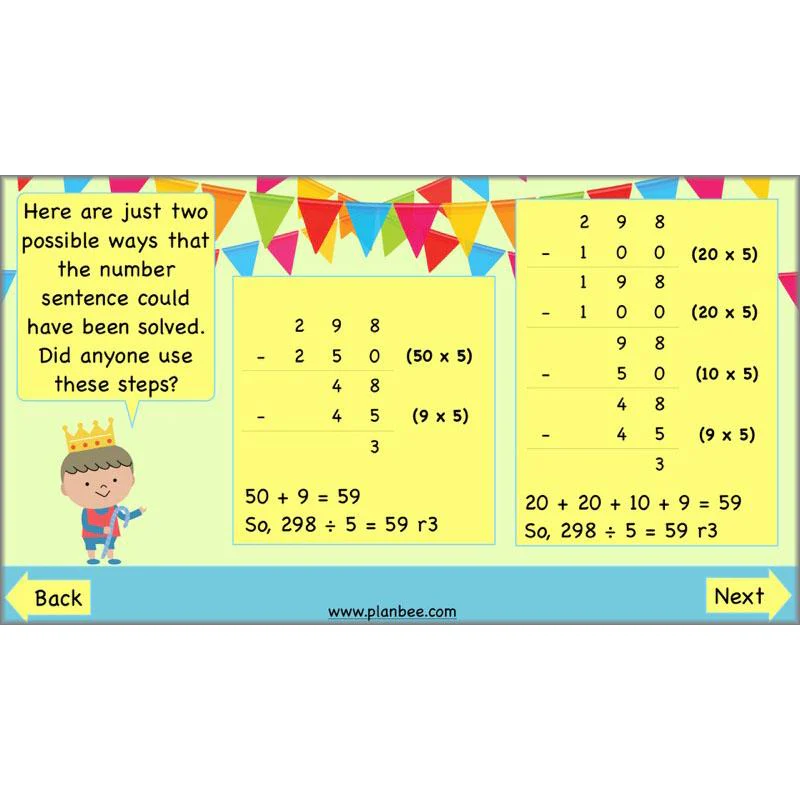
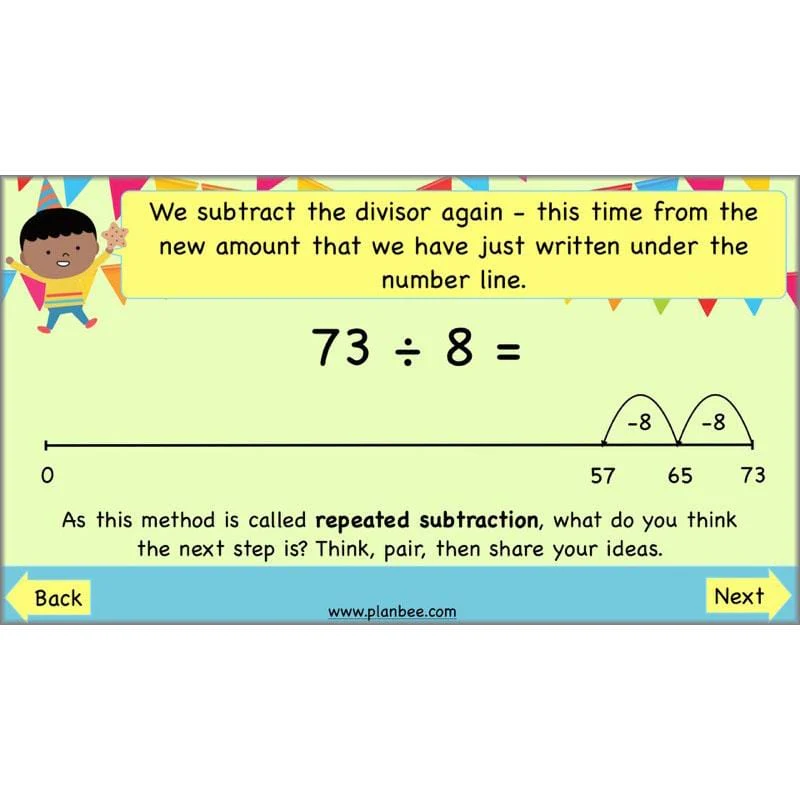
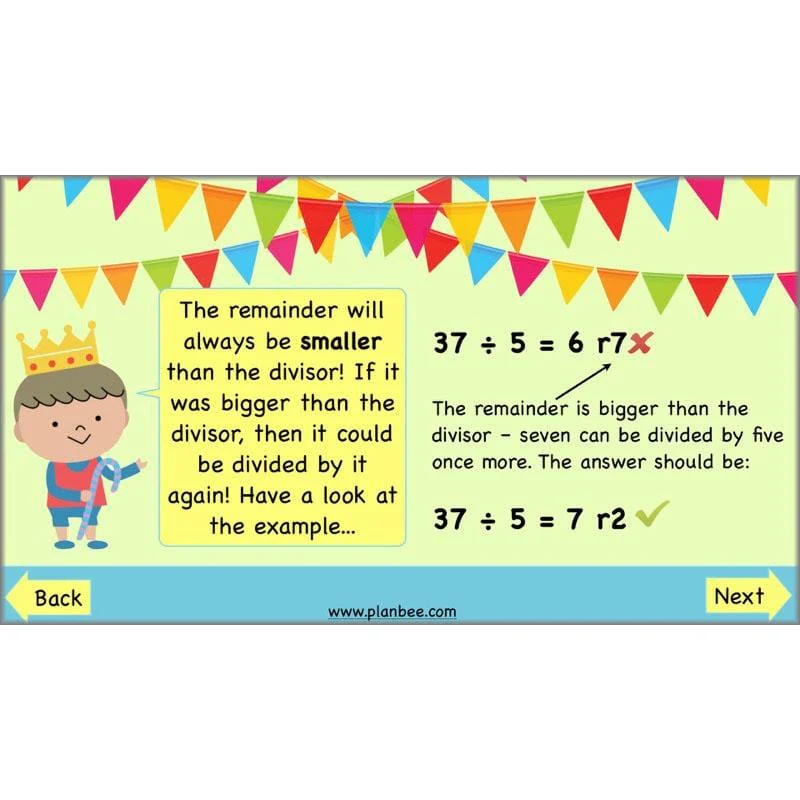
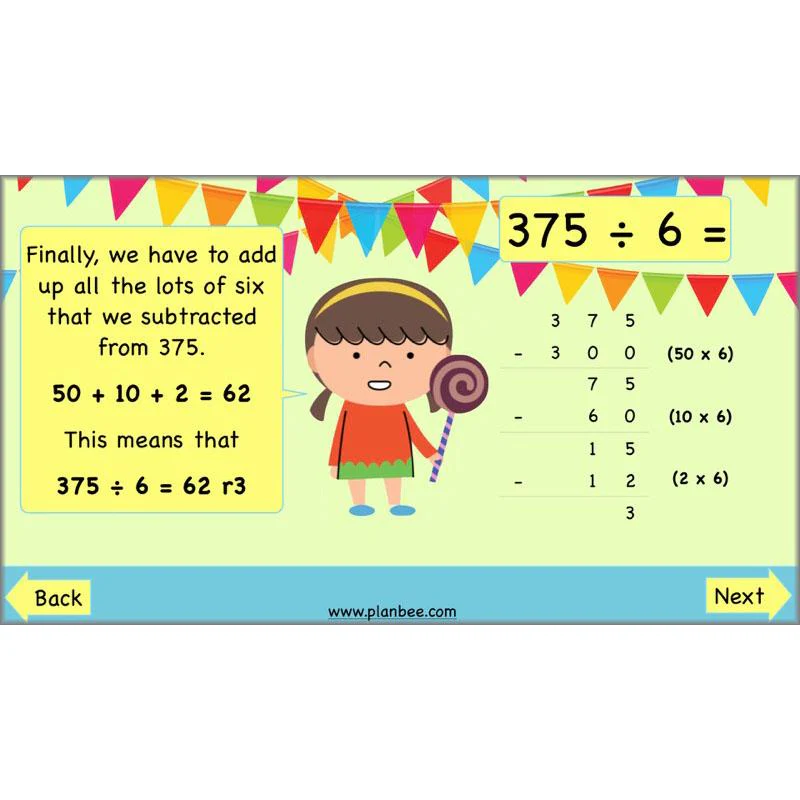
Children will recap on their knowledge of the repeated subtraction method for division. They will be challenged to explain why a remainder will always be smaller than the divisor. Children will apply this method to their independent activities when calculating how much of each party food different numbers of children can have. Alternatively, they use the Pic ‘n’ Mix cards to work out how many of each type of sweet they can buy with a given amount.
What's included:
- Lesson plan
- Slides
- Activity ideas
- Differentiated worksheets
- Party Plate Sheets
- Pic ‘n’ Mix Amount Cards
- Pic ‘n’ Mix Sweets Cards
- Pic ‘n’ Mix Recording Sheet
The Chunking Method
Children’s knowledge and understanding of the chunking method for division is recapped on in this lesson. They will discuss and explain when it is better to use this method instead of repeated subtraction. Children will learn that it doesn’t matter what size chunks they use as long as their calculations are correct! Children will apply this method when playing the Snap Challenges or Remainder Round Up game.
What's included:
- Lesson plan
- Slides
- Activity ideas
- Snap Cards Sets
- Snap Challenge Sheet
- Remainder Round Up Game
- Score Sheet
- Dice Templates
Choosing and Using the Correct Method
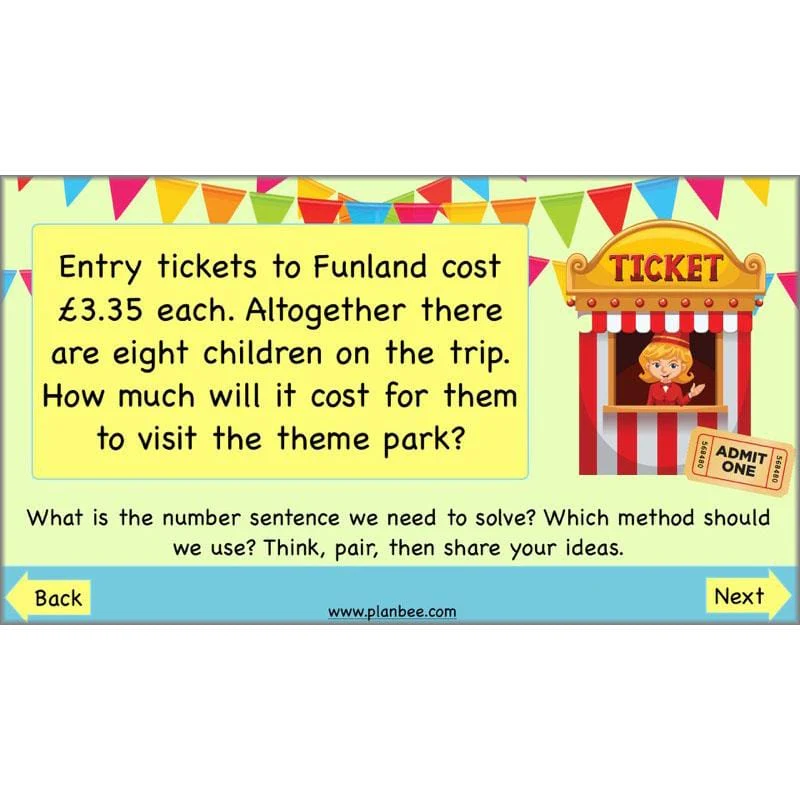
In this final lesson, children will discuss the methods they have used for multiplication and division so far, and explain how to solve different word-based problems using them. Children will then apply all of their knowledge and understanding to solve multiplication and division problems based on different party trips.
What's included:
- Lesson plan
- Slides
- Activity ideas
- Terrific Trips Price Cards
- Terrific Trips Question Sheets
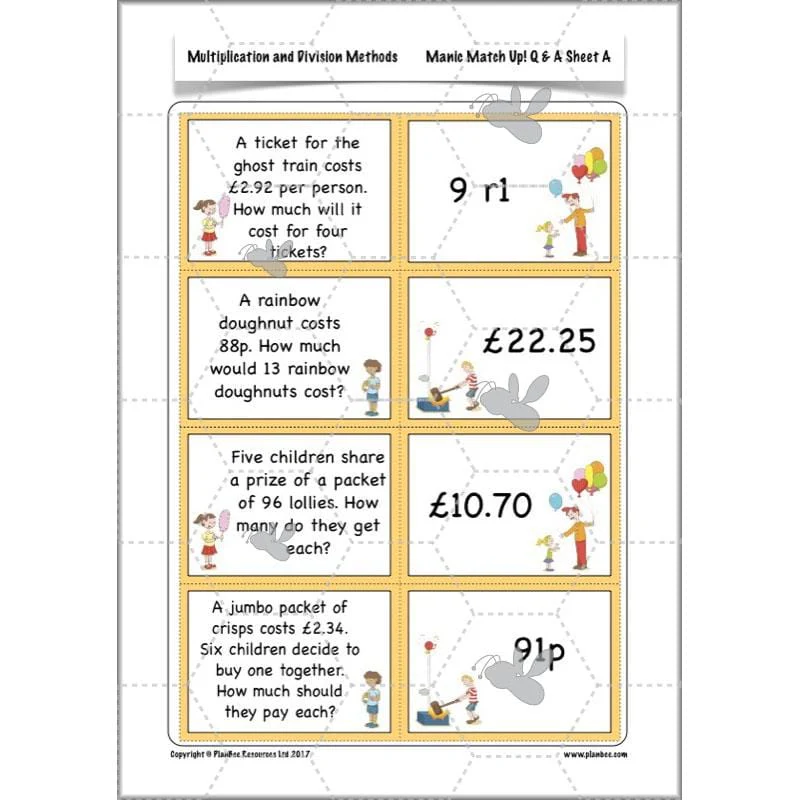
- Manic Match Up! Q & A Sheet
- Manic Match Up! Instructions
Original: $4.71
-65%$4.71
$1.65More Images





















Multiplication and Division Methods
Calling all party planners! In this unit, children will recap on the grid method, repeated subtraction and the chunking method, as well as being introduced to the expanded method for multiplication.
They will apply their knowledge and understanding of these methods when solving a range of fun, party-themed problems.
This five-lesson scheme of work comes with a detailed lesson plan, differentiated activity ideas, lesson input slides as well as printable resources.
The Grid Method
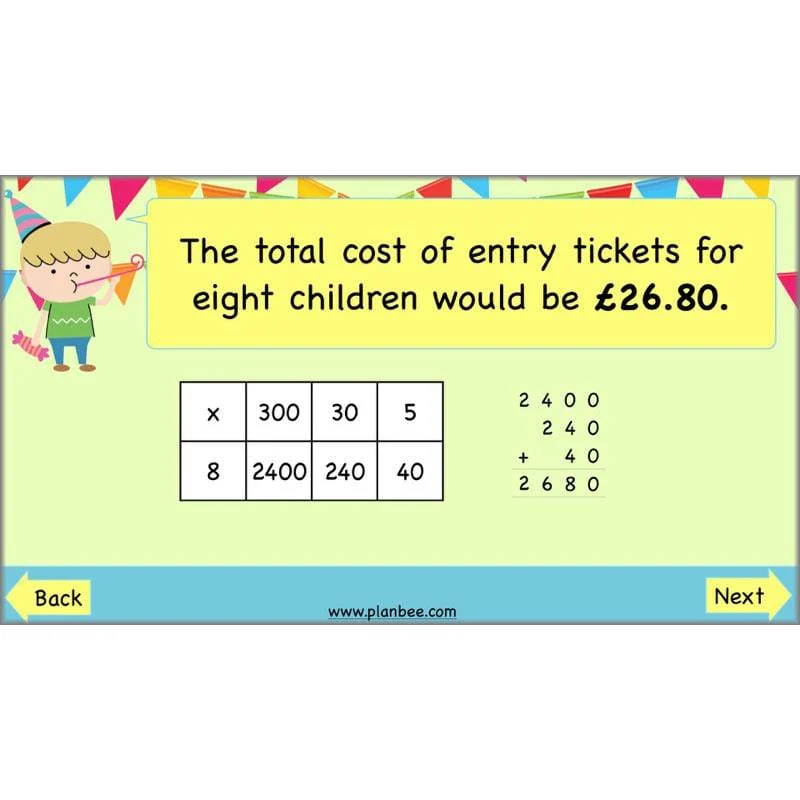
In this first lesson, children will recap on their knowledge of the grid method for multiplication, and apply it to real-life problems in the context of party planning and using money. Children are also challenged to spot mistakes in given grid methods, and use their understanding to correct them. In their independent activities, children will use this method to work out the costs of different party items, or in the alternative activity, find and correct errors in given calculations.
What's included:
- Lesson plan
- Slides
- Activity ideas
- Party Paradise Sheets
- Shopping List Sheet
- Buying Blunders Sheets
The Expanded Method
In this lesson, children will be introduced to the expanded method for multiplication. They will first multiply two-digit numbers by a one-digit number, then move onto multiplying three-digit numbers by a one-digit number, discussing the extra steps that are needed. Children will compare the grid method and the expanded method, discussing the similarities and differences and their own personal preference. In their independent activities, children will apply this method in order to work out the amounts of different ingredients needed for baking cakes.
What's included:
- Lesson plan
- Slides
- Activity ideas
- Differentiated worksheets
- Recipe Cards
- Baking Store Sheet
- What’s in my Basket? Sheet
Repeated Subtraction
Children will recap on their knowledge of the repeated subtraction method for division. They will be challenged to explain why a remainder will always be smaller than the divisor. Children will apply this method to their independent activities when calculating how much of each party food different numbers of children can have. Alternatively, they use the Pic ‘n’ Mix cards to work out how many of each type of sweet they can buy with a given amount.
What's included:
- Lesson plan
- Slides
- Activity ideas
- Differentiated worksheets
- Party Plate Sheets
- Pic ‘n’ Mix Amount Cards
- Pic ‘n’ Mix Sweets Cards
- Pic ‘n’ Mix Recording Sheet
The Chunking Method
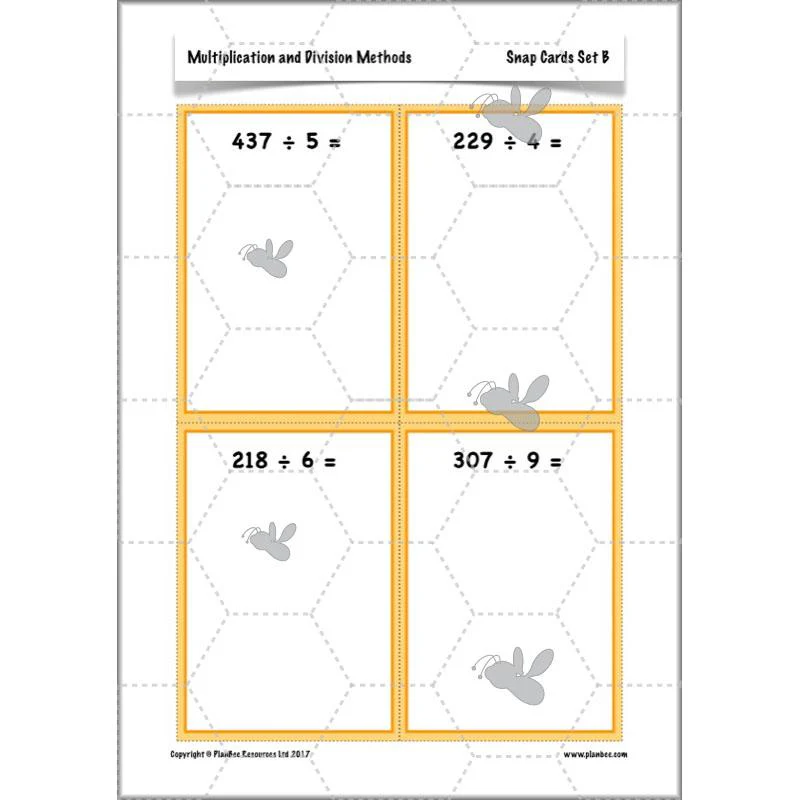
Children’s knowledge and understanding of the chunking method for division is recapped on in this lesson. They will discuss and explain when it is better to use this method instead of repeated subtraction. Children will learn that it doesn’t matter what size chunks they use as long as their calculations are correct! Children will apply this method when playing the Snap Challenges or Remainder Round Up game.
What's included:
- Lesson plan
- Slides
- Activity ideas
- Snap Cards Sets
- Snap Challenge Sheet
- Remainder Round Up Game
- Score Sheet
- Dice Templates
Choosing and Using the Correct Method
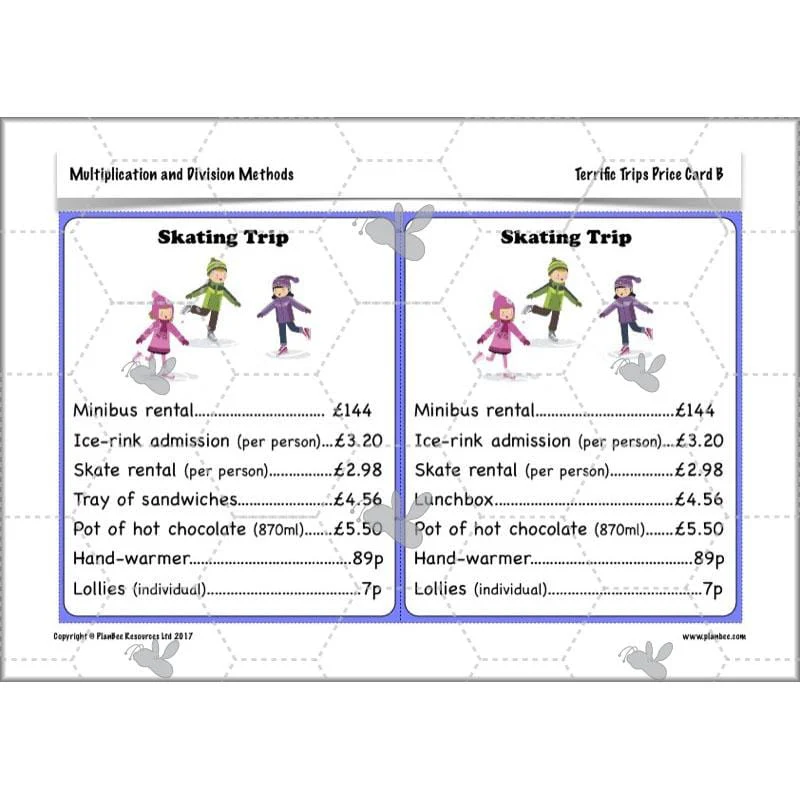
In this final lesson, children will discuss the methods they have used for multiplication and division so far, and explain how to solve different word-based problems using them. Children will then apply all of their knowledge and understanding to solve multiplication and division problems based on different party trips.
What's included:
- Lesson plan
- Slides
- Activity ideas
- Terrific Trips Price Cards
- Terrific Trips Question Sheets
- Manic Match Up! Q & A Sheet
- Manic Match Up! Instructions
Product Information
Product Information
Shipping & Returns
Shipping & Returns
Description
Calling all party planners! In this unit, children will recap on the grid method, repeated subtraction and the chunking method, as well as being introduced to the expanded method for multiplication.
They will apply their knowledge and understanding of these methods when solving a range of fun, party-themed problems.
This five-lesson scheme of work comes with a detailed lesson plan, differentiated activity ideas, lesson input slides as well as printable resources.
The Grid Method
In this first lesson, children will recap on their knowledge of the grid method for multiplication, and apply it to real-life problems in the context of party planning and using money. Children are also challenged to spot mistakes in given grid methods, and use their understanding to correct them. In their independent activities, children will use this method to work out the costs of different party items, or in the alternative activity, find and correct errors in given calculations.
What's included:
- Lesson plan
- Slides
- Activity ideas
- Party Paradise Sheets
- Shopping List Sheet
- Buying Blunders Sheets
The Expanded Method
In this lesson, children will be introduced to the expanded method for multiplication. They will first multiply two-digit numbers by a one-digit number, then move onto multiplying three-digit numbers by a one-digit number, discussing the extra steps that are needed. Children will compare the grid method and the expanded method, discussing the similarities and differences and their own personal preference. In their independent activities, children will apply this method in order to work out the amounts of different ingredients needed for baking cakes.
What's included:
- Lesson plan
- Slides
- Activity ideas
- Differentiated worksheets
- Recipe Cards
- Baking Store Sheet
- What’s in my Basket? Sheet
Repeated Subtraction
Children will recap on their knowledge of the repeated subtraction method for division. They will be challenged to explain why a remainder will always be smaller than the divisor. Children will apply this method to their independent activities when calculating how much of each party food different numbers of children can have. Alternatively, they use the Pic ‘n’ Mix cards to work out how many of each type of sweet they can buy with a given amount.
What's included:
- Lesson plan
- Slides
- Activity ideas
- Differentiated worksheets
- Party Plate Sheets
- Pic ‘n’ Mix Amount Cards
- Pic ‘n’ Mix Sweets Cards
- Pic ‘n’ Mix Recording Sheet
The Chunking Method
Children’s knowledge and understanding of the chunking method for division is recapped on in this lesson. They will discuss and explain when it is better to use this method instead of repeated subtraction. Children will learn that it doesn’t matter what size chunks they use as long as their calculations are correct! Children will apply this method when playing the Snap Challenges or Remainder Round Up game.
What's included:
- Lesson plan
- Slides
- Activity ideas
- Snap Cards Sets
- Snap Challenge Sheet
- Remainder Round Up Game
- Score Sheet
- Dice Templates
Choosing and Using the Correct Method
In this final lesson, children will discuss the methods they have used for multiplication and division so far, and explain how to solve different word-based problems using them. Children will then apply all of their knowledge and understanding to solve multiplication and division problems based on different party trips.
What's included:
- Lesson plan
- Slides
- Activity ideas
- Terrific Trips Price Cards
- Terrific Trips Question Sheets
- Manic Match Up! Q & A Sheet
- Manic Match Up! Instructions