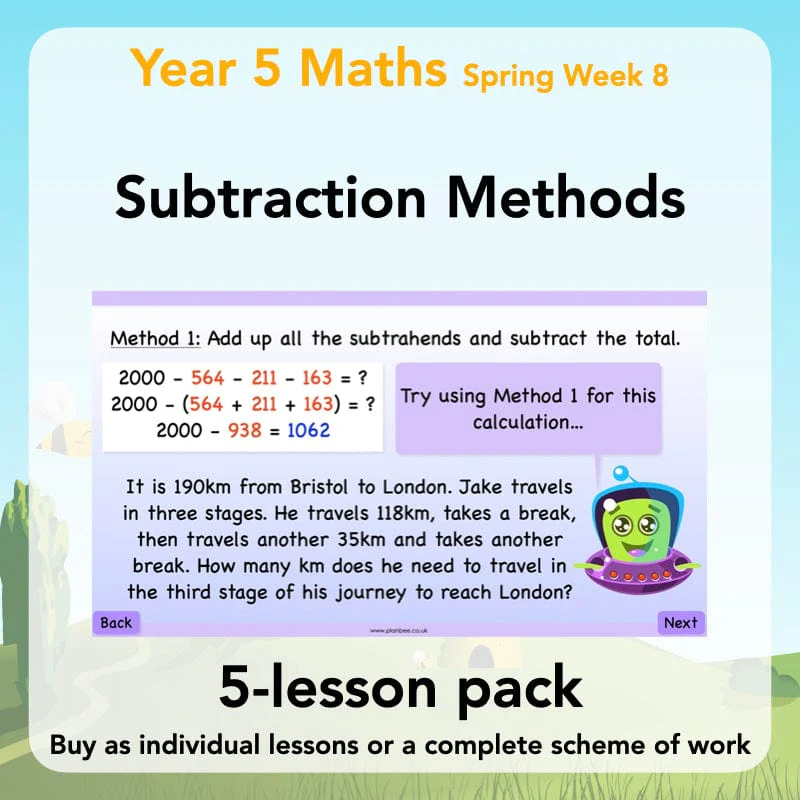
Subtraction Methods
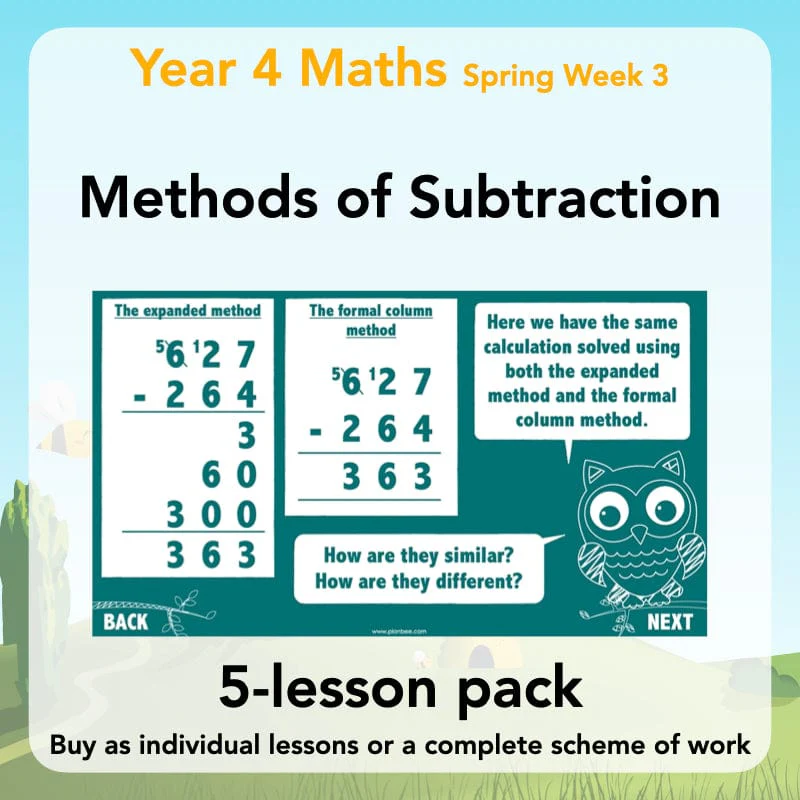
This scheme of work explores the suitability of different written and mental methods including the formal written method for subtraction.
Your class will have the opportunity to share their understanding with their peers and test out different methods for solving problems in different ways. They investigate the use of bar models to represent word problems and how they can help in figuring out what the problem is asking them to do.
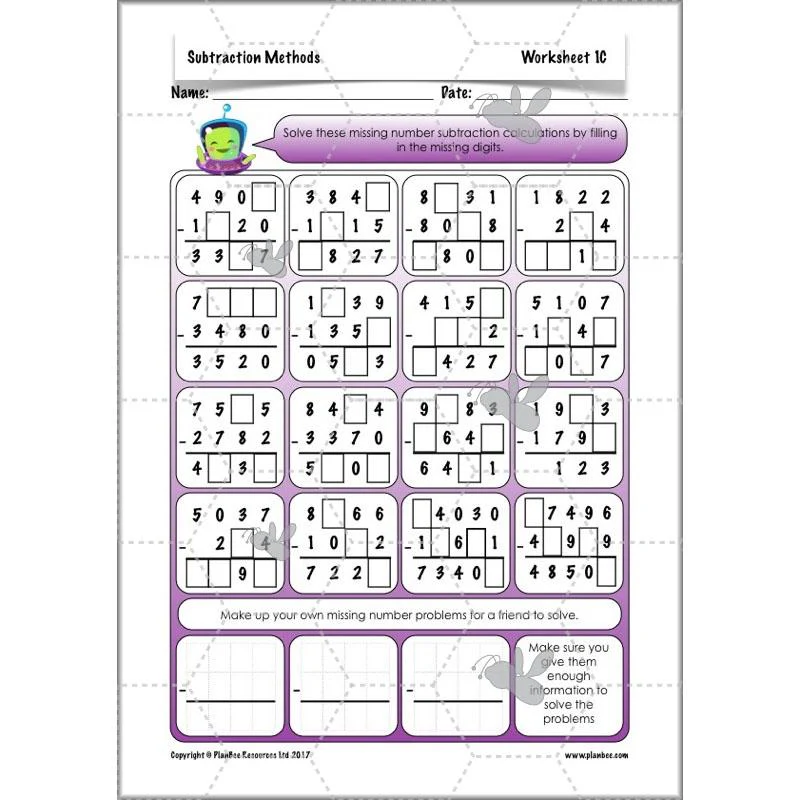
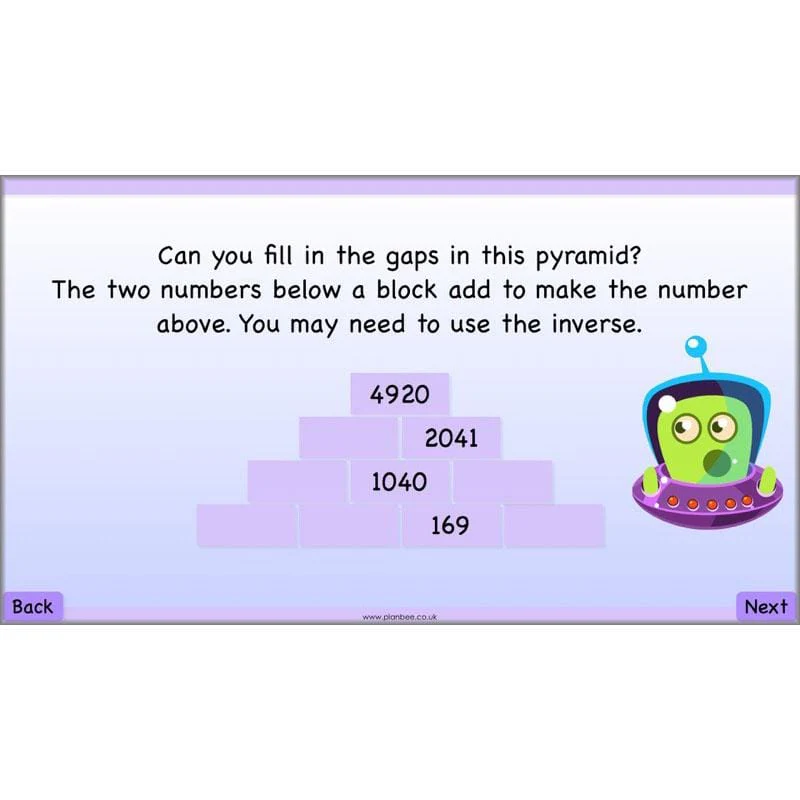
Missing Number Problems
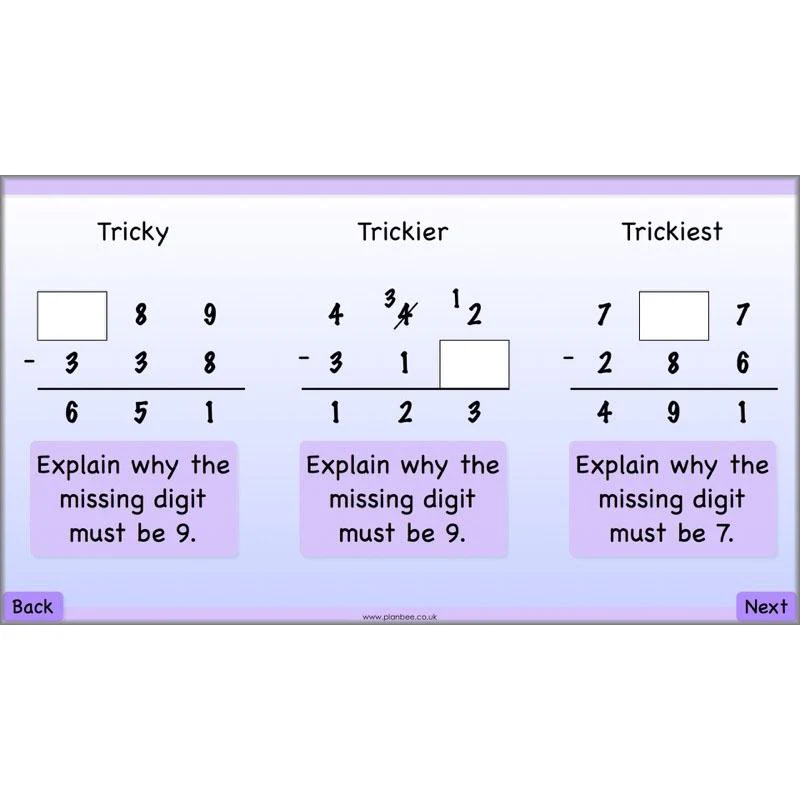
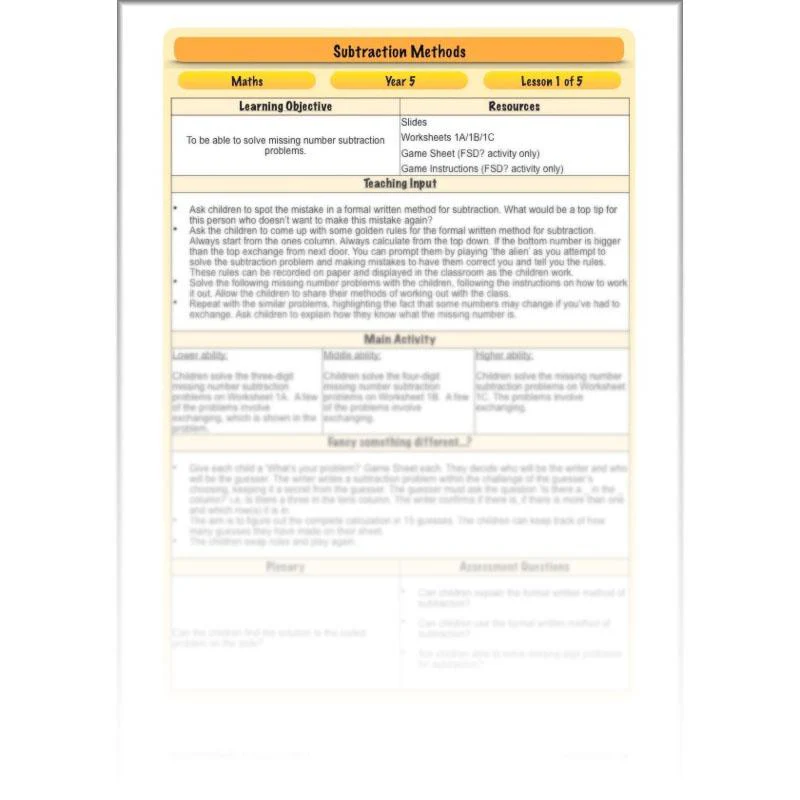
After recapping on the formal written method for subtraction, challenge your class to use their understanding to solve some missing number problems within column subtraction. Children have to use their reasoning skills as well as careful observation to spot when a problem has exchanged, and fill in the missing digits for the calculation.
What's included:
- Lesson plan
- Slides
- Activity ideas
- Differentiated worksheets
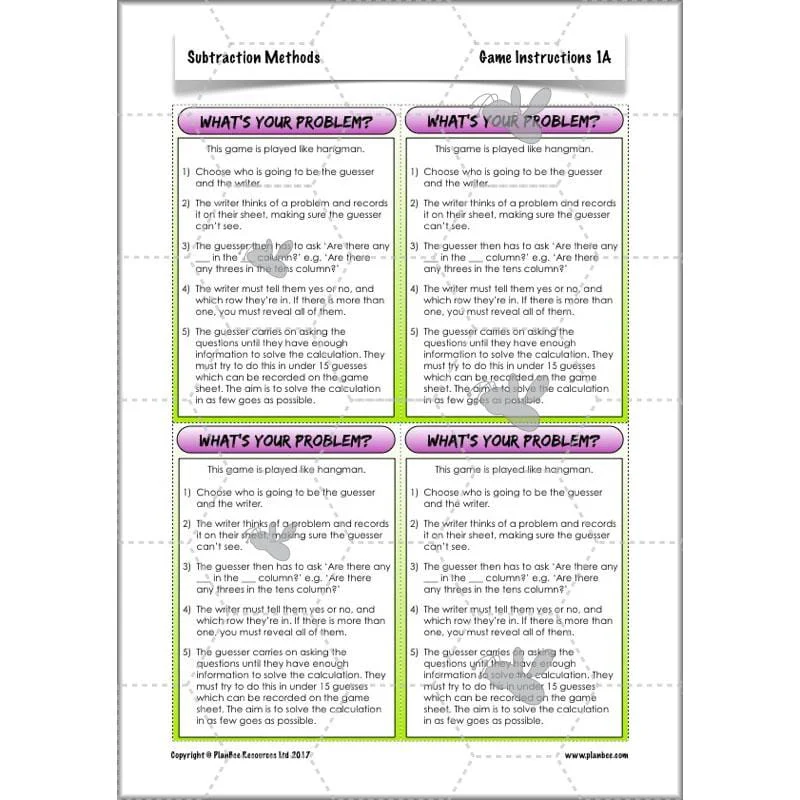
- Game sheet
- Instruction cards
Written or Mental Methods?
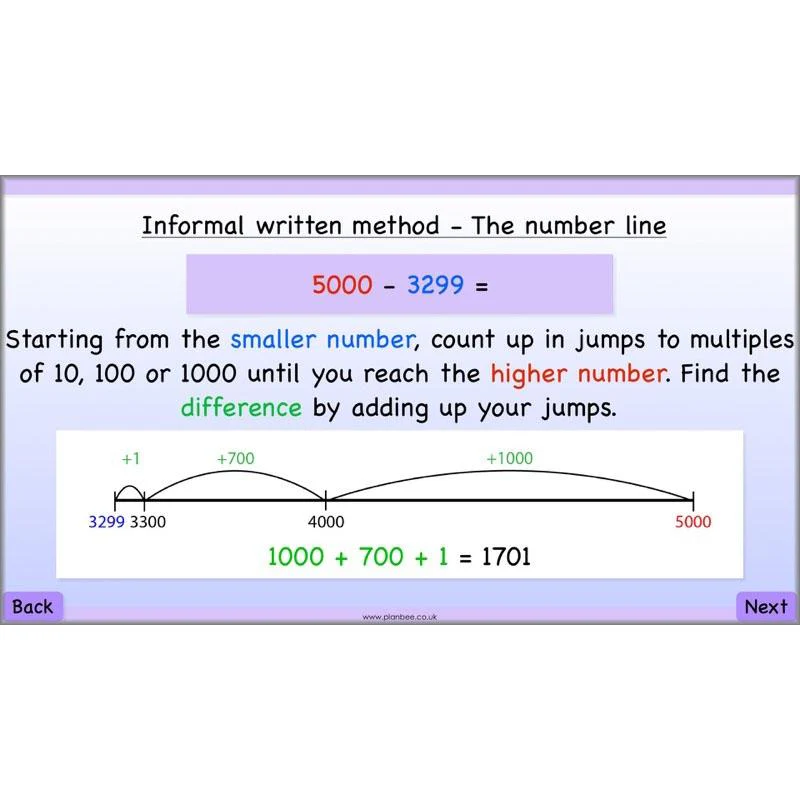
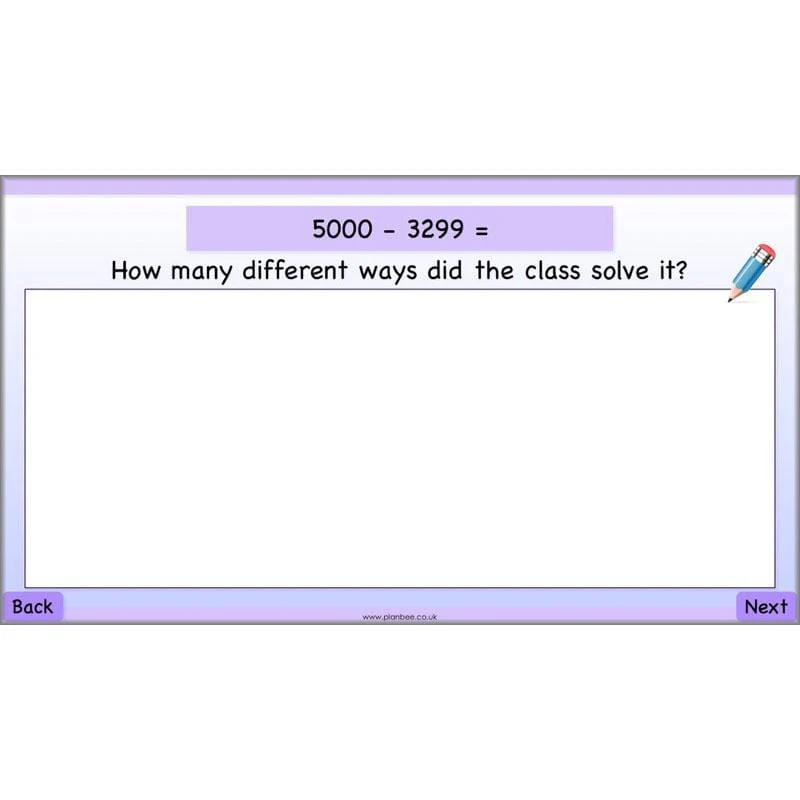
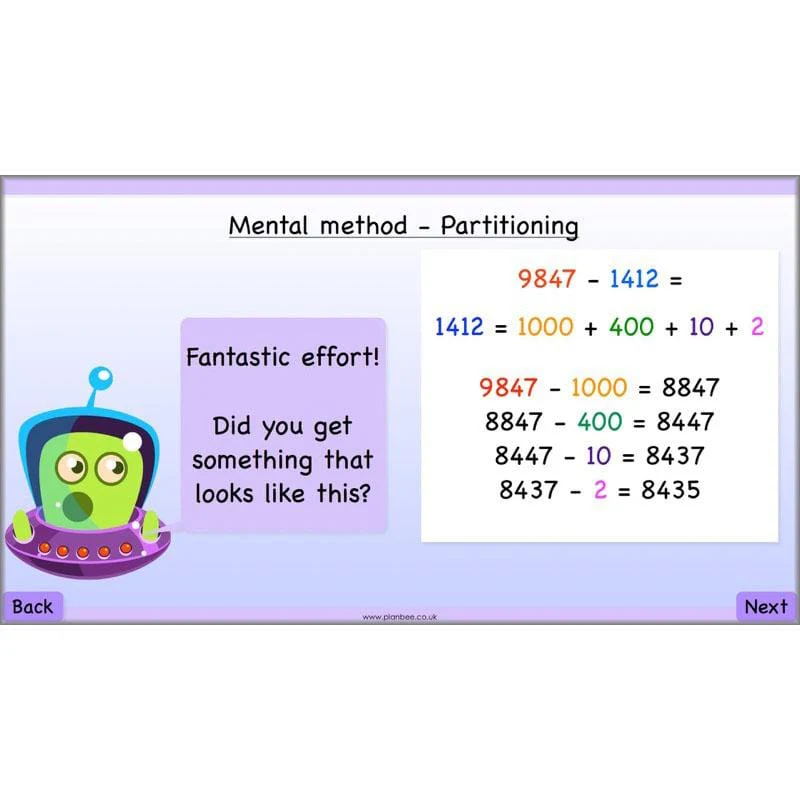
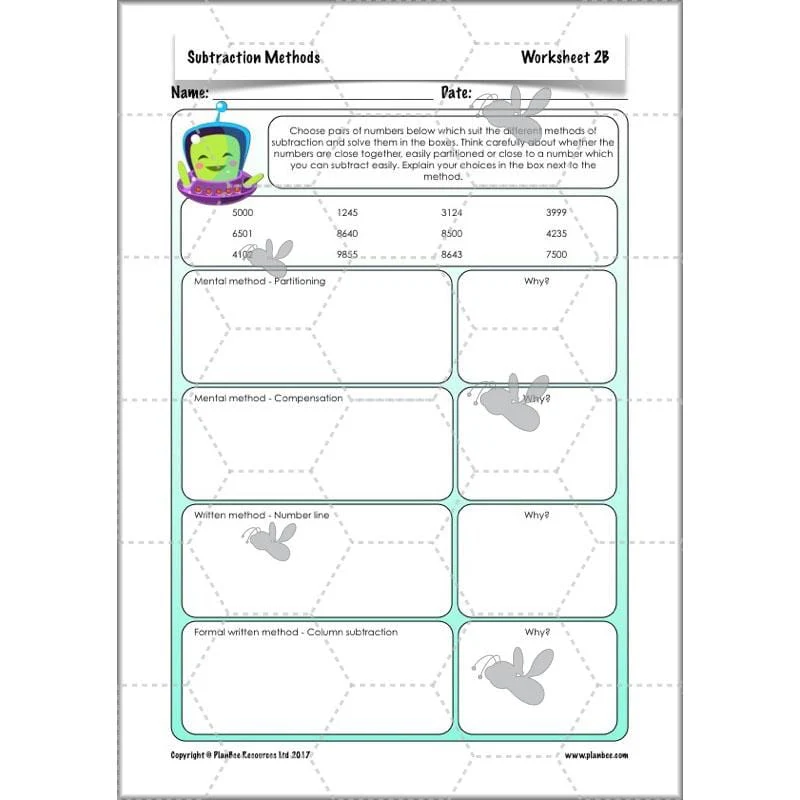
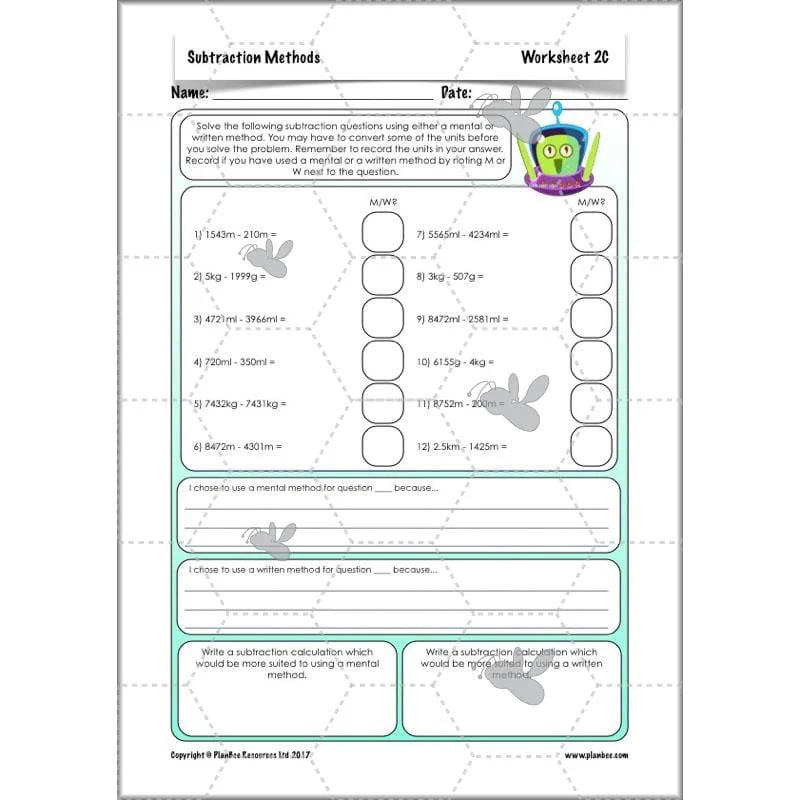
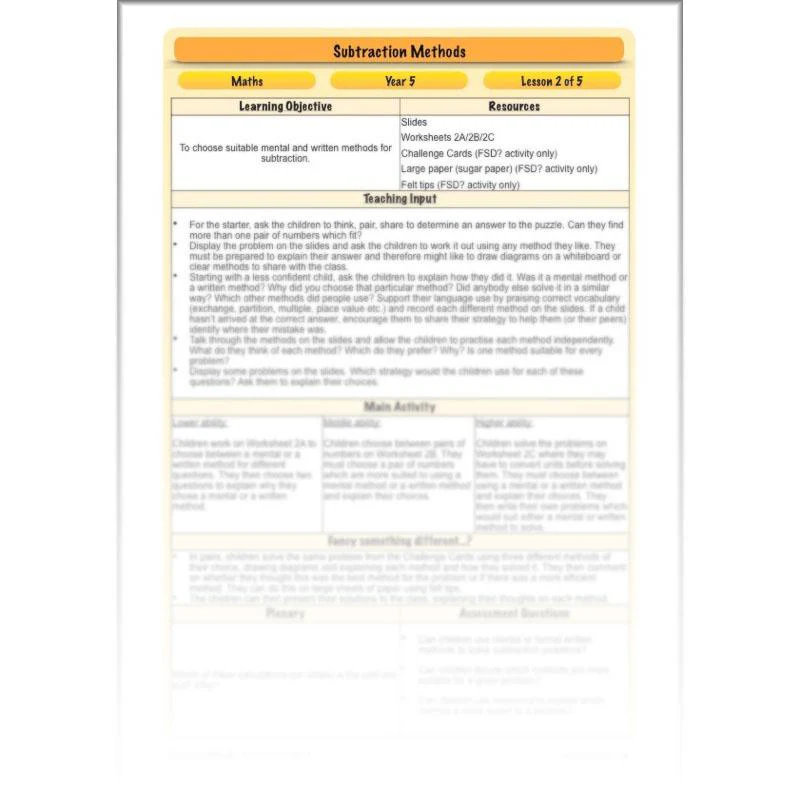
This lesson gives the children an opportunity to share their ideas and thinking when working through a subtraction problem. They discuss the advantages and disadvantages of different mental and written methods for subtraction including partitioning, compensating, number lines and column subtraction. They go on to use this understanding to choose a suitable method for various calculations, explaining why they have chosen to use that method baed on the numbers involved.
What's included:
- Lesson plan
- Slides
- Activity ideas
- Differentiated worksheets
- Challenge cards
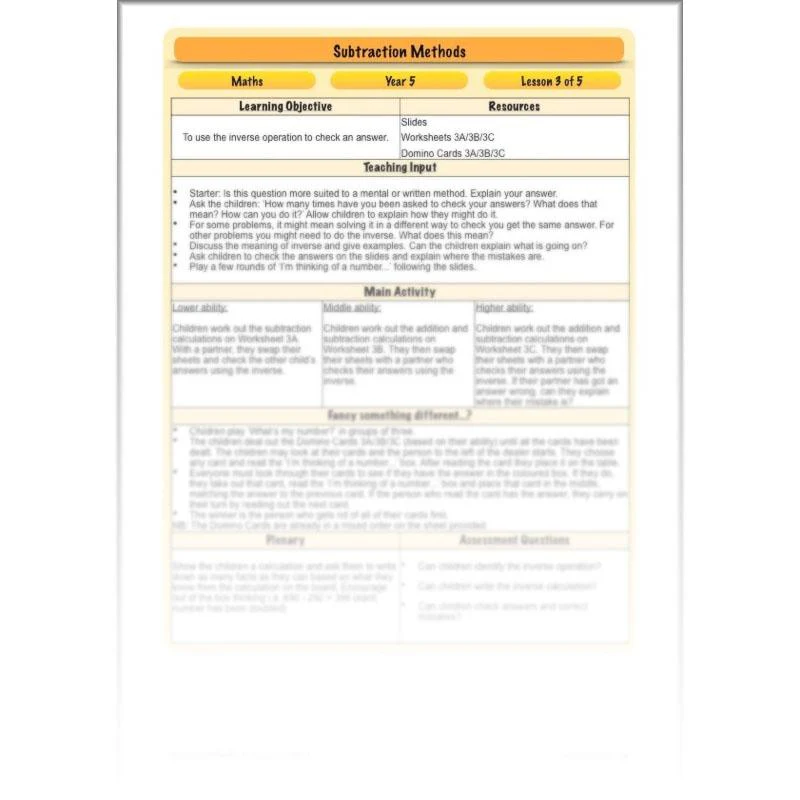
Inverse operations
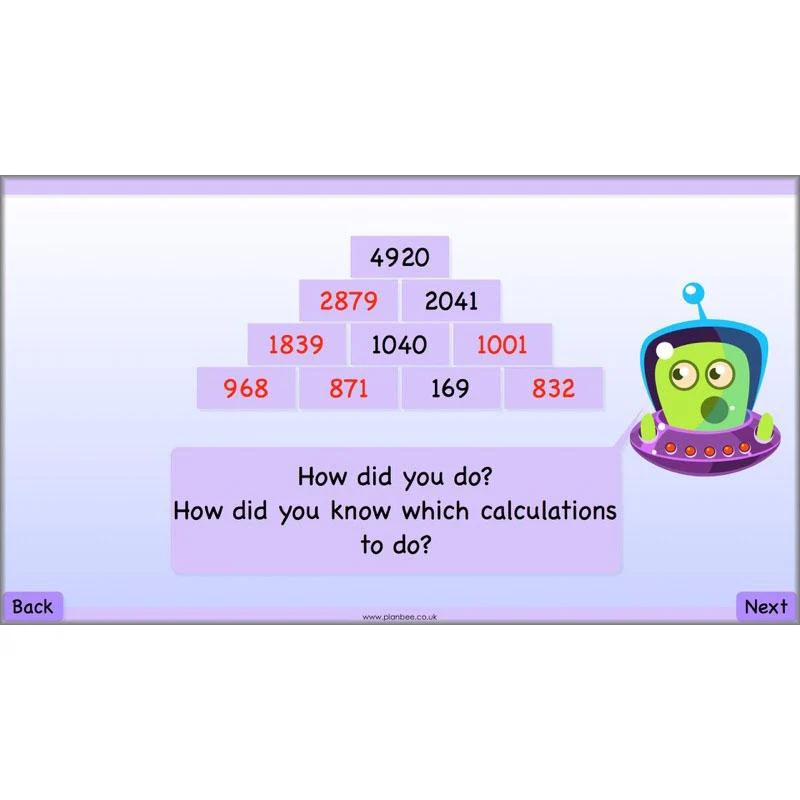
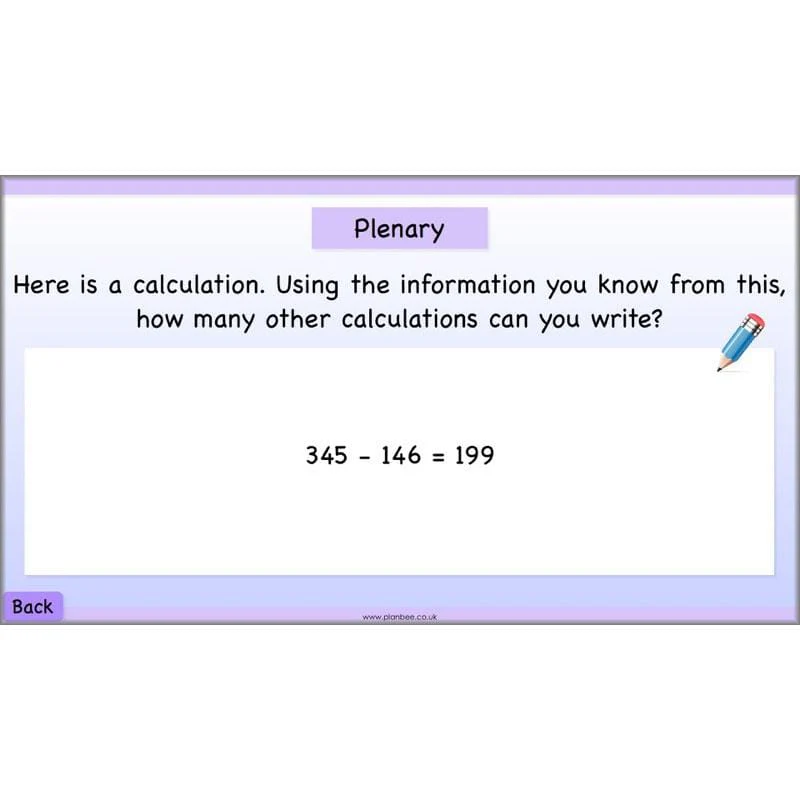
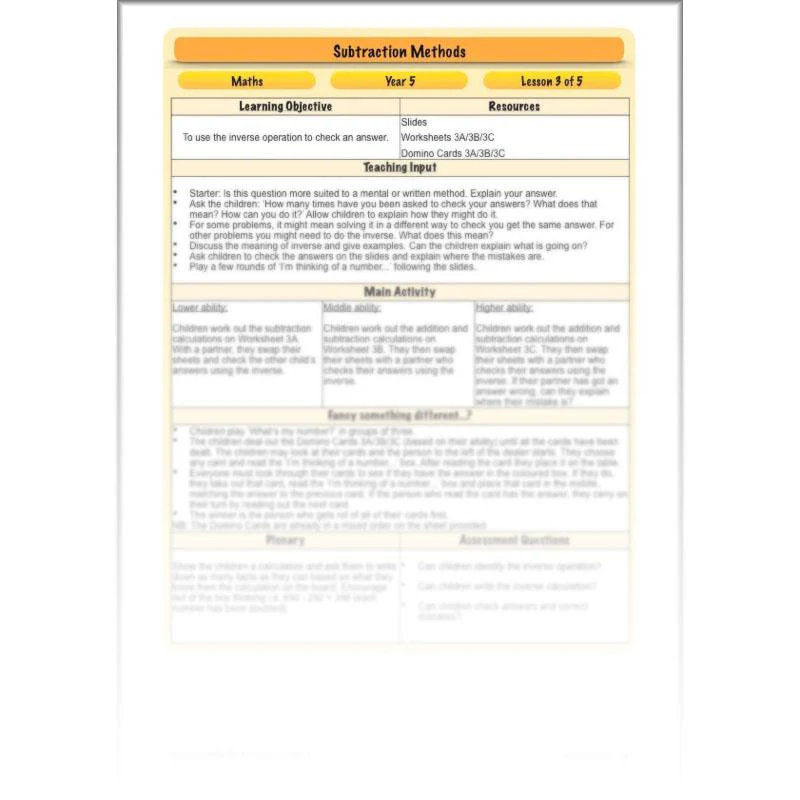
This lesson explores the relationships between the operations and how this knowledge can be used to check answers to questions. Children become the teacher when marking their work and looking for mistakes that may have been made when working out a subtraction calculation. They also investigate the tricky ‘I’m thinking of a number...’ problems and how the inverse is used to solve them.
What's included:
- Lesson plan
- Slides
- Activity ideas
- Differentiated worksheet
- Domino cards
Subtracting Multiple Values
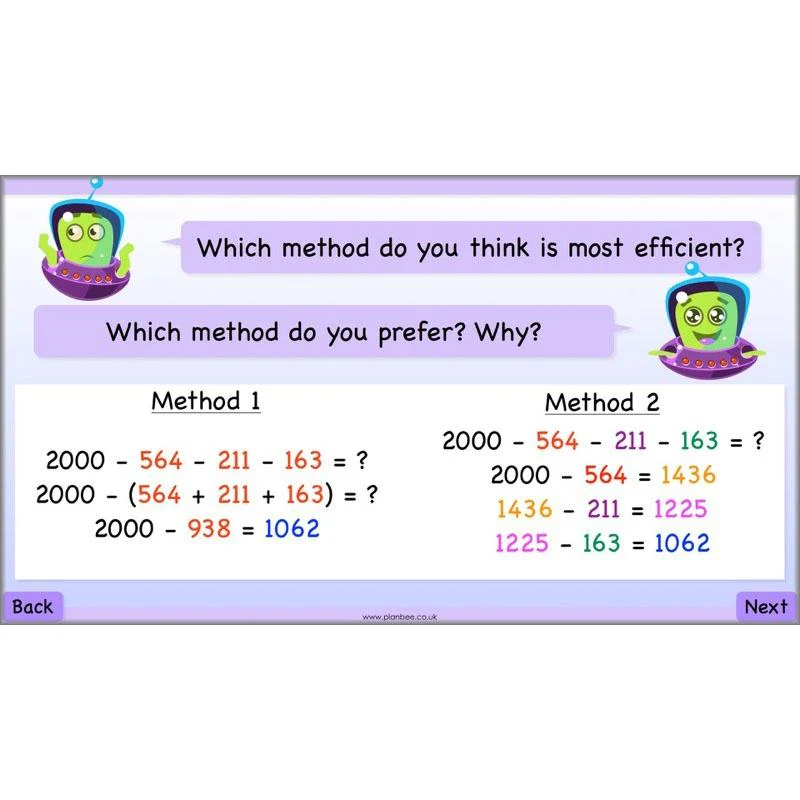
Using the knowledge and understanding from previous lessons, the children have the opportunity to share their methods when subtracting more than one subtrahend in a calculation. The slides discuss two different methods and ask the children to compare and evaluate them, choosing which method is more efficient for this kind of problem.
What's included:
- Lesson plan
- Slides
- Activity ideas
- Differentiated worksheets
- Subtraction cards
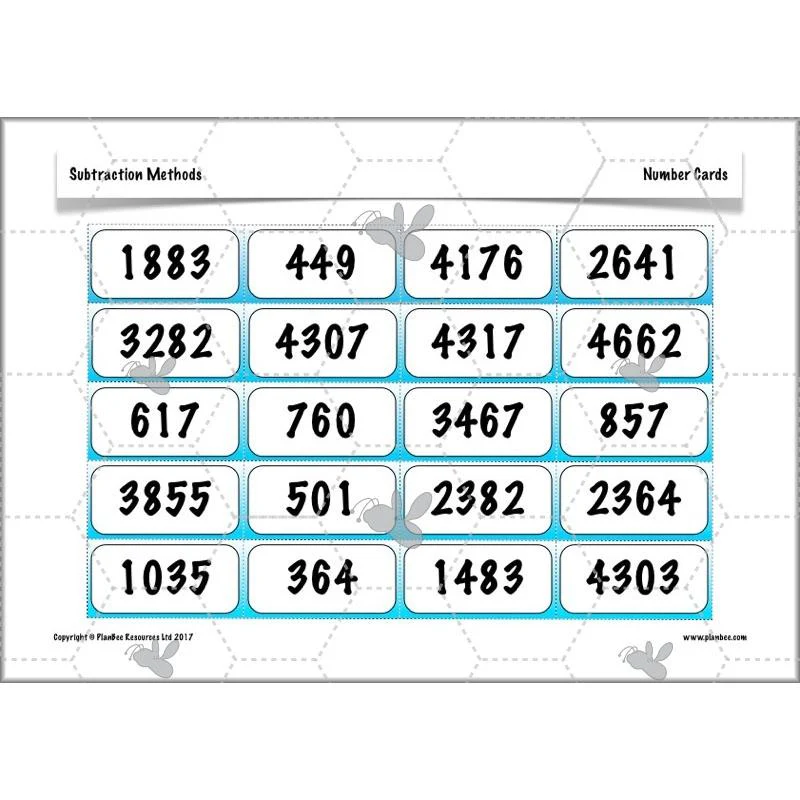
- Number cards
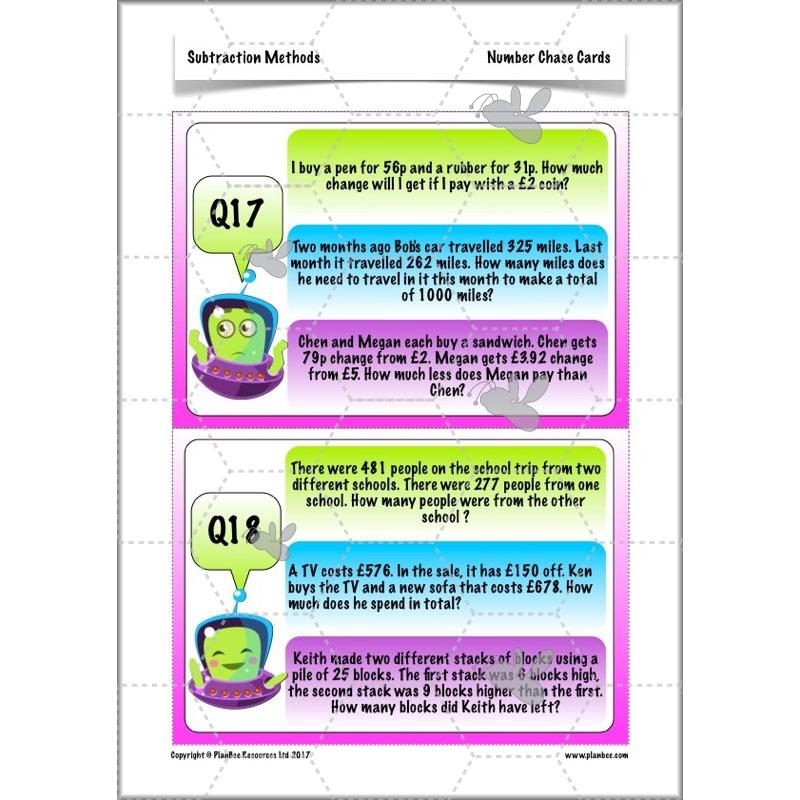
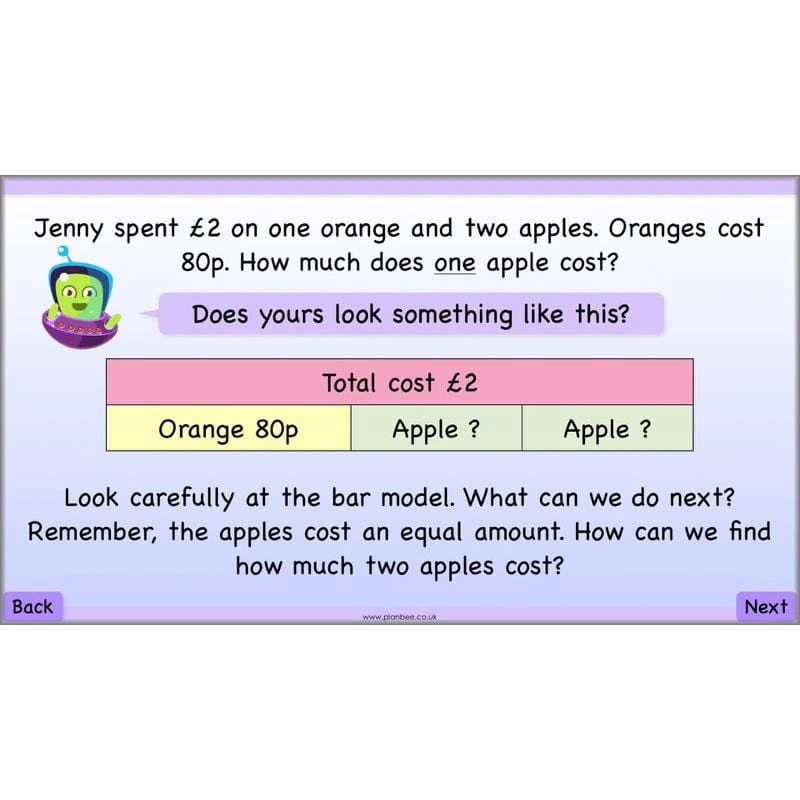
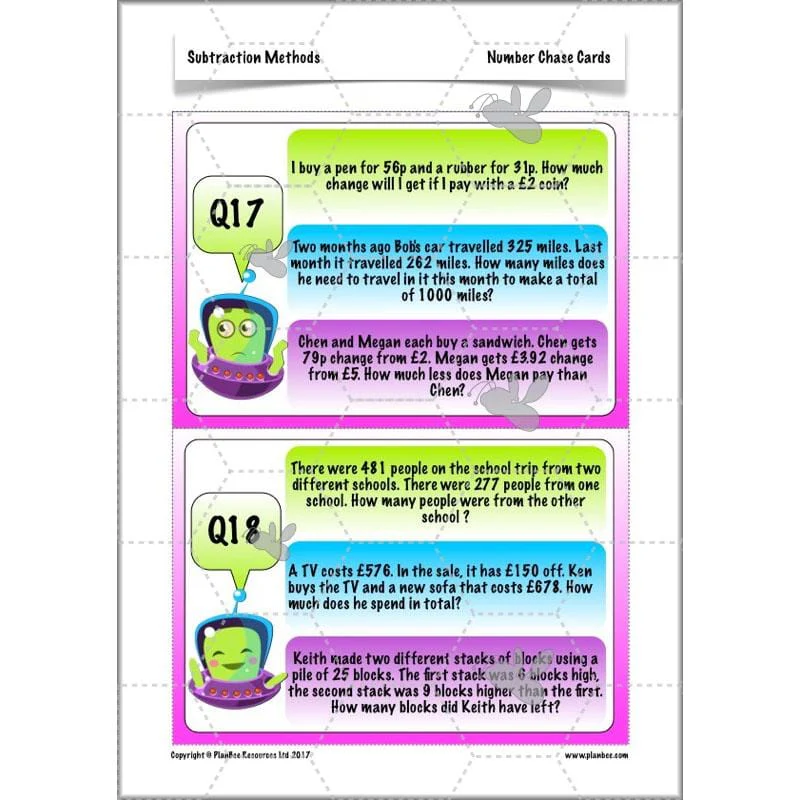
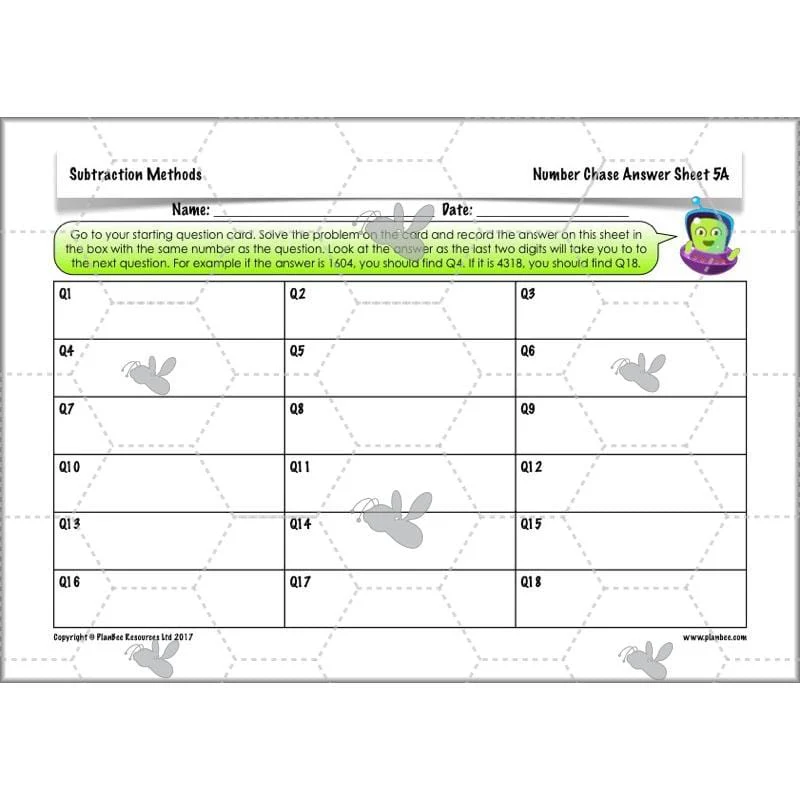
Bar Models
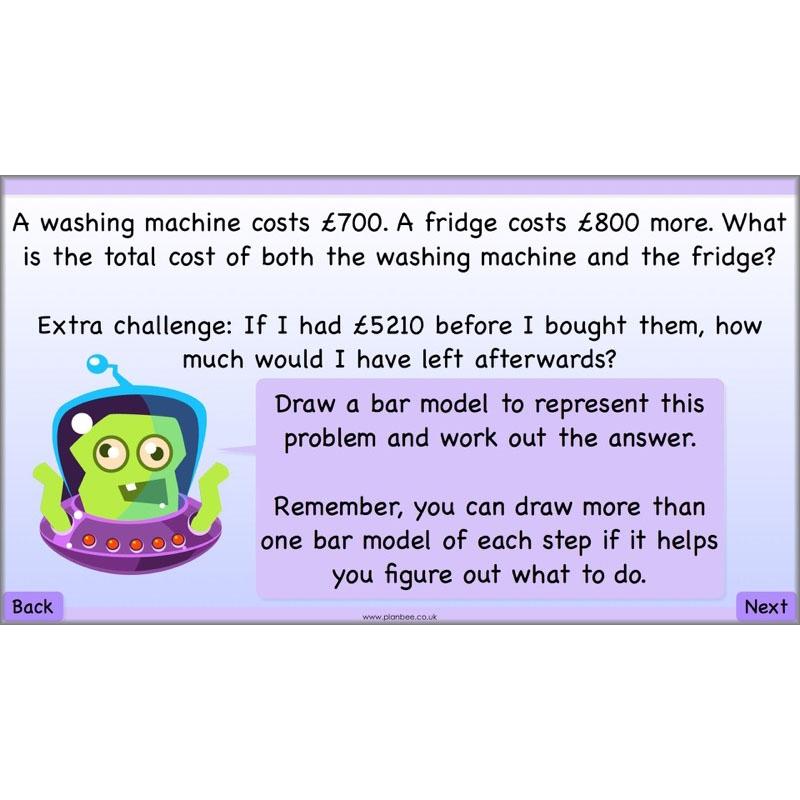
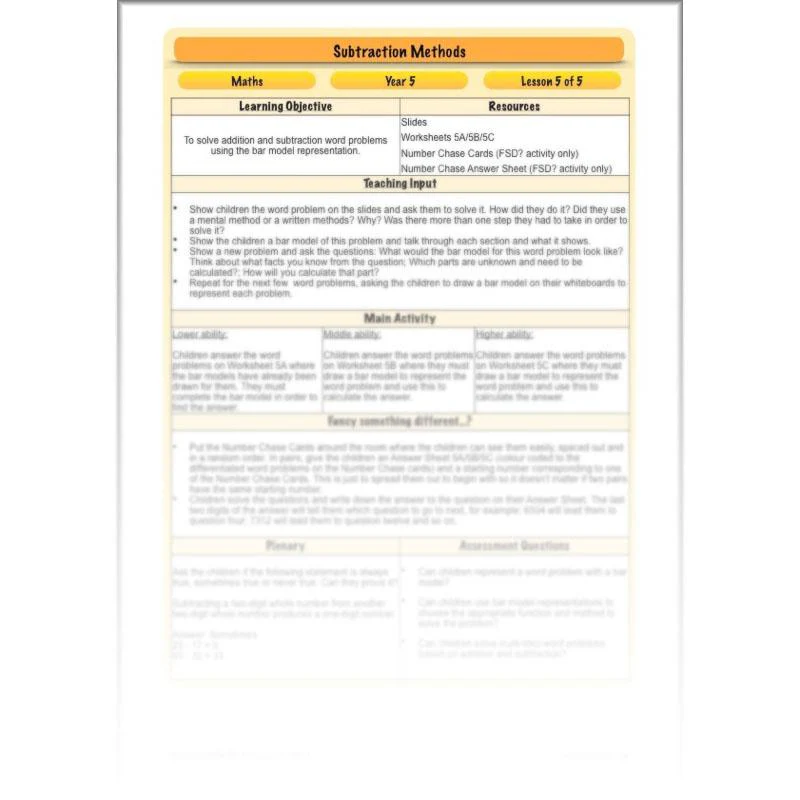
Take an in-depth look at bar models with your class and discover how they can represent various word problems. Building slowly to use larger numbers, the children draw their own bar models to support them in solving multi-step addition and subtraction word problems. The children can also use the bar models to show an in-depth understanding of what a problem is asking them to do, as well as using the models to show their thought processes when working through a problem.
What's included:
- Lesson plan
- Slides
- Activity ideas
- Differentiated worksheets
- Number chase cards
- Number chase answer card
Original: $4.71
-65%$4.71
$1.65More Images






















Subtraction Methods
This scheme of work explores the suitability of different written and mental methods including the formal written method for subtraction.
Your class will have the opportunity to share their understanding with their peers and test out different methods for solving problems in different ways. They investigate the use of bar models to represent word problems and how they can help in figuring out what the problem is asking them to do.
Missing Number Problems
After recapping on the formal written method for subtraction, challenge your class to use their understanding to solve some missing number problems within column subtraction. Children have to use their reasoning skills as well as careful observation to spot when a problem has exchanged, and fill in the missing digits for the calculation.
What's included:
- Lesson plan
- Slides
- Activity ideas
- Differentiated worksheets
- Game sheet
- Instruction cards
Written or Mental Methods?
This lesson gives the children an opportunity to share their ideas and thinking when working through a subtraction problem. They discuss the advantages and disadvantages of different mental and written methods for subtraction including partitioning, compensating, number lines and column subtraction. They go on to use this understanding to choose a suitable method for various calculations, explaining why they have chosen to use that method baed on the numbers involved.
What's included:
- Lesson plan
- Slides
- Activity ideas
- Differentiated worksheets
- Challenge cards
Inverse operations
This lesson explores the relationships between the operations and how this knowledge can be used to check answers to questions. Children become the teacher when marking their work and looking for mistakes that may have been made when working out a subtraction calculation. They also investigate the tricky ‘I’m thinking of a number...’ problems and how the inverse is used to solve them.
What's included:
- Lesson plan
- Slides
- Activity ideas
- Differentiated worksheet
- Domino cards
Subtracting Multiple Values
Using the knowledge and understanding from previous lessons, the children have the opportunity to share their methods when subtracting more than one subtrahend in a calculation. The slides discuss two different methods and ask the children to compare and evaluate them, choosing which method is more efficient for this kind of problem.
What's included:
- Lesson plan
- Slides
- Activity ideas
- Differentiated worksheets
- Subtraction cards
- Number cards
Bar Models
Take an in-depth look at bar models with your class and discover how they can represent various word problems. Building slowly to use larger numbers, the children draw their own bar models to support them in solving multi-step addition and subtraction word problems. The children can also use the bar models to show an in-depth understanding of what a problem is asking them to do, as well as using the models to show their thought processes when working through a problem.
What's included:
- Lesson plan
- Slides
- Activity ideas
- Differentiated worksheets
- Number chase cards
- Number chase answer card
Product Information
Product Information
Shipping & Returns
Shipping & Returns
Description
This scheme of work explores the suitability of different written and mental methods including the formal written method for subtraction.
Your class will have the opportunity to share their understanding with their peers and test out different methods for solving problems in different ways. They investigate the use of bar models to represent word problems and how they can help in figuring out what the problem is asking them to do.
Missing Number Problems
After recapping on the formal written method for subtraction, challenge your class to use their understanding to solve some missing number problems within column subtraction. Children have to use their reasoning skills as well as careful observation to spot when a problem has exchanged, and fill in the missing digits for the calculation.
What's included:
- Lesson plan
- Slides
- Activity ideas
- Differentiated worksheets
- Game sheet
- Instruction cards
Written or Mental Methods?
This lesson gives the children an opportunity to share their ideas and thinking when working through a subtraction problem. They discuss the advantages and disadvantages of different mental and written methods for subtraction including partitioning, compensating, number lines and column subtraction. They go on to use this understanding to choose a suitable method for various calculations, explaining why they have chosen to use that method baed on the numbers involved.
What's included:
- Lesson plan
- Slides
- Activity ideas
- Differentiated worksheets
- Challenge cards
Inverse operations
This lesson explores the relationships between the operations and how this knowledge can be used to check answers to questions. Children become the teacher when marking their work and looking for mistakes that may have been made when working out a subtraction calculation. They also investigate the tricky ‘I’m thinking of a number...’ problems and how the inverse is used to solve them.
What's included:
- Lesson plan
- Slides
- Activity ideas
- Differentiated worksheet
- Domino cards
Subtracting Multiple Values
Using the knowledge and understanding from previous lessons, the children have the opportunity to share their methods when subtracting more than one subtrahend in a calculation. The slides discuss two different methods and ask the children to compare and evaluate them, choosing which method is more efficient for this kind of problem.
What's included:
- Lesson plan
- Slides
- Activity ideas
- Differentiated worksheets
- Subtraction cards
- Number cards
Bar Models
Take an in-depth look at bar models with your class and discover how they can represent various word problems. Building slowly to use larger numbers, the children draw their own bar models to support them in solving multi-step addition and subtraction word problems. The children can also use the bar models to show an in-depth understanding of what a problem is asking them to do, as well as using the models to show their thought processes when working through a problem.
What's included:
- Lesson plan
- Slides
- Activity ideas
- Differentiated worksheets
- Number chase cards
- Number chase answer card