What's the Difference?
Challenge your class to improve both their written and mental subtraction with this fun ‘What’s the Difference?’ Maths scheme of work for Year 5. Your class will practise subtracting increasingly challenging numbers mentally through a variety of fun games and challenges, before going to on use formal column subtraction to solve a range of problems.
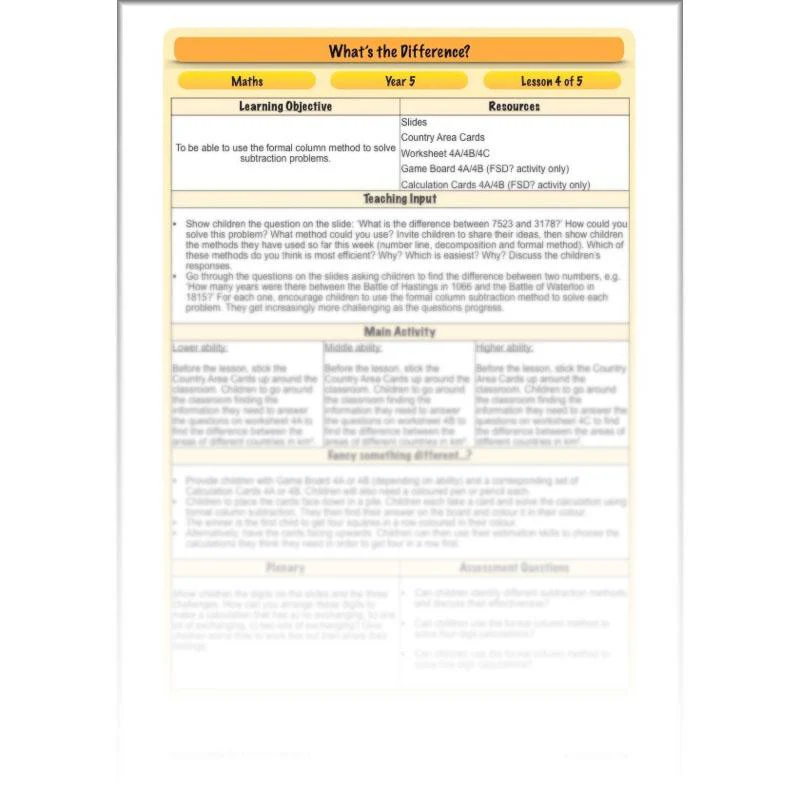
This KS2 Maths scheme of work contains everything you need for this whole week of Maths teaching, including lesson plans, slides, differentiated activities and a variety of printable worksheets, games, investigations and puzzles.
Mental Jumps
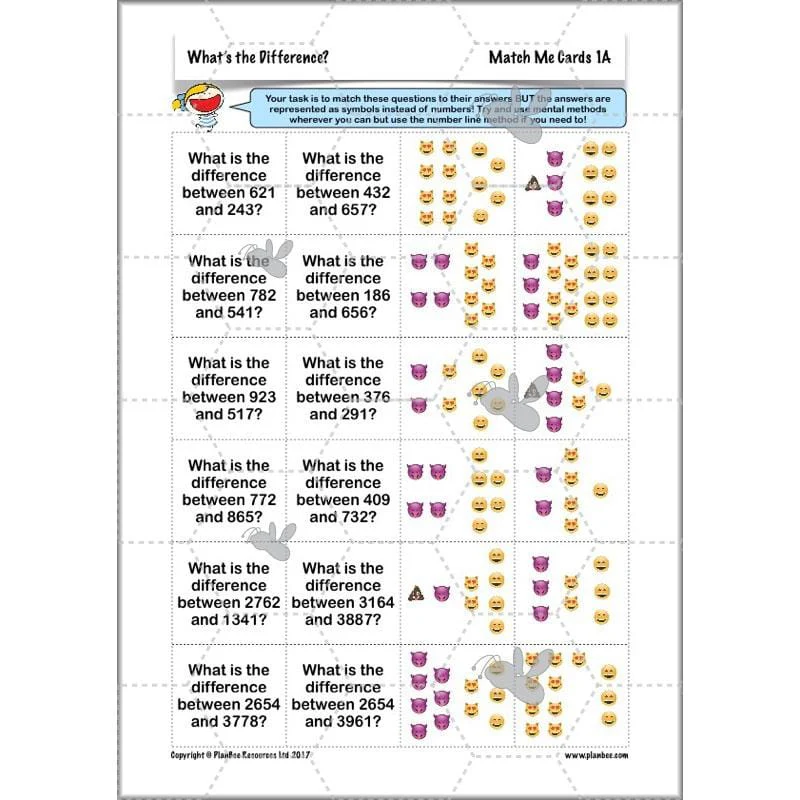
This lesson starts off with some simple mental subtraction questions for the children to solve before exploring how counting up on number lines can help work out the difference between two numbers. They are encouraged to use as few jumps as possible to help develop their mental subtraction skills. During their independent learning, they can then either investigate finding the smallest and largest differences in sets of numbers, or work out the answer to subtraction questions when the answers are represented as symbols.
What's included:
- Lesson plan
- Slides
- Activity ideas
- Differentiated challenge cards
- Differentiated ‘Match Me’ cards
Emoji Numbers
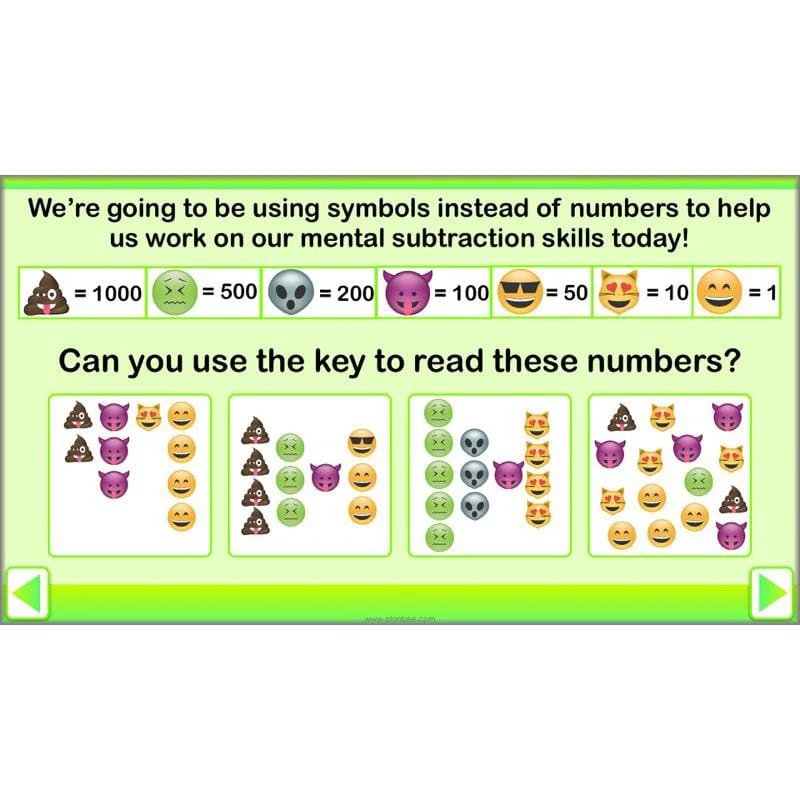
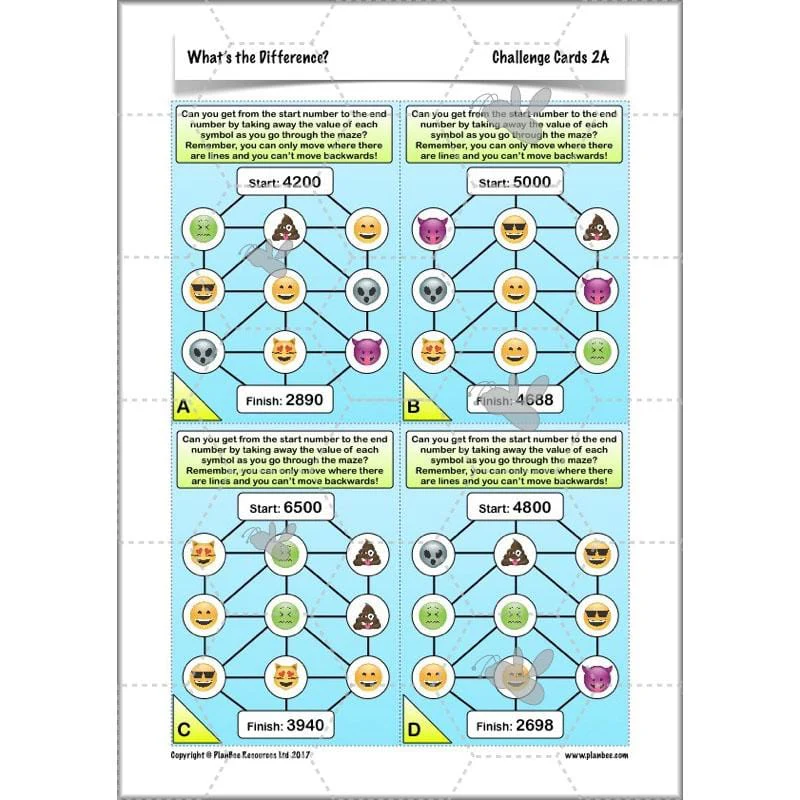
This fun lesson replaces the numbers 1000, 500, 200, 100, 50, 10 and 1 with emoji symbols to help encourage your children’s mental subtraction skills. Children are given a set of symbols that they have to take away from a given number. They then need to work their way through a maze, taking away the value of each symbol as they do so, in order to get from one number to another. Alternatively, they can reveal some tricky tongue twisters by working out the value of different words when each letter is given a value.
What's included:
- Lesson plan
- Slides
- Activity ideas
- Differentiated challenge cards
- Symbol key
- Letter value cards
- Phrase cards
Exchanging
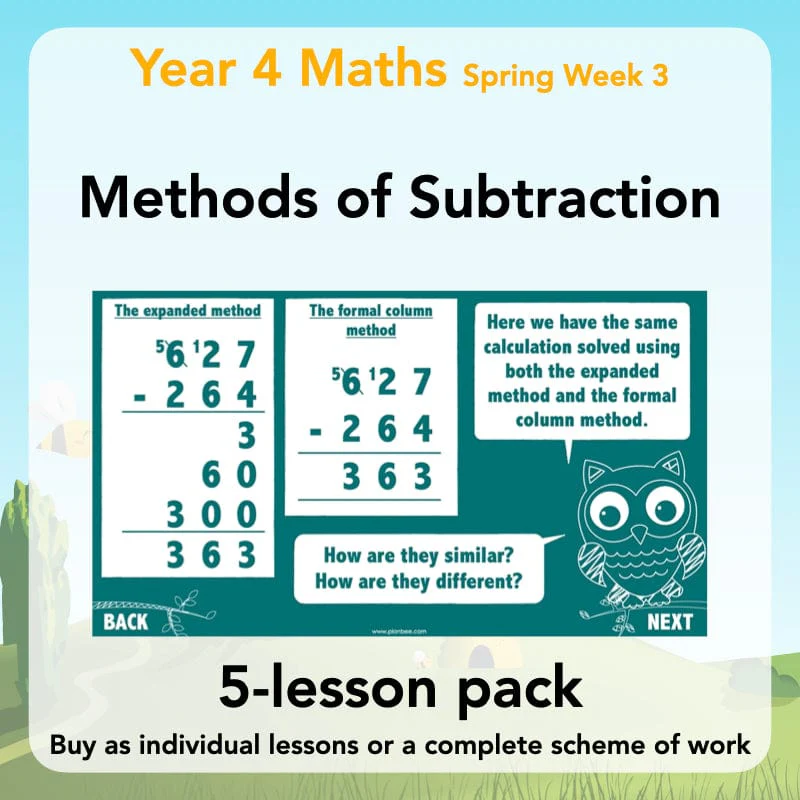
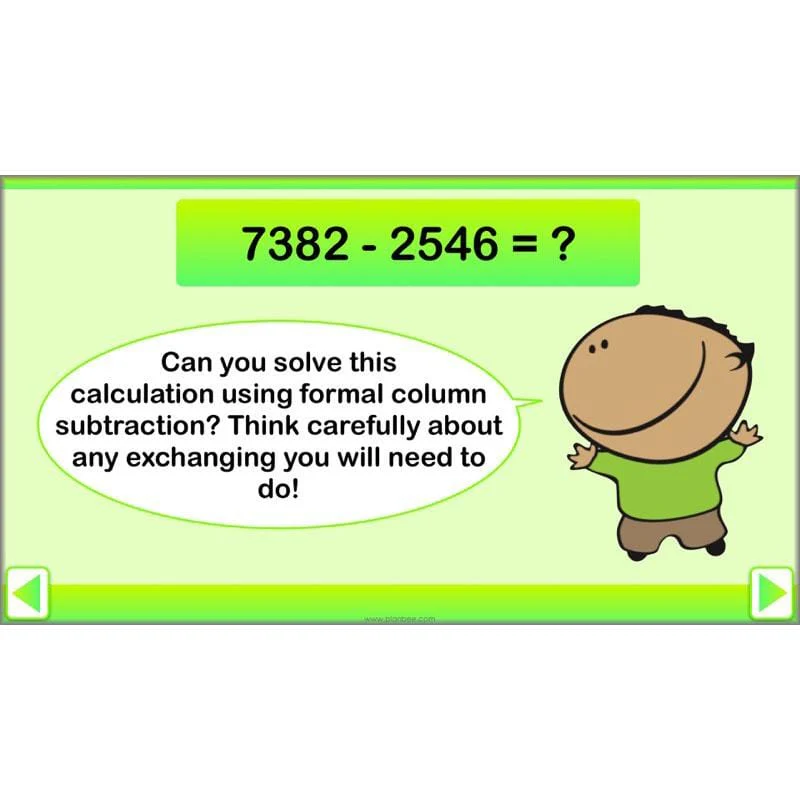
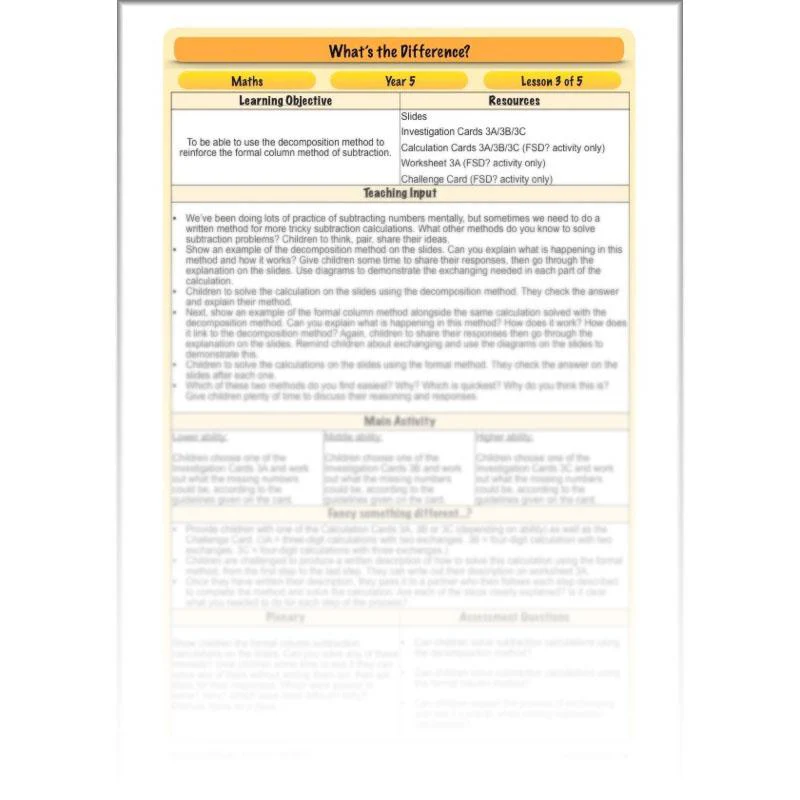
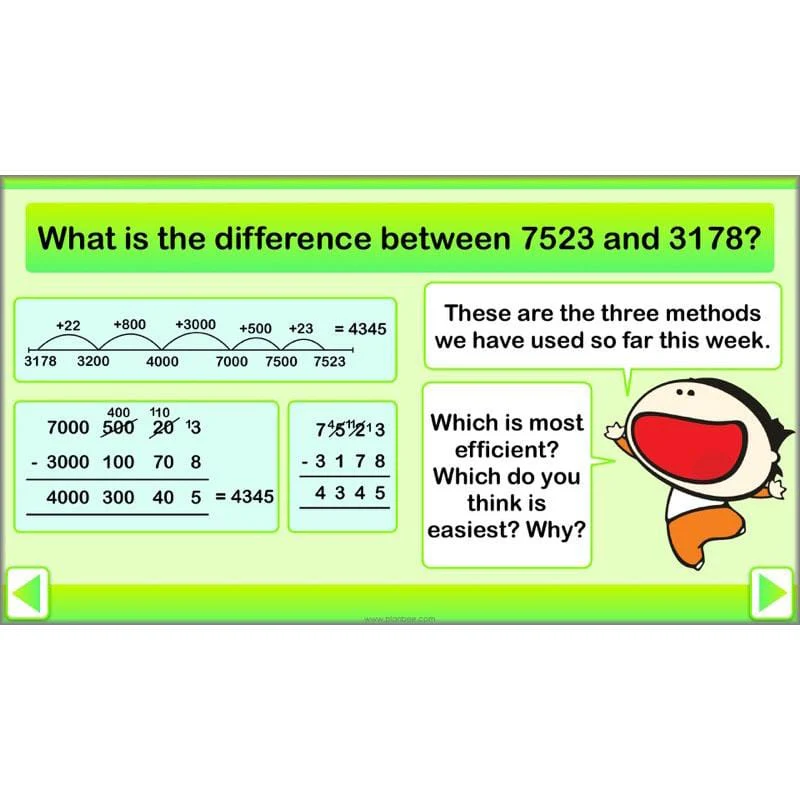
In this lesson, children will recap the decomposition method of subtraction, focussing particularly on what happens when we exchange. Problems are represented visually as well as numerically to support this. They then go on to compare and link the decomposition and formal column subtraction methods. During their independent learning, they will further enforce their understanding of exchanging through investigations or by writing out each step of a subtraction problem for a friend to solve.
What's included:
- Lesson plan
- Slides
- Activity ideas
- Differentiated worksheets
- Differentiated calculation cards
- Challenge card
The Formal Method
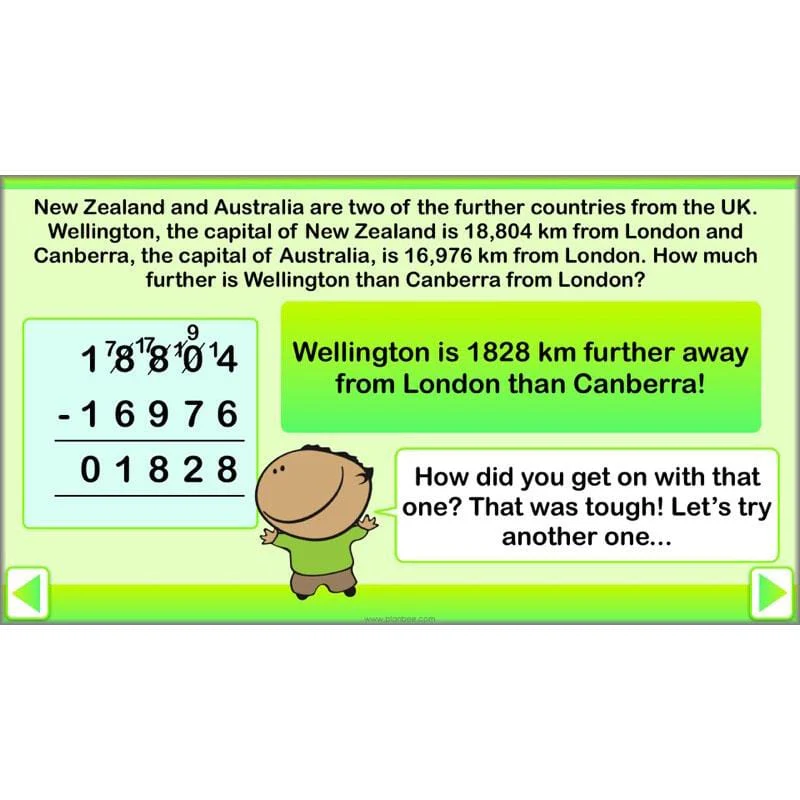
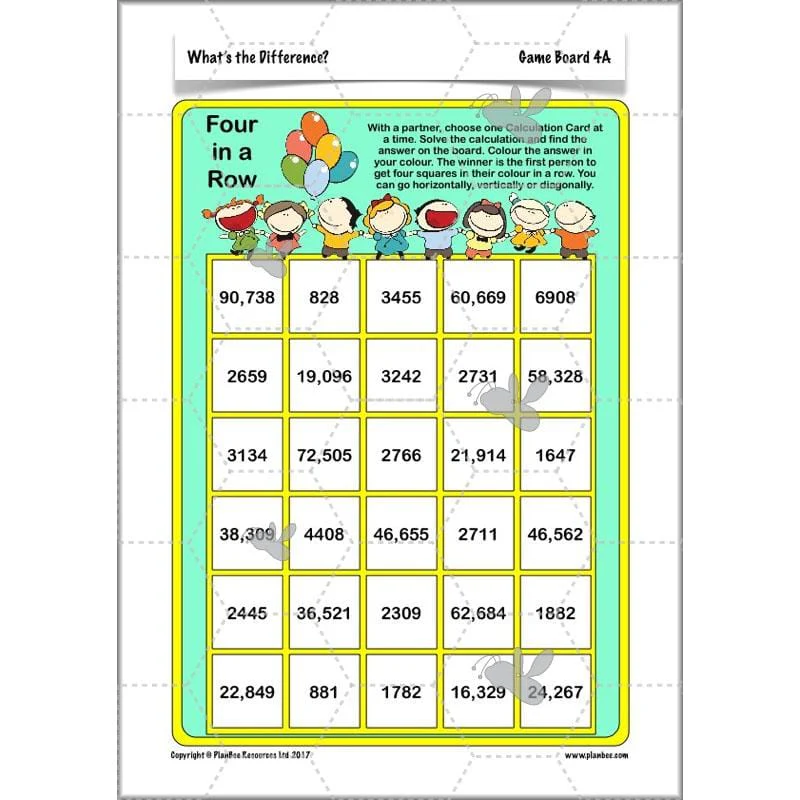
This lesson gives your class the chance to practise the formal method of column subtraction in the context of some real-life problems. The slides go through a variety of word problems in which children need to find the difference between two numbers, starting with four-digit numbers and gradually moving to five- and even six-digits as they become more confident. They will then either use subtraction to find the difference between the areas of different countries or play a game to support their fluency with column subtraction.
What's included:
- Lesson plan
- Slides
- Activity ideas
- Country area cards
- Differentiated worksheets
- Differentiated game boards
- Differentiated calculation cards
Money Problems
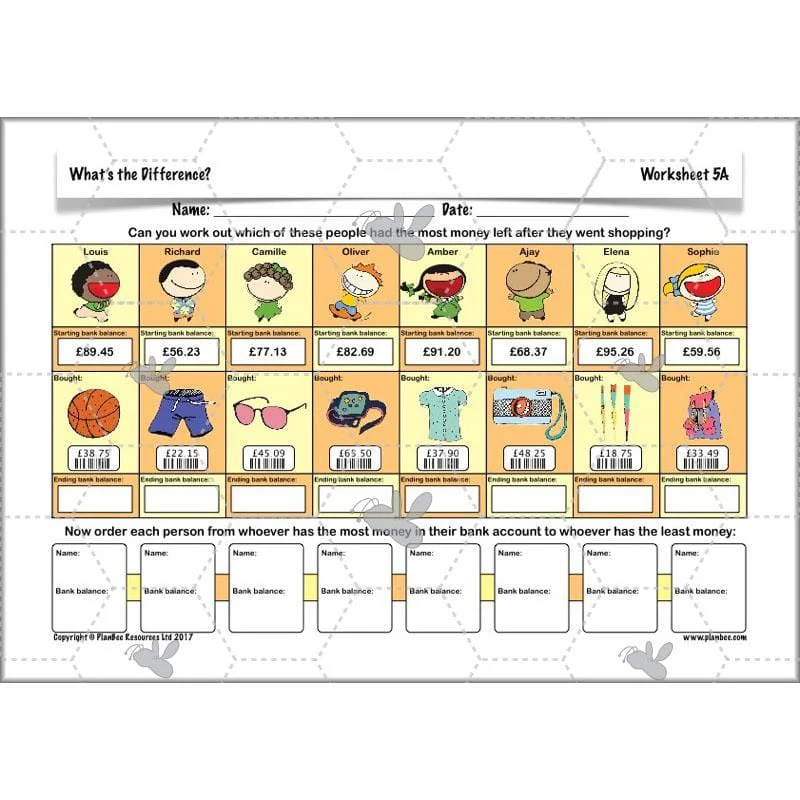
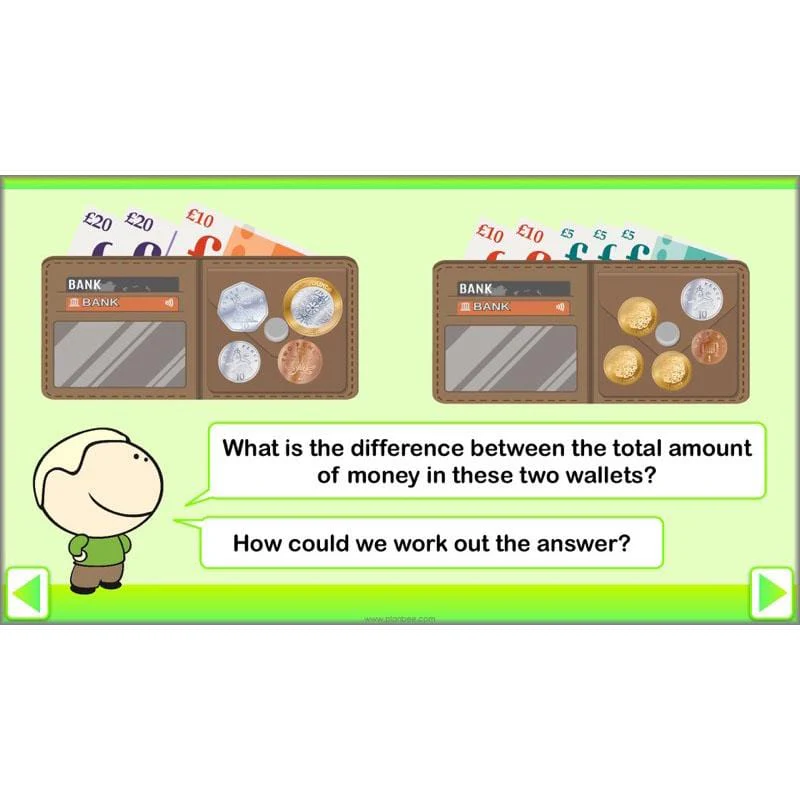
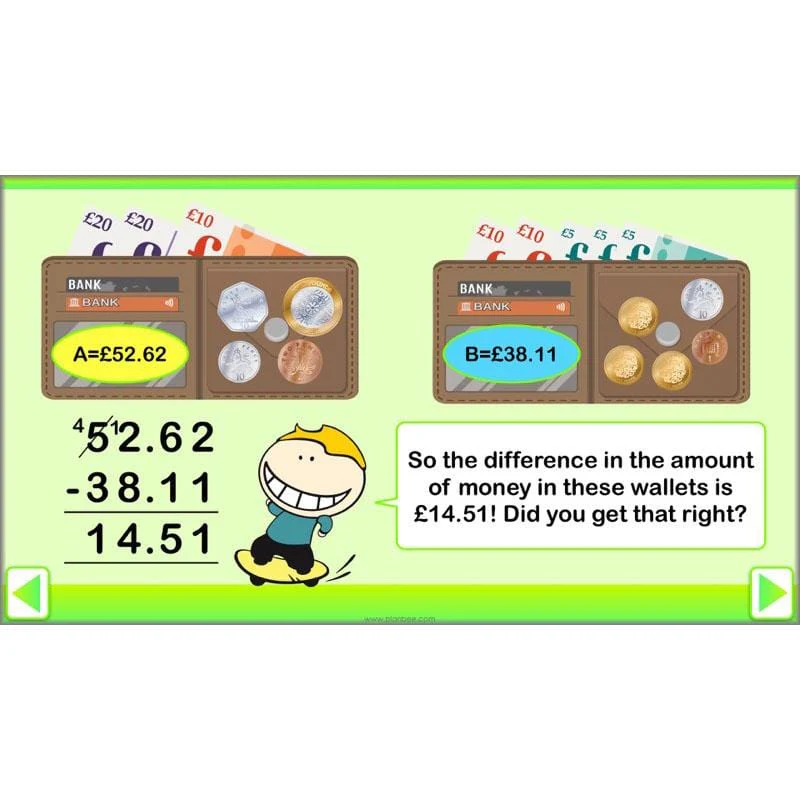
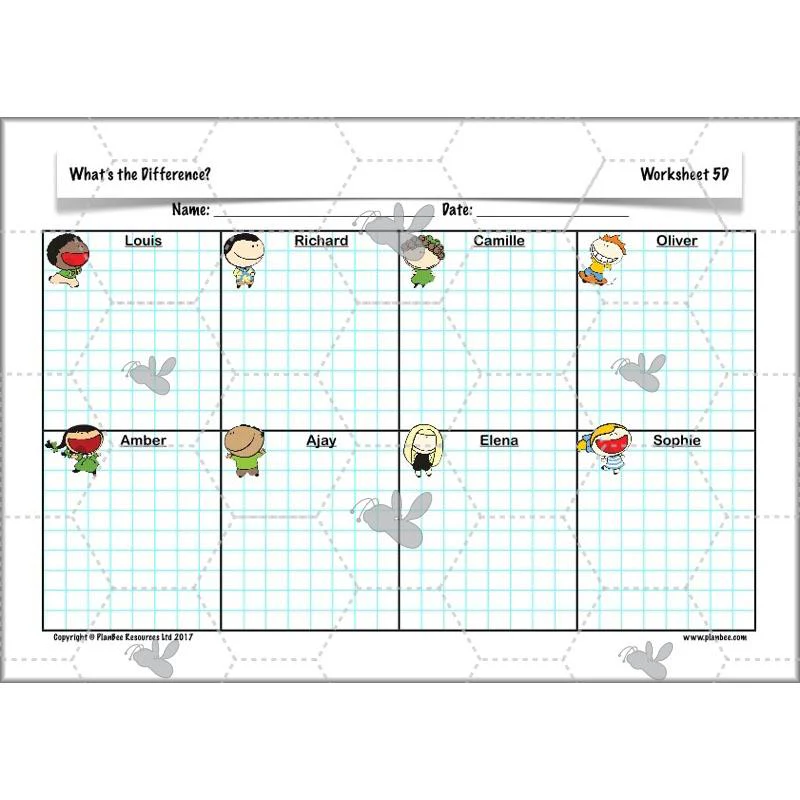
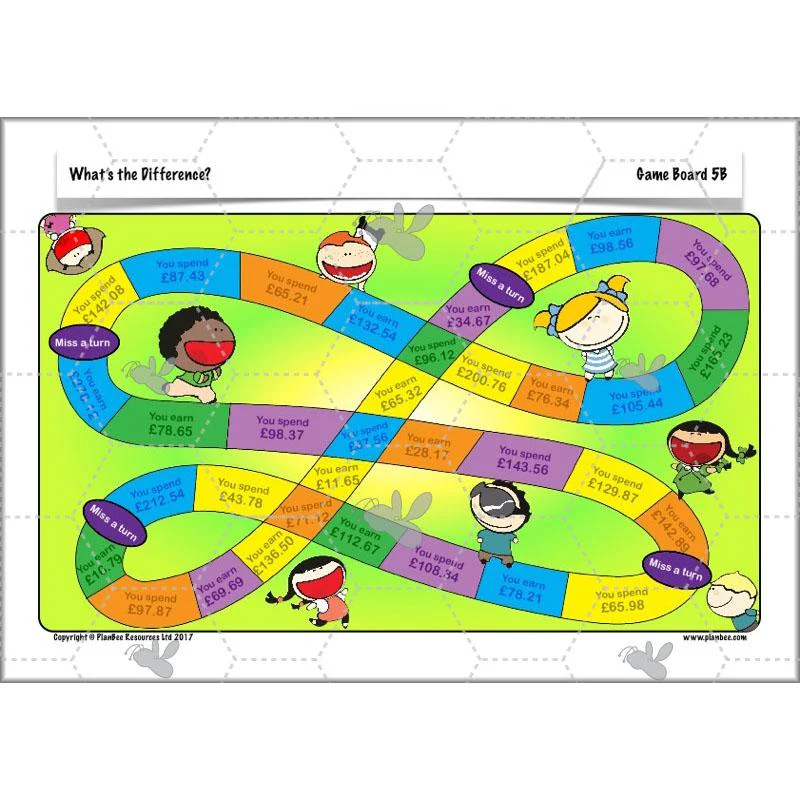
The final lesson in this series starts by challenging your class to work out how much money is in two wallets by counting the notes and coins. They are then challenged to find the difference between these two amounts using column subtraction. The slides explain how to use decimals within column subtraction and children are given plenty of opportunities to practise this during their independent learning, both through games and problems.
What's included:
- Lesson plan
- Slides
- Activity ideas
- Differentiated worksheets
- Differentiated game boards
- Instruction card
Original: $4.71
-65%$4.71
$1.65More Images


















What's the Difference?
Challenge your class to improve both their written and mental subtraction with this fun ‘What’s the Difference?’ Maths scheme of work for Year 5. Your class will practise subtracting increasingly challenging numbers mentally through a variety of fun games and challenges, before going to on use formal column subtraction to solve a range of problems.
This KS2 Maths scheme of work contains everything you need for this whole week of Maths teaching, including lesson plans, slides, differentiated activities and a variety of printable worksheets, games, investigations and puzzles.
Mental Jumps
This lesson starts off with some simple mental subtraction questions for the children to solve before exploring how counting up on number lines can help work out the difference between two numbers. They are encouraged to use as few jumps as possible to help develop their mental subtraction skills. During their independent learning, they can then either investigate finding the smallest and largest differences in sets of numbers, or work out the answer to subtraction questions when the answers are represented as symbols.
What's included:
- Lesson plan
- Slides
- Activity ideas
- Differentiated challenge cards
- Differentiated ‘Match Me’ cards
Emoji Numbers
This fun lesson replaces the numbers 1000, 500, 200, 100, 50, 10 and 1 with emoji symbols to help encourage your children’s mental subtraction skills. Children are given a set of symbols that they have to take away from a given number. They then need to work their way through a maze, taking away the value of each symbol as they do so, in order to get from one number to another. Alternatively, they can reveal some tricky tongue twisters by working out the value of different words when each letter is given a value.
What's included:
- Lesson plan
- Slides
- Activity ideas
- Differentiated challenge cards
- Symbol key
- Letter value cards
- Phrase cards
Exchanging
In this lesson, children will recap the decomposition method of subtraction, focussing particularly on what happens when we exchange. Problems are represented visually as well as numerically to support this. They then go on to compare and link the decomposition and formal column subtraction methods. During their independent learning, they will further enforce their understanding of exchanging through investigations or by writing out each step of a subtraction problem for a friend to solve.
What's included:
- Lesson plan
- Slides
- Activity ideas
- Differentiated worksheets
- Differentiated calculation cards
- Challenge card
The Formal Method
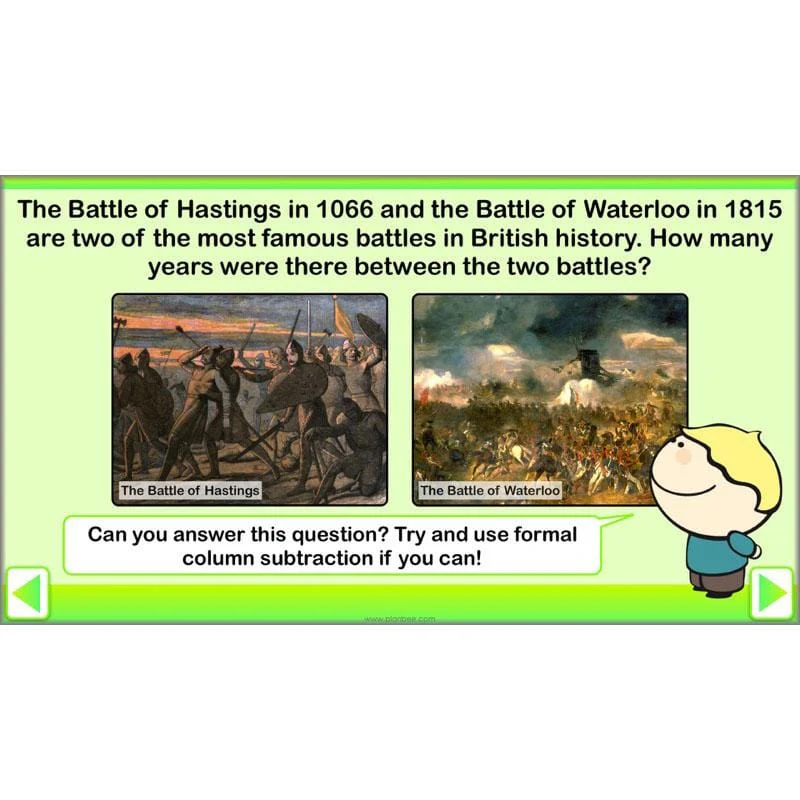
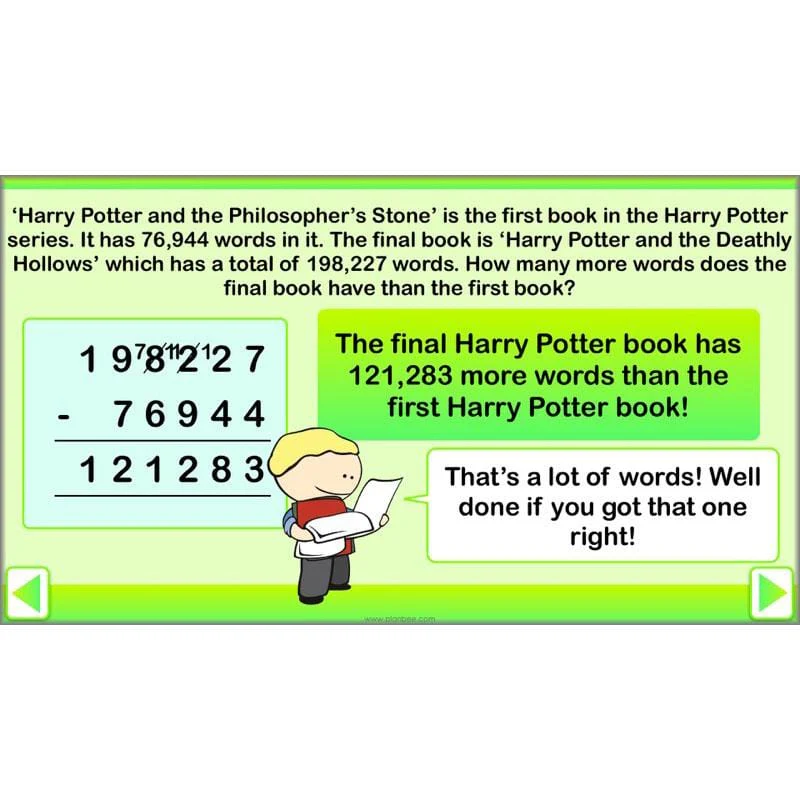
This lesson gives your class the chance to practise the formal method of column subtraction in the context of some real-life problems. The slides go through a variety of word problems in which children need to find the difference between two numbers, starting with four-digit numbers and gradually moving to five- and even six-digits as they become more confident. They will then either use subtraction to find the difference between the areas of different countries or play a game to support their fluency with column subtraction.
What's included:
- Lesson plan
- Slides
- Activity ideas
- Country area cards
- Differentiated worksheets
- Differentiated game boards
- Differentiated calculation cards
Money Problems
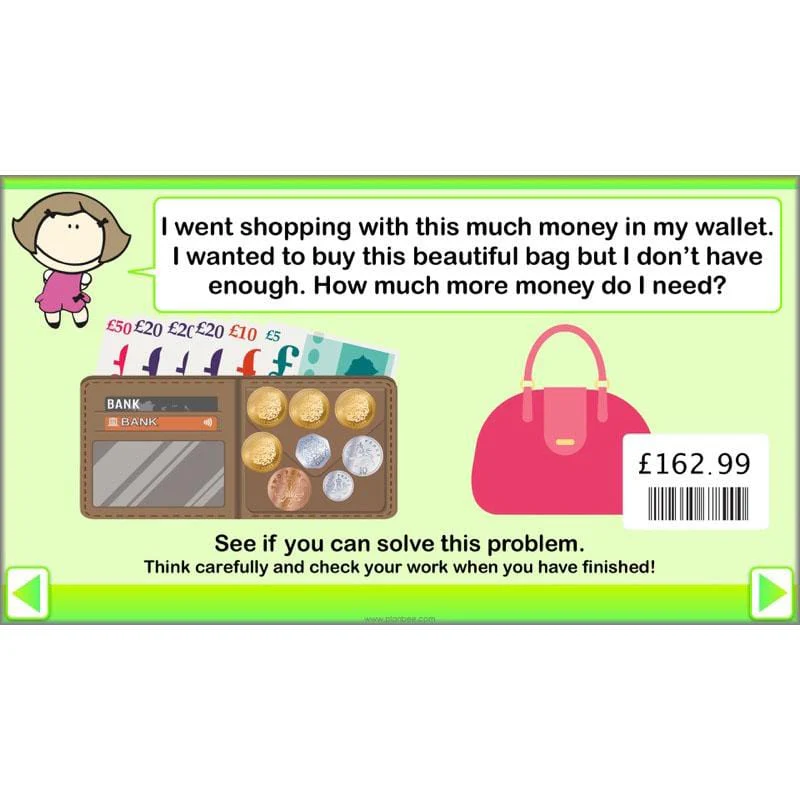
The final lesson in this series starts by challenging your class to work out how much money is in two wallets by counting the notes and coins. They are then challenged to find the difference between these two amounts using column subtraction. The slides explain how to use decimals within column subtraction and children are given plenty of opportunities to practise this during their independent learning, both through games and problems.
What's included:
- Lesson plan
- Slides
- Activity ideas
- Differentiated worksheets
- Differentiated game boards
- Instruction card
Product Information
Product Information
Shipping & Returns
Shipping & Returns
Description
Challenge your class to improve both their written and mental subtraction with this fun ‘What’s the Difference?’ Maths scheme of work for Year 5. Your class will practise subtracting increasingly challenging numbers mentally through a variety of fun games and challenges, before going to on use formal column subtraction to solve a range of problems.
This KS2 Maths scheme of work contains everything you need for this whole week of Maths teaching, including lesson plans, slides, differentiated activities and a variety of printable worksheets, games, investigations and puzzles.
Mental Jumps
This lesson starts off with some simple mental subtraction questions for the children to solve before exploring how counting up on number lines can help work out the difference between two numbers. They are encouraged to use as few jumps as possible to help develop their mental subtraction skills. During their independent learning, they can then either investigate finding the smallest and largest differences in sets of numbers, or work out the answer to subtraction questions when the answers are represented as symbols.
What's included:
- Lesson plan
- Slides
- Activity ideas
- Differentiated challenge cards
- Differentiated ‘Match Me’ cards
Emoji Numbers
This fun lesson replaces the numbers 1000, 500, 200, 100, 50, 10 and 1 with emoji symbols to help encourage your children’s mental subtraction skills. Children are given a set of symbols that they have to take away from a given number. They then need to work their way through a maze, taking away the value of each symbol as they do so, in order to get from one number to another. Alternatively, they can reveal some tricky tongue twisters by working out the value of different words when each letter is given a value.
What's included:
- Lesson plan
- Slides
- Activity ideas
- Differentiated challenge cards
- Symbol key
- Letter value cards
- Phrase cards
Exchanging
In this lesson, children will recap the decomposition method of subtraction, focussing particularly on what happens when we exchange. Problems are represented visually as well as numerically to support this. They then go on to compare and link the decomposition and formal column subtraction methods. During their independent learning, they will further enforce their understanding of exchanging through investigations or by writing out each step of a subtraction problem for a friend to solve.
What's included:
- Lesson plan
- Slides
- Activity ideas
- Differentiated worksheets
- Differentiated calculation cards
- Challenge card
The Formal Method
This lesson gives your class the chance to practise the formal method of column subtraction in the context of some real-life problems. The slides go through a variety of word problems in which children need to find the difference between two numbers, starting with four-digit numbers and gradually moving to five- and even six-digits as they become more confident. They will then either use subtraction to find the difference between the areas of different countries or play a game to support their fluency with column subtraction.
What's included:
- Lesson plan
- Slides
- Activity ideas
- Country area cards
- Differentiated worksheets
- Differentiated game boards
- Differentiated calculation cards
Money Problems
The final lesson in this series starts by challenging your class to work out how much money is in two wallets by counting the notes and coins. They are then challenged to find the difference between these two amounts using column subtraction. The slides explain how to use decimals within column subtraction and children are given plenty of opportunities to practise this during their independent learning, both through games and problems.
What's included:
- Lesson plan
- Slides
- Activity ideas
- Differentiated worksheets
- Differentiated game boards
- Instruction card