Animals of India
Find out all about the animals of India in this fun, fact-filled science scheme of work for Year 3/4!
Children will first explore what the various habitats in India are like, before being introduced to a variety of animals who live there. They will learn how to group and then identify animals using classification keys, and then explore nutrition and 'who eats who' by looking at food chains. Finally, children will learn how changes to their habitats can affect animals, and how conservation is needed for some species.
You may also like our Incredible India Topic Bundle – choose schemes from different subjects to create your own India-themed cross-curricular topic!
Habitats
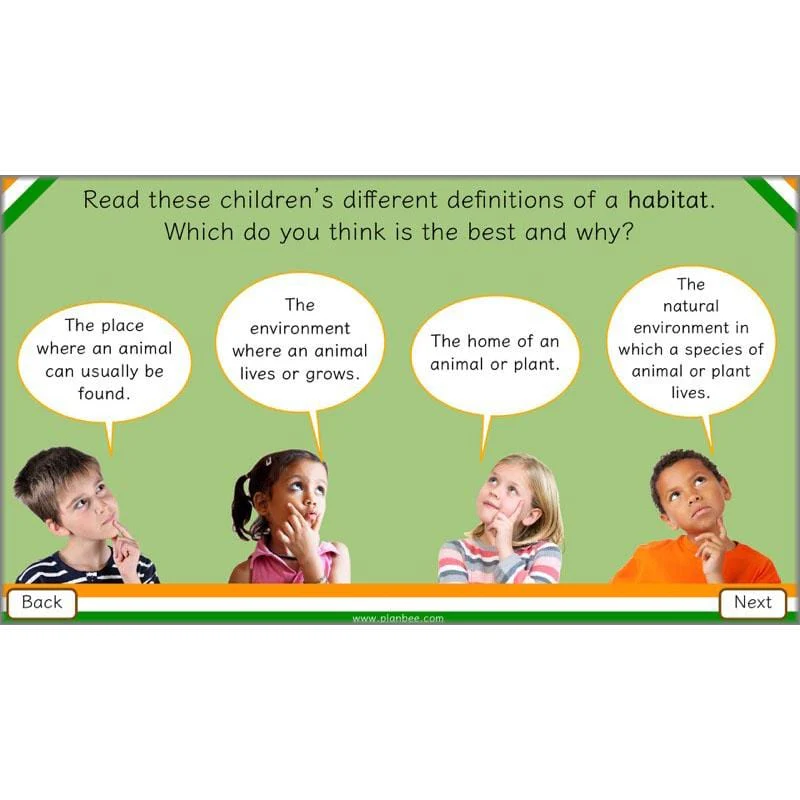
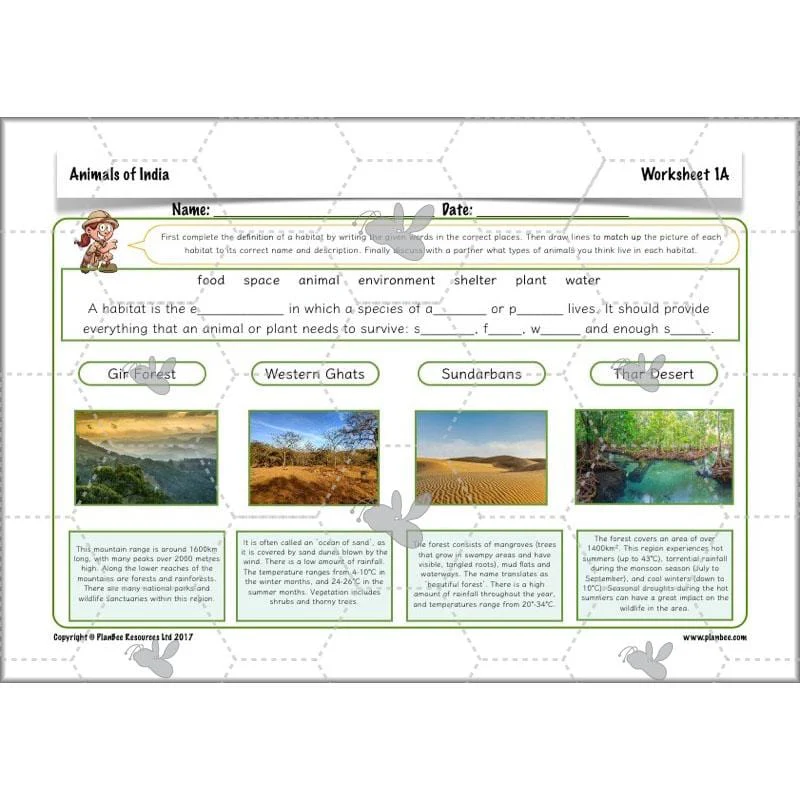
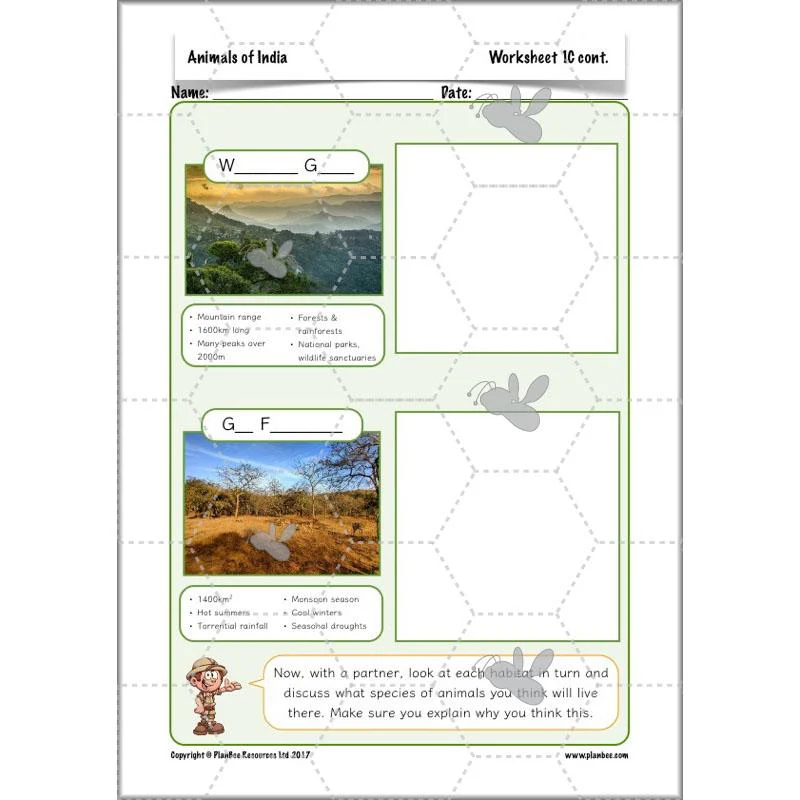
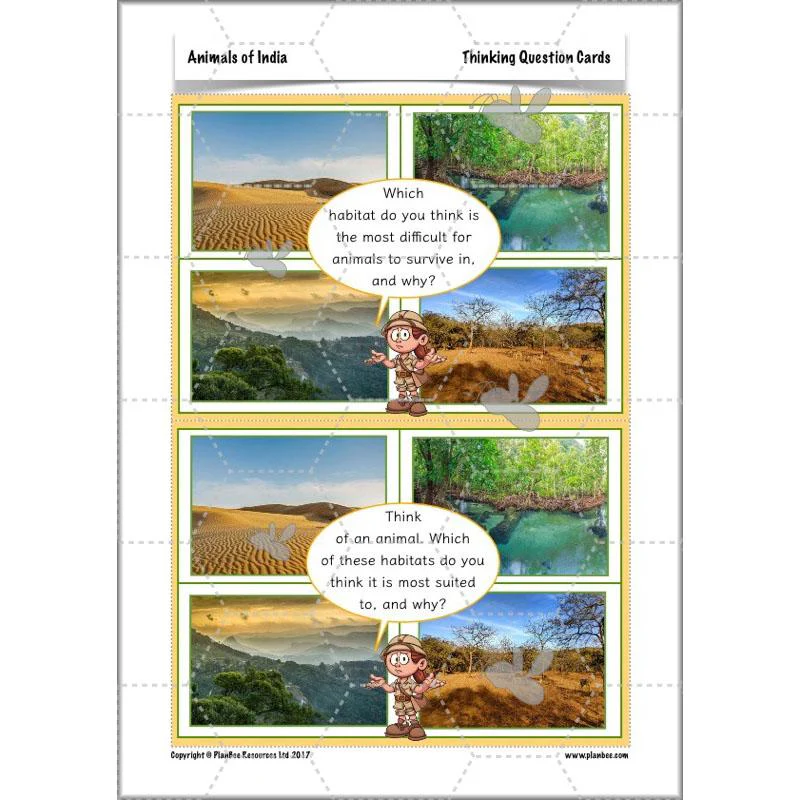
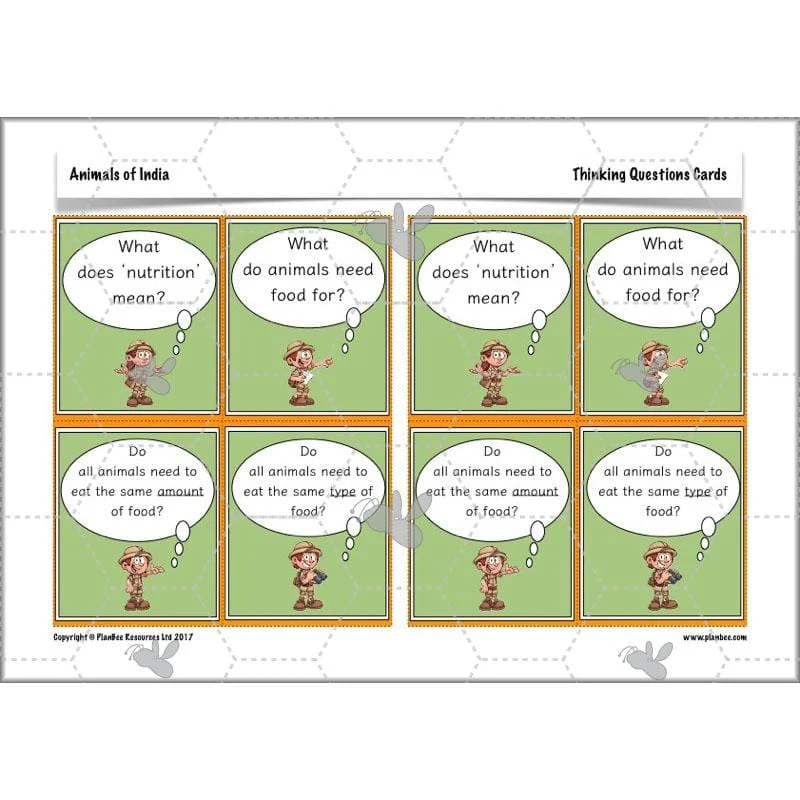
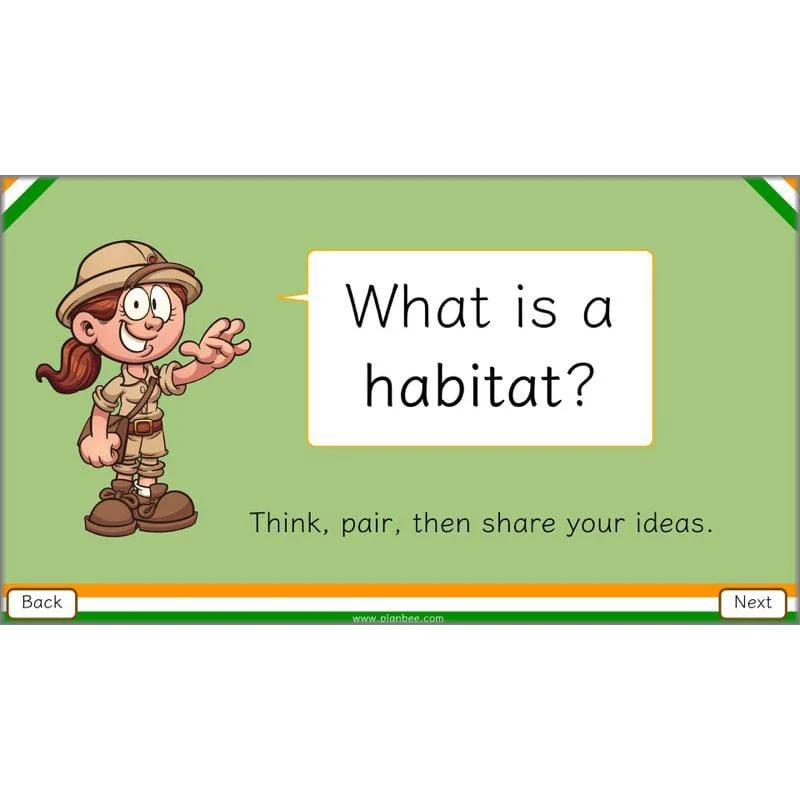
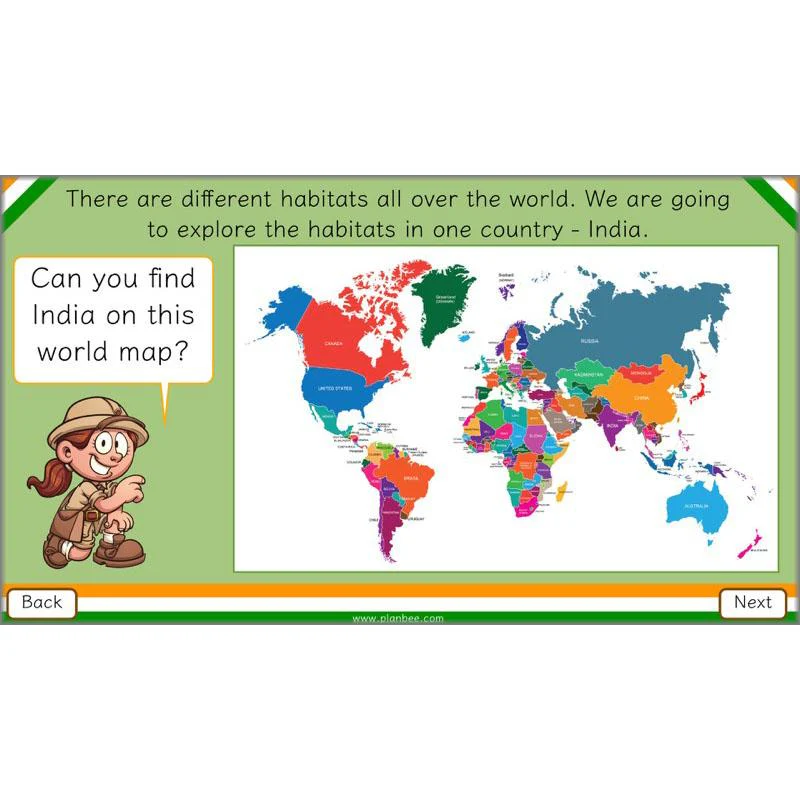
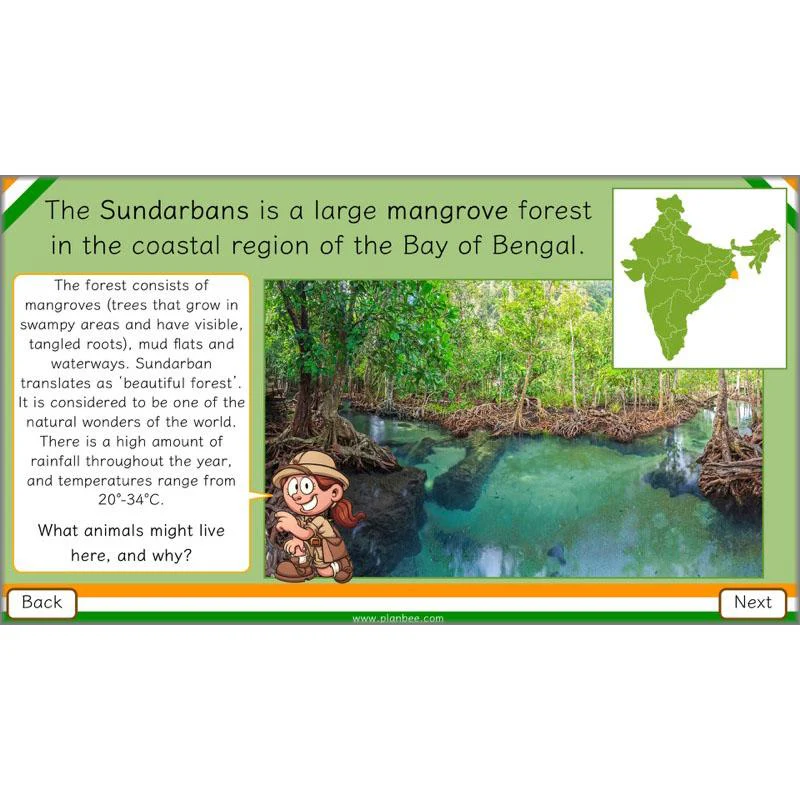
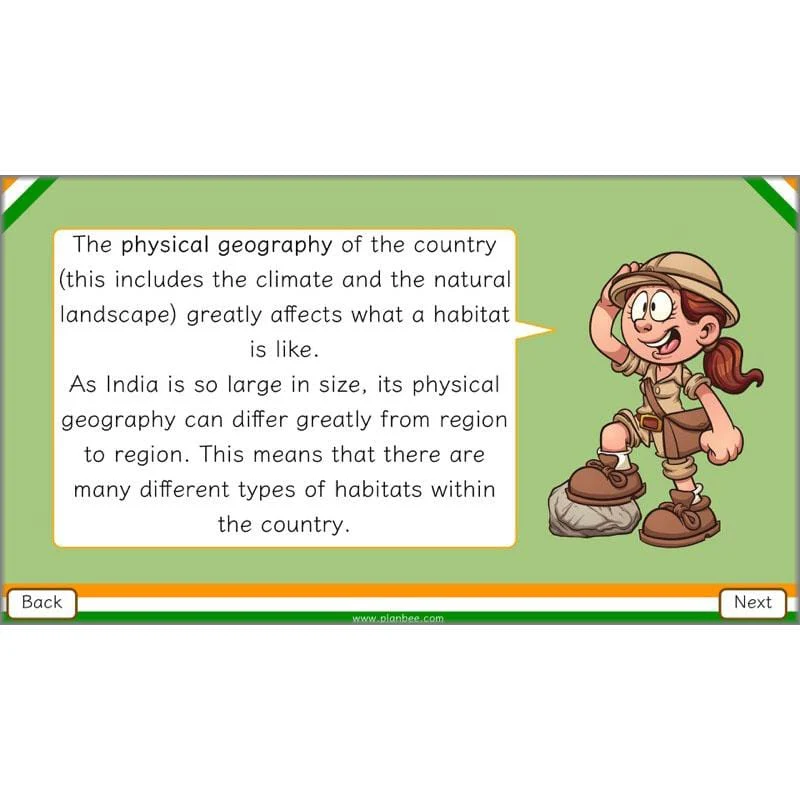
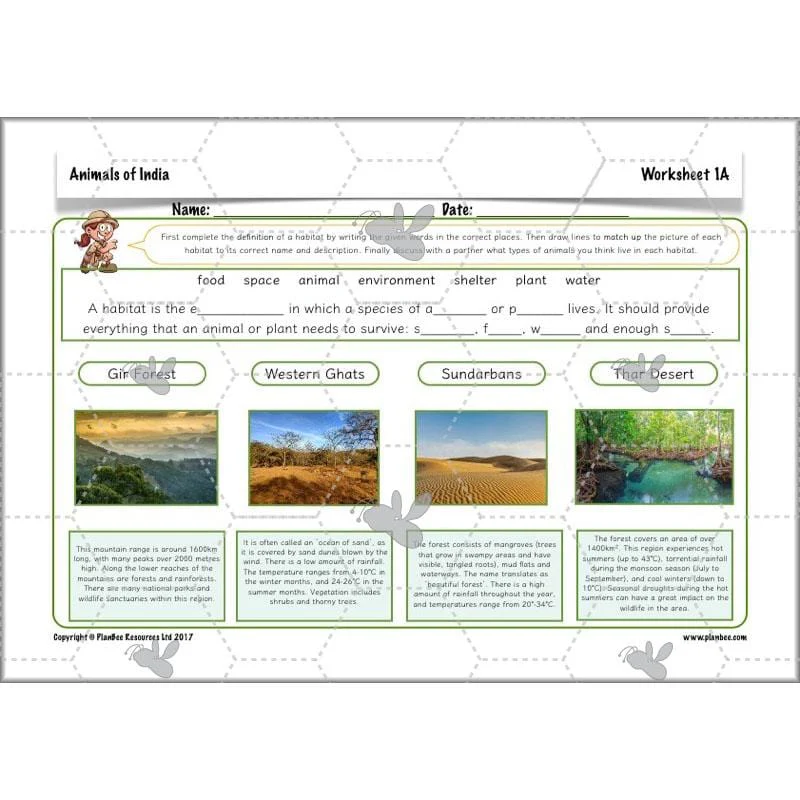
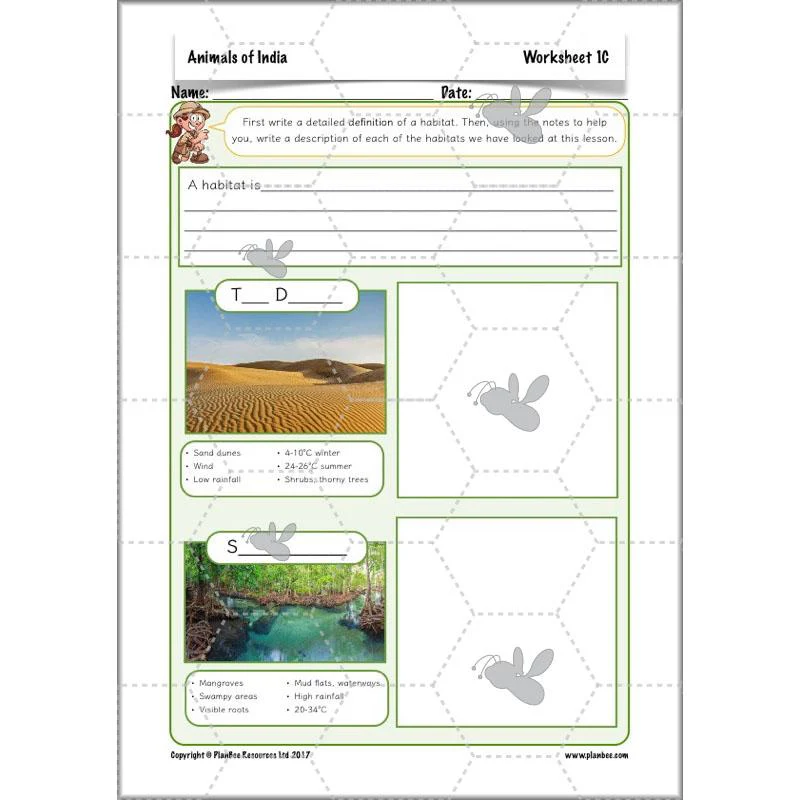
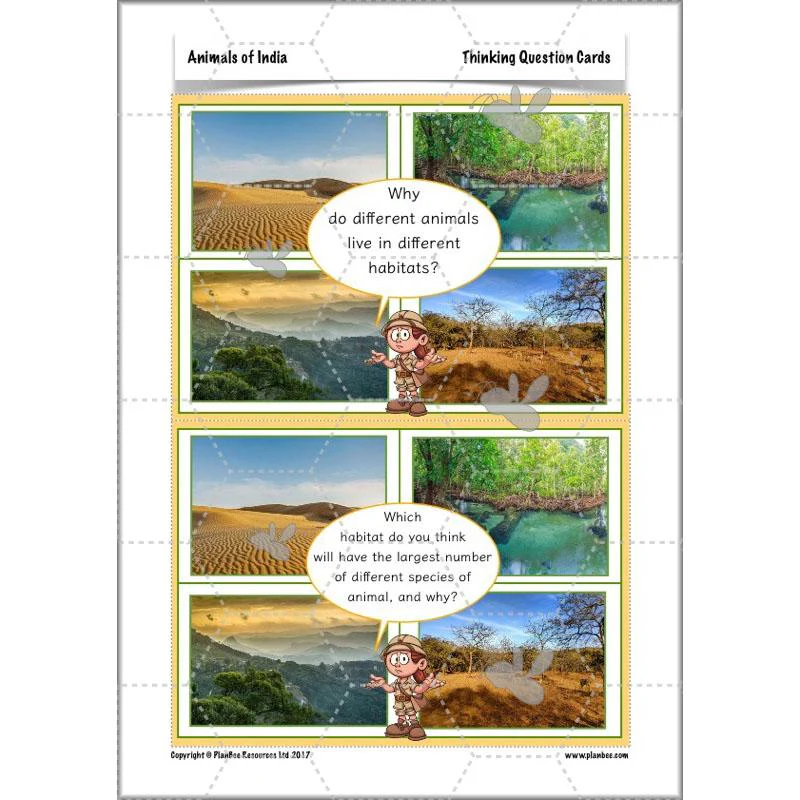
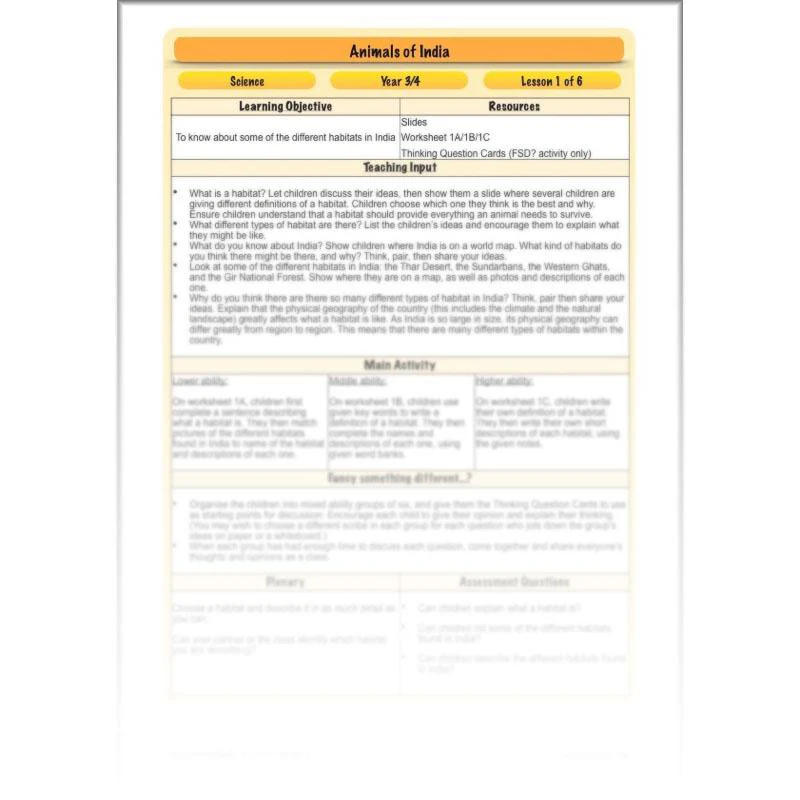
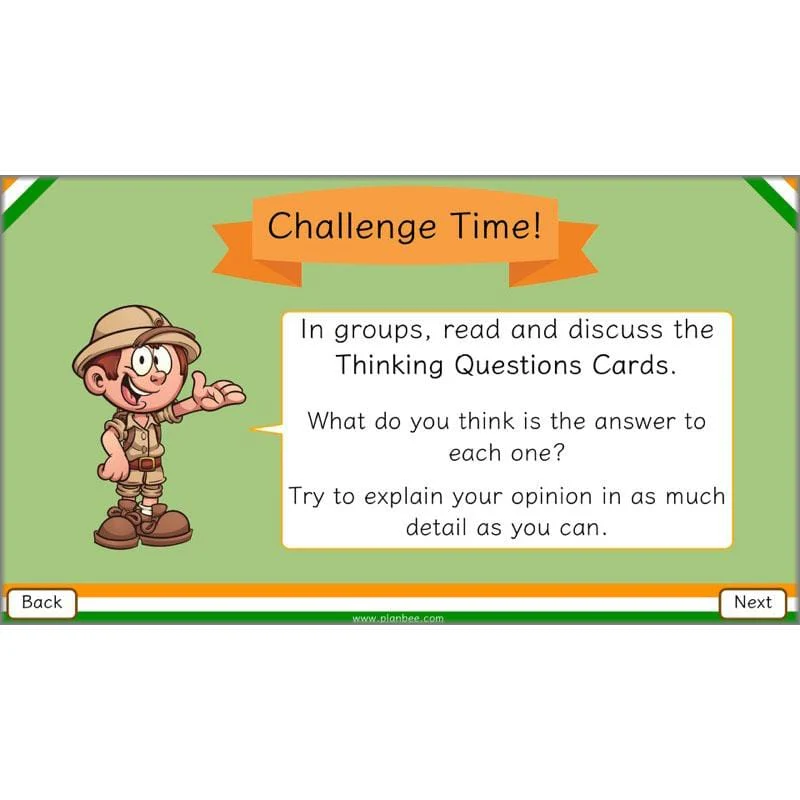
In this first lesson, children are reminded what a habitat is, and are then challenged to list all the different types of habitat that they know of. As a class, they then explore some specific habitats in India, and begin to think about what types of animal might live there, and why. Children use their knowledge of these habitats in their independent activities. Alternatively, in groups children can use the ‘Thinking Questions Cards’ to promote discussion and debate.
What's included:
- Lesson plan
- Slides
- Activity ideas
- Differentiated worksheets
- Thinking Question Cards
View Lesson 1
Grouping and Sorting
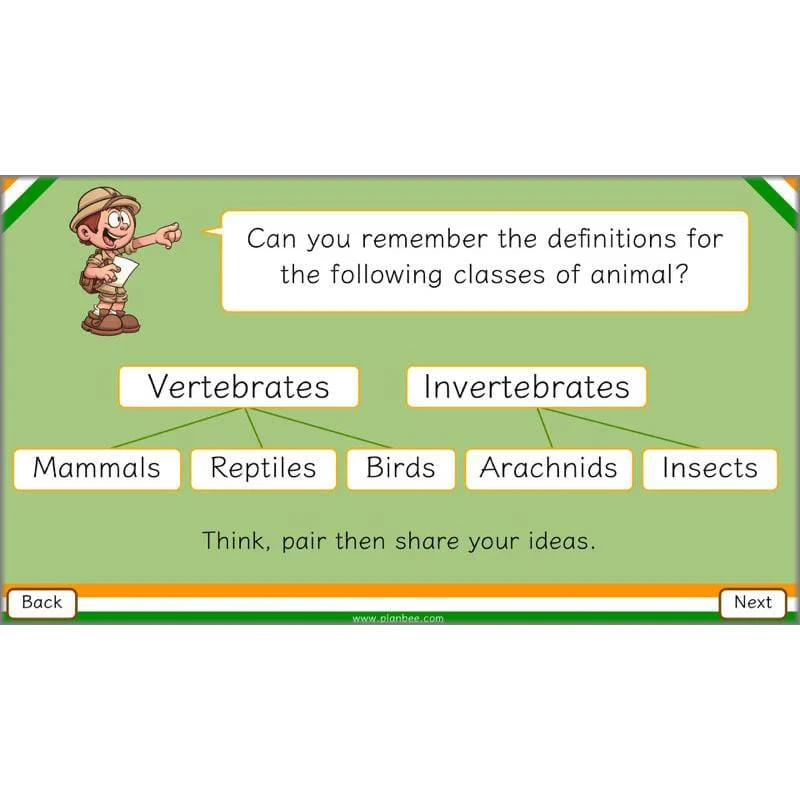
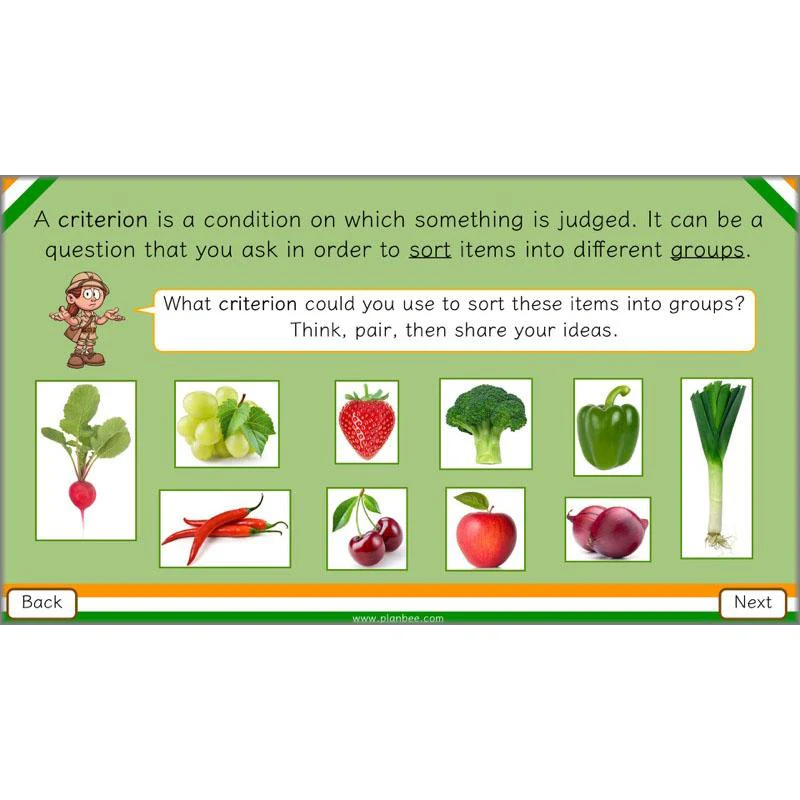
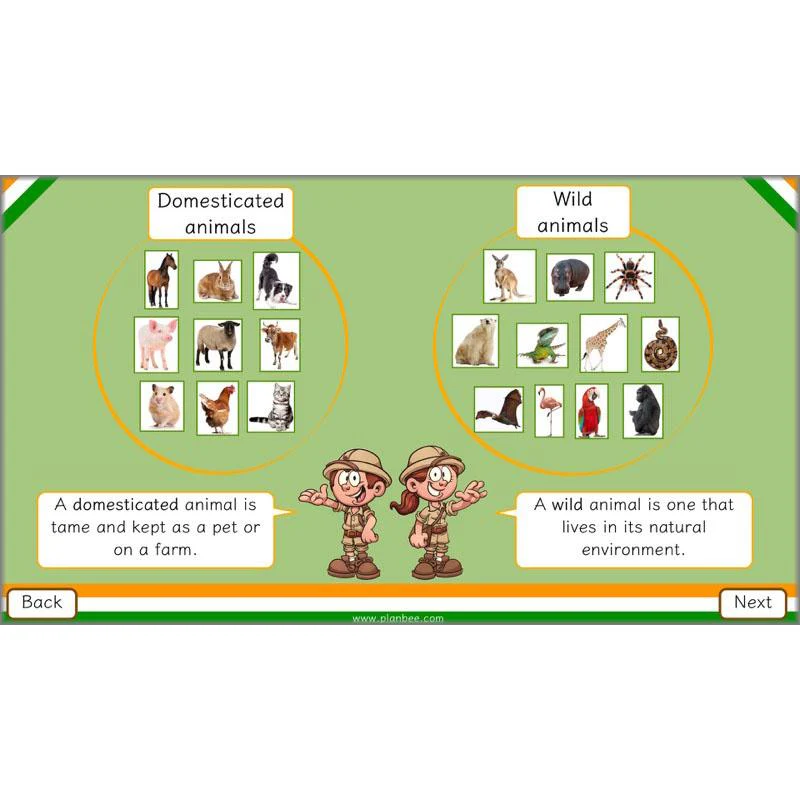
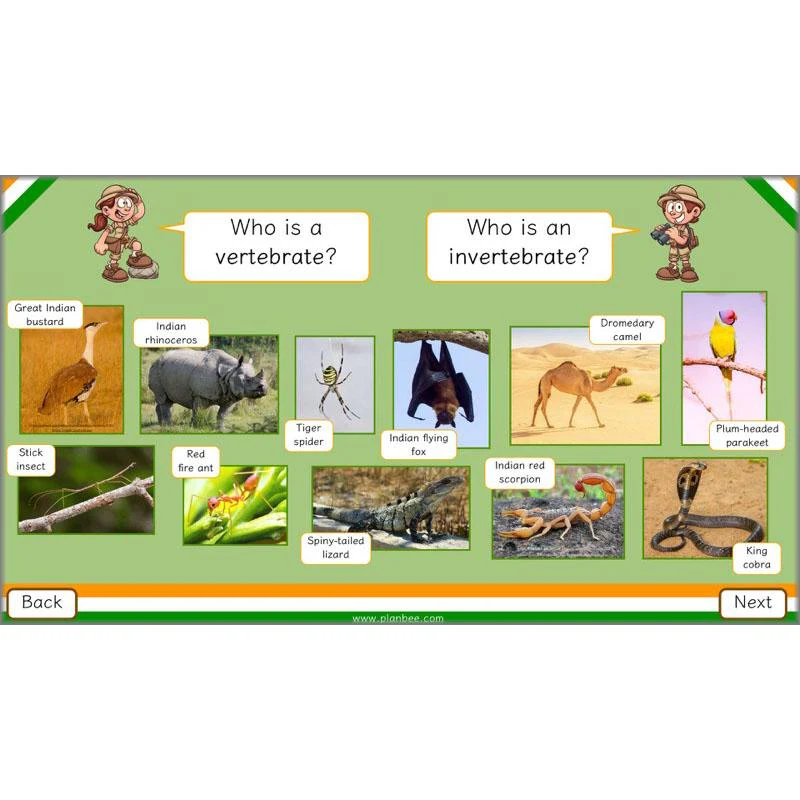
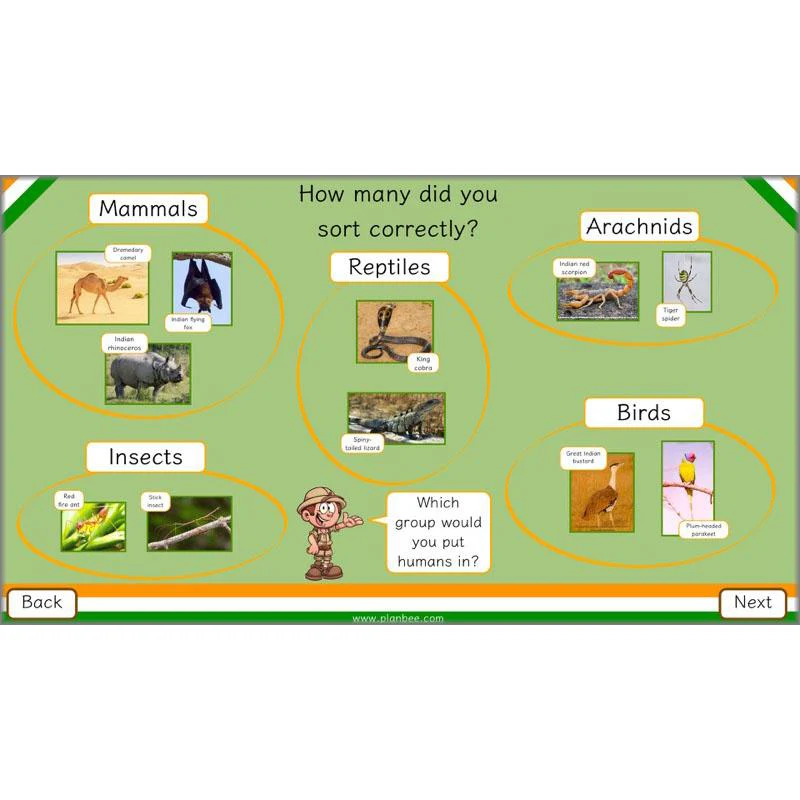
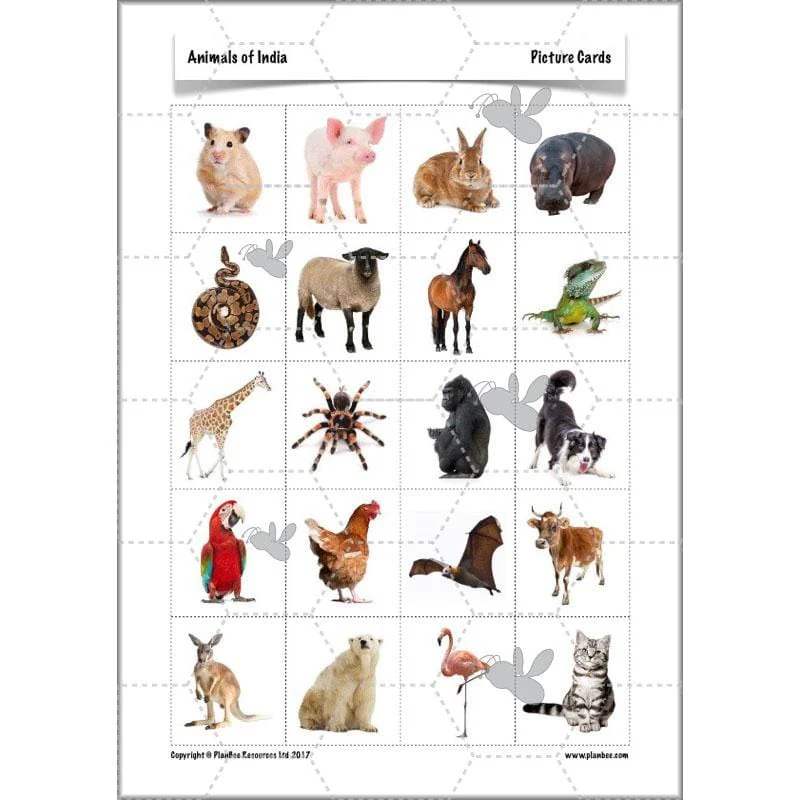
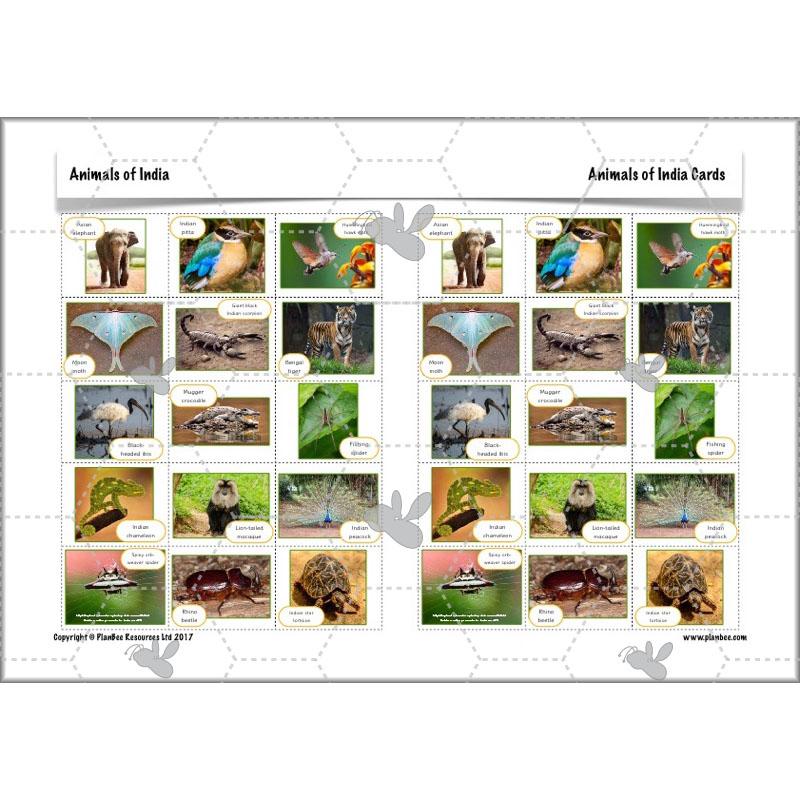
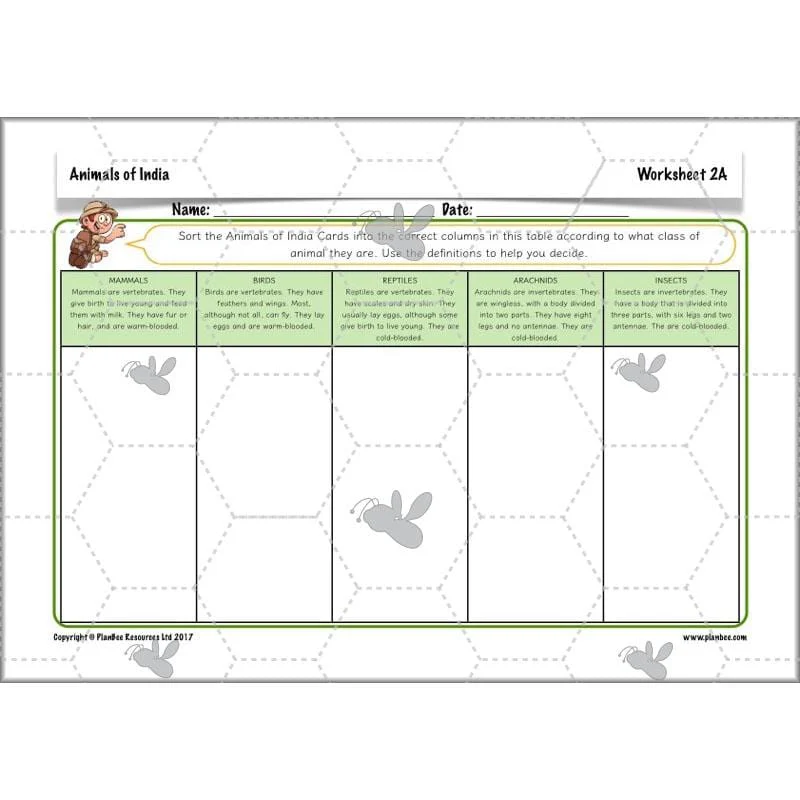
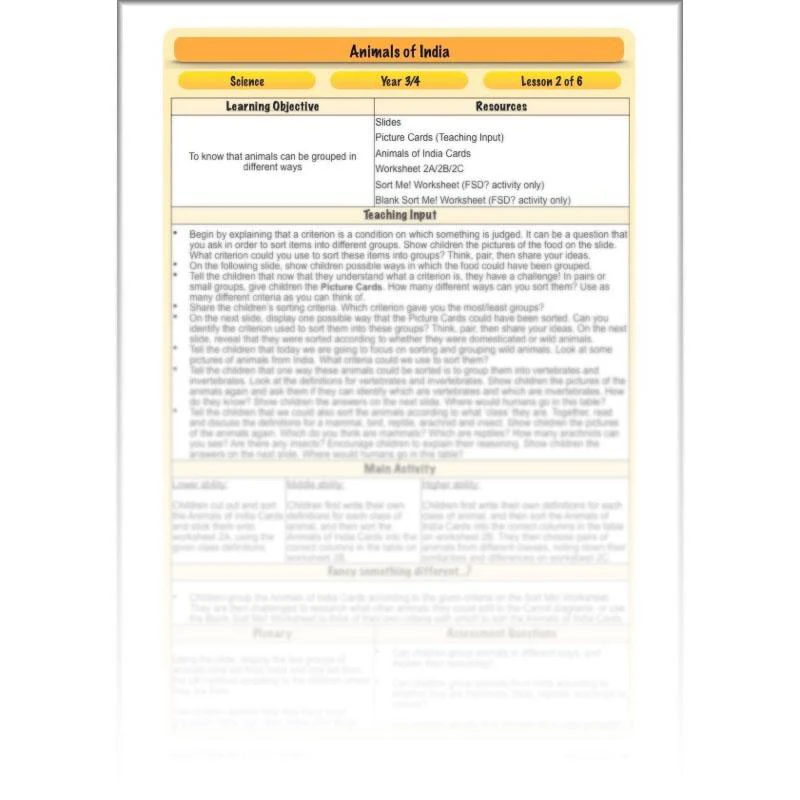
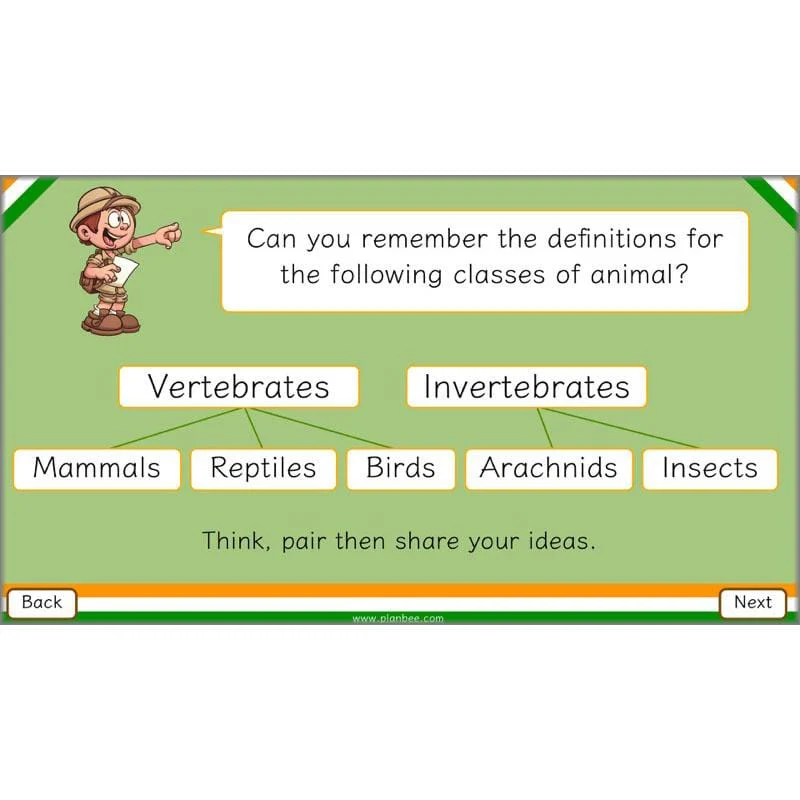
Children learn that animals can be grouped using a range of different criteria. As a class, they sort animals according to whether they are vertebrates or invertebrates, as well as breaking this down further into what class of animal they are: mammal, bird, reptile, arachnid or insect. In their independent activities, children use or write definitions of these groups to sort picture cards of Indian animals. Alternatively, they use Carroll diagrams with given criteria to sort them.
What's included:
- Lesson plan
- Slides
- Activity ideas
- Picture Cards
- Differentiated worksheets
- Animals of India Cards
- Sort Me! Worksheet
- Blank Sort Me! Worksheet
View Lesson 2
Classification Keys
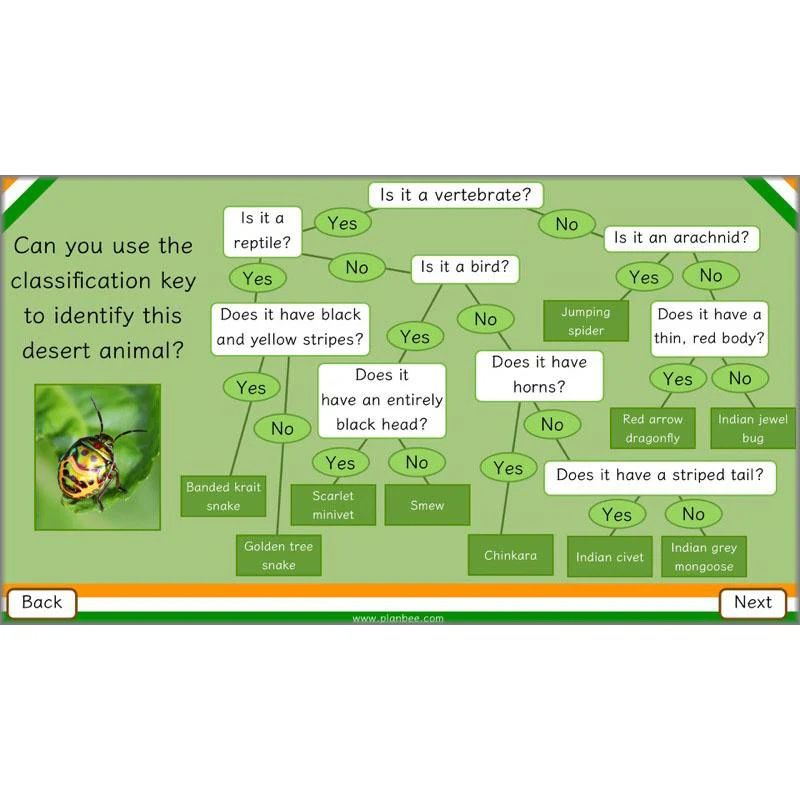
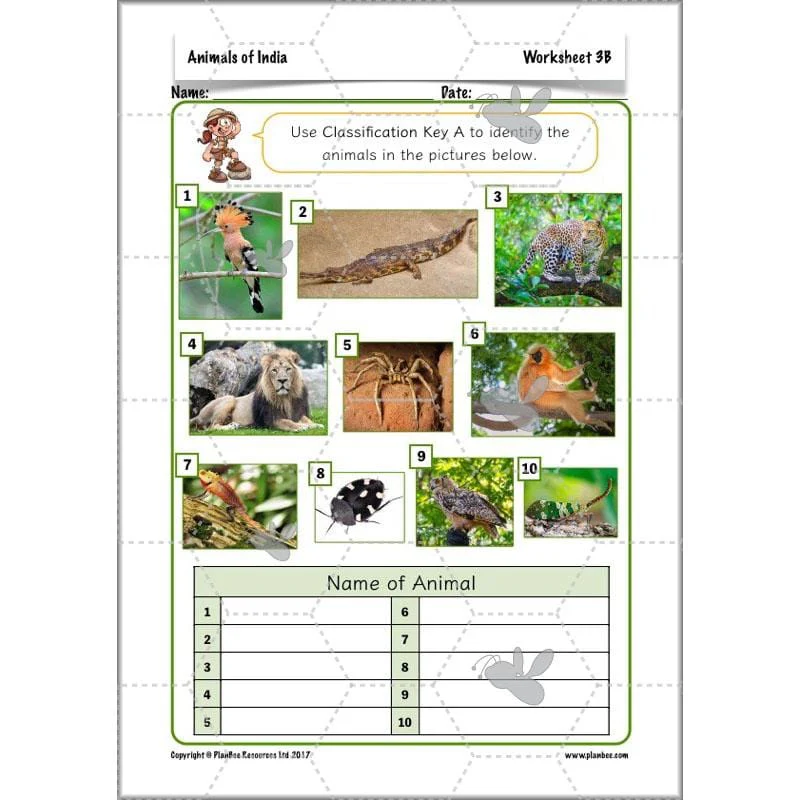
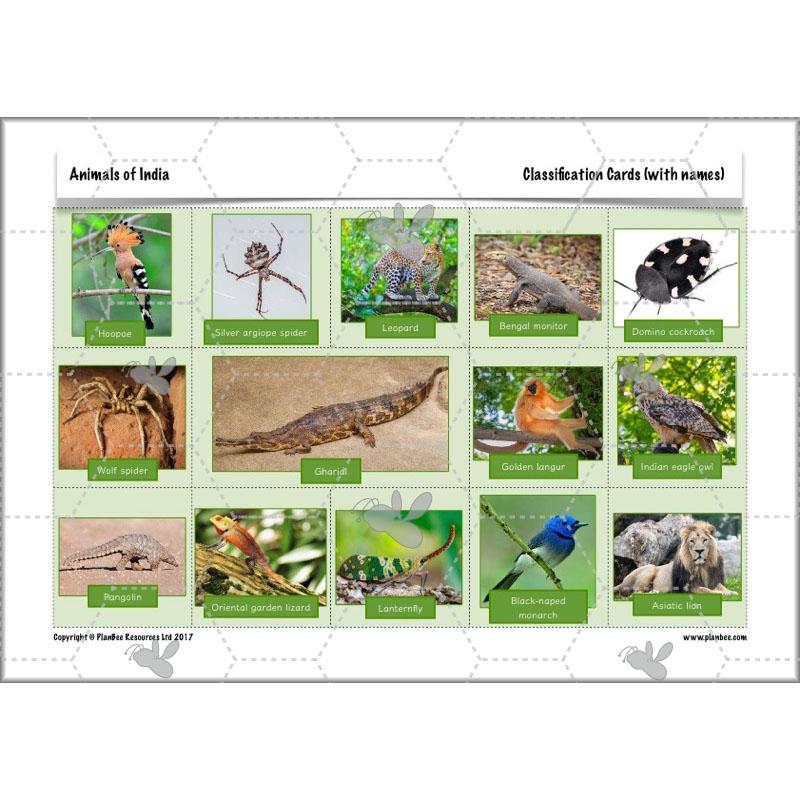
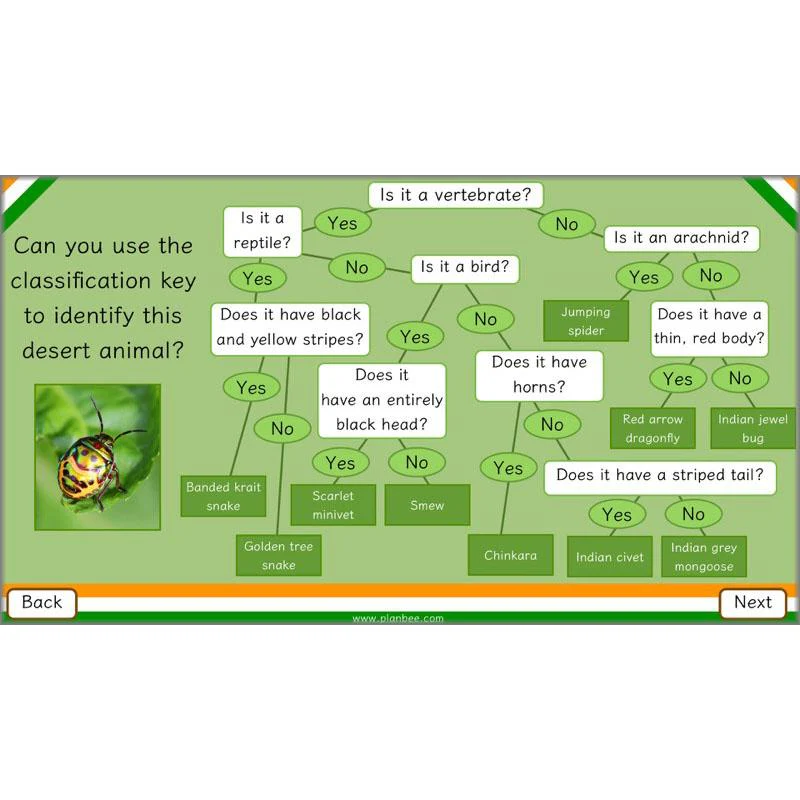
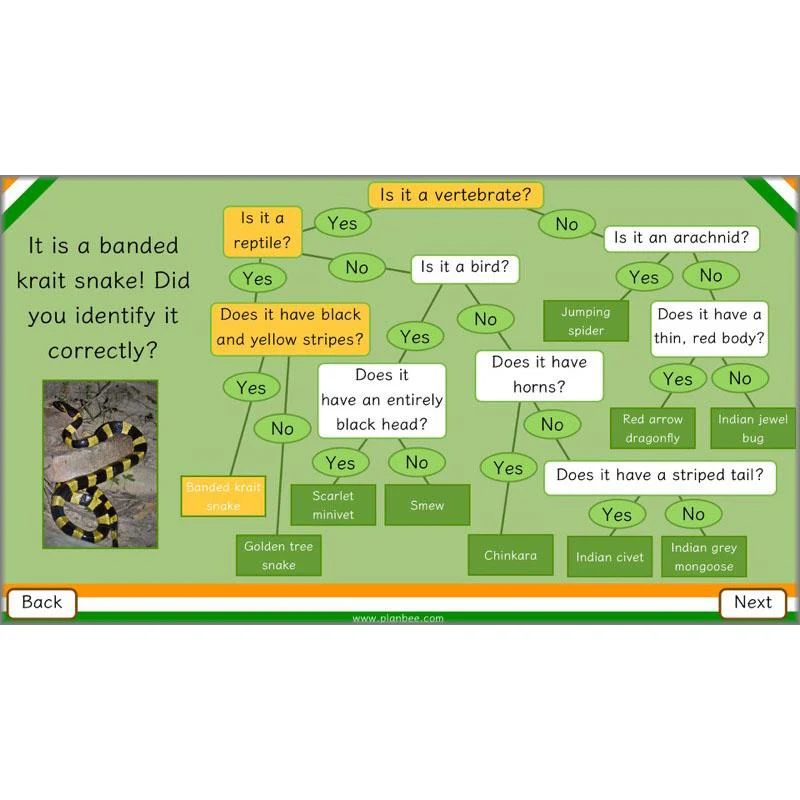
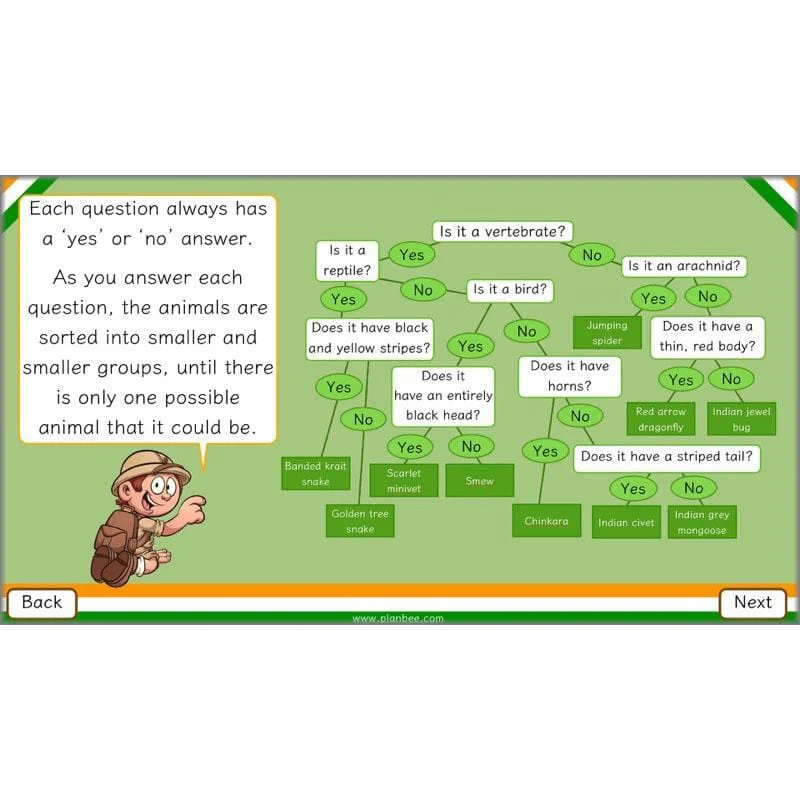
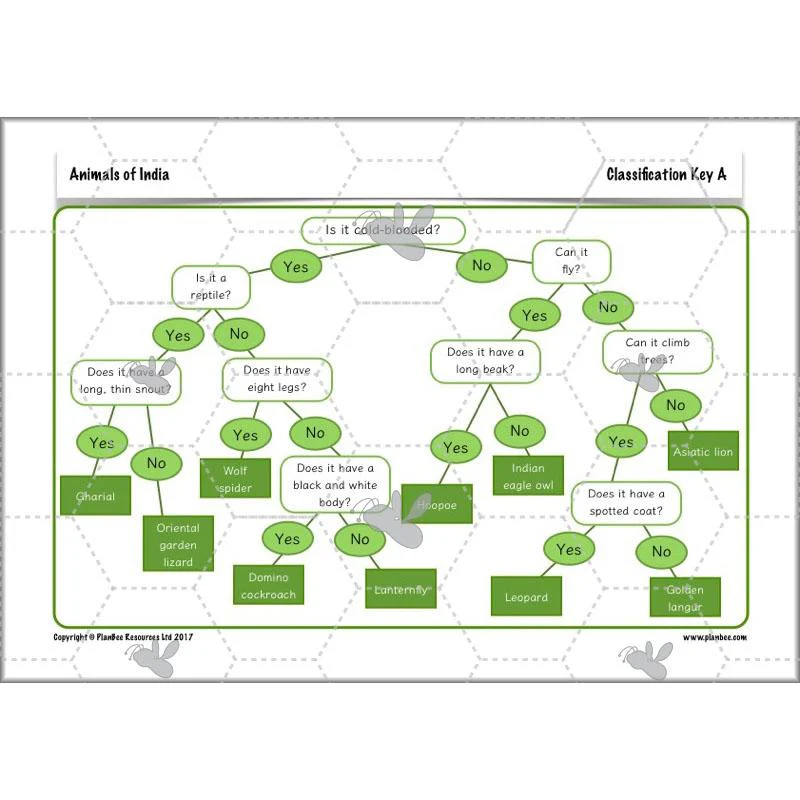
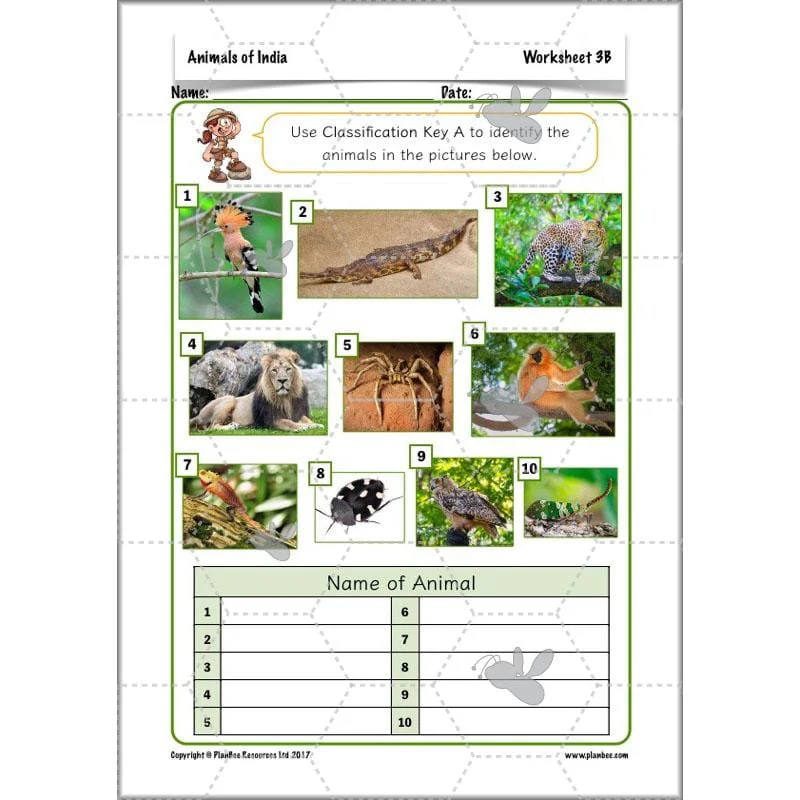
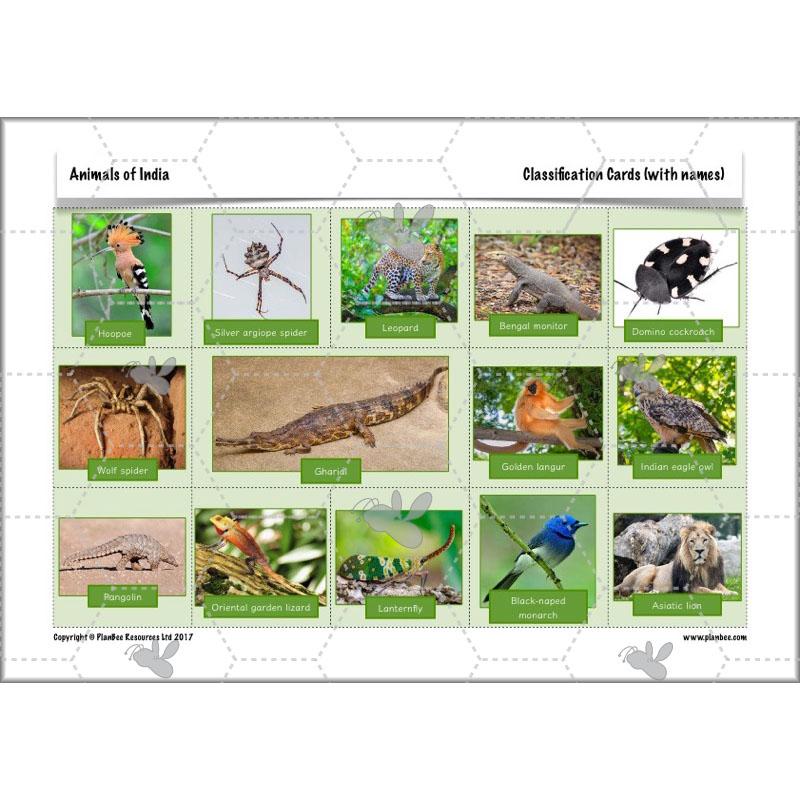
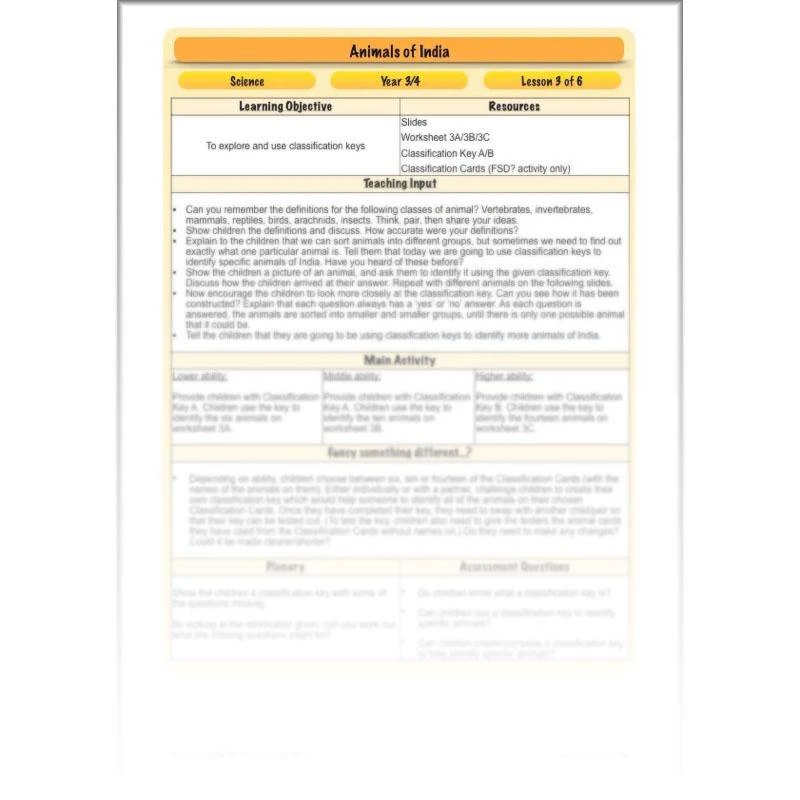
In this lesson, children use and expand on their knowledge of grouping animals by using classification keys. As a class, they identify individual animals of India using a key, and discuss how a key works/is made. Children will use a different key to identify animals of India in their independent work, or in the Fancy Something Different? activity, they can create their own classification key for a chosen group of animals.
What's included:
- Lesson plan
- Slides
- Activity ideas
- Differentiated worksheets
- Classification Keys
- Classification Cards
View Lesson 3
Nutrition and Diet
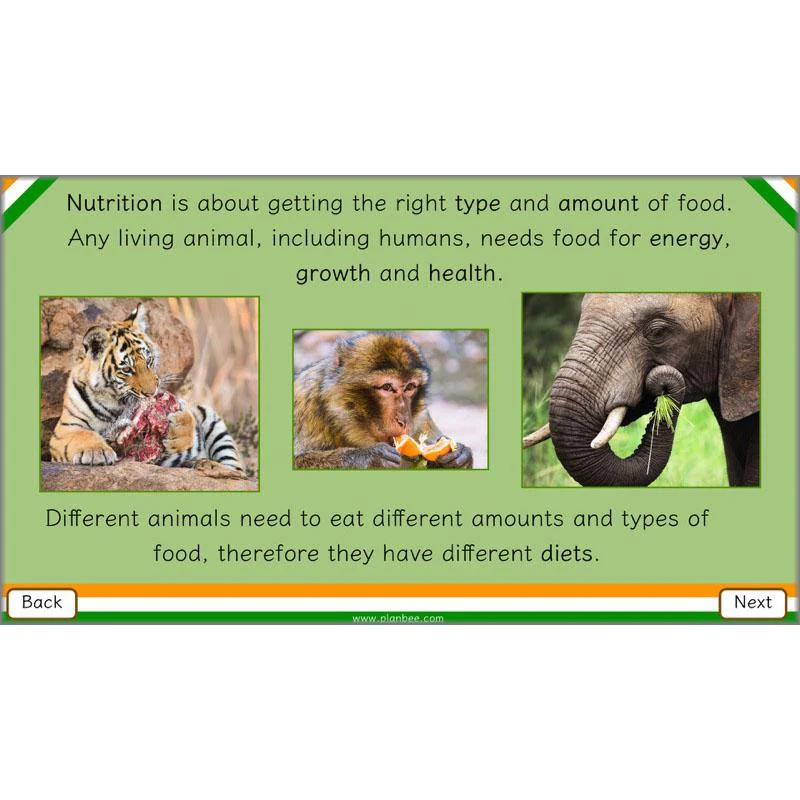
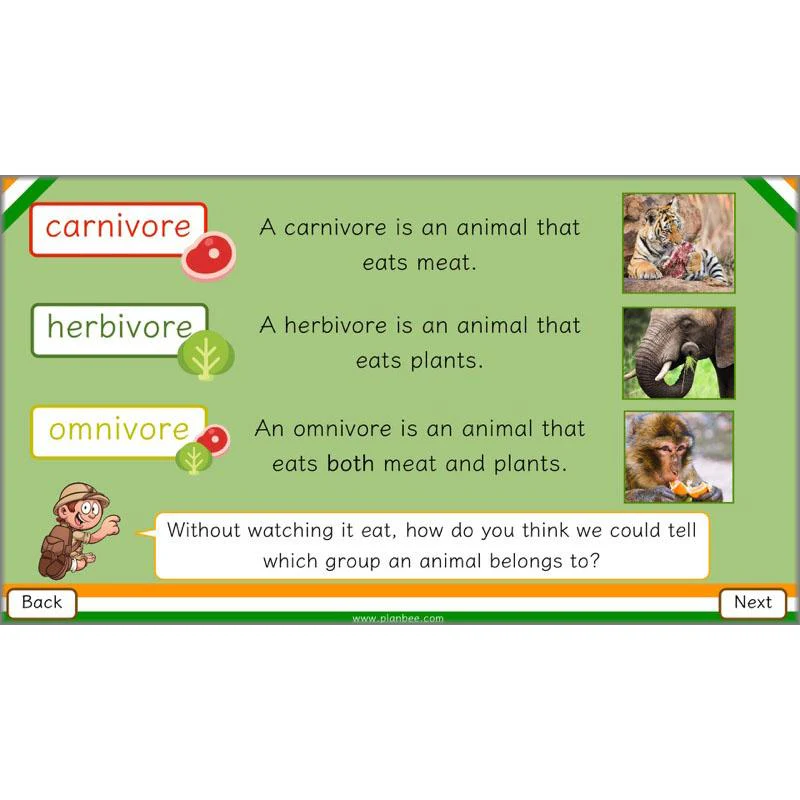
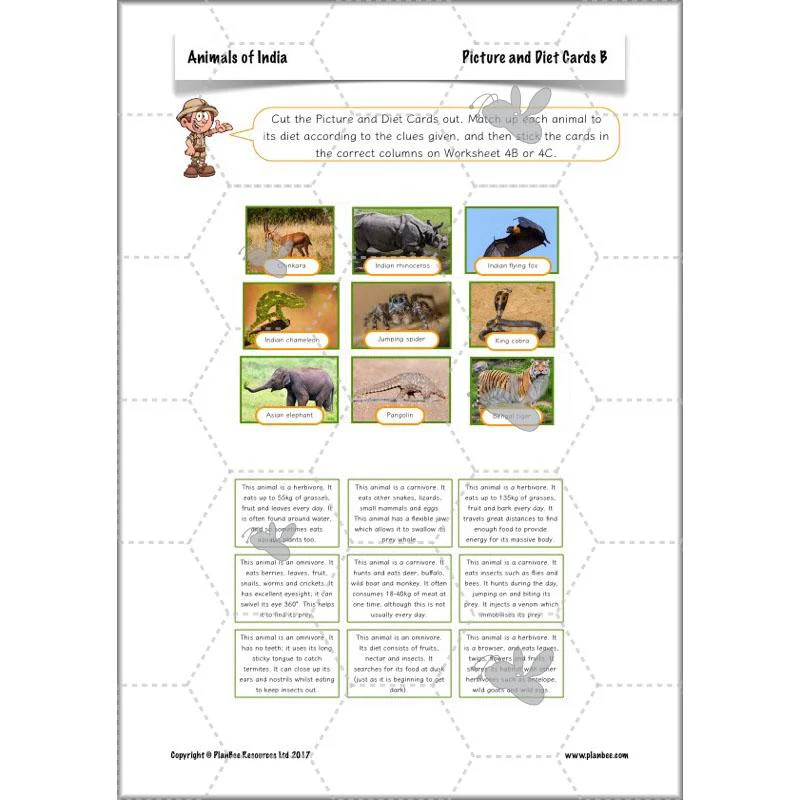
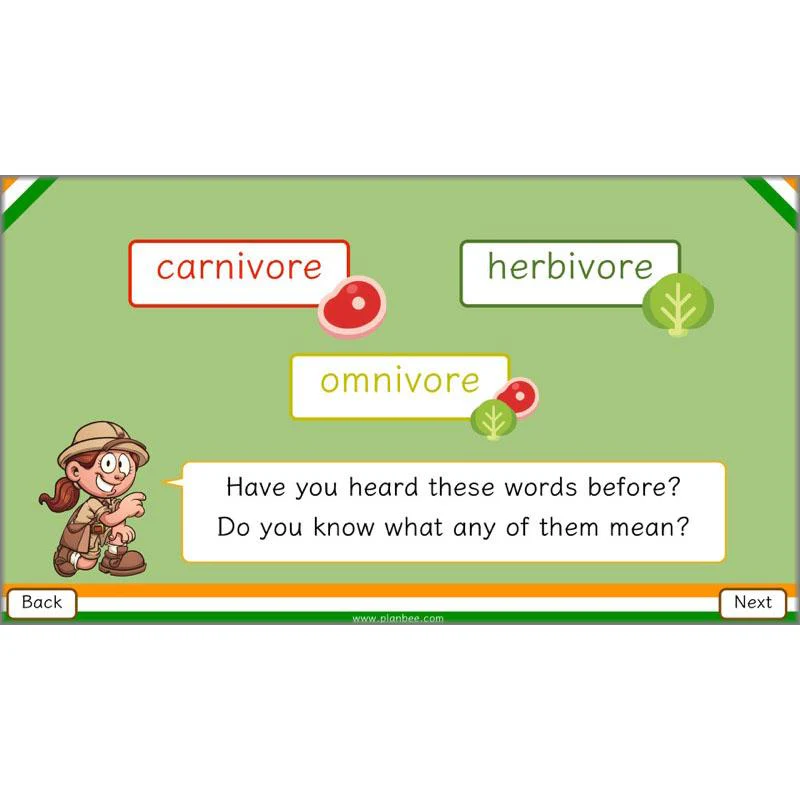
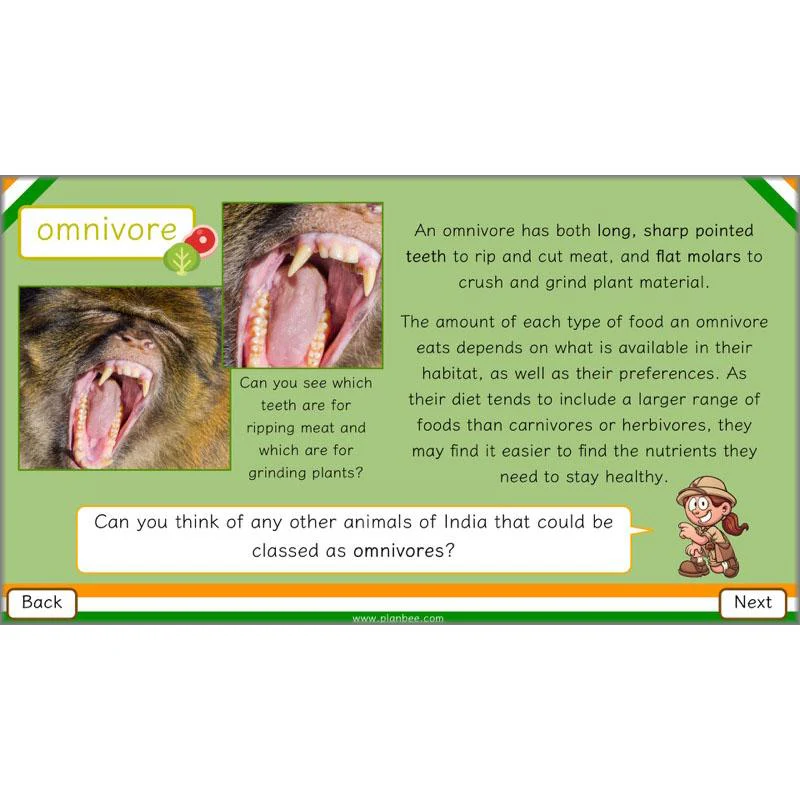
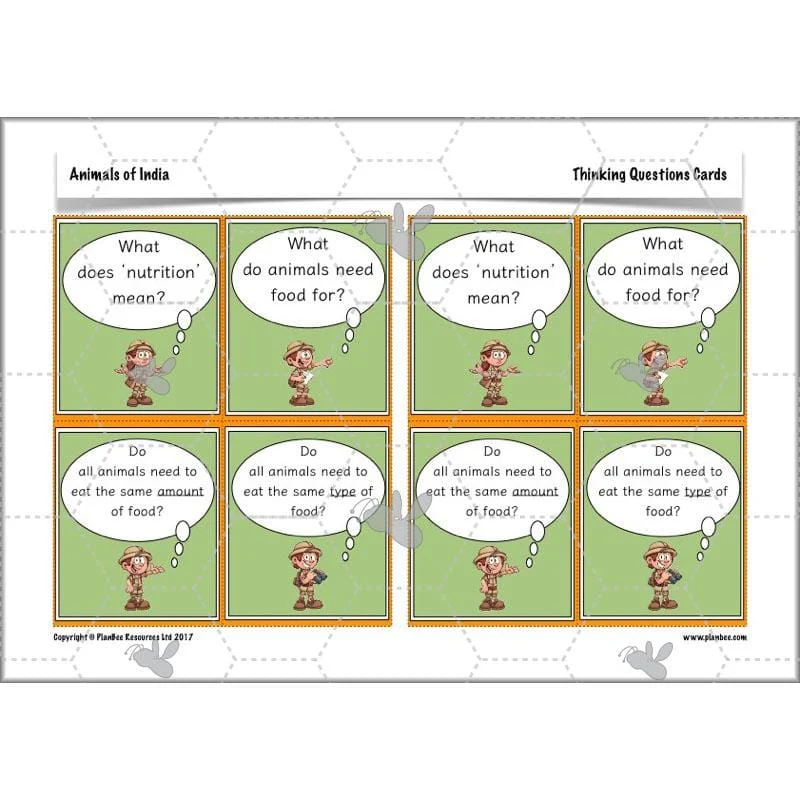
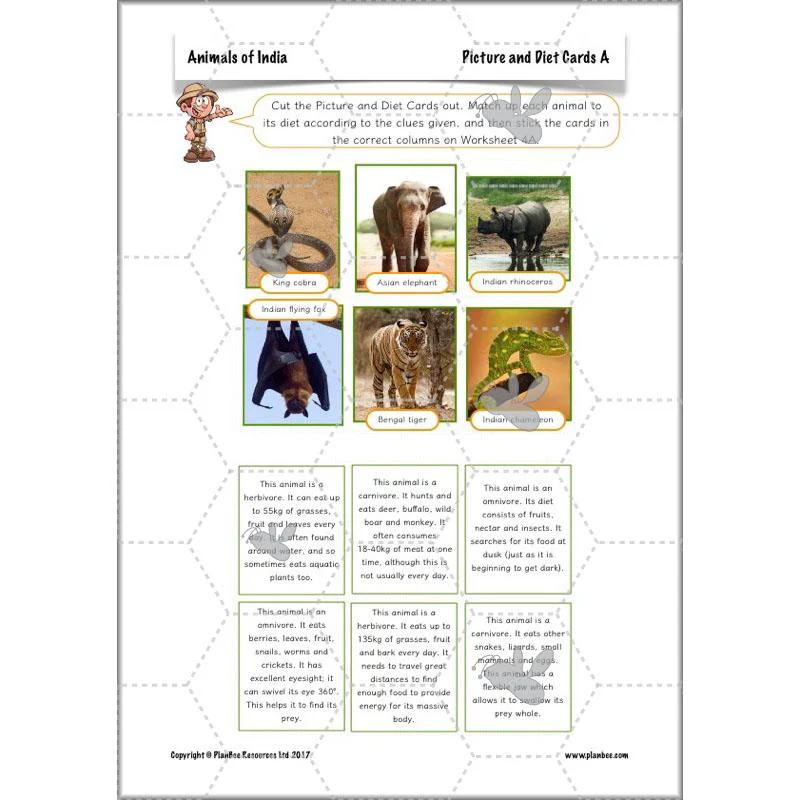
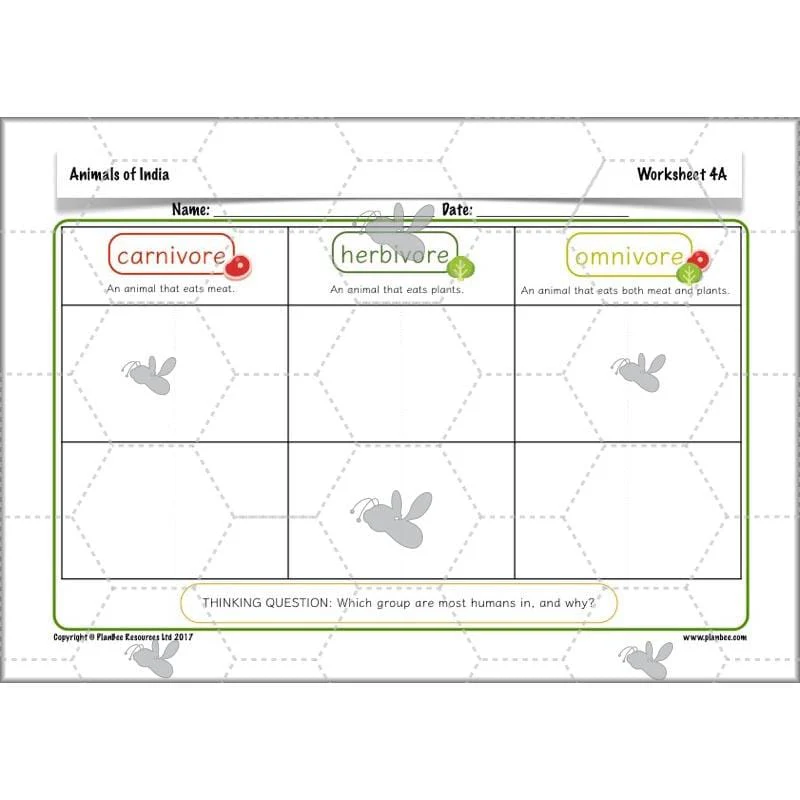
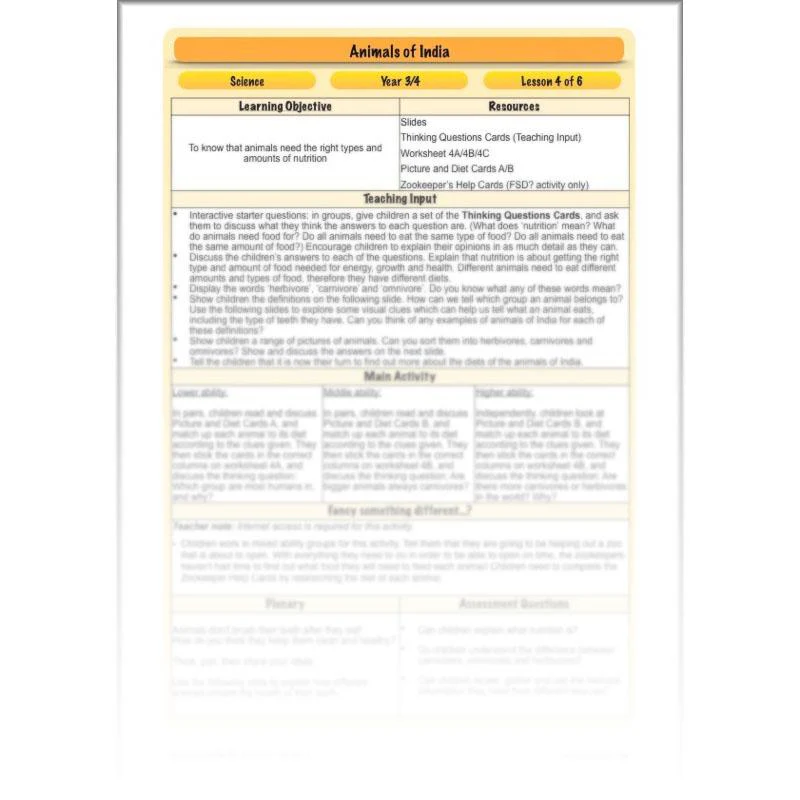
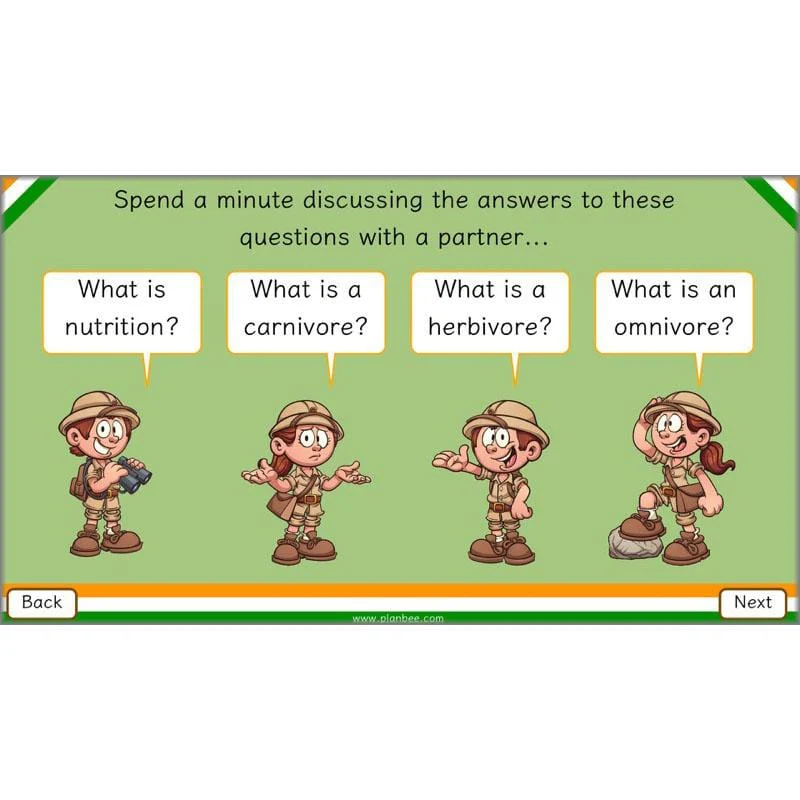
In this lesson, children begin to think about nutrition in animals, and whether all species need the same type and amount of food. They discuss the terms carnivore, herbivore and omnivore, and are challenged to classify some animals of India according to these definitions. In their independent work, children match diets to animals according to given clues. Alternatively, they research the diets of various animals in order to help some zookeepers and a newly opening zoo.
What's included:
- Lesson plan
- Slides
- Activity ideas
- Thinking Question Cards
- Differentiated worksheets
- Picture and Diet Cards
- Zookeeper’s Help Cards
View Lesson 4
Food Chains
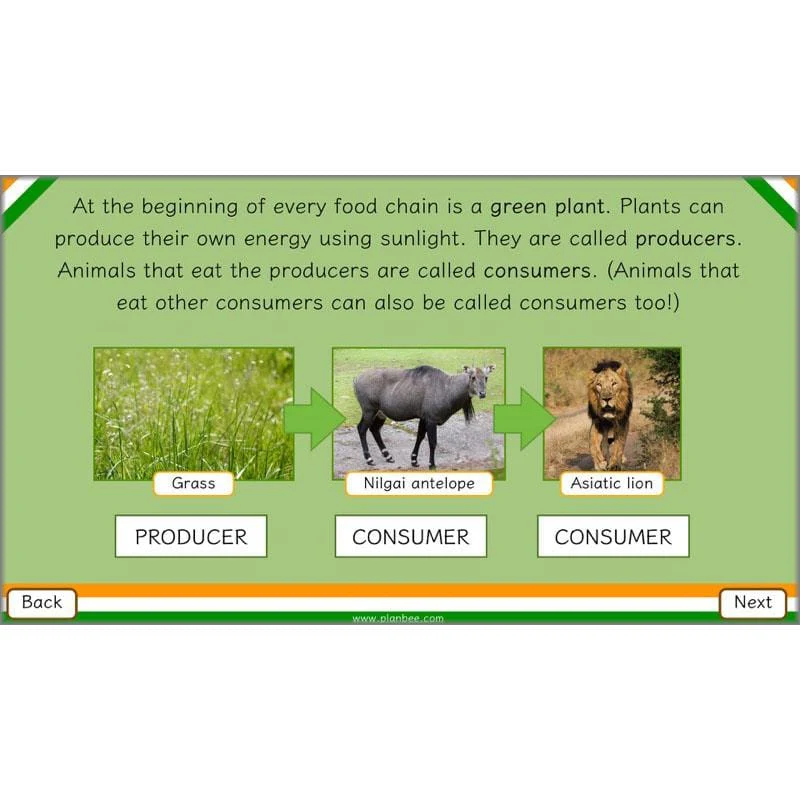
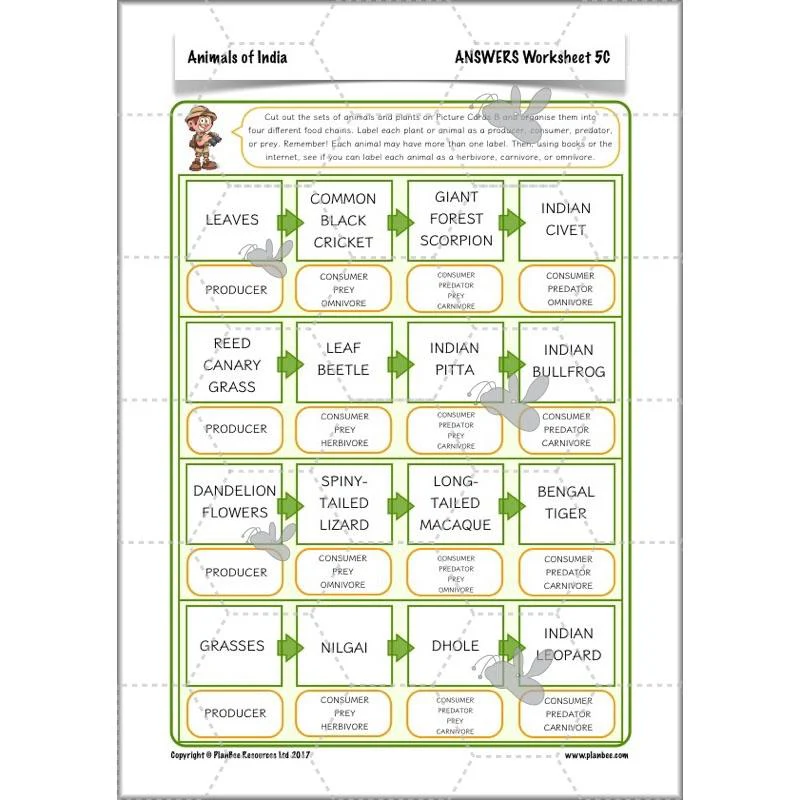
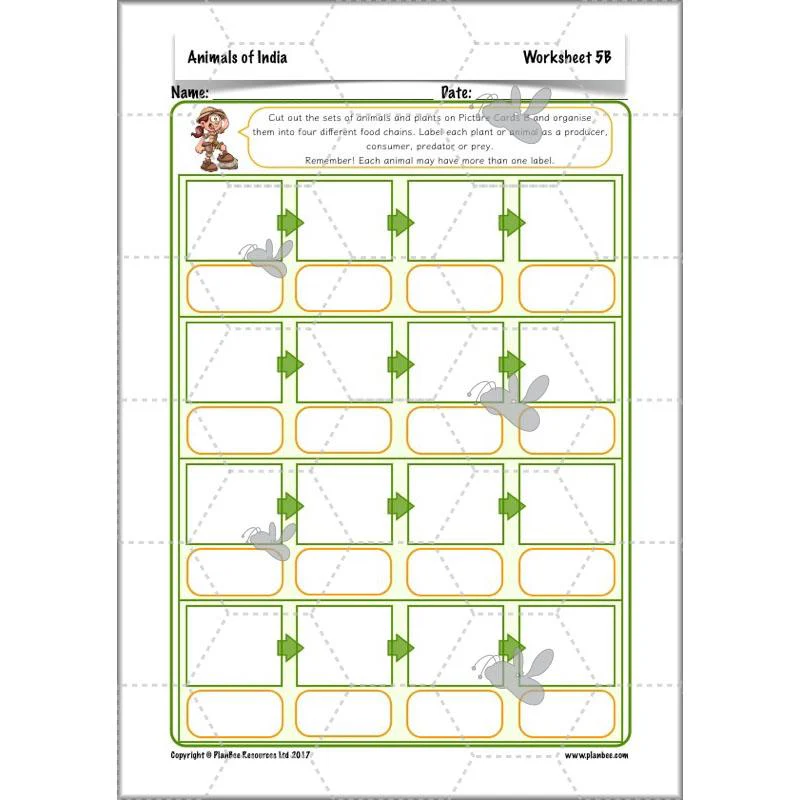
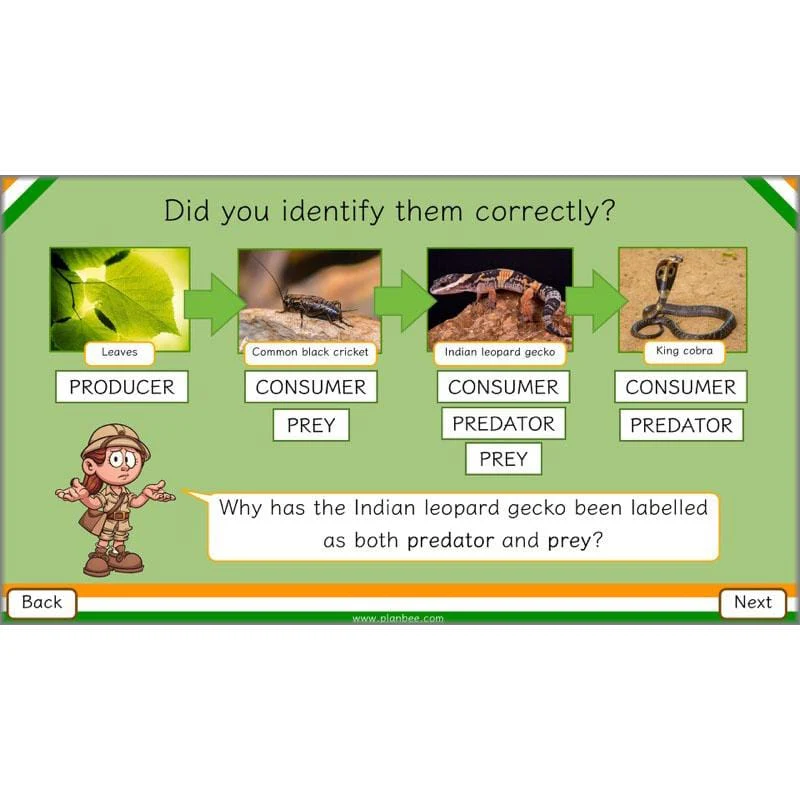
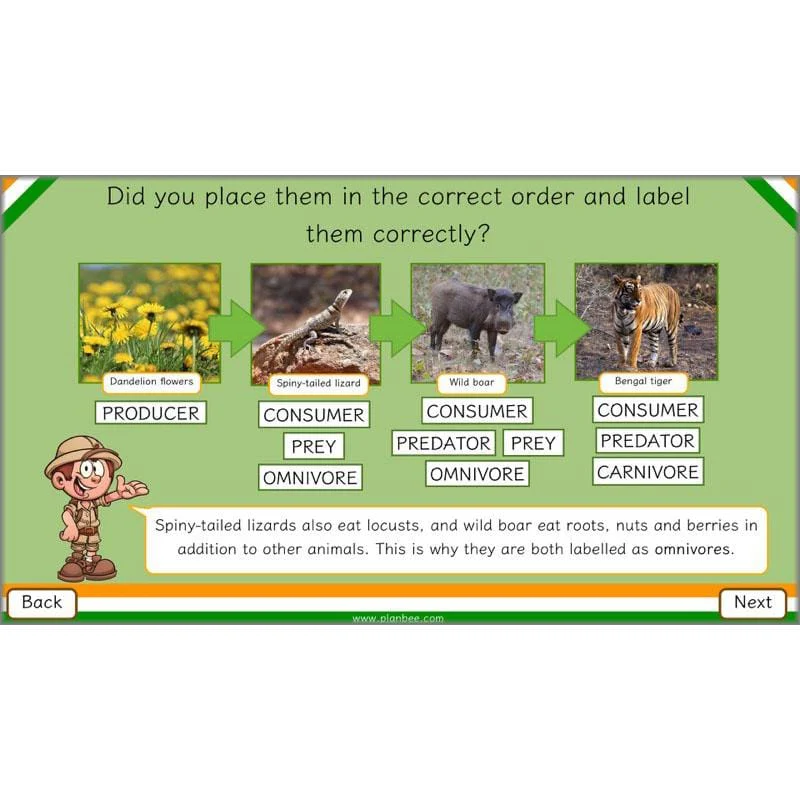
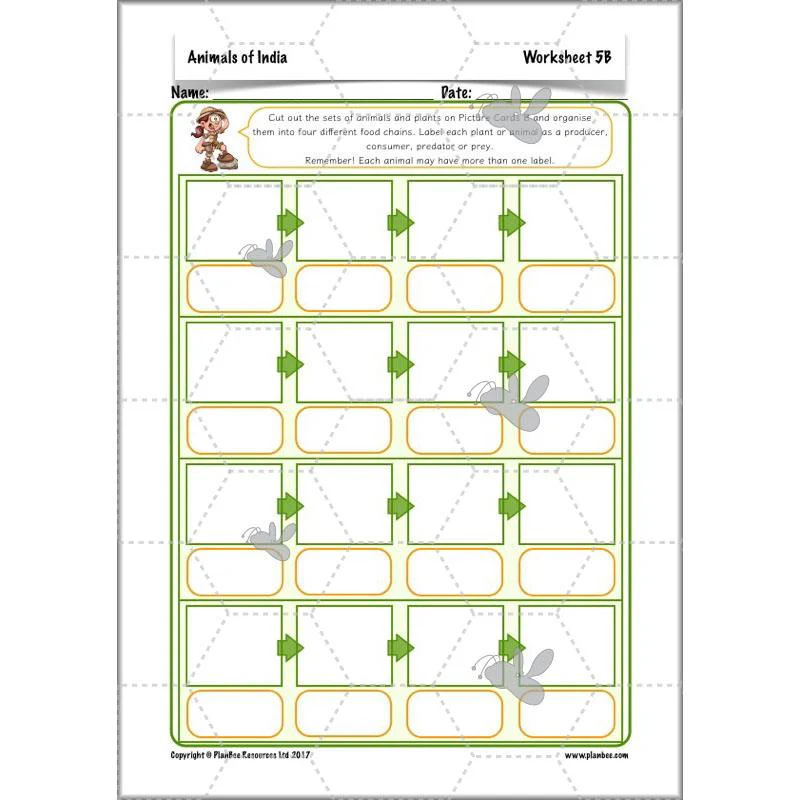
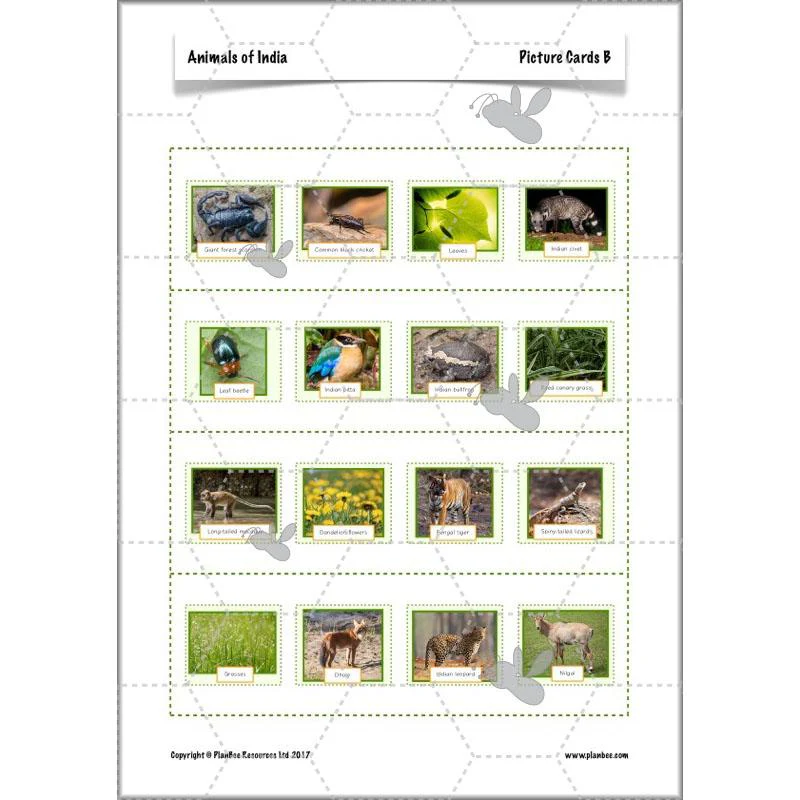
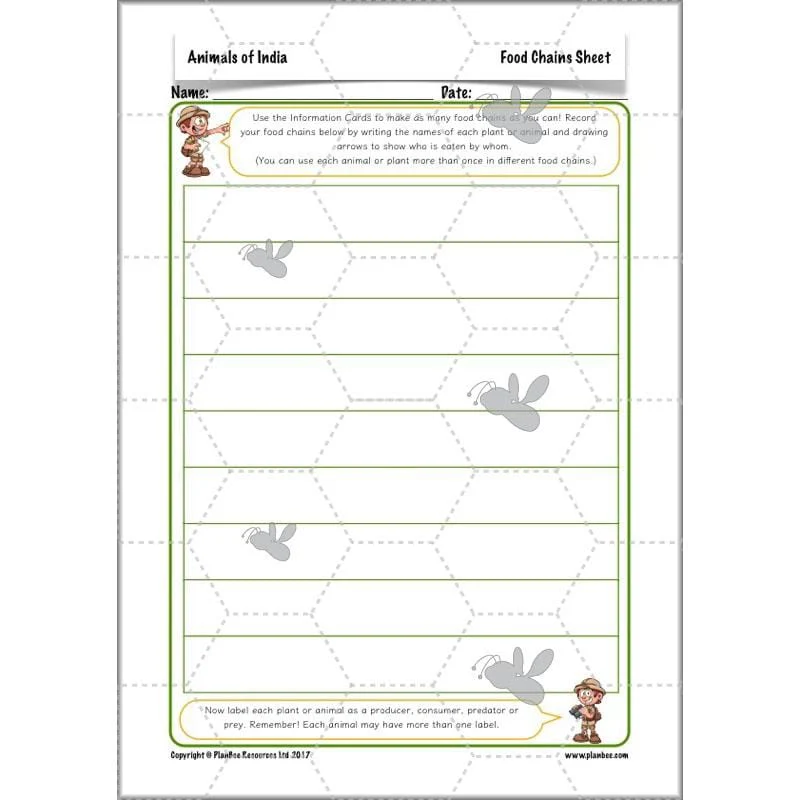
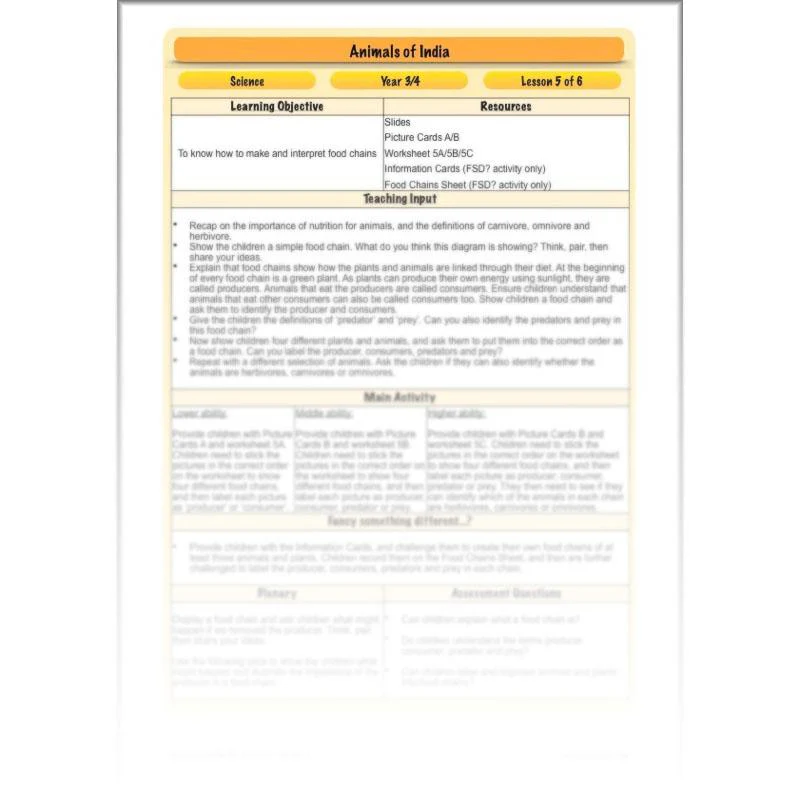
Children learn how animals in India are linked by what they eat. As a class they look at different food chains, and identify the producer and consumers in each one, as well as the predators and prey. In their independent activities, children sort given sets of animals into food chains. Alternatively, they create their own food chains based on information cards about plants and animals found in India.
What's included:
- Lesson plan
- Slides
- Activity ideas
- Differentiated worksheets
- Picture Cards
- Information Cards
- Food Chains Sheet
View Lesson 5
Effects of Changes to Habitats
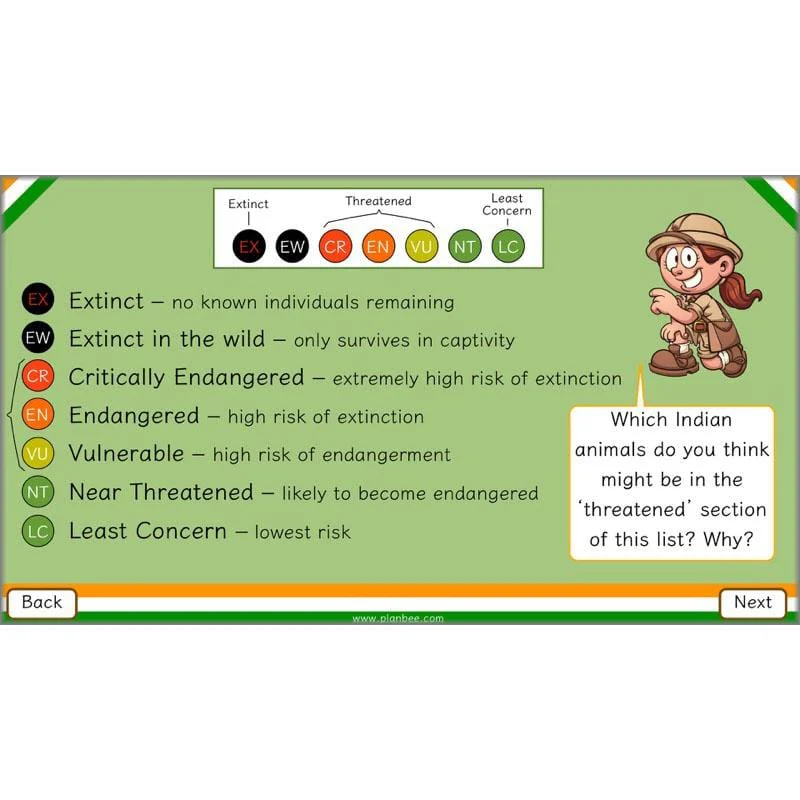
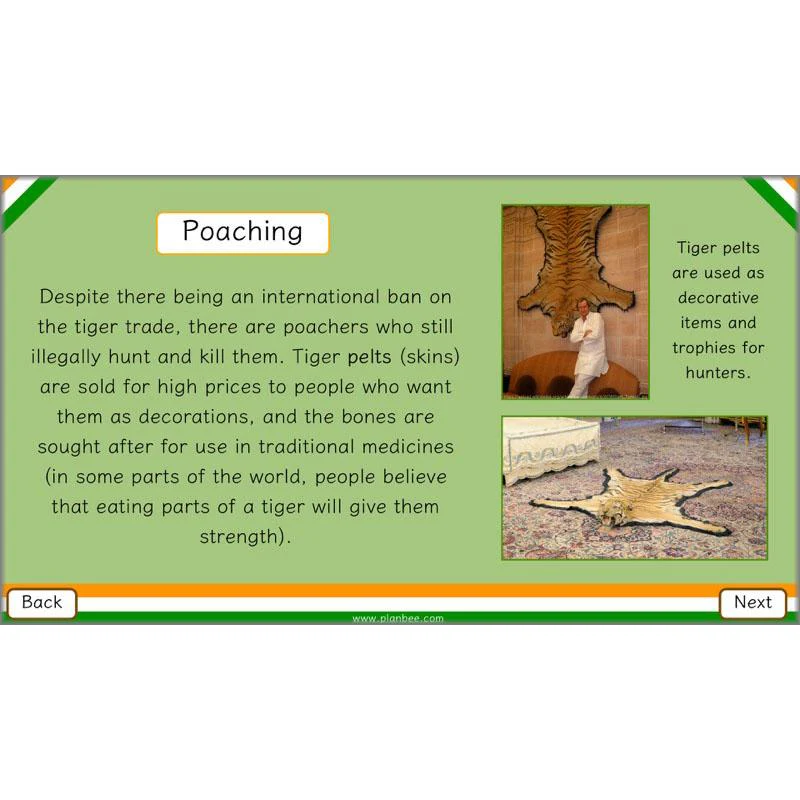
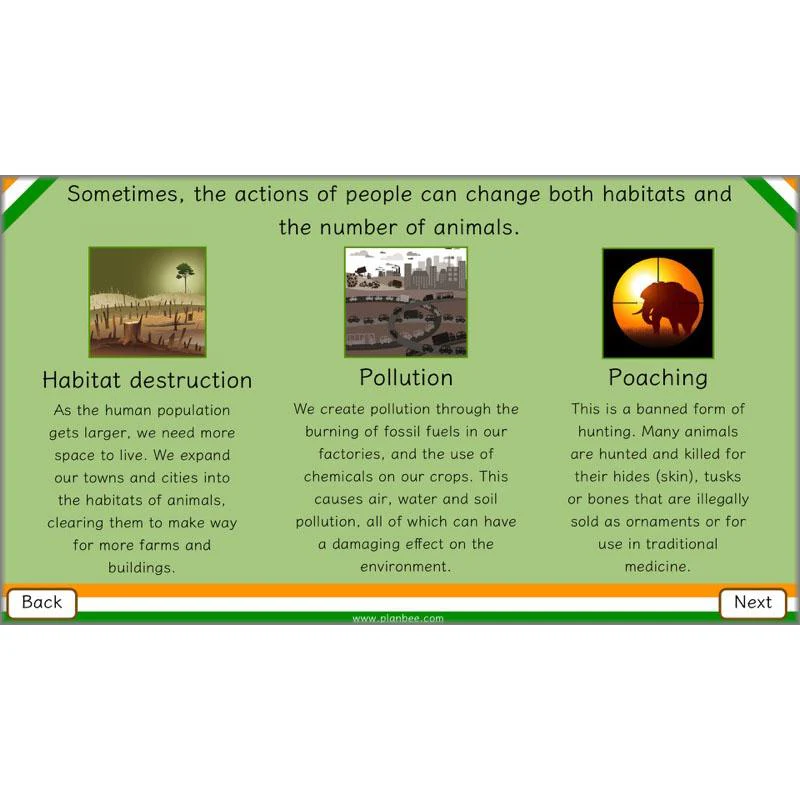
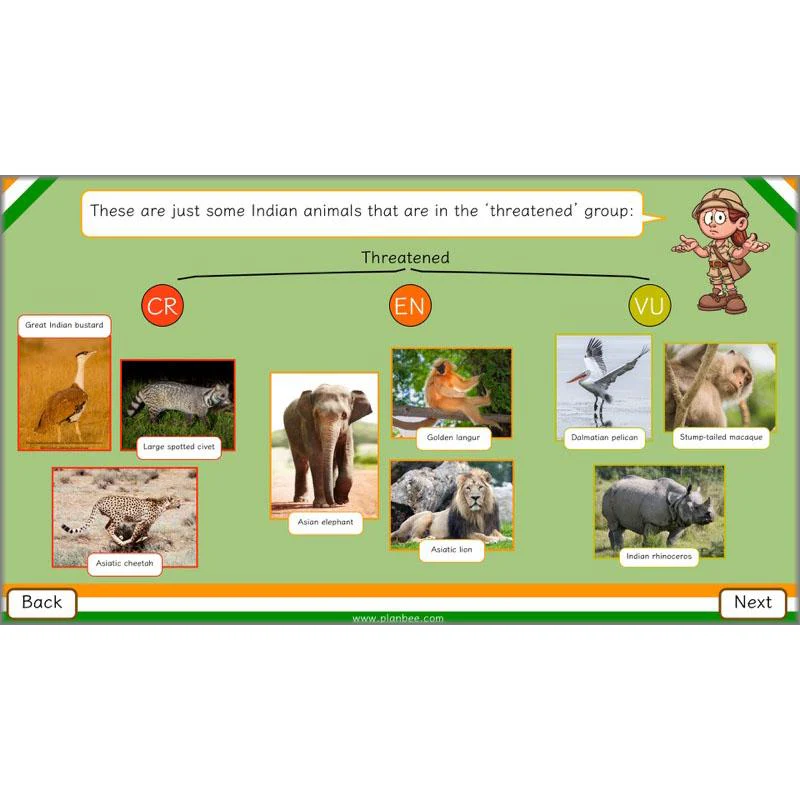
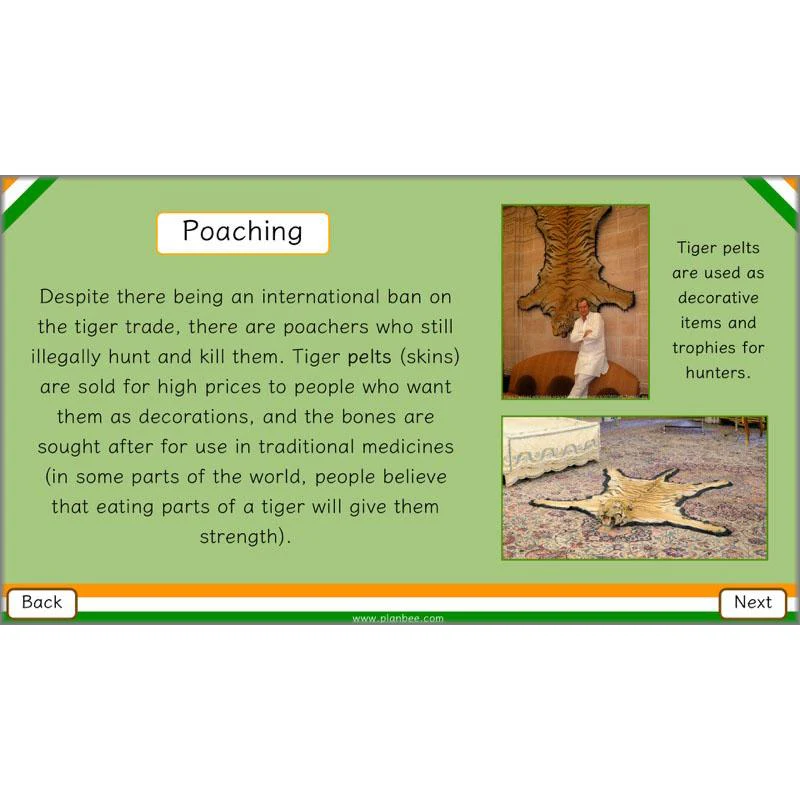
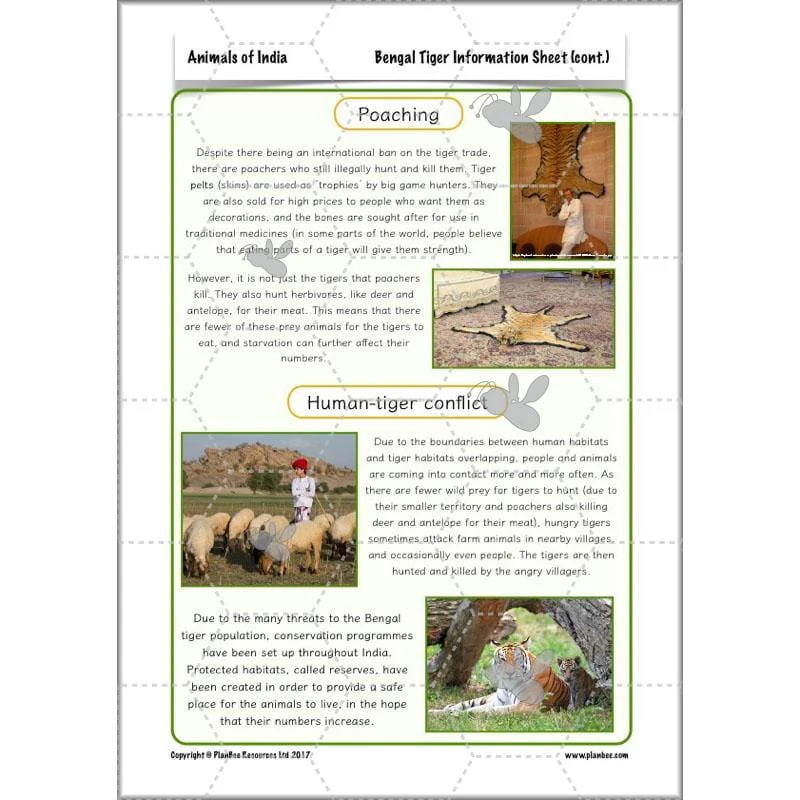
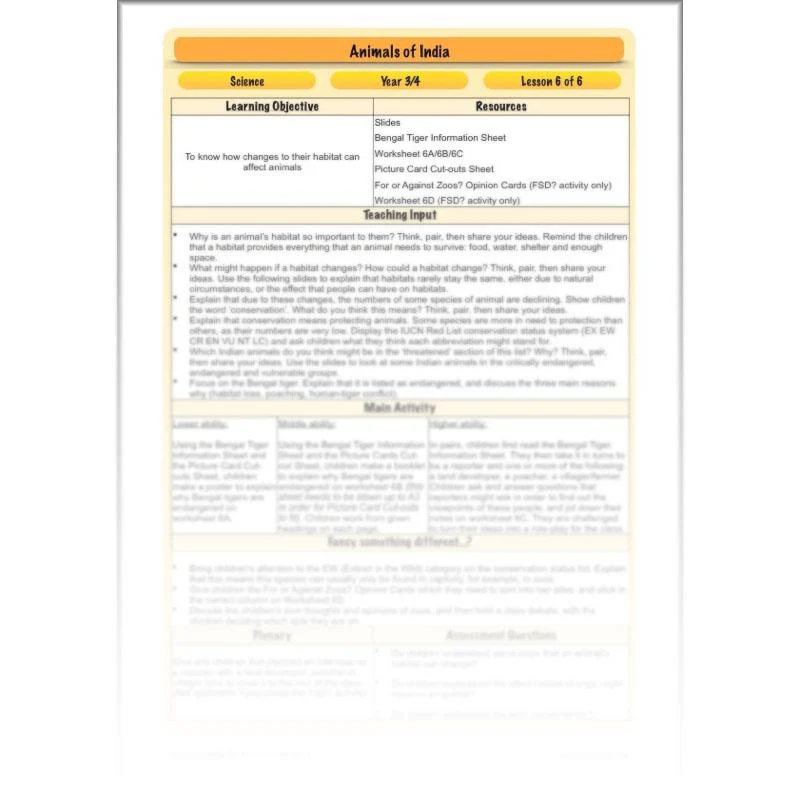
In this final lesson, children learn how a whole species can be affected if their habitat changes. They learn what conservation means, and find out how threatened animals are grouped according to the IUCN Red List conservation status system. Children look at some examples of animals of India that are threatened, and then focus on the endangered Bengal tiger in their independent work. Alternatively, children consider the reasons for and against zoos, and hold a class debate.
What's included:
- Lesson plan
- Slides
- Activity ideas
- Differentiated worksheets
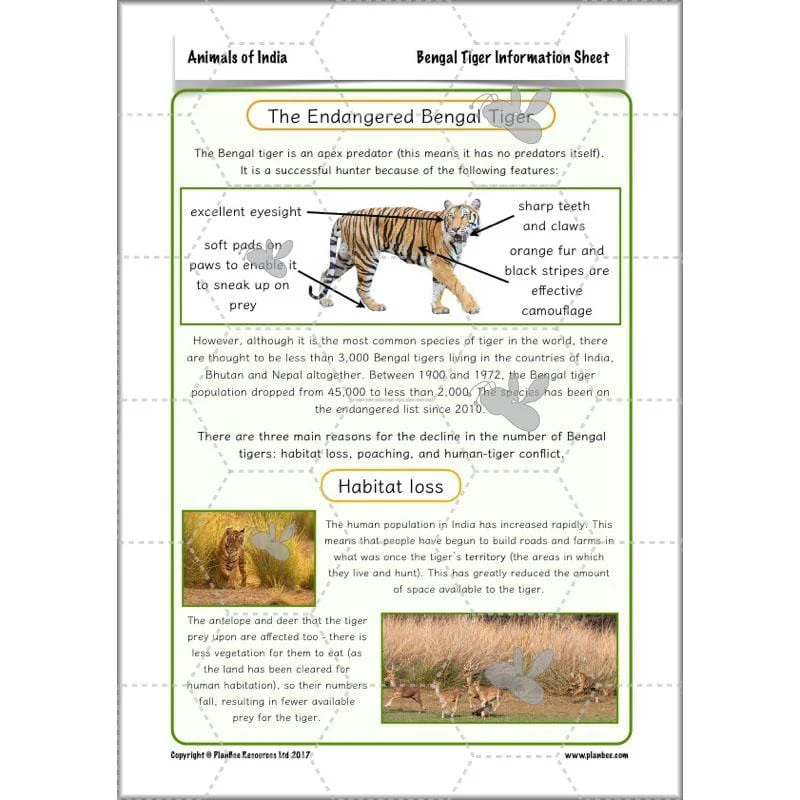
- Bengal Tiger Information Sheet
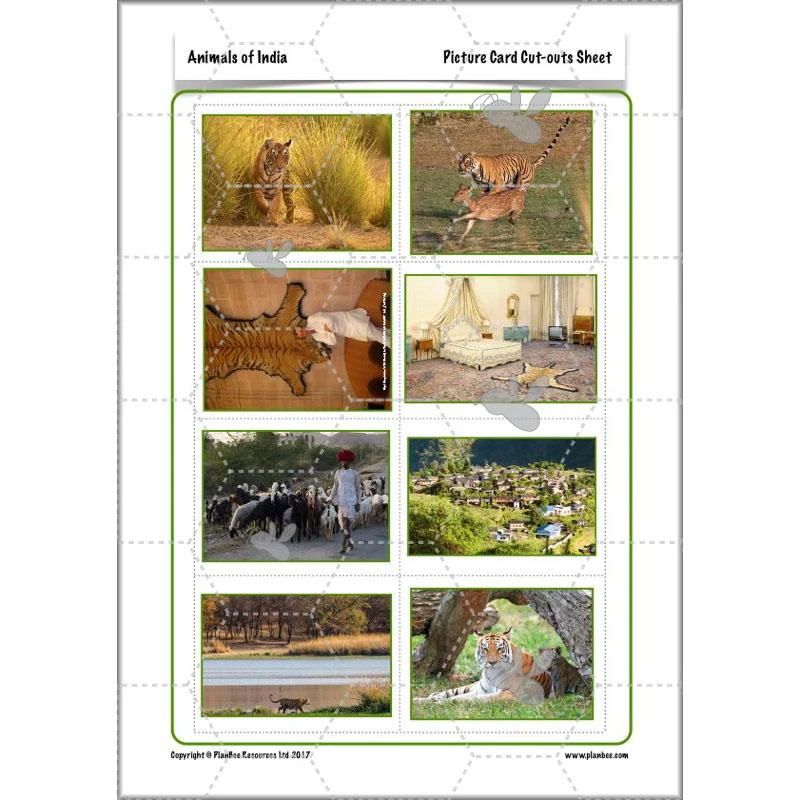
- Picture Card Cut-outs Sheet
- For or Against? Opinion Cards
View Lesson 6
Original: $4.71
-65%$4.71
$1.65More Images


Animals of India
Find out all about the animals of India in this fun, fact-filled science scheme of work for Year 3/4!
Children will first explore what the various habitats in India are like, before being introduced to a variety of animals who live there. They will learn how to group and then identify animals using classification keys, and then explore nutrition and 'who eats who' by looking at food chains. Finally, children will learn how changes to their habitats can affect animals, and how conservation is needed for some species.
You may also like our Incredible India Topic Bundle – choose schemes from different subjects to create your own India-themed cross-curricular topic!
Habitats
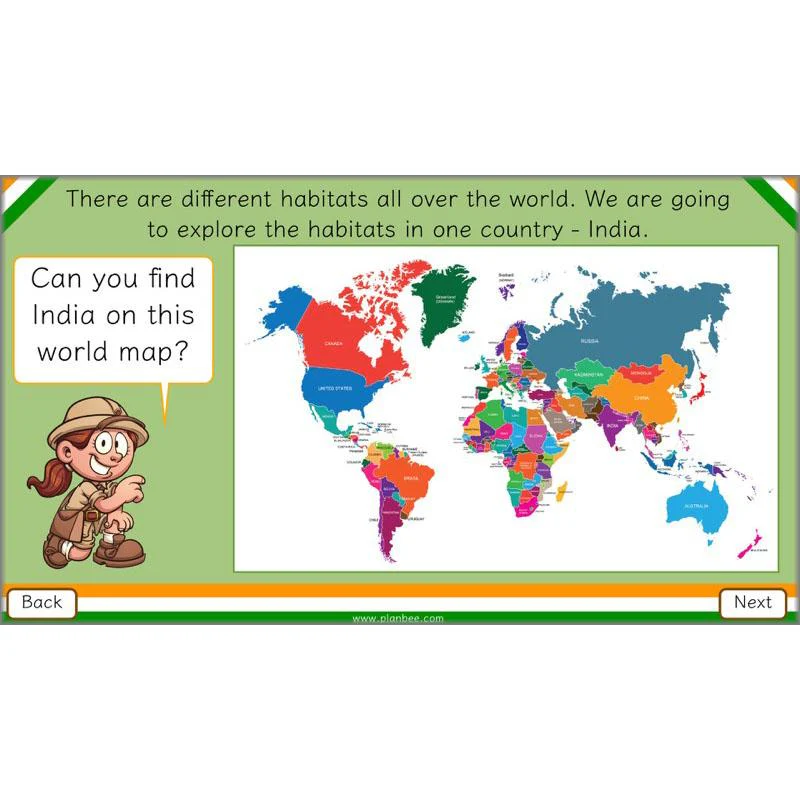
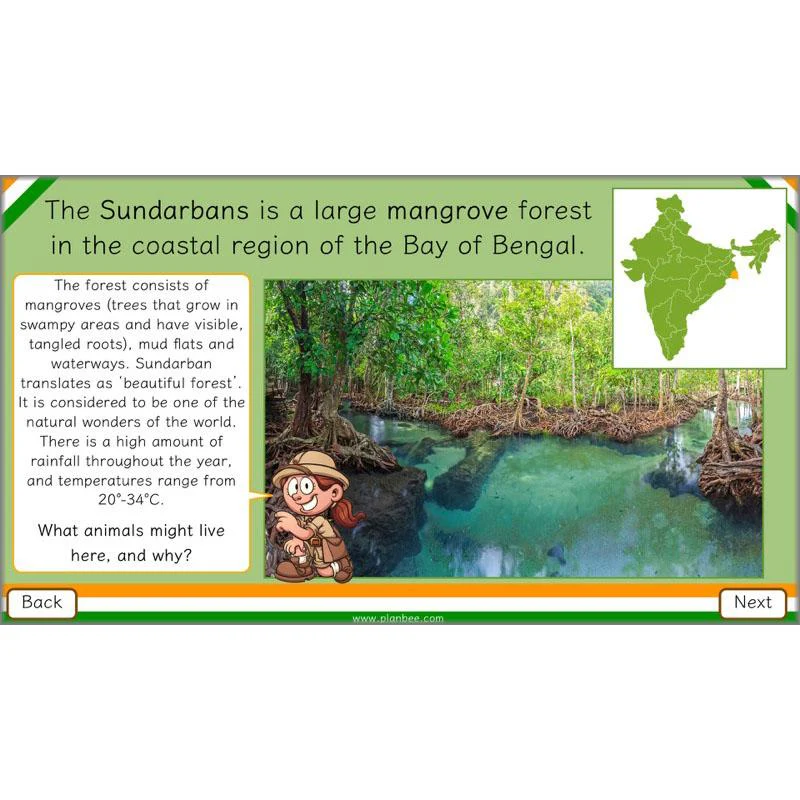
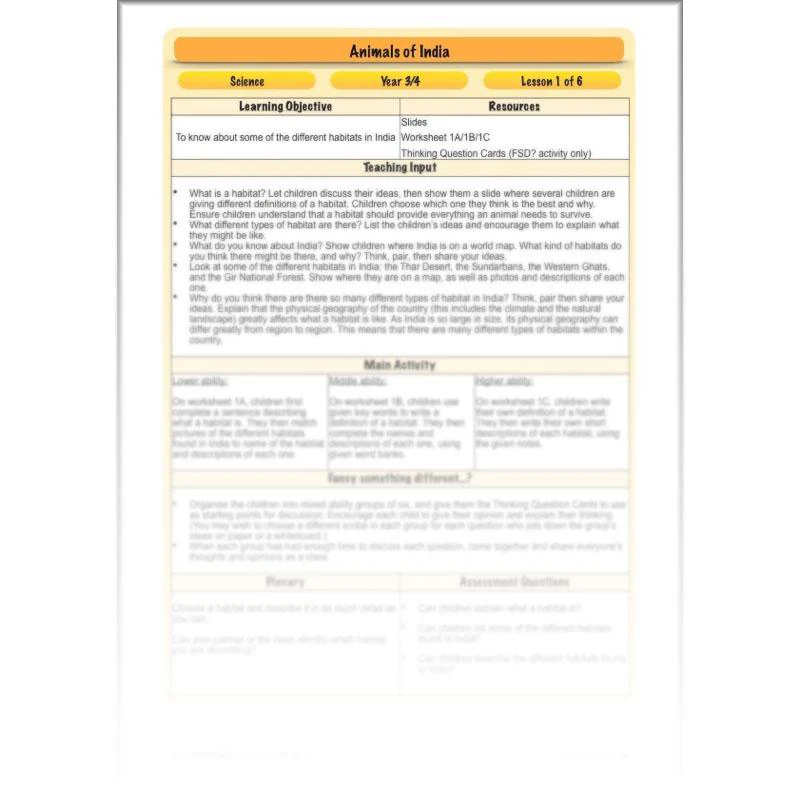
In this first lesson, children are reminded what a habitat is, and are then challenged to list all the different types of habitat that they know of. As a class, they then explore some specific habitats in India, and begin to think about what types of animal might live there, and why. Children use their knowledge of these habitats in their independent activities. Alternatively, in groups children can use the ‘Thinking Questions Cards’ to promote discussion and debate.
What's included:
- Lesson plan
- Slides
- Activity ideas
- Differentiated worksheets
- Thinking Question Cards
View Lesson 1
Grouping and Sorting
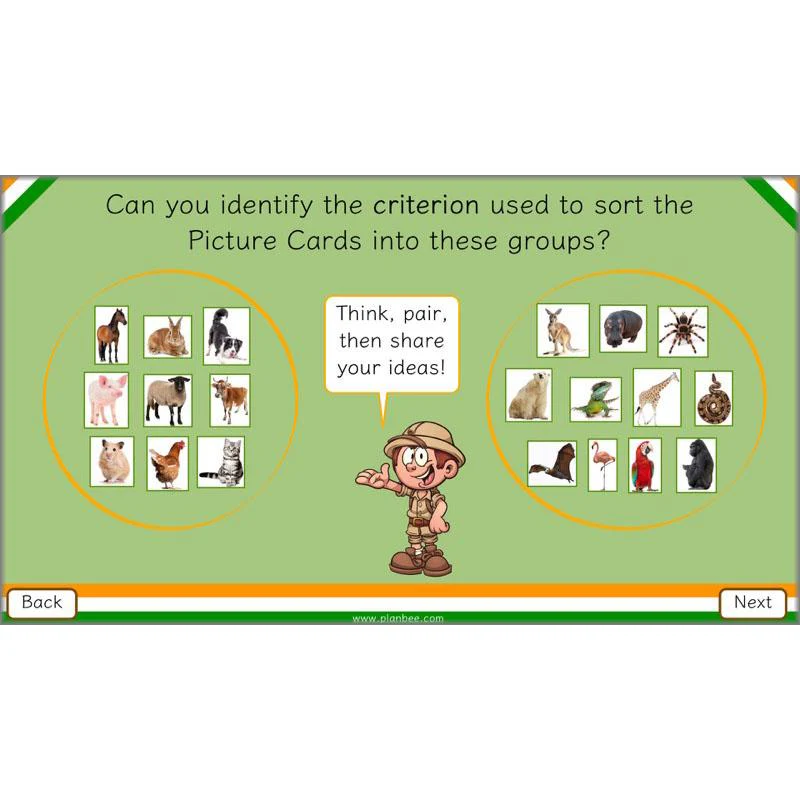
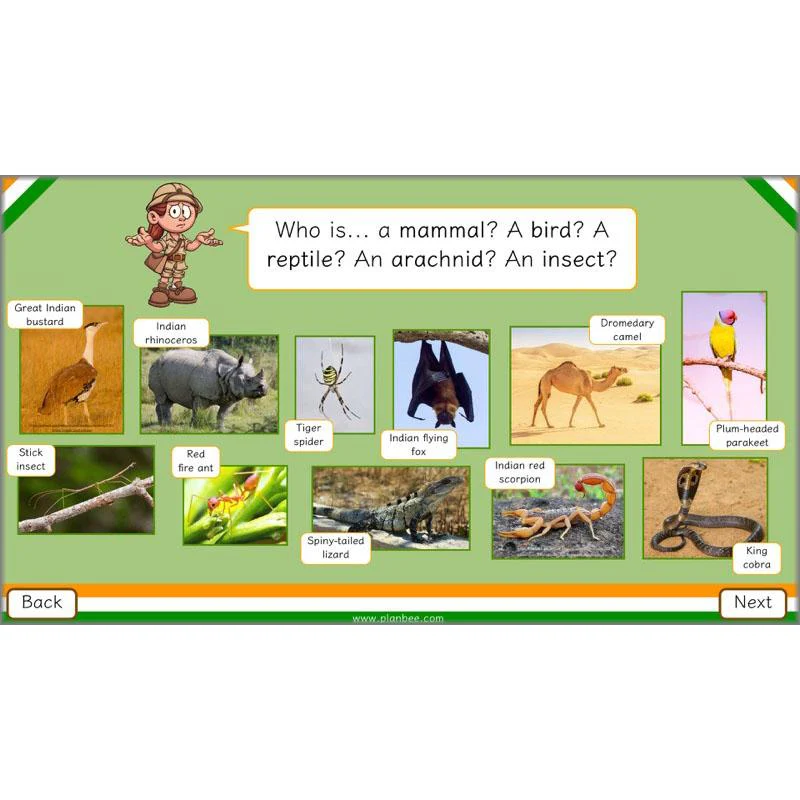
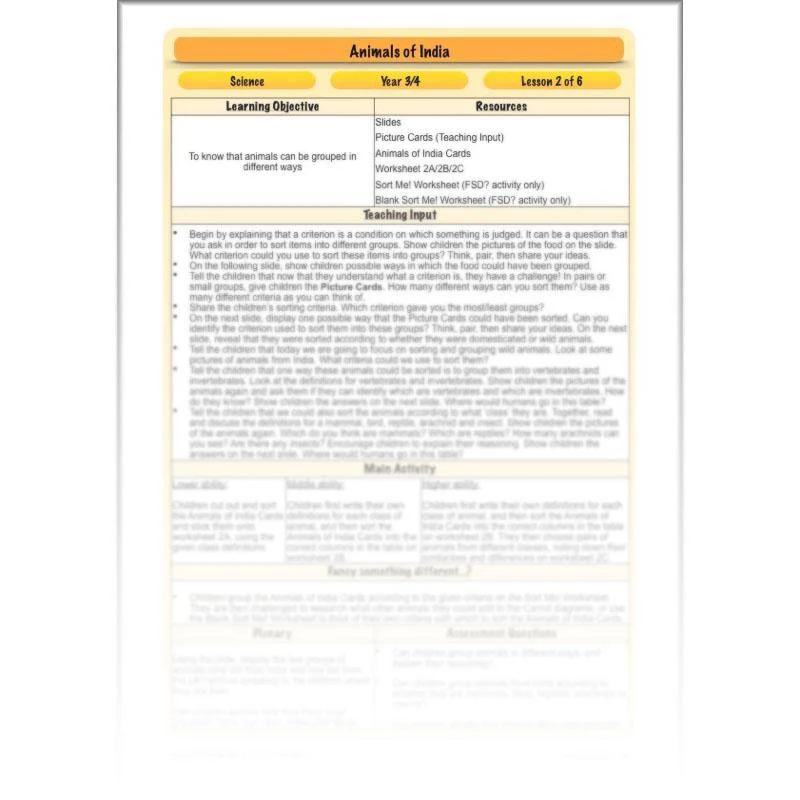
Children learn that animals can be grouped using a range of different criteria. As a class, they sort animals according to whether they are vertebrates or invertebrates, as well as breaking this down further into what class of animal they are: mammal, bird, reptile, arachnid or insect. In their independent activities, children use or write definitions of these groups to sort picture cards of Indian animals. Alternatively, they use Carroll diagrams with given criteria to sort them.
What's included:
- Lesson plan
- Slides
- Activity ideas
- Picture Cards
- Differentiated worksheets
- Animals of India Cards
- Sort Me! Worksheet
- Blank Sort Me! Worksheet
View Lesson 2
Classification Keys
In this lesson, children use and expand on their knowledge of grouping animals by using classification keys. As a class, they identify individual animals of India using a key, and discuss how a key works/is made. Children will use a different key to identify animals of India in their independent work, or in the Fancy Something Different? activity, they can create their own classification key for a chosen group of animals.
What's included:
- Lesson plan
- Slides
- Activity ideas
- Differentiated worksheets
- Classification Keys
- Classification Cards
View Lesson 3
Nutrition and Diet
In this lesson, children begin to think about nutrition in animals, and whether all species need the same type and amount of food. They discuss the terms carnivore, herbivore and omnivore, and are challenged to classify some animals of India according to these definitions. In their independent work, children match diets to animals according to given clues. Alternatively, they research the diets of various animals in order to help some zookeepers and a newly opening zoo.
What's included:
- Lesson plan
- Slides
- Activity ideas
- Thinking Question Cards
- Differentiated worksheets
- Picture and Diet Cards
- Zookeeper’s Help Cards
View Lesson 4
Food Chains
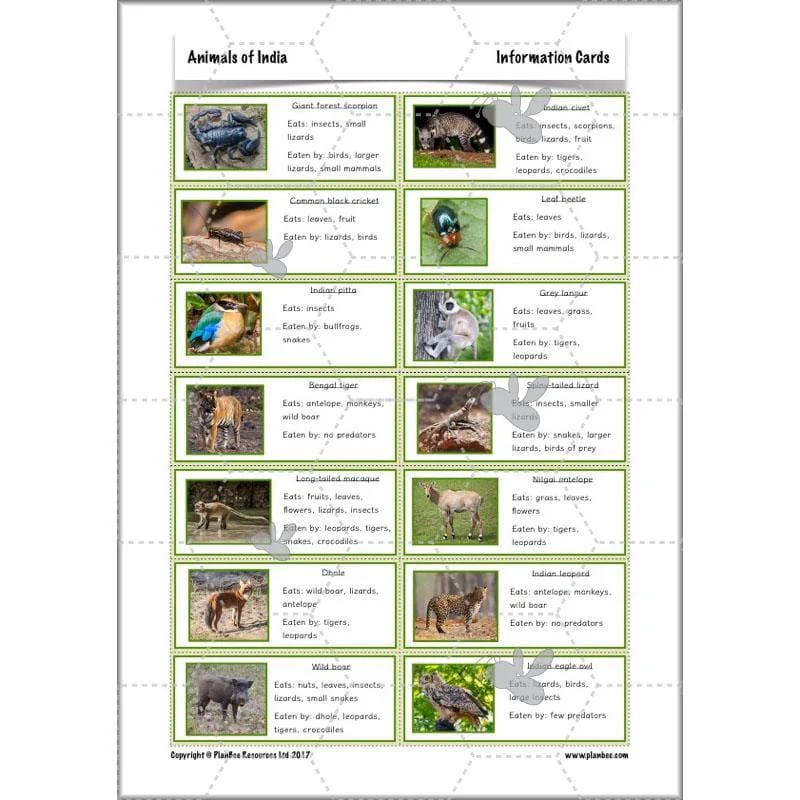
Children learn how animals in India are linked by what they eat. As a class they look at different food chains, and identify the producer and consumers in each one, as well as the predators and prey. In their independent activities, children sort given sets of animals into food chains. Alternatively, they create their own food chains based on information cards about plants and animals found in India.
What's included:
- Lesson plan
- Slides
- Activity ideas
- Differentiated worksheets
- Picture Cards
- Information Cards
- Food Chains Sheet
View Lesson 5
Effects of Changes to Habitats
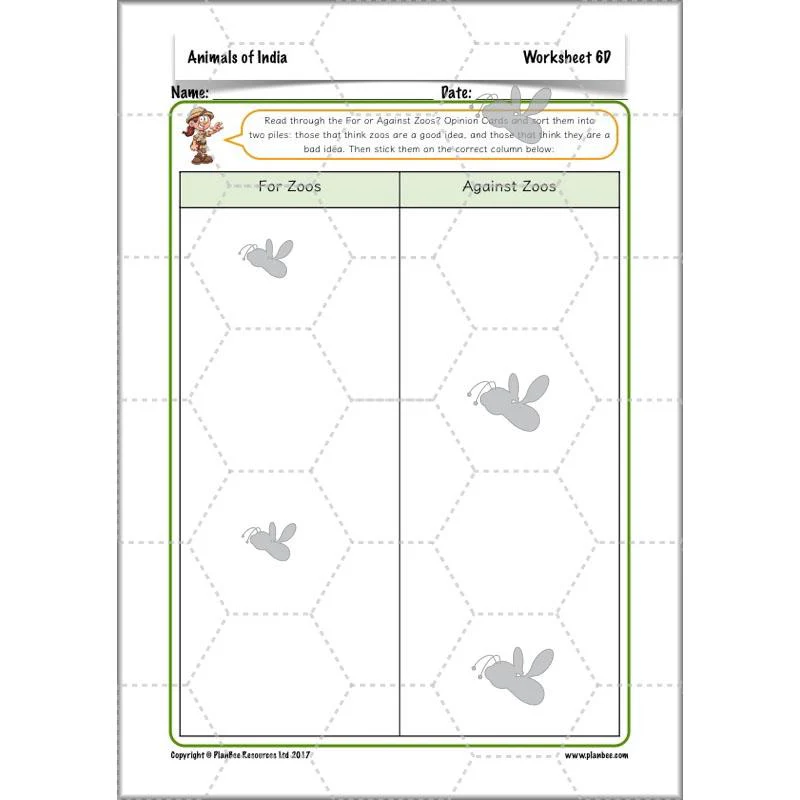
In this final lesson, children learn how a whole species can be affected if their habitat changes. They learn what conservation means, and find out how threatened animals are grouped according to the IUCN Red List conservation status system. Children look at some examples of animals of India that are threatened, and then focus on the endangered Bengal tiger in their independent work. Alternatively, children consider the reasons for and against zoos, and hold a class debate.
What's included:
- Lesson plan
- Slides
- Activity ideas
- Differentiated worksheets
- Bengal Tiger Information Sheet
- Picture Card Cut-outs Sheet
- For or Against? Opinion Cards
View Lesson 6
Product Information
Product Information
Shipping & Returns
Shipping & Returns
Description
Find out all about the animals of India in this fun, fact-filled science scheme of work for Year 3/4!
Children will first explore what the various habitats in India are like, before being introduced to a variety of animals who live there. They will learn how to group and then identify animals using classification keys, and then explore nutrition and 'who eats who' by looking at food chains. Finally, children will learn how changes to their habitats can affect animals, and how conservation is needed for some species.
You may also like our Incredible India Topic Bundle – choose schemes from different subjects to create your own India-themed cross-curricular topic!
Habitats
In this first lesson, children are reminded what a habitat is, and are then challenged to list all the different types of habitat that they know of. As a class, they then explore some specific habitats in India, and begin to think about what types of animal might live there, and why. Children use their knowledge of these habitats in their independent activities. Alternatively, in groups children can use the ‘Thinking Questions Cards’ to promote discussion and debate.
What's included:
- Lesson plan
- Slides
- Activity ideas
- Differentiated worksheets
- Thinking Question Cards
View Lesson 1
Grouping and Sorting
Children learn that animals can be grouped using a range of different criteria. As a class, they sort animals according to whether they are vertebrates or invertebrates, as well as breaking this down further into what class of animal they are: mammal, bird, reptile, arachnid or insect. In their independent activities, children use or write definitions of these groups to sort picture cards of Indian animals. Alternatively, they use Carroll diagrams with given criteria to sort them.
What's included:
- Lesson plan
- Slides
- Activity ideas
- Picture Cards
- Differentiated worksheets
- Animals of India Cards
- Sort Me! Worksheet
- Blank Sort Me! Worksheet
View Lesson 2
Classification Keys
In this lesson, children use and expand on their knowledge of grouping animals by using classification keys. As a class, they identify individual animals of India using a key, and discuss how a key works/is made. Children will use a different key to identify animals of India in their independent work, or in the Fancy Something Different? activity, they can create their own classification key for a chosen group of animals.
What's included:
- Lesson plan
- Slides
- Activity ideas
- Differentiated worksheets
- Classification Keys
- Classification Cards
View Lesson 3
Nutrition and Diet
In this lesson, children begin to think about nutrition in animals, and whether all species need the same type and amount of food. They discuss the terms carnivore, herbivore and omnivore, and are challenged to classify some animals of India according to these definitions. In their independent work, children match diets to animals according to given clues. Alternatively, they research the diets of various animals in order to help some zookeepers and a newly opening zoo.
What's included:
- Lesson plan
- Slides
- Activity ideas
- Thinking Question Cards
- Differentiated worksheets
- Picture and Diet Cards
- Zookeeper’s Help Cards
View Lesson 4
Food Chains
Children learn how animals in India are linked by what they eat. As a class they look at different food chains, and identify the producer and consumers in each one, as well as the predators and prey. In their independent activities, children sort given sets of animals into food chains. Alternatively, they create their own food chains based on information cards about plants and animals found in India.
What's included:
- Lesson plan
- Slides
- Activity ideas
- Differentiated worksheets
- Picture Cards
- Information Cards
- Food Chains Sheet
View Lesson 5
Effects of Changes to Habitats
In this final lesson, children learn how a whole species can be affected if their habitat changes. They learn what conservation means, and find out how threatened animals are grouped according to the IUCN Red List conservation status system. Children look at some examples of animals of India that are threatened, and then focus on the endangered Bengal tiger in their independent work. Alternatively, children consider the reasons for and against zoos, and hold a class debate.
What's included:
- Lesson plan
- Slides
- Activity ideas
- Differentiated worksheets
- Bengal Tiger Information Sheet
- Picture Card Cut-outs Sheet
- For or Against? Opinion Cards
View Lesson 6