Crime and Punishment
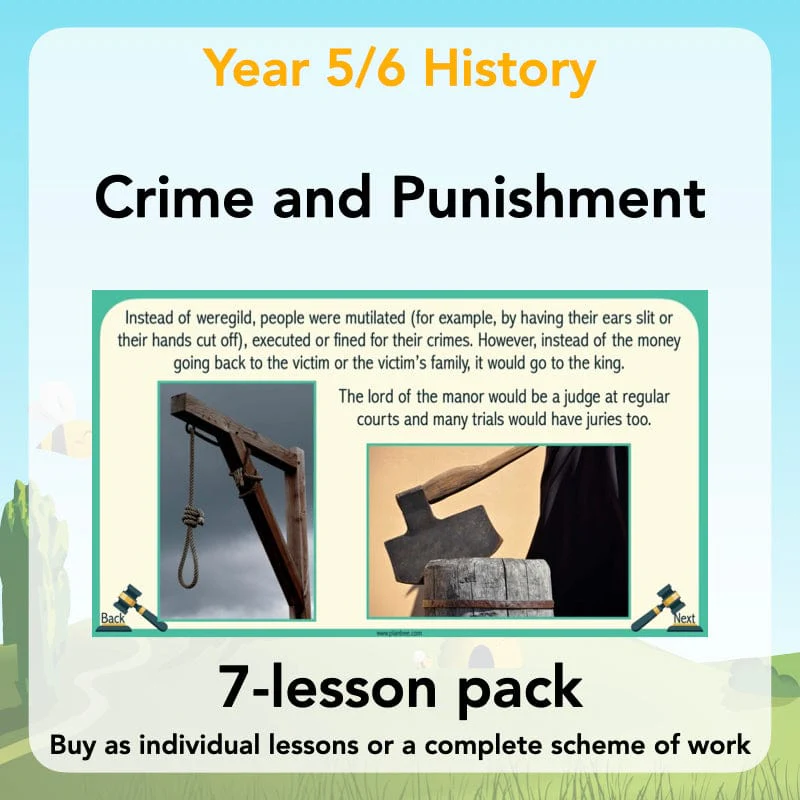
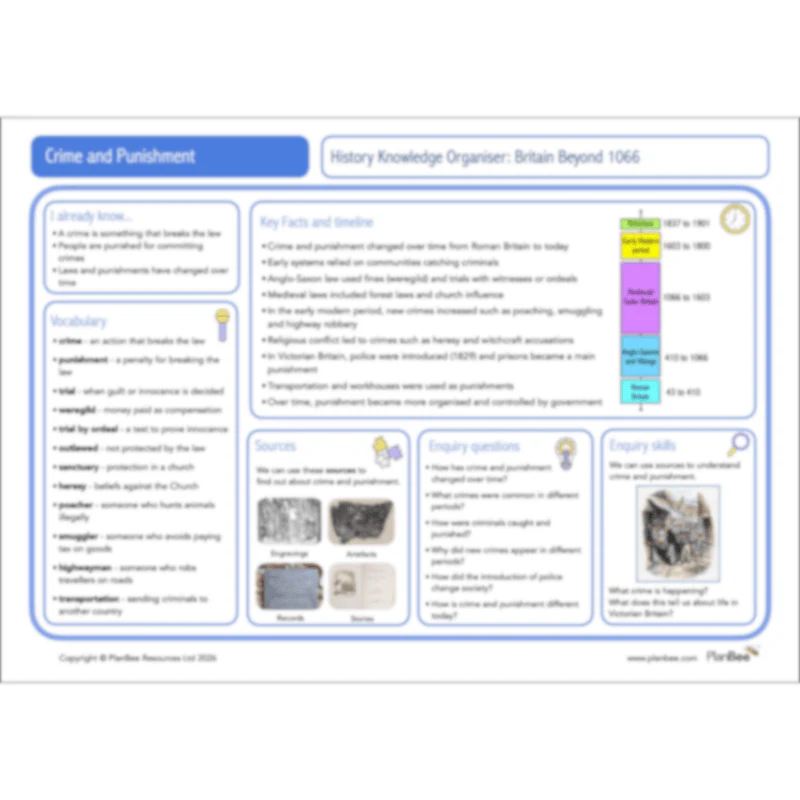
These Crime and Punishment KS2 History lessons will take your Year 5 or Year 6 class on a journey through British history as they discover how crime and punishment has changed throughout the ages. Beginning with the Romans and traveling right through to the present day, your children will discover how changes in society create changes in the kind of crimes that are committed, as well as the ways in which they are punished.
Perfect if you are teaching a Crime and Punishment topic, this ready-to-teach KS2 scheme of work contains detailed lesson plans, informative slides, differentiated worksheets and many other helpful resources - everything you need to get your class thoroughly engaged in the fascinating, gruesome and challenging world of British crime and punishment.
Introduction
This series starts by thinking about the kind of crimes that are common today and how we punish them. It then goes on to look at a timeline of Britain from the Romans to today and introduces the broad themes that will be looked at over the coming lessons. Your class will also become familiar with vocabulary that will be useful throughout the scheme of work, such as judge, jury, pillory and transportation.
What's included:
- Lesson plan
- Slides
- Activity ideas
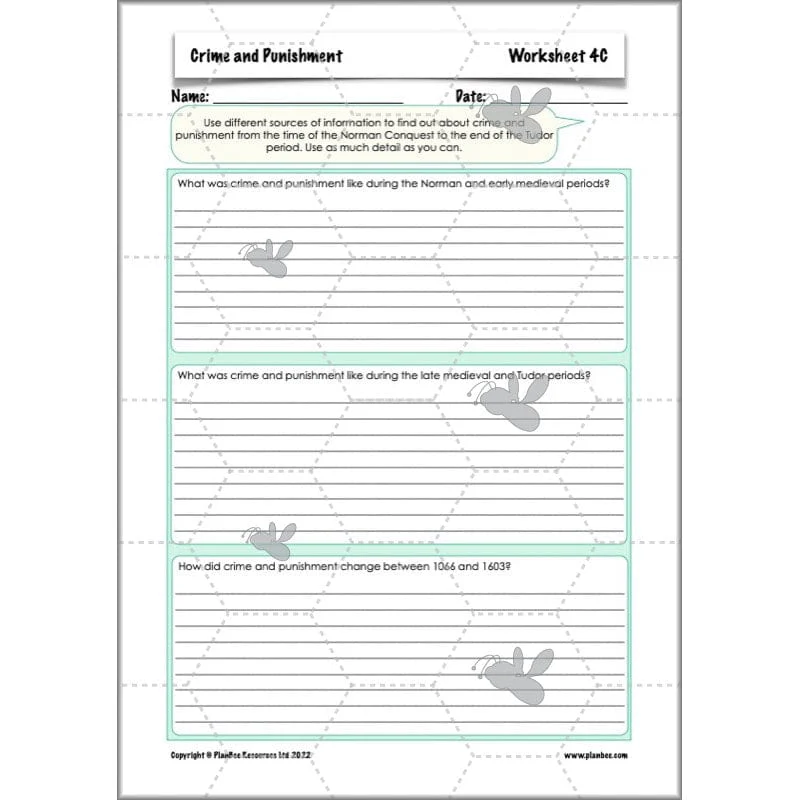
- Differentiated worksheets
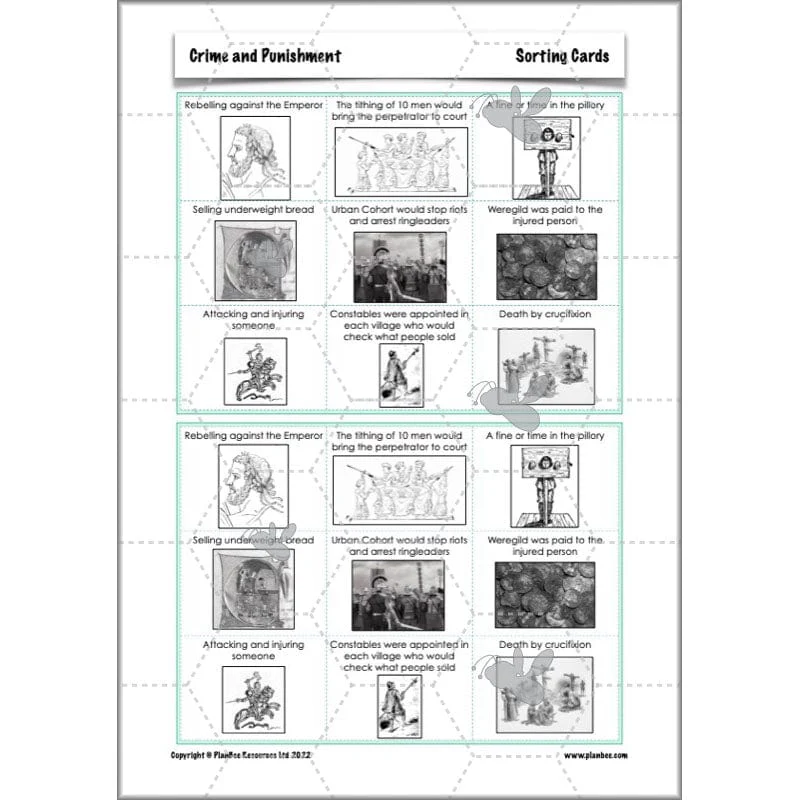
- Sorting cards
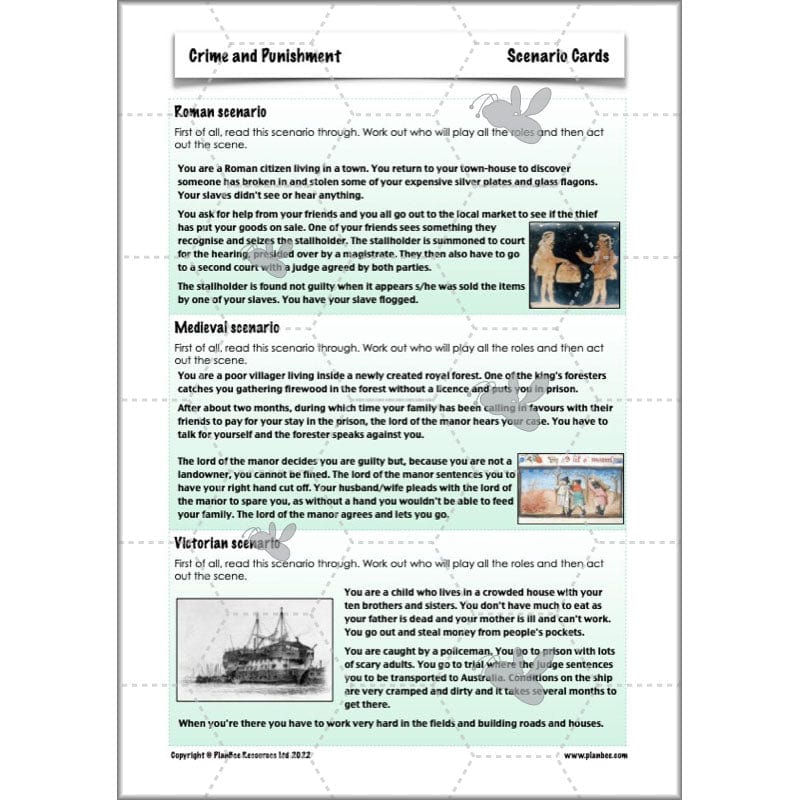
- Scenario cards
Romans
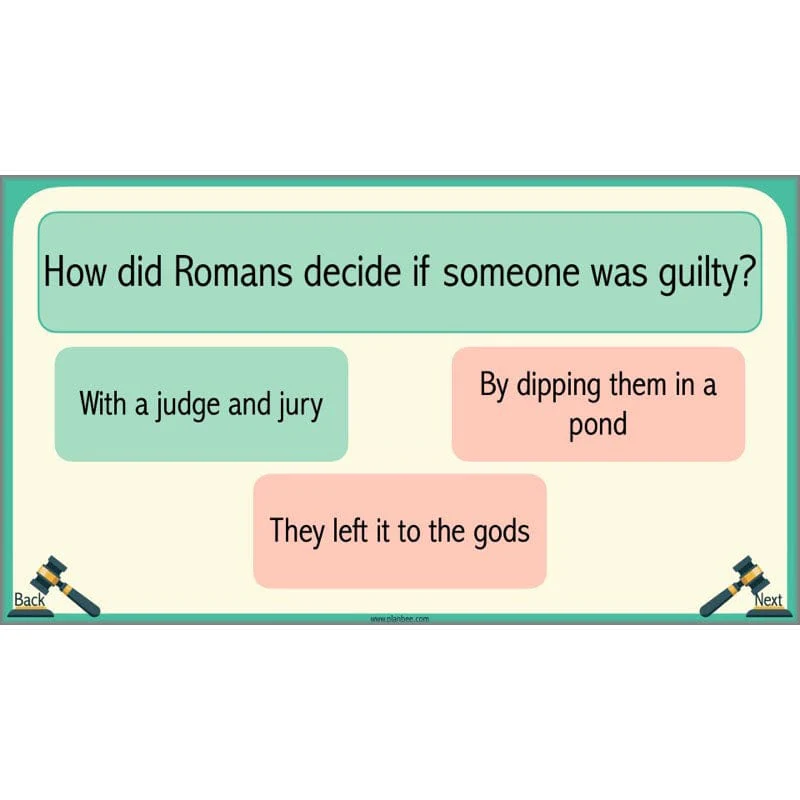
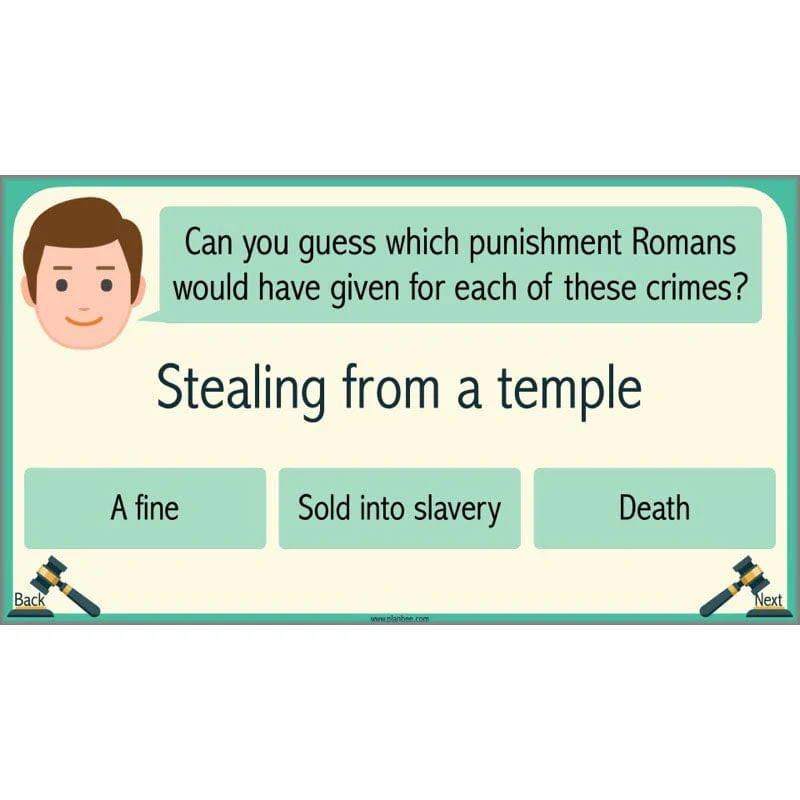
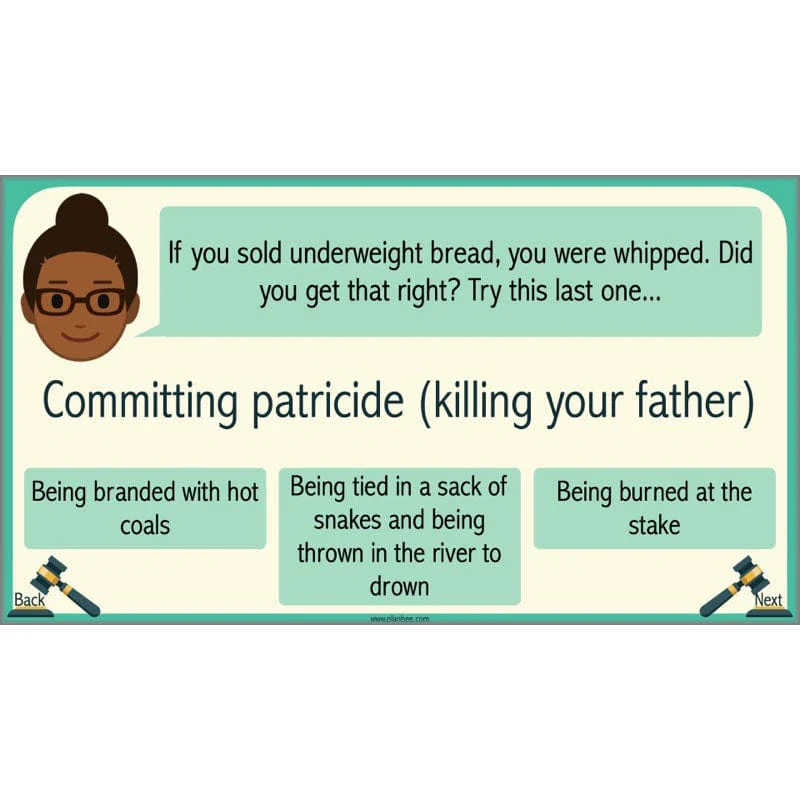
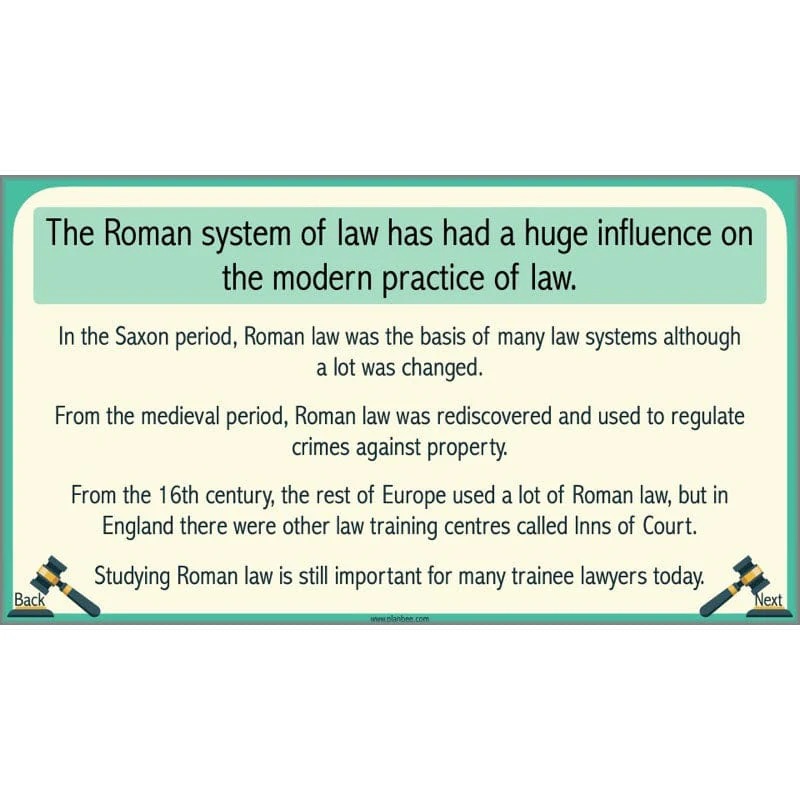
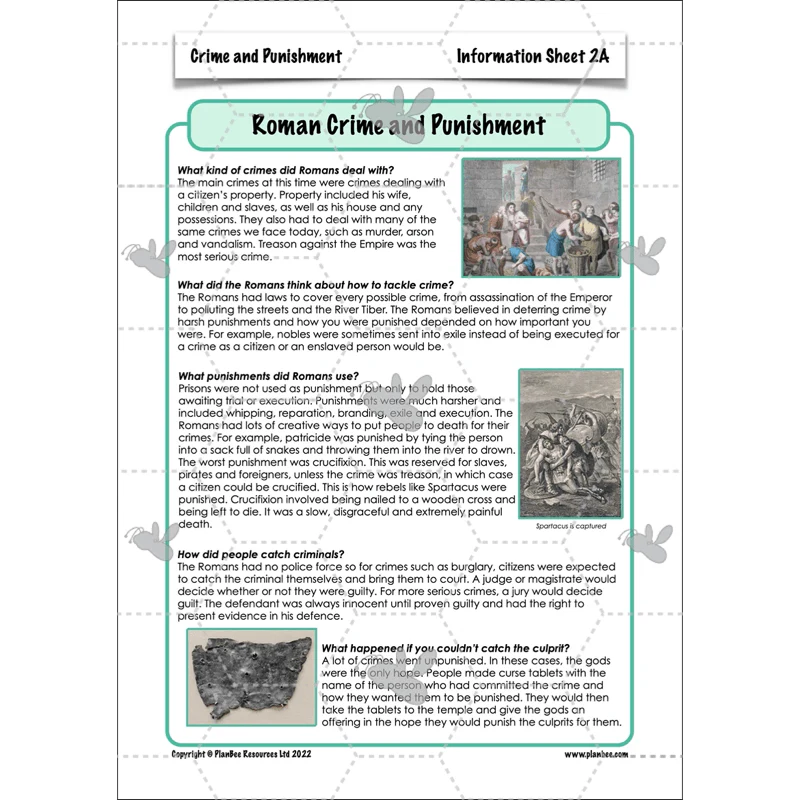
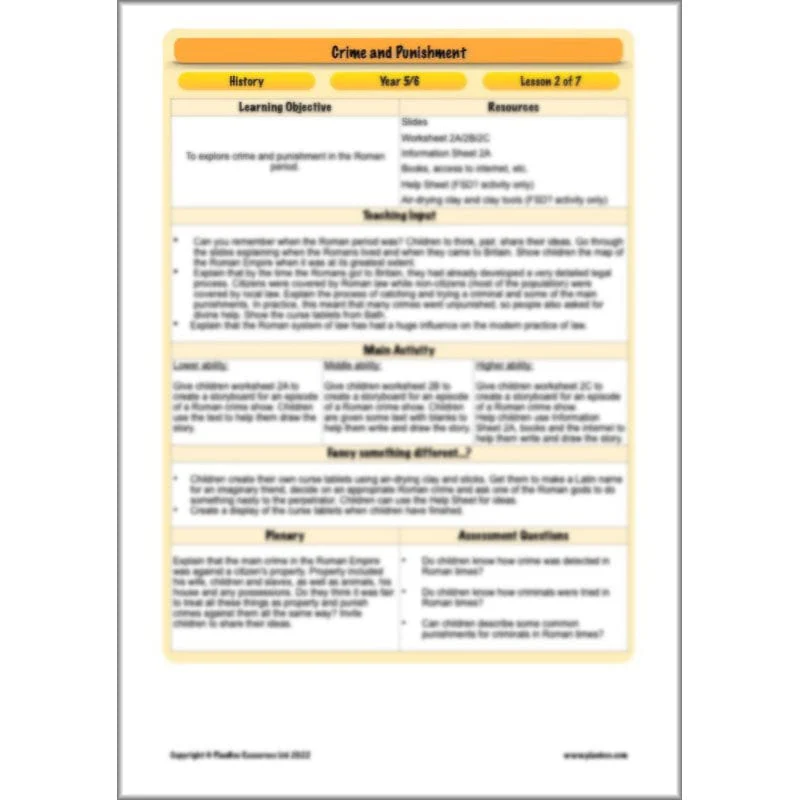
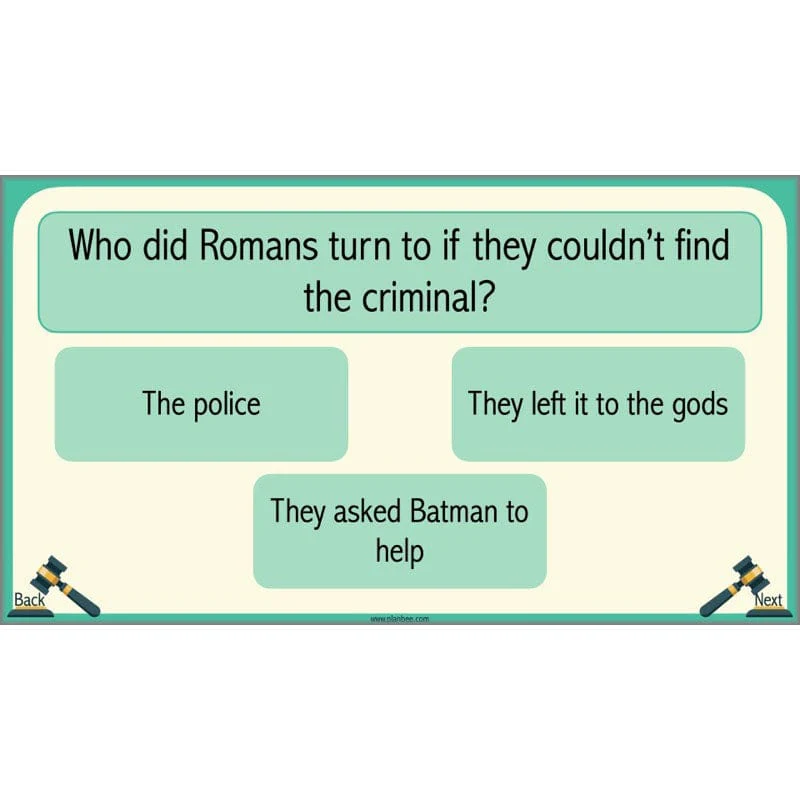
Looking for a Roman Crime and Punishment KS2 History lesson? You've found it! In the second lesson of this series, your class will recap when the Romans lived and when they arrived in Britain. They will then go on to explore which crimes were common in Roman Britain and how they were punished. They will find out how and why the Roman justice system still has an influence on law and order today, as well as how Romans turned to divine help when the established system couldn't help them.
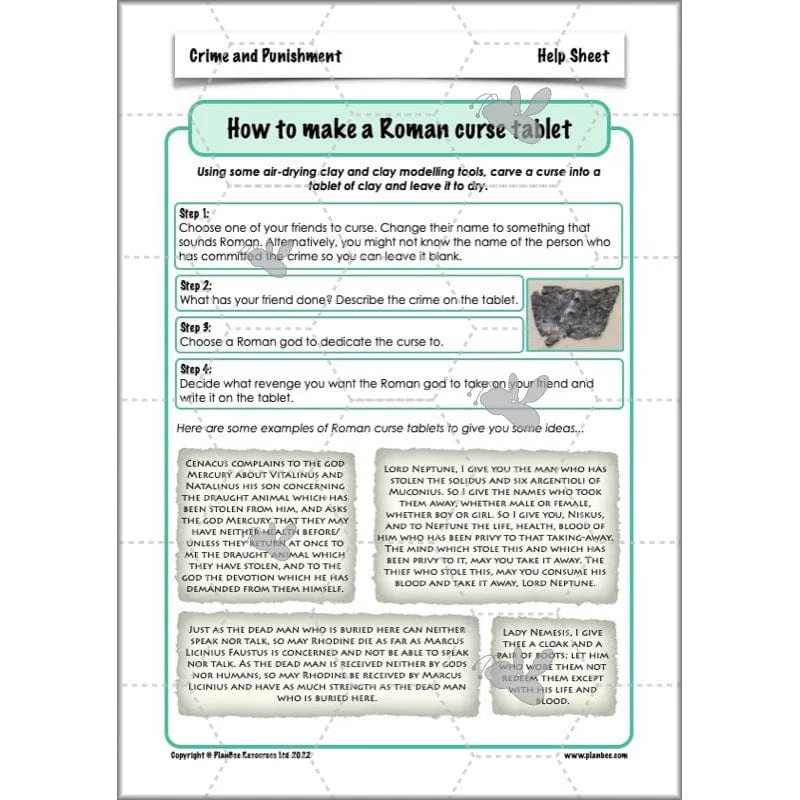
This Roman Crime and Punishment planning pack contains everything you need to deliver this fascinating History lesson, including a detailed lesson plan, a slideshow for the teaching input and a helpful range of printable worksheets and resources for their independent learning tasks.
What's included:
- Lesson plan
- Slides
- Activity ideas
- Differentiated worksheets
- Information sheet
- Help sheet
Anglo-Saxons and Vikings
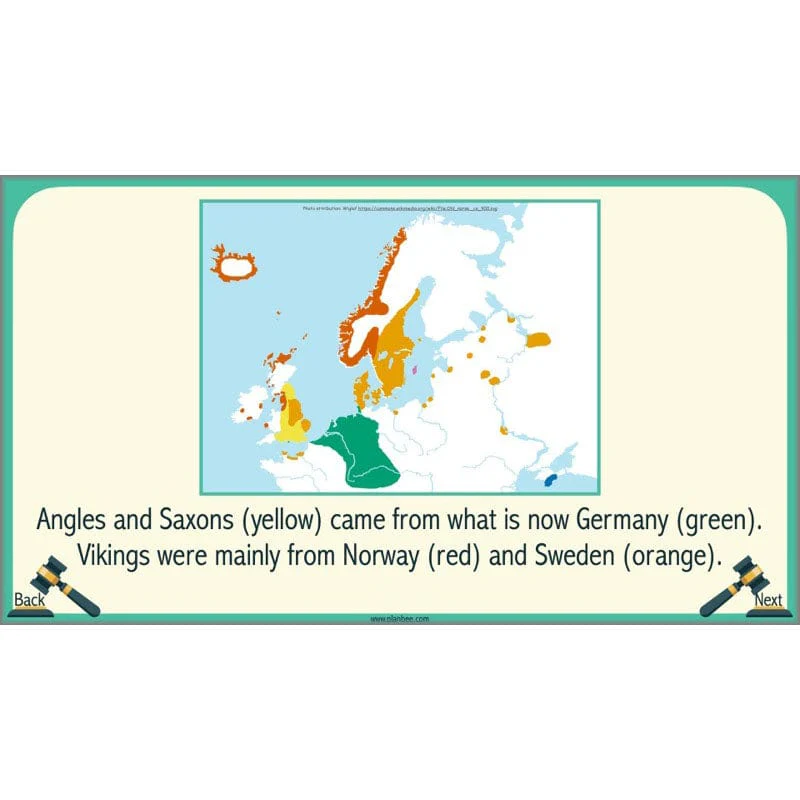
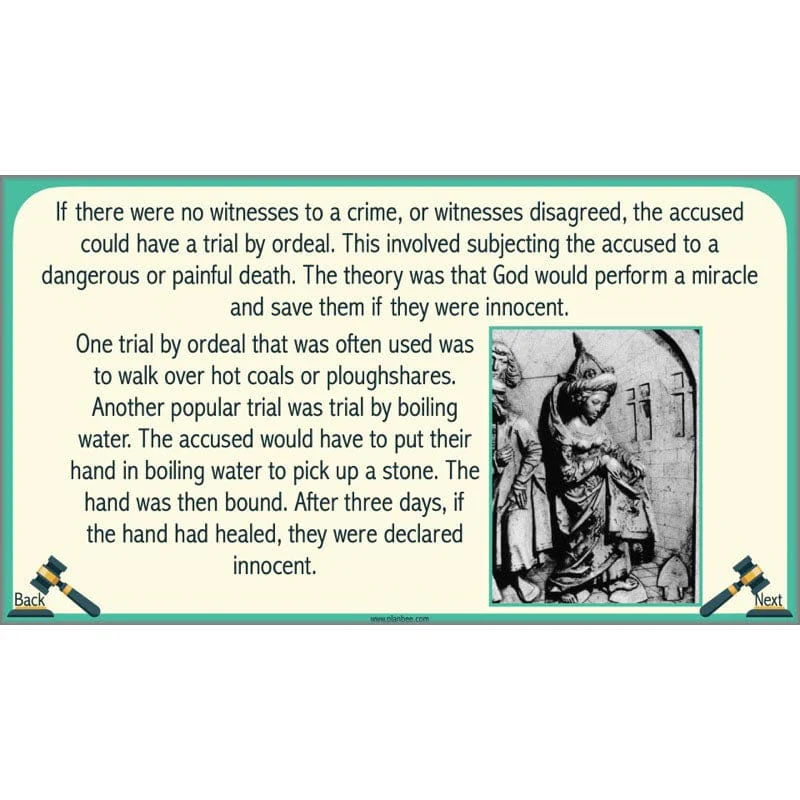
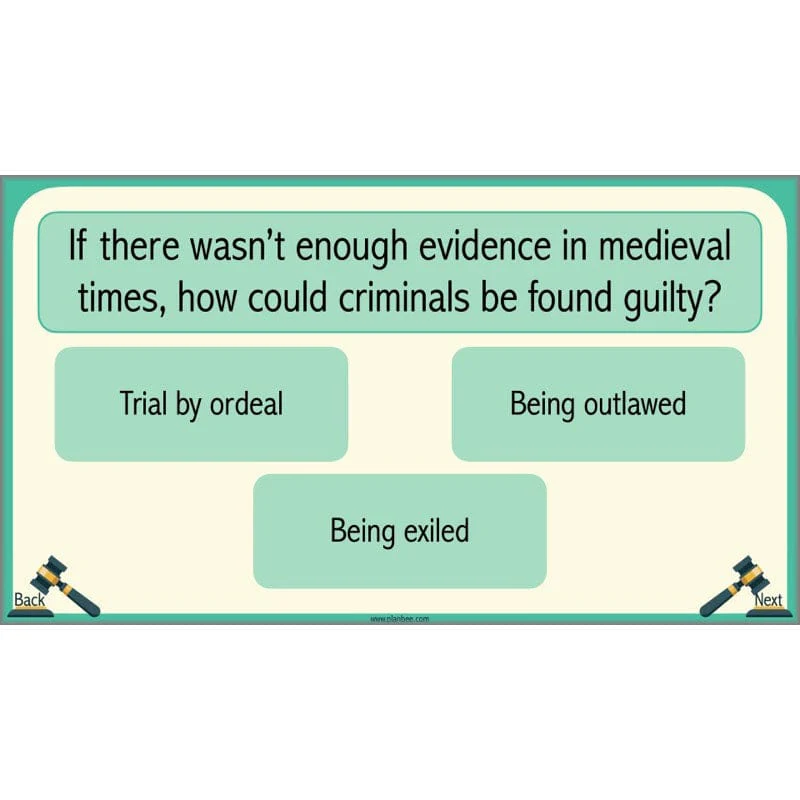
This Viking and Anglo-Saxon Crime and Punishment KS2 History lesson explores how crime and punishment changed when the Romans left Britain, and how the Anglo-Saxons and Vikings dealt with criminals. Your class will find out about weregild and tithingmen, as well as trial by ordeal.
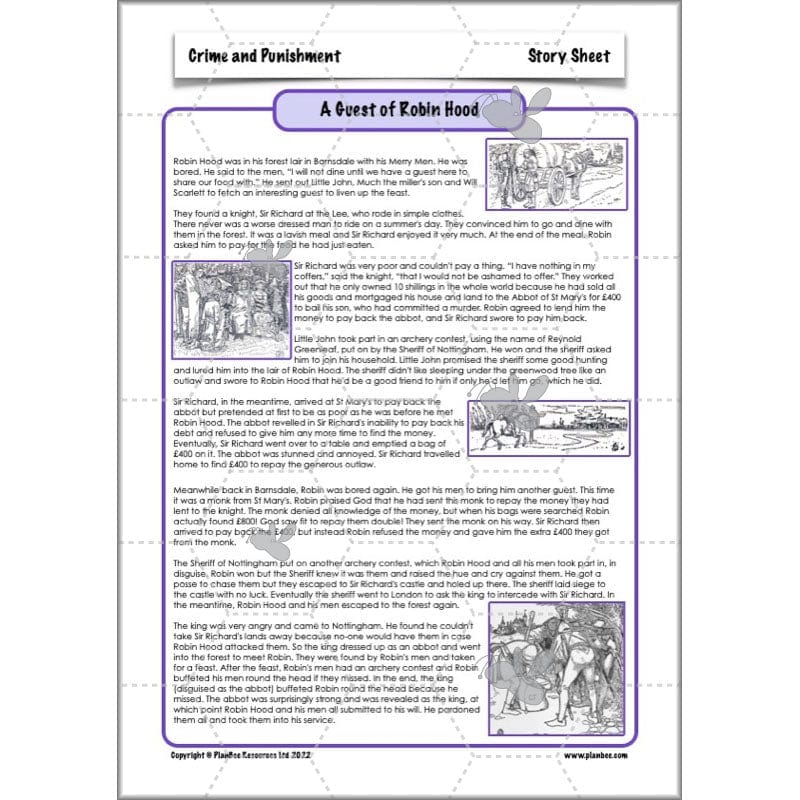
During their independent learning, they can look at some cases of Anglo-Saxon crime and punishment, reading accounts of crimes, deciding if the defendant is guilty or innocent, then choosing an appropriate punishment. There is also the opportunity to read a story about Britain's most famous outlaw, Robin Hood.
What's included:
- Lesson plan
- Slides
- Activity ideas
- Differentiated worksheets
- Differentiated information sheets
- Story sheet
Medieval and Tudor
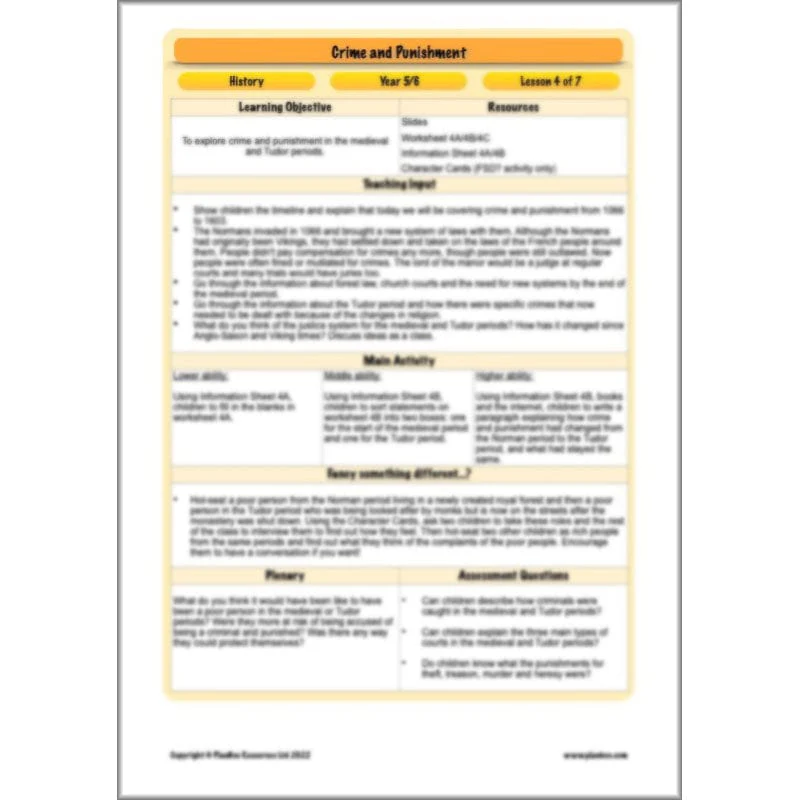
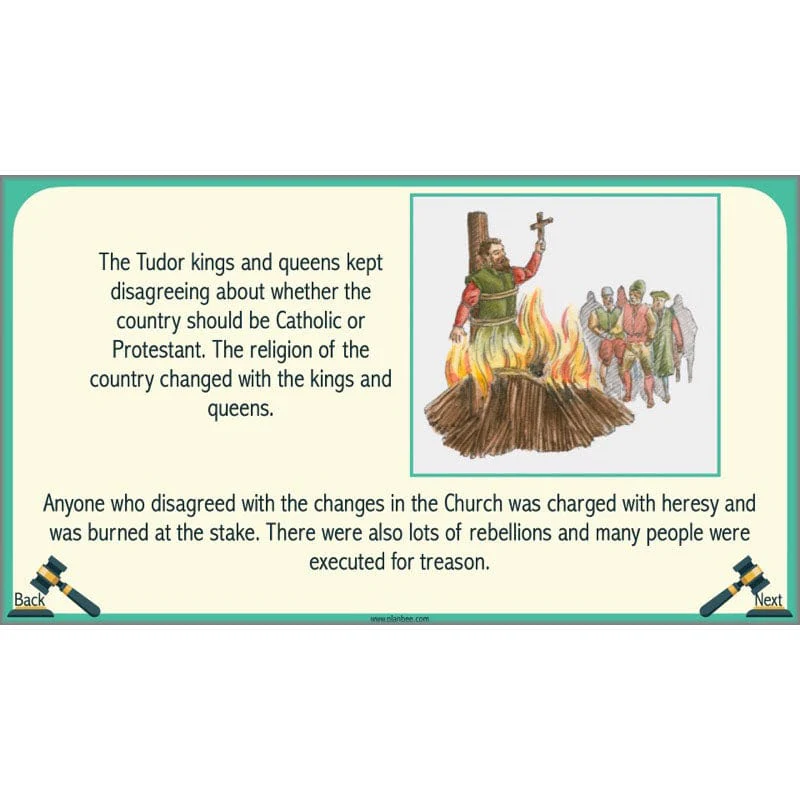
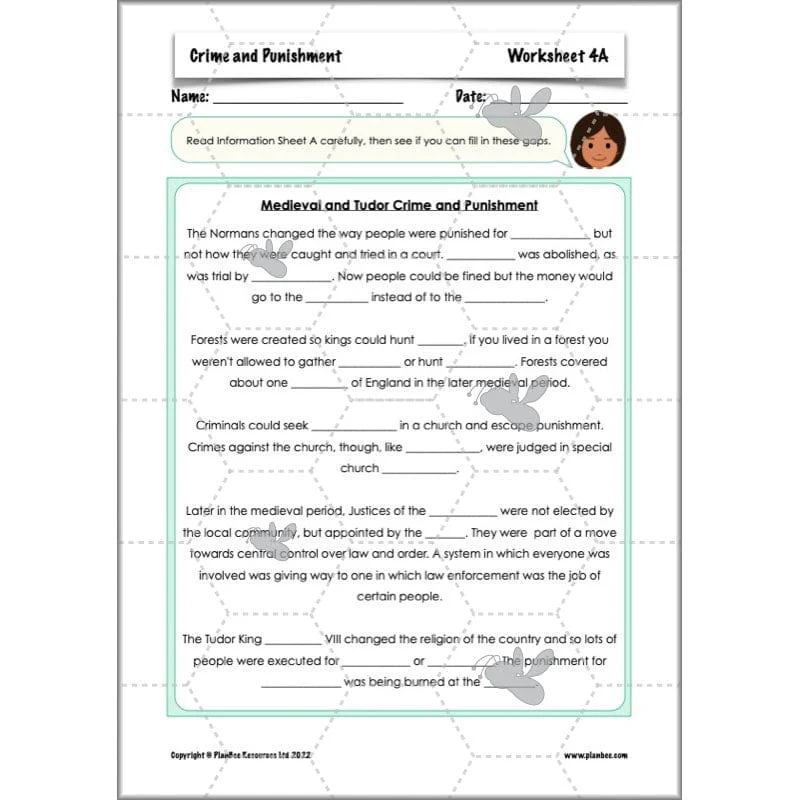
This Medieval and Tudor Crime and Punishment lesson will teach your KS2 class all about the new laws that were introduced to Britain after the Norman invasion. It explores new crimes that were being committed in the medieval period and the reasons for these new crimes (such as the introduction of Forest Law), and the punishments that came with them, such as mutilations and fines. It also explores how the religious upheaval of the Tudor period created specific crimes that were harshly dealt with.
This Medieval and Tudor Crime and Punishment lesson comes fully prepared and ready to teach, leaving you free to enjoy learning all the gruesome details of crime and punishment in this era with your class!
What's included:
- Lesson plan
- Slides
- Activity ideas
- Differentiated worksheets
- Differentiated information sheets
- Character cards
Early Modern Period
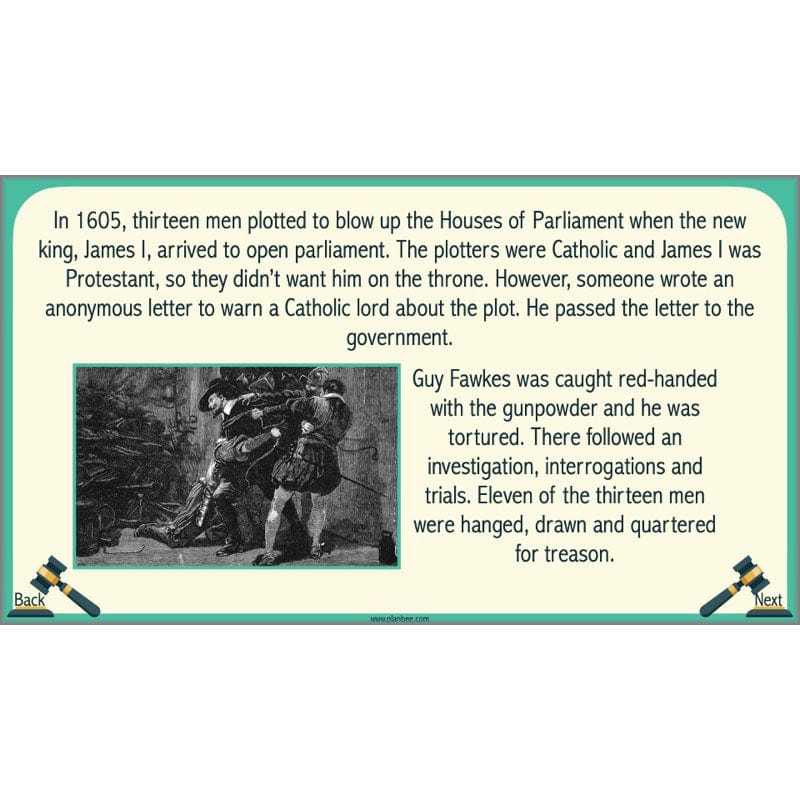
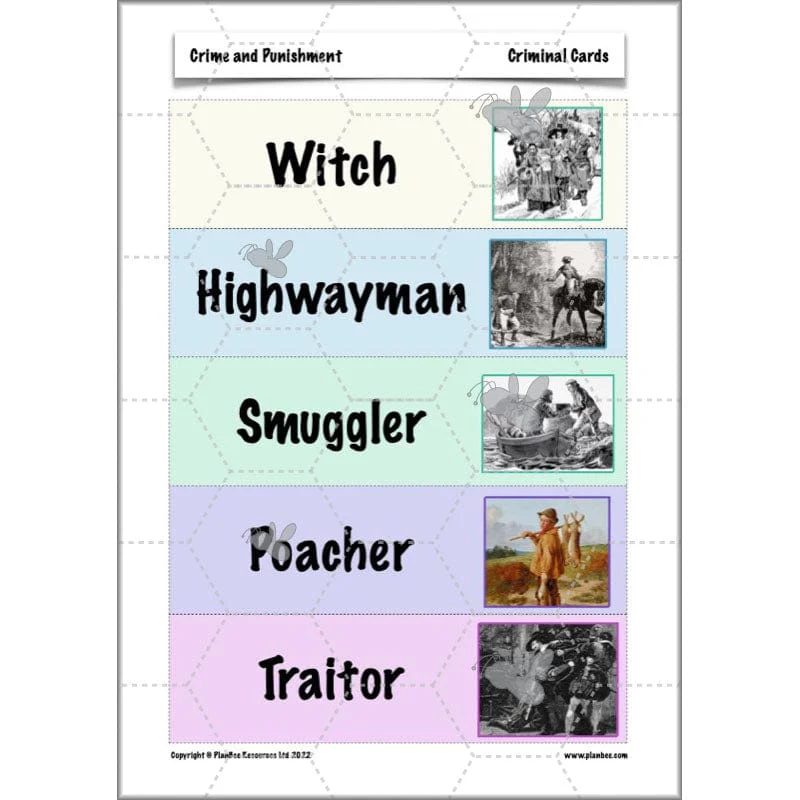
With a country in religious turmoil, the early modern period began with the infamous gunpowder plot and a Civil War. There were lots of crimes relating to religion, as well as a rise in highwayman, poachers and smugglers. Your class will find out what caused these changes as well as how they were dealt with through the 'Bloody Code' and the newly introduced transportation.
What's included:
- Lesson plan
- Slides
- Activity ideas
- Differentiated worksheets
- Differentiated information sheets
- Criminal cards
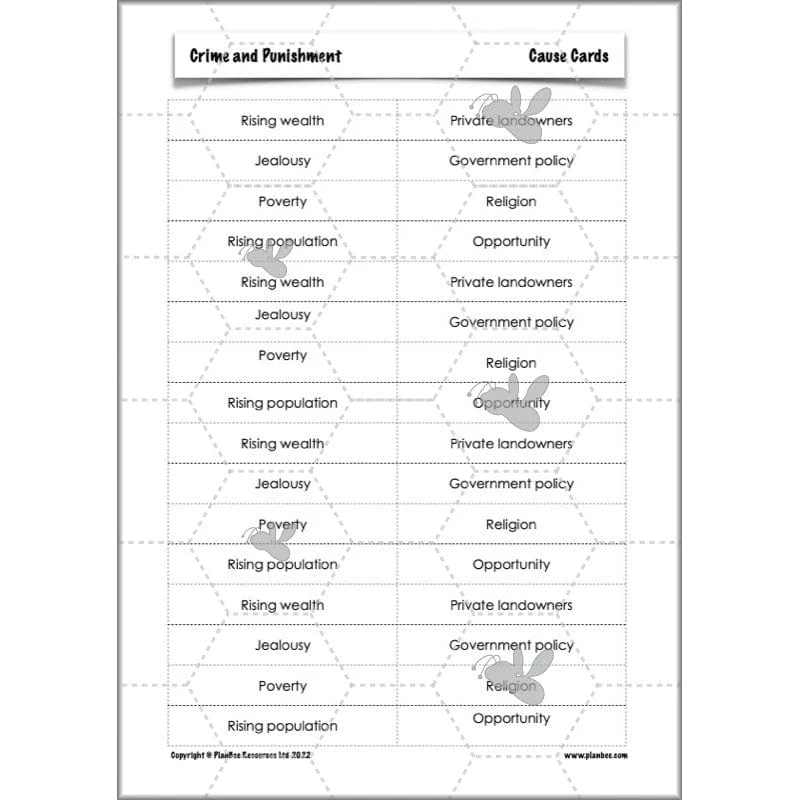
- Cause cards
Victorians
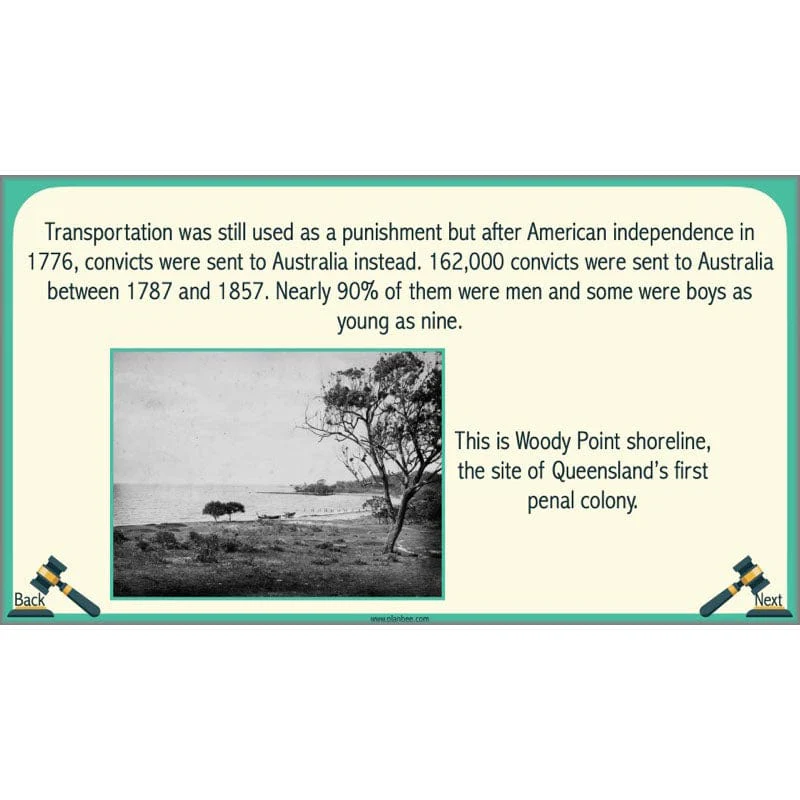
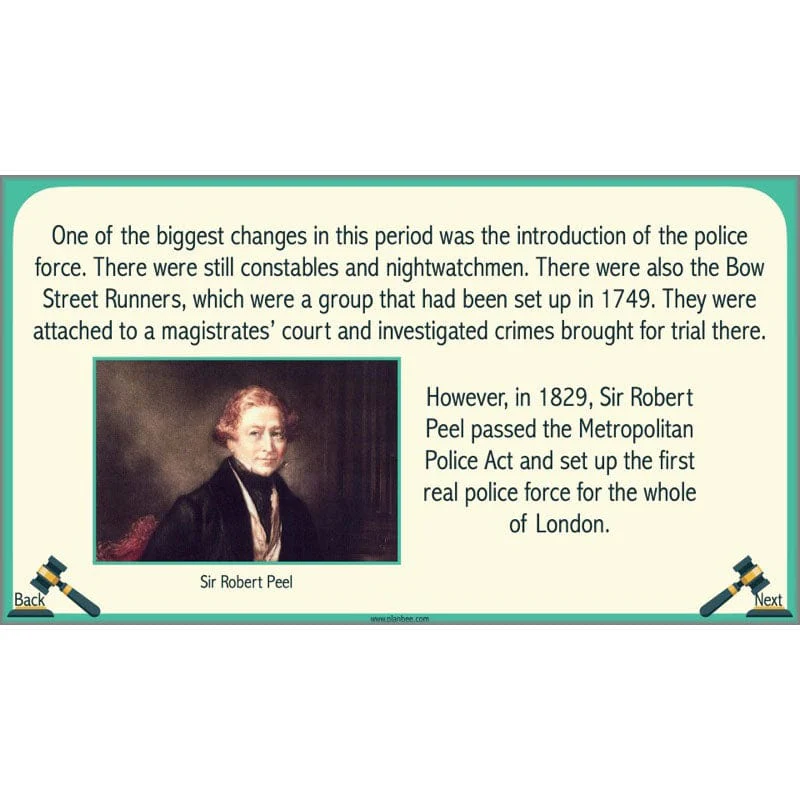
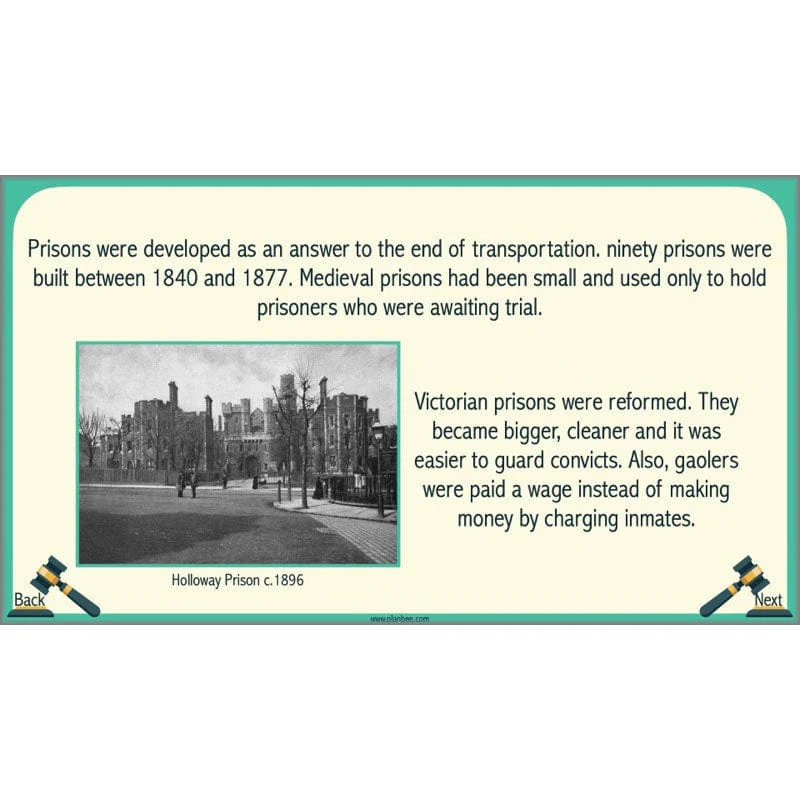
This Victorian Crime and Punishment KS2 History lesson will teach your class all about the social, economical and industrial changes that happened during the 19th century, and how this was reflected in the crimes that were committed and how they were detected and punished. Your class will find out about the creation of the police force, the use of prisons as punishments and how prisoners were now being transported to Australia. They will find out about changes in law too which led to changes in crimes, such as failing to send your child to school.
This Victorian Crime and Punishment KS2 planning pack contains everything you need to deliver this lesson, including a detailed lesson plan, a slideshow for the teaching input and a range of handy printable resources to support your Year 5/6 class with their independent learning activities.
What's included:
- Lesson plan
- Slides
- Activity ideas
- Differentiated worksheets
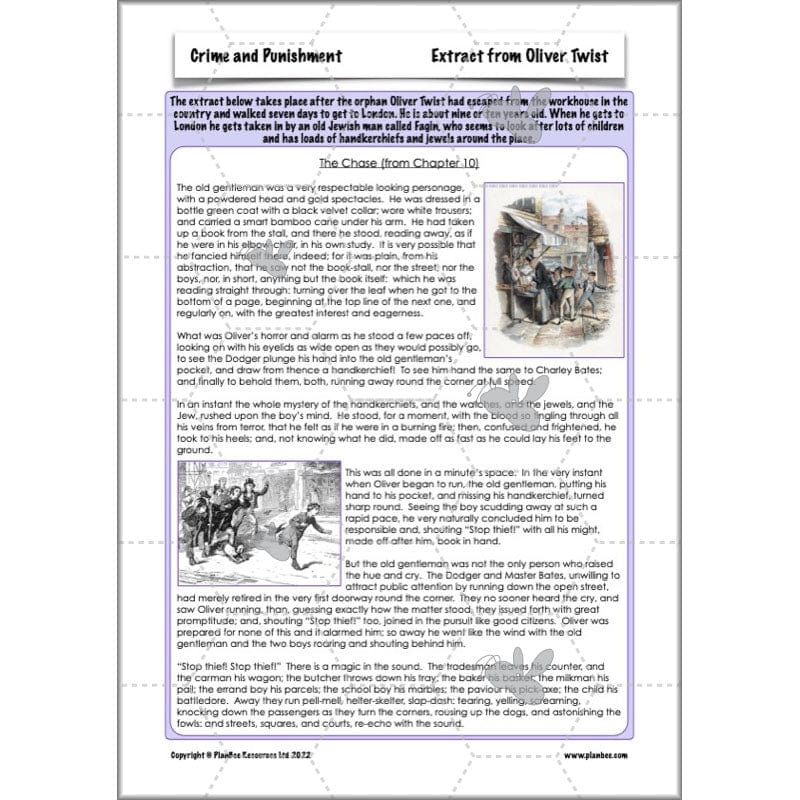
- ‘Oliver Twist’ extract
- Transportation story sheets
- Question cards
- Information cards
Timeline and Overview
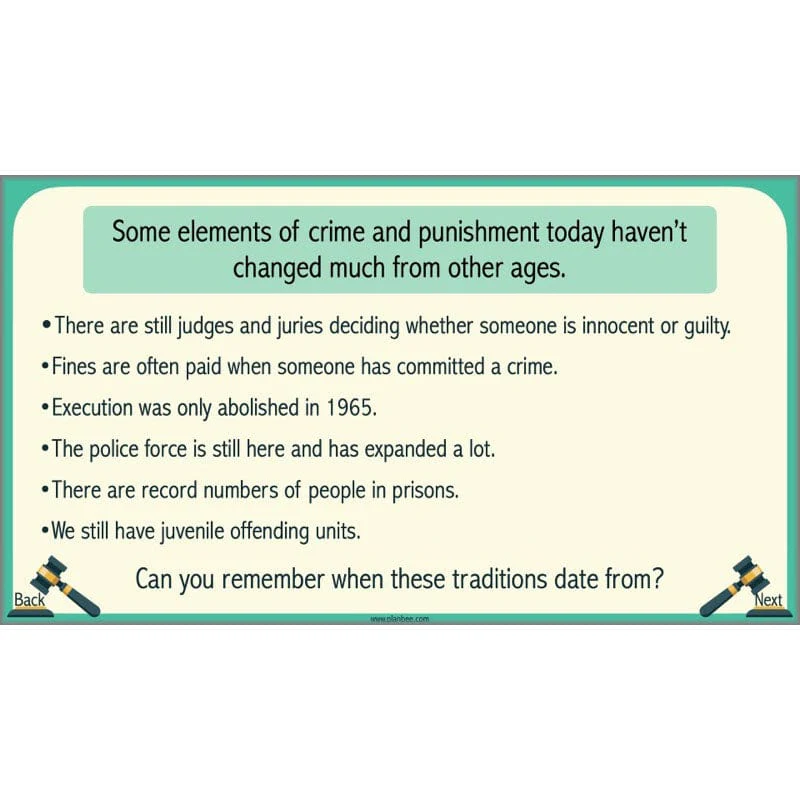
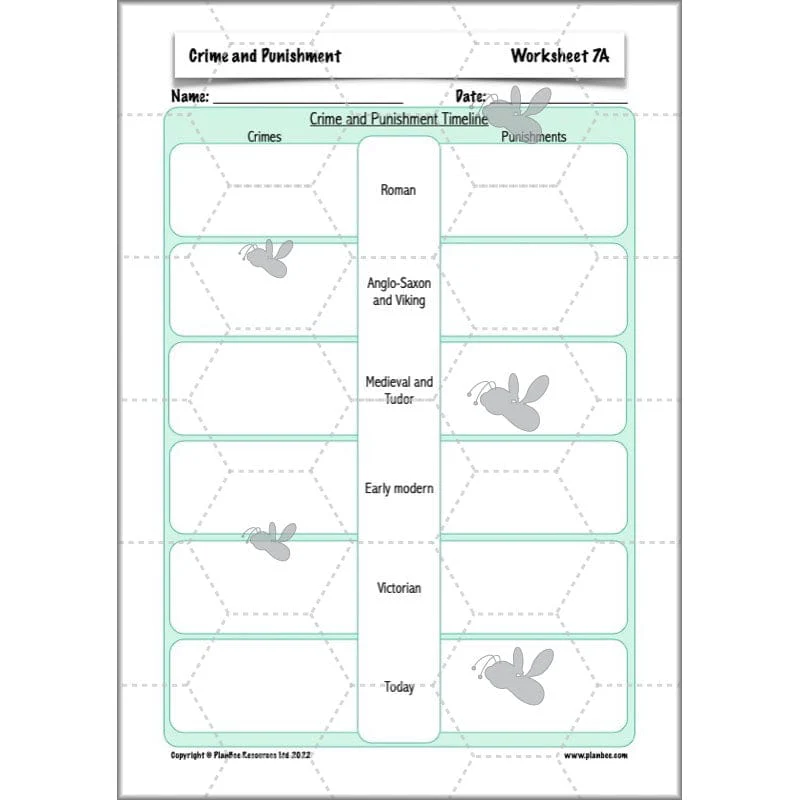
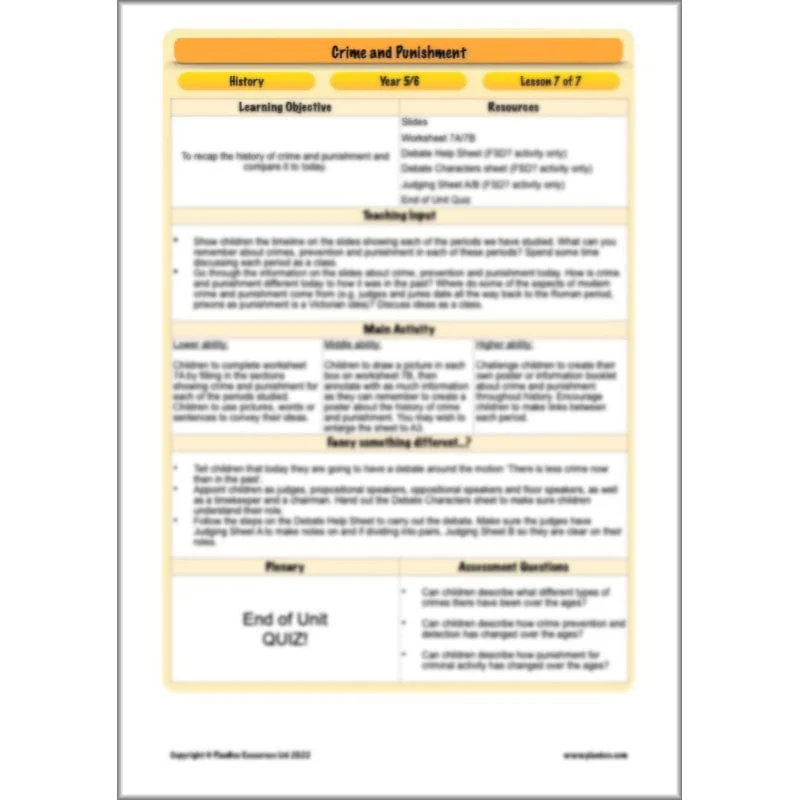
This Crime and Punishment Timeline KS2 History lesson gives your Year 5 or Year 6 class the chance to consolidate everything they have learnt about crime and punishment across the ages. It also challenges them to think about the kinds of crimes we have today, what punishments criminals are given, and how both are informed by history.
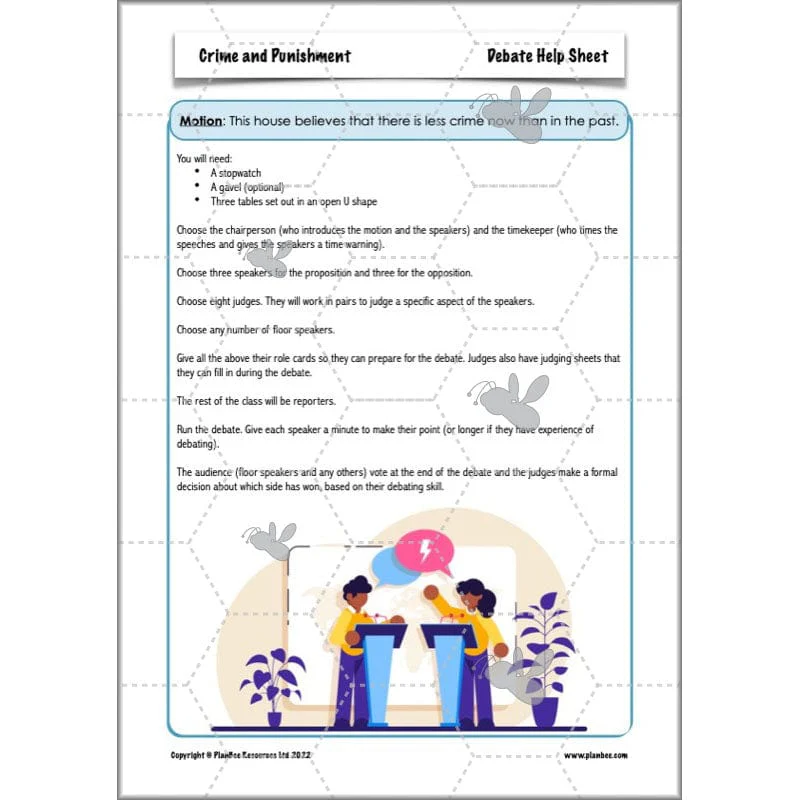
During their independent activities, then can then either create a crime and punishment timeline from the Roman period to today, identifying the different crimes and punishment particular to each era, or hold a class debate, using their knowledge of crime and punishment to decide whether or not there is less crime now than in the past.
What's included:
- Lesson plan
- Slides
- Activity ideas
- Differentiated worksheets
- Debate help sheet
- Debate character cards
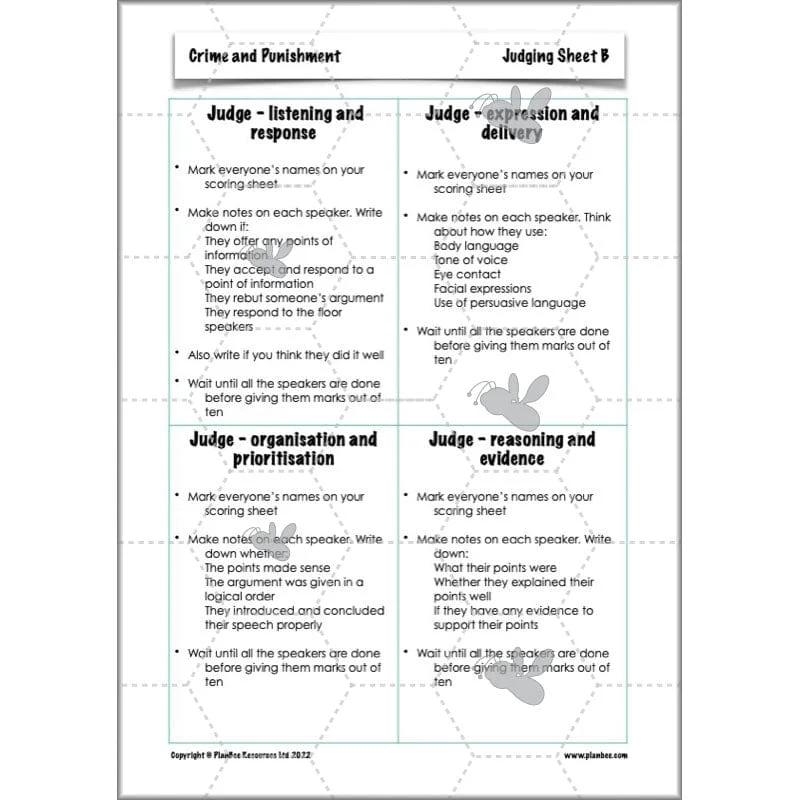
- Judging sheets
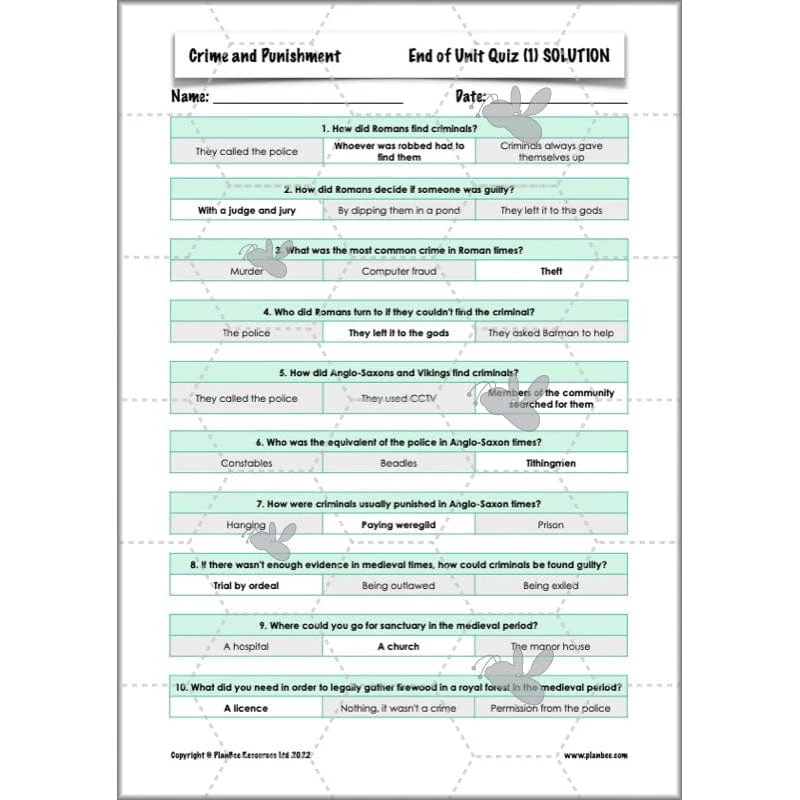
- End of unit quiz
Original: $2.69
-65%$2.69
$0.94More Images




























Crime and Punishment
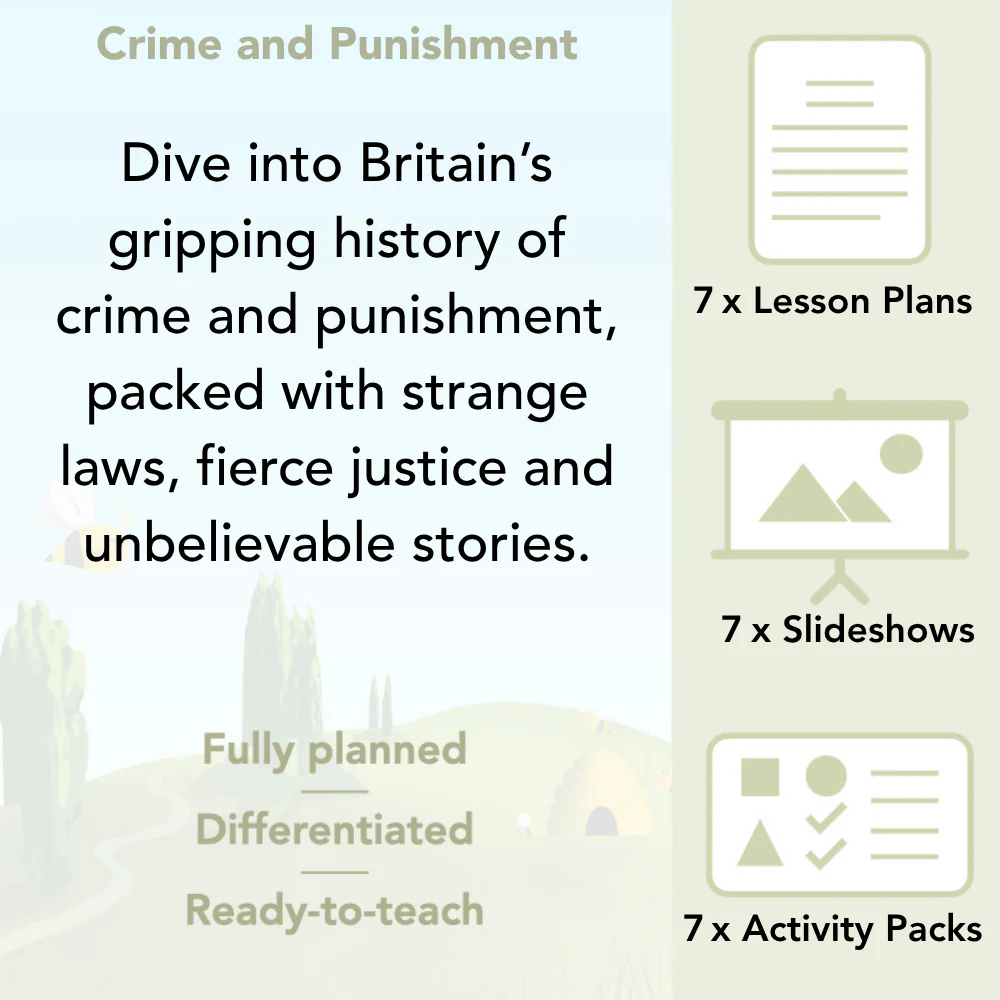
These Crime and Punishment KS2 History lessons will take your Year 5 or Year 6 class on a journey through British history as they discover how crime and punishment has changed throughout the ages. Beginning with the Romans and traveling right through to the present day, your children will discover how changes in society create changes in the kind of crimes that are committed, as well as the ways in which they are punished.
Perfect if you are teaching a Crime and Punishment topic, this ready-to-teach KS2 scheme of work contains detailed lesson plans, informative slides, differentiated worksheets and many other helpful resources - everything you need to get your class thoroughly engaged in the fascinating, gruesome and challenging world of British crime and punishment.
Introduction
This series starts by thinking about the kind of crimes that are common today and how we punish them. It then goes on to look at a timeline of Britain from the Romans to today and introduces the broad themes that will be looked at over the coming lessons. Your class will also become familiar with vocabulary that will be useful throughout the scheme of work, such as judge, jury, pillory and transportation.
What's included:
- Lesson plan
- Slides
- Activity ideas
- Differentiated worksheets
- Sorting cards
- Scenario cards
Romans
Looking for a Roman Crime and Punishment KS2 History lesson? You've found it! In the second lesson of this series, your class will recap when the Romans lived and when they arrived in Britain. They will then go on to explore which crimes were common in Roman Britain and how they were punished. They will find out how and why the Roman justice system still has an influence on law and order today, as well as how Romans turned to divine help when the established system couldn't help them.
This Roman Crime and Punishment planning pack contains everything you need to deliver this fascinating History lesson, including a detailed lesson plan, a slideshow for the teaching input and a helpful range of printable worksheets and resources for their independent learning tasks.
What's included:
- Lesson plan
- Slides
- Activity ideas
- Differentiated worksheets
- Information sheet
- Help sheet
Anglo-Saxons and Vikings
This Viking and Anglo-Saxon Crime and Punishment KS2 History lesson explores how crime and punishment changed when the Romans left Britain, and how the Anglo-Saxons and Vikings dealt with criminals. Your class will find out about weregild and tithingmen, as well as trial by ordeal.
During their independent learning, they can look at some cases of Anglo-Saxon crime and punishment, reading accounts of crimes, deciding if the defendant is guilty or innocent, then choosing an appropriate punishment. There is also the opportunity to read a story about Britain's most famous outlaw, Robin Hood.
What's included:
- Lesson plan
- Slides
- Activity ideas
- Differentiated worksheets
- Differentiated information sheets
- Story sheet
Medieval and Tudor
This Medieval and Tudor Crime and Punishment lesson will teach your KS2 class all about the new laws that were introduced to Britain after the Norman invasion. It explores new crimes that were being committed in the medieval period and the reasons for these new crimes (such as the introduction of Forest Law), and the punishments that came with them, such as mutilations and fines. It also explores how the religious upheaval of the Tudor period created specific crimes that were harshly dealt with.
This Medieval and Tudor Crime and Punishment lesson comes fully prepared and ready to teach, leaving you free to enjoy learning all the gruesome details of crime and punishment in this era with your class!
What's included:
- Lesson plan
- Slides
- Activity ideas
- Differentiated worksheets
- Differentiated information sheets
- Character cards
Early Modern Period
With a country in religious turmoil, the early modern period began with the infamous gunpowder plot and a Civil War. There were lots of crimes relating to religion, as well as a rise in highwayman, poachers and smugglers. Your class will find out what caused these changes as well as how they were dealt with through the 'Bloody Code' and the newly introduced transportation.
What's included:
- Lesson plan
- Slides
- Activity ideas
- Differentiated worksheets
- Differentiated information sheets
- Criminal cards
- Cause cards
Victorians
This Victorian Crime and Punishment KS2 History lesson will teach your class all about the social, economical and industrial changes that happened during the 19th century, and how this was reflected in the crimes that were committed and how they were detected and punished. Your class will find out about the creation of the police force, the use of prisons as punishments and how prisoners were now being transported to Australia. They will find out about changes in law too which led to changes in crimes, such as failing to send your child to school.
This Victorian Crime and Punishment KS2 planning pack contains everything you need to deliver this lesson, including a detailed lesson plan, a slideshow for the teaching input and a range of handy printable resources to support your Year 5/6 class with their independent learning activities.
What's included:
- Lesson plan
- Slides
- Activity ideas
- Differentiated worksheets
- ‘Oliver Twist’ extract
- Transportation story sheets
- Question cards
- Information cards
Timeline and Overview
This Crime and Punishment Timeline KS2 History lesson gives your Year 5 or Year 6 class the chance to consolidate everything they have learnt about crime and punishment across the ages. It also challenges them to think about the kinds of crimes we have today, what punishments criminals are given, and how both are informed by history.
During their independent activities, then can then either create a crime and punishment timeline from the Roman period to today, identifying the different crimes and punishment particular to each era, or hold a class debate, using their knowledge of crime and punishment to decide whether or not there is less crime now than in the past.
What's included:
- Lesson plan
- Slides
- Activity ideas
- Differentiated worksheets
- Debate help sheet
- Debate character cards
- Judging sheets
- End of unit quiz
Product Information
Product Information
Shipping & Returns
Shipping & Returns
Description
These Crime and Punishment KS2 History lessons will take your Year 5 or Year 6 class on a journey through British history as they discover how crime and punishment has changed throughout the ages. Beginning with the Romans and traveling right through to the present day, your children will discover how changes in society create changes in the kind of crimes that are committed, as well as the ways in which they are punished.
Perfect if you are teaching a Crime and Punishment topic, this ready-to-teach KS2 scheme of work contains detailed lesson plans, informative slides, differentiated worksheets and many other helpful resources - everything you need to get your class thoroughly engaged in the fascinating, gruesome and challenging world of British crime and punishment.
Introduction
This series starts by thinking about the kind of crimes that are common today and how we punish them. It then goes on to look at a timeline of Britain from the Romans to today and introduces the broad themes that will be looked at over the coming lessons. Your class will also become familiar with vocabulary that will be useful throughout the scheme of work, such as judge, jury, pillory and transportation.
What's included:
- Lesson plan
- Slides
- Activity ideas
- Differentiated worksheets
- Sorting cards
- Scenario cards
Romans
Looking for a Roman Crime and Punishment KS2 History lesson? You've found it! In the second lesson of this series, your class will recap when the Romans lived and when they arrived in Britain. They will then go on to explore which crimes were common in Roman Britain and how they were punished. They will find out how and why the Roman justice system still has an influence on law and order today, as well as how Romans turned to divine help when the established system couldn't help them.
This Roman Crime and Punishment planning pack contains everything you need to deliver this fascinating History lesson, including a detailed lesson plan, a slideshow for the teaching input and a helpful range of printable worksheets and resources for their independent learning tasks.
What's included:
- Lesson plan
- Slides
- Activity ideas
- Differentiated worksheets
- Information sheet
- Help sheet
Anglo-Saxons and Vikings
This Viking and Anglo-Saxon Crime and Punishment KS2 History lesson explores how crime and punishment changed when the Romans left Britain, and how the Anglo-Saxons and Vikings dealt with criminals. Your class will find out about weregild and tithingmen, as well as trial by ordeal.
During their independent learning, they can look at some cases of Anglo-Saxon crime and punishment, reading accounts of crimes, deciding if the defendant is guilty or innocent, then choosing an appropriate punishment. There is also the opportunity to read a story about Britain's most famous outlaw, Robin Hood.
What's included:
- Lesson plan
- Slides
- Activity ideas
- Differentiated worksheets
- Differentiated information sheets
- Story sheet
Medieval and Tudor
This Medieval and Tudor Crime and Punishment lesson will teach your KS2 class all about the new laws that were introduced to Britain after the Norman invasion. It explores new crimes that were being committed in the medieval period and the reasons for these new crimes (such as the introduction of Forest Law), and the punishments that came with them, such as mutilations and fines. It also explores how the religious upheaval of the Tudor period created specific crimes that were harshly dealt with.
This Medieval and Tudor Crime and Punishment lesson comes fully prepared and ready to teach, leaving you free to enjoy learning all the gruesome details of crime and punishment in this era with your class!
What's included:
- Lesson plan
- Slides
- Activity ideas
- Differentiated worksheets
- Differentiated information sheets
- Character cards
Early Modern Period
With a country in religious turmoil, the early modern period began with the infamous gunpowder plot and a Civil War. There were lots of crimes relating to religion, as well as a rise in highwayman, poachers and smugglers. Your class will find out what caused these changes as well as how they were dealt with through the 'Bloody Code' and the newly introduced transportation.
What's included:
- Lesson plan
- Slides
- Activity ideas
- Differentiated worksheets
- Differentiated information sheets
- Criminal cards
- Cause cards
Victorians
This Victorian Crime and Punishment KS2 History lesson will teach your class all about the social, economical and industrial changes that happened during the 19th century, and how this was reflected in the crimes that were committed and how they were detected and punished. Your class will find out about the creation of the police force, the use of prisons as punishments and how prisoners were now being transported to Australia. They will find out about changes in law too which led to changes in crimes, such as failing to send your child to school.
This Victorian Crime and Punishment KS2 planning pack contains everything you need to deliver this lesson, including a detailed lesson plan, a slideshow for the teaching input and a range of handy printable resources to support your Year 5/6 class with their independent learning activities.
What's included:
- Lesson plan
- Slides
- Activity ideas
- Differentiated worksheets
- ‘Oliver Twist’ extract
- Transportation story sheets
- Question cards
- Information cards
Timeline and Overview
This Crime and Punishment Timeline KS2 History lesson gives your Year 5 or Year 6 class the chance to consolidate everything they have learnt about crime and punishment across the ages. It also challenges them to think about the kinds of crimes we have today, what punishments criminals are given, and how both are informed by history.
During their independent activities, then can then either create a crime and punishment timeline from the Roman period to today, identifying the different crimes and punishment particular to each era, or hold a class debate, using their knowledge of crime and punishment to decide whether or not there is less crime now than in the past.
What's included:
- Lesson plan
- Slides
- Activity ideas
- Differentiated worksheets
- Debate help sheet
- Debate character cards
- Judging sheets
- End of unit quiz