Rebuilding Britain
In the years after the end of WWII, a number of extraordinary changes took place in Britain. As post-war plans for rebuilding Britain were implemented, virtually every aspect of British life was affected. By the mid-1960s, Britain had, undergone a transformation; in many ways it was unrecognisable when compared to how it had been in the first half of the 20th Century. 'Rebuilding Britain’ covers this period of modern British history in-depth, starting with her involvement in the war.
Other aspects of ‘rebuilding’ which are addressed include: initial rebuilding in the cities; the creation of the NHS and the Welfare State; how and why so many British Colonies became independent after the war; the ‘Windrush’ of immigration from the Caribbean to Britain; and the creation of 'New Towns’.
You may also be interested in our World War 2 History scheme of work for upper KS2 exploring the causes of WW2 and its impact on Britain and the wider world or our Brilliant Britain Topic Bundle!
The Second World War
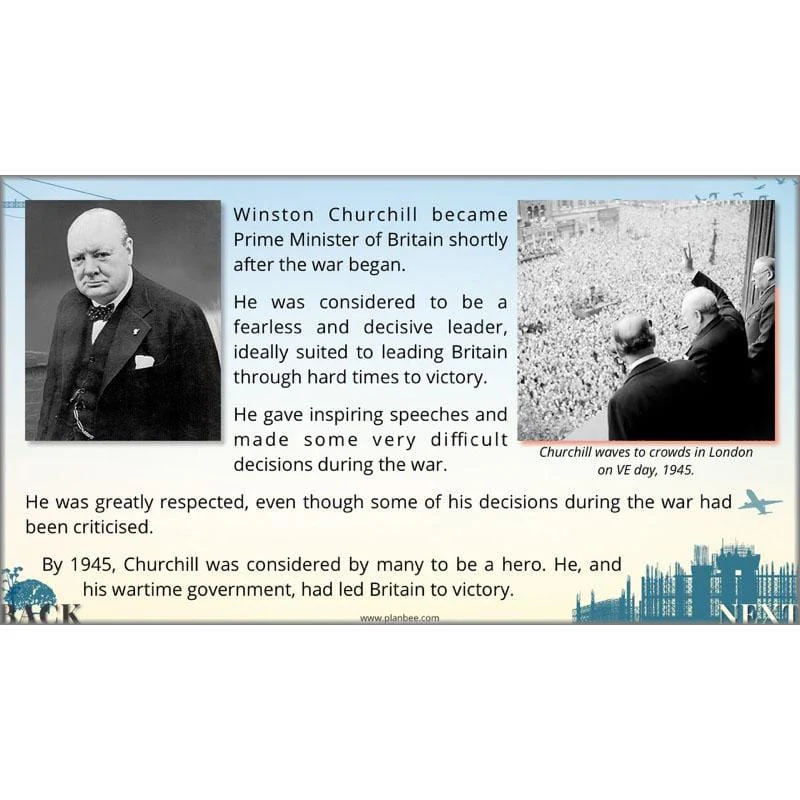
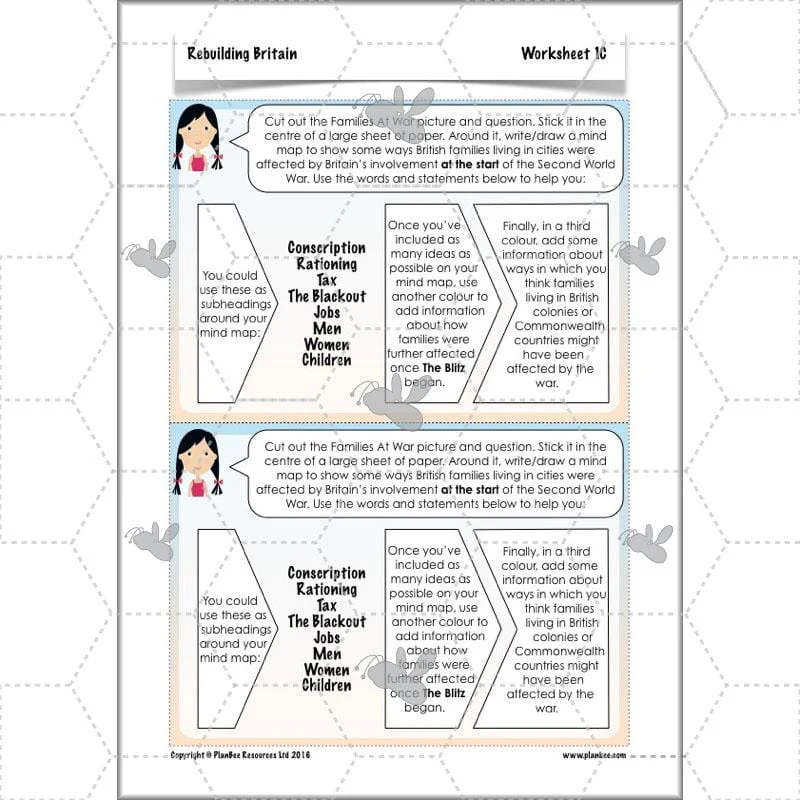
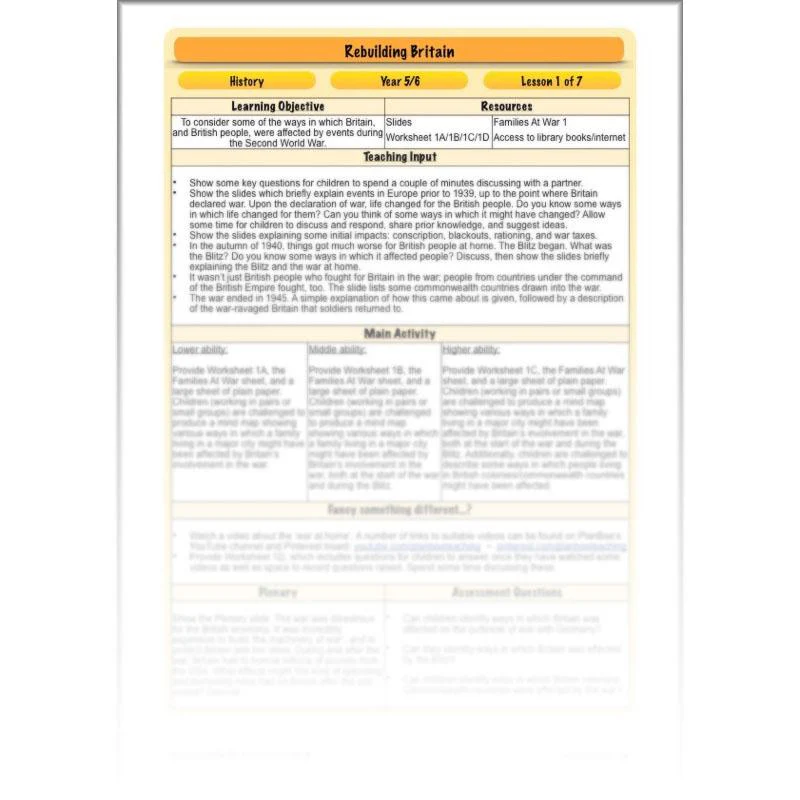
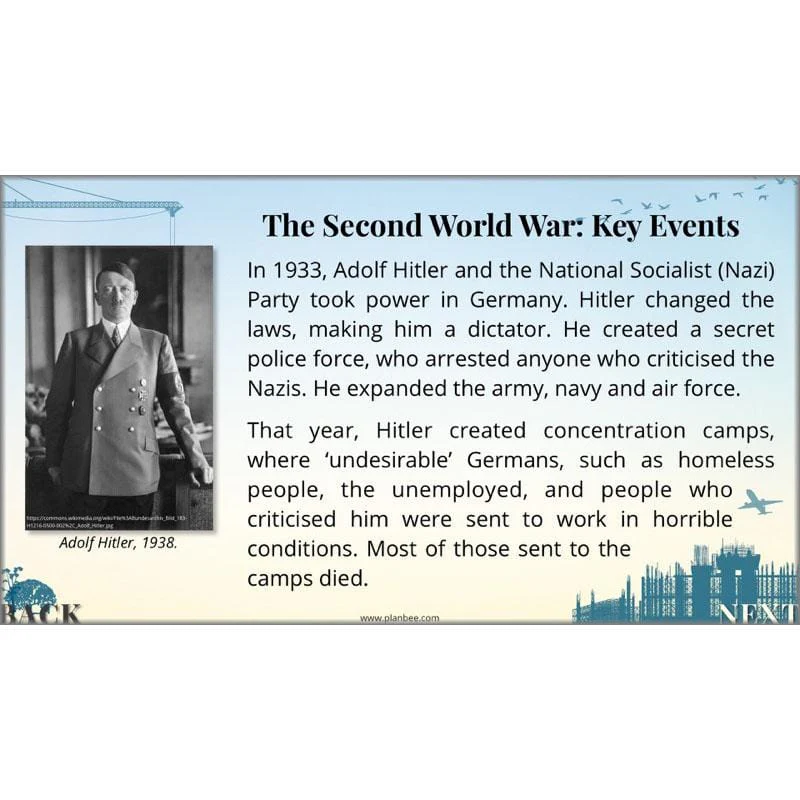
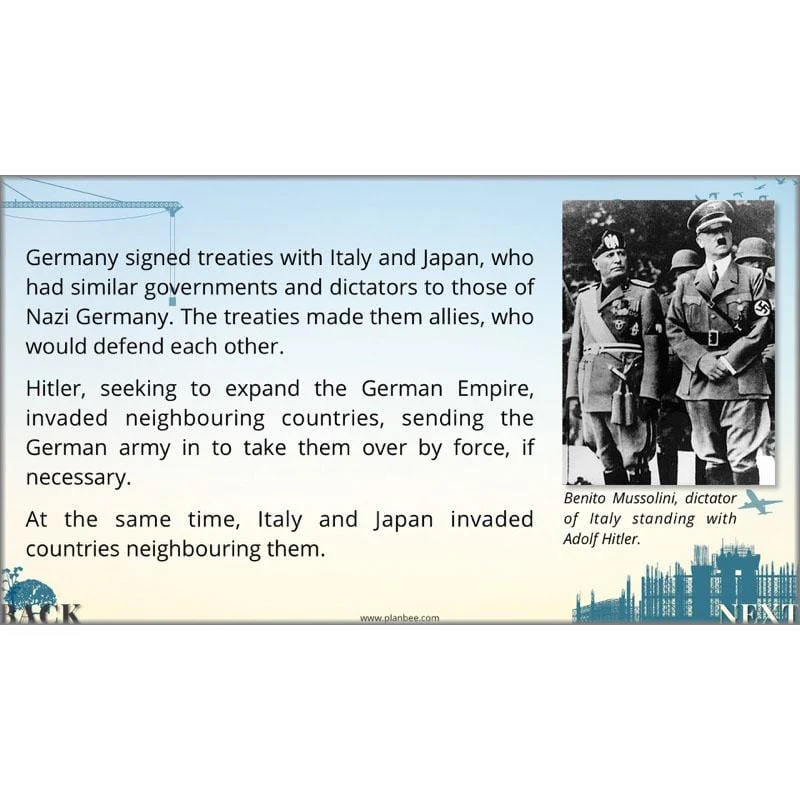
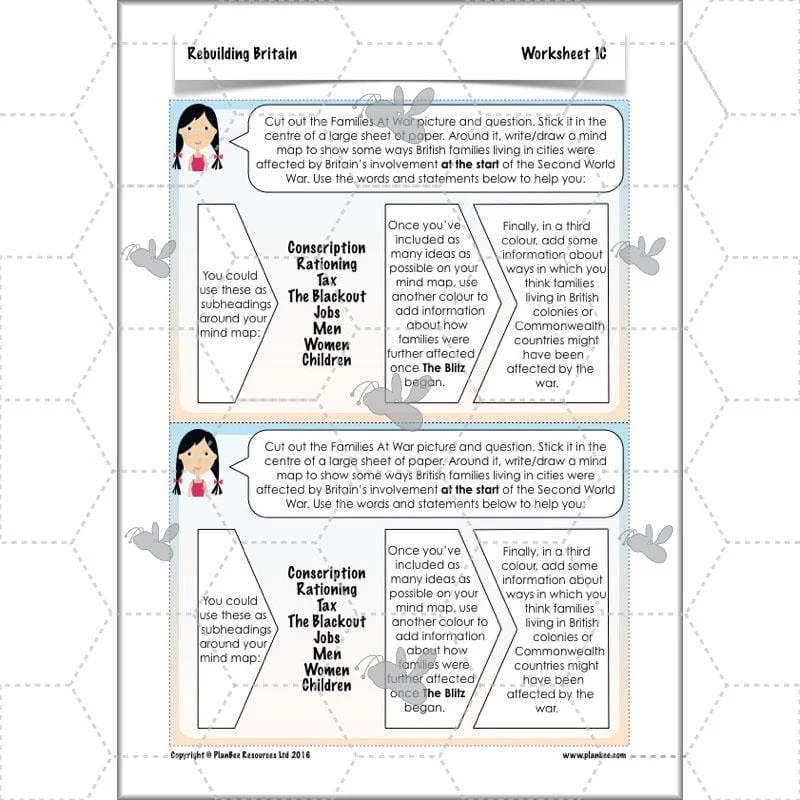
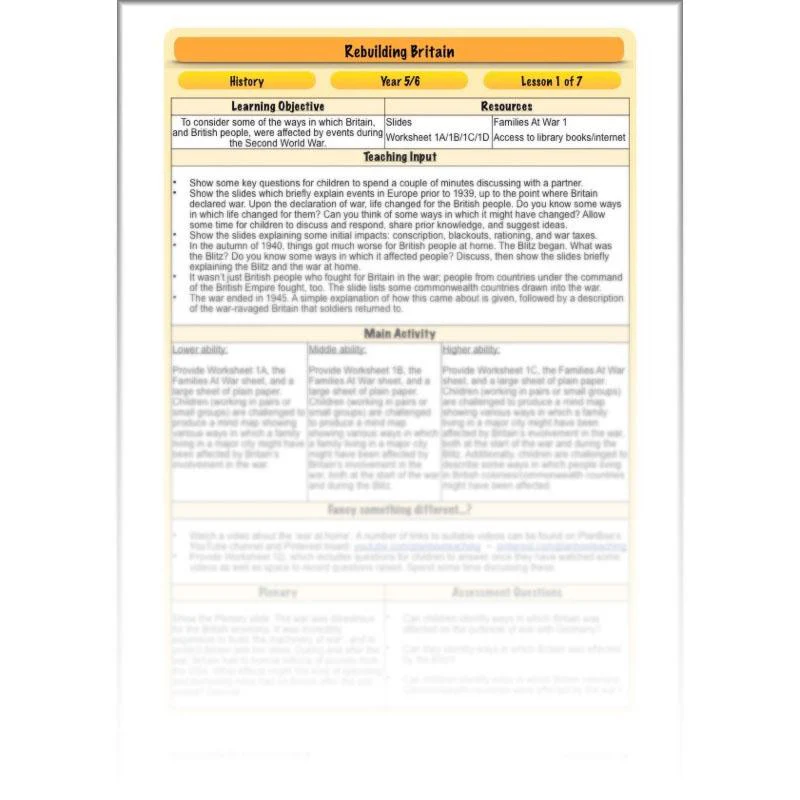
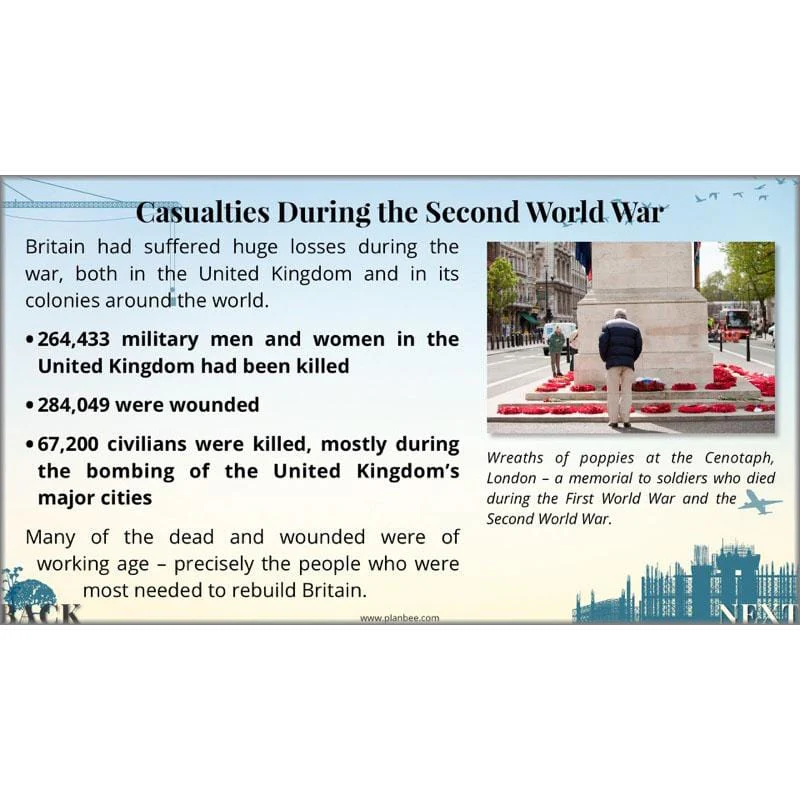
What was Britain’s involvement in the Second World War? How was life at home affected? What was its impact on Britain by the time it ended? This first lesson is packed with information about WWII so you can bring your class up to speed with key events 1939-1945, whether they’ve studied this period before, or it’s completely new to them. Whichever of the two included activities you choose to undertake with your children, they’ll have opportunities to consider the ways in which the war At Home impacted upon people’s lives, and to show their understanding through writing and mind-mapping.
What's included:
- Lesson plan
- Slides
- Activity ideas
- Differentiated worksheets
- Families at war sheet
View Lesson 1
Recovering after the Blitz
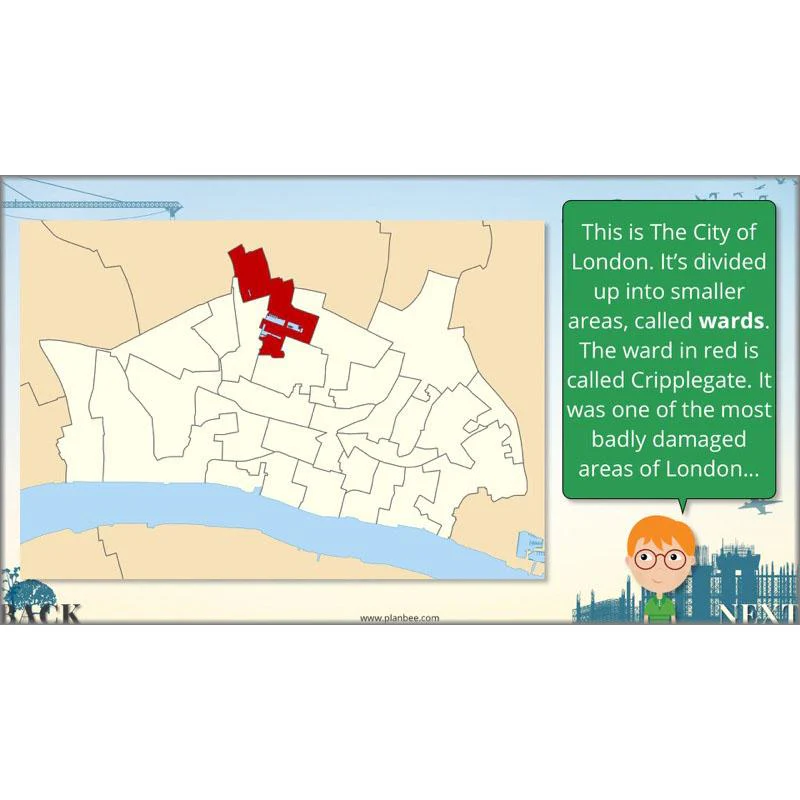
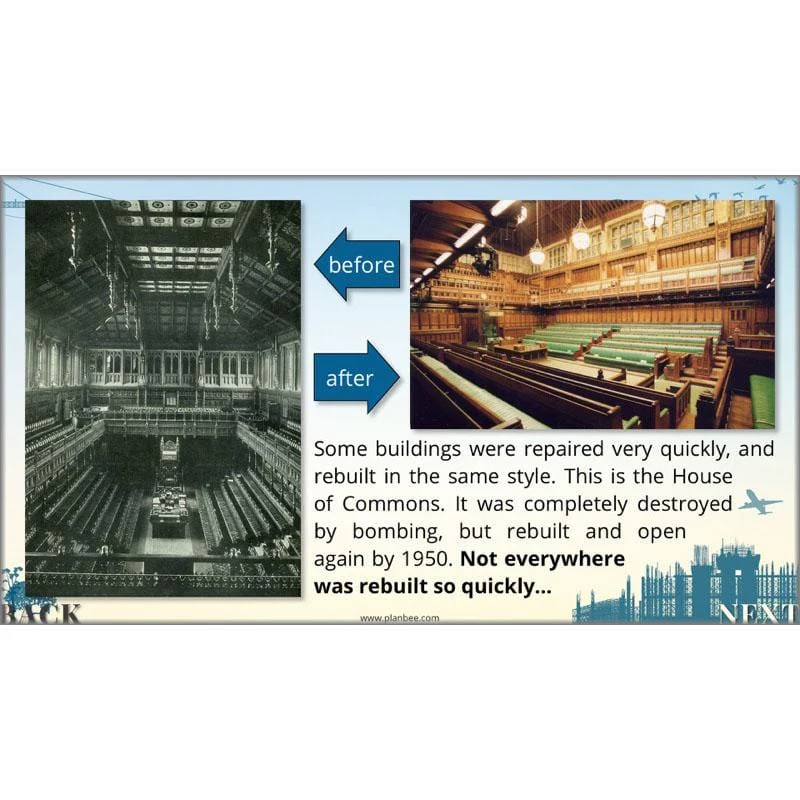
In this lesson, children are first asked to consider and discuss the many ways in which British people had been affected by the war. Following this, take a look at one of the first priorities for the post-war government: repairing the cities after the Blitz. Explore in-depth how one small region of London was rebuilt over many years after the war ended. Once your class has learned a little about this aspect of the rebuilding of Britain, there is a choice of two learning activities for them to undertake: either considering in greater depth how the war had affected various aspects of life at home, or studying one of the most divisive features of the rebuilding – the Modernist or ‘Brutalist’ architecture of many post-war reconstruction projects such as the Barbican Centre in London.
What's included:
- Lesson plan
- Slides
- Activity ideas
- Challenge sheet
- Cause and effect cards
- Worksheet
View Lesson 2
The Welfare State
In this lesson, find out all about the wave of optimism that swept a radically different government into power when the war ended, and its vision for rebuilding and modernising Britain. Following this, challenge children to consider why various aspects of the new government’s plans were so appealing to voters, by considering what life had been like before, and during the war. Following this, children may choose one aspect of the plan, such as free healthcare, nationalisation, job creation or universal benefits, as the subject of a persuasive text. Alternatively, why not undertake the alternative activity: a class election!
What's included:
- Lesson plan
- Slides
- Activity ideas
- Challenge cards
- The Election! Sheet
- Writing frames
- Cue cards
View Lesson 3
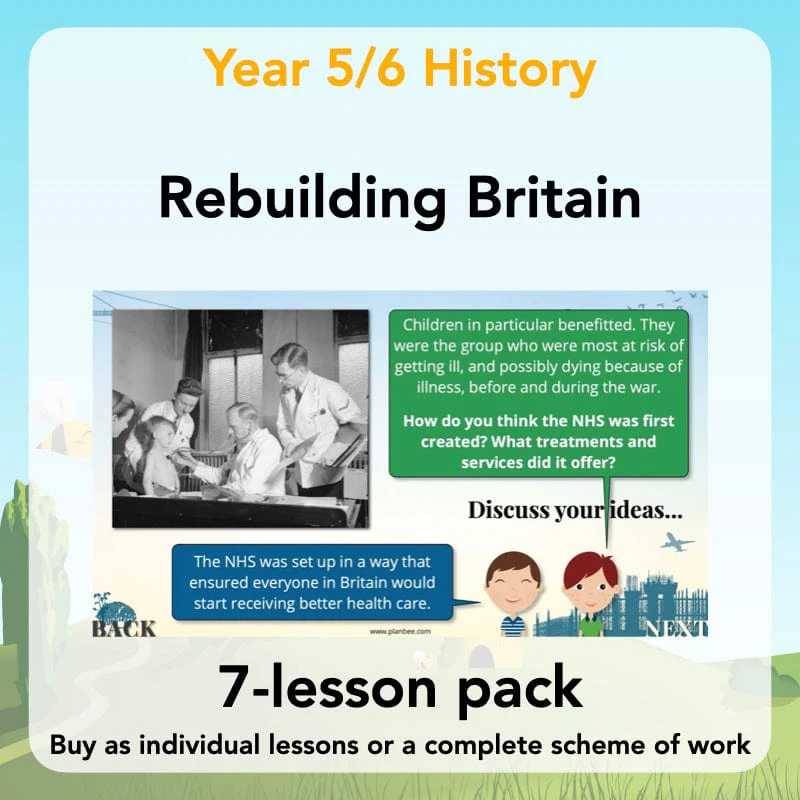
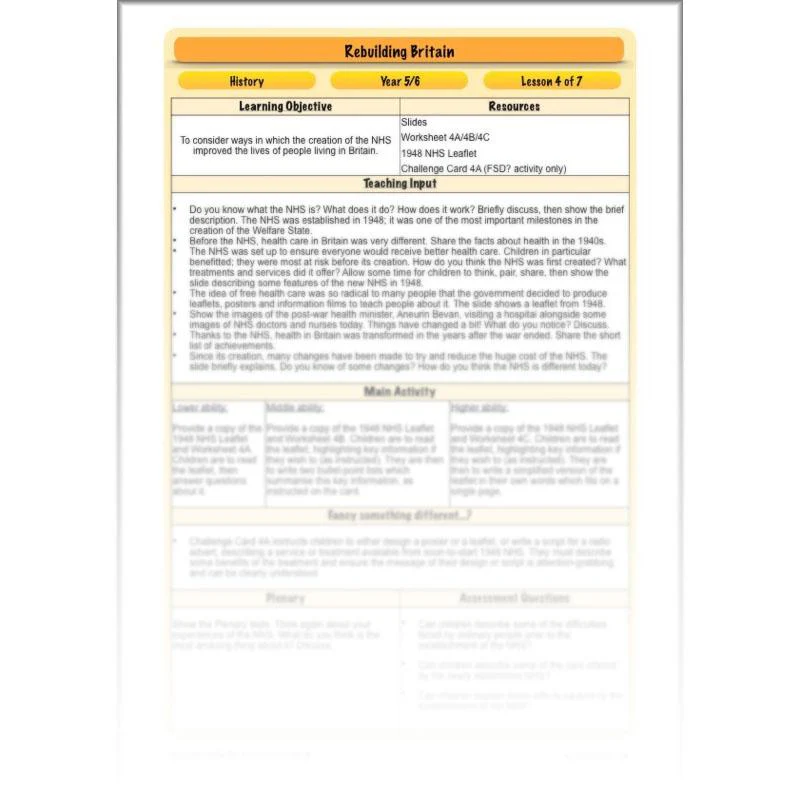
The NHS
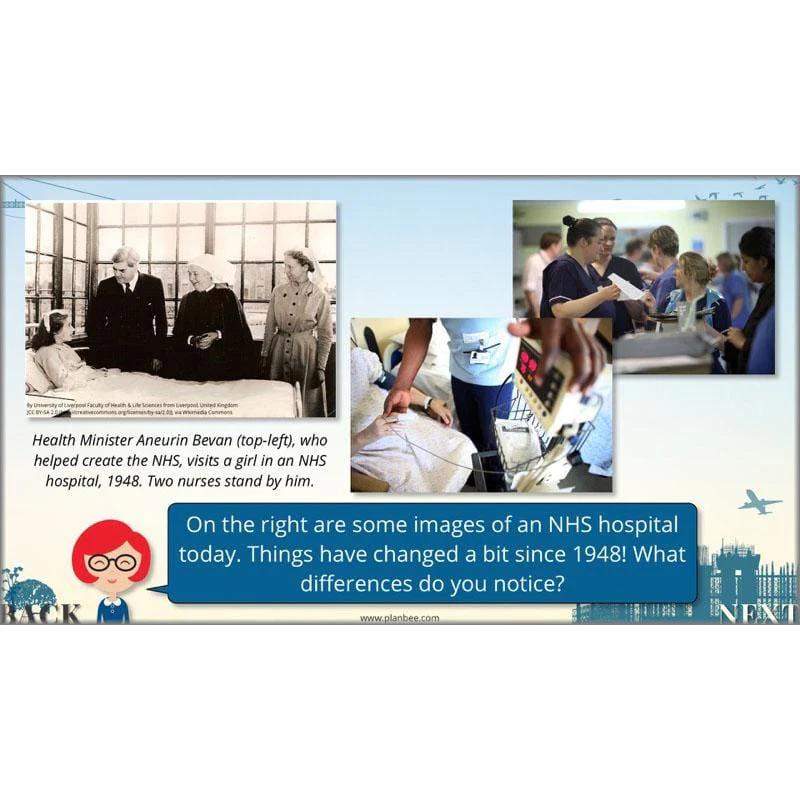
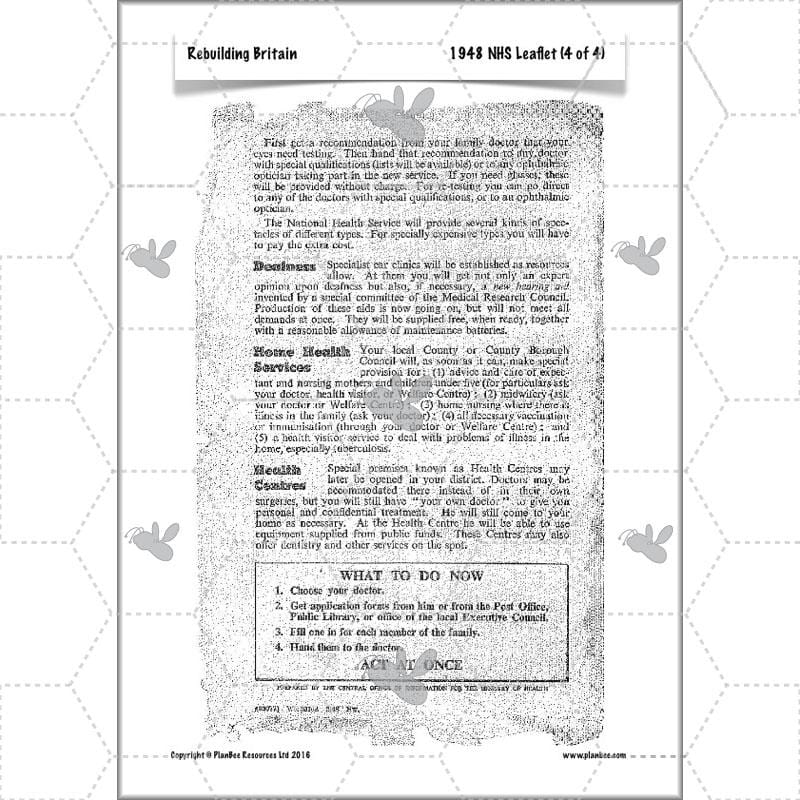
What is the NHS? What does it do? How does it work? What would life in Britain be like without it? Challenge children to consider all these questions and more as they find out about the creation of the NHS, the campaign to raise awareness about the services it offered, and how it has shaped and changed life in Britain to this day. Following this, children may either study some original source material explaining how people should prepare for the new health service, or produce promotional/educational material in the style of that produced at the time to raise awareness.
What's included:
- Lesson plan
- Slides
- Activity ideas
- Differentiated worksheets
- 1948 NHS leaflet
- Challenge card
View Lesson 4
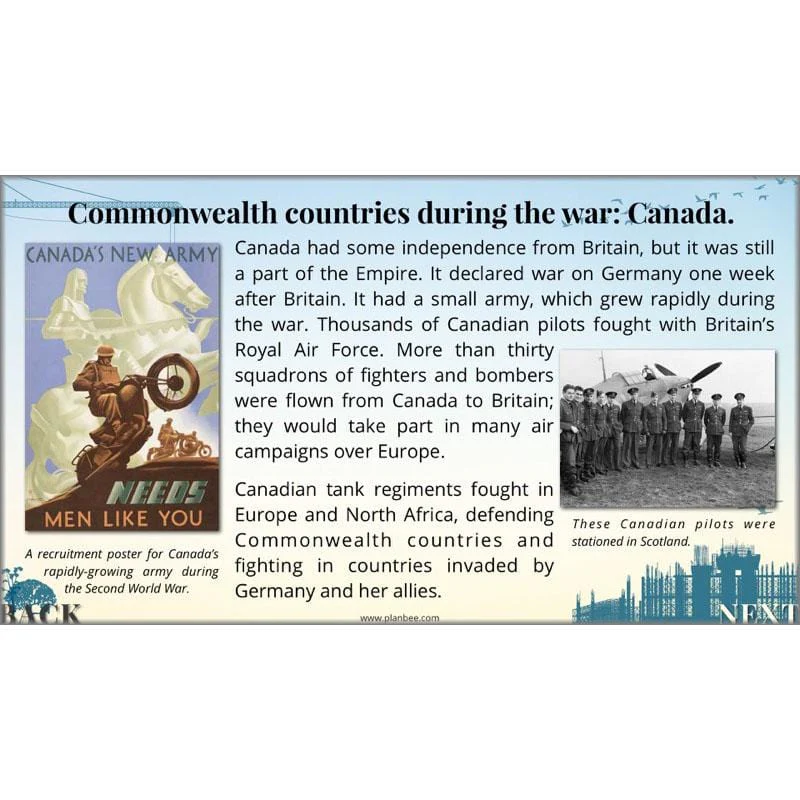
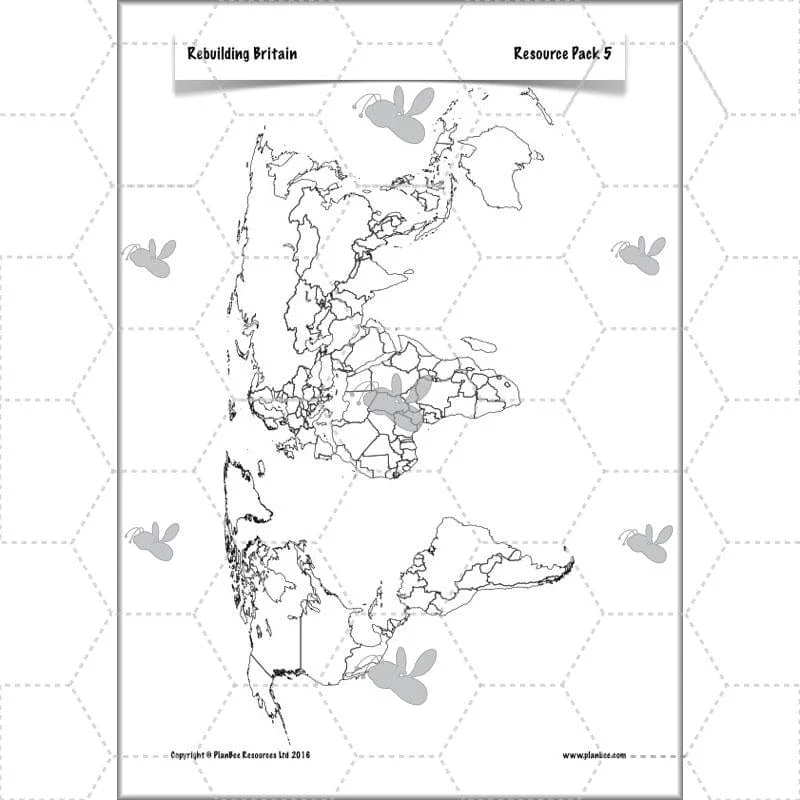
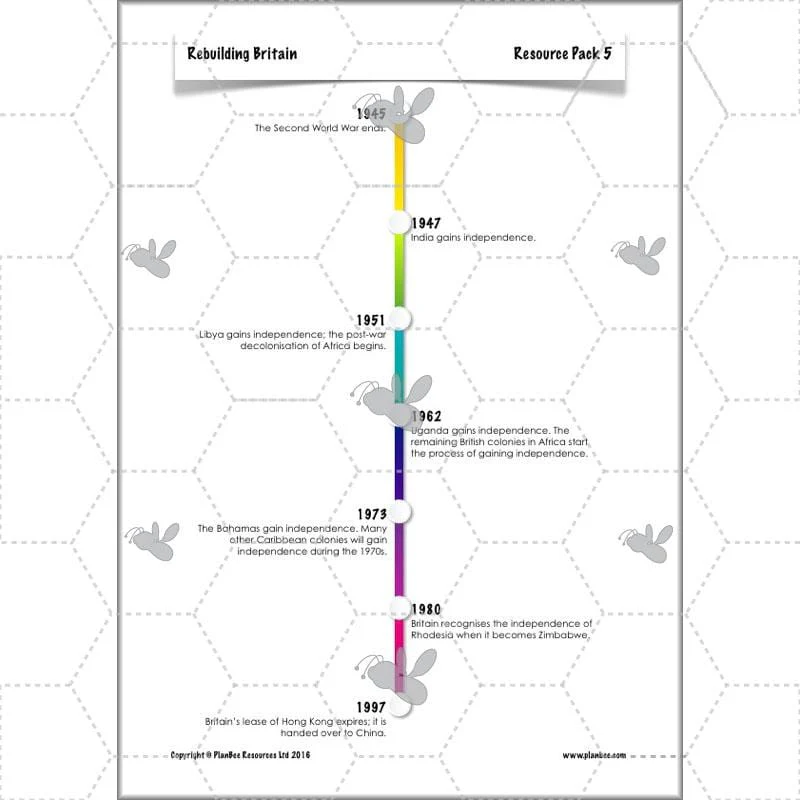
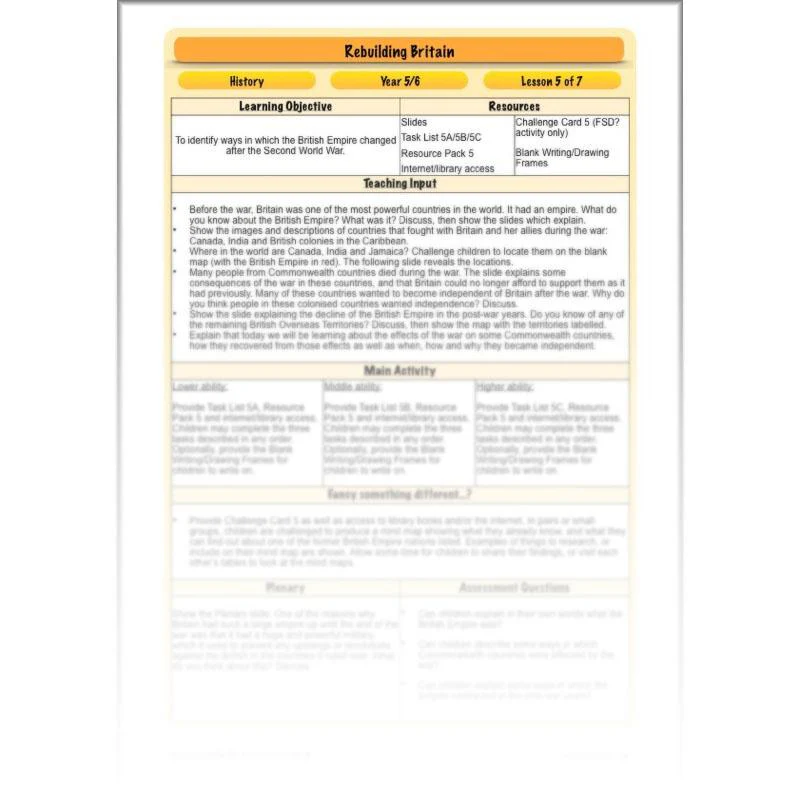
End of Empire
What do you know about the British Empire? Fill in those knowledge gaps with the included slides, which describe the Empire and the involvement of people from British colonies in the War Effort. They may be surprised to learn just how many people from India, the West Indies, the Americas and Australia fought for Britain! Following this, challenge children to consider reasons why almost all of the colonies sought and won independence from Britain in the post-war years.
What's included:
- Lesson plan
- Slides
- Activity ideas
- Task lists
- Resource pack
- Challenge card
View Lesson 5
Windrush
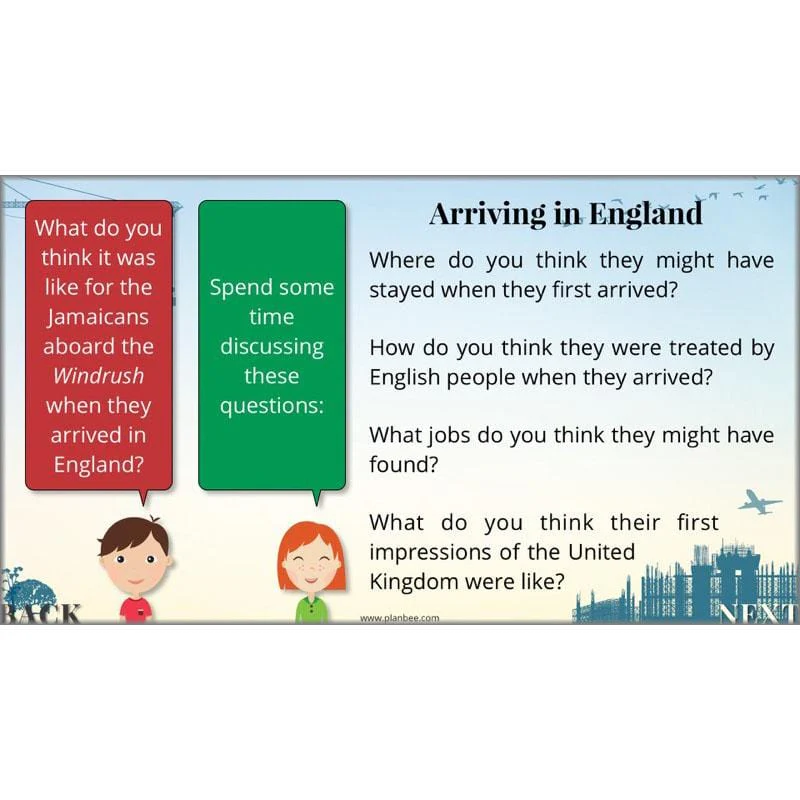
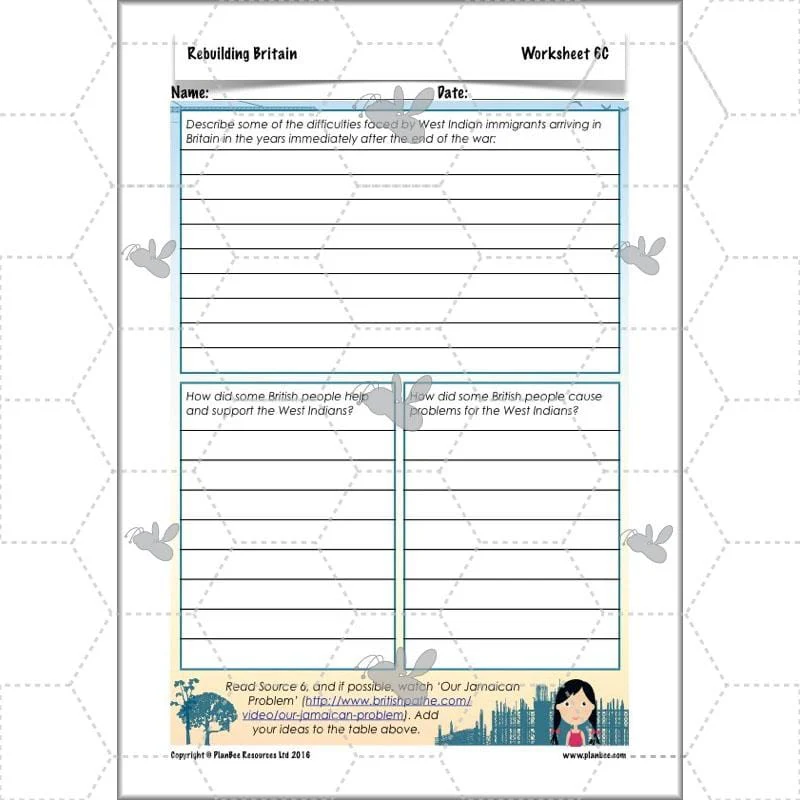
With the nationalisation of many services and industries and the rebuilding of Britain underway, it became apparent that there would be a shortage of labour. With that in mind, the post-war government granted all people of the British Empire full citizenship. In 1948, the first ship—the Windrush—arrived from Jamaica, bringing with it the first wave of what was to be tens of thousands of people from the West Indies. Learn all about this fascinating period—when Britain became truly multicultural—and consider what life must have been like for the first Caribbean immigrants coming to start new lives in Britain.
What's included:
- Lesson plan
- Slides
- Activity ideas
- Differentiated worksheets
- Source sheets
View Lesson 6
New Towns
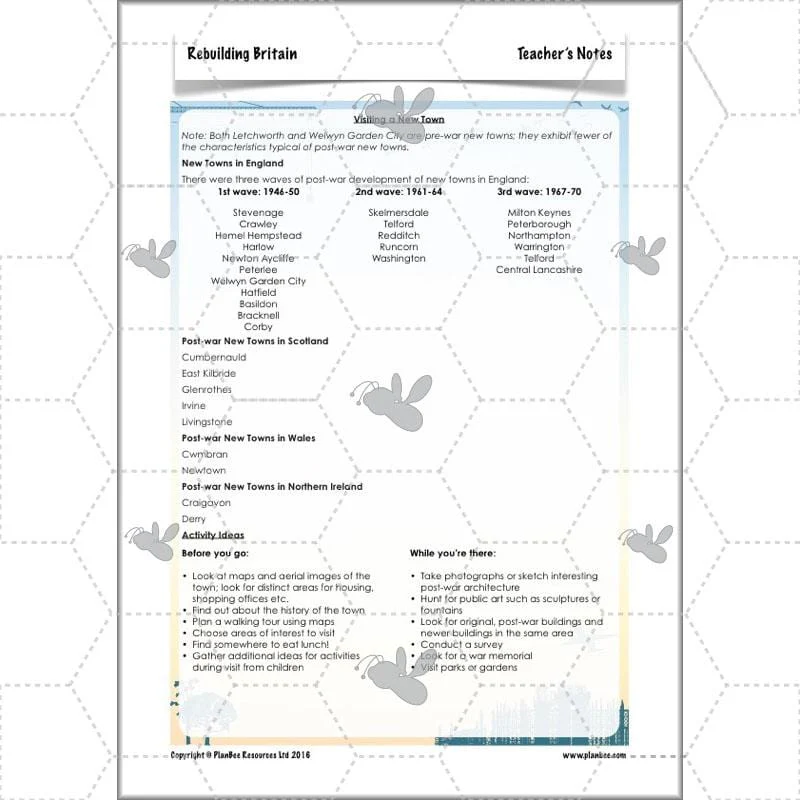
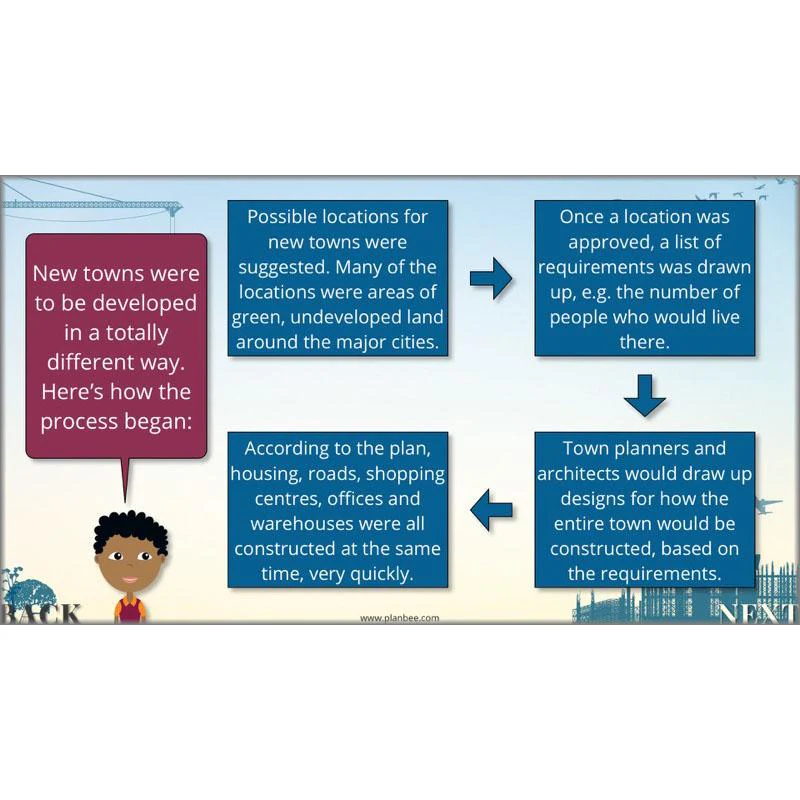
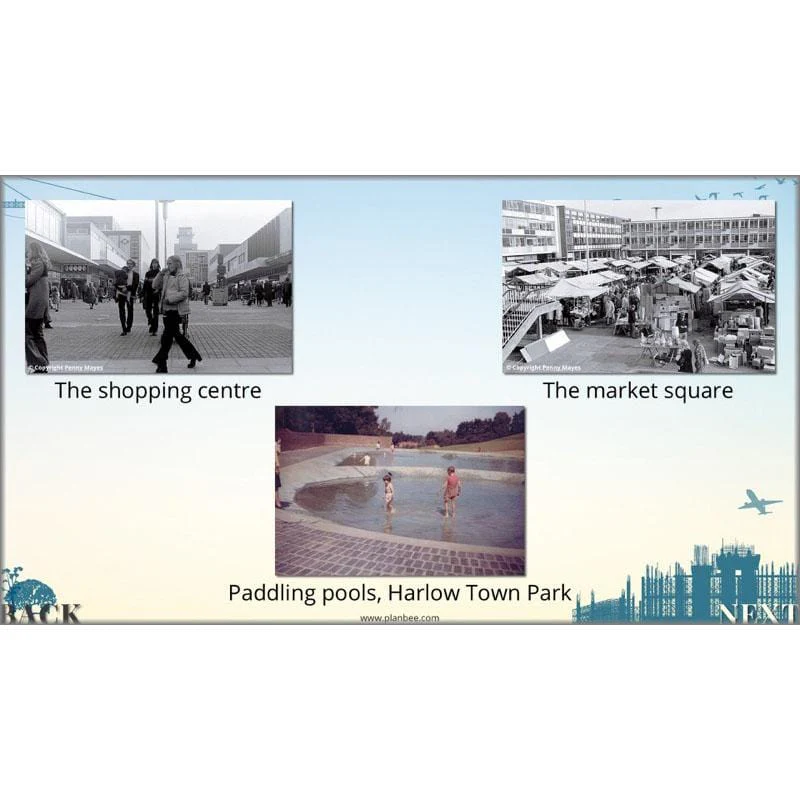
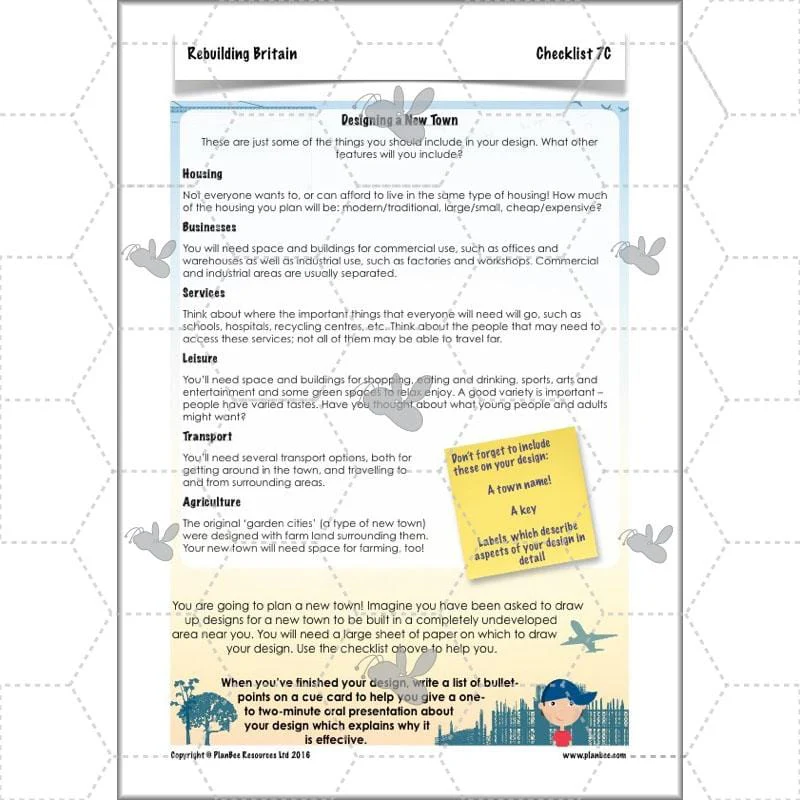
Look at what are some of the most visible, lasting legacies of the post-war plans for rebuilding Britain: new towns. Focus on Harlow and the reasons for its construction, then take a look at some of the peculiarities of its layout and architecture. Children are challenged to express their own ideas and opinions about the nature of new towns, then either plan the layout for a new town of their own design or—if you are local to one—visit and explore a new town!
What's included:
- Lesson plan
- Slides
- Activity ideas
- Checklists
- Teacher's notes
- End of Unit Quiz
View Lesson 7
Original: $4.71
-65%$4.71
$1.65More Images
























Rebuilding Britain
In the years after the end of WWII, a number of extraordinary changes took place in Britain. As post-war plans for rebuilding Britain were implemented, virtually every aspect of British life was affected. By the mid-1960s, Britain had, undergone a transformation; in many ways it was unrecognisable when compared to how it had been in the first half of the 20th Century. 'Rebuilding Britain’ covers this period of modern British history in-depth, starting with her involvement in the war.
Other aspects of ‘rebuilding’ which are addressed include: initial rebuilding in the cities; the creation of the NHS and the Welfare State; how and why so many British Colonies became independent after the war; the ‘Windrush’ of immigration from the Caribbean to Britain; and the creation of 'New Towns’.
You may also be interested in our World War 2 History scheme of work for upper KS2 exploring the causes of WW2 and its impact on Britain and the wider world or our Brilliant Britain Topic Bundle!
The Second World War
What was Britain’s involvement in the Second World War? How was life at home affected? What was its impact on Britain by the time it ended? This first lesson is packed with information about WWII so you can bring your class up to speed with key events 1939-1945, whether they’ve studied this period before, or it’s completely new to them. Whichever of the two included activities you choose to undertake with your children, they’ll have opportunities to consider the ways in which the war At Home impacted upon people’s lives, and to show their understanding through writing and mind-mapping.
What's included:
- Lesson plan
- Slides
- Activity ideas
- Differentiated worksheets
- Families at war sheet
View Lesson 1
Recovering after the Blitz
In this lesson, children are first asked to consider and discuss the many ways in which British people had been affected by the war. Following this, take a look at one of the first priorities for the post-war government: repairing the cities after the Blitz. Explore in-depth how one small region of London was rebuilt over many years after the war ended. Once your class has learned a little about this aspect of the rebuilding of Britain, there is a choice of two learning activities for them to undertake: either considering in greater depth how the war had affected various aspects of life at home, or studying one of the most divisive features of the rebuilding – the Modernist or ‘Brutalist’ architecture of many post-war reconstruction projects such as the Barbican Centre in London.
What's included:
- Lesson plan
- Slides
- Activity ideas
- Challenge sheet
- Cause and effect cards
- Worksheet
View Lesson 2
The Welfare State
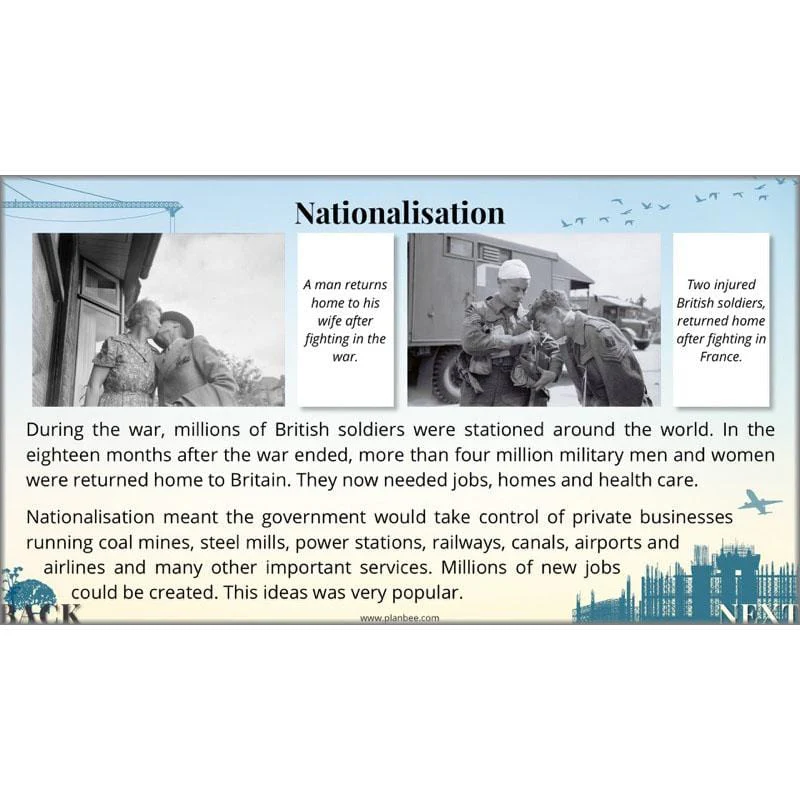
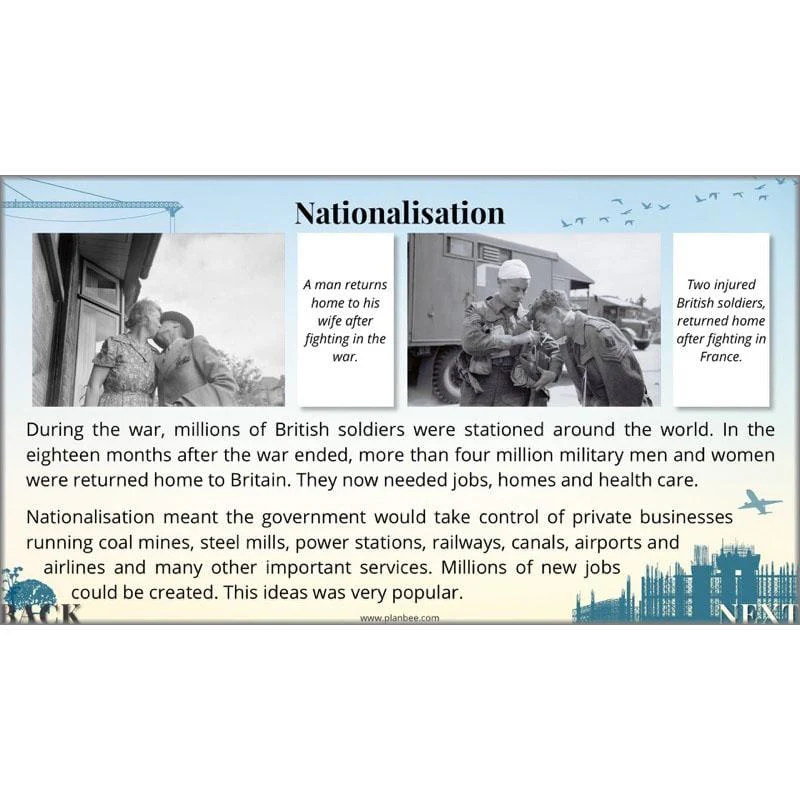
In this lesson, find out all about the wave of optimism that swept a radically different government into power when the war ended, and its vision for rebuilding and modernising Britain. Following this, challenge children to consider why various aspects of the new government’s plans were so appealing to voters, by considering what life had been like before, and during the war. Following this, children may choose one aspect of the plan, such as free healthcare, nationalisation, job creation or universal benefits, as the subject of a persuasive text. Alternatively, why not undertake the alternative activity: a class election!
What's included:
- Lesson plan
- Slides
- Activity ideas
- Challenge cards
- The Election! Sheet
- Writing frames
- Cue cards
View Lesson 3
The NHS
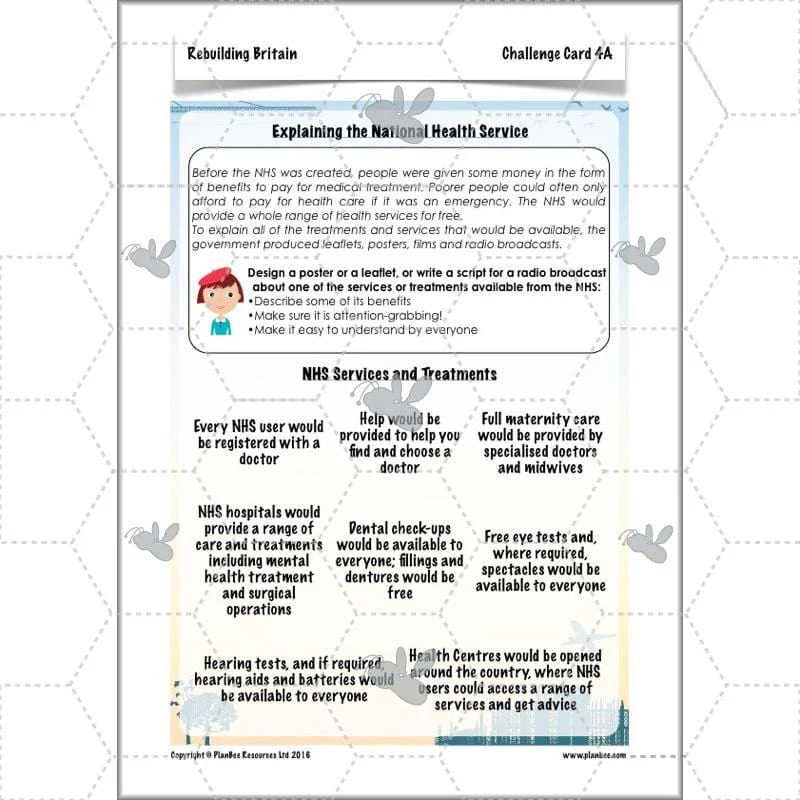
What is the NHS? What does it do? How does it work? What would life in Britain be like without it? Challenge children to consider all these questions and more as they find out about the creation of the NHS, the campaign to raise awareness about the services it offered, and how it has shaped and changed life in Britain to this day. Following this, children may either study some original source material explaining how people should prepare for the new health service, or produce promotional/educational material in the style of that produced at the time to raise awareness.
What's included:
- Lesson plan
- Slides
- Activity ideas
- Differentiated worksheets
- 1948 NHS leaflet
- Challenge card
View Lesson 4
End of Empire
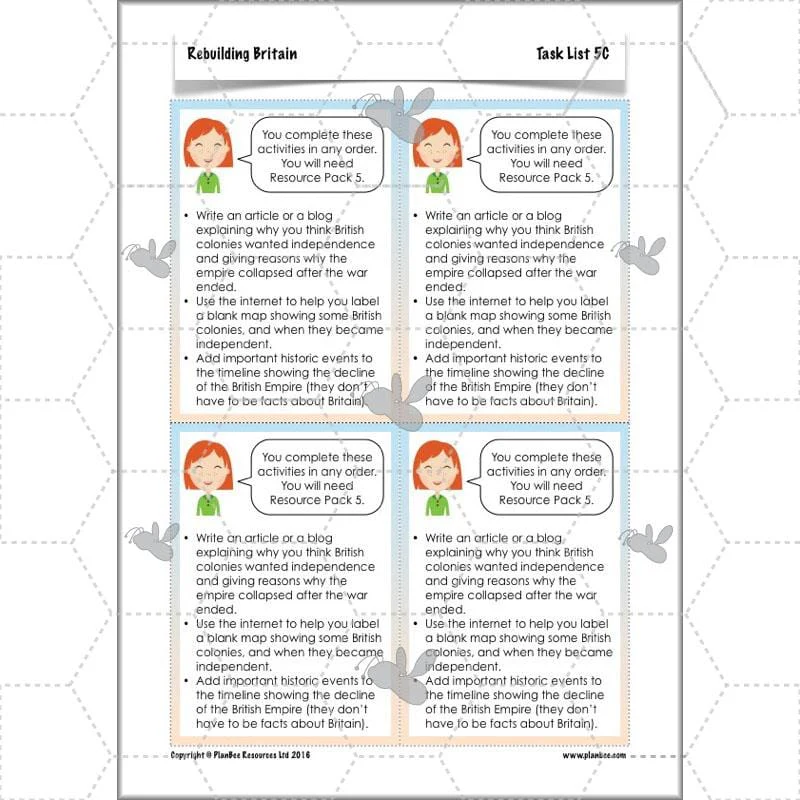
What do you know about the British Empire? Fill in those knowledge gaps with the included slides, which describe the Empire and the involvement of people from British colonies in the War Effort. They may be surprised to learn just how many people from India, the West Indies, the Americas and Australia fought for Britain! Following this, challenge children to consider reasons why almost all of the colonies sought and won independence from Britain in the post-war years.
What's included:
- Lesson plan
- Slides
- Activity ideas
- Task lists
- Resource pack
- Challenge card
View Lesson 5
Windrush
With the nationalisation of many services and industries and the rebuilding of Britain underway, it became apparent that there would be a shortage of labour. With that in mind, the post-war government granted all people of the British Empire full citizenship. In 1948, the first ship—the Windrush—arrived from Jamaica, bringing with it the first wave of what was to be tens of thousands of people from the West Indies. Learn all about this fascinating period—when Britain became truly multicultural—and consider what life must have been like for the first Caribbean immigrants coming to start new lives in Britain.
What's included:
- Lesson plan
- Slides
- Activity ideas
- Differentiated worksheets
- Source sheets
View Lesson 6
New Towns
Look at what are some of the most visible, lasting legacies of the post-war plans for rebuilding Britain: new towns. Focus on Harlow and the reasons for its construction, then take a look at some of the peculiarities of its layout and architecture. Children are challenged to express their own ideas and opinions about the nature of new towns, then either plan the layout for a new town of their own design or—if you are local to one—visit and explore a new town!
What's included:
- Lesson plan
- Slides
- Activity ideas
- Checklists
- Teacher's notes
- End of Unit Quiz
View Lesson 7
Product Information
Product Information
Shipping & Returns
Shipping & Returns
Description
In the years after the end of WWII, a number of extraordinary changes took place in Britain. As post-war plans for rebuilding Britain were implemented, virtually every aspect of British life was affected. By the mid-1960s, Britain had, undergone a transformation; in many ways it was unrecognisable when compared to how it had been in the first half of the 20th Century. 'Rebuilding Britain’ covers this period of modern British history in-depth, starting with her involvement in the war.
Other aspects of ‘rebuilding’ which are addressed include: initial rebuilding in the cities; the creation of the NHS and the Welfare State; how and why so many British Colonies became independent after the war; the ‘Windrush’ of immigration from the Caribbean to Britain; and the creation of 'New Towns’.
You may also be interested in our World War 2 History scheme of work for upper KS2 exploring the causes of WW2 and its impact on Britain and the wider world or our Brilliant Britain Topic Bundle!
The Second World War
What was Britain’s involvement in the Second World War? How was life at home affected? What was its impact on Britain by the time it ended? This first lesson is packed with information about WWII so you can bring your class up to speed with key events 1939-1945, whether they’ve studied this period before, or it’s completely new to them. Whichever of the two included activities you choose to undertake with your children, they’ll have opportunities to consider the ways in which the war At Home impacted upon people’s lives, and to show their understanding through writing and mind-mapping.
What's included:
- Lesson plan
- Slides
- Activity ideas
- Differentiated worksheets
- Families at war sheet
View Lesson 1
Recovering after the Blitz
In this lesson, children are first asked to consider and discuss the many ways in which British people had been affected by the war. Following this, take a look at one of the first priorities for the post-war government: repairing the cities after the Blitz. Explore in-depth how one small region of London was rebuilt over many years after the war ended. Once your class has learned a little about this aspect of the rebuilding of Britain, there is a choice of two learning activities for them to undertake: either considering in greater depth how the war had affected various aspects of life at home, or studying one of the most divisive features of the rebuilding – the Modernist or ‘Brutalist’ architecture of many post-war reconstruction projects such as the Barbican Centre in London.
What's included:
- Lesson plan
- Slides
- Activity ideas
- Challenge sheet
- Cause and effect cards
- Worksheet
View Lesson 2
The Welfare State
In this lesson, find out all about the wave of optimism that swept a radically different government into power when the war ended, and its vision for rebuilding and modernising Britain. Following this, challenge children to consider why various aspects of the new government’s plans were so appealing to voters, by considering what life had been like before, and during the war. Following this, children may choose one aspect of the plan, such as free healthcare, nationalisation, job creation or universal benefits, as the subject of a persuasive text. Alternatively, why not undertake the alternative activity: a class election!
What's included:
- Lesson plan
- Slides
- Activity ideas
- Challenge cards
- The Election! Sheet
- Writing frames
- Cue cards
View Lesson 3
The NHS
What is the NHS? What does it do? How does it work? What would life in Britain be like without it? Challenge children to consider all these questions and more as they find out about the creation of the NHS, the campaign to raise awareness about the services it offered, and how it has shaped and changed life in Britain to this day. Following this, children may either study some original source material explaining how people should prepare for the new health service, or produce promotional/educational material in the style of that produced at the time to raise awareness.
What's included:
- Lesson plan
- Slides
- Activity ideas
- Differentiated worksheets
- 1948 NHS leaflet
- Challenge card
View Lesson 4
End of Empire
What do you know about the British Empire? Fill in those knowledge gaps with the included slides, which describe the Empire and the involvement of people from British colonies in the War Effort. They may be surprised to learn just how many people from India, the West Indies, the Americas and Australia fought for Britain! Following this, challenge children to consider reasons why almost all of the colonies sought and won independence from Britain in the post-war years.
What's included:
- Lesson plan
- Slides
- Activity ideas
- Task lists
- Resource pack
- Challenge card
View Lesson 5
Windrush
With the nationalisation of many services and industries and the rebuilding of Britain underway, it became apparent that there would be a shortage of labour. With that in mind, the post-war government granted all people of the British Empire full citizenship. In 1948, the first ship—the Windrush—arrived from Jamaica, bringing with it the first wave of what was to be tens of thousands of people from the West Indies. Learn all about this fascinating period—when Britain became truly multicultural—and consider what life must have been like for the first Caribbean immigrants coming to start new lives in Britain.
What's included:
- Lesson plan
- Slides
- Activity ideas
- Differentiated worksheets
- Source sheets
View Lesson 6
New Towns
Look at what are some of the most visible, lasting legacies of the post-war plans for rebuilding Britain: new towns. Focus on Harlow and the reasons for its construction, then take a look at some of the peculiarities of its layout and architecture. Children are challenged to express their own ideas and opinions about the nature of new towns, then either plan the layout for a new town of their own design or—if you are local to one—visit and explore a new town!
What's included:
- Lesson plan
- Slides
- Activity ideas
- Checklists
- Teacher's notes
- End of Unit Quiz
View Lesson 7