The Atlantic Slave Trade
Download seven complete Slavery KS2 lessons to teach your Year 5/6 class about the history of the Atlantic slave trade. The lessons cover the history of slavery before exploring the triangular slave trade between Britain, West Africa and the Americas. There is also a lesson focused on the life of Harriet Tubman and how she helped to free enslaved people during her lifetime.
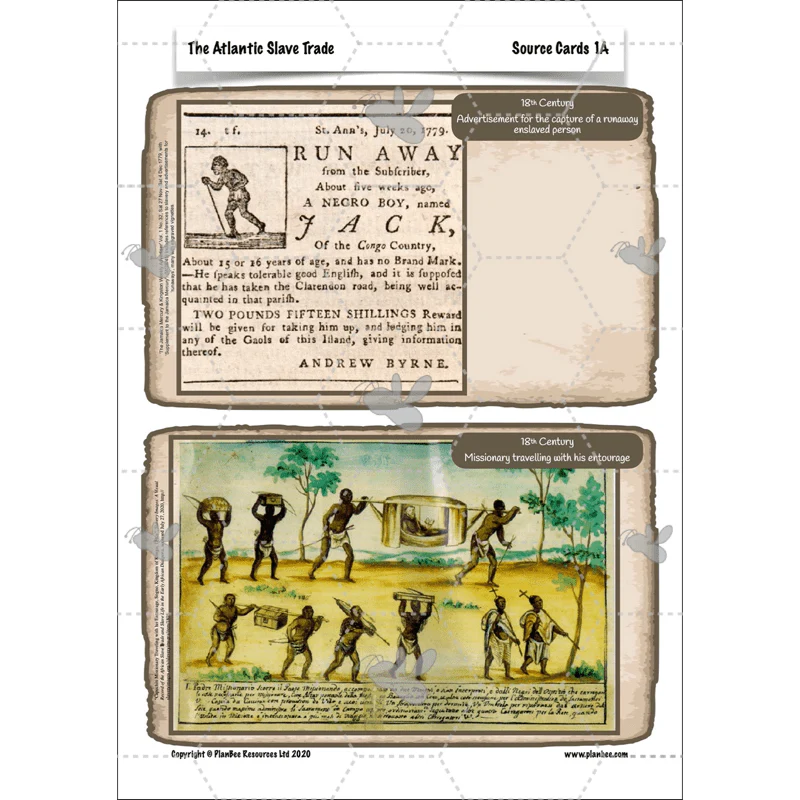
Perfect as part of a black history KS2 topic or to enrich your class's knowledge of this part of Britain's history. The included printable resources show different historical sources of the people's attitudes towards slavery at the time as well as the experiences of enslaved people during the 17th and 18th centuries.
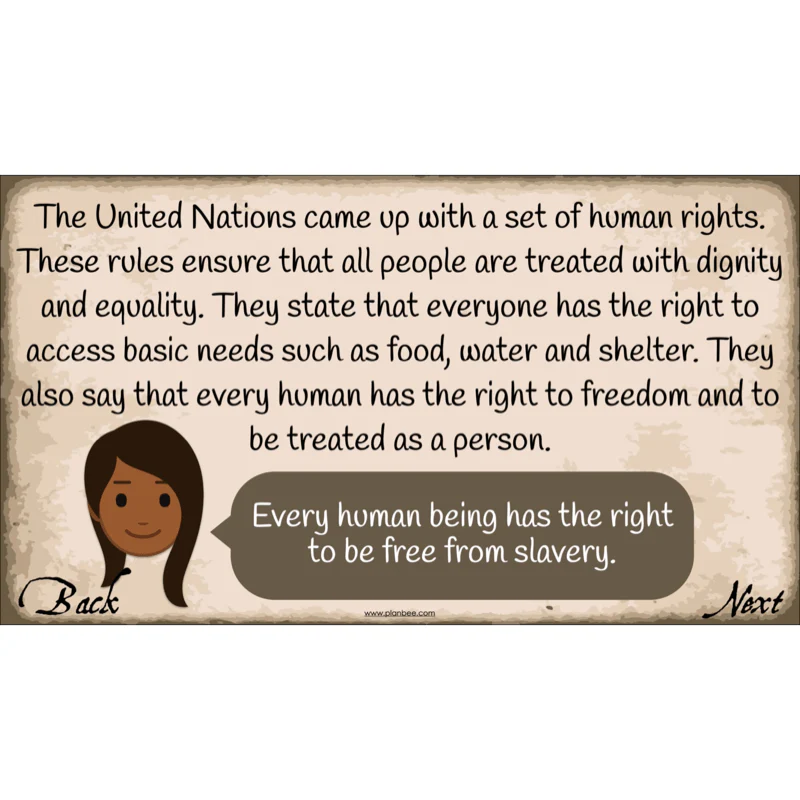
The lessons in this fully resourced scheme of work also look closely at the abolition and the lasting effects that the Atlantic slave trade had on the people and countries involved, including how slavery has changed and still exists today as modern slavery.
A Knowledge Organiser is available to support the learning in this scheme. It is included in the Complete Series download or can be purchased individually.
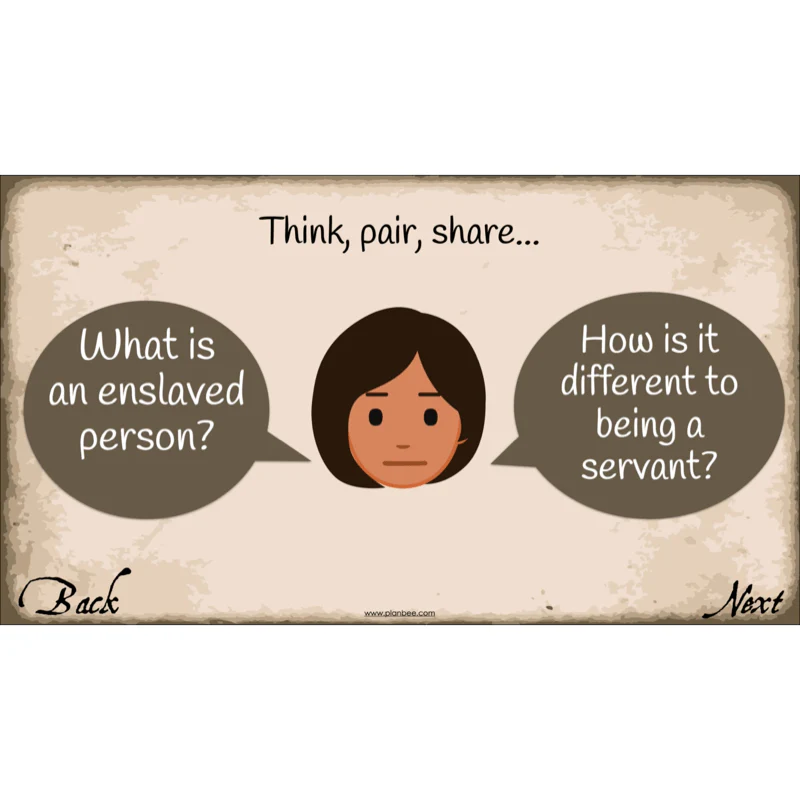
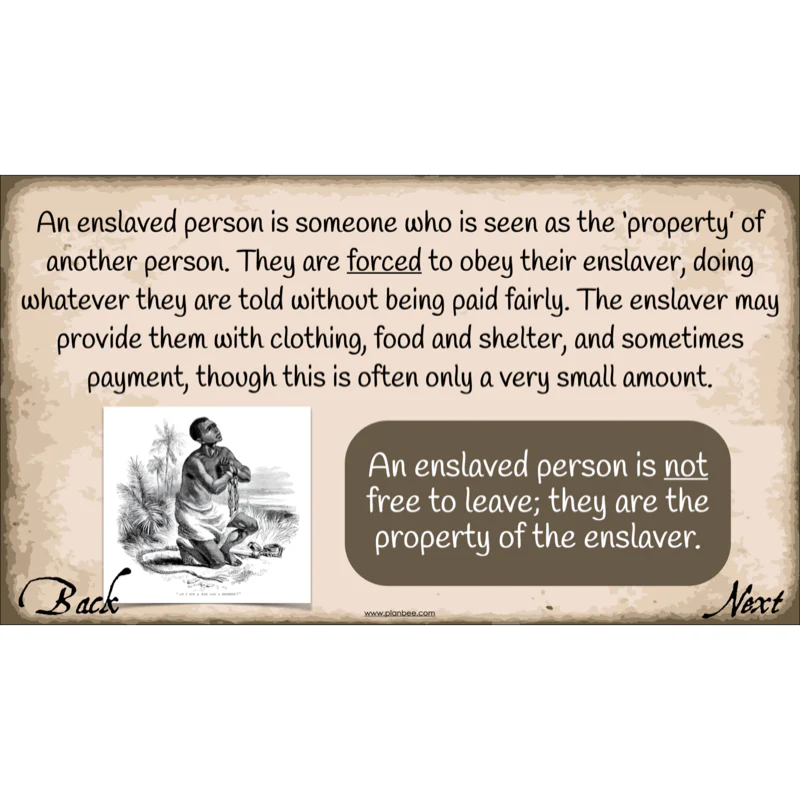
What is an enslaved person?
Use this lesson to introduce the idea of slavery to your KS2 class in comparison to the employment of servants and indentured servants.
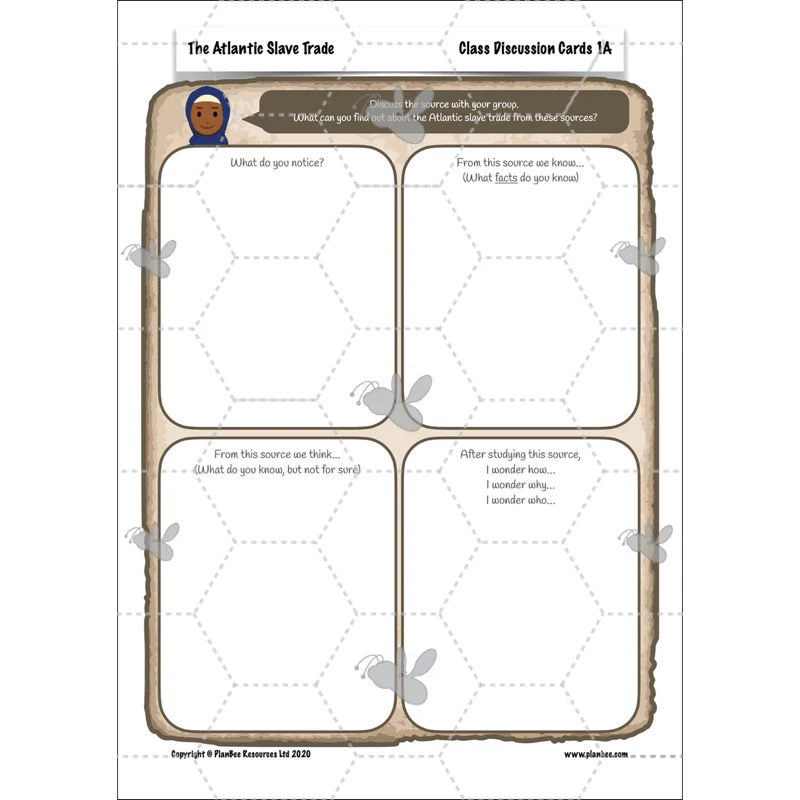
The included lesson slides help to guide your class's discussion as you explore different sources which show how different cultures and communities have included slavery throughout history. Using the differentiated activity ideas, your class will then begin to look at sources from the period which included the Atlantic slave trade, searching for clues to tell them about how the enslaved people were treated and the kinds of work they were forced to do.
Instantly download a detailed lesson plan, lesson slides and printable resources to introduce your UKS2 class to this important topic.
What's included:
- Lesson plan
- Slides
- Activity ideas
- Source cards
- Differentiated worksheets
- Class discussion cards
View Lesson 1
The Triangular Trade
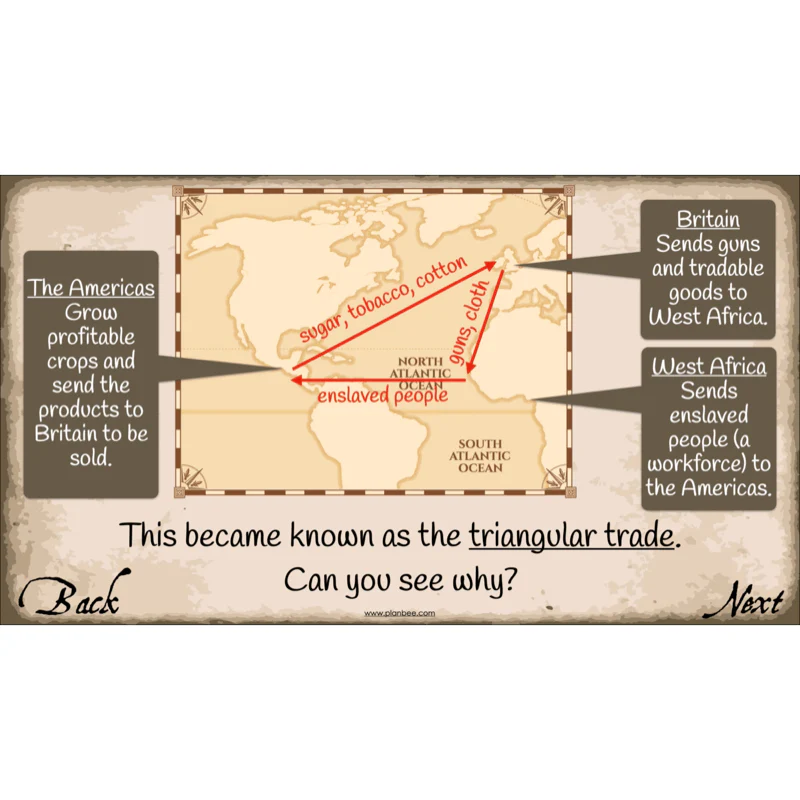
This lesson focuses on the beginnings and workings of the triangular trade and the people who benefited from the trade of enslaved people from Africa.
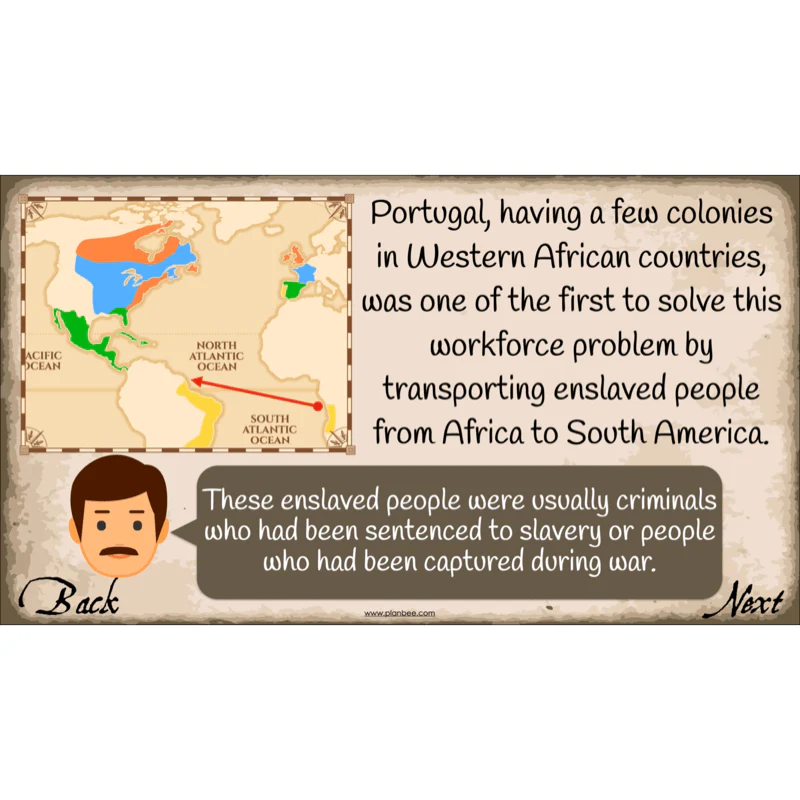
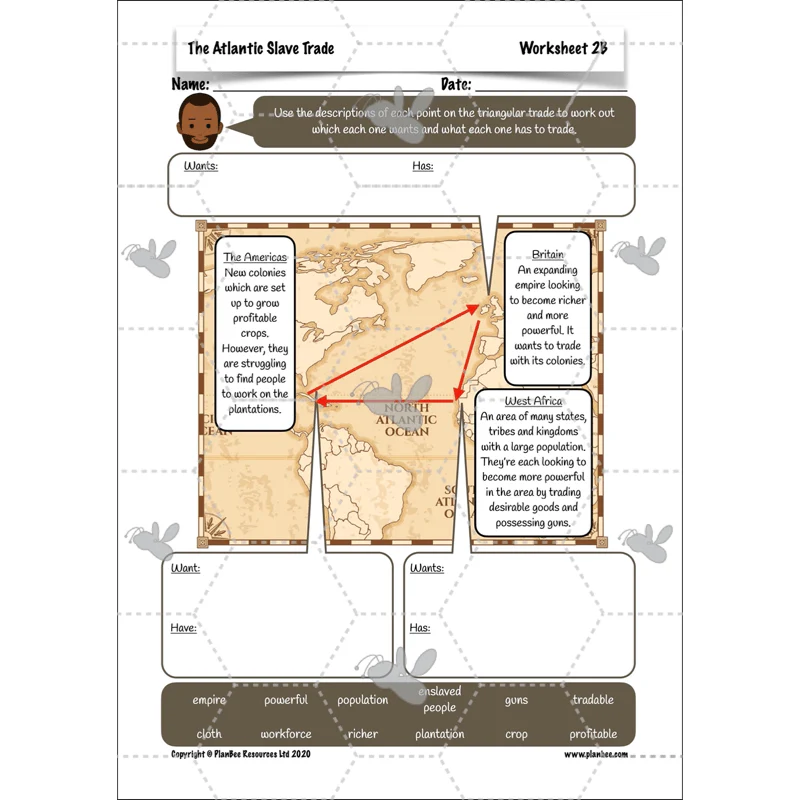
Your KS2 class will look at how European countries, including Britain, began to trade enslaved people who were bought from African nations. The included lesson slides will guide your discussion about how each point on the triangular trade benefited from this arrangement and what they gained from trading enslaved people.
This lesson comes with everything you need to teach your class about the triangular trade between Europe, the Americas and the west coast of Africa.
What's included:
- Lesson plan
- Slides
- Activity ideas
- Differentiated worksheet
- Want/Have labels
- Discussion sheet
- Comic strip
View Lesson 2
What was it like for enslaved people?
After learning about the practicality of the triangular trade in the previous lesson, your class will take another look at the experience from the point of view of an enslaved African person.
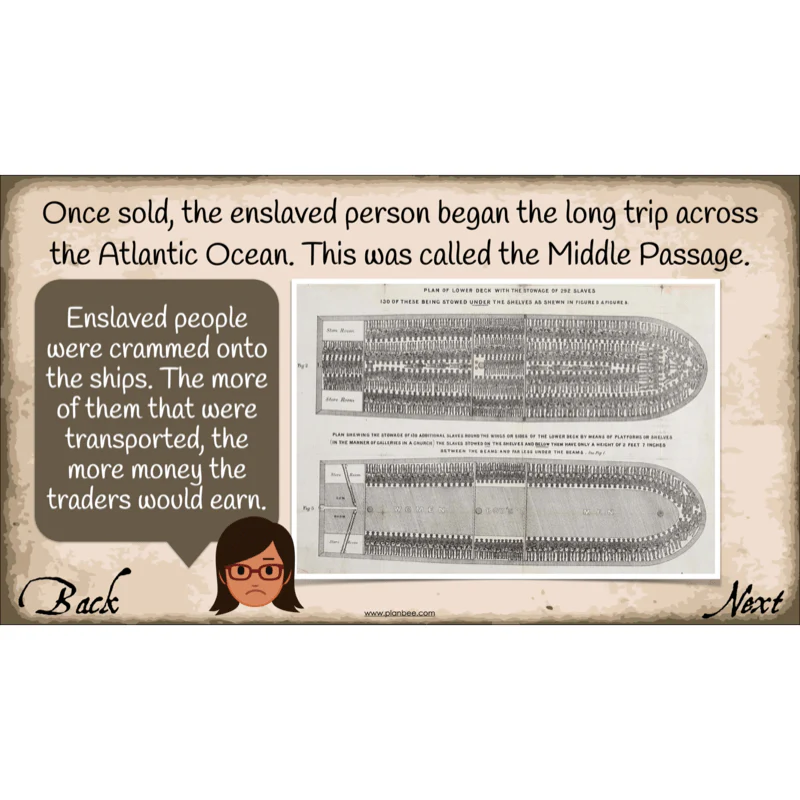
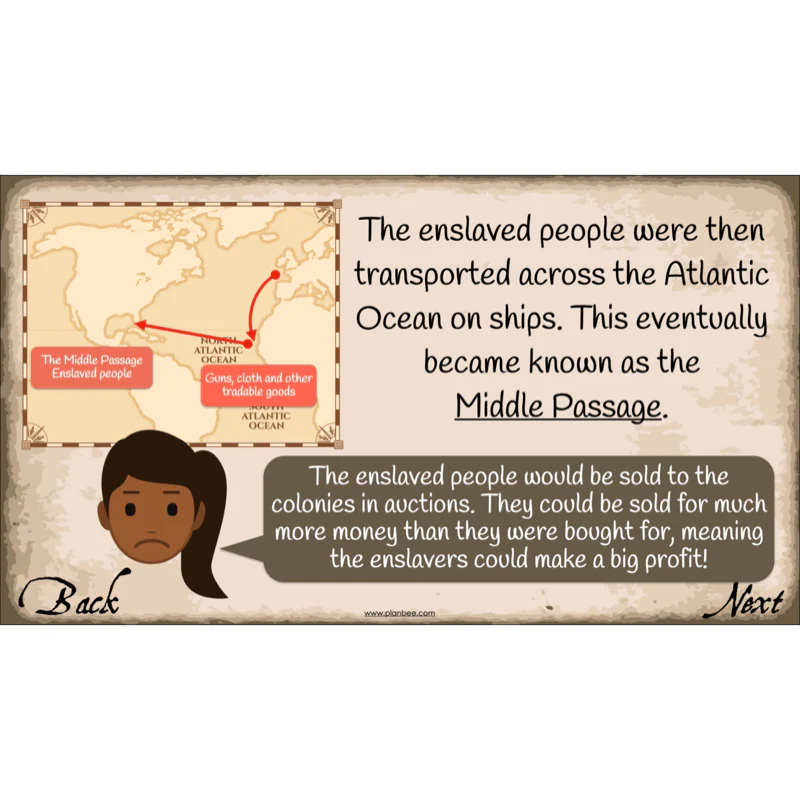
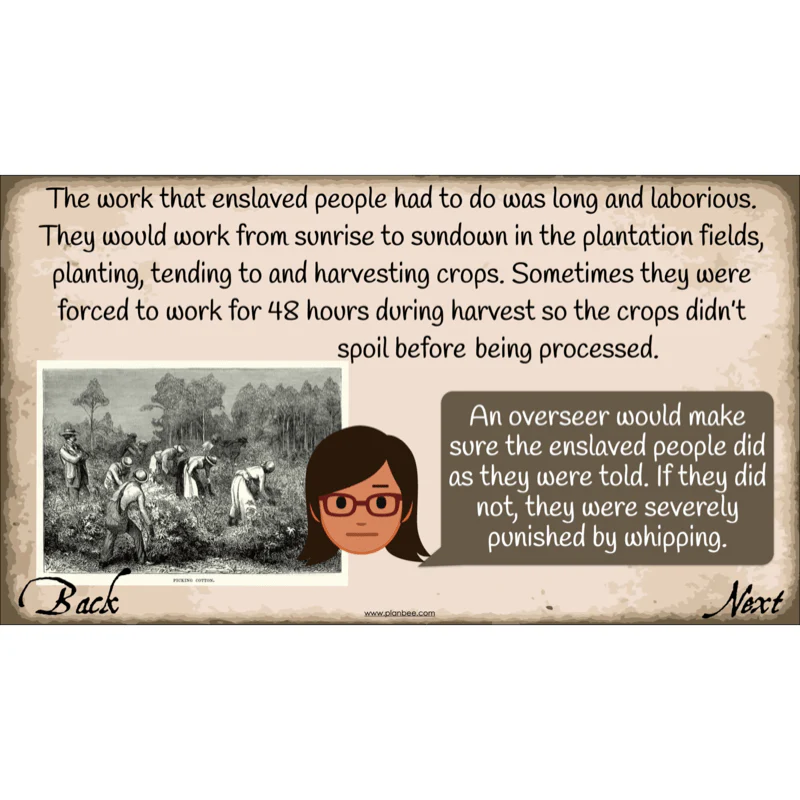
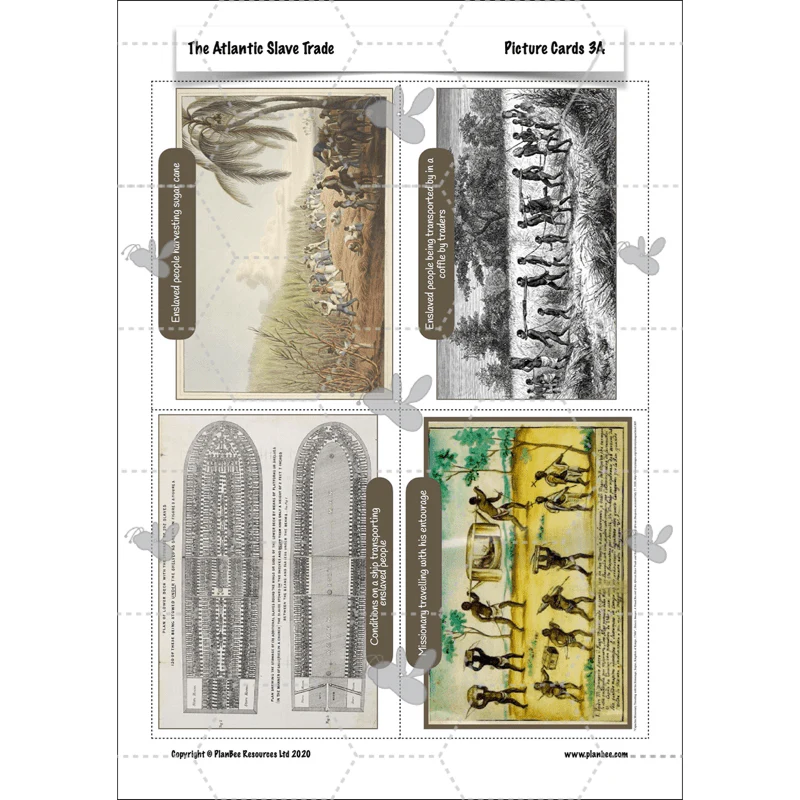
The lesson slides cover what it was like for enslaved people during the Middle Passage as well as how they were treated once they arrived to the Americas. The lesson covers the auctions where enslaved people were bought and discusses the kind of work that they were expected to do. The printable resources for this lesson include extracts from interviews with former enslaved people speaking about their experiences during their lives.
What's included:
- Lesson plan
- Slides
- Activity ideas
- Information sheets
- Word bank
- Source cards
- Worksheet
View Lesson 3
Abolition of the Slave Trade
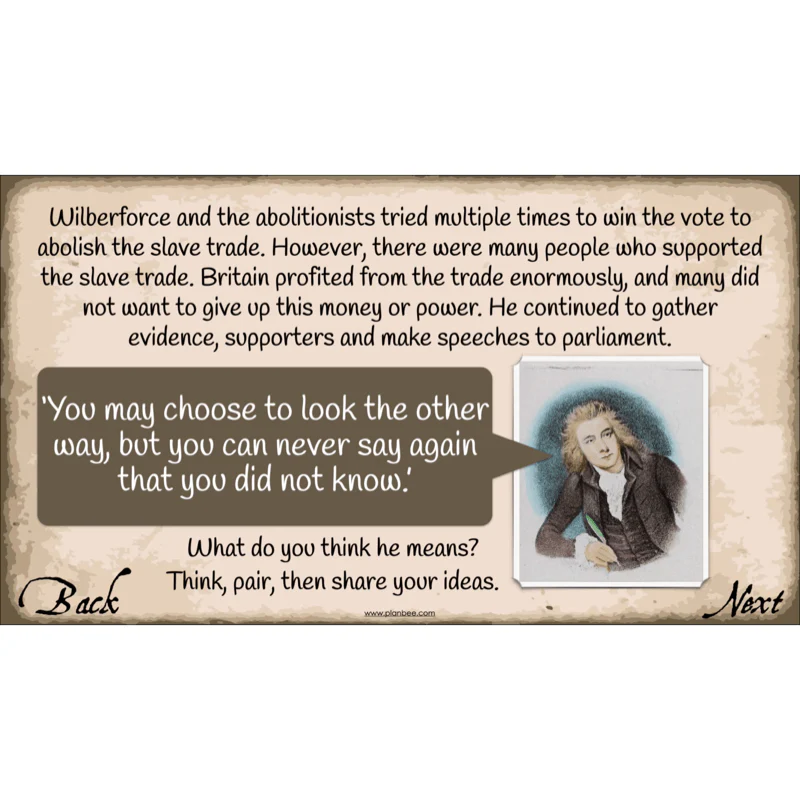
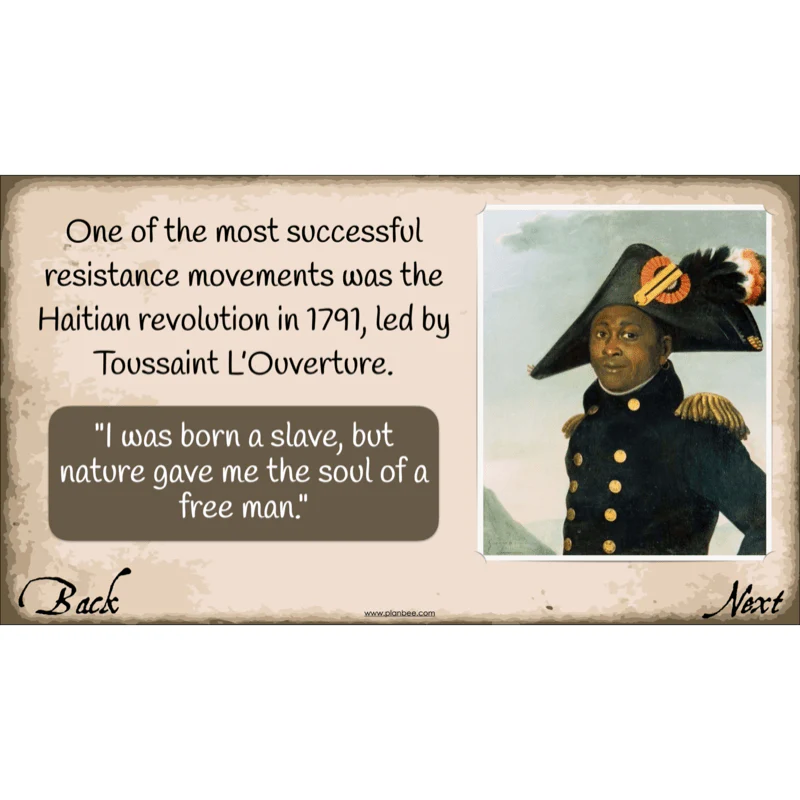
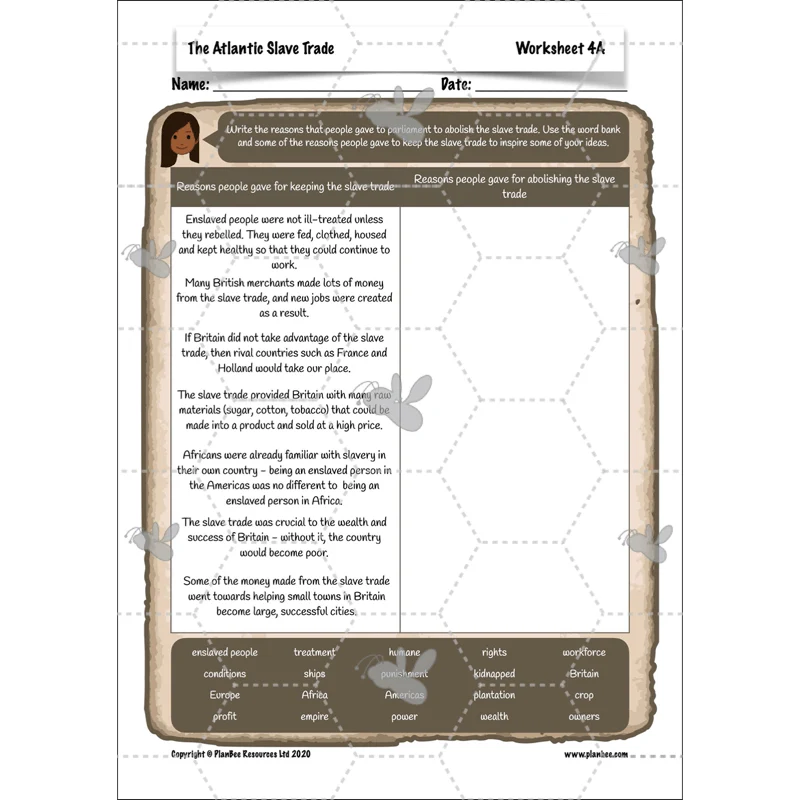
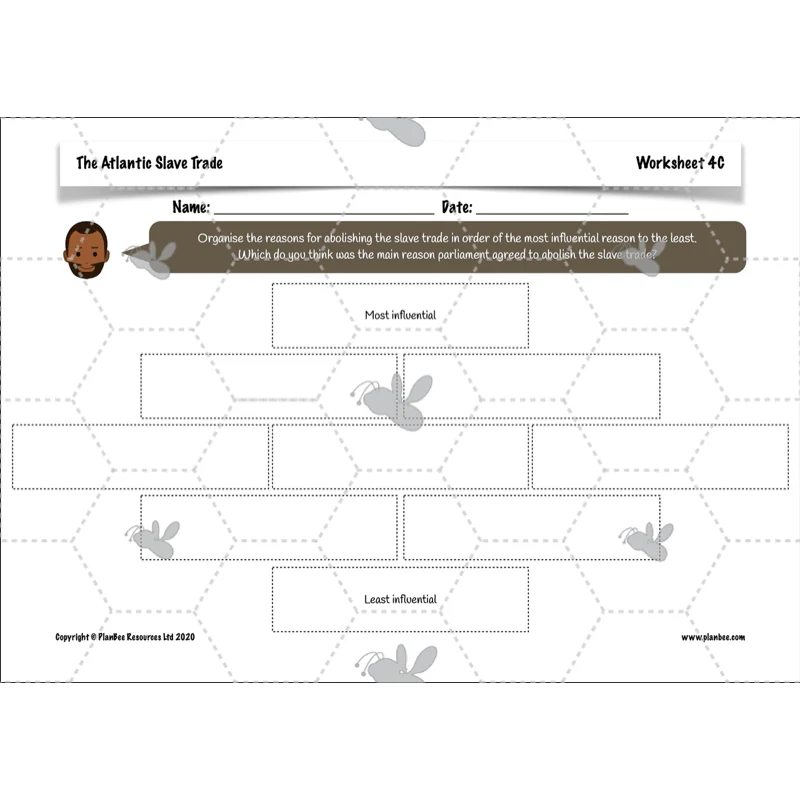
Find out about the influential people involved in the campaign to abolish the slave trade in 1807, including William Wilberforce, Ottobah Cugoano and Toussaint L’Ouverture. Use the included lesson slides to explore the different reasons that the abolitionists used to convince parliament to make the slave trade illegal and how this eventually led to the abolition of slavery itself in 1833.
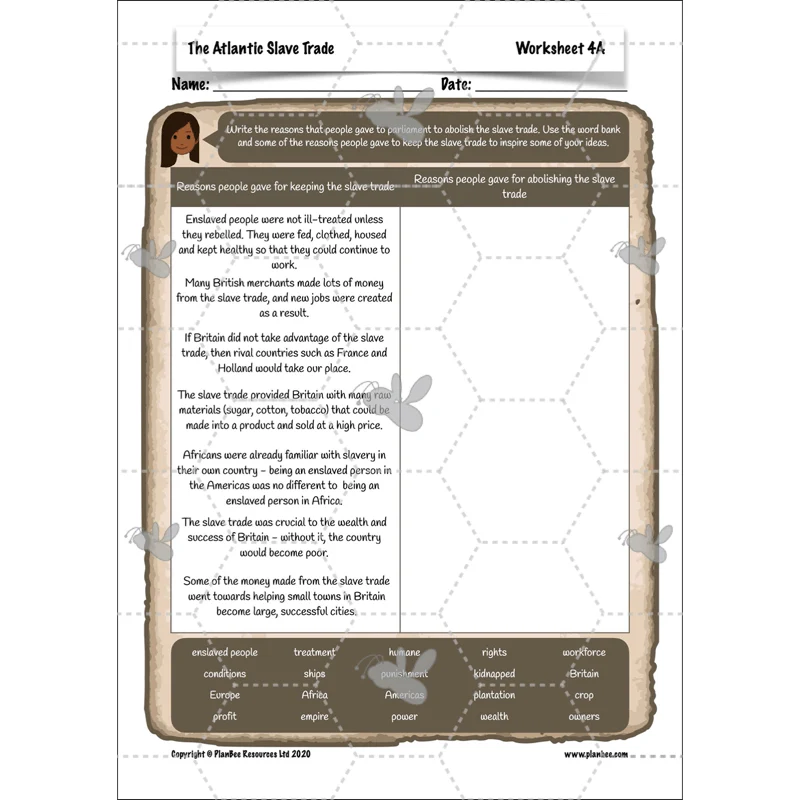
The included printable resources help to guide your class in their discussions about the reasons behind the slave trade being abolished and which reason they think was the most influential.
What's included:
- Lesson plan
- Slides
- Activity ideas
- For and against cards
- Differentiated worksheets
- Diamond nine cards
View Lesson 4
Harriet Tubman and the Underground Railroad
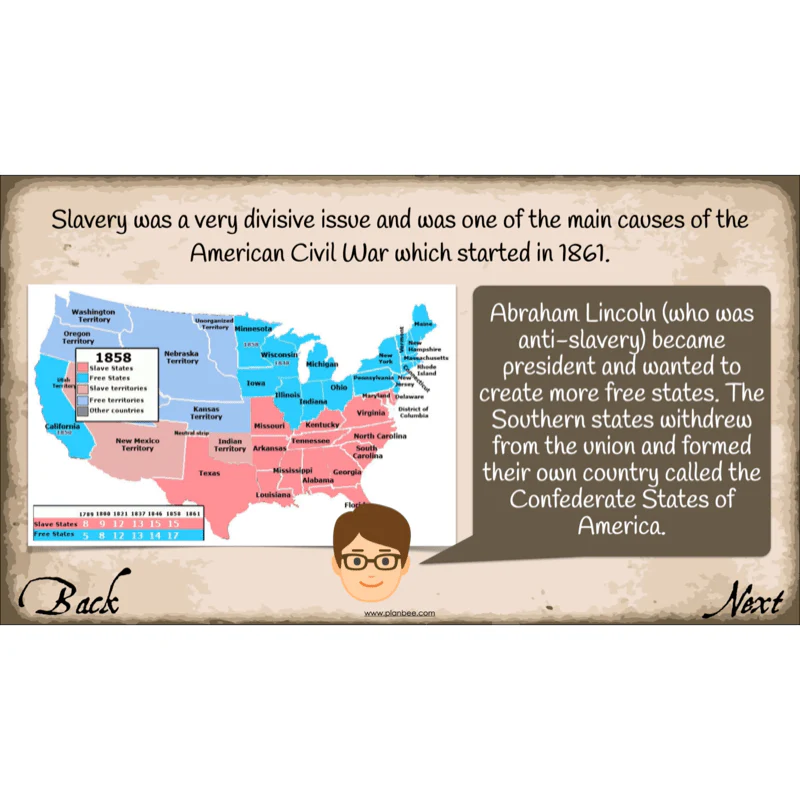
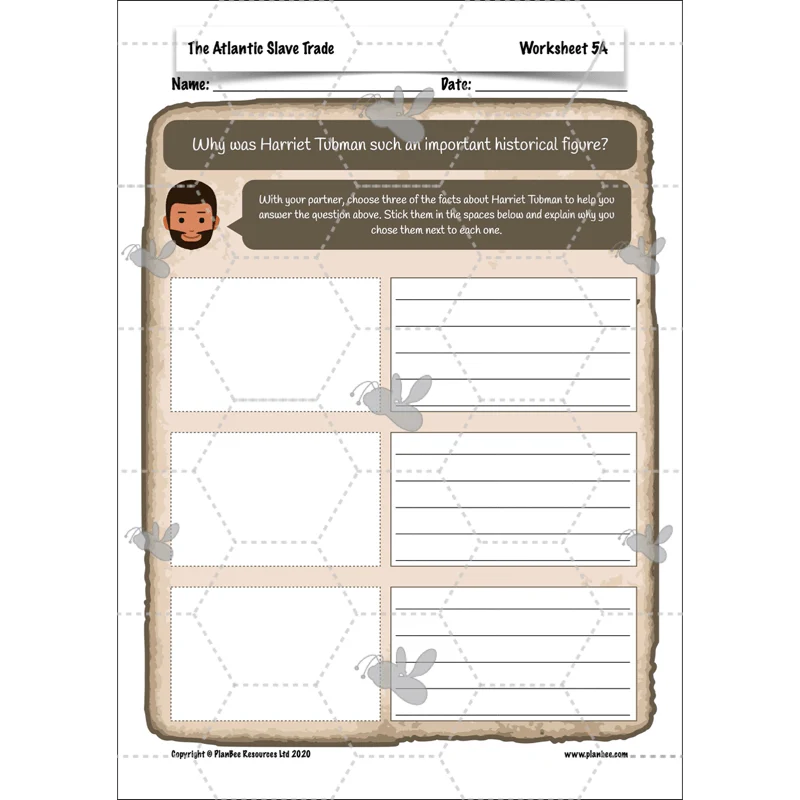
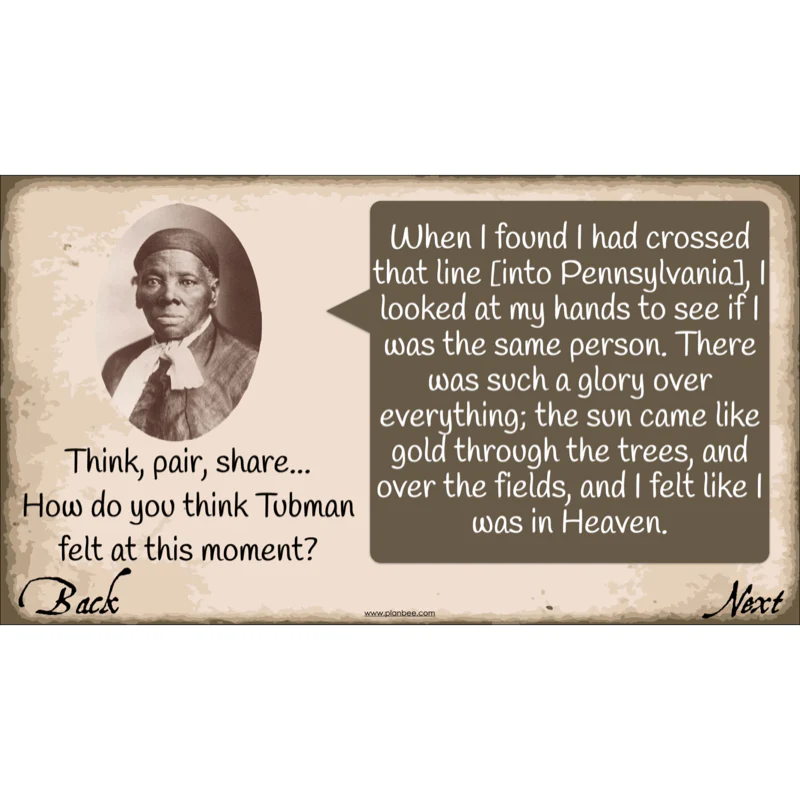
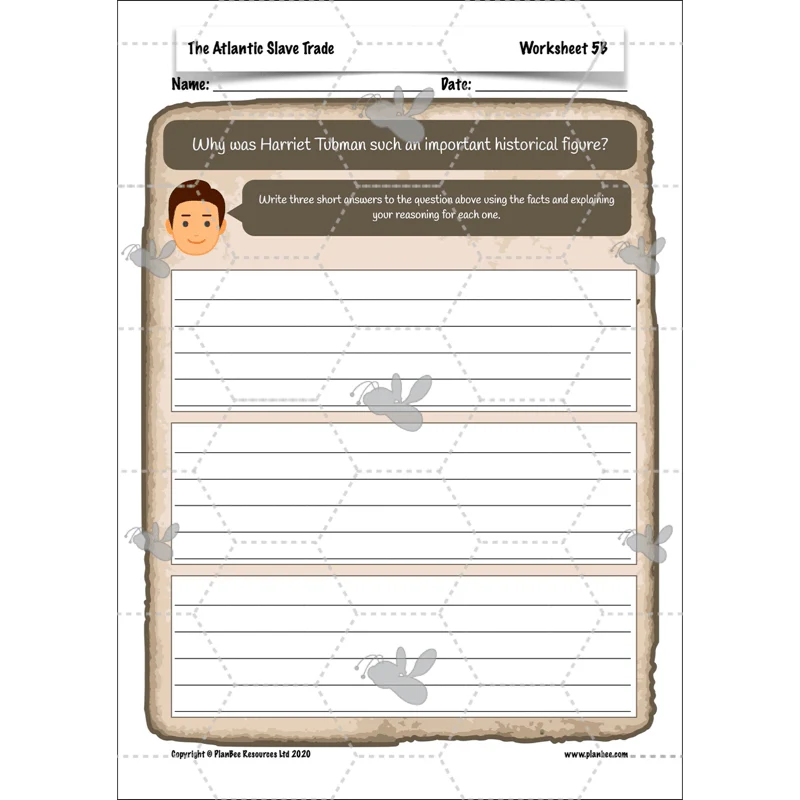
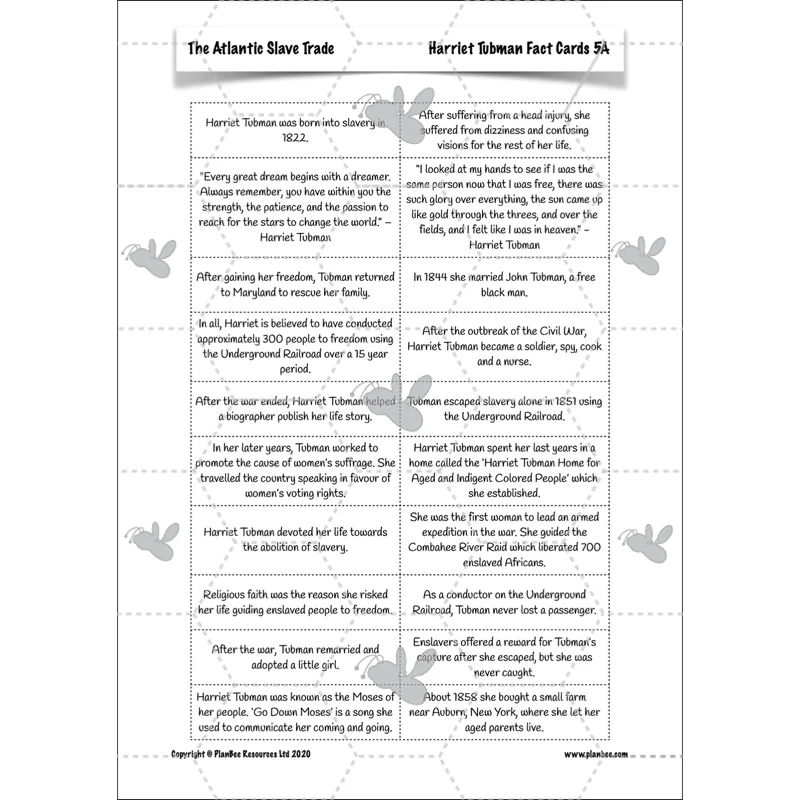
Teach your class about an important historical figure: Harriet Tubman. Use the included lesson slides to explore her life and how she escaped slavery and became a conductor on the Underground Railroad, helping to free over 300 enslaved people.
Challenge your class to participate in rich discussions about the key points in Tubman's life and what made her such an incredible woman. The printable resources for this lesson help your class find out more about her and use their reasoning skills to help them answer the question: Why is Harriet Tubman such an important historical figure?
What's included:
- Lesson plan
- Slides
- Activity ideas
- Harriet Tubman fact cards
- Differentiated worksheet
View Lesson 5
Modern Slavery
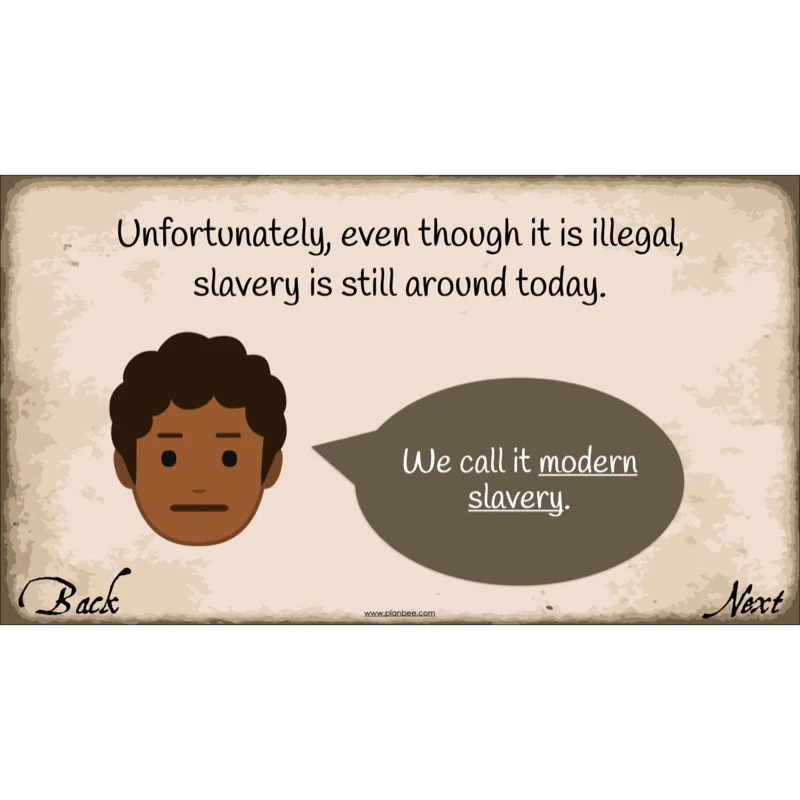
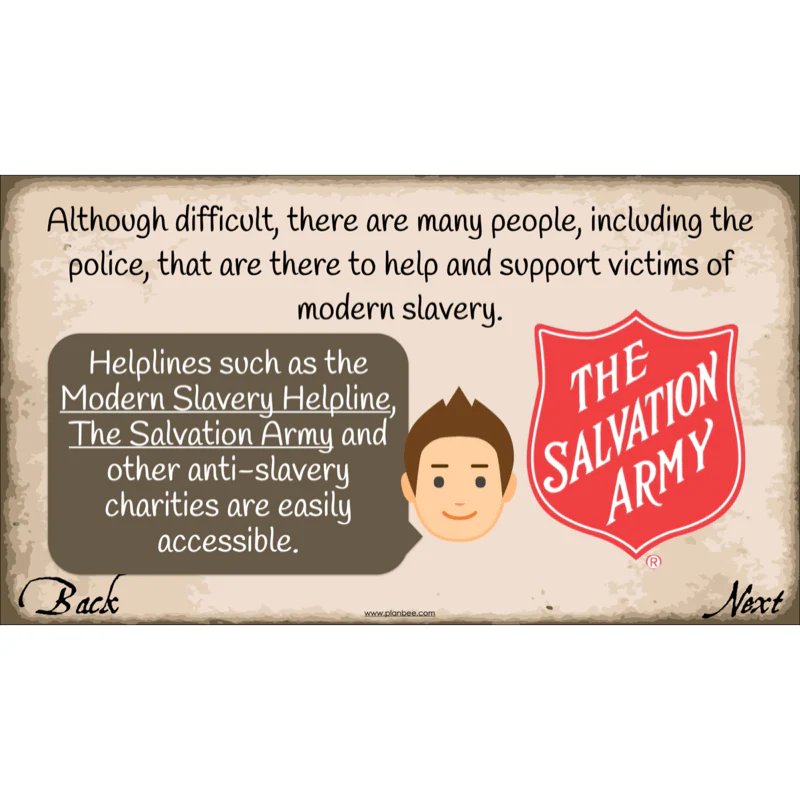
After learning about the Atlantic slave trade, educate your class on what modern slavery is.
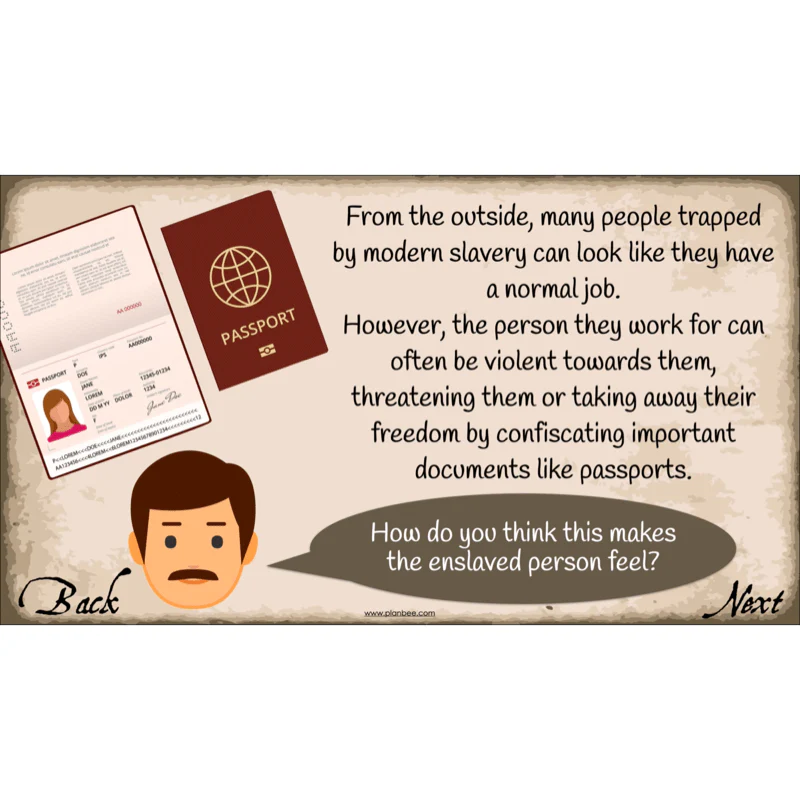
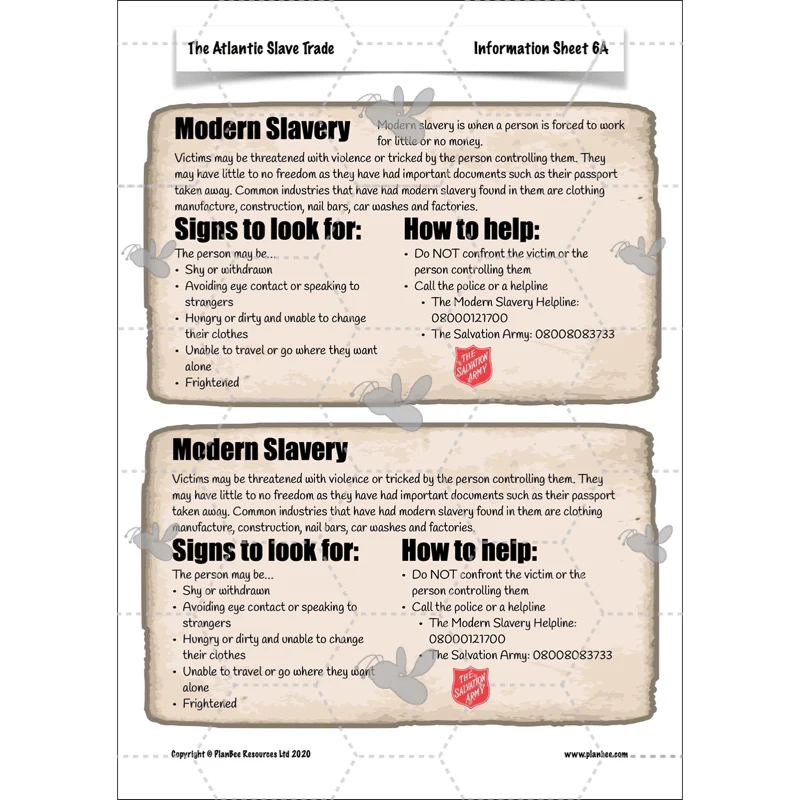
Discuss how people may become victims of modern slavery and what can be done to help them. Discuss with children about how they would define slavery now and discuss the differences between slavery in the 18th century and modern slavery.
The included detailed lesson plan, lesson slides and printable resources are perfect for a cross-curricular PSHE link when learning about the slave trade and how slavery affects many lives today.
What's included:
- Lesson plan
- Slides
- Activity ideas
- Worksheet
- Door templates
- Information sheet
- Lettering sheet
View Lesson 6
Debate
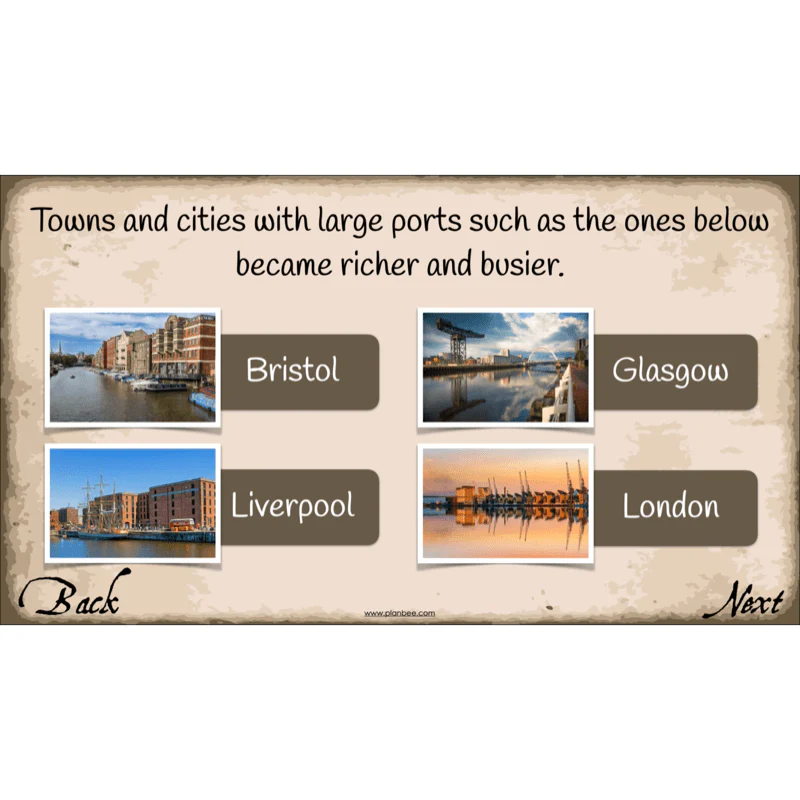
This final lesson focuses on the legacies that the slave trade left behind in Britain and its cities. In particular, they will investigate street names and buildings in cities with large ports such as Bristol, Glasgow, London and Liverpool.
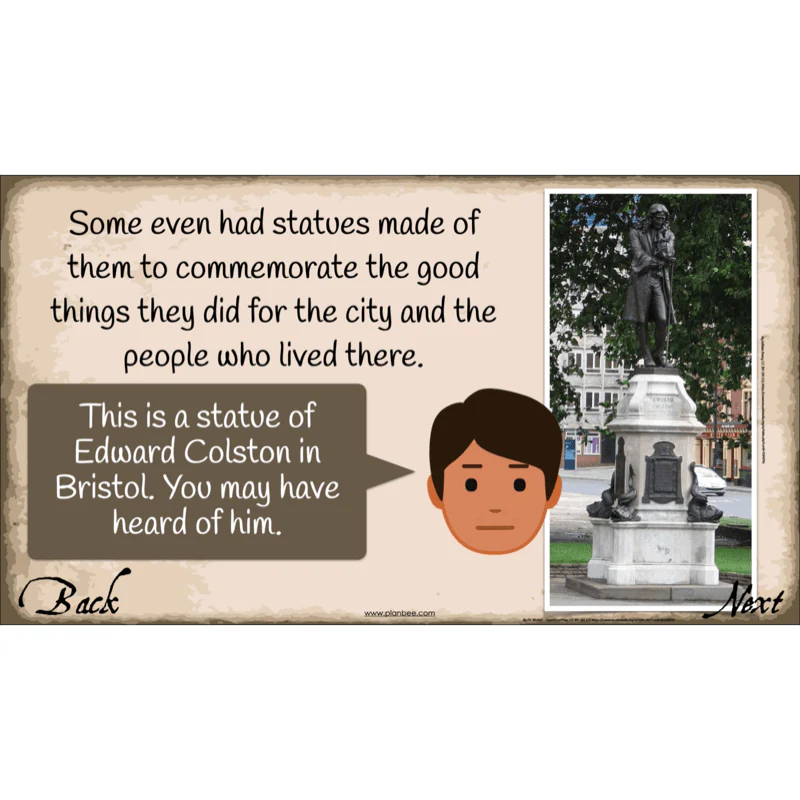
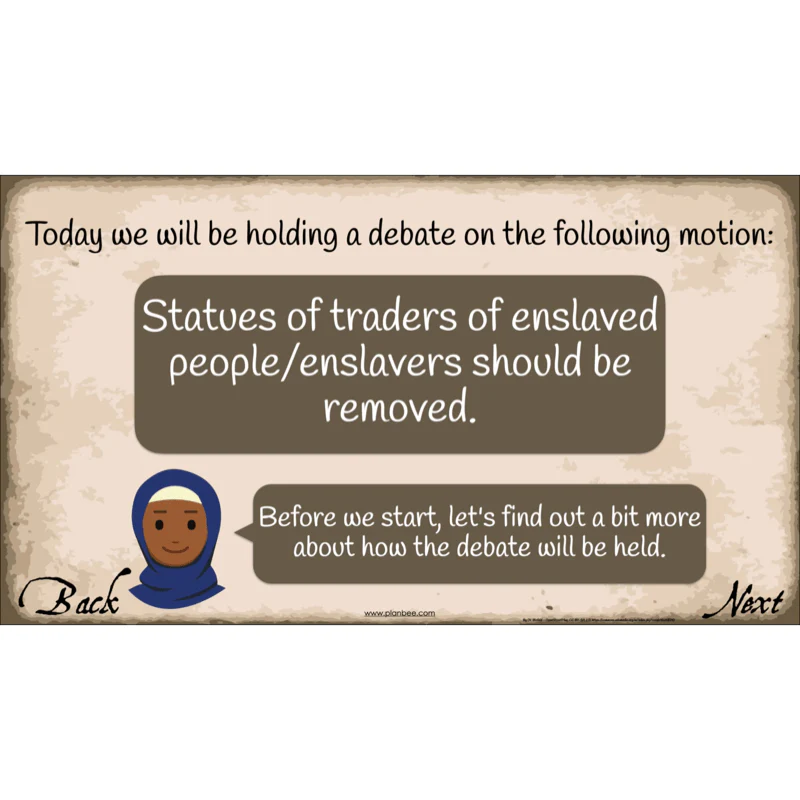
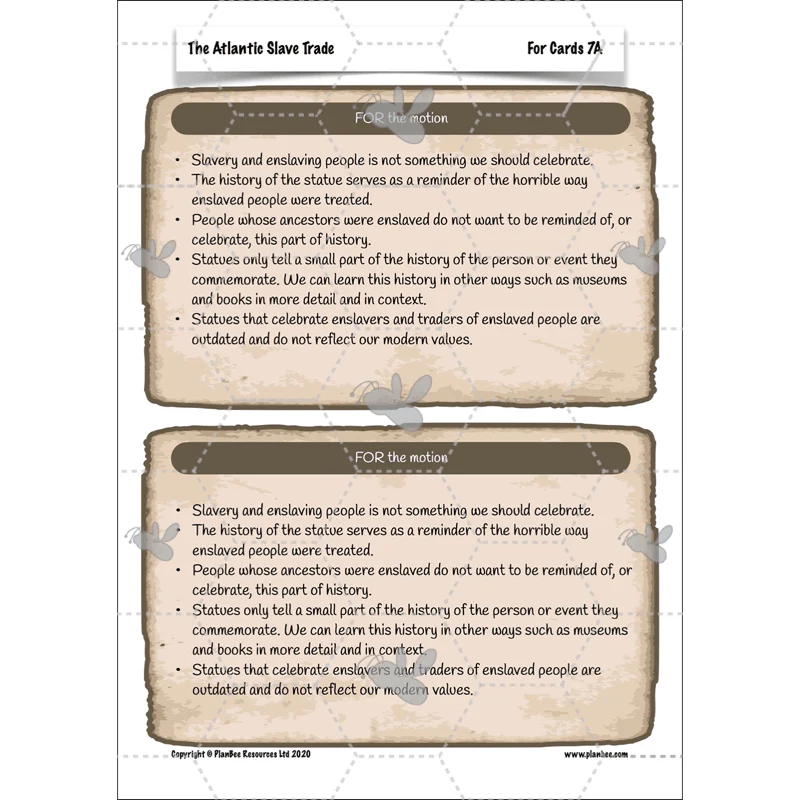
The included lesson slides will then begin a discussion on the statues which commemorate people who, after gaining wealth from the slave trade or being enslavers themselves, went on to become great philanthropists in their home cities. The children will use the supporting resources to hold a debate on whether or not these statues should be removed as they were during the 2020 Black Lives Matter protests.
Finally, an End of Unit Quiz is provided to summarise your class's learning during this topic.
What's included:
- Lesson plan
- Slides
- Activity ideas
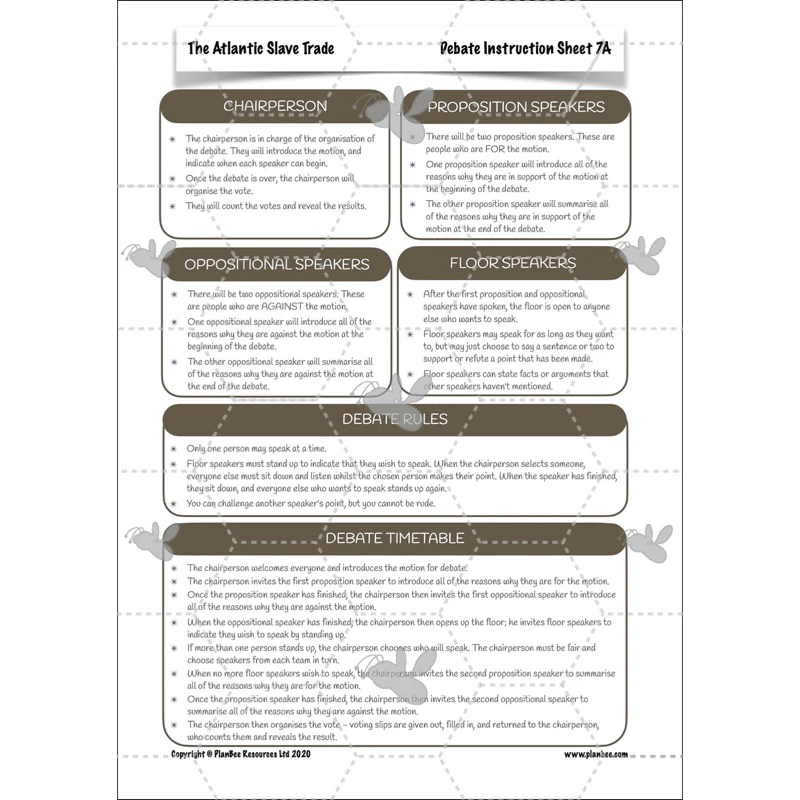
- Debate Instructions Sheet
- For cards
- Against cards
- Debate cards
- Voting cards
- End of Unit Quiz
View Lesson 7
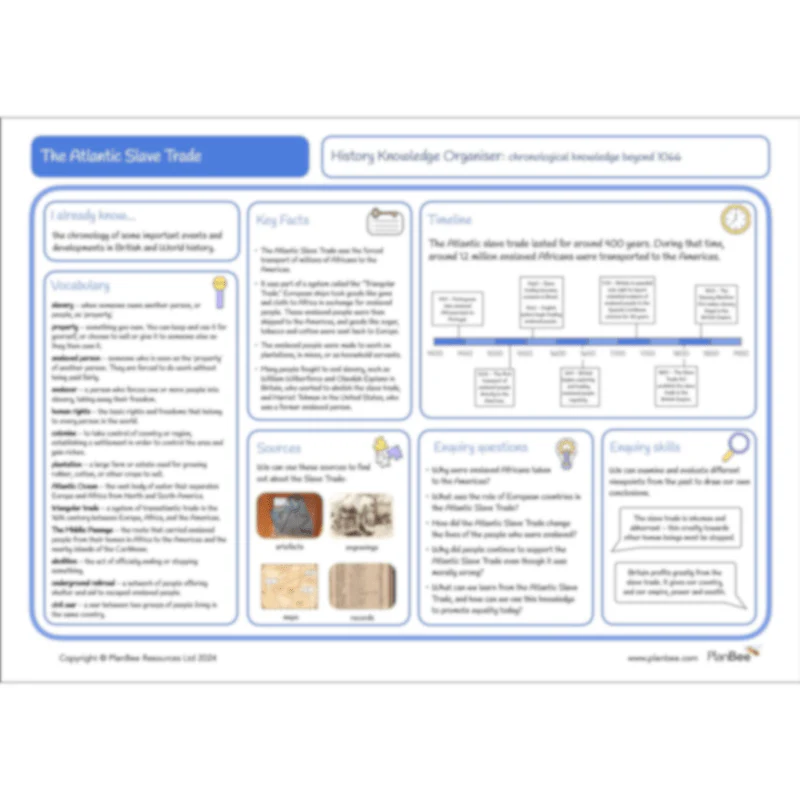
This Year 5/6 History Knowledge Organiser has been created to complement our History 'Britain Beyond 1066' strand. It is designed to support your children’s understanding of key vocabulary linked to this scheme of work. Enquiry questions have been included to encourage your children to think like a historian within this topic.
View Knowledge Organiser
Original: $2.69
-65%$2.69
$0.94More Images

























The Atlantic Slave Trade
Download seven complete Slavery KS2 lessons to teach your Year 5/6 class about the history of the Atlantic slave trade. The lessons cover the history of slavery before exploring the triangular slave trade between Britain, West Africa and the Americas. There is also a lesson focused on the life of Harriet Tubman and how she helped to free enslaved people during her lifetime.
Perfect as part of a black history KS2 topic or to enrich your class's knowledge of this part of Britain's history. The included printable resources show different historical sources of the people's attitudes towards slavery at the time as well as the experiences of enslaved people during the 17th and 18th centuries.
The lessons in this fully resourced scheme of work also look closely at the abolition and the lasting effects that the Atlantic slave trade had on the people and countries involved, including how slavery has changed and still exists today as modern slavery.
A Knowledge Organiser is available to support the learning in this scheme. It is included in the Complete Series download or can be purchased individually.
What is an enslaved person?
Use this lesson to introduce the idea of slavery to your KS2 class in comparison to the employment of servants and indentured servants.
The included lesson slides help to guide your class's discussion as you explore different sources which show how different cultures and communities have included slavery throughout history. Using the differentiated activity ideas, your class will then begin to look at sources from the period which included the Atlantic slave trade, searching for clues to tell them about how the enslaved people were treated and the kinds of work they were forced to do.
Instantly download a detailed lesson plan, lesson slides and printable resources to introduce your UKS2 class to this important topic.
What's included:
- Lesson plan
- Slides
- Activity ideas
- Source cards
- Differentiated worksheets
- Class discussion cards
View Lesson 1
The Triangular Trade
This lesson focuses on the beginnings and workings of the triangular trade and the people who benefited from the trade of enslaved people from Africa.
Your KS2 class will look at how European countries, including Britain, began to trade enslaved people who were bought from African nations. The included lesson slides will guide your discussion about how each point on the triangular trade benefited from this arrangement and what they gained from trading enslaved people.
This lesson comes with everything you need to teach your class about the triangular trade between Europe, the Americas and the west coast of Africa.
What's included:
- Lesson plan
- Slides
- Activity ideas
- Differentiated worksheet
- Want/Have labels
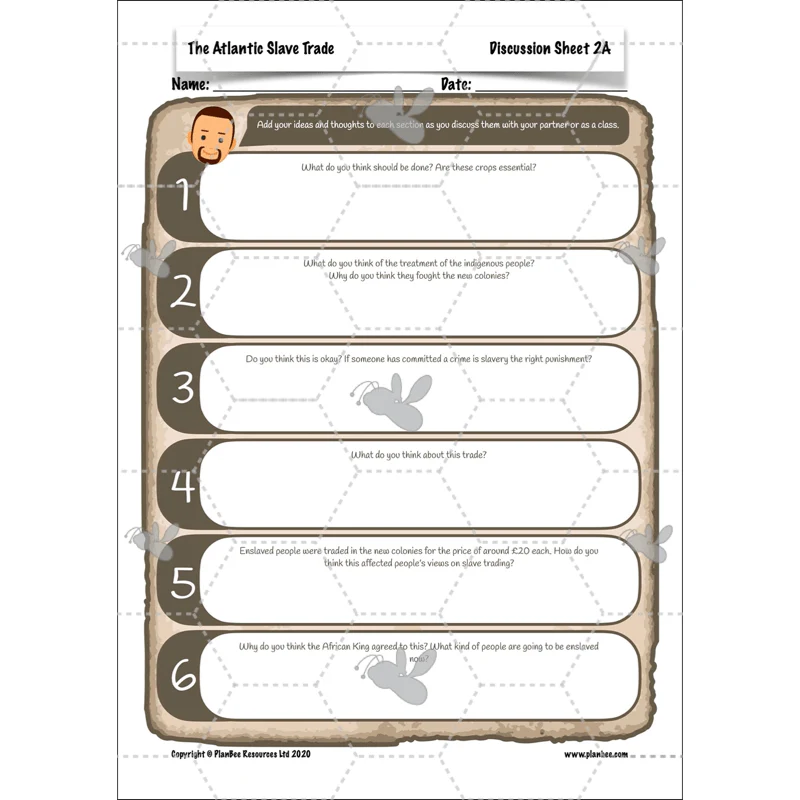
- Discussion sheet
- Comic strip
View Lesson 2
What was it like for enslaved people?
After learning about the practicality of the triangular trade in the previous lesson, your class will take another look at the experience from the point of view of an enslaved African person.
The lesson slides cover what it was like for enslaved people during the Middle Passage as well as how they were treated once they arrived to the Americas. The lesson covers the auctions where enslaved people were bought and discusses the kind of work that they were expected to do. The printable resources for this lesson include extracts from interviews with former enslaved people speaking about their experiences during their lives.
What's included:
- Lesson plan
- Slides
- Activity ideas
- Information sheets
- Word bank
- Source cards
- Worksheet
View Lesson 3
Abolition of the Slave Trade
Find out about the influential people involved in the campaign to abolish the slave trade in 1807, including William Wilberforce, Ottobah Cugoano and Toussaint L’Ouverture. Use the included lesson slides to explore the different reasons that the abolitionists used to convince parliament to make the slave trade illegal and how this eventually led to the abolition of slavery itself in 1833.
The included printable resources help to guide your class in their discussions about the reasons behind the slave trade being abolished and which reason they think was the most influential.
What's included:
- Lesson plan
- Slides
- Activity ideas
- For and against cards
- Differentiated worksheets
- Diamond nine cards
View Lesson 4
Harriet Tubman and the Underground Railroad
Teach your class about an important historical figure: Harriet Tubman. Use the included lesson slides to explore her life and how she escaped slavery and became a conductor on the Underground Railroad, helping to free over 300 enslaved people.
Challenge your class to participate in rich discussions about the key points in Tubman's life and what made her such an incredible woman. The printable resources for this lesson help your class find out more about her and use their reasoning skills to help them answer the question: Why is Harriet Tubman such an important historical figure?
What's included:
- Lesson plan
- Slides
- Activity ideas
- Harriet Tubman fact cards
- Differentiated worksheet
View Lesson 5
Modern Slavery
After learning about the Atlantic slave trade, educate your class on what modern slavery is.
Discuss how people may become victims of modern slavery and what can be done to help them. Discuss with children about how they would define slavery now and discuss the differences between slavery in the 18th century and modern slavery.
The included detailed lesson plan, lesson slides and printable resources are perfect for a cross-curricular PSHE link when learning about the slave trade and how slavery affects many lives today.
What's included:
- Lesson plan
- Slides
- Activity ideas
- Worksheet
- Door templates
- Information sheet
- Lettering sheet
View Lesson 6
Debate
This final lesson focuses on the legacies that the slave trade left behind in Britain and its cities. In particular, they will investigate street names and buildings in cities with large ports such as Bristol, Glasgow, London and Liverpool.
The included lesson slides will then begin a discussion on the statues which commemorate people who, after gaining wealth from the slave trade or being enslavers themselves, went on to become great philanthropists in their home cities. The children will use the supporting resources to hold a debate on whether or not these statues should be removed as they were during the 2020 Black Lives Matter protests.
Finally, an End of Unit Quiz is provided to summarise your class's learning during this topic.
What's included:
- Lesson plan
- Slides
- Activity ideas
- Debate Instructions Sheet
- For cards
- Against cards
- Debate cards
- Voting cards
- End of Unit Quiz
View Lesson 7
This Year 5/6 History Knowledge Organiser has been created to complement our History 'Britain Beyond 1066' strand. It is designed to support your children’s understanding of key vocabulary linked to this scheme of work. Enquiry questions have been included to encourage your children to think like a historian within this topic.
View Knowledge Organiser
Product Information
Product Information
Shipping & Returns
Shipping & Returns
Description
Download seven complete Slavery KS2 lessons to teach your Year 5/6 class about the history of the Atlantic slave trade. The lessons cover the history of slavery before exploring the triangular slave trade between Britain, West Africa and the Americas. There is also a lesson focused on the life of Harriet Tubman and how she helped to free enslaved people during her lifetime.
Perfect as part of a black history KS2 topic or to enrich your class's knowledge of this part of Britain's history. The included printable resources show different historical sources of the people's attitudes towards slavery at the time as well as the experiences of enslaved people during the 17th and 18th centuries.
The lessons in this fully resourced scheme of work also look closely at the abolition and the lasting effects that the Atlantic slave trade had on the people and countries involved, including how slavery has changed and still exists today as modern slavery.
A Knowledge Organiser is available to support the learning in this scheme. It is included in the Complete Series download or can be purchased individually.
What is an enslaved person?
Use this lesson to introduce the idea of slavery to your KS2 class in comparison to the employment of servants and indentured servants.
The included lesson slides help to guide your class's discussion as you explore different sources which show how different cultures and communities have included slavery throughout history. Using the differentiated activity ideas, your class will then begin to look at sources from the period which included the Atlantic slave trade, searching for clues to tell them about how the enslaved people were treated and the kinds of work they were forced to do.
Instantly download a detailed lesson plan, lesson slides and printable resources to introduce your UKS2 class to this important topic.
What's included:
- Lesson plan
- Slides
- Activity ideas
- Source cards
- Differentiated worksheets
- Class discussion cards
View Lesson 1
The Triangular Trade
This lesson focuses on the beginnings and workings of the triangular trade and the people who benefited from the trade of enslaved people from Africa.
Your KS2 class will look at how European countries, including Britain, began to trade enslaved people who were bought from African nations. The included lesson slides will guide your discussion about how each point on the triangular trade benefited from this arrangement and what they gained from trading enslaved people.
This lesson comes with everything you need to teach your class about the triangular trade between Europe, the Americas and the west coast of Africa.
What's included:
- Lesson plan
- Slides
- Activity ideas
- Differentiated worksheet
- Want/Have labels
- Discussion sheet
- Comic strip
View Lesson 2
What was it like for enslaved people?
After learning about the practicality of the triangular trade in the previous lesson, your class will take another look at the experience from the point of view of an enslaved African person.
The lesson slides cover what it was like for enslaved people during the Middle Passage as well as how they were treated once they arrived to the Americas. The lesson covers the auctions where enslaved people were bought and discusses the kind of work that they were expected to do. The printable resources for this lesson include extracts from interviews with former enslaved people speaking about their experiences during their lives.
What's included:
- Lesson plan
- Slides
- Activity ideas
- Information sheets
- Word bank
- Source cards
- Worksheet
View Lesson 3
Abolition of the Slave Trade
Find out about the influential people involved in the campaign to abolish the slave trade in 1807, including William Wilberforce, Ottobah Cugoano and Toussaint L’Ouverture. Use the included lesson slides to explore the different reasons that the abolitionists used to convince parliament to make the slave trade illegal and how this eventually led to the abolition of slavery itself in 1833.
The included printable resources help to guide your class in their discussions about the reasons behind the slave trade being abolished and which reason they think was the most influential.
What's included:
- Lesson plan
- Slides
- Activity ideas
- For and against cards
- Differentiated worksheets
- Diamond nine cards
View Lesson 4
Harriet Tubman and the Underground Railroad
Teach your class about an important historical figure: Harriet Tubman. Use the included lesson slides to explore her life and how she escaped slavery and became a conductor on the Underground Railroad, helping to free over 300 enslaved people.
Challenge your class to participate in rich discussions about the key points in Tubman's life and what made her such an incredible woman. The printable resources for this lesson help your class find out more about her and use their reasoning skills to help them answer the question: Why is Harriet Tubman such an important historical figure?
What's included:
- Lesson plan
- Slides
- Activity ideas
- Harriet Tubman fact cards
- Differentiated worksheet
View Lesson 5
Modern Slavery
After learning about the Atlantic slave trade, educate your class on what modern slavery is.
Discuss how people may become victims of modern slavery and what can be done to help them. Discuss with children about how they would define slavery now and discuss the differences between slavery in the 18th century and modern slavery.
The included detailed lesson plan, lesson slides and printable resources are perfect for a cross-curricular PSHE link when learning about the slave trade and how slavery affects many lives today.
What's included:
- Lesson plan
- Slides
- Activity ideas
- Worksheet
- Door templates
- Information sheet
- Lettering sheet
View Lesson 6
Debate
This final lesson focuses on the legacies that the slave trade left behind in Britain and its cities. In particular, they will investigate street names and buildings in cities with large ports such as Bristol, Glasgow, London and Liverpool.
The included lesson slides will then begin a discussion on the statues which commemorate people who, after gaining wealth from the slave trade or being enslavers themselves, went on to become great philanthropists in their home cities. The children will use the supporting resources to hold a debate on whether or not these statues should be removed as they were during the 2020 Black Lives Matter protests.
Finally, an End of Unit Quiz is provided to summarise your class's learning during this topic.
What's included:
- Lesson plan
- Slides
- Activity ideas
- Debate Instructions Sheet
- For cards
- Against cards
- Debate cards
- Voting cards
- End of Unit Quiz
View Lesson 7
This Year 5/6 History Knowledge Organiser has been created to complement our History 'Britain Beyond 1066' strand. It is designed to support your children’s understanding of key vocabulary linked to this scheme of work. Enquiry questions have been included to encourage your children to think like a historian within this topic.
View Knowledge Organiser