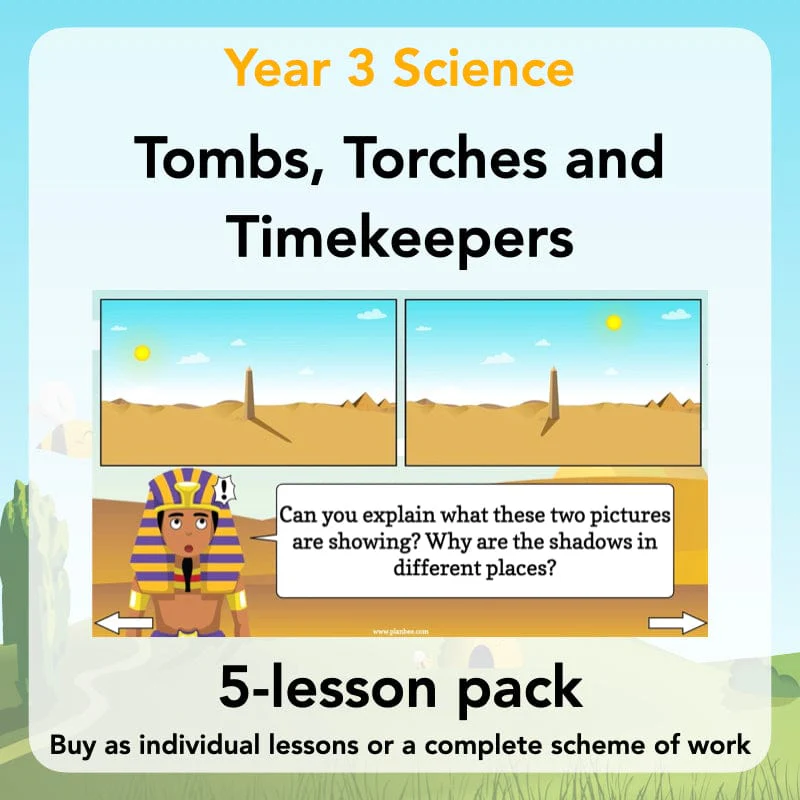
Tombs, Torches and Timekeepers
Teach your class everything they need to know to cover the ‘Light’ strand of the Year 3 Science curriculum all through the context of ancient Egypt! Your class will explore dark tombs and consider why nothing can be seen without light, use mirrors to help soldiers guarding a pyramid to see around corners, compare ancient Egyptian beliefs in the sun god Ra to modern explanations of the Sun, find out how obelisks were used to tell the time, and much more!
This ‘Tombs, Torches and Timekeepers’ covers all the same material from our ‘Light and Shadow’ scheme of work but is themed to fit in with your ancient Egyptian topic.
You may also like our Ancient Egyptians Topic Bundle which has four fully-prepared schemes of work all themed around ancient Egypt!
Light Sources
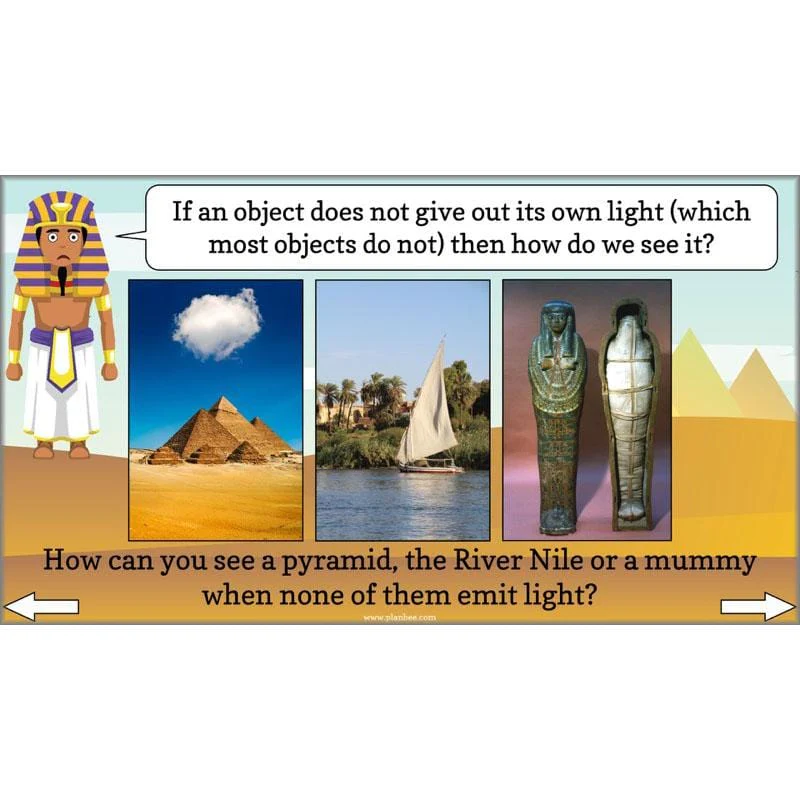
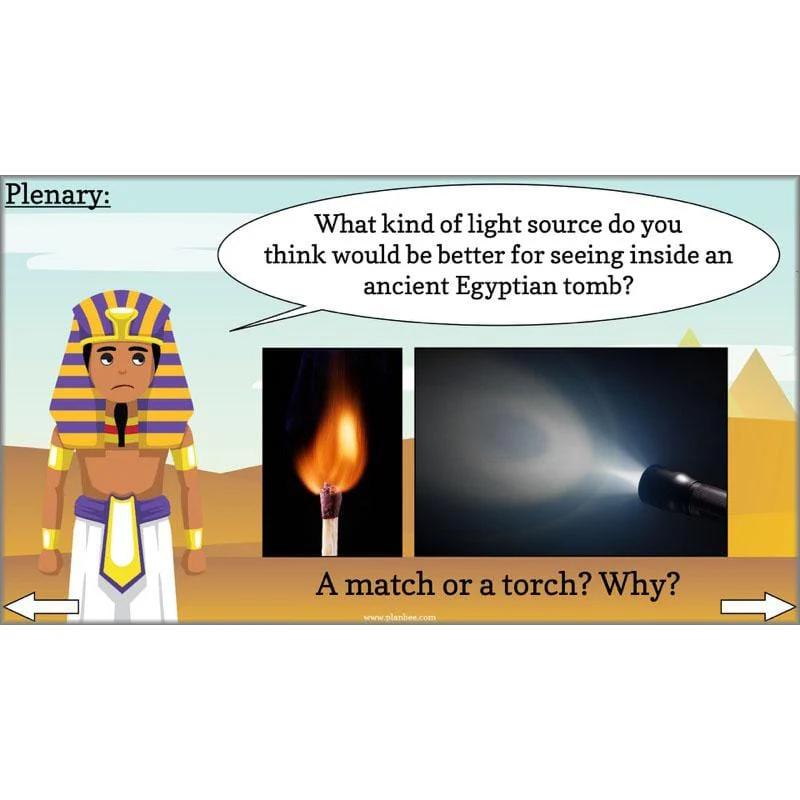
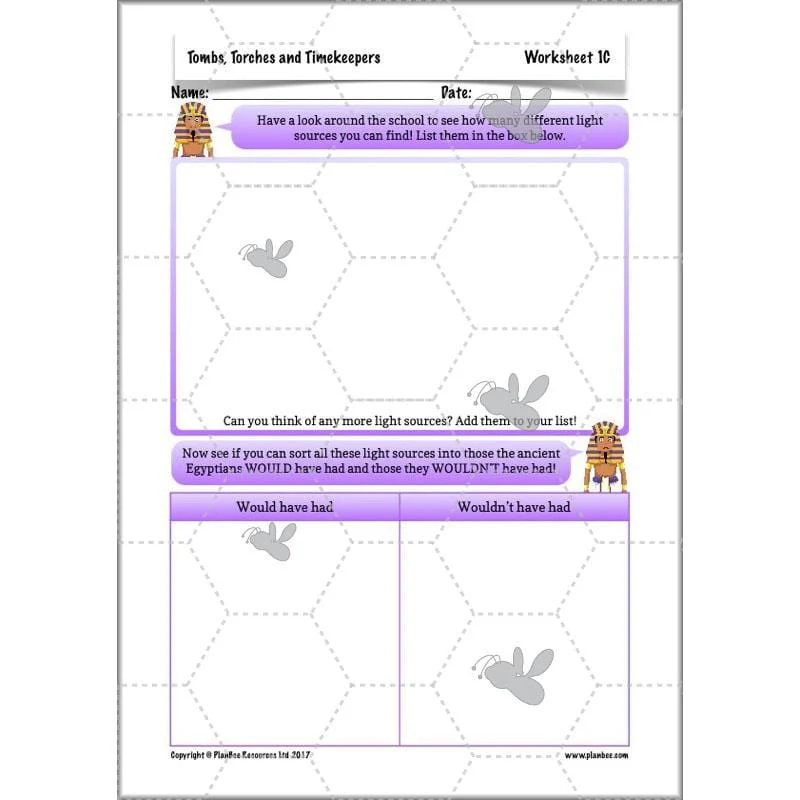
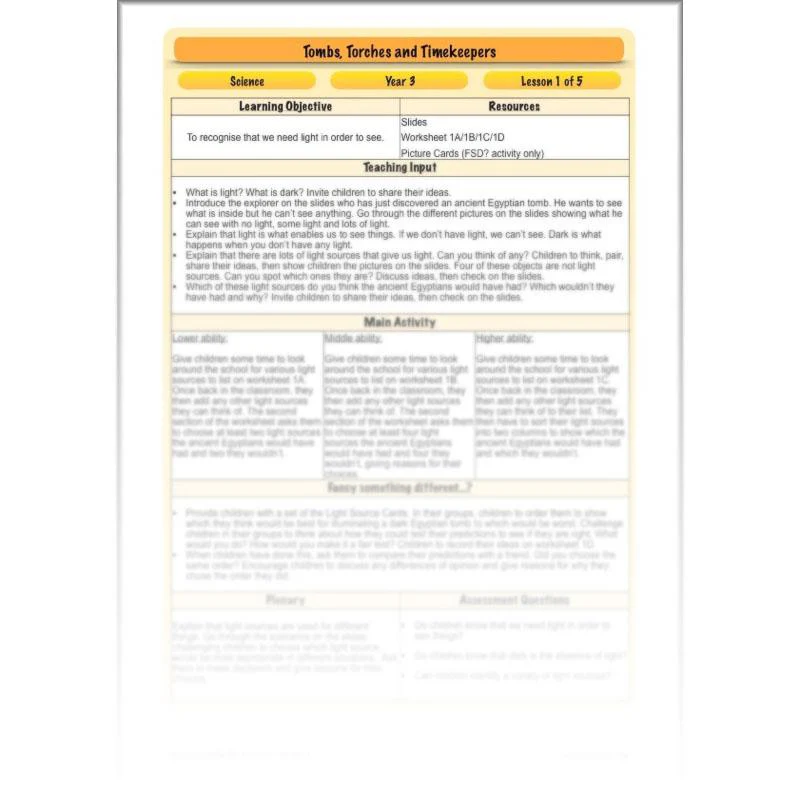
Children will start by considering why an archaeologist cannot see anything in a newly-discovered ancient Egyptian tomb. They will go on to learn that darkness is the absence of light, and that without light we cannot see. They will then identify, describe and sort a variety of light sources, including those that would and would not have been available to the ancient Egyptians.
What's included:
- Lesson plan
- Slides
- Activity ideas
- Differentiated worksheets
- Picture cards
View Lesson 1
Reflective Surfaces
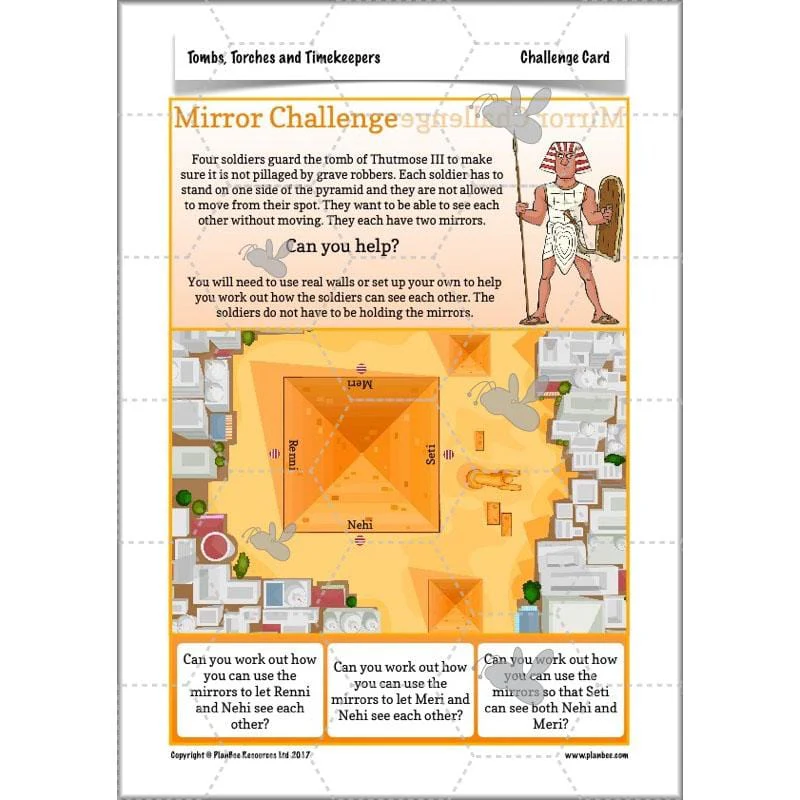
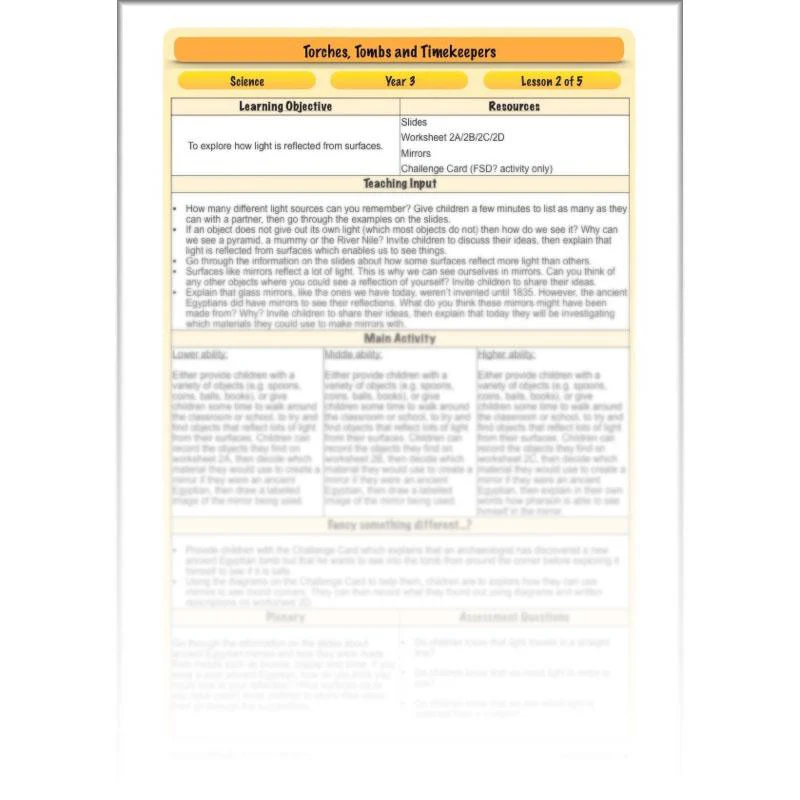
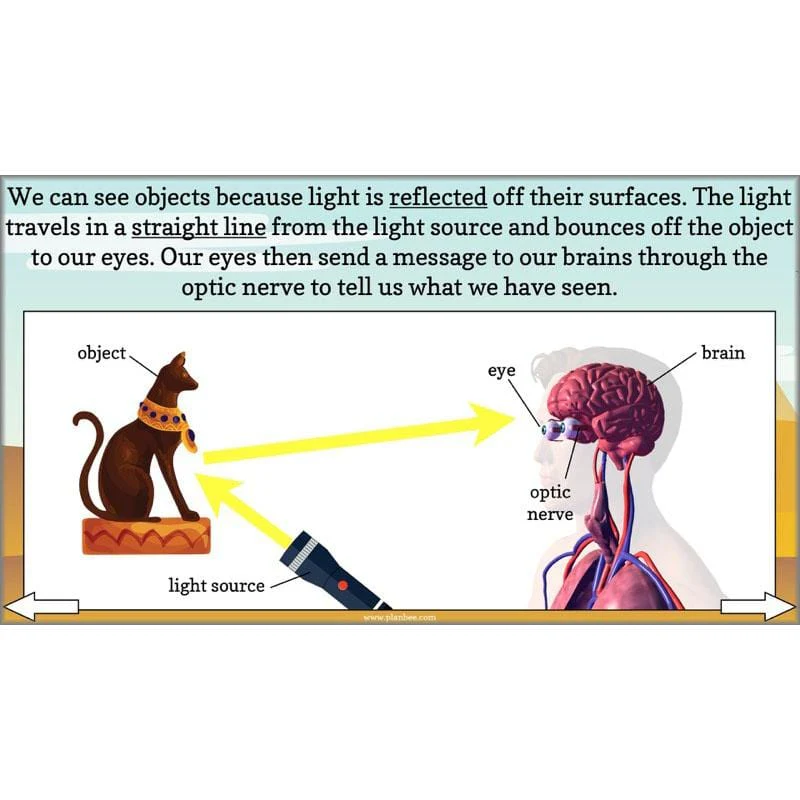
In this lesson, children will learn that some surfaces reflect more light than others and that we can only see objects because light is reflected from them. They will then either have the chance to identify and describe a range of reflective surfaces, or carry out an investigation to see how four ancient Egyptians soldiers guarding four different sides of a pyramid can use mirrors to see each other without moving from their posts!
What's included:
- Lesson plan
- Slides
- Activity ideas
- Differentiated worksheets
- Challenge card
View Lesson 2
The Sun (god)
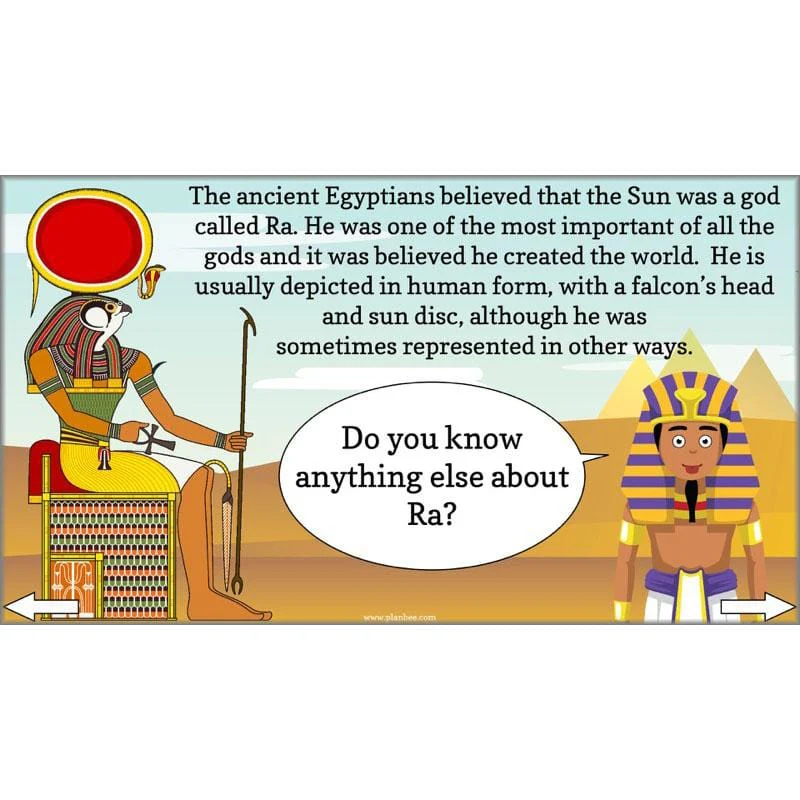
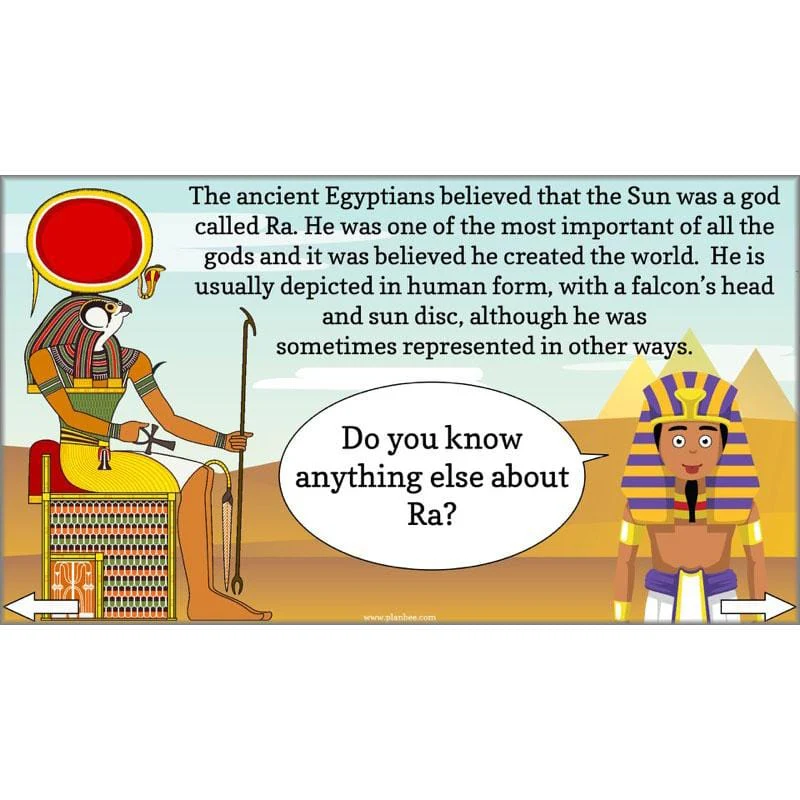
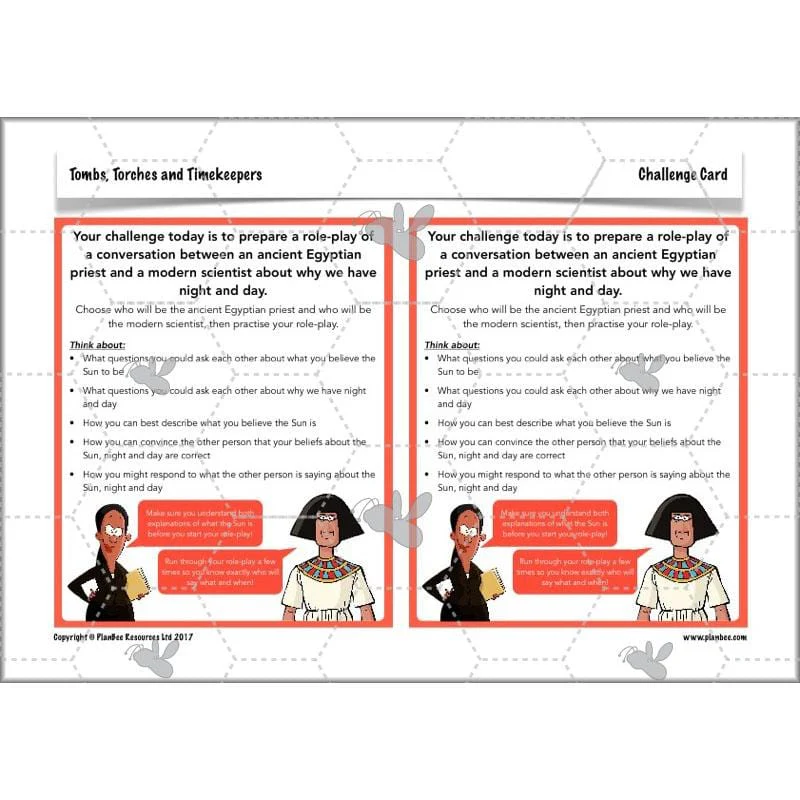
Children will find out about ancient Egyptians beliefs that the Sun was a god called Ra in this lesson before going on to compare these beliefs with modern explanations of what the Sun is. They will learn about some differences between night and day, including starting to understand how the Sun rises and sets.
What's included:
- Lesson plan
- Slides
- Activity ideas
- Differentiated worksheets
- Information sheet
- Challenge card
View Lesson 3
Making Shadows
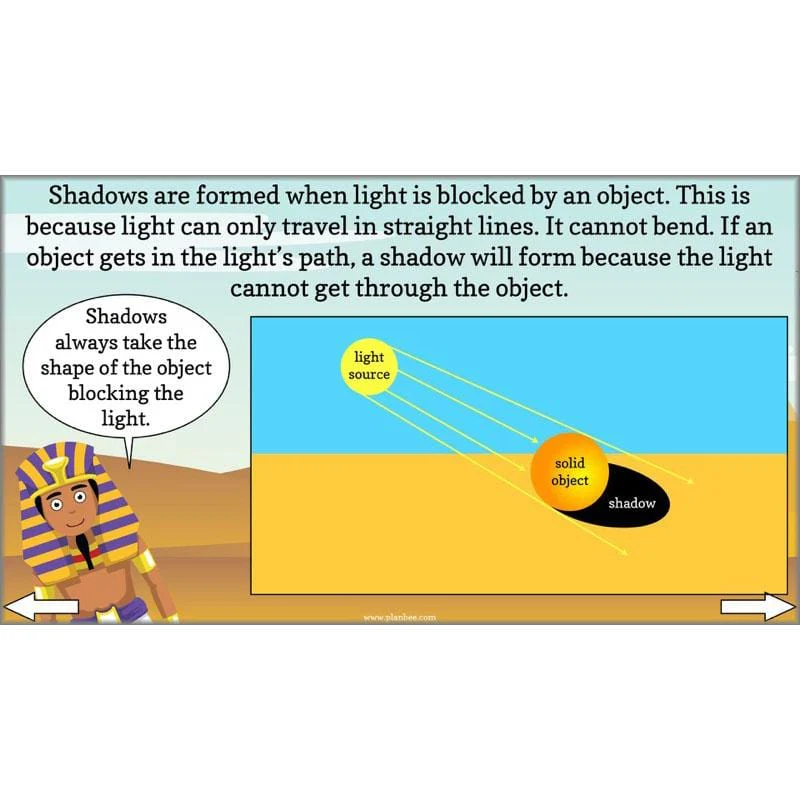
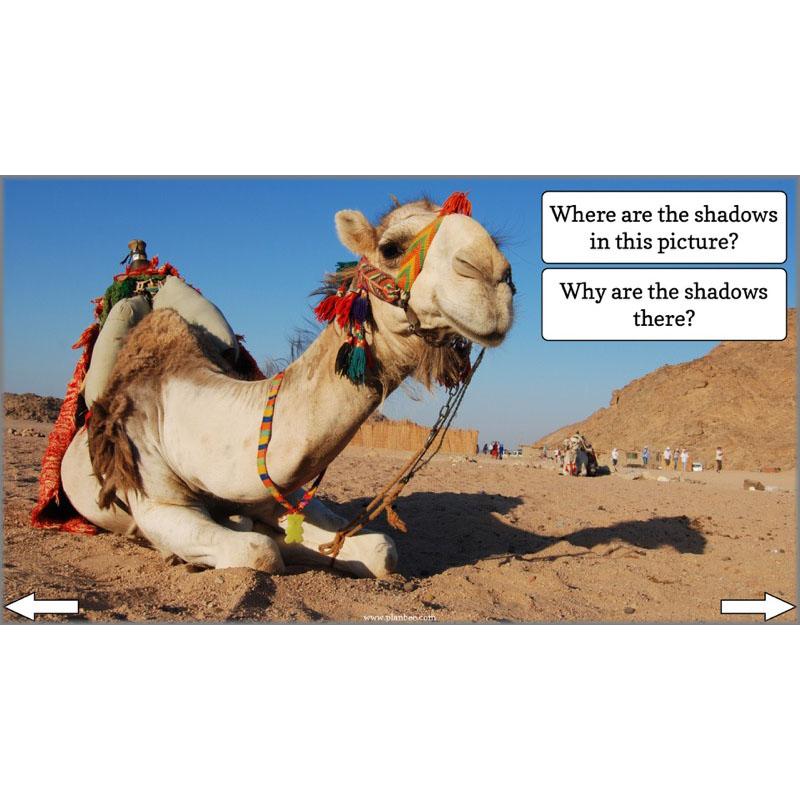
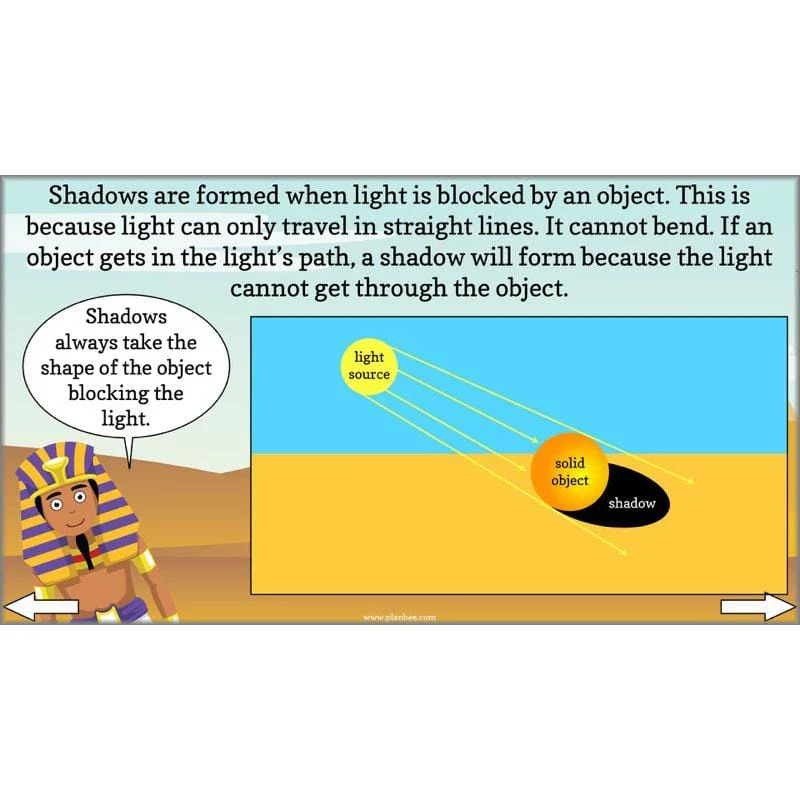
The slides for this lesson start by showing your class a variety of photos of Egypt to see where the shadows are and asks your children to suggest reasons for why the shadows are there. They will go on to learn how shadows are formed and have some time to explore shadows for themselves, including the differences between shadows cast by opaque, transparent and translucent objects. They can even create their own ancient Egyptian themed shadow puppet play!
What's included:
- Lesson plan
- Slides
- Activity ideas
- Differentiated worksheets
- Help sheet
- Challenge cards
View Lesson 4
Obelisks
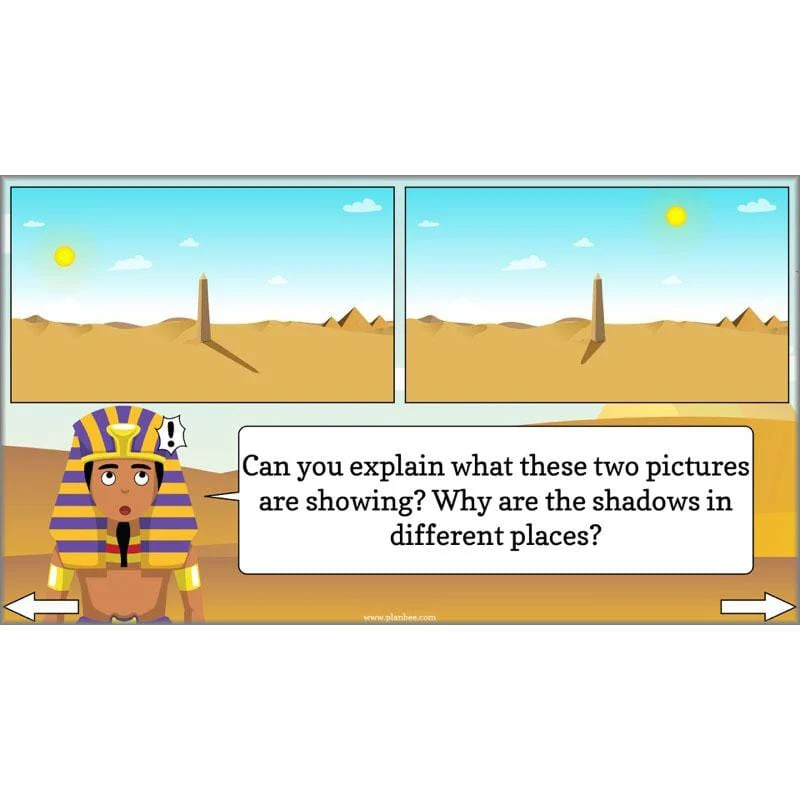
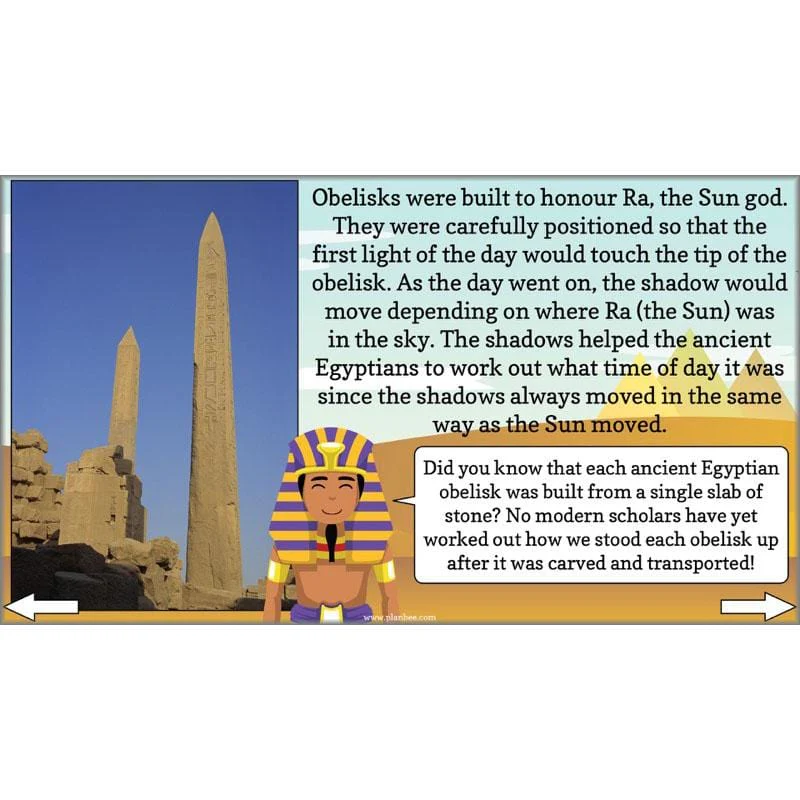
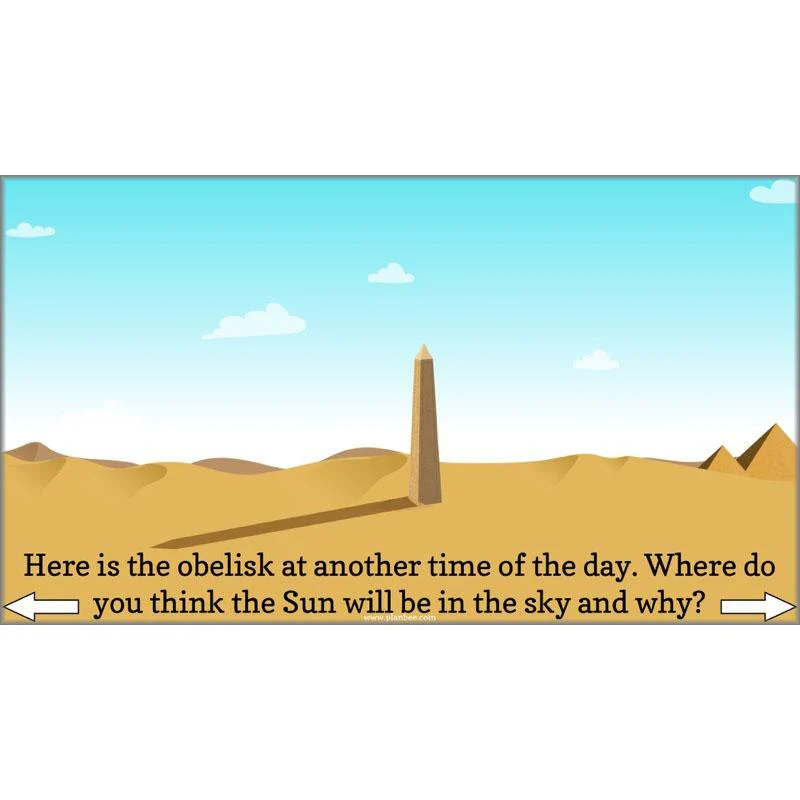
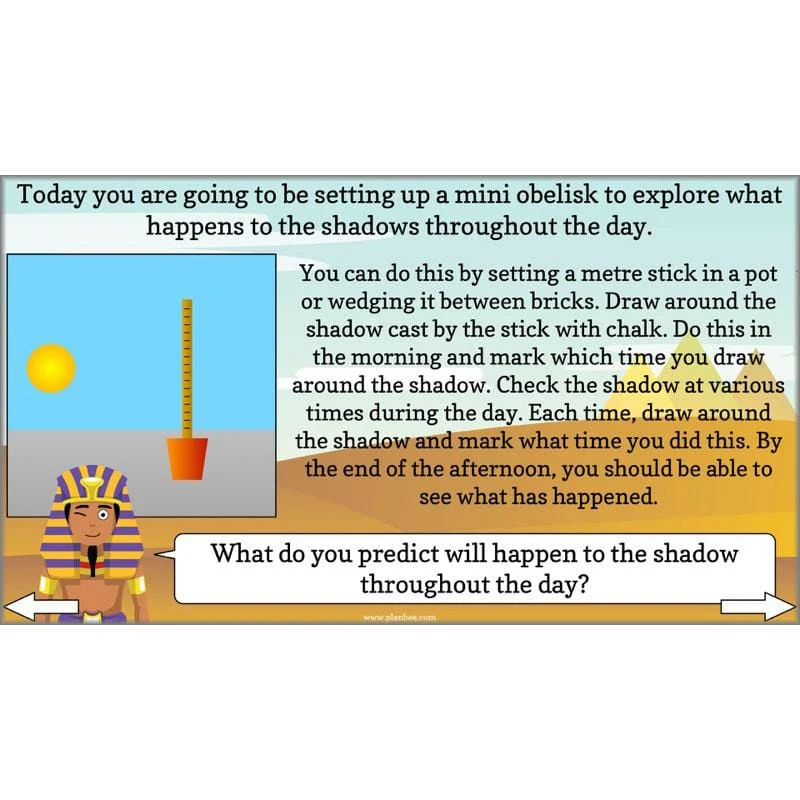
Your children will discover what obelisks are and how the ancient Egyptians used these as sundials by looking at the shadows cast by them throughout the day. They will discuss and predict what will happen to a shadow cast by a mini obelisk in sunlight throughout the day. They can then either conduct a shadow investigation and present their findings using bar graphs, or complete diagrams and order pictures to show an obelisk’s shadow throughout the day.
What's included:
- Lesson plan
- Slides
- Activity ideas
- Differentiated worksheets
- Blank picture cards
- Complete picture cards
- End of unit quiz
View Lesson 5
Original: $4.71
-65%$4.71
$1.65More Images























Tombs, Torches and Timekeepers
Teach your class everything they need to know to cover the ‘Light’ strand of the Year 3 Science curriculum all through the context of ancient Egypt! Your class will explore dark tombs and consider why nothing can be seen without light, use mirrors to help soldiers guarding a pyramid to see around corners, compare ancient Egyptian beliefs in the sun god Ra to modern explanations of the Sun, find out how obelisks were used to tell the time, and much more!
This ‘Tombs, Torches and Timekeepers’ covers all the same material from our ‘Light and Shadow’ scheme of work but is themed to fit in with your ancient Egyptian topic.
You may also like our Ancient Egyptians Topic Bundle which has four fully-prepared schemes of work all themed around ancient Egypt!
Light Sources
Children will start by considering why an archaeologist cannot see anything in a newly-discovered ancient Egyptian tomb. They will go on to learn that darkness is the absence of light, and that without light we cannot see. They will then identify, describe and sort a variety of light sources, including those that would and would not have been available to the ancient Egyptians.
What's included:
- Lesson plan
- Slides
- Activity ideas
- Differentiated worksheets
- Picture cards
View Lesson 1
Reflective Surfaces
In this lesson, children will learn that some surfaces reflect more light than others and that we can only see objects because light is reflected from them. They will then either have the chance to identify and describe a range of reflective surfaces, or carry out an investigation to see how four ancient Egyptians soldiers guarding four different sides of a pyramid can use mirrors to see each other without moving from their posts!
What's included:
- Lesson plan
- Slides
- Activity ideas
- Differentiated worksheets
- Challenge card
View Lesson 2
The Sun (god)
Children will find out about ancient Egyptians beliefs that the Sun was a god called Ra in this lesson before going on to compare these beliefs with modern explanations of what the Sun is. They will learn about some differences between night and day, including starting to understand how the Sun rises and sets.
What's included:
- Lesson plan
- Slides
- Activity ideas
- Differentiated worksheets
- Information sheet
- Challenge card
View Lesson 3
Making Shadows
The slides for this lesson start by showing your class a variety of photos of Egypt to see where the shadows are and asks your children to suggest reasons for why the shadows are there. They will go on to learn how shadows are formed and have some time to explore shadows for themselves, including the differences between shadows cast by opaque, transparent and translucent objects. They can even create their own ancient Egyptian themed shadow puppet play!
What's included:
- Lesson plan
- Slides
- Activity ideas
- Differentiated worksheets
- Help sheet
- Challenge cards
View Lesson 4
Obelisks
Your children will discover what obelisks are and how the ancient Egyptians used these as sundials by looking at the shadows cast by them throughout the day. They will discuss and predict what will happen to a shadow cast by a mini obelisk in sunlight throughout the day. They can then either conduct a shadow investigation and present their findings using bar graphs, or complete diagrams and order pictures to show an obelisk’s shadow throughout the day.
What's included:
- Lesson plan
- Slides
- Activity ideas
- Differentiated worksheets
- Blank picture cards
- Complete picture cards
- End of unit quiz
View Lesson 5
Product Information
Product Information
Shipping & Returns
Shipping & Returns
Description
Teach your class everything they need to know to cover the ‘Light’ strand of the Year 3 Science curriculum all through the context of ancient Egypt! Your class will explore dark tombs and consider why nothing can be seen without light, use mirrors to help soldiers guarding a pyramid to see around corners, compare ancient Egyptian beliefs in the sun god Ra to modern explanations of the Sun, find out how obelisks were used to tell the time, and much more!
This ‘Tombs, Torches and Timekeepers’ covers all the same material from our ‘Light and Shadow’ scheme of work but is themed to fit in with your ancient Egyptian topic.
You may also like our Ancient Egyptians Topic Bundle which has four fully-prepared schemes of work all themed around ancient Egypt!
Light Sources
Children will start by considering why an archaeologist cannot see anything in a newly-discovered ancient Egyptian tomb. They will go on to learn that darkness is the absence of light, and that without light we cannot see. They will then identify, describe and sort a variety of light sources, including those that would and would not have been available to the ancient Egyptians.
What's included:
- Lesson plan
- Slides
- Activity ideas
- Differentiated worksheets
- Picture cards
View Lesson 1
Reflective Surfaces
In this lesson, children will learn that some surfaces reflect more light than others and that we can only see objects because light is reflected from them. They will then either have the chance to identify and describe a range of reflective surfaces, or carry out an investigation to see how four ancient Egyptians soldiers guarding four different sides of a pyramid can use mirrors to see each other without moving from their posts!
What's included:
- Lesson plan
- Slides
- Activity ideas
- Differentiated worksheets
- Challenge card
View Lesson 2
The Sun (god)
Children will find out about ancient Egyptians beliefs that the Sun was a god called Ra in this lesson before going on to compare these beliefs with modern explanations of what the Sun is. They will learn about some differences between night and day, including starting to understand how the Sun rises and sets.
What's included:
- Lesson plan
- Slides
- Activity ideas
- Differentiated worksheets
- Information sheet
- Challenge card
View Lesson 3
Making Shadows
The slides for this lesson start by showing your class a variety of photos of Egypt to see where the shadows are and asks your children to suggest reasons for why the shadows are there. They will go on to learn how shadows are formed and have some time to explore shadows for themselves, including the differences between shadows cast by opaque, transparent and translucent objects. They can even create their own ancient Egyptian themed shadow puppet play!
What's included:
- Lesson plan
- Slides
- Activity ideas
- Differentiated worksheets
- Help sheet
- Challenge cards
View Lesson 4
Obelisks
Your children will discover what obelisks are and how the ancient Egyptians used these as sundials by looking at the shadows cast by them throughout the day. They will discuss and predict what will happen to a shadow cast by a mini obelisk in sunlight throughout the day. They can then either conduct a shadow investigation and present their findings using bar graphs, or complete diagrams and order pictures to show an obelisk’s shadow throughout the day.
What's included:
- Lesson plan
- Slides
- Activity ideas
- Differentiated worksheets
- Blank picture cards
- Complete picture cards
- End of unit quiz
View Lesson 5