Identifying Animals
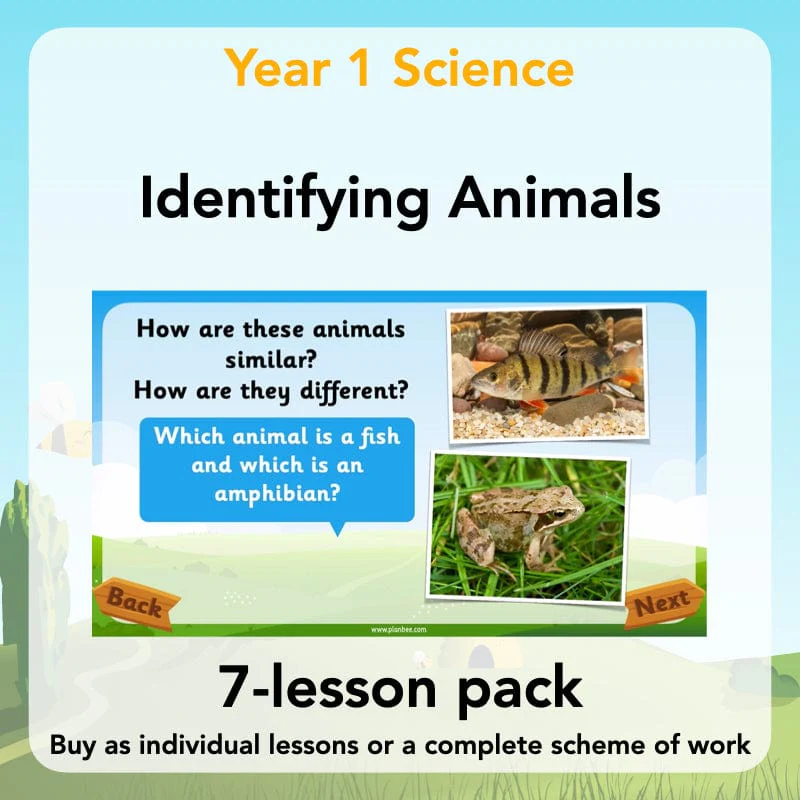
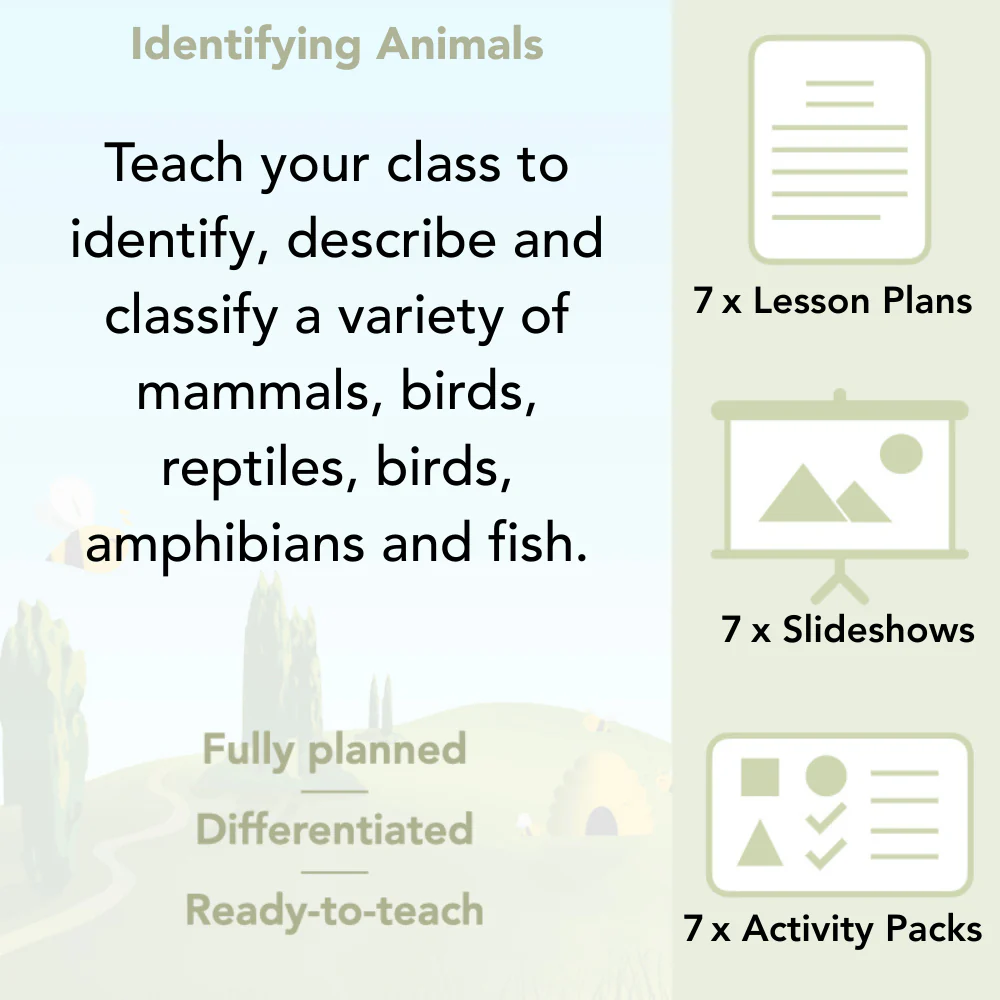
This series of Animals Year 1 science lessons includes everything you need to teach your KS1 class about mammals, birds, reptiles, amphibians and fish. They will think about the needs of different pets and become familiar with the terms carnivore, herbivore and omnivore.
Engage your class in these Animals Year 1 activities using the downloadable plans, slideshow presentations and printable teaching resources.
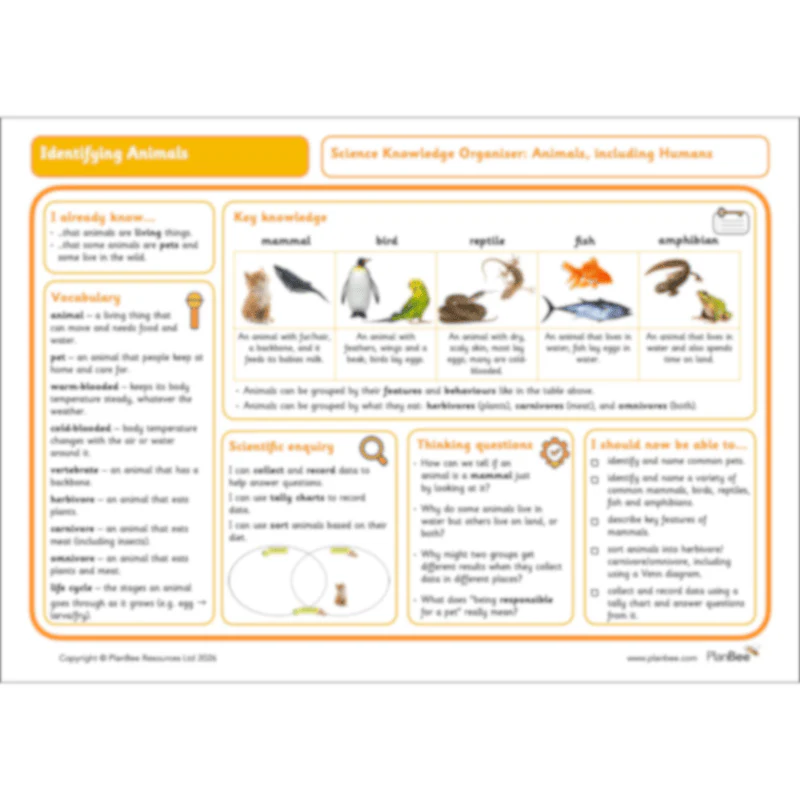
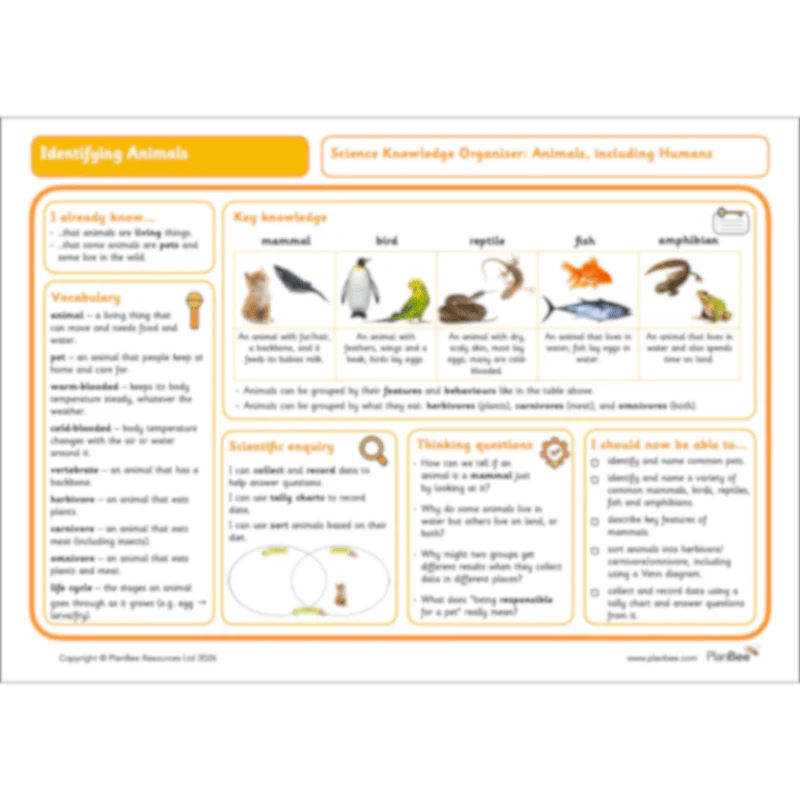
A Knowledge Organiser is included within the complete series download, or is available to purchase separately.
You might also like our Amazing Animals Topic Bundle –with ready-to-teach schemes of work across a range of subjects to fully immerse your class in their Animals topic.
Pets!
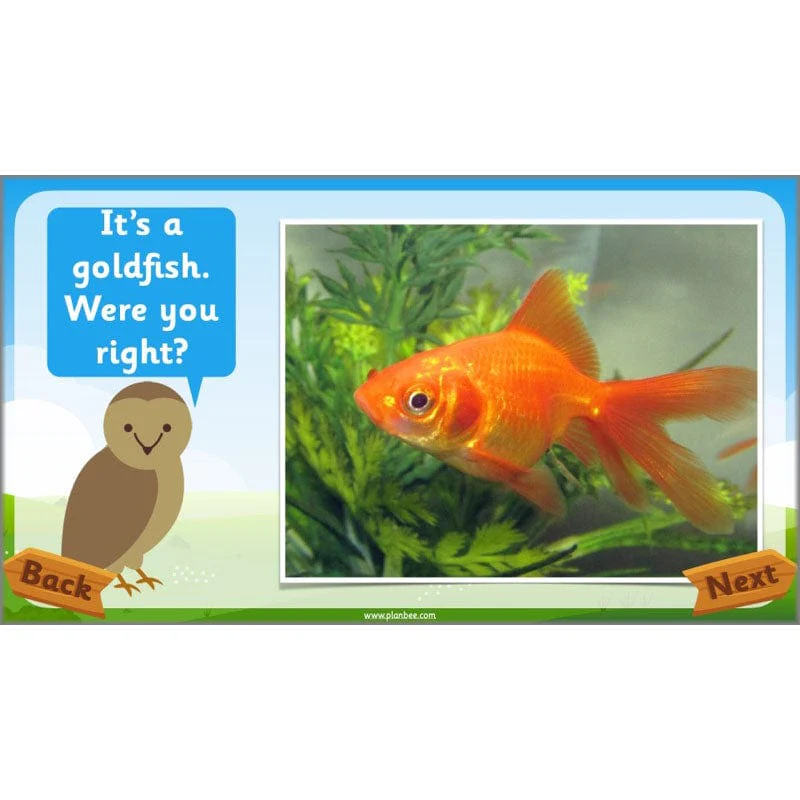
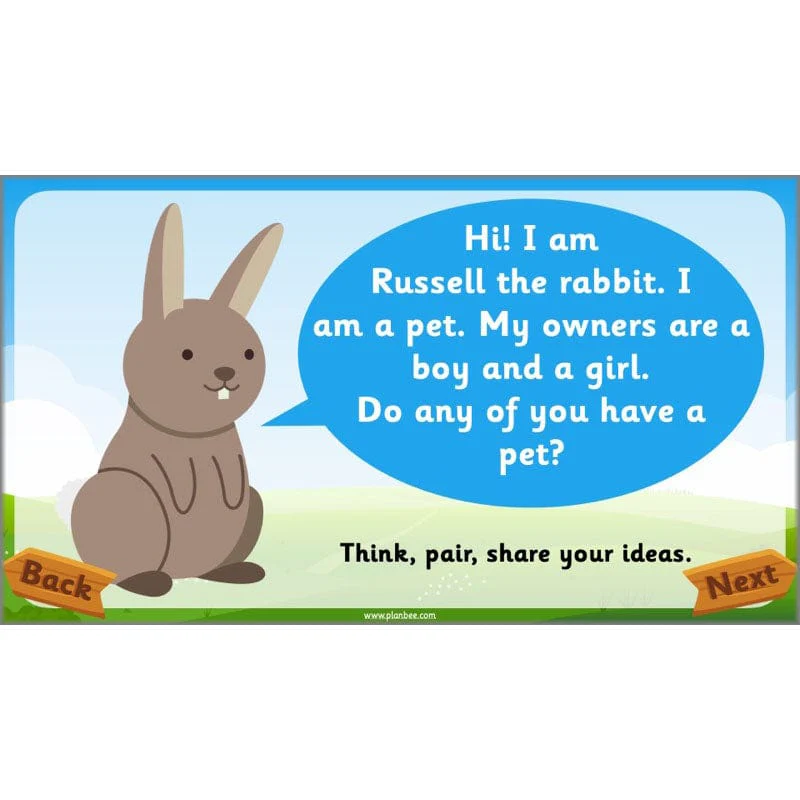
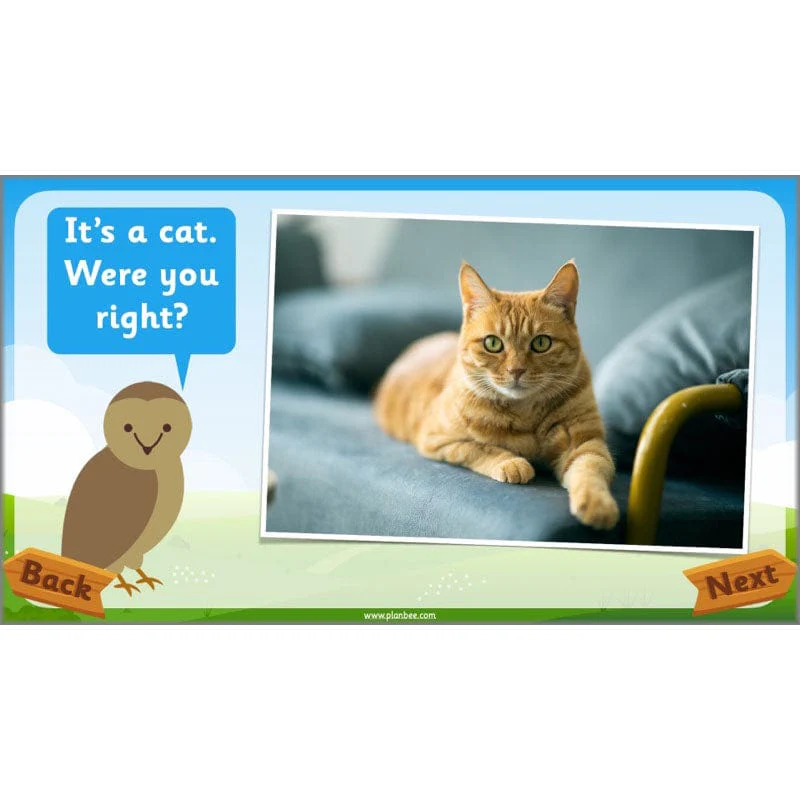
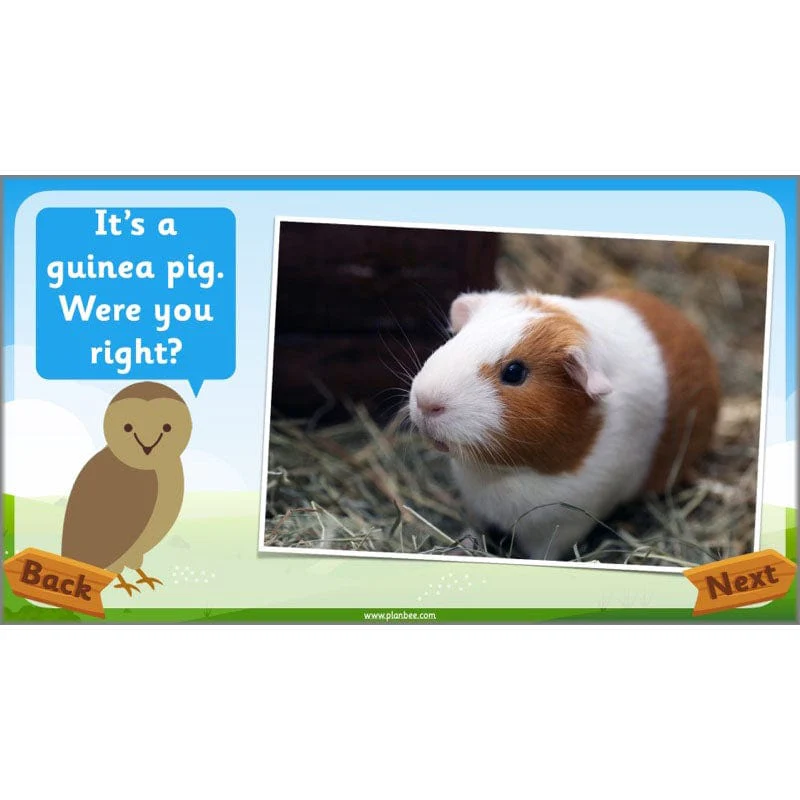
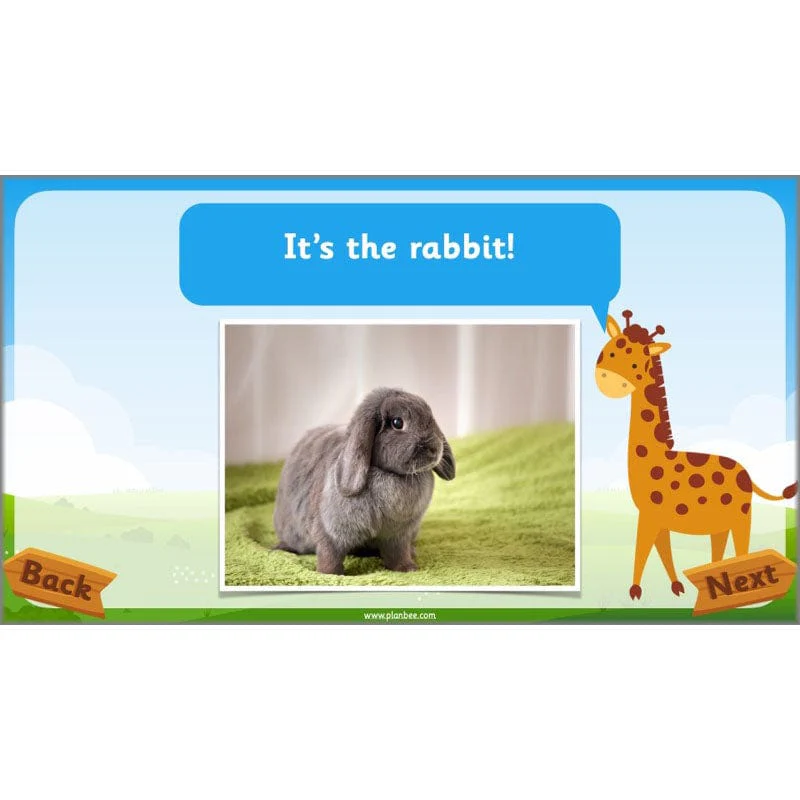
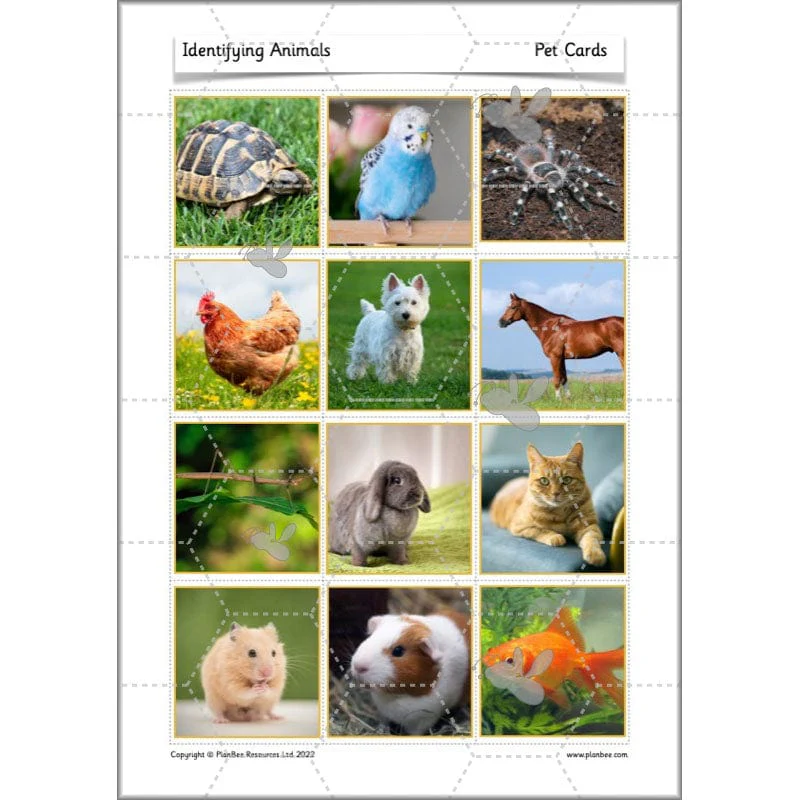
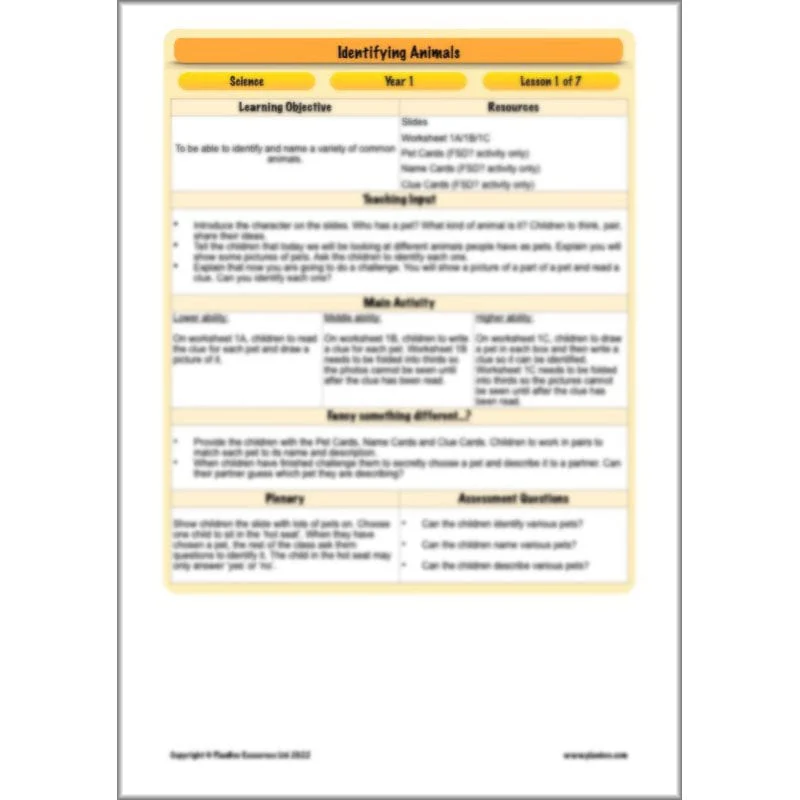
Identify a range of pets with your class as they begin to think about animal classification. The first lesson in this series helps your class identify a variety of common pets, including dogs, cats, guinea pigs, rabbits, hamsters and fish.
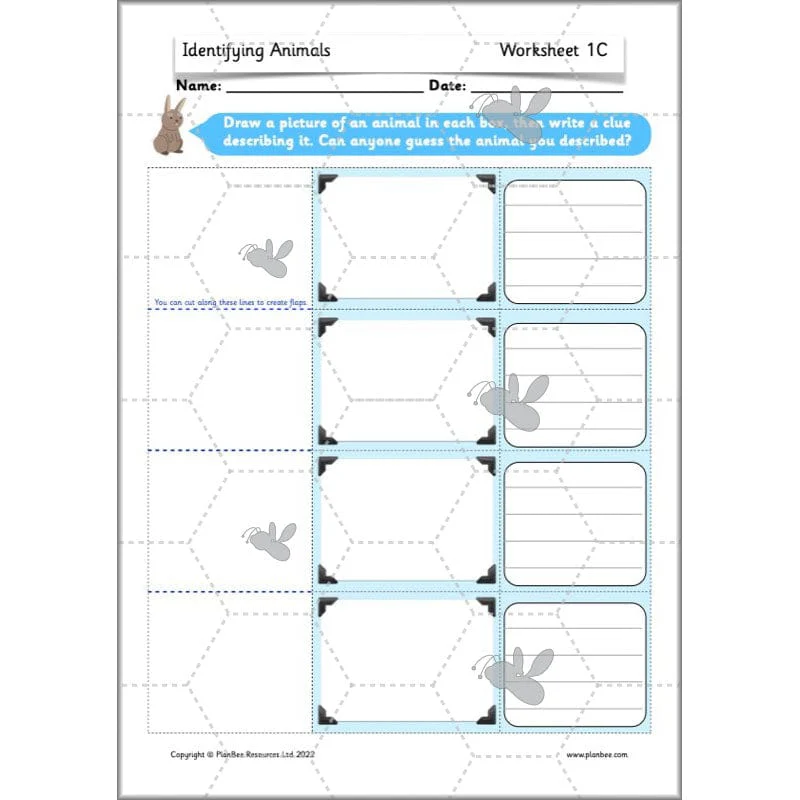
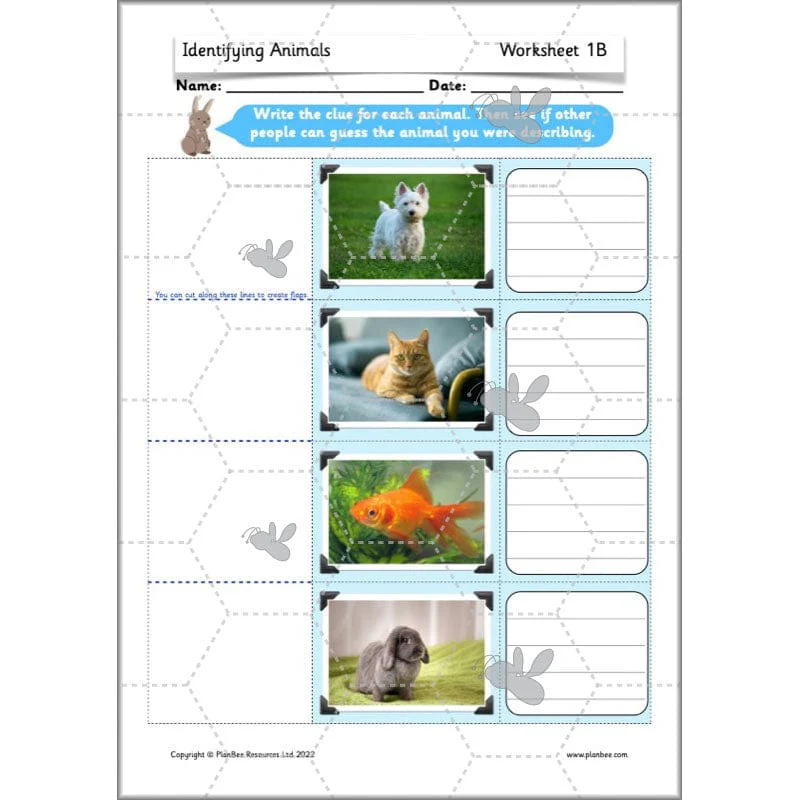
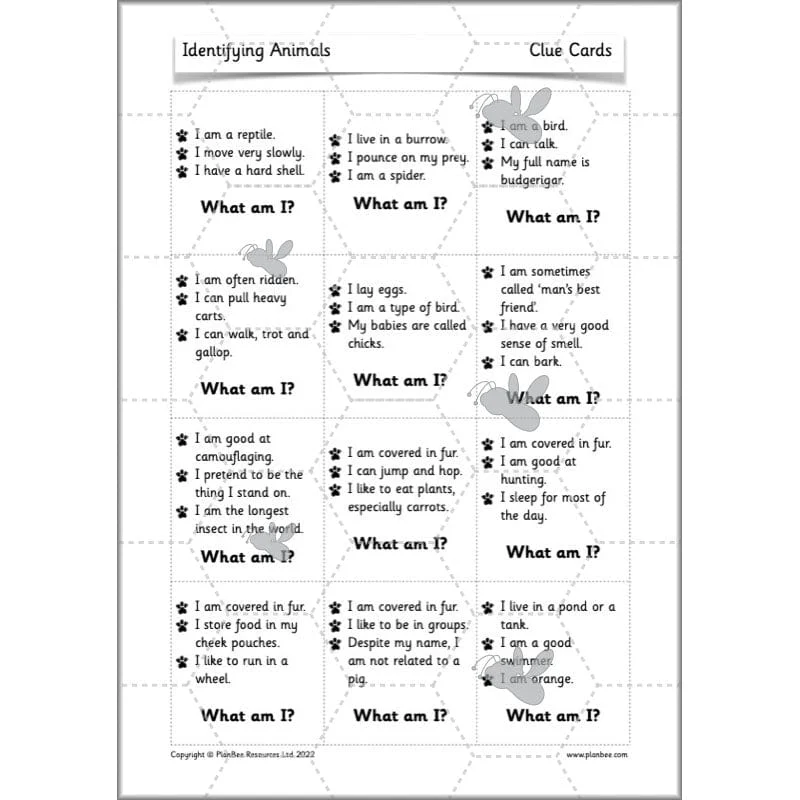
They will start to notice animals have different features and use these features to distinguish between them, by either writing their own clues or matching pets to their clue cards.
This downloadable lesson contains a lesson plan, slideshow presentation and printable teaching resources.
What's included:
- Lesson plan
- Slides
- Activity ideas
- Differentiated worksheets
- Pet cards
- Name cards
- Clue cards
View Lesson 1
Exploring Mammals
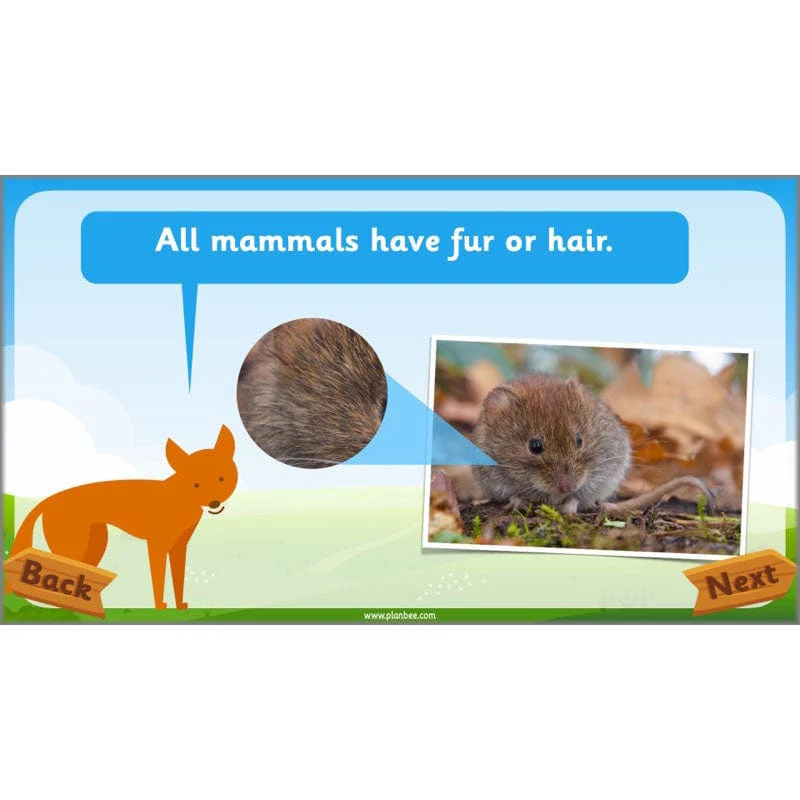
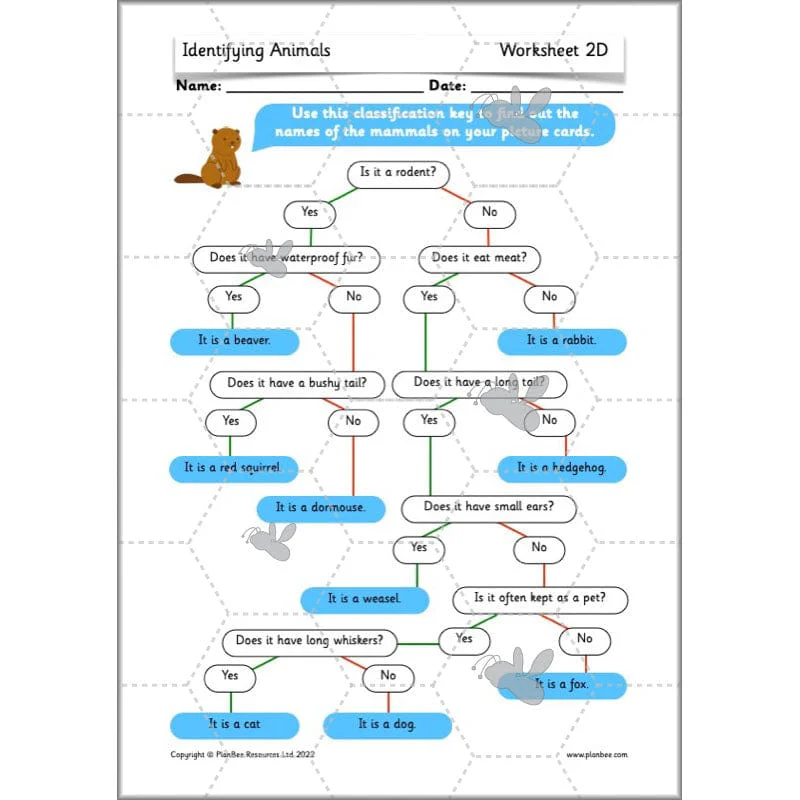
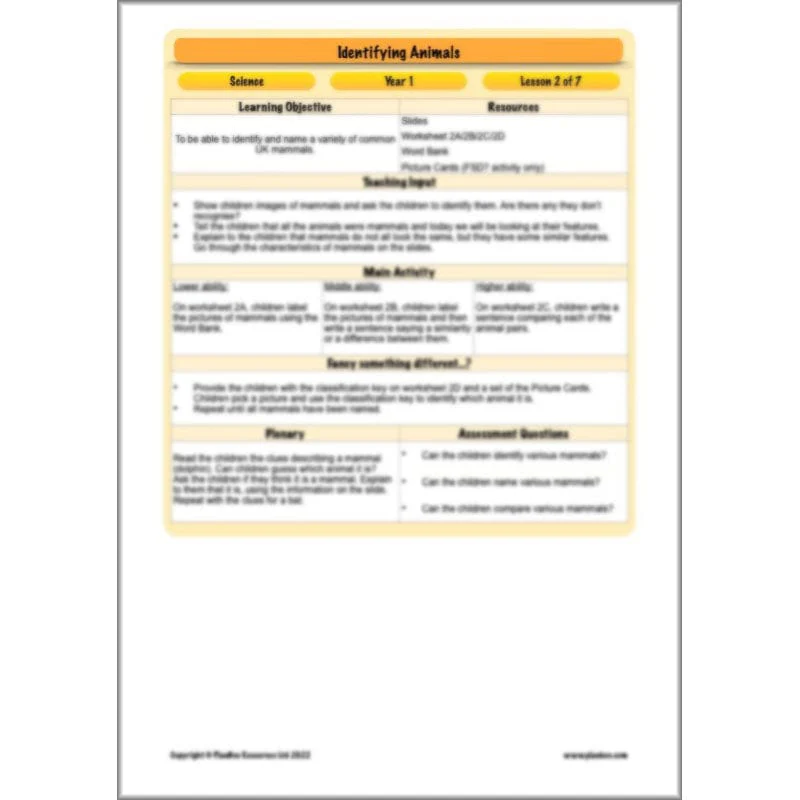
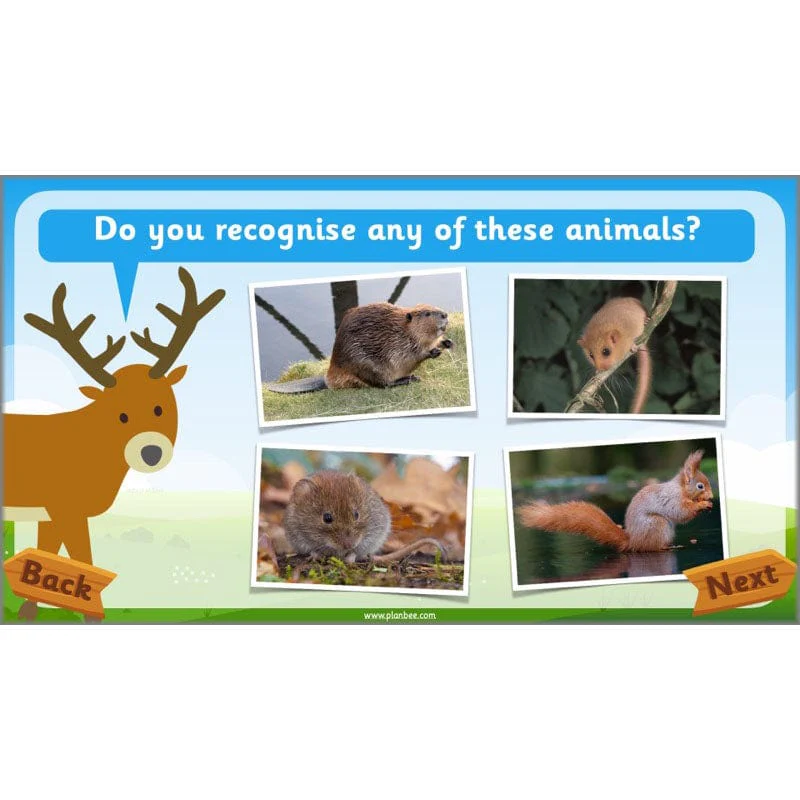
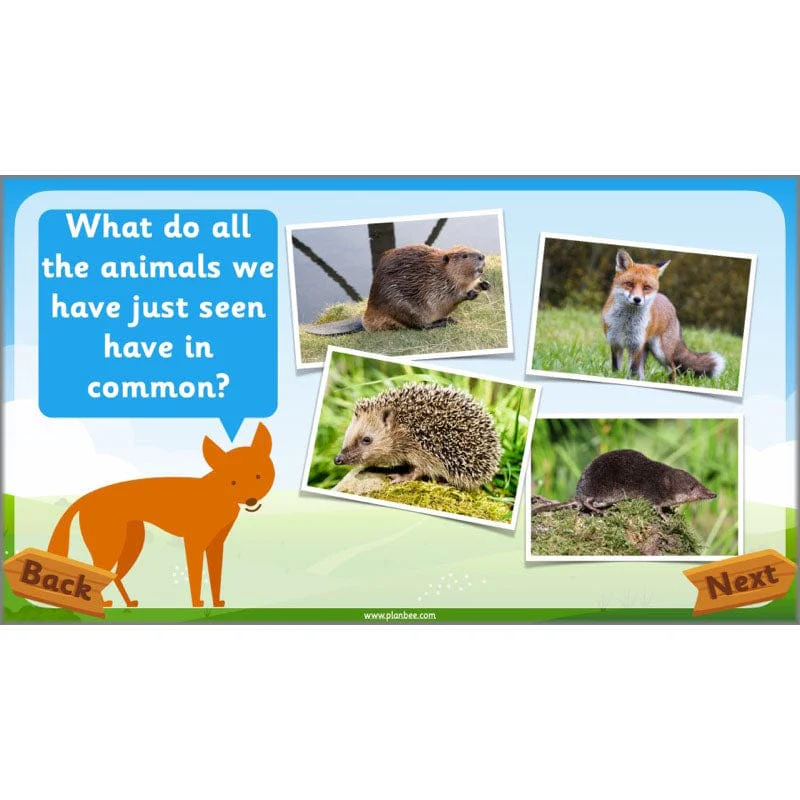
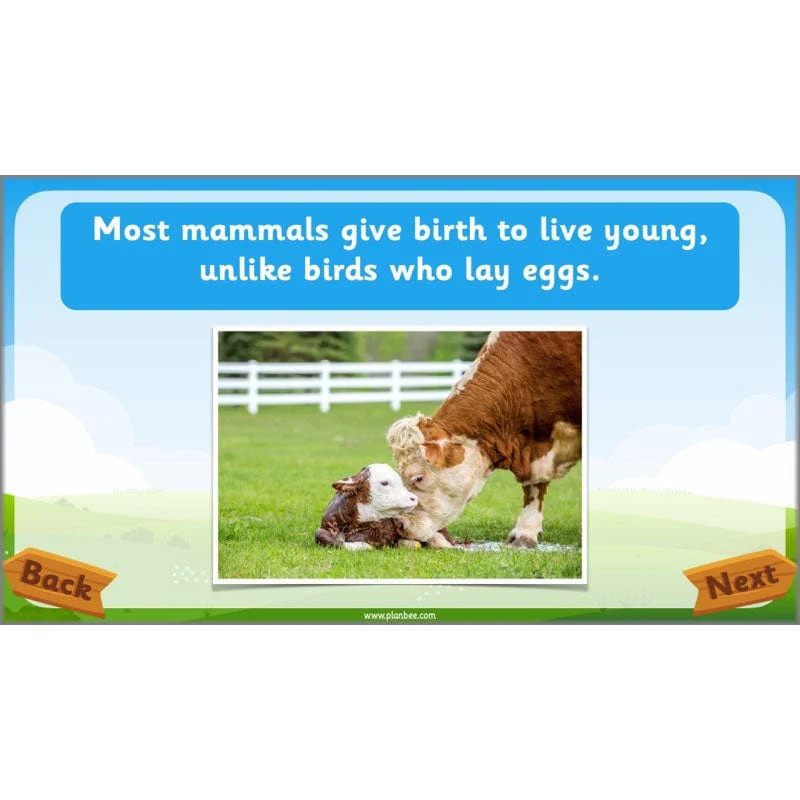
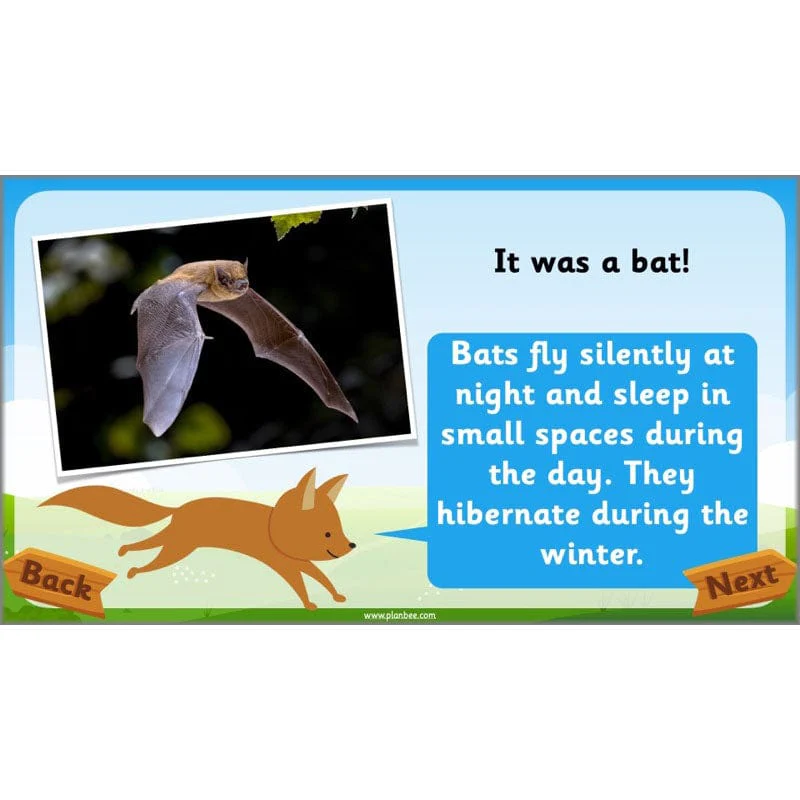
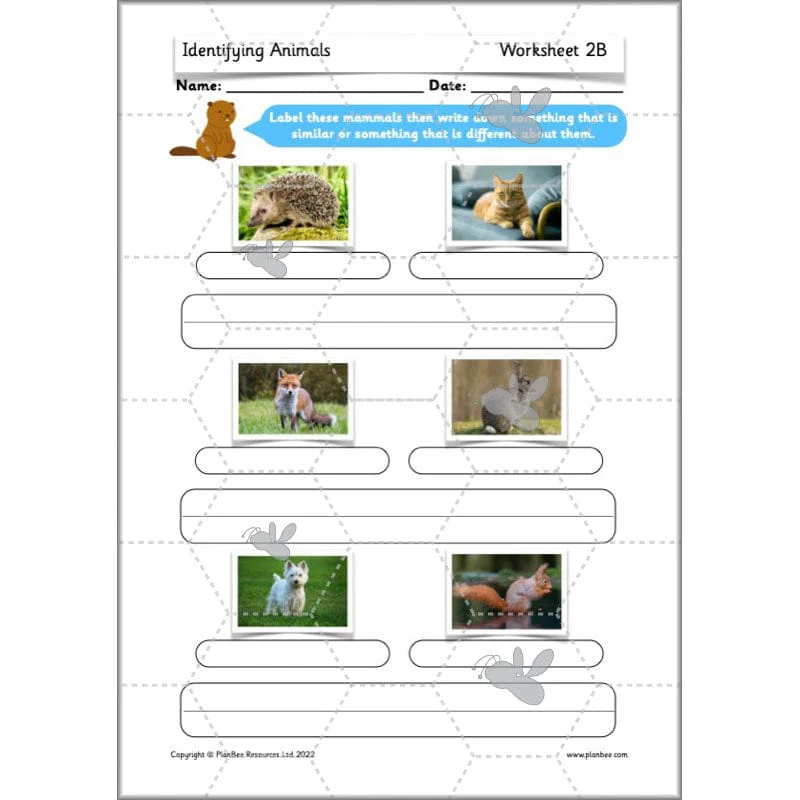
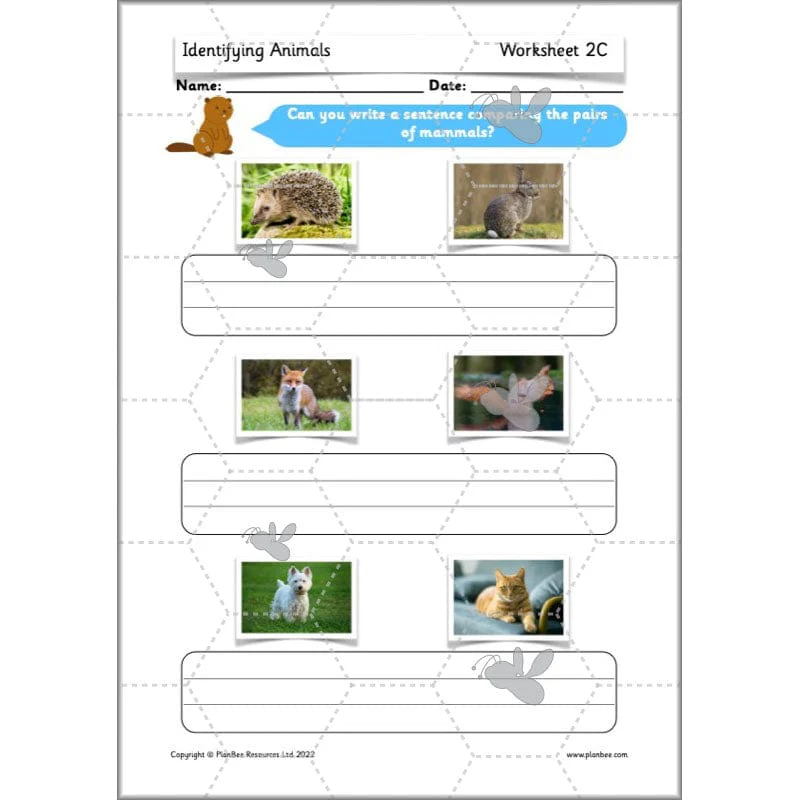
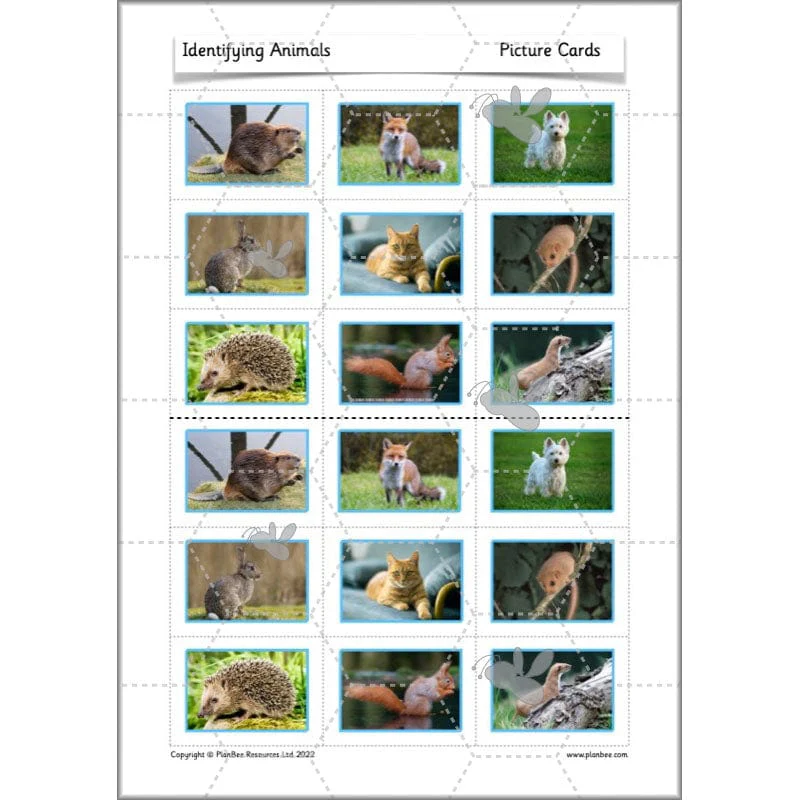
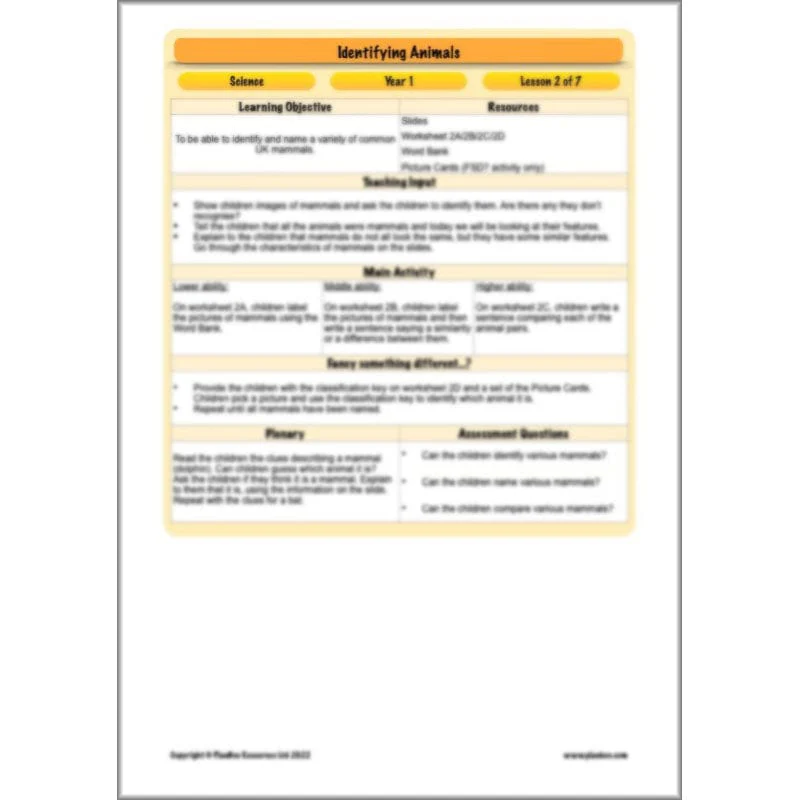
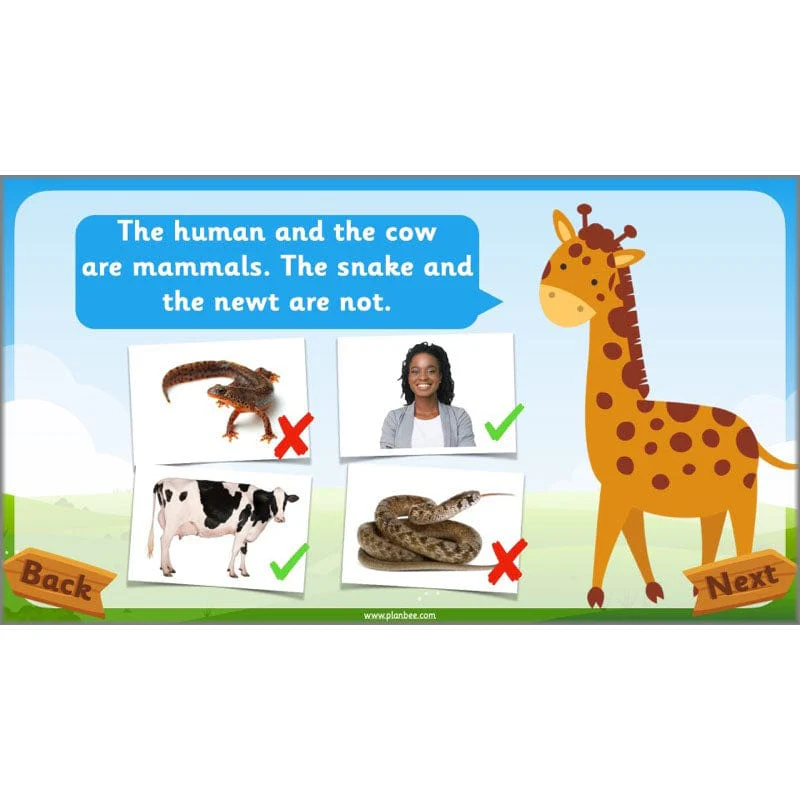
This Exploring Mammals KS1 Year 1 lesson introduces a variety of UK mammals to your class. It explains how to identify mammals, showing clear pictorial examples of their characteristics. Your class will have the opportunity to either name and describe a variety of mammals or use a classification key to identify a range of mammals.
This downloadable lesson contains a lesson plan, slideshow presentation and printable teaching resources.
What's included:
- Lesson plan
- Slides
- Activity ideas
- Differentiated worksheet
- Word bank
- Picture cards
View Lesson 2
Comparing Birds and Reptiles
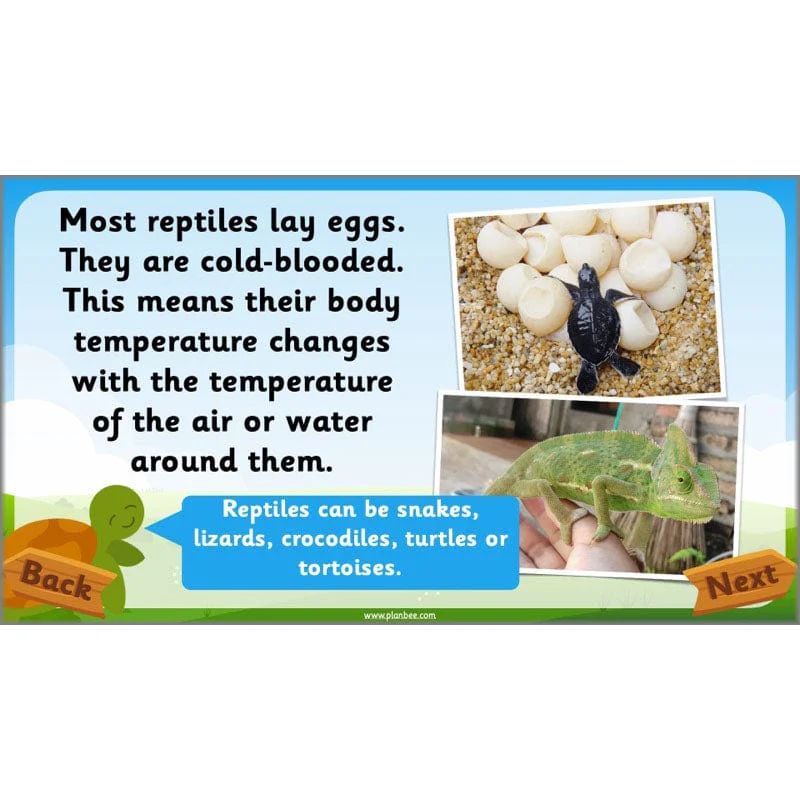
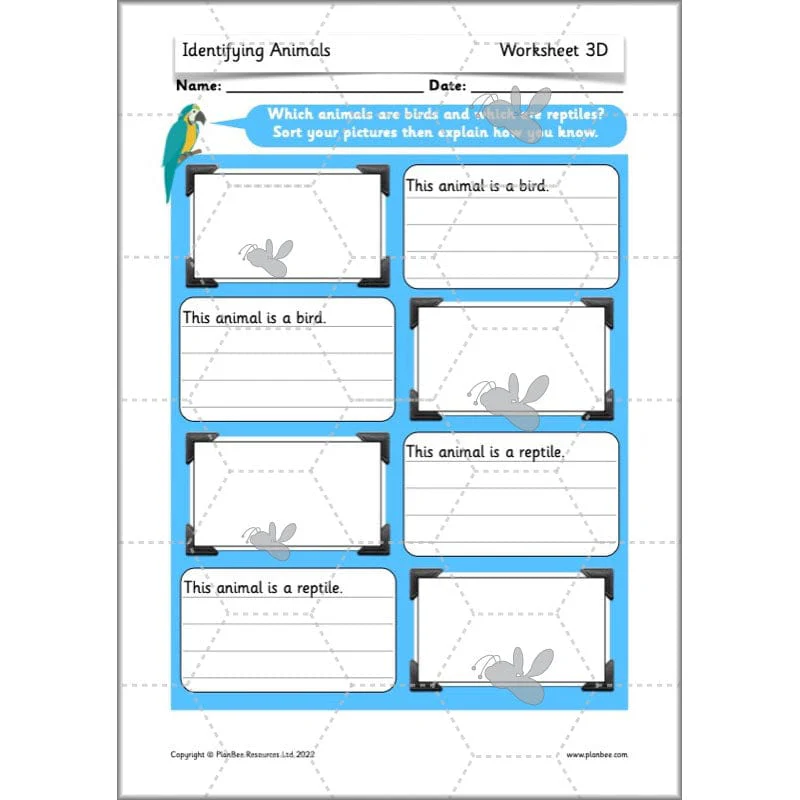
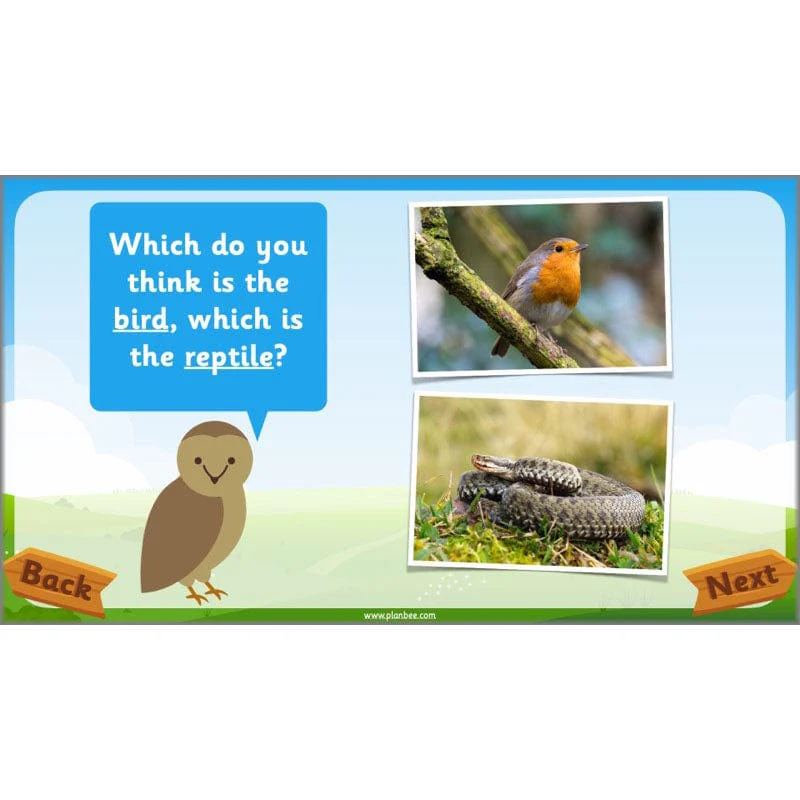
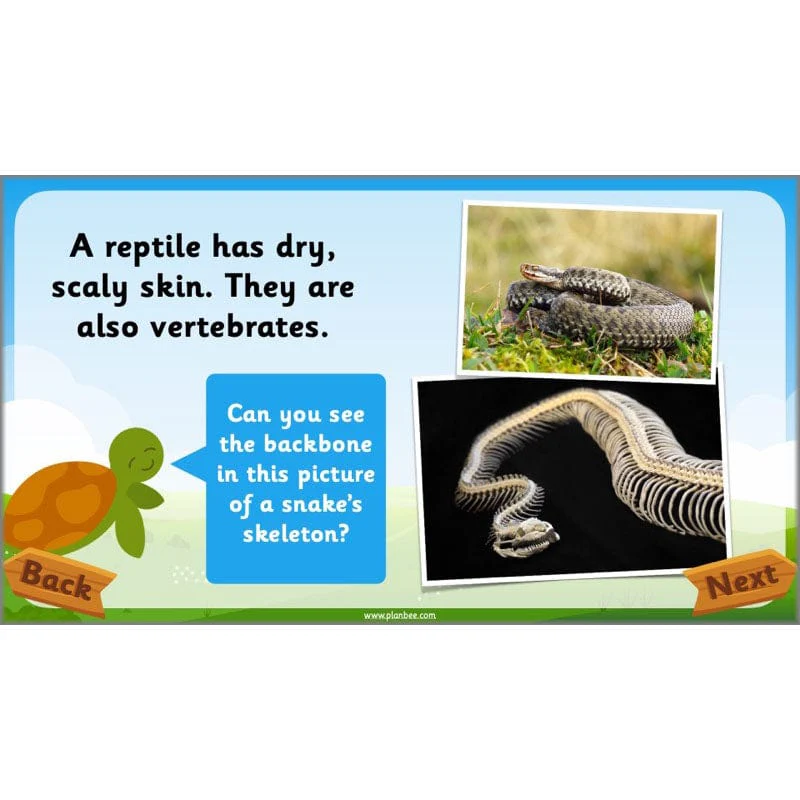
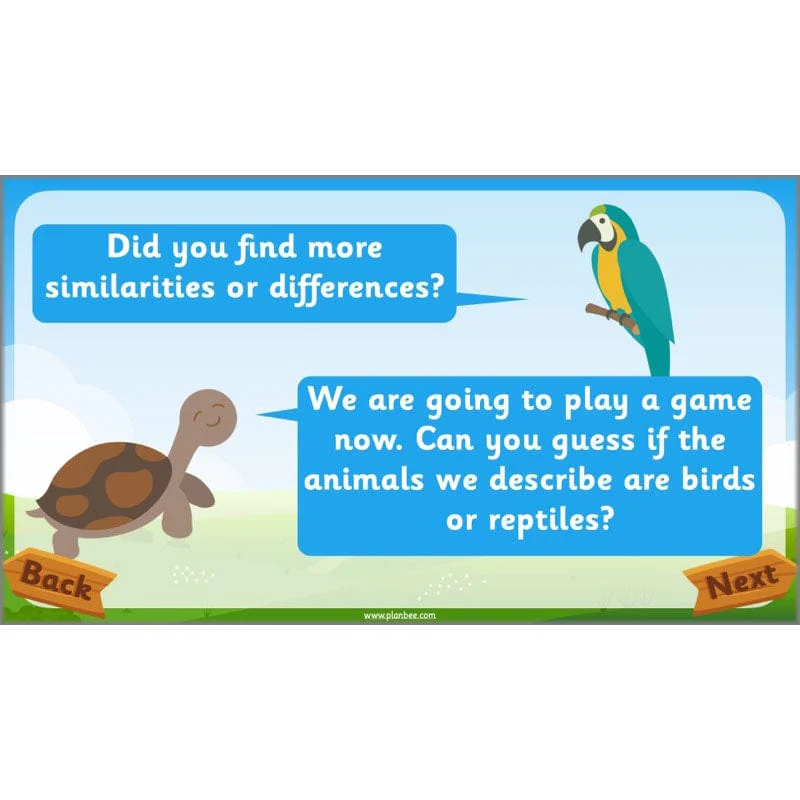
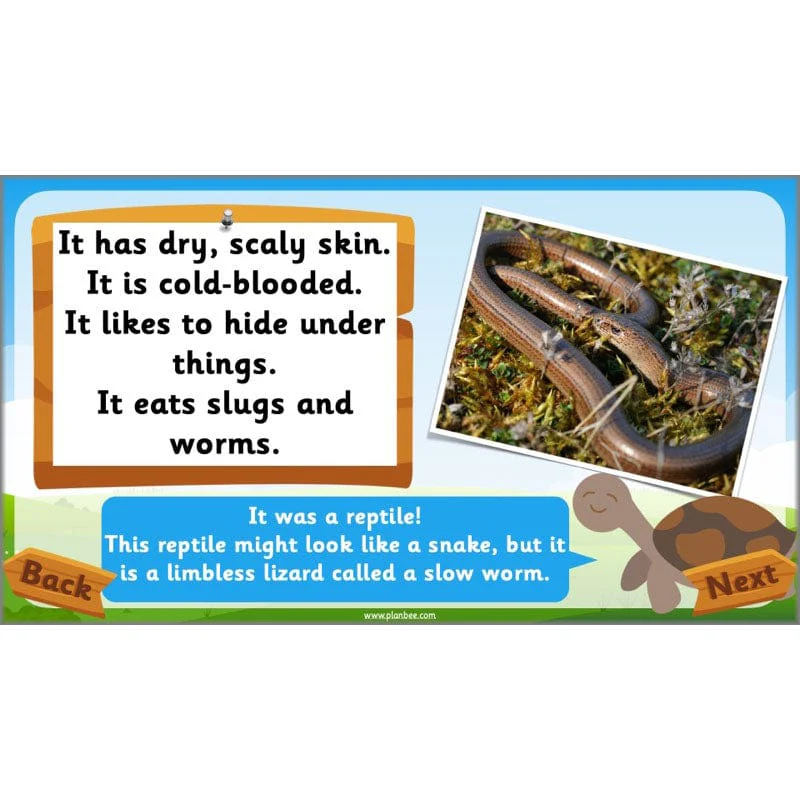
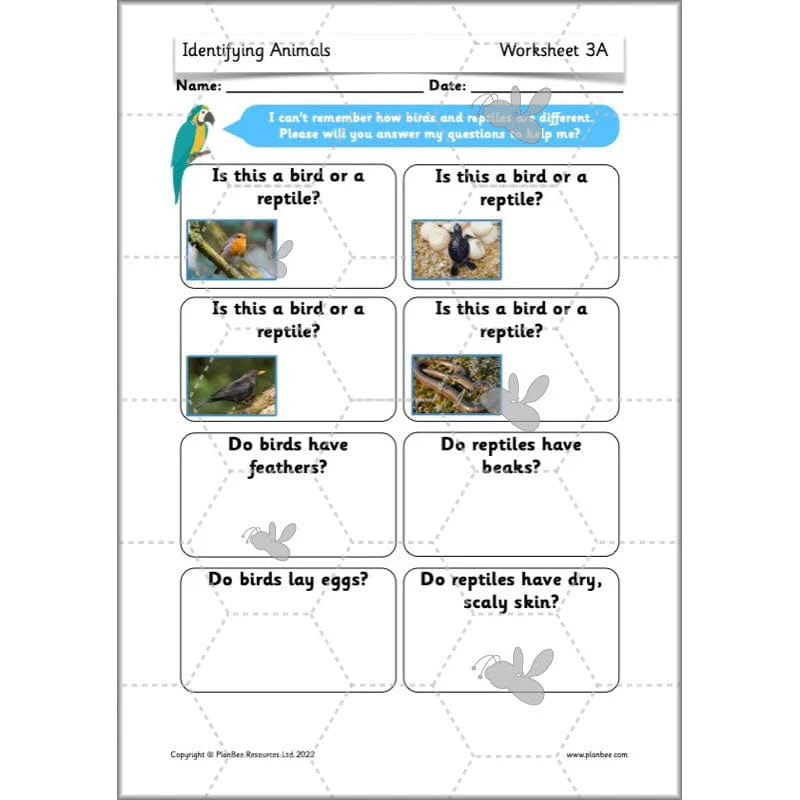
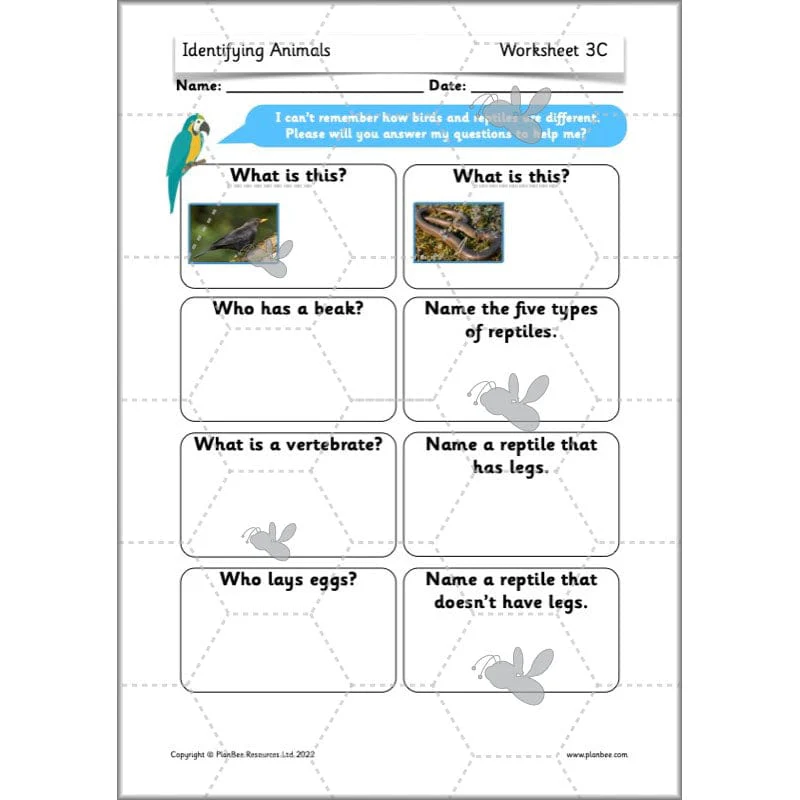
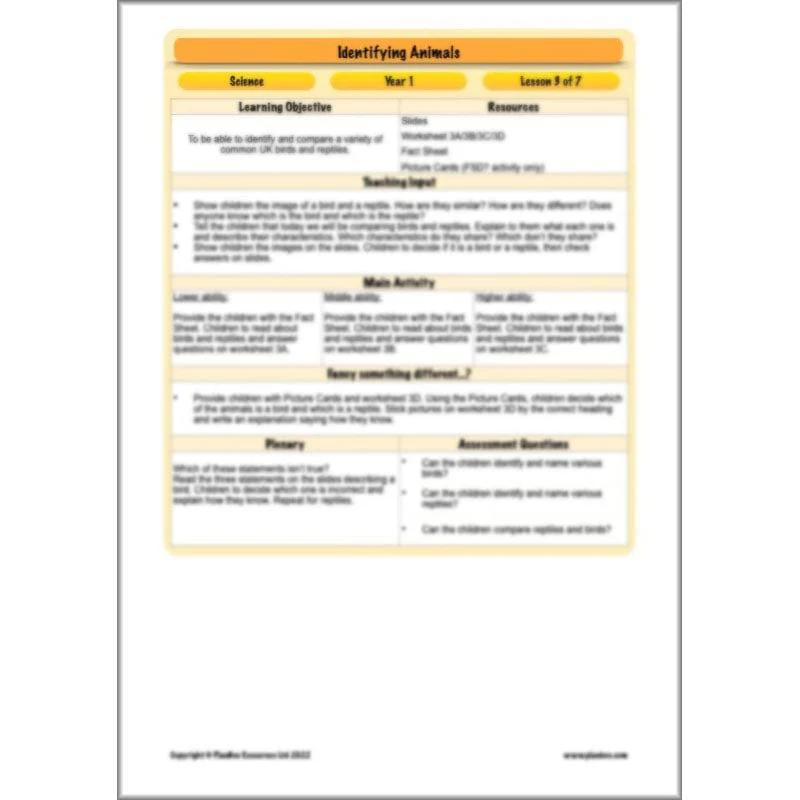
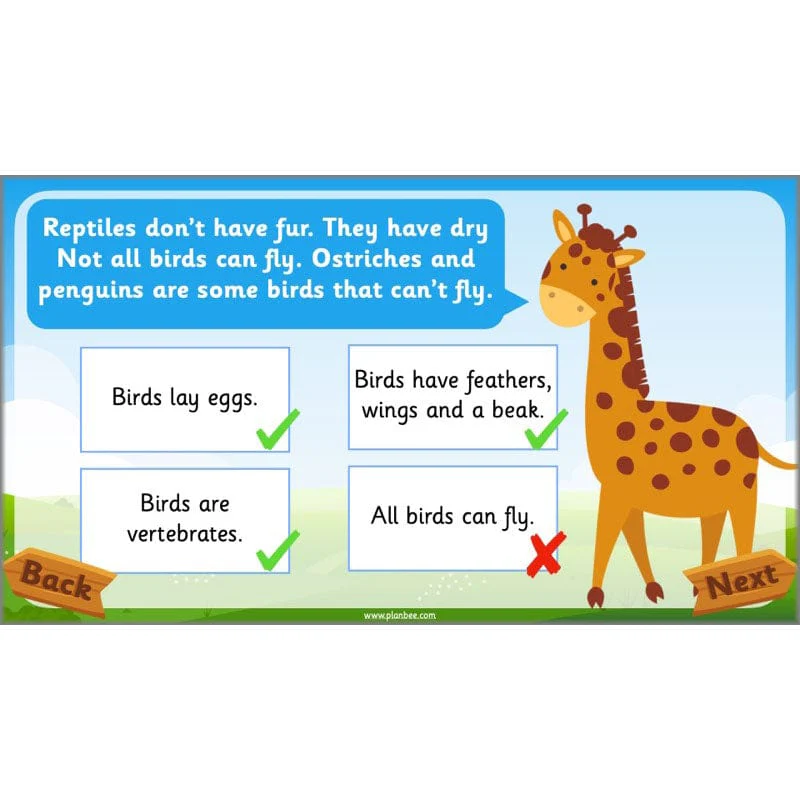
This birds and reptiles Year 1 lesson explores the similarities and differences between these classes of animals. At first glance these animals may appear to have nothing in common, but your class will discover they share some characteristics. This lesson encourages your children to think about characteristics like vertebrae, feathers, beaks and scales, when identifying and comparing the animals.
This downloadable reptiles and birds KS1 lesson contains a lesson plan, slideshow presentation and printable teaching resources.
If you are after some bird themed free resources then look no further than this 'Garden Bird Classification Sheet'.
What's included:
- Lesson plan
- Slides
- Activity ideas
- Differentiated worksheets
- Fact sheet
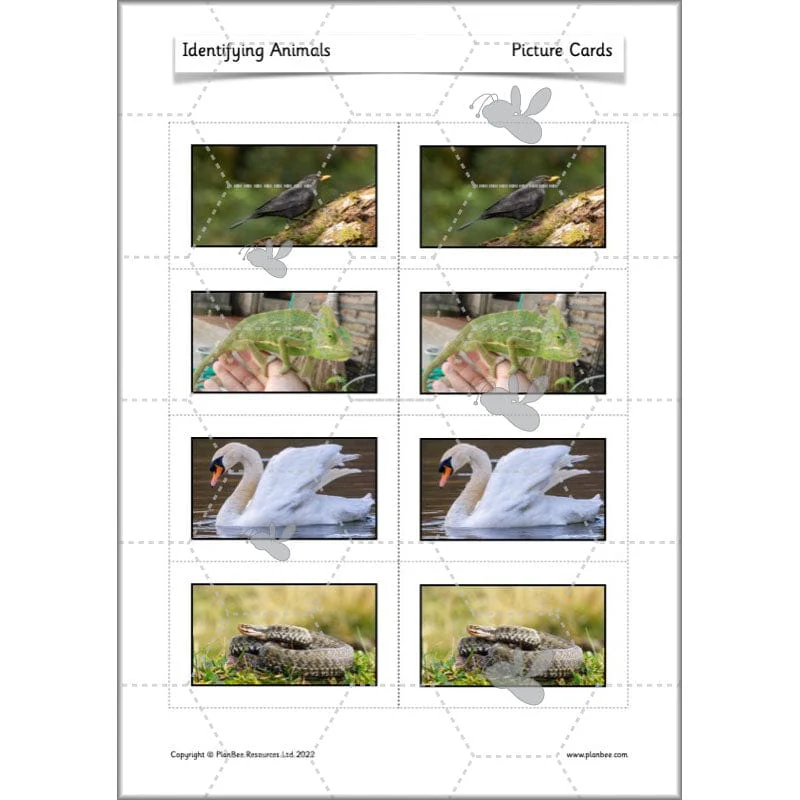
- Picture cards
View Lesson 3
Comparing Fish and Amphibians
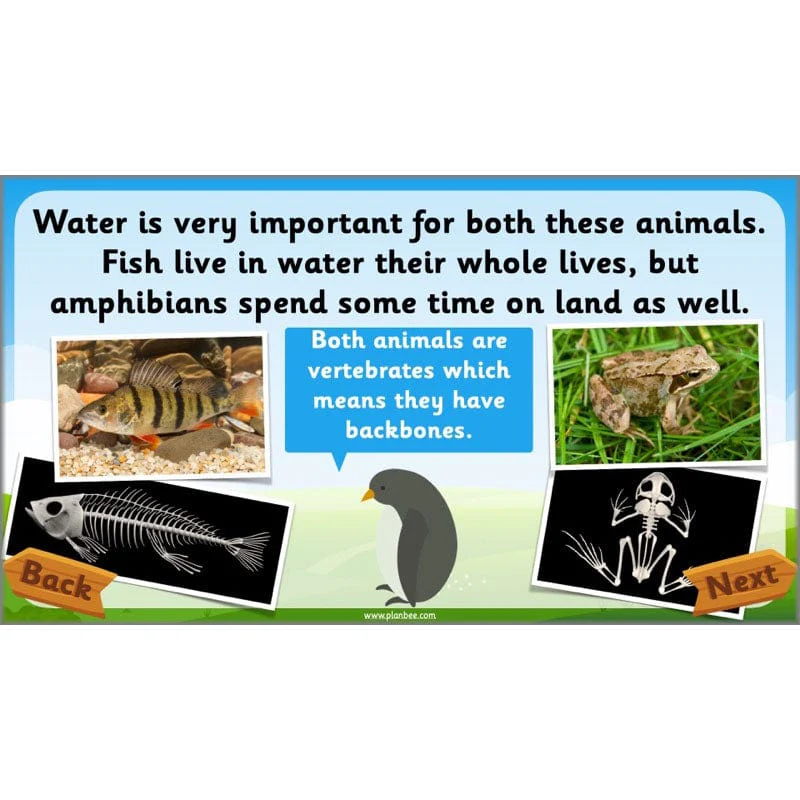
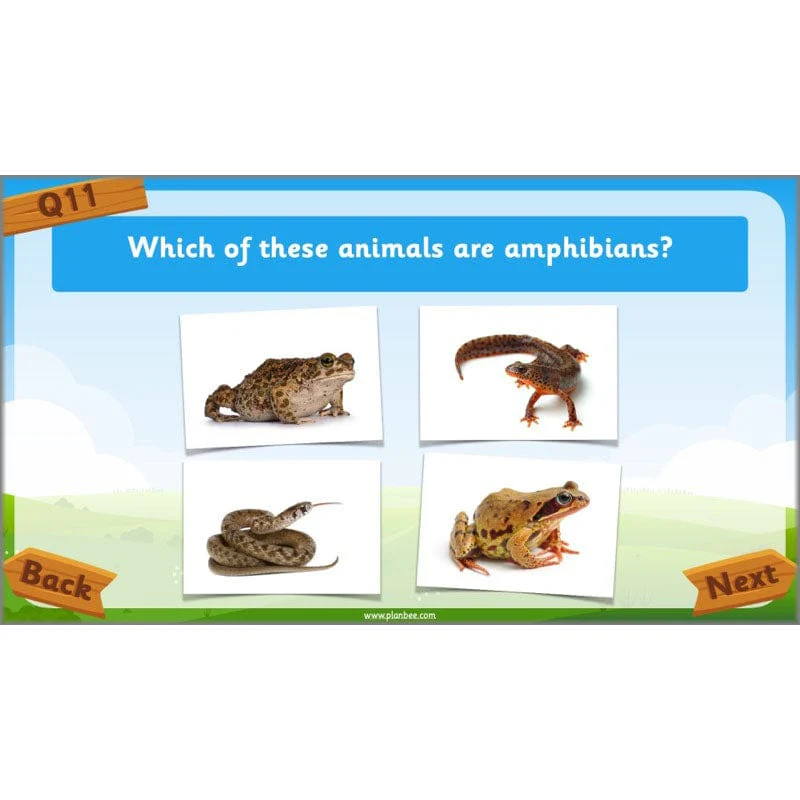
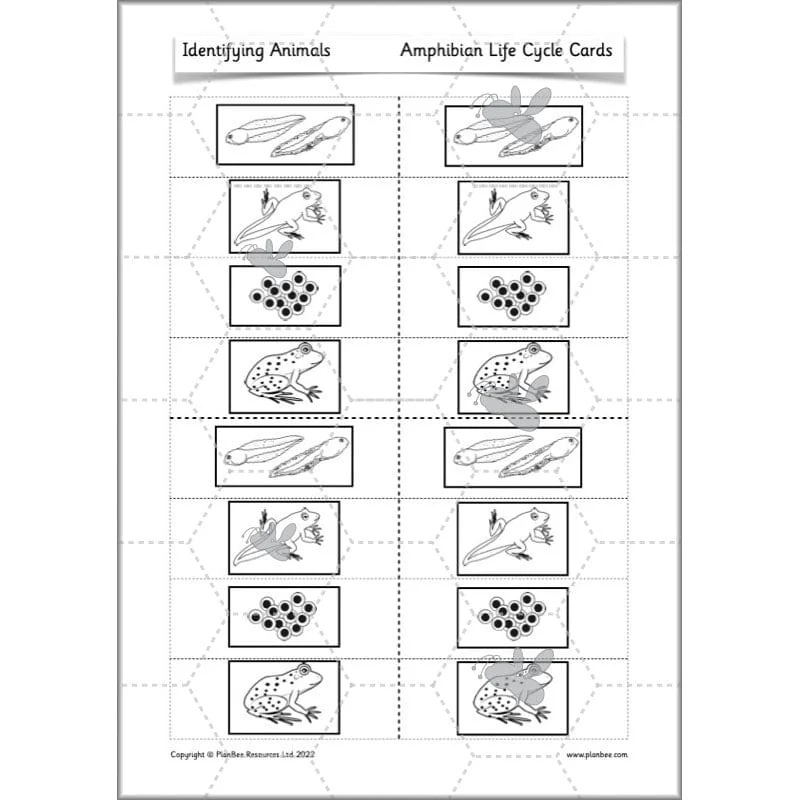
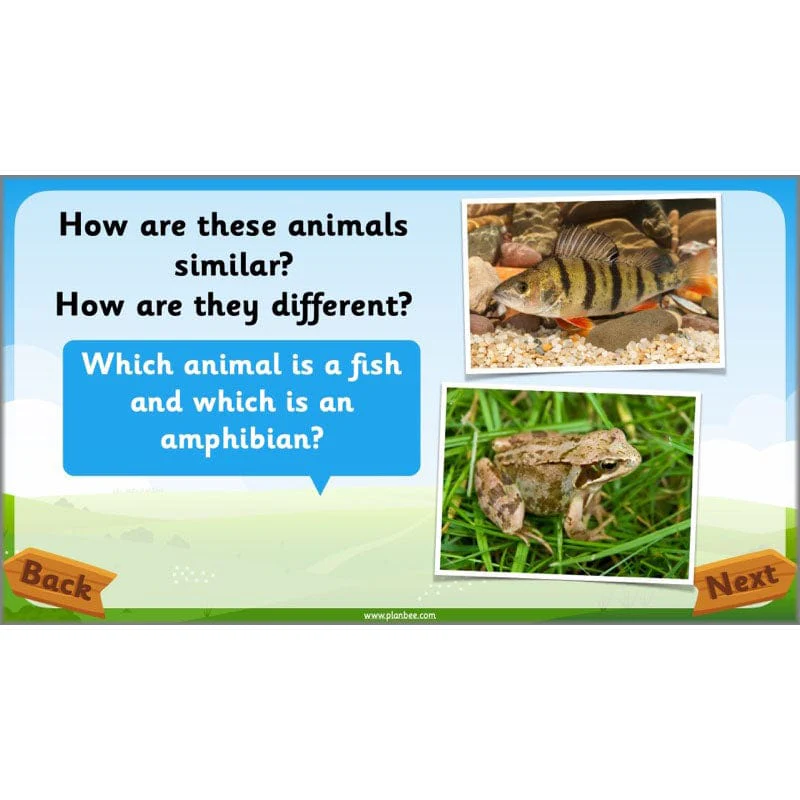
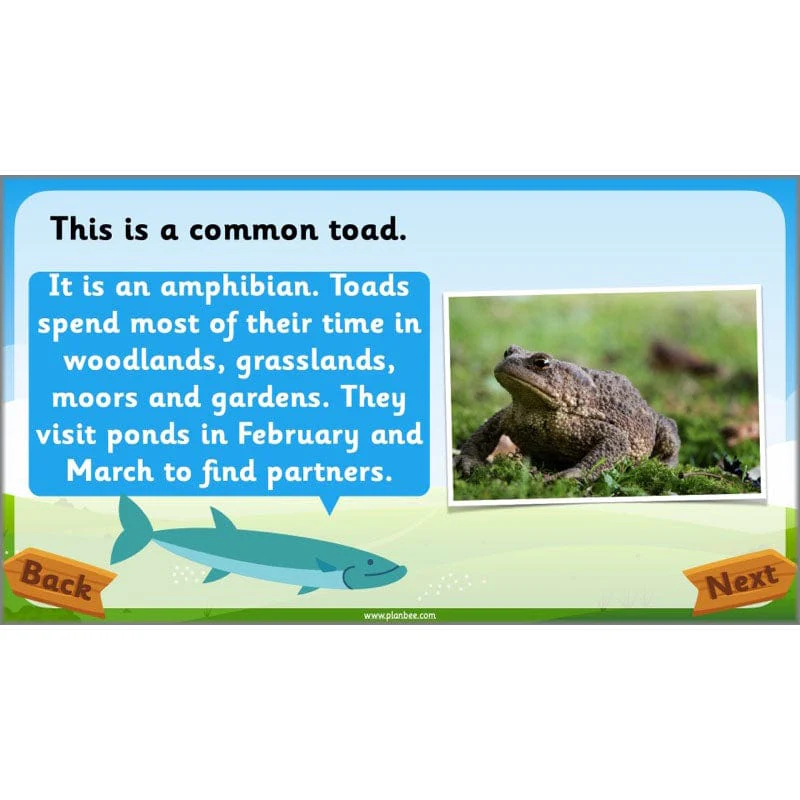
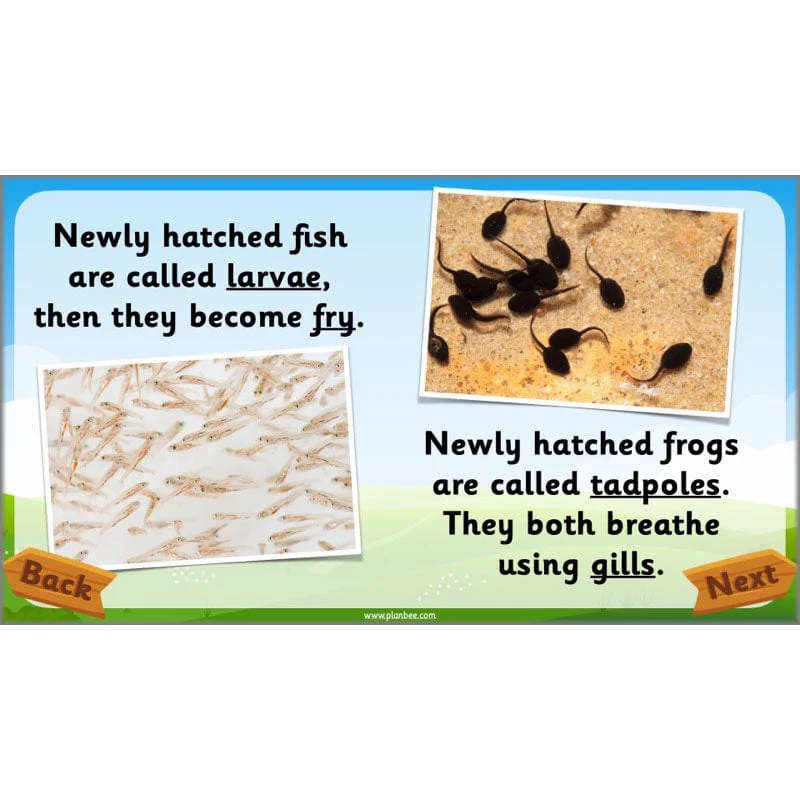
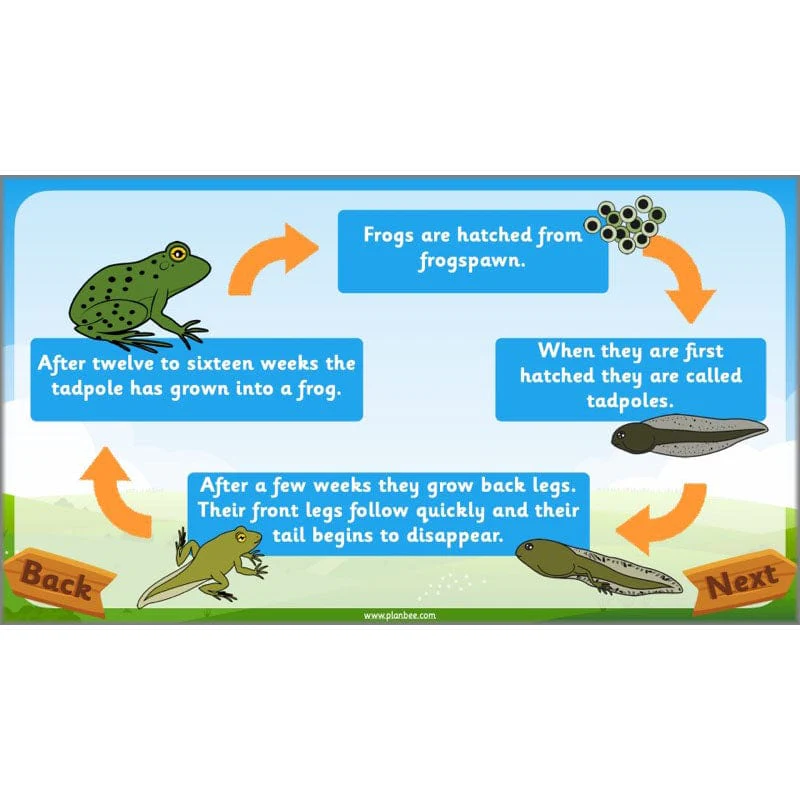
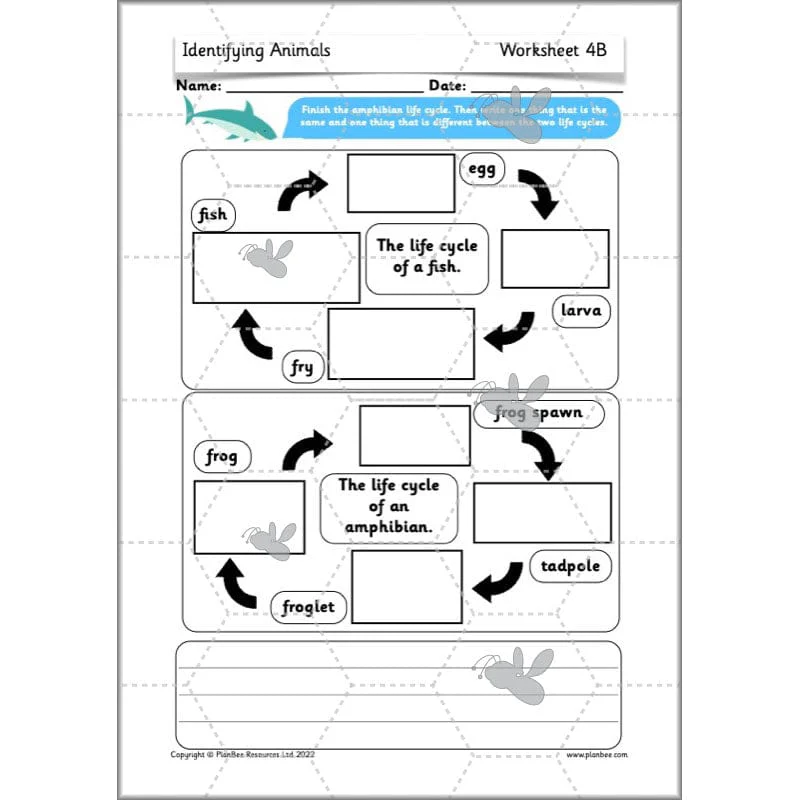
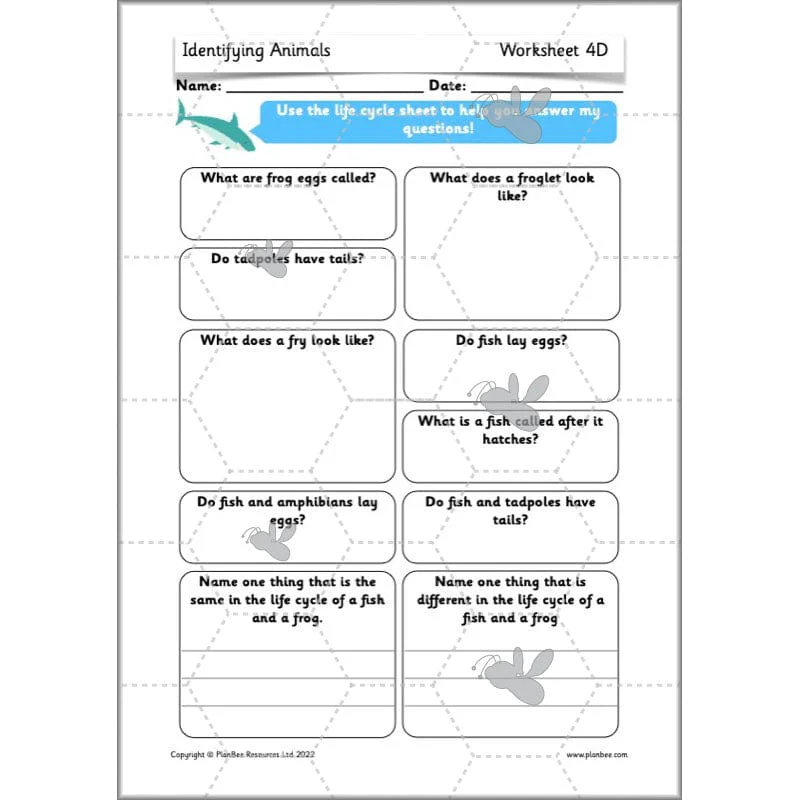
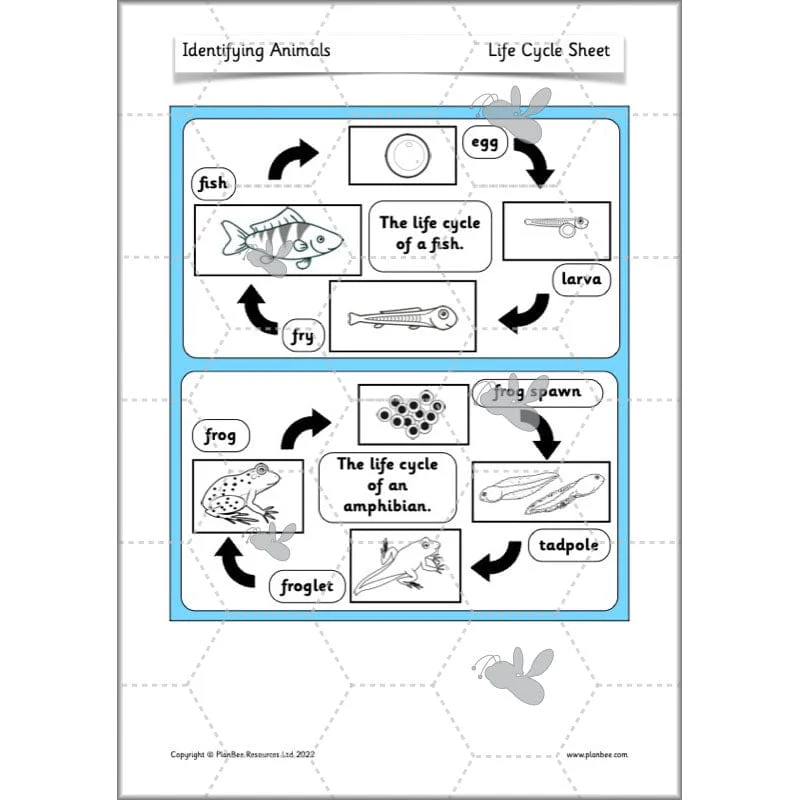
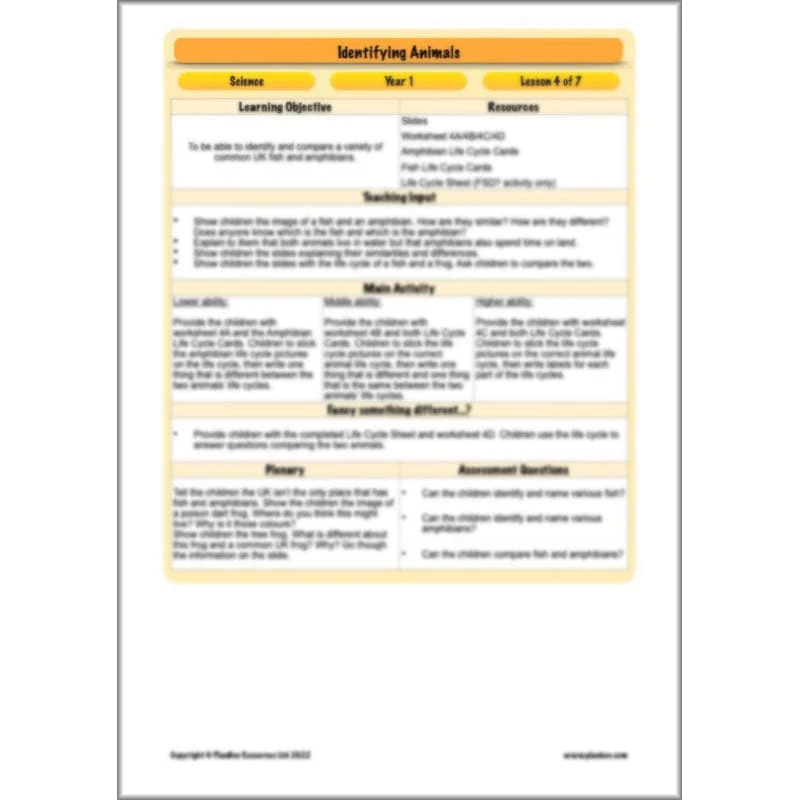
This Fish and Amphibians Year 1 lesson explores the similarities and differences between fish and amphibians. Your class will become familiar with their characteristics and life cycles, exploring how both fish and amphibians develop from eggs to adults. They will also get the opportunity to compare a common UK frog to more exotic frogs around the world!
This downloadable lesson contains a lesson plan, slideshow presentation and printable teaching resources.
What's included:
- Lesson plan
- Slides
- Activity ideas
- Differentiated worksheets
- Amphibian life cycle cards
- Fish life cycle cards
- Life cycle sheet
View Lesson 4
Herbivores, Carnivores, Omnivores
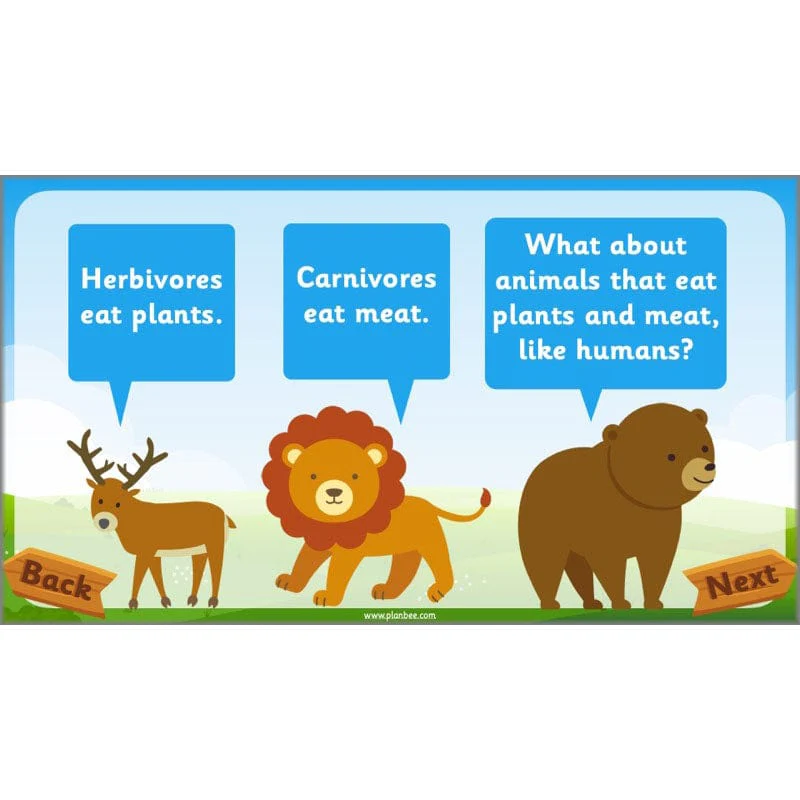
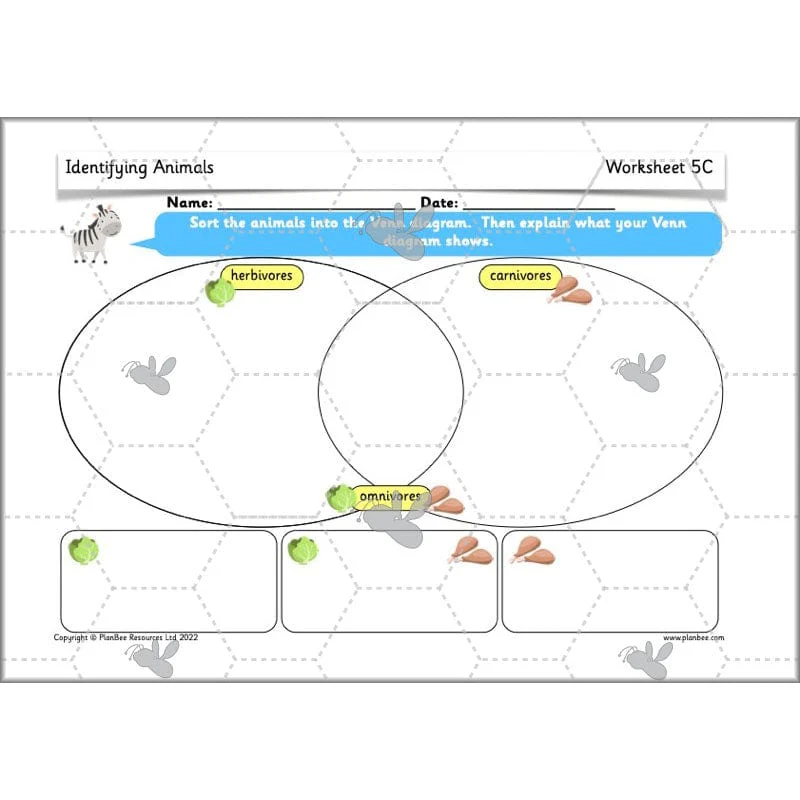
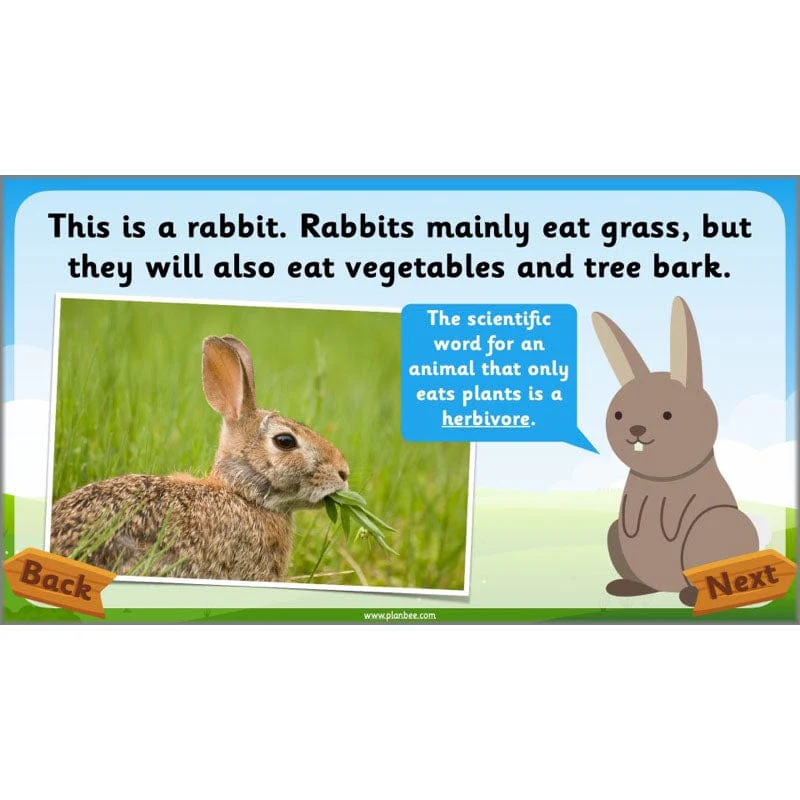
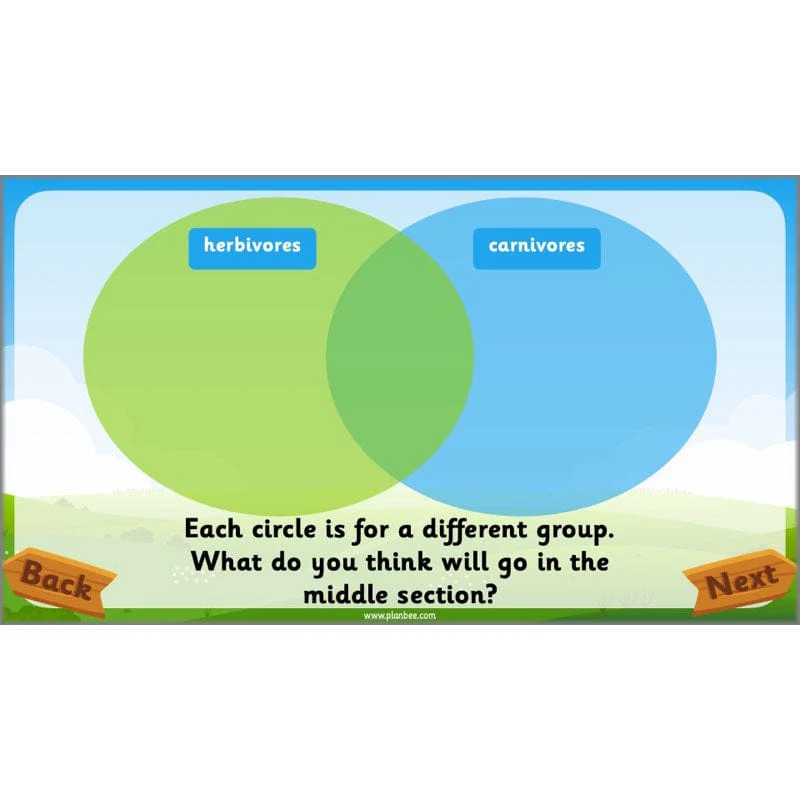
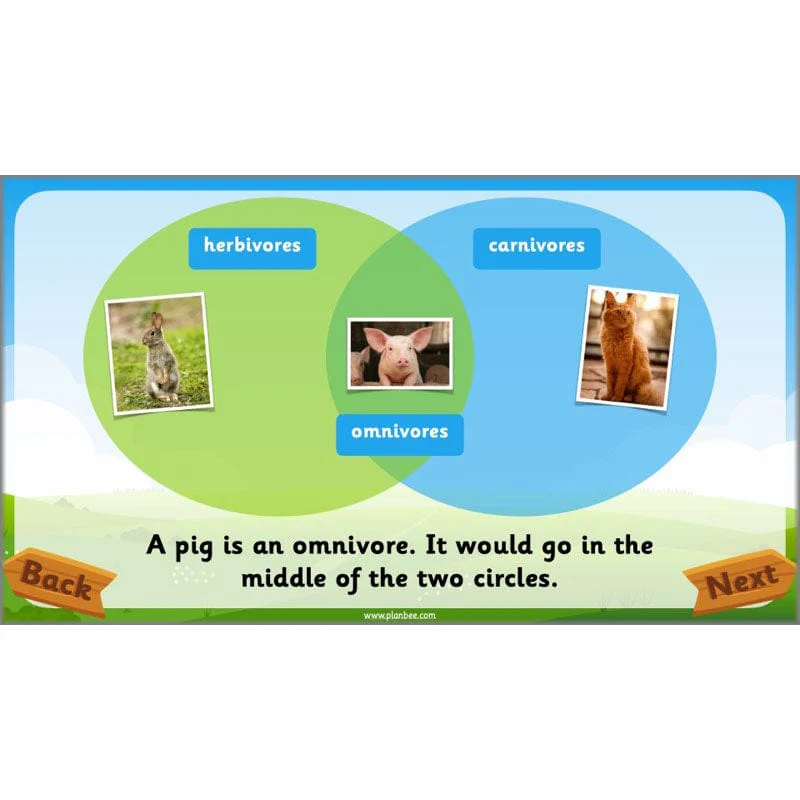
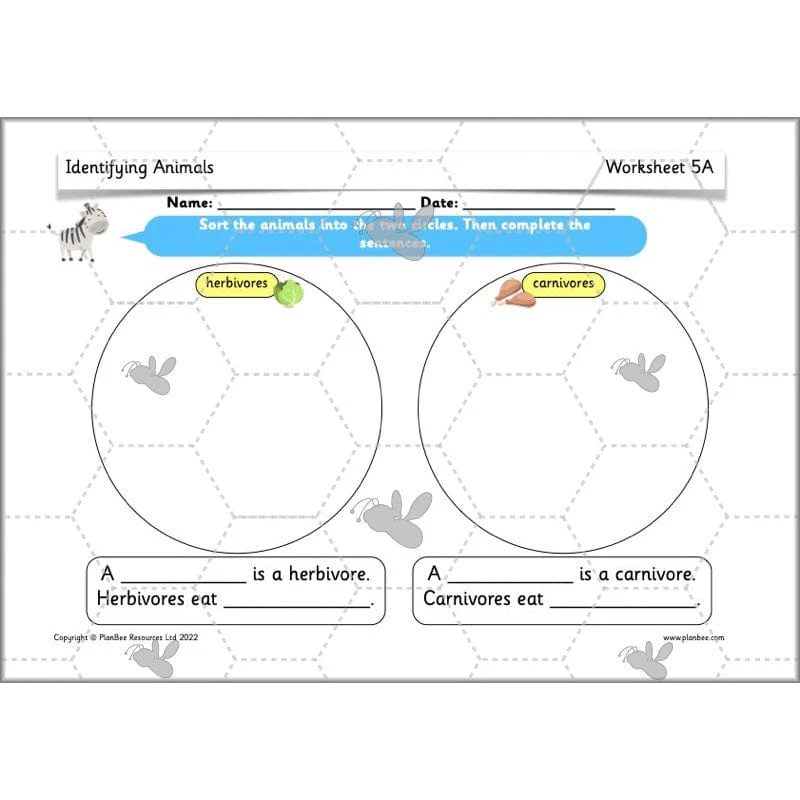
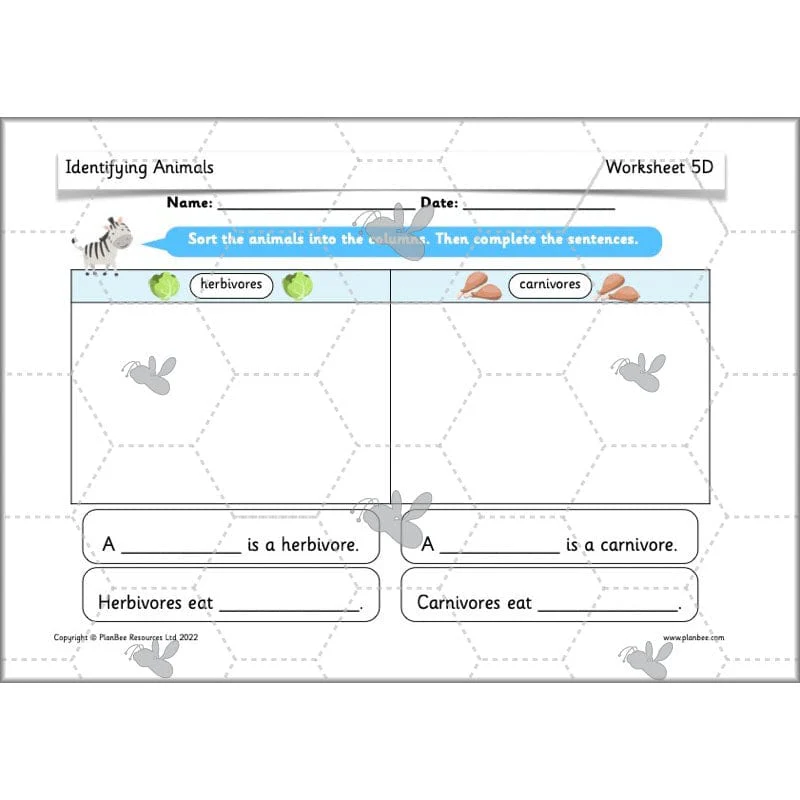
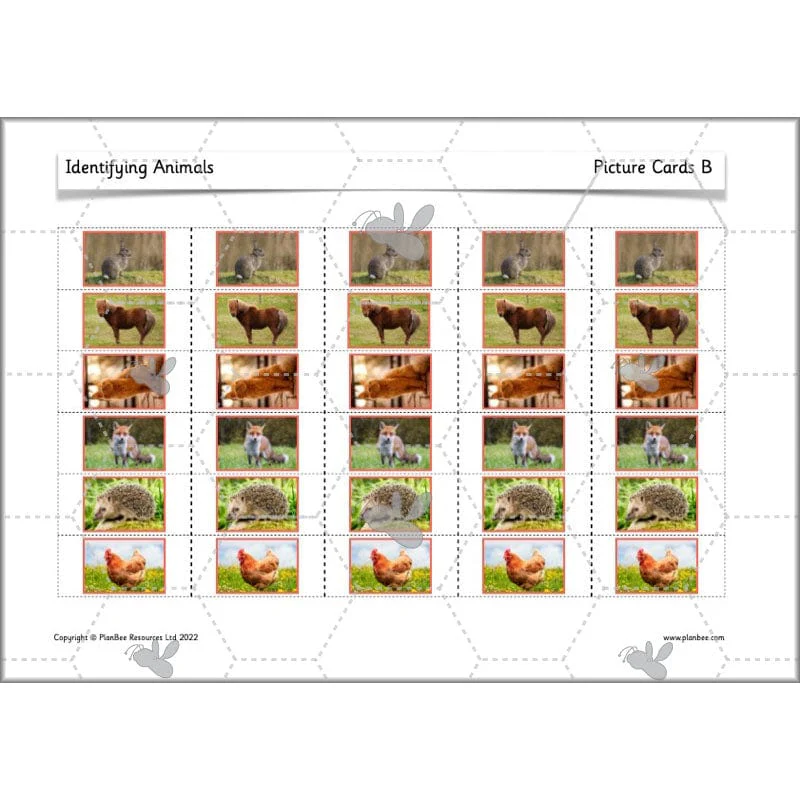
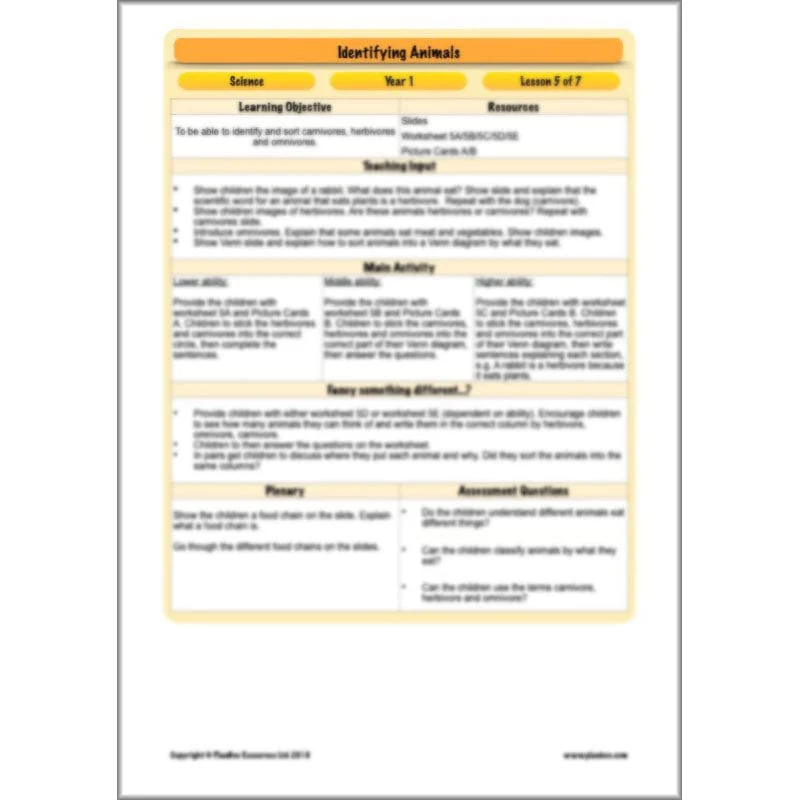
Now that your class are familiar with the different kingdoms of animals they will begin to sort them by what they eat in this herbivores carnivores omnivores Year 1 Science lesson. Your class will be introduced to the terms carnivore, herbivore and omnivore and be encouraged to apply their own knowledge of animals' diets when classifying them. This lesson also introduces the idea of food chains and gives your class the opportunity to order three-part food chains.
This downloadable lesson contains a lesson plan, slideshow presentation and printable teaching resources.
What's included:
- Lesson plan
- Slides
- Activity ideas
- Differentiated worksheets
- Picture cards
View Lesson 5
Taking Care of Animals
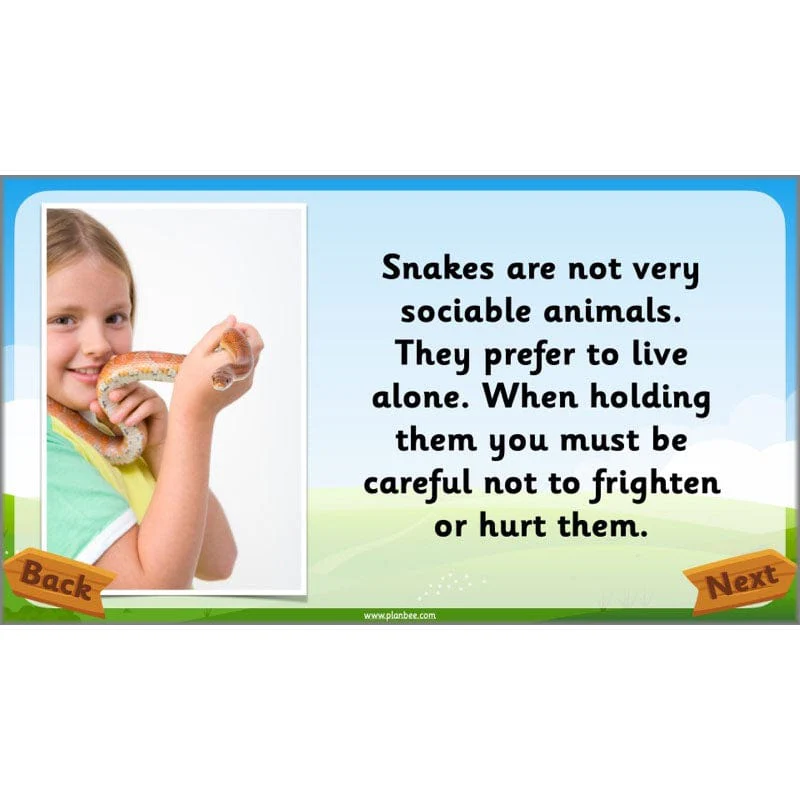
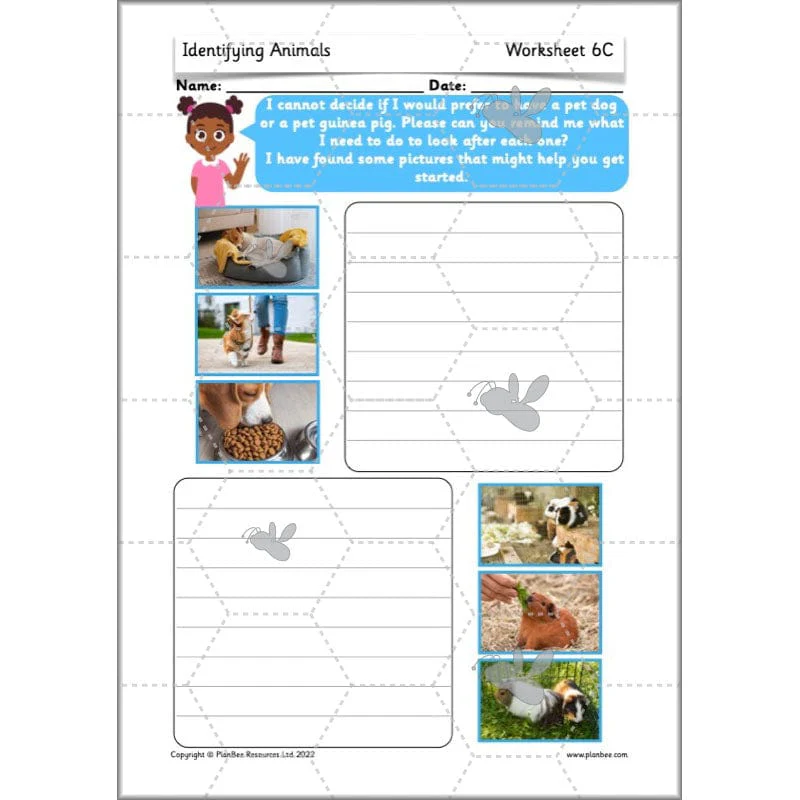
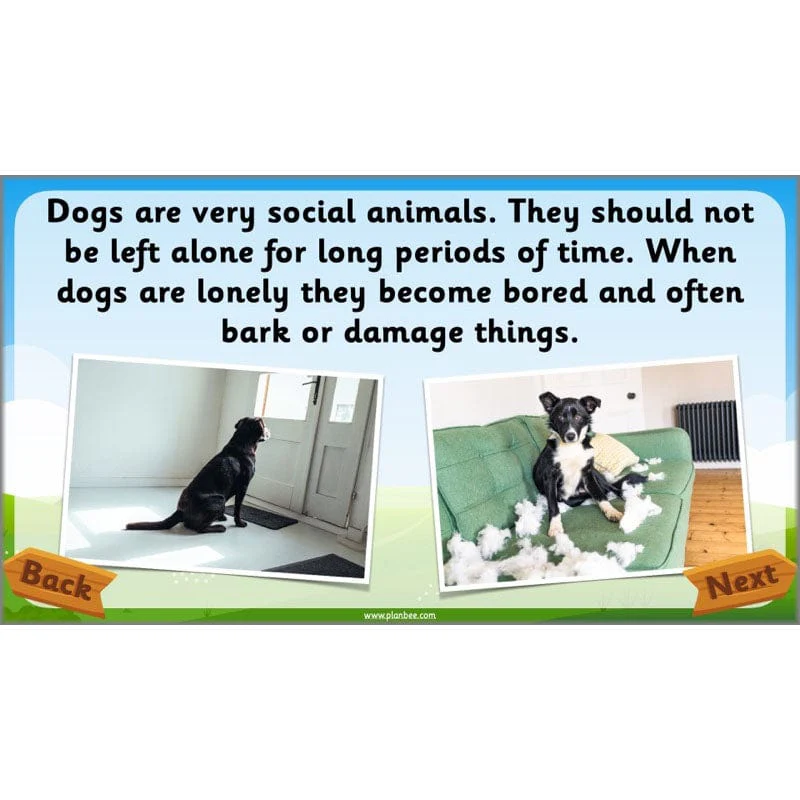
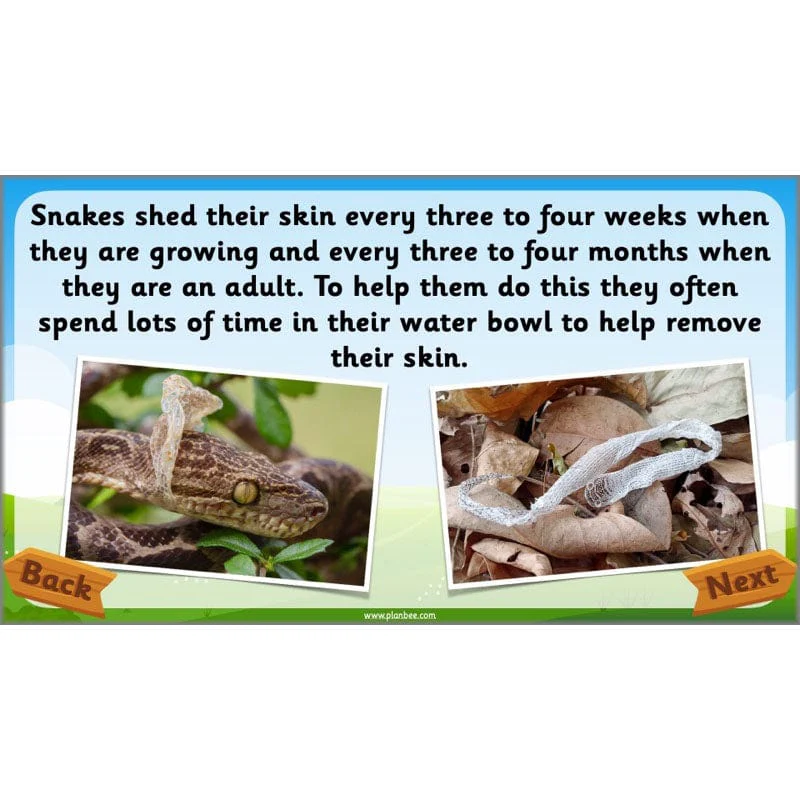
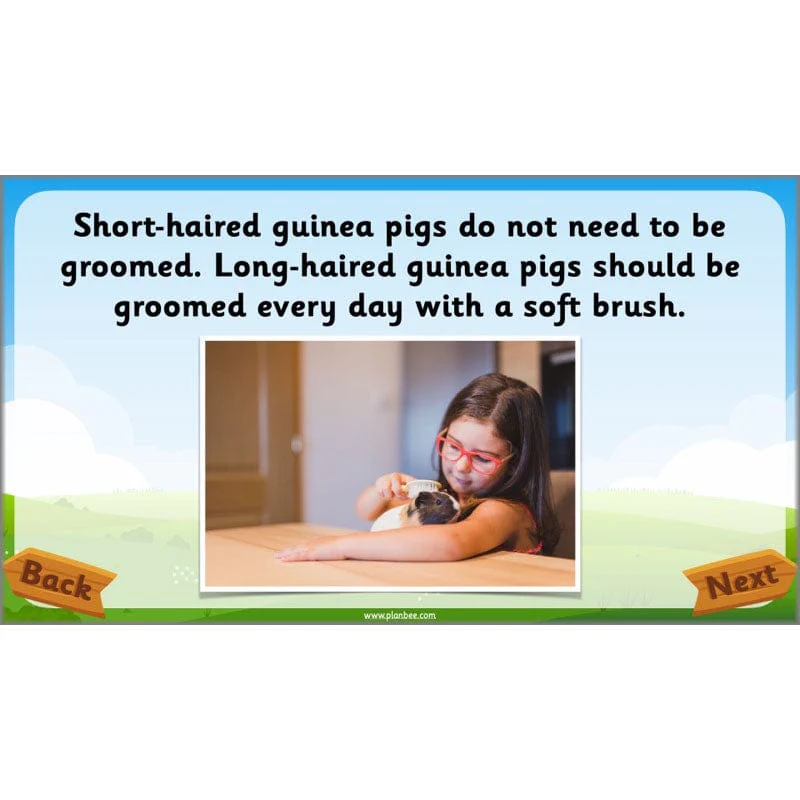
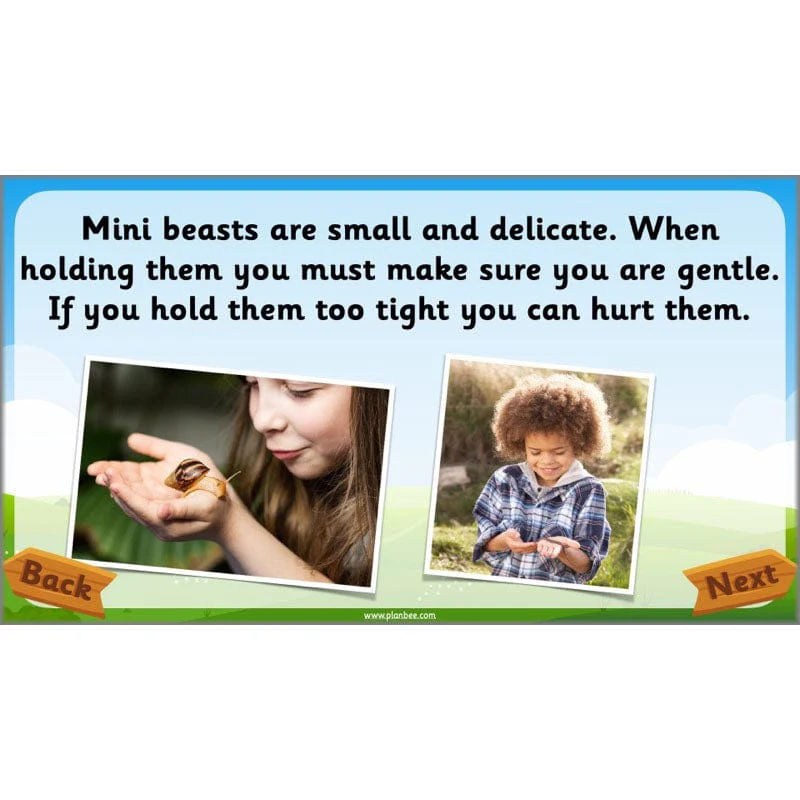
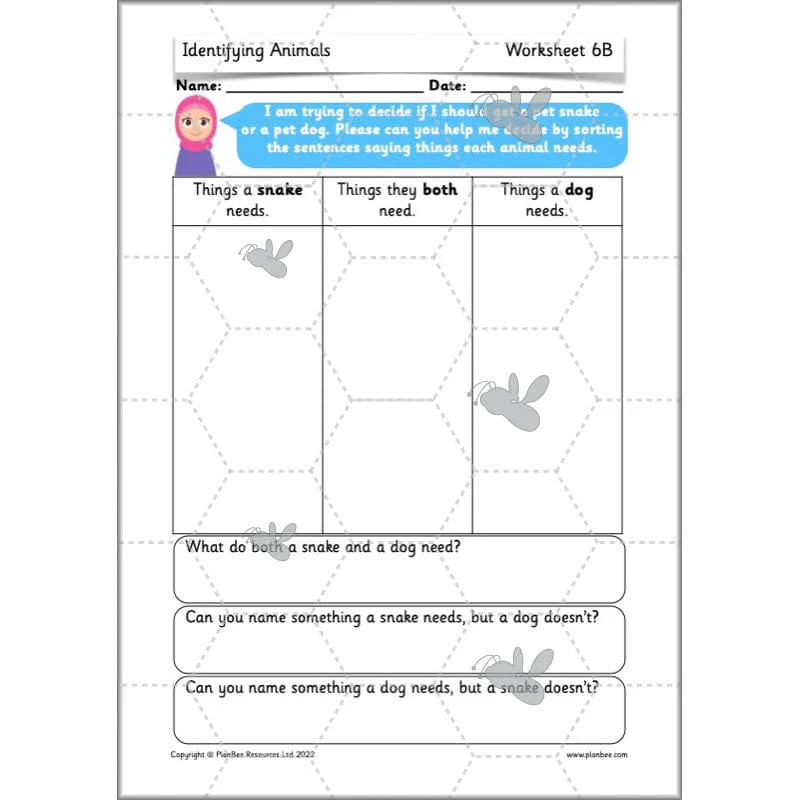
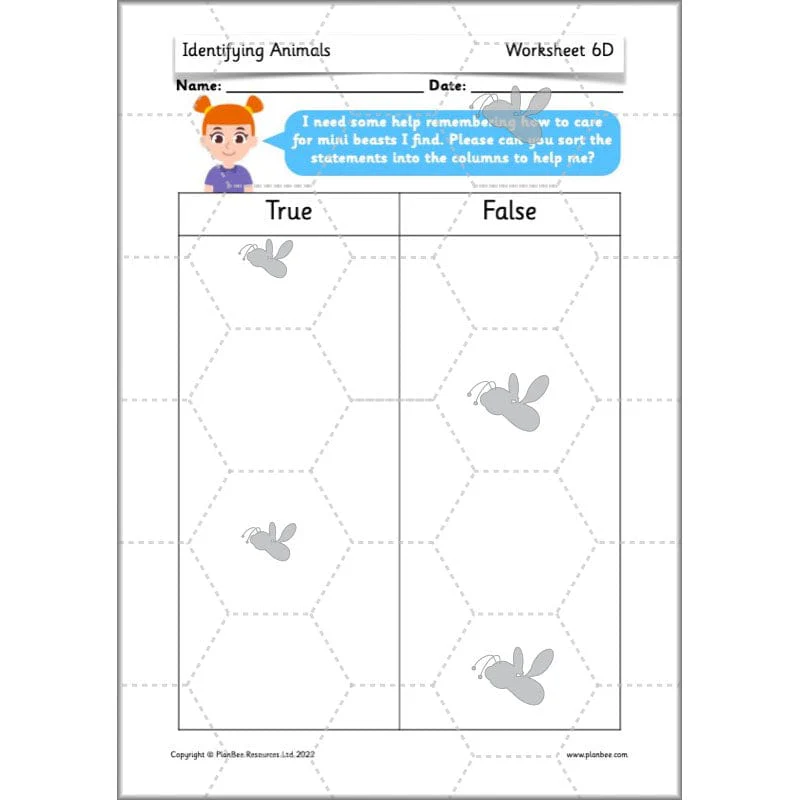
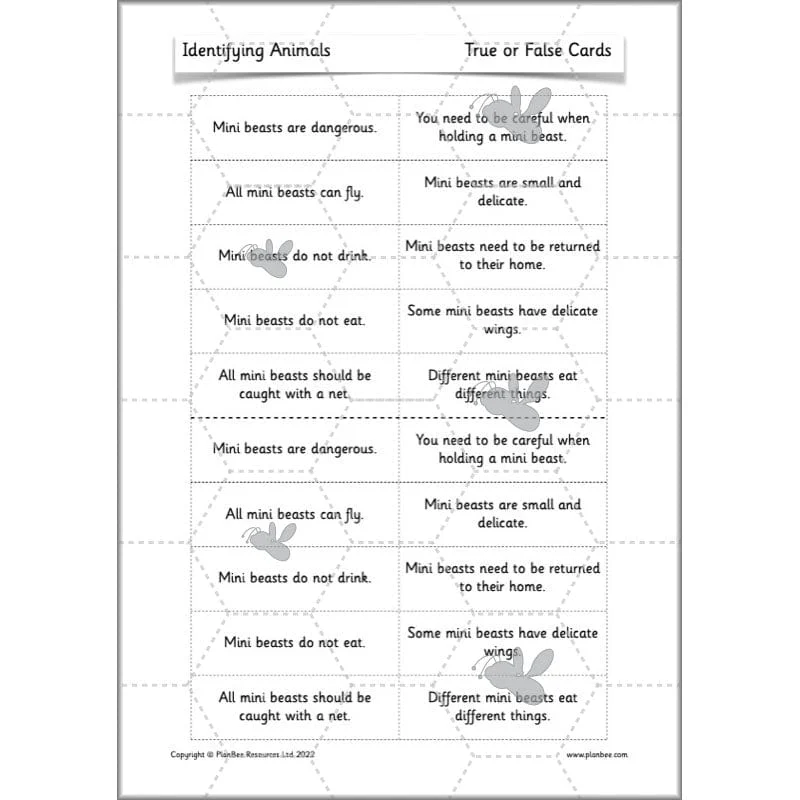
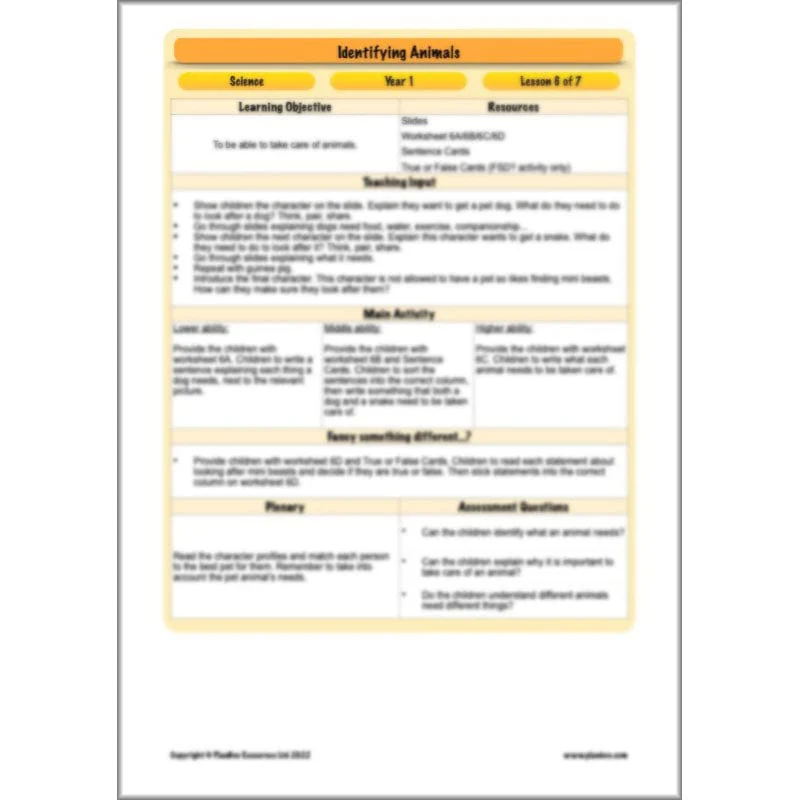
Taking care of animals is an important skill to learn. This lesson begins by enlisting your class to help the characters decide which pet they should get. Your class will need to look at the needs of each pet and what the characters can provide as they decide which pets would be most suited to each character. The lesson also explore how to care for mini beasts. Your class will record in a variety of ways what the animals need, including on taking care of animals worksheets.
This downloadable lesson comes with a lesson plan, slideshow presentation and printable teaching resources.
What's included:
- Lesson plan
- Slides
- Activity ideas
- Differentiated worksheets
- Sentence cards
- True or false cards
View Lesson 6
Animal Survey
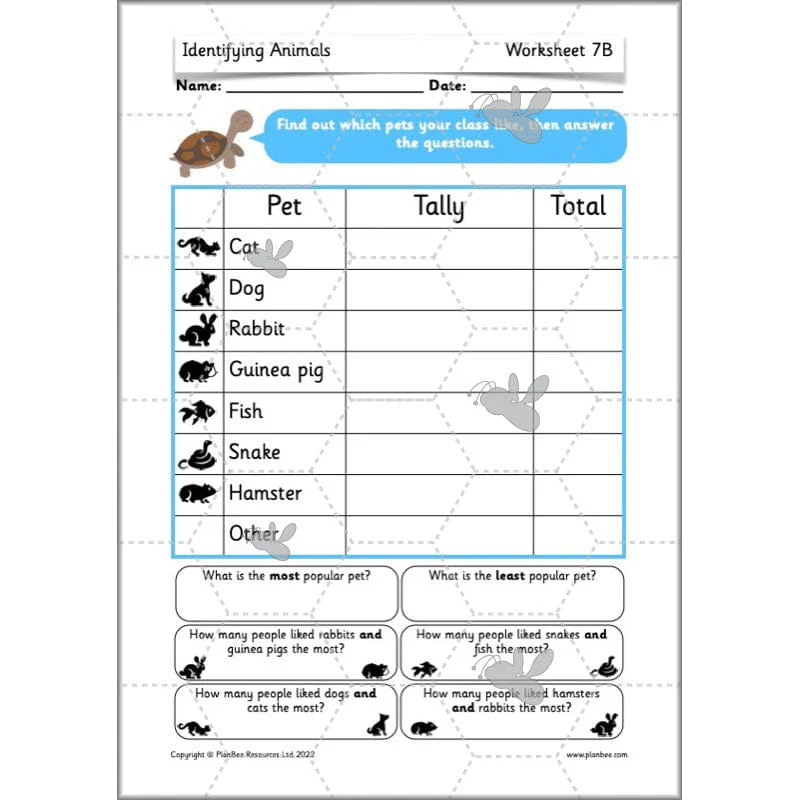
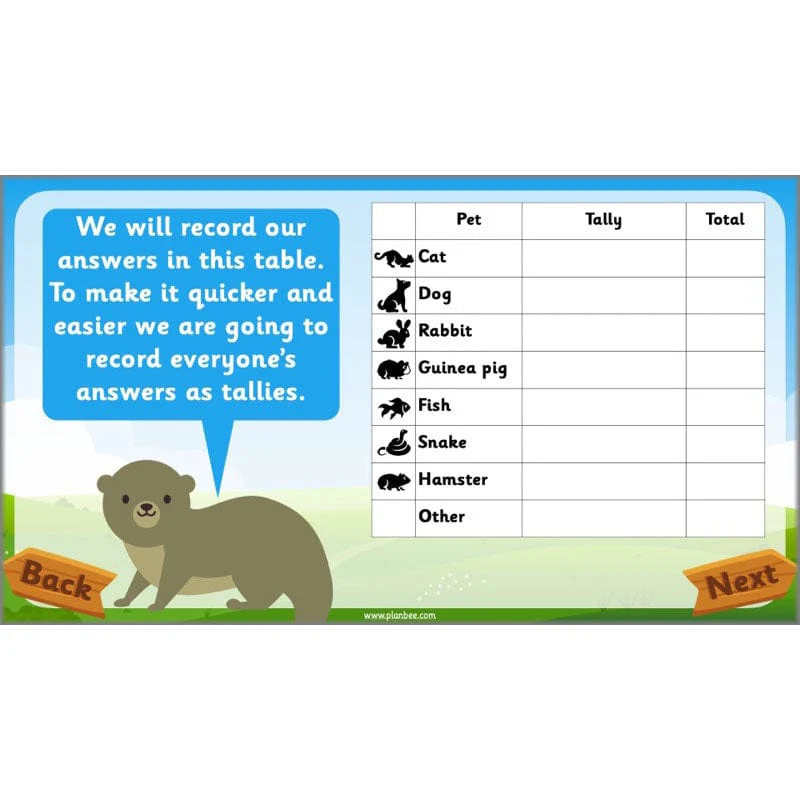
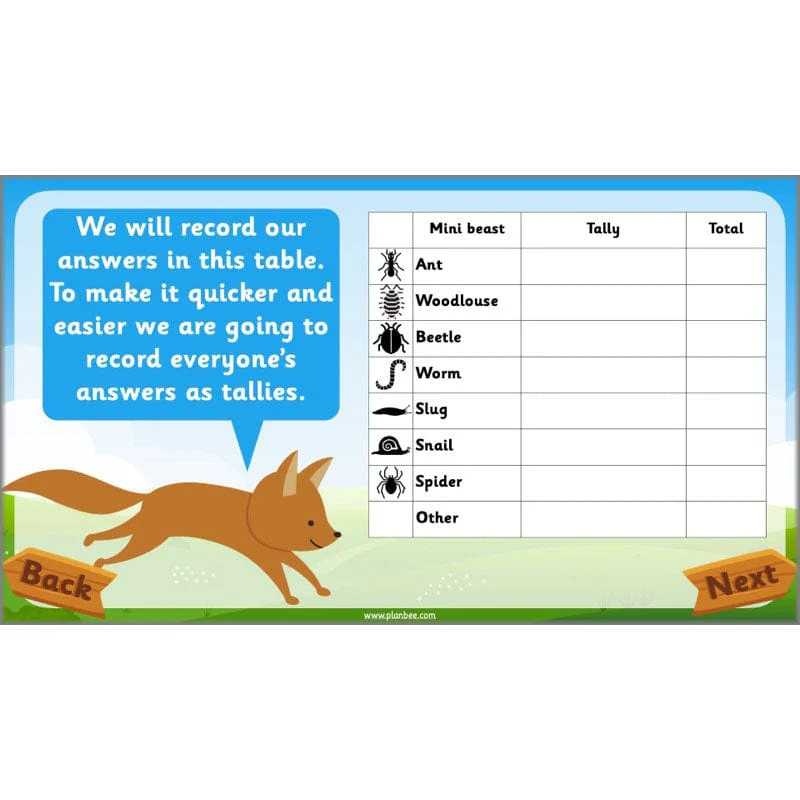
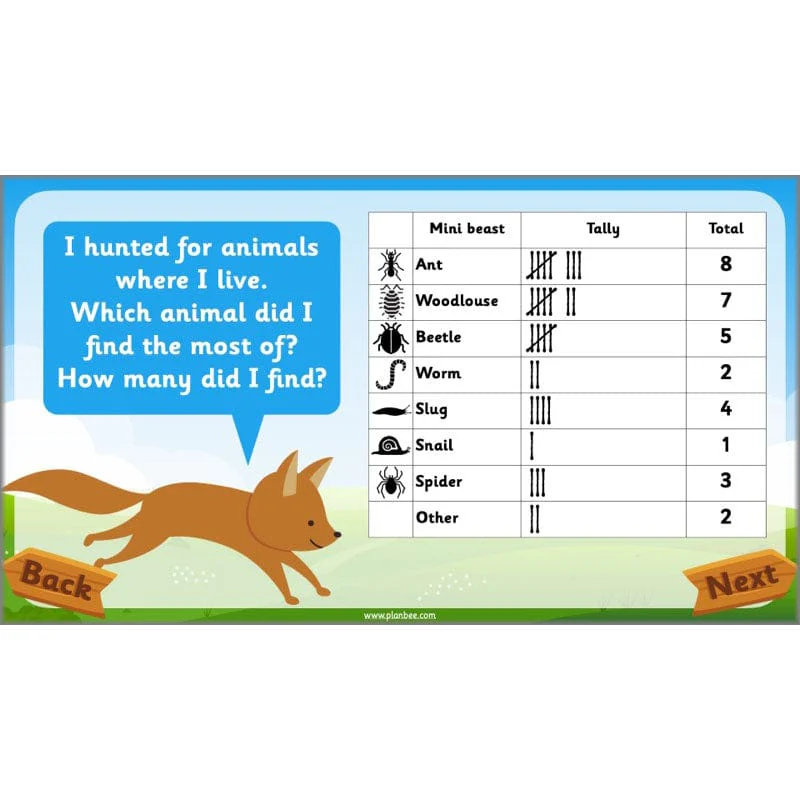
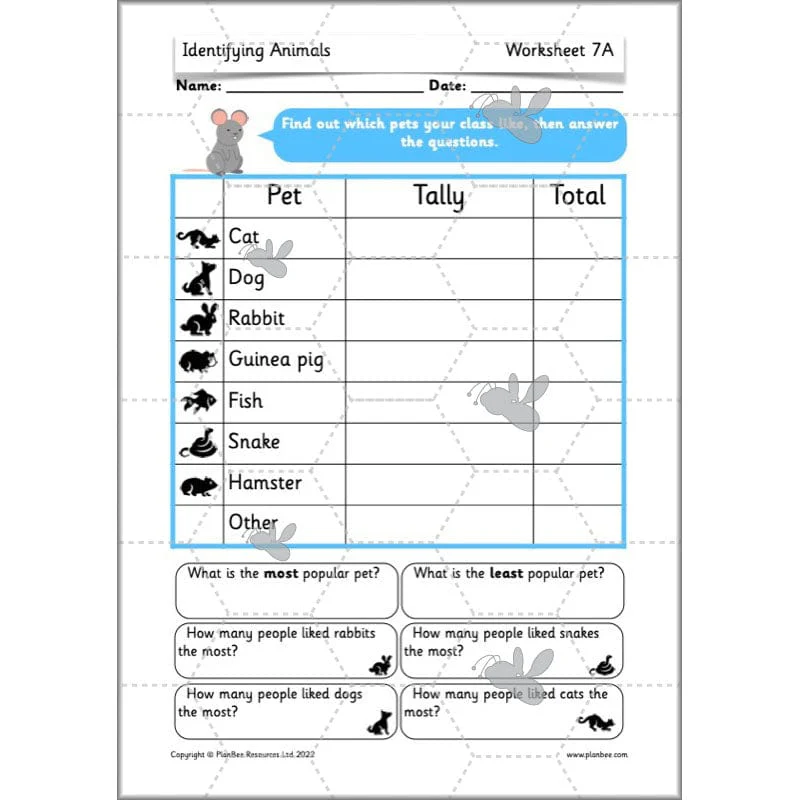
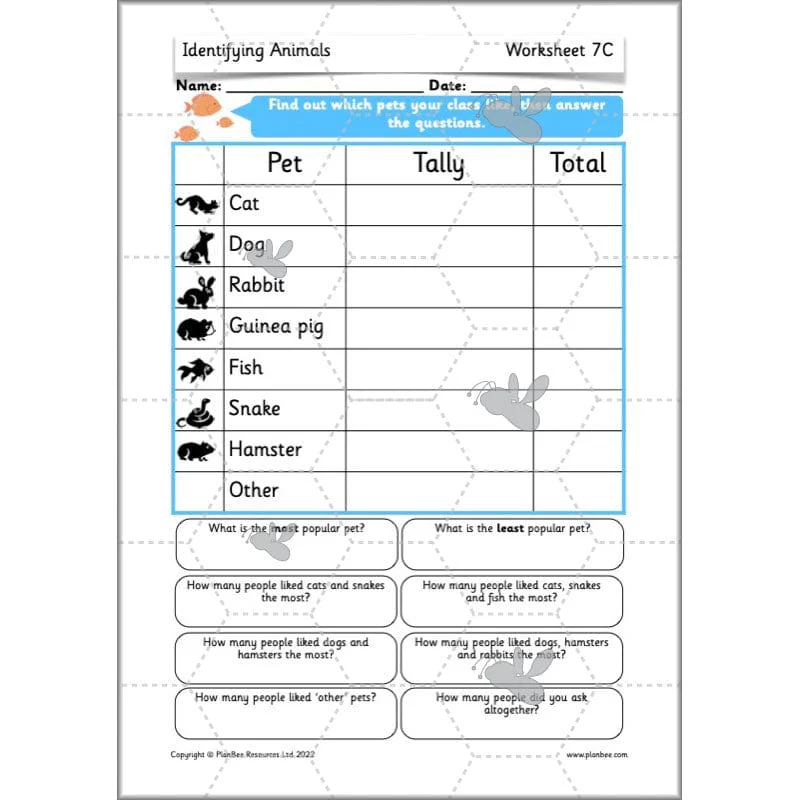
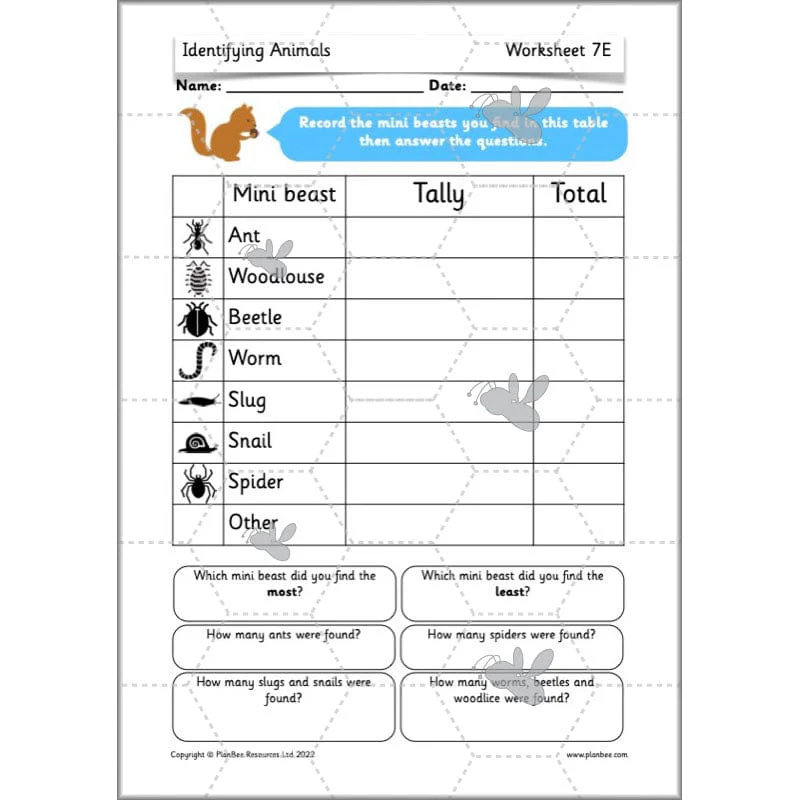
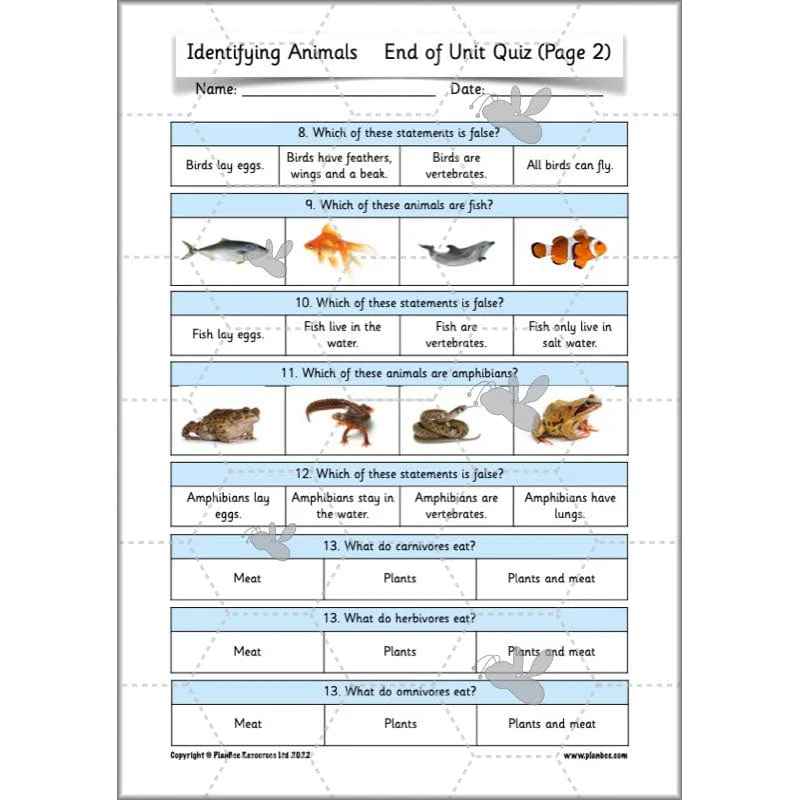
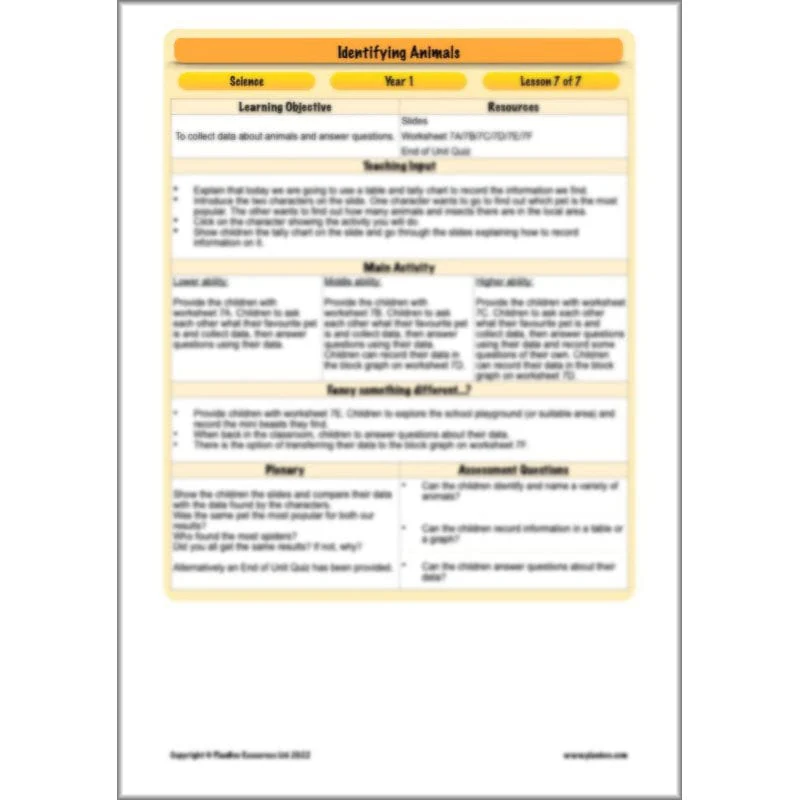
In this final Animal Survey Year 1 Science lesson, your class will collect and interpret data about the class' favourite pet or which mini beasts are in their local environment. They will practically collect the data by asking their classmates or going on a mini beast hunt. Your class will have the opportunity to apply their maths knowledge and transfer their findings to a block graph. They will also answer questions when interpreting their graphs.
This downloadable lesson contains a lesson plan, slideshow presentation and printable teaching resources.
What's included:
- Lesson plan
- Slides
- Activity ideas
- Differentiated worksheets
- End of Unit Quiz
View Lesson 7
Original: $2.69
-65%$2.69
$0.94More Images



Identifying Animals
This series of Animals Year 1 science lessons includes everything you need to teach your KS1 class about mammals, birds, reptiles, amphibians and fish. They will think about the needs of different pets and become familiar with the terms carnivore, herbivore and omnivore.
Engage your class in these Animals Year 1 activities using the downloadable plans, slideshow presentations and printable teaching resources.
A Knowledge Organiser is included within the complete series download, or is available to purchase separately.
You might also like our Amazing Animals Topic Bundle –with ready-to-teach schemes of work across a range of subjects to fully immerse your class in their Animals topic.
Pets!
Identify a range of pets with your class as they begin to think about animal classification. The first lesson in this series helps your class identify a variety of common pets, including dogs, cats, guinea pigs, rabbits, hamsters and fish.
They will start to notice animals have different features and use these features to distinguish between them, by either writing their own clues or matching pets to their clue cards.
This downloadable lesson contains a lesson plan, slideshow presentation and printable teaching resources.
What's included:
- Lesson plan
- Slides
- Activity ideas
- Differentiated worksheets
- Pet cards
- Name cards
- Clue cards
View Lesson 1
Exploring Mammals
This Exploring Mammals KS1 Year 1 lesson introduces a variety of UK mammals to your class. It explains how to identify mammals, showing clear pictorial examples of their characteristics. Your class will have the opportunity to either name and describe a variety of mammals or use a classification key to identify a range of mammals.
This downloadable lesson contains a lesson plan, slideshow presentation and printable teaching resources.
What's included:
- Lesson plan
- Slides
- Activity ideas
- Differentiated worksheet
- Word bank
- Picture cards
View Lesson 2
Comparing Birds and Reptiles
This birds and reptiles Year 1 lesson explores the similarities and differences between these classes of animals. At first glance these animals may appear to have nothing in common, but your class will discover they share some characteristics. This lesson encourages your children to think about characteristics like vertebrae, feathers, beaks and scales, when identifying and comparing the animals.
This downloadable reptiles and birds KS1 lesson contains a lesson plan, slideshow presentation and printable teaching resources.
If you are after some bird themed free resources then look no further than this 'Garden Bird Classification Sheet'.
What's included:
- Lesson plan
- Slides
- Activity ideas
- Differentiated worksheets
- Fact sheet
- Picture cards
View Lesson 3
Comparing Fish and Amphibians
This Fish and Amphibians Year 1 lesson explores the similarities and differences between fish and amphibians. Your class will become familiar with their characteristics and life cycles, exploring how both fish and amphibians develop from eggs to adults. They will also get the opportunity to compare a common UK frog to more exotic frogs around the world!
This downloadable lesson contains a lesson plan, slideshow presentation and printable teaching resources.
What's included:
- Lesson plan
- Slides
- Activity ideas
- Differentiated worksheets
- Amphibian life cycle cards
- Fish life cycle cards
- Life cycle sheet
View Lesson 4
Herbivores, Carnivores, Omnivores
Now that your class are familiar with the different kingdoms of animals they will begin to sort them by what they eat in this herbivores carnivores omnivores Year 1 Science lesson. Your class will be introduced to the terms carnivore, herbivore and omnivore and be encouraged to apply their own knowledge of animals' diets when classifying them. This lesson also introduces the idea of food chains and gives your class the opportunity to order three-part food chains.
This downloadable lesson contains a lesson plan, slideshow presentation and printable teaching resources.
What's included:
- Lesson plan
- Slides
- Activity ideas
- Differentiated worksheets
- Picture cards
View Lesson 5
Taking Care of Animals
Taking care of animals is an important skill to learn. This lesson begins by enlisting your class to help the characters decide which pet they should get. Your class will need to look at the needs of each pet and what the characters can provide as they decide which pets would be most suited to each character. The lesson also explore how to care for mini beasts. Your class will record in a variety of ways what the animals need, including on taking care of animals worksheets.
This downloadable lesson comes with a lesson plan, slideshow presentation and printable teaching resources.
What's included:
- Lesson plan
- Slides
- Activity ideas
- Differentiated worksheets
- Sentence cards
- True or false cards
View Lesson 6
Animal Survey
In this final Animal Survey Year 1 Science lesson, your class will collect and interpret data about the class' favourite pet or which mini beasts are in their local environment. They will practically collect the data by asking their classmates or going on a mini beast hunt. Your class will have the opportunity to apply their maths knowledge and transfer their findings to a block graph. They will also answer questions when interpreting their graphs.
This downloadable lesson contains a lesson plan, slideshow presentation and printable teaching resources.
What's included:
- Lesson plan
- Slides
- Activity ideas
- Differentiated worksheets
- End of Unit Quiz
View Lesson 7
Product Information
Product Information
Shipping & Returns
Shipping & Returns
Description
This series of Animals Year 1 science lessons includes everything you need to teach your KS1 class about mammals, birds, reptiles, amphibians and fish. They will think about the needs of different pets and become familiar with the terms carnivore, herbivore and omnivore.
Engage your class in these Animals Year 1 activities using the downloadable plans, slideshow presentations and printable teaching resources.
A Knowledge Organiser is included within the complete series download, or is available to purchase separately.
You might also like our Amazing Animals Topic Bundle –with ready-to-teach schemes of work across a range of subjects to fully immerse your class in their Animals topic.
Pets!
Identify a range of pets with your class as they begin to think about animal classification. The first lesson in this series helps your class identify a variety of common pets, including dogs, cats, guinea pigs, rabbits, hamsters and fish.
They will start to notice animals have different features and use these features to distinguish between them, by either writing their own clues or matching pets to their clue cards.
This downloadable lesson contains a lesson plan, slideshow presentation and printable teaching resources.
What's included:
- Lesson plan
- Slides
- Activity ideas
- Differentiated worksheets
- Pet cards
- Name cards
- Clue cards
View Lesson 1
Exploring Mammals
This Exploring Mammals KS1 Year 1 lesson introduces a variety of UK mammals to your class. It explains how to identify mammals, showing clear pictorial examples of their characteristics. Your class will have the opportunity to either name and describe a variety of mammals or use a classification key to identify a range of mammals.
This downloadable lesson contains a lesson plan, slideshow presentation and printable teaching resources.
What's included:
- Lesson plan
- Slides
- Activity ideas
- Differentiated worksheet
- Word bank
- Picture cards
View Lesson 2
Comparing Birds and Reptiles
This birds and reptiles Year 1 lesson explores the similarities and differences between these classes of animals. At first glance these animals may appear to have nothing in common, but your class will discover they share some characteristics. This lesson encourages your children to think about characteristics like vertebrae, feathers, beaks and scales, when identifying and comparing the animals.
This downloadable reptiles and birds KS1 lesson contains a lesson plan, slideshow presentation and printable teaching resources.
If you are after some bird themed free resources then look no further than this 'Garden Bird Classification Sheet'.
What's included:
- Lesson plan
- Slides
- Activity ideas
- Differentiated worksheets
- Fact sheet
- Picture cards
View Lesson 3
Comparing Fish and Amphibians
This Fish and Amphibians Year 1 lesson explores the similarities and differences between fish and amphibians. Your class will become familiar with their characteristics and life cycles, exploring how both fish and amphibians develop from eggs to adults. They will also get the opportunity to compare a common UK frog to more exotic frogs around the world!
This downloadable lesson contains a lesson plan, slideshow presentation and printable teaching resources.
What's included:
- Lesson plan
- Slides
- Activity ideas
- Differentiated worksheets
- Amphibian life cycle cards
- Fish life cycle cards
- Life cycle sheet
View Lesson 4
Herbivores, Carnivores, Omnivores
Now that your class are familiar with the different kingdoms of animals they will begin to sort them by what they eat in this herbivores carnivores omnivores Year 1 Science lesson. Your class will be introduced to the terms carnivore, herbivore and omnivore and be encouraged to apply their own knowledge of animals' diets when classifying them. This lesson also introduces the idea of food chains and gives your class the opportunity to order three-part food chains.
This downloadable lesson contains a lesson plan, slideshow presentation and printable teaching resources.
What's included:
- Lesson plan
- Slides
- Activity ideas
- Differentiated worksheets
- Picture cards
View Lesson 5
Taking Care of Animals
Taking care of animals is an important skill to learn. This lesson begins by enlisting your class to help the characters decide which pet they should get. Your class will need to look at the needs of each pet and what the characters can provide as they decide which pets would be most suited to each character. The lesson also explore how to care for mini beasts. Your class will record in a variety of ways what the animals need, including on taking care of animals worksheets.
This downloadable lesson comes with a lesson plan, slideshow presentation and printable teaching resources.
What's included:
- Lesson plan
- Slides
- Activity ideas
- Differentiated worksheets
- Sentence cards
- True or false cards
View Lesson 6
Animal Survey
In this final Animal Survey Year 1 Science lesson, your class will collect and interpret data about the class' favourite pet or which mini beasts are in their local environment. They will practically collect the data by asking their classmates or going on a mini beast hunt. Your class will have the opportunity to apply their maths knowledge and transfer their findings to a block graph. They will also answer questions when interpreting their graphs.
This downloadable lesson contains a lesson plan, slideshow presentation and printable teaching resources.
What's included:
- Lesson plan
- Slides
- Activity ideas
- Differentiated worksheets
- End of Unit Quiz
View Lesson 7