Where Does This Come From?
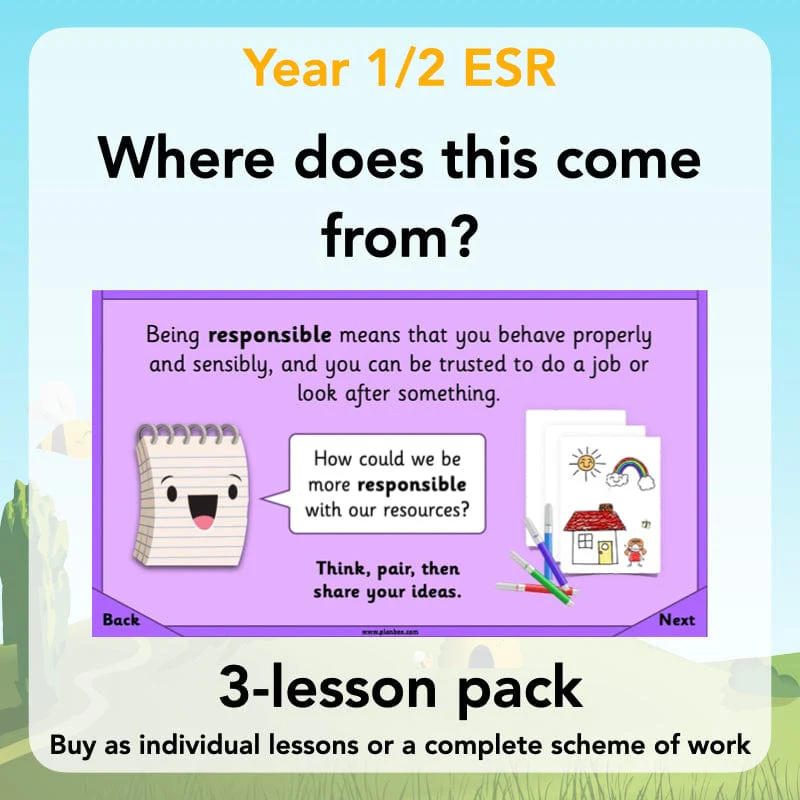
This 'Where Does This Come From?' scheme of work for Year 1 and 2 begins by encouraging your class to think about whether they are using resources responsibly or wastefully. They will then explore where paper comes from and how it is made, before learning how important it is to reduce the amount of waste we create by reusing and recycling as much as we can.
Including lesson plans, engaging slide shows for the teaching input, differentiated activities and a range of printable resources, this 'Where Does this Come From?' scheme of work encourages your class to think about where their resources come from, and how to recycle and use them in a more responsible way.
Using Resources Responsibly
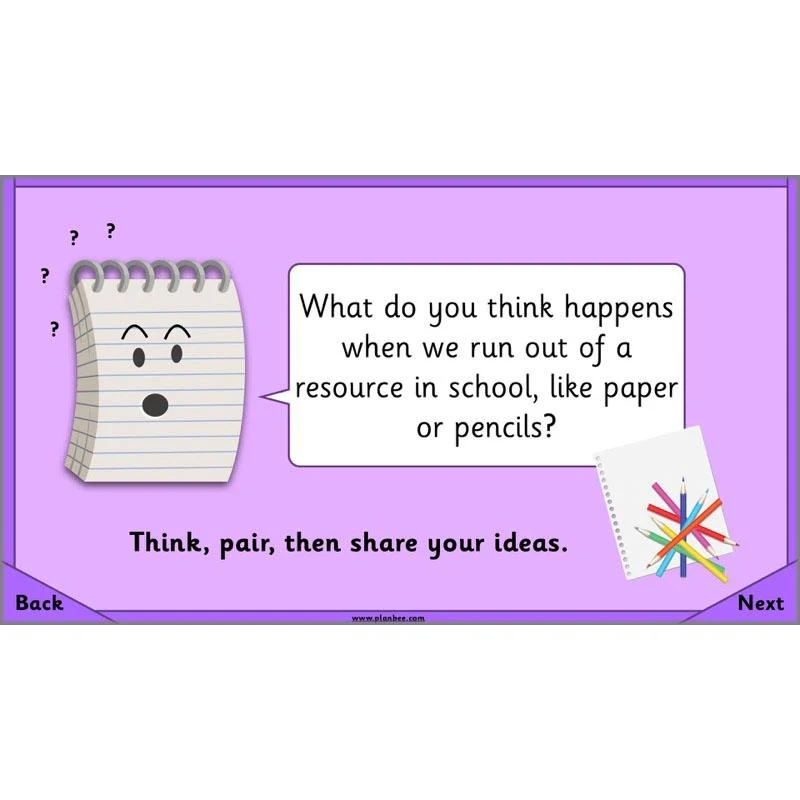
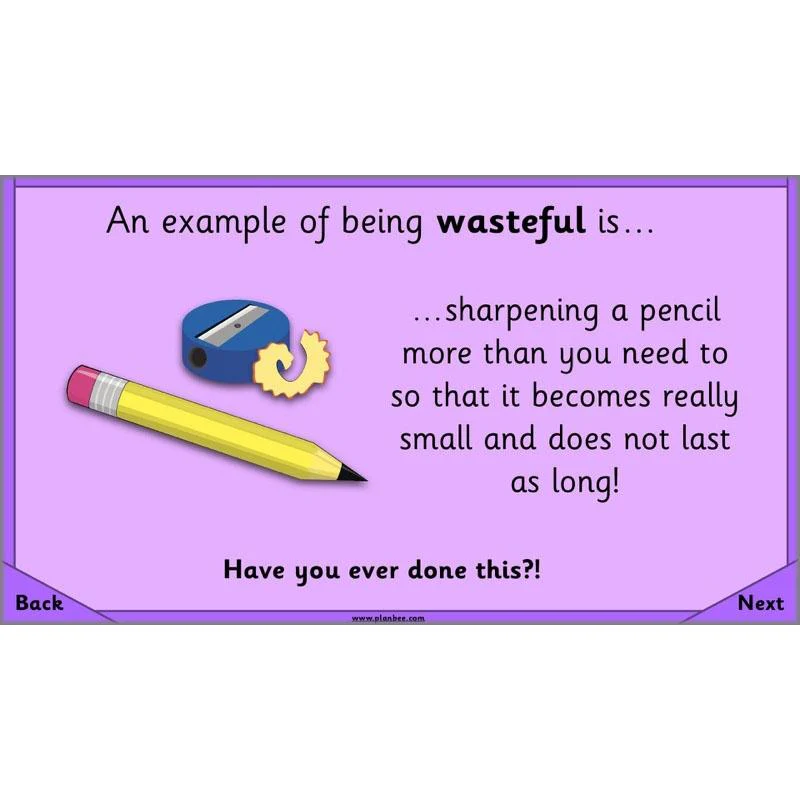
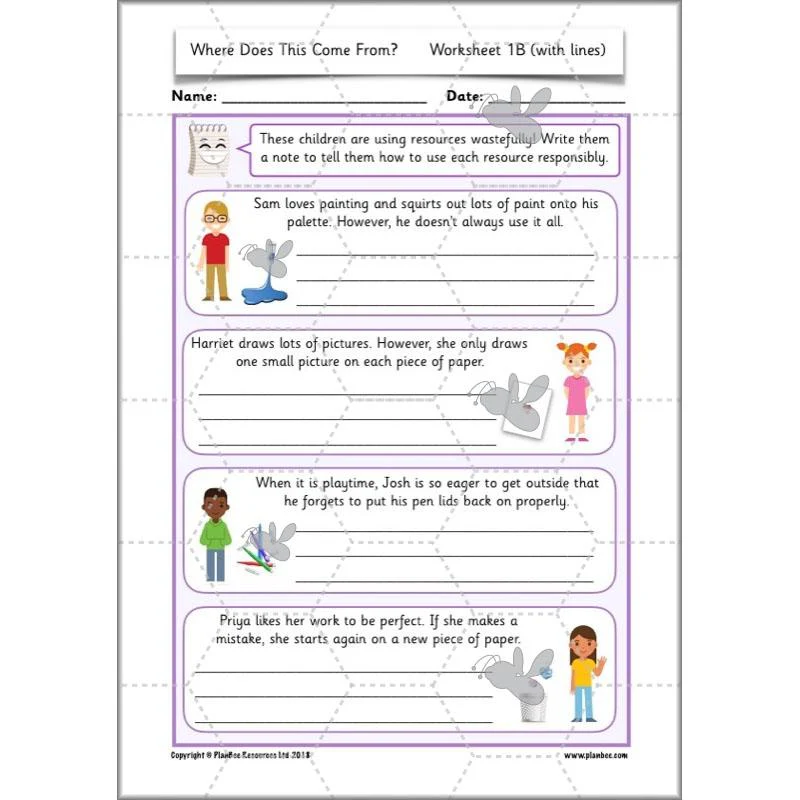
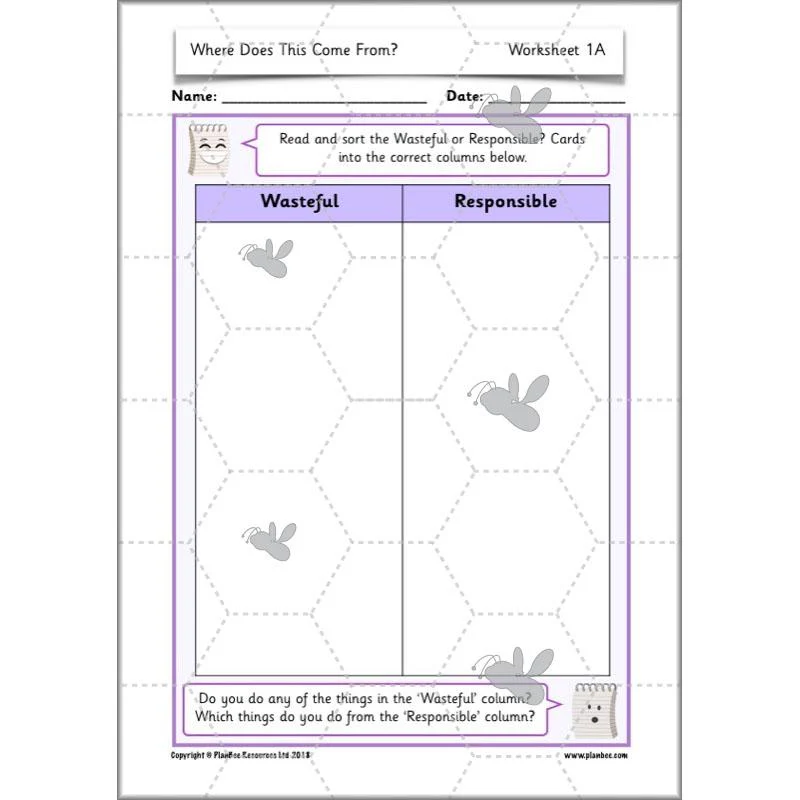
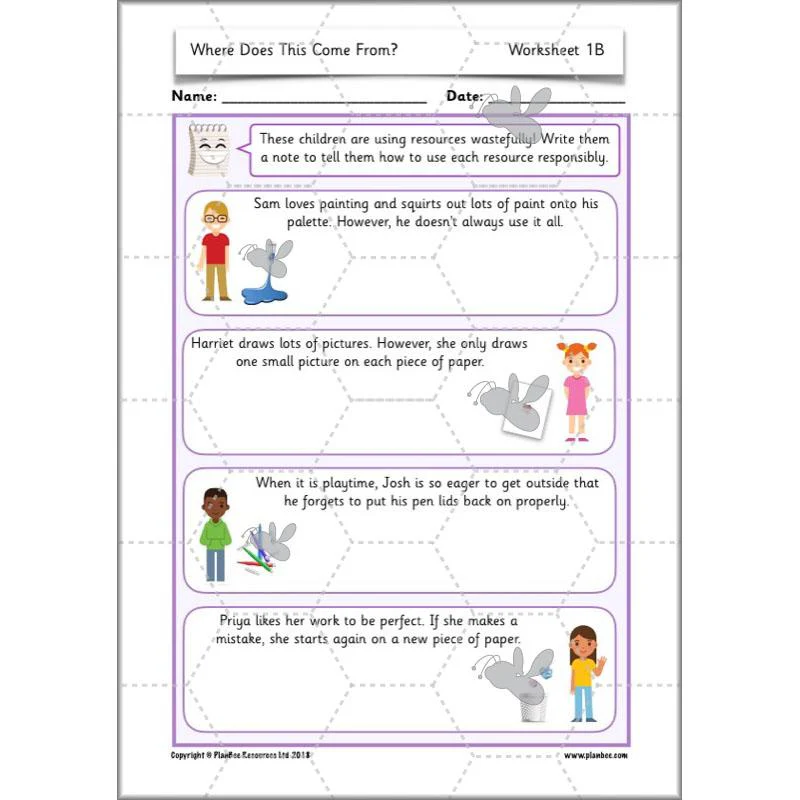
In this first lesson, children are asked to think about the different resources they use in their classroom, and whether they use them in a wasteful way or a responsible way. In their independent work, children identify wasteful and responsible uses of different resources. In the alternative activity, children choose a resource to be responsible for, and make a responsibility tie which they then wear to remind everyone that they need to use this resource responsibly.
This downloadable lesson includes a lesson plan, a slideshow presentation and printable teaching resources.
What's included:
- Lesson plan
- Slides
- Activity ideas
- Differentiated worksheets
- Wasteful or Responsible? Cards
- Responsibility Tie Template
Paper
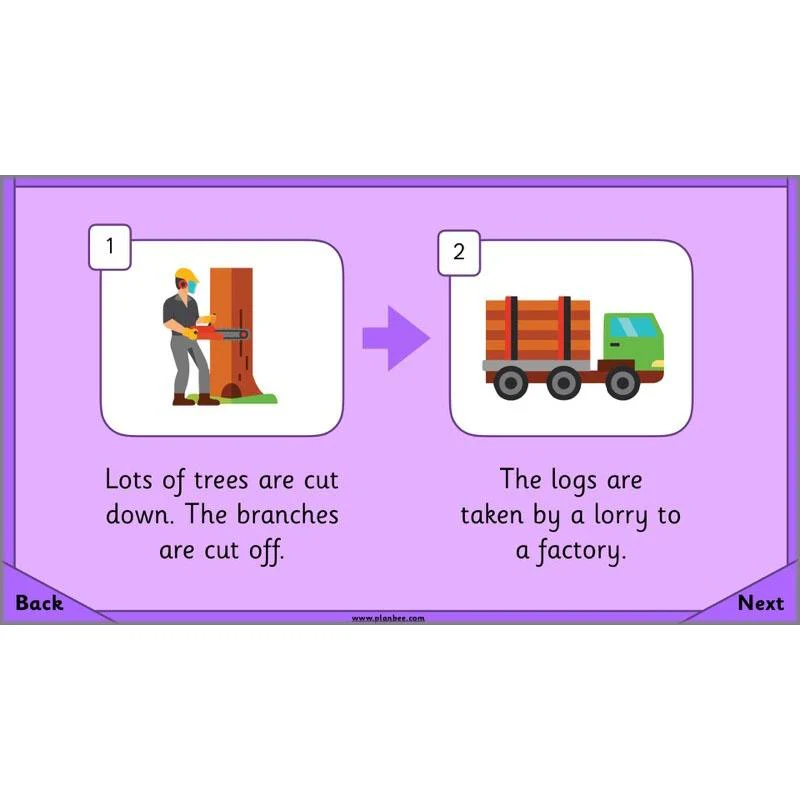
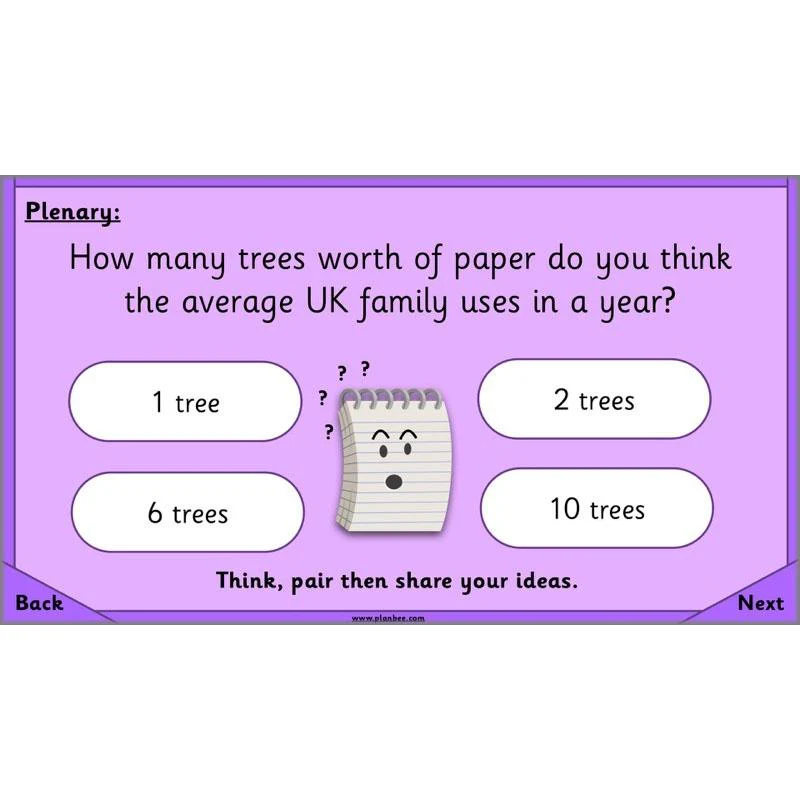
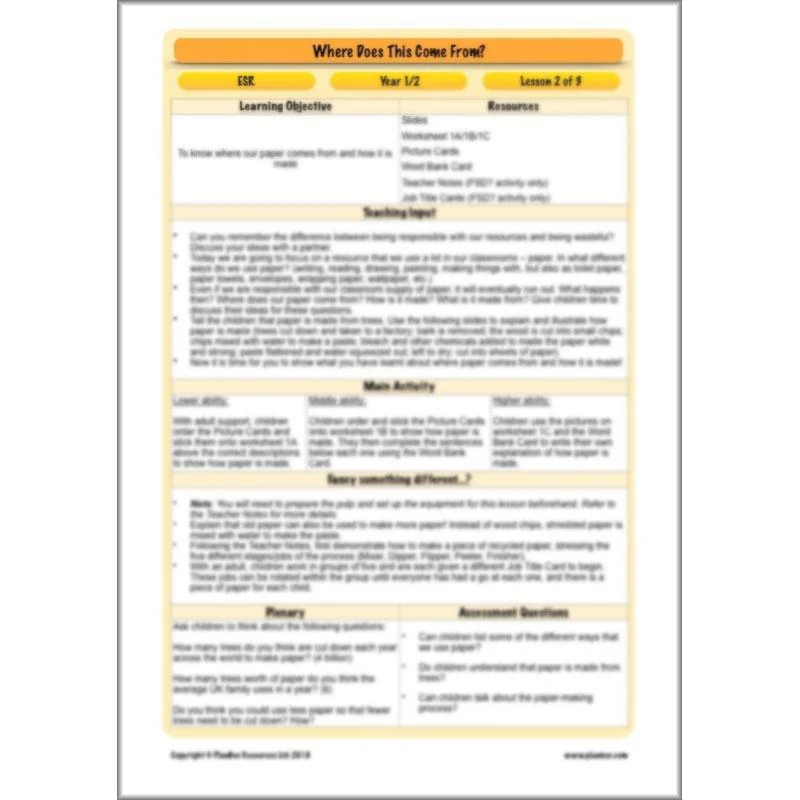
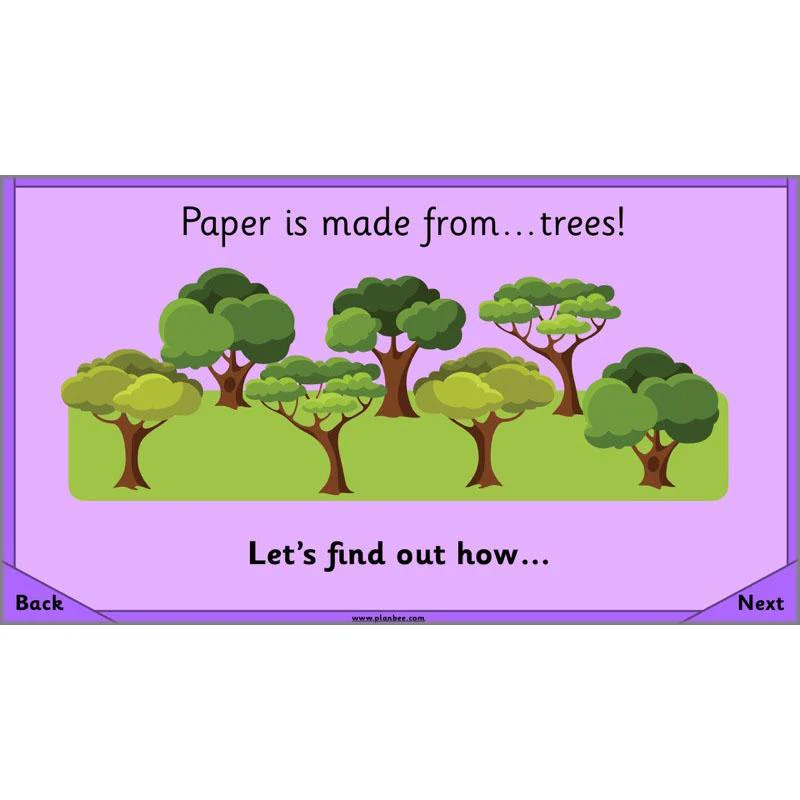
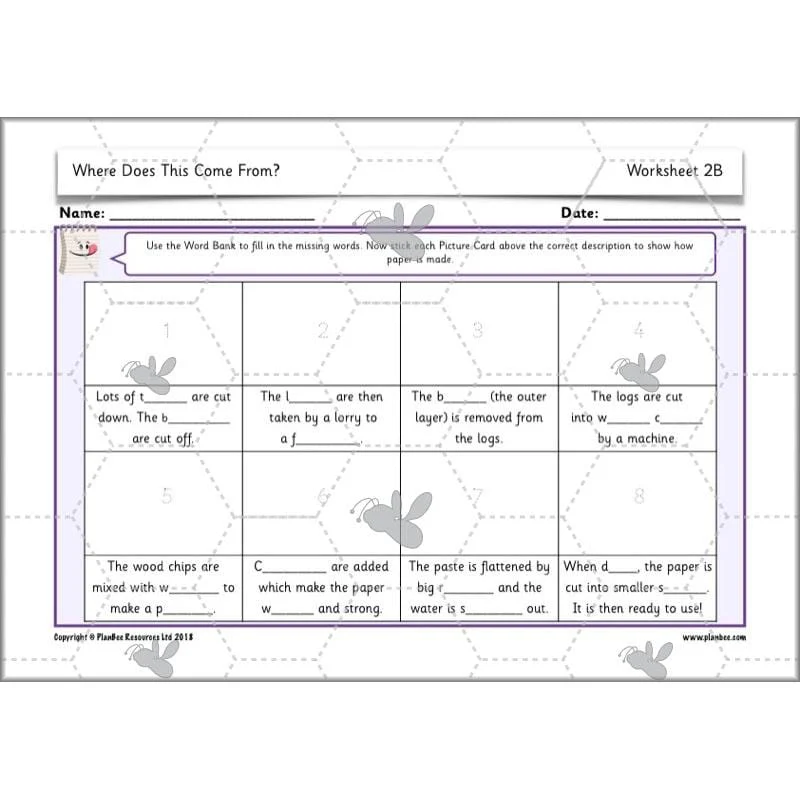
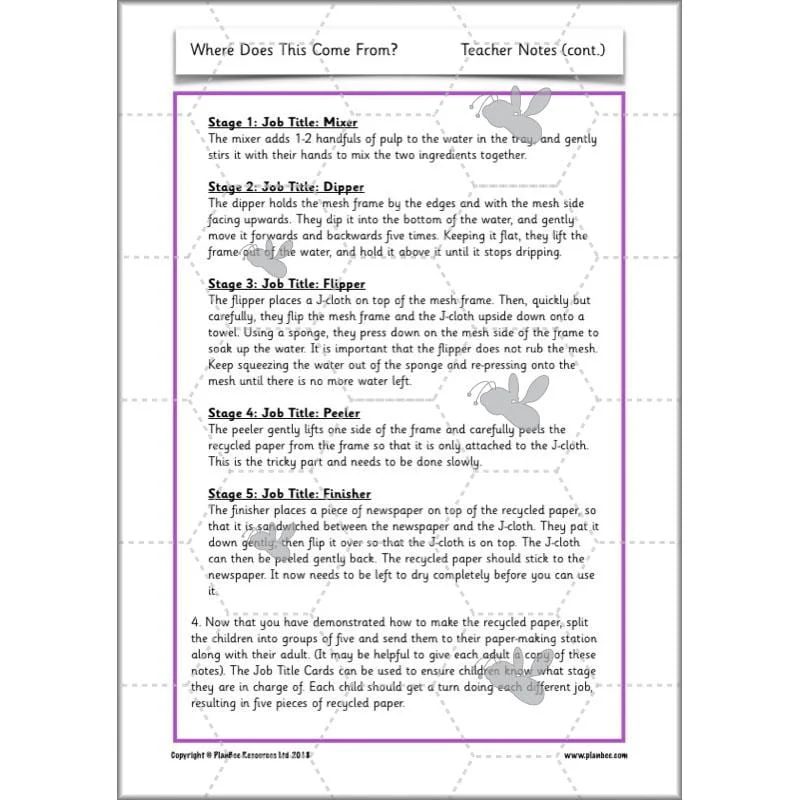
Children are encouraged to think about where paper comes from, and how it is made. They then look at the different steps involved in the paper-making process. In their independent work, children show their understanding of how paper is made by ordering, matching and writing explanations for pictures. In the FSD? activity, children are given the chance to make their own recycled paper.
This downloadable lesson includes a lesson plan, a slideshow presentation and printable teaching resources.
What's included:
- Lesson plan
- Slides
- Activity ideas
- Differentiated worksheets
- Picture Cards
- Word Bank Cards
- Teacher Notes
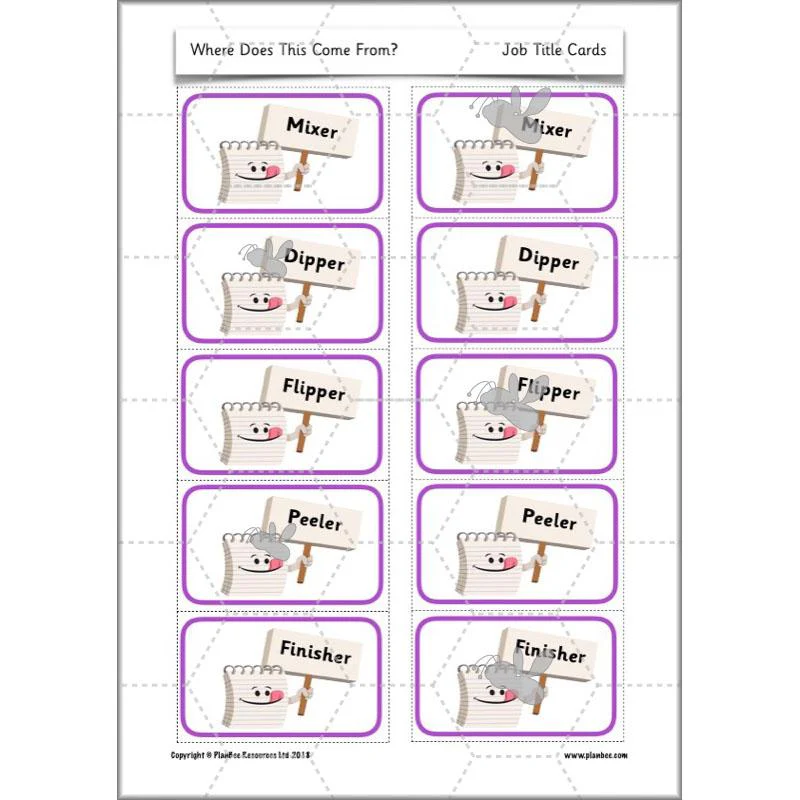
- Job Title Cards
Reuse and Recycle
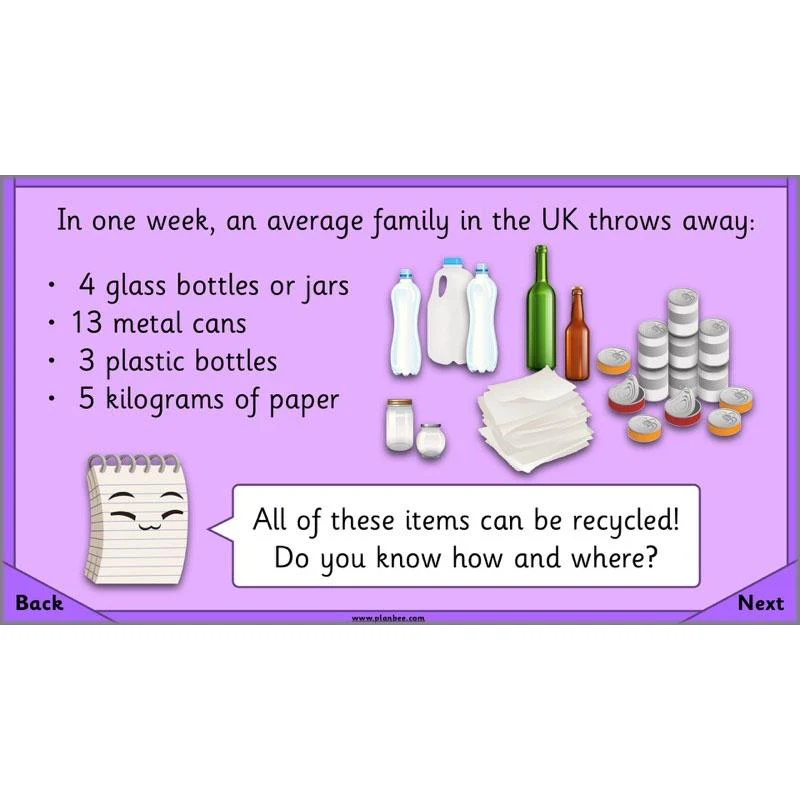
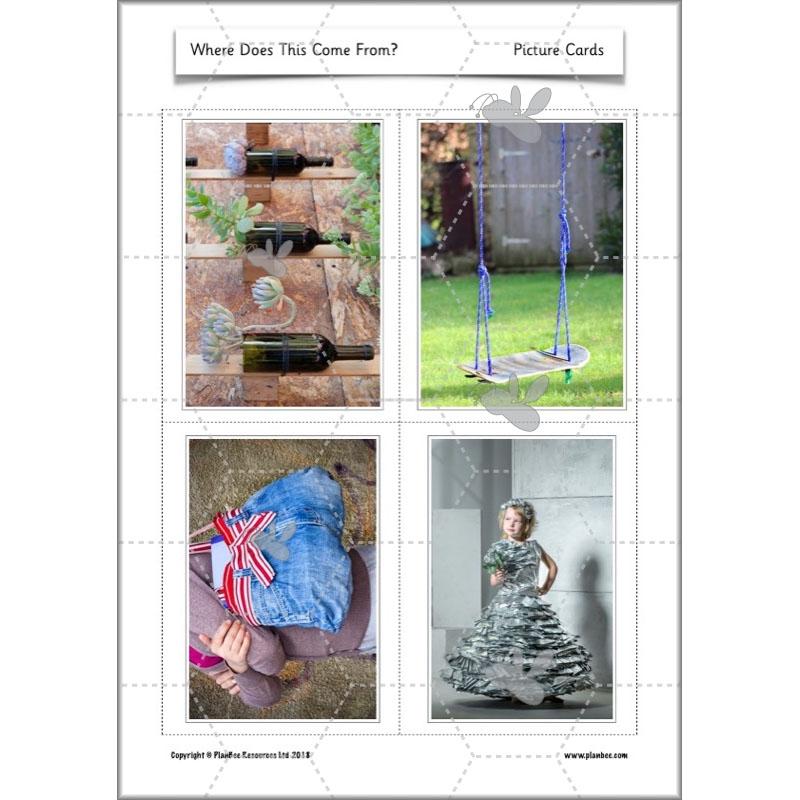
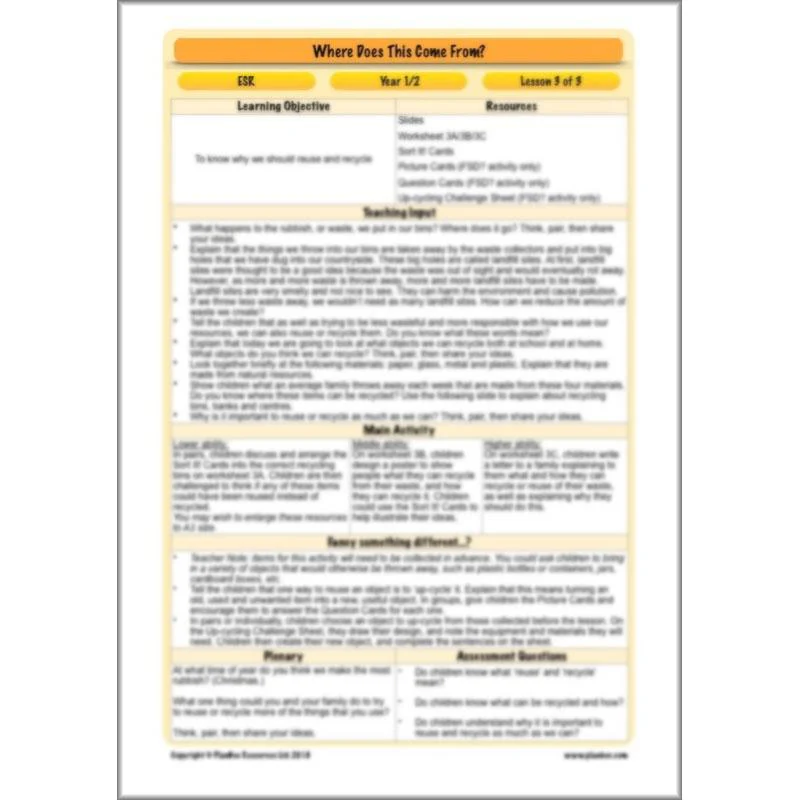
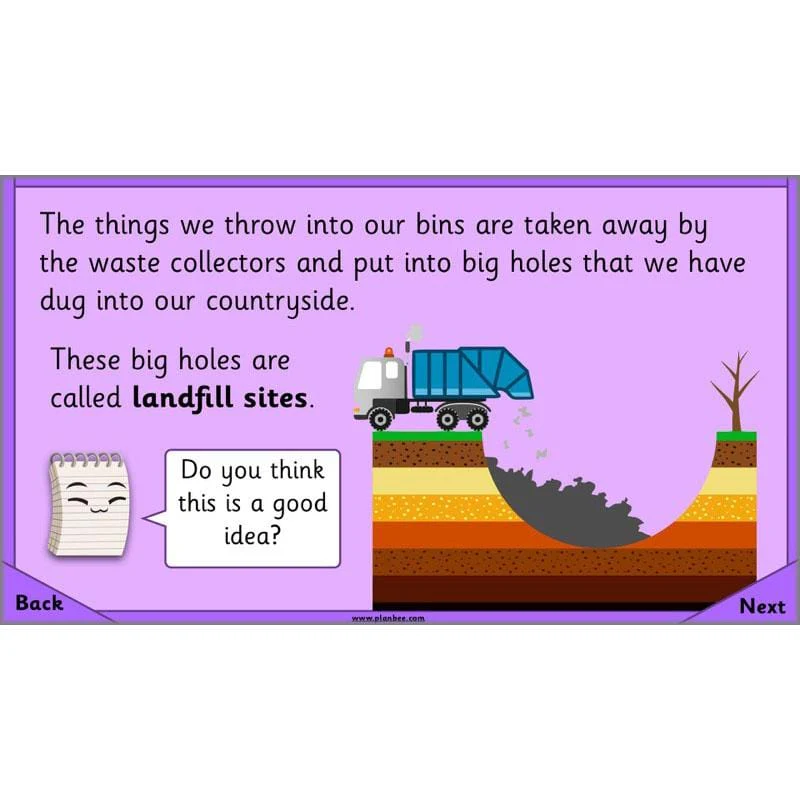
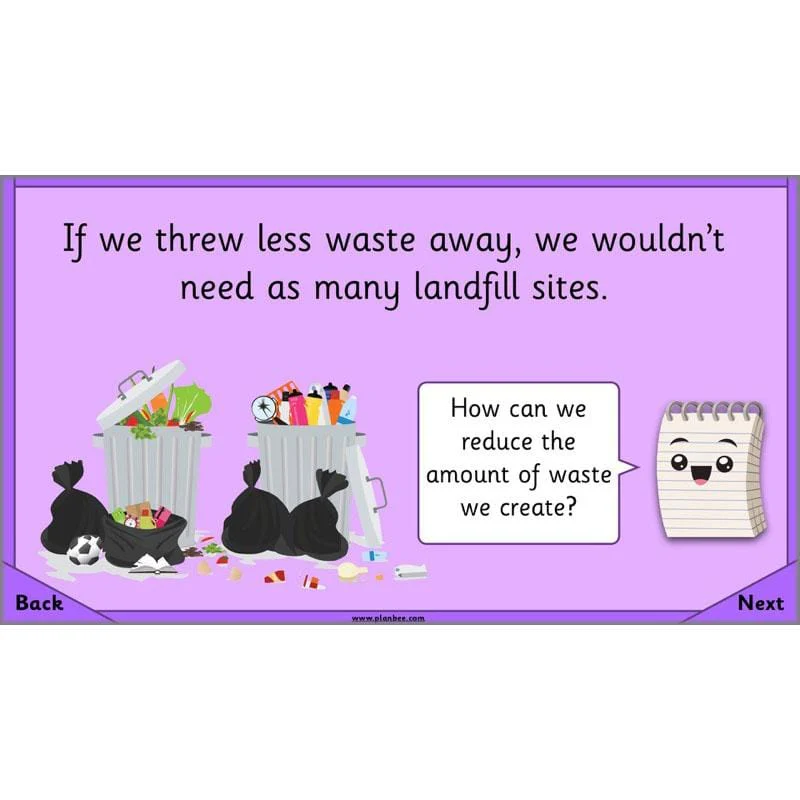
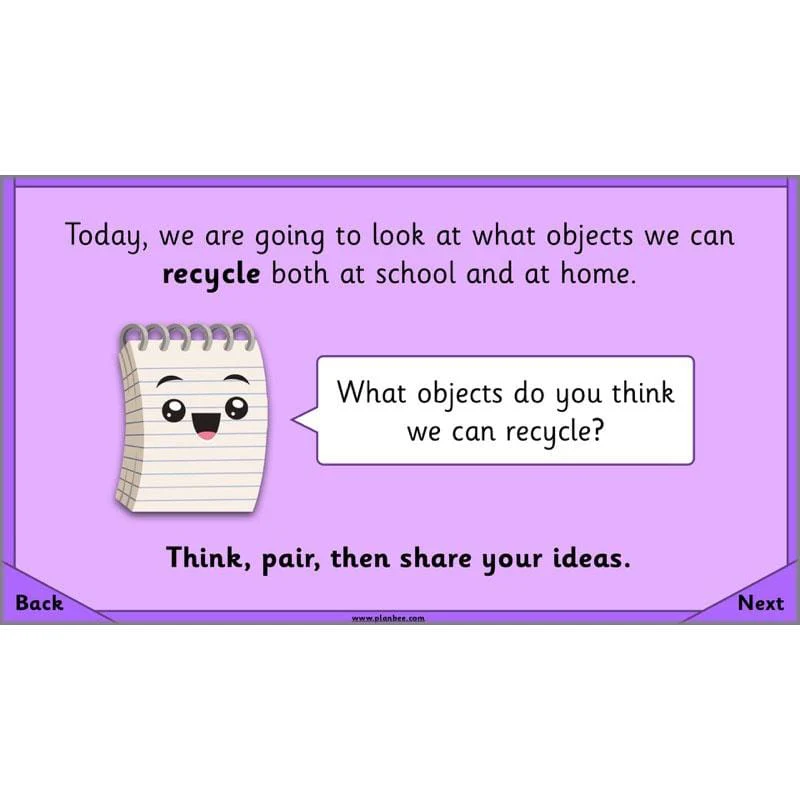
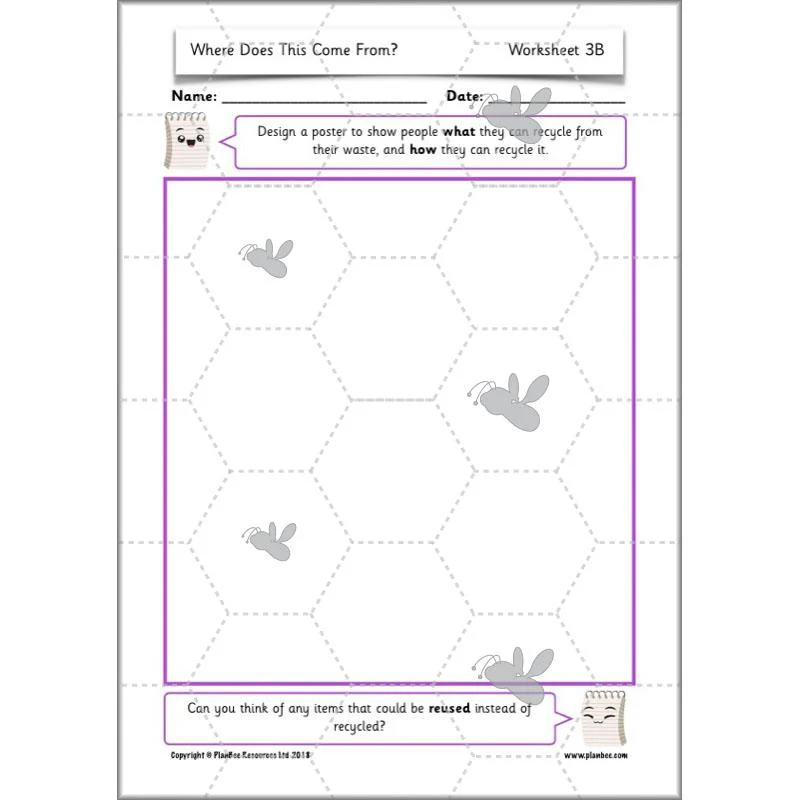
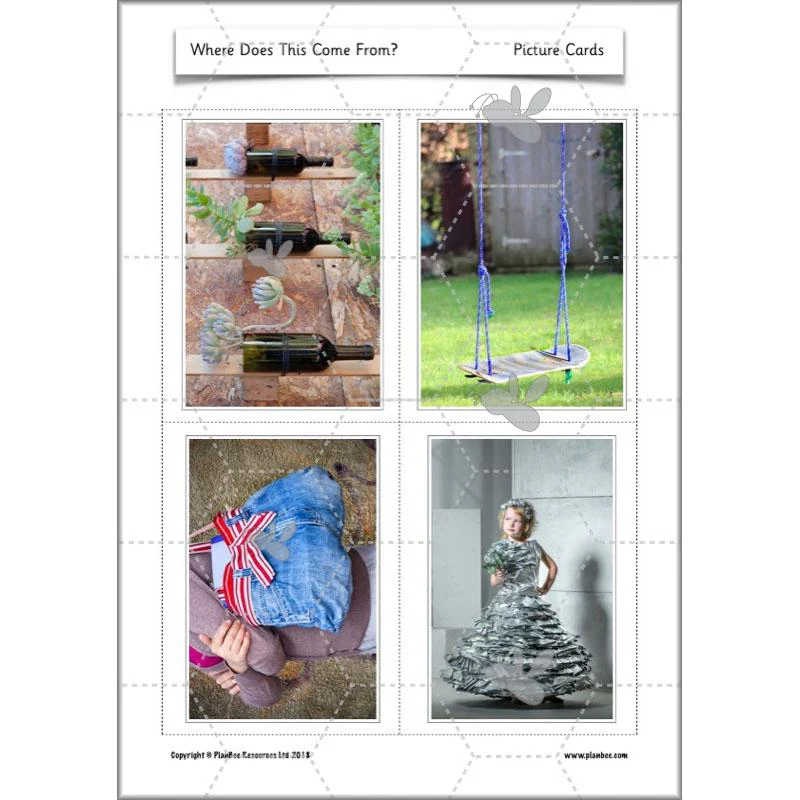
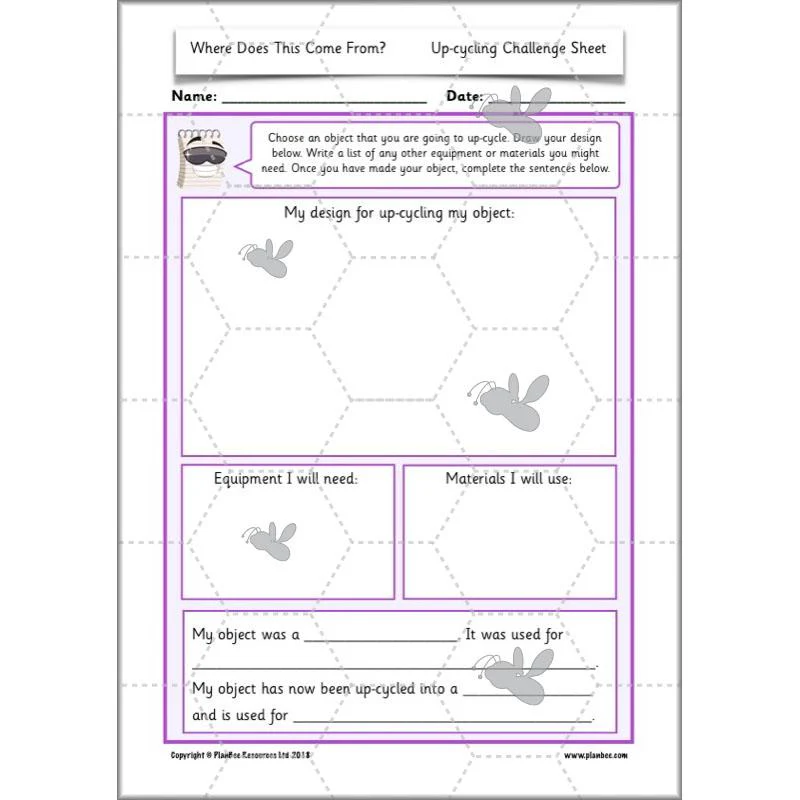
In this lesson, children find out what happens to the rubbish we throw away. They learn that we can try to reduce the amount we discard by reusing and recycling as much as we can. In their independent activities, children sort, show or explain how objects made from different materials can be recycled. In the alternative activity, children are challenged to up-cycle a used object.
This downloadable lesson includes a lesson plan, a slideshow presentation and printable teaching resources.
What's included:
- Lesson plan
- Slides
- Activity ideas
- Differentiated worksheets
- Sort It! Cards
- Picture Cards
- Question Cards
- Up-cycling Challenge Sheet
Original: $4.71
-65%$4.71
$1.65More Images








Where Does This Come From?
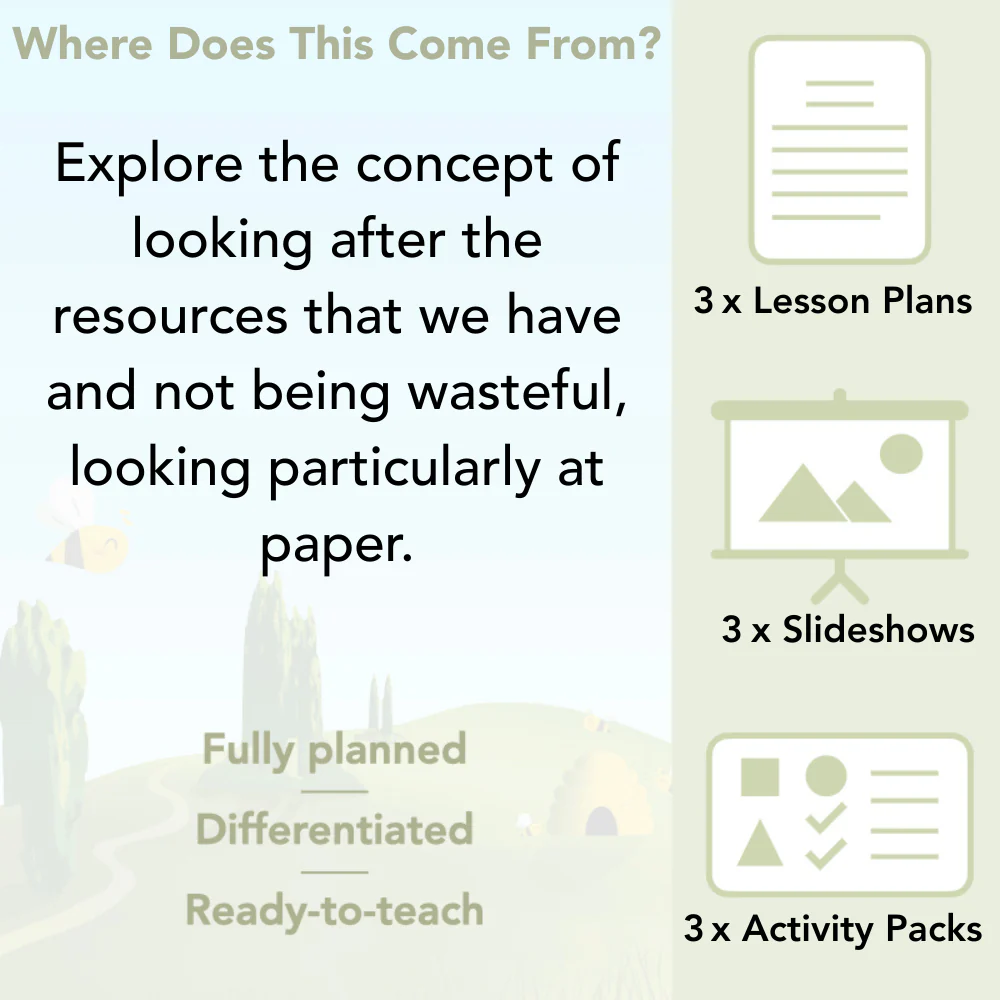
This 'Where Does This Come From?' scheme of work for Year 1 and 2 begins by encouraging your class to think about whether they are using resources responsibly or wastefully. They will then explore where paper comes from and how it is made, before learning how important it is to reduce the amount of waste we create by reusing and recycling as much as we can.
Including lesson plans, engaging slide shows for the teaching input, differentiated activities and a range of printable resources, this 'Where Does this Come From?' scheme of work encourages your class to think about where their resources come from, and how to recycle and use them in a more responsible way.
Using Resources Responsibly
In this first lesson, children are asked to think about the different resources they use in their classroom, and whether they use them in a wasteful way or a responsible way. In their independent work, children identify wasteful and responsible uses of different resources. In the alternative activity, children choose a resource to be responsible for, and make a responsibility tie which they then wear to remind everyone that they need to use this resource responsibly.
This downloadable lesson includes a lesson plan, a slideshow presentation and printable teaching resources.
What's included:
- Lesson plan
- Slides
- Activity ideas
- Differentiated worksheets
- Wasteful or Responsible? Cards
- Responsibility Tie Template
Paper
Children are encouraged to think about where paper comes from, and how it is made. They then look at the different steps involved in the paper-making process. In their independent work, children show their understanding of how paper is made by ordering, matching and writing explanations for pictures. In the FSD? activity, children are given the chance to make their own recycled paper.
This downloadable lesson includes a lesson plan, a slideshow presentation and printable teaching resources.
What's included:
- Lesson plan
- Slides
- Activity ideas
- Differentiated worksheets
- Picture Cards
- Word Bank Cards
- Teacher Notes
- Job Title Cards
Reuse and Recycle
In this lesson, children find out what happens to the rubbish we throw away. They learn that we can try to reduce the amount we discard by reusing and recycling as much as we can. In their independent activities, children sort, show or explain how objects made from different materials can be recycled. In the alternative activity, children are challenged to up-cycle a used object.
This downloadable lesson includes a lesson plan, a slideshow presentation and printable teaching resources.
What's included:
- Lesson plan
- Slides
- Activity ideas
- Differentiated worksheets
- Sort It! Cards
- Picture Cards
- Question Cards
- Up-cycling Challenge Sheet
Product Information
Product Information
Shipping & Returns
Shipping & Returns
Description
This 'Where Does This Come From?' scheme of work for Year 1 and 2 begins by encouraging your class to think about whether they are using resources responsibly or wastefully. They will then explore where paper comes from and how it is made, before learning how important it is to reduce the amount of waste we create by reusing and recycling as much as we can.
Including lesson plans, engaging slide shows for the teaching input, differentiated activities and a range of printable resources, this 'Where Does this Come From?' scheme of work encourages your class to think about where their resources come from, and how to recycle and use them in a more responsible way.
Using Resources Responsibly
In this first lesson, children are asked to think about the different resources they use in their classroom, and whether they use them in a wasteful way or a responsible way. In their independent work, children identify wasteful and responsible uses of different resources. In the alternative activity, children choose a resource to be responsible for, and make a responsibility tie which they then wear to remind everyone that they need to use this resource responsibly.
This downloadable lesson includes a lesson plan, a slideshow presentation and printable teaching resources.
What's included:
- Lesson plan
- Slides
- Activity ideas
- Differentiated worksheets
- Wasteful or Responsible? Cards
- Responsibility Tie Template
Paper
Children are encouraged to think about where paper comes from, and how it is made. They then look at the different steps involved in the paper-making process. In their independent work, children show their understanding of how paper is made by ordering, matching and writing explanations for pictures. In the FSD? activity, children are given the chance to make their own recycled paper.
This downloadable lesson includes a lesson plan, a slideshow presentation and printable teaching resources.
What's included:
- Lesson plan
- Slides
- Activity ideas
- Differentiated worksheets
- Picture Cards
- Word Bank Cards
- Teacher Notes
- Job Title Cards
Reuse and Recycle
In this lesson, children find out what happens to the rubbish we throw away. They learn that we can try to reduce the amount we discard by reusing and recycling as much as we can. In their independent activities, children sort, show or explain how objects made from different materials can be recycled. In the alternative activity, children are challenged to up-cycle a used object.
This downloadable lesson includes a lesson plan, a slideshow presentation and printable teaching resources.
What's included:
- Lesson plan
- Slides
- Activity ideas
- Differentiated worksheets
- Sort It! Cards
- Picture Cards
- Question Cards
- Up-cycling Challenge Sheet