Measuring Weight
This Year 4 'Measuring Weight' series of lessons is a great way of teaching your class everything they need to know about weight.
They will explore the different units of measurement used to measure weight and their relationships to each other, how to estimate the weights of different objects and how to check these estimates, as well as solving problems about weight and finding out some fascinating facts!
With lesson plans, informative slides, differentiated worksheets and more, these Year 4 'Measuring Weight' lessons provide all the resources you need to teach this fun and practical scheme of work, lifting the planning weight completely off your shoulders!
Grams and Kilograms
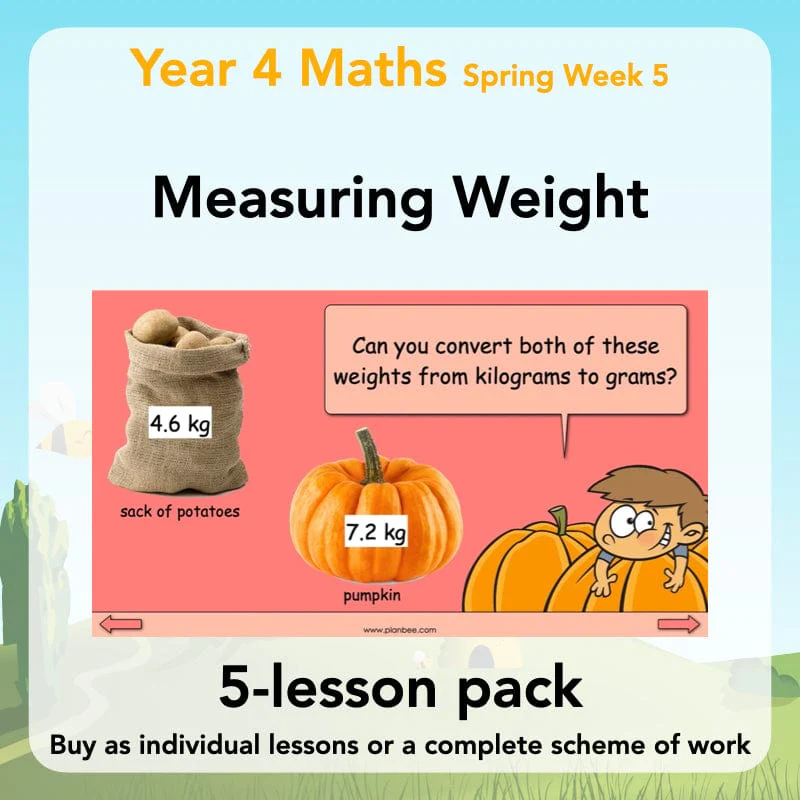
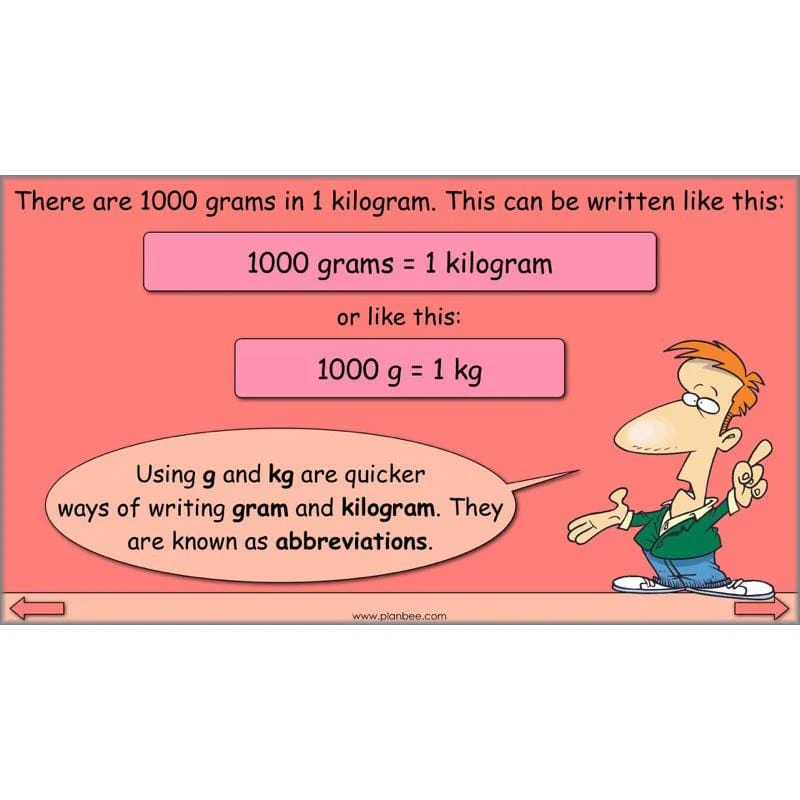
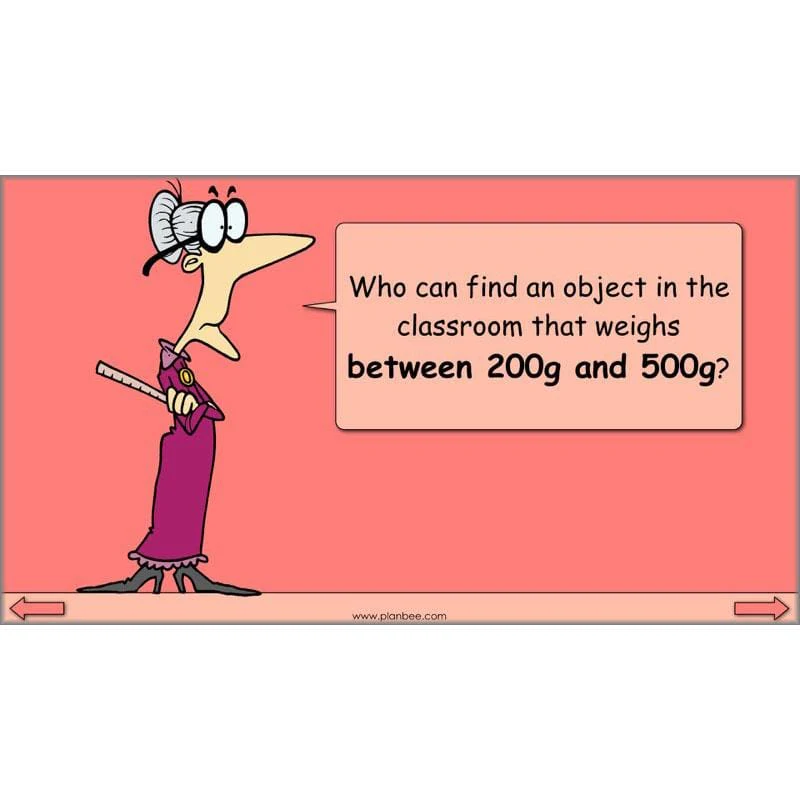
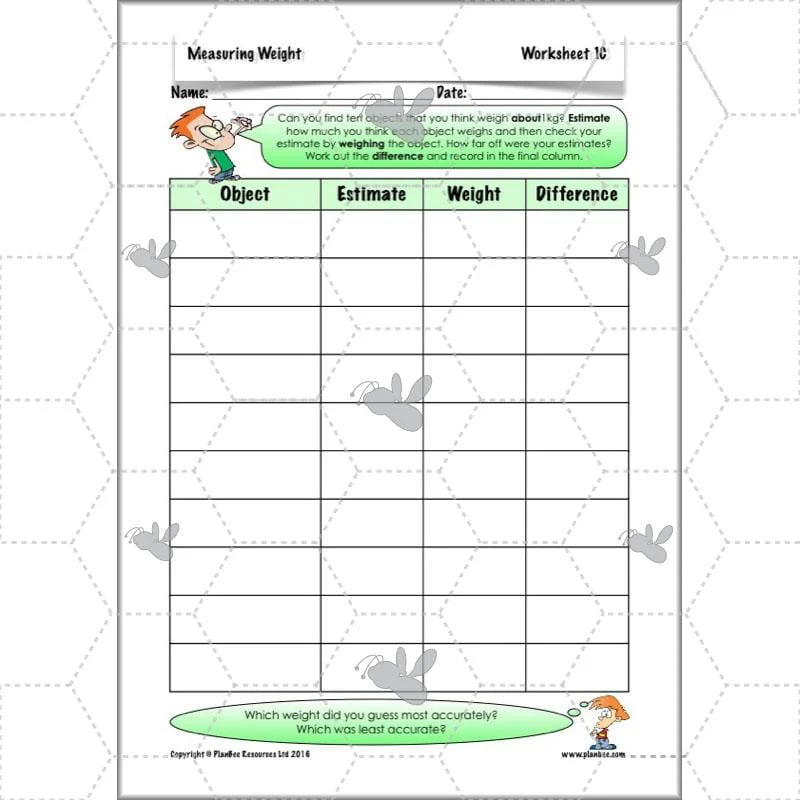
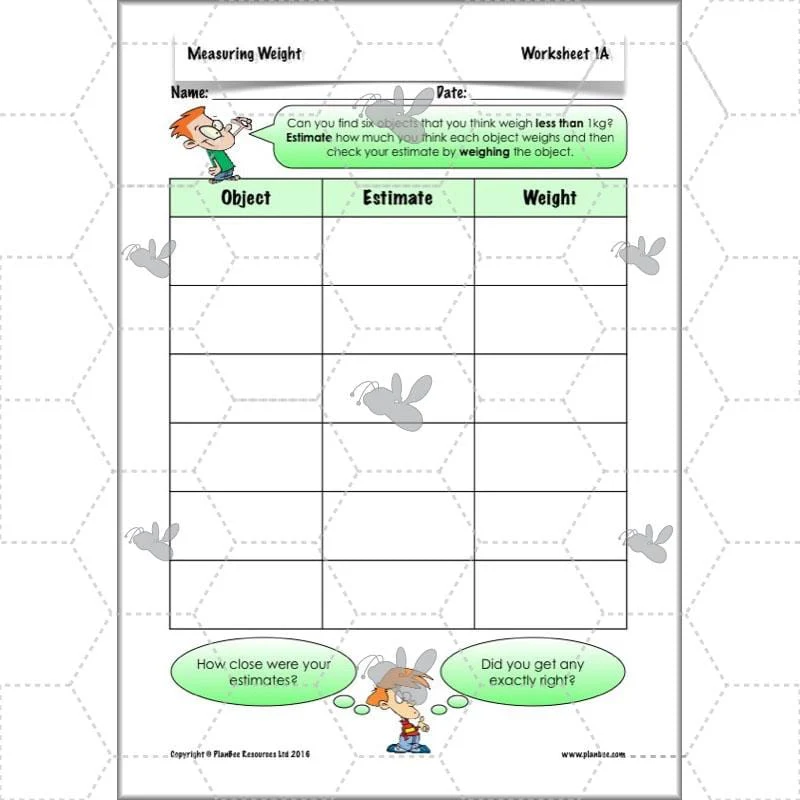
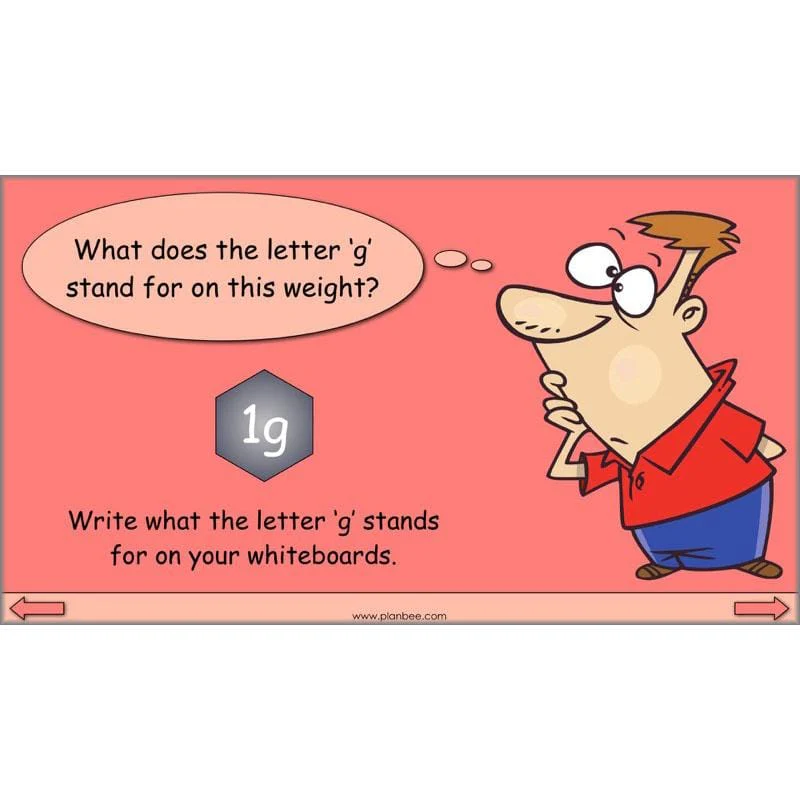
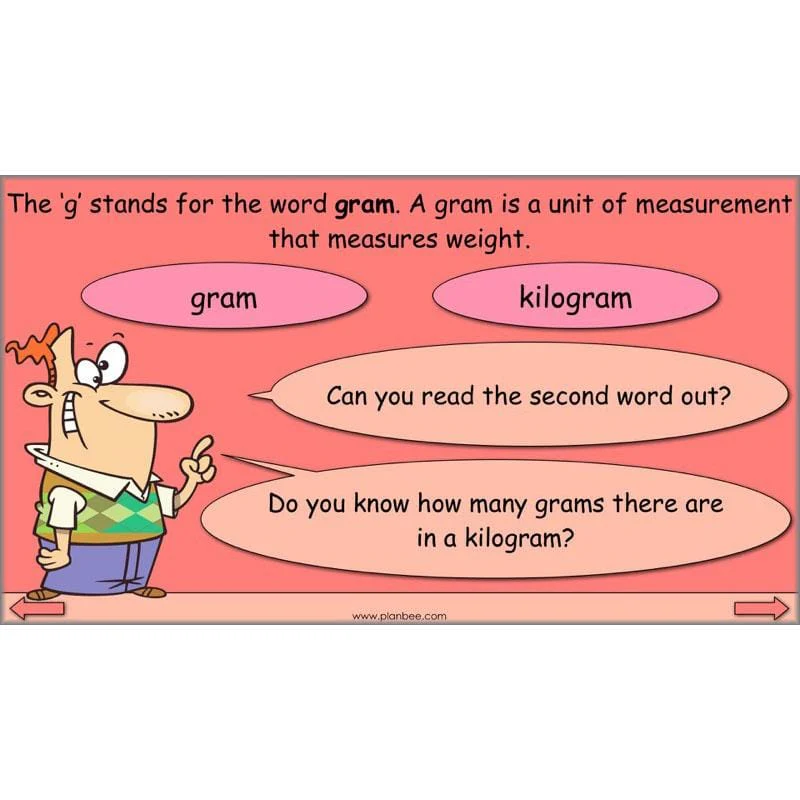
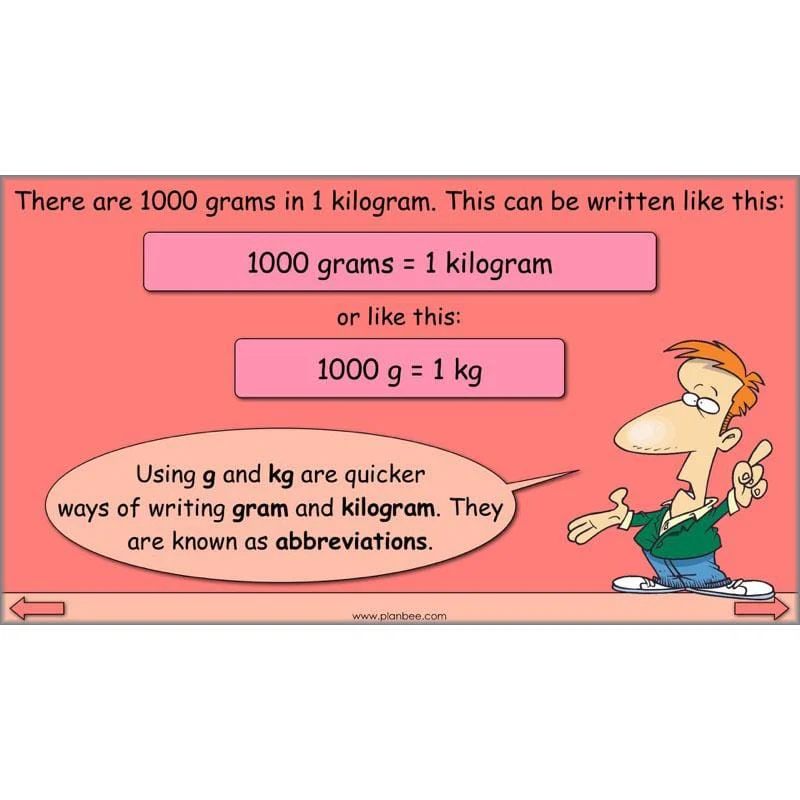
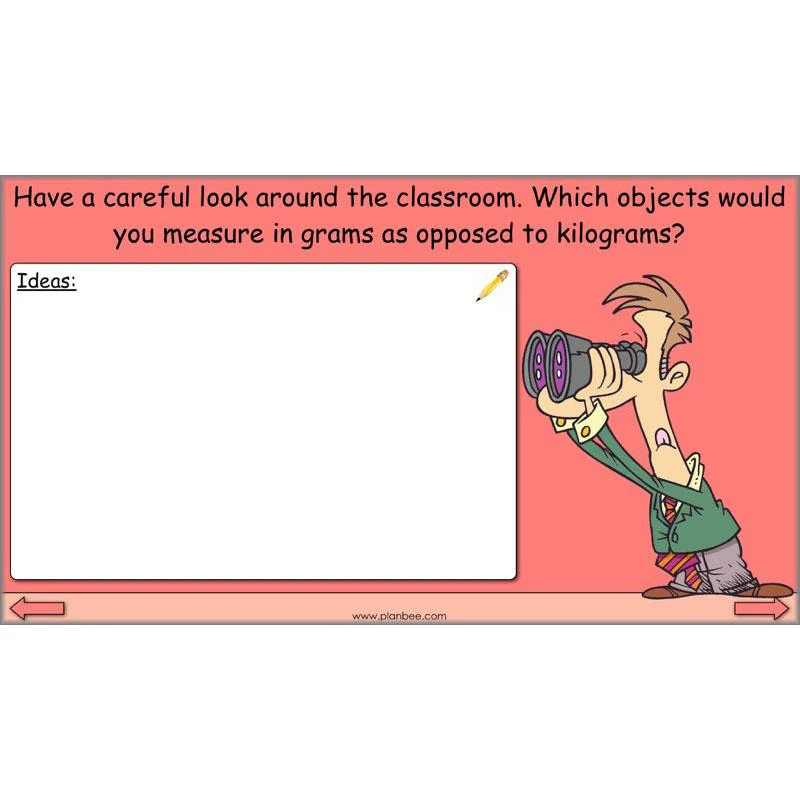
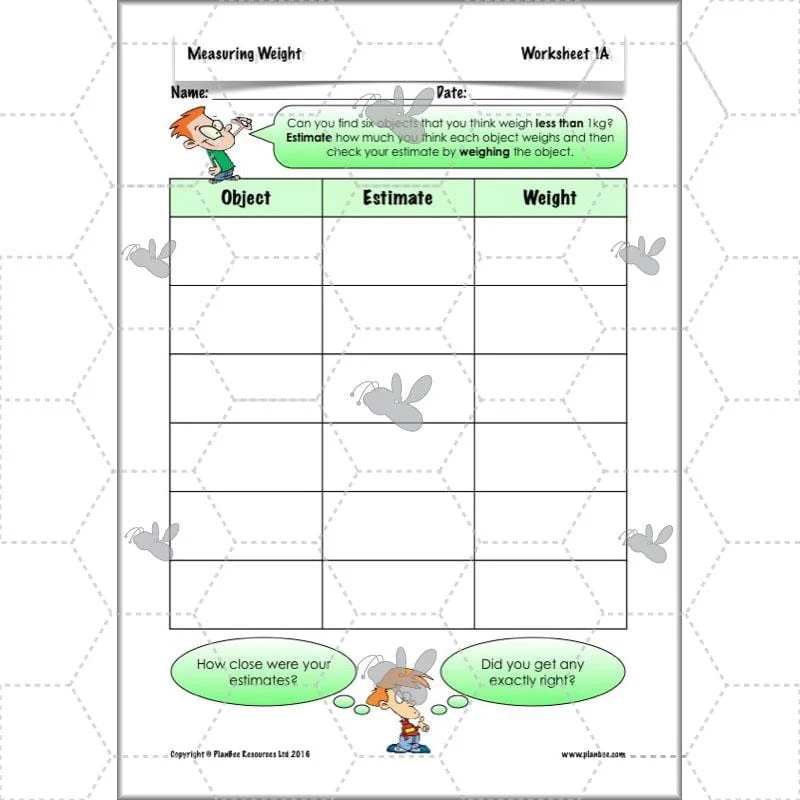
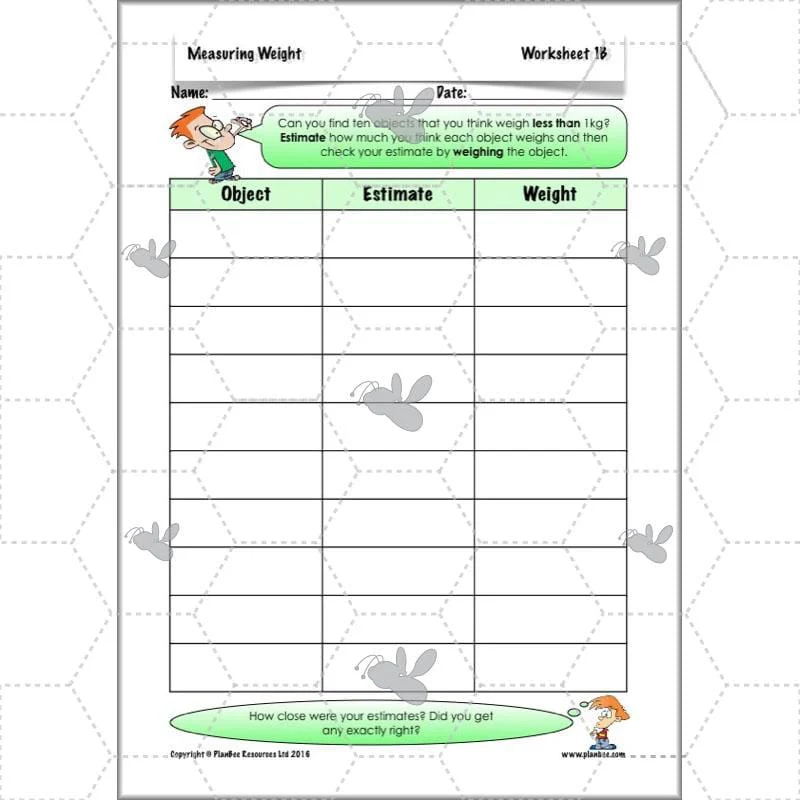
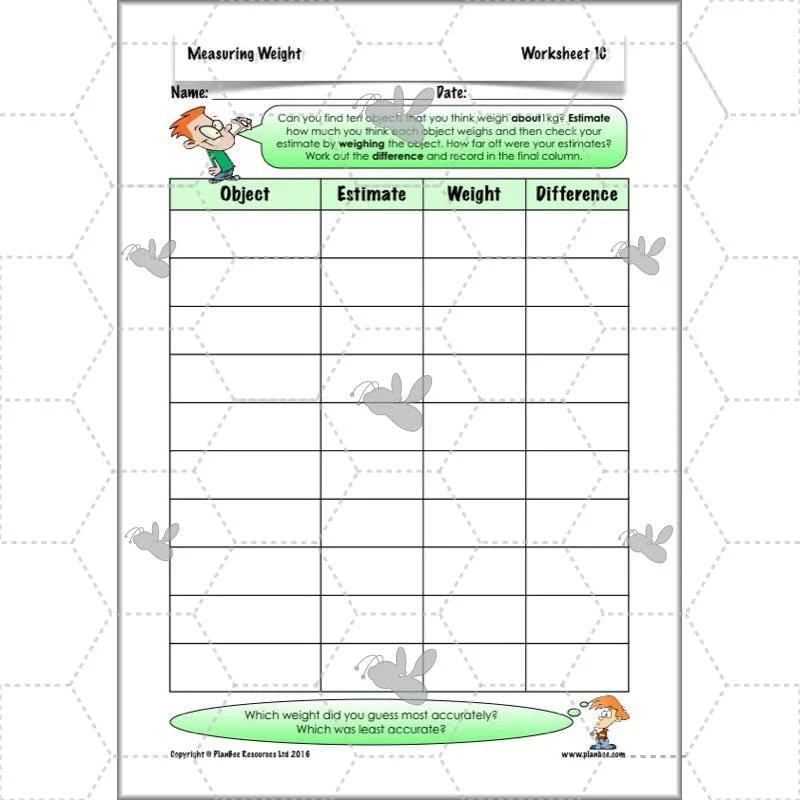
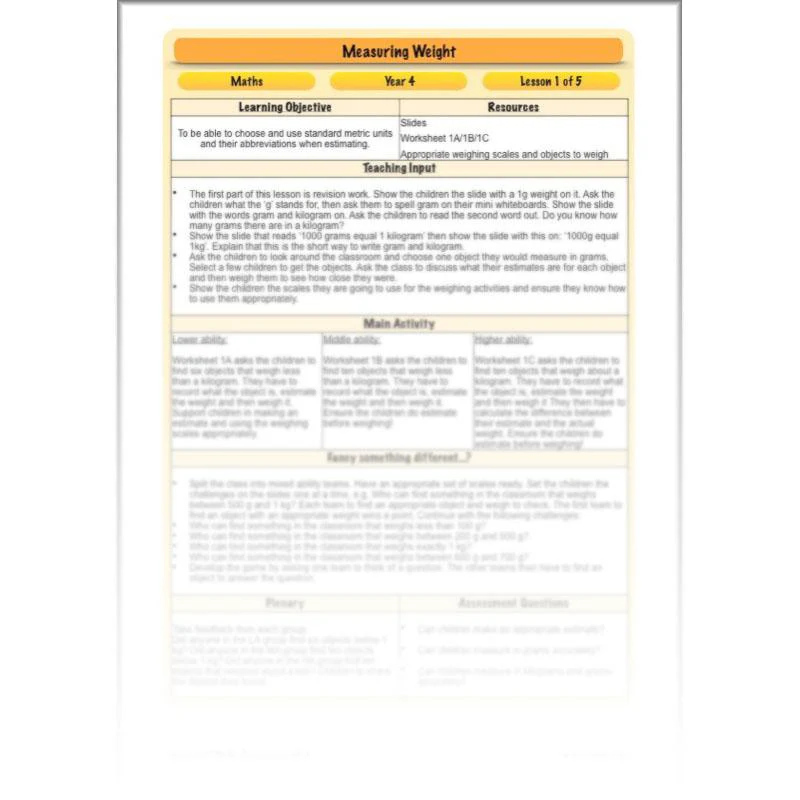
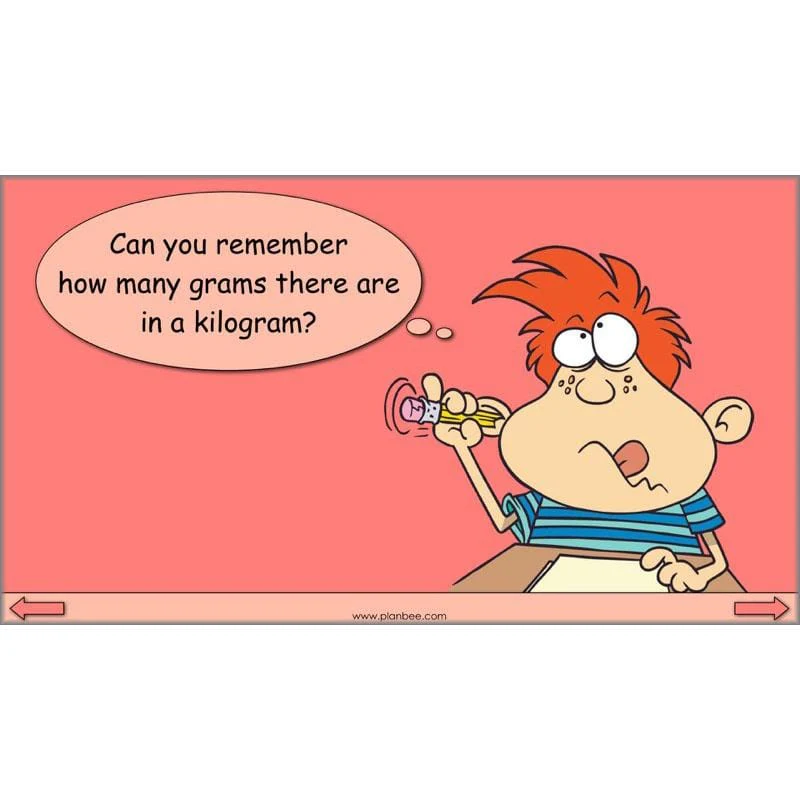
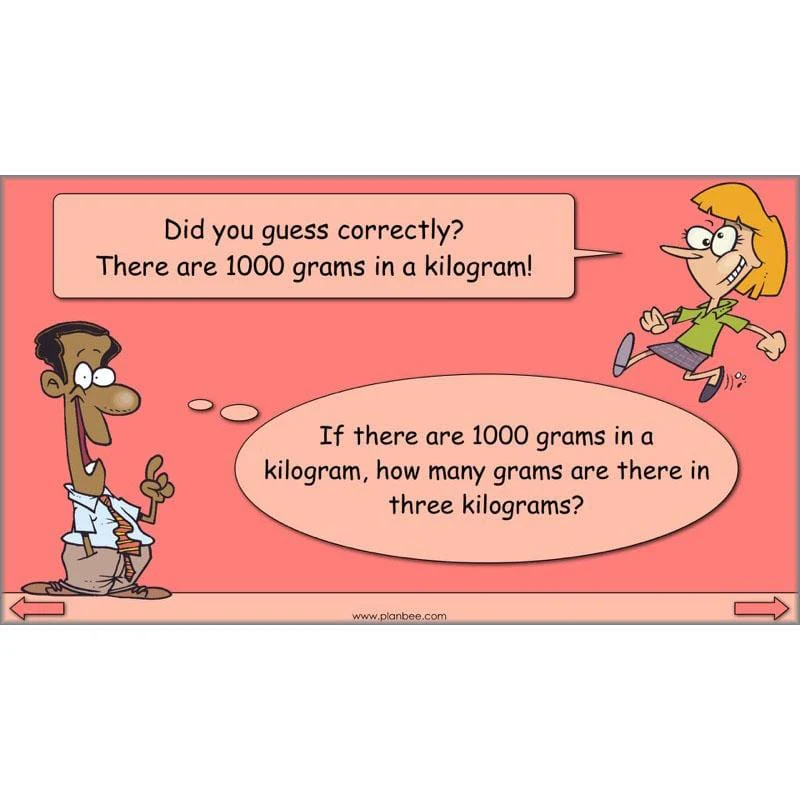
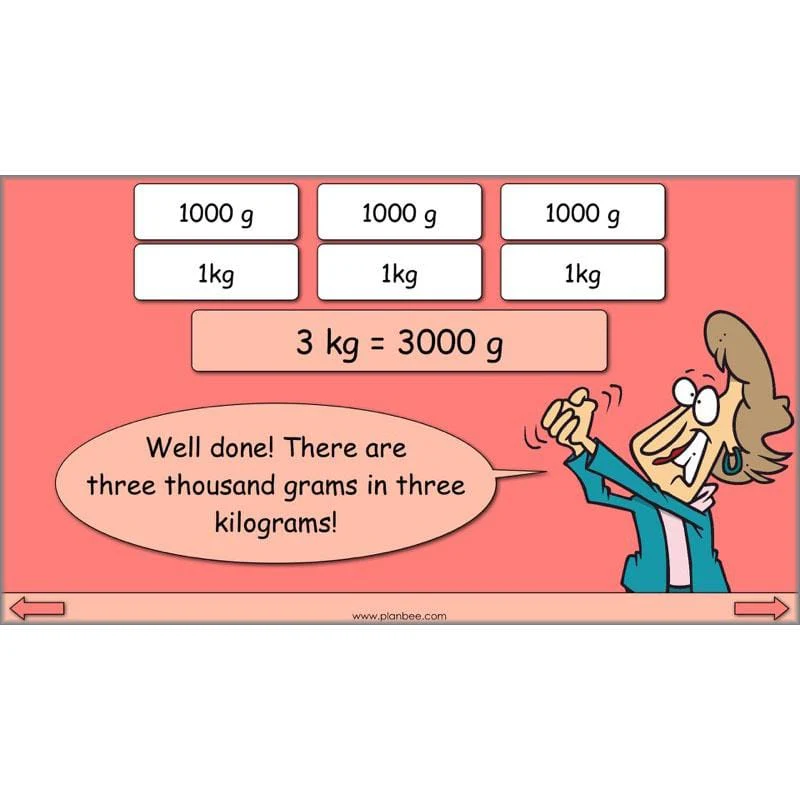
The first lesson in this series starts by looking at the relationship between kilograms and grams, and identifies their abbreviations. Children will then go on to consider objects around them that could (and should) be measured in grams or kilograms, before using a variety of objects to estimate and weigh, using the appropriate unit of measurement. The alternative activity has a team game that will challenge groups to find objects of particular weights before their rivals!
What's included:
- Lesson plan
- Slides
- Activity ideas
- Differentiated worksheets
View Lesson 1
Expressing Weights
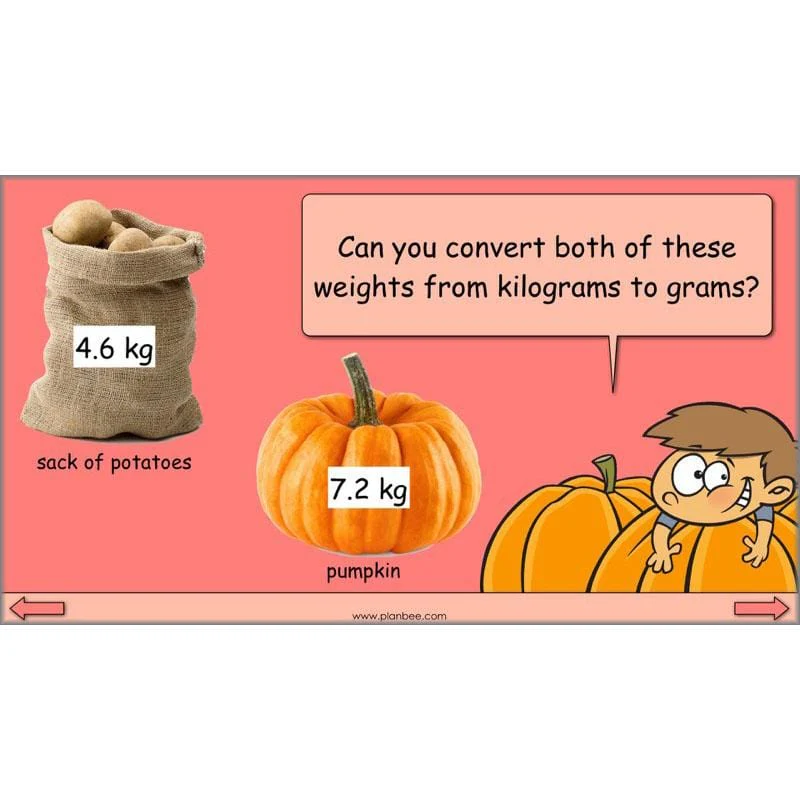
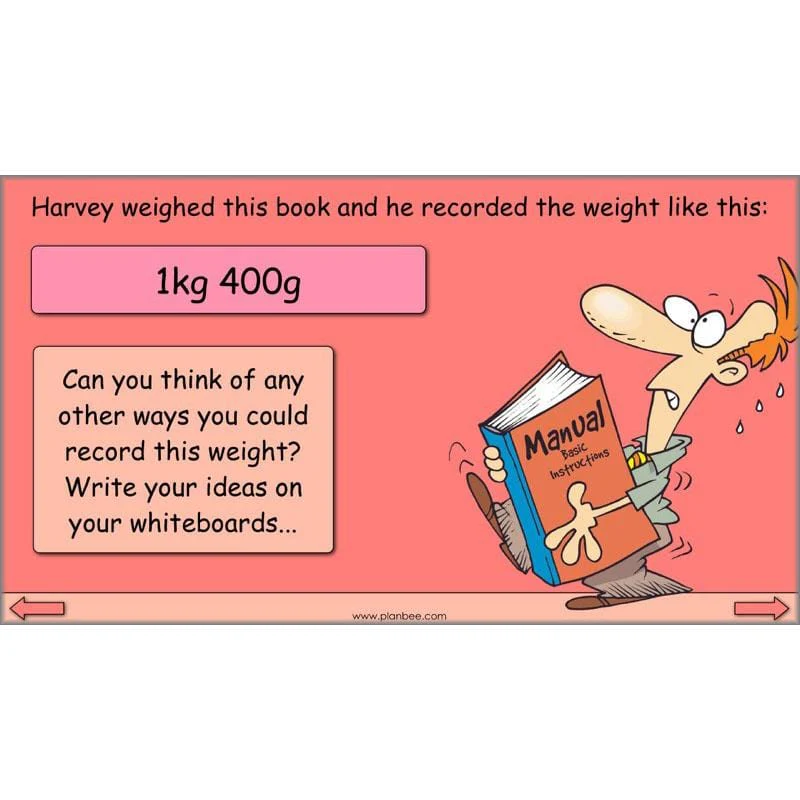
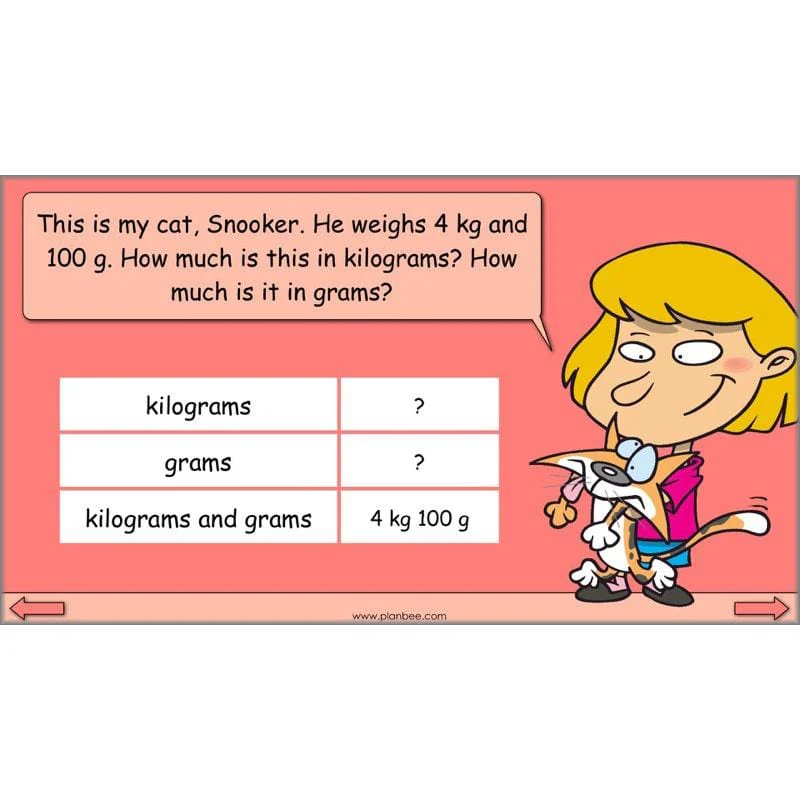
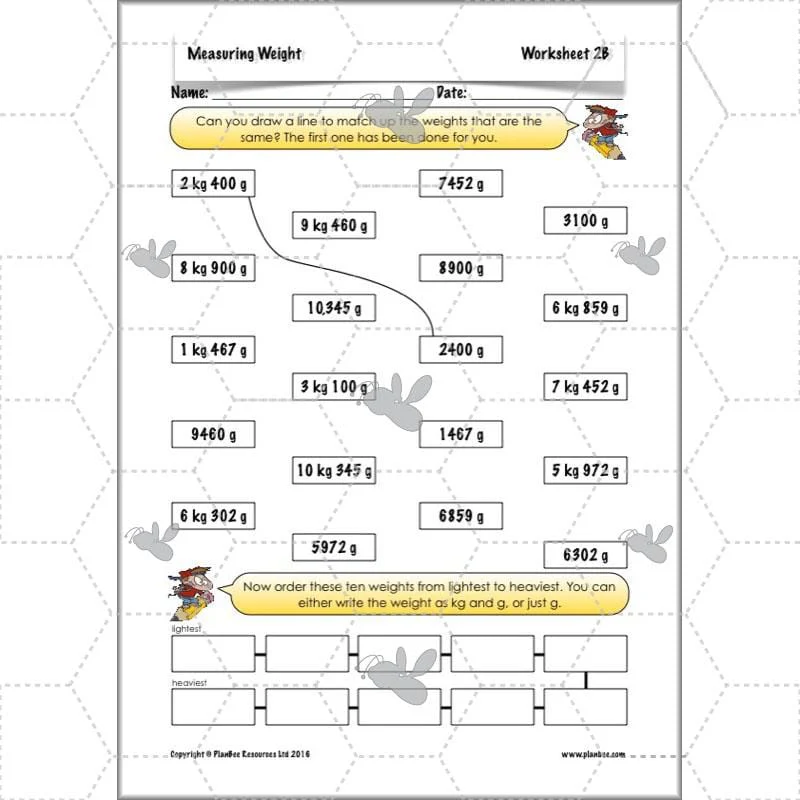
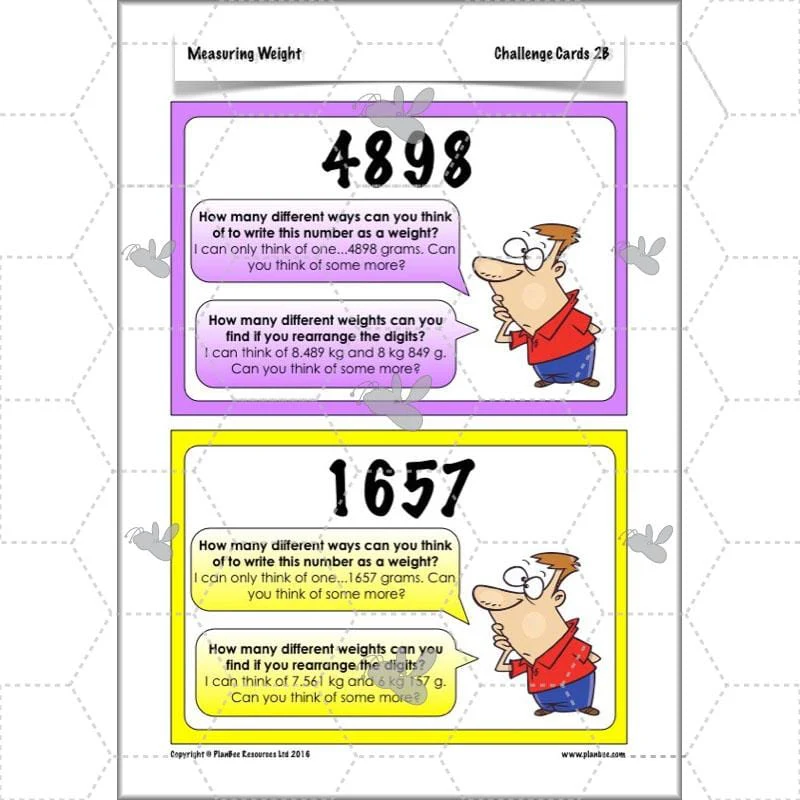
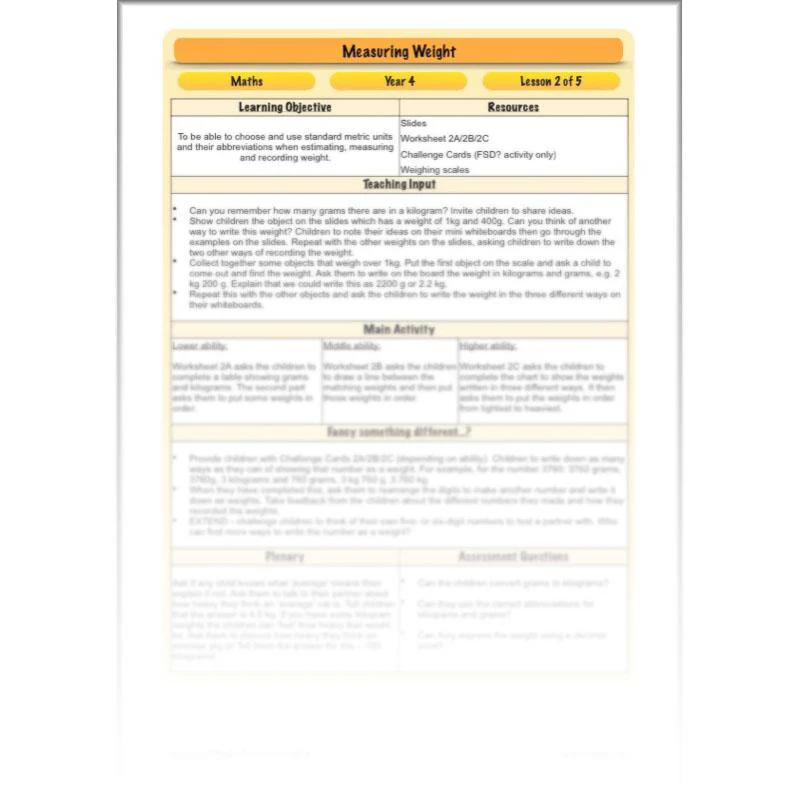
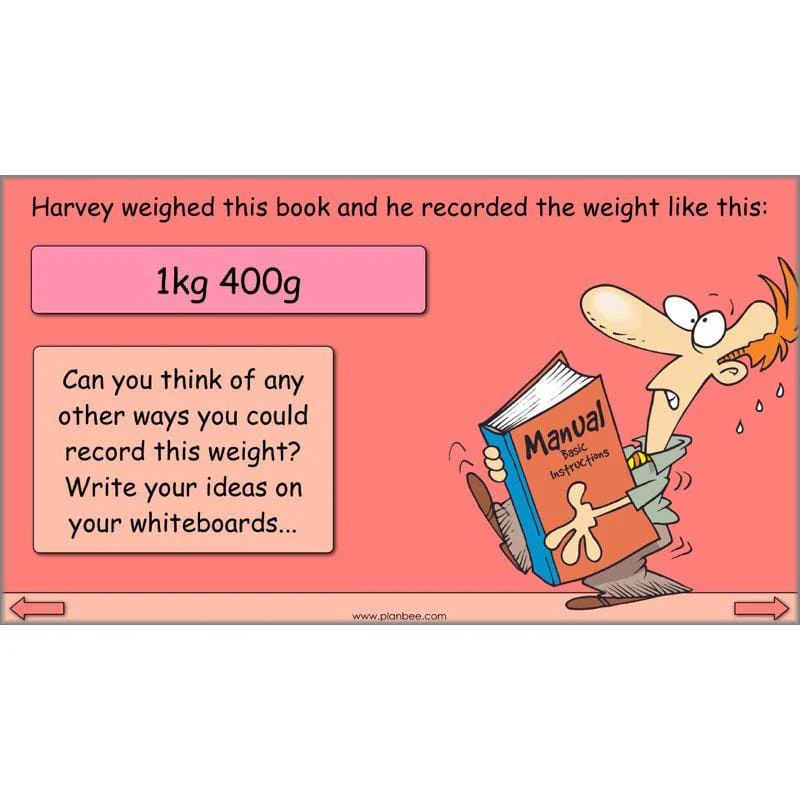
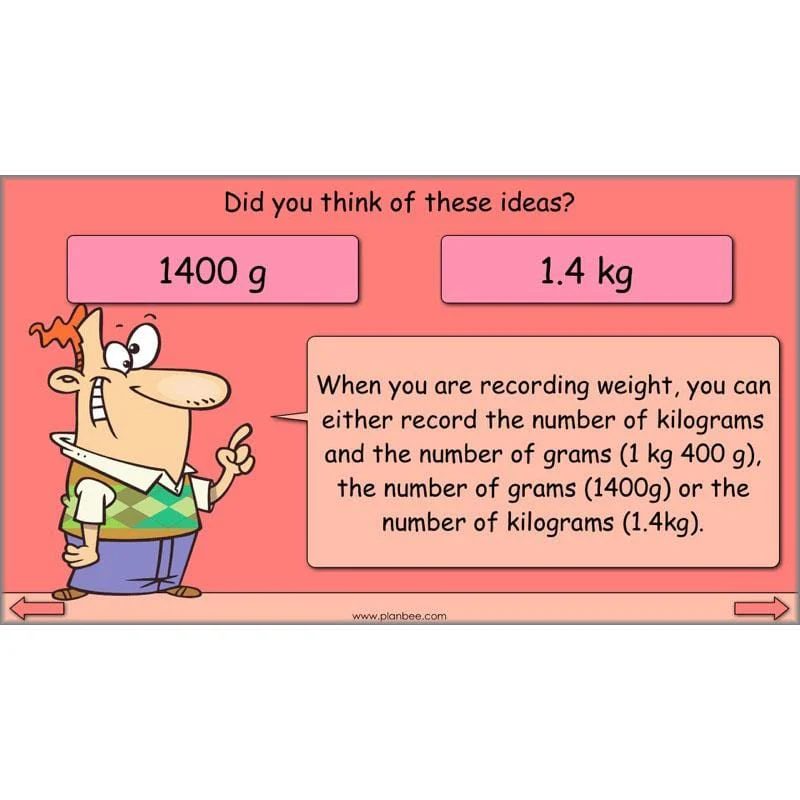
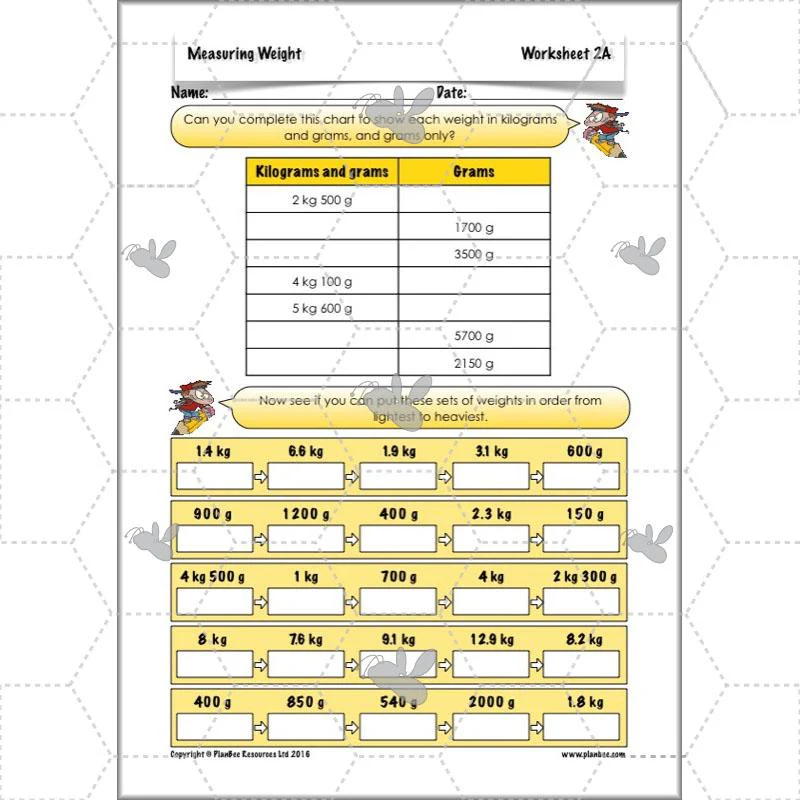
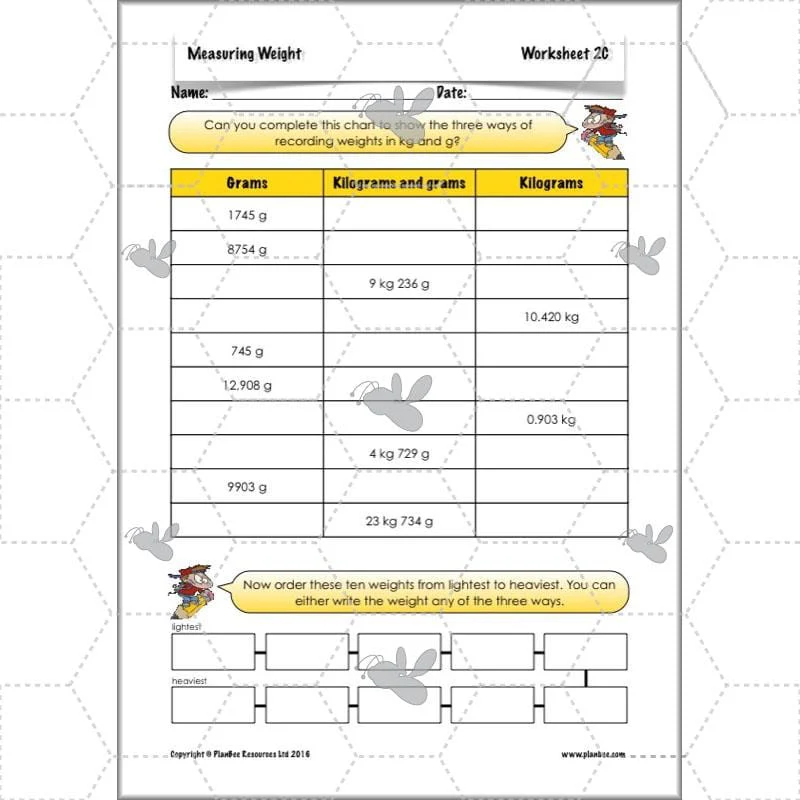
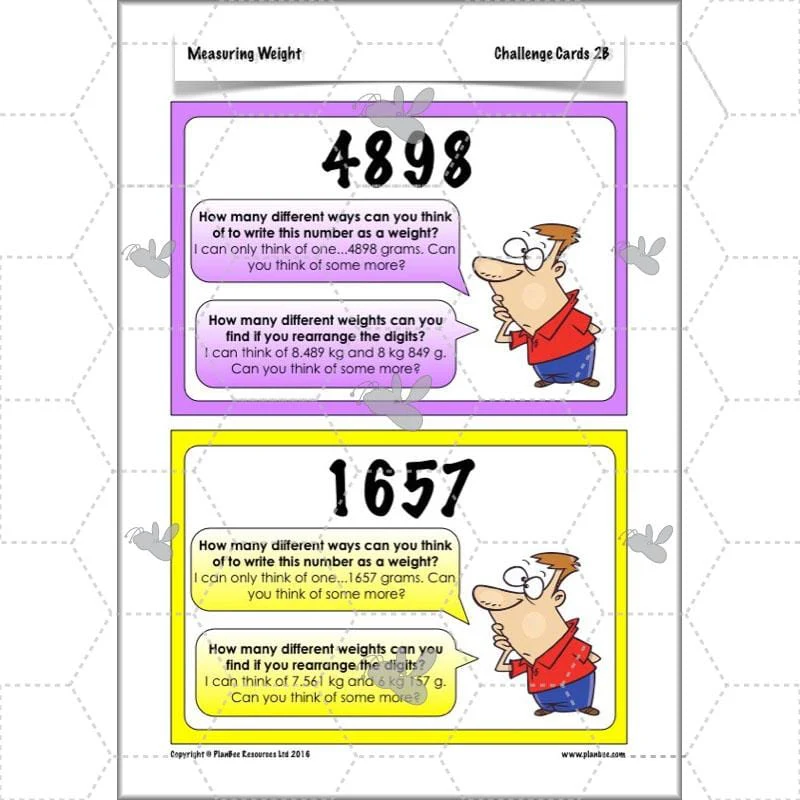
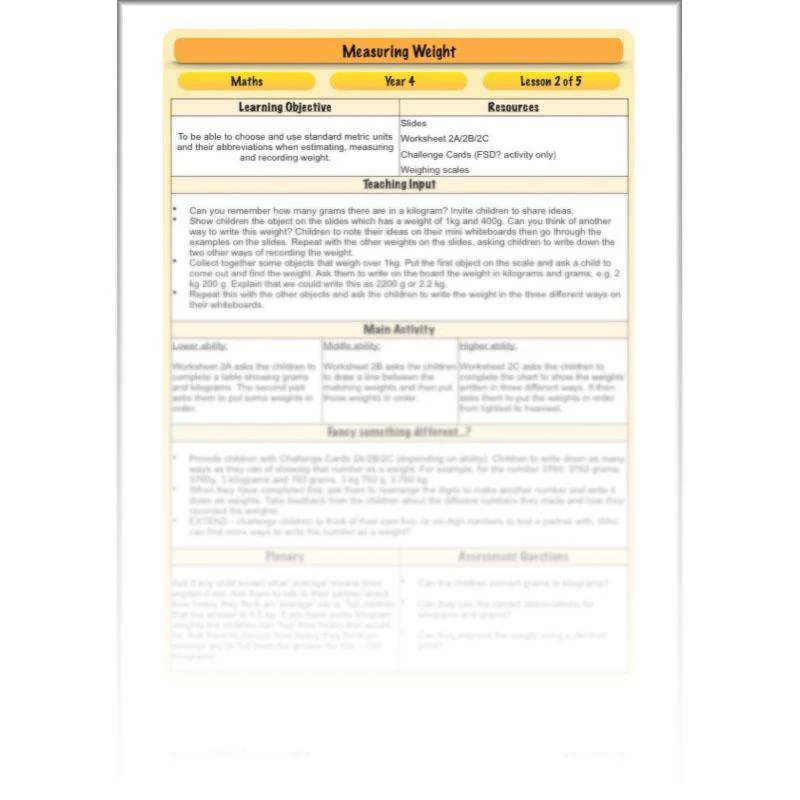
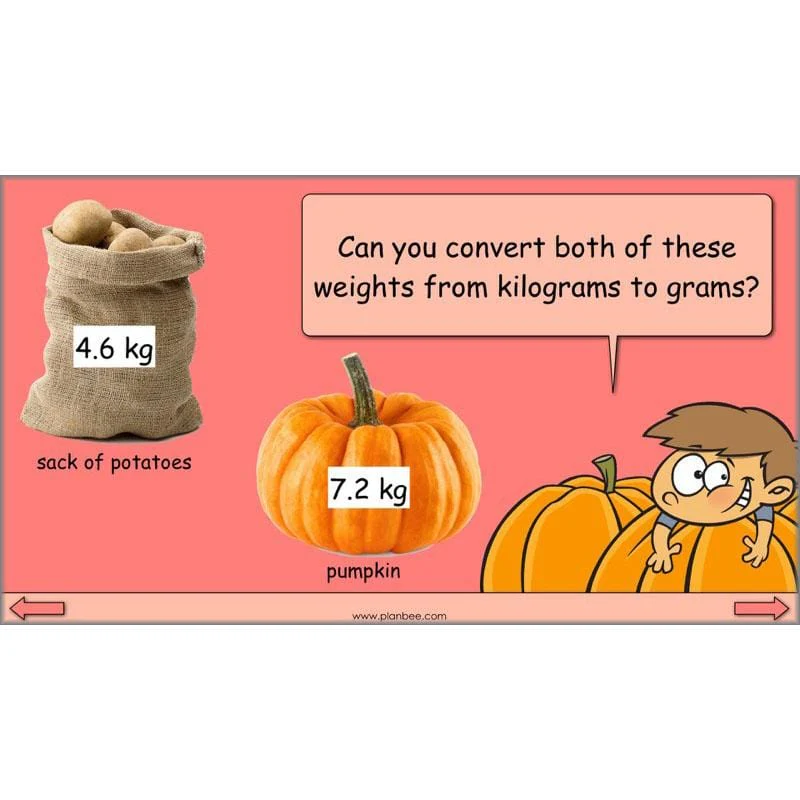
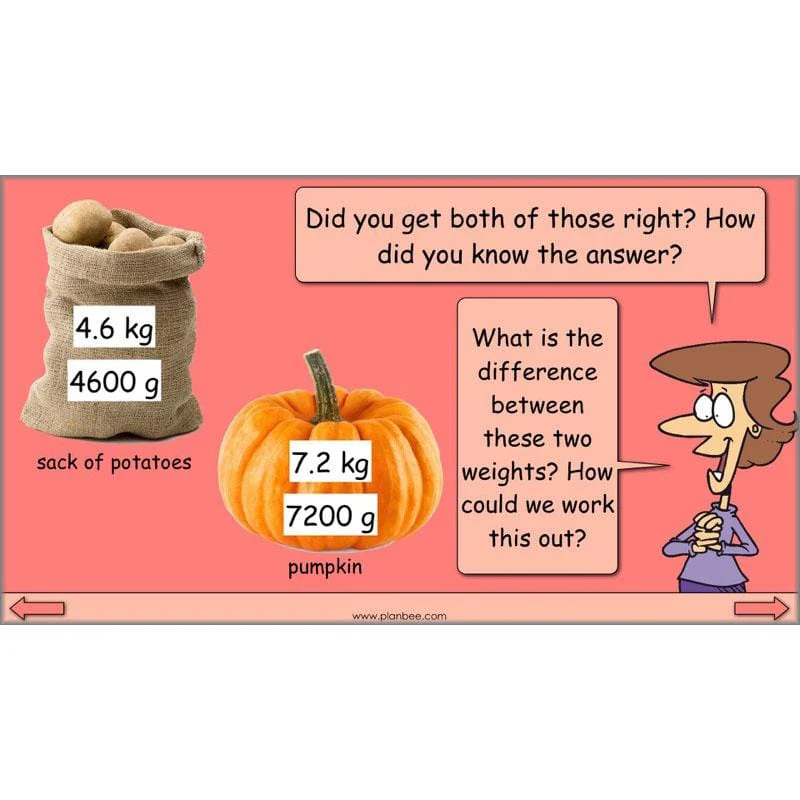
This lesson encourages children to explore different ways of expressing the same weight by converting grams to kilograms (expressing the answer as a decimal), as well as expressing the amount using both kilograms and grams. There is also the challenge of re-arranging the digits of a number to create as many ways of expressing a weight as they can think of, including converting a weight from grams to kilograms and vice versa.
What's included:
- Lesson plan
- Slides
- Activity ideas
- Differentiated worksheets
- Challenge cards
View Lesson 2
Adding and Subtracting Weights
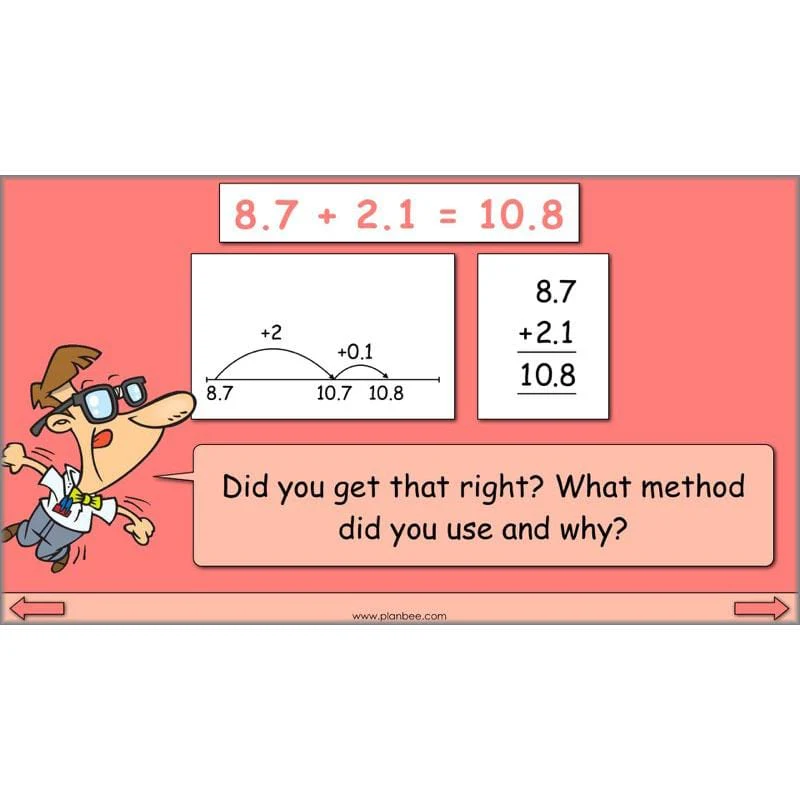
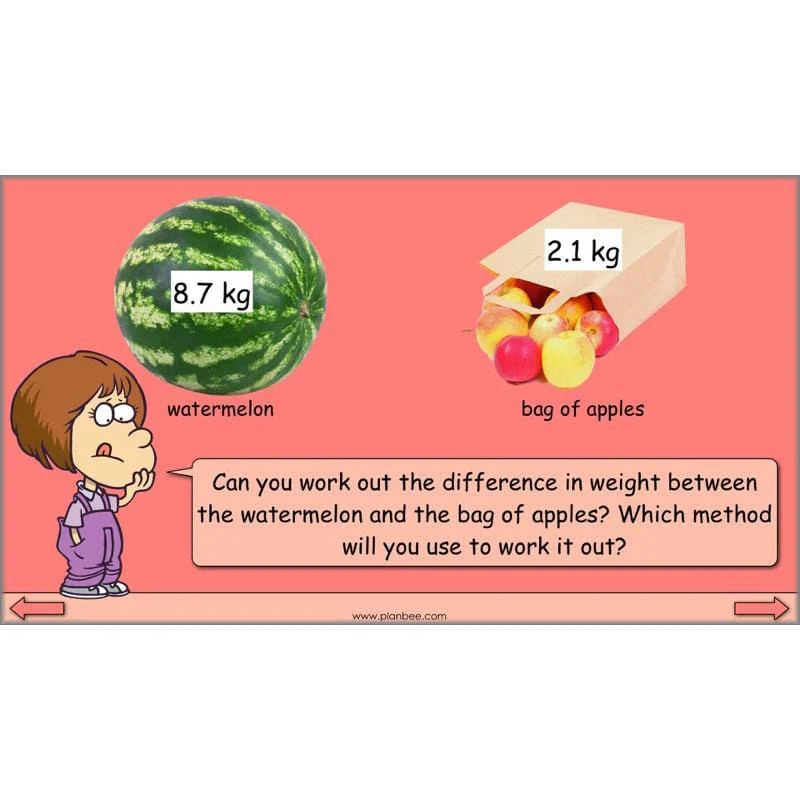
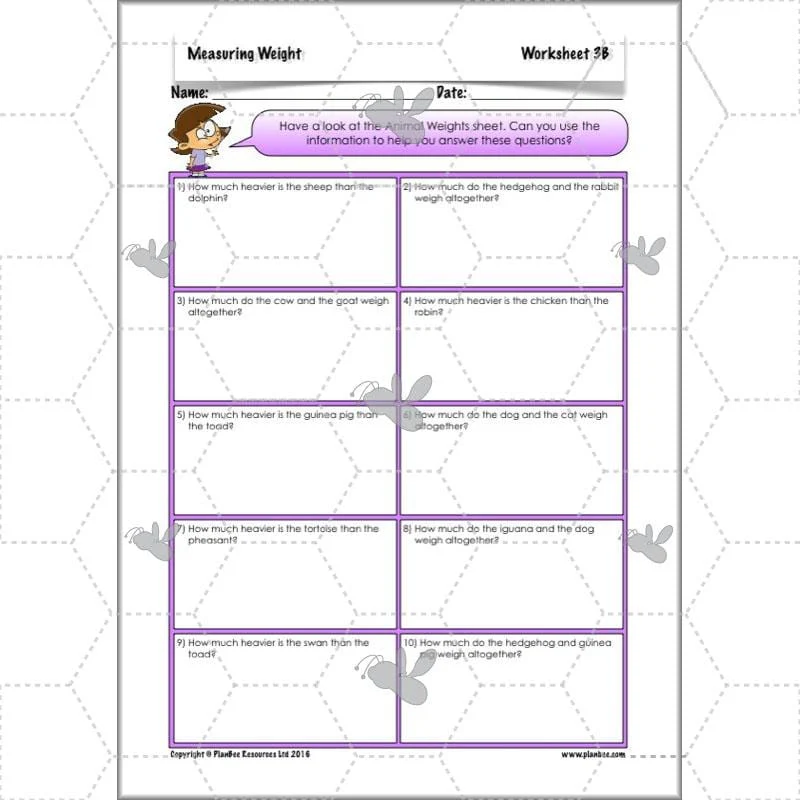
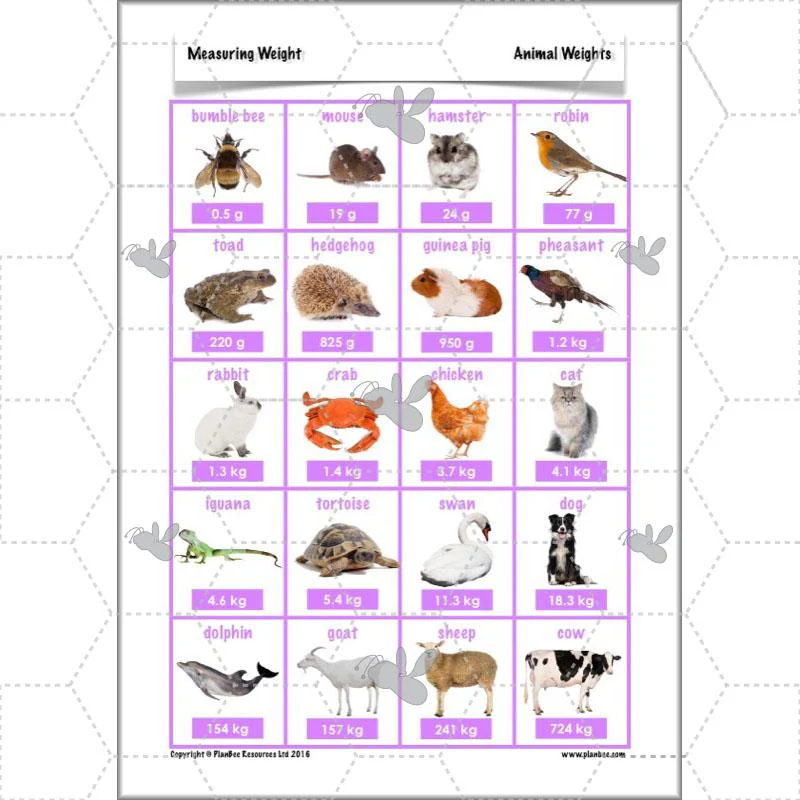
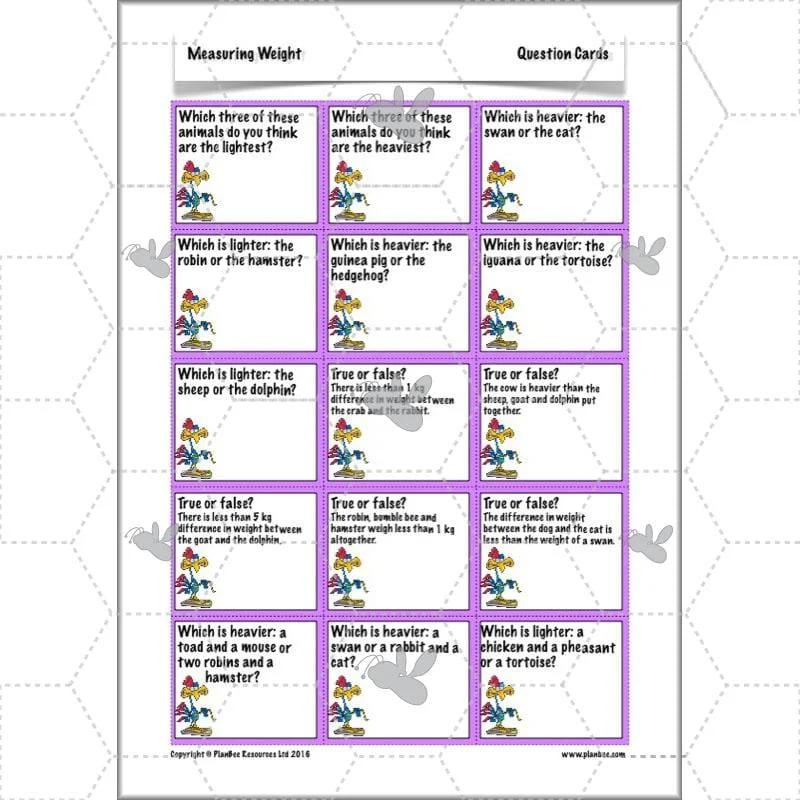
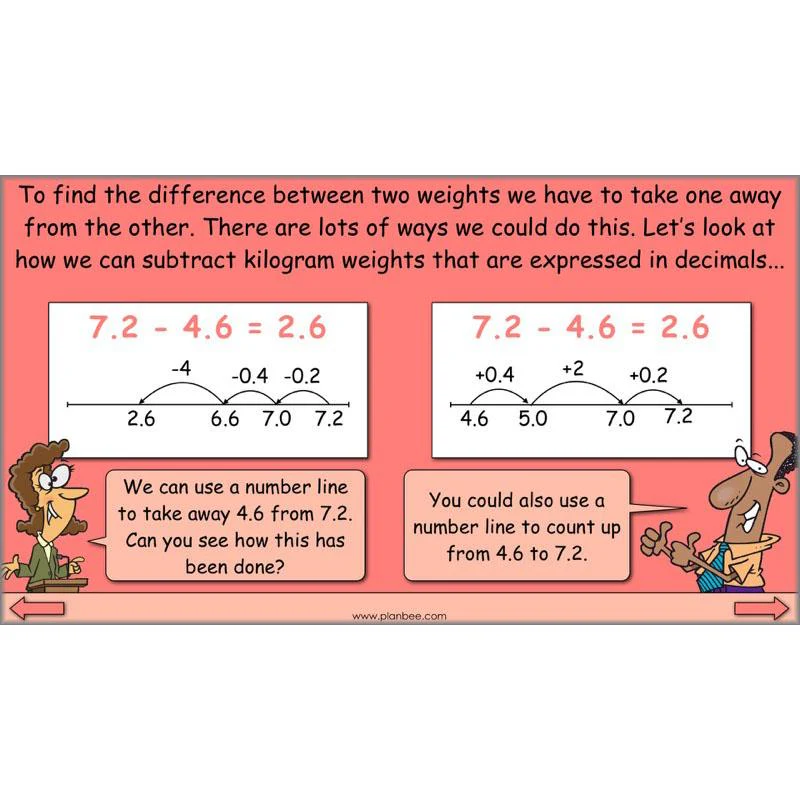
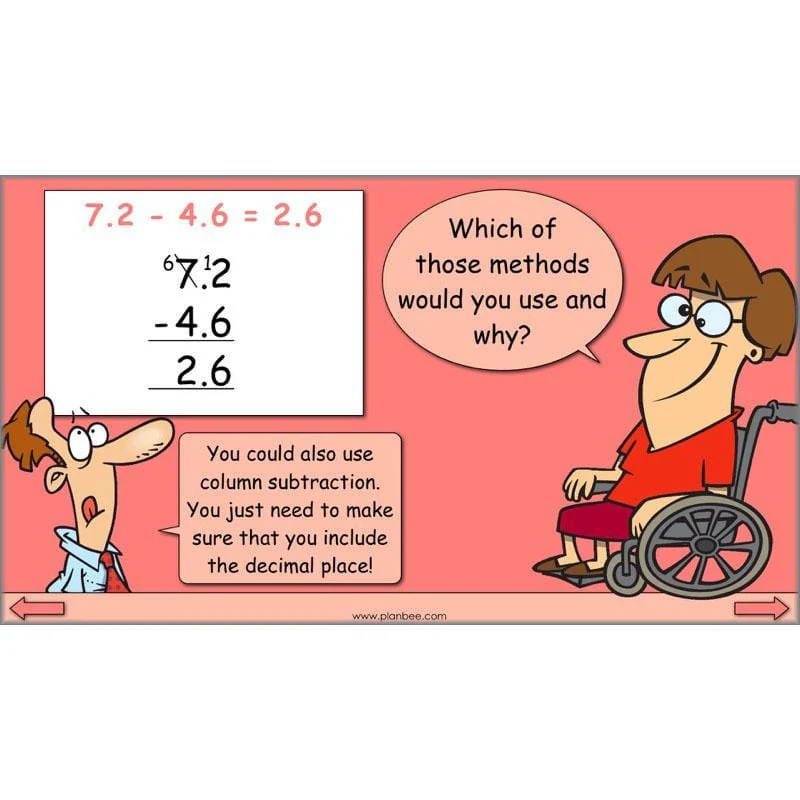
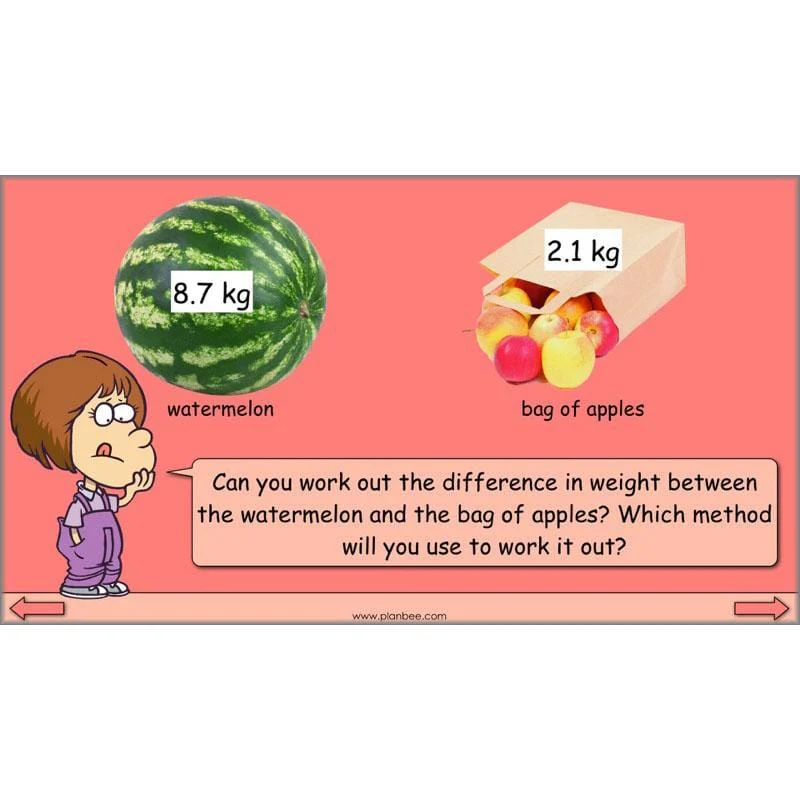
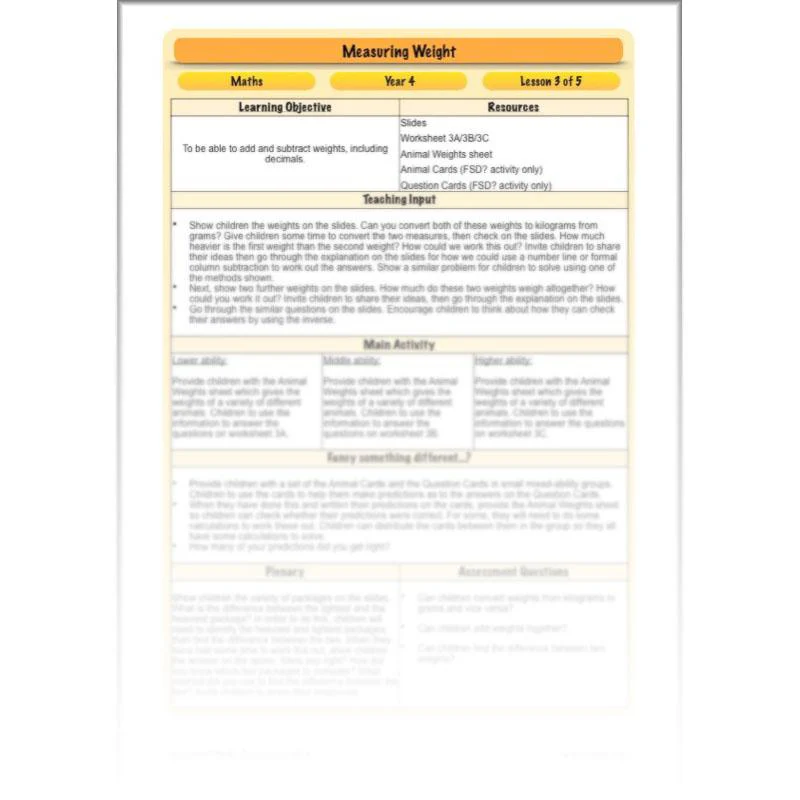
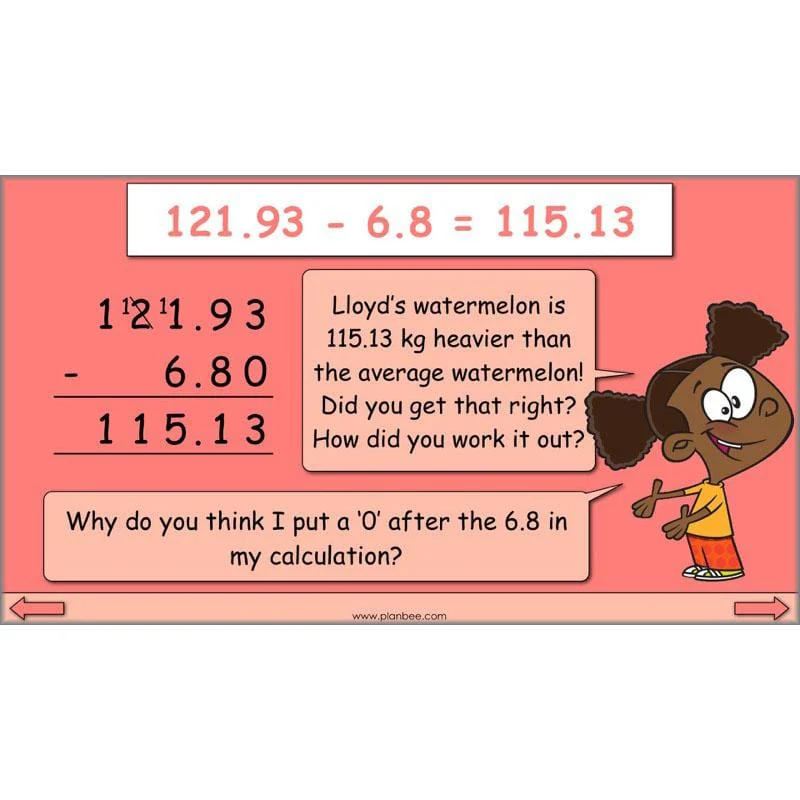
The questions throughout the slides for this lesson get progressively harder as children work out how to add and subtract different weights, including weights with one decimal place and two weights that are expressed in different units of measurements. The slides show some different strategies for solving such problems, including using a number line, and vertical addition and subtraction. The independent learning activities have plenty of problems for children to solve, including solving problems involving animal weights!
What's included:
- Lesson plan
- Slides
- Activity ideas
- Differentiated worksheets
- Animal cards
- Question cards
- Weight cards
View Lesson 3
Solving Problems
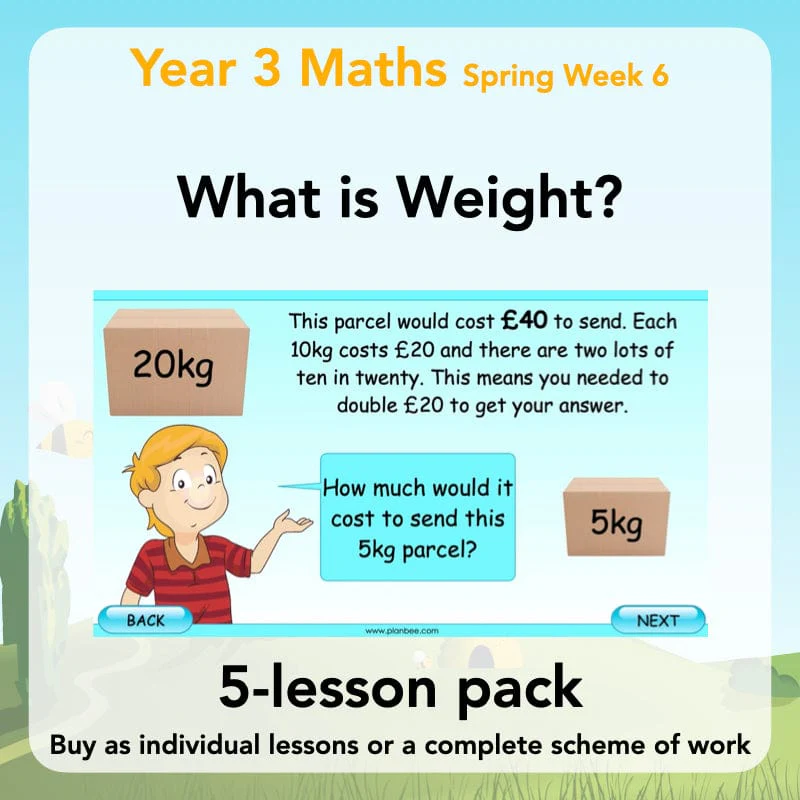
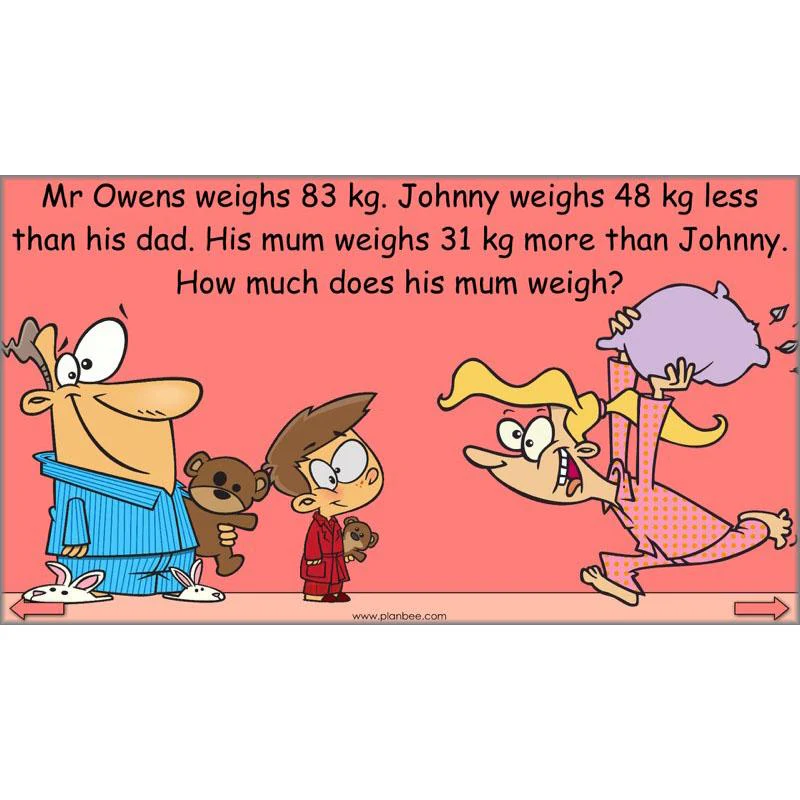
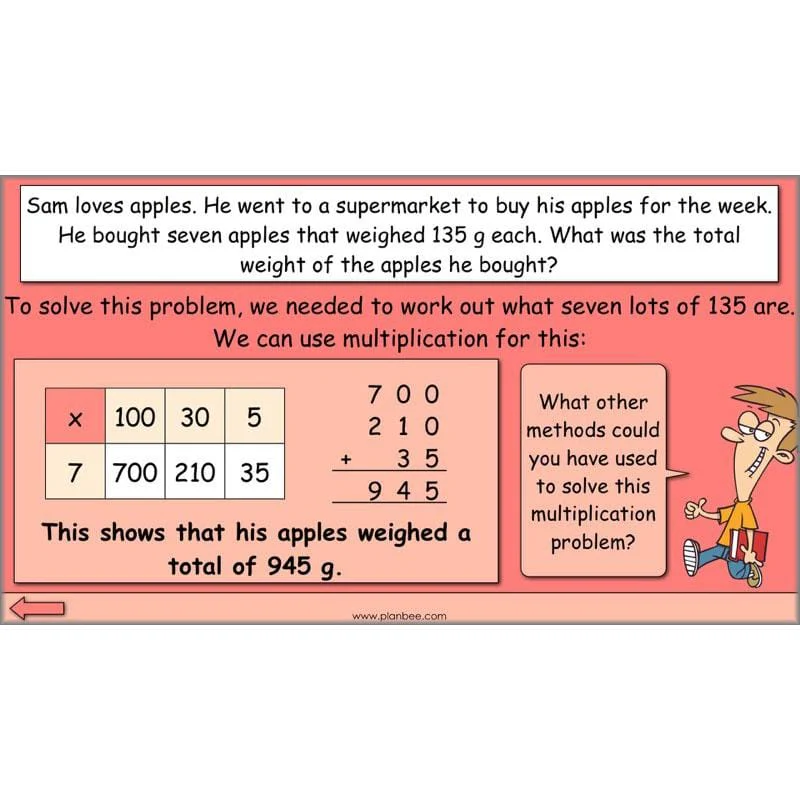
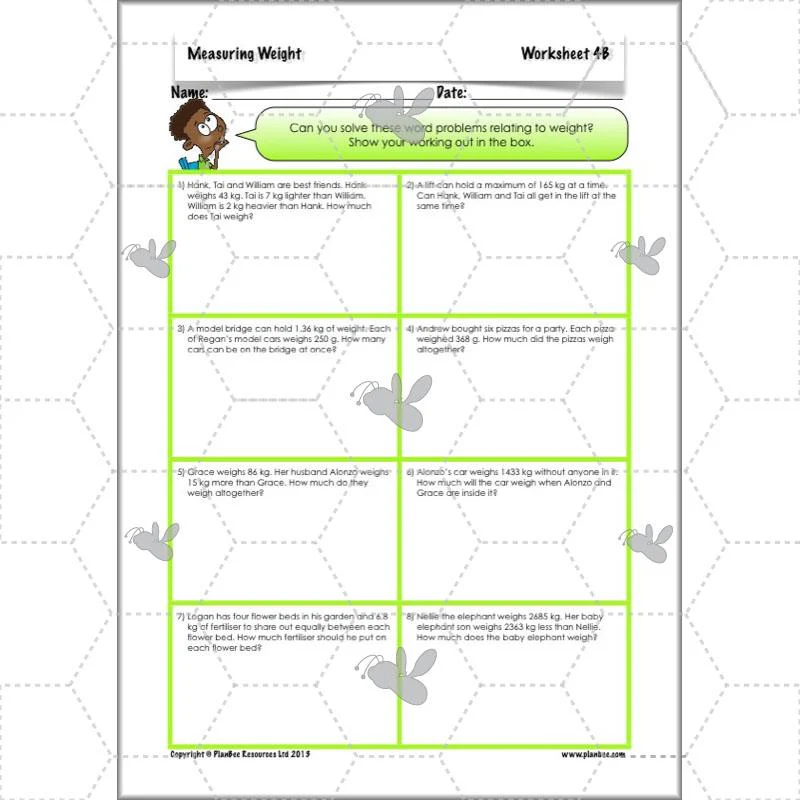
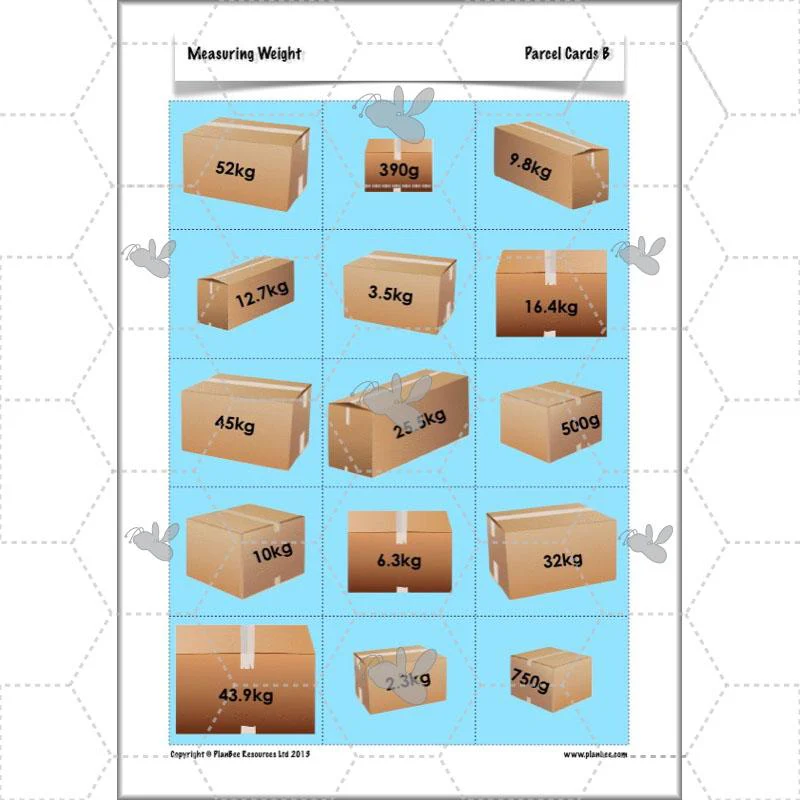
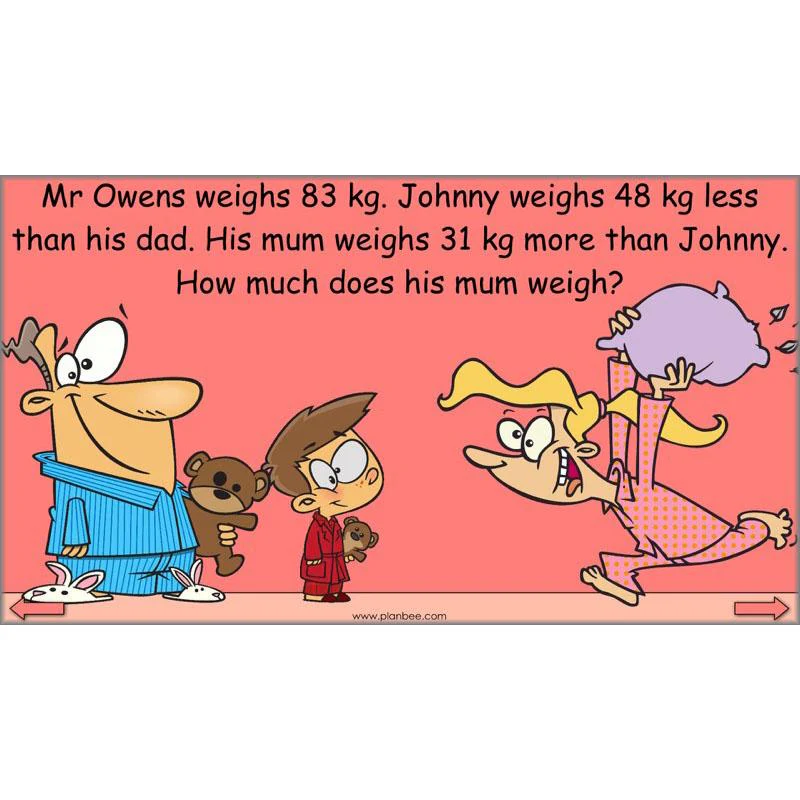
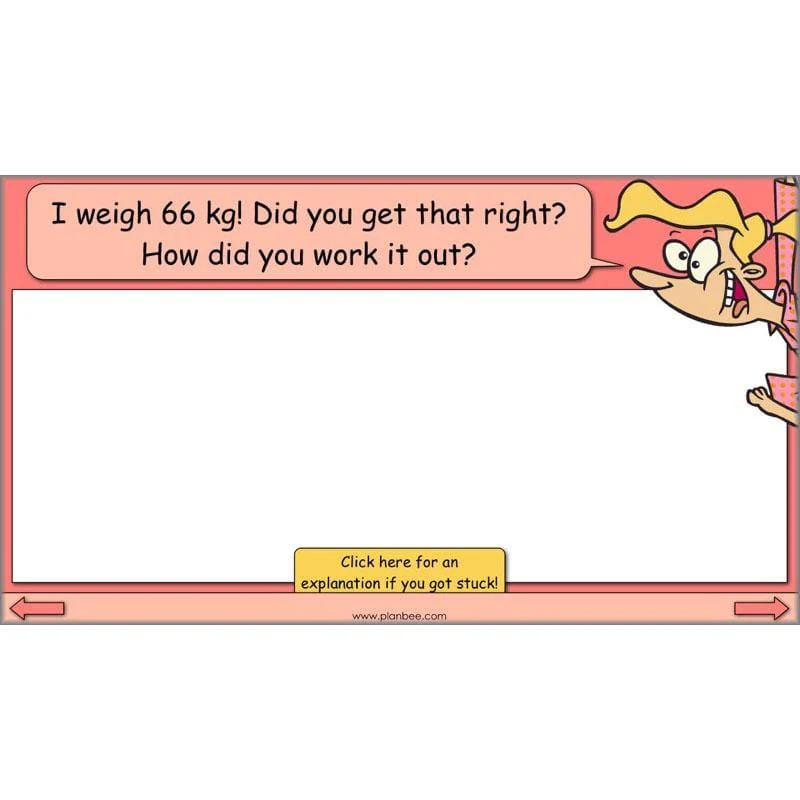
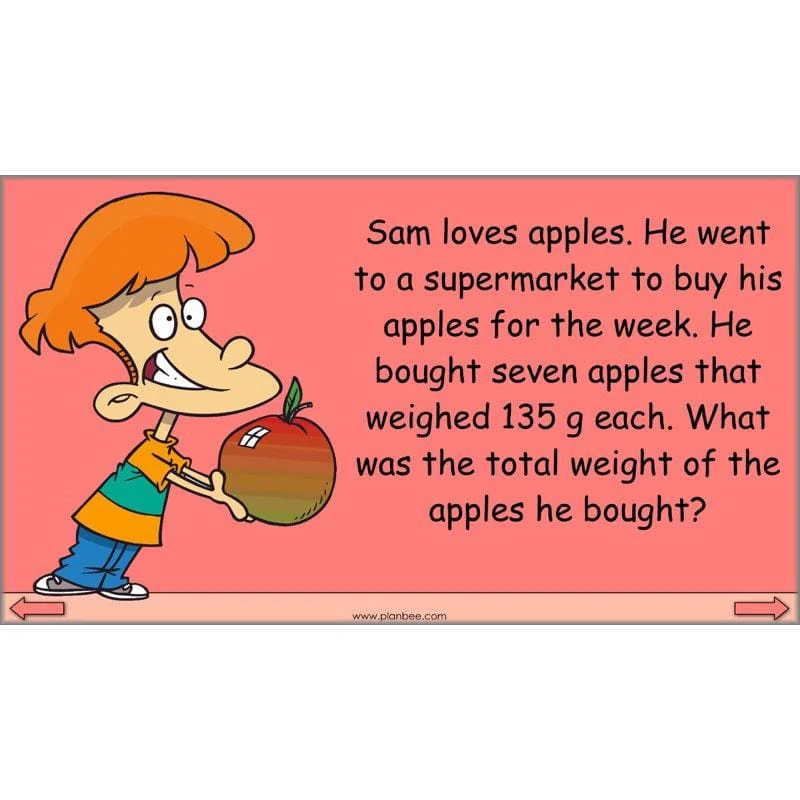
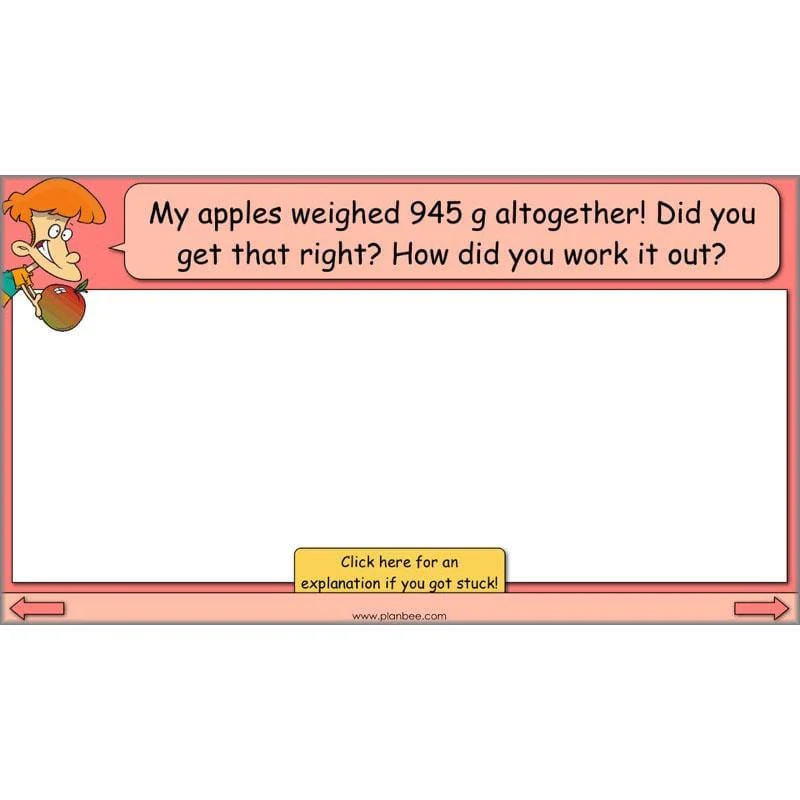
Now that children have some strategies under their belts to add and subtract weights, they can put their skills to the test as they solve a variety of word problems relating to length. There are a variety of problems for children to solve as a class on the slides (with explanations for how problems were solved if they get stuck) to prepare them for solving similar problems independently.
What's included:
- Lesson plan
- Slides
- Activity ideas
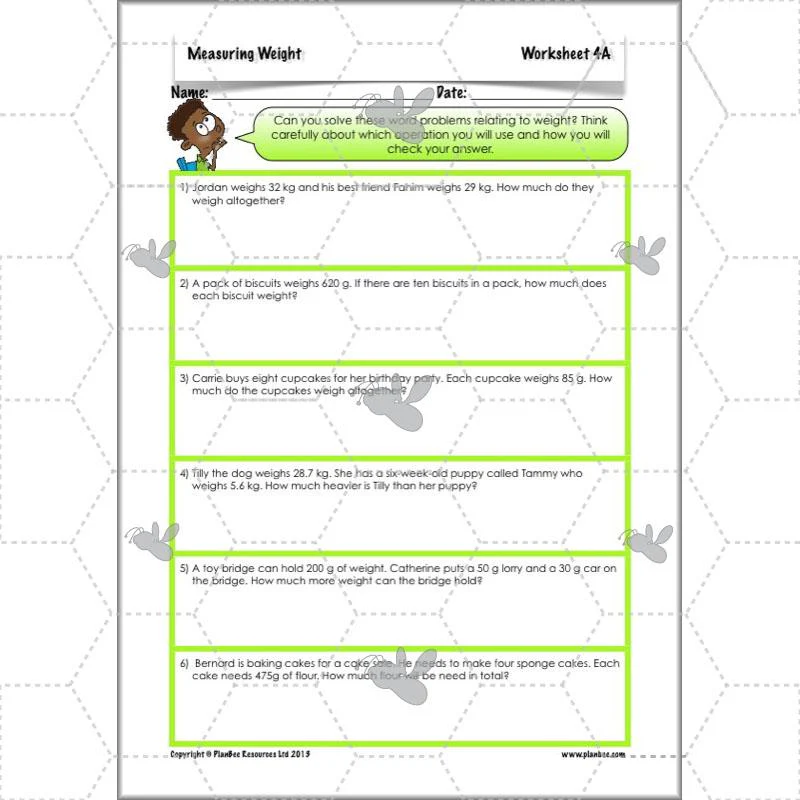
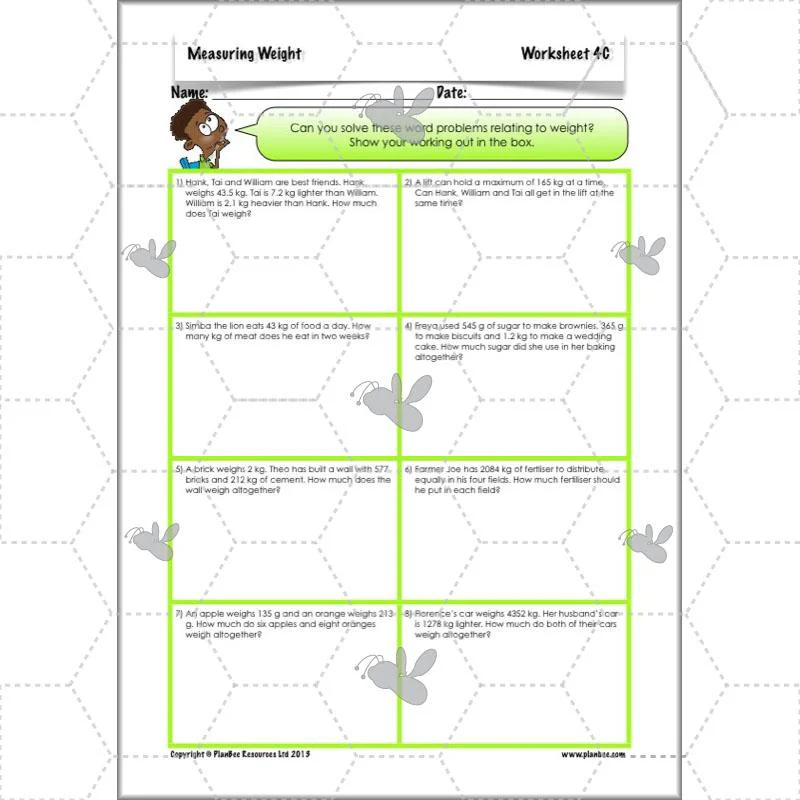
- Differentiated worksheets
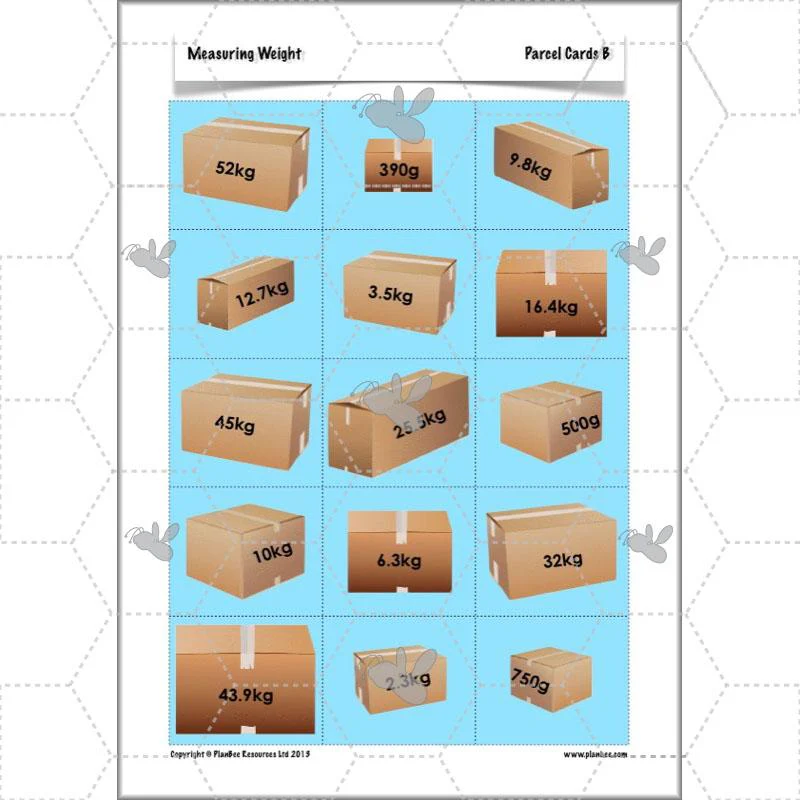
- Parcel cards
View Lesson 4
Fascinating Facts
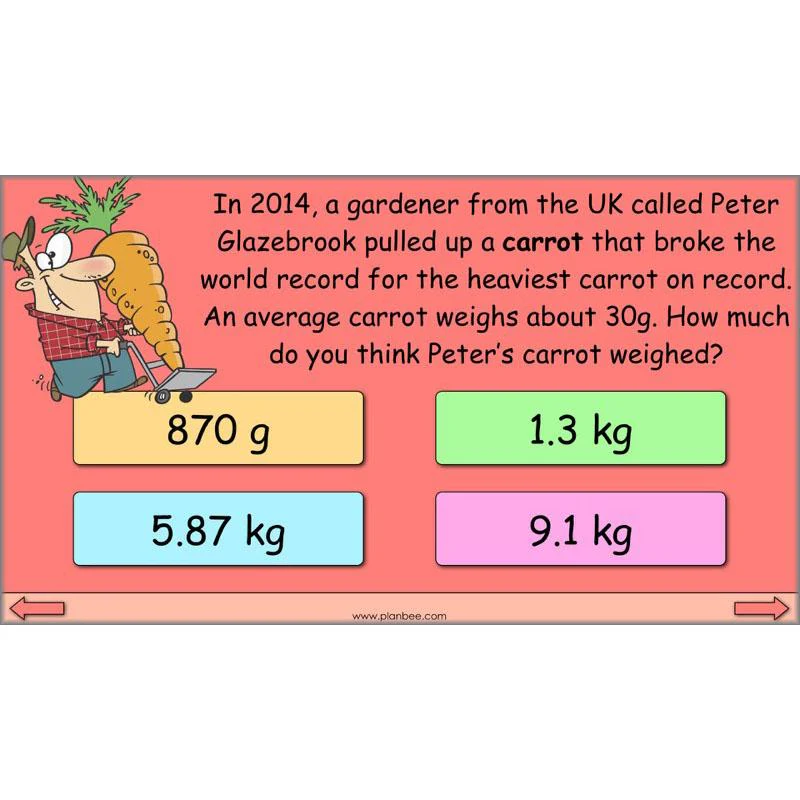
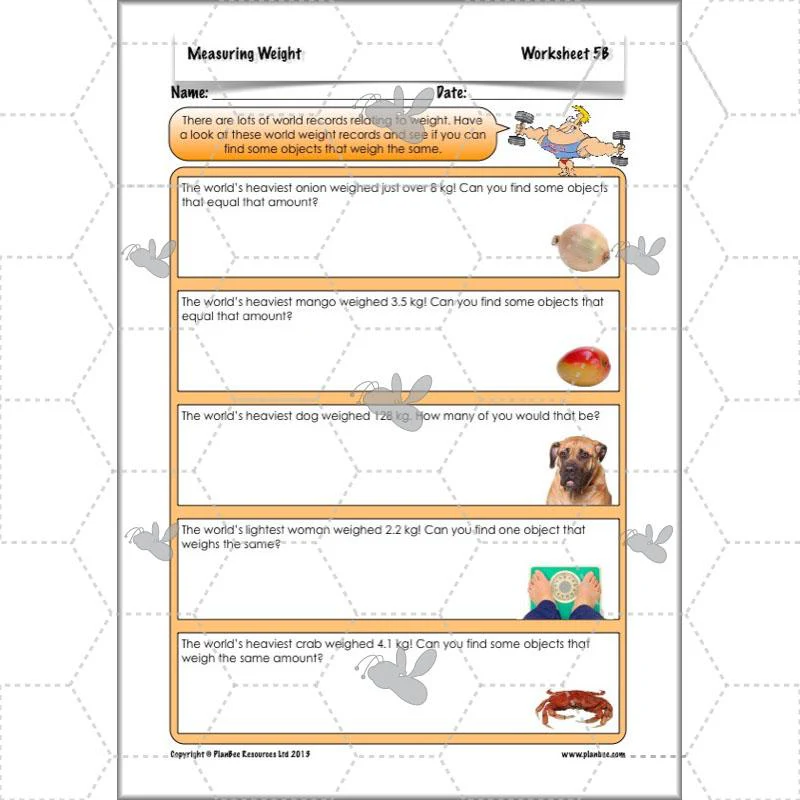
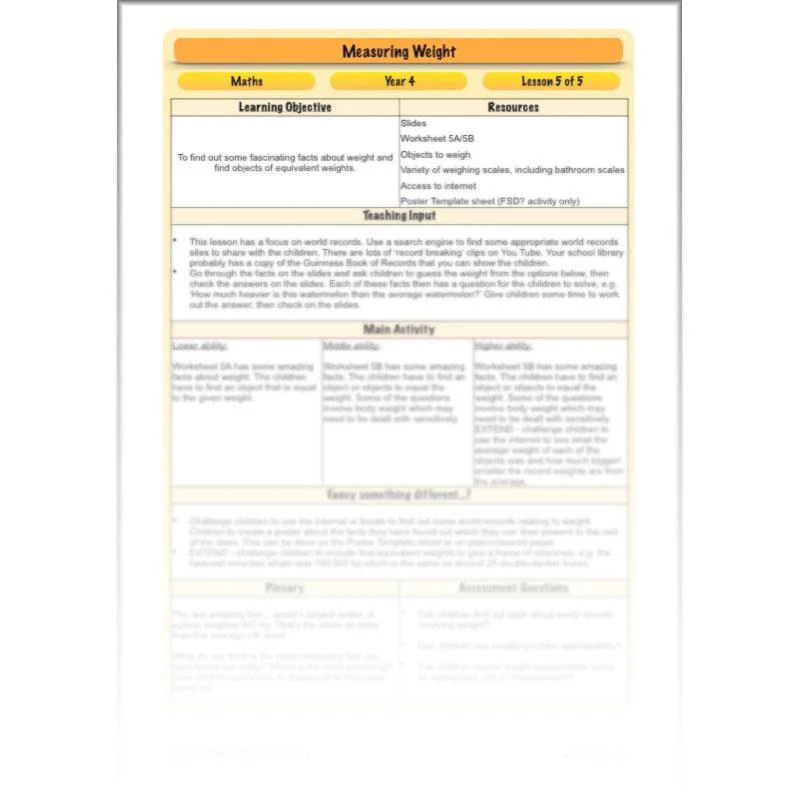
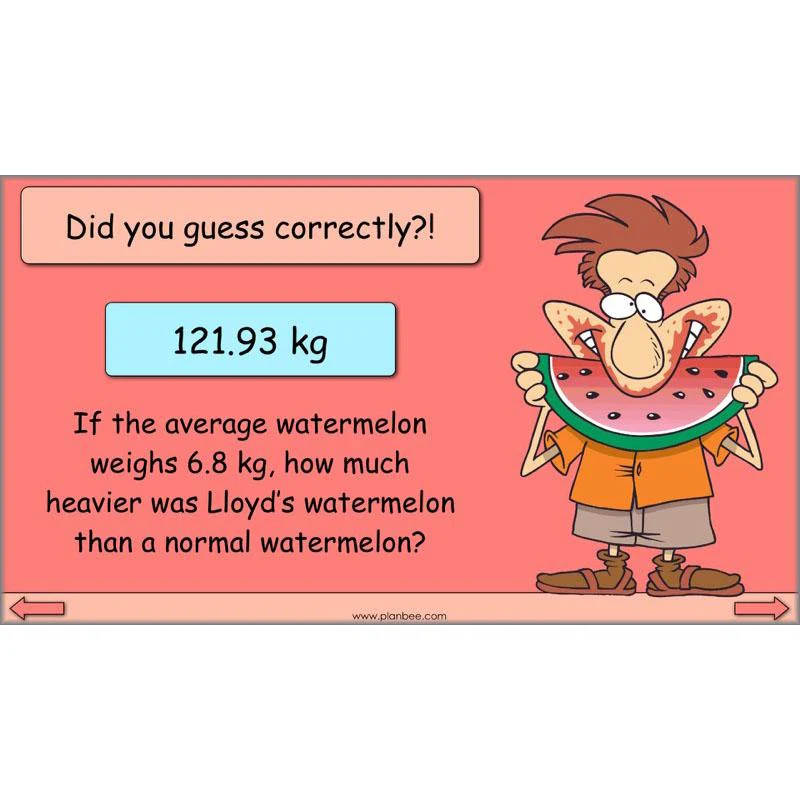
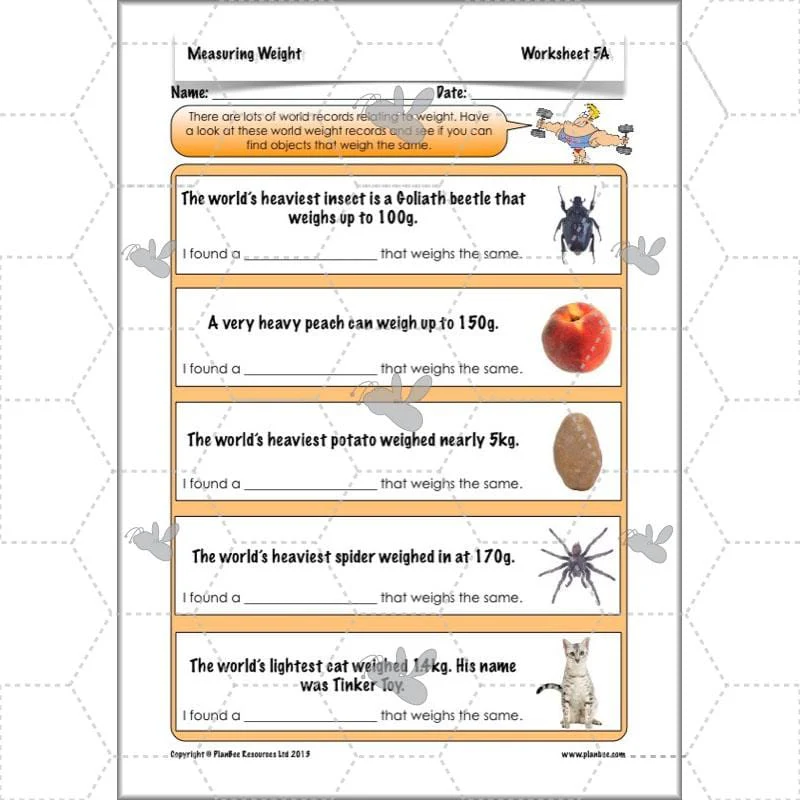
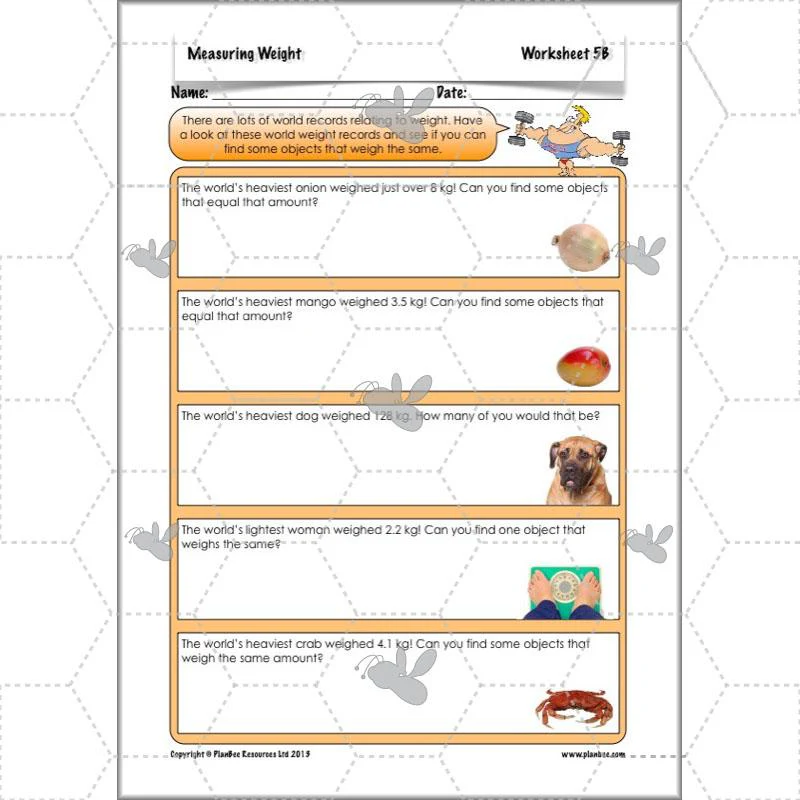
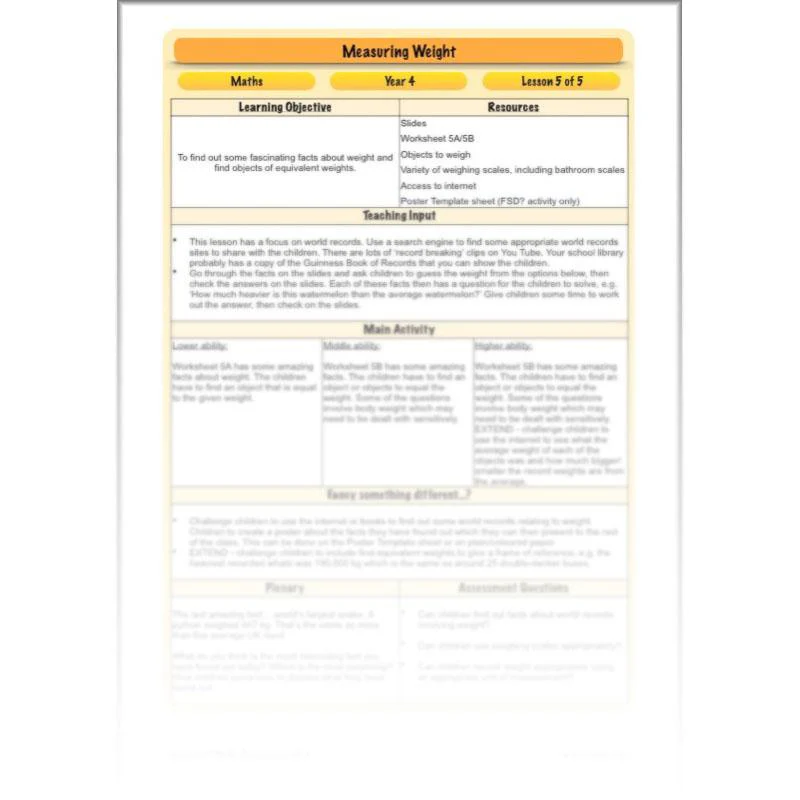
The final lesson in this series gives your class the chance to find out some fascinating facts about weight! Starting with looking at some record-breaking fruits and vegetables on the slides, children can then explore a variety of weird and wonderful facts about weight for themselves during their independent learning.
What's included:
- Lesson plan
- Slides
- Activity ideas
- Differentiated worksheets
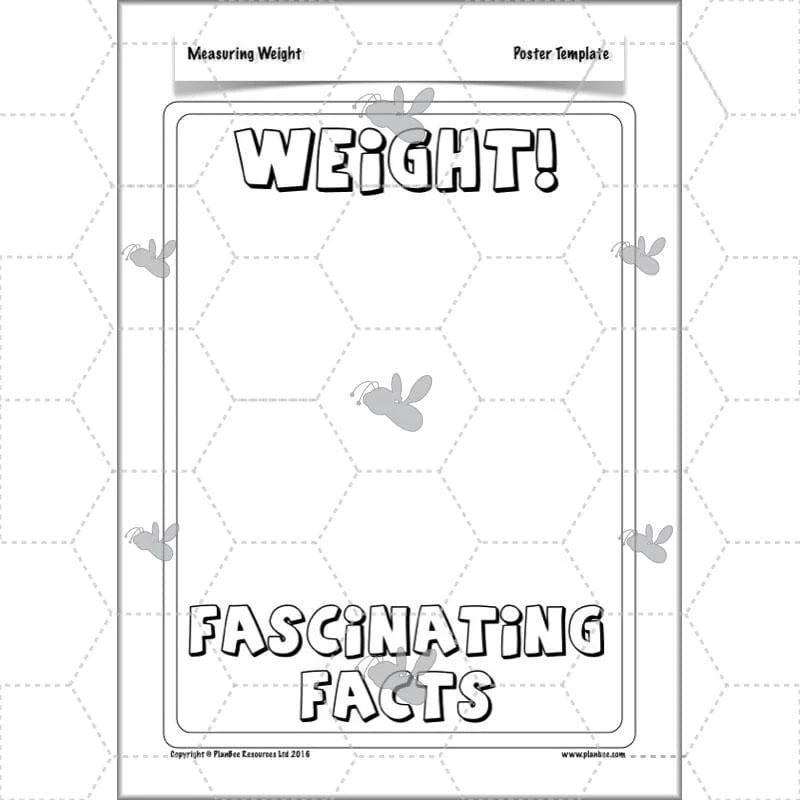
- Poster template sheet
View Lesson 5
Original: $4.71
-65%$4.71
$1.65More Images
Measuring Weight
This Year 4 'Measuring Weight' series of lessons is a great way of teaching your class everything they need to know about weight.
They will explore the different units of measurement used to measure weight and their relationships to each other, how to estimate the weights of different objects and how to check these estimates, as well as solving problems about weight and finding out some fascinating facts!
With lesson plans, informative slides, differentiated worksheets and more, these Year 4 'Measuring Weight' lessons provide all the resources you need to teach this fun and practical scheme of work, lifting the planning weight completely off your shoulders!
Grams and Kilograms
The first lesson in this series starts by looking at the relationship between kilograms and grams, and identifies their abbreviations. Children will then go on to consider objects around them that could (and should) be measured in grams or kilograms, before using a variety of objects to estimate and weigh, using the appropriate unit of measurement. The alternative activity has a team game that will challenge groups to find objects of particular weights before their rivals!
What's included:
- Lesson plan
- Slides
- Activity ideas
- Differentiated worksheets
View Lesson 1
Expressing Weights
This lesson encourages children to explore different ways of expressing the same weight by converting grams to kilograms (expressing the answer as a decimal), as well as expressing the amount using both kilograms and grams. There is also the challenge of re-arranging the digits of a number to create as many ways of expressing a weight as they can think of, including converting a weight from grams to kilograms and vice versa.
What's included:
- Lesson plan
- Slides
- Activity ideas
- Differentiated worksheets
- Challenge cards
View Lesson 2
Adding and Subtracting Weights
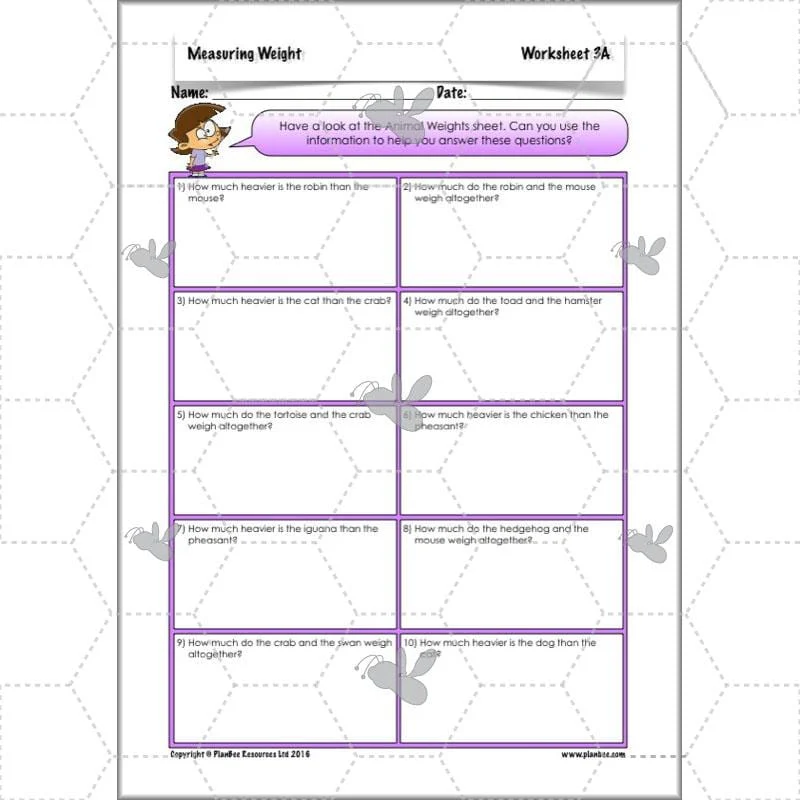
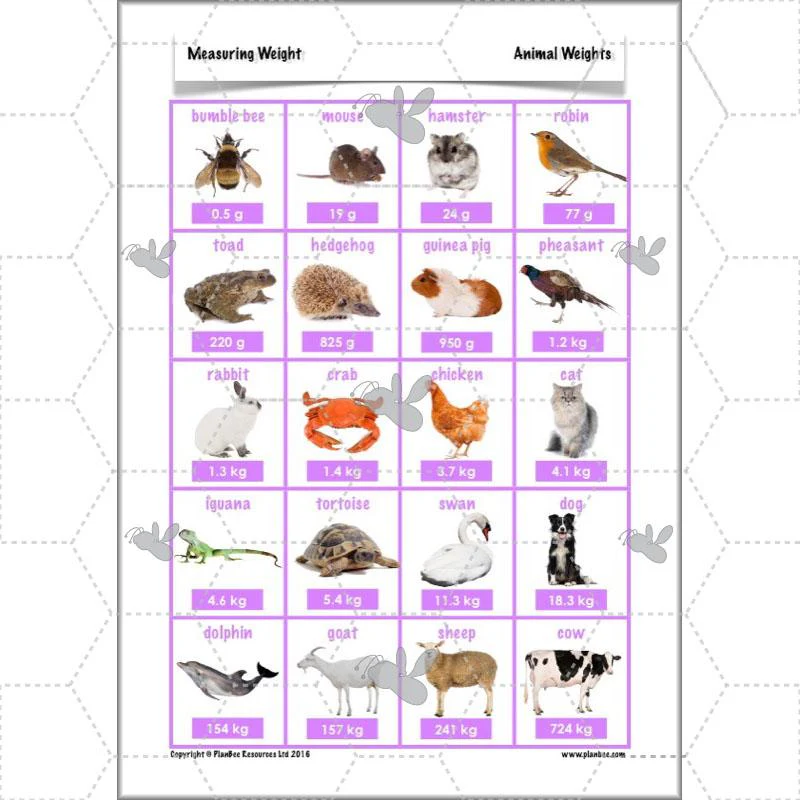
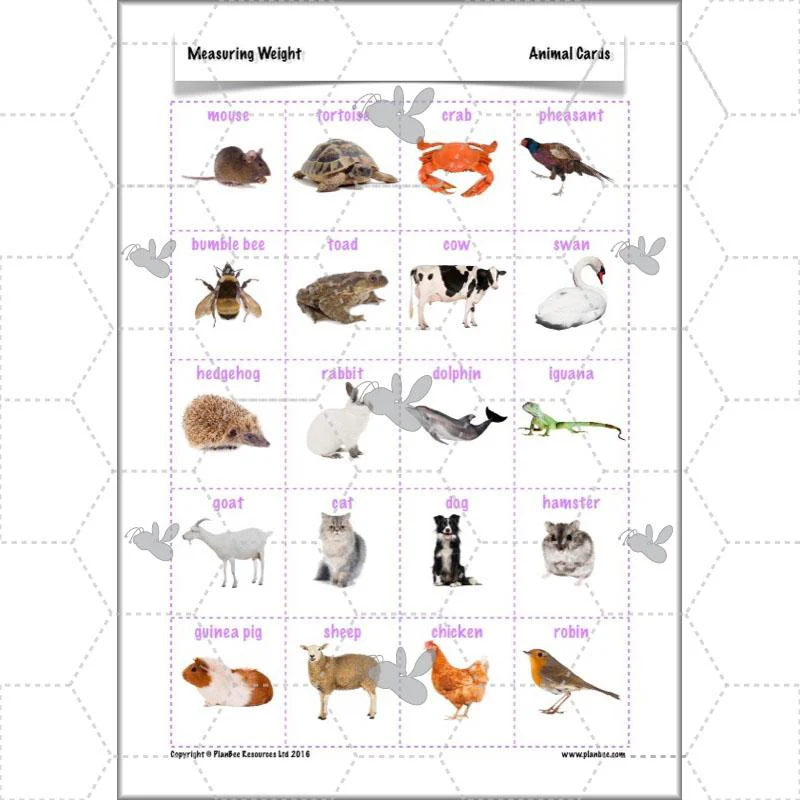
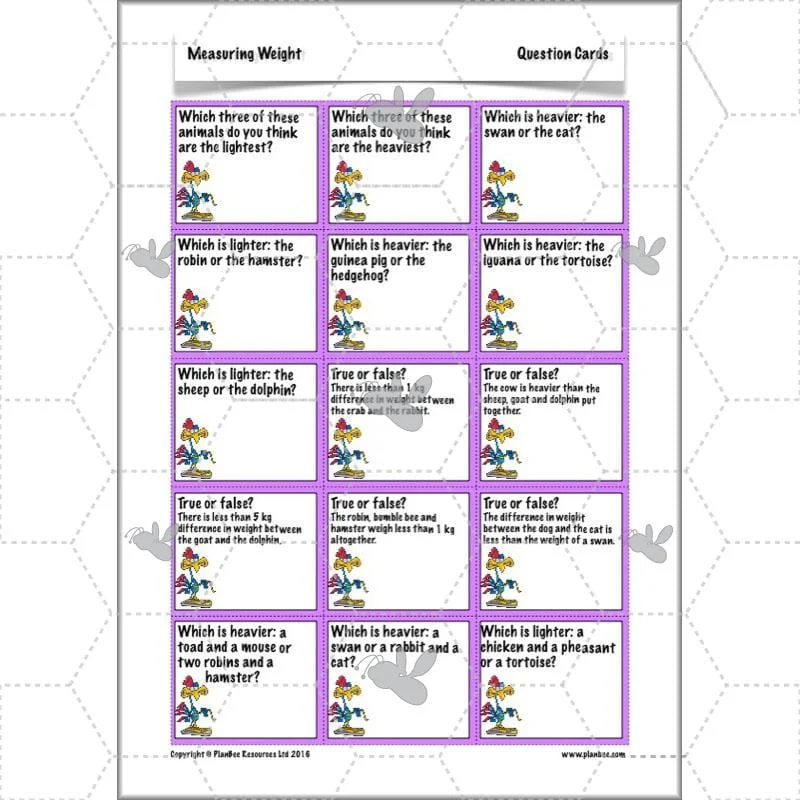
The questions throughout the slides for this lesson get progressively harder as children work out how to add and subtract different weights, including weights with one decimal place and two weights that are expressed in different units of measurements. The slides show some different strategies for solving such problems, including using a number line, and vertical addition and subtraction. The independent learning activities have plenty of problems for children to solve, including solving problems involving animal weights!
What's included:
- Lesson plan
- Slides
- Activity ideas
- Differentiated worksheets
- Animal cards
- Question cards
- Weight cards
View Lesson 3
Solving Problems
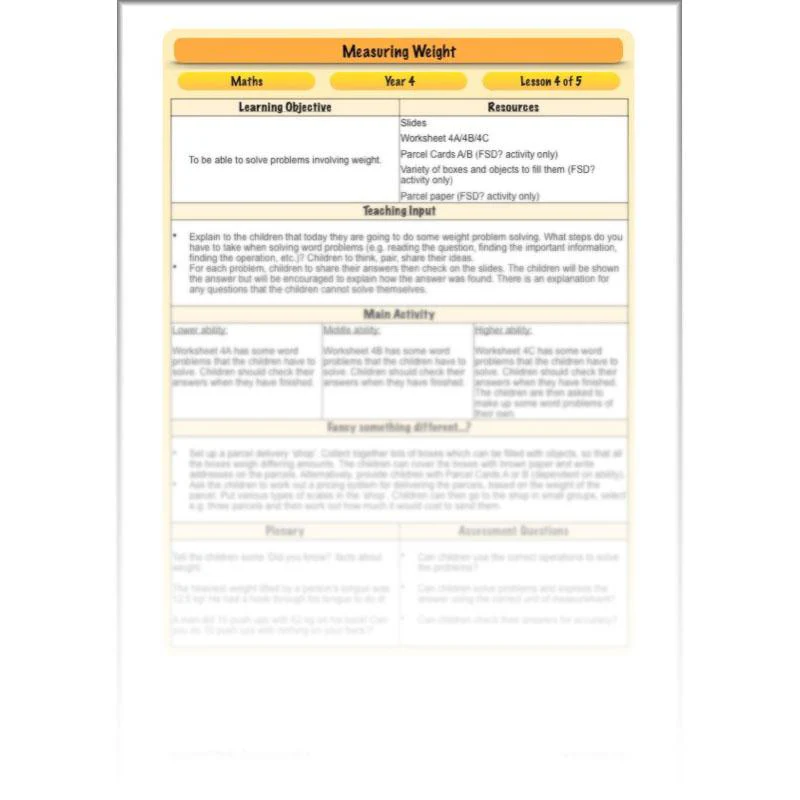
Now that children have some strategies under their belts to add and subtract weights, they can put their skills to the test as they solve a variety of word problems relating to length. There are a variety of problems for children to solve as a class on the slides (with explanations for how problems were solved if they get stuck) to prepare them for solving similar problems independently.
What's included:
- Lesson plan
- Slides
- Activity ideas
- Differentiated worksheets
- Parcel cards
View Lesson 4
Fascinating Facts
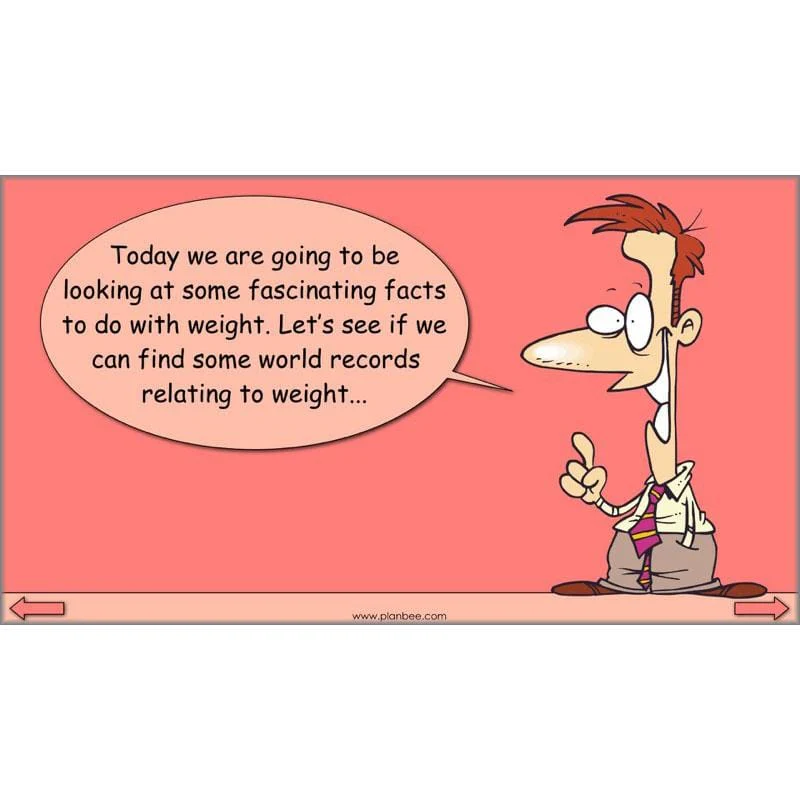
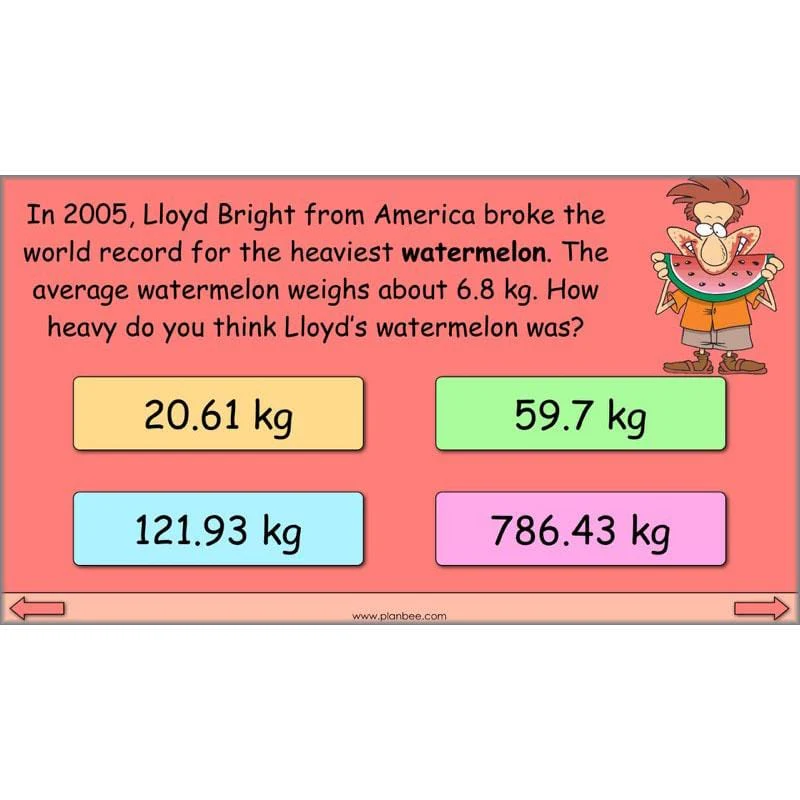
The final lesson in this series gives your class the chance to find out some fascinating facts about weight! Starting with looking at some record-breaking fruits and vegetables on the slides, children can then explore a variety of weird and wonderful facts about weight for themselves during their independent learning.
What's included:
- Lesson plan
- Slides
- Activity ideas
- Differentiated worksheets
- Poster template sheet
View Lesson 5
Product Information
Product Information
Shipping & Returns
Shipping & Returns
Description
This Year 4 'Measuring Weight' series of lessons is a great way of teaching your class everything they need to know about weight.
They will explore the different units of measurement used to measure weight and their relationships to each other, how to estimate the weights of different objects and how to check these estimates, as well as solving problems about weight and finding out some fascinating facts!
With lesson plans, informative slides, differentiated worksheets and more, these Year 4 'Measuring Weight' lessons provide all the resources you need to teach this fun and practical scheme of work, lifting the planning weight completely off your shoulders!
Grams and Kilograms
The first lesson in this series starts by looking at the relationship between kilograms and grams, and identifies their abbreviations. Children will then go on to consider objects around them that could (and should) be measured in grams or kilograms, before using a variety of objects to estimate and weigh, using the appropriate unit of measurement. The alternative activity has a team game that will challenge groups to find objects of particular weights before their rivals!
What's included:
- Lesson plan
- Slides
- Activity ideas
- Differentiated worksheets
View Lesson 1
Expressing Weights
This lesson encourages children to explore different ways of expressing the same weight by converting grams to kilograms (expressing the answer as a decimal), as well as expressing the amount using both kilograms and grams. There is also the challenge of re-arranging the digits of a number to create as many ways of expressing a weight as they can think of, including converting a weight from grams to kilograms and vice versa.
What's included:
- Lesson plan
- Slides
- Activity ideas
- Differentiated worksheets
- Challenge cards
View Lesson 2
Adding and Subtracting Weights
The questions throughout the slides for this lesson get progressively harder as children work out how to add and subtract different weights, including weights with one decimal place and two weights that are expressed in different units of measurements. The slides show some different strategies for solving such problems, including using a number line, and vertical addition and subtraction. The independent learning activities have plenty of problems for children to solve, including solving problems involving animal weights!
What's included:
- Lesson plan
- Slides
- Activity ideas
- Differentiated worksheets
- Animal cards
- Question cards
- Weight cards
View Lesson 3
Solving Problems
Now that children have some strategies under their belts to add and subtract weights, they can put their skills to the test as they solve a variety of word problems relating to length. There are a variety of problems for children to solve as a class on the slides (with explanations for how problems were solved if they get stuck) to prepare them for solving similar problems independently.
What's included:
- Lesson plan
- Slides
- Activity ideas
- Differentiated worksheets
- Parcel cards
View Lesson 4
Fascinating Facts
The final lesson in this series gives your class the chance to find out some fascinating facts about weight! Starting with looking at some record-breaking fruits and vegetables on the slides, children can then explore a variety of weird and wonderful facts about weight for themselves during their independent learning.
What's included:
- Lesson plan
- Slides
- Activity ideas
- Differentiated worksheets
- Poster template sheet
View Lesson 5