Changing Sound
These Changing Sounds KS2 Science lessons for Year 4 children are fully planned and make teaching your class everything they need to know about sound easy and fun! The lessons explore what sound is and how it is made, before giving your class the chance to investigate how sound travels, how it can be blocked, how different pitches can be attained, and much more!
This Changing Sound Year 4 planning pack contains seven ready-to-teach lessons that have all the resources you need to deliver outstanding Science lessons. Each lesson has a lesson plan, a slideshow for the whole-class input, differentiated activity ideas plus an alternative activity, and a range of printable resources, including worksheets.
A Knowledge Organiser is included within the complete series download, or is available to purchase separately.
What is Sound?
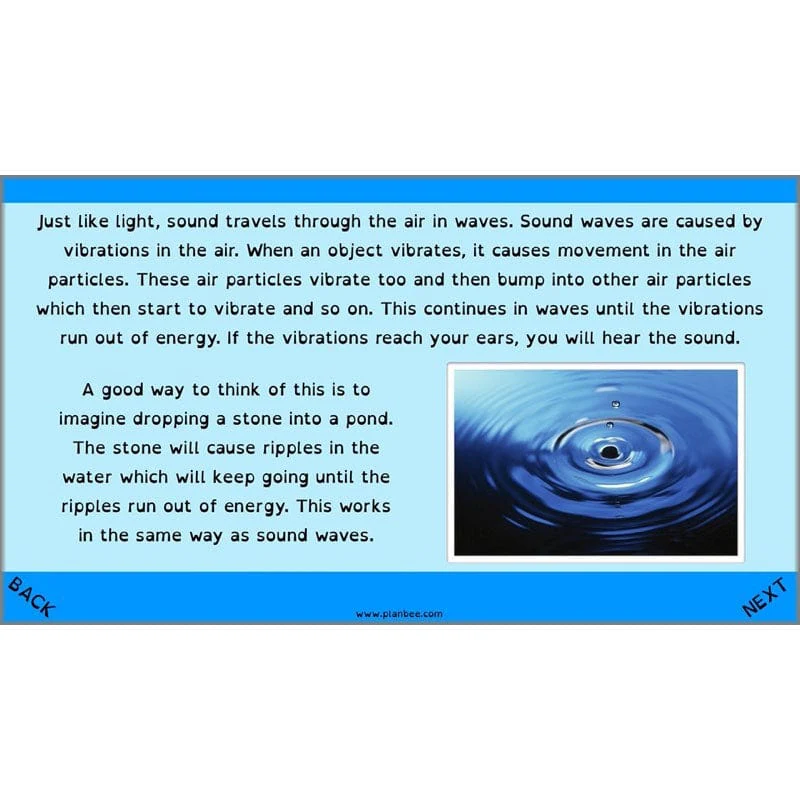
The first lesson in this series introduces children to the idea of sound being caused by vibrations and gives them the opportunity to explore visual ways of representing this in a practical, hands-on way.
The included lesson plan suggests two ways in which you could undertake learning activities with your class, depending on the resources you have available
What's included:
- Lesson plan
- Slides
- Activity ideas
- Differentiated worksheets
- Question cards
View Lesson 1
Travelling Sounds
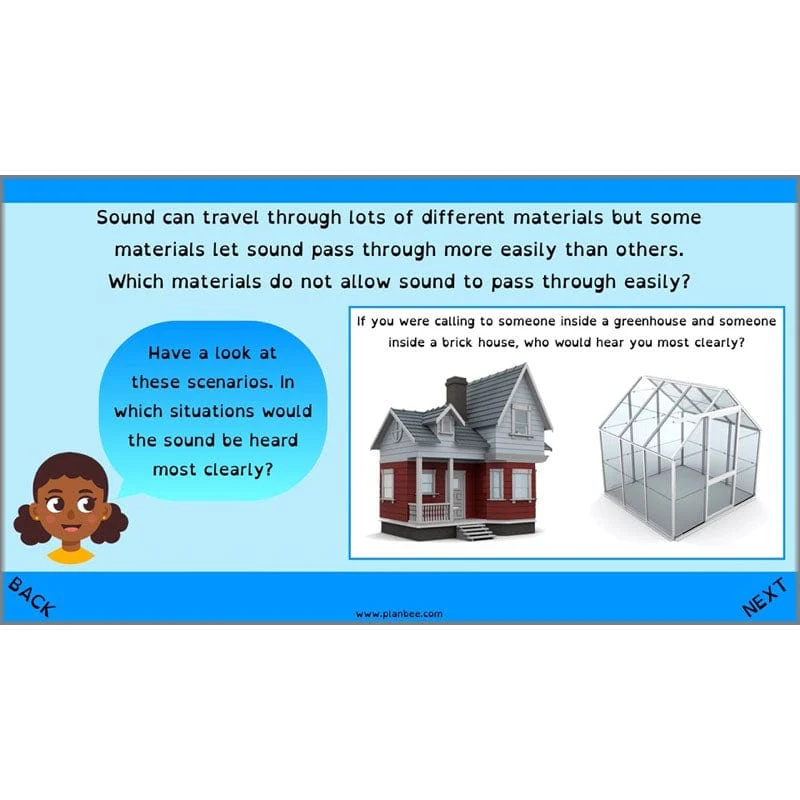
This lesson encourages children to think about the different materials sound travels through before it reaches their ears and to think about what this tells them about the different materials sound can travel through.
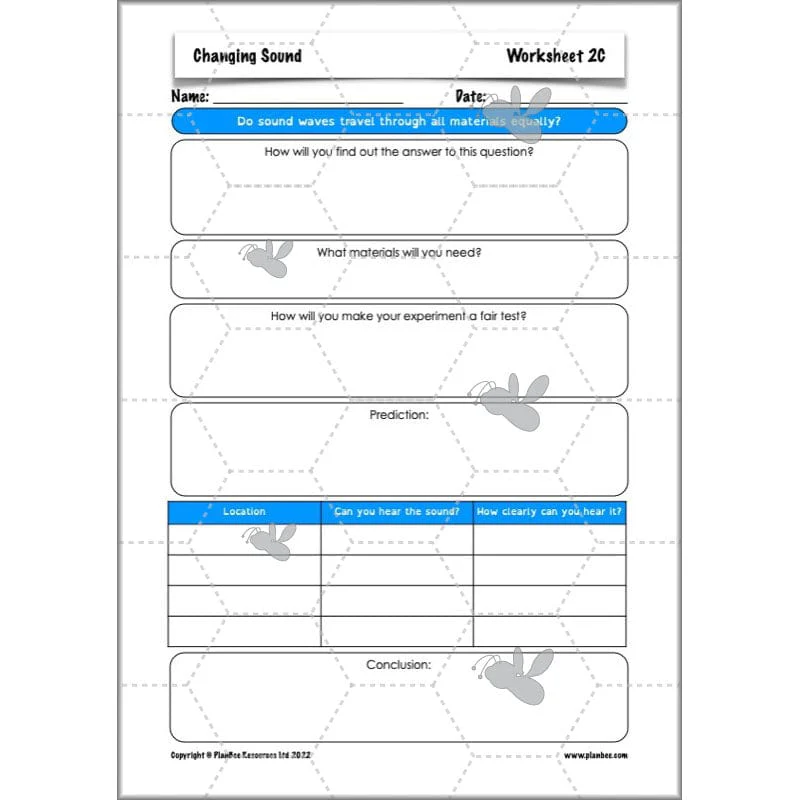
They will also have the opportunity to carry out an experiment to see which materials sound travels easily through and which muffle sound.
What's included:
- Lesson plan
- Slides
- Activity ideas
- Differentiated worksheets
View Lesson 2
Sound and Distance
How far away from a sound do you have to be before you can't hear it anymore?
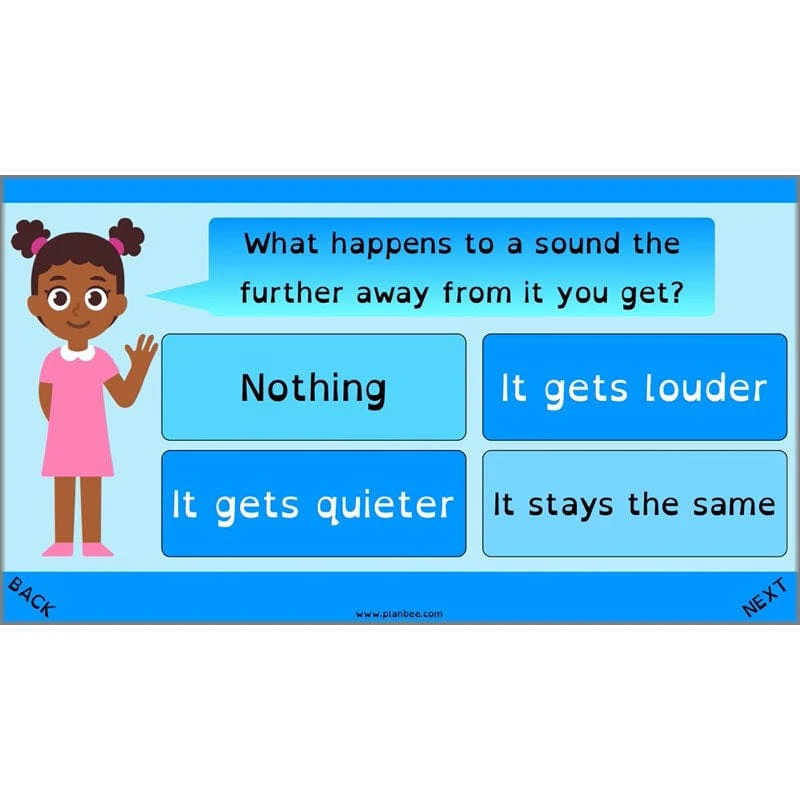
This lesson gives your class the opportunity to devise and carry out their own tests to see if they can find what happens to sound as you increase the distance between the sound and the person hearing the sound.
What's included:
- Lesson plan
- Slides
- Activity ideas
- Differentiated worksheets
View Lesson 3
Sound Block
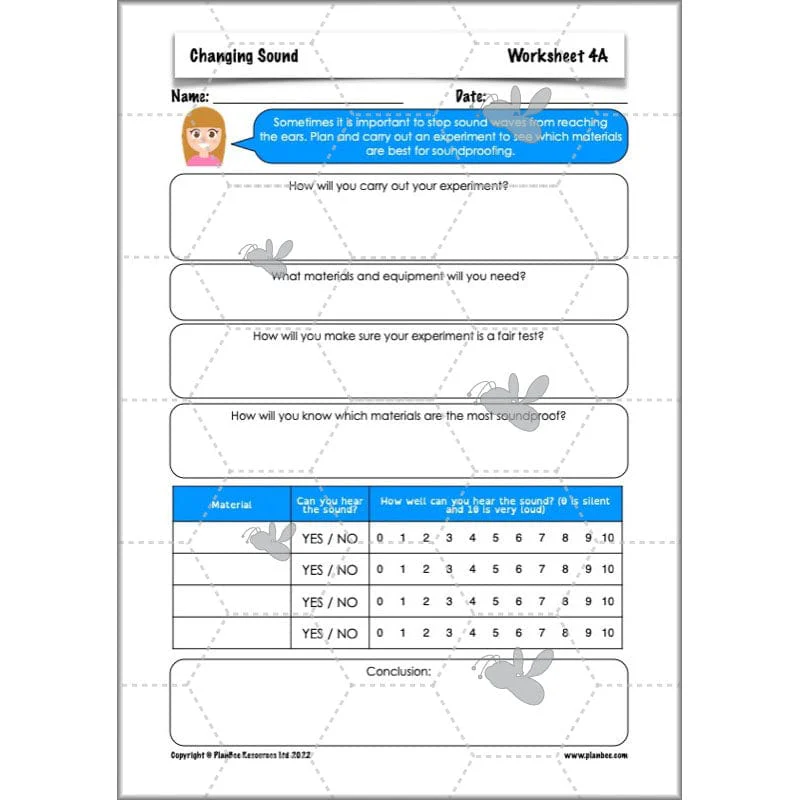
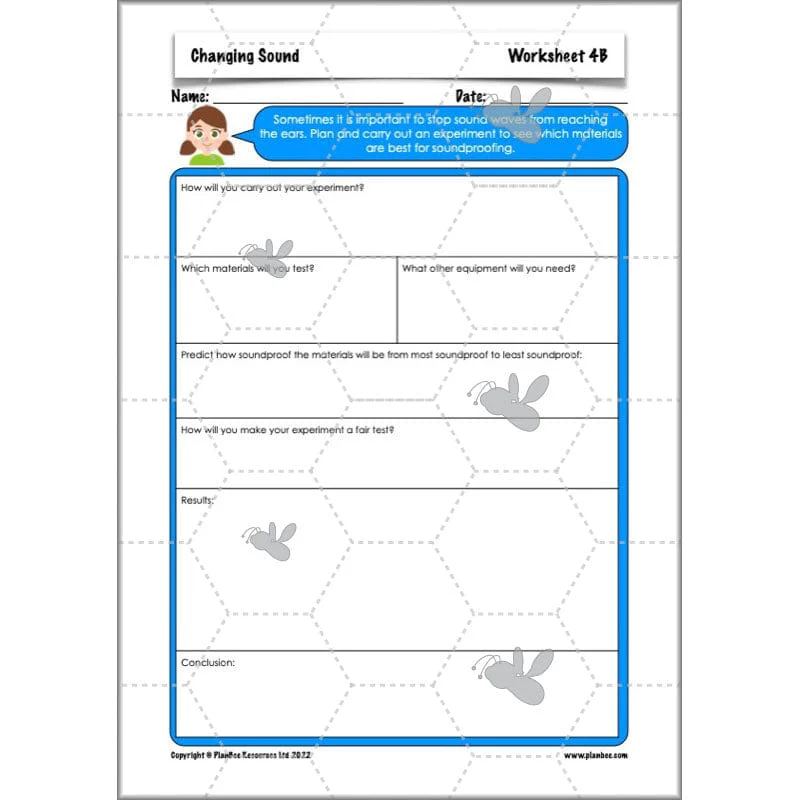
Why might soundproofing be helpful? What materials may be used for soundproofing purposes? Why?
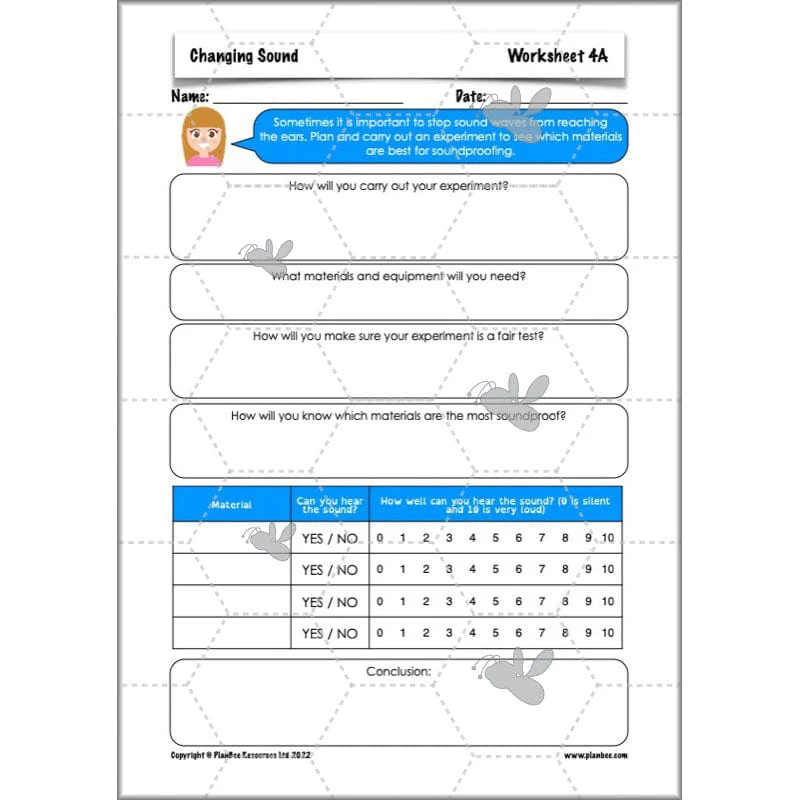
This lesson gives your class the chance to consider why it is sometimes necessary to prevent sound from travelling to the ears and to find out how this can be achieved through their own soundproofing activities and investigations.
What's included:
- Lesson plan
- Slides
- Activity ideas
- Differentiated worksheets
View Lesson 4
Pitch Perfect
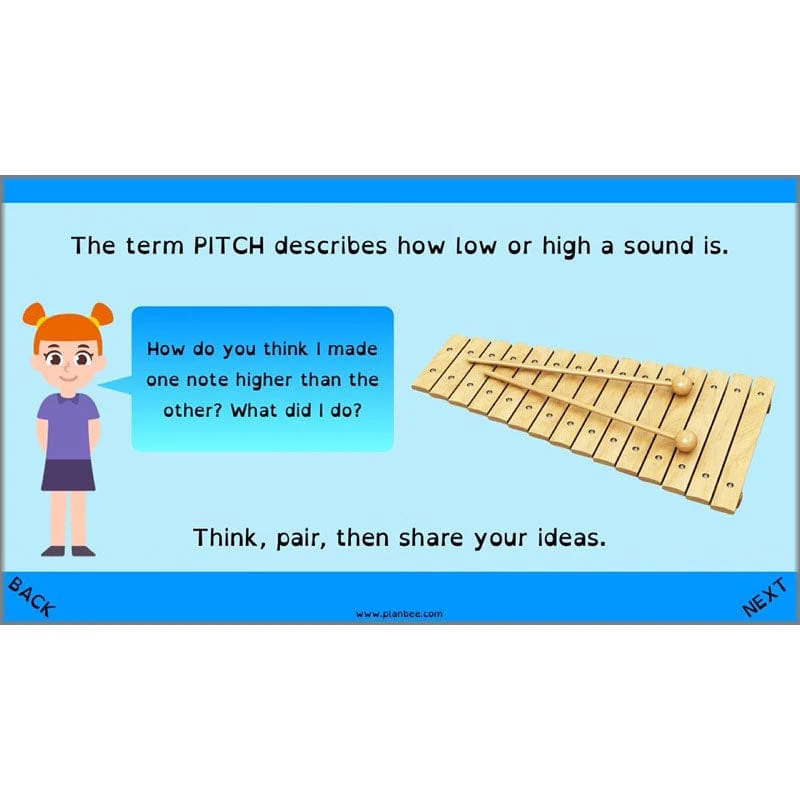
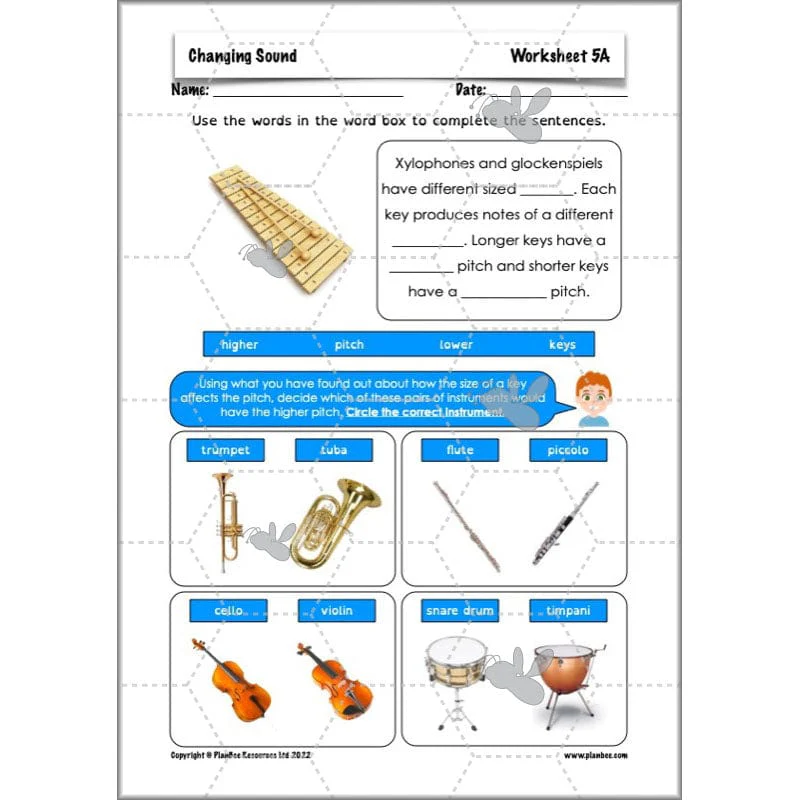
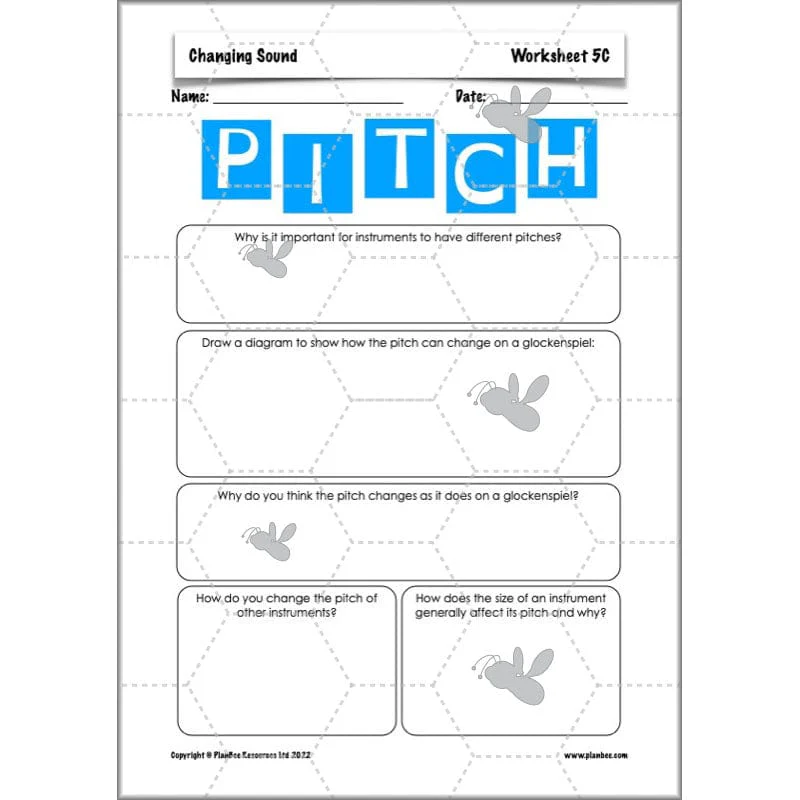
This fun lesson will get your class thinking about pitch and how notes of high and low pitch are created on different instruments.
Following this, give children the opportunity to test their musical ears and explore pitch in a variety of ways during either of the two included activities.
What's included:
- Lesson plan
- Slides
- Activity ideas
- Differentiated worksheets
View Lesson 5
String Sound
This lesson allows your class to investigate what happens to the pitch of notes on stringed instruments when the thickness, tightness and length of strings are altered.
You can work with real instruments, or undertake the alternative activity, where children can make their own guitars!
What's included:
- Lesson plan
- Slides
- Activity ideas
- Differentiated worksheets
View Lesson 6
Air Vibrations
Get ready for some bottle-blowing fun!
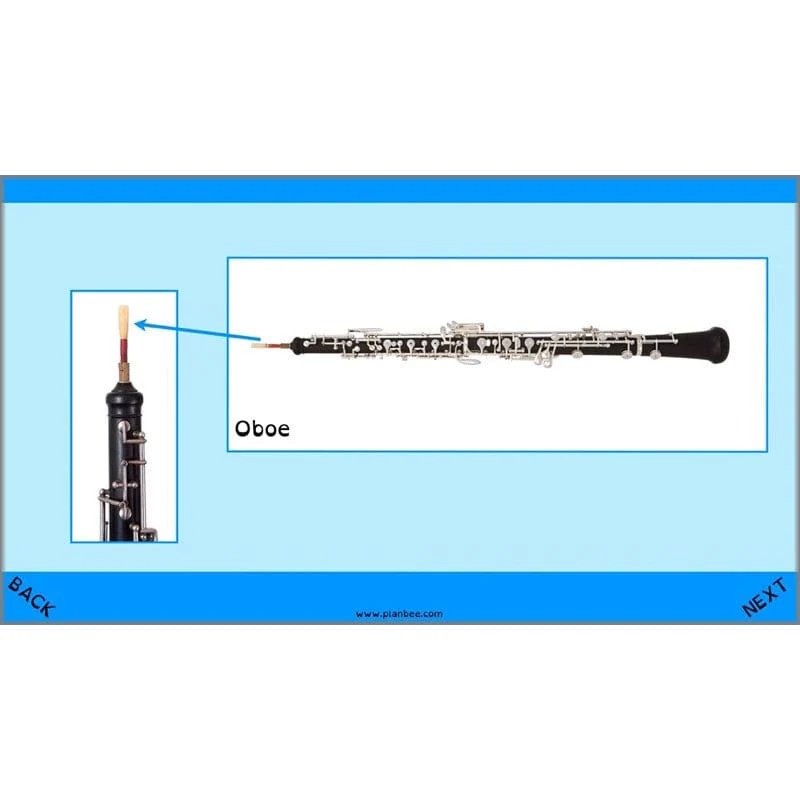
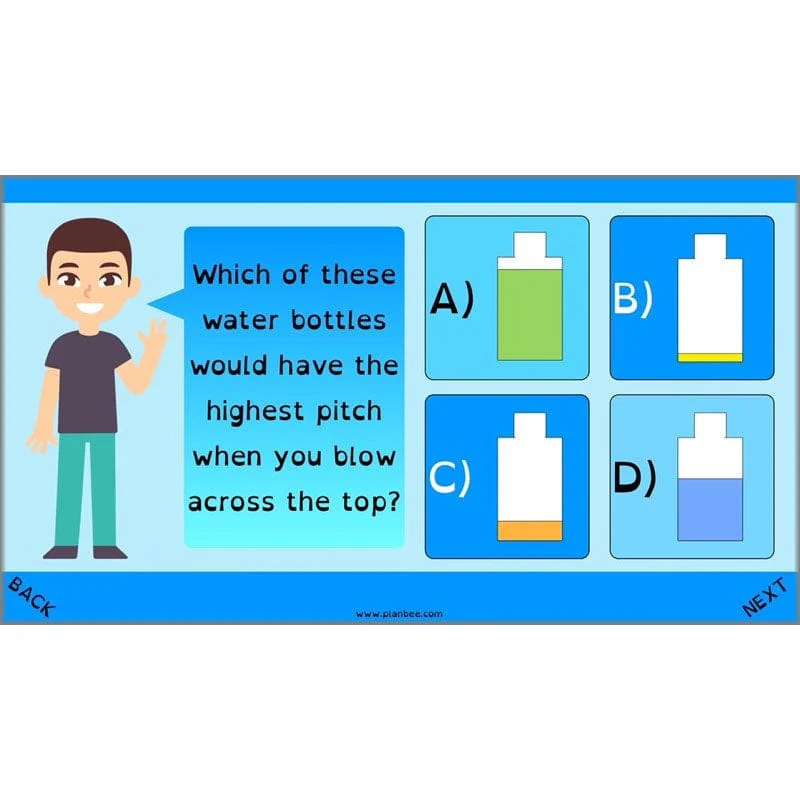
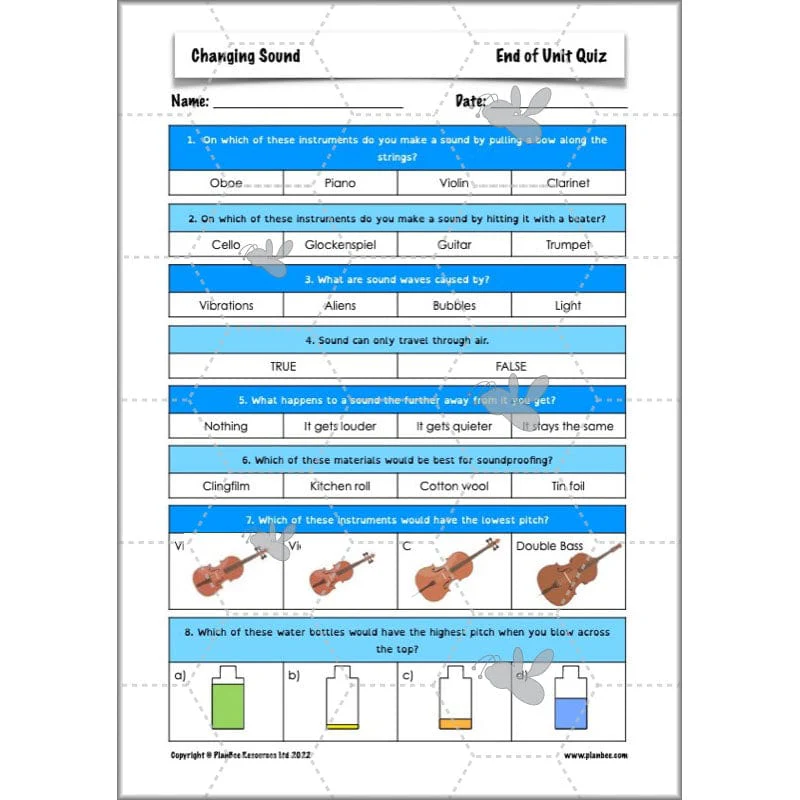
The final lesson in this series explores how air can vibrate to produce sounds and how the length of the air column in wind instruments changes the pitch of that sound.
During either of the two included activities, there are opportunities for children to investigate how sounds are produced in this way, and how they can be changed.
What's included:
- Lesson plan
- Slides
- Activity ideas
- Differentiated worksheets
- End of Unit Quiz
View Lesson 7
Original: $2.69
-65%$2.69
$0.94More Images
















Changing Sound
These Changing Sounds KS2 Science lessons for Year 4 children are fully planned and make teaching your class everything they need to know about sound easy and fun! The lessons explore what sound is and how it is made, before giving your class the chance to investigate how sound travels, how it can be blocked, how different pitches can be attained, and much more!
This Changing Sound Year 4 planning pack contains seven ready-to-teach lessons that have all the resources you need to deliver outstanding Science lessons. Each lesson has a lesson plan, a slideshow for the whole-class input, differentiated activity ideas plus an alternative activity, and a range of printable resources, including worksheets.
A Knowledge Organiser is included within the complete series download, or is available to purchase separately.
What is Sound?
The first lesson in this series introduces children to the idea of sound being caused by vibrations and gives them the opportunity to explore visual ways of representing this in a practical, hands-on way.
The included lesson plan suggests two ways in which you could undertake learning activities with your class, depending on the resources you have available
What's included:
- Lesson plan
- Slides
- Activity ideas
- Differentiated worksheets
- Question cards
View Lesson 1
Travelling Sounds
This lesson encourages children to think about the different materials sound travels through before it reaches their ears and to think about what this tells them about the different materials sound can travel through.
They will also have the opportunity to carry out an experiment to see which materials sound travels easily through and which muffle sound.
What's included:
- Lesson plan
- Slides
- Activity ideas
- Differentiated worksheets
View Lesson 2
Sound and Distance
How far away from a sound do you have to be before you can't hear it anymore?
This lesson gives your class the opportunity to devise and carry out their own tests to see if they can find what happens to sound as you increase the distance between the sound and the person hearing the sound.
What's included:
- Lesson plan
- Slides
- Activity ideas
- Differentiated worksheets
View Lesson 3
Sound Block
Why might soundproofing be helpful? What materials may be used for soundproofing purposes? Why?
This lesson gives your class the chance to consider why it is sometimes necessary to prevent sound from travelling to the ears and to find out how this can be achieved through their own soundproofing activities and investigations.
What's included:
- Lesson plan
- Slides
- Activity ideas
- Differentiated worksheets
View Lesson 4
Pitch Perfect
This fun lesson will get your class thinking about pitch and how notes of high and low pitch are created on different instruments.
Following this, give children the opportunity to test their musical ears and explore pitch in a variety of ways during either of the two included activities.
What's included:
- Lesson plan
- Slides
- Activity ideas
- Differentiated worksheets
View Lesson 5
String Sound
This lesson allows your class to investigate what happens to the pitch of notes on stringed instruments when the thickness, tightness and length of strings are altered.
You can work with real instruments, or undertake the alternative activity, where children can make their own guitars!
What's included:
- Lesson plan
- Slides
- Activity ideas
- Differentiated worksheets
View Lesson 6
Air Vibrations
Get ready for some bottle-blowing fun!
The final lesson in this series explores how air can vibrate to produce sounds and how the length of the air column in wind instruments changes the pitch of that sound.
During either of the two included activities, there are opportunities for children to investigate how sounds are produced in this way, and how they can be changed.
What's included:
- Lesson plan
- Slides
- Activity ideas
- Differentiated worksheets
- End of Unit Quiz
View Lesson 7
Product Information
Product Information
Shipping & Returns
Shipping & Returns
Description
These Changing Sounds KS2 Science lessons for Year 4 children are fully planned and make teaching your class everything they need to know about sound easy and fun! The lessons explore what sound is and how it is made, before giving your class the chance to investigate how sound travels, how it can be blocked, how different pitches can be attained, and much more!
This Changing Sound Year 4 planning pack contains seven ready-to-teach lessons that have all the resources you need to deliver outstanding Science lessons. Each lesson has a lesson plan, a slideshow for the whole-class input, differentiated activity ideas plus an alternative activity, and a range of printable resources, including worksheets.
A Knowledge Organiser is included within the complete series download, or is available to purchase separately.
What is Sound?
The first lesson in this series introduces children to the idea of sound being caused by vibrations and gives them the opportunity to explore visual ways of representing this in a practical, hands-on way.
The included lesson plan suggests two ways in which you could undertake learning activities with your class, depending on the resources you have available
What's included:
- Lesson plan
- Slides
- Activity ideas
- Differentiated worksheets
- Question cards
View Lesson 1
Travelling Sounds
This lesson encourages children to think about the different materials sound travels through before it reaches their ears and to think about what this tells them about the different materials sound can travel through.
They will also have the opportunity to carry out an experiment to see which materials sound travels easily through and which muffle sound.
What's included:
- Lesson plan
- Slides
- Activity ideas
- Differentiated worksheets
View Lesson 2
Sound and Distance
How far away from a sound do you have to be before you can't hear it anymore?
This lesson gives your class the opportunity to devise and carry out their own tests to see if they can find what happens to sound as you increase the distance between the sound and the person hearing the sound.
What's included:
- Lesson plan
- Slides
- Activity ideas
- Differentiated worksheets
View Lesson 3
Sound Block
Why might soundproofing be helpful? What materials may be used for soundproofing purposes? Why?
This lesson gives your class the chance to consider why it is sometimes necessary to prevent sound from travelling to the ears and to find out how this can be achieved through their own soundproofing activities and investigations.
What's included:
- Lesson plan
- Slides
- Activity ideas
- Differentiated worksheets
View Lesson 4
Pitch Perfect
This fun lesson will get your class thinking about pitch and how notes of high and low pitch are created on different instruments.
Following this, give children the opportunity to test their musical ears and explore pitch in a variety of ways during either of the two included activities.
What's included:
- Lesson plan
- Slides
- Activity ideas
- Differentiated worksheets
View Lesson 5
String Sound
This lesson allows your class to investigate what happens to the pitch of notes on stringed instruments when the thickness, tightness and length of strings are altered.
You can work with real instruments, or undertake the alternative activity, where children can make their own guitars!
What's included:
- Lesson plan
- Slides
- Activity ideas
- Differentiated worksheets
View Lesson 6
Air Vibrations
Get ready for some bottle-blowing fun!
The final lesson in this series explores how air can vibrate to produce sounds and how the length of the air column in wind instruments changes the pitch of that sound.
During either of the two included activities, there are opportunities for children to investigate how sounds are produced in this way, and how they can be changed.
What's included:
- Lesson plan
- Slides
- Activity ideas
- Differentiated worksheets
- End of Unit Quiz
View Lesson 7