Early Islamic Civilisation
This series of six lessons will transport your children through the early Islamic civilisation timeline, from the foundation of Islam and the expansion of the empire in the seventh century, to its political fragmentation and dissolution in the 13th century. These lessons will expand your children's understanding of the world as well as their critical thinking. Throughout the unit, children will practise and sharpen historical skills, such as how to create accurate timelines, analyse historical sources, summarise and synthesise historical evidence, make informed comparisons and assess cause.
Each ready-to-teach Early Islamic Civilisation History lesson contains a detailed lesson plan with differentiated activities, an engaging slideshow and printable resources to support the children's learning.
You may also like our Early Islamic Civilisation Topic Bundle containing four ready-to-teach schemes of work covering History, Geography, Art and DT.
A Knowledge Organiser is available to support the learning in this scheme. It is included in the Complete Series download or can be purchased individually.
The foundation and expansion of the early Islamic civilisation
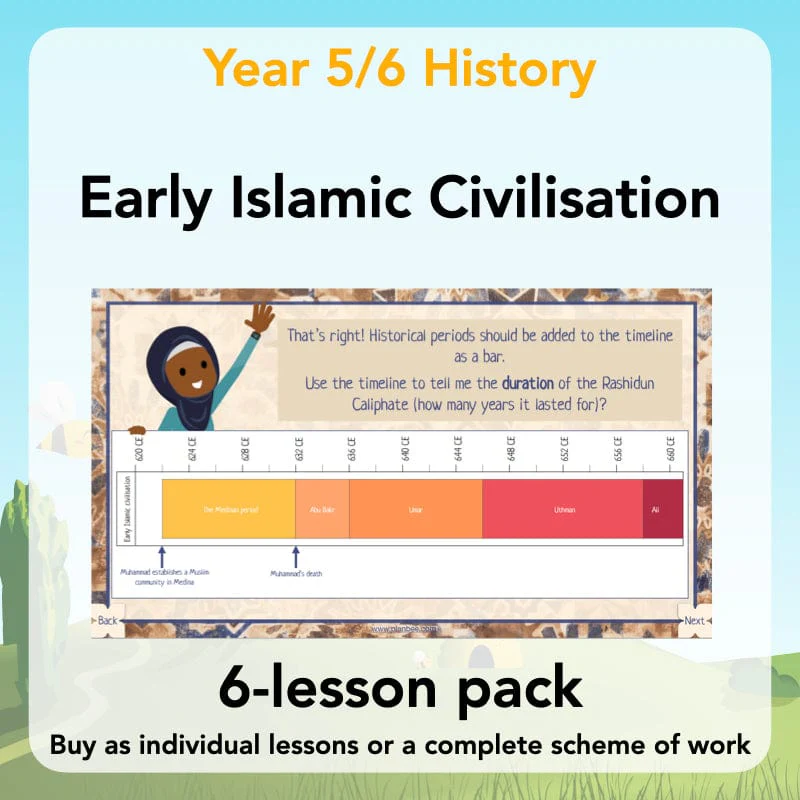
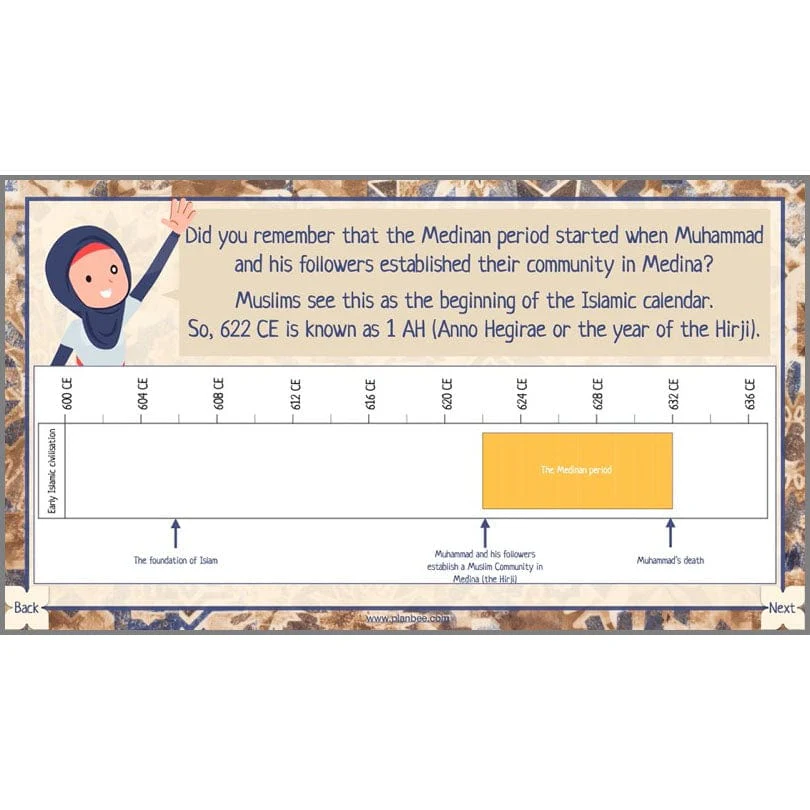
In this opening lesson, children explore the beginnings of the early Islamic empire and learn about the three major caliphates of the period: the Rashidun, Umayyad and Abbasid Caliphates.
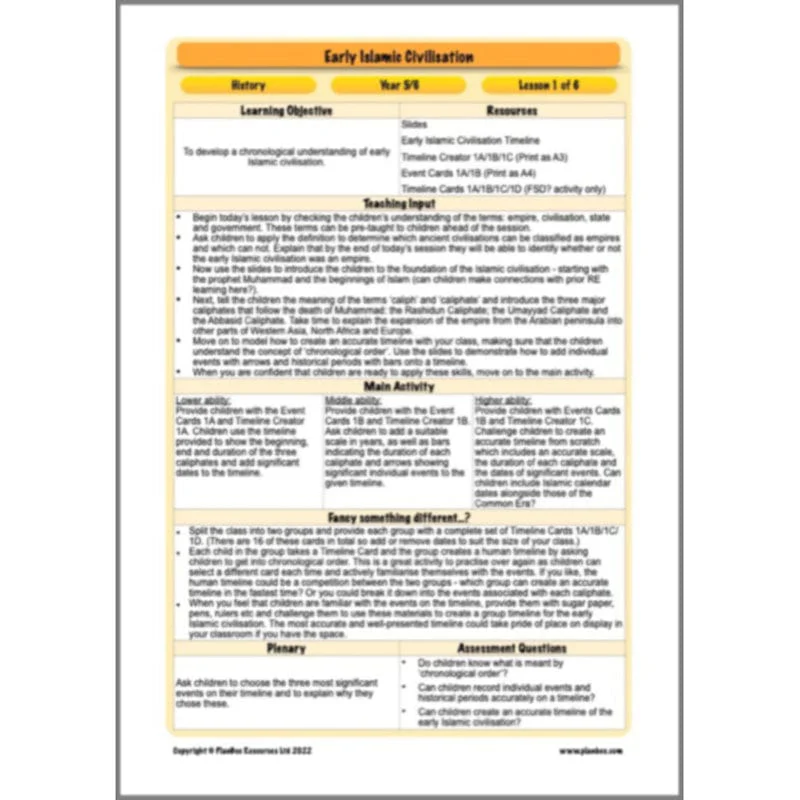
Children will learn how to create a chronologically accurate timeline which plots the key periods and significant events in the foundation and expansion of the empire.
Everything you need to teach this lesson is included in the pack. There is an engaging slideshow, a detailed lesson plan with differentiated activity ideas and all the printable resources required.
What's included:
- Lesson plan
- Slides
- Activity ideas
- Timeline Creators
- Event Cards
- Timeline Cards
View Lesson 1
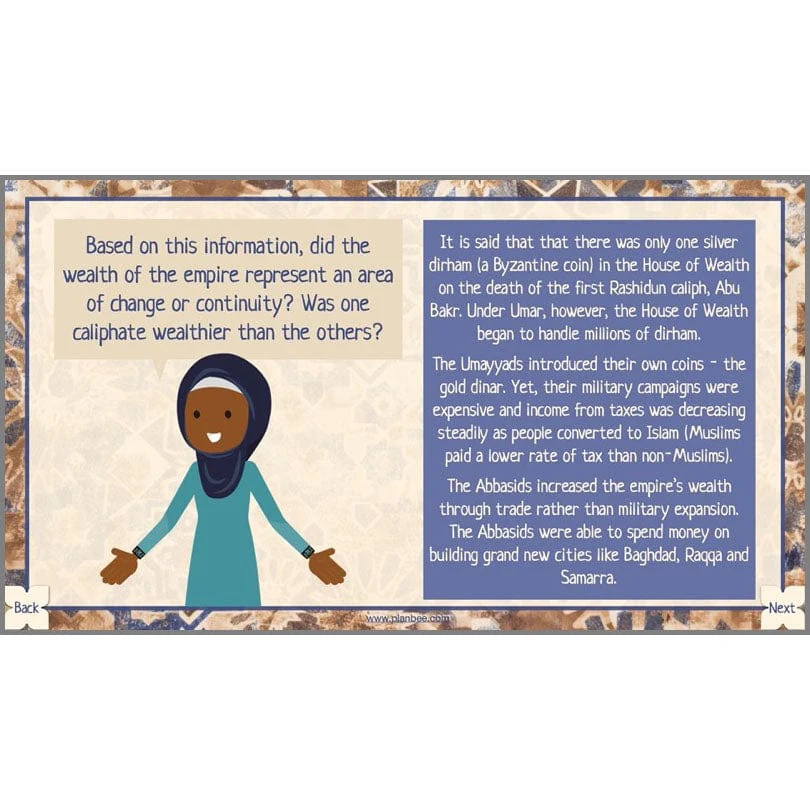
The three major caliphates: 632-1258 CE
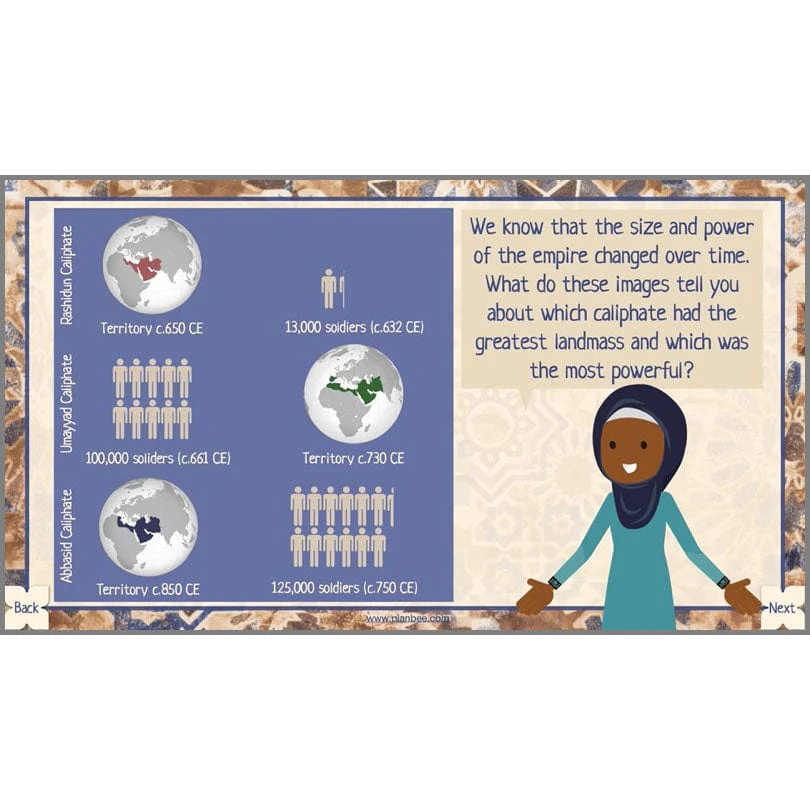
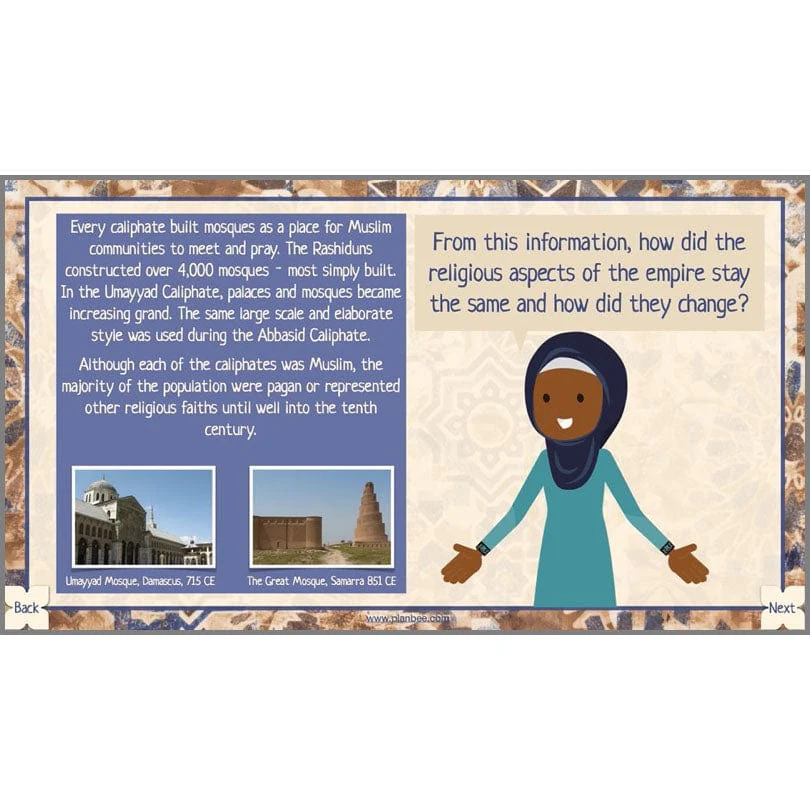
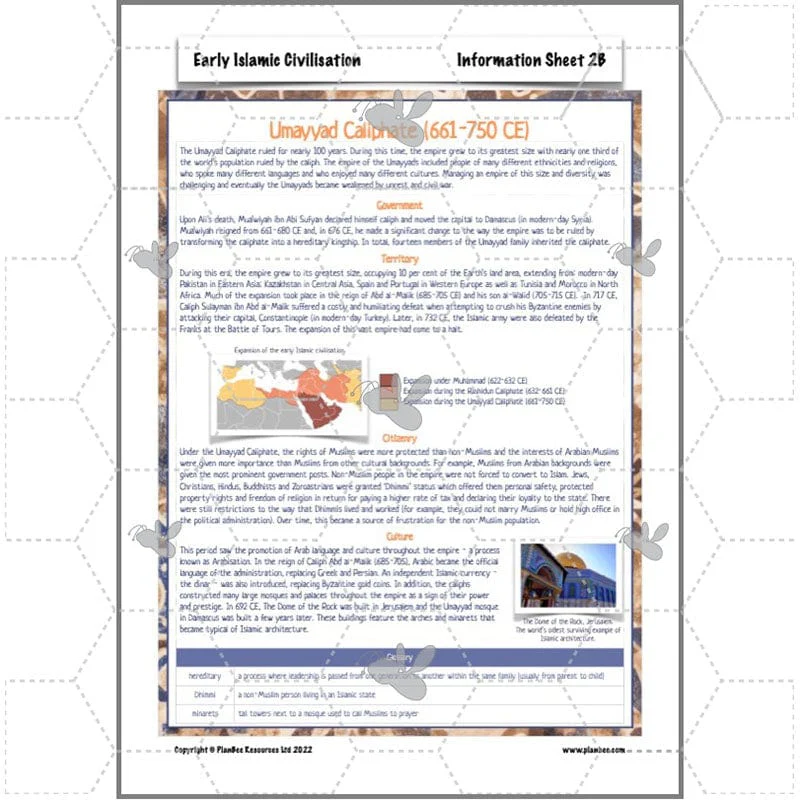
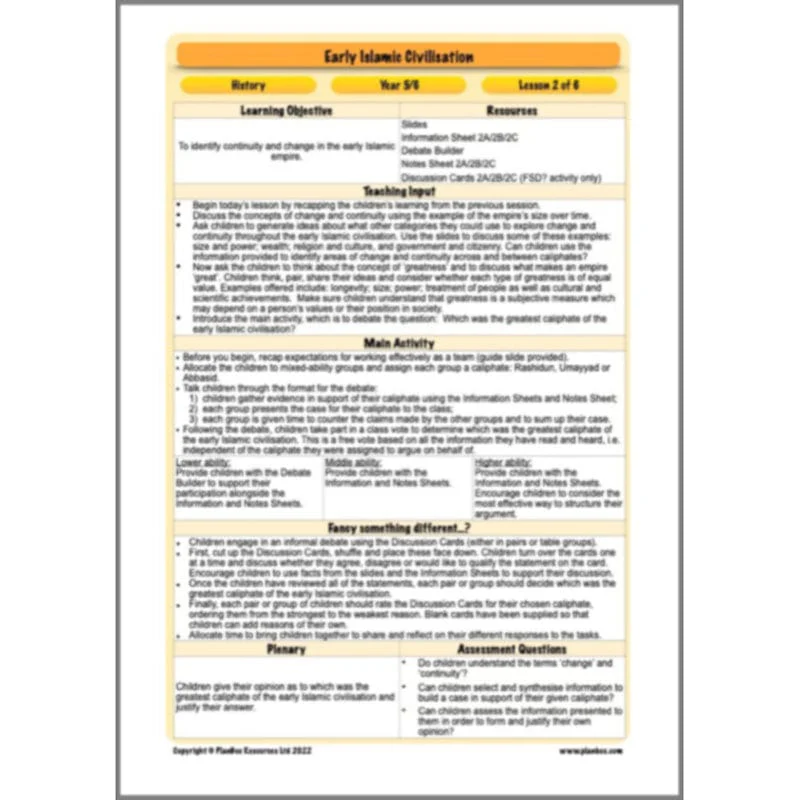
In this session, children debate the question: which was the greatest caliphate of the early Islamic civilisation? Working in teams, children build a case for their caliphate which summarises and synthesises evidence from their research.
Childen have the opportunity to present the case for their caliphate as well as to listen to and ask questions about the cases made for the other caliphates before taking part in a free vote.
Encouraging teamwork and critical thinking is a breeze with this ready to teach lesson pack which comes with an engaging slideshow, detailed lesson plan with differentiated activity ideas and printable resources.
What's included:
- Lesson plan
- Slides
- Activity ideas
- Debate Builder
- Notes Sheets
- Discussion Cards
View Lesson 2
Life in 10th century Baghdad
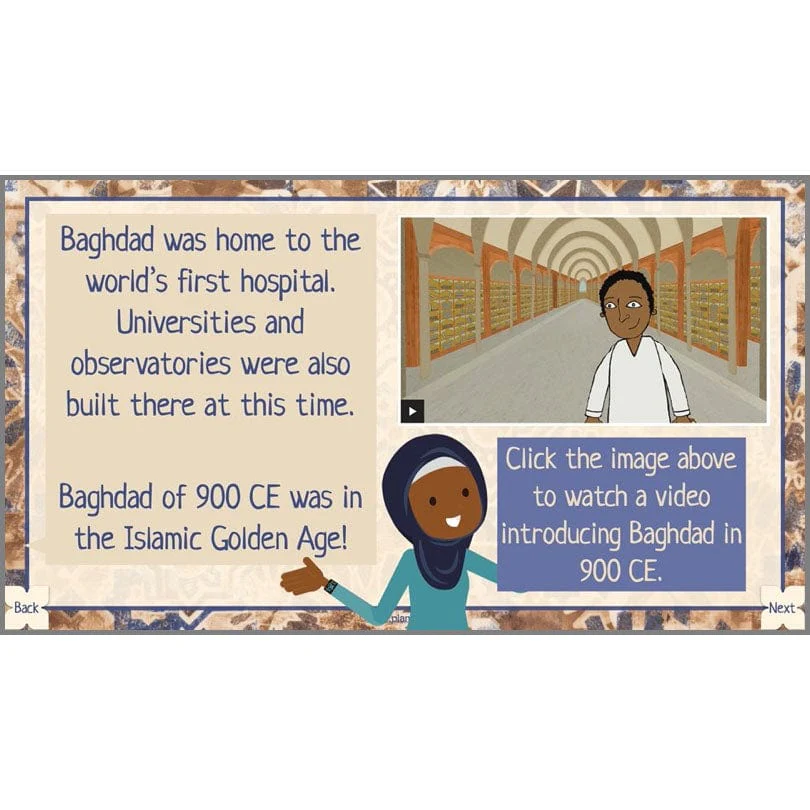
In this lesson, children will find out about the incredible city of Baghdad which was once the largest and most advanced city in the world. Children will analyse a variety of primary and secondary sources to find out what life might have been like in Baghdad c.900 CE.
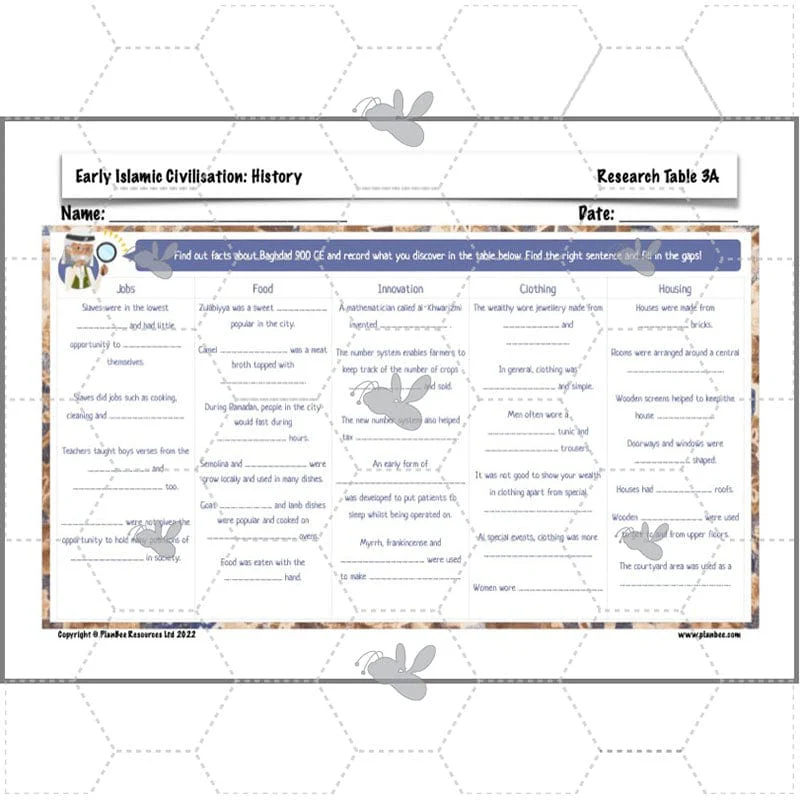
Children will summarise and collate all that they have discovered about the various aspects of life in Baghdad in a table before considering how bias can affect the usefulness and reliability of historical sources.
Everything you need to teach this lesson is included in the pack. There is an engaging slideshow, a detailed lesson plan with differentiated activity ideas and all the printable resources required.
What's included:
- Lesson plan
- Slides
- Activity ideas
- Fact Cards
- Research Table
- Information Text
- Exhibit Cards
- Exhibition Sheet
View Lesson 3
Scholars and Inventions of the House of Wisdom
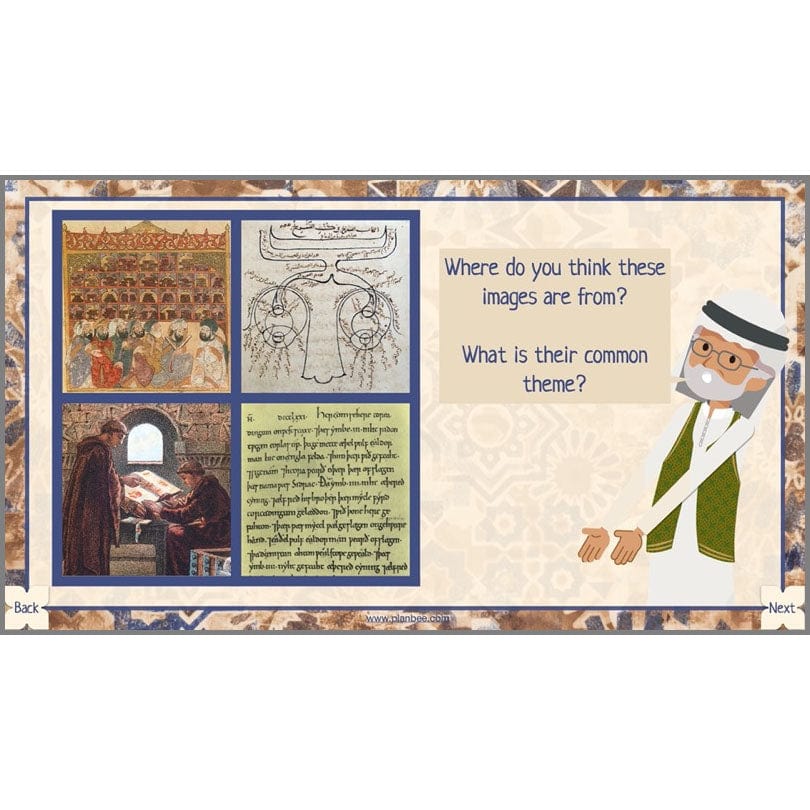
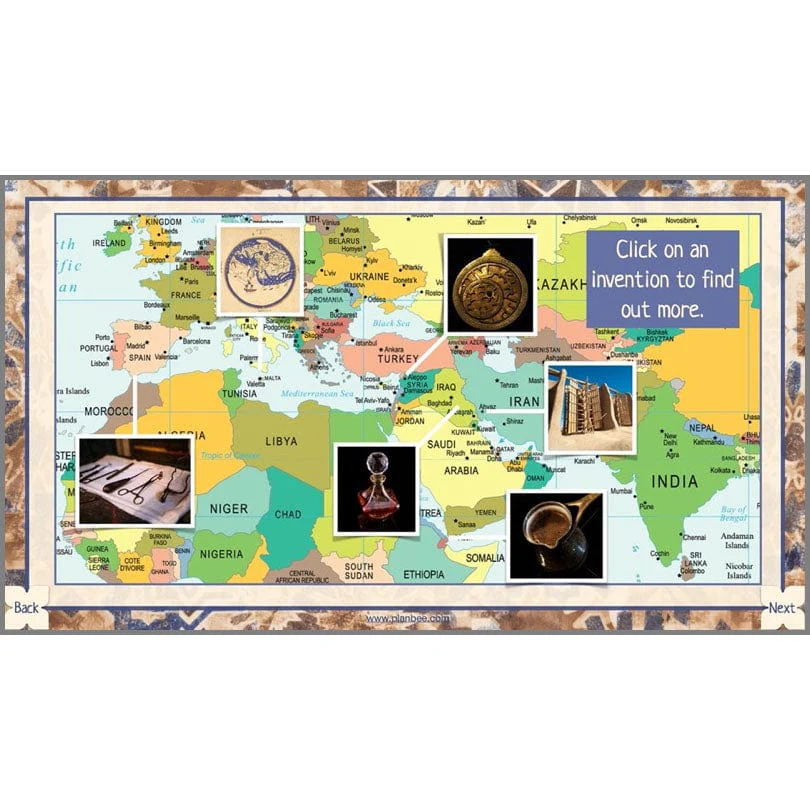
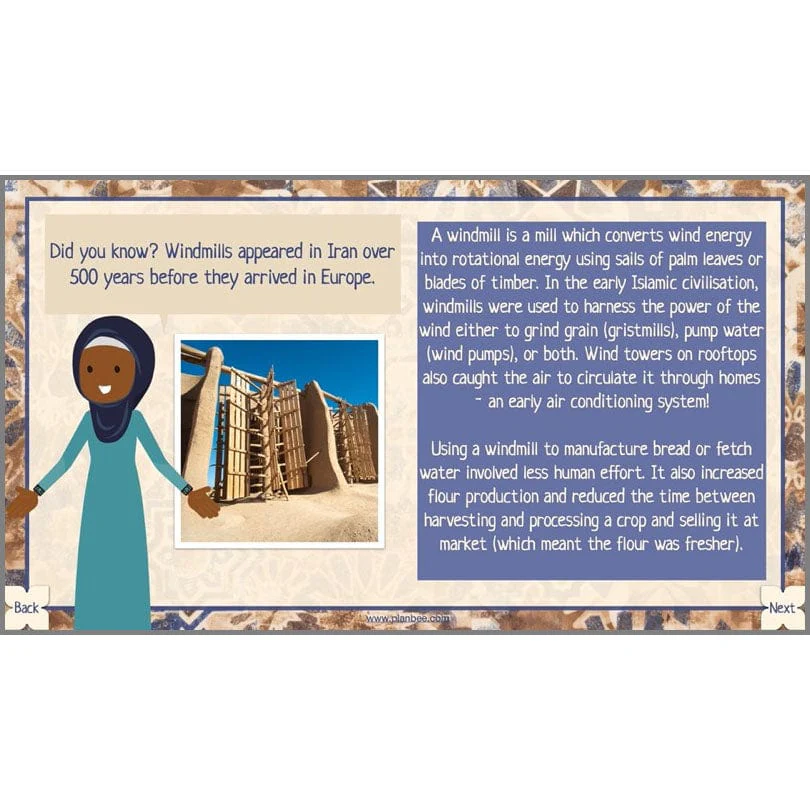
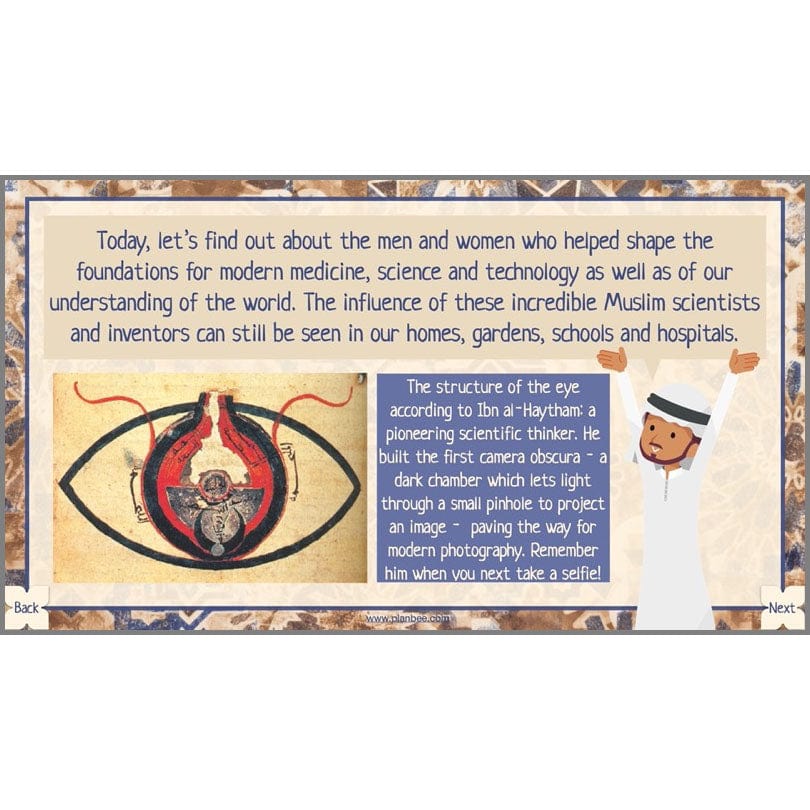
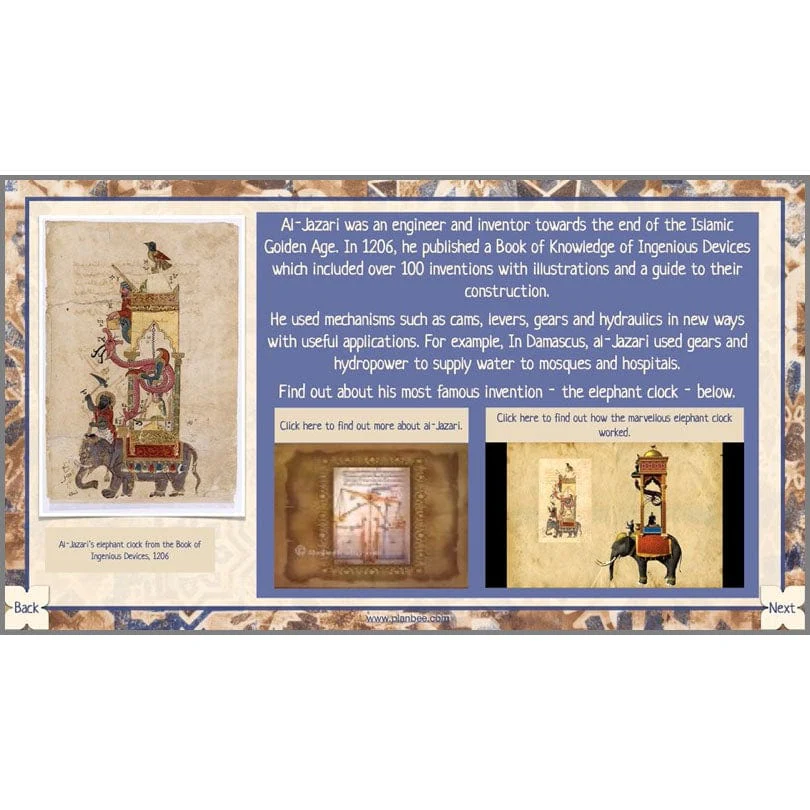
This lesson will open your children's eyes to how the scientific and cultural endeavours of the early Islamic civilisation have shaped our understanding and experience of the modern world - from the development of hospitals and surgical instruments to advancing our understanding of light and vision and creating the first camera technology, to introducing a more efficient means of recording and calculating with number.
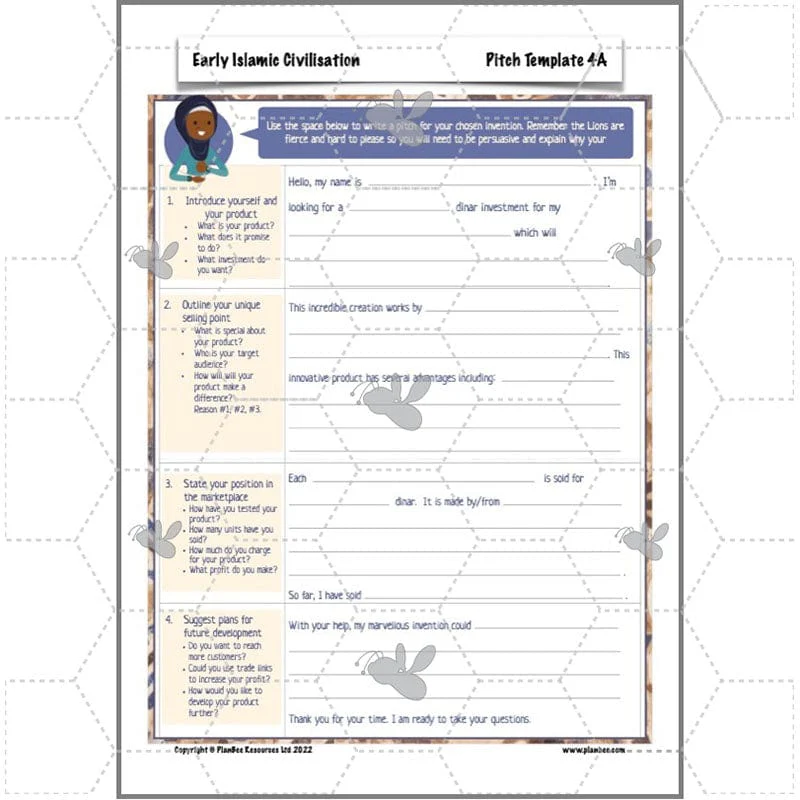
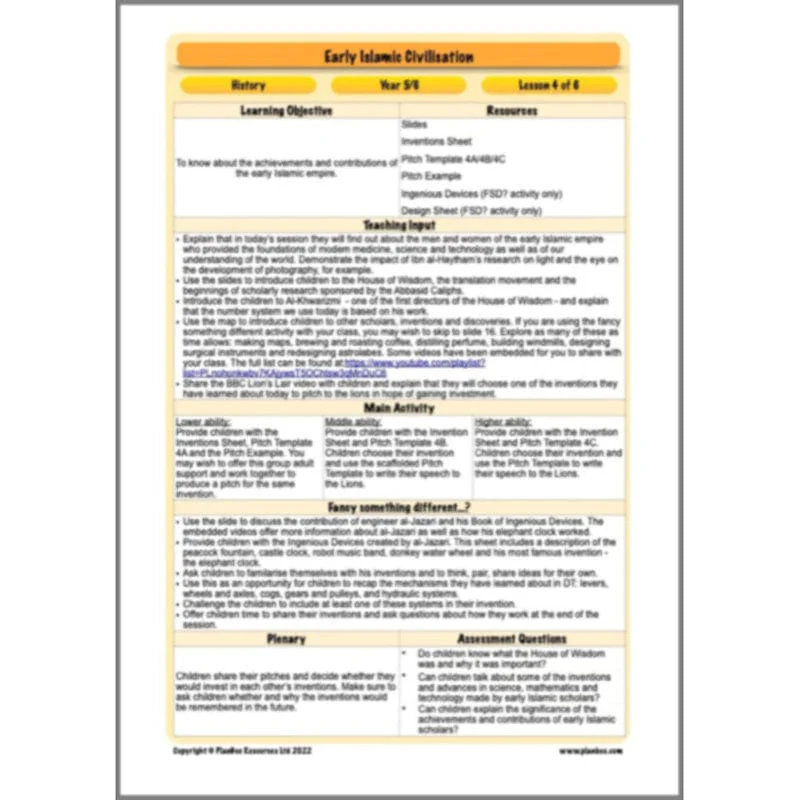
Children will research a range of fantastic inventions before applying their knowledge by pitching an invention to a panel of potential investors. If you fancy something different, enjoy the Book of Ingenious Devices with your class and offer children the opportunity to design their own ingenious device!
Inspiring children to learn has never been so easy with this instantly downloadable lesson pack. All you need is right here, including a multi-media slideshow, detailed lesson plan and engaging, printable resources.
What's included:
- Lesson plan
- Slides
- Activity ideas
- Invention Sheet
- Pitch Template
- Pitch Example
- Ingenious Devices
- Design Sheet
View Lesson 4
Golden Age Baghdad and Dark Age London
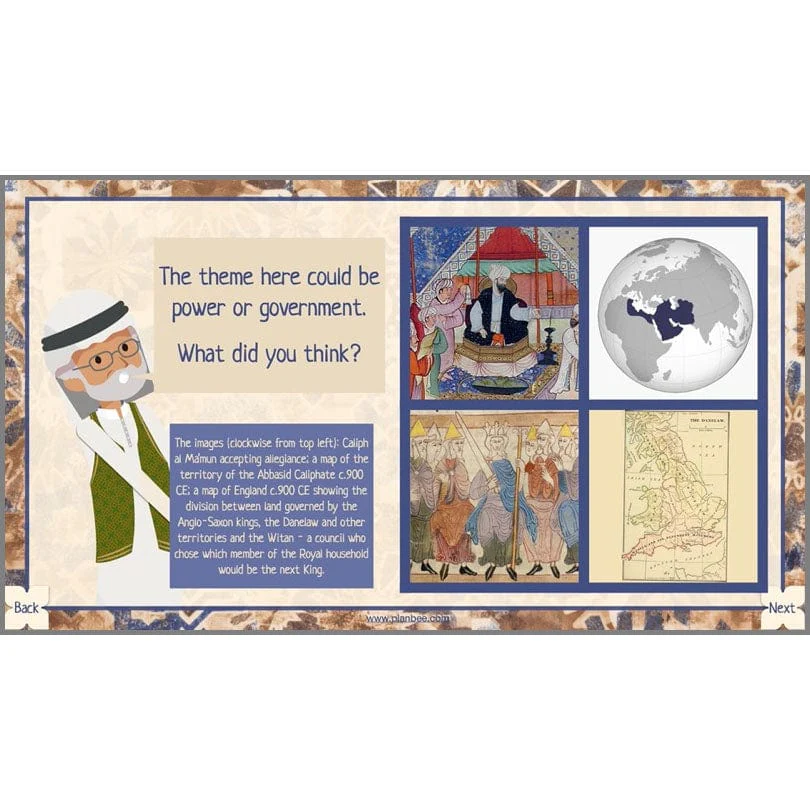
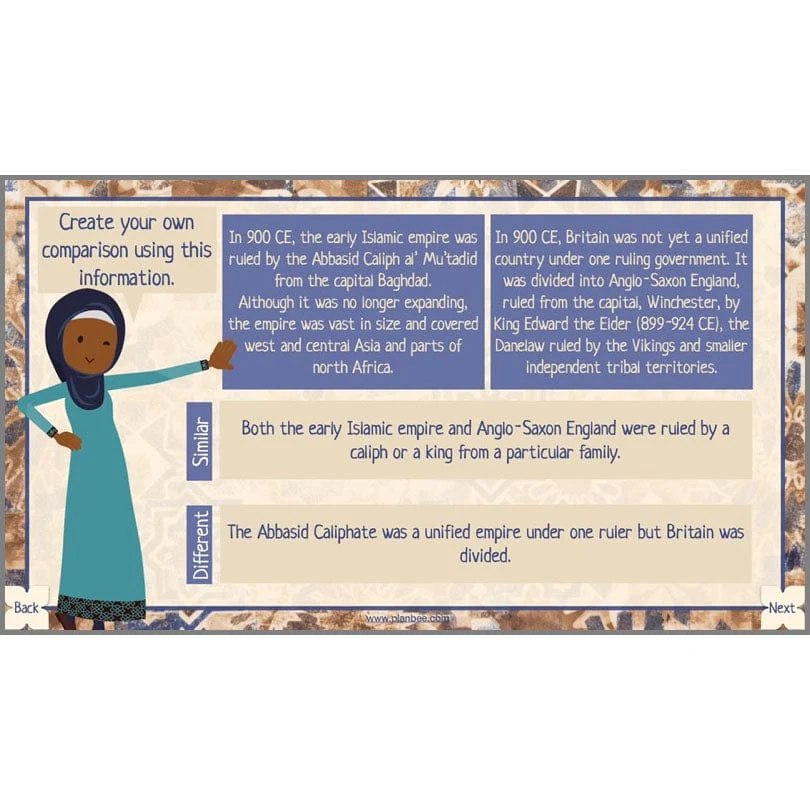
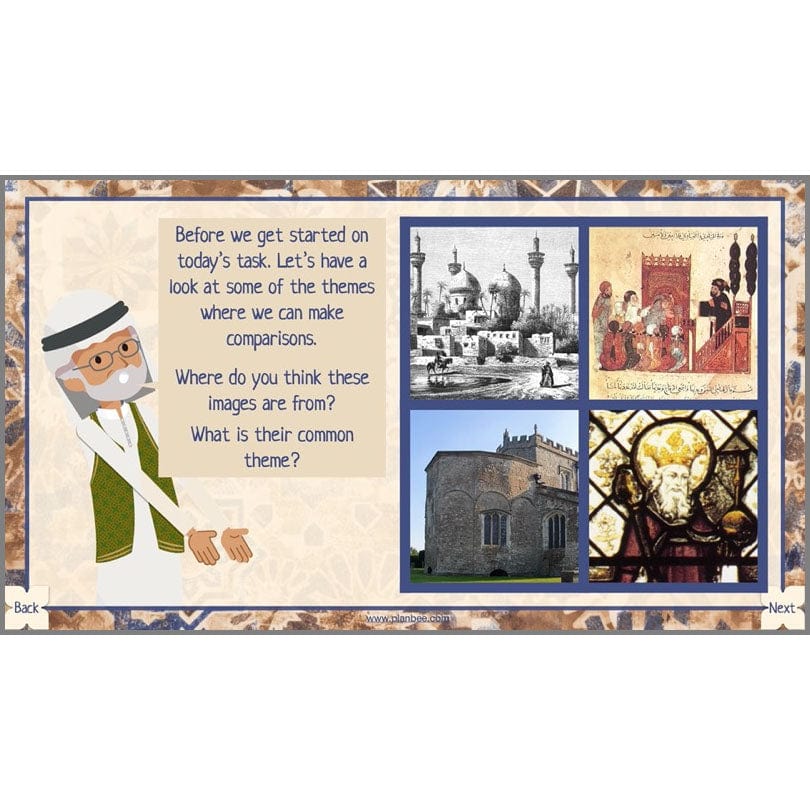
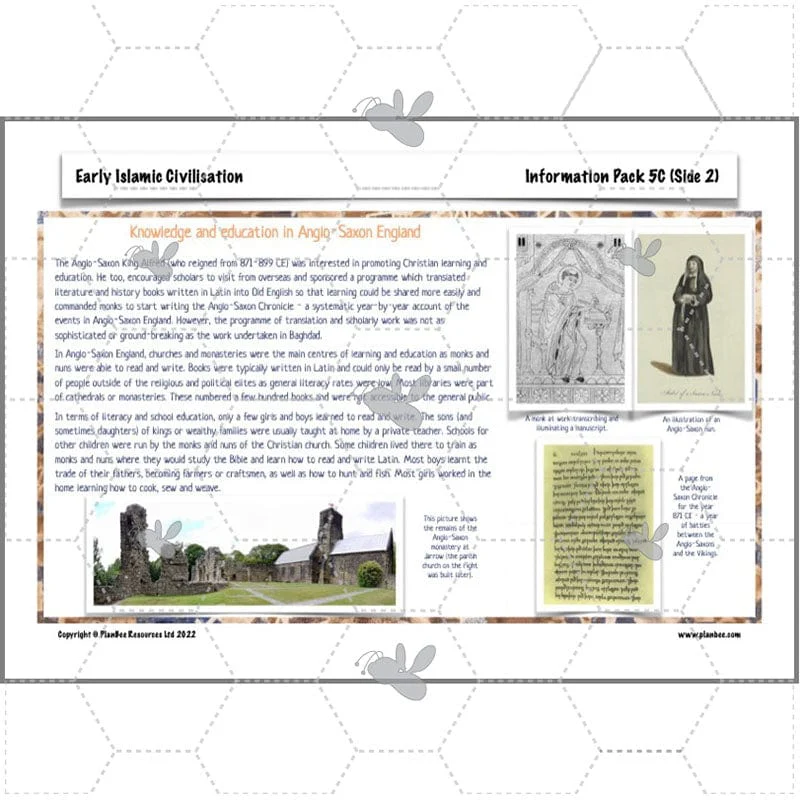
During this knowledge-rich session, children will learn how to make comparisons between Baghdad of the Islamic Golden Age and London of Dark Age Anglo-Saxon England c.900 CE.
After they have practised summarising and synthesising similarities and differences, children will research an area of life in Baghdad and London during the same time period. When children have become an 'expert' in their field of research, they will participate in an Expert Exchange - sharing their knowledge and understanding with one another.
All you need to compare the experience of life in Golden Age Baghdad and Anglo-Saxon London is right here! This lesson pack includes a detailed lesson plan with differentiated learning activities, a visual-filled slideshow, and well-researched, printable resources.
What's included:
- Lesson plan
- Slides
- Activity ideas
- Information Packs
- Expert Exchange Instruction Sheet
- Comparison Support Notes
- Information Card Sets
- Comparison Table
View Lesson 5
The decline of the empire
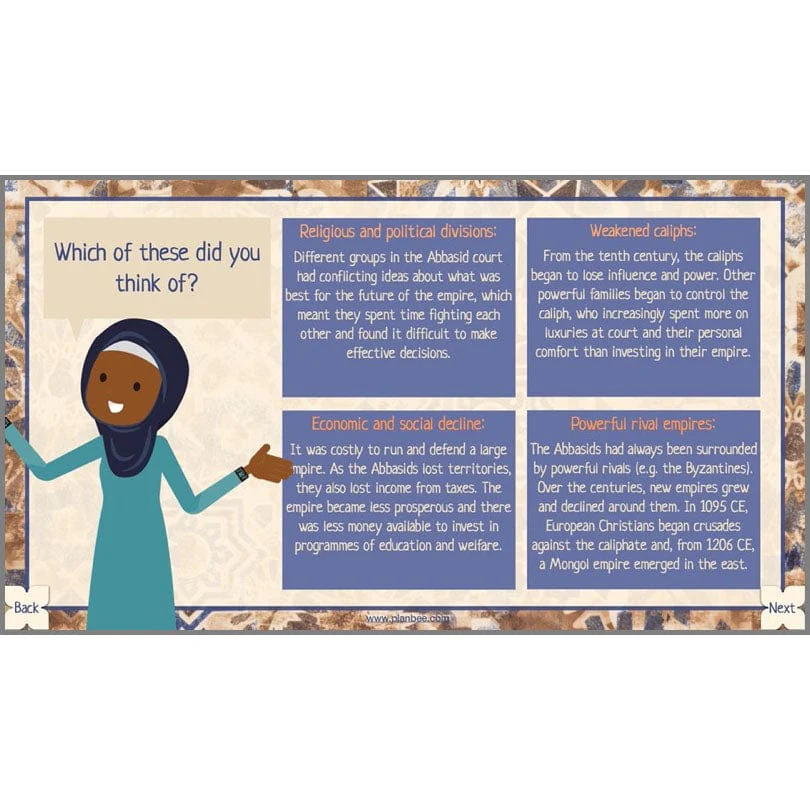
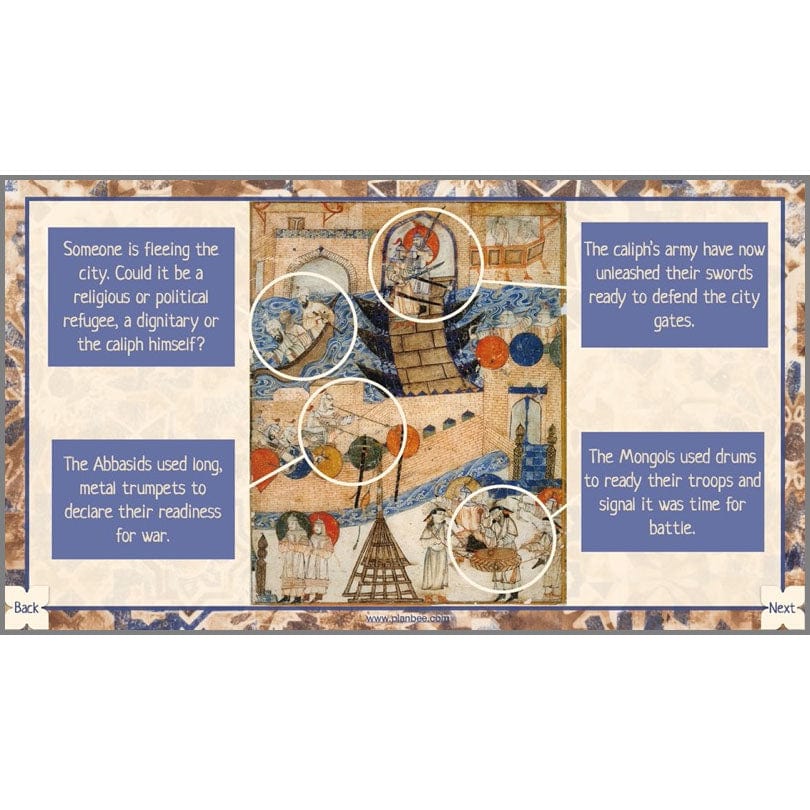
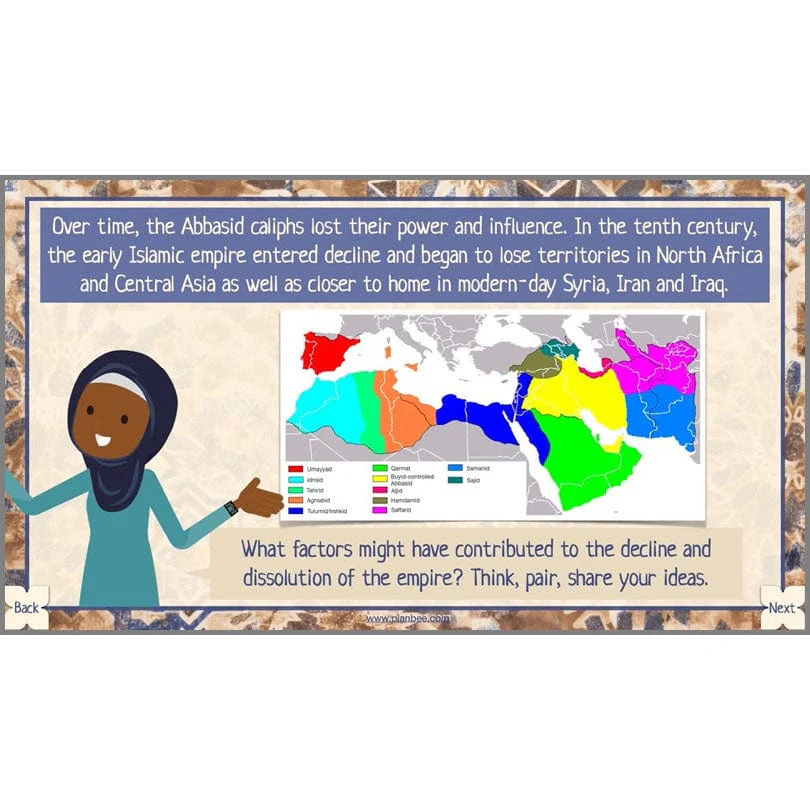
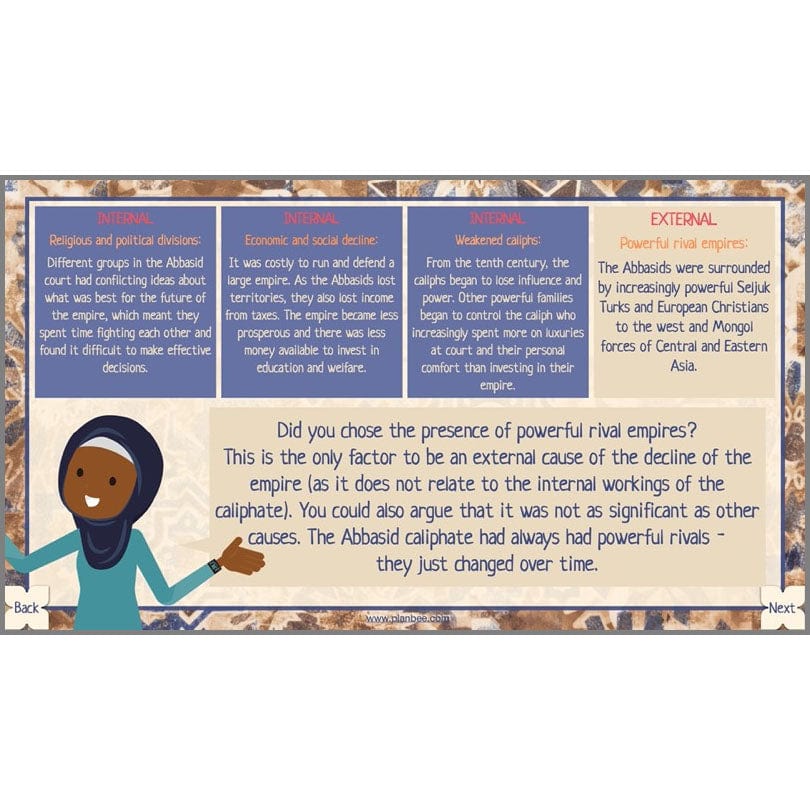
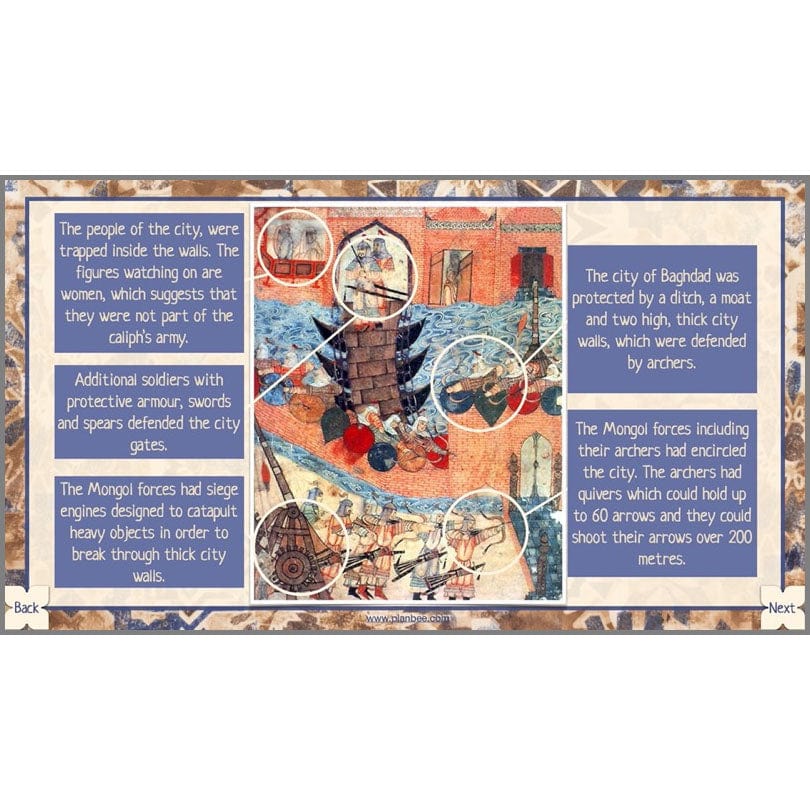
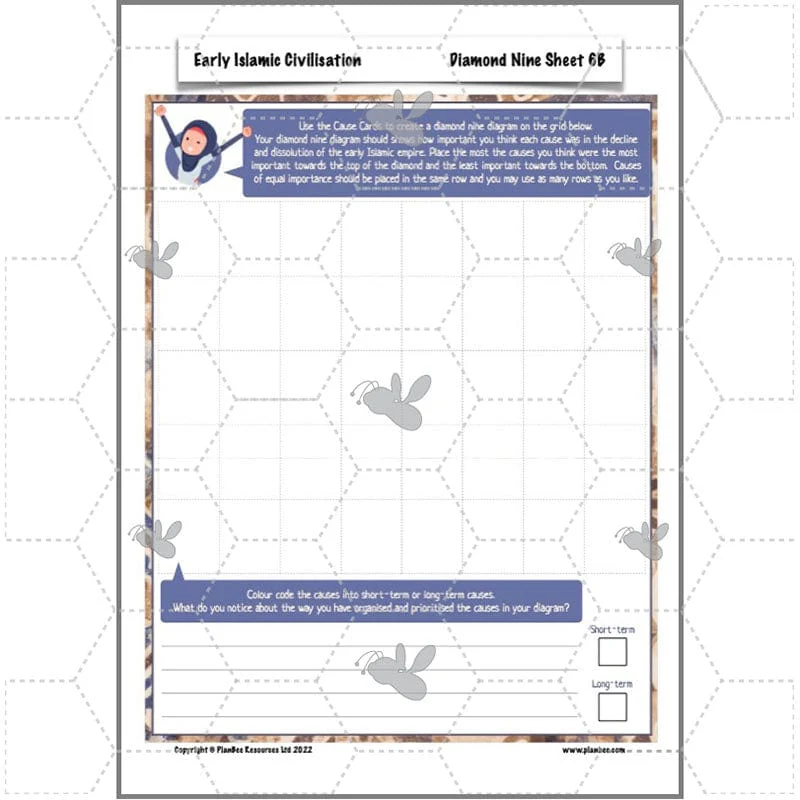
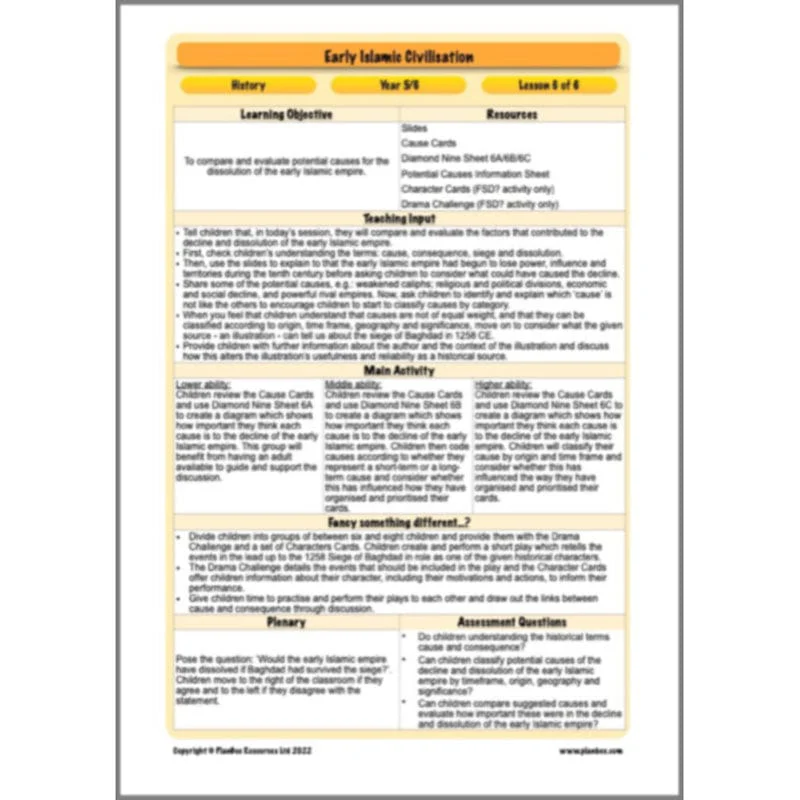
In this last session, children consider the potential causes which led to the decline and dissolution of the early Islamic empire and look closer at the events leading up to the 1258 Siege of Baghdad.
This lesson offers the option to explore cause and consequence with children through a dramatic retelling of the events leading up to the 1258 Siege of Baghdad or to categorise and assess the relative significance of potential causes of the empire's decline through a diamond nine activity.
If you want your class to develop their learning through hands-on, engaging activities then this is the lesson for you. This lesson pack comes with everything you need: a detailed lesson plan with differentiated activities, an informative slideshow and printable resources to support children's learning.
What's included:
- Lesson plan
- Slides
- Activity ideas
- Diamond Nine Sheet
- Potential Cause Information Sheet
- Character Cards
- Drama Challenge Card
View Lesson 6
This Year 5/6 History Knowledge Organiser has been created to complement our History 'Early Civilisations' strand. It is designed to support your children’s understanding of key vocabulary linked to this scheme of work. Enquiry questions have been included to encourage your children to think like a historian within this topic.
View Knowledge Organiser
Original: $2.69
-65%$2.69
$0.94More Images




























Early Islamic Civilisation
This series of six lessons will transport your children through the early Islamic civilisation timeline, from the foundation of Islam and the expansion of the empire in the seventh century, to its political fragmentation and dissolution in the 13th century. These lessons will expand your children's understanding of the world as well as their critical thinking. Throughout the unit, children will practise and sharpen historical skills, such as how to create accurate timelines, analyse historical sources, summarise and synthesise historical evidence, make informed comparisons and assess cause.
Each ready-to-teach Early Islamic Civilisation History lesson contains a detailed lesson plan with differentiated activities, an engaging slideshow and printable resources to support the children's learning.
You may also like our Early Islamic Civilisation Topic Bundle containing four ready-to-teach schemes of work covering History, Geography, Art and DT.
A Knowledge Organiser is available to support the learning in this scheme. It is included in the Complete Series download or can be purchased individually.
The foundation and expansion of the early Islamic civilisation
In this opening lesson, children explore the beginnings of the early Islamic empire and learn about the three major caliphates of the period: the Rashidun, Umayyad and Abbasid Caliphates.
Children will learn how to create a chronologically accurate timeline which plots the key periods and significant events in the foundation and expansion of the empire.
Everything you need to teach this lesson is included in the pack. There is an engaging slideshow, a detailed lesson plan with differentiated activity ideas and all the printable resources required.
What's included:
- Lesson plan
- Slides
- Activity ideas
- Timeline Creators
- Event Cards
- Timeline Cards
View Lesson 1
The three major caliphates: 632-1258 CE
In this session, children debate the question: which was the greatest caliphate of the early Islamic civilisation? Working in teams, children build a case for their caliphate which summarises and synthesises evidence from their research.
Childen have the opportunity to present the case for their caliphate as well as to listen to and ask questions about the cases made for the other caliphates before taking part in a free vote.
Encouraging teamwork and critical thinking is a breeze with this ready to teach lesson pack which comes with an engaging slideshow, detailed lesson plan with differentiated activity ideas and printable resources.
What's included:
- Lesson plan
- Slides
- Activity ideas
- Debate Builder
- Notes Sheets
- Discussion Cards
View Lesson 2
Life in 10th century Baghdad
In this lesson, children will find out about the incredible city of Baghdad which was once the largest and most advanced city in the world. Children will analyse a variety of primary and secondary sources to find out what life might have been like in Baghdad c.900 CE.
Children will summarise and collate all that they have discovered about the various aspects of life in Baghdad in a table before considering how bias can affect the usefulness and reliability of historical sources.
Everything you need to teach this lesson is included in the pack. There is an engaging slideshow, a detailed lesson plan with differentiated activity ideas and all the printable resources required.
What's included:
- Lesson plan
- Slides
- Activity ideas
- Fact Cards
- Research Table
- Information Text
- Exhibit Cards
- Exhibition Sheet
View Lesson 3
Scholars and Inventions of the House of Wisdom
This lesson will open your children's eyes to how the scientific and cultural endeavours of the early Islamic civilisation have shaped our understanding and experience of the modern world - from the development of hospitals and surgical instruments to advancing our understanding of light and vision and creating the first camera technology, to introducing a more efficient means of recording and calculating with number.
Children will research a range of fantastic inventions before applying their knowledge by pitching an invention to a panel of potential investors. If you fancy something different, enjoy the Book of Ingenious Devices with your class and offer children the opportunity to design their own ingenious device!
Inspiring children to learn has never been so easy with this instantly downloadable lesson pack. All you need is right here, including a multi-media slideshow, detailed lesson plan and engaging, printable resources.
What's included:
- Lesson plan
- Slides
- Activity ideas
- Invention Sheet
- Pitch Template
- Pitch Example
- Ingenious Devices
- Design Sheet
View Lesson 4
Golden Age Baghdad and Dark Age London
During this knowledge-rich session, children will learn how to make comparisons between Baghdad of the Islamic Golden Age and London of Dark Age Anglo-Saxon England c.900 CE.
After they have practised summarising and synthesising similarities and differences, children will research an area of life in Baghdad and London during the same time period. When children have become an 'expert' in their field of research, they will participate in an Expert Exchange - sharing their knowledge and understanding with one another.
All you need to compare the experience of life in Golden Age Baghdad and Anglo-Saxon London is right here! This lesson pack includes a detailed lesson plan with differentiated learning activities, a visual-filled slideshow, and well-researched, printable resources.
What's included:
- Lesson plan
- Slides
- Activity ideas
- Information Packs
- Expert Exchange Instruction Sheet
- Comparison Support Notes
- Information Card Sets
- Comparison Table
View Lesson 5
The decline of the empire
In this last session, children consider the potential causes which led to the decline and dissolution of the early Islamic empire and look closer at the events leading up to the 1258 Siege of Baghdad.
This lesson offers the option to explore cause and consequence with children through a dramatic retelling of the events leading up to the 1258 Siege of Baghdad or to categorise and assess the relative significance of potential causes of the empire's decline through a diamond nine activity.
If you want your class to develop their learning through hands-on, engaging activities then this is the lesson for you. This lesson pack comes with everything you need: a detailed lesson plan with differentiated activities, an informative slideshow and printable resources to support children's learning.
What's included:
- Lesson plan
- Slides
- Activity ideas
- Diamond Nine Sheet
- Potential Cause Information Sheet
- Character Cards
- Drama Challenge Card
View Lesson 6
This Year 5/6 History Knowledge Organiser has been created to complement our History 'Early Civilisations' strand. It is designed to support your children’s understanding of key vocabulary linked to this scheme of work. Enquiry questions have been included to encourage your children to think like a historian within this topic.
View Knowledge Organiser
Product Information
Product Information
Shipping & Returns
Shipping & Returns
Description
This series of six lessons will transport your children through the early Islamic civilisation timeline, from the foundation of Islam and the expansion of the empire in the seventh century, to its political fragmentation and dissolution in the 13th century. These lessons will expand your children's understanding of the world as well as their critical thinking. Throughout the unit, children will practise and sharpen historical skills, such as how to create accurate timelines, analyse historical sources, summarise and synthesise historical evidence, make informed comparisons and assess cause.
Each ready-to-teach Early Islamic Civilisation History lesson contains a detailed lesson plan with differentiated activities, an engaging slideshow and printable resources to support the children's learning.
You may also like our Early Islamic Civilisation Topic Bundle containing four ready-to-teach schemes of work covering History, Geography, Art and DT.
A Knowledge Organiser is available to support the learning in this scheme. It is included in the Complete Series download or can be purchased individually.
The foundation and expansion of the early Islamic civilisation
In this opening lesson, children explore the beginnings of the early Islamic empire and learn about the three major caliphates of the period: the Rashidun, Umayyad and Abbasid Caliphates.
Children will learn how to create a chronologically accurate timeline which plots the key periods and significant events in the foundation and expansion of the empire.
Everything you need to teach this lesson is included in the pack. There is an engaging slideshow, a detailed lesson plan with differentiated activity ideas and all the printable resources required.
What's included:
- Lesson plan
- Slides
- Activity ideas
- Timeline Creators
- Event Cards
- Timeline Cards
View Lesson 1
The three major caliphates: 632-1258 CE
In this session, children debate the question: which was the greatest caliphate of the early Islamic civilisation? Working in teams, children build a case for their caliphate which summarises and synthesises evidence from their research.
Childen have the opportunity to present the case for their caliphate as well as to listen to and ask questions about the cases made for the other caliphates before taking part in a free vote.
Encouraging teamwork and critical thinking is a breeze with this ready to teach lesson pack which comes with an engaging slideshow, detailed lesson plan with differentiated activity ideas and printable resources.
What's included:
- Lesson plan
- Slides
- Activity ideas
- Debate Builder
- Notes Sheets
- Discussion Cards
View Lesson 2
Life in 10th century Baghdad
In this lesson, children will find out about the incredible city of Baghdad which was once the largest and most advanced city in the world. Children will analyse a variety of primary and secondary sources to find out what life might have been like in Baghdad c.900 CE.
Children will summarise and collate all that they have discovered about the various aspects of life in Baghdad in a table before considering how bias can affect the usefulness and reliability of historical sources.
Everything you need to teach this lesson is included in the pack. There is an engaging slideshow, a detailed lesson plan with differentiated activity ideas and all the printable resources required.
What's included:
- Lesson plan
- Slides
- Activity ideas
- Fact Cards
- Research Table
- Information Text
- Exhibit Cards
- Exhibition Sheet
View Lesson 3
Scholars and Inventions of the House of Wisdom
This lesson will open your children's eyes to how the scientific and cultural endeavours of the early Islamic civilisation have shaped our understanding and experience of the modern world - from the development of hospitals and surgical instruments to advancing our understanding of light and vision and creating the first camera technology, to introducing a more efficient means of recording and calculating with number.
Children will research a range of fantastic inventions before applying their knowledge by pitching an invention to a panel of potential investors. If you fancy something different, enjoy the Book of Ingenious Devices with your class and offer children the opportunity to design their own ingenious device!
Inspiring children to learn has never been so easy with this instantly downloadable lesson pack. All you need is right here, including a multi-media slideshow, detailed lesson plan and engaging, printable resources.
What's included:
- Lesson plan
- Slides
- Activity ideas
- Invention Sheet
- Pitch Template
- Pitch Example
- Ingenious Devices
- Design Sheet
View Lesson 4
Golden Age Baghdad and Dark Age London
During this knowledge-rich session, children will learn how to make comparisons between Baghdad of the Islamic Golden Age and London of Dark Age Anglo-Saxon England c.900 CE.
After they have practised summarising and synthesising similarities and differences, children will research an area of life in Baghdad and London during the same time period. When children have become an 'expert' in their field of research, they will participate in an Expert Exchange - sharing their knowledge and understanding with one another.
All you need to compare the experience of life in Golden Age Baghdad and Anglo-Saxon London is right here! This lesson pack includes a detailed lesson plan with differentiated learning activities, a visual-filled slideshow, and well-researched, printable resources.
What's included:
- Lesson plan
- Slides
- Activity ideas
- Information Packs
- Expert Exchange Instruction Sheet
- Comparison Support Notes
- Information Card Sets
- Comparison Table
View Lesson 5
The decline of the empire
In this last session, children consider the potential causes which led to the decline and dissolution of the early Islamic empire and look closer at the events leading up to the 1258 Siege of Baghdad.
This lesson offers the option to explore cause and consequence with children through a dramatic retelling of the events leading up to the 1258 Siege of Baghdad or to categorise and assess the relative significance of potential causes of the empire's decline through a diamond nine activity.
If you want your class to develop their learning through hands-on, engaging activities then this is the lesson for you. This lesson pack comes with everything you need: a detailed lesson plan with differentiated activities, an informative slideshow and printable resources to support children's learning.
What's included:
- Lesson plan
- Slides
- Activity ideas
- Diamond Nine Sheet
- Potential Cause Information Sheet
- Character Cards
- Drama Challenge Card
View Lesson 6
This Year 5/6 History Knowledge Organiser has been created to complement our History 'Early Civilisations' strand. It is designed to support your children’s understanding of key vocabulary linked to this scheme of work. Enquiry questions have been included to encourage your children to think like a historian within this topic.
View Knowledge Organiser