Fractions and Decimals
Build on your class's understanding of fractions and how they relate to decimals during these five, well-paced lessons. There's plenty of opportunities to develop children's relational understanding of the maths that's going on, as the included slides pose challenging questions for them to consider throughout.
Over the course of the lessons, children will identify decimal numbers and their equivalent fractions, order sets of mixed numbers, fractions and decimals, add and subtract fractions with the same denominator, and learn mental and written methods for solving calculations involving decimal numbers.
As well as differentiated worksheets, each lesson includes alternative activities (often maths games). They're a fun way to get children applying their learning in slightly different contexts.
Comparing and Converting
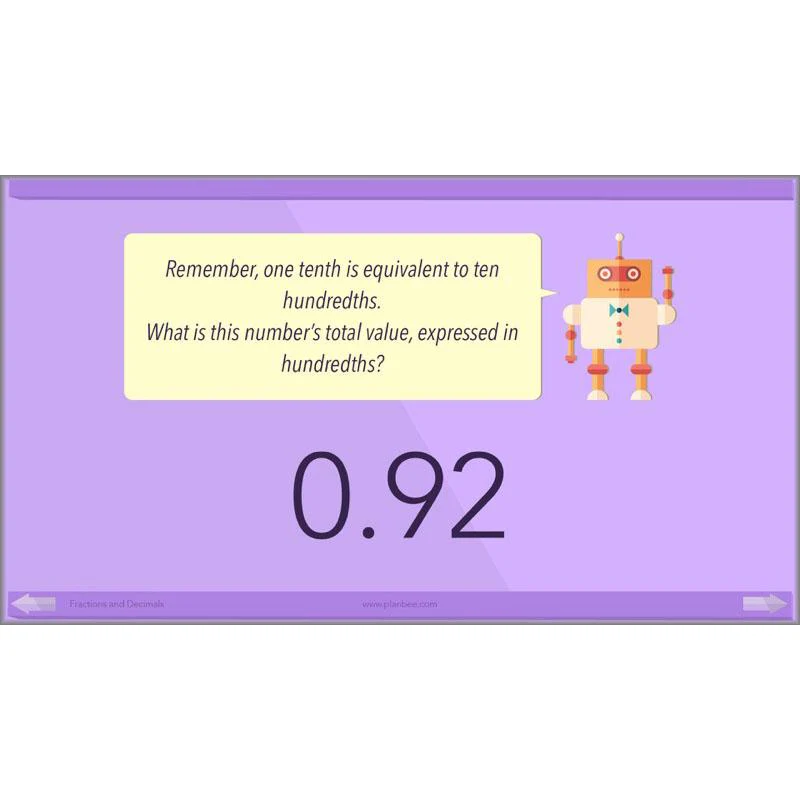
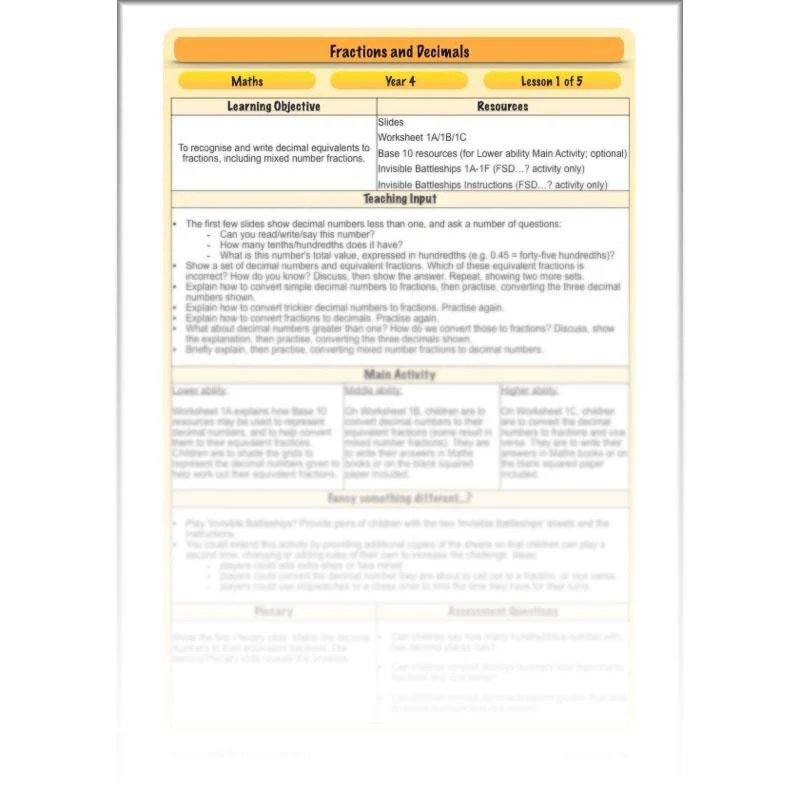
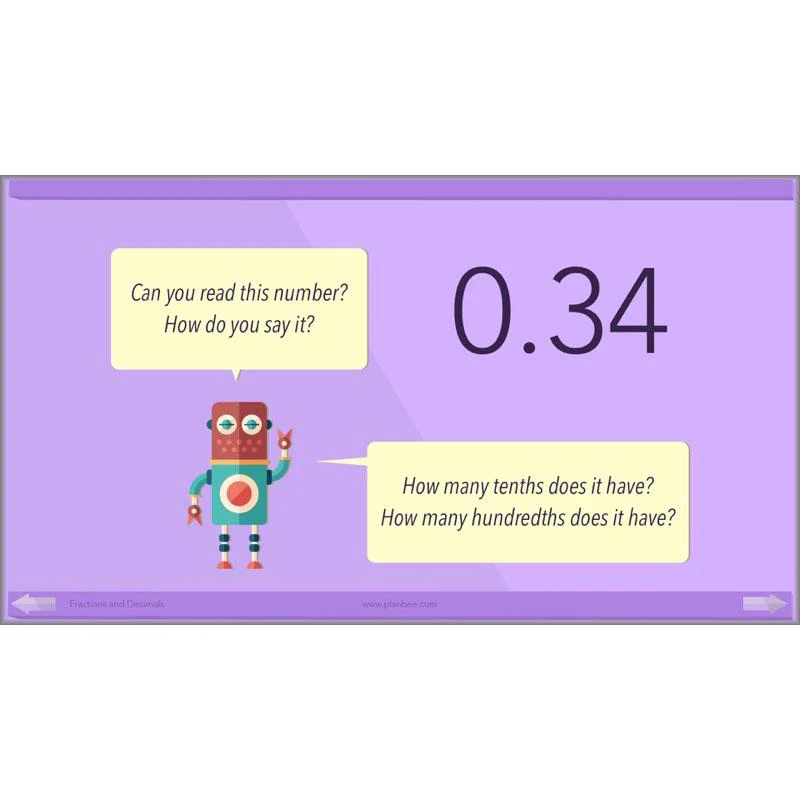
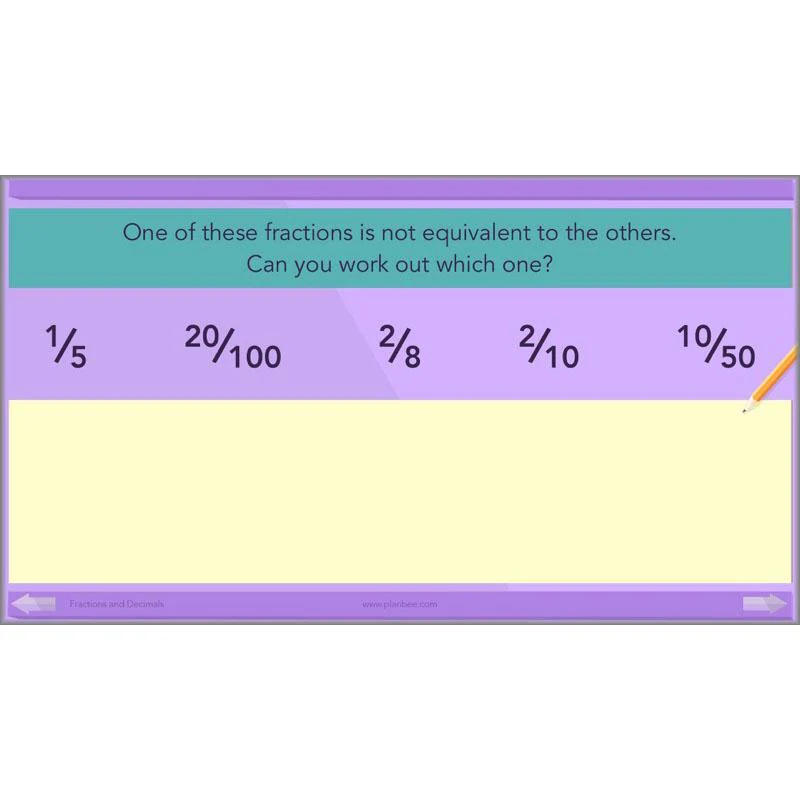
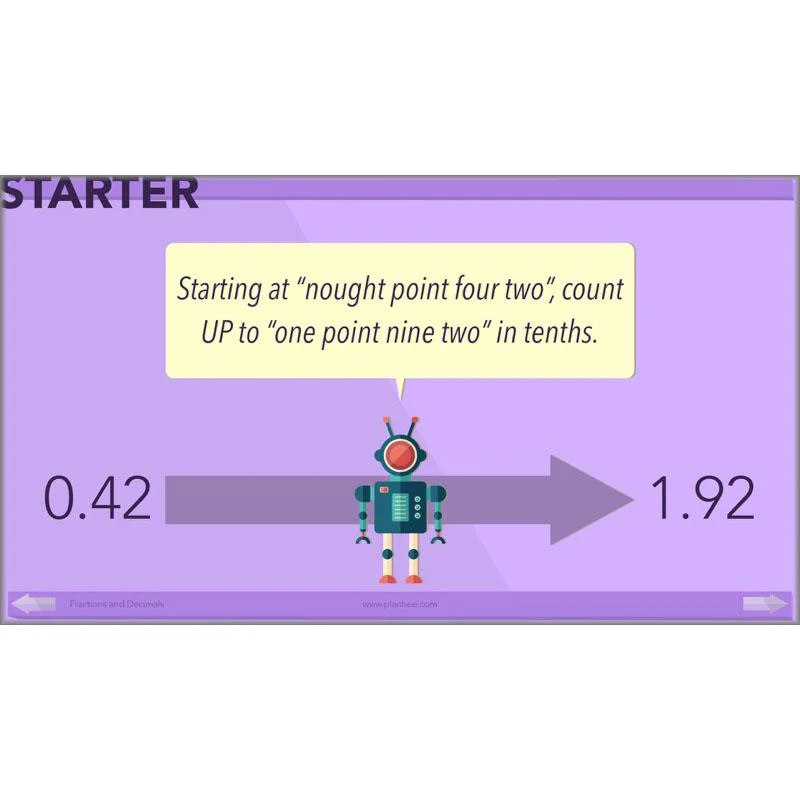
By identifying the place value of digits in decimal numbers, children will learn how to compare them to their equivalent fractions. They'll go on to discover how to convert decimal number to fractions, and vice versa.
Following that, it's up to you which of the two included activities you choose to do: practise these skills either with the differentiated worksheets or with the 'Invisible Battleships' game!
What's included:
- Lesson plan
- Slides
- Activity ideas
- Slides
- Worksheets
- Invisible Battleships
- Invisible Battleships Instructions
Ordering
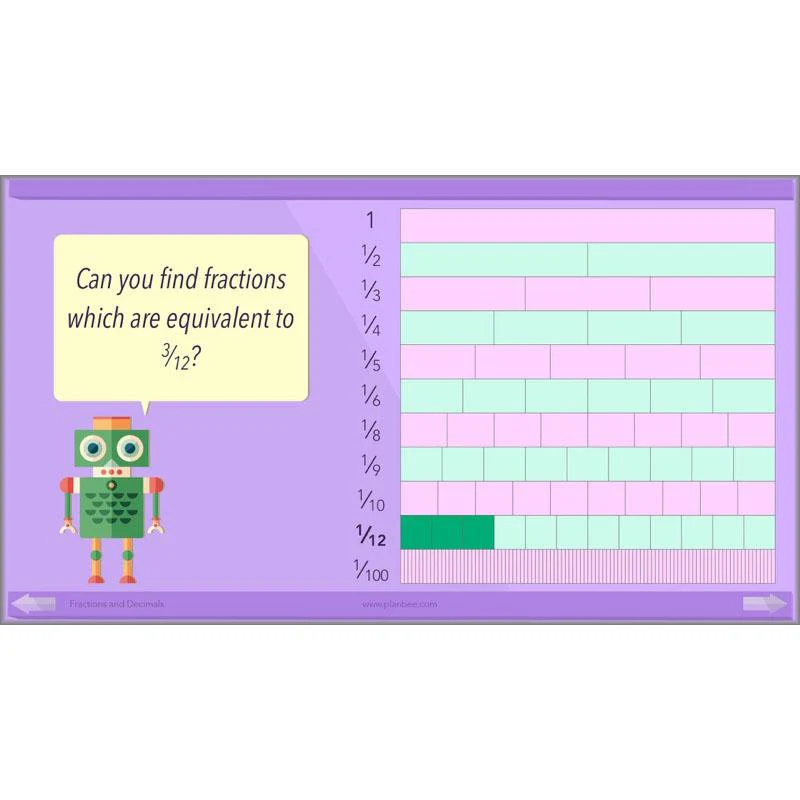
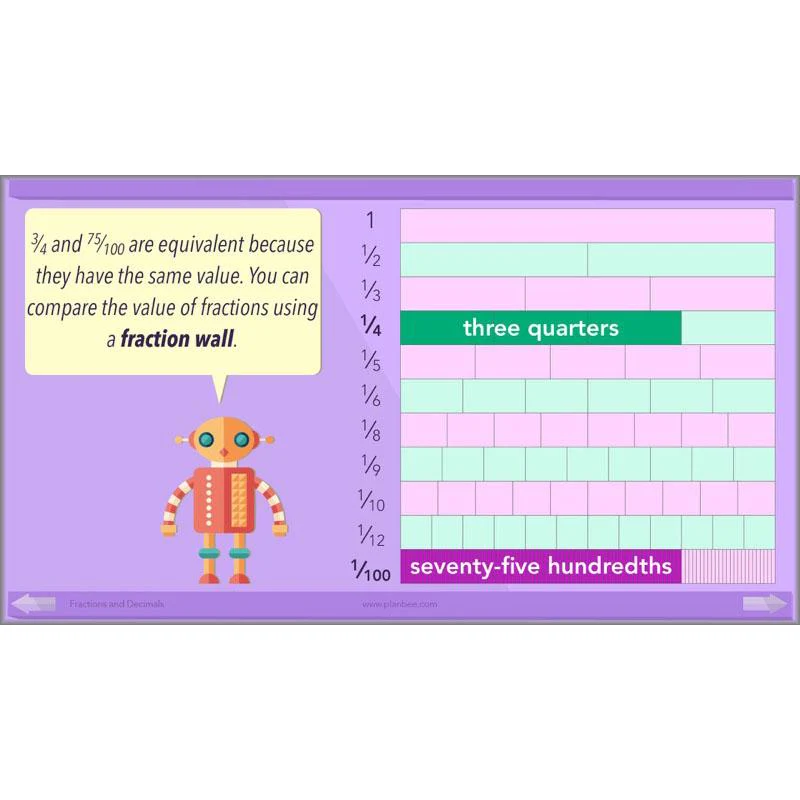
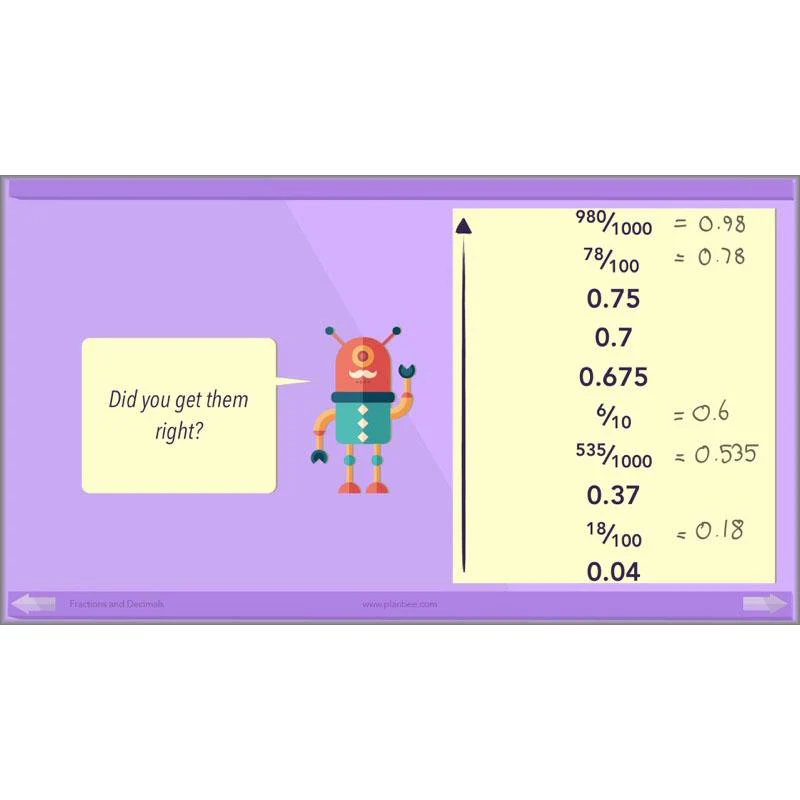
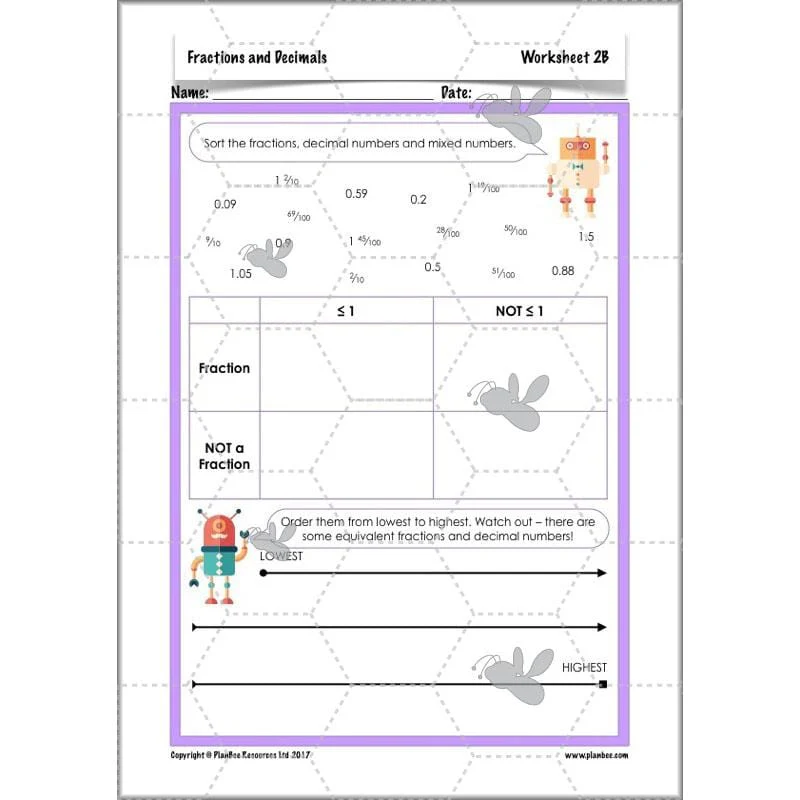
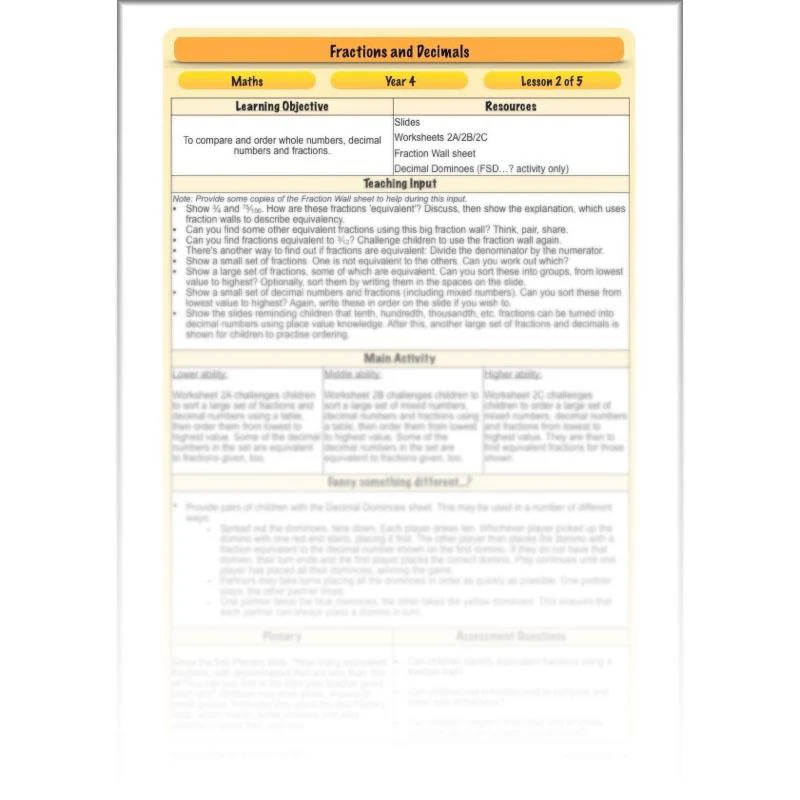
Use a fraction wall to find and compare equivalent fractions, then practise ordering sets of fractions, mixed numbers and decimal numbers.
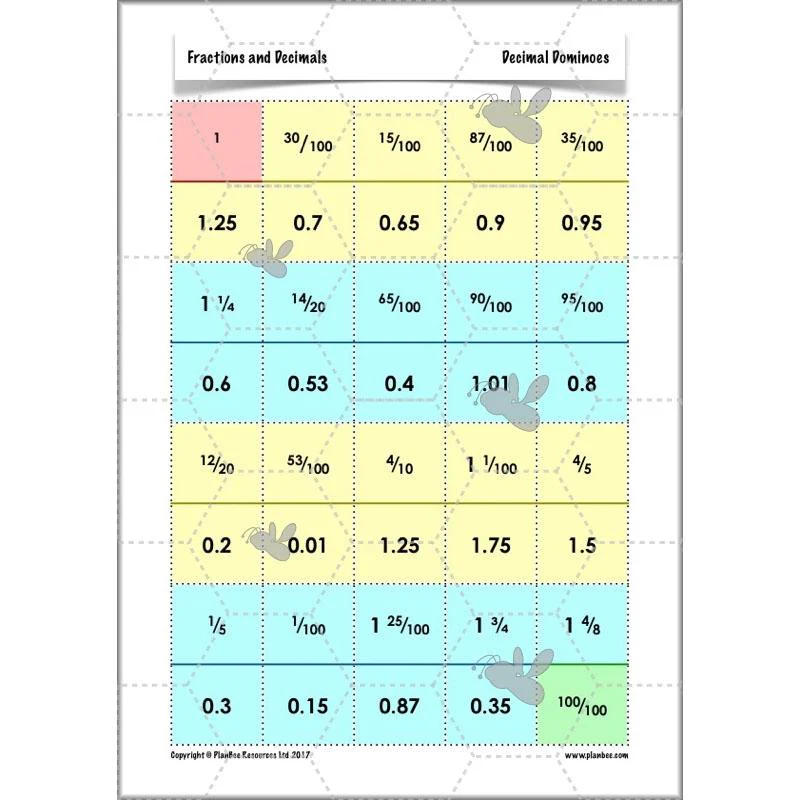
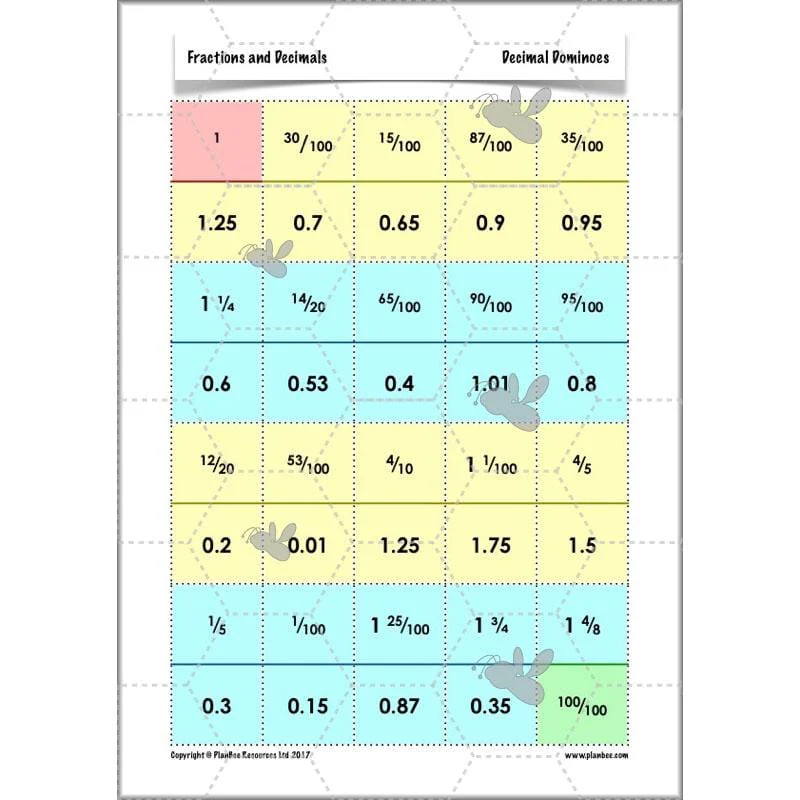
There's a choice of activities in this lesson: practise the skills of comparing and ordering using either the differentiated worksheets or the 'Decimal Dominoes'.
What's included:
- Lesson plan
- Slides
- Activity ideas
- Worksheets
- Fraction Wall sheet
- Decimal Dominoes
Decimal Differences
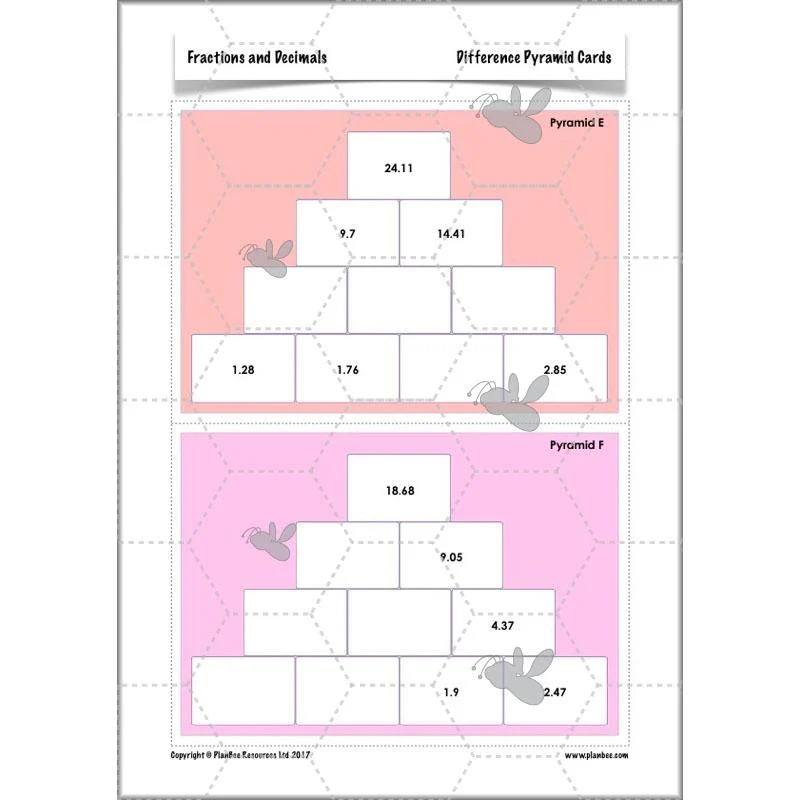
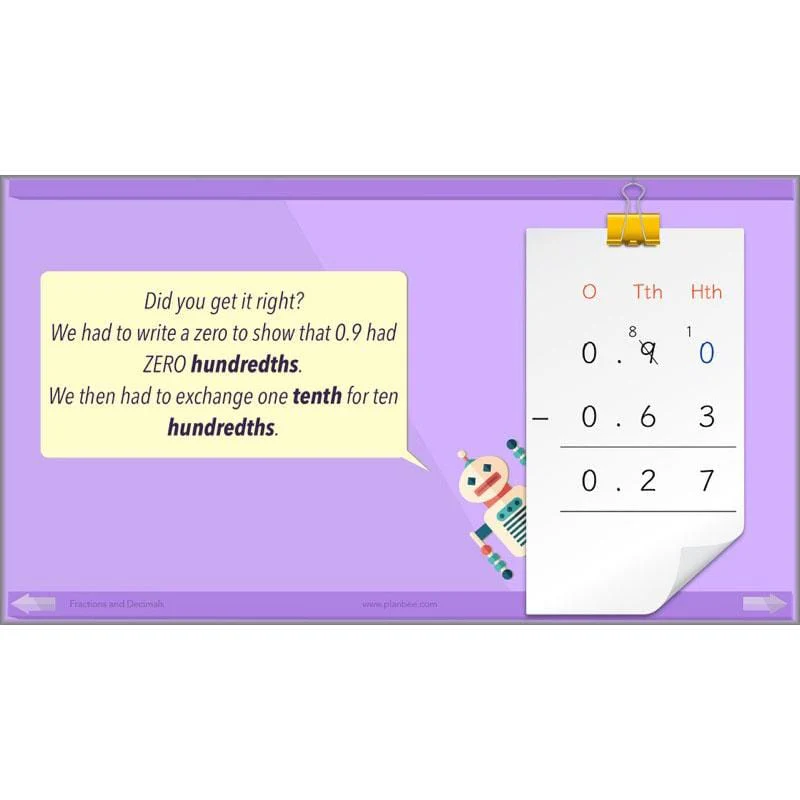
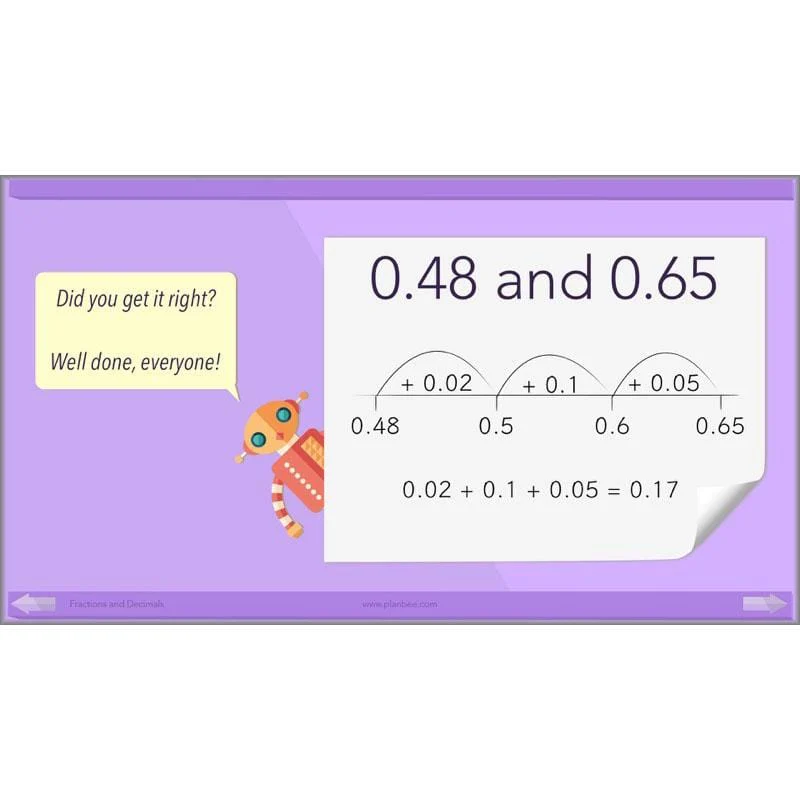
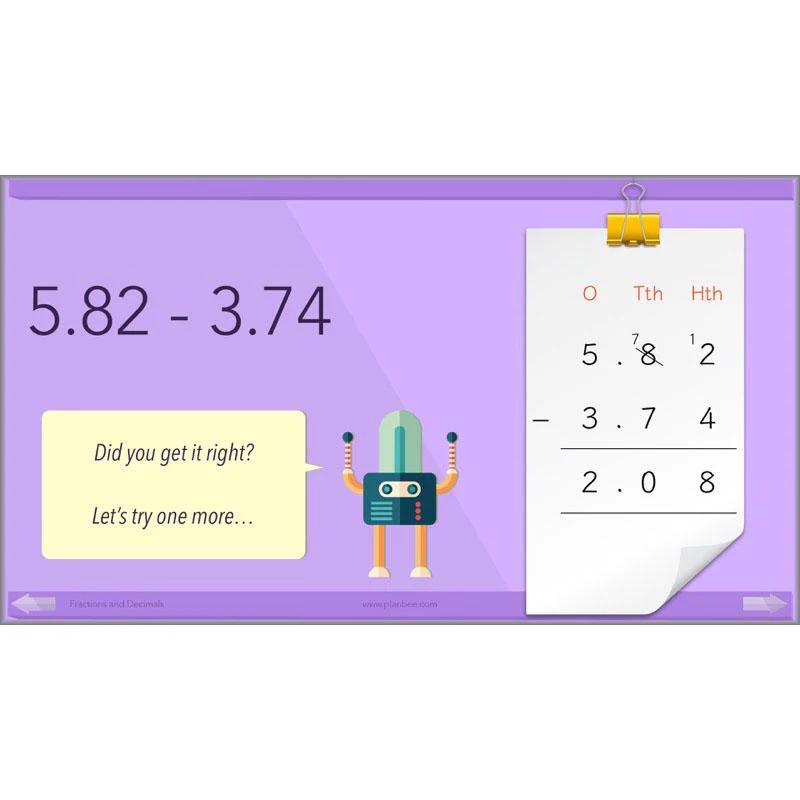
Take a look at two methods for finding the difference between two decimal numbers: formal, written subtraction and mental 'counting on'.
There's plenty of opportunities for children to practise these methods during either of the two included activities. The differentiated worksheets include challenges for your higher-attaining maths pupils, as they'll have to add and subtract three-, four- and five-digit decimal numbers.
What's included:
- Lesson plan
- Slides
- Activity ideas
- Worksheets
- Difference Pyramid Cards
Add and Subtract Fractions
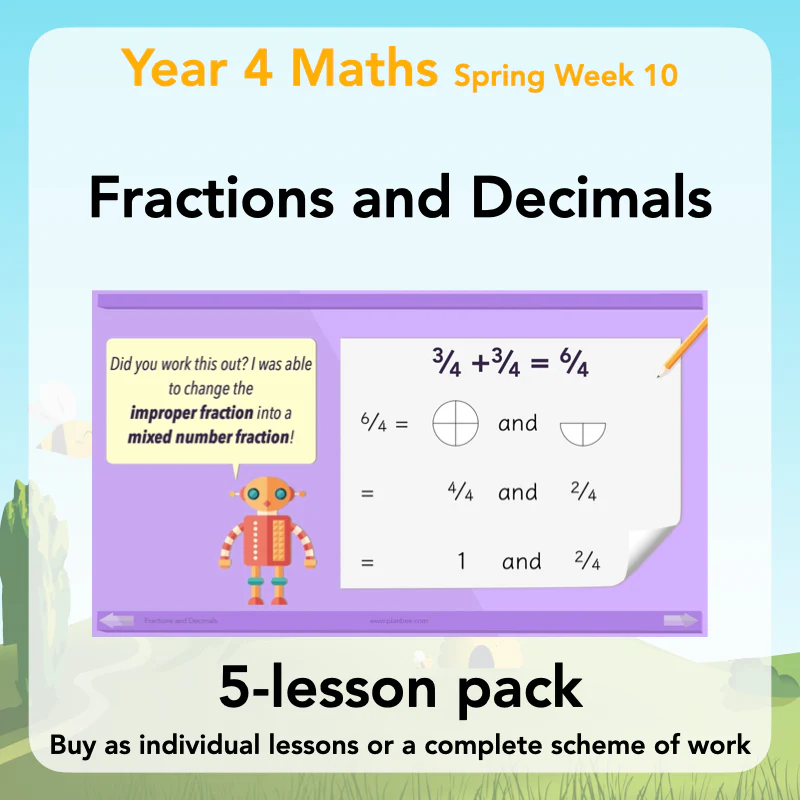
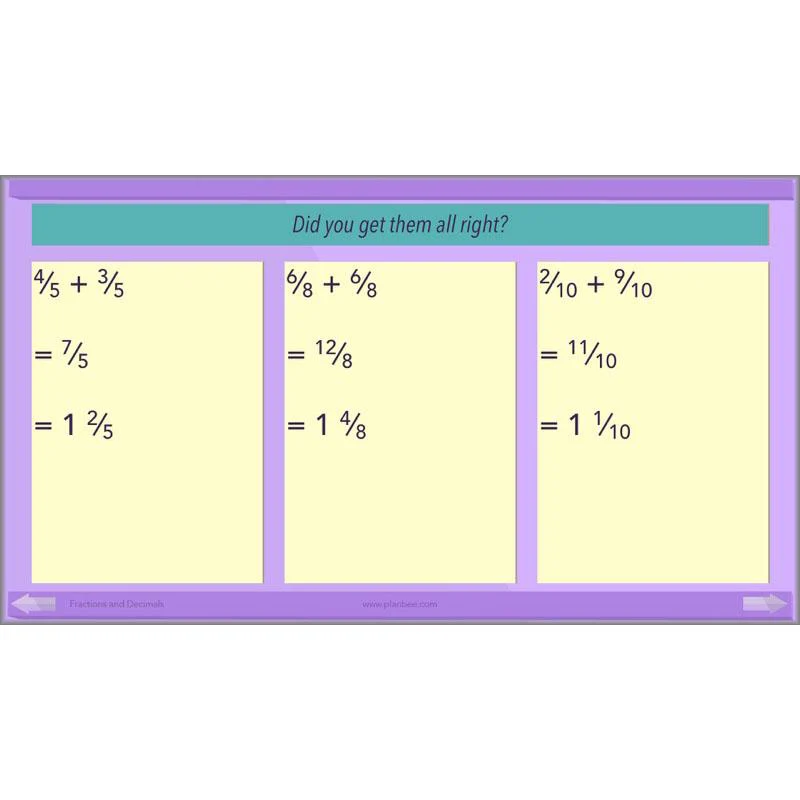
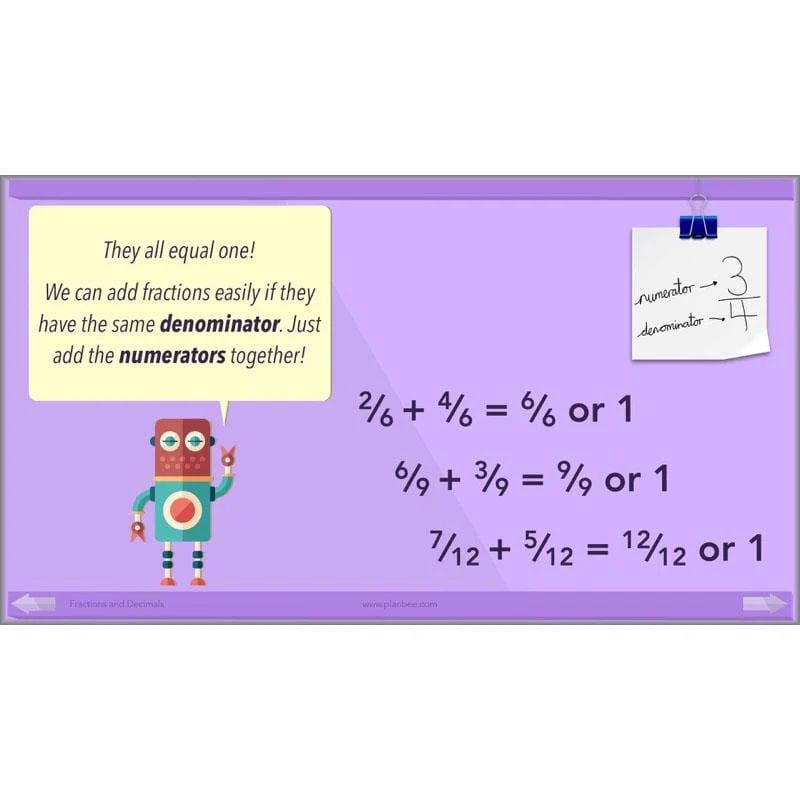
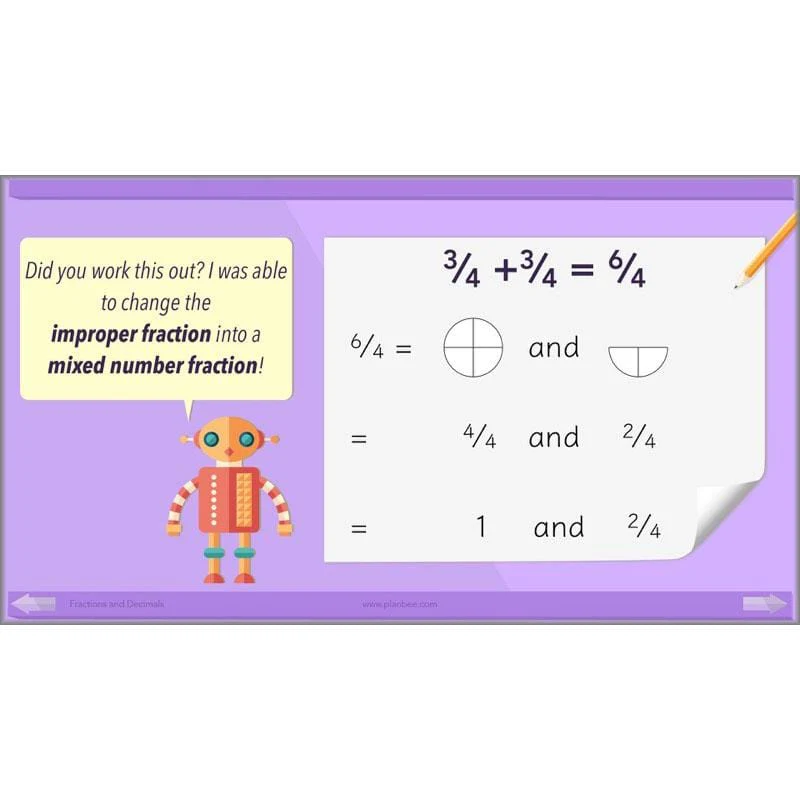
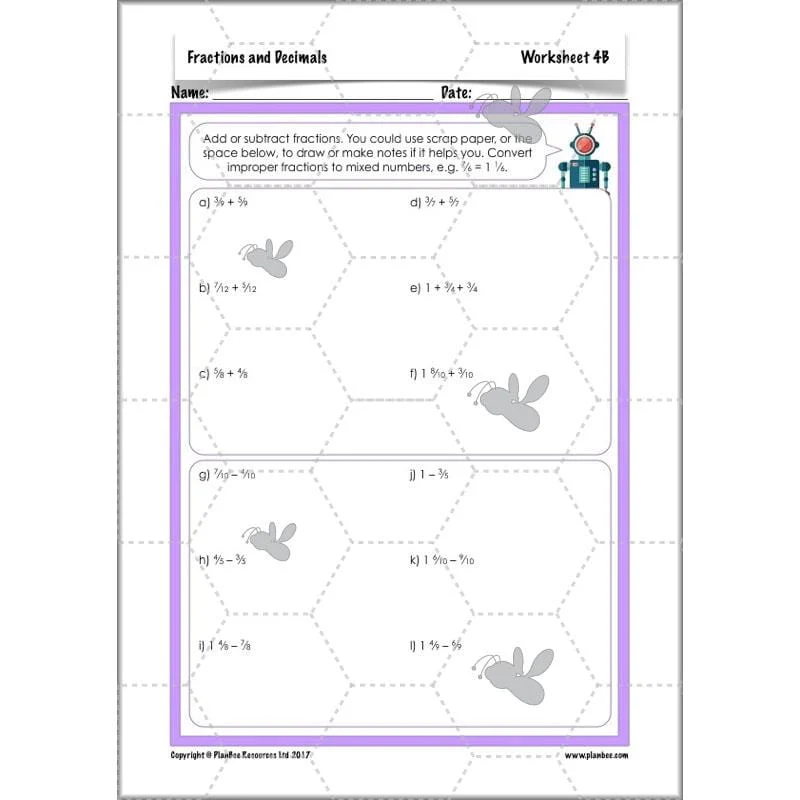
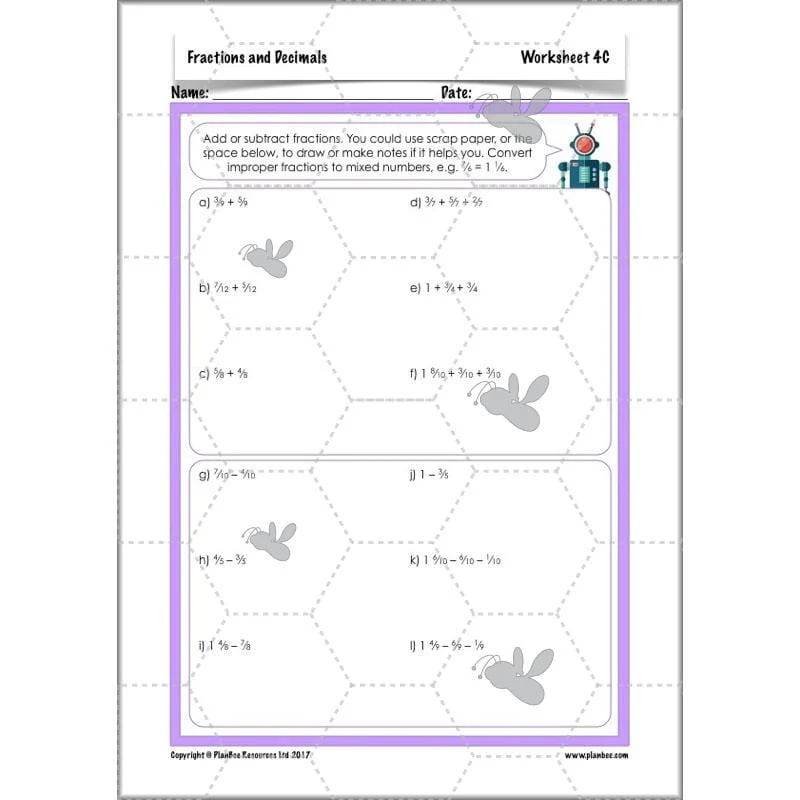
Starting with adding equal fractions totalling one or less than one, the included slides guide children through strategies for solving increasingly complex calculations including adding fractions totalling more than one, converting the resulting improper fraction into a mixed number. To help children with these challenging calculations, step-by-step guides to using play dough or maths cubes are also included.
What's included:
- Lesson plan
- Slides
- Activity ideas
- Worksheets
- Challenge Card
Read and Interpret Data
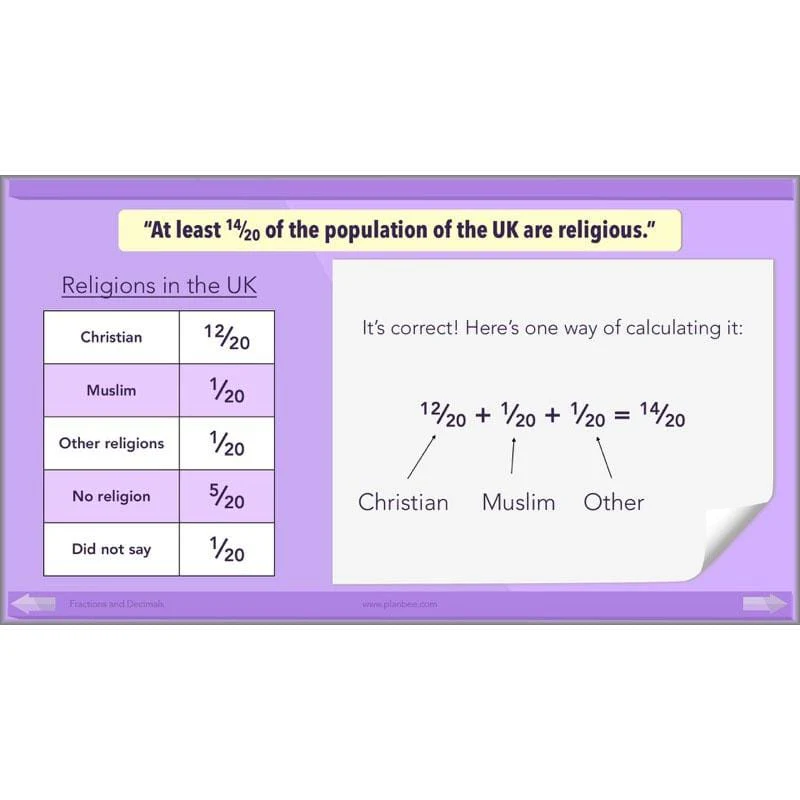
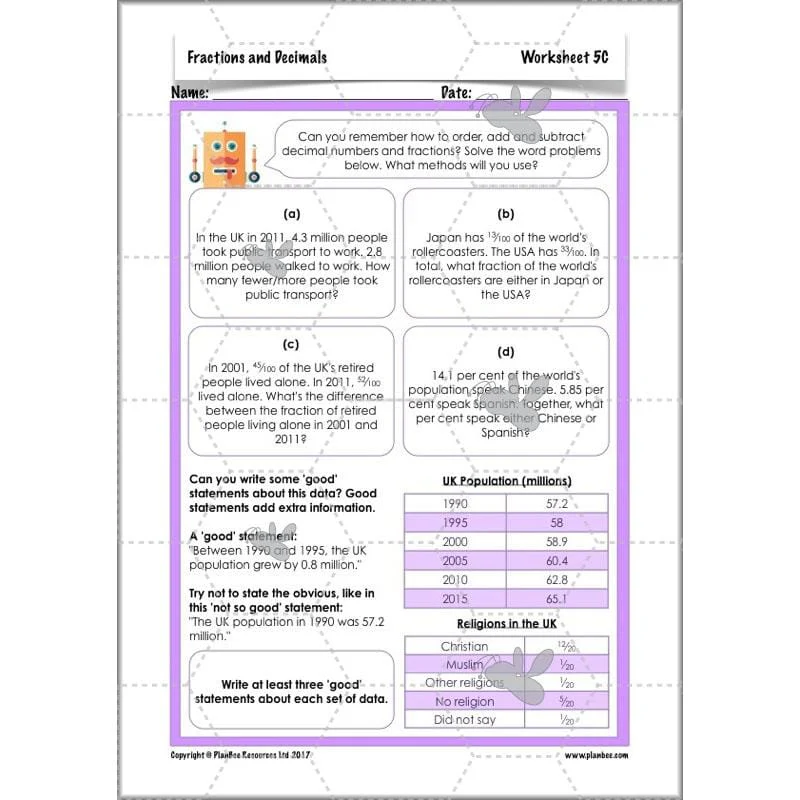
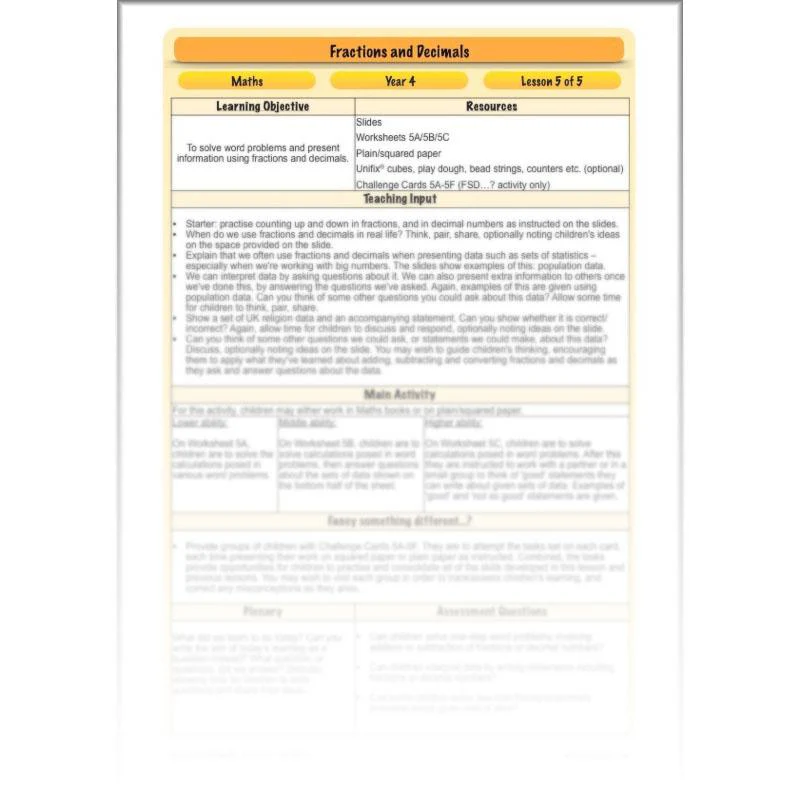
How do we use fractions and decimal numbers in real life? Take a look at how they are helpful when looking at statistics or talking about 'big' numbers, then challenge children to apply their learning during this and previous lessons by asking and answering questions about given sets of data.
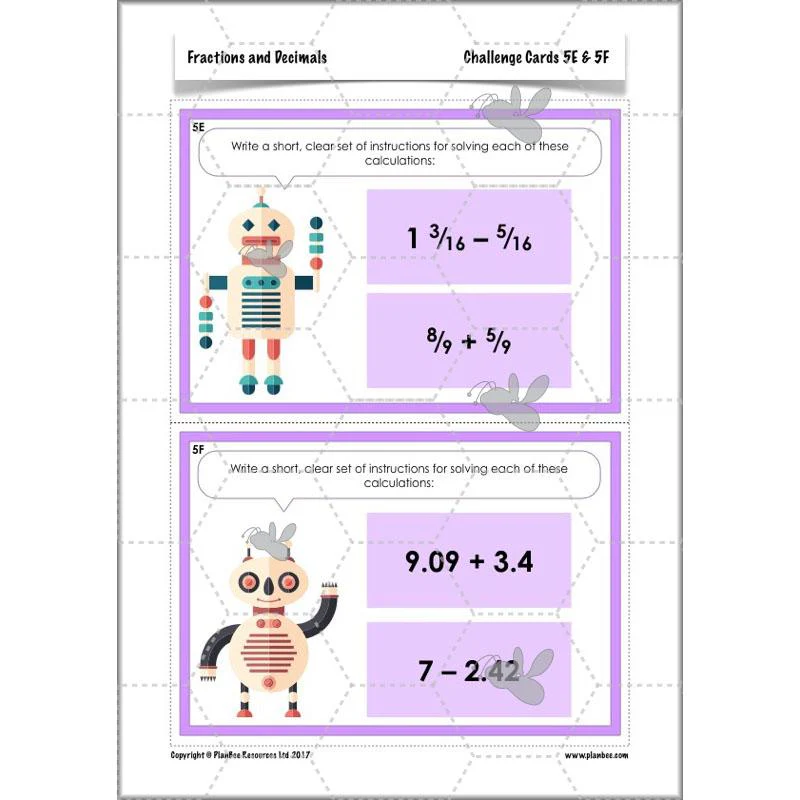
As well as the included differentiated worksheets, there's also a set of challenge cards with which children can practise and consolidate their learning throughout these lessons.
What's included:
- Lesson plan
- Slides
- Activity ideas
- Worksheets
- Challenge Cards
Original: $4.71
-65%$4.71
$1.65More Images

















Fractions and Decimals
Build on your class's understanding of fractions and how they relate to decimals during these five, well-paced lessons. There's plenty of opportunities to develop children's relational understanding of the maths that's going on, as the included slides pose challenging questions for them to consider throughout.
Over the course of the lessons, children will identify decimal numbers and their equivalent fractions, order sets of mixed numbers, fractions and decimals, add and subtract fractions with the same denominator, and learn mental and written methods for solving calculations involving decimal numbers.
As well as differentiated worksheets, each lesson includes alternative activities (often maths games). They're a fun way to get children applying their learning in slightly different contexts.
Comparing and Converting
By identifying the place value of digits in decimal numbers, children will learn how to compare them to their equivalent fractions. They'll go on to discover how to convert decimal number to fractions, and vice versa.
Following that, it's up to you which of the two included activities you choose to do: practise these skills either with the differentiated worksheets or with the 'Invisible Battleships' game!
What's included:
- Lesson plan
- Slides
- Activity ideas
- Slides
- Worksheets
- Invisible Battleships
- Invisible Battleships Instructions
Ordering
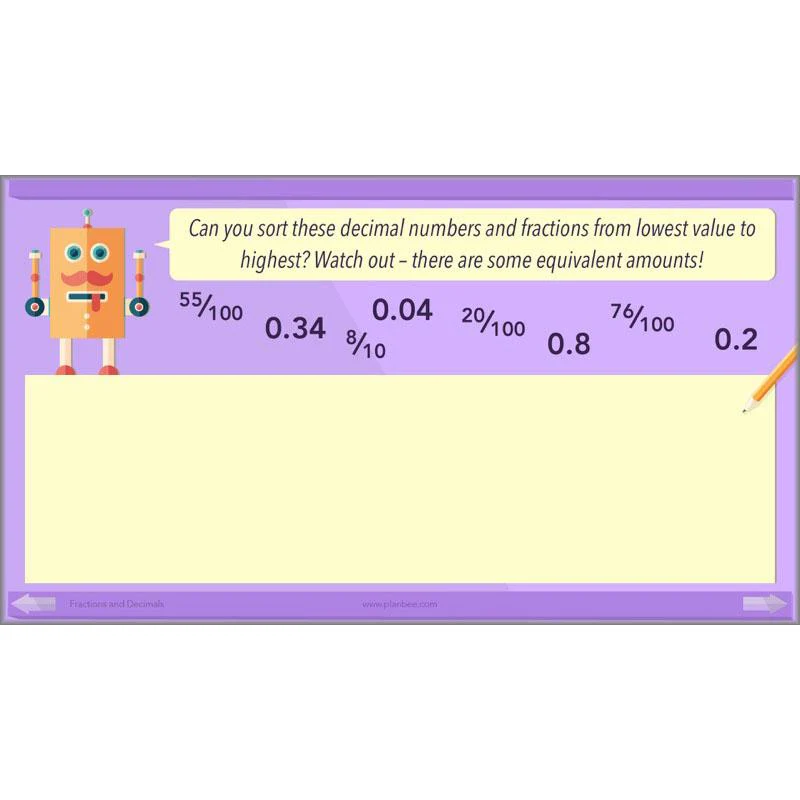
Use a fraction wall to find and compare equivalent fractions, then practise ordering sets of fractions, mixed numbers and decimal numbers.
There's a choice of activities in this lesson: practise the skills of comparing and ordering using either the differentiated worksheets or the 'Decimal Dominoes'.
What's included:
- Lesson plan
- Slides
- Activity ideas
- Worksheets
- Fraction Wall sheet
- Decimal Dominoes
Decimal Differences
Take a look at two methods for finding the difference between two decimal numbers: formal, written subtraction and mental 'counting on'.
There's plenty of opportunities for children to practise these methods during either of the two included activities. The differentiated worksheets include challenges for your higher-attaining maths pupils, as they'll have to add and subtract three-, four- and five-digit decimal numbers.
What's included:
- Lesson plan
- Slides
- Activity ideas
- Worksheets
- Difference Pyramid Cards
Add and Subtract Fractions
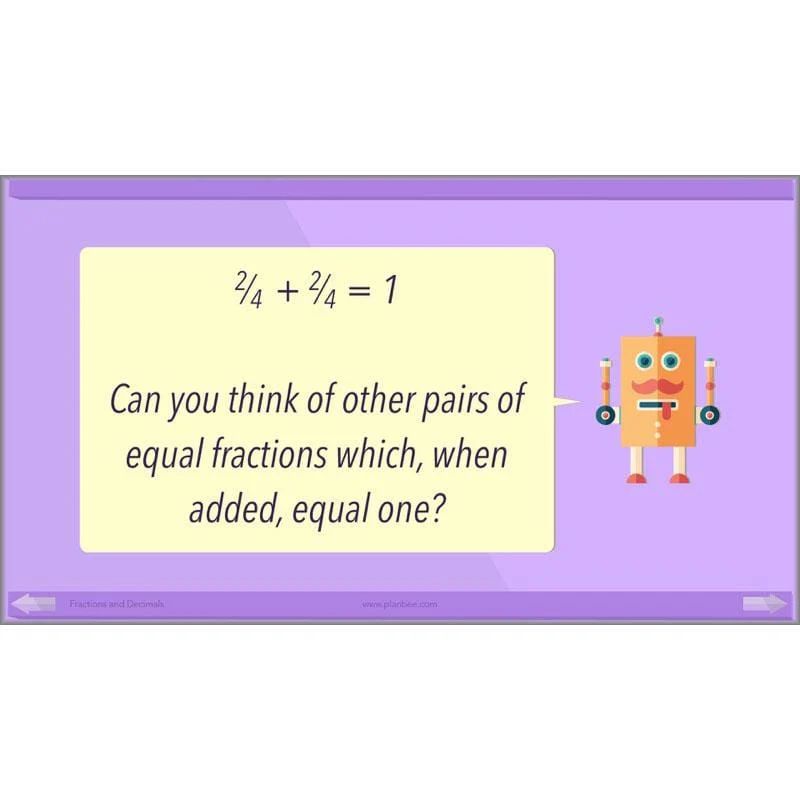
Starting with adding equal fractions totalling one or less than one, the included slides guide children through strategies for solving increasingly complex calculations including adding fractions totalling more than one, converting the resulting improper fraction into a mixed number. To help children with these challenging calculations, step-by-step guides to using play dough or maths cubes are also included.
What's included:
- Lesson plan
- Slides
- Activity ideas
- Worksheets
- Challenge Card
Read and Interpret Data
How do we use fractions and decimal numbers in real life? Take a look at how they are helpful when looking at statistics or talking about 'big' numbers, then challenge children to apply their learning during this and previous lessons by asking and answering questions about given sets of data.
As well as the included differentiated worksheets, there's also a set of challenge cards with which children can practise and consolidate their learning throughout these lessons.
What's included:
- Lesson plan
- Slides
- Activity ideas
- Worksheets
- Challenge Cards
Product Information
Product Information
Shipping & Returns
Shipping & Returns
Description
Build on your class's understanding of fractions and how they relate to decimals during these five, well-paced lessons. There's plenty of opportunities to develop children's relational understanding of the maths that's going on, as the included slides pose challenging questions for them to consider throughout.
Over the course of the lessons, children will identify decimal numbers and their equivalent fractions, order sets of mixed numbers, fractions and decimals, add and subtract fractions with the same denominator, and learn mental and written methods for solving calculations involving decimal numbers.
As well as differentiated worksheets, each lesson includes alternative activities (often maths games). They're a fun way to get children applying their learning in slightly different contexts.
Comparing and Converting
By identifying the place value of digits in decimal numbers, children will learn how to compare them to their equivalent fractions. They'll go on to discover how to convert decimal number to fractions, and vice versa.
Following that, it's up to you which of the two included activities you choose to do: practise these skills either with the differentiated worksheets or with the 'Invisible Battleships' game!
What's included:
- Lesson plan
- Slides
- Activity ideas
- Slides
- Worksheets
- Invisible Battleships
- Invisible Battleships Instructions
Ordering
Use a fraction wall to find and compare equivalent fractions, then practise ordering sets of fractions, mixed numbers and decimal numbers.
There's a choice of activities in this lesson: practise the skills of comparing and ordering using either the differentiated worksheets or the 'Decimal Dominoes'.
What's included:
- Lesson plan
- Slides
- Activity ideas
- Worksheets
- Fraction Wall sheet
- Decimal Dominoes
Decimal Differences
Take a look at two methods for finding the difference between two decimal numbers: formal, written subtraction and mental 'counting on'.
There's plenty of opportunities for children to practise these methods during either of the two included activities. The differentiated worksheets include challenges for your higher-attaining maths pupils, as they'll have to add and subtract three-, four- and five-digit decimal numbers.
What's included:
- Lesson plan
- Slides
- Activity ideas
- Worksheets
- Difference Pyramid Cards
Add and Subtract Fractions
Starting with adding equal fractions totalling one or less than one, the included slides guide children through strategies for solving increasingly complex calculations including adding fractions totalling more than one, converting the resulting improper fraction into a mixed number. To help children with these challenging calculations, step-by-step guides to using play dough or maths cubes are also included.
What's included:
- Lesson plan
- Slides
- Activity ideas
- Worksheets
- Challenge Card
Read and Interpret Data
How do we use fractions and decimal numbers in real life? Take a look at how they are helpful when looking at statistics or talking about 'big' numbers, then challenge children to apply their learning during this and previous lessons by asking and answering questions about given sets of data.
As well as the included differentiated worksheets, there's also a set of challenge cards with which children can practise and consolidate their learning throughout these lessons.
What's included:
- Lesson plan
- Slides
- Activity ideas
- Worksheets
- Challenge Cards