How can we compare numbers?
This Year 2 'How can we compare numbers?' scheme of work is a great way to get your class fluent when comparing numbers to one hundred. By the end of the week, they will be able to identify and compare numbers while developing their knowledge of place value and number facts, as well as the concepts of greater than, less than and equals to.
With detailed lesson plans, engaging slides, differentiated worksheets and other resources, these 'How can we compare numbers?' lessons provide all you need to teach this useful scheme of work.
What is the value of each digit?
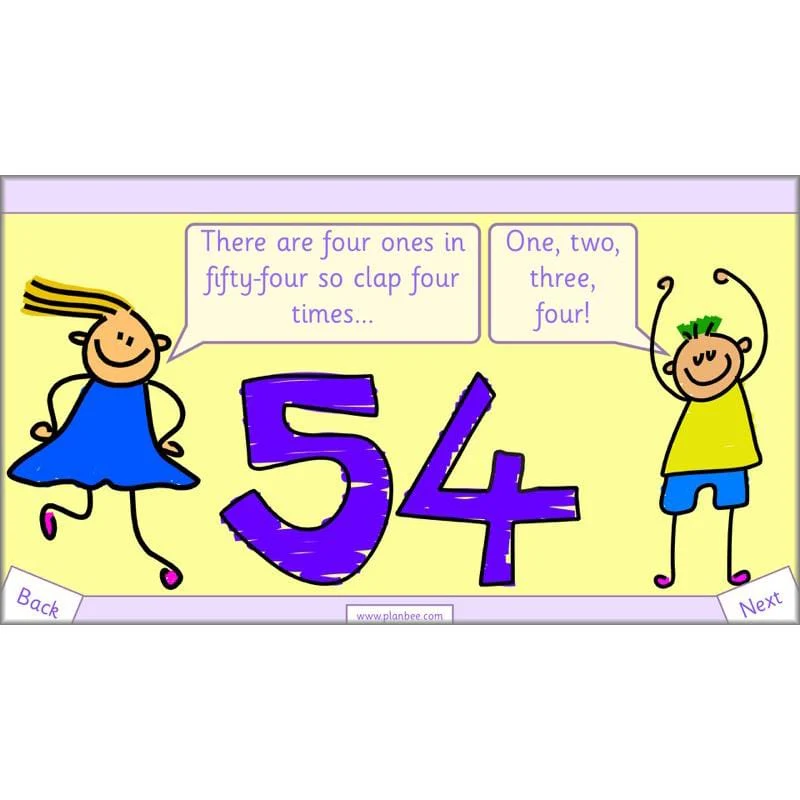
The first lesson in this series focuses on identifying the value of each digit in two-digit numbers.
Your class will have the opportunity to represent numbers on hundred squares using tens and ones resources, identify numbers from different representations, complete missing number grids and compete to reach a target number.
What's included:
- Lesson plan
- Slides
- Activity ideas
- Hundred square cards
- Tens and ones cards
- Bingo sheet
- Missing number grids
- Target number sheets
- Follow me cards
- Photo sheet
View Lesson 1
Ordering numbers with place value
The second lesson in this series focuses on using place value to order numbers.
Your class will be encouraged to explain how they will order a set of numbers using mathematical language before ordering and comparing numbers through a variety of different hands-on activities.
What's included:
- Lesson plan
- Slides
- Activity ideas
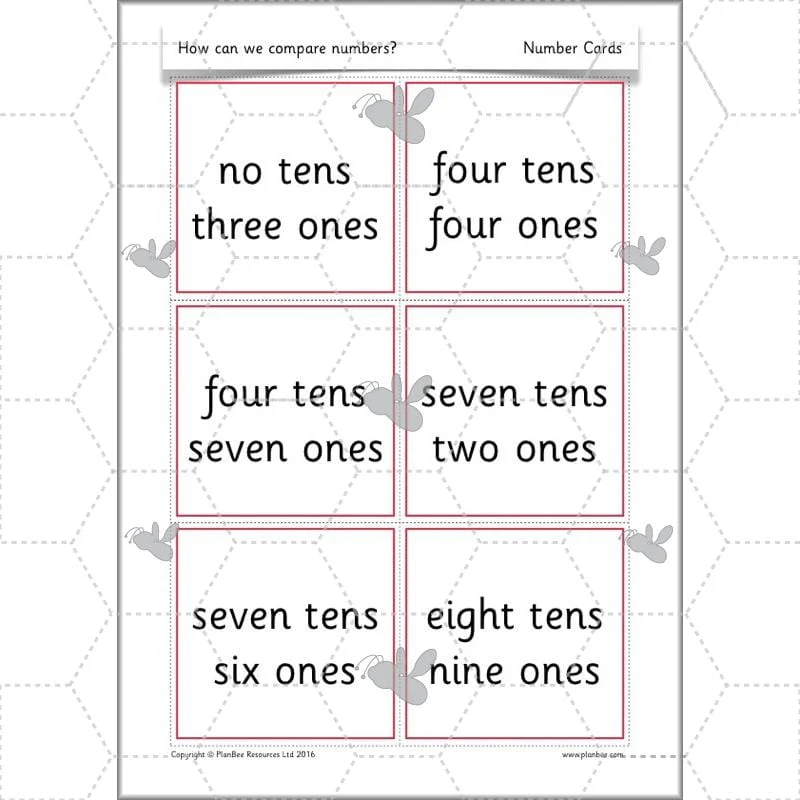
- Number cards
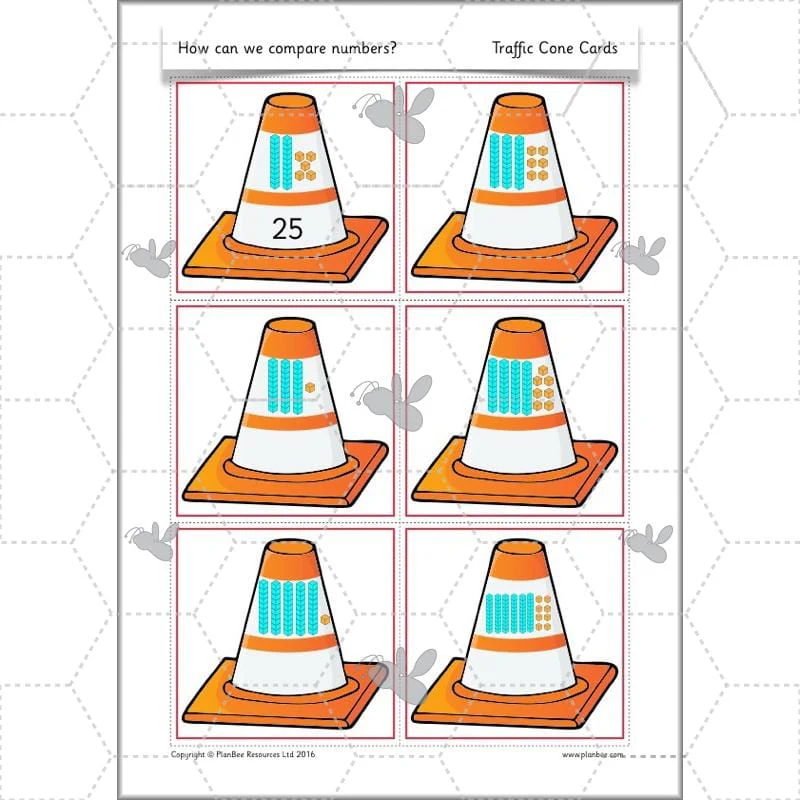
- Traffic cone cards
- Letter sheets
- House number cards
- Base ten sheet
- Photo sheet
View Lesson 2
Using the 'greater than', 'less than' or 'equal to' symbols
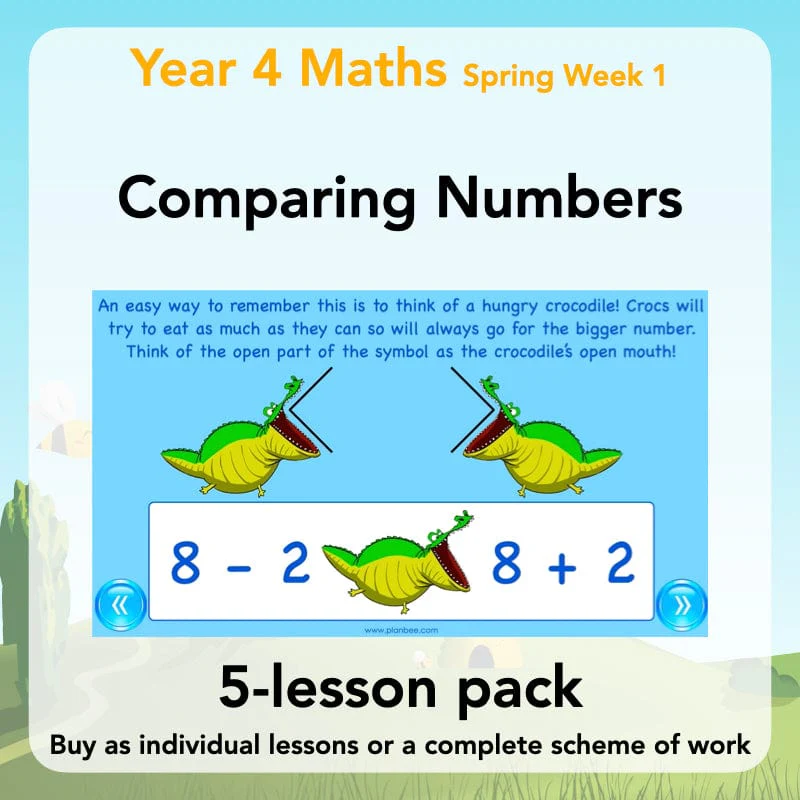
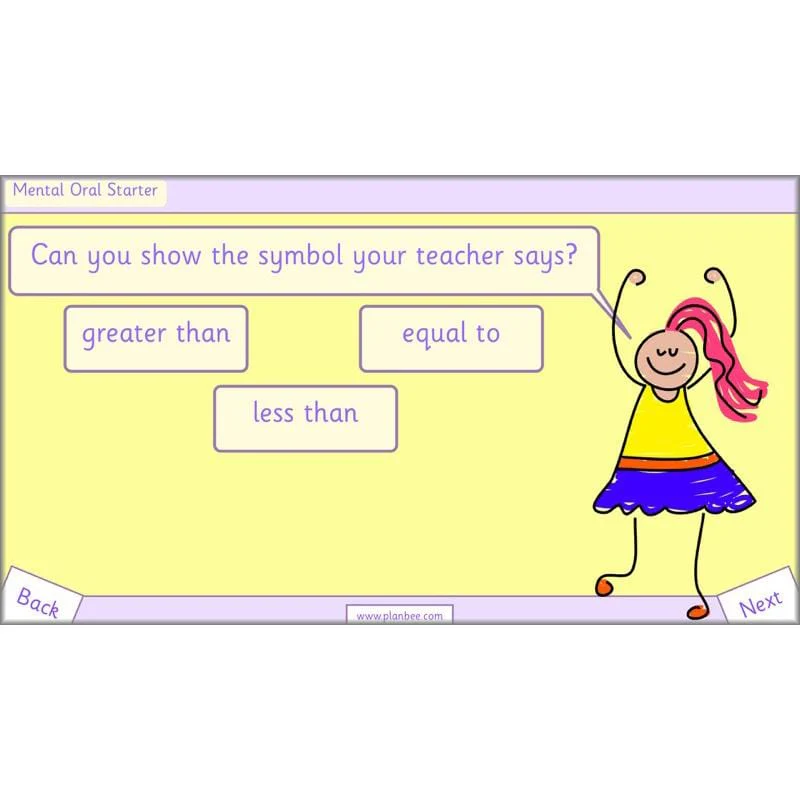
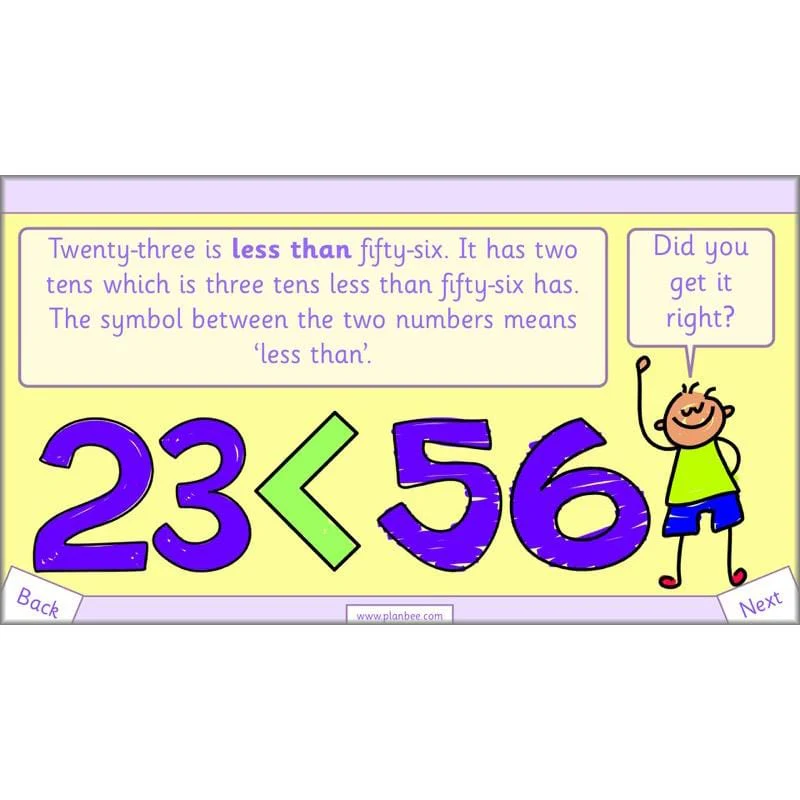
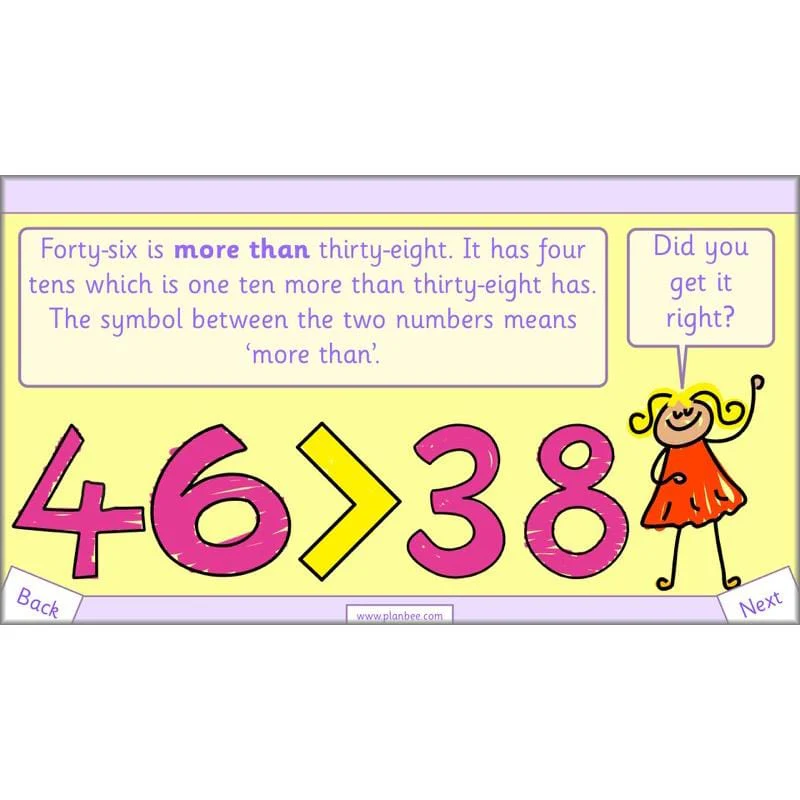
The third lesson in this series encourages your class to use the 'greater than', 'less than' or 'equal to' symbols when comparing numbers.
The exciting activities include creating random numbers to compare, sorting statement cards and making number chains.
What's included:
- Lesson plan
- Slides
- Activity ideas
- Differentiated worksheets
- Symbol fans
- Symbol cards
- Tens and ones sheet
- Statement cards
- Number grids
- Number chains
- Follow me cards
- Photo sheet
View Lesson 3
Solving problems 1
During the fourth lesson in this series, your class will apply their knowledge of number facts and place value to solve problems.
During the teaching input they will answer a range questions to show what they know about given numbers.
They will then have the opportunity to apply their knowledge of place value and number facts to solve different problems.
What's included:
- Lesson plan
- Slides
- Activity ideas
- Question cards
- Differentiated worksheets
- Target number sheets
- Photo sheet
View Lesson 4
Solving problems 2
During the fifth and final lesson in this series your class will continue to apply their knowledge of number facts and place value to solve a range of problems.
During the teaching input they will answer questions and compare their answers, explaining why certain answers are correct or incorrect.
They will have the opportunity to find out a secret number using differentiated clues or complete differentiated colour-by-number sheets that require them to apply their knowledge of numbers between one and one hundred.
What's included:
- Lesson plan
- Slides
- Activity ideas
- Differentiated clue cards
- Differentiated number cards
- Differentiated colour by numbers sheet
- Photo sheet
View Lesson 5
Original: $4.71
-65%$4.71
$1.65More Images














How can we compare numbers?
This Year 2 'How can we compare numbers?' scheme of work is a great way to get your class fluent when comparing numbers to one hundred. By the end of the week, they will be able to identify and compare numbers while developing their knowledge of place value and number facts, as well as the concepts of greater than, less than and equals to.
With detailed lesson plans, engaging slides, differentiated worksheets and other resources, these 'How can we compare numbers?' lessons provide all you need to teach this useful scheme of work.
What is the value of each digit?
The first lesson in this series focuses on identifying the value of each digit in two-digit numbers.
Your class will have the opportunity to represent numbers on hundred squares using tens and ones resources, identify numbers from different representations, complete missing number grids and compete to reach a target number.
What's included:
- Lesson plan
- Slides
- Activity ideas
- Hundred square cards
- Tens and ones cards
- Bingo sheet
- Missing number grids
- Target number sheets
- Follow me cards
- Photo sheet
View Lesson 1
Ordering numbers with place value
The second lesson in this series focuses on using place value to order numbers.
Your class will be encouraged to explain how they will order a set of numbers using mathematical language before ordering and comparing numbers through a variety of different hands-on activities.
What's included:
- Lesson plan
- Slides
- Activity ideas
- Number cards
- Traffic cone cards
- Letter sheets
- House number cards
- Base ten sheet
- Photo sheet
View Lesson 2
Using the 'greater than', 'less than' or 'equal to' symbols
The third lesson in this series encourages your class to use the 'greater than', 'less than' or 'equal to' symbols when comparing numbers.
The exciting activities include creating random numbers to compare, sorting statement cards and making number chains.
What's included:
- Lesson plan
- Slides
- Activity ideas
- Differentiated worksheets
- Symbol fans
- Symbol cards
- Tens and ones sheet
- Statement cards
- Number grids
- Number chains
- Follow me cards
- Photo sheet
View Lesson 3
Solving problems 1
During the fourth lesson in this series, your class will apply their knowledge of number facts and place value to solve problems.
During the teaching input they will answer a range questions to show what they know about given numbers.
They will then have the opportunity to apply their knowledge of place value and number facts to solve different problems.
What's included:
- Lesson plan
- Slides
- Activity ideas
- Question cards
- Differentiated worksheets
- Target number sheets
- Photo sheet
View Lesson 4
Solving problems 2
During the fifth and final lesson in this series your class will continue to apply their knowledge of number facts and place value to solve a range of problems.
During the teaching input they will answer questions and compare their answers, explaining why certain answers are correct or incorrect.
They will have the opportunity to find out a secret number using differentiated clues or complete differentiated colour-by-number sheets that require them to apply their knowledge of numbers between one and one hundred.
What's included:
- Lesson plan
- Slides
- Activity ideas
- Differentiated clue cards
- Differentiated number cards
- Differentiated colour by numbers sheet
- Photo sheet
View Lesson 5
Product Information
Product Information
Shipping & Returns
Shipping & Returns
Description
This Year 2 'How can we compare numbers?' scheme of work is a great way to get your class fluent when comparing numbers to one hundred. By the end of the week, they will be able to identify and compare numbers while developing their knowledge of place value and number facts, as well as the concepts of greater than, less than and equals to.
With detailed lesson plans, engaging slides, differentiated worksheets and other resources, these 'How can we compare numbers?' lessons provide all you need to teach this useful scheme of work.
What is the value of each digit?
The first lesson in this series focuses on identifying the value of each digit in two-digit numbers.
Your class will have the opportunity to represent numbers on hundred squares using tens and ones resources, identify numbers from different representations, complete missing number grids and compete to reach a target number.
What's included:
- Lesson plan
- Slides
- Activity ideas
- Hundred square cards
- Tens and ones cards
- Bingo sheet
- Missing number grids
- Target number sheets
- Follow me cards
- Photo sheet
View Lesson 1
Ordering numbers with place value
The second lesson in this series focuses on using place value to order numbers.
Your class will be encouraged to explain how they will order a set of numbers using mathematical language before ordering and comparing numbers through a variety of different hands-on activities.
What's included:
- Lesson plan
- Slides
- Activity ideas
- Number cards
- Traffic cone cards
- Letter sheets
- House number cards
- Base ten sheet
- Photo sheet
View Lesson 2
Using the 'greater than', 'less than' or 'equal to' symbols
The third lesson in this series encourages your class to use the 'greater than', 'less than' or 'equal to' symbols when comparing numbers.
The exciting activities include creating random numbers to compare, sorting statement cards and making number chains.
What's included:
- Lesson plan
- Slides
- Activity ideas
- Differentiated worksheets
- Symbol fans
- Symbol cards
- Tens and ones sheet
- Statement cards
- Number grids
- Number chains
- Follow me cards
- Photo sheet
View Lesson 3
Solving problems 1
During the fourth lesson in this series, your class will apply their knowledge of number facts and place value to solve problems.
During the teaching input they will answer a range questions to show what they know about given numbers.
They will then have the opportunity to apply their knowledge of place value and number facts to solve different problems.
What's included:
- Lesson plan
- Slides
- Activity ideas
- Question cards
- Differentiated worksheets
- Target number sheets
- Photo sheet
View Lesson 4
Solving problems 2
During the fifth and final lesson in this series your class will continue to apply their knowledge of number facts and place value to solve a range of problems.
During the teaching input they will answer questions and compare their answers, explaining why certain answers are correct or incorrect.
They will have the opportunity to find out a secret number using differentiated clues or complete differentiated colour-by-number sheets that require them to apply their knowledge of numbers between one and one hundred.
What's included:
- Lesson plan
- Slides
- Activity ideas
- Differentiated clue cards
- Differentiated number cards
- Differentiated colour by numbers sheet
- Photo sheet
View Lesson 5