In the Desert
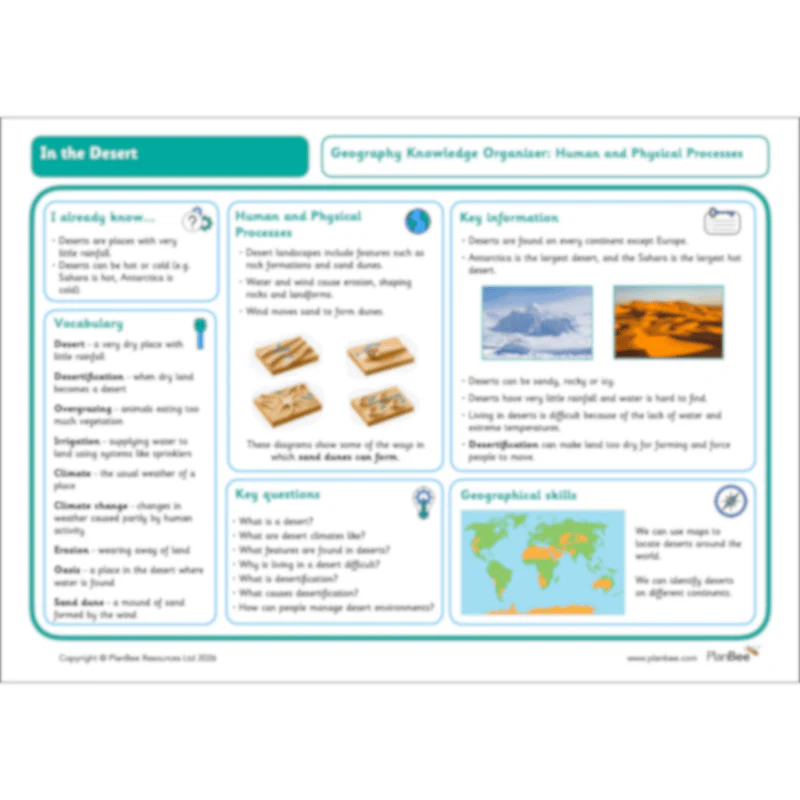
Grab your water bottles and set off to the driest places on Earth with this 'In the Desert' KS2 Geography scheme of work for Year 3 and Year 4. Your KS2 class will learn what a desert is and the features of desert habitats. They will discover where the major deserts of the world are, as well as exploring the physical and human geography of the desert biome.
With lesson plans, exciting slides, activity ideas, differentiated worksheets, picture cards, climate graphs, and much more, these KS2 'In the Desert' Geography lessons provide everything you need to teach your class about deserts, hot and cold, from the Sahara to the Antarctic.
Desert Locations
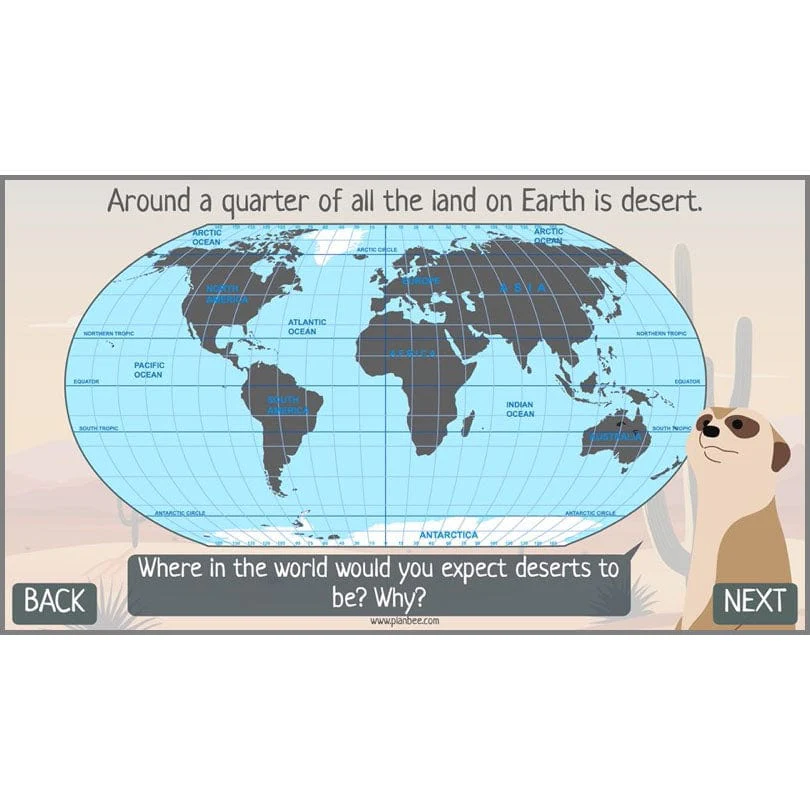
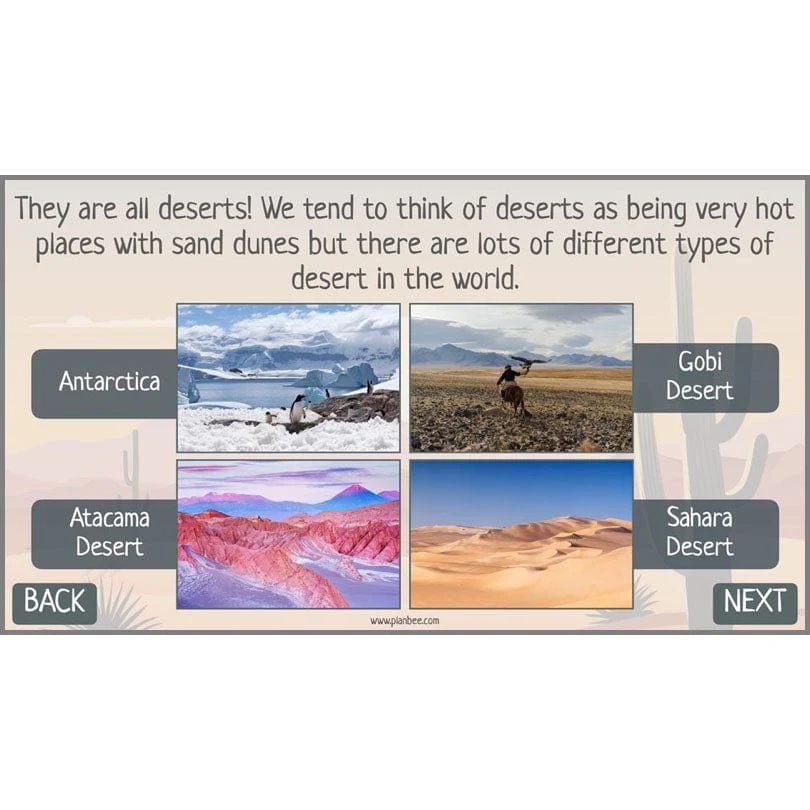
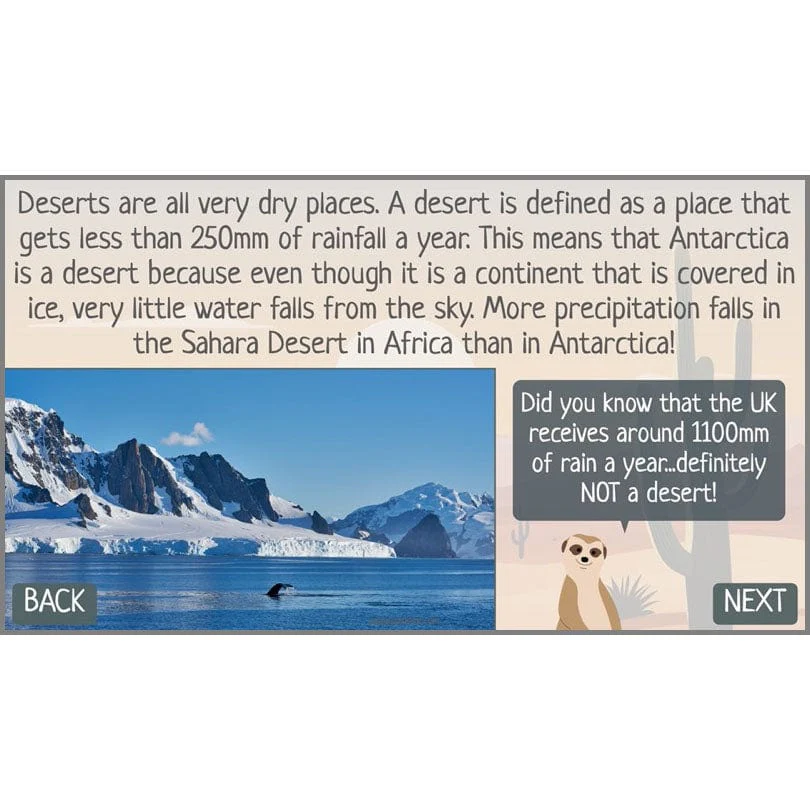
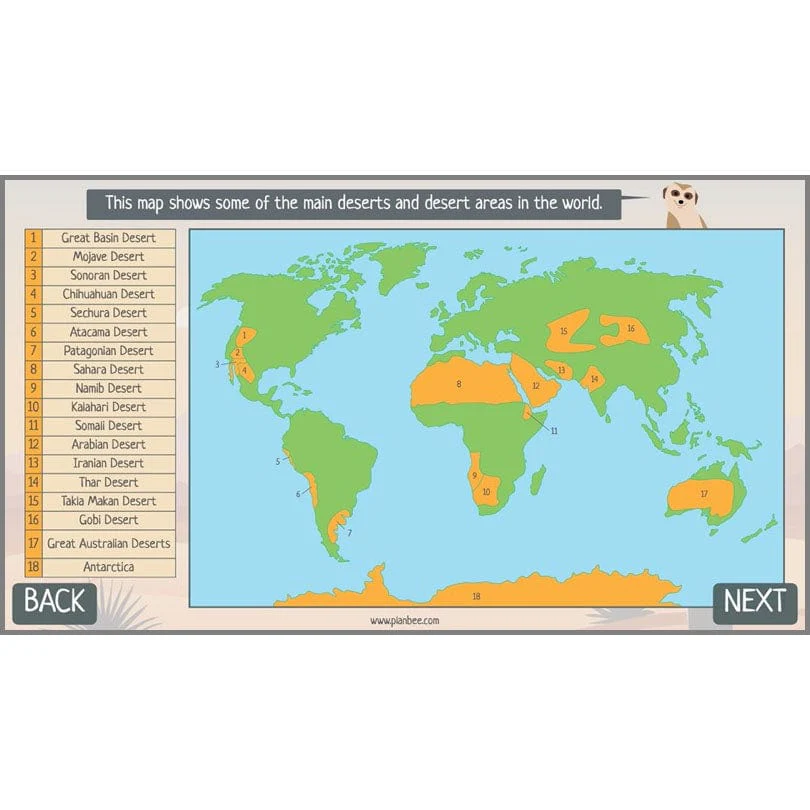
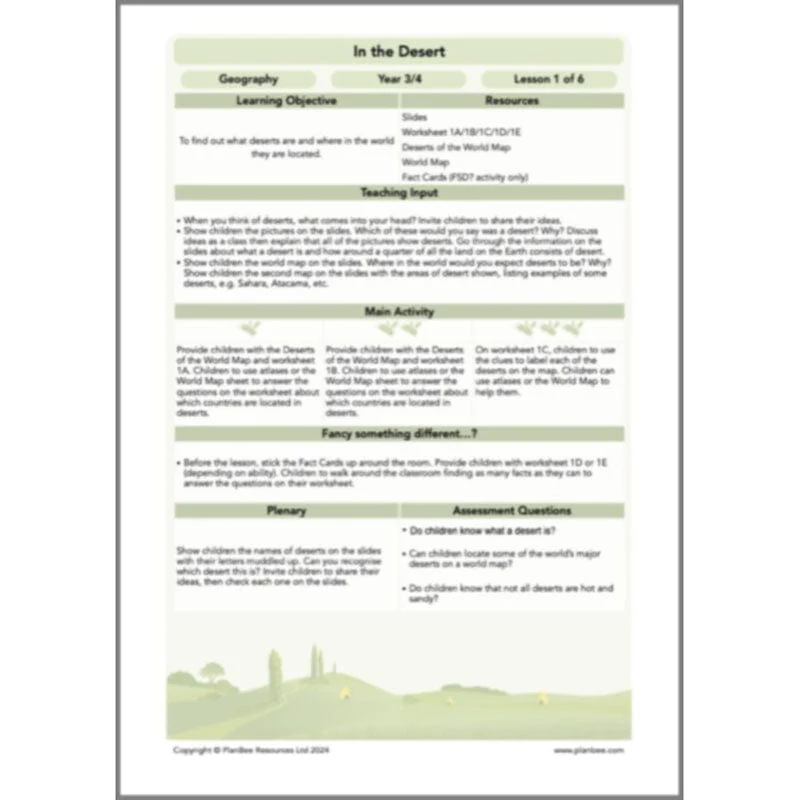
This lesson teaches your class that there is more to deserts than sand dunes! They will learn what the definition of a desert is, and how this can apply to both hot and cold climates. They will then use different maps to identify, and name, the major deserts of the world, from large deserts like the Sahara and Great Australian Deserts to smaller deserts such as the Sechura and Somali Deserts.
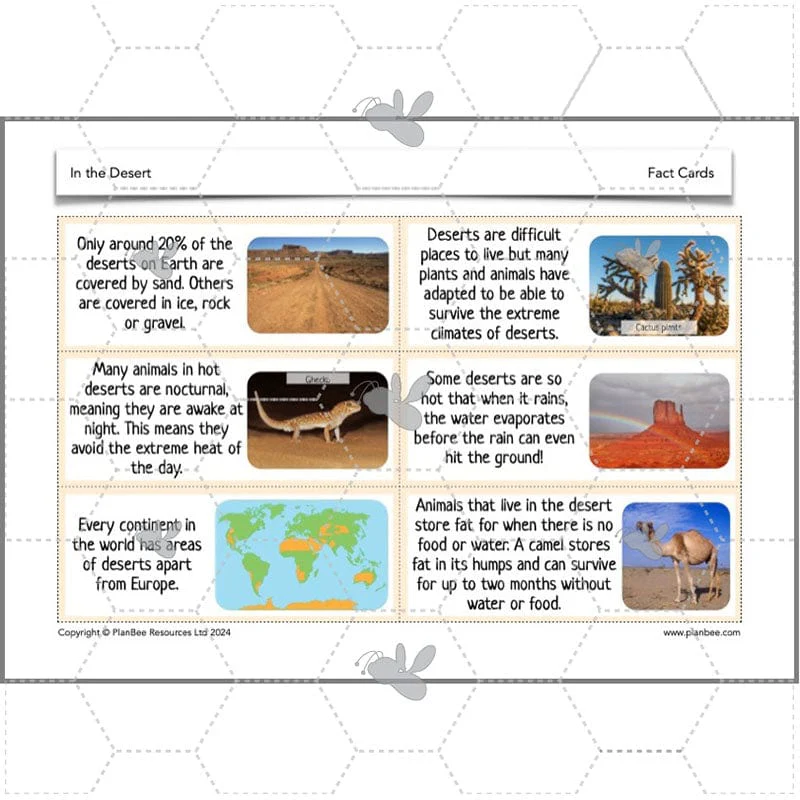
A detailed lesson plan is provided, alongside an engaging slideshow for the teaching input, differentiated activity ideas for adaptive teaching and a range of printable resources for independent learning, including differentiated worksheets, a World Map, a Deserts of the World Map and Fact Cards.
What's included:
- Lesson plan
- Slides
- Activity ideas
- Differentiated worksheets
- Deserts of the world map
- World map
- Fact cards
Desert Climates
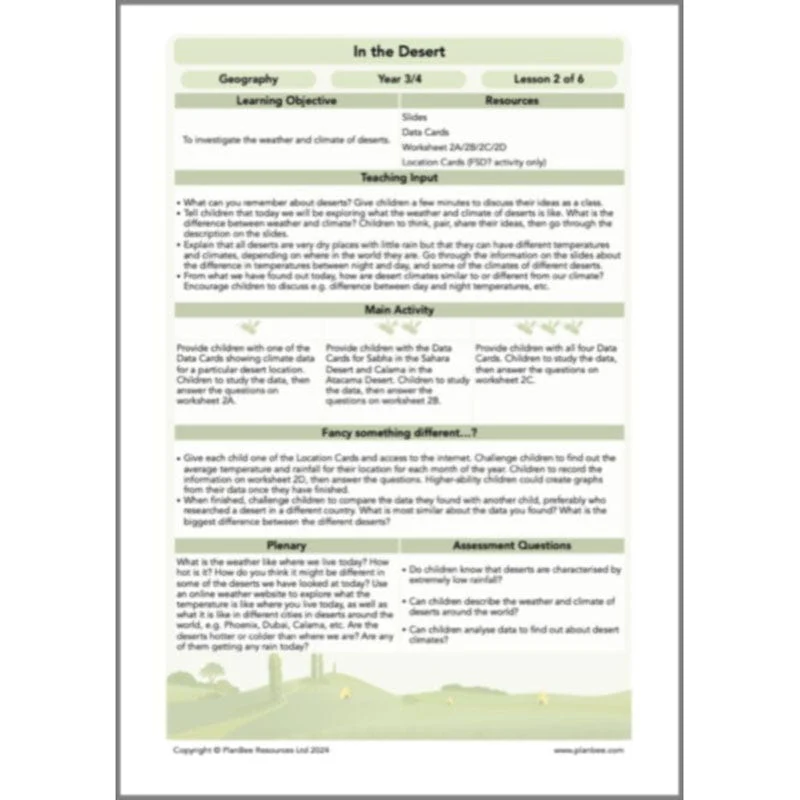
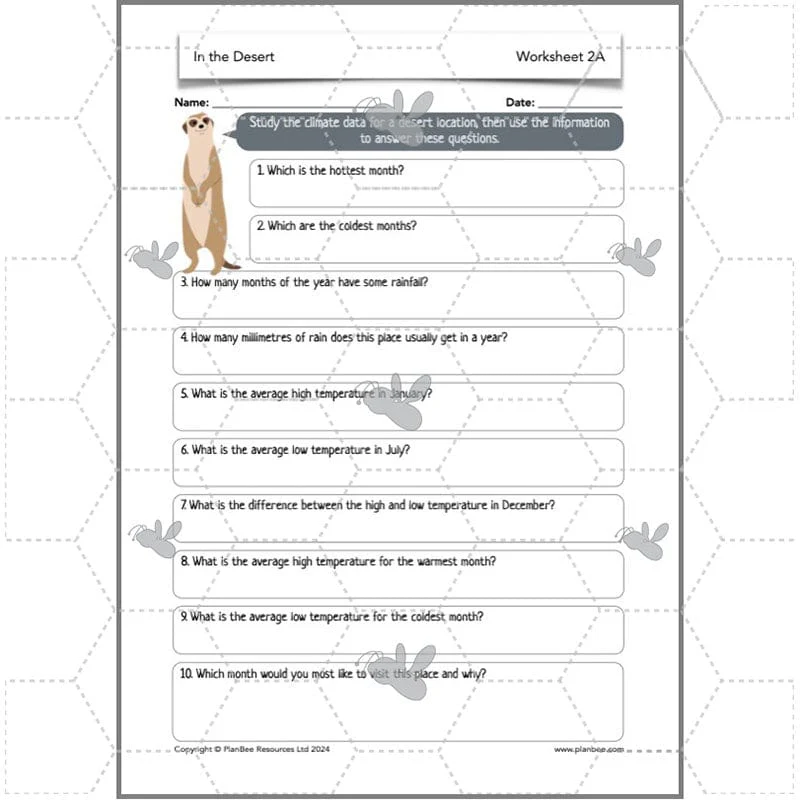
Now that your class knows that deserts are places that receive very little precipitation, this lesson gives them the chance to further explore and compare the various climates of deserts around the world. During the included slideshow presentation, children will learn about how temperatures vary from night to day and season to season, exploring some of the extreme temperatures found in deserts around the world.
During their independent learning activities, they can then use Data Cards to answer differentiated questions on the provided worksheets, or carry out their own research on the climate of particular deserts, using Location Cards to support them.
What's included:
- Lesson plan
- Slides
- Activity ideas
- Data cards
- Differentiated worksheets
- Location cards
Desert Formations
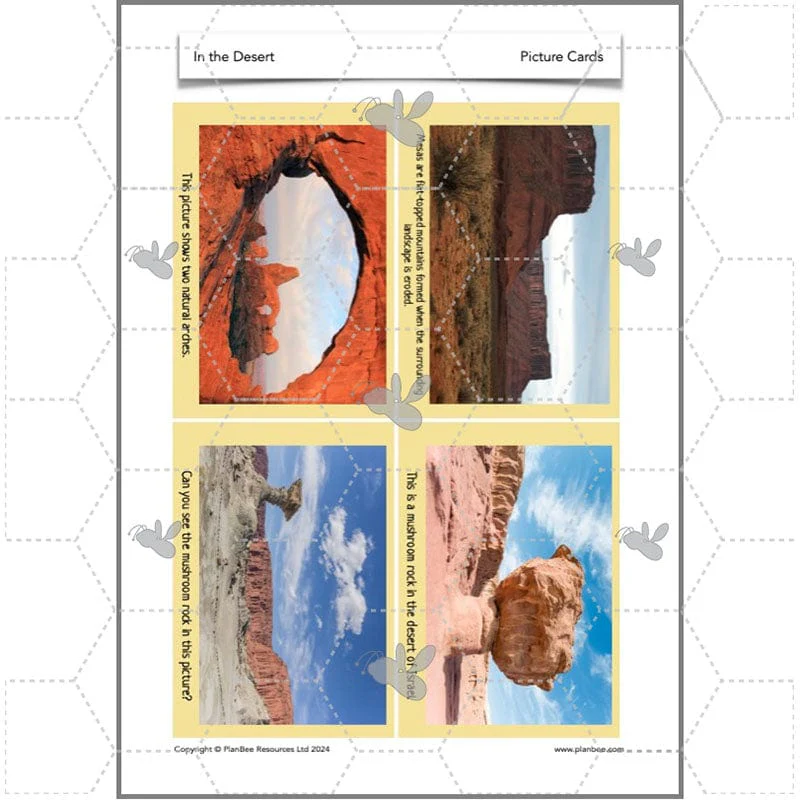
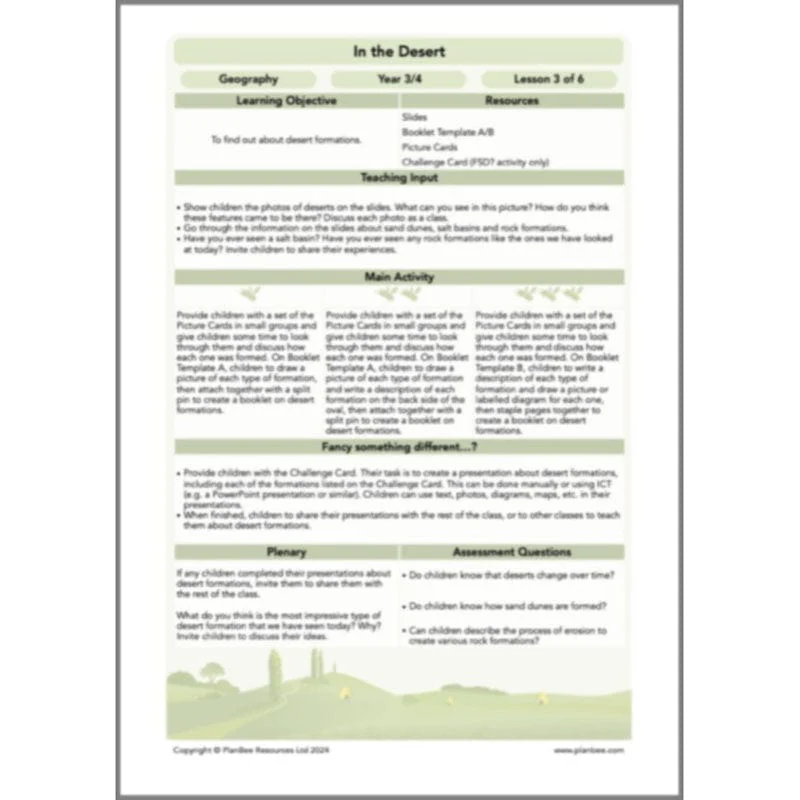
This lesson starts by showing your class fascinating photos of different desert formations on the teaching input slideshow for them to discuss, before finding out about how erosion and other factors create desert formations such as arches, mushroom rocks, and mesas.
They can then use Picture Cards and differentiated Booklet Templates to write their own definitions of each different type of desert formation, or use the Challenge Card to help them create a group presentation.
What's included:
- Lesson plan
- Slides
- Activity ideas
- Booklet template
- Picture cards
- Challenge card
Desert Uses
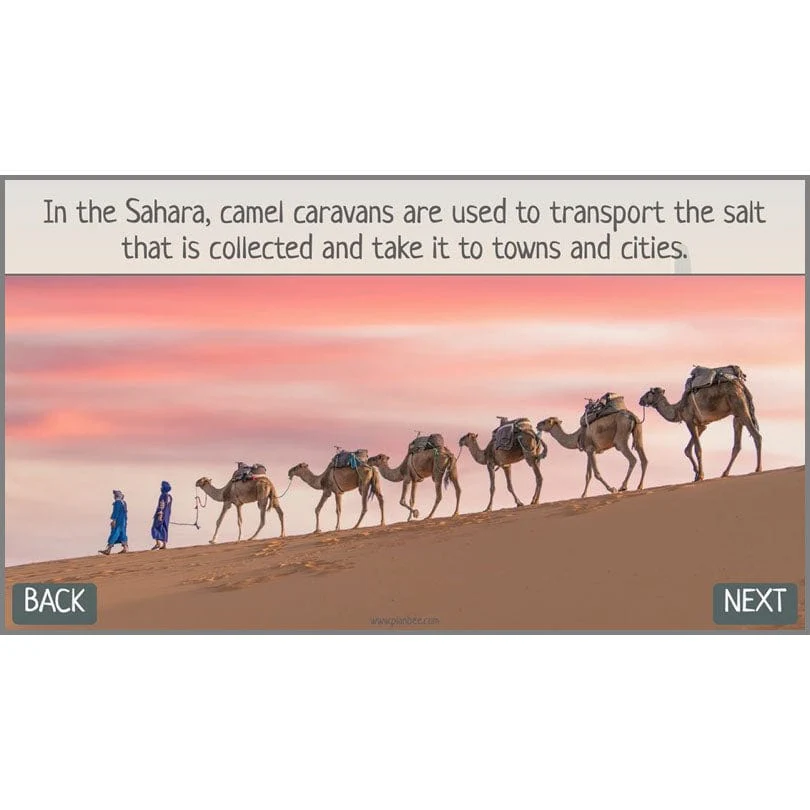
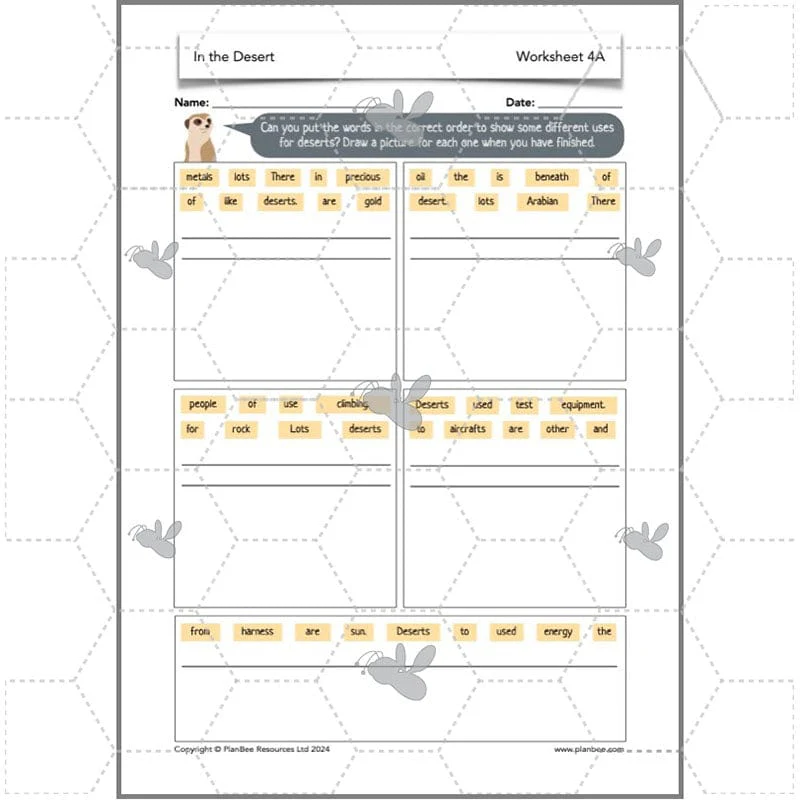
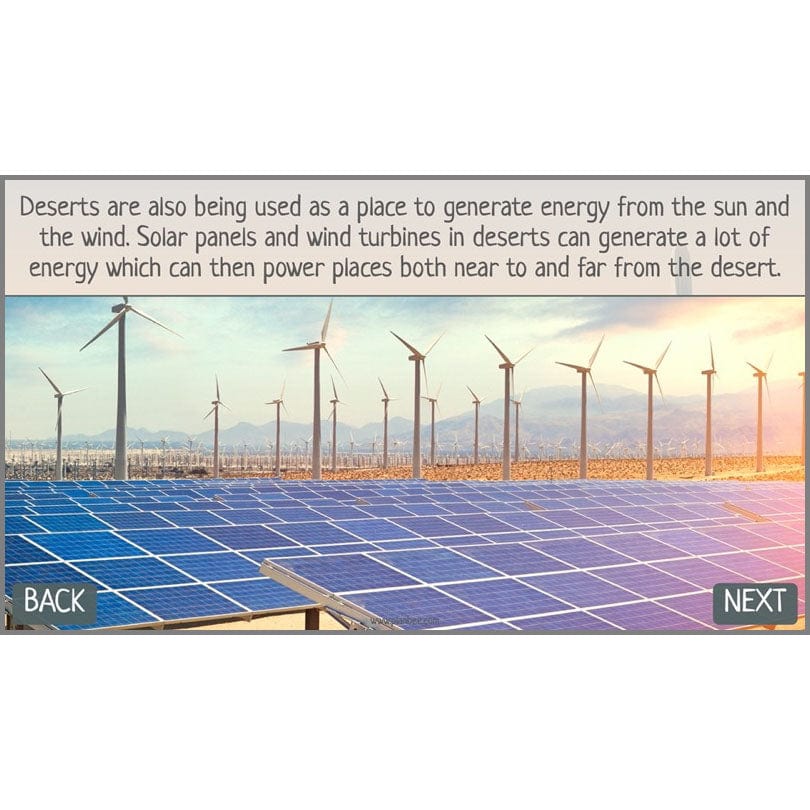
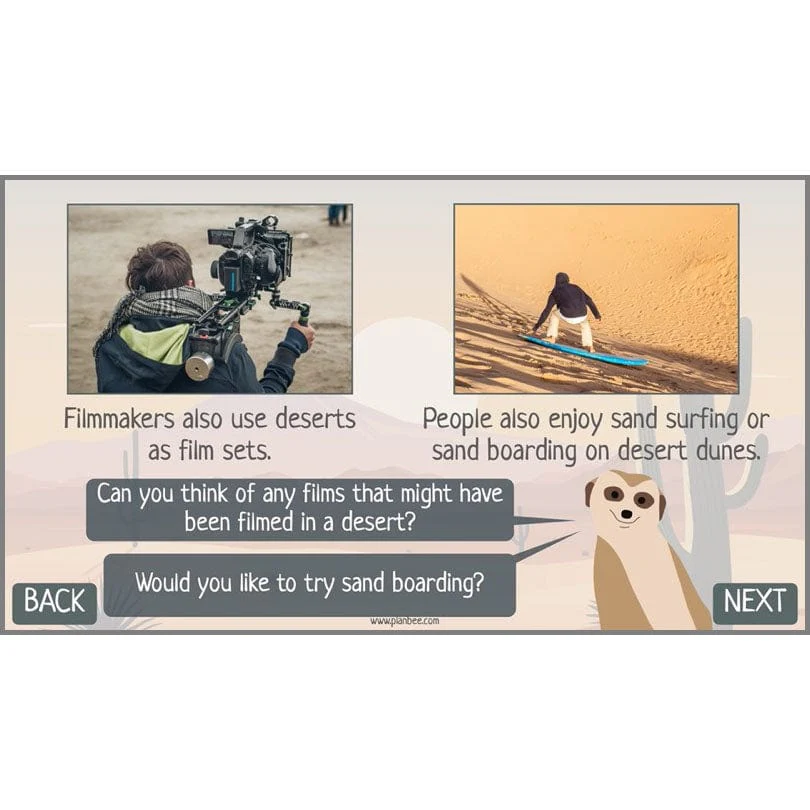
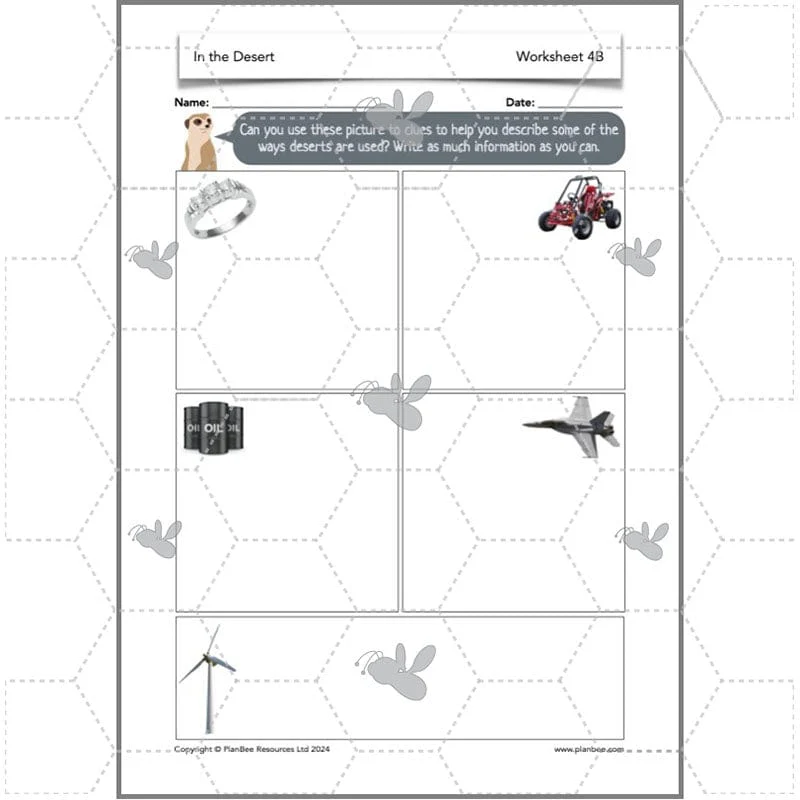
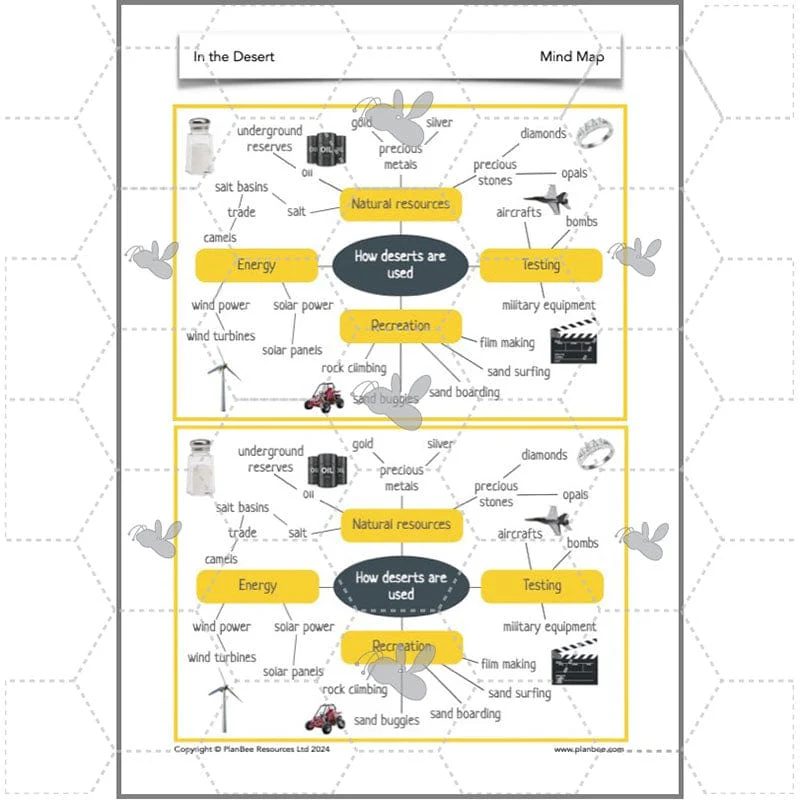
Deserts appear to be desolate, useless places at first glance but this lesson encourages your class to dig a little deeper as they find out about some of the ways in which deserts are used by humans. The slideshow presentation introduces some of the natural resources found in deserts, such as oil, salt, gold and diamonds, as well as how deserts are used for recreation, testing and other purposes.
Children can then use the differentiated worksheets and Mind Map provided to express their learning in different ways.
What's included:
- Lesson plan
- Slides
- Activity ideas
- Differentiated worksheets
- Mind map
Desert Dwellers
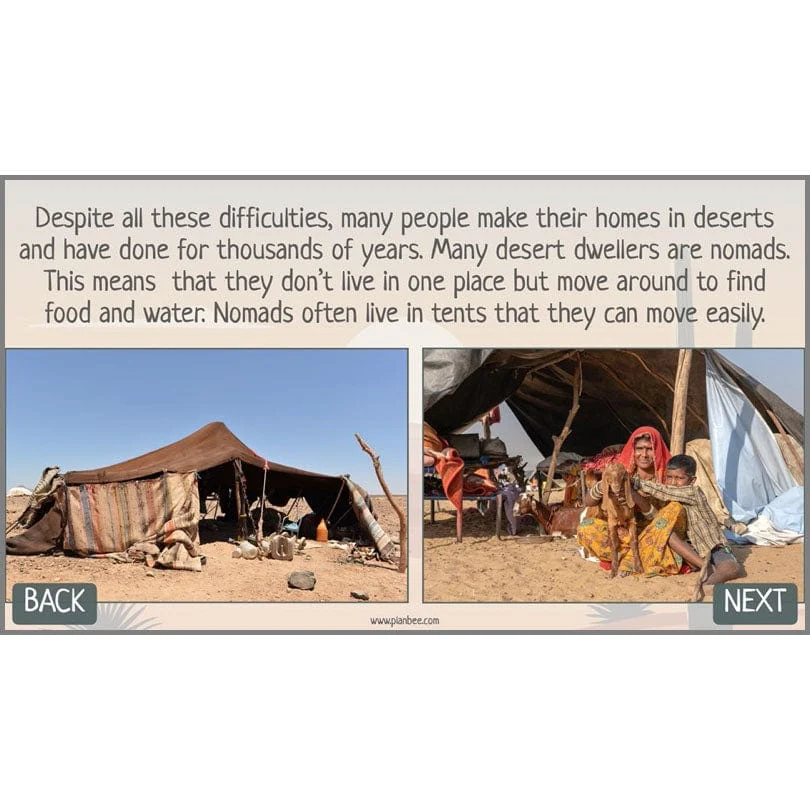
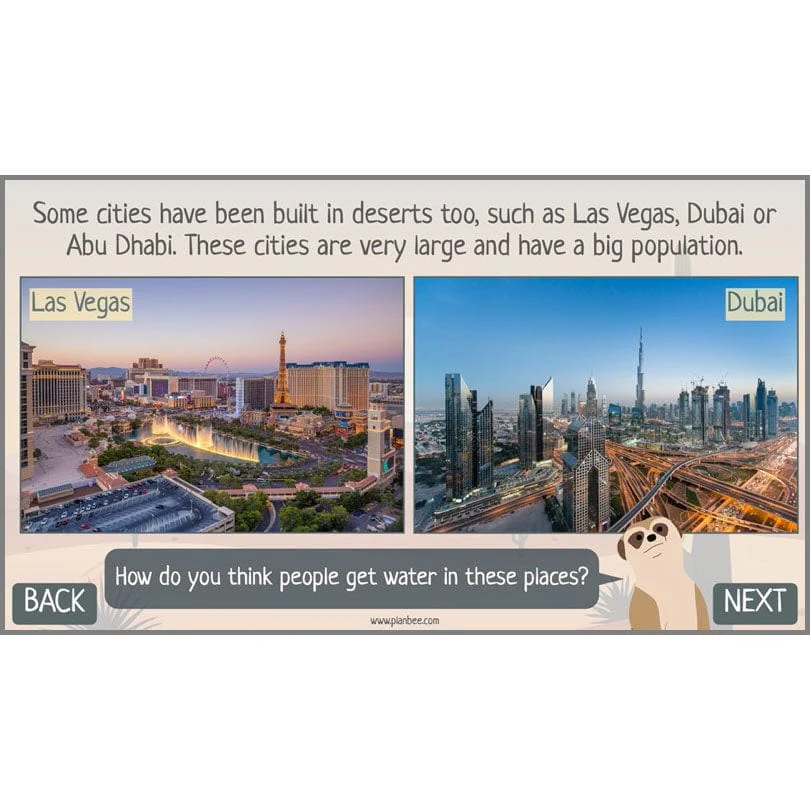
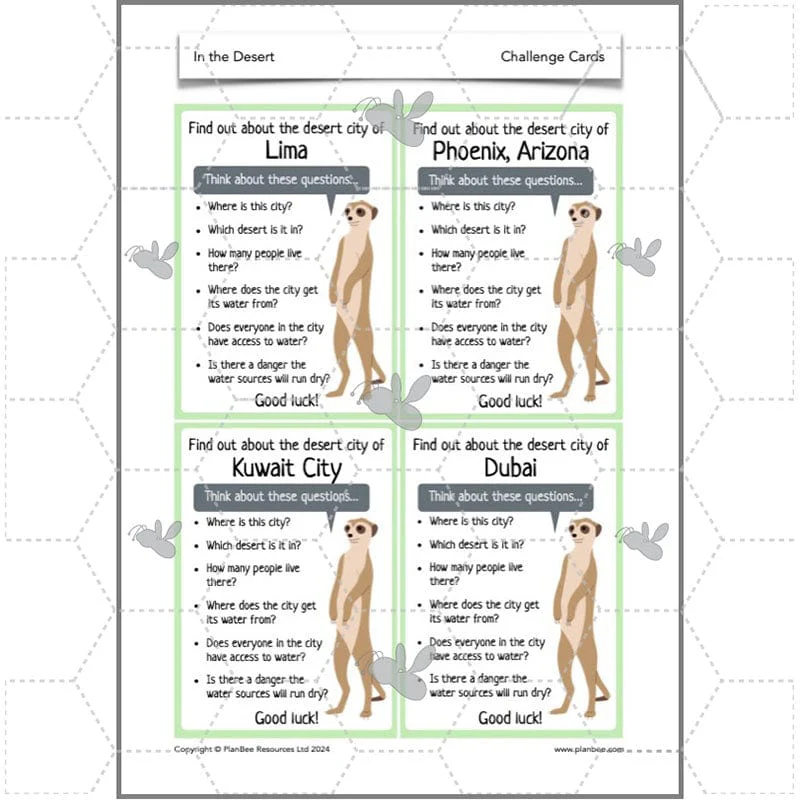
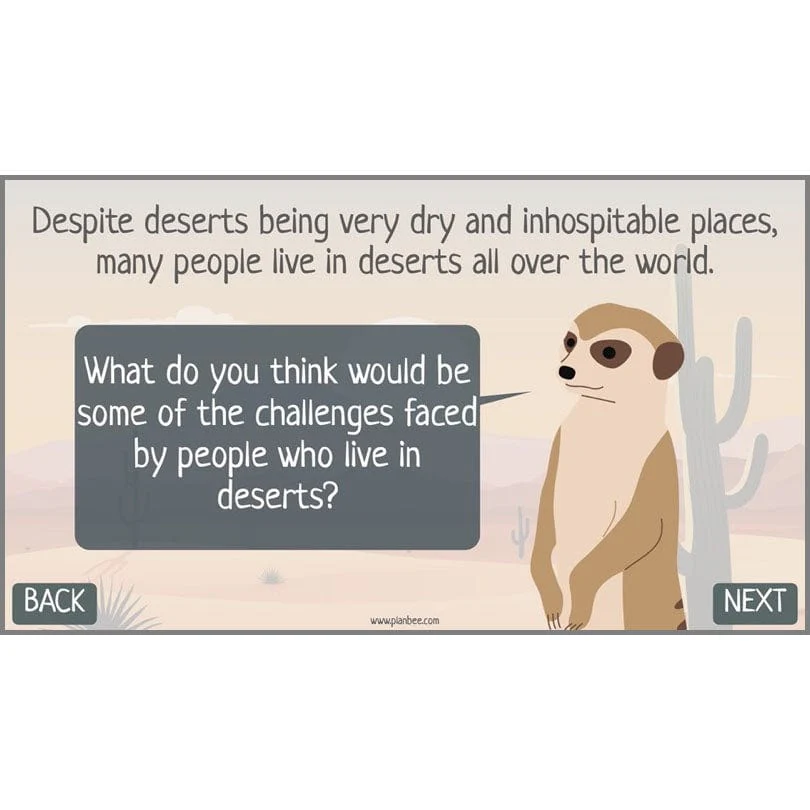
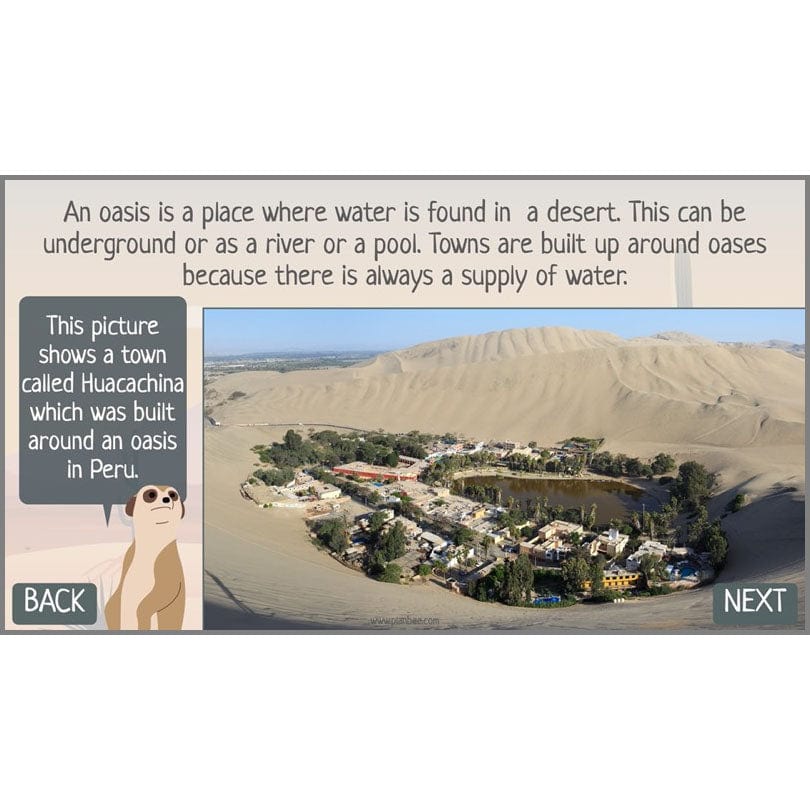
This lesson looks at the various people, towns and cities of deserts and explores how they survive in such a harsh environment. They will learn about oases, nomads and small desert towns, before exploring how large cities such as Las Vegas and Dubai get the water they need to survive.
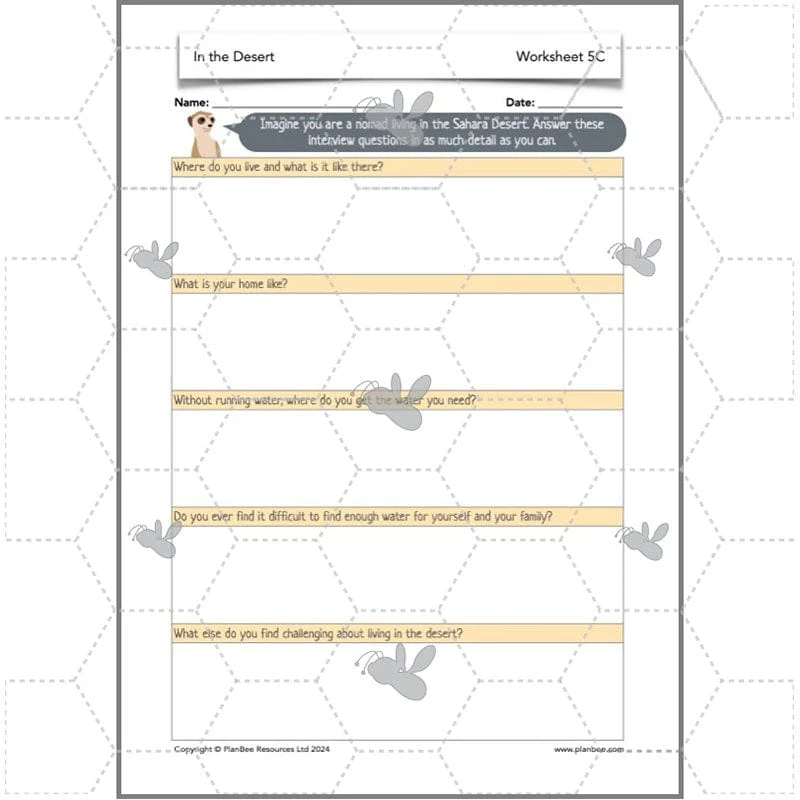
The included slideshow presentation allows your to introduce this information to your class, before children can tackle a variety of differentiated activities. Worksheets and Challenge Cards are provided to support them with this.
What's included:
- Lesson plan
- Slides
- Activity ideas
- Differentiated worksheets
- Challenge cards
Desertification
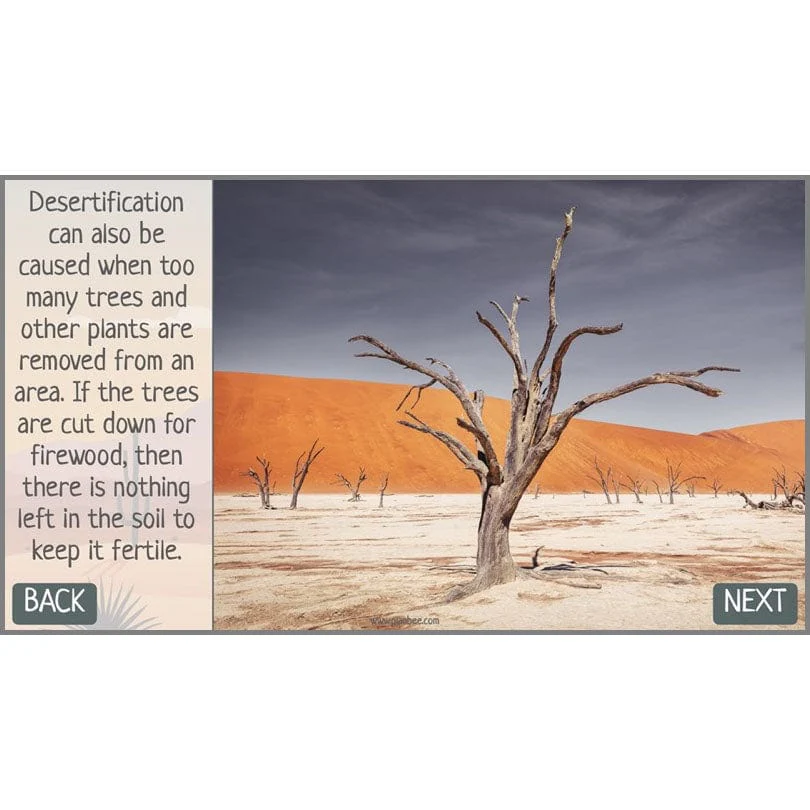
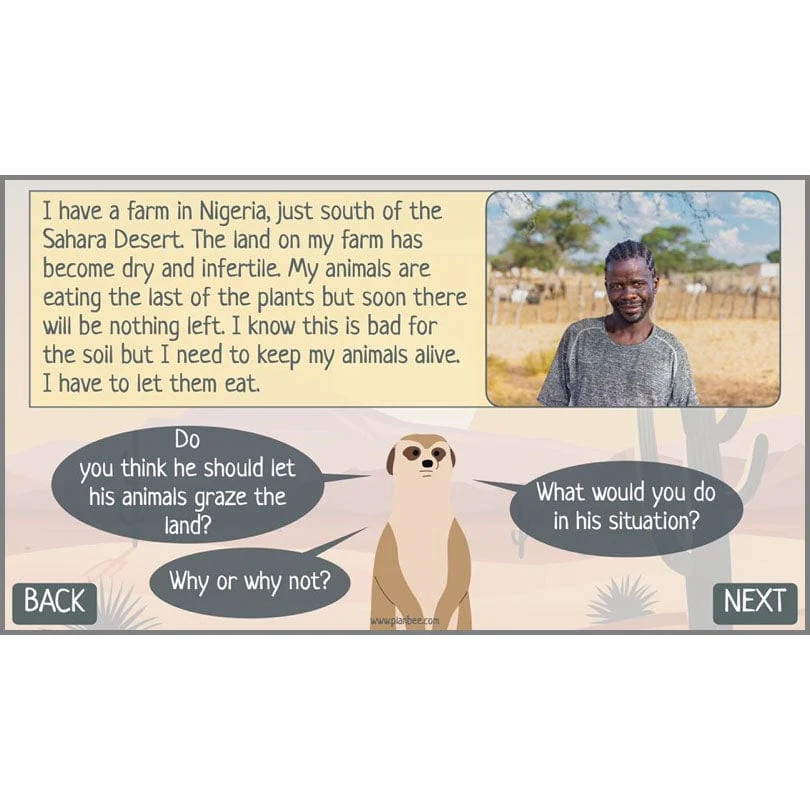
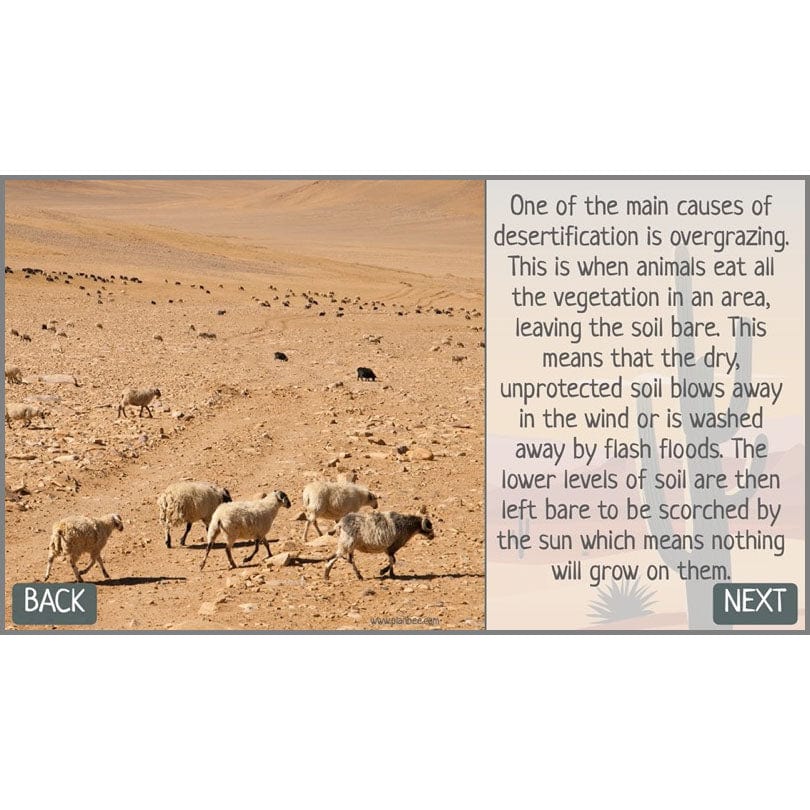
The final lesson in this series investigates what desertification is and why it is happening to deserts around the world. Your children will find out how over-farming and over-grazing, as well as pollution, are causing deserts to grow and swallow up fertile farmland, and what can be done to prevent this.
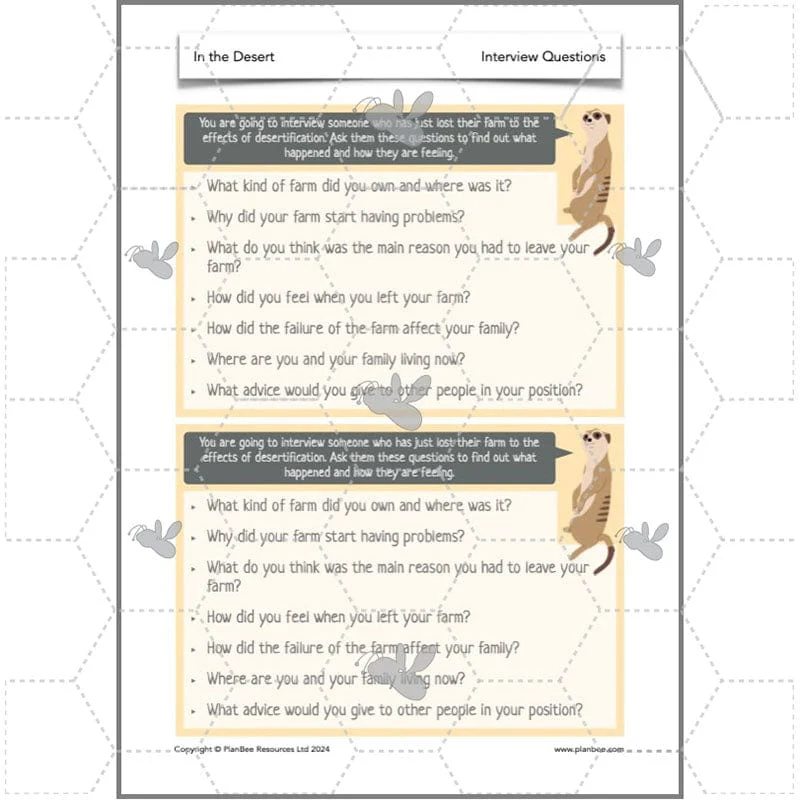
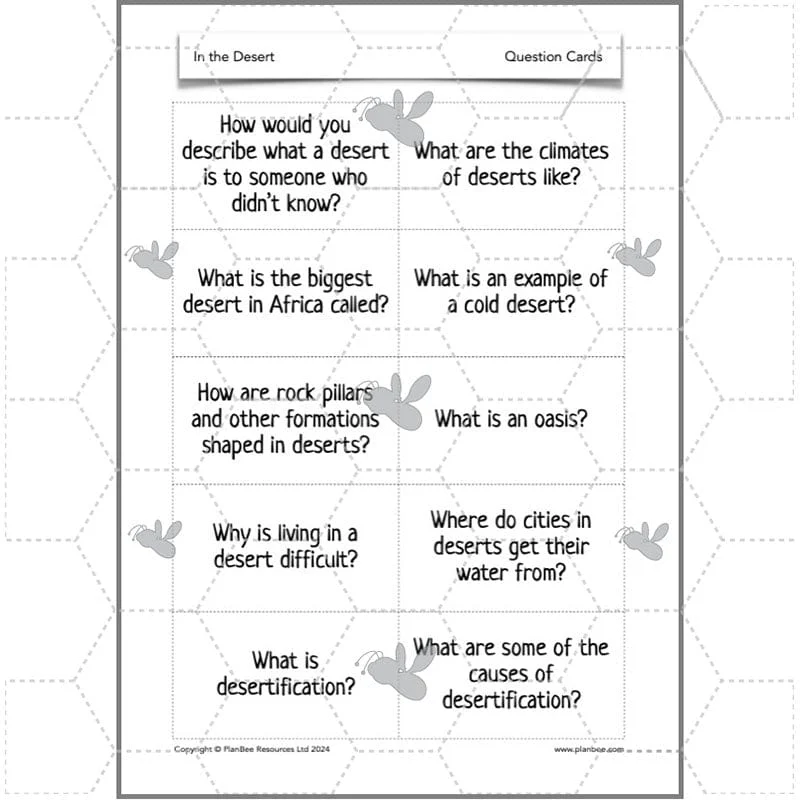
This topic is presented in a thought-provoking way during the teaching input slideshow. Children can then use what they have learnt to create a poster campaigning against desertification, prepare and perform interviews with someone affected by desertification, or work as a group to answer questions about all they have learnt about deserts. A worksheet, Interview Questions sheet and Question Cards are all provided to support these activities.
An End of Unit Quiz is also available with this lesson to assess children's learning across the unit both in slideshow and worksheet format.
What's included:
- Lesson plan
- Slides
- Activity ideas
- Worksheet
- Interview questions sheet
- Question cards
- End of Unit Quiz
Original: $2.69
-65%$2.69
$0.94More Images
























In the Desert
Grab your water bottles and set off to the driest places on Earth with this 'In the Desert' KS2 Geography scheme of work for Year 3 and Year 4. Your KS2 class will learn what a desert is and the features of desert habitats. They will discover where the major deserts of the world are, as well as exploring the physical and human geography of the desert biome.
With lesson plans, exciting slides, activity ideas, differentiated worksheets, picture cards, climate graphs, and much more, these KS2 'In the Desert' Geography lessons provide everything you need to teach your class about deserts, hot and cold, from the Sahara to the Antarctic.
Desert Locations
This lesson teaches your class that there is more to deserts than sand dunes! They will learn what the definition of a desert is, and how this can apply to both hot and cold climates. They will then use different maps to identify, and name, the major deserts of the world, from large deserts like the Sahara and Great Australian Deserts to smaller deserts such as the Sechura and Somali Deserts.
A detailed lesson plan is provided, alongside an engaging slideshow for the teaching input, differentiated activity ideas for adaptive teaching and a range of printable resources for independent learning, including differentiated worksheets, a World Map, a Deserts of the World Map and Fact Cards.
What's included:
- Lesson plan
- Slides
- Activity ideas
- Differentiated worksheets
- Deserts of the world map
- World map
- Fact cards
Desert Climates
Now that your class knows that deserts are places that receive very little precipitation, this lesson gives them the chance to further explore and compare the various climates of deserts around the world. During the included slideshow presentation, children will learn about how temperatures vary from night to day and season to season, exploring some of the extreme temperatures found in deserts around the world.
During their independent learning activities, they can then use Data Cards to answer differentiated questions on the provided worksheets, or carry out their own research on the climate of particular deserts, using Location Cards to support them.
What's included:
- Lesson plan
- Slides
- Activity ideas
- Data cards
- Differentiated worksheets
- Location cards
Desert Formations
This lesson starts by showing your class fascinating photos of different desert formations on the teaching input slideshow for them to discuss, before finding out about how erosion and other factors create desert formations such as arches, mushroom rocks, and mesas.
They can then use Picture Cards and differentiated Booklet Templates to write their own definitions of each different type of desert formation, or use the Challenge Card to help them create a group presentation.
What's included:
- Lesson plan
- Slides
- Activity ideas
- Booklet template
- Picture cards
- Challenge card
Desert Uses
Deserts appear to be desolate, useless places at first glance but this lesson encourages your class to dig a little deeper as they find out about some of the ways in which deserts are used by humans. The slideshow presentation introduces some of the natural resources found in deserts, such as oil, salt, gold and diamonds, as well as how deserts are used for recreation, testing and other purposes.
Children can then use the differentiated worksheets and Mind Map provided to express their learning in different ways.
What's included:
- Lesson plan
- Slides
- Activity ideas
- Differentiated worksheets
- Mind map
Desert Dwellers
This lesson looks at the various people, towns and cities of deserts and explores how they survive in such a harsh environment. They will learn about oases, nomads and small desert towns, before exploring how large cities such as Las Vegas and Dubai get the water they need to survive.
The included slideshow presentation allows your to introduce this information to your class, before children can tackle a variety of differentiated activities. Worksheets and Challenge Cards are provided to support them with this.
What's included:
- Lesson plan
- Slides
- Activity ideas
- Differentiated worksheets
- Challenge cards
Desertification
The final lesson in this series investigates what desertification is and why it is happening to deserts around the world. Your children will find out how over-farming and over-grazing, as well as pollution, are causing deserts to grow and swallow up fertile farmland, and what can be done to prevent this.
This topic is presented in a thought-provoking way during the teaching input slideshow. Children can then use what they have learnt to create a poster campaigning against desertification, prepare and perform interviews with someone affected by desertification, or work as a group to answer questions about all they have learnt about deserts. A worksheet, Interview Questions sheet and Question Cards are all provided to support these activities.
An End of Unit Quiz is also available with this lesson to assess children's learning across the unit both in slideshow and worksheet format.
What's included:
- Lesson plan
- Slides
- Activity ideas
- Worksheet
- Interview questions sheet
- Question cards
- End of Unit Quiz
Product Information
Product Information
Shipping & Returns
Shipping & Returns
Description
Grab your water bottles and set off to the driest places on Earth with this 'In the Desert' KS2 Geography scheme of work for Year 3 and Year 4. Your KS2 class will learn what a desert is and the features of desert habitats. They will discover where the major deserts of the world are, as well as exploring the physical and human geography of the desert biome.
With lesson plans, exciting slides, activity ideas, differentiated worksheets, picture cards, climate graphs, and much more, these KS2 'In the Desert' Geography lessons provide everything you need to teach your class about deserts, hot and cold, from the Sahara to the Antarctic.
Desert Locations
This lesson teaches your class that there is more to deserts than sand dunes! They will learn what the definition of a desert is, and how this can apply to both hot and cold climates. They will then use different maps to identify, and name, the major deserts of the world, from large deserts like the Sahara and Great Australian Deserts to smaller deserts such as the Sechura and Somali Deserts.
A detailed lesson plan is provided, alongside an engaging slideshow for the teaching input, differentiated activity ideas for adaptive teaching and a range of printable resources for independent learning, including differentiated worksheets, a World Map, a Deserts of the World Map and Fact Cards.
What's included:
- Lesson plan
- Slides
- Activity ideas
- Differentiated worksheets
- Deserts of the world map
- World map
- Fact cards
Desert Climates
Now that your class knows that deserts are places that receive very little precipitation, this lesson gives them the chance to further explore and compare the various climates of deserts around the world. During the included slideshow presentation, children will learn about how temperatures vary from night to day and season to season, exploring some of the extreme temperatures found in deserts around the world.
During their independent learning activities, they can then use Data Cards to answer differentiated questions on the provided worksheets, or carry out their own research on the climate of particular deserts, using Location Cards to support them.
What's included:
- Lesson plan
- Slides
- Activity ideas
- Data cards
- Differentiated worksheets
- Location cards
Desert Formations
This lesson starts by showing your class fascinating photos of different desert formations on the teaching input slideshow for them to discuss, before finding out about how erosion and other factors create desert formations such as arches, mushroom rocks, and mesas.
They can then use Picture Cards and differentiated Booklet Templates to write their own definitions of each different type of desert formation, or use the Challenge Card to help them create a group presentation.
What's included:
- Lesson plan
- Slides
- Activity ideas
- Booklet template
- Picture cards
- Challenge card
Desert Uses
Deserts appear to be desolate, useless places at first glance but this lesson encourages your class to dig a little deeper as they find out about some of the ways in which deserts are used by humans. The slideshow presentation introduces some of the natural resources found in deserts, such as oil, salt, gold and diamonds, as well as how deserts are used for recreation, testing and other purposes.
Children can then use the differentiated worksheets and Mind Map provided to express their learning in different ways.
What's included:
- Lesson plan
- Slides
- Activity ideas
- Differentiated worksheets
- Mind map
Desert Dwellers
This lesson looks at the various people, towns and cities of deserts and explores how they survive in such a harsh environment. They will learn about oases, nomads and small desert towns, before exploring how large cities such as Las Vegas and Dubai get the water they need to survive.
The included slideshow presentation allows your to introduce this information to your class, before children can tackle a variety of differentiated activities. Worksheets and Challenge Cards are provided to support them with this.
What's included:
- Lesson plan
- Slides
- Activity ideas
- Differentiated worksheets
- Challenge cards
Desertification
The final lesson in this series investigates what desertification is and why it is happening to deserts around the world. Your children will find out how over-farming and over-grazing, as well as pollution, are causing deserts to grow and swallow up fertile farmland, and what can be done to prevent this.
This topic is presented in a thought-provoking way during the teaching input slideshow. Children can then use what they have learnt to create a poster campaigning against desertification, prepare and perform interviews with someone affected by desertification, or work as a group to answer questions about all they have learnt about deserts. A worksheet, Interview Questions sheet and Question Cards are all provided to support these activities.
An End of Unit Quiz is also available with this lesson to assess children's learning across the unit both in slideshow and worksheet format.
What's included:
- Lesson plan
- Slides
- Activity ideas
- Worksheet
- Interview questions sheet
- Question cards
- End of Unit Quiz