Let's compare mass and capacity
Click here to preview PlanBee's lessons for FREE
It can be tricky for younger learners to estimate, measure and compare the capacities of different containers. The first three lessons in this Complete Series help them get to grips with capacity, with easy to understand slides and fun, practical, differentiated learning activities where they'll compare capacities using water to fill containers of different shapes and sizes.
After that, the last two lessons focus on the mass of solids, and how balance scales may be used to measure, compare and order them. There's a choice of practical activities with these lessons too, where children will get hands-on experience using balance scales with accuracy to compare the mass of a variety of solids.
More or Less Liquid
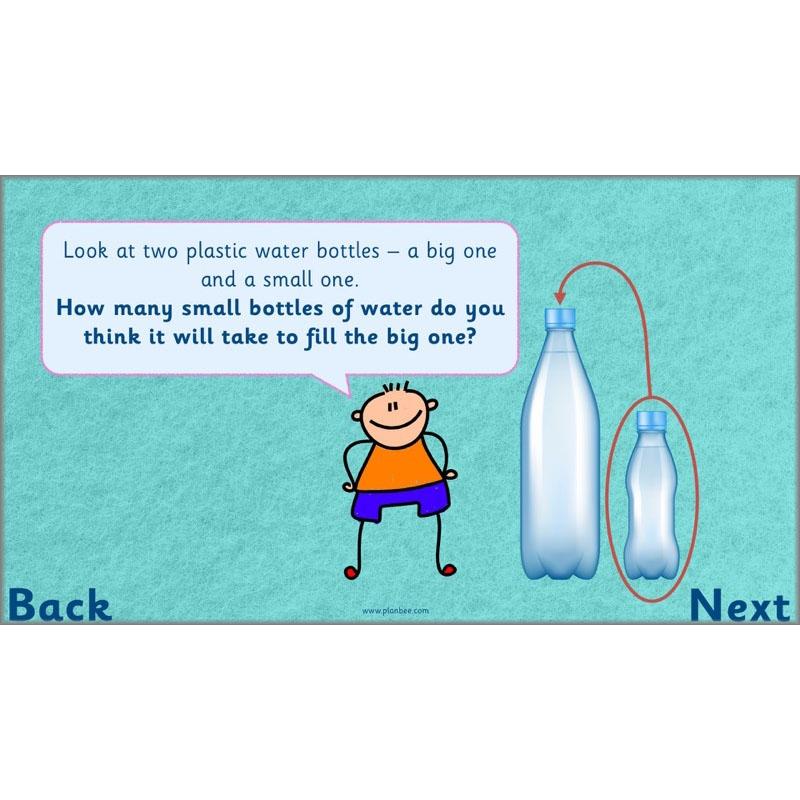
Building on your children's emerging understanding of capacity, this lesson starts by encouraging children to consider how many times a smaller container might be used to fill a larger one with water, and conversely, how many smaller containers might be filled from a single larger one. Moving on, they'll learn that capacity can be measured in litres, then take part in practical learning activities with water and containers, trying to find containers that hold more or less than one litre.
This fun, practical (and potentially quite wet!) lesson includes challenge cards, slides and a photo sheet to record learning. All you'll need to provide is access to water and some old bottles, yogurt pots, plastic cups etc.
What's included:
- Lesson plan
- Slides
- Activity ideas
- Differentiated challenge cards
- Photo sheet
View Lesson 1
Comparing Containers
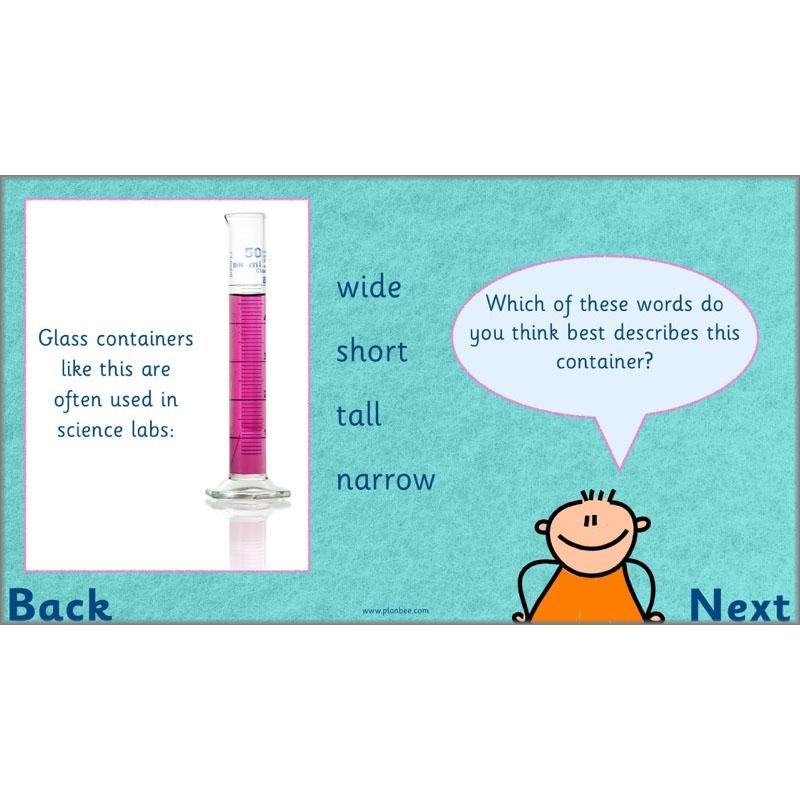
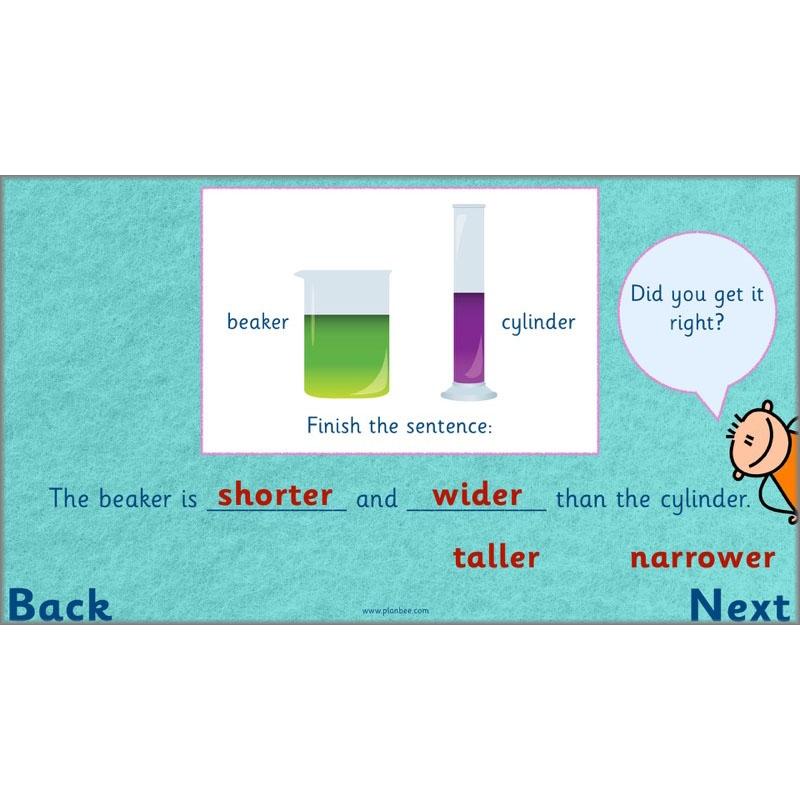
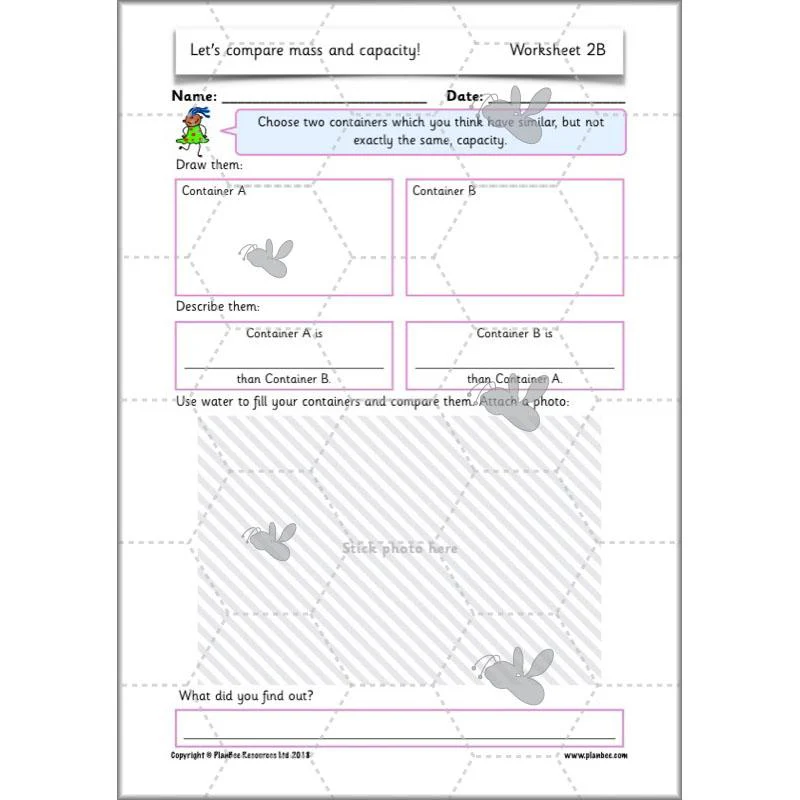
In this lesson, children will begin to use a broader range of words to describe differences between containers of different dimensions. They will go on to compare containers and predict which will hold the most liquid, based on their dimensions. After that, there's a choice of activities where children may either compare and describe the capacity of a variety of containers, or make their own simple measuring cylinder using a plastic bottle.
What's included:
- Lesson plan
- Slides
- Activity ideas
- Differentiated worksheets
- Container Capacity word bank
- Challenge card
- Photo sheet
View Lesson 2
Share and Compare Liquid
Challenge children to solve simple capacity problems in this very practical lesson. The included slides explain how they could share liquid equally between two or more bottles of the same dimensions and volume, and start to introduce some language children may use to describe how full of liquid a container is, e.g. one quarter, one half or three quarters full.
After that, there's a choice of differentiated activities where your class can try pouring, sharing and comparing volumes for themselves.
What's included:
- Lesson plan
- Slides
- Activity ideas
- Differentiated worksheets
- Capacity checklist
- Photo sheet
View Lesson 3
Comparing Mass
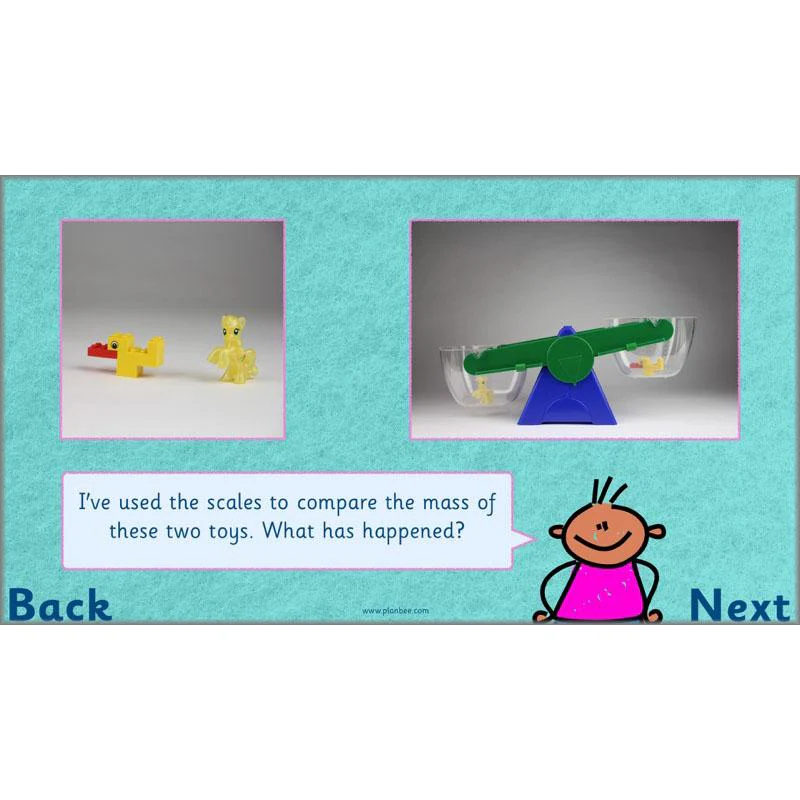
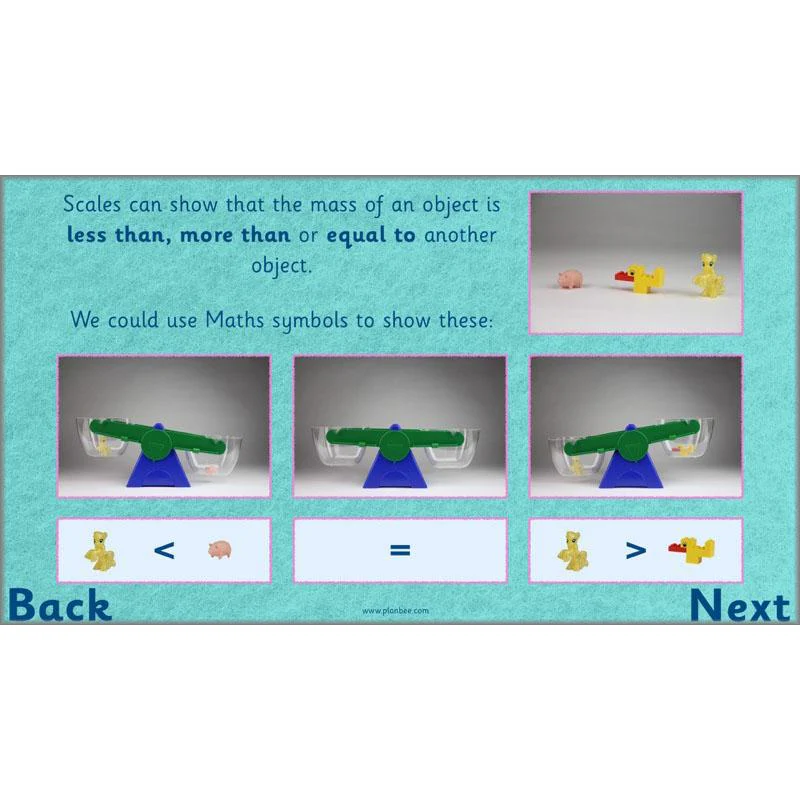
Begin to use mathematical language, including 'mass' rather than 'weight', to describe using balance scales to compare and order objects by mass. The included slides model using this language, and present children with simple problems involving comparing the mass of objects using balance scales.
After this included teaching input and slideshow, there's a choice of differentiated learning activities where children may either use balance scales to compare and order two or three objects and use less than or greater than symbols, or where they may attempt to compare and order objects by weighing them in their hands.
What's included:
- Lesson plan
- Slides
- Activity ideas
- Differentiated worksheets
- Photo sheet
View Lesson 4
Using Balance Scales
Building on your children's emerging understanding of mass and how to measure it, this lesson's included slides explain in simple terms how solids of different dimensions can have similar, or the same, mass. So children can readily understand this concept, the slides show how a cup of one type of dry pasta shapes may not necessarily have the same mass as a cup of a different pasta shape.
After that, challenge your class with one of the two included activities where they may either compare 'pourable' solids such as pasta shapes or rice, or where they may experiment with making scales balance perfectly by making the mass on either side equal.
What's included:
- Lesson plan
- Slides
- Activity ideas
- Differentiated worksheets
- Challenge card
- Photo sheet
View Lesson 5
Original: $4.71
-65%$4.71
$1.65More Images










Let's compare mass and capacity
Click here to preview PlanBee's lessons for FREE
It can be tricky for younger learners to estimate, measure and compare the capacities of different containers. The first three lessons in this Complete Series help them get to grips with capacity, with easy to understand slides and fun, practical, differentiated learning activities where they'll compare capacities using water to fill containers of different shapes and sizes.
After that, the last two lessons focus on the mass of solids, and how balance scales may be used to measure, compare and order them. There's a choice of practical activities with these lessons too, where children will get hands-on experience using balance scales with accuracy to compare the mass of a variety of solids.
More or Less Liquid
Building on your children's emerging understanding of capacity, this lesson starts by encouraging children to consider how many times a smaller container might be used to fill a larger one with water, and conversely, how many smaller containers might be filled from a single larger one. Moving on, they'll learn that capacity can be measured in litres, then take part in practical learning activities with water and containers, trying to find containers that hold more or less than one litre.
This fun, practical (and potentially quite wet!) lesson includes challenge cards, slides and a photo sheet to record learning. All you'll need to provide is access to water and some old bottles, yogurt pots, plastic cups etc.
What's included:
- Lesson plan
- Slides
- Activity ideas
- Differentiated challenge cards
- Photo sheet
View Lesson 1
Comparing Containers
In this lesson, children will begin to use a broader range of words to describe differences between containers of different dimensions. They will go on to compare containers and predict which will hold the most liquid, based on their dimensions. After that, there's a choice of activities where children may either compare and describe the capacity of a variety of containers, or make their own simple measuring cylinder using a plastic bottle.
What's included:
- Lesson plan
- Slides
- Activity ideas
- Differentiated worksheets
- Container Capacity word bank
- Challenge card
- Photo sheet
View Lesson 2
Share and Compare Liquid
Challenge children to solve simple capacity problems in this very practical lesson. The included slides explain how they could share liquid equally between two or more bottles of the same dimensions and volume, and start to introduce some language children may use to describe how full of liquid a container is, e.g. one quarter, one half or three quarters full.
After that, there's a choice of differentiated activities where your class can try pouring, sharing and comparing volumes for themselves.
What's included:
- Lesson plan
- Slides
- Activity ideas
- Differentiated worksheets
- Capacity checklist
- Photo sheet
View Lesson 3
Comparing Mass
Begin to use mathematical language, including 'mass' rather than 'weight', to describe using balance scales to compare and order objects by mass. The included slides model using this language, and present children with simple problems involving comparing the mass of objects using balance scales.
After this included teaching input and slideshow, there's a choice of differentiated learning activities where children may either use balance scales to compare and order two or three objects and use less than or greater than symbols, or where they may attempt to compare and order objects by weighing them in their hands.
What's included:
- Lesson plan
- Slides
- Activity ideas
- Differentiated worksheets
- Photo sheet
View Lesson 4
Using Balance Scales
Building on your children's emerging understanding of mass and how to measure it, this lesson's included slides explain in simple terms how solids of different dimensions can have similar, or the same, mass. So children can readily understand this concept, the slides show how a cup of one type of dry pasta shapes may not necessarily have the same mass as a cup of a different pasta shape.
After that, challenge your class with one of the two included activities where they may either compare 'pourable' solids such as pasta shapes or rice, or where they may experiment with making scales balance perfectly by making the mass on either side equal.
What's included:
- Lesson plan
- Slides
- Activity ideas
- Differentiated worksheets
- Challenge card
- Photo sheet
View Lesson 5
Product Information
Product Information
Shipping & Returns
Shipping & Returns
Description
Click here to preview PlanBee's lessons for FREE
It can be tricky for younger learners to estimate, measure and compare the capacities of different containers. The first three lessons in this Complete Series help them get to grips with capacity, with easy to understand slides and fun, practical, differentiated learning activities where they'll compare capacities using water to fill containers of different shapes and sizes.
After that, the last two lessons focus on the mass of solids, and how balance scales may be used to measure, compare and order them. There's a choice of practical activities with these lessons too, where children will get hands-on experience using balance scales with accuracy to compare the mass of a variety of solids.
More or Less Liquid
Building on your children's emerging understanding of capacity, this lesson starts by encouraging children to consider how many times a smaller container might be used to fill a larger one with water, and conversely, how many smaller containers might be filled from a single larger one. Moving on, they'll learn that capacity can be measured in litres, then take part in practical learning activities with water and containers, trying to find containers that hold more or less than one litre.
This fun, practical (and potentially quite wet!) lesson includes challenge cards, slides and a photo sheet to record learning. All you'll need to provide is access to water and some old bottles, yogurt pots, plastic cups etc.
What's included:
- Lesson plan
- Slides
- Activity ideas
- Differentiated challenge cards
- Photo sheet
View Lesson 1
Comparing Containers
In this lesson, children will begin to use a broader range of words to describe differences between containers of different dimensions. They will go on to compare containers and predict which will hold the most liquid, based on their dimensions. After that, there's a choice of activities where children may either compare and describe the capacity of a variety of containers, or make their own simple measuring cylinder using a plastic bottle.
What's included:
- Lesson plan
- Slides
- Activity ideas
- Differentiated worksheets
- Container Capacity word bank
- Challenge card
- Photo sheet
View Lesson 2
Share and Compare Liquid
Challenge children to solve simple capacity problems in this very practical lesson. The included slides explain how they could share liquid equally between two or more bottles of the same dimensions and volume, and start to introduce some language children may use to describe how full of liquid a container is, e.g. one quarter, one half or three quarters full.
After that, there's a choice of differentiated activities where your class can try pouring, sharing and comparing volumes for themselves.
What's included:
- Lesson plan
- Slides
- Activity ideas
- Differentiated worksheets
- Capacity checklist
- Photo sheet
View Lesson 3
Comparing Mass
Begin to use mathematical language, including 'mass' rather than 'weight', to describe using balance scales to compare and order objects by mass. The included slides model using this language, and present children with simple problems involving comparing the mass of objects using balance scales.
After this included teaching input and slideshow, there's a choice of differentiated learning activities where children may either use balance scales to compare and order two or three objects and use less than or greater than symbols, or where they may attempt to compare and order objects by weighing them in their hands.
What's included:
- Lesson plan
- Slides
- Activity ideas
- Differentiated worksheets
- Photo sheet
View Lesson 4
Using Balance Scales
Building on your children's emerging understanding of mass and how to measure it, this lesson's included slides explain in simple terms how solids of different dimensions can have similar, or the same, mass. So children can readily understand this concept, the slides show how a cup of one type of dry pasta shapes may not necessarily have the same mass as a cup of a different pasta shape.
After that, challenge your class with one of the two included activities where they may either compare 'pourable' solids such as pasta shapes or rice, or where they may experiment with making scales balance perfectly by making the mass on either side equal.
What's included:
- Lesson plan
- Slides
- Activity ideas
- Differentiated worksheets
- Challenge card
- Photo sheet
View Lesson 5