Let's Talk About Me
In this set of fully prepared PSHE lessons, your Year 3 class will first learn to recognise and name emotions, then explore how they make us feel and act, before looking at how to manage intense feelings.
To begin this scheme which focuses on self and emotional wellbeing, your class will first explore what personal identity means, and all of the factors that make us who we are as individuals. The following lessons focus on emotions. Children will look at the range of vocabulary we can use to express how we feel, and how different emotions can lead to different facial expressions and bodily sensations, and affect our behaviour and actions. Children will understand that we can feel very intense emotions, and as a result, sometimes our responses are not appropriate or proportionate. They will explore a range of strategies that can help them to self-regulate and manage their emotions.
Each of these five ready-to-teach Year 3 PSHE lessons includes an easy-to-follow plan, engaging and informative slides, and a variety of resources.
A Knowledge Organiser is available to support the learning in this scheme. It is included in the Complete Series download or can be purchased individually.
You might also be interested in our other KS1 and KS2 schemes that cover PlanBee's core theme of Self and Emotional Wellbeing.
Personal Identity
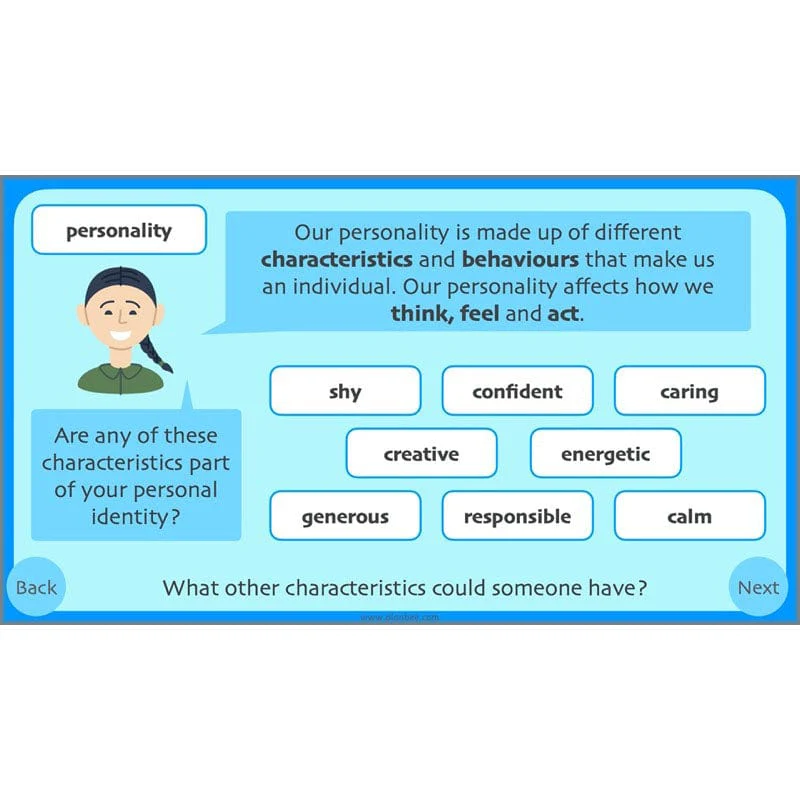
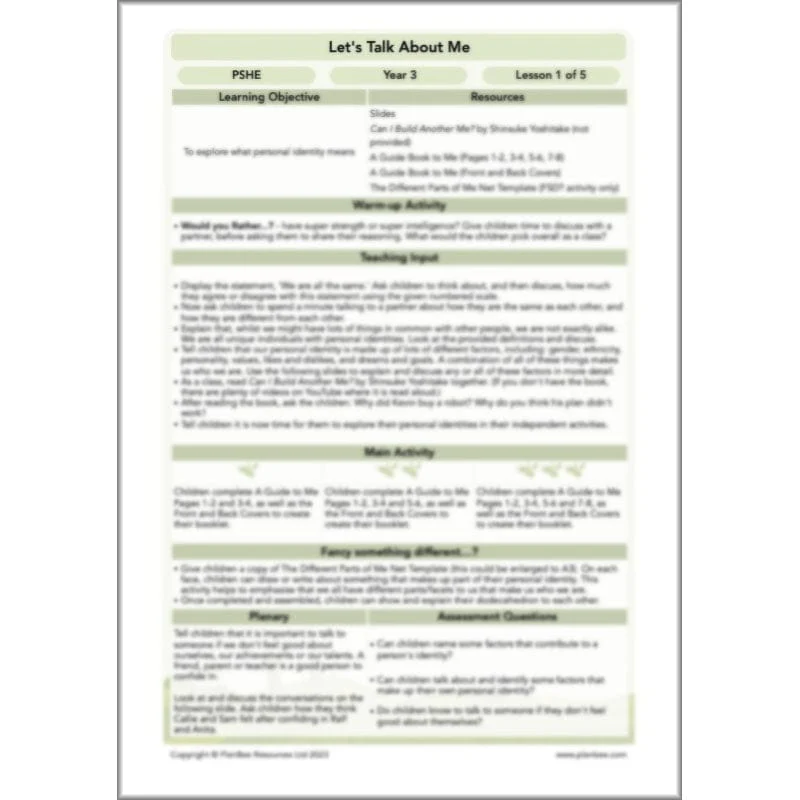
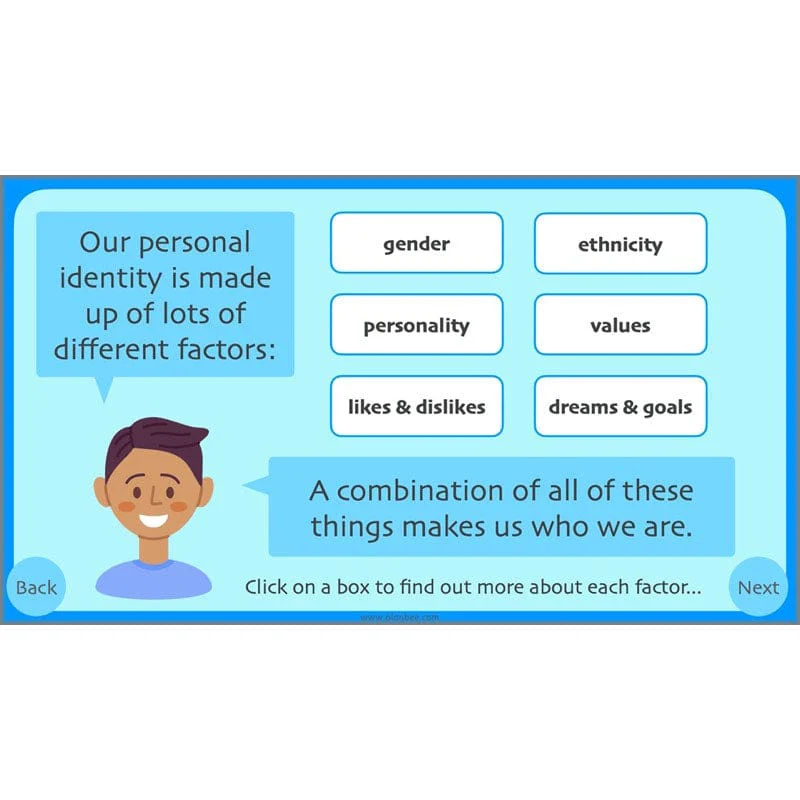
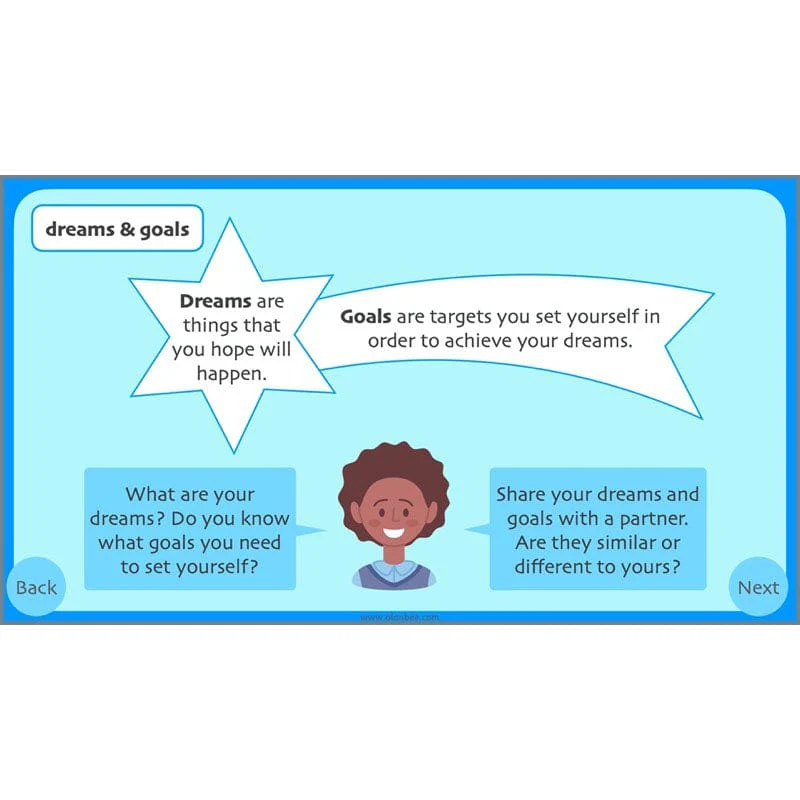
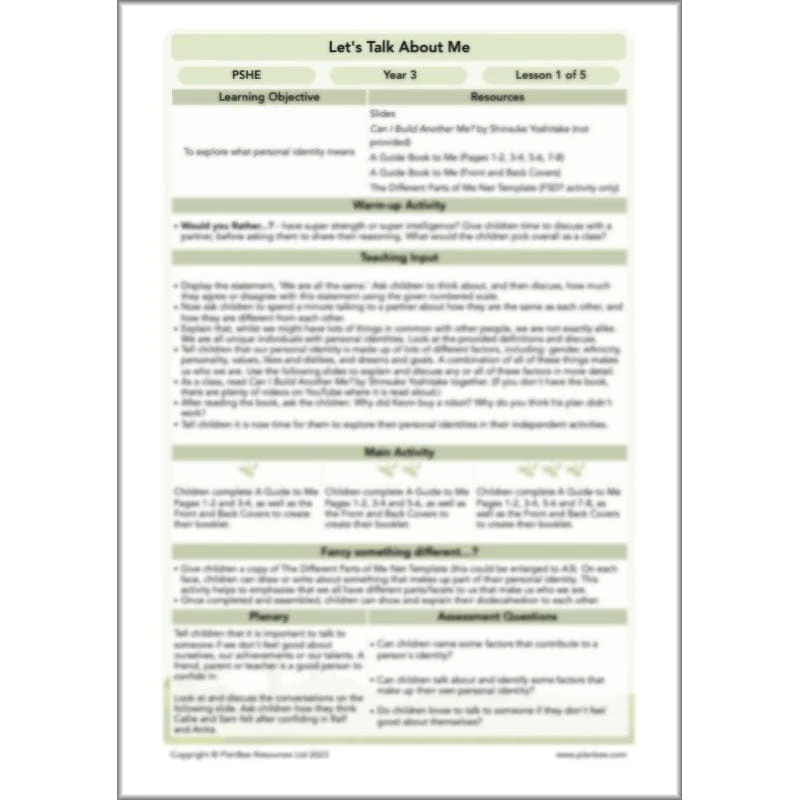
In this first lesson, children will explore the concept of personal identity, and look at some of the different factors that contribute towards this.
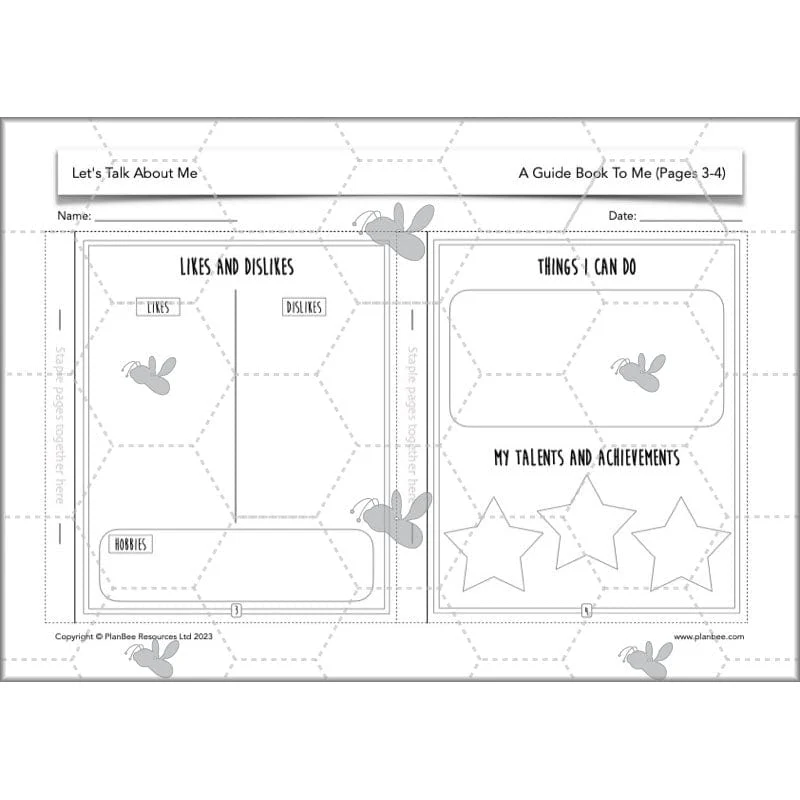
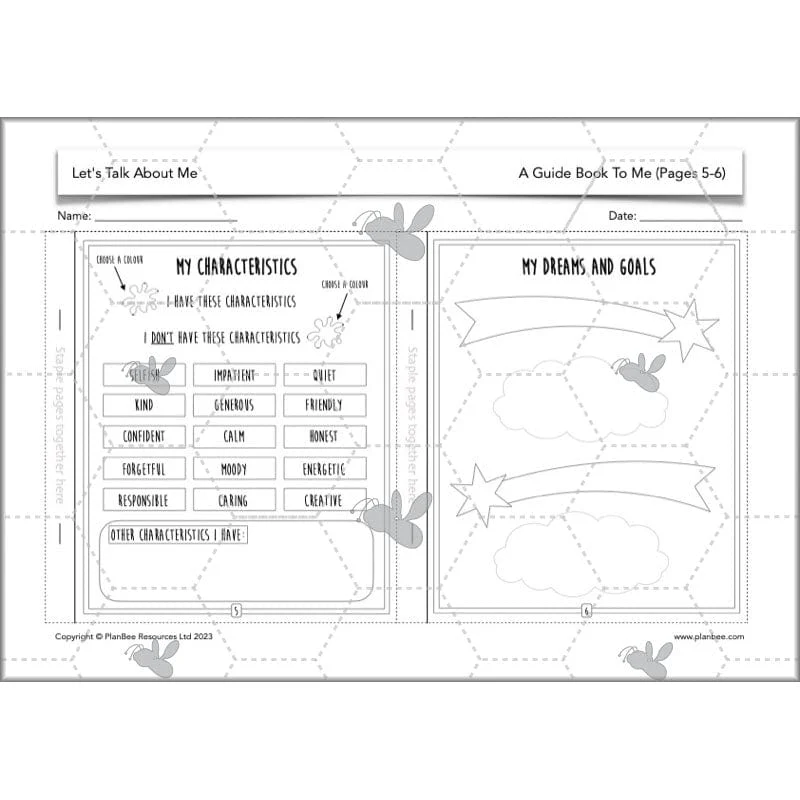
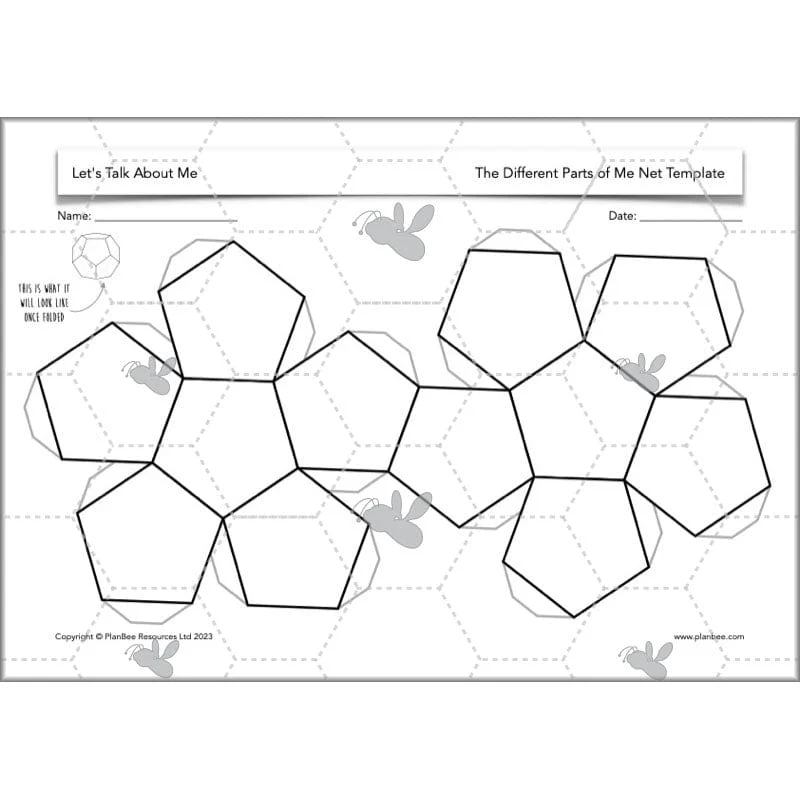
After reading Can I Build Another Me? by Shinsuke Yoshitake as a class, which highlights how we are all unique, children then create their own booklet, entitled, 'A Guide Book to Me.' In the alternative activity, children create a dodecahedron, which shows a different part of their personal identity on each face.
This Personal Identity KS2 lesson pack includes an easy-to-follow plan, a set of informative slides for the teaching input, and a variety of printable resources for the children's independent activities.
What's included:
- Lesson plan
- Slides
- Activity ideas
- A Guide Book To Me
- The Different Parts of Me Net Template
View Lesson 1
Naming Emotions
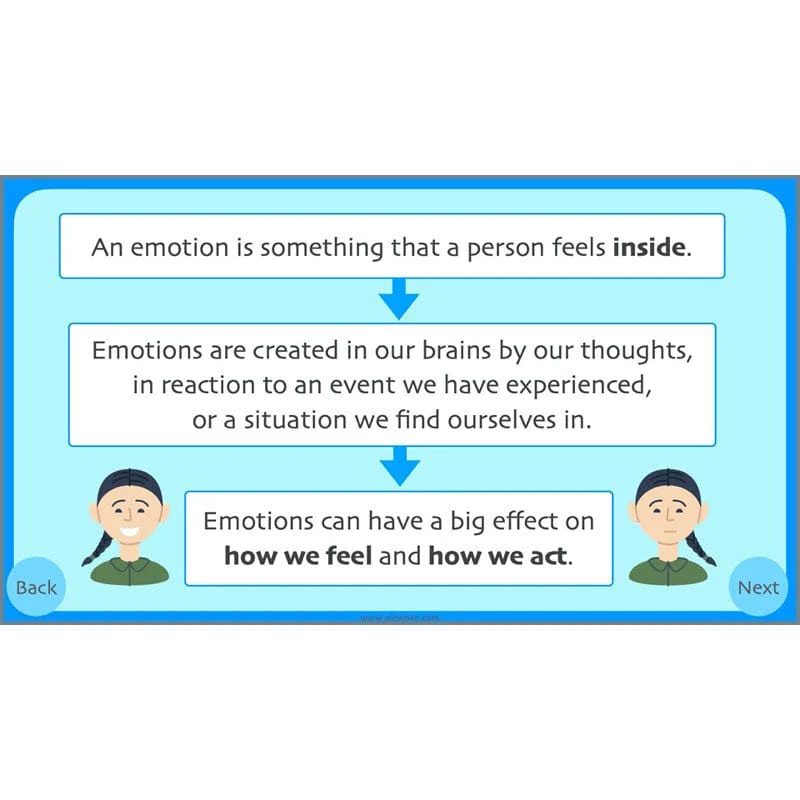
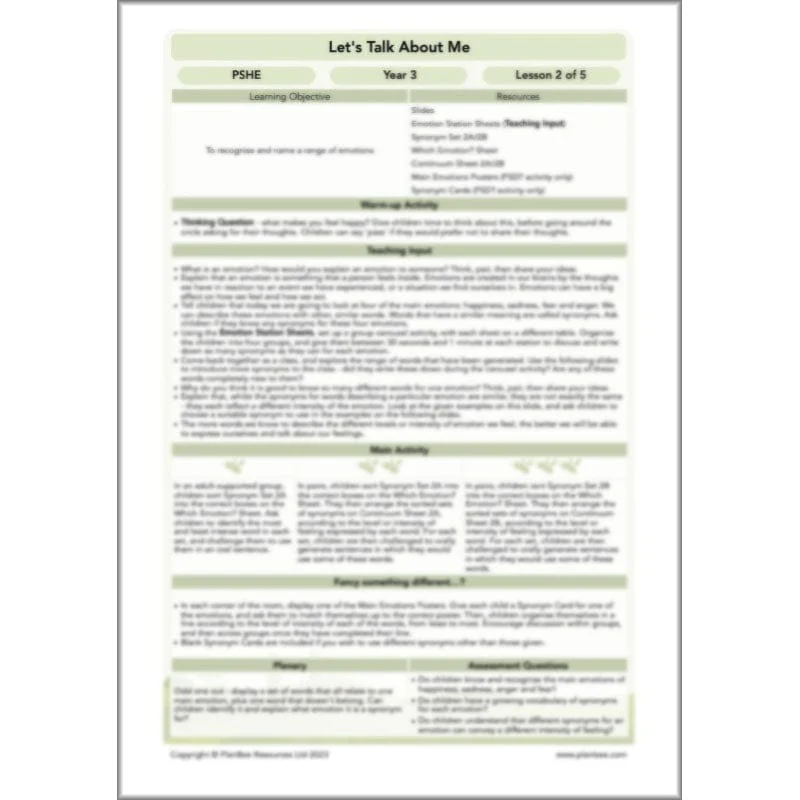
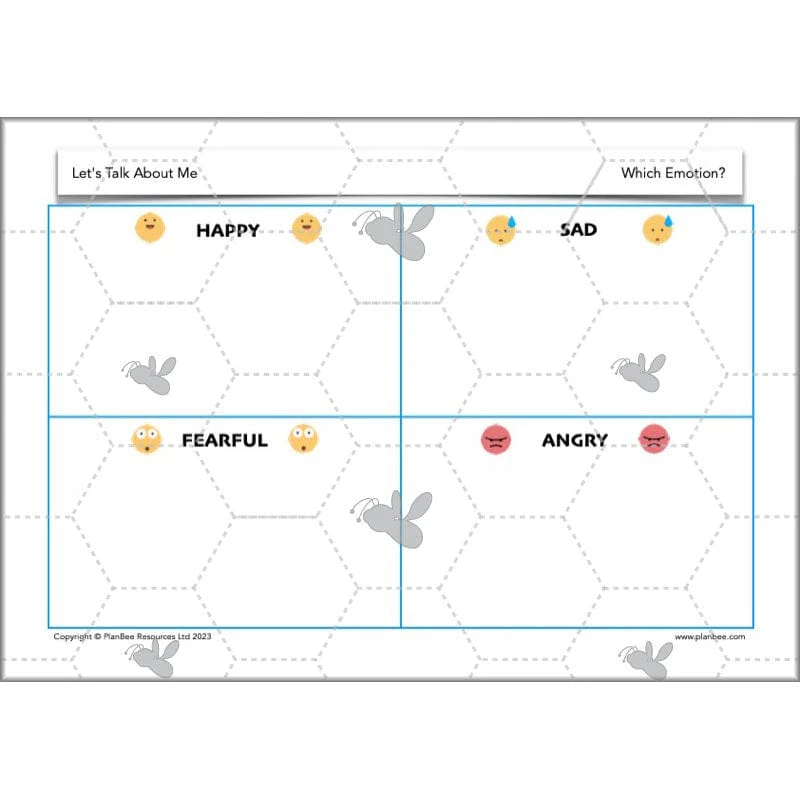
As a class, children will first discuss what emotions are, before looking in more detail at the vocabulary we can use to express four of the main emotions: happiness, sadness, fear and anger.
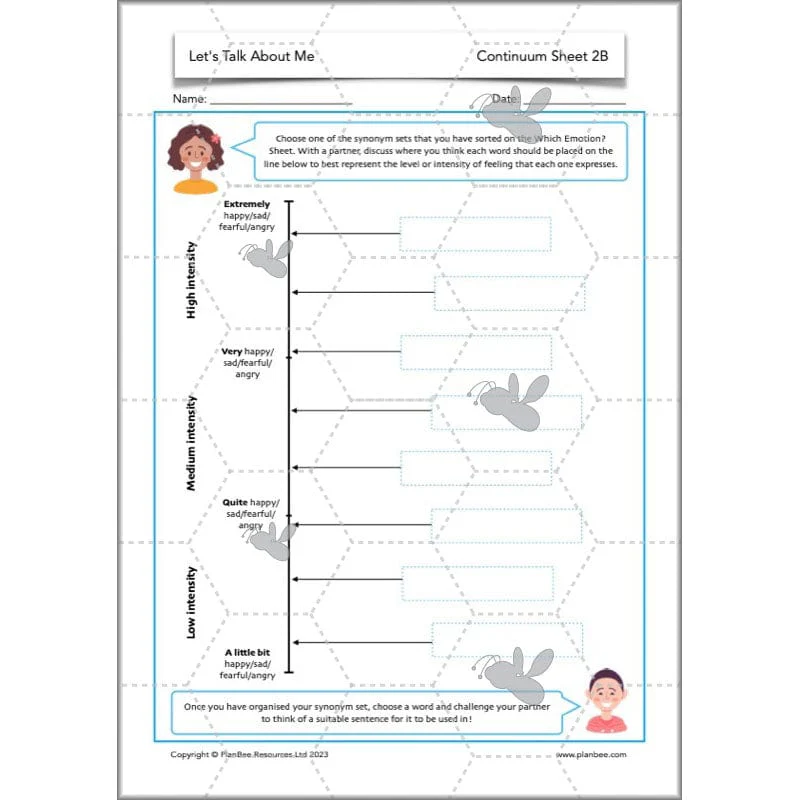
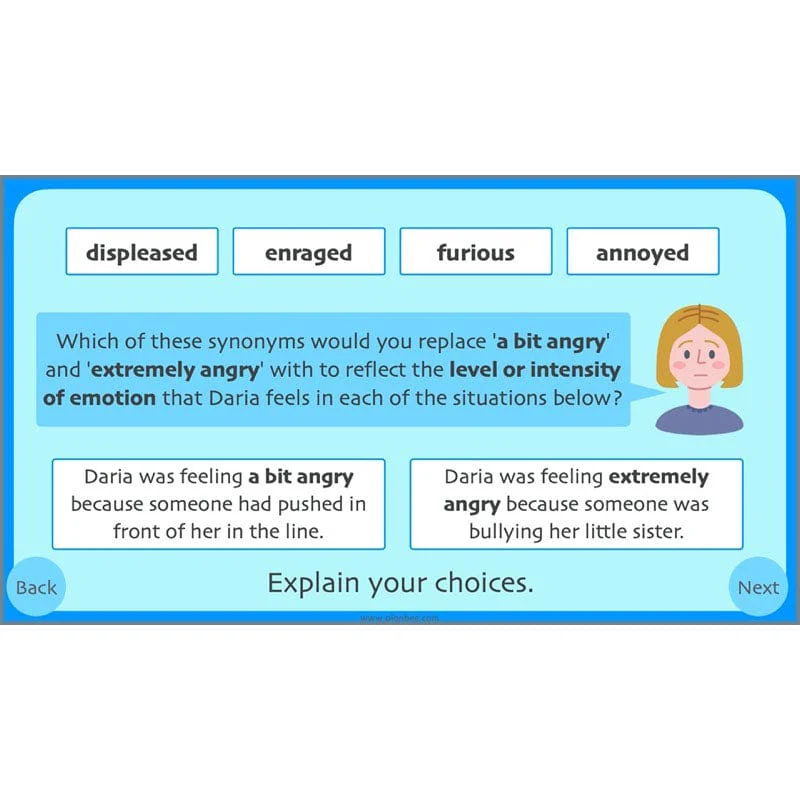
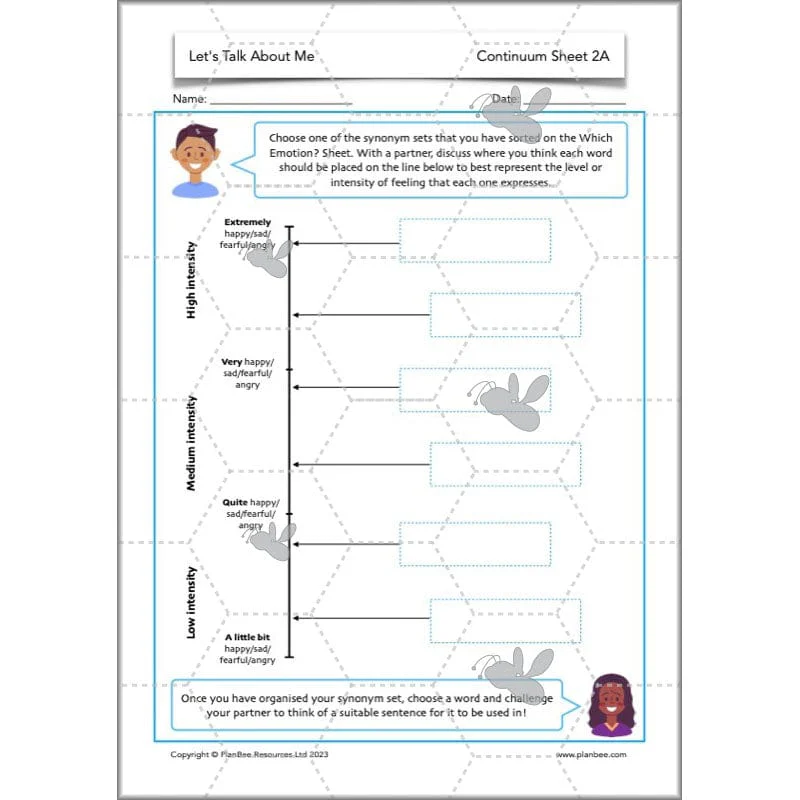
After exploring and discussing a range of different words for these four emotions, children are tasked to sort and order a set of given synonyms according to the level or intensity of emotion they think is expressed by each word. They are encouraged to use the different words in oral sentences.
This Naming Emotions KS2 lesson pack includes everything you need for a successful PSHE lesson: a detailed plan, a set of engaging slides for the teaching input, differentiated activity ideas and printable resources.
What's included:
- Lesson plan
- Slides
- Activity ideas
- Emotion Station Sheets
- Synonym Sets
- Which Emotion? Sheet
- Continuum Sheets
- Main Emotions Posters
- Synonym Cards
View Lesson 2
Feeling Emotions
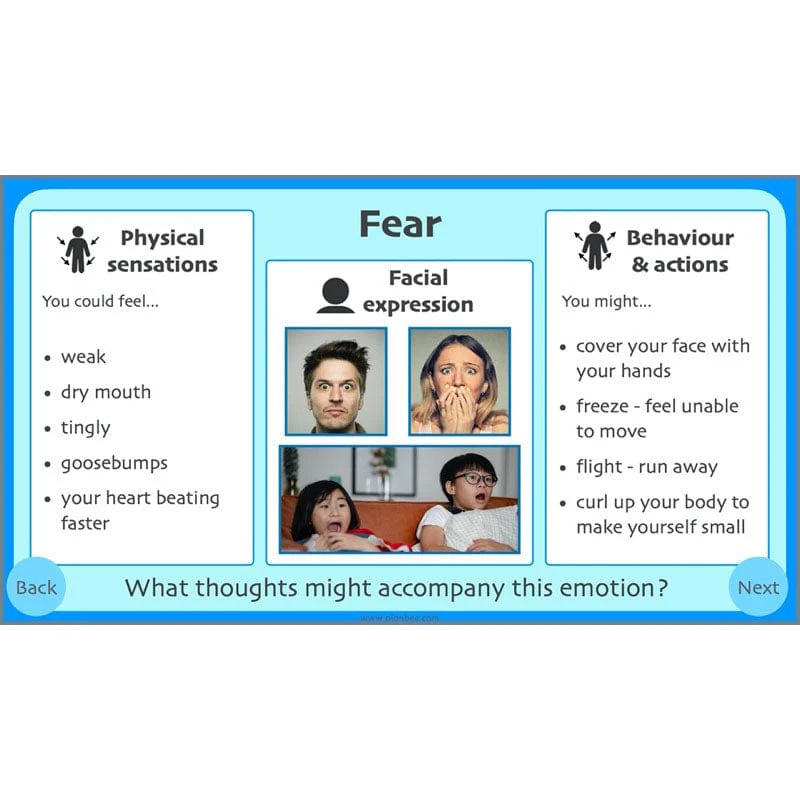
After recapping the vocabulary used for happiness, sadness, anger and fear in the previous lesson, children will focus on how different emotions can be shown through our facial expressions, how they can be felt as physical sensations, and how they can affect our behaviour and actions.
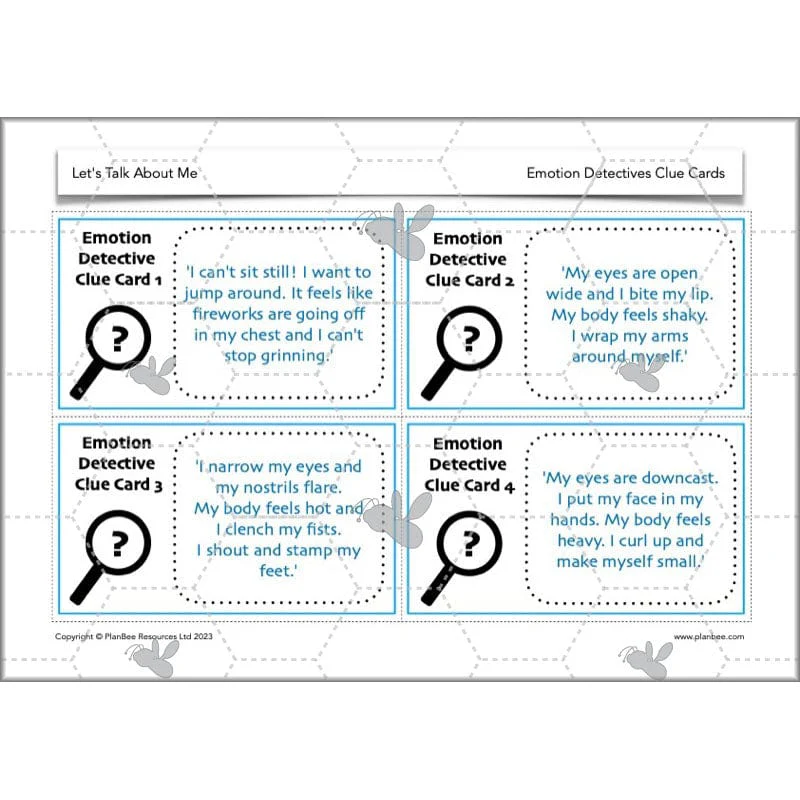
In their independent activities, children will choose one emotion to explore in depth, to discover how it makes them feel and act. In the alternative activity, children become 'emotion detectives', and decipher clues relating to an emotion based on physical sensations or actions.
This Feeling Emotions KS2 lesson pack includes an easy-to-follow plan, a set of informative slides for the teaching input, differentiated activity ideas and a range of printable resources.
What's included:
- Lesson plan
- Slides
- Activity ideas
- My Emotion Explainer
- Physical Sensations Help Cards
- Behaviours & Actions Help Cards
- Emotion Detective Clue Cards
- Emotion Detective Conclusion Sheet
View Lesson 3
Experiencing Emotions
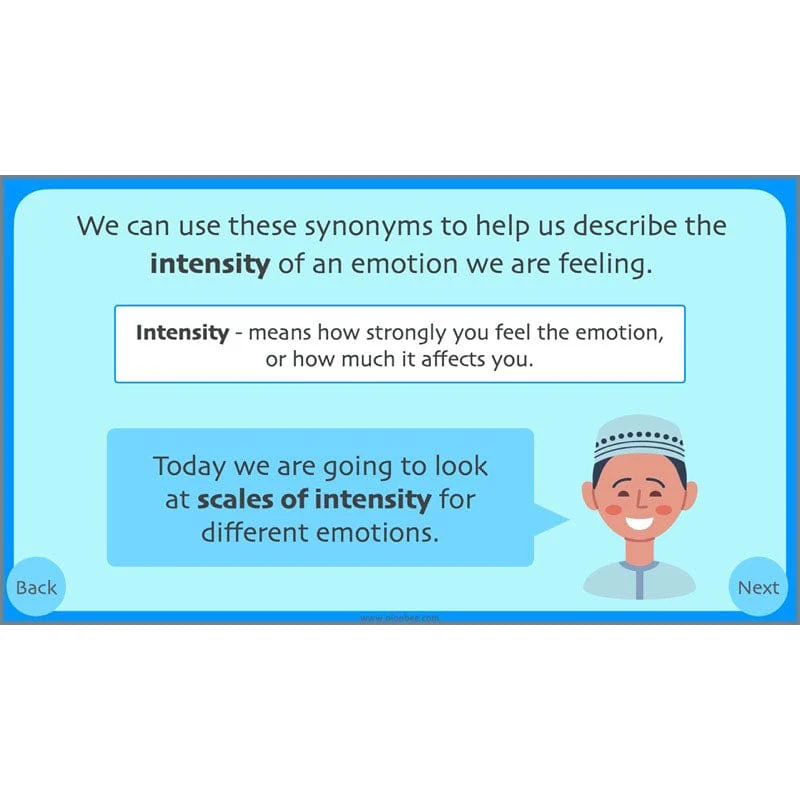
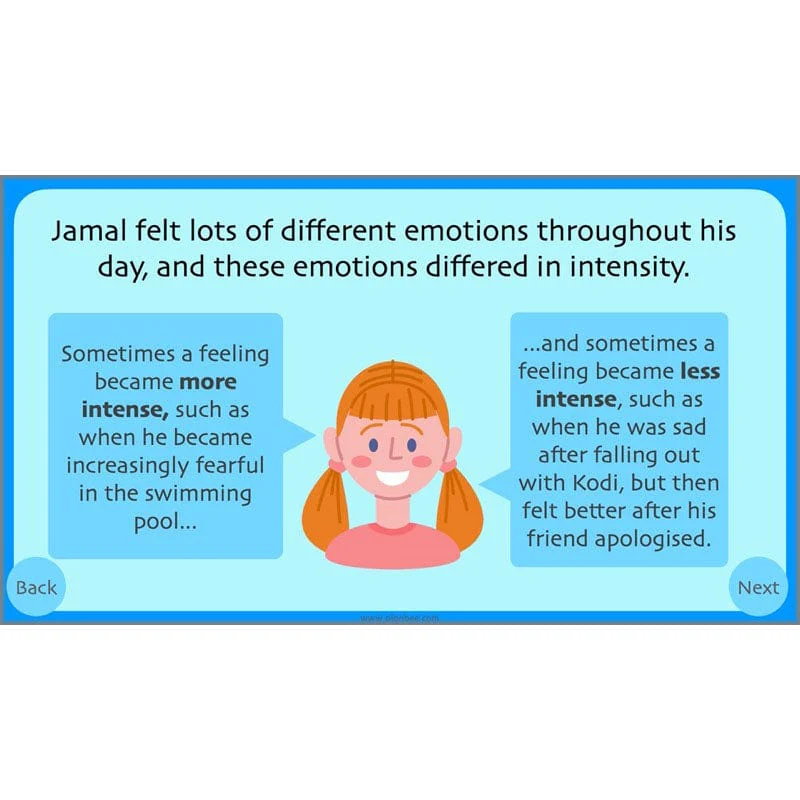
In this lesson, children will explore what is meant by the intensity of an emotion.
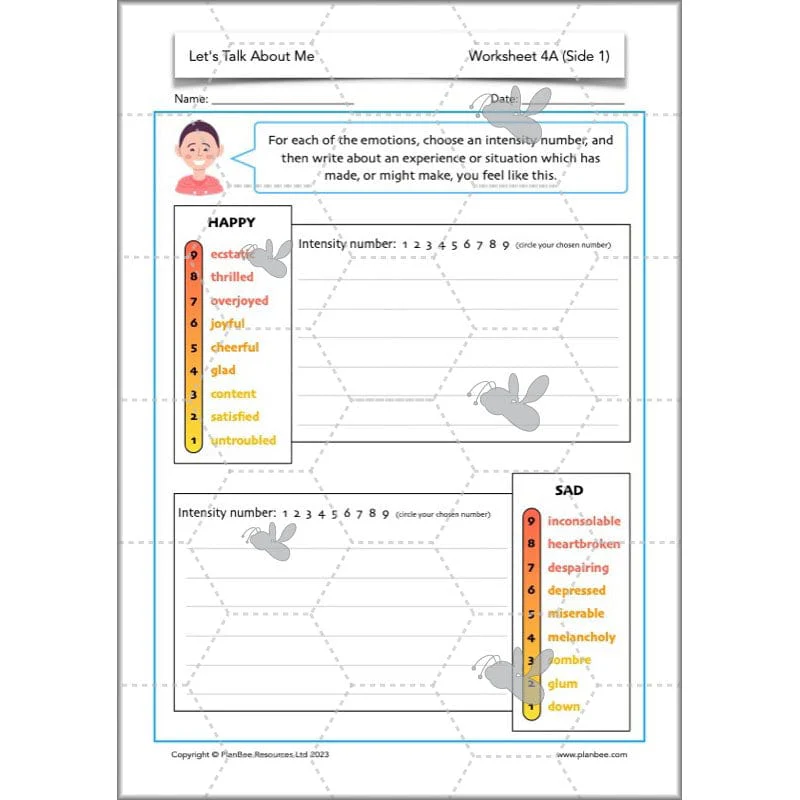
They will use given intensity scales for happiness, sadness, fear and anger to explore how a character might feel in different scenarios. In their independent activities, children use the intensity scales to identify experiences or situations that might make them feel different intensities of emotions.
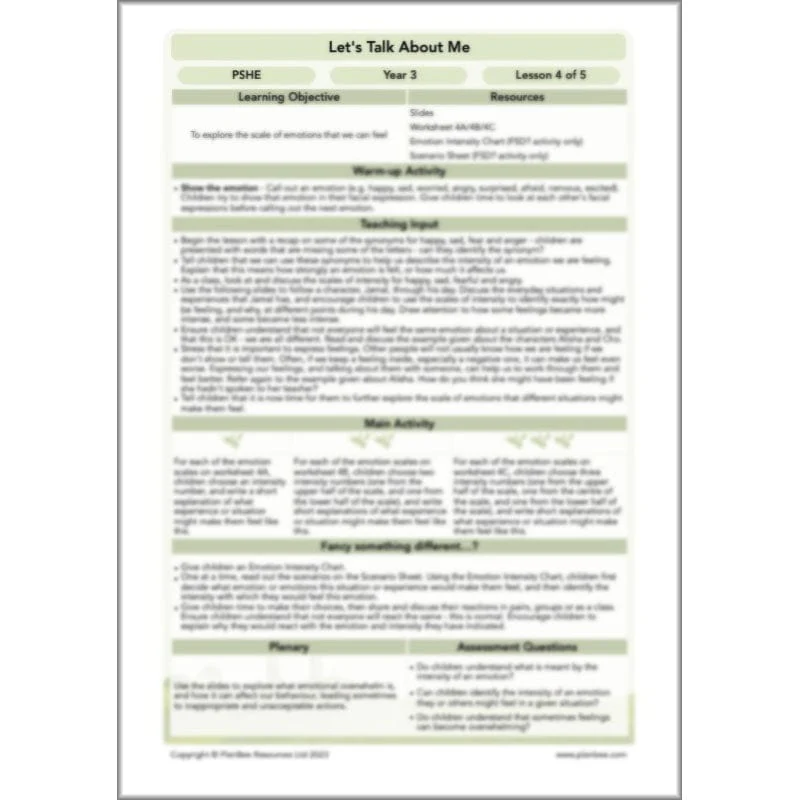
This Experiencing Emotions KS2 lesson pack includes everything you need for a successful PSHE lesson: an easy-to-follow plan, a set of informative slides for the teaching input, differentiated activity ideas and a range of printable resources.
What's included:
- Lesson plan
- Slides
- Activity ideas
- Differentiated worksheets
- Emotion Intensity Chart
- Scenario Sheet
View Lesson 4
Managing Emotions
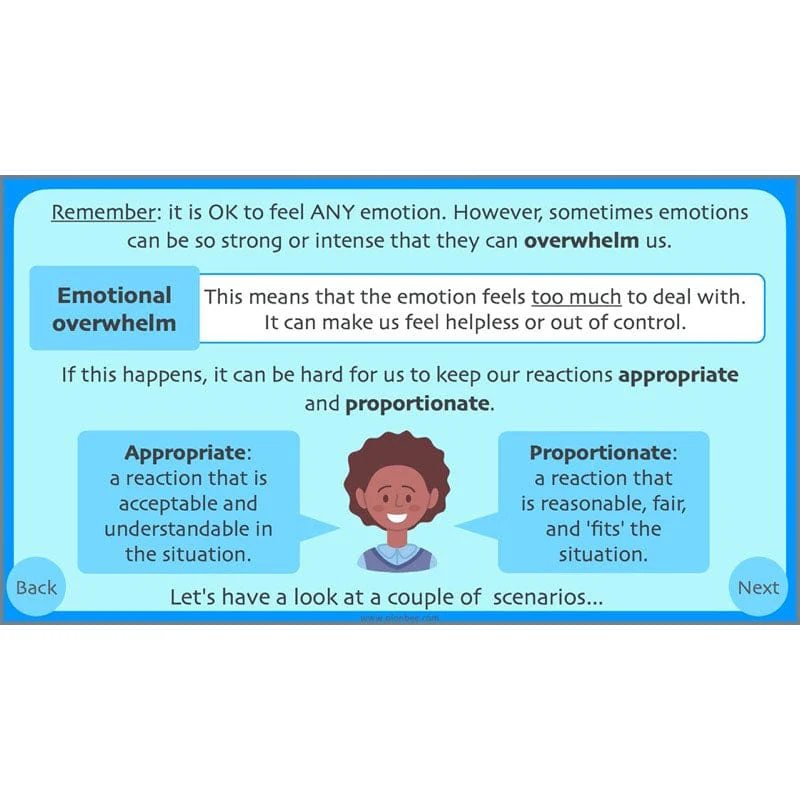
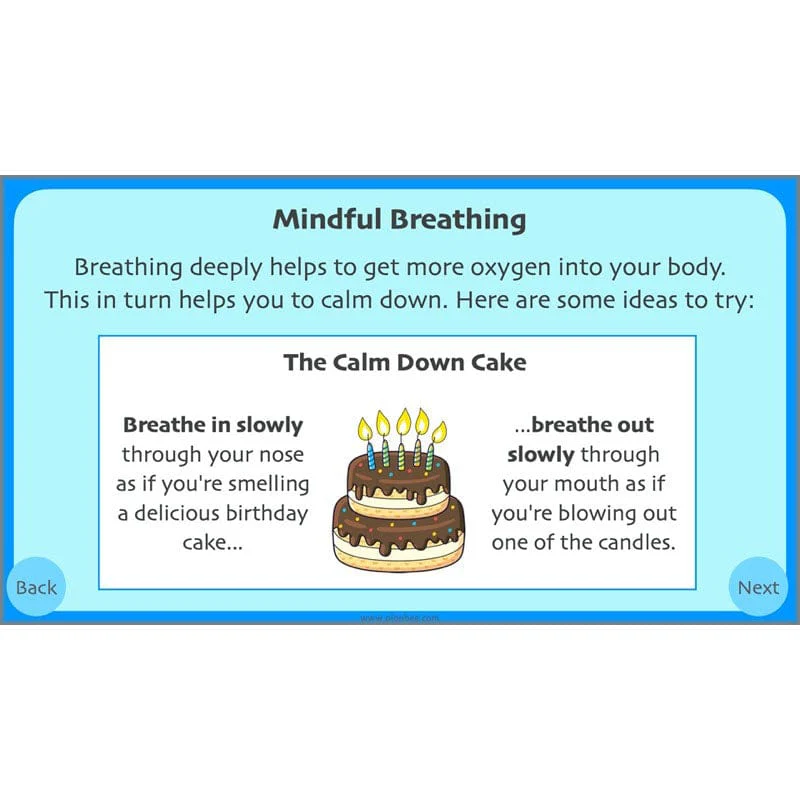
In this final lesson, after recapping on how intense feelings can lead to emotional overwhelm, children will explore different strategies that they can use to manage their emotions.
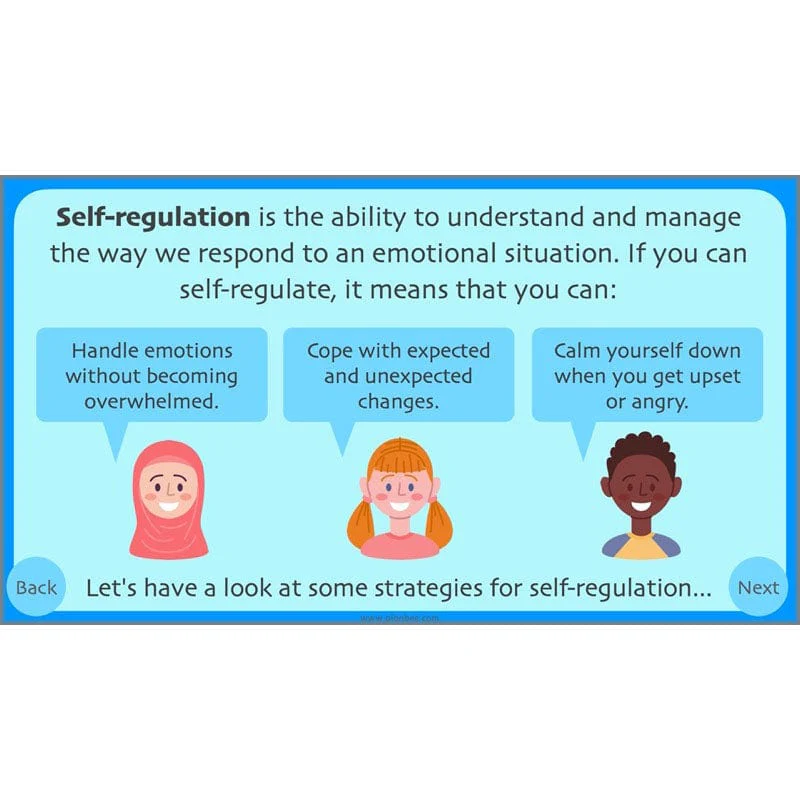
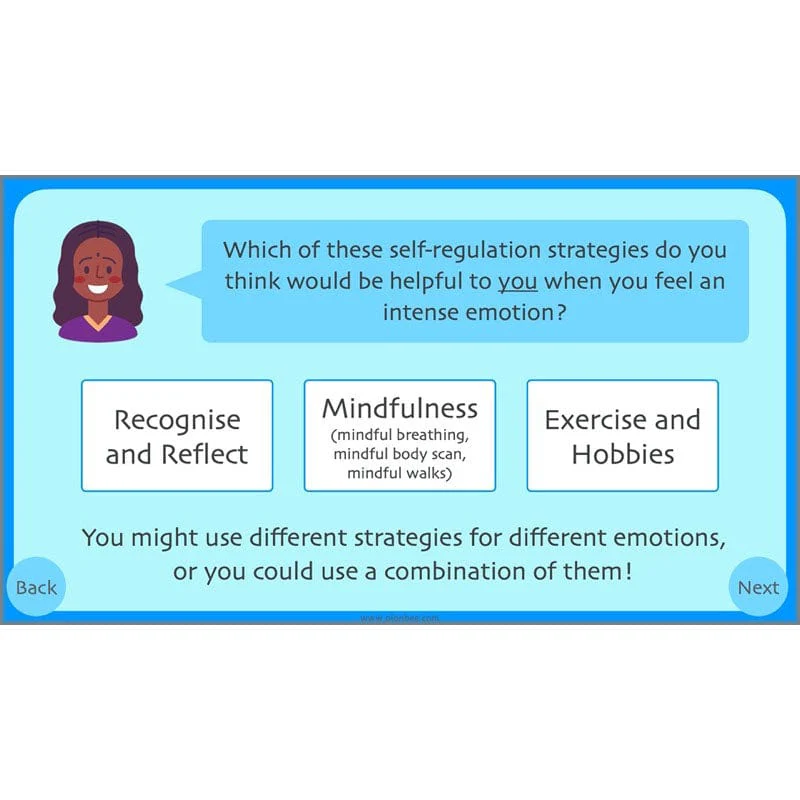
As a class, children will first explore what is meant by an appropriate and proportionate response to an emotional situation. They will understand whilst we can't always control the things that happen to us in our lives, we can learn to manage how we respond to them through self-regulation. As a class, children will then look at different self-regulation strategies, before applying this knowledge in their independent activities.
This Managing Emotions KS2 lesson pack includes an easy-to-follow plan, a set of informative slides for the teaching input, differentiated activity ideas and a range of printable resources.
What's included:
- Lesson plan
- Slides
- Activity ideas
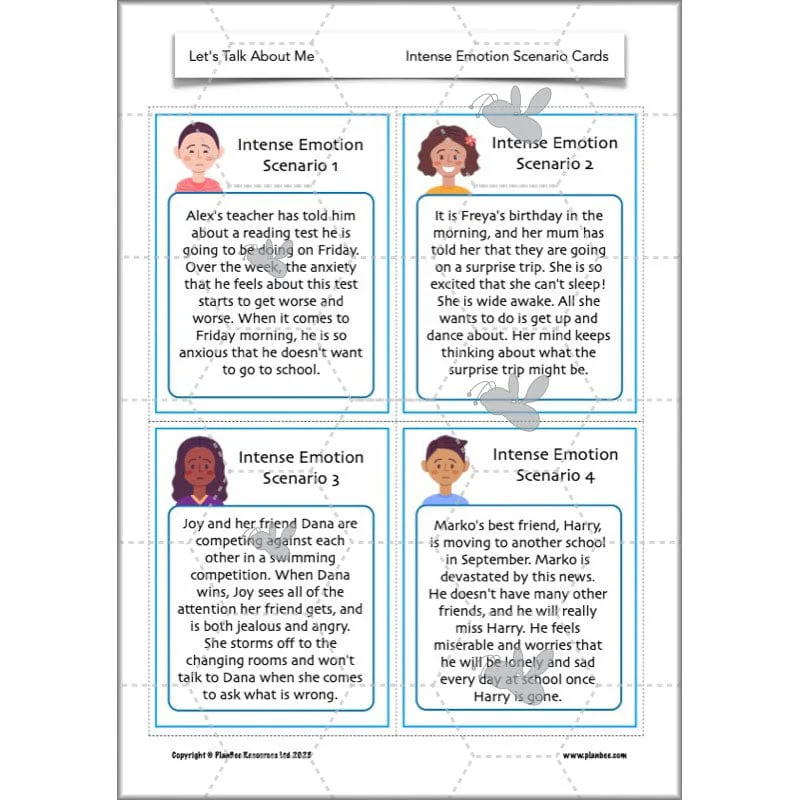
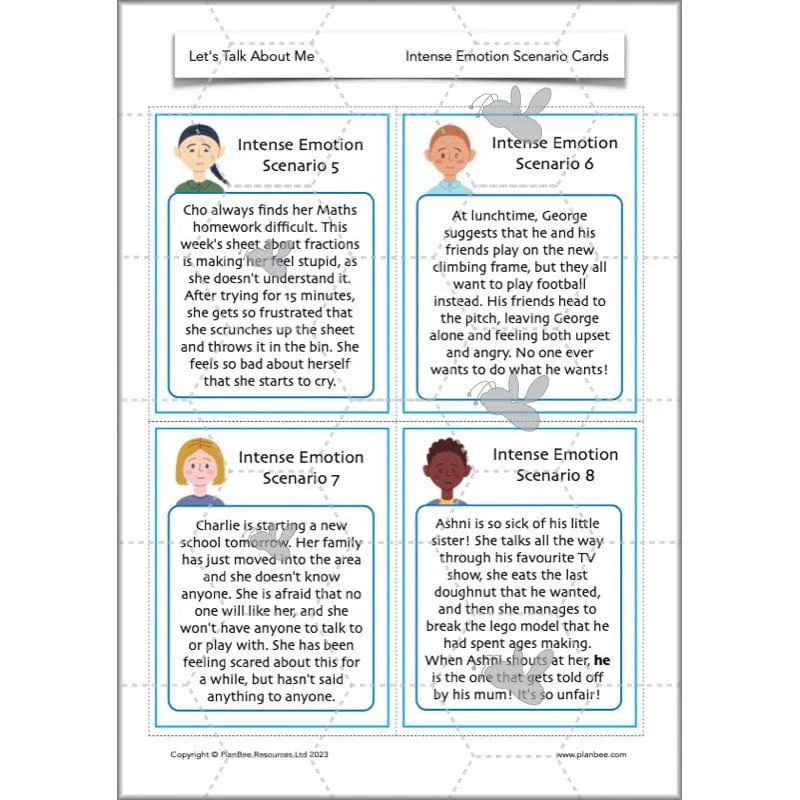
- Intense Emotion Scenario Cards
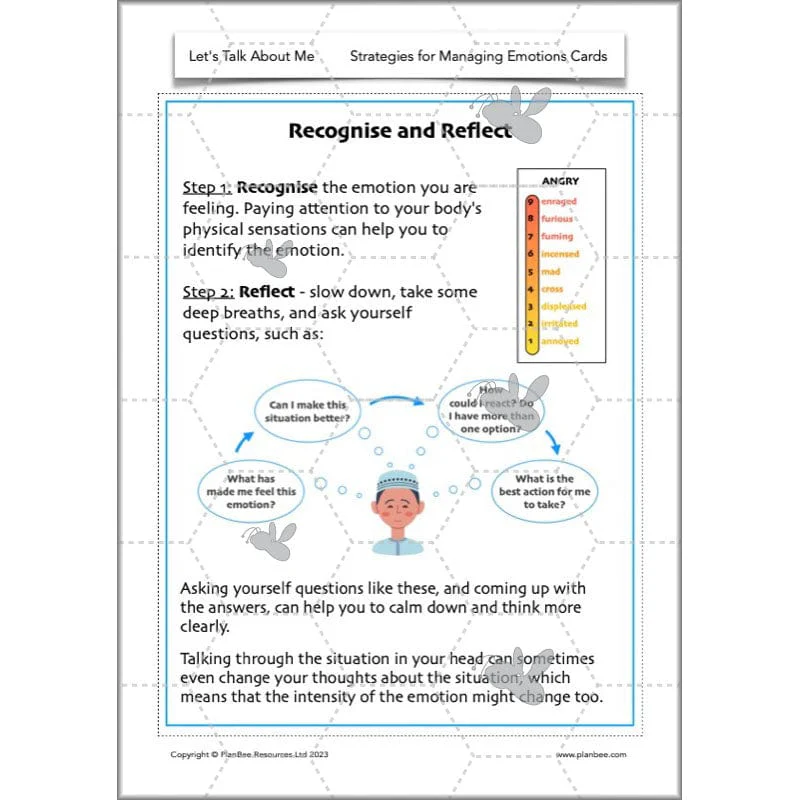
- Strategies for Managing Emotions Cards
View Lesson 5
This Year 3 PSHE Knowledge Organiser has been created to complement our PSHE Self and Emotional Wellbeing strand. It is designed to support your children’s understanding of key vocabulary linked to this scheme of work. A thinking question and a big idea have been included to encourage your children to think deeply about this topic.
View Knowledge Organiser
Original: $2.69
-65%$2.69
$0.94More Images























Let's Talk About Me
In this set of fully prepared PSHE lessons, your Year 3 class will first learn to recognise and name emotions, then explore how they make us feel and act, before looking at how to manage intense feelings.
To begin this scheme which focuses on self and emotional wellbeing, your class will first explore what personal identity means, and all of the factors that make us who we are as individuals. The following lessons focus on emotions. Children will look at the range of vocabulary we can use to express how we feel, and how different emotions can lead to different facial expressions and bodily sensations, and affect our behaviour and actions. Children will understand that we can feel very intense emotions, and as a result, sometimes our responses are not appropriate or proportionate. They will explore a range of strategies that can help them to self-regulate and manage their emotions.
Each of these five ready-to-teach Year 3 PSHE lessons includes an easy-to-follow plan, engaging and informative slides, and a variety of resources.
A Knowledge Organiser is available to support the learning in this scheme. It is included in the Complete Series download or can be purchased individually.
You might also be interested in our other KS1 and KS2 schemes that cover PlanBee's core theme of Self and Emotional Wellbeing.
Personal Identity
In this first lesson, children will explore the concept of personal identity, and look at some of the different factors that contribute towards this.
After reading Can I Build Another Me? by Shinsuke Yoshitake as a class, which highlights how we are all unique, children then create their own booklet, entitled, 'A Guide Book to Me.' In the alternative activity, children create a dodecahedron, which shows a different part of their personal identity on each face.
This Personal Identity KS2 lesson pack includes an easy-to-follow plan, a set of informative slides for the teaching input, and a variety of printable resources for the children's independent activities.
What's included:
- Lesson plan
- Slides
- Activity ideas
- A Guide Book To Me
- The Different Parts of Me Net Template
View Lesson 1
Naming Emotions
As a class, children will first discuss what emotions are, before looking in more detail at the vocabulary we can use to express four of the main emotions: happiness, sadness, fear and anger.
After exploring and discussing a range of different words for these four emotions, children are tasked to sort and order a set of given synonyms according to the level or intensity of emotion they think is expressed by each word. They are encouraged to use the different words in oral sentences.
This Naming Emotions KS2 lesson pack includes everything you need for a successful PSHE lesson: a detailed plan, a set of engaging slides for the teaching input, differentiated activity ideas and printable resources.
What's included:
- Lesson plan
- Slides
- Activity ideas
- Emotion Station Sheets
- Synonym Sets
- Which Emotion? Sheet
- Continuum Sheets
- Main Emotions Posters
- Synonym Cards
View Lesson 2
Feeling Emotions
After recapping the vocabulary used for happiness, sadness, anger and fear in the previous lesson, children will focus on how different emotions can be shown through our facial expressions, how they can be felt as physical sensations, and how they can affect our behaviour and actions.
In their independent activities, children will choose one emotion to explore in depth, to discover how it makes them feel and act. In the alternative activity, children become 'emotion detectives', and decipher clues relating to an emotion based on physical sensations or actions.
This Feeling Emotions KS2 lesson pack includes an easy-to-follow plan, a set of informative slides for the teaching input, differentiated activity ideas and a range of printable resources.
What's included:
- Lesson plan
- Slides
- Activity ideas
- My Emotion Explainer
- Physical Sensations Help Cards
- Behaviours & Actions Help Cards
- Emotion Detective Clue Cards
- Emotion Detective Conclusion Sheet
View Lesson 3
Experiencing Emotions
In this lesson, children will explore what is meant by the intensity of an emotion.
They will use given intensity scales for happiness, sadness, fear and anger to explore how a character might feel in different scenarios. In their independent activities, children use the intensity scales to identify experiences or situations that might make them feel different intensities of emotions.
This Experiencing Emotions KS2 lesson pack includes everything you need for a successful PSHE lesson: an easy-to-follow plan, a set of informative slides for the teaching input, differentiated activity ideas and a range of printable resources.
What's included:
- Lesson plan
- Slides
- Activity ideas
- Differentiated worksheets
- Emotion Intensity Chart
- Scenario Sheet
View Lesson 4
Managing Emotions
In this final lesson, after recapping on how intense feelings can lead to emotional overwhelm, children will explore different strategies that they can use to manage their emotions.
As a class, children will first explore what is meant by an appropriate and proportionate response to an emotional situation. They will understand whilst we can't always control the things that happen to us in our lives, we can learn to manage how we respond to them through self-regulation. As a class, children will then look at different self-regulation strategies, before applying this knowledge in their independent activities.
This Managing Emotions KS2 lesson pack includes an easy-to-follow plan, a set of informative slides for the teaching input, differentiated activity ideas and a range of printable resources.
What's included:
- Lesson plan
- Slides
- Activity ideas
- Intense Emotion Scenario Cards
- Strategies for Managing Emotions Cards
View Lesson 5
This Year 3 PSHE Knowledge Organiser has been created to complement our PSHE Self and Emotional Wellbeing strand. It is designed to support your children’s understanding of key vocabulary linked to this scheme of work. A thinking question and a big idea have been included to encourage your children to think deeply about this topic.
View Knowledge Organiser
Product Information
Product Information
Shipping & Returns
Shipping & Returns
Description
In this set of fully prepared PSHE lessons, your Year 3 class will first learn to recognise and name emotions, then explore how they make us feel and act, before looking at how to manage intense feelings.
To begin this scheme which focuses on self and emotional wellbeing, your class will first explore what personal identity means, and all of the factors that make us who we are as individuals. The following lessons focus on emotions. Children will look at the range of vocabulary we can use to express how we feel, and how different emotions can lead to different facial expressions and bodily sensations, and affect our behaviour and actions. Children will understand that we can feel very intense emotions, and as a result, sometimes our responses are not appropriate or proportionate. They will explore a range of strategies that can help them to self-regulate and manage their emotions.
Each of these five ready-to-teach Year 3 PSHE lessons includes an easy-to-follow plan, engaging and informative slides, and a variety of resources.
A Knowledge Organiser is available to support the learning in this scheme. It is included in the Complete Series download or can be purchased individually.
You might also be interested in our other KS1 and KS2 schemes that cover PlanBee's core theme of Self and Emotional Wellbeing.
Personal Identity
In this first lesson, children will explore the concept of personal identity, and look at some of the different factors that contribute towards this.
After reading Can I Build Another Me? by Shinsuke Yoshitake as a class, which highlights how we are all unique, children then create their own booklet, entitled, 'A Guide Book to Me.' In the alternative activity, children create a dodecahedron, which shows a different part of their personal identity on each face.
This Personal Identity KS2 lesson pack includes an easy-to-follow plan, a set of informative slides for the teaching input, and a variety of printable resources for the children's independent activities.
What's included:
- Lesson plan
- Slides
- Activity ideas
- A Guide Book To Me
- The Different Parts of Me Net Template
View Lesson 1
Naming Emotions
As a class, children will first discuss what emotions are, before looking in more detail at the vocabulary we can use to express four of the main emotions: happiness, sadness, fear and anger.
After exploring and discussing a range of different words for these four emotions, children are tasked to sort and order a set of given synonyms according to the level or intensity of emotion they think is expressed by each word. They are encouraged to use the different words in oral sentences.
This Naming Emotions KS2 lesson pack includes everything you need for a successful PSHE lesson: a detailed plan, a set of engaging slides for the teaching input, differentiated activity ideas and printable resources.
What's included:
- Lesson plan
- Slides
- Activity ideas
- Emotion Station Sheets
- Synonym Sets
- Which Emotion? Sheet
- Continuum Sheets
- Main Emotions Posters
- Synonym Cards
View Lesson 2
Feeling Emotions
After recapping the vocabulary used for happiness, sadness, anger and fear in the previous lesson, children will focus on how different emotions can be shown through our facial expressions, how they can be felt as physical sensations, and how they can affect our behaviour and actions.
In their independent activities, children will choose one emotion to explore in depth, to discover how it makes them feel and act. In the alternative activity, children become 'emotion detectives', and decipher clues relating to an emotion based on physical sensations or actions.
This Feeling Emotions KS2 lesson pack includes an easy-to-follow plan, a set of informative slides for the teaching input, differentiated activity ideas and a range of printable resources.
What's included:
- Lesson plan
- Slides
- Activity ideas
- My Emotion Explainer
- Physical Sensations Help Cards
- Behaviours & Actions Help Cards
- Emotion Detective Clue Cards
- Emotion Detective Conclusion Sheet
View Lesson 3
Experiencing Emotions
In this lesson, children will explore what is meant by the intensity of an emotion.
They will use given intensity scales for happiness, sadness, fear and anger to explore how a character might feel in different scenarios. In their independent activities, children use the intensity scales to identify experiences or situations that might make them feel different intensities of emotions.
This Experiencing Emotions KS2 lesson pack includes everything you need for a successful PSHE lesson: an easy-to-follow plan, a set of informative slides for the teaching input, differentiated activity ideas and a range of printable resources.
What's included:
- Lesson plan
- Slides
- Activity ideas
- Differentiated worksheets
- Emotion Intensity Chart
- Scenario Sheet
View Lesson 4
Managing Emotions
In this final lesson, after recapping on how intense feelings can lead to emotional overwhelm, children will explore different strategies that they can use to manage their emotions.
As a class, children will first explore what is meant by an appropriate and proportionate response to an emotional situation. They will understand whilst we can't always control the things that happen to us in our lives, we can learn to manage how we respond to them through self-regulation. As a class, children will then look at different self-regulation strategies, before applying this knowledge in their independent activities.
This Managing Emotions KS2 lesson pack includes an easy-to-follow plan, a set of informative slides for the teaching input, differentiated activity ideas and a range of printable resources.
What's included:
- Lesson plan
- Slides
- Activity ideas
- Intense Emotion Scenario Cards
- Strategies for Managing Emotions Cards
View Lesson 5
This Year 3 PSHE Knowledge Organiser has been created to complement our PSHE Self and Emotional Wellbeing strand. It is designed to support your children’s understanding of key vocabulary linked to this scheme of work. A thinking question and a big idea have been included to encourage your children to think deeply about this topic.
View Knowledge Organiser