Multiplying Doubles and Digits
Bringing together many of the multiplication and division skills your class will have developed during Year 4, this Complete Series of five complete Maths lessons focusses on deepening children's understanding of what’s actually happening to numbers when we multiply them.
It revisits familiar grid multiplication methods and explains how to move from this method to a formal written short multiplication method (stopping along the way to look at expanded multiplication, too!). That's not all though: throughout the five lessons, children will develop their fluency when multiplying mentally, too. There’s learning activities relating to estimating and checking calculations using rounding and inverse calculations. There are also helpful explanations of strategies for simplifying mental multiplications with the power of commutativity!
Take some time to focus on multiplication and give your class the time and resources they need to increase their confidence, speed and accuracy when multiplying with ‘Multiplying Doubles and Digits’!
Working with big numbers part 1
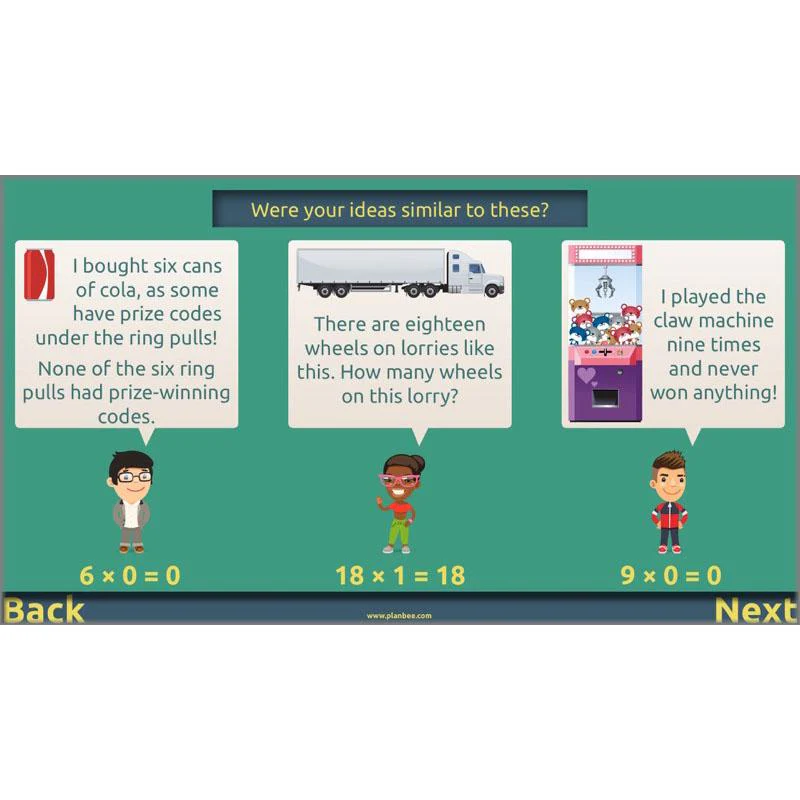
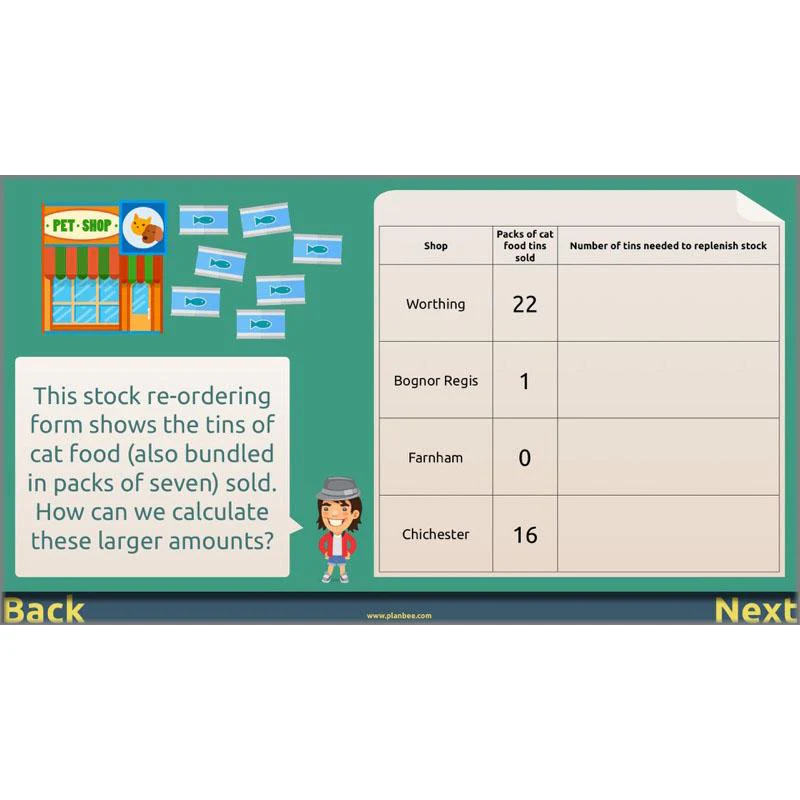
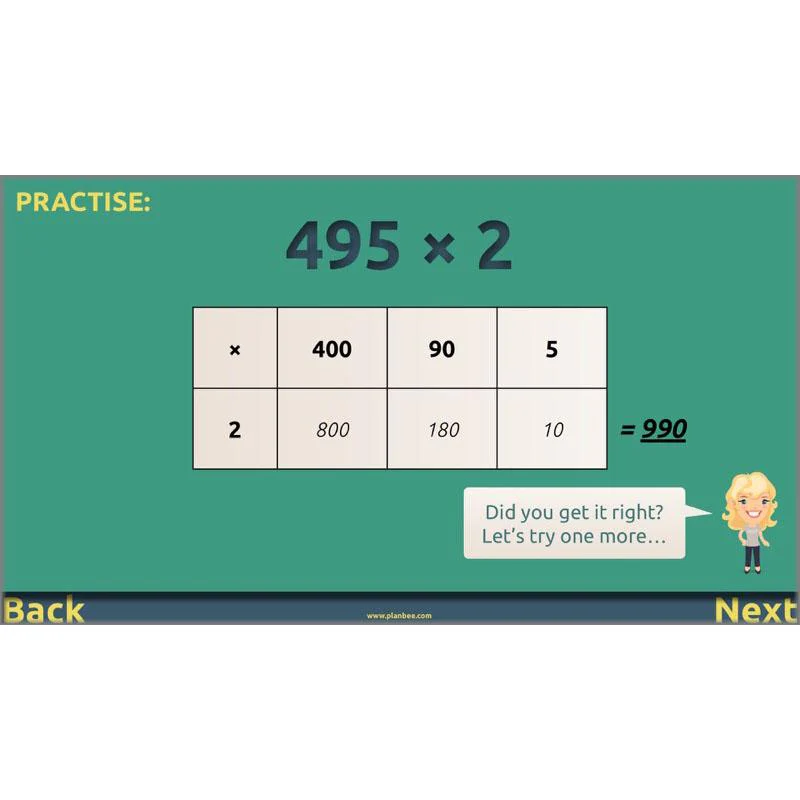
In this lesson, children will consider and explain (in their own words) what happens when a number is multiplied by 0 or 1. Sounds obvious? Wait till your children are challenged to prove it using resources: they’ll have to really think about the fundamental maths involved!
After that, recap using a grid method for multiplication, and give your children the opportunity to increase their speed and accuracy when calculating using this method with a choice of engaging, differentiated activities.
What's included:
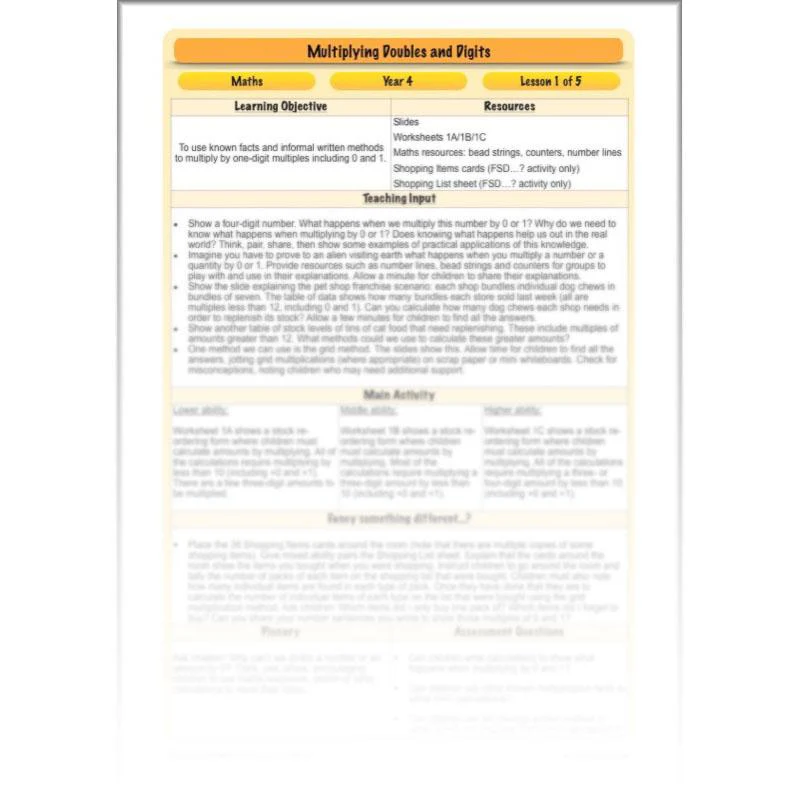
- Lesson plan
- Slides
- Activity ideas
- Differentiated worksheets
- ‘Shopping Items’ cards
- ‘Shopping List’ sheet
View Lesson 1
Making tricky calculations easier
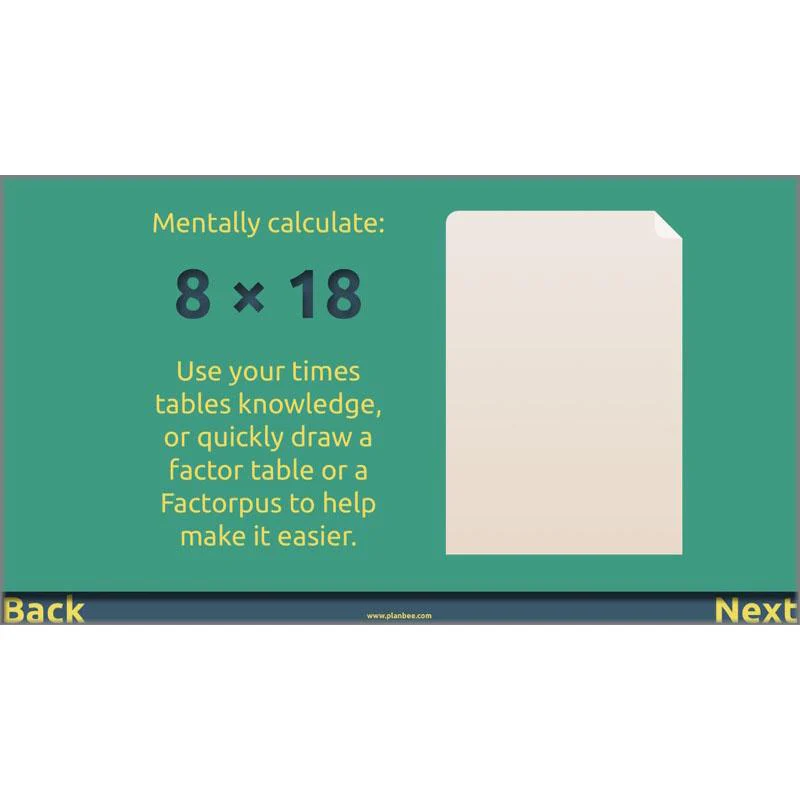
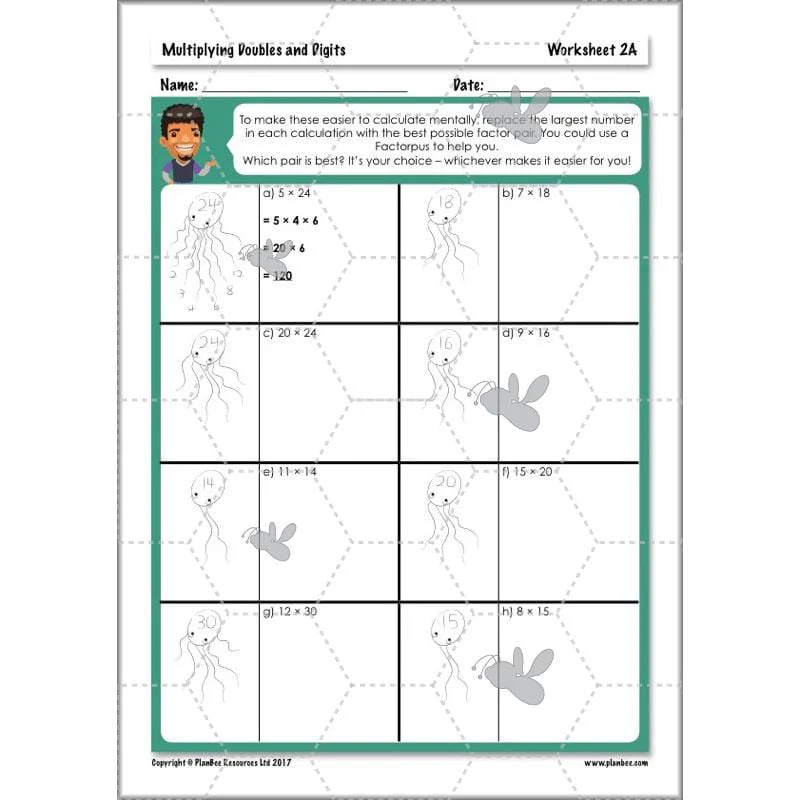
In this lesson, children are challenged to use lateral thinking and apply their times tables knowledge when solving trickier calculations where three or more numbers are multiplied together.
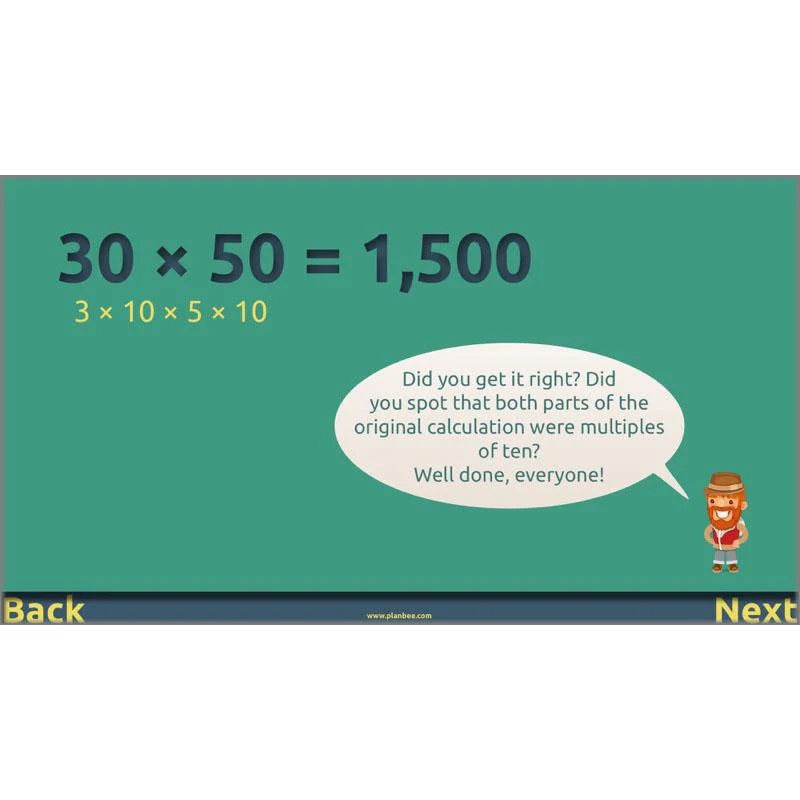
As well as considering which pair of numbers should be multiplied first to make the calculation easier to solve mentally, they will also consider how finding and using factor pairs can make tricky calculations easier to solve mentally.
Having had time to practise these skills, there’s then a choice of challenging and engaging activities where children may select strategies for solving a number of tricky multiplication calculations mentally or by jotting brief notes.
What's included:
- Lesson plan
- Slides
- Activity ideas
- Differentiated worksheets
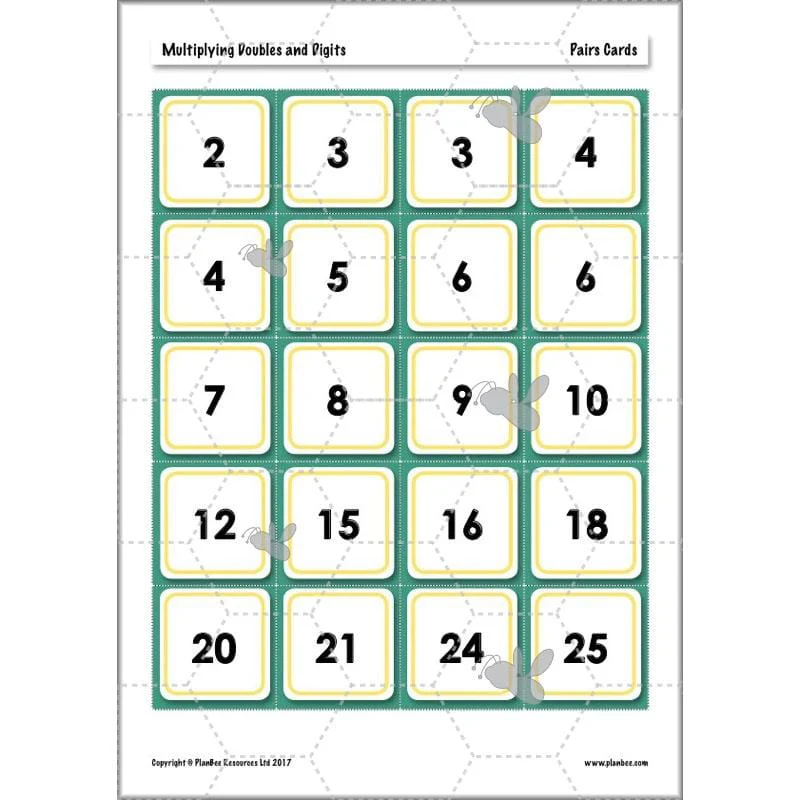
- ‘Factor Pairs’ game cards
View Lesson 2
Working with big numbers part 2
Recap doubling numbers of up to three digits mentally, then consider reasons why mental methods are less helpful when doubling larger numbers.
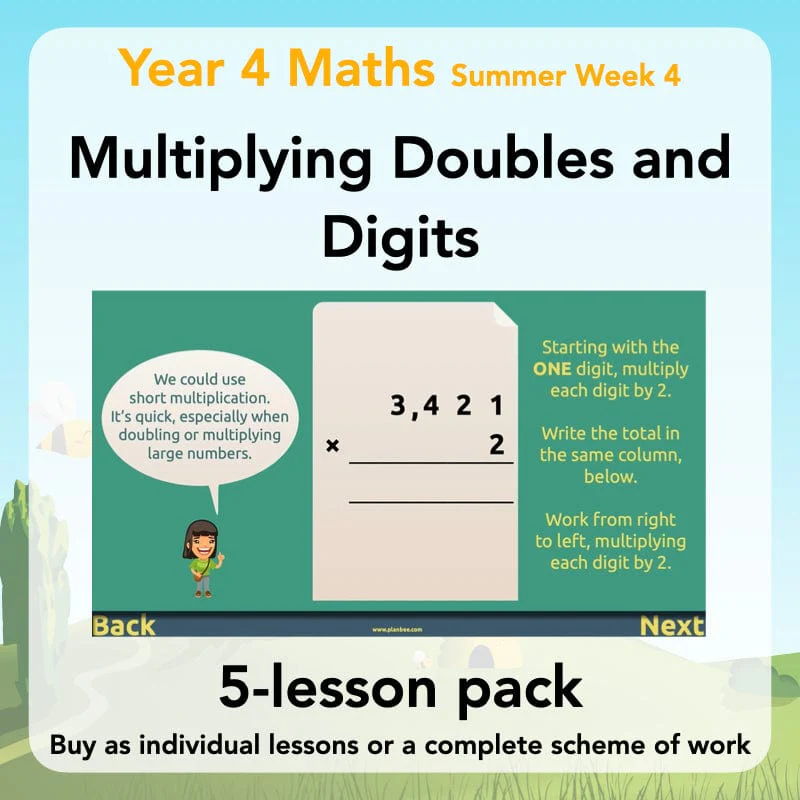
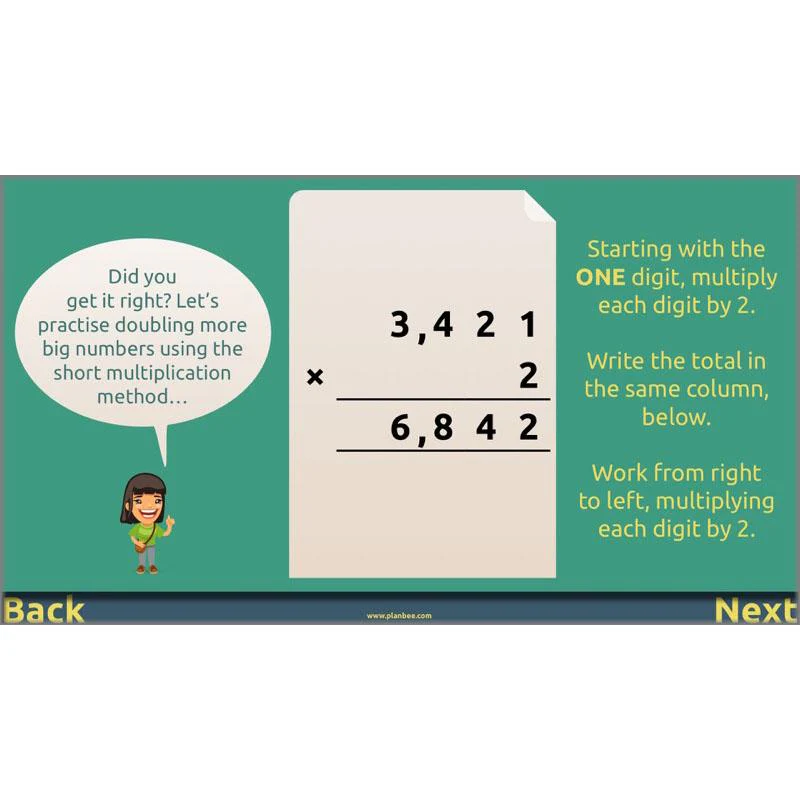
After that, children may learn and practise using a written, short multiplication method for doubling four-digit numbers, including calculations where one or more exchange is required.
What's included:
- Lesson plan
- Slides
- Activity ideas
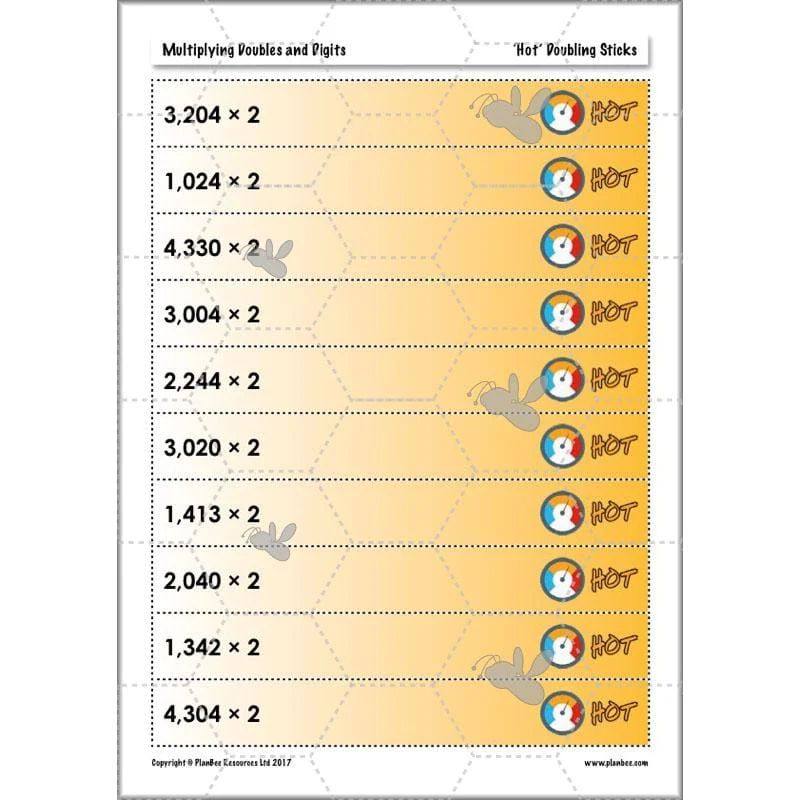
- Differentiated ‘Hot, Boiling, On Fire!’ cards
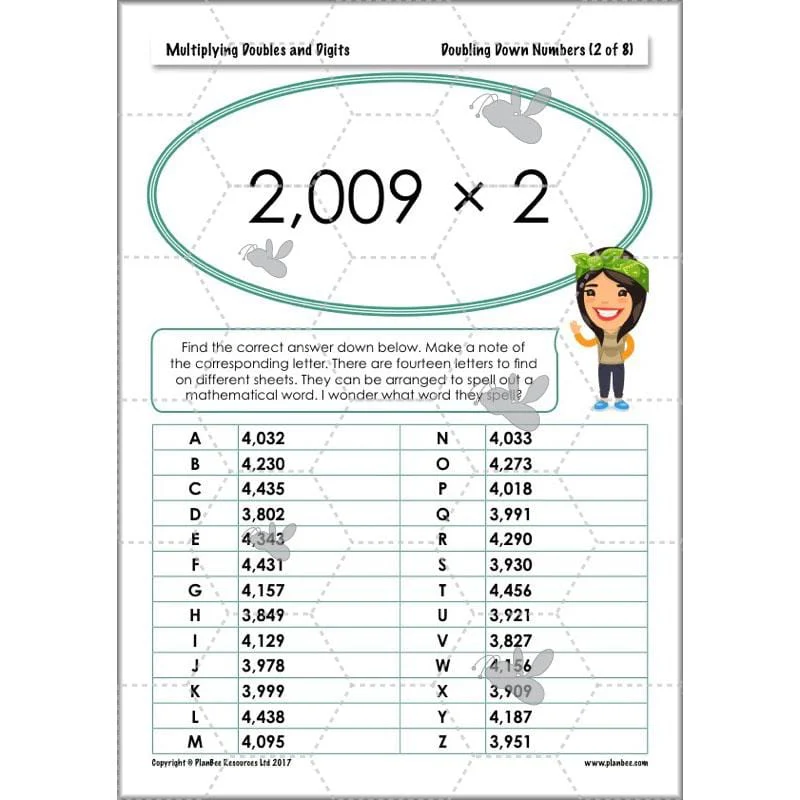
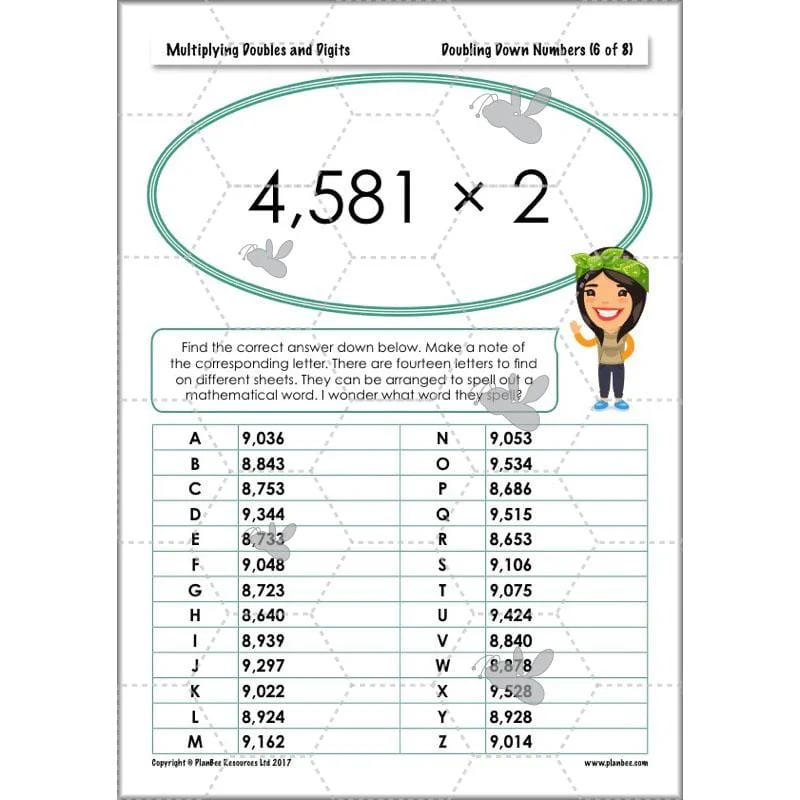
- ‘Doubling Down’ cards
View Lesson 3
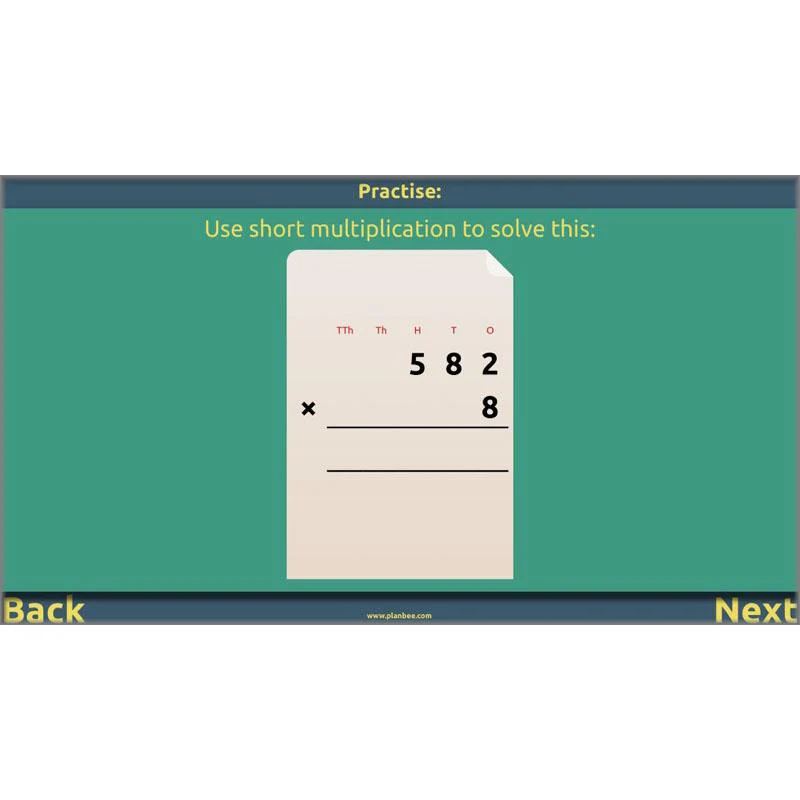
Short Multiplication
Recap and compare a variety of written methods for multiplication, including a grid method, long multiplication and short multiplication. After that build upon prior learning and practise using short multiplication to solve trickier calculations, including those requiring one or more ‘exchanges’.
What's included:
- Lesson plan
- Slides
- Activity ideas
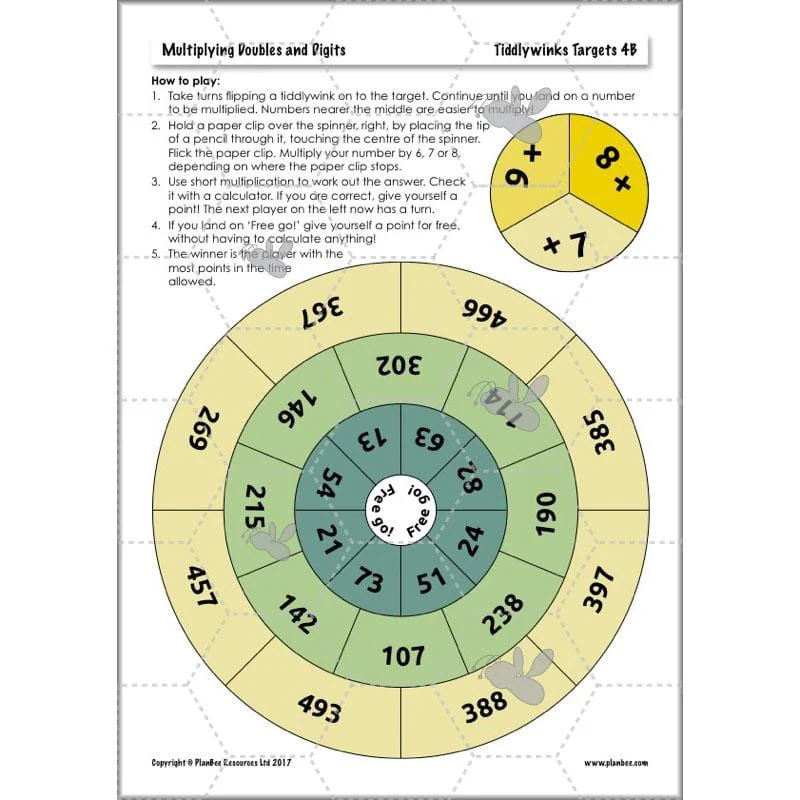
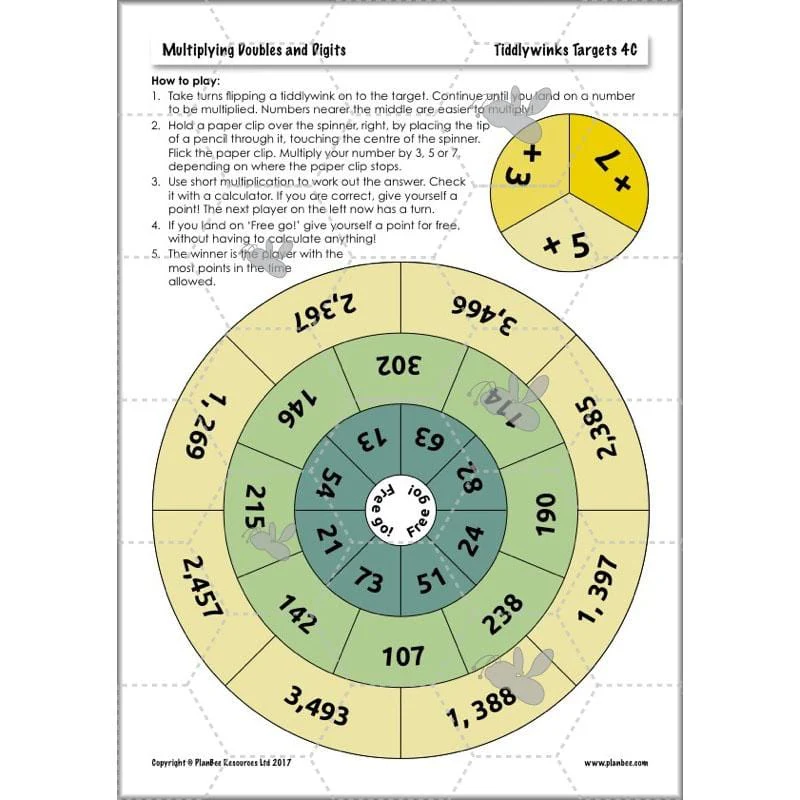
- ‘Tiddlywinks Target’ sheets
- Worksheet
View Lesson 4
Fact Families
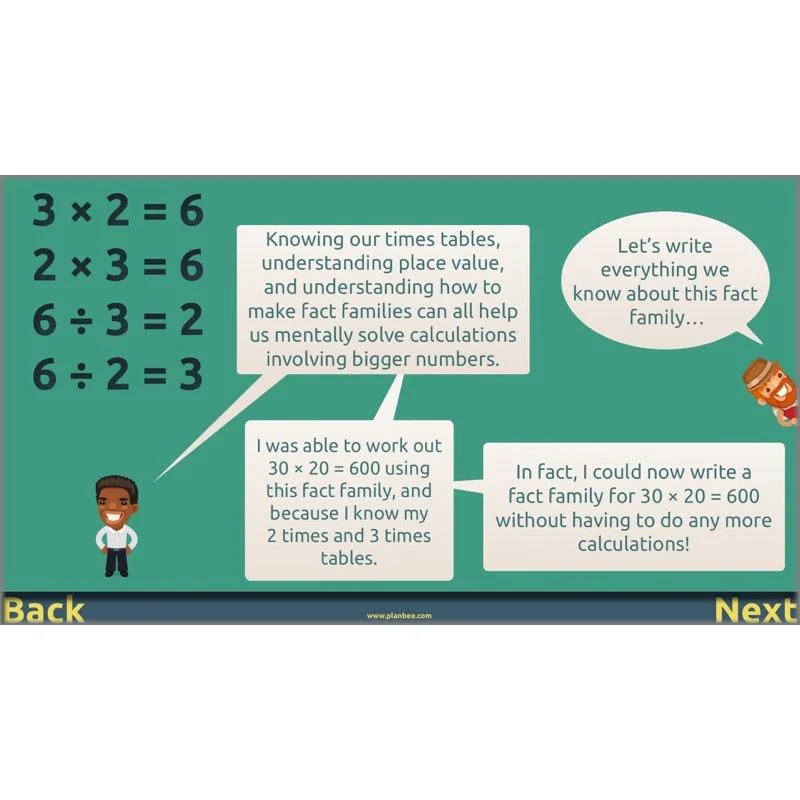
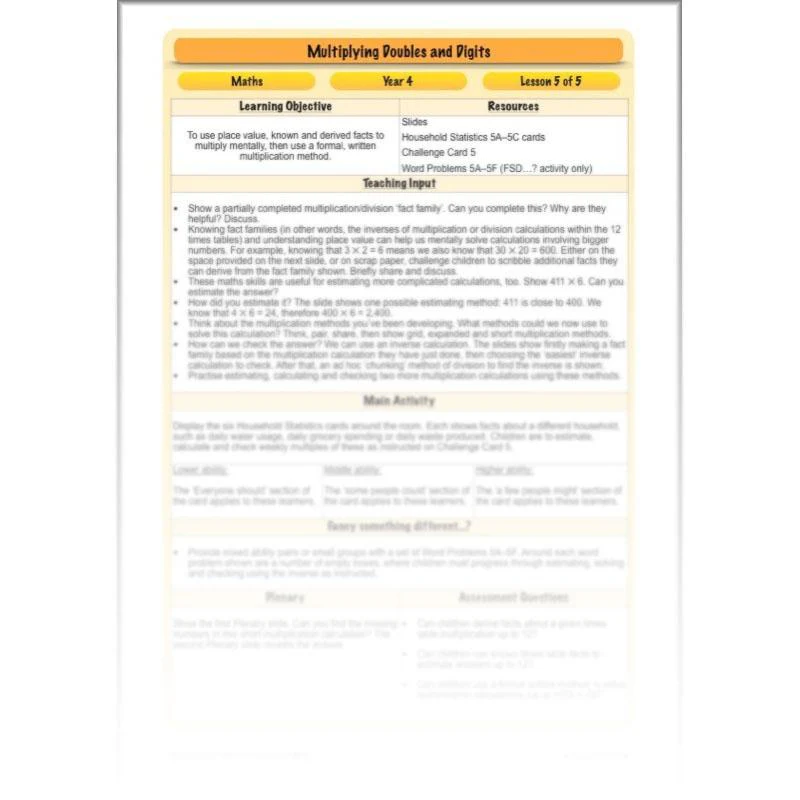
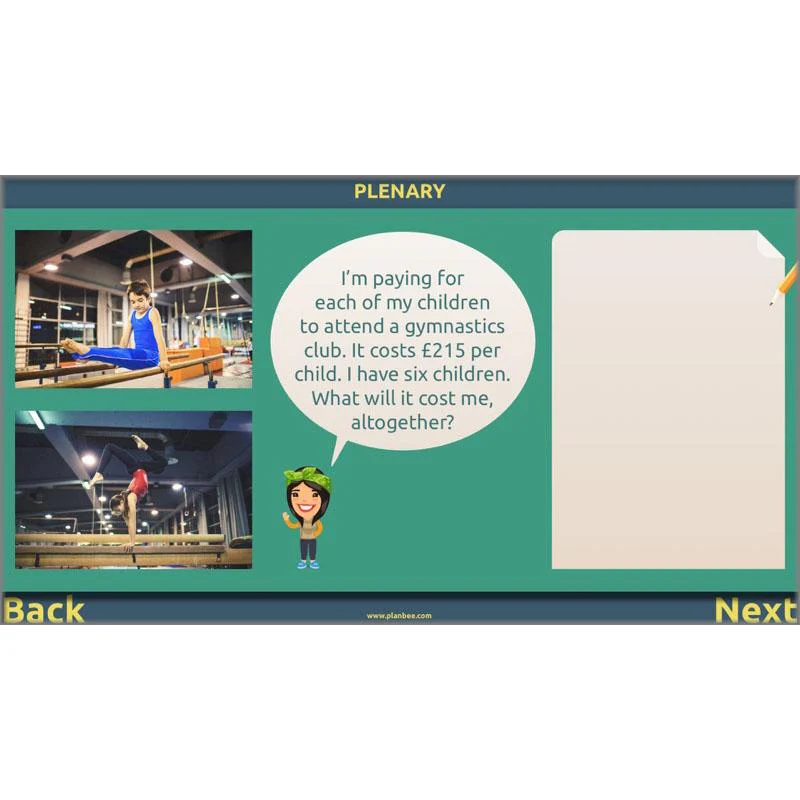
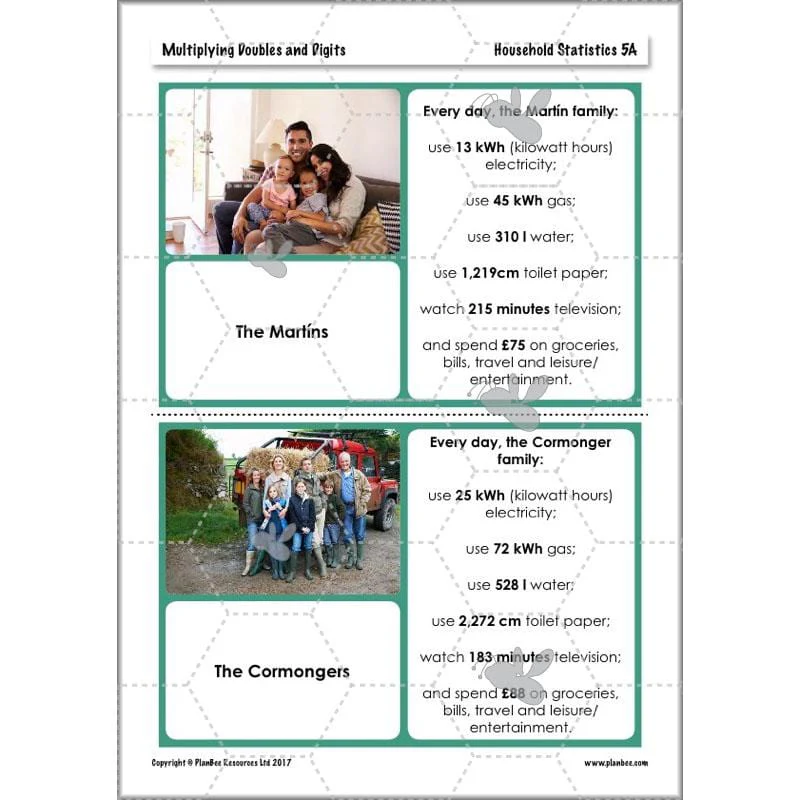
In this final lesson, children will consider ways in which fact families for multiplications in the times tables up to 12 may be used to help estimate answers to bigger multiplication calculations.
They will also learn how fact families can be made after solving a ‘big’ multiplication calculation, and how they may be used to help check answers.
As with all of the lessons in this Complete Series, there’s a choice of differentiated activities where children may work independently, with a partner or in groups.
What's included:
- Lesson plan
- Slides
- Activity ideas
- Household Statistic Cards
- Challenge Card
- Differentiated word problems
View Lesson 5
Original: $4.71
-65%$4.71
$1.65More Images


















Multiplying Doubles and Digits
Bringing together many of the multiplication and division skills your class will have developed during Year 4, this Complete Series of five complete Maths lessons focusses on deepening children's understanding of what’s actually happening to numbers when we multiply them.
It revisits familiar grid multiplication methods and explains how to move from this method to a formal written short multiplication method (stopping along the way to look at expanded multiplication, too!). That's not all though: throughout the five lessons, children will develop their fluency when multiplying mentally, too. There’s learning activities relating to estimating and checking calculations using rounding and inverse calculations. There are also helpful explanations of strategies for simplifying mental multiplications with the power of commutativity!
Take some time to focus on multiplication and give your class the time and resources they need to increase their confidence, speed and accuracy when multiplying with ‘Multiplying Doubles and Digits’!
Working with big numbers part 1
In this lesson, children will consider and explain (in their own words) what happens when a number is multiplied by 0 or 1. Sounds obvious? Wait till your children are challenged to prove it using resources: they’ll have to really think about the fundamental maths involved!
After that, recap using a grid method for multiplication, and give your children the opportunity to increase their speed and accuracy when calculating using this method with a choice of engaging, differentiated activities.
What's included:
- Lesson plan
- Slides
- Activity ideas
- Differentiated worksheets
- ‘Shopping Items’ cards
- ‘Shopping List’ sheet
View Lesson 1
Making tricky calculations easier
In this lesson, children are challenged to use lateral thinking and apply their times tables knowledge when solving trickier calculations where three or more numbers are multiplied together.
As well as considering which pair of numbers should be multiplied first to make the calculation easier to solve mentally, they will also consider how finding and using factor pairs can make tricky calculations easier to solve mentally.
Having had time to practise these skills, there’s then a choice of challenging and engaging activities where children may select strategies for solving a number of tricky multiplication calculations mentally or by jotting brief notes.
What's included:
- Lesson plan
- Slides
- Activity ideas
- Differentiated worksheets
- ‘Factor Pairs’ game cards
View Lesson 2
Working with big numbers part 2
Recap doubling numbers of up to three digits mentally, then consider reasons why mental methods are less helpful when doubling larger numbers.
After that, children may learn and practise using a written, short multiplication method for doubling four-digit numbers, including calculations where one or more exchange is required.
What's included:
- Lesson plan
- Slides
- Activity ideas
- Differentiated ‘Hot, Boiling, On Fire!’ cards
- ‘Doubling Down’ cards
View Lesson 3
Short Multiplication
Recap and compare a variety of written methods for multiplication, including a grid method, long multiplication and short multiplication. After that build upon prior learning and practise using short multiplication to solve trickier calculations, including those requiring one or more ‘exchanges’.
What's included:
- Lesson plan
- Slides
- Activity ideas
- ‘Tiddlywinks Target’ sheets
- Worksheet
View Lesson 4
Fact Families
In this final lesson, children will consider ways in which fact families for multiplications in the times tables up to 12 may be used to help estimate answers to bigger multiplication calculations.
They will also learn how fact families can be made after solving a ‘big’ multiplication calculation, and how they may be used to help check answers.
As with all of the lessons in this Complete Series, there’s a choice of differentiated activities where children may work independently, with a partner or in groups.
What's included:
- Lesson plan
- Slides
- Activity ideas
- Household Statistic Cards
- Challenge Card
- Differentiated word problems
View Lesson 5
Product Information
Product Information
Shipping & Returns
Shipping & Returns
Description
Bringing together many of the multiplication and division skills your class will have developed during Year 4, this Complete Series of five complete Maths lessons focusses on deepening children's understanding of what’s actually happening to numbers when we multiply them.
It revisits familiar grid multiplication methods and explains how to move from this method to a formal written short multiplication method (stopping along the way to look at expanded multiplication, too!). That's not all though: throughout the five lessons, children will develop their fluency when multiplying mentally, too. There’s learning activities relating to estimating and checking calculations using rounding and inverse calculations. There are also helpful explanations of strategies for simplifying mental multiplications with the power of commutativity!
Take some time to focus on multiplication and give your class the time and resources they need to increase their confidence, speed and accuracy when multiplying with ‘Multiplying Doubles and Digits’!
Working with big numbers part 1
In this lesson, children will consider and explain (in their own words) what happens when a number is multiplied by 0 or 1. Sounds obvious? Wait till your children are challenged to prove it using resources: they’ll have to really think about the fundamental maths involved!
After that, recap using a grid method for multiplication, and give your children the opportunity to increase their speed and accuracy when calculating using this method with a choice of engaging, differentiated activities.
What's included:
- Lesson plan
- Slides
- Activity ideas
- Differentiated worksheets
- ‘Shopping Items’ cards
- ‘Shopping List’ sheet
View Lesson 1
Making tricky calculations easier
In this lesson, children are challenged to use lateral thinking and apply their times tables knowledge when solving trickier calculations where three or more numbers are multiplied together.
As well as considering which pair of numbers should be multiplied first to make the calculation easier to solve mentally, they will also consider how finding and using factor pairs can make tricky calculations easier to solve mentally.
Having had time to practise these skills, there’s then a choice of challenging and engaging activities where children may select strategies for solving a number of tricky multiplication calculations mentally or by jotting brief notes.
What's included:
- Lesson plan
- Slides
- Activity ideas
- Differentiated worksheets
- ‘Factor Pairs’ game cards
View Lesson 2
Working with big numbers part 2
Recap doubling numbers of up to three digits mentally, then consider reasons why mental methods are less helpful when doubling larger numbers.
After that, children may learn and practise using a written, short multiplication method for doubling four-digit numbers, including calculations where one or more exchange is required.
What's included:
- Lesson plan
- Slides
- Activity ideas
- Differentiated ‘Hot, Boiling, On Fire!’ cards
- ‘Doubling Down’ cards
View Lesson 3
Short Multiplication
Recap and compare a variety of written methods for multiplication, including a grid method, long multiplication and short multiplication. After that build upon prior learning and practise using short multiplication to solve trickier calculations, including those requiring one or more ‘exchanges’.
What's included:
- Lesson plan
- Slides
- Activity ideas
- ‘Tiddlywinks Target’ sheets
- Worksheet
View Lesson 4
Fact Families
In this final lesson, children will consider ways in which fact families for multiplications in the times tables up to 12 may be used to help estimate answers to bigger multiplication calculations.
They will also learn how fact families can be made after solving a ‘big’ multiplication calculation, and how they may be used to help check answers.
As with all of the lessons in this Complete Series, there’s a choice of differentiated activities where children may work independently, with a partner or in groups.
What's included:
- Lesson plan
- Slides
- Activity ideas
- Household Statistic Cards
- Challenge Card
- Differentiated word problems
View Lesson 5