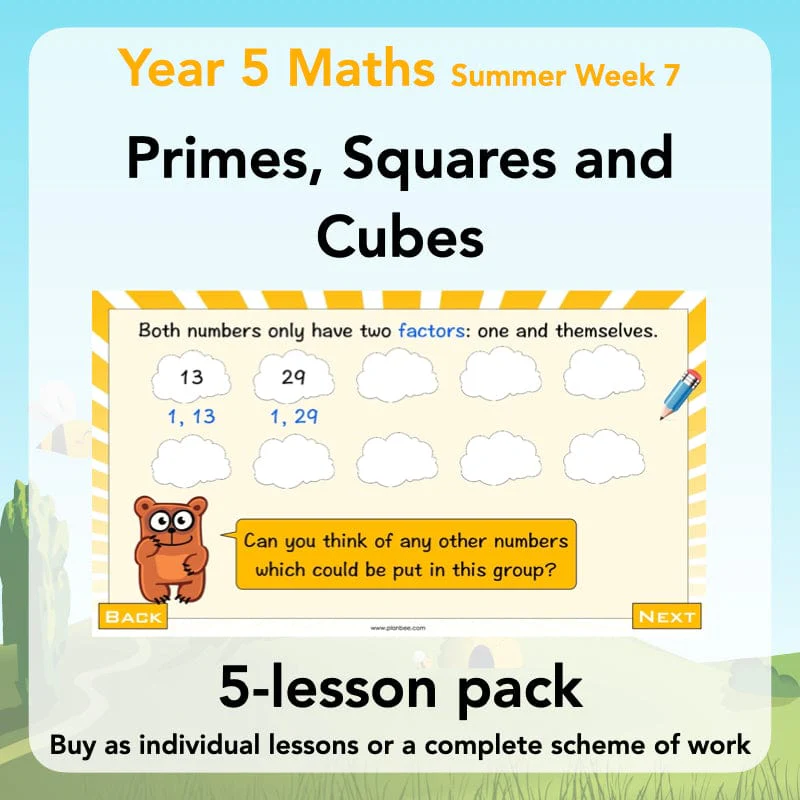
Primes, Squares and Cubes
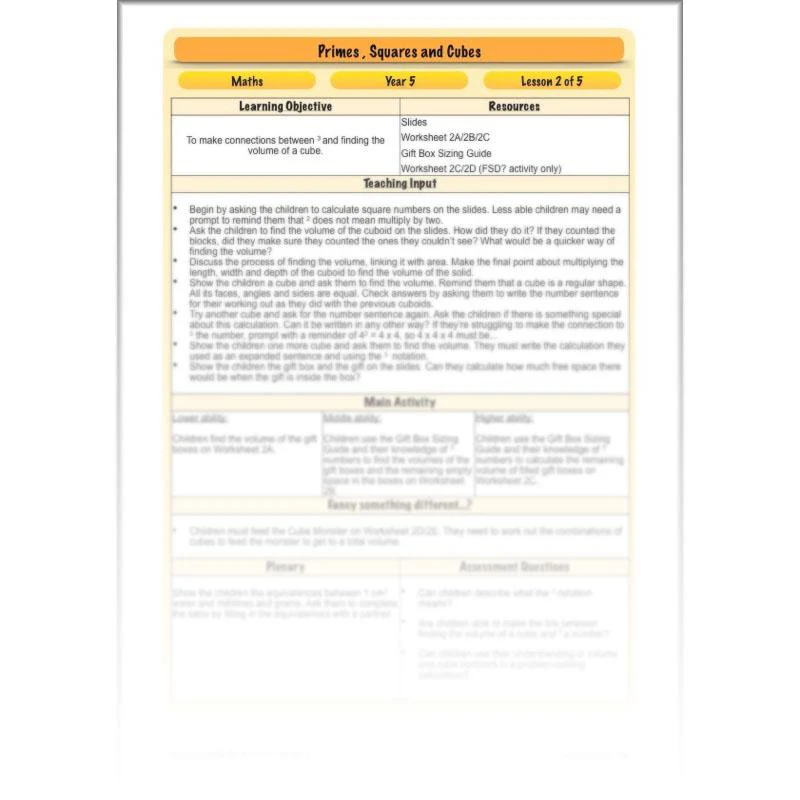
Revisit the children’s understanding of square and cube numbers in the context of area and volume. Then move on to exploring the definition of prime and composite numbers and their properties.
Investigate the building blocks of every number by finding their prime factors and consolidate the children’s knowledge of squares, cubes and primes when recording the multiplication sentences of prime factors and in problem-solving activities.
Area and Square Numbers
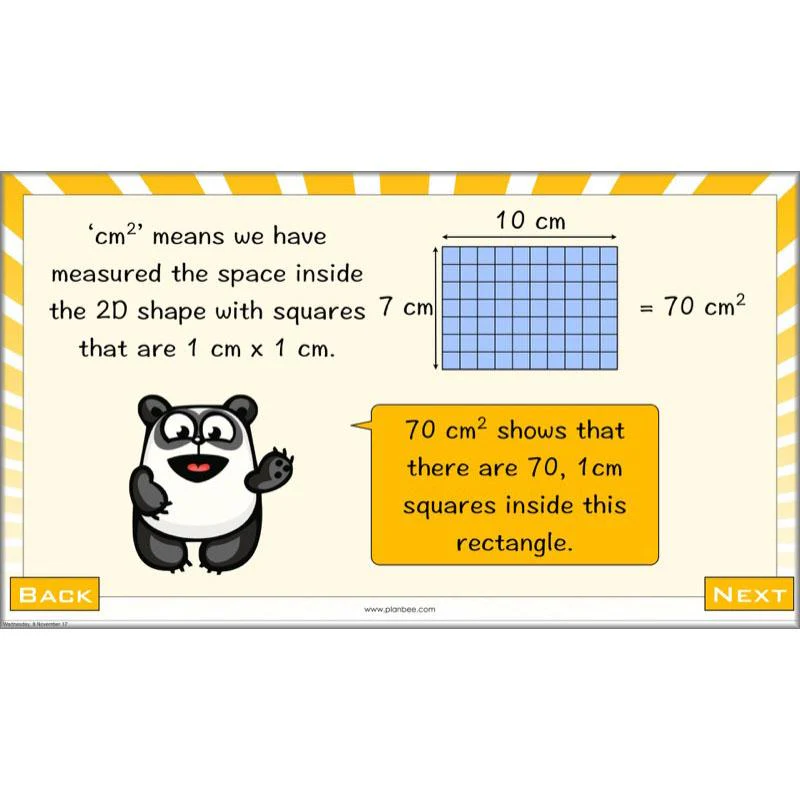
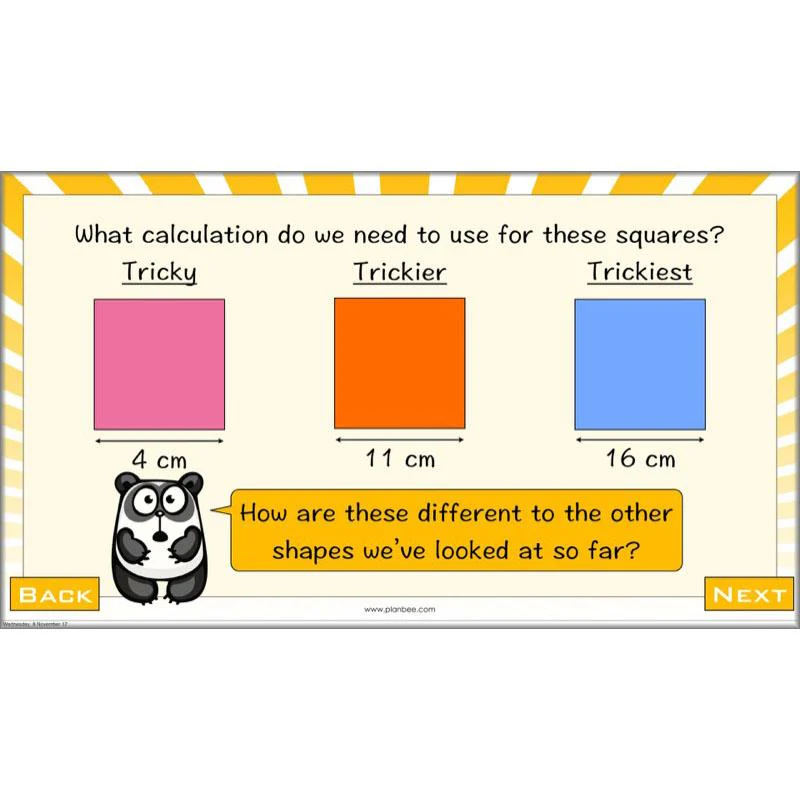
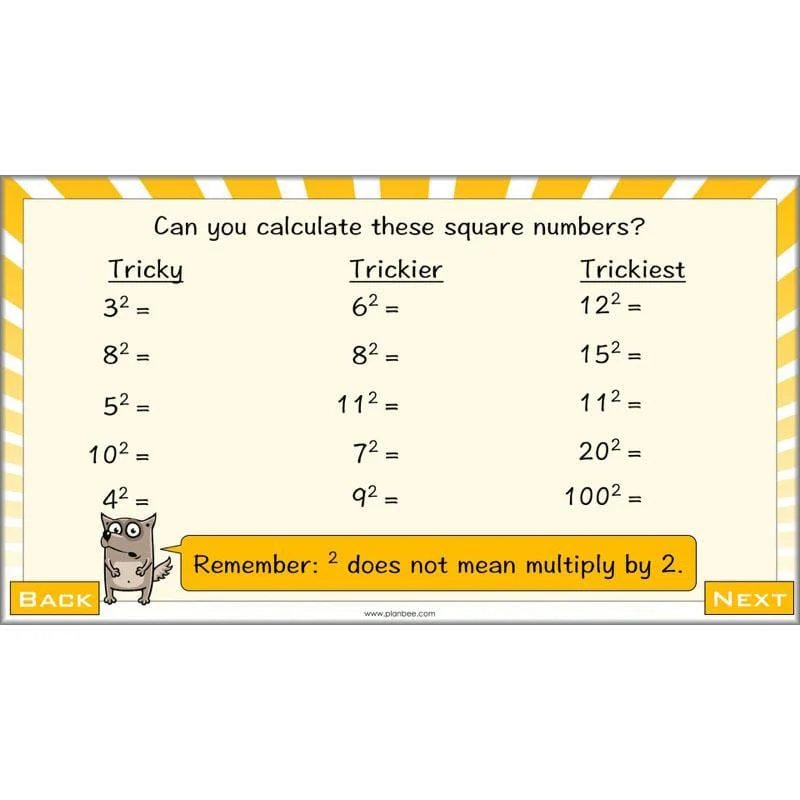
Revisit area and square numbers with your class and begin to use square numbers in context with the formula: length x height. Remind your class of the notation for square numbers and use this understanding in different problem-solving calculations involving square numbers and area.
What's included:
- Lesson plan
- Slides
- Activity ideas
- Differentiated worksheets
- Challenge cards
Volume and Cube Numbers
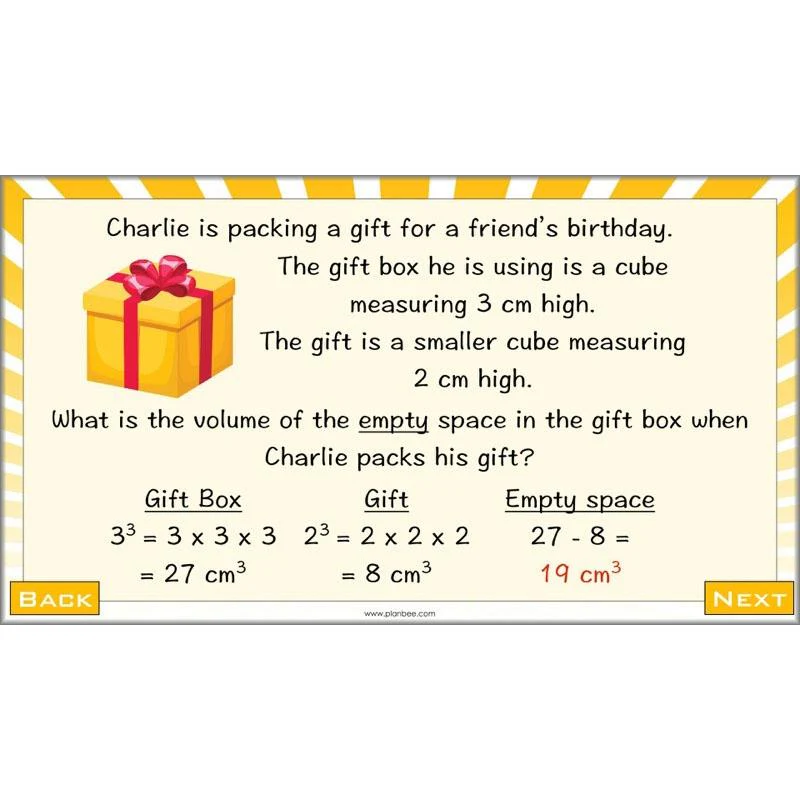
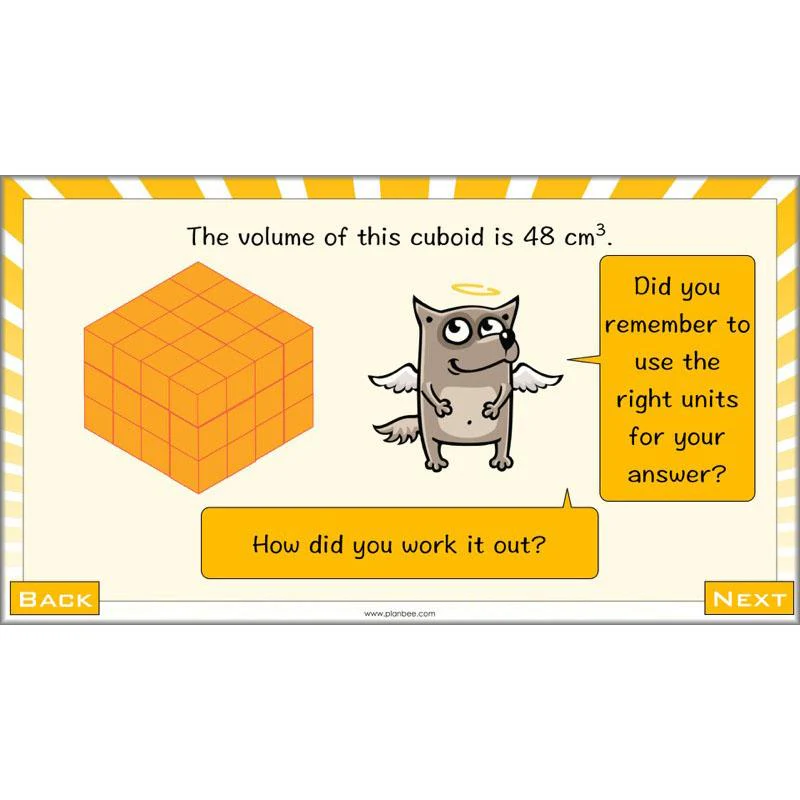
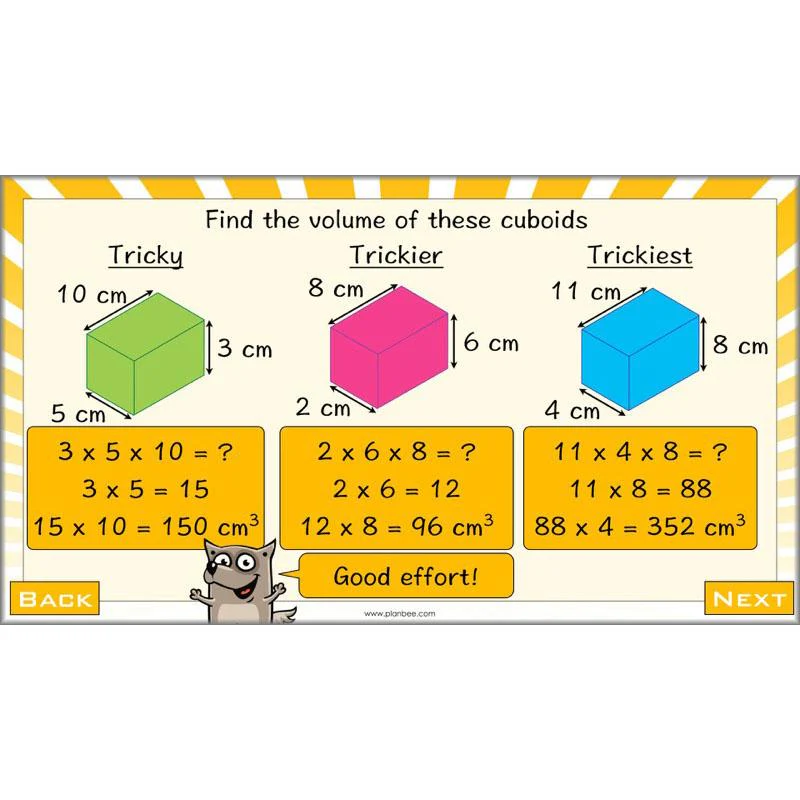
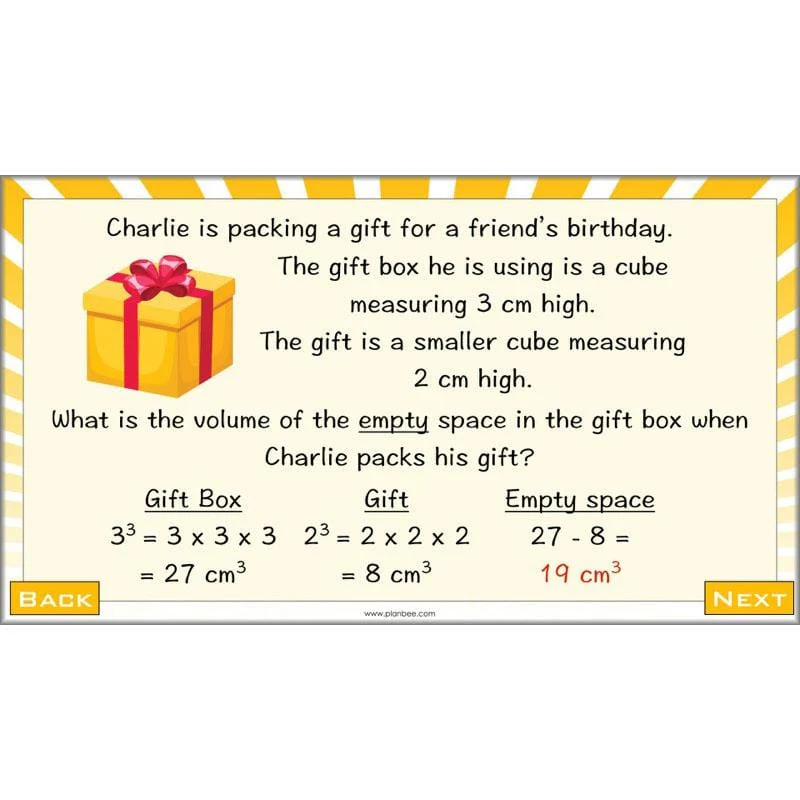
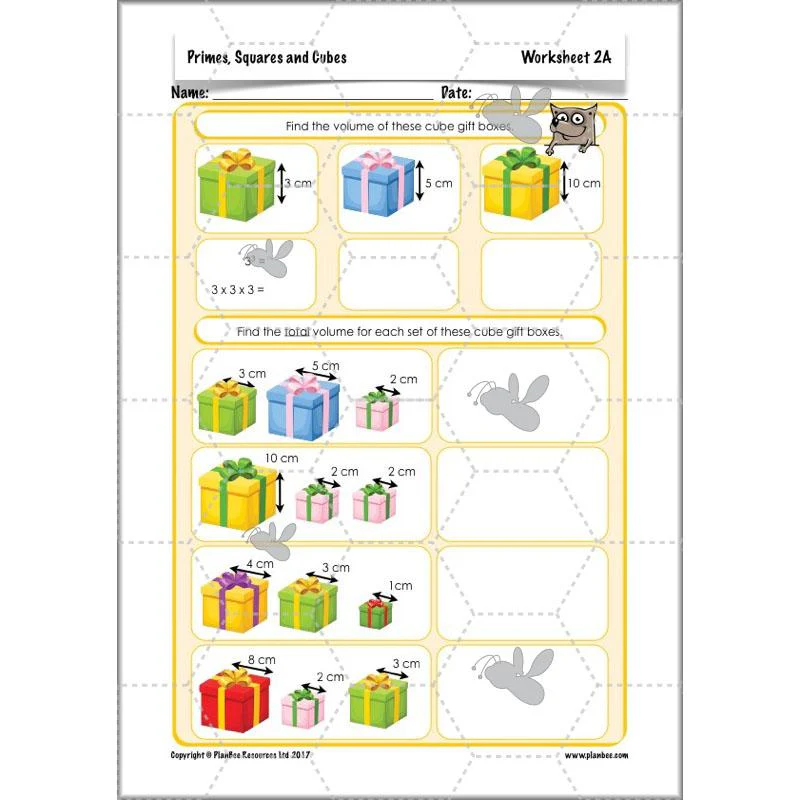
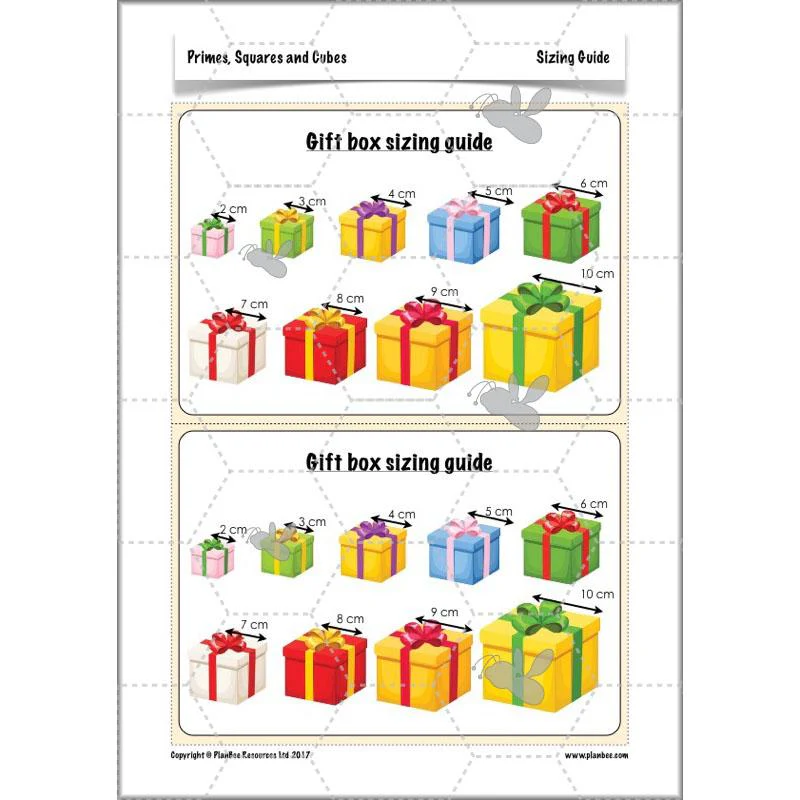
Revisit the formula for finding the volume of a cuboid: length x width x height. Use this opportunity to bring cube numbers into context with your class when looking at the units and notation when referring to volume. Challenge the children to use this knowledge in a range of problem-solving activities involving cube numbers and volume.
What's included:
- Lesson plan
- Slides
- Activity ideas
- Differentiated worksheets
Prime Numbers
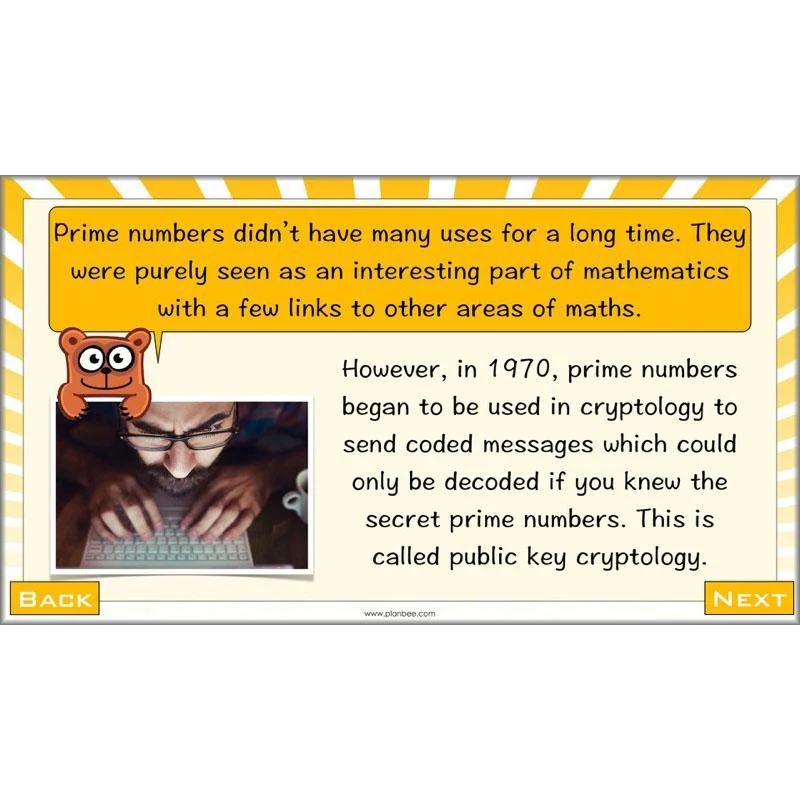
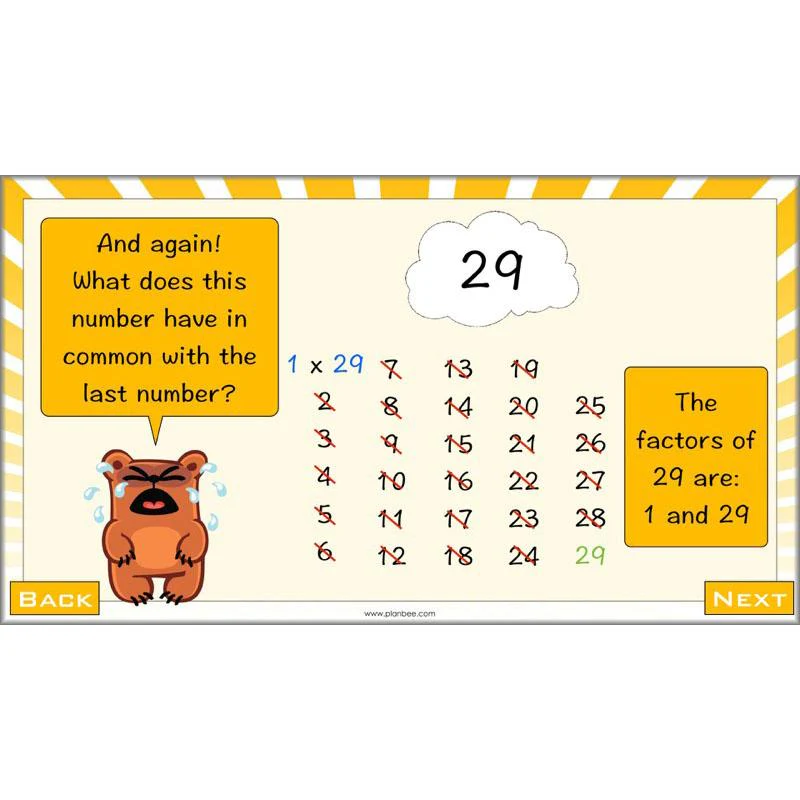
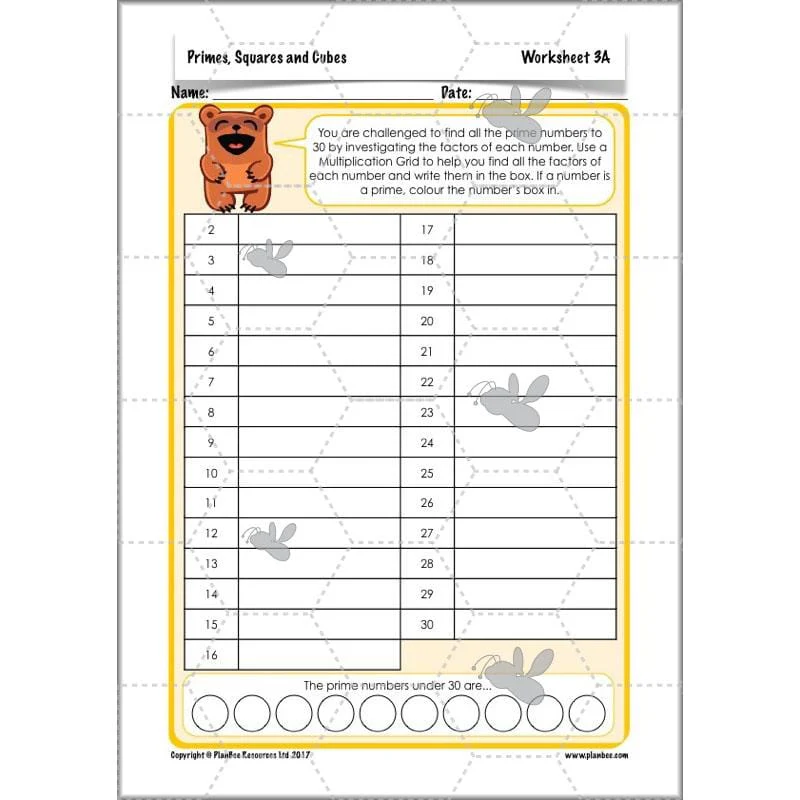
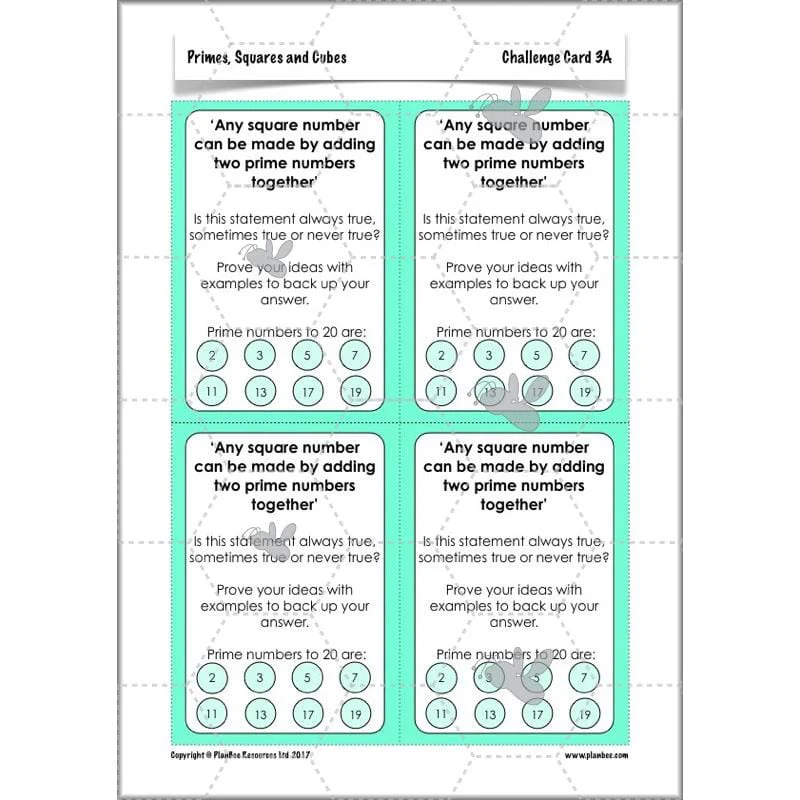
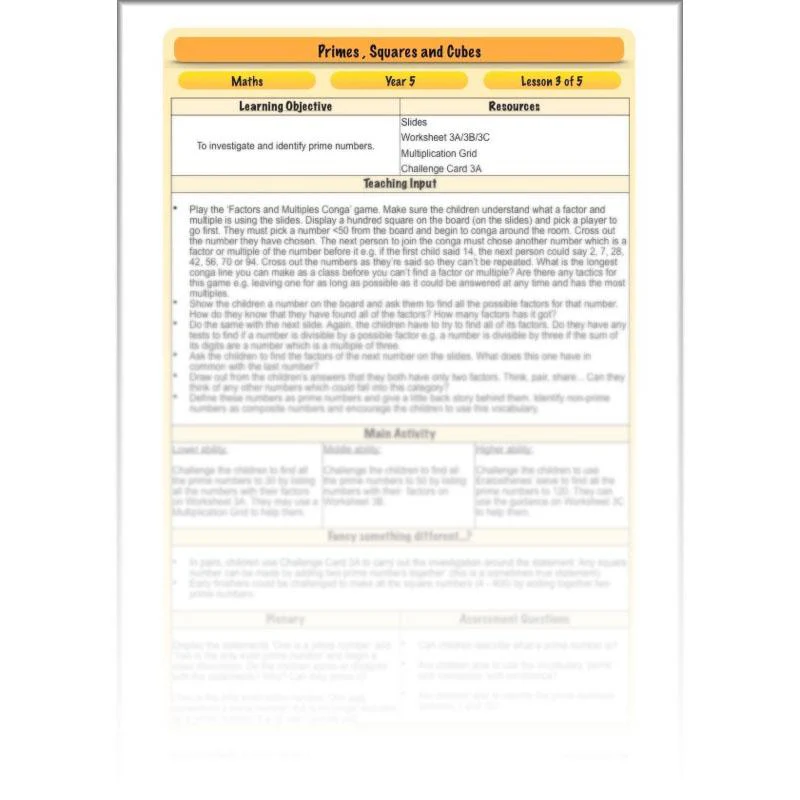
Help your class discover and identify prime numbers and their properties. Encourage them to use the language of prime and composite numbers by investigating their factors and grouping the numbers together. Help them investigate which numbers are prime up to 120 through the use of Eratosthenes’ sieve and other prime number investigations.
What's included:
- Lesson plan
- Slides
- Activity ideas
- Differentiated worksheets
- Challenge cards
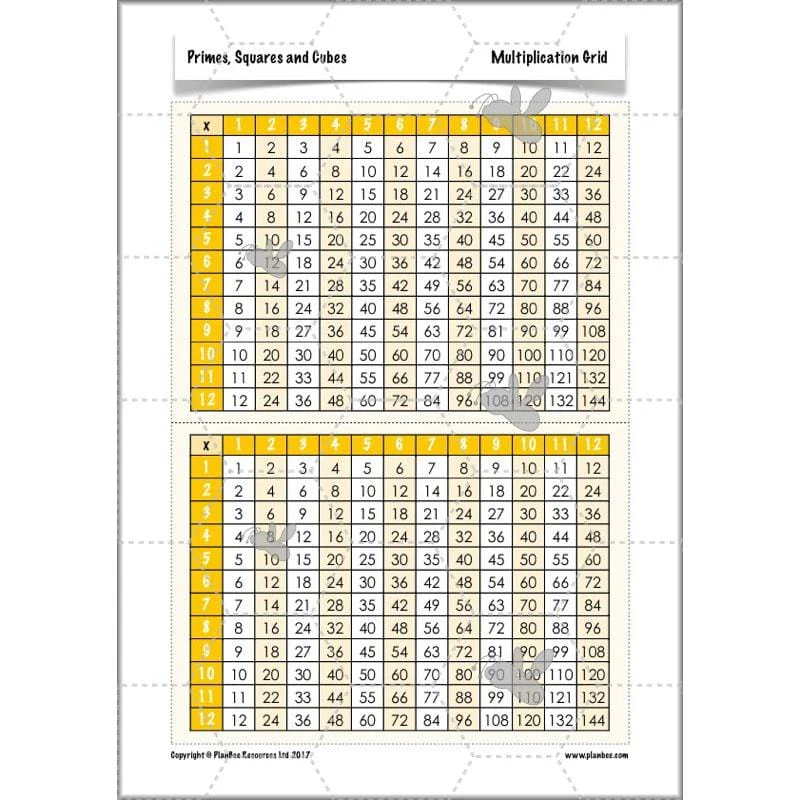
- Multiplication grid
Prime Factors
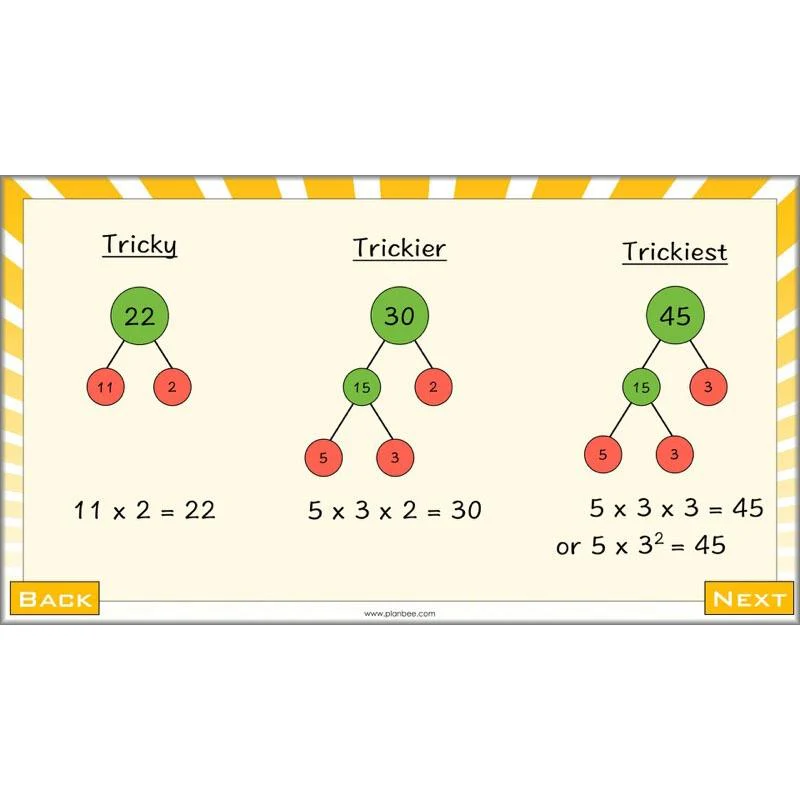
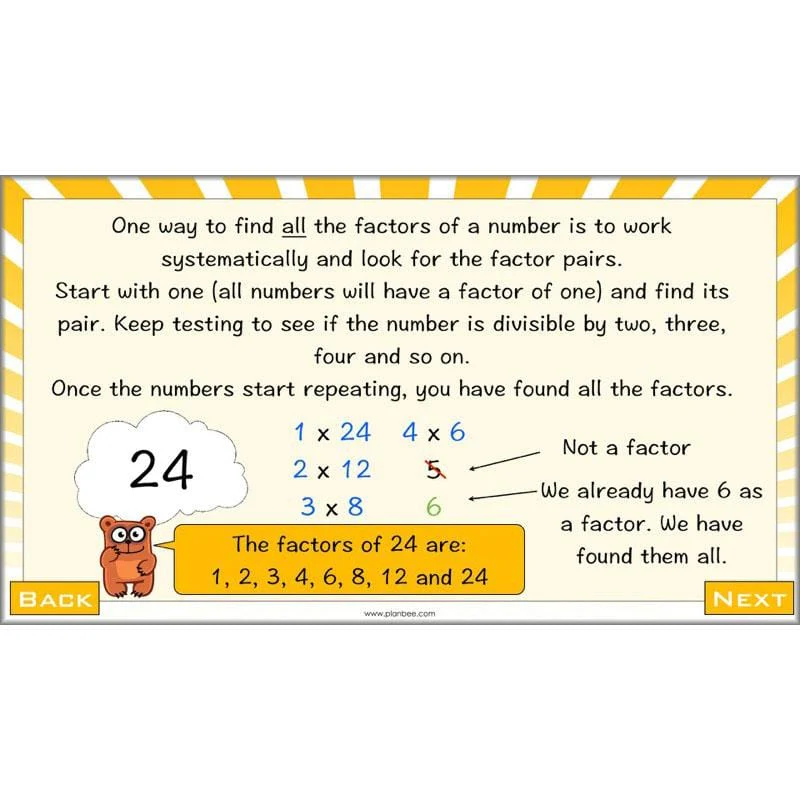
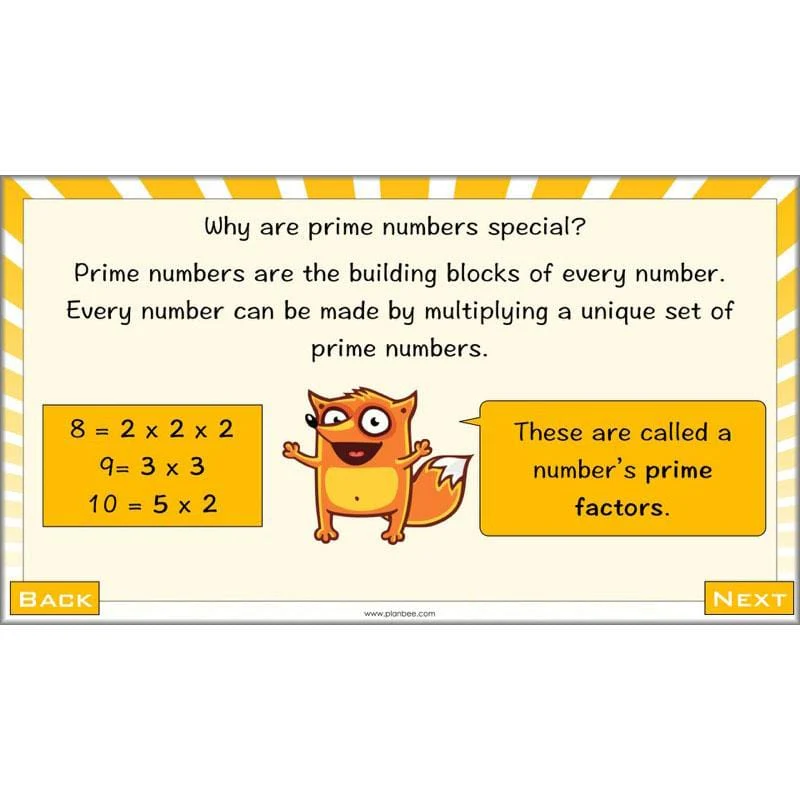
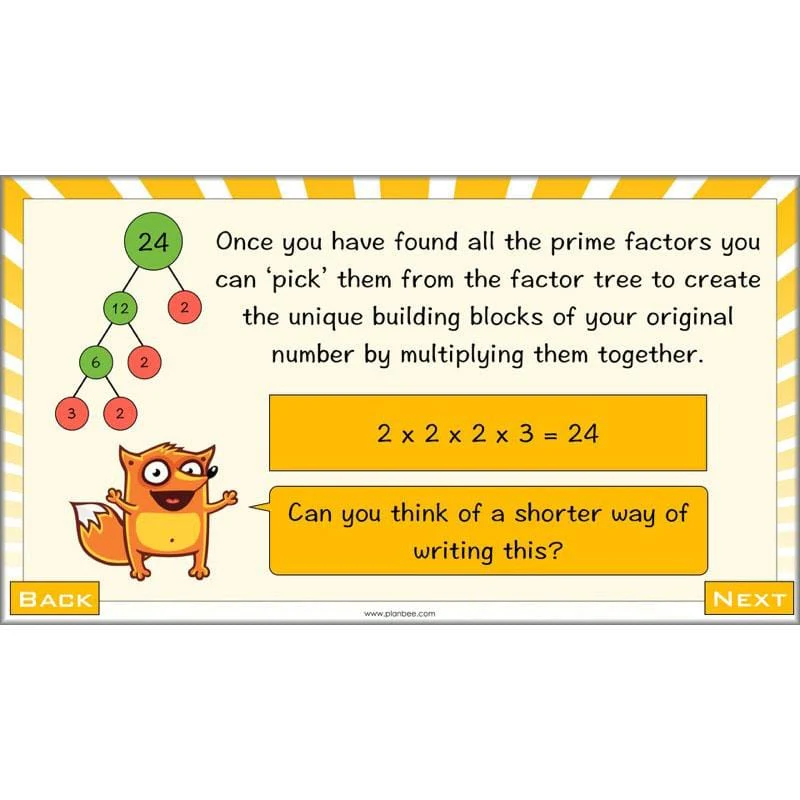
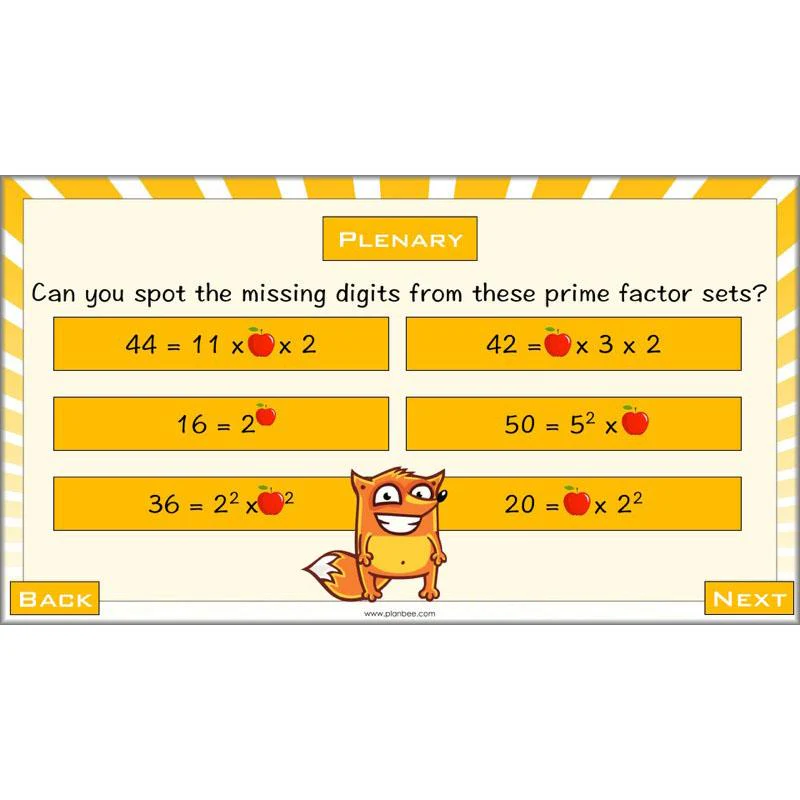
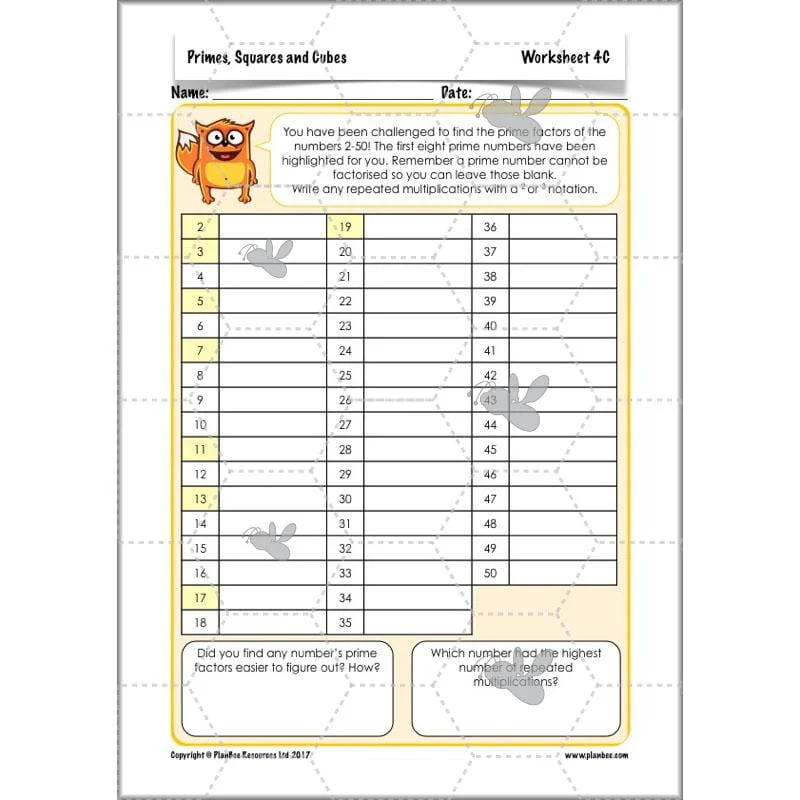
Begin to use the children’s understanding of prime and composite numbers by exploring how all numbers are made up of prime factors. Have your class identify a number’s prime factors using factor trees and use their previous knowledge of square and cube numbers to record the multiplication sentence built from prime factors.
What's included:
- Lesson plan
- Slides
- Activity ideas
- Differentiated Worksheets
- Prime factor cards
- Teacher cards
Problem solving
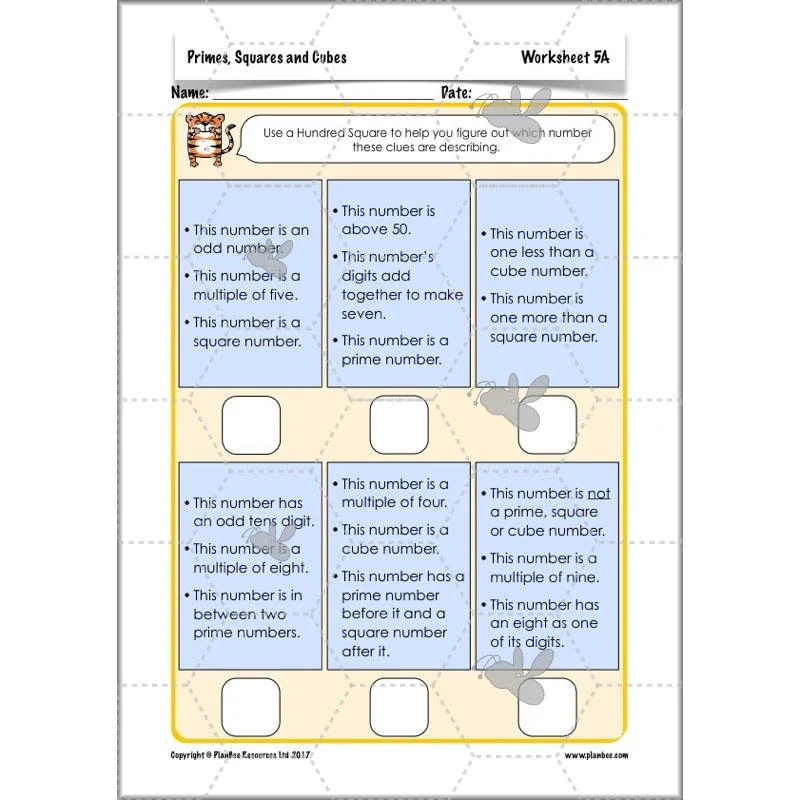
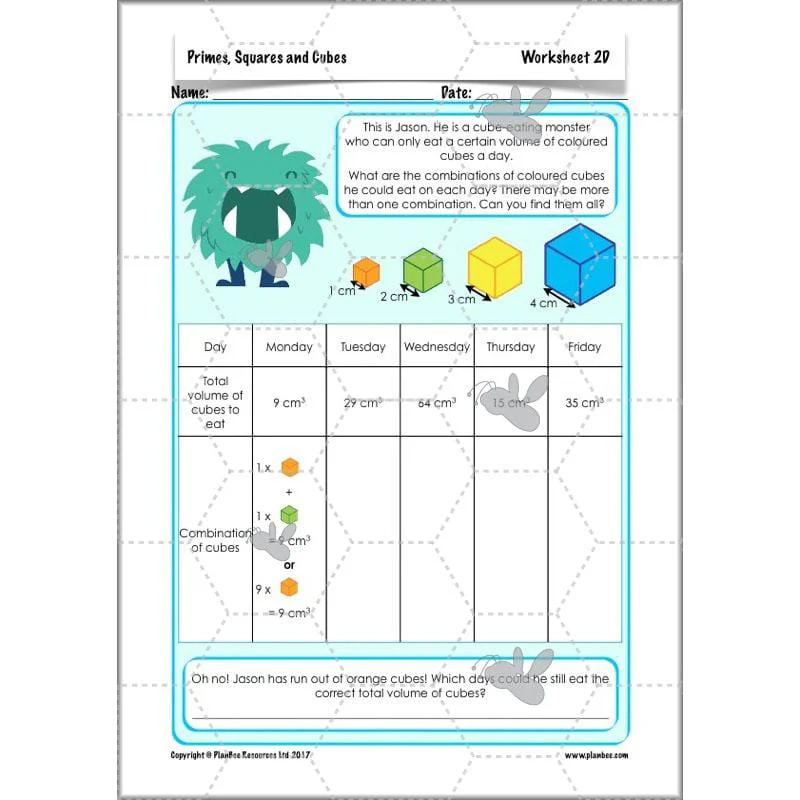
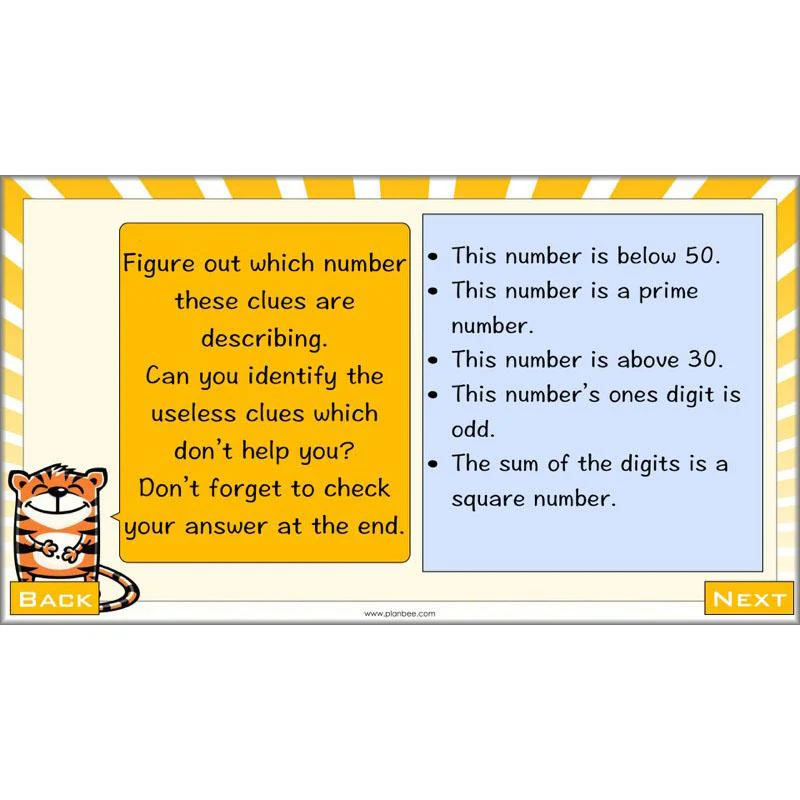
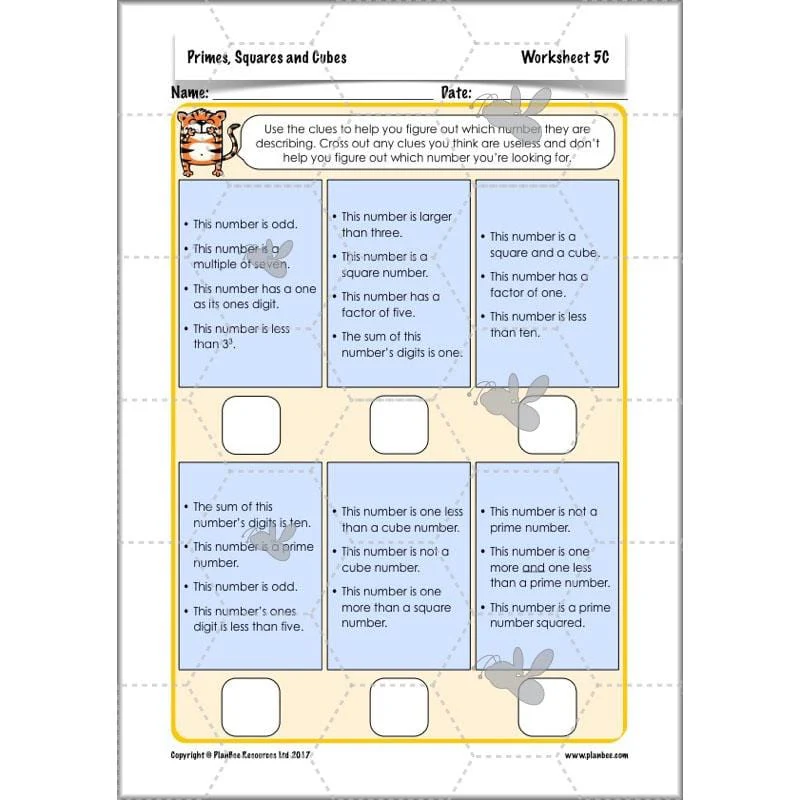
Help your class consolidate their knowledge of primes, squares and cubes by challenging them to identify numbers based on their properties. Have the children solve problems involving square and cube numbers, strengthening their understanding of the commutativity of multiplication and the meaning of 2 and 3 notations.
What's included:
- Lesson plan
- Slides
- Activity ideas
- Differentiated worksheets
- Hundred squares
- Points cards
- Calculation cards
- Help sheet
Original: $4.71
-65%$4.71
$1.65More Images


















Primes, Squares and Cubes
Revisit the children’s understanding of square and cube numbers in the context of area and volume. Then move on to exploring the definition of prime and composite numbers and their properties.
Investigate the building blocks of every number by finding their prime factors and consolidate the children’s knowledge of squares, cubes and primes when recording the multiplication sentences of prime factors and in problem-solving activities.
Area and Square Numbers
Revisit area and square numbers with your class and begin to use square numbers in context with the formula: length x height. Remind your class of the notation for square numbers and use this understanding in different problem-solving calculations involving square numbers and area.
What's included:
- Lesson plan
- Slides
- Activity ideas
- Differentiated worksheets
- Challenge cards
Volume and Cube Numbers
Revisit the formula for finding the volume of a cuboid: length x width x height. Use this opportunity to bring cube numbers into context with your class when looking at the units and notation when referring to volume. Challenge the children to use this knowledge in a range of problem-solving activities involving cube numbers and volume.
What's included:
- Lesson plan
- Slides
- Activity ideas
- Differentiated worksheets
Prime Numbers
Help your class discover and identify prime numbers and their properties. Encourage them to use the language of prime and composite numbers by investigating their factors and grouping the numbers together. Help them investigate which numbers are prime up to 120 through the use of Eratosthenes’ sieve and other prime number investigations.
What's included:
- Lesson plan
- Slides
- Activity ideas
- Differentiated worksheets
- Challenge cards
- Multiplication grid
Prime Factors
Begin to use the children’s understanding of prime and composite numbers by exploring how all numbers are made up of prime factors. Have your class identify a number’s prime factors using factor trees and use their previous knowledge of square and cube numbers to record the multiplication sentence built from prime factors.
What's included:
- Lesson plan
- Slides
- Activity ideas
- Differentiated Worksheets
- Prime factor cards
- Teacher cards
Problem solving
Help your class consolidate their knowledge of primes, squares and cubes by challenging them to identify numbers based on their properties. Have the children solve problems involving square and cube numbers, strengthening their understanding of the commutativity of multiplication and the meaning of 2 and 3 notations.
What's included:
- Lesson plan
- Slides
- Activity ideas
- Differentiated worksheets
- Hundred squares
- Points cards
- Calculation cards
- Help sheet
Product Information
Product Information
Shipping & Returns
Shipping & Returns
Description
Revisit the children’s understanding of square and cube numbers in the context of area and volume. Then move on to exploring the definition of prime and composite numbers and their properties.
Investigate the building blocks of every number by finding their prime factors and consolidate the children’s knowledge of squares, cubes and primes when recording the multiplication sentences of prime factors and in problem-solving activities.
Area and Square Numbers
Revisit area and square numbers with your class and begin to use square numbers in context with the formula: length x height. Remind your class of the notation for square numbers and use this understanding in different problem-solving calculations involving square numbers and area.
What's included:
- Lesson plan
- Slides
- Activity ideas
- Differentiated worksheets
- Challenge cards
Volume and Cube Numbers
Revisit the formula for finding the volume of a cuboid: length x width x height. Use this opportunity to bring cube numbers into context with your class when looking at the units and notation when referring to volume. Challenge the children to use this knowledge in a range of problem-solving activities involving cube numbers and volume.
What's included:
- Lesson plan
- Slides
- Activity ideas
- Differentiated worksheets
Prime Numbers
Help your class discover and identify prime numbers and their properties. Encourage them to use the language of prime and composite numbers by investigating their factors and grouping the numbers together. Help them investigate which numbers are prime up to 120 through the use of Eratosthenes’ sieve and other prime number investigations.
What's included:
- Lesson plan
- Slides
- Activity ideas
- Differentiated worksheets
- Challenge cards
- Multiplication grid
Prime Factors
Begin to use the children’s understanding of prime and composite numbers by exploring how all numbers are made up of prime factors. Have your class identify a number’s prime factors using factor trees and use their previous knowledge of square and cube numbers to record the multiplication sentence built from prime factors.
What's included:
- Lesson plan
- Slides
- Activity ideas
- Differentiated Worksheets
- Prime factor cards
- Teacher cards
Problem solving
Help your class consolidate their knowledge of primes, squares and cubes by challenging them to identify numbers based on their properties. Have the children solve problems involving square and cube numbers, strengthening their understanding of the commutativity of multiplication and the meaning of 2 and 3 notations.
What's included:
- Lesson plan
- Slides
- Activity ideas
- Differentiated worksheets
- Hundred squares
- Points cards
- Calculation cards
- Help sheet