Special Foods
Food is an important aspect in many religious stories, festivals and celebrations. This Year 3/4 ‘Special Foods’ RE scheme of work gives your class the chance to explore how food is used in the six main world religions, including fasting, feasts and symbolic importance. Through stories, pictures, information and questions, your class will start to develop a clearer understanding of the importance of food in a religious context.
Containing lesson plans, informative and engaging slides, differentiated activity ideas and a range of printables, this ‘Special Food’ scheme of work contains all the ingredients (sorry) for a fantastic RE teaching series!
You might also like our Food Glorious Food Topic Bundle – food-themed schemes of work across a range of subjects.
Rules and Restrictions
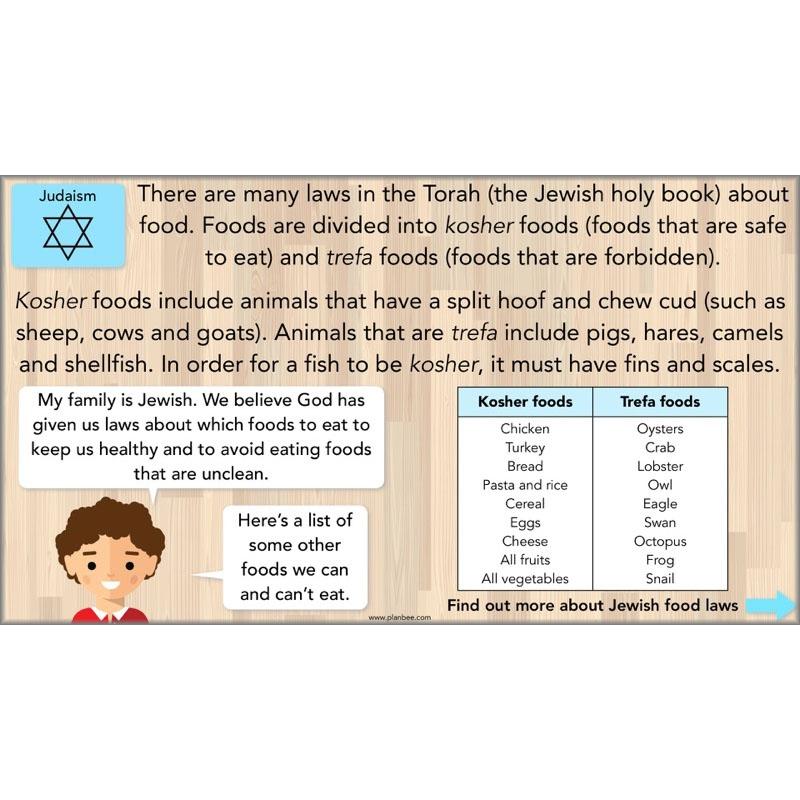
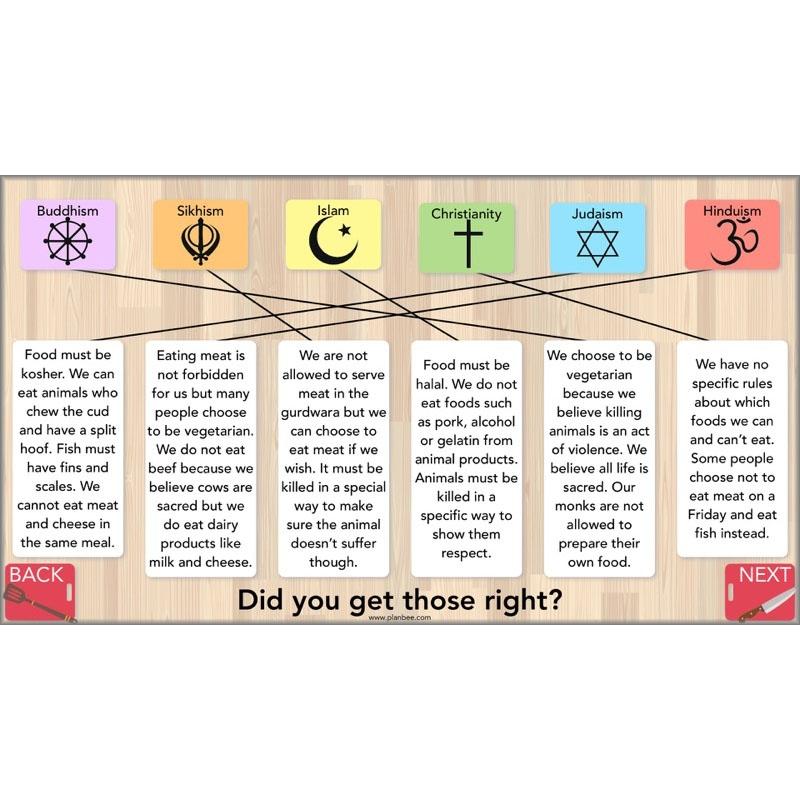
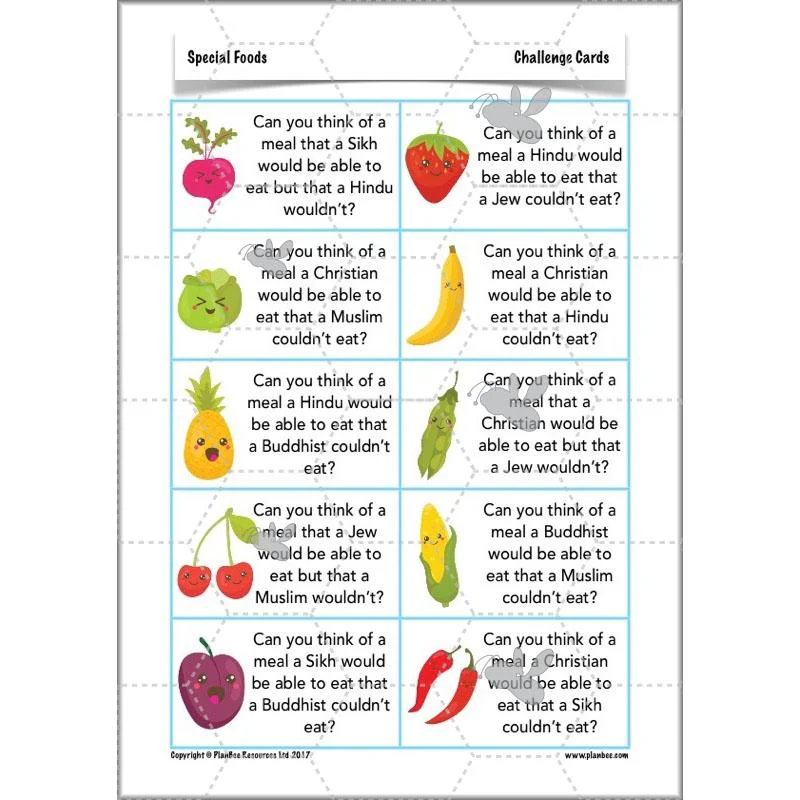
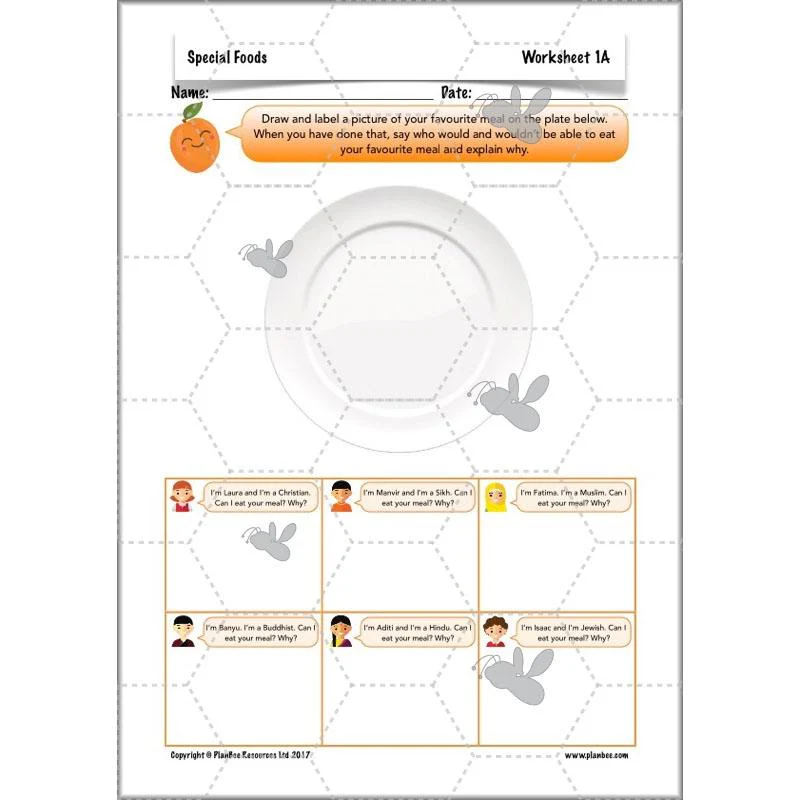
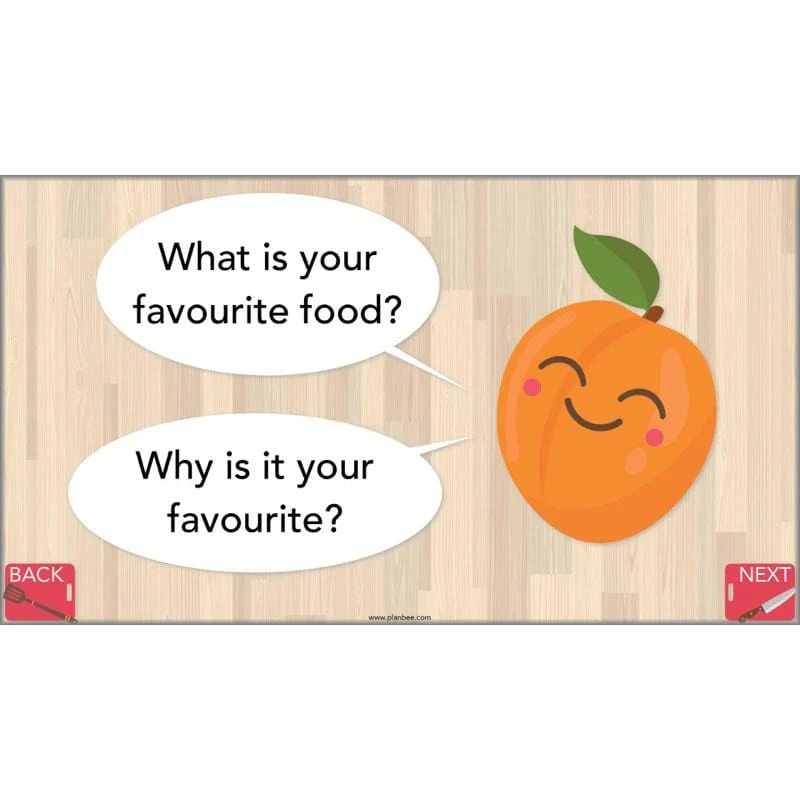
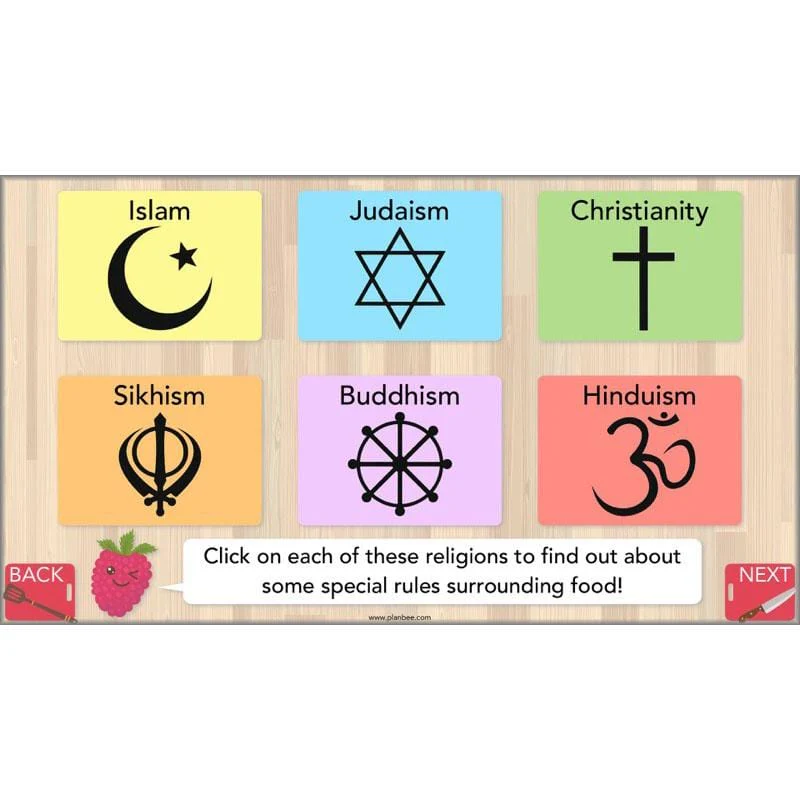
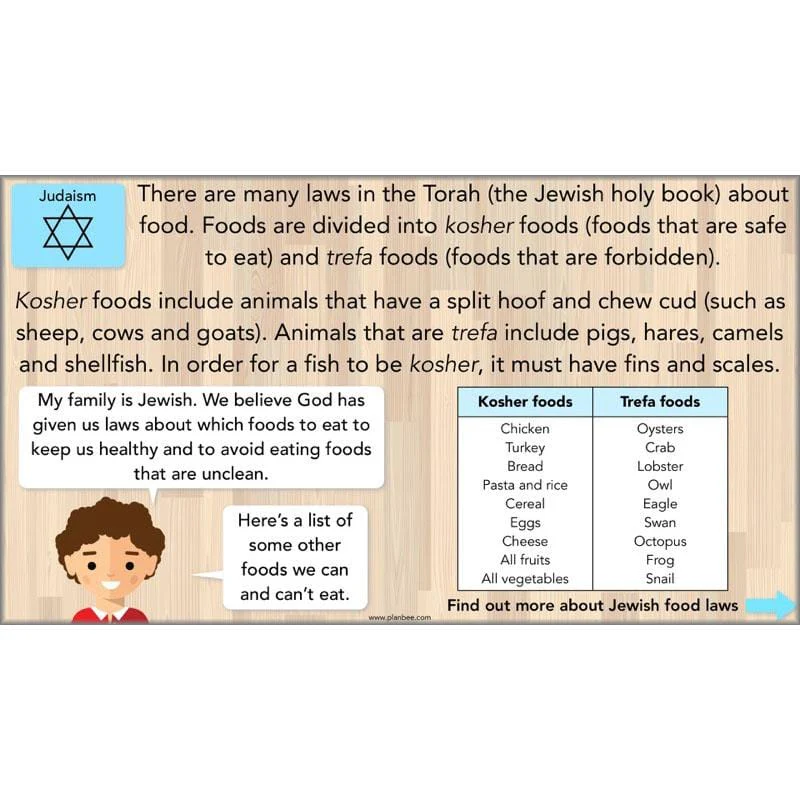
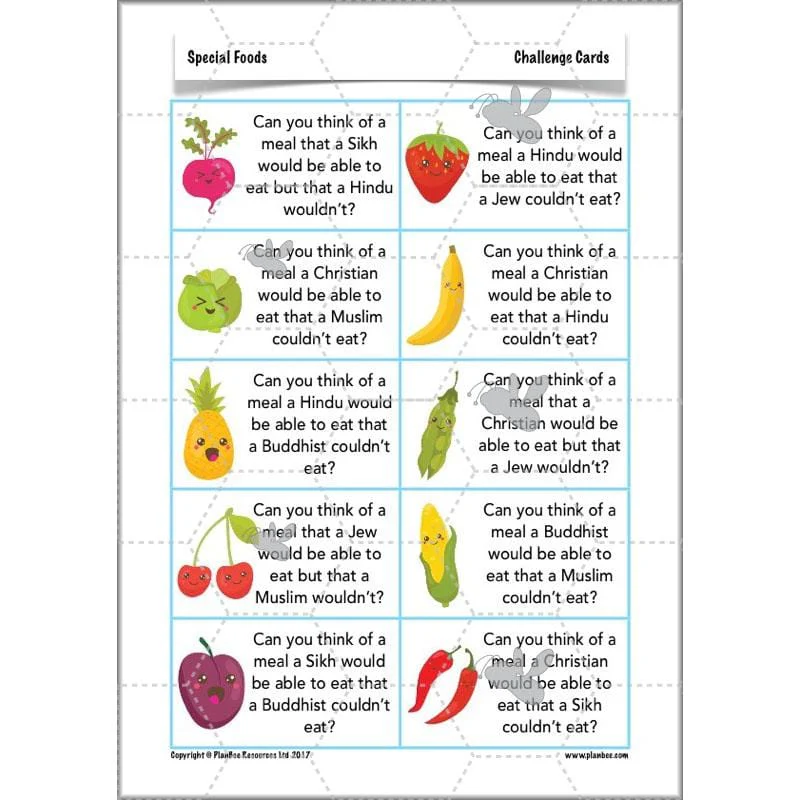
This scheme of work starts off by asking children to consider their favourite foods and foods they aren’t allowed to eat for any reason. They will then go on to look at some of the rules and restrictions regarding food in the six main world religions. During their independent learning, they will then be able to put their knowledge to the test as they think about which people would be able to eat a range of different meals.
What's included:
- Lesson plan
- Slides
- Activity ideas
- Information sheet
- Differentiated worksheets
- Challenge cards
- Meal description cards
View Lesson 1
Fasting
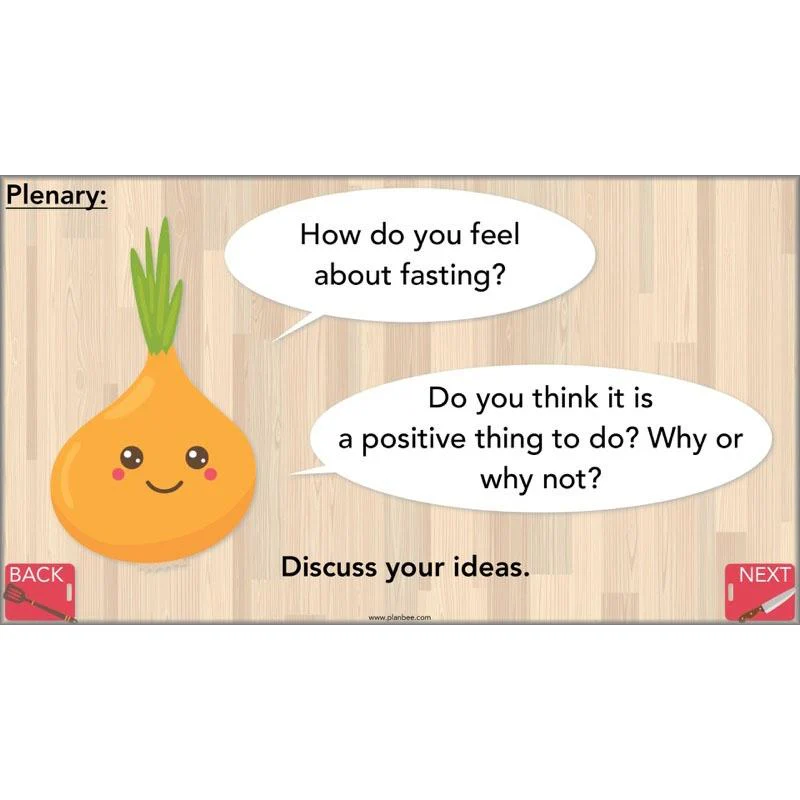
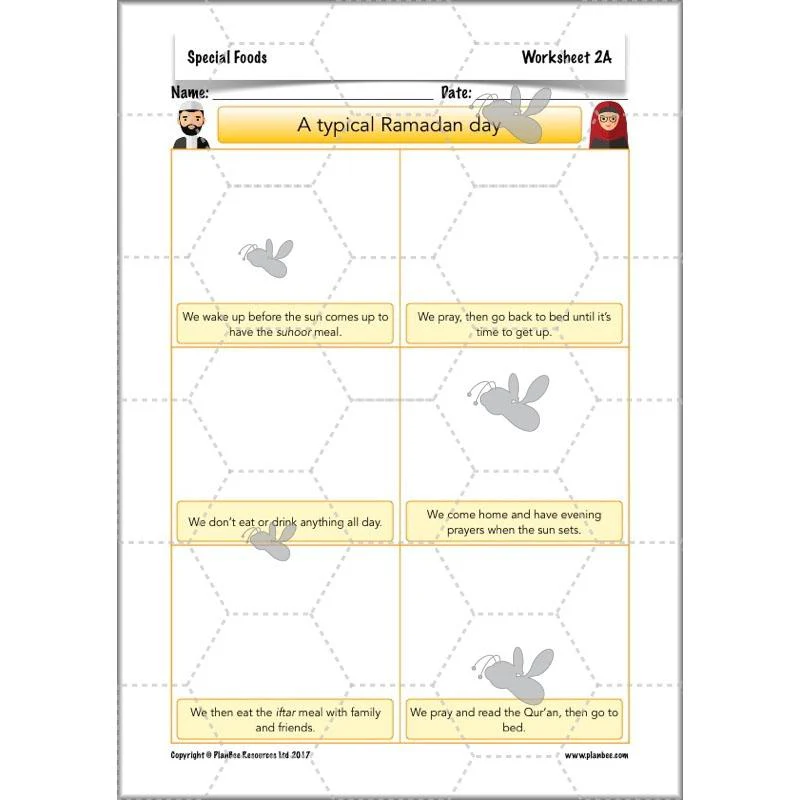
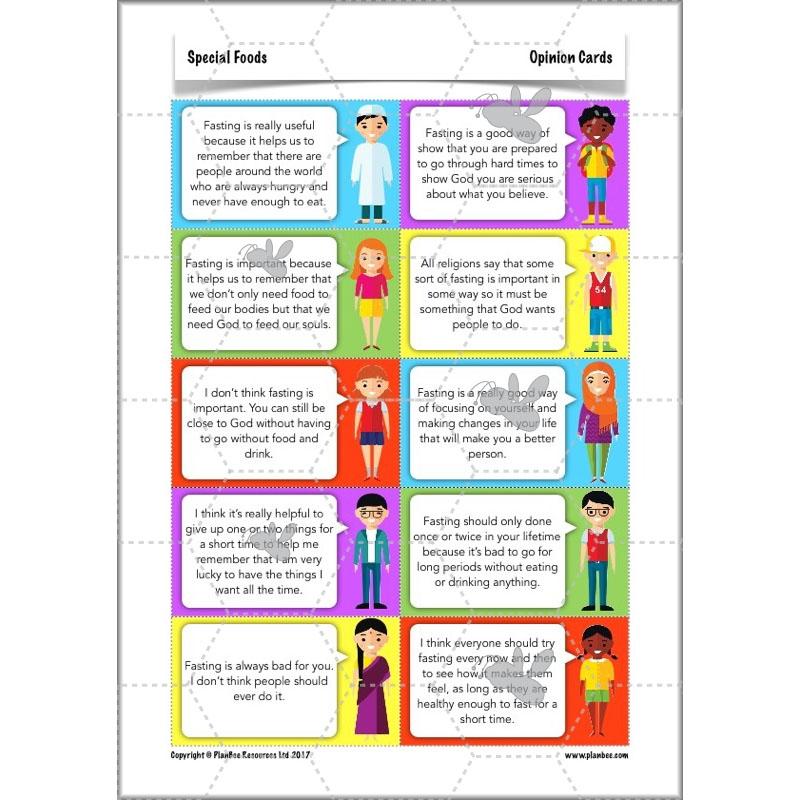
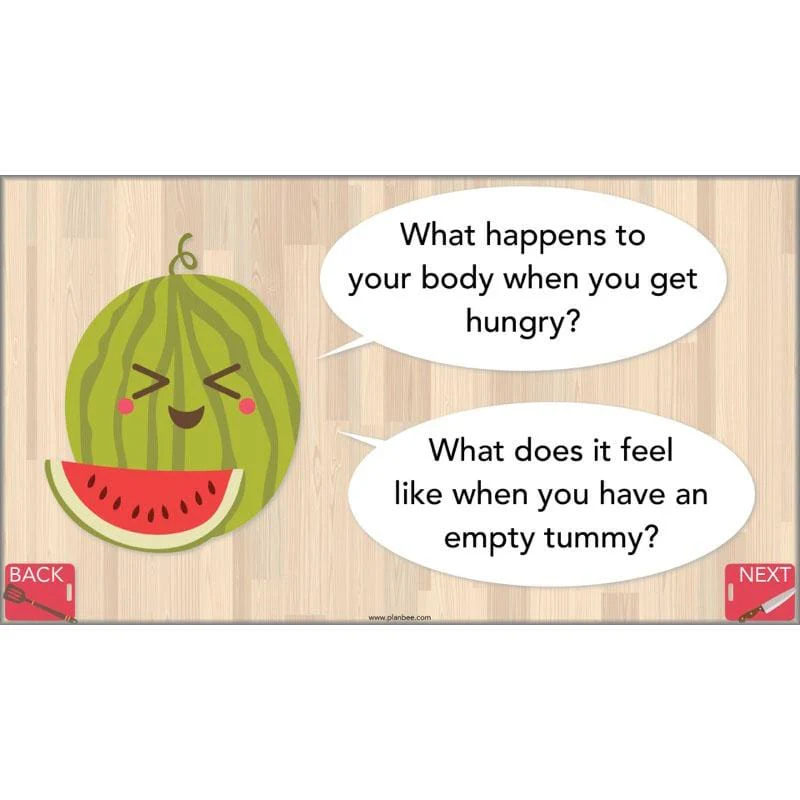
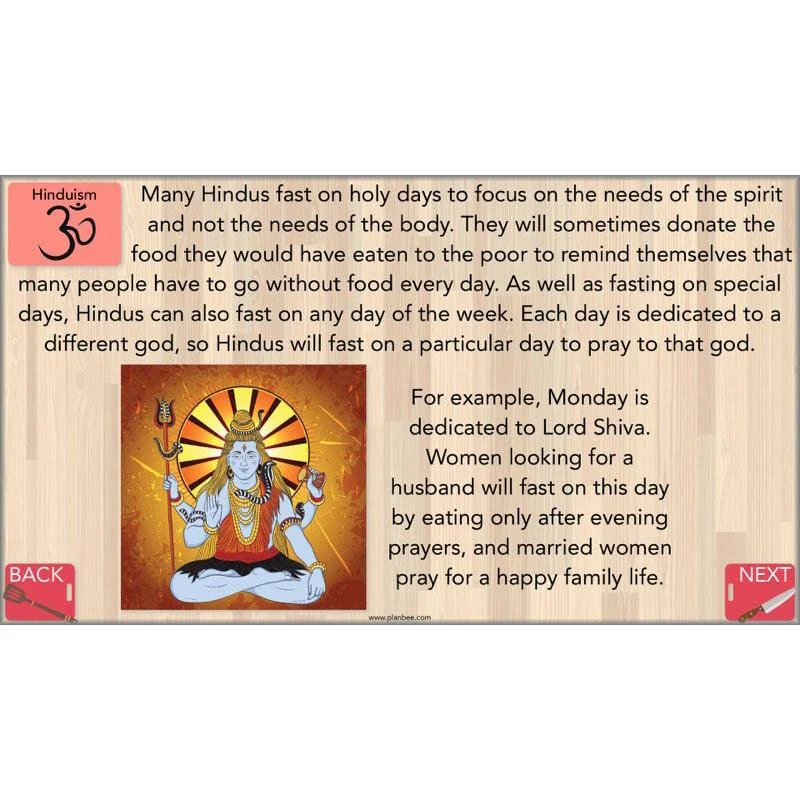
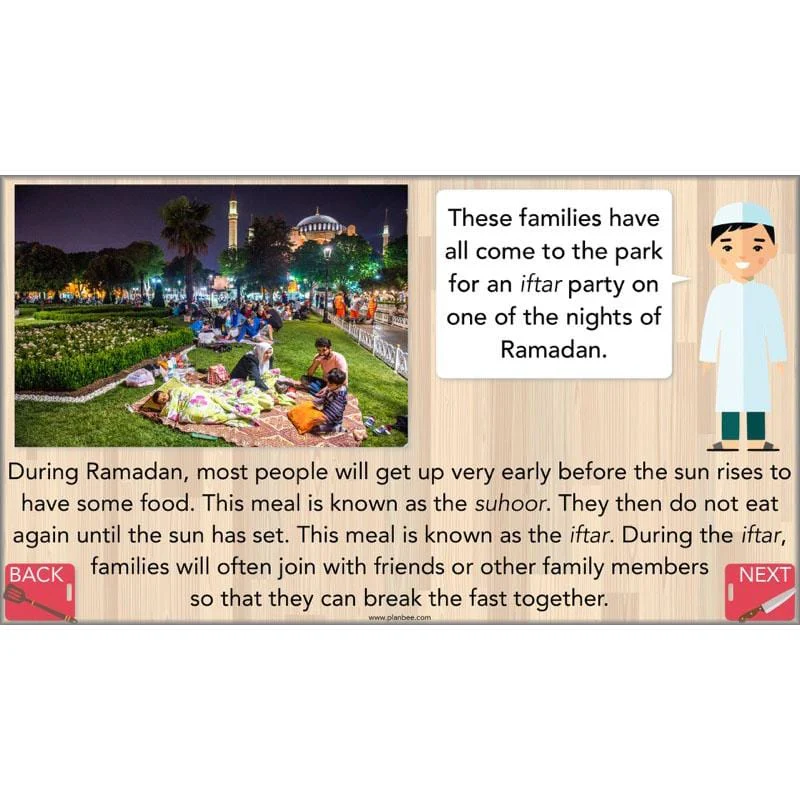
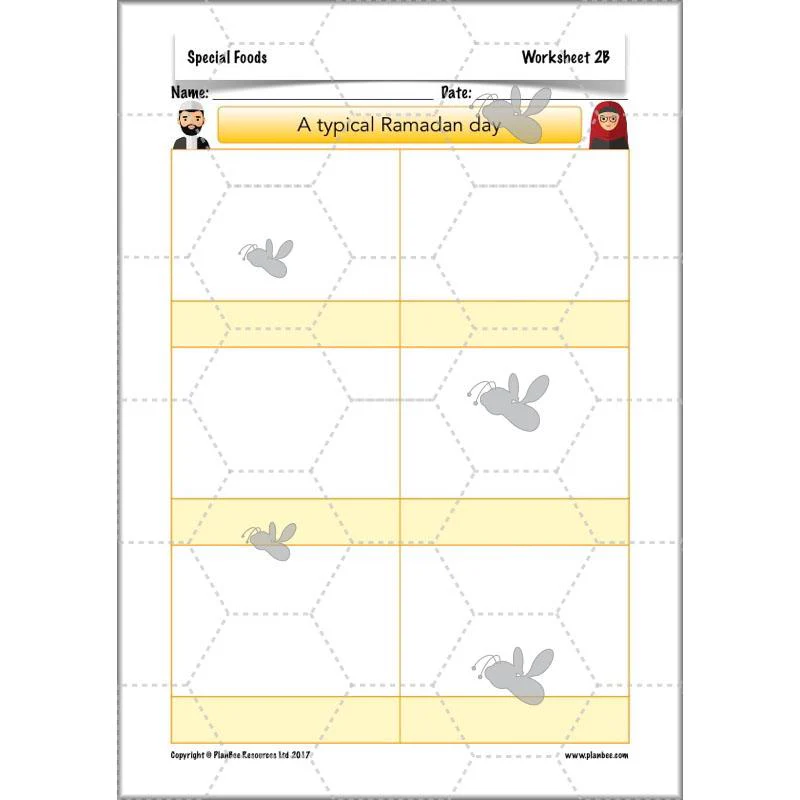
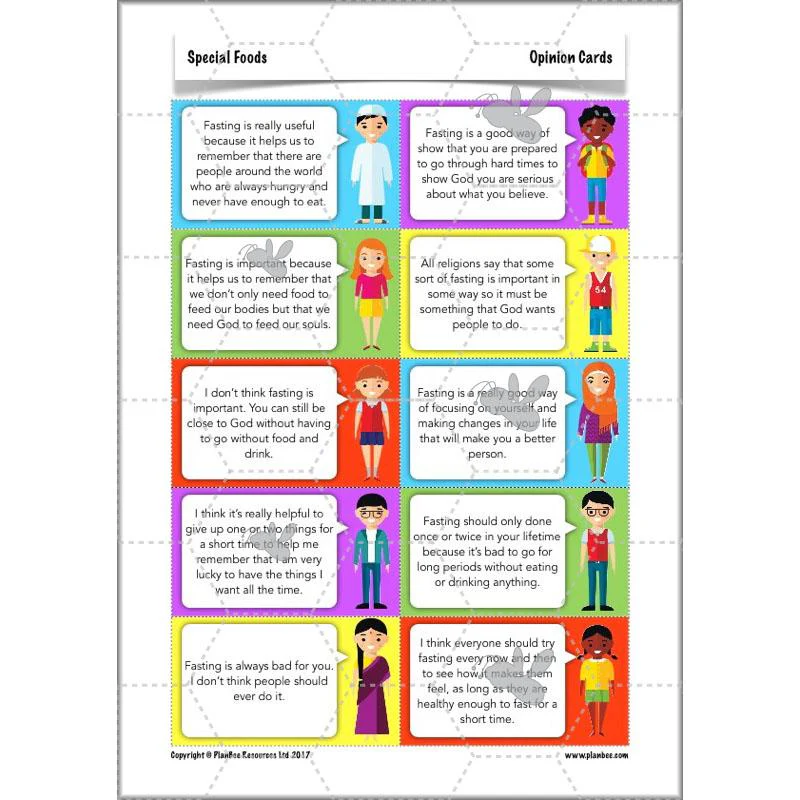
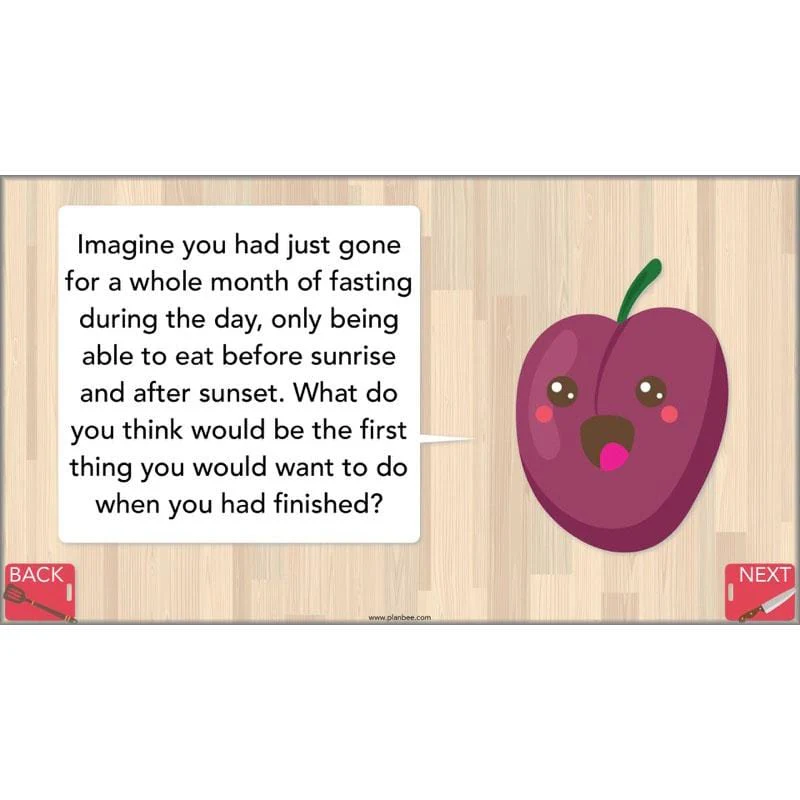
Starting by challenging children to describe what it feels like to be hungry, this lesson goes on to explore what fasting is and investigate why people of different faiths decide, or are required, to fast. They will look particularly at the 25-hour fast of the Jewish festival of Yom Kippur, as well as the Islamic month of Ramadan. They will also have the chance to explore different opinions surrounding fasting and consider how they feel about fasting personally.
What's included:
- Lesson plan
- Slides
- Activity ideas
- Differentiated worksheets
- Sentence cards
- Information sheet
- Opinion cards
View Lesson 2
Festival Foods
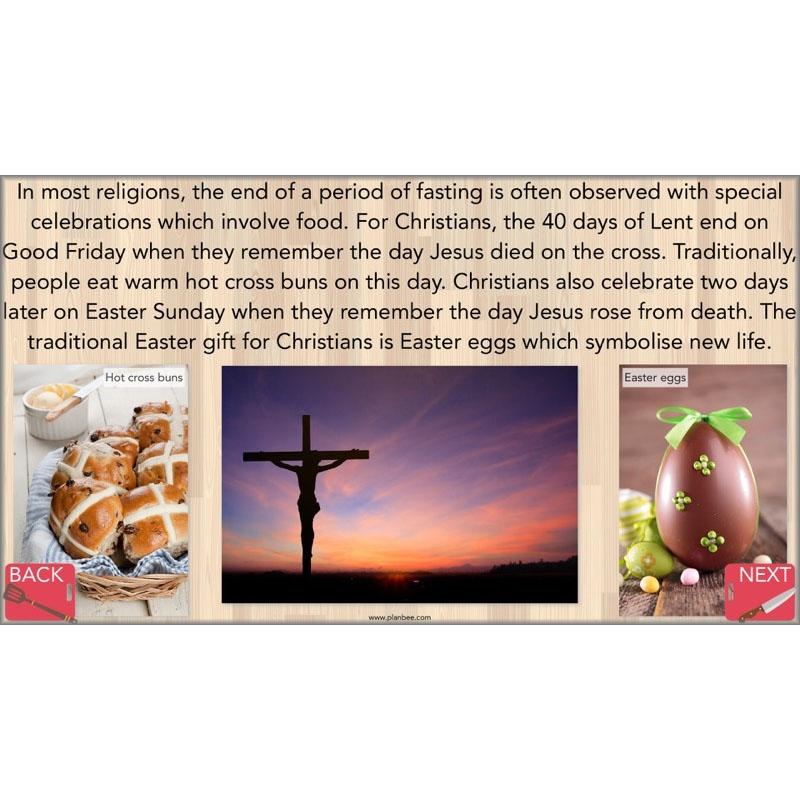
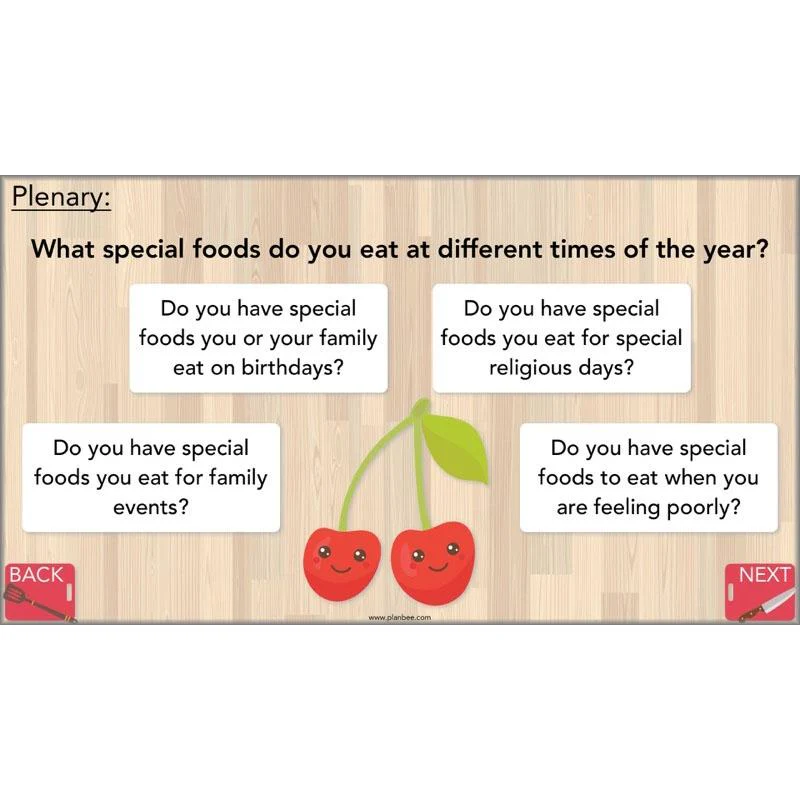
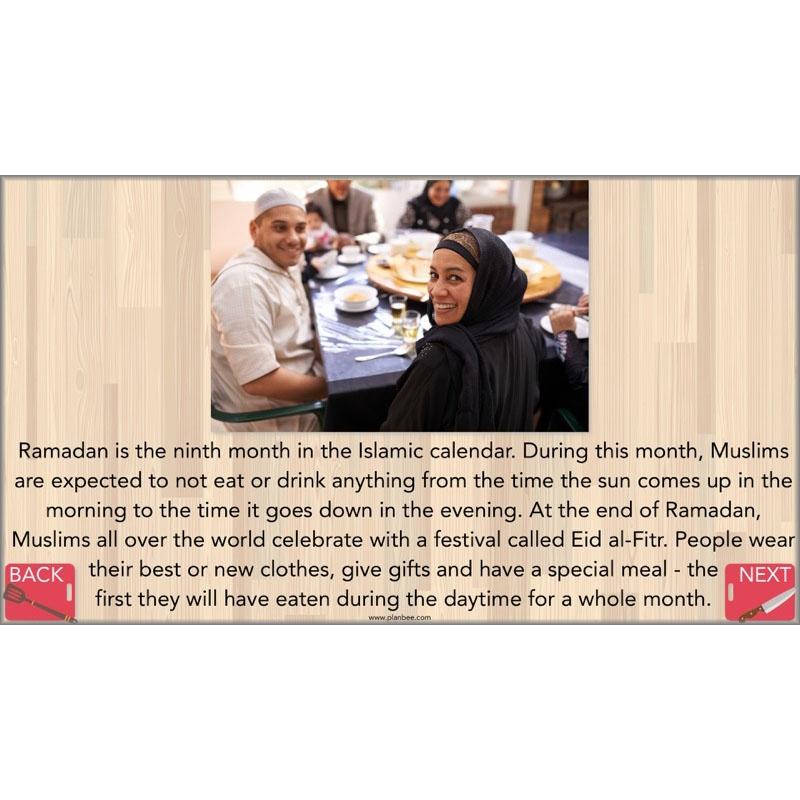
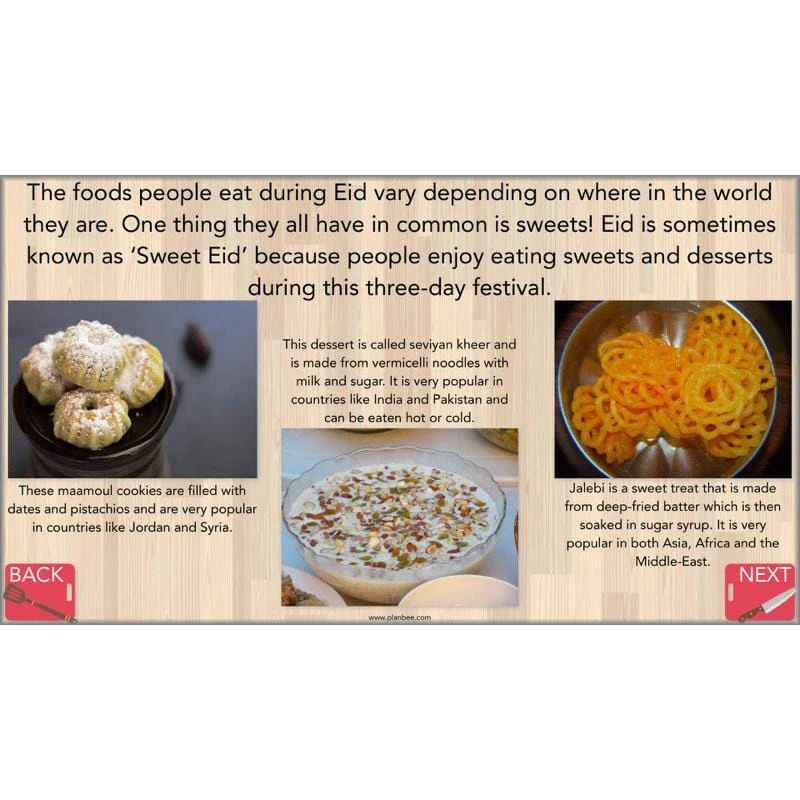
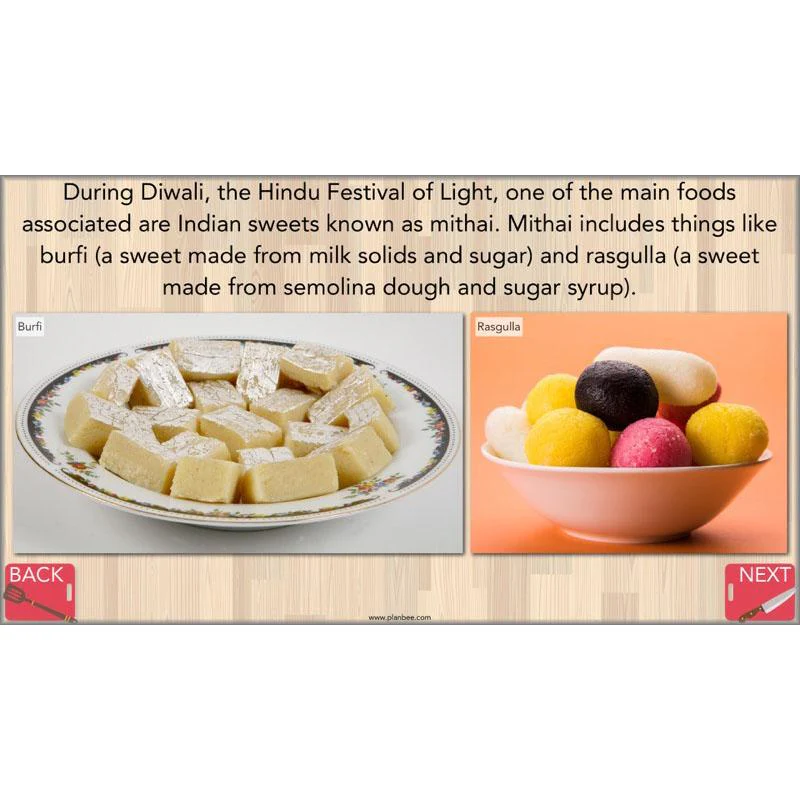
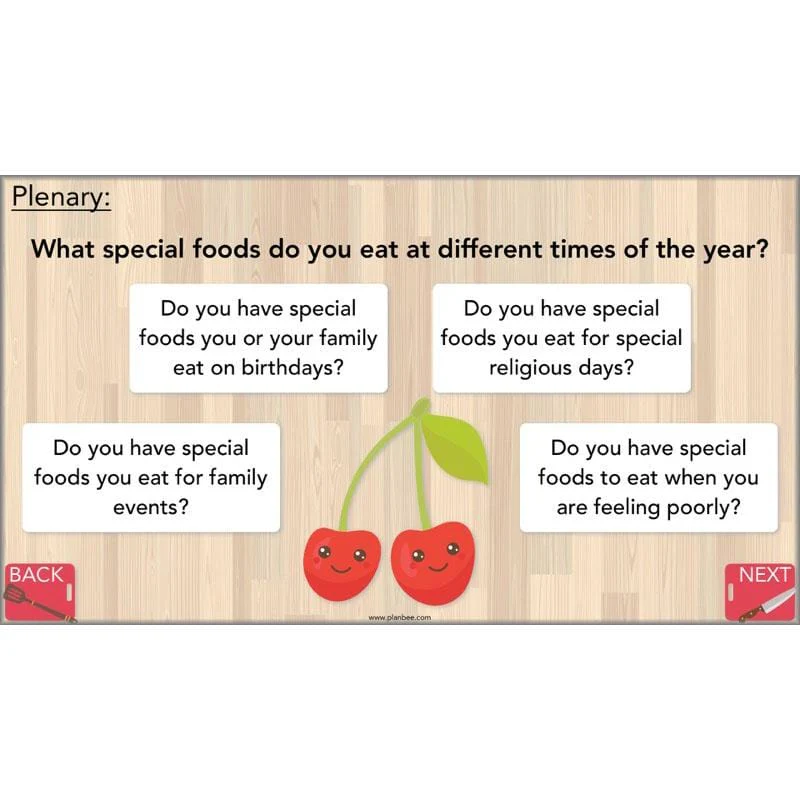
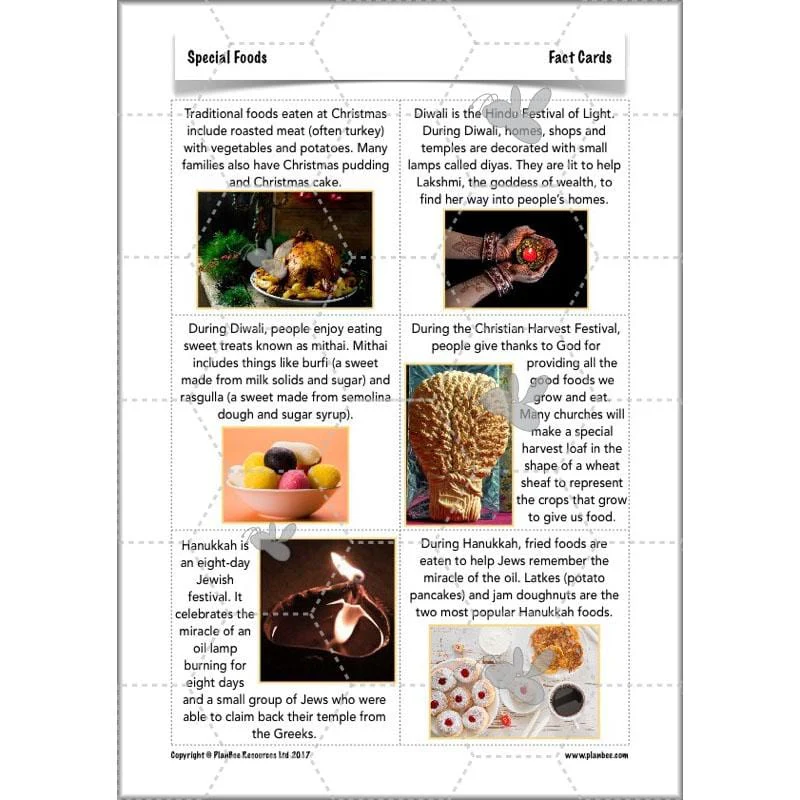
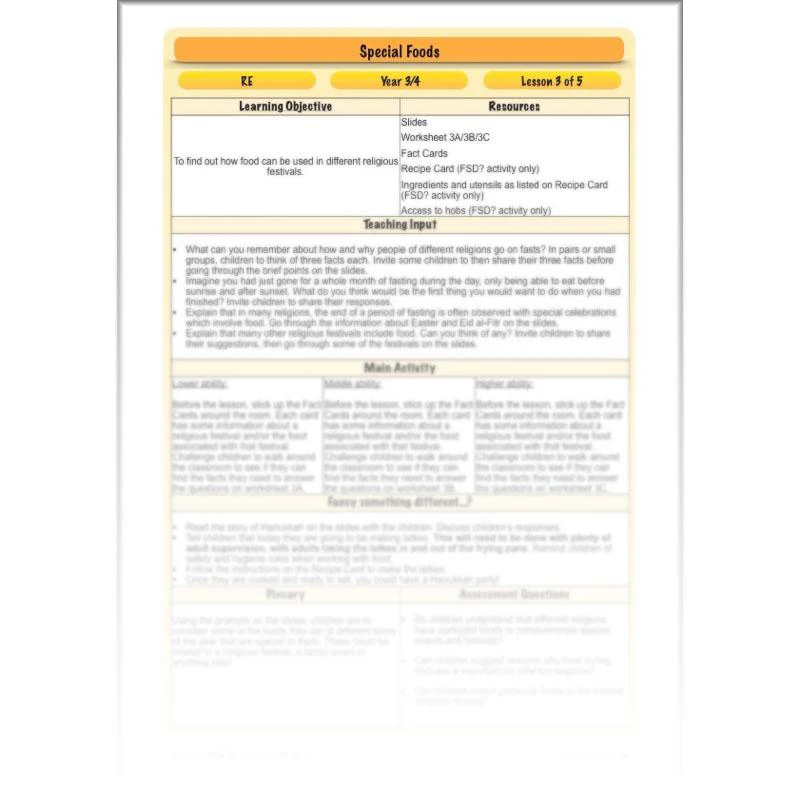
Leading on from the previous lesson, children will find out how periods of fasting are often ended with special foods or festivals, such as Eid al-Fitr at the end of Ramadan. They will have the chance to explore how different religions use a range of delicious foods and treats to celebrate religious festivals or special occasions, thinking about why these foods are eaten and what they symbolise.
What's included:
- Lesson plan
- Slides
- Activity ideas
- Differentiated worksheets
- Fact cards
- Recipe card
View Lesson 3
Passover
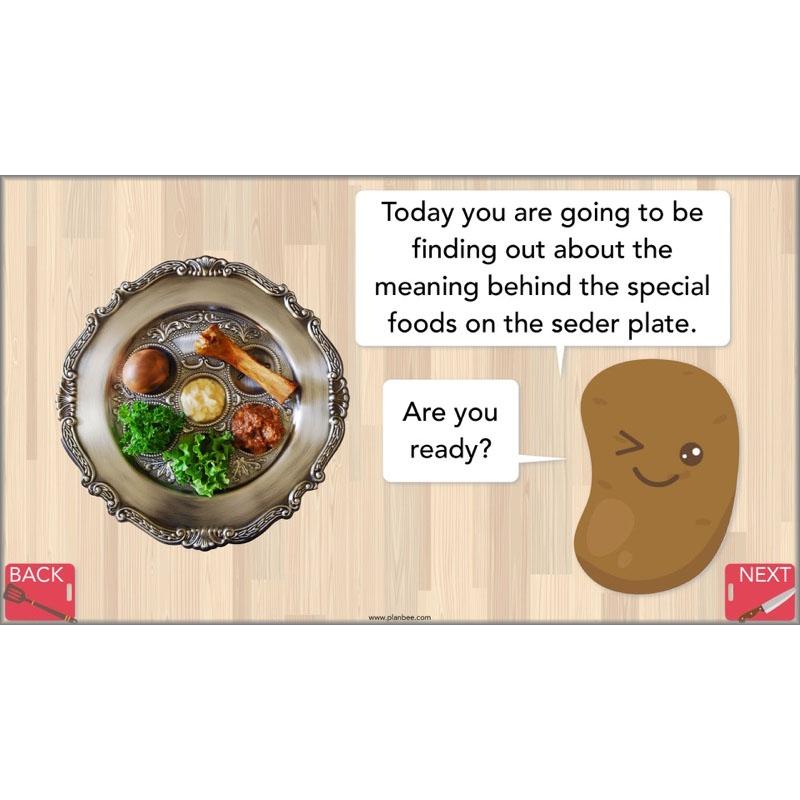
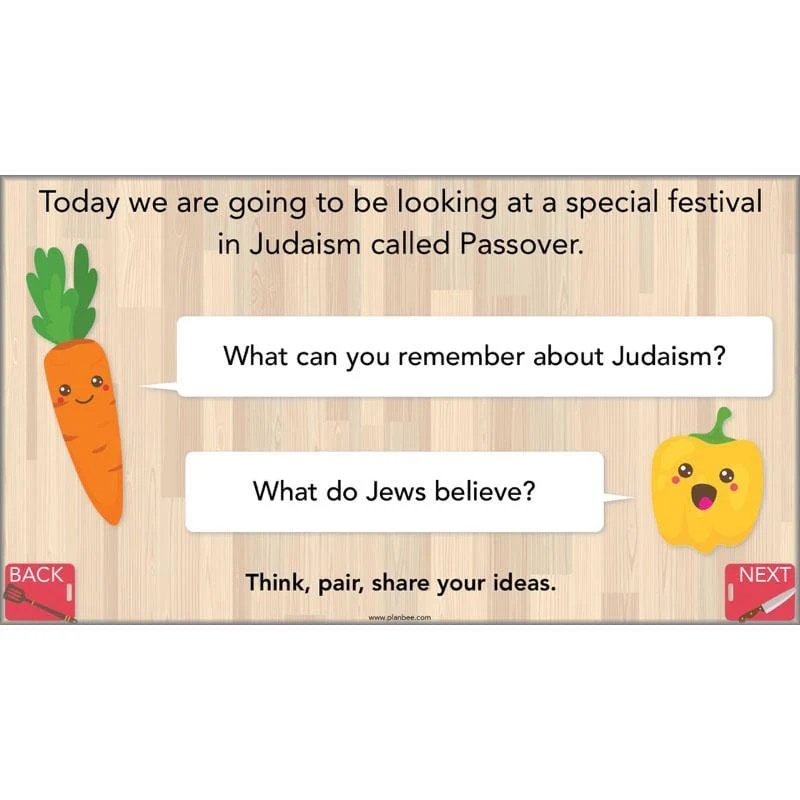
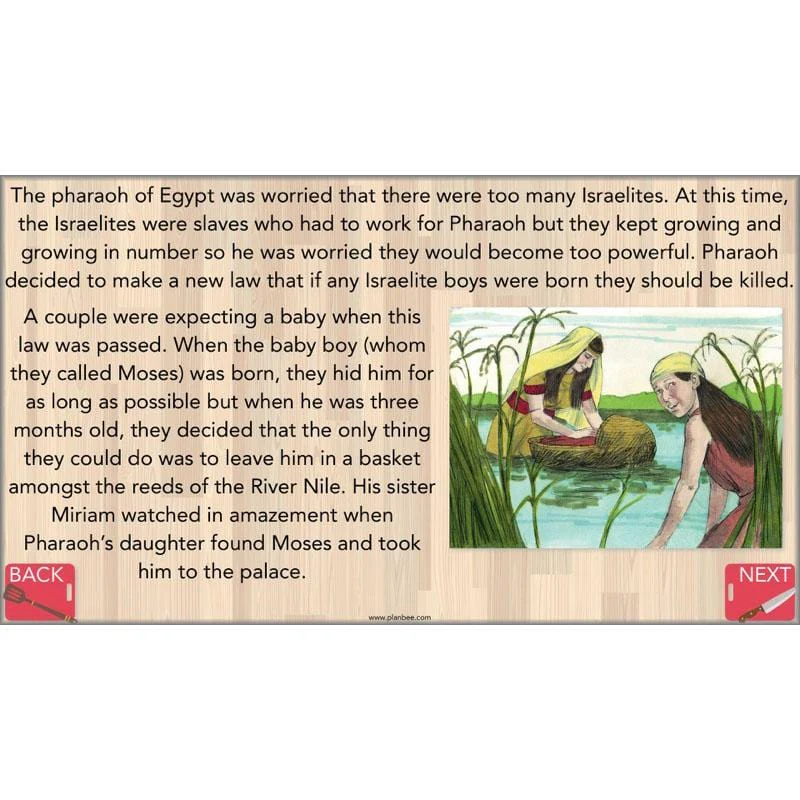
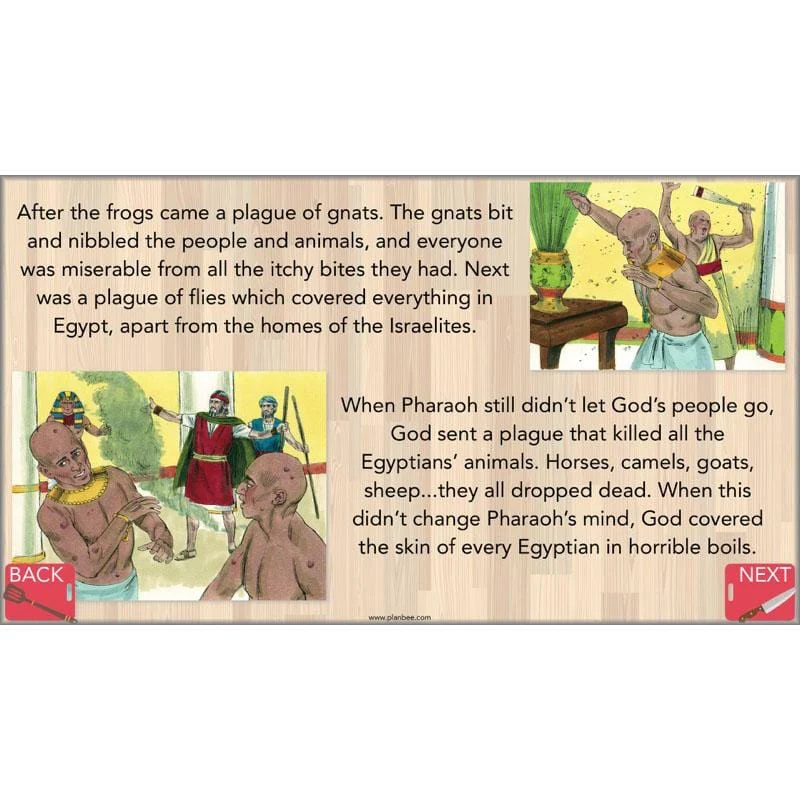
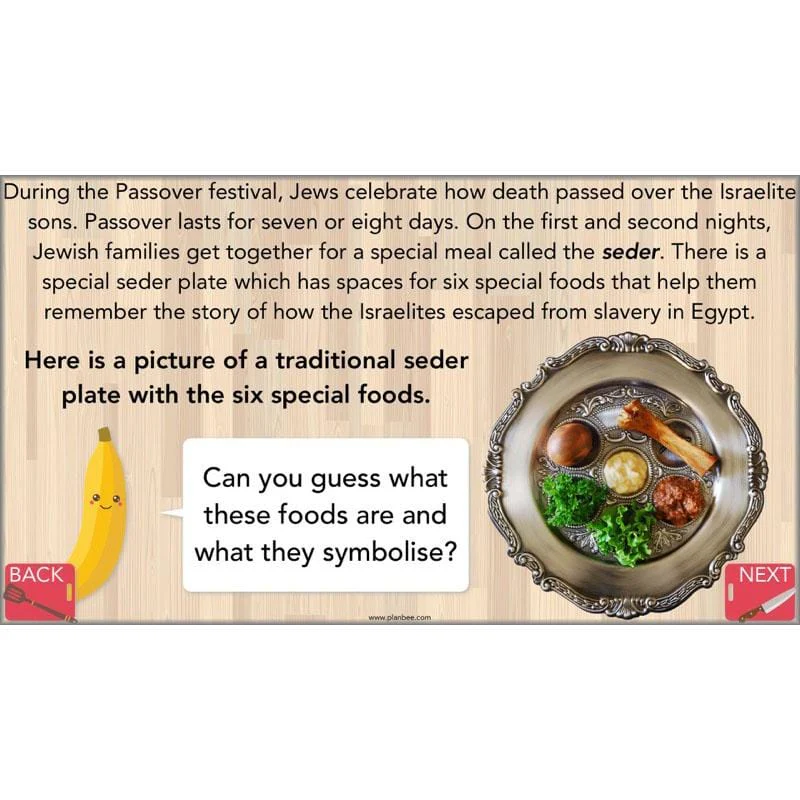
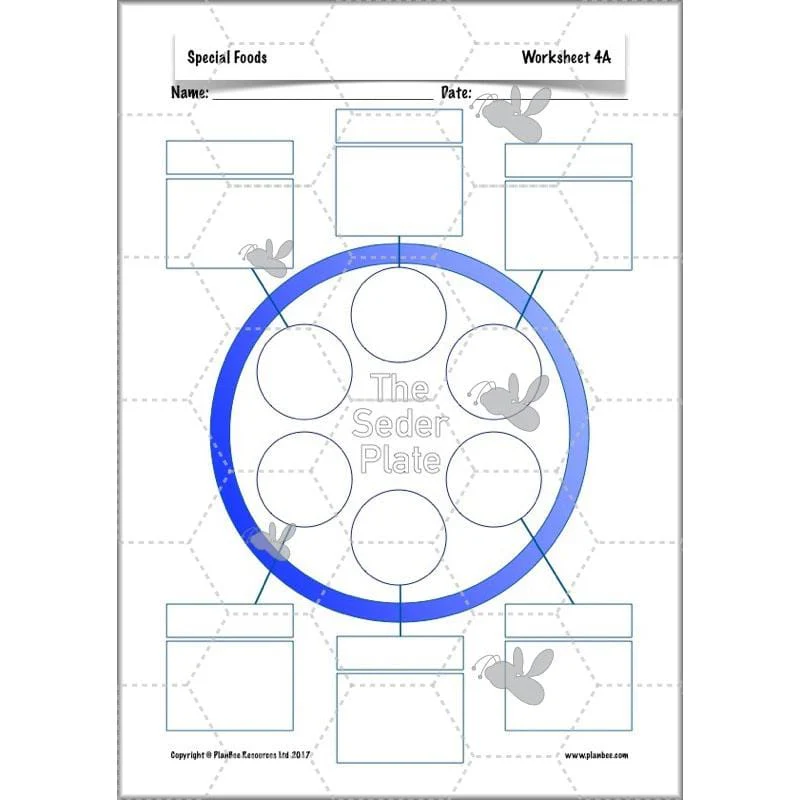
This lesson starts by recapping briefly what Judaism is and what Jews believe. They will then read the story of the exodus from slavery in Egypt and be introduced to the festival of Passover. They will look at the foods on the seder plate, what they symbolise and how they relate to the Passover story. There is even the option to create their own colourful seder plates out of felt.
What's included:
- Lesson plan
- Slides
- Activity ideas
- Differentiated worksheets
- Seder plate cards
- Fact card
- Information sheet
- Seder plate templates
View Lesson 4
Communion
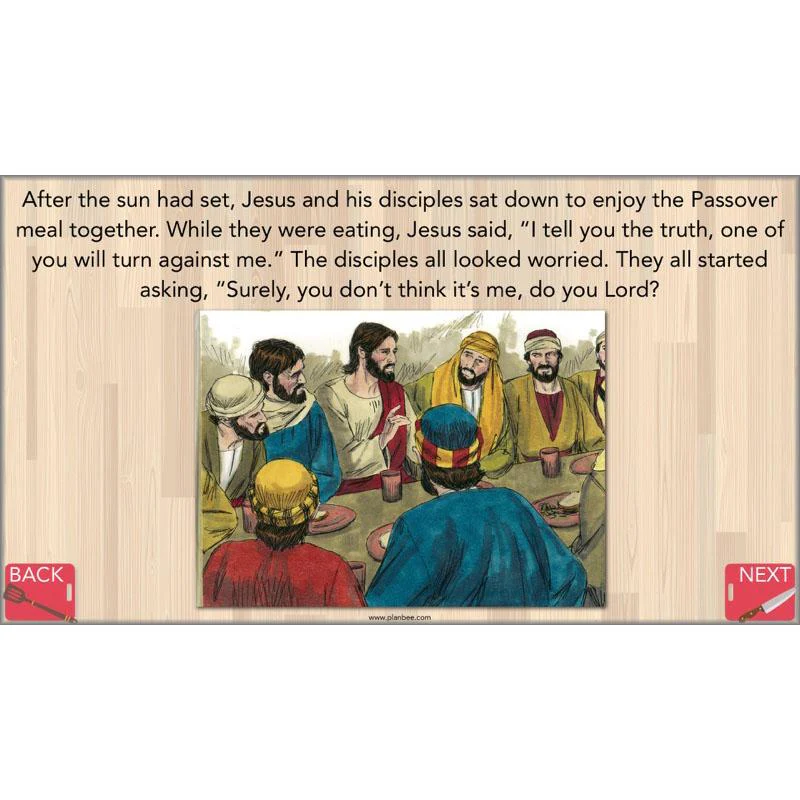
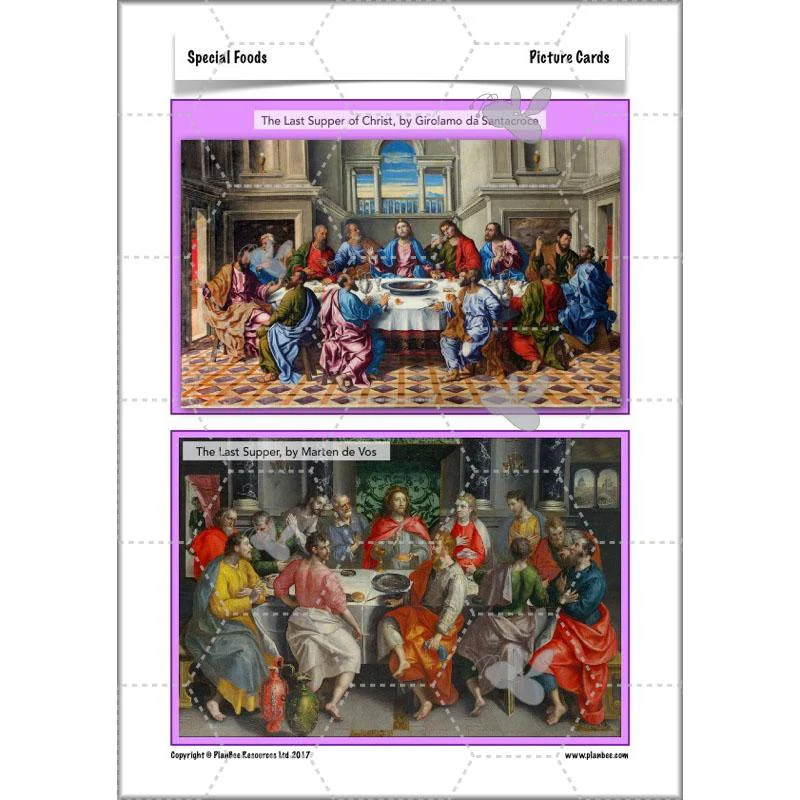
During the final lesson in this series, your class will read the story of the Last Supper and think about the important symbolism of bread and wine to those of the Christian faith. They will find out how different churches remember Jesus sharing bread and wine with his disciples through communion services, considering how and why some denominations see the Eucharist as more than just symbolic of the body and blood of Christ. There is also a fun end of unit quiz to challenge your class’s improved understanding of special foods in world religions.
What's included:
- Lesson plan
- Slides
- Activity ideas
- Differentiated worksheets
- Discussion cards
- Question cards
- End of unit quiz
View Lesson 5
Original: $4.71
-65%$4.71
$1.65More Images
















Special Foods
Food is an important aspect in many religious stories, festivals and celebrations. This Year 3/4 ‘Special Foods’ RE scheme of work gives your class the chance to explore how food is used in the six main world religions, including fasting, feasts and symbolic importance. Through stories, pictures, information and questions, your class will start to develop a clearer understanding of the importance of food in a religious context.
Containing lesson plans, informative and engaging slides, differentiated activity ideas and a range of printables, this ‘Special Food’ scheme of work contains all the ingredients (sorry) for a fantastic RE teaching series!
You might also like our Food Glorious Food Topic Bundle – food-themed schemes of work across a range of subjects.
Rules and Restrictions
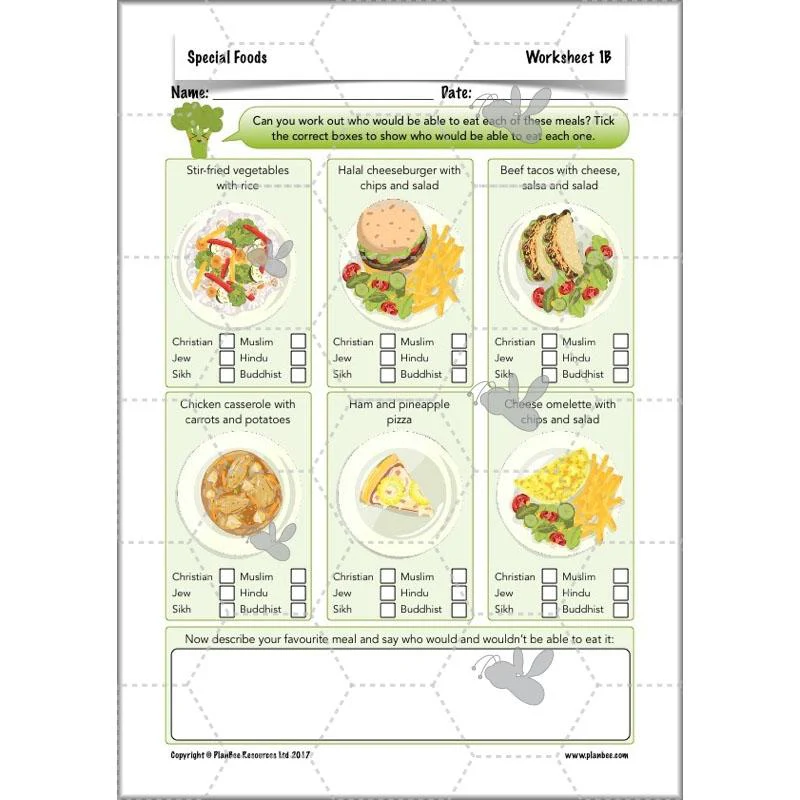
This scheme of work starts off by asking children to consider their favourite foods and foods they aren’t allowed to eat for any reason. They will then go on to look at some of the rules and restrictions regarding food in the six main world religions. During their independent learning, they will then be able to put their knowledge to the test as they think about which people would be able to eat a range of different meals.
What's included:
- Lesson plan
- Slides
- Activity ideas
- Information sheet
- Differentiated worksheets
- Challenge cards
- Meal description cards
View Lesson 1
Fasting
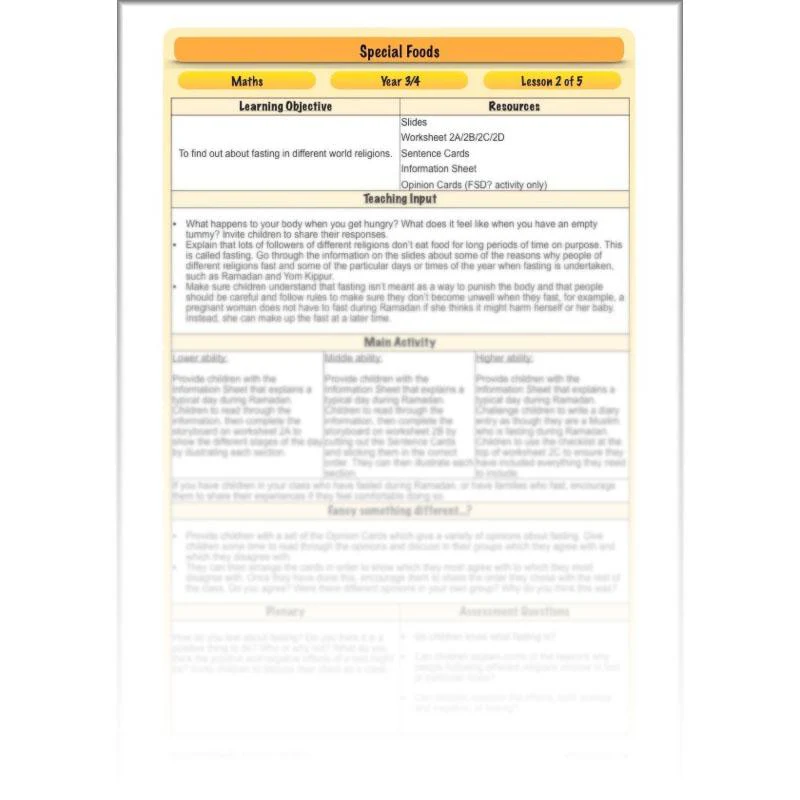
Starting by challenging children to describe what it feels like to be hungry, this lesson goes on to explore what fasting is and investigate why people of different faiths decide, or are required, to fast. They will look particularly at the 25-hour fast of the Jewish festival of Yom Kippur, as well as the Islamic month of Ramadan. They will also have the chance to explore different opinions surrounding fasting and consider how they feel about fasting personally.
What's included:
- Lesson plan
- Slides
- Activity ideas
- Differentiated worksheets
- Sentence cards
- Information sheet
- Opinion cards
View Lesson 2
Festival Foods
Leading on from the previous lesson, children will find out how periods of fasting are often ended with special foods or festivals, such as Eid al-Fitr at the end of Ramadan. They will have the chance to explore how different religions use a range of delicious foods and treats to celebrate religious festivals or special occasions, thinking about why these foods are eaten and what they symbolise.
What's included:
- Lesson plan
- Slides
- Activity ideas
- Differentiated worksheets
- Fact cards
- Recipe card
View Lesson 3
Passover
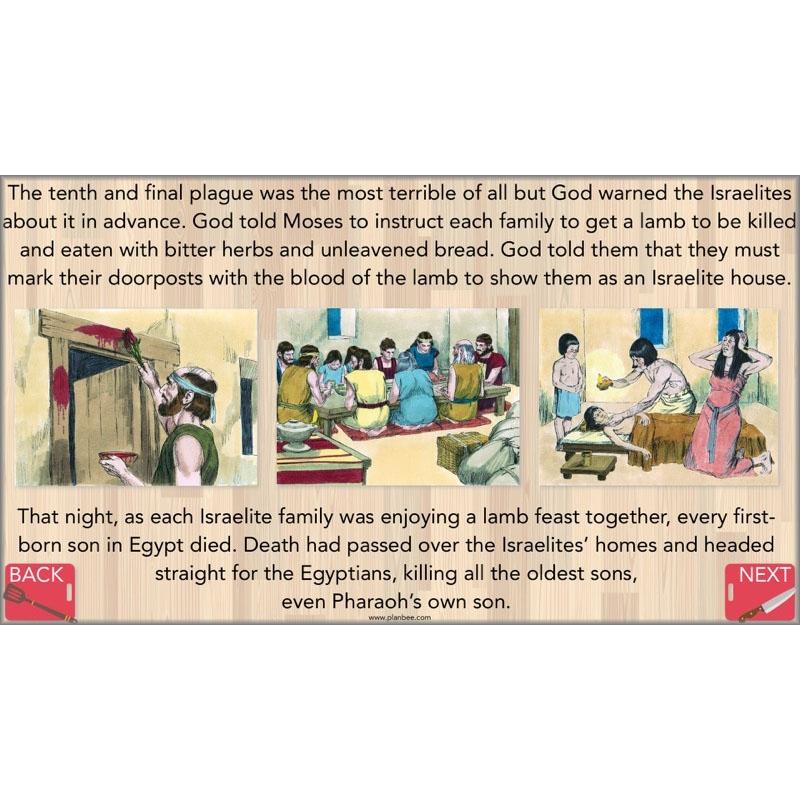
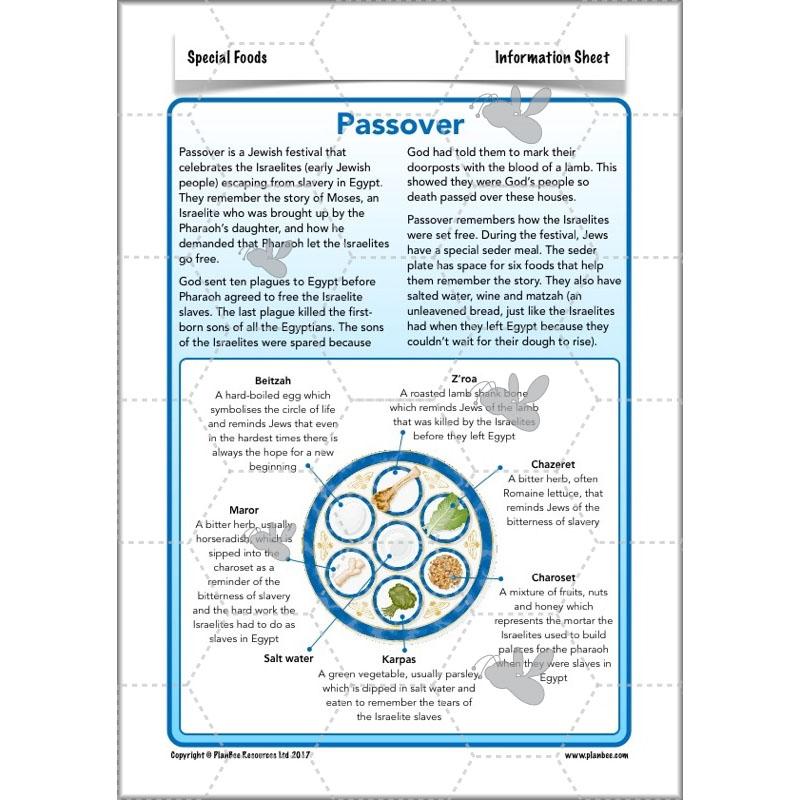
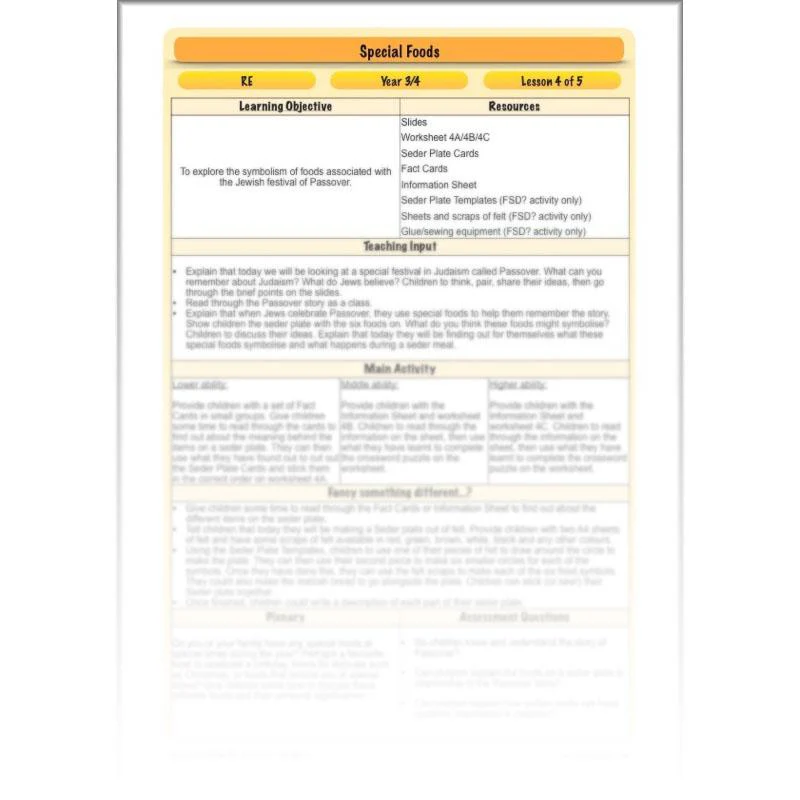
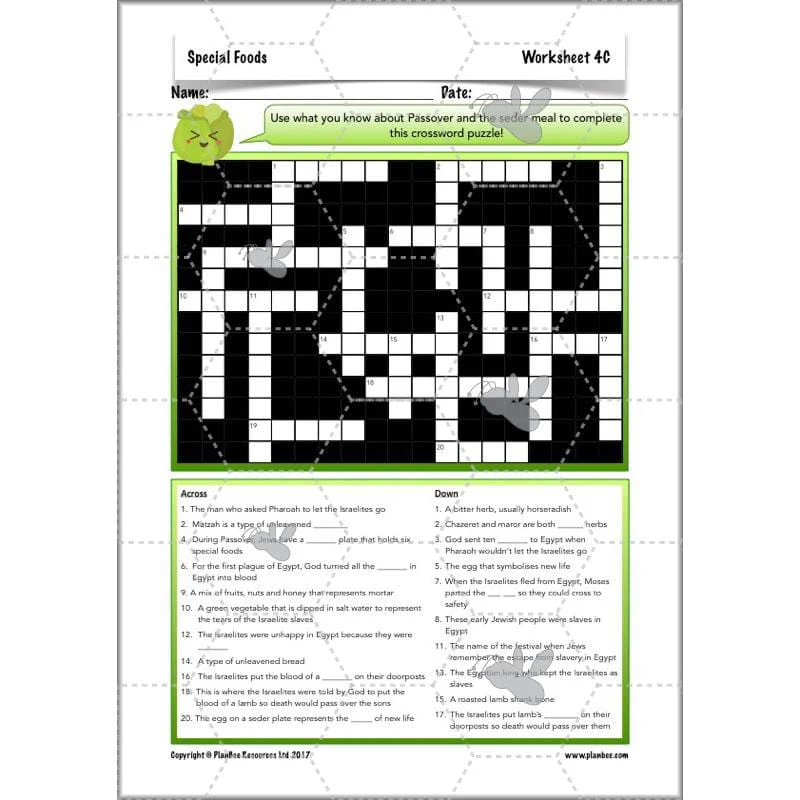
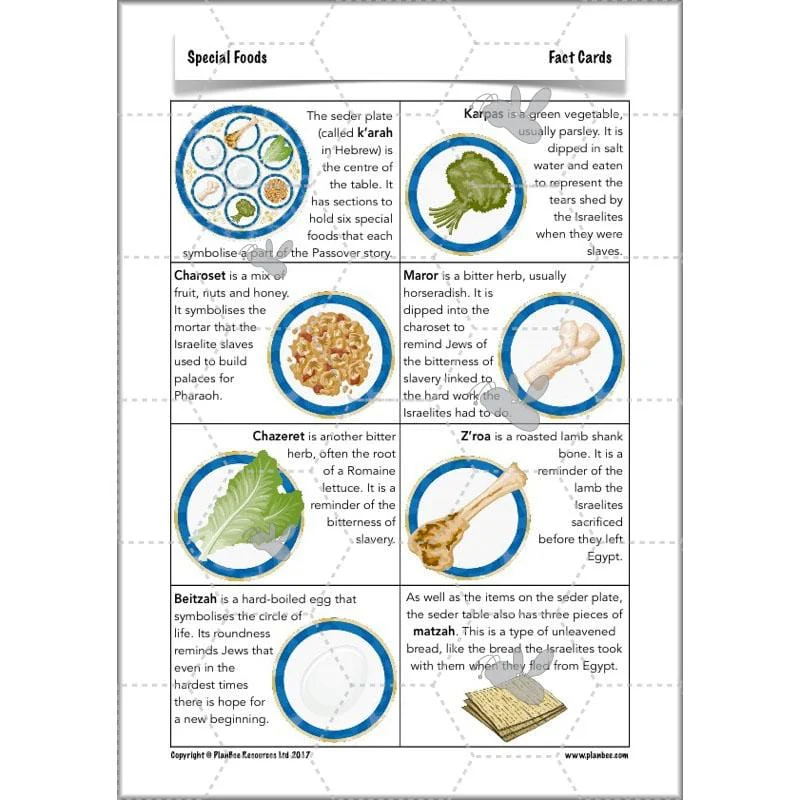
This lesson starts by recapping briefly what Judaism is and what Jews believe. They will then read the story of the exodus from slavery in Egypt and be introduced to the festival of Passover. They will look at the foods on the seder plate, what they symbolise and how they relate to the Passover story. There is even the option to create their own colourful seder plates out of felt.
What's included:
- Lesson plan
- Slides
- Activity ideas
- Differentiated worksheets
- Seder plate cards
- Fact card
- Information sheet
- Seder plate templates
View Lesson 4
Communion
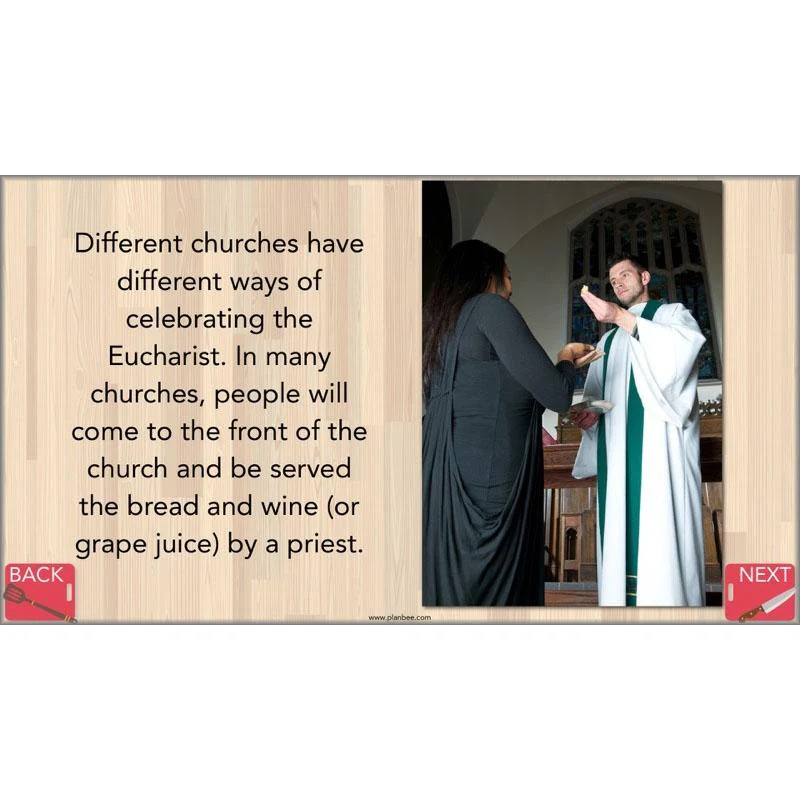
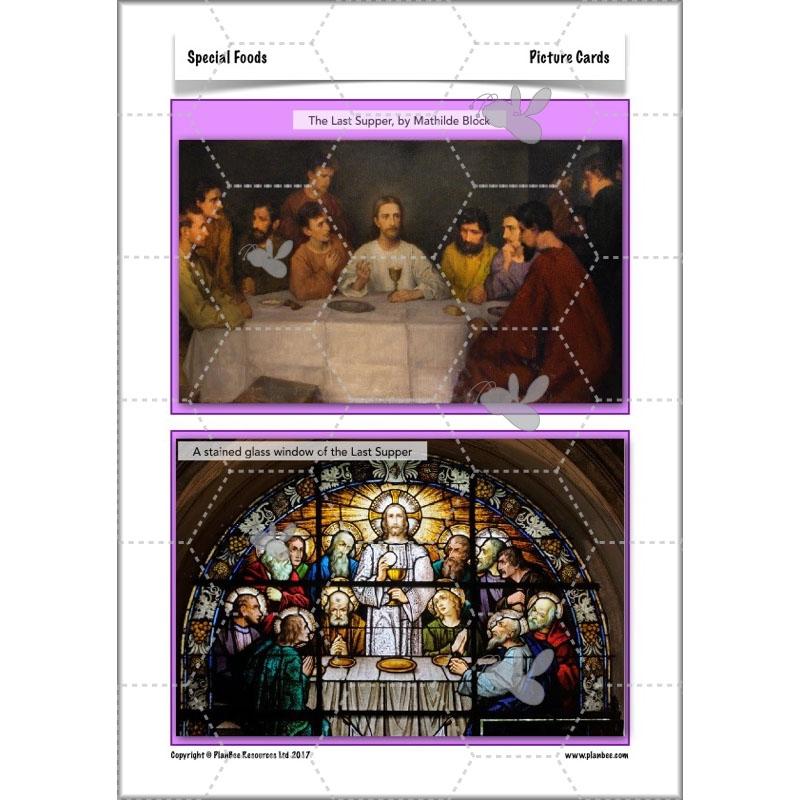
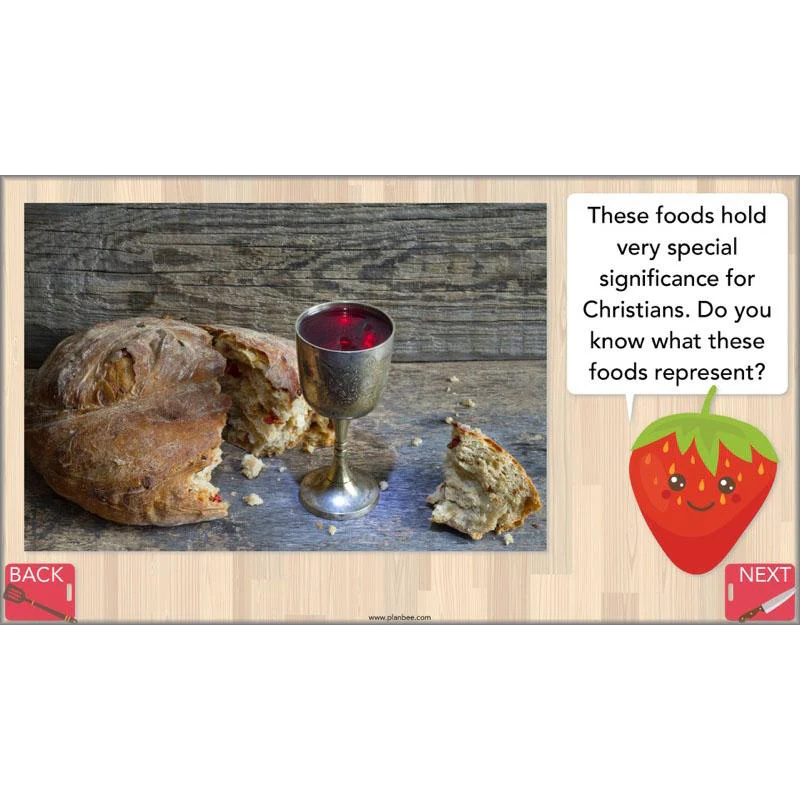
During the final lesson in this series, your class will read the story of the Last Supper and think about the important symbolism of bread and wine to those of the Christian faith. They will find out how different churches remember Jesus sharing bread and wine with his disciples through communion services, considering how and why some denominations see the Eucharist as more than just symbolic of the body and blood of Christ. There is also a fun end of unit quiz to challenge your class’s improved understanding of special foods in world religions.
What's included:
- Lesson plan
- Slides
- Activity ideas
- Differentiated worksheets
- Discussion cards
- Question cards
- End of unit quiz
View Lesson 5
Product Information
Product Information
Shipping & Returns
Shipping & Returns
Description
Food is an important aspect in many religious stories, festivals and celebrations. This Year 3/4 ‘Special Foods’ RE scheme of work gives your class the chance to explore how food is used in the six main world religions, including fasting, feasts and symbolic importance. Through stories, pictures, information and questions, your class will start to develop a clearer understanding of the importance of food in a religious context.
Containing lesson plans, informative and engaging slides, differentiated activity ideas and a range of printables, this ‘Special Food’ scheme of work contains all the ingredients (sorry) for a fantastic RE teaching series!
You might also like our Food Glorious Food Topic Bundle – food-themed schemes of work across a range of subjects.
Rules and Restrictions
This scheme of work starts off by asking children to consider their favourite foods and foods they aren’t allowed to eat for any reason. They will then go on to look at some of the rules and restrictions regarding food in the six main world religions. During their independent learning, they will then be able to put their knowledge to the test as they think about which people would be able to eat a range of different meals.
What's included:
- Lesson plan
- Slides
- Activity ideas
- Information sheet
- Differentiated worksheets
- Challenge cards
- Meal description cards
View Lesson 1
Fasting
Starting by challenging children to describe what it feels like to be hungry, this lesson goes on to explore what fasting is and investigate why people of different faiths decide, or are required, to fast. They will look particularly at the 25-hour fast of the Jewish festival of Yom Kippur, as well as the Islamic month of Ramadan. They will also have the chance to explore different opinions surrounding fasting and consider how they feel about fasting personally.
What's included:
- Lesson plan
- Slides
- Activity ideas
- Differentiated worksheets
- Sentence cards
- Information sheet
- Opinion cards
View Lesson 2
Festival Foods
Leading on from the previous lesson, children will find out how periods of fasting are often ended with special foods or festivals, such as Eid al-Fitr at the end of Ramadan. They will have the chance to explore how different religions use a range of delicious foods and treats to celebrate religious festivals or special occasions, thinking about why these foods are eaten and what they symbolise.
What's included:
- Lesson plan
- Slides
- Activity ideas
- Differentiated worksheets
- Fact cards
- Recipe card
View Lesson 3
Passover
This lesson starts by recapping briefly what Judaism is and what Jews believe. They will then read the story of the exodus from slavery in Egypt and be introduced to the festival of Passover. They will look at the foods on the seder plate, what they symbolise and how they relate to the Passover story. There is even the option to create their own colourful seder plates out of felt.
What's included:
- Lesson plan
- Slides
- Activity ideas
- Differentiated worksheets
- Seder plate cards
- Fact card
- Information sheet
- Seder plate templates
View Lesson 4
Communion
During the final lesson in this series, your class will read the story of the Last Supper and think about the important symbolism of bread and wine to those of the Christian faith. They will find out how different churches remember Jesus sharing bread and wine with his disciples through communion services, considering how and why some denominations see the Eucharist as more than just symbolic of the body and blood of Christ. There is also a fun end of unit quiz to challenge your class’s improved understanding of special foods in world religions.
What's included:
- Lesson plan
- Slides
- Activity ideas
- Differentiated worksheets
- Discussion cards
- Question cards
- End of unit quiz
View Lesson 5