Using Multiplication and Division
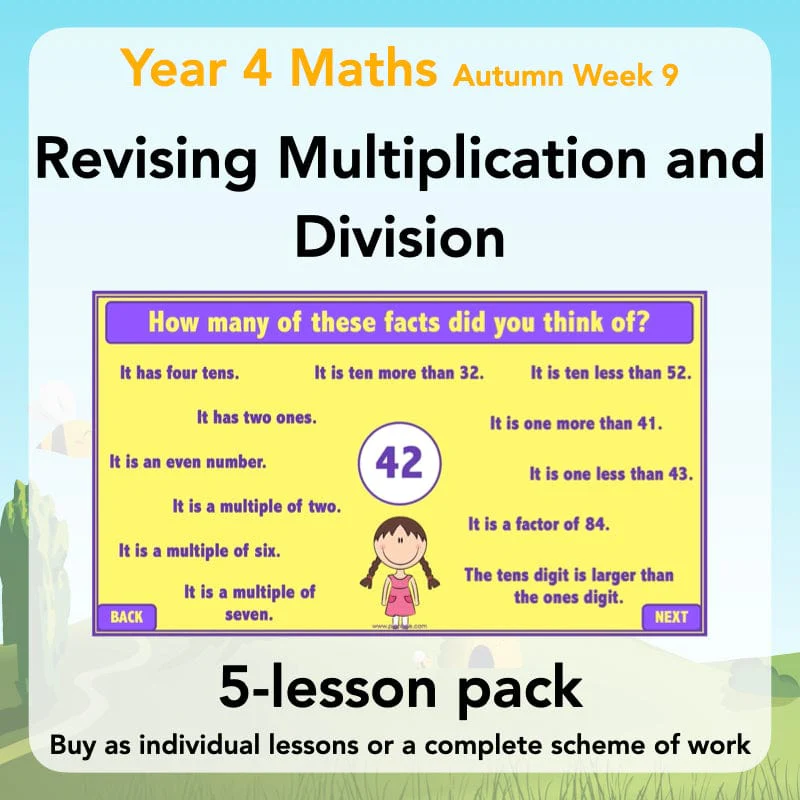
In this scheme of work, children further develop their knowledge and understanding of multiplication and division.
They begin by looking at strategies to help them work out and remember the facts for the eleven and twelve times tables. They move onto using the distributive law, where the use of brackets is introduced, to multiply a one-digit number by a two-digit number, as well as multiplying three one-digit numbers together. Children will then explore some of the divisibility rules, before using this knowledge to identify remainders in a division sentence before calculating the quotient.
Eleven and Twelve Times Table Facts
In this first lesson, children will look at the facts for the eleven and twelve times tables, and learn strategies to help them solve number sentences involving these factors. They will apply these strategies in their independent work to solve multiplication wheels and missing number questions, or to play the Banana Bonanza Game.
What's included:
- Lesson plan
- Slides
- Activity ideas
- Differentiated worksheets
- Banana Bonanza Game Sheet
- Banana Bonanza Game Counters
Multiplying Bigger Numbers
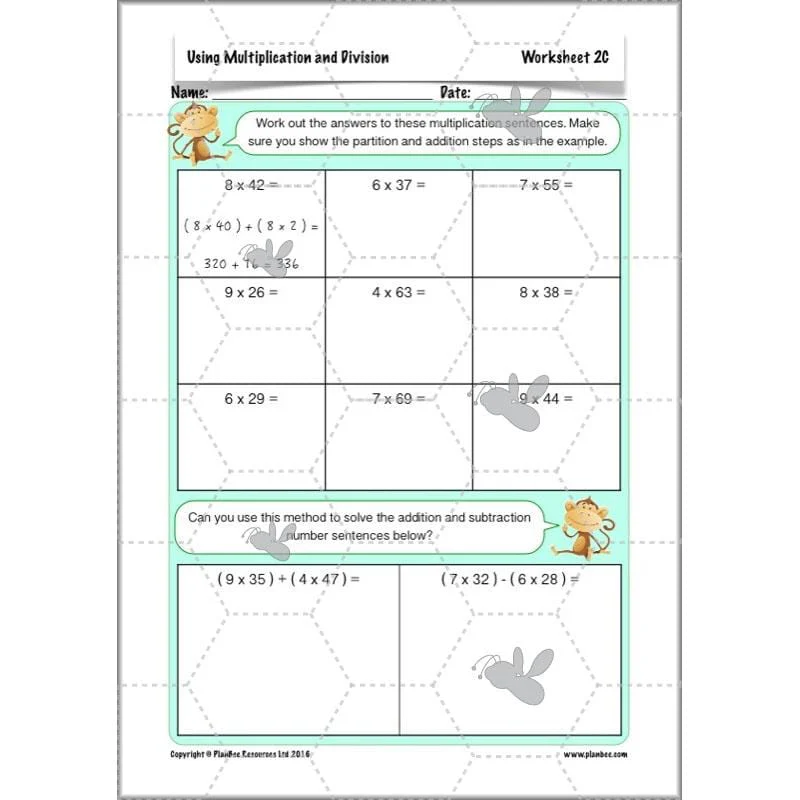
This lesson begins with children revising their multiplication knowledge by answering quick-fire questions. They then learn how to multiply a one-digit number by a two-digit number using the distributive law. Children are introduced to the use of brackets to separate the different steps in the calculation, and are then given the chance to apply this knowledge in their independent work.
What's included:
- Lesson plan
- Slides
- Activity ideas
- Differentiated worksheets
- Banana Balance Cards
Multiplying Three Numbers Together
Children are introduced to the correct terms for numbers in a multiplication sentence. They use the commutative law to solve multiplication sentences with three factors, and revise using the distributive law when multiplying a one-digit number by a two-digit number. In their independent work, children are challenged to use this knowledge to find missing products, as well as missing factors.
What's included:
- Lesson plan
- Slides
- Activity ideas
- Differentiated worksheets
- Digit Cards
- Banana Bonus Sheet
Divisibility Rules
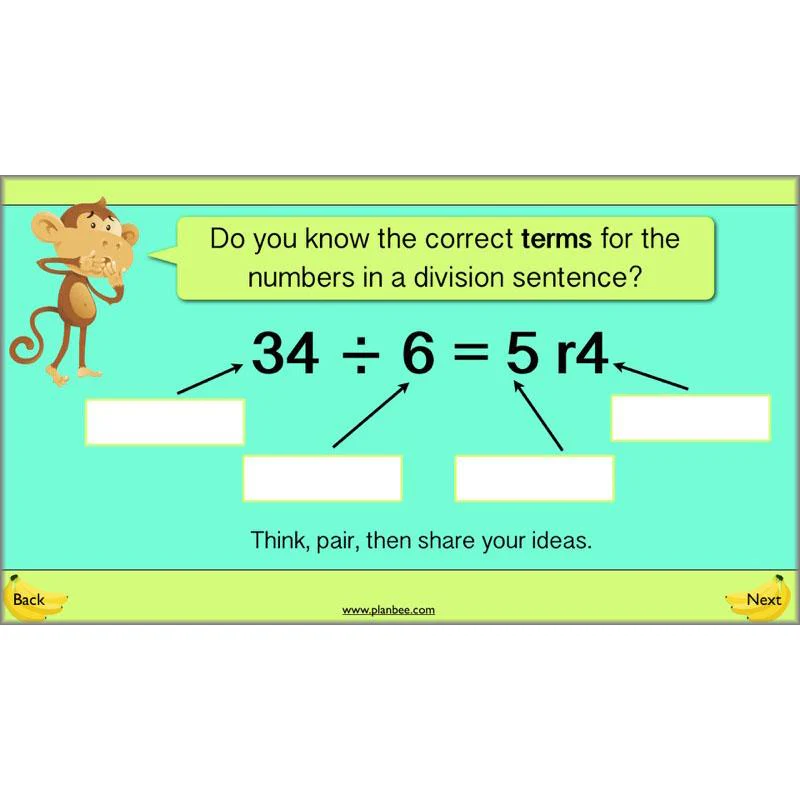
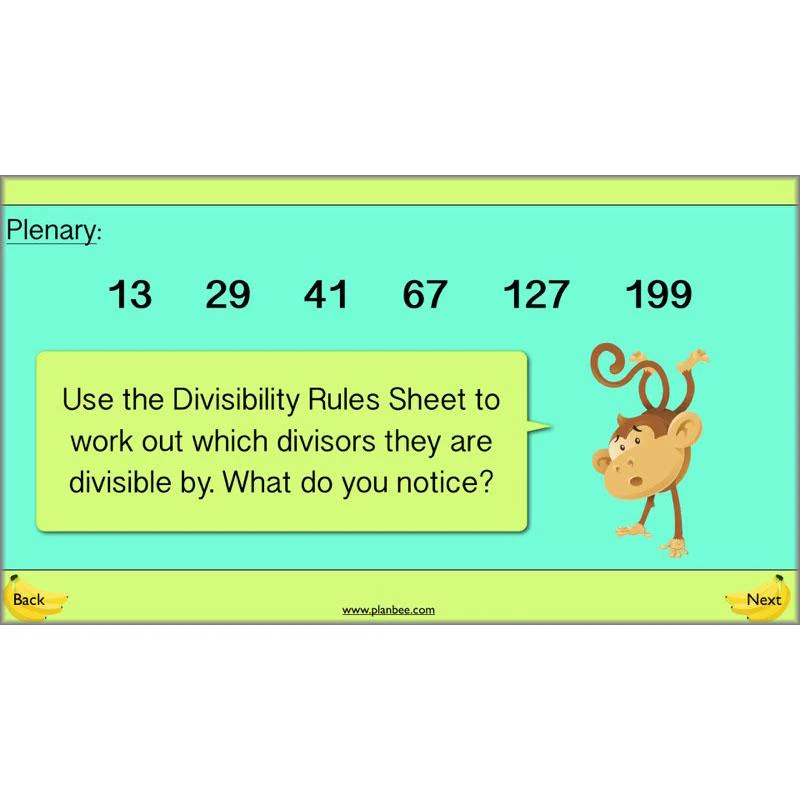
Children are introduced to the correct terms for each number in a division sentence. As a class, they look at the divisibility rules for divisors of two, three, four, five and ten, and apply these to different three-digit numbers. They then have the chance to explore these rules further in their independent work, and some are challenged to use the divisibility rules for six, nine and twelve.
What's included:
- Lesson plan
- Slides
- Activity ideas
- Differentiated worksheets
- Divisibility Rules Sheet
- Challenge Cards
Remainders
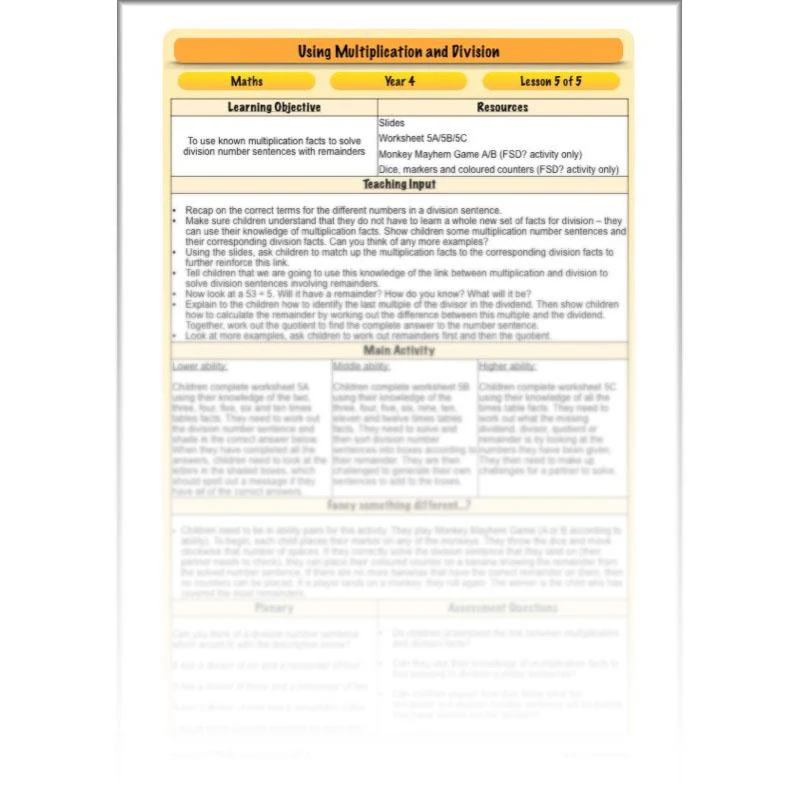
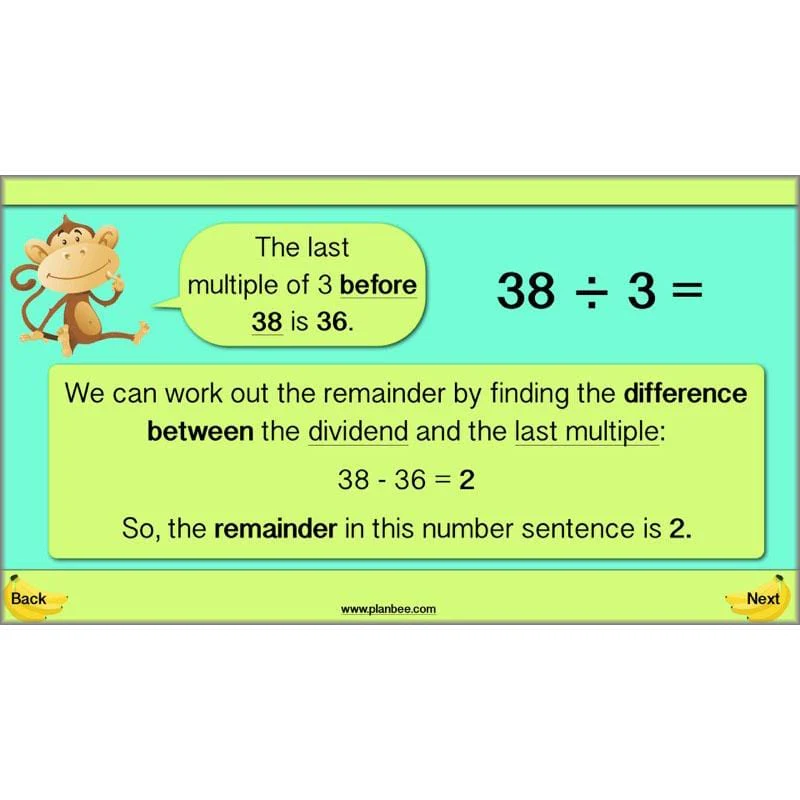
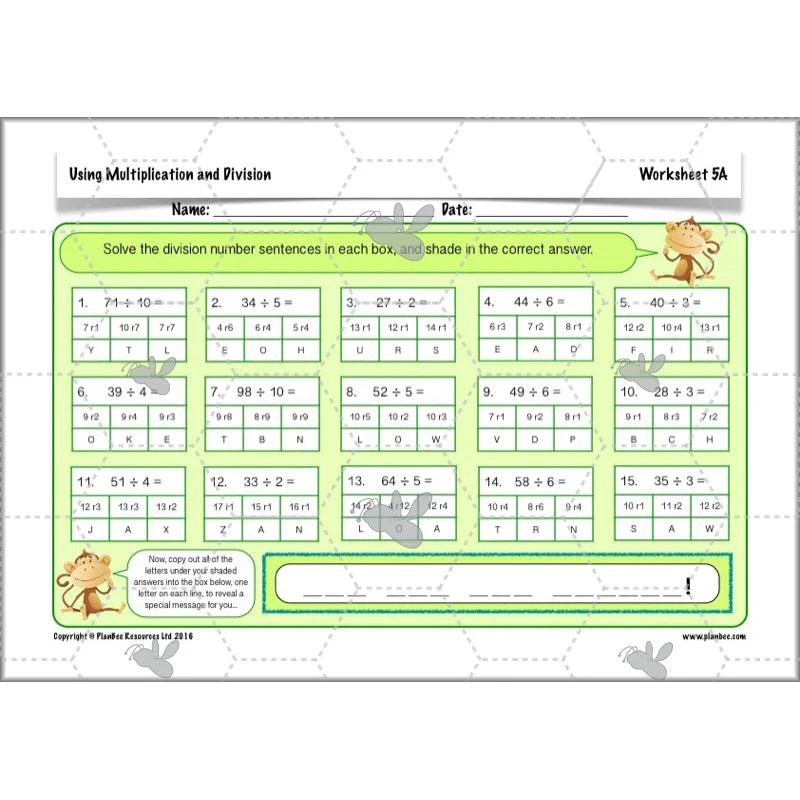
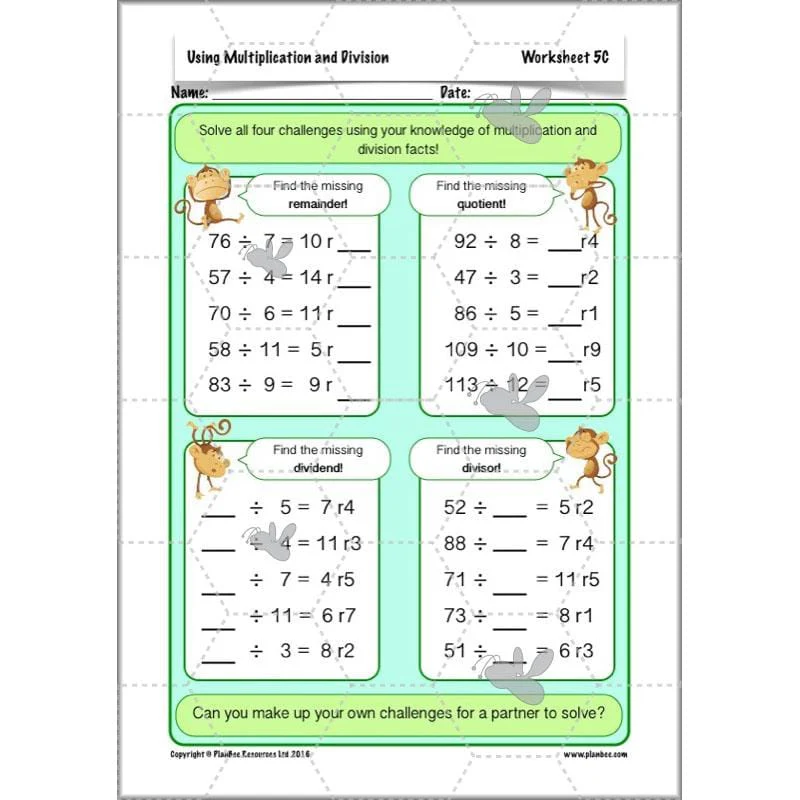
In this final lesson, children are reminded of the link between multiplication and division facts. They learn how to use their knowledge of multiples to identify remainders in a division sentence before calculating the quotient. Children then complete various activities to reinforce this strategy.
What's included:
- Lesson plan
- Slides
- Activity ideas
- Differentiated worksheets
- Monkey Mayhem Game
Original: $4.71
-65%$4.71
$1.65More Images












Using Multiplication and Division
In this scheme of work, children further develop their knowledge and understanding of multiplication and division.
They begin by looking at strategies to help them work out and remember the facts for the eleven and twelve times tables. They move onto using the distributive law, where the use of brackets is introduced, to multiply a one-digit number by a two-digit number, as well as multiplying three one-digit numbers together. Children will then explore some of the divisibility rules, before using this knowledge to identify remainders in a division sentence before calculating the quotient.
Eleven and Twelve Times Table Facts
In this first lesson, children will look at the facts for the eleven and twelve times tables, and learn strategies to help them solve number sentences involving these factors. They will apply these strategies in their independent work to solve multiplication wheels and missing number questions, or to play the Banana Bonanza Game.
What's included:
- Lesson plan
- Slides
- Activity ideas
- Differentiated worksheets
- Banana Bonanza Game Sheet
- Banana Bonanza Game Counters
Multiplying Bigger Numbers
This lesson begins with children revising their multiplication knowledge by answering quick-fire questions. They then learn how to multiply a one-digit number by a two-digit number using the distributive law. Children are introduced to the use of brackets to separate the different steps in the calculation, and are then given the chance to apply this knowledge in their independent work.
What's included:
- Lesson plan
- Slides
- Activity ideas
- Differentiated worksheets
- Banana Balance Cards
Multiplying Three Numbers Together
Children are introduced to the correct terms for numbers in a multiplication sentence. They use the commutative law to solve multiplication sentences with three factors, and revise using the distributive law when multiplying a one-digit number by a two-digit number. In their independent work, children are challenged to use this knowledge to find missing products, as well as missing factors.
What's included:
- Lesson plan
- Slides
- Activity ideas
- Differentiated worksheets
- Digit Cards
- Banana Bonus Sheet
Divisibility Rules
Children are introduced to the correct terms for each number in a division sentence. As a class, they look at the divisibility rules for divisors of two, three, four, five and ten, and apply these to different three-digit numbers. They then have the chance to explore these rules further in their independent work, and some are challenged to use the divisibility rules for six, nine and twelve.
What's included:
- Lesson plan
- Slides
- Activity ideas
- Differentiated worksheets
- Divisibility Rules Sheet
- Challenge Cards
Remainders
In this final lesson, children are reminded of the link between multiplication and division facts. They learn how to use their knowledge of multiples to identify remainders in a division sentence before calculating the quotient. Children then complete various activities to reinforce this strategy.
What's included:
- Lesson plan
- Slides
- Activity ideas
- Differentiated worksheets
- Monkey Mayhem Game
Product Information
Product Information
Shipping & Returns
Shipping & Returns
Description
In this scheme of work, children further develop their knowledge and understanding of multiplication and division.
They begin by looking at strategies to help them work out and remember the facts for the eleven and twelve times tables. They move onto using the distributive law, where the use of brackets is introduced, to multiply a one-digit number by a two-digit number, as well as multiplying three one-digit numbers together. Children will then explore some of the divisibility rules, before using this knowledge to identify remainders in a division sentence before calculating the quotient.
Eleven and Twelve Times Table Facts
In this first lesson, children will look at the facts for the eleven and twelve times tables, and learn strategies to help them solve number sentences involving these factors. They will apply these strategies in their independent work to solve multiplication wheels and missing number questions, or to play the Banana Bonanza Game.
What's included:
- Lesson plan
- Slides
- Activity ideas
- Differentiated worksheets
- Banana Bonanza Game Sheet
- Banana Bonanza Game Counters
Multiplying Bigger Numbers
This lesson begins with children revising their multiplication knowledge by answering quick-fire questions. They then learn how to multiply a one-digit number by a two-digit number using the distributive law. Children are introduced to the use of brackets to separate the different steps in the calculation, and are then given the chance to apply this knowledge in their independent work.
What's included:
- Lesson plan
- Slides
- Activity ideas
- Differentiated worksheets
- Banana Balance Cards
Multiplying Three Numbers Together
Children are introduced to the correct terms for numbers in a multiplication sentence. They use the commutative law to solve multiplication sentences with three factors, and revise using the distributive law when multiplying a one-digit number by a two-digit number. In their independent work, children are challenged to use this knowledge to find missing products, as well as missing factors.
What's included:
- Lesson plan
- Slides
- Activity ideas
- Differentiated worksheets
- Digit Cards
- Banana Bonus Sheet
Divisibility Rules
Children are introduced to the correct terms for each number in a division sentence. As a class, they look at the divisibility rules for divisors of two, three, four, five and ten, and apply these to different three-digit numbers. They then have the chance to explore these rules further in their independent work, and some are challenged to use the divisibility rules for six, nine and twelve.
What's included:
- Lesson plan
- Slides
- Activity ideas
- Differentiated worksheets
- Divisibility Rules Sheet
- Challenge Cards
Remainders
In this final lesson, children are reminded of the link between multiplication and division facts. They learn how to use their knowledge of multiples to identify remainders in a division sentence before calculating the quotient. Children then complete various activities to reinforce this strategy.
What's included:
- Lesson plan
- Slides
- Activity ideas
- Differentiated worksheets
- Monkey Mayhem Game