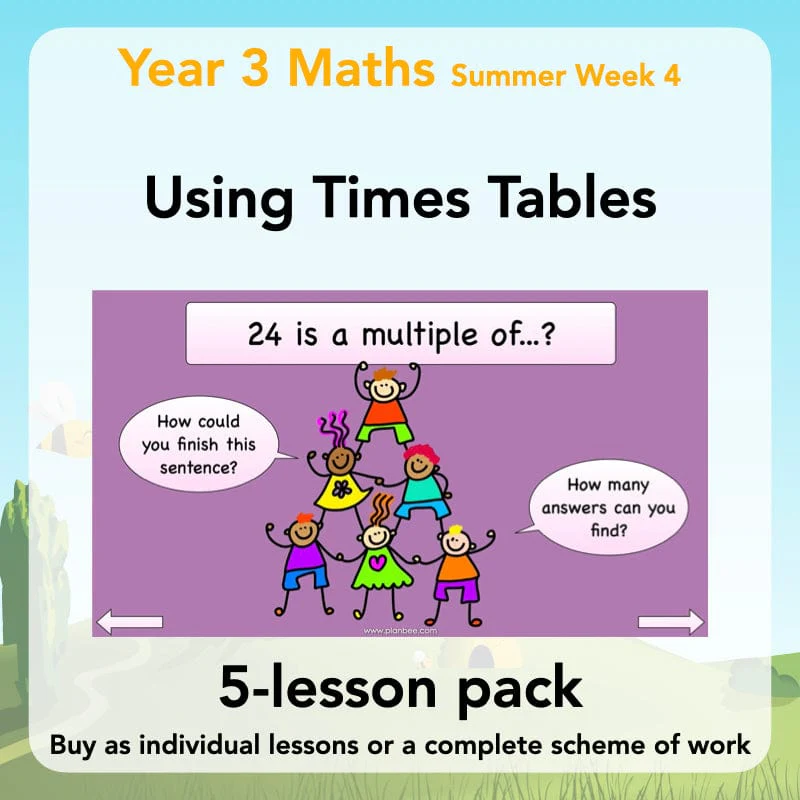
Using Times Tables
We all know how important times tables are and this set of five 'Using Times Tables' lessons for Year 3 will help your class get a firmer grip on multiplication facts and how they can be applied in different situations. Your class will refresh their knowledge of times tables, focusing particularly on learning the eight times table, as well as finding out about fact families, corresponding division facts, and using the grid method to solve trickier multiplication problems.
With lesson plans, slides, activity ideas, differentiated worksheets, games, and much more, these Year 3, KS2 Maths 'Using Times Tables' lessons provide all you need to get their times tables up to speed!
You might also find our FREE Multiplication Square a handy teaching aid to accompany this Maths scheme of work.
Multiples of 8
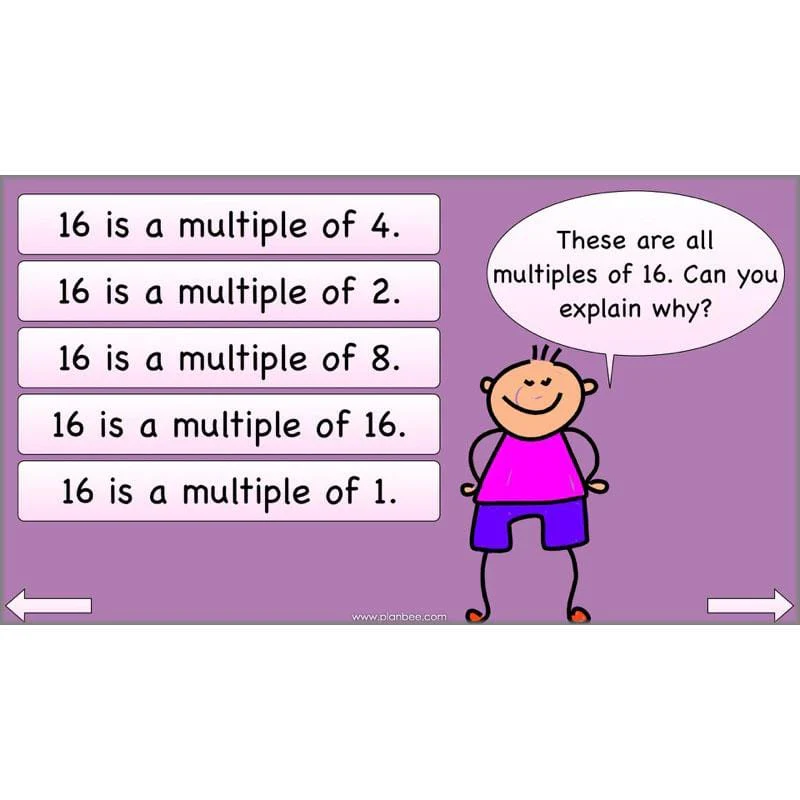
The first lesson in this series starts by asking your class to count in multiples of eight, using a hundred square on the slides to support them. They will then find out what the word ‘multiple’ means and identify the multiples of eight before exploring the link between multiples of four and multiples of eight. The independent learning activities are packed full of fun activities and games that will help them become more familiar with the eight times table. There is also a matching game for the other times tables too!
What's included:
- Lesson plan
- Slides
- Activity ideas
- Number fact cards
- Colour by number sheet
- Game board sheet
- Times tables memory game sheet
View Lesson 1
Investigating Multiples
Now that your class understand what a multiple is, they will start to think about different numbers that can be multiplied together to produce a particular multiple. They will learn how to create many different multiplication statement using factor pairs, reinforcing their understanding of the three, four and eight times tables. There is also the opportunity to undertake some 'sometimes, always or never' investigations into multiples of three, four and eight.
What's included:
- Lesson plan
- Slides
- Activity ideas
- Differentiated worksheets
- Multiplication grid
- Hundred square strips
- ‘Sometimes, Always or Never’ cards
View Lesson 2
Division Facts
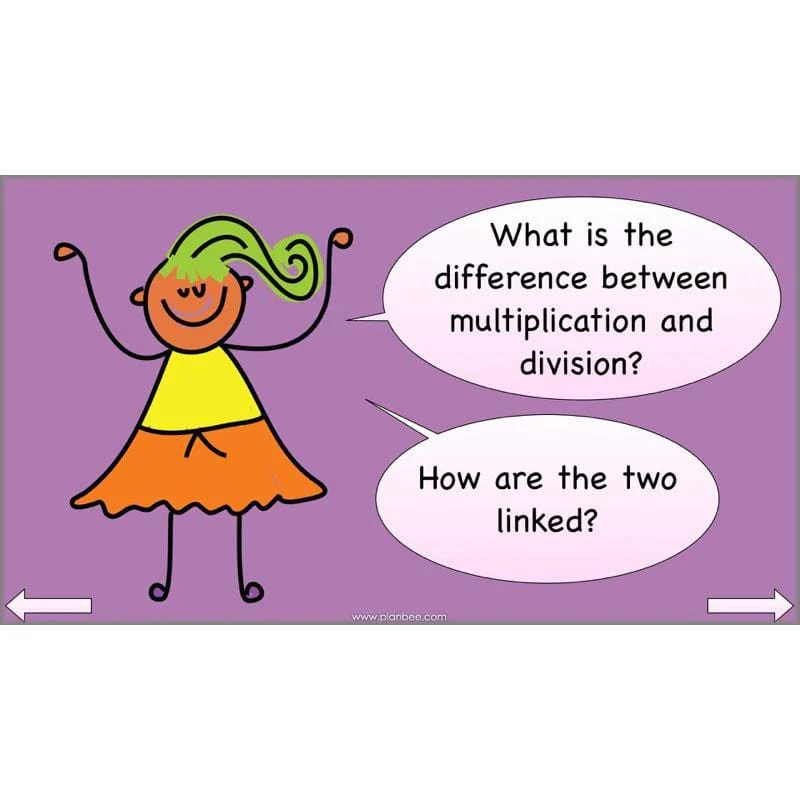
This lesson recaps the relationship between multiplication and division, and teaches your children to identify two different division facts from a given multiplication fact. They can then practise their recall of both multiplication and division facts through a fun ‘snakes and ladders’ game, or racing their partner to a finishing line by completing division facts as quickly as they can!
What's included:
- Lesson plan
- Slides
- Activity ideas
- Game board sheets
- Division race cards
- Multiplication grids
View Lesson 3
Rapid Recall
The focus of this lesson is on the rapid recall of multiplication facts for known times tables. There are games and activities that will give children plenty of opportunities to practise their times tables in a fun and engaging way, as well as using times tables to derive associated facts. Throughout the lesson, they will be able to identify those times tables they are confident with, as well as those that may need a little more attention.
What's included:
- Lesson plan
- Slides
- Activity ideas
- Differentiated worksheets
- Blank bingo grids
- ‘Take Away’ game sheets
View Lesson 4
The Grid Method
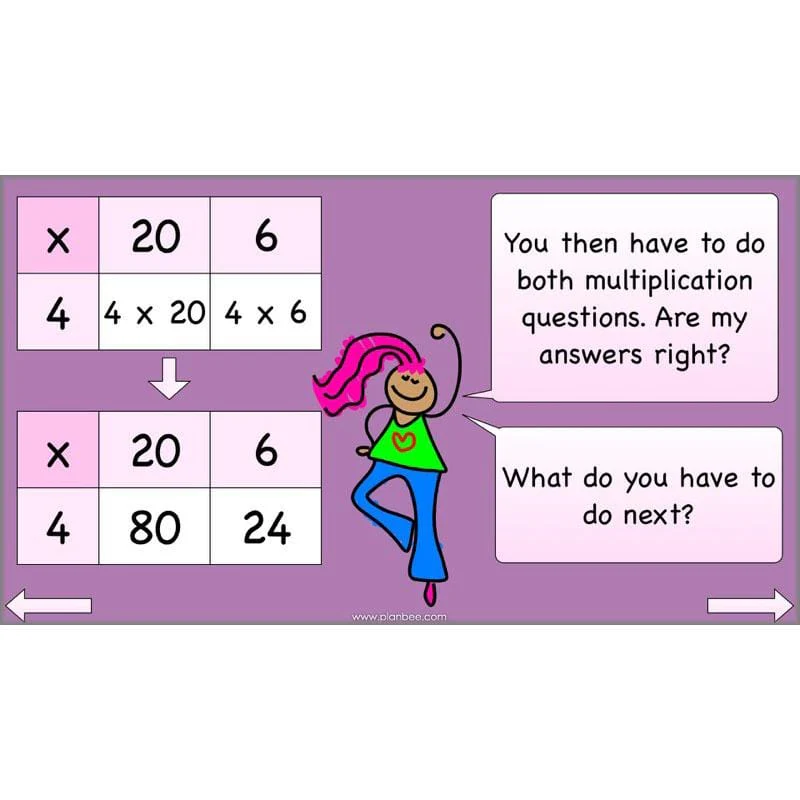
The final lesson of this series recaps how the grid method works to solve multiplication problems. Starting with two-digit by two-digit calculations, they will then move on to three-digit by two-digit calculations once they’ve got the hang of it. The independent learning activities give them the chance to practise this, and there are some challenging investigations to undertake too!
What's included:
- Lesson plan
- Slides
- Activity ideas
- Differentiated worksheets
- Challenge cards
- Multiplication table
- Digit cards
View Lesson 5
Original: $4.71
-65%$4.71
$1.65More Images










Using Times Tables
We all know how important times tables are and this set of five 'Using Times Tables' lessons for Year 3 will help your class get a firmer grip on multiplication facts and how they can be applied in different situations. Your class will refresh their knowledge of times tables, focusing particularly on learning the eight times table, as well as finding out about fact families, corresponding division facts, and using the grid method to solve trickier multiplication problems.
With lesson plans, slides, activity ideas, differentiated worksheets, games, and much more, these Year 3, KS2 Maths 'Using Times Tables' lessons provide all you need to get their times tables up to speed!
You might also find our FREE Multiplication Square a handy teaching aid to accompany this Maths scheme of work.
Multiples of 8
The first lesson in this series starts by asking your class to count in multiples of eight, using a hundred square on the slides to support them. They will then find out what the word ‘multiple’ means and identify the multiples of eight before exploring the link between multiples of four and multiples of eight. The independent learning activities are packed full of fun activities and games that will help them become more familiar with the eight times table. There is also a matching game for the other times tables too!
What's included:
- Lesson plan
- Slides
- Activity ideas
- Number fact cards
- Colour by number sheet
- Game board sheet
- Times tables memory game sheet
View Lesson 1
Investigating Multiples
Now that your class understand what a multiple is, they will start to think about different numbers that can be multiplied together to produce a particular multiple. They will learn how to create many different multiplication statement using factor pairs, reinforcing their understanding of the three, four and eight times tables. There is also the opportunity to undertake some 'sometimes, always or never' investigations into multiples of three, four and eight.
What's included:
- Lesson plan
- Slides
- Activity ideas
- Differentiated worksheets
- Multiplication grid
- Hundred square strips
- ‘Sometimes, Always or Never’ cards
View Lesson 2
Division Facts
This lesson recaps the relationship between multiplication and division, and teaches your children to identify two different division facts from a given multiplication fact. They can then practise their recall of both multiplication and division facts through a fun ‘snakes and ladders’ game, or racing their partner to a finishing line by completing division facts as quickly as they can!
What's included:
- Lesson plan
- Slides
- Activity ideas
- Game board sheets
- Division race cards
- Multiplication grids
View Lesson 3
Rapid Recall
The focus of this lesson is on the rapid recall of multiplication facts for known times tables. There are games and activities that will give children plenty of opportunities to practise their times tables in a fun and engaging way, as well as using times tables to derive associated facts. Throughout the lesson, they will be able to identify those times tables they are confident with, as well as those that may need a little more attention.
What's included:
- Lesson plan
- Slides
- Activity ideas
- Differentiated worksheets
- Blank bingo grids
- ‘Take Away’ game sheets
View Lesson 4
The Grid Method
The final lesson of this series recaps how the grid method works to solve multiplication problems. Starting with two-digit by two-digit calculations, they will then move on to three-digit by two-digit calculations once they’ve got the hang of it. The independent learning activities give them the chance to practise this, and there are some challenging investigations to undertake too!
What's included:
- Lesson plan
- Slides
- Activity ideas
- Differentiated worksheets
- Challenge cards
- Multiplication table
- Digit cards
View Lesson 5
Product Information
Product Information
Shipping & Returns
Shipping & Returns
Description
We all know how important times tables are and this set of five 'Using Times Tables' lessons for Year 3 will help your class get a firmer grip on multiplication facts and how they can be applied in different situations. Your class will refresh their knowledge of times tables, focusing particularly on learning the eight times table, as well as finding out about fact families, corresponding division facts, and using the grid method to solve trickier multiplication problems.
With lesson plans, slides, activity ideas, differentiated worksheets, games, and much more, these Year 3, KS2 Maths 'Using Times Tables' lessons provide all you need to get their times tables up to speed!
You might also find our FREE Multiplication Square a handy teaching aid to accompany this Maths scheme of work.
Multiples of 8
The first lesson in this series starts by asking your class to count in multiples of eight, using a hundred square on the slides to support them. They will then find out what the word ‘multiple’ means and identify the multiples of eight before exploring the link between multiples of four and multiples of eight. The independent learning activities are packed full of fun activities and games that will help them become more familiar with the eight times table. There is also a matching game for the other times tables too!
What's included:
- Lesson plan
- Slides
- Activity ideas
- Number fact cards
- Colour by number sheet
- Game board sheet
- Times tables memory game sheet
View Lesson 1
Investigating Multiples
Now that your class understand what a multiple is, they will start to think about different numbers that can be multiplied together to produce a particular multiple. They will learn how to create many different multiplication statement using factor pairs, reinforcing their understanding of the three, four and eight times tables. There is also the opportunity to undertake some 'sometimes, always or never' investigations into multiples of three, four and eight.
What's included:
- Lesson plan
- Slides
- Activity ideas
- Differentiated worksheets
- Multiplication grid
- Hundred square strips
- ‘Sometimes, Always or Never’ cards
View Lesson 2
Division Facts
This lesson recaps the relationship between multiplication and division, and teaches your children to identify two different division facts from a given multiplication fact. They can then practise their recall of both multiplication and division facts through a fun ‘snakes and ladders’ game, or racing their partner to a finishing line by completing division facts as quickly as they can!
What's included:
- Lesson plan
- Slides
- Activity ideas
- Game board sheets
- Division race cards
- Multiplication grids
View Lesson 3
Rapid Recall
The focus of this lesson is on the rapid recall of multiplication facts for known times tables. There are games and activities that will give children plenty of opportunities to practise their times tables in a fun and engaging way, as well as using times tables to derive associated facts. Throughout the lesson, they will be able to identify those times tables they are confident with, as well as those that may need a little more attention.
What's included:
- Lesson plan
- Slides
- Activity ideas
- Differentiated worksheets
- Blank bingo grids
- ‘Take Away’ game sheets
View Lesson 4
The Grid Method
The final lesson of this series recaps how the grid method works to solve multiplication problems. Starting with two-digit by two-digit calculations, they will then move on to three-digit by two-digit calculations once they’ve got the hang of it. The independent learning activities give them the chance to practise this, and there are some challenging investigations to undertake too!
What's included:
- Lesson plan
- Slides
- Activity ideas
- Differentiated worksheets
- Challenge cards
- Multiplication table
- Digit cards
View Lesson 5