What is Capacity?
This fun-filled 'What is Capacity?' scheme of work for Year 3 has everything you need to challenge children and teach them how to use, estimate and measure capacity. These Key Stage 2 Maths resources cover estimating, measuring and ordering of capacities, as well as how to compare different capacities and find the difference. Your children will have the opportunity to consolidate their learning while solving a variety of exciting word problems and completing engaging, differentiated worksheets and activities.
Each lesson comes with a detailed plan, an informative set of slides for the teaching input, as well as differentiated worksheets and activity ideas.
Choosing Appropriate Units
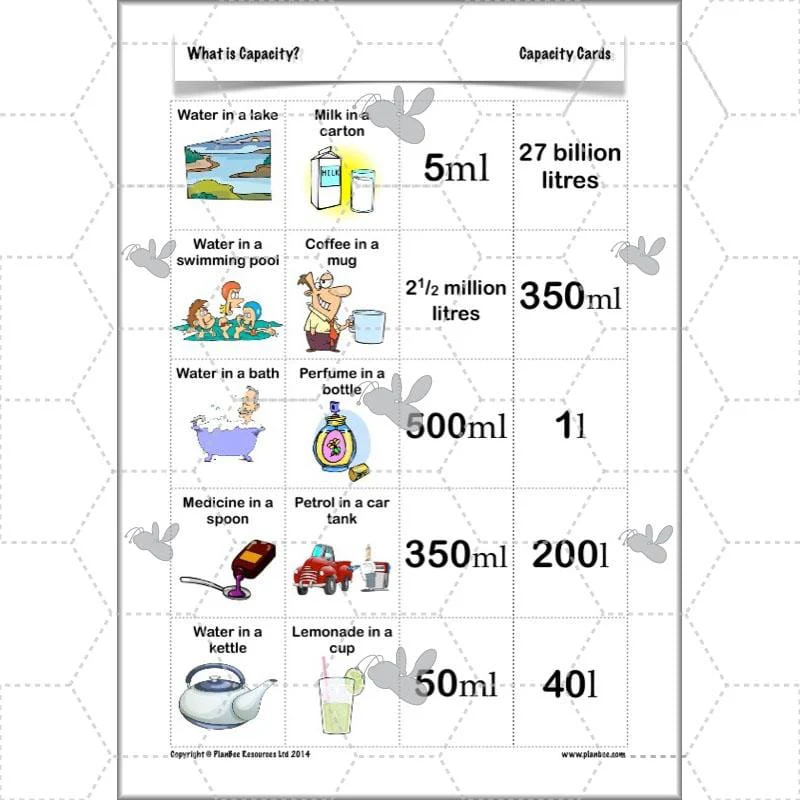
This lesson explains the relationship between litres and millilitres and challenges children to choose an appropriate unit to measure the capacity of a variety of containers. There is also the opportunity to estimate the capacity of a variety of containers from tiny teaspoons to vast lakes!
What's included:
- Lesson plan
- Slides
- Activity ideas
- Differentiated worksheets
- Capacity cards
- Answer sheet
Estimating and Measuring
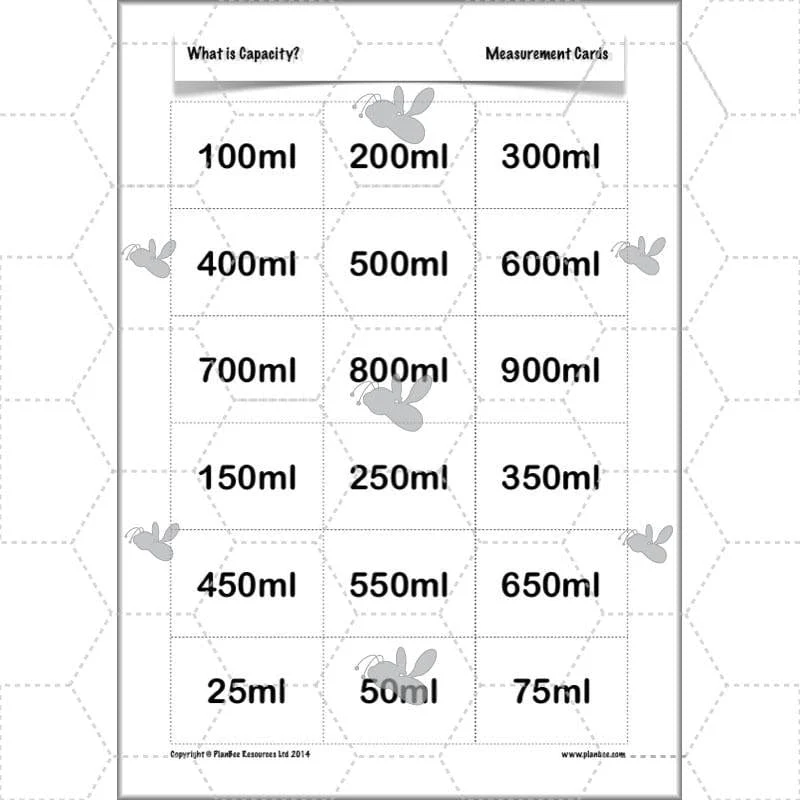
In this lesson, children are challenged to estimate and measure different capacities using a variety of containers. The slides go through a step-by-step explanation for how to read scales and use measuring jugs to find the capacities of different containers, before giving them the chance to try this for themselves. The alternative activity also gives them the chance to try pouring a target amount to see how close they can get!
What's included:
- Lesson plan
- Slides
- Activity ideas
- Differentiated worksheets
- Measurement cards
Comparing and Ordering
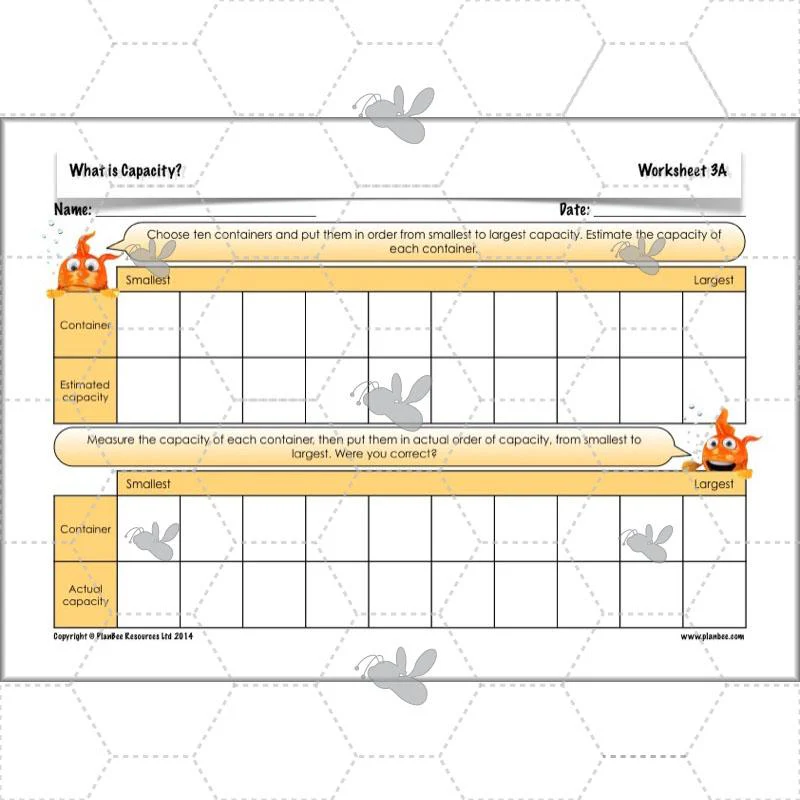
This lesson challenges children to consider the capacities of a variety of common containers, such as milk bottles, cans and perfume bottles, and order them from smallest to largest capacities. The engaging activities encourage children to estimate capacities, and challenges your higher attaining children to find differences between estimated and actual capacities!
What's included:
- Lesson plan
- Slides
- Activity ideas
- Differentiated worksheets
- Capacity labels
Reading Scales
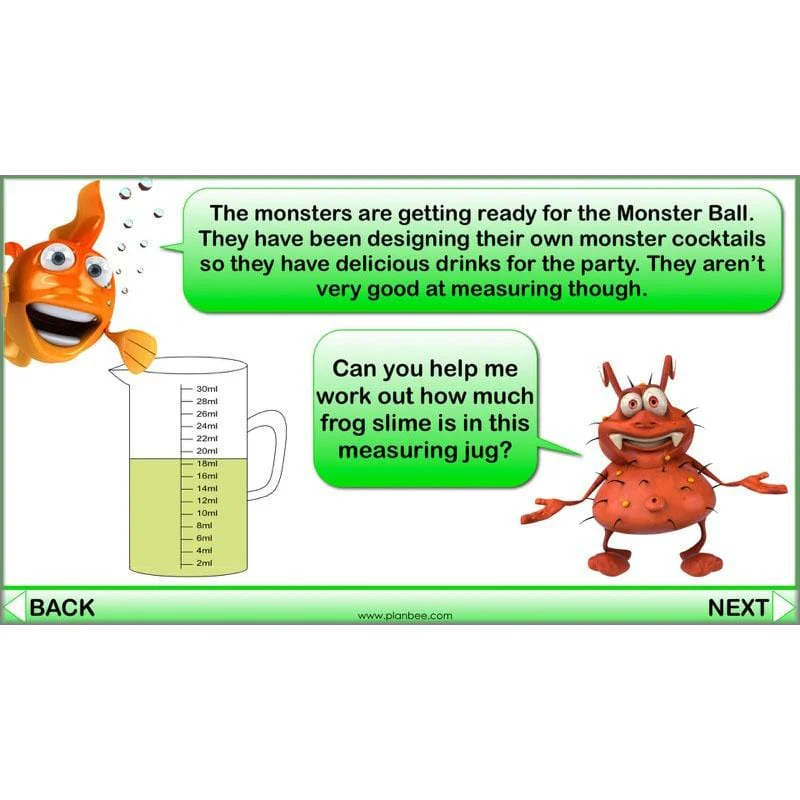
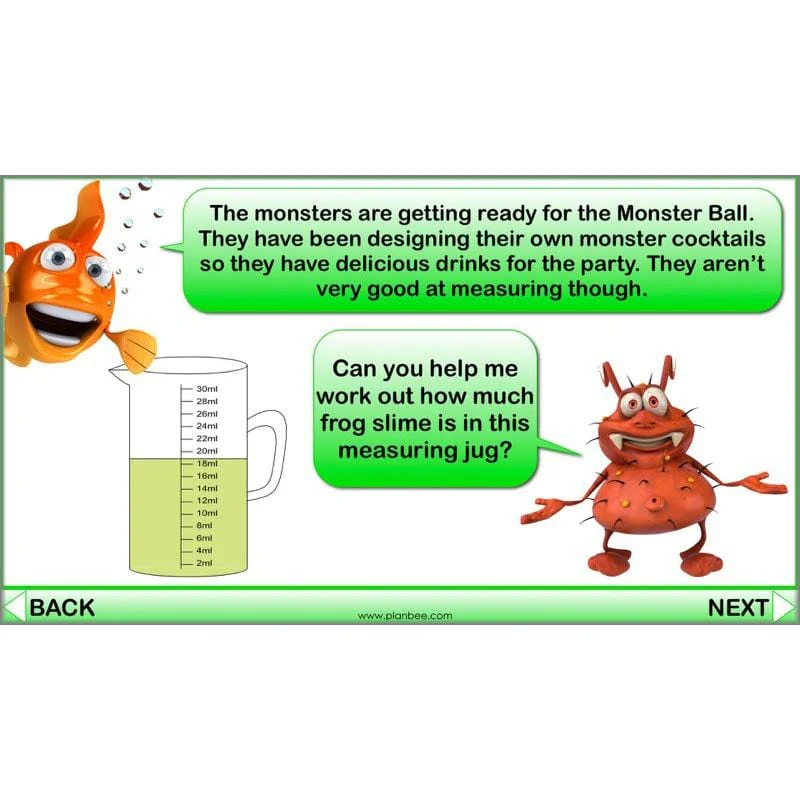
This delightfully disgusting lesson is sure to capture their attention as your class help the monsters prepare cocktails for a monster party! Children are challenged to read a variety of scales, including partially numbered scales, to measure bat blood, scorpion venom, snail slime and many other revolting liquids!
What's included:
- Lesson plan
- Slides
- Activity ideas
- Differentiated worksheets
- Monster cocktail cards
Solving Problems
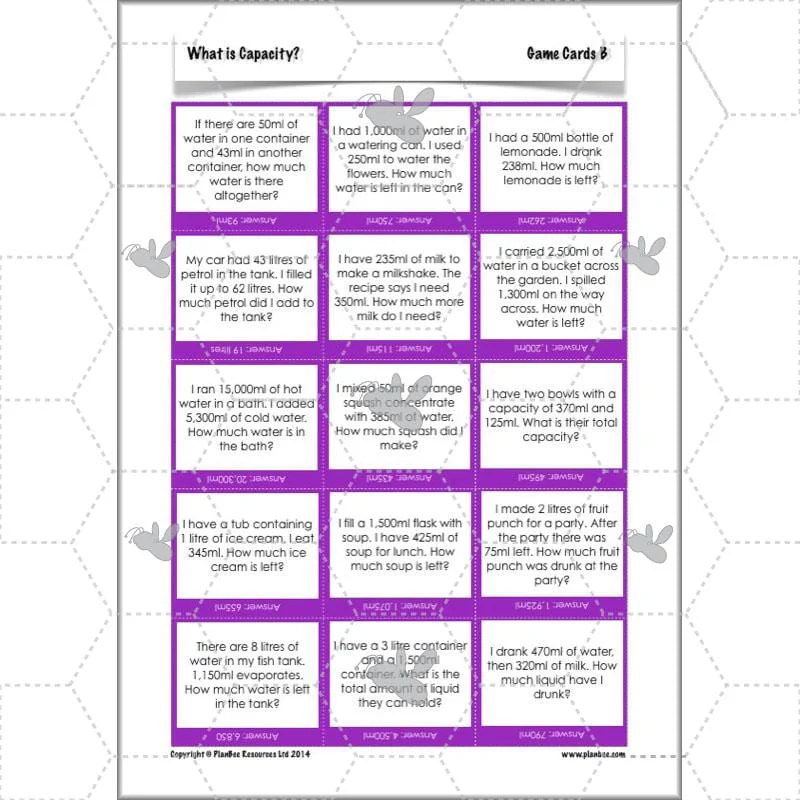
The final lesson in this series gives your class the chance to consolidate their learning by solving a series of addition and subtraction word problems relating to capacity. The slides go through some problems to solve as a class, demonstrating how number lines and other strategies can be used to solve and check calculations.
What's included:
- Lesson plan
- Slides
- Activity ideas
- Differentiated worksheets
- Game cards
Original: $4.71
-65%$4.71
$1.65More Images














What is Capacity?
This fun-filled 'What is Capacity?' scheme of work for Year 3 has everything you need to challenge children and teach them how to use, estimate and measure capacity. These Key Stage 2 Maths resources cover estimating, measuring and ordering of capacities, as well as how to compare different capacities and find the difference. Your children will have the opportunity to consolidate their learning while solving a variety of exciting word problems and completing engaging, differentiated worksheets and activities.
Each lesson comes with a detailed plan, an informative set of slides for the teaching input, as well as differentiated worksheets and activity ideas.
Choosing Appropriate Units
This lesson explains the relationship between litres and millilitres and challenges children to choose an appropriate unit to measure the capacity of a variety of containers. There is also the opportunity to estimate the capacity of a variety of containers from tiny teaspoons to vast lakes!
What's included:
- Lesson plan
- Slides
- Activity ideas
- Differentiated worksheets
- Capacity cards
- Answer sheet
Estimating and Measuring
In this lesson, children are challenged to estimate and measure different capacities using a variety of containers. The slides go through a step-by-step explanation for how to read scales and use measuring jugs to find the capacities of different containers, before giving them the chance to try this for themselves. The alternative activity also gives them the chance to try pouring a target amount to see how close they can get!
What's included:
- Lesson plan
- Slides
- Activity ideas
- Differentiated worksheets
- Measurement cards
Comparing and Ordering
This lesson challenges children to consider the capacities of a variety of common containers, such as milk bottles, cans and perfume bottles, and order them from smallest to largest capacities. The engaging activities encourage children to estimate capacities, and challenges your higher attaining children to find differences between estimated and actual capacities!
What's included:
- Lesson plan
- Slides
- Activity ideas
- Differentiated worksheets
- Capacity labels
Reading Scales
This delightfully disgusting lesson is sure to capture their attention as your class help the monsters prepare cocktails for a monster party! Children are challenged to read a variety of scales, including partially numbered scales, to measure bat blood, scorpion venom, snail slime and many other revolting liquids!
What's included:
- Lesson plan
- Slides
- Activity ideas
- Differentiated worksheets
- Monster cocktail cards
Solving Problems
The final lesson in this series gives your class the chance to consolidate their learning by solving a series of addition and subtraction word problems relating to capacity. The slides go through some problems to solve as a class, demonstrating how number lines and other strategies can be used to solve and check calculations.
What's included:
- Lesson plan
- Slides
- Activity ideas
- Differentiated worksheets
- Game cards
Product Information
Product Information
Shipping & Returns
Shipping & Returns
Description
This fun-filled 'What is Capacity?' scheme of work for Year 3 has everything you need to challenge children and teach them how to use, estimate and measure capacity. These Key Stage 2 Maths resources cover estimating, measuring and ordering of capacities, as well as how to compare different capacities and find the difference. Your children will have the opportunity to consolidate their learning while solving a variety of exciting word problems and completing engaging, differentiated worksheets and activities.
Each lesson comes with a detailed plan, an informative set of slides for the teaching input, as well as differentiated worksheets and activity ideas.
Choosing Appropriate Units
This lesson explains the relationship between litres and millilitres and challenges children to choose an appropriate unit to measure the capacity of a variety of containers. There is also the opportunity to estimate the capacity of a variety of containers from tiny teaspoons to vast lakes!
What's included:
- Lesson plan
- Slides
- Activity ideas
- Differentiated worksheets
- Capacity cards
- Answer sheet
Estimating and Measuring
In this lesson, children are challenged to estimate and measure different capacities using a variety of containers. The slides go through a step-by-step explanation for how to read scales and use measuring jugs to find the capacities of different containers, before giving them the chance to try this for themselves. The alternative activity also gives them the chance to try pouring a target amount to see how close they can get!
What's included:
- Lesson plan
- Slides
- Activity ideas
- Differentiated worksheets
- Measurement cards
Comparing and Ordering
This lesson challenges children to consider the capacities of a variety of common containers, such as milk bottles, cans and perfume bottles, and order them from smallest to largest capacities. The engaging activities encourage children to estimate capacities, and challenges your higher attaining children to find differences between estimated and actual capacities!
What's included:
- Lesson plan
- Slides
- Activity ideas
- Differentiated worksheets
- Capacity labels
Reading Scales
This delightfully disgusting lesson is sure to capture their attention as your class help the monsters prepare cocktails for a monster party! Children are challenged to read a variety of scales, including partially numbered scales, to measure bat blood, scorpion venom, snail slime and many other revolting liquids!
What's included:
- Lesson plan
- Slides
- Activity ideas
- Differentiated worksheets
- Monster cocktail cards
Solving Problems
The final lesson in this series gives your class the chance to consolidate their learning by solving a series of addition and subtraction word problems relating to capacity. The slides go through some problems to solve as a class, demonstrating how number lines and other strategies can be used to solve and check calculations.
What's included:
- Lesson plan
- Slides
- Activity ideas
- Differentiated worksheets
- Game cards