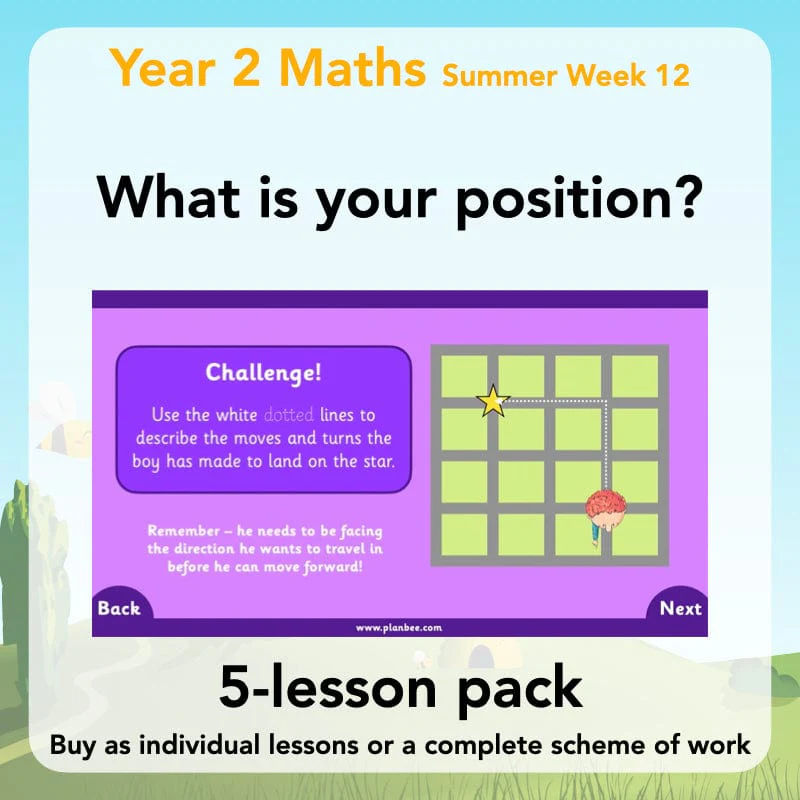
What is Your Position?
This positional language KS1 unit of work includes five complete lesson plan packs with worksheets and differentiated Maths activities for teaching your Year 2 class all about position, direction and repeating patterns.
With the included slides and independent learning activities, help your children build on their emerging knowledge and understanding of the language of position, direction and movement.
Positional Language
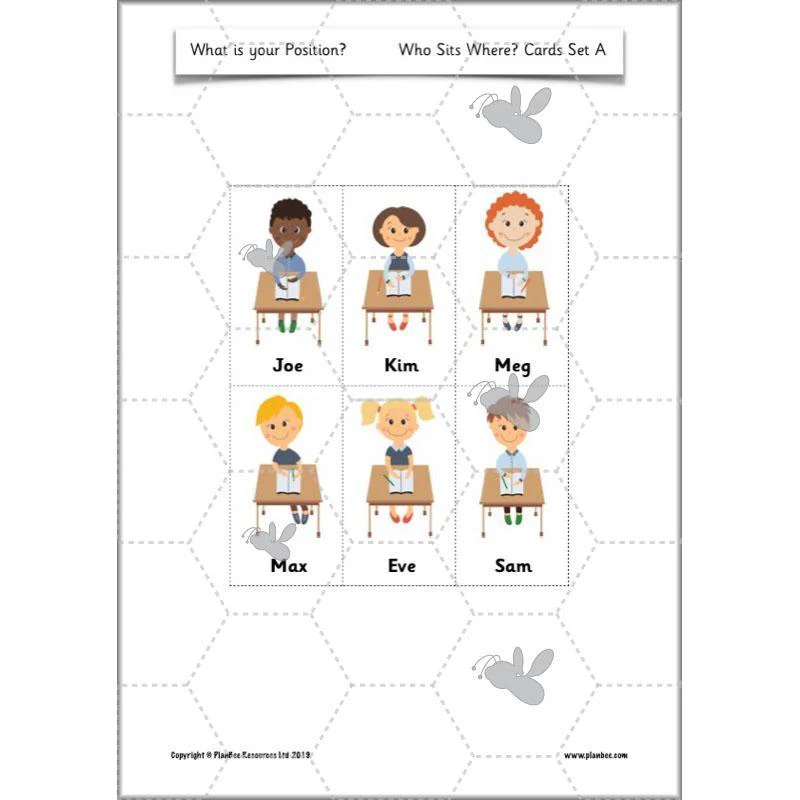
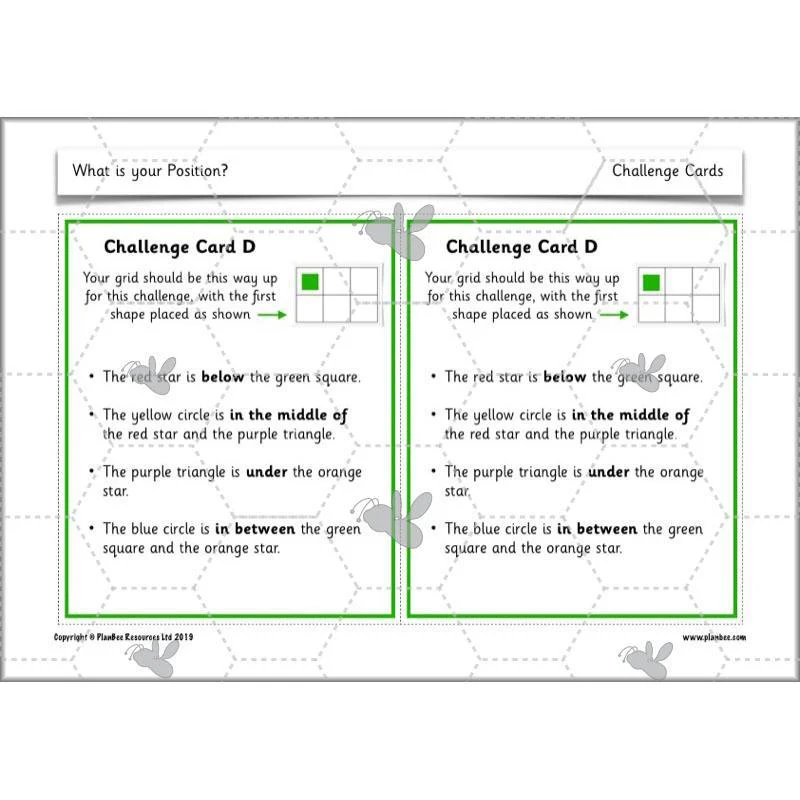
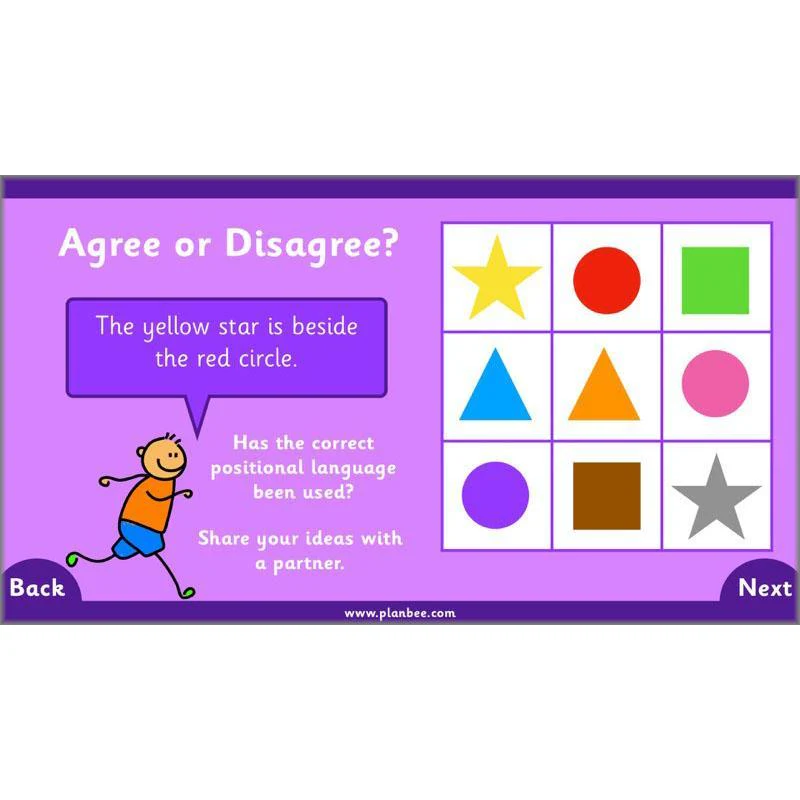
In this first lesson, children familiarise themselves with positional language. They use it to describe and identify the positions of shapes on a grid. Children use their knowledge and understanding of this vocabulary in their independent activities, to orally explain and follow instructions for organising people into different seating positions. In the FSD? activity, children are challenged to follow written instructions to accurately place shapes in a grid.
This downloadable lesson comes with a lesson plan, a slideshow presentation and printable teaching resources.
What's included:
- Lesson plan
- Slides
- Activity ideas
- Who Sits Where? Card Sets
- Instructions Card
- Positional Language Word Card
- Grid and Shape Cards
- Challenge Cards
- Photo Sheet
Direction and Movement
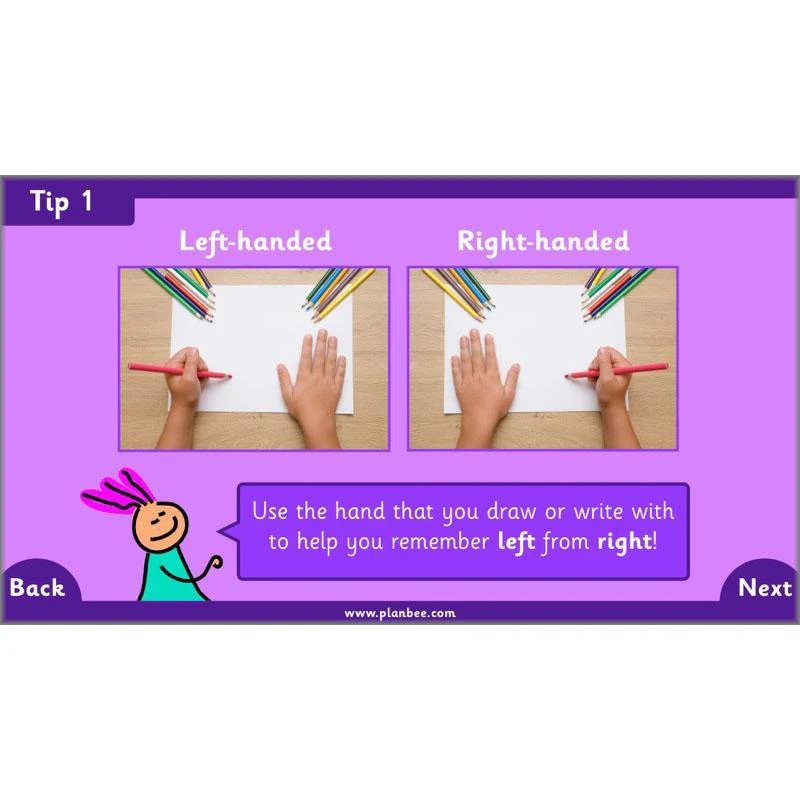
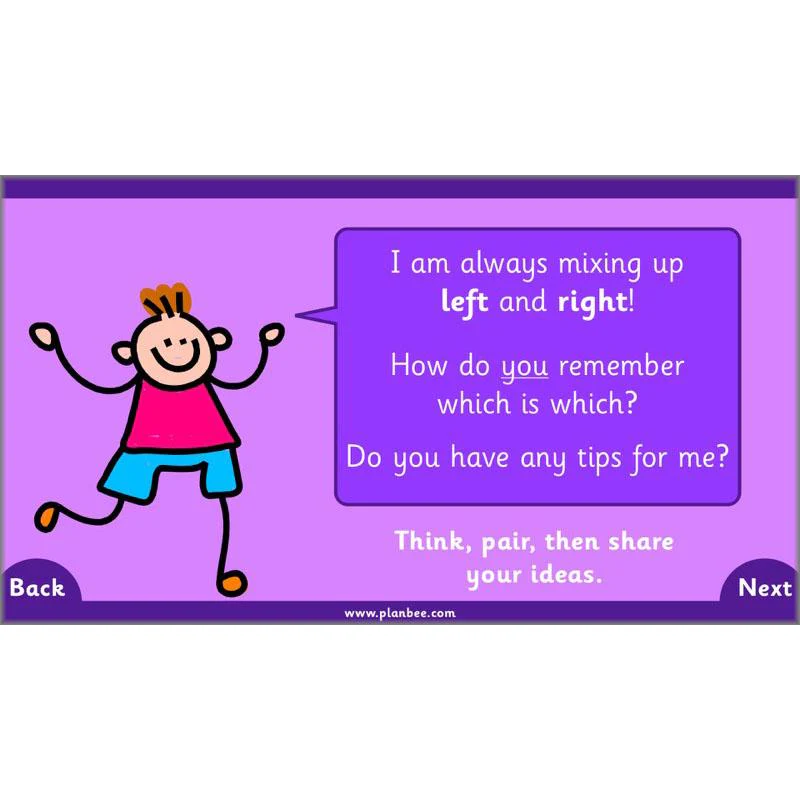
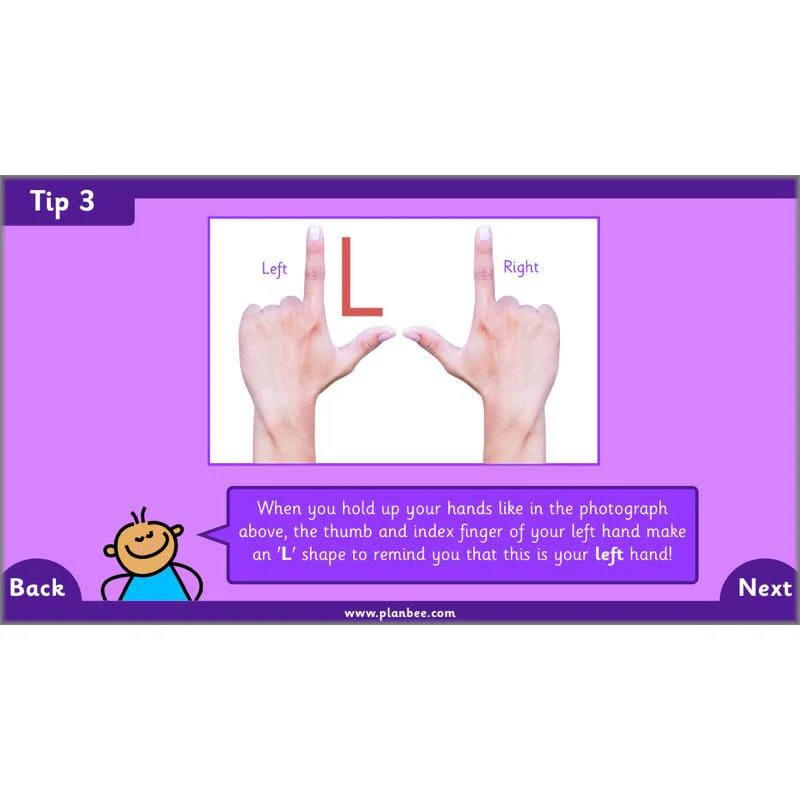
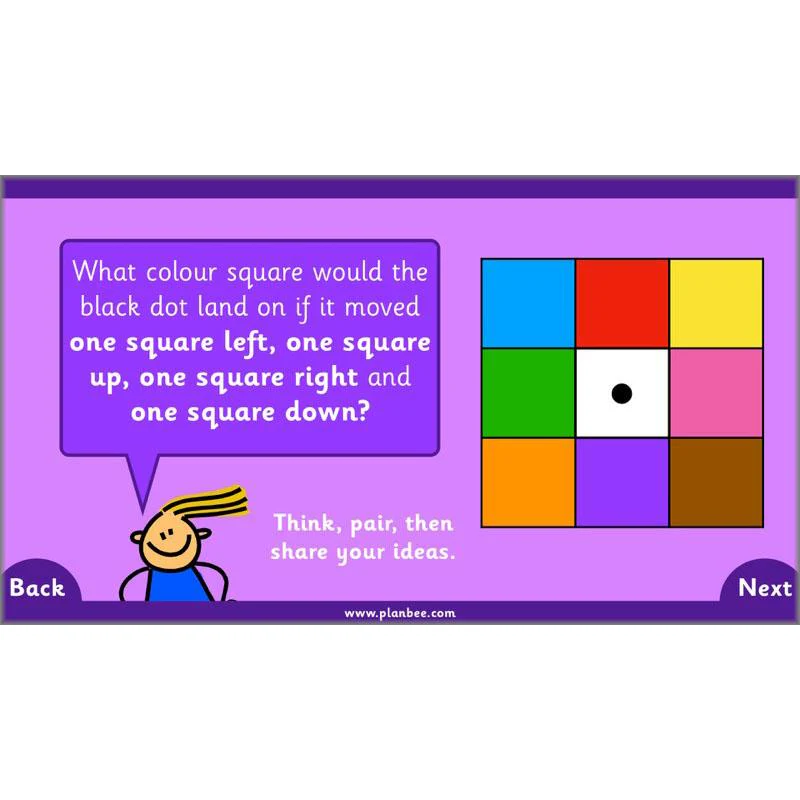
To begin, children share tips for remembering how to distinguish between left and right. They then practise following directional instructions to move around a grid. In their independent activities, children find the answers to riddles by moving around a grid of letters. In the FSD? activity, children follow a route around a game grid to collect stars of different values.
This downloadable lesson comes with a lesson plan, a slideshow presentation and printable teaching resources.
What's included:
- Lesson plan
- Slides
- Activity ideas
- Letter Grids
- Spell it Out! Differentiated worksheets
- Star Player Game
- Star Player Moves Cards
- Star Player Challenge Cards
- Photo Sheet
Movement as a Turn
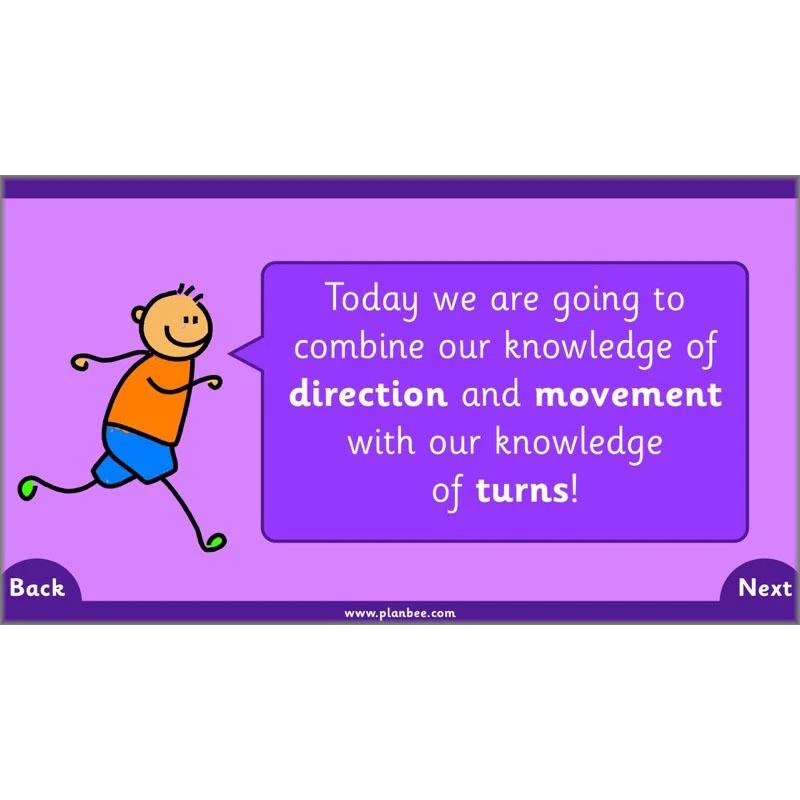
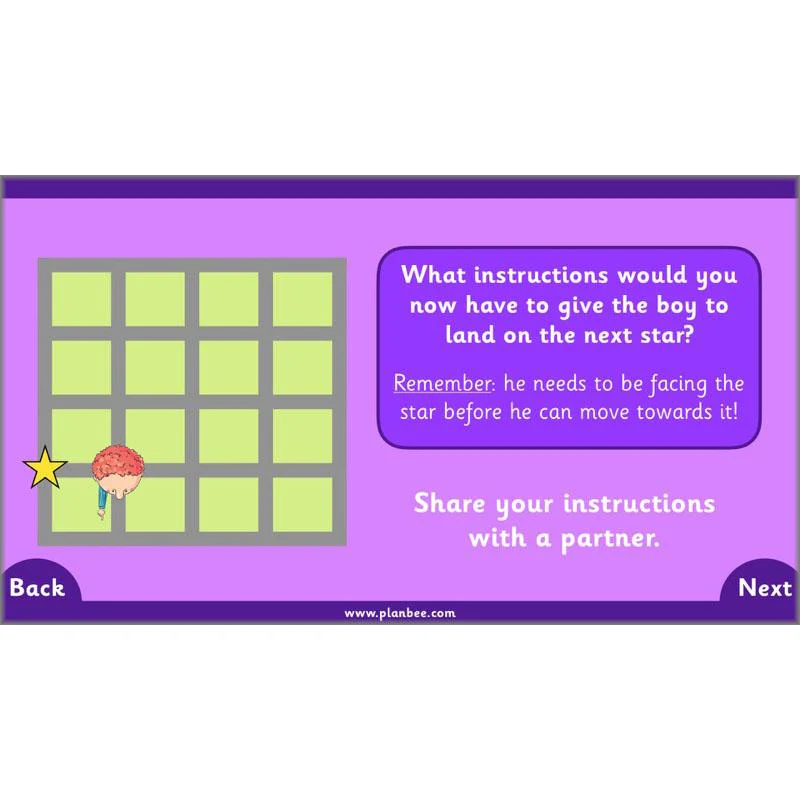
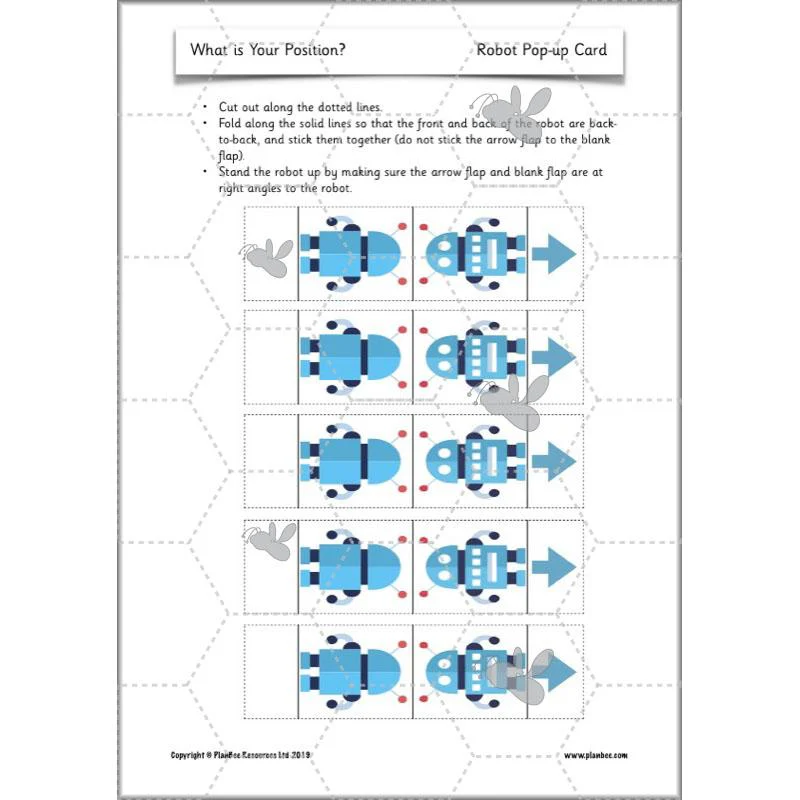
In this lesson, children combine their knowledge and understanding of direction and movement with their knowledge and understanding of turns. They learn that a person's body has to be facing the way they need to travel before they can walk forward, and use this knowledge to direct a character around a grid to collect stars. Children continue to apply this understanding in their independent activities, following and planning routes for a robot, or, in the alternative activity, playing the physical game of 'The Spider and the Fly'.
This downloadable lesson includes a lesson plan, a slideshow presentation and printable teaching resources.
What's included:
- Lesson plan
- Slides
- Activity ideas
- Robot Routes differentiated worksheets
- Robot Pop-up Cards
- Factory Floor Sheets
- Spider and Fly Labels
- Teacher Instructions Sheet
- Photo Sheet
Sequences and Patterns
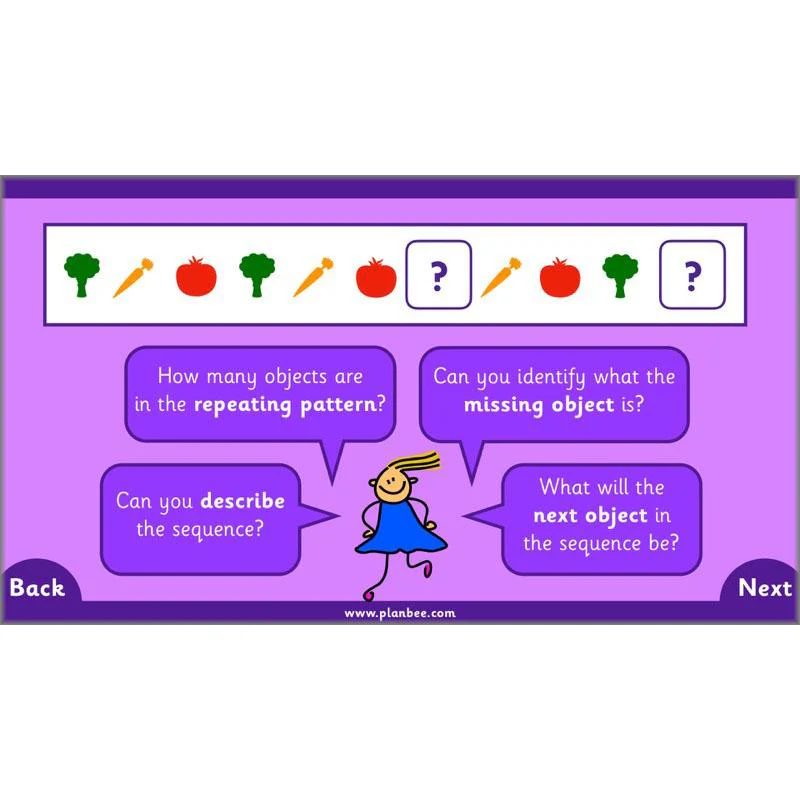
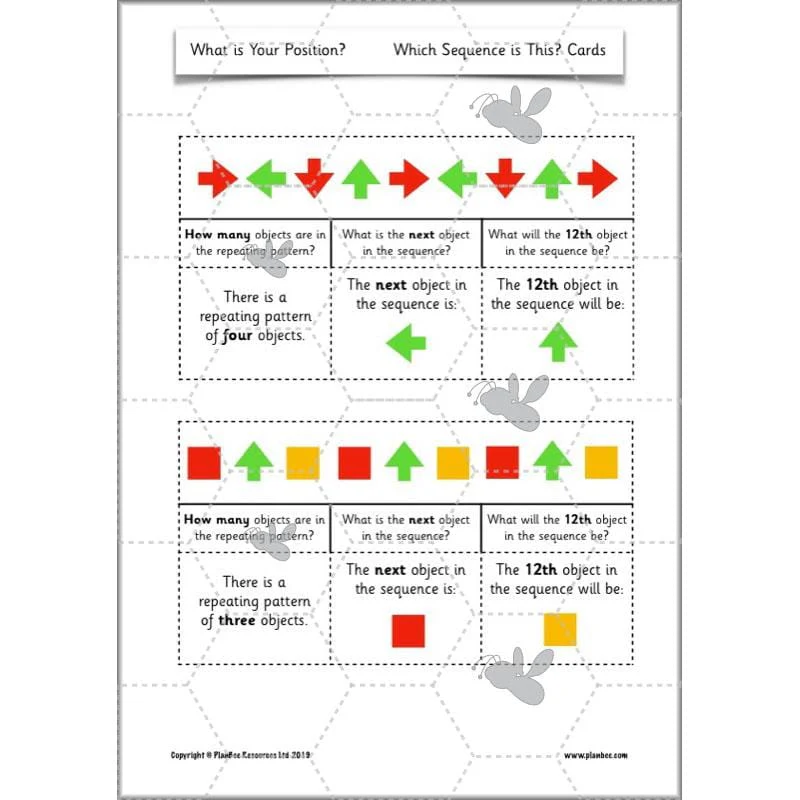
Children recap on their understanding of what sequences and patterns are, before using this knowledge to identify and use repeating patterns to predict the next object in a sequence. They are further challenged to identify the nth object in a sequence. In their independent activities, children become pattern detectives and apply their knowledge, understanding and reasoning skills.
This downloadable lesson includes a lesson plan, a slideshow presentation and printable teaching resources.
What's included:
- Lesson plan
- Slides
- Activity ideas
- Differentiated Pattern Detectives Sheets
- Which Sequence is This? Cards
- Photo Sheet
Describing Patterns & Sequences
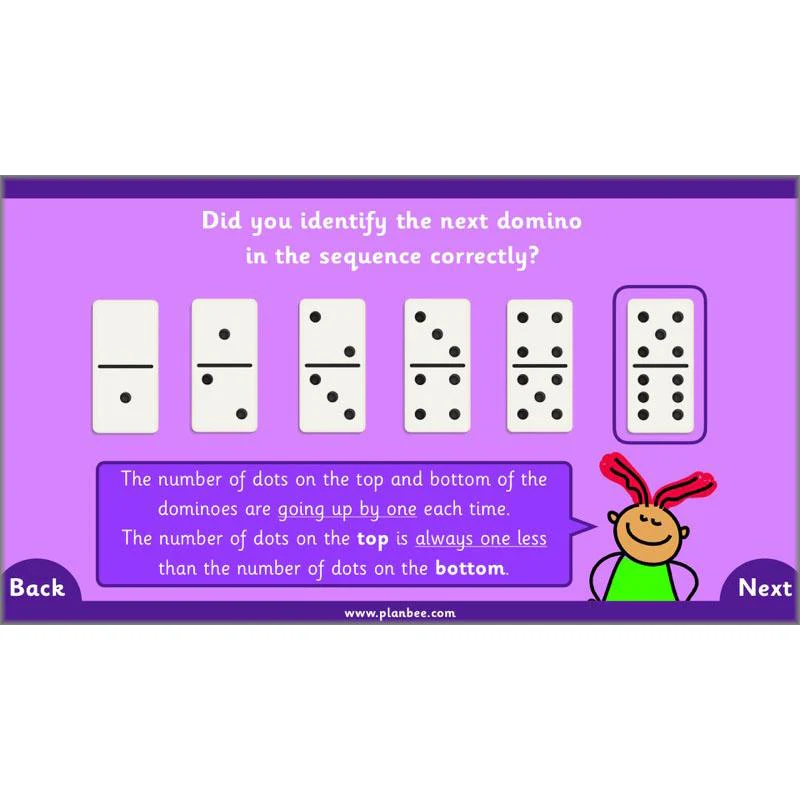
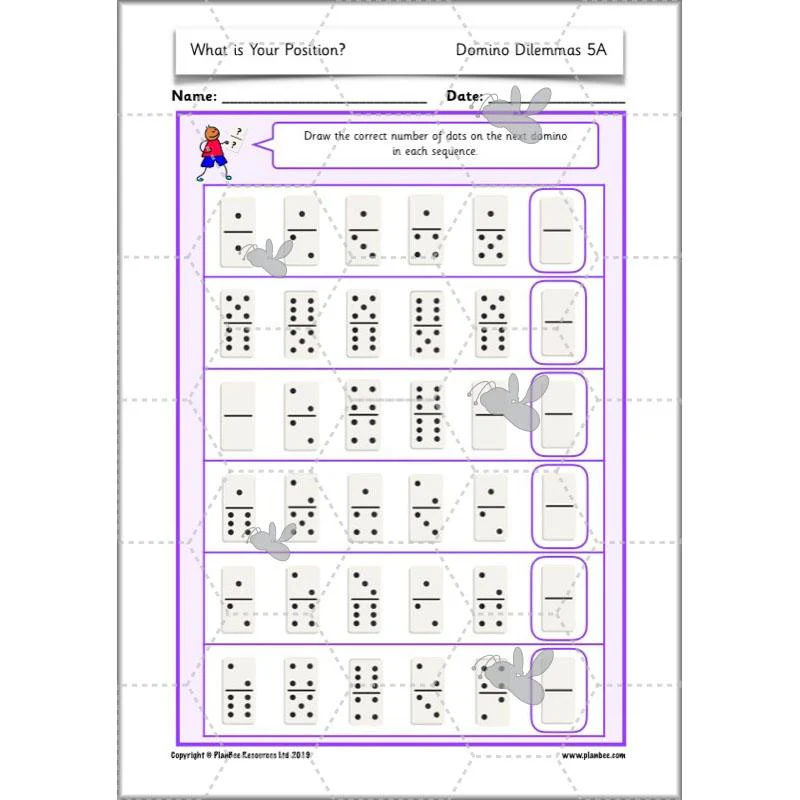
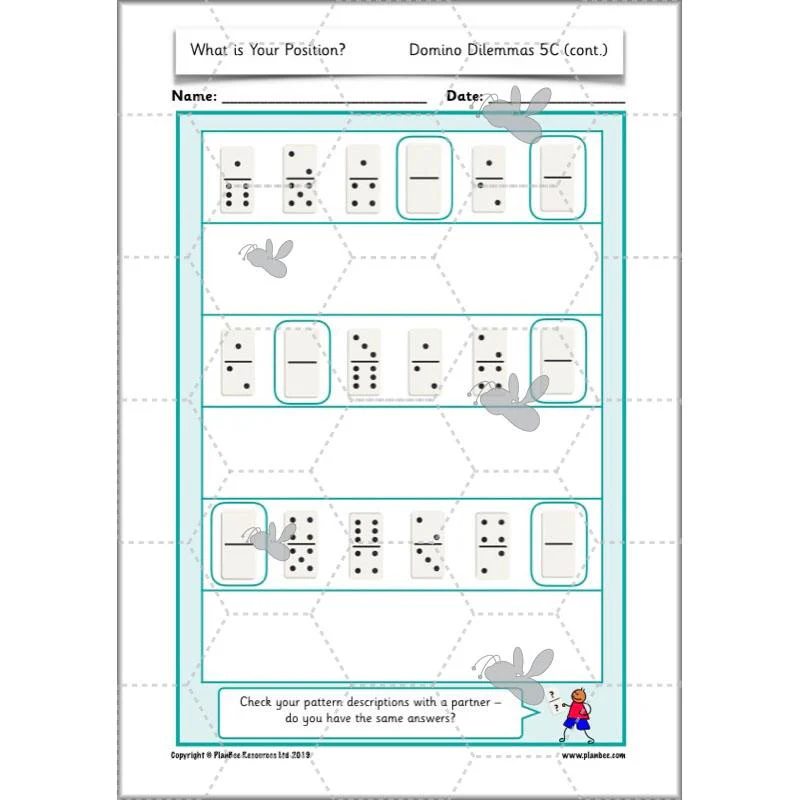
In this final lesson, children apply their knowledge and understanding by identifying and discussing patterns on different sequences of dominoes. In their independent activities, children draw the dots of the missing dominoes in different sequences. In the FSD? activity, children create their own sequence of dominoes.
This downloadable lesson includes a lesson plan, a slideshow presentation and printable teaching resources.
What's included:
- Lesson plan
- Slides
- Activity ideas
- Domino Dilemmas differentiated sheets
- Domino & Cover Cards
- Photo Sheet
Original: $4.71
-65%$4.71
$1.65More Images




















What is Your Position?
This positional language KS1 unit of work includes five complete lesson plan packs with worksheets and differentiated Maths activities for teaching your Year 2 class all about position, direction and repeating patterns.
With the included slides and independent learning activities, help your children build on their emerging knowledge and understanding of the language of position, direction and movement.
Positional Language
In this first lesson, children familiarise themselves with positional language. They use it to describe and identify the positions of shapes on a grid. Children use their knowledge and understanding of this vocabulary in their independent activities, to orally explain and follow instructions for organising people into different seating positions. In the FSD? activity, children are challenged to follow written instructions to accurately place shapes in a grid.
This downloadable lesson comes with a lesson plan, a slideshow presentation and printable teaching resources.
What's included:
- Lesson plan
- Slides
- Activity ideas
- Who Sits Where? Card Sets
- Instructions Card
- Positional Language Word Card
- Grid and Shape Cards
- Challenge Cards
- Photo Sheet
Direction and Movement
To begin, children share tips for remembering how to distinguish between left and right. They then practise following directional instructions to move around a grid. In their independent activities, children find the answers to riddles by moving around a grid of letters. In the FSD? activity, children follow a route around a game grid to collect stars of different values.
This downloadable lesson comes with a lesson plan, a slideshow presentation and printable teaching resources.
What's included:
- Lesson plan
- Slides
- Activity ideas
- Letter Grids
- Spell it Out! Differentiated worksheets
- Star Player Game
- Star Player Moves Cards
- Star Player Challenge Cards
- Photo Sheet
Movement as a Turn
In this lesson, children combine their knowledge and understanding of direction and movement with their knowledge and understanding of turns. They learn that a person's body has to be facing the way they need to travel before they can walk forward, and use this knowledge to direct a character around a grid to collect stars. Children continue to apply this understanding in their independent activities, following and planning routes for a robot, or, in the alternative activity, playing the physical game of 'The Spider and the Fly'.
This downloadable lesson includes a lesson plan, a slideshow presentation and printable teaching resources.
What's included:
- Lesson plan
- Slides
- Activity ideas
- Robot Routes differentiated worksheets
- Robot Pop-up Cards
- Factory Floor Sheets
- Spider and Fly Labels
- Teacher Instructions Sheet
- Photo Sheet
Sequences and Patterns
Children recap on their understanding of what sequences and patterns are, before using this knowledge to identify and use repeating patterns to predict the next object in a sequence. They are further challenged to identify the nth object in a sequence. In their independent activities, children become pattern detectives and apply their knowledge, understanding and reasoning skills.
This downloadable lesson includes a lesson plan, a slideshow presentation and printable teaching resources.
What's included:
- Lesson plan
- Slides
- Activity ideas
- Differentiated Pattern Detectives Sheets
- Which Sequence is This? Cards
- Photo Sheet
Describing Patterns & Sequences
In this final lesson, children apply their knowledge and understanding by identifying and discussing patterns on different sequences of dominoes. In their independent activities, children draw the dots of the missing dominoes in different sequences. In the FSD? activity, children create their own sequence of dominoes.
This downloadable lesson includes a lesson plan, a slideshow presentation and printable teaching resources.
What's included:
- Lesson plan
- Slides
- Activity ideas
- Domino Dilemmas differentiated sheets
- Domino & Cover Cards
- Photo Sheet
Product Information
Product Information
Shipping & Returns
Shipping & Returns
Description
This positional language KS1 unit of work includes five complete lesson plan packs with worksheets and differentiated Maths activities for teaching your Year 2 class all about position, direction and repeating patterns.
With the included slides and independent learning activities, help your children build on their emerging knowledge and understanding of the language of position, direction and movement.
Positional Language
In this first lesson, children familiarise themselves with positional language. They use it to describe and identify the positions of shapes on a grid. Children use their knowledge and understanding of this vocabulary in their independent activities, to orally explain and follow instructions for organising people into different seating positions. In the FSD? activity, children are challenged to follow written instructions to accurately place shapes in a grid.
This downloadable lesson comes with a lesson plan, a slideshow presentation and printable teaching resources.
What's included:
- Lesson plan
- Slides
- Activity ideas
- Who Sits Where? Card Sets
- Instructions Card
- Positional Language Word Card
- Grid and Shape Cards
- Challenge Cards
- Photo Sheet
Direction and Movement
To begin, children share tips for remembering how to distinguish between left and right. They then practise following directional instructions to move around a grid. In their independent activities, children find the answers to riddles by moving around a grid of letters. In the FSD? activity, children follow a route around a game grid to collect stars of different values.
This downloadable lesson comes with a lesson plan, a slideshow presentation and printable teaching resources.
What's included:
- Lesson plan
- Slides
- Activity ideas
- Letter Grids
- Spell it Out! Differentiated worksheets
- Star Player Game
- Star Player Moves Cards
- Star Player Challenge Cards
- Photo Sheet
Movement as a Turn
In this lesson, children combine their knowledge and understanding of direction and movement with their knowledge and understanding of turns. They learn that a person's body has to be facing the way they need to travel before they can walk forward, and use this knowledge to direct a character around a grid to collect stars. Children continue to apply this understanding in their independent activities, following and planning routes for a robot, or, in the alternative activity, playing the physical game of 'The Spider and the Fly'.
This downloadable lesson includes a lesson plan, a slideshow presentation and printable teaching resources.
What's included:
- Lesson plan
- Slides
- Activity ideas
- Robot Routes differentiated worksheets
- Robot Pop-up Cards
- Factory Floor Sheets
- Spider and Fly Labels
- Teacher Instructions Sheet
- Photo Sheet
Sequences and Patterns
Children recap on their understanding of what sequences and patterns are, before using this knowledge to identify and use repeating patterns to predict the next object in a sequence. They are further challenged to identify the nth object in a sequence. In their independent activities, children become pattern detectives and apply their knowledge, understanding and reasoning skills.
This downloadable lesson includes a lesson plan, a slideshow presentation and printable teaching resources.
What's included:
- Lesson plan
- Slides
- Activity ideas
- Differentiated Pattern Detectives Sheets
- Which Sequence is This? Cards
- Photo Sheet
Describing Patterns & Sequences
In this final lesson, children apply their knowledge and understanding by identifying and discussing patterns on different sequences of dominoes. In their independent activities, children draw the dots of the missing dominoes in different sequences. In the FSD? activity, children create their own sequence of dominoes.
This downloadable lesson includes a lesson plan, a slideshow presentation and printable teaching resources.
What's included:
- Lesson plan
- Slides
- Activity ideas
- Domino Dilemmas differentiated sheets
- Domino & Cover Cards
- Photo Sheet